Tuesday, January 27, 2026


DR Congo on Edge Despite M23 Withdrawal From Uvira


Nicholas Mwangi 


There is a sense of relief in Uvira following the withdrawal of M23 fighters from the city, after weeks of intense fighting and displacement, yet the situation remains fragile.


M23 rebel outside of Bunagana, North Kivu. Photo: Wikimedia Commons / VOA

Despite multiple peace agreements involving the Democratic Republic of Congo (DRC), the M23 rebel group, and Rwanda, the security and humanitarian situation in eastern Congo remains deeply fragile. Recent developments, including the withdrawal of M23 fighters from the strategic city of Uvira in South Kivu, have offered a brief sense of relief to civilians, but fears of renewed violence persist amid ongoing instability, displacement, and allegations of serious human rights violations.

A heavy civilian toll

The Congolese government has accused M23 of killing at least 1,500 civilians during recent fighting, even after a US-brokered ceasefire was announced. These claims add to a long history of ceasefires and peace deals that have failed to bring lasting stability to Congo, a region plagued by armed conflict for nearly three decades.

According to Stewart Muhindo, a member of the LUCHA civil society movement, who spoke to People Dispatch, civilians have borne the brunt of the conflict over the past months. He says that they have been killed during clashes between armed groups and state forces, while thousands more have been forced to flee their homes.

“In the past month, M23 moved into South Kivu and took Uvira,” Muhindo explained. “Thousands of civilians had to cross into Burundi to escape the fighting.”

Displacement has been accompanied by widespread loss of property and livelihoods. Civilians report that armed fighters looted homes, shops, and farms, stealing food, livestock, and personal belongings. For many families already living in poverty, these losses have been devastating.

An unstable calm after withdrawal

Although M23 has withdrawn from Uvira, the situation on the ground remains tense. Muhindo stressed that the group is still positioned roughly 30 kilometers from the city, close enough for fighting to resume at any time.

“The situation is still not stable,” he said. “People are afraid because clashes can break out at any moment.”

Fear is not limited to the possible return of M23. Civilians have also reported abuses by the Congolese army (FARDC) since it re-entered the city. While many residents welcomed the return of state authority, there are ongoing allegations that some soldiers have engaged in looting and harassment.

This dual threat, from rebel forces and undisciplined state troops, has left civilians feeling trapped between armed actors, with little confidence in their long-term safety.

The withdrawal of M23 has brought some immediate changes. Residents report improved freedom of movement and expression, as the group was known to be hostile to criticism and dissent in areas it controlled. Markets have slowly reopened, and people are cautiously resuming daily activities.

However, the physical damage left behind is extensive. Infrastructure projects, including roads and public facilities in and around Uvira, were halted or destroyed during the fighting. These disruptions have worsened access to healthcare, food supplies, and humanitarian aid.

While some civilians have expressed relief at the army’s return, conditions remain unsafe for large-scale returns of displaced people. Many families who fled to Burundi or to other parts of South Kivu are waiting to see whether the situation stabilizes before going back. According to Muhindo, humanitarian needs remain severe.

Human rights abuses have been widely reported during both the occupation by M23 and the subsequent return of Congolese forces. These include killings of civilians, looting, forced displacement, and destruction of property.

Muhindo pointed out that while people generally prefer being under FARDC control rather than M23, violations by state forces show how volatile the situation remains. “This shows that a lot of work still needs to be done,” he said.

Why peace agreements keep failing

According to Muhindo and other activists, peace agreements have failed because they do not address the root causes of the conflict. Muhindo highlighted several structural problems, including regional interference, weak governance, and impunity.

He points out Rwanda’s repeatedly destabilizing eastern Congo by supporting armed groups whenever strategic or economic interests, particularly access to minerals, are at stake. At the same time, he criticized the Congolese state for corruption, poor governance, and an army that is often unable or unwilling to protect civilians.

Another key issue is the lack of accountability. “Both sides know they will not be held responsible,” Muhindo said, arguing that this culture of impunity allows violence, looting, and killings to continue without consequences.

He also criticized international peace initiatives, including high-level diplomatic deals, for focusing more on mineral interests than on justice and long-term peace for Congolese communities.

Community solidarity 

In the absence of effective protection, local communities have relied on solidarity to survive. Families share food, shelter displaced neighbors, and support one another in times of crisis. Local organizations and movements like LUCHA have played a critical role in documenting abuses and amplifying voices from the ground.

Churches, youth groups, and civil society organizations have also been involved in humanitarian support, peace advocacy, and community awareness, even as their work becomes increasingly dangerous.

For many Congolese, the main demand is simple but urgent: peace. Communities want an end to occupation, armed violence, and forced displacement. While humanitarian assistance is desperately needed, Muhindo reiterates that aid alone is not enough. What is required is a political solution that addresses governance failures, regional and global interference, accountability for crimes, and meaningful protection for civilians.

Courtesy: Peoples Dispatch


How Iran Neutralised Starlink, Foiled US Playbook


Bappa Sinha 


The Global South must draw lessons: that technological sovereignty is not optional. It is mandatory for preserving a nation’s sovereignty.

On January 8, 2026, something unprecedented occurred in the annals of electronic warfare. Iran activated a multi-layered digital suppression campaign that, within hours, degraded Elon Musk's Starlink satellite internet service from functional connectivity to what engineers described as a "patchwork quilt" of intermittent access. According to Filter.Watch, an Iranian internet rights monitoring group, packet loss in Tehran surged from 30% to over 80%. This marked the first verified instance of a nation-state successfully neutralising Starlink at a national scale during an internal political crisis.

Iran has been the most-sanctioned country in the world, except for Russia after the start of the Ukraine War. The US, after unilaterally withdrawing from the Joint Comprehensive Plan of Action (JCPOA) in Trump’s first term, got its allies to impose snapback sanctions on Iran in late 2025, reverting to the harsh sanctions regime that existed before JCPOA. This led to the Iranian rial collapsing from 817,000 to the dollar to 1.42 million by late December 2025, a depreciation of over 73% in less than three months. Food prices rose 72% year-on-year. Annual inflation stood at 42.2%. Shopkeepers in Tehran's Grand Bazaar, unable to price their goods amid daily currency volatility, shuttered their businesses in spontaneous protest.

The issue is not whether Iranians had immediate reasons to demonstrate. The issue is what happened next: a coordinated attempt by the US and Israeli intelligence agencies to hijack economic discontent into regime change, using satellite technology as a primary weapon, and its spectacular failure.

The Infrastructure of Subversion


Starlink terminals do not appear inside a sanctioned country by accident. These are costly physical devices that must be smuggled, distributed, hidden, powered, and activated. Estimates suggest that between 50,000 and 100,000 terminals had been infiltrated into Iran by January 2026, enough to create a parallel communications network the moment Tehran switched off its internet.

There is the question of timing and logistics. The mass smuggling of Starlink terminals accelerated after then President Joe Biden authorised US technology companies to bypass sanctions in September 2022, coinciding with the Mahsa Amini protests. The infiltration intensified following the June 2025 12-day war between Iran and Israel, during which Musk announced that Starlink's "beams are on" over Iran. Iranian authorities assert these "beams" were used by Israeli operatives to coordinate drone operations and airstrikes. By December 2025, a shadow network of satellite communications had been pre-positioned across the country, awaiting activation.

The foreign intelligence fingerprints became impossible to conceal. Mossad issued a public statement declaring, "We are with you. Not only from a distance and verbally. We are with you in the field." Former US Secretary of State Mike Pompeo, also a former CIA director, posted on social media: "Happy New Year to every Iranian in the streets. Also, to every Mossad agent walking beside them." These are not coded messages. They are open acknowledgements of operational presence.

Certain Kurdish groups also joined the Israeli-US action plan. Seven Kurdish opposition groups, including the Kurdistan Free Life Party (PJAK), an affiliate of the PKK designated as terrorist by Turkey, issued a joint call for a general strike on January 8. The Kurdistan Freedom Party (PAK) claimed armed attacks on IRGC positions in Kermanshah. Reuters reported that Turkey's intelligence agency, MIT, warned the IRGC about armed Kurdish fighters attempting to cross from Iraq and Turkey into Iran. Tehran claims these fighters were "dispatched" to exploit the unrest, and Turkey passed intelligence to prevent the infiltration.

The regime change playbook followed an established pattern. US Ambassador to the UN Mike Waltz declared on December 29: "The people of Iran want freedom... We stand with Iranians in the streets." President Donald Trump posted that "help is on its way". The New York Times and Wall Street Journal reported that Trump was presented with military strike options. By January 15, according to Axios, "dozens of top military, political and diplomatic officials in Washington and across the Middle East believed U.S. bombs would be dropping in Tehran within hours."

The Electronic Counter-Offensive


Iran's response demonstrated that the Global South is no longer defenceless against imperial technological coercion. Iran’s jamming operation combined three distinct capabilities.

The foundation was GPS denial. Starlink terminals rely on GPS signals to locate themselves and establish satellite handoffs. By flooding the GPS L1 band with high-power interference, Iranian forces rendered terminals unable to calculate their positions, breaking connectivity without touching the satellites themselves.

The second layer was direct radiofrequency jamming. Iran deployed mobile jamming units capable of targeting Starlink's high-frequency Ku-band (10.9-14 GHz) and Ka-band (18-40 GHz) frequencies. According to Filter.Watch, these units moved from neighbourhood to neighbourhood, creating localised disruption zones. The pattern, analysts noted, "closely mirrors Russian jamming tactics used in Ukraine".

The third element was the Russian electronic warfare systems transferred to Iran over 2024-2025. Defence Security Asia confirmed the delivery of Krasukha-4 systems, truck-mounted broadband jammers with an effective range of 150-300 kilometres, capable of disrupting satellite communications across X/Ku/Ka bands used by Starlink. Iran also received the Murmansk-BN long-range EW system, which can jam communications up to 5,000 kilometres away. Iranian state media claims that specialists from Russia and China assisted in deploying these systems against Starlink.

The results were dramatic. Within 30 minutes of the January 8 shutdown, Cloudflare recorded a 98.5% collapse in Iranian internet traffic. Terrestrial connectivity dropped below 2% of normal levels. But crucially, Starlink, the supposed lifeline for protesters, was rendered largely inoperative precisely when it was needed most.

The Aborted Strike


The timing is telling. On January 15, the Trump administration appeared poised to order military strikes against Iran. US troops began evacuating from Al-Udeid Air Base in Qatar. Iran closed its airspace. But that afternoon, the order did not come. Trump announced that "very important sources on the other side" had informed him that the killing had stopped. The strike was called off.

What changed? The evidence suggests Iran's successful communications blackout disrupted the operational requirements of regime change. Without Starlink, the protest coordination infrastructure collapsed. Without continuous video of regime atrocities reaching global audiences in real-time, the propaganda machine lost fuel. Without the ability to communicate with agents and assets inside the country, intelligence operations were blinded. The much-vaunted colour revolution playbook, refined in Ukraine 2014, attempted in Belarus 2020, and partially executed in Iran 2022, had run into a technological wall.

Iranian authorities announced the dismantling of what they described as a "foreign espionage network." The IRGC arrested operatives accused of working for Mossad, claiming to have discovered weapons, ammunition, and bomb-making materials in safe houses. Videos broadcast by state media showed confiscated Starlink terminals still in original packaging, described as "electronic espionage and sabotage items" intended for distribution in protest areas.

The contrast with Ukraine is instructive. When Russia attempted to jam Starlink in 2022, SpaceX pushed software updates within hours that countered the interference. Musk boasted of the company's adaptability. Yet in Iran, hastily pushed Starlink updates failed to revive internet service. Russian electronic warfare systems, developed through combat experience in Ukraine and Syria, have been transferred to Iran. Chinese expertise in satellite interference has also reportedly been shared. Iran had improved on those techniques and foiled the CIA-Mossad plans, showcasing its indigenous capabilities. The Global South is learning to fight back.

Lessons for India


The impact of Iran's electronic warfare victory extends beyond the immediate crisis. The stranglehold that satellite technology promised to give imperial powers over information space has been broken at least partially, at least temporarily. SpaceX's constellation of 6,000 satellites, valued in the hundreds of billions, can be degraded by ground-based systems costing a fraction of that sum.

This is not a verdict on satellite technology, which holds genuine potential for global connectivity. It is a verdict on the imperial system that weaponises civilian infrastructure for regime change operations. When Musk declares "the beams are on" over a target country, when former CIA directors publicly acknowledge agents in protest crowds, when 50,000 smuggled terminals await activation, the humanitarian pretence collapses.

The implications extend beyond West Asia. For India, the lessons are stark. The Narendra Modi government has moved to issue licenses for Starlink to operate in India, breaking with the long-standing precedent that foreign firms cannot own telecom spectrum or operate telecom services directly. This reversal, pushed through without adequate public debate under US pressure, threatens our sovereignty. If satellite communications can be weaponised for regime change in Iran, they can be weaponised anywhere. The government must seriously reconsider these ill-thought-out moves before the "beams are on" over India.

For the architects of regime change in Washington and Tel Aviv, Iran represents a strategic setback. For the Global South, it represents a lesson: technological sovereignty is not optional. It is mandatory for preserving our sovereignty.

The writer is a veteran technologist interested in the impact of technology on society and politics. The views expressed are personal.

Source: DD Geopolitics

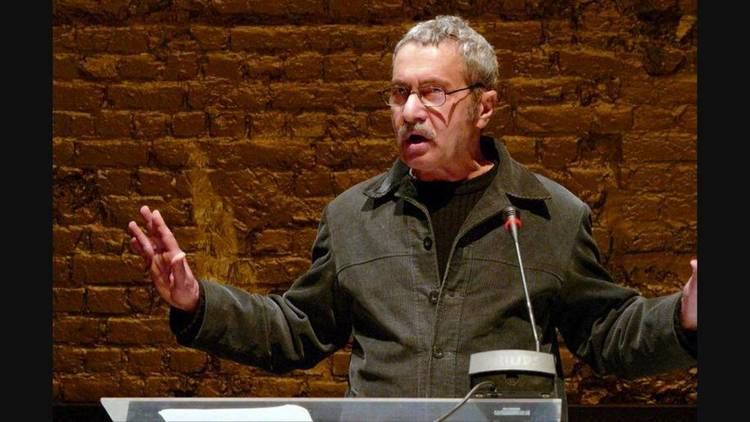
Michael Parenti died today at 92, peacefully, surrounded by family.

His son Christian reflected: “Now he is in what he used to refer to as ‘the great lecture hall in the sky.’”

For millions of us who never set foot in his classroom, because by the time we found him, he’d been exiled from the classroom, this hits like the loss of a teacher we never got to thank. The one who explained what no one else would. The one who made it make sense, for me anyway.

The Blacklisting

The story of how Michael Parenti became Michael Parenti is the story of what happens when you refuse to play the game. A game many of us now know. Well, he was the beta tester.

In May 1970, Parenti was an associate professor at the University of Illinois. The National Guard had just killed four students at Kent State. The Vietnam War was grinding on. Parenti joined a campus protest. State troopers beat him severely with clubs and threw him in a cell for two days.

He was charged with aggravated battery of a state trooper, along with disorderly conduct and resisting arrest. Despite multiple witnesses offering exonerating testimony, the judge found him guilty on all counts. The conviction was a message.

That fall, he started a new job at the University of Vermont. His department voted unanimously to renew his contract. It didn’t matter. The board of trustees, under pressure from conservative state legislators, overruled the faculty and let his contract expire, citing “unprofessional conduct.”

He never held a permanent academic position again. He later learned from sympathetic contacts at the schools he applied to that he was being systematically rejected for his political views and activism. The academy had spoken: Michael Parenti was too dangerous to teach.

So he did something else. He took his classroom to the people.

The Work

What followed was one of the most remarkable intellectual careers of the twentieth century, conducted almost entirely outside the institutions that credential “serious” thought.

Over twenty books. Hundreds of lectures at universities, community centers, union halls, churches, anywhere that would have him. Translations into twenty languages. A body of work that reached further beyond the ivory tower than almost any political scientist of his generation, precisely because the tower had expelled him.

The titles alone form a curriculum in understanding power:

“Democracy for the Few” (1974) — His textbook on American politics, now in its ninth edition, which generations of students have encountered as the antidote to their sanitized civics classes. It asked a simple question: If this is a democracy, why do the same interests keep winning?

“Inventing Reality: The Politics of News Media” (1986) — Published two years before Chomsky and Herman’s “Manufacturing Consent,” it laid out how the press serves power while claiming to check it. Parenti understood that the bias wasn’t in what journalists believed but in what they were structurally permitted to say.

“Blackshirts and Reds: Rational Fascism and the Overthrow of Communism” (1997) — A book that infuriated nearly everyone. It examined fascism and communism not as equivalent totalitarianisms but as opposites—one the weapon of capital, the other its target. He asked uncomfortable questions about what was actually lost when the Soviet Union fell, and who benefited from its destruction.

“The Assassination of Julius Caesar: A People’s History of Ancient Rome” (2003) — Even when he wrote about antiquity, he was writing about now. His Caesar book examined how Roman historians, themselves aristocrats, framed the murder of a popular reformer as a noble act of tyrannicide. The same dynamics, he showed, shape how we tell stories about power today.

“Against Empire” (1995) and “The Face of Imperialism” (2011) — The bookends of his work on American foreign policy, documenting how the machinery of intervention operates: the economic interests it serves, the lies that lubricate it, the bodies it leaves behind.

And then there was the book that changed everything for me.

To Kill a Nation

I came to “To Kill a Nation: The Attack on Yugoslavia” not knowing what I would find.

I had absorbed, like most Westerners, the approved story of the Balkan wars: ancient ethnic hatreds, genocide, NATO as reluctant savior. Milošević as yet another new Hitler. The bombing as tragic but necessary. But unlike most Westerners, I was uncomfortable with the accepted narrative. There was something off, and I couldn’t quite put my finger on it.

Parenti dismantled this story with surgical precision.

What I found in those pages was a meticulous autopsy of how the West deliberately destroyed a multi-ethnic socialist federation. How Yugoslavia was targeted not because of Milošević’s “brutality”—the U.S. had coddled far worse—but because it represented an alternative. A country with public ownership, worker self-management, universal healthcare and education, relative ethnic harmony. An obstruction to the expansion of free-market capitalism into Eastern Europe.

He documented how Western financial institutions demanded privatization and austerity, how those policies generated the economic chaos that nationalists exploited, how Germany and the U.S. encouraged secessionist movements, how the media manufactured consent for intervention by repeating unverified atrocity claims while ignoring NATO’s own atrocities. The Račak massacre. The Markale marketplace bombings. Stories that fell apart under scrutiny but had already served their purpose.

He showed how “humanitarian intervention” became the velvet glove over the iron fist, a doctrine that would be deployed again in Iraq, in Libya, in Syria, wherever sovereign states obstructed Western capital or strategic interests.

That book cost Parenti his friendship with Bernie Sanders, who had supported the NATO bombing. He wrote it anyway.

That was the man. He didn’t soften his analysis to keep friends or stay respectable. He followed the evidence into uncomfortable places and reported what he found, knowing it would cost him.

And he was right. About Yugoslavia. About Iraq. About Libya. About the pattern. Once you saw it, you couldn’t unsee it. Every new war, you recognized the playbook: the atrocity propaganda, the demonized leader, the “reluctant” intervention, the ruined country left behind, the corporations moving in to pick over the bones.

“To Kill a Nation” armed me to see through the fog of the next war, and the next, and the next.

The Lecturer

If Parenti had only written books, he would be remembered as an important dissident scholar. But the books were only half of it.

His lectures became a phenomenon before “viral” was a word. Long before podcasts, before YouTube algorithms, grainy recordings of Parenti talks circulated like samizdat through the early internet, uploaded by anonymous devotees, shared on forums, burned onto CDs and passed hand to hand.

“Conspiracy and Class Power.” “Imperialism 101.” “The Darker Myths of Empire.” “Capitalism and the Yellow Parrot.” “The Sword and the Dollar.”

And if you know, you know: Yellow Parenti. The infamous upload where the color balance was so broken he looked jaundiced. It didn’t matter. People watched it anyway, thousands of times, maybe millions by now, because the man could be any color and you’d still hang on every word. In fact, I think it made it better.

These weren’t dry academic presentations. Parenti was a performer. His waving Italian hands reminded me of my crazy uncles from the “old country.” He was funny, wickedly, disarmingly funny. He told stories. He did voices. He built to punchlines and then slid the knife in while you were still laughing. He had the timing of a stand-up comic and the rigor of a scholar, and he understood something most leftist intellectuals never grasp: you don’t win hearts with jargon. You win them with clarity, with evidence, with the courage to say plainly what others hedge.

A whole generation was radicalized by stumbling onto a Parenti lecture at 2 AM, searching for something they couldn’t name, and finding a man who named it for them.

“The worst thing you can do to ruling interests is to tell the truth about them.”

The Legacy

The establishment ignored him when it could and dismissed him when it couldn’t. He was never invited onto the Sunday shows. He wasn’t cited in the prestige journals. The respectable left kept him at arm’s length, embarrassed by his refusal to condemn the Official Enemies with sufficient enthusiasm, by his insistence on asking who benefits from the stories we’re told.

But his books kept selling. His lectures kept circulating. His ideas kept spreading through the cracks in the official story.

Today, as I write this, American warships are steaming toward the Persian Gulf. Bombs are falling on Lebanon. The patterns Parenti documented are playing out in real time, the same propaganda techniques, the same humanitarian alibis, the same imperial machinery grinding forward.

He would not be surprised. He spent his life teaching us to expect exactly this.

What he gave us was not hope in the sentimental sense. He gave us something more useful: clarity. The tools to see the system as it operates, not as it describes itself. The understanding that none of this is natural or inevitable, that it is built and maintained by specific interests for specific reasons, and that what is built can be dismantled.

He was a street kid from East Harlem who got a Yale PhD and then got exiled for refusing to shut up. He ran for Congress in Vermont as a third-party socialist and got seven percent of the vote. He served for twelve years as a judge for Project Censored. He wrote about ancient Rome and modern empire, about media manipulation and FBI repression, about fascism and the destruction of socialism. He never stopped. He never softened. He never apologized.

He was 92 years old. He died peacefully, surrounded by people who loved him.

The lecture hall was wherever he stood. Now it’s wherever we carry what he taught us.

Rest in power, Dr. Parenti. The contradictions sharpen. The empire stumbles. And your voice, that voice, tough and hilarious and relentless, it is still echoing through every basement bookshop, every late-night video spiral, every kid who just figured out the game is rigged and wants to know how deep it goes.

The great lecture hall in the sky just got its best professor.

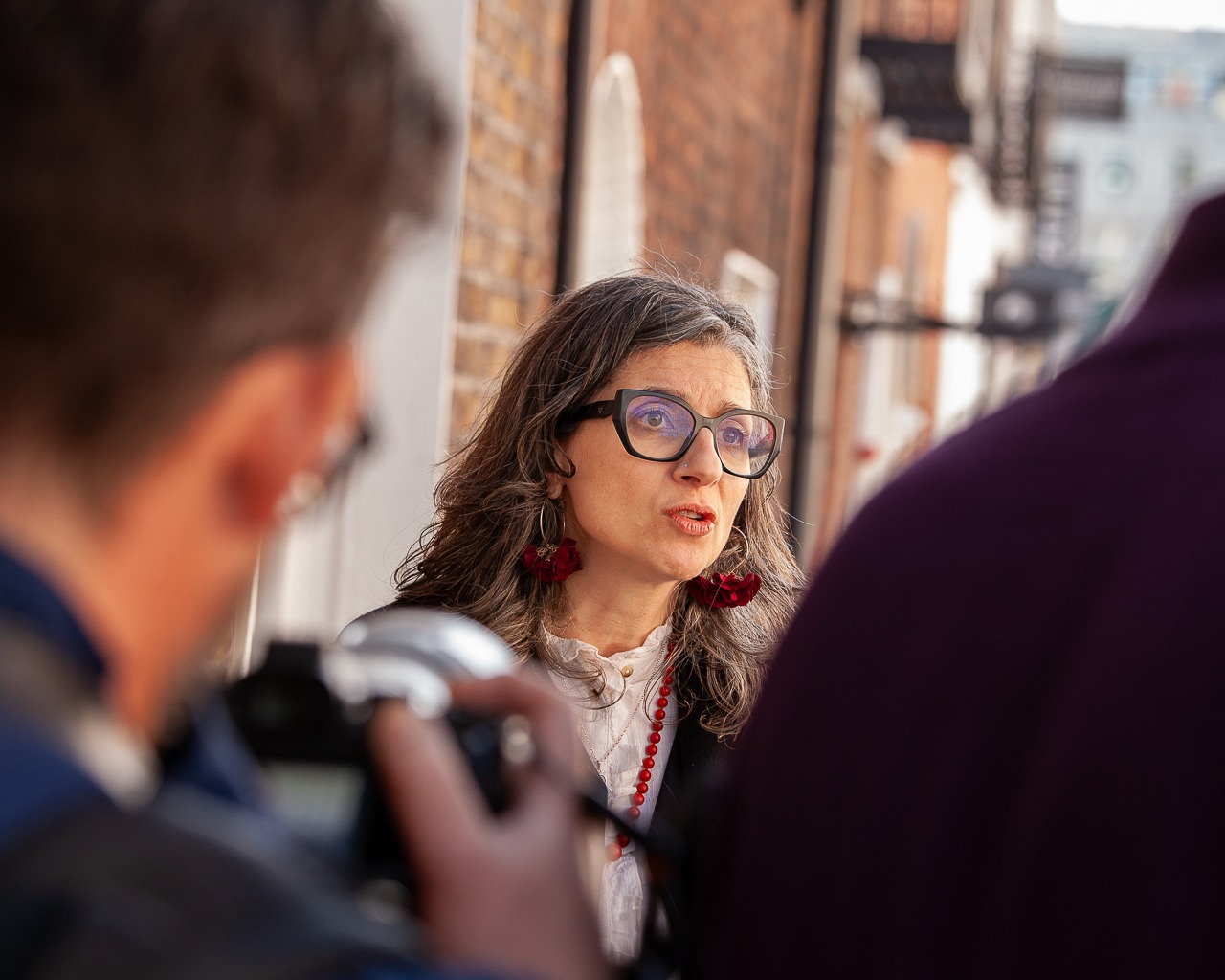
In times of systematic intimidation, complicit silences and institutional cowardice, the joint decision by the Vrije Universiteit Brussel, the University of Antwerp and Ghent University to award an honorary doctorate to Francesca Albanese is not a routine academic gesture. It is a stand. It is an ethical affirmation. And above all, it is a declaration of intellectual independence in a global climate in which telling the truth has become an act of risk.

For the first time in their history, in a solemn ceremony to be held on April 2 in Antwerp, these three Flemish universities — all of them benchmark institutions in Europe in research, international law, social sciences and the humanities — have decided to jointly confer the highest academic distinction on a jurist whose professional trajectory embodies with rare coherence the values the university claims to defend: rigor, honesty, courage and service to the public good. This is neither a coincidence nor a symbolic concession. It is a community of the highest intellectual level choosing to speak with a single voice.

Francesca Albanese is an international lawyer with a solid, extensive and deeply respected career in the field of human rights. Before assuming in 2022 the position of United Nations Special Rapporteur on the situation of human rights in the occupied Palestinian territories, she worked for more than a decade as a legal adviser and expert within various UN mechanisms, specializing in international humanitarian law, civilian protection, forced displacement and state responsibility. Her mandate was renewed in 2025, an explicit recognition of her technical quality and the independence with which she has exercised a function particularly exposed to political pressure.

The official statements issued by the universities are clear and deliberate. In their joint declaration, the institutions underline the “exceptional commitment of Francesca Albanese to the protection of human rights and the strengthening of international law”, as well as her ability to exercise her mandate “with professional independence and legal rigor in contexts of extreme polarization”. This is not empty praise: it is an accurate description of a career built on evidence, law and responsibility.

From the Vrije Universiteit Brussel, its rector has insisted that the university is not a neutral space in the face of injustice, but a place where critical thought must remain free from external pressure. The University of Antwerp has stressed that this joint recognition expresses a shared conviction: that academia has an inescapable social responsibility when international law is systematically violated. Ghent University, for its part, has emphasized that honoring Albanese is honoring the principle that research and legal analysis cannot be subordinated to campaigns of intimidation or to contingent political interests.

That last point is not minor. Because the announcement of the doctorate has been followed, as was predictable, by a smear offensive driven by Zionist organizations that operate as political lobbies, not as academic actors. We are not speaking of religious communities or cultural identities. We are speaking of organized political structures that, for years, have sought to discredit, silence or expel from the public sphere any voice that documents the crimes of the State of Israel and the colonial and violent nature of the Zionist project in its current expression.

The pattern is familiar and crude: distortion of statements, unfounded accusations, media pressure, veiled threats to institutions, moral blackmail through the instrumental use of antisemitism. None of this withstands serious analysis. And none of it has been enough to make three elite universities retreat. On the contrary: they have reaffirmed their decision with clarity, laying bare the abysmal distance between rigorous intellectual work and the dirty game of those who confuse intimidation with argument.

The background to this dispute is not abstract. It is material. It is human. It is bloody. The reports presented by Francesca Albanese to the United Nations constitute one of the most severe and meticulously substantiated documentations of the destruction of Gaza. In them, the rapporteur explains that, when considering not only direct deaths caused by bombings and military attacks, but also indirect deaths caused by induced hunger, the collapse of the health system, the deliberate destruction of civilian infrastructure, dehydration, preventable diseases and massive forced displacement, the real number of Palestinians killed reaches, at a minimum, 680,000 people, a civilian population composed overwhelmingly of children, women and the elderly.

This figure is not rhetorical. It is not propaganda. It is the result of applying legal and epidemiological standards historically used to assess mortality in contexts of mass destruction. And it is, moreover, a conservative figure. Albanese herself has been explicit in stating that the impossibility of counting the dead with precision — bodies under the rubble, destroyed records, razed hospitals — is part of the crime itself. Genocide does not only kill: it erases.

Faced with that reality, the reaction of the Zionist organizations that today attempt to sabotage this academic recognition is not a defense of ethics or historical memory. It is the reaction of a political apparatus that knows itself exposed, challenged and increasingly isolated in the face of evidence. It is the symbolic violence of those who cannot refute the facts and instead choose to attack the one who names them.

The response of the Belgian universities is therefore profoundly significant. They are not rewarding an opinion. They are recognizing a professional life dedicated to law, rigorous research and the defense of the most basic principles of international legality. They are saying, without ambiguity, that the university does not bow to political bullying or moral blackmail. They are reminding us that knowledge does not submit to power when power commits crimes.

Francesca Albanese is not a fleeting figure nor an occasional provocateur. She is a solid jurist, a serious researcher and an international public servant who has assumed the cost of saying what many prefer to silence. And that is why she is attacked today. And that is precisely why she is honored.

Neither all the money, nor all the influence, nor all the disinformation machinery of the criminals who today ravage Gaza will be able to silence an honest voice. Much less extinguish her brilliance. Because when intelligence is exercised with ethics, and the university remembers its reason for being, the truth always finds where to stand.

And this time, it is sustained by a community of the highest academic level that has decided not to look the other way.Email

Claudia Aranda is a journalist in Pressenza's Chile team.