Friday, January 30, 2026


Starmer and Xi pledge "comprehensive strategic partnership" in Beijing talks

Starmer and Xi pledge
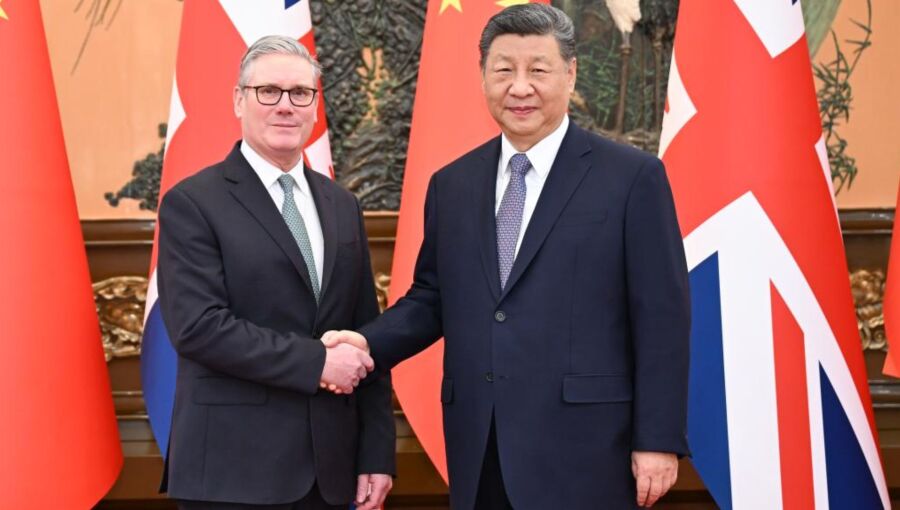
Chinese President Xi Jinping meets with British Prime Minister Keir Starmer, who is on an official visit to China / CC: Xinhua.
By bne IntelliNews January 29, 2026

British Prime Minister Keir Starmer held an 80-minute meeting with Chinese President Xi Jinping in Beijing on January 29, marking the first visit by a UK leader to China in eight years as both nations seek to reset long-strained relations.

Relations between London and Beijing deteriorated following China's crackdown on civil liberties in Hong Kong in 2019, concerns over Chinese espionage in Britain, and Beijing's support for Russia's invasion of Ukraine. The UK recently approved controversial plans for a large Chinese embassy in London, removing a major sticking point in bilateral relations.

Starmer told Xi that the UK and China need a "long-term, consistent and comprehensive strategic partnership" during talks at the Great Hall of the People, emphasising cooperation on climate change and global stability during what he described as "challenging times for the world."

"It's with the British people in mind that I am here today," Starmer said at the start of the meeting. "I made a promise 18 months ago when we were elected into government, that I would make Britain face outwards again. Because as we all know, events abroad affect everything that happens back in our home countries, from prices on the supermarket shelves to how secure we feel."

Xi acknowledged the difficulties in UK-China relations in recent years, telling Starmer the relationship had seen "twists and turns that did not serve the interests of our countries."

The Chinese president added that "good things often come with difficulties," appearing to recognise the criticism Starmer has faced for reaching out to Beijing despite national security and human rights concerns.

Following the talks, Starmer described the relationship as being in a "good place, a strong place," telling reporters the leaders had made "really good progress" on issues including reducing Chinese tariffs on Scotch whisky and introducing visa-free travel for British visitors.

The prime minister is leading a delegation of more than 50 British business executives and cultural organisation leaders as he seeks to expand opportunities for UK companies amid sluggish domestic economic growth. The visit comes as China's economy grew by 5% in 2025, compared with Britain's projected 1.5% growth for 2025.

Starmer confirmed he raised human rights issues with Xi, including concerns over Hong Kong and the imprisonment of British citizen Jimmy Lai, saying the two men had a "respectful discussion" on areas of disagreement.

In a post on X, Starmer wrote: "Growth at home is directly linked to our engagement with the world's biggest powers. Today I met with President Xi in Beijing. We affirmed our shared commitment to building a long-term and strategic partnership that will benefit both our countries, while maintaining frank and open dialogue on areas of disagreement. As Prime Minister, I will always deliver in the interest of the British people."

The two countries are expected to sign several agreements, including a deal on combating people smuggling across the English Channel by disrupting the trade in Chinese boat engines used by criminal gangs. More than half the engines used come from China, according to the British government.

The visit represents the latest in a series of trips to Beijing by leaders of US allies this month, following visits by the prime ministers of South Korea, Canada, Finland and Ireland. Germany's chancellor is expected to visit next month.


Trump says 'very dangerous' for UK to deal with China as Starmer arrives in Shanghai
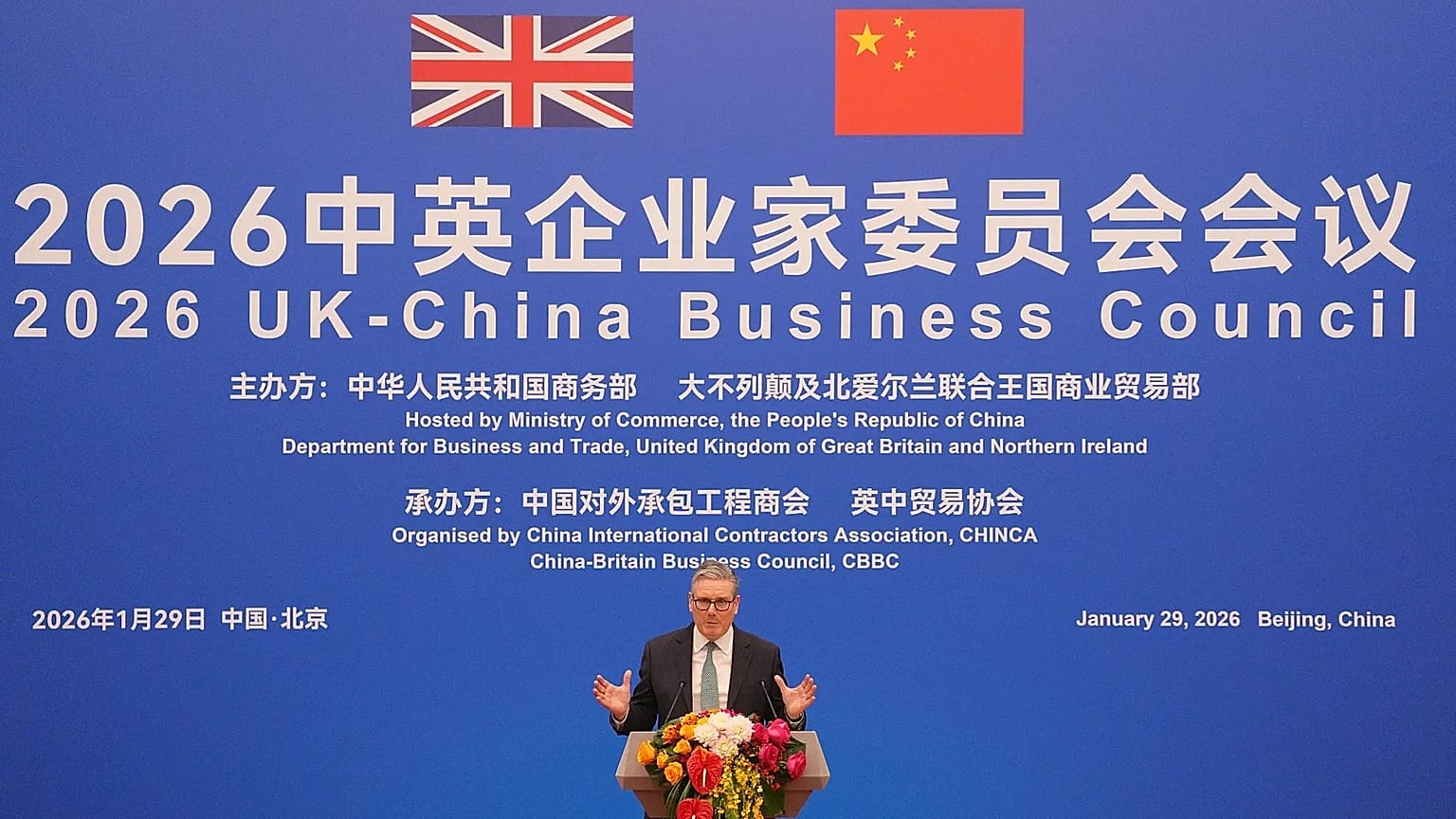
British Prime Minister Keir Starmer speaks during a news conference at the Great Hall of the People in Beijing, 29 January, 2026
Copyright AP Photo


By Gavin Blackburn
Published on 

Downing Street said that the White House had been aware of Starmer's trip and its objectives in advance and pointed out that Trump himself is due to visit China in April.

US President Donald Trump has it is "very dangerous" for close ally Britain to deal with China, as UK Prime Minister Keir Starmer is in the country for talks with President Xi Jinping aimed at resetting relations.

Trump made the remarks to reporters while attending the premiere of a documentary about his wife, First Lady Melania Trump.

Asked about the UK "getting into business" with China, Trump said "Well it's very dangerous for them to do that."

Starmer's visit to China is the first by a British premier since 2018 and follows a slew of Western leaders seeking a rapprochement with Beijing recently, seen by many as a pivot from an increasingly unpredictable United States.

In response to Trump's comments, Downing Street said that the White House had been aware of Starmer's trip and its objectives in advance and pointed out that Trump himself is due to visit China in April.

On Thursday, Starmer met with Xi and other Chinese officials and signed several cooperation agreements.

Canadian Prime Minister Mark Carney also visited China in mid-January and reached agreements on trade and tourism.

Afterward, Trump threatened to hit Canadian imports with 100% tariffs if Carney made further deals with Beijing, a threat the Canadian PM later dismissed as a negotiating tactic.

"It's even more dangerous, I think, for Canada to get into business with China. Canada is not doing well. They're doing very poorly, and you can't look at China as the answer," Trump said.

Meanwhile, Starmer arrived in China’s financial centre Shanghai on Friday in his bid to boost business opportunities for UK firms in the world's second-largest economy.

Starmer has brought more than 50 business leaders on his trip.

Starmer said on Friday that he had had "very good meetings" with Xi, that had provided "just the level of engagement that we hoped for."

"We warmly engaged and made some real progress, actually, because the UK has got a huge amount to offer," he said at the Bank of China in Beijing.


Venezuela's parliament approves oil sector privatisation in historic reversal

Venezuela's parliament approves oil sector privatisation in historic reversal
Under the new framework, private operators will gain authority over production and commercialisation whilst disputes can be resolved through international arbitration rather than Venezuela's court system / bne IntelliNews
By bnl editorial staff January 29, 2026

Venezuela's National Assembly has backed a fundamental restructuring of the country's oil sector, driving the final nail into more than two decades of socialist policies that prioritised state control over the industry.

Legislators unanimously approved the hydrocarbon law reform nearly four weeks after US special forces captured Nicolás Maduro during a military operation in Caracas. Acting president Delcy Rodríguez must now sign the bill into law after she introduced proposals to meet US President Donald Trump's demands for changes to attract foreign investment to rebuild the country's flagging oil infrastructure.

Under the new framework, private operators will gain authority over production and commercialisation whilst disputes can be resolved through international arbitration rather than Venezuela's court system. Royalty rates will be capped at 30% but can be lowered at the executive branch's discretion based on project economics and competitiveness requirements.

"The Organic Law reforming the Organic Hydrocarbons Law is now sanctioned for history, for the future, for our daughters and sons," Jorge Rodríguez, head of the National Assembly and the president’s brother, declared after the vote. "Only good things will come after the suffering."

The changes tear down the framework established by the late Hugo Chávez, whose government placed centralised control of petroleum operations at the heart of his oil-funded socialist transformation. A 2006 overhaul mandated that state-owned Petróleos de Venezuela (PDVSA) maintain controlling interests in all significant ventures, prompting the departure of Western multinationals including ExxonMobil and ConocoPhillips after they rejected revised contractual terms.

The new law removes provisions that limited dispute resolution to regime-aligned Venezuelan courts, a change foreign investors deem as crucial protection against potential asset seizures. It also eliminates several taxes and contributions, including wealth taxes and various social levies, consolidating them into a single integrated hydrocarbons tax capped at 15%.

The National Assembly received more than 120 proposals during a consultation process that included meetings with national and international oil executives. Rodríguez led a session with company representatives and lawmakers on Monday before the final parliamentary debate.

US Secretary of State Marco Rubio praised the reform's scope during congressional testimony but cautioned it may prove insufficient. "They have passed a new hydrocarbons law that essentially eliminates many of the restrictions imposed during the Chávez era on private investment in the oil industry," he said. "However, it probably won't be enough to attract the necessary investment, but it represents a significant step forward."

The legislation formalises production-sharing contracts that the Maduro government introduced with limited success under a 2020 anti-blockade law aimed at circumventing US sanctions. According to Rodríguez's administration, the new framework will allow investors to assume operating costs and financing risks whilst providing greater operational autonomy.

Venezuela holds the world's largest proven oil reserves, estimated at roughly 303bn barrels, but production has collapsed from 3.4mn barrels per day when Chávez took power in 1999 to approximately 1mn b/d today. The decline stems from chronic underinvestment, mismanagement and corruption, compounded by US sanctions imposed during successive administrations.

The White House has expressed its intention to promote recovery of Venezuela's oil industry and ensure export revenues benefit the population. The president recently signed an executive order protecting Venezuelan oil assets held in US Treasury accounts from legal claims by international creditors.

Trump has made clear his administration intends to exert direct control over Venezuela's oil sector following Maduro's toppling. "You're dealing with us directly. You're not dealing with Venezuela at all. We don't want you to deal with Venezuela," the president told oil executives at a White House meeting earlier this month, declaring that his government would decide which firms would be allowed to operate in the country.

Employees of the state oil company attended the January 29 legislative session, celebrating as lawmakers completed their vote.

The law will take effect once Rodríguez signs it and it is published in the Official Gazette, completing a legislative process that began shortly after Maduro's ouster. The reform redefines the legal framework of Venezuela's most important industry, whose performance will prove decisive for the country's economic reconstruction.

Whether the changes prove sufficient to lure back major international oil companies remains uncertain. ExxonMobil and ConocoPhillips are still awaiting billions of dollars in arbitration awards stemming from Chávez's 2006 nationalisations, whilst other firms that remained in Venezuela, including Chevron, operated under increasingly unfavourable conditions as successive governments appropriated profits.


CENTRAL ASIA BLOG: On the Board of Peace, you vote, Trump decides

CENTRAL ASIA BLOG: On the Board of Peace, you vote, Trump decides
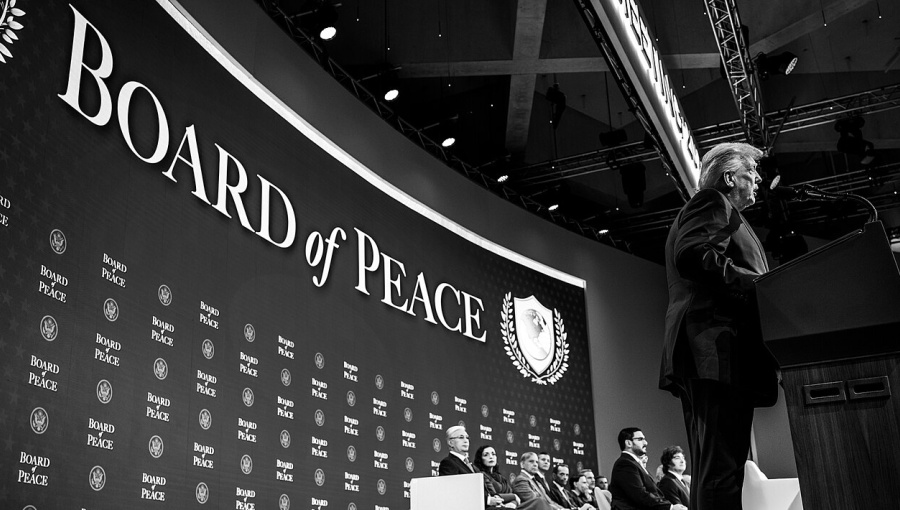
Trump launches the Board of Peace at Davos. Kazakhstan's president, Kassym-Jomart Tokayev, is seen sitting first left. / The White House, public domain
By bne Eurasia bureau January 27, 2026

Until and unless it puts in some hard yards, the suspicion will be that Donald Trump’s Board of Peace (BoP) will turn out to be no more than a gimmick.

Nevertheless, such a prospect hasn’t stopped Central Asia’s big two, Kazakhstan and Uzbekistan, and neighbouring Mongolia from signing up as founding members of the BoP, of whom there are 20 in all. True, the Kazakhs, perhaps a little nervous that they’ll turn out to have joined a deadbeat organisation (a January 26 opinion piece by foreign policy analyst and columnist for The Washington Post, Max Boot, argues that the BoP is already floundering and likely to disappear and be soon forgotten) were quick to point out that they’ve gained a seat at the table without shelling out the billion-dollar membership fee (it turned out that the fee was only compulsory for those wanting to take out membership for more than an initial three-year term), but, like the Uzbeks and Mongolians, they are for ever looking out for ways of ensuring their affairs are not subject to any overbearing designs of major power neighbours Russia or China – and the BoP is one.

Saying “No” to Trump would certainly not be characteristic of the Central Asian pair or Mongolia, given that they tend to join any organisation going that offers a chance to broaden their multi-vector foreign policies, namely the diplomatic strategy often adopted by middle powers that sets out to maintain balanced, cooperative and non-aligned relations with multiple major, often rival, global powers.

To Trump, Central Asia and Mongolia make up a part of the world that is rich in natural resources, such as the critical minerals so vital to transition technologies in defence, aerospace, automotive and other industries including (whisper it quietly if you’re in the vicinity of the climate crisis denying White House) energy. As was demonstrated by the prevailing focus of last November’s Central Asia Five + US White House summit, Trump sees the region as offering business deals galore and, what’s more, trade and investment that could put Beijing’s nose out of joint.

Boot has an interesting line on how big a role business will play in the BoP’s activities, should Trump’s ambitions be realised, writing that “whatever the superficial differences between Trump’s contemplated annexation of Greenland and his attempt to create what the [BoP] invitation bills as ‘the most impressive and consequential Board ever assembled,’ they are manifestations of the same impulse: Trump wants to do whatever he wants, wherever he wants, unconstrained by any checks or balances, and he would like to make a lot of money doing it”.

Suffice to say, Trump’s ideas as to what the BoP can achieve are characteristically monumental.

Again, as Boot writes: “The U.N. Security Council presumably had no idea, when it approved in November the creation of the Board of Peace, that it was bringing into existence a potential competitor to the United Nations itself. The council’s intent was to create a Gaza governing mechanism free of Hamas control. That goal hasn’t been achieved: Hamas still controls half of Gaza (Israel has the other half), and it refuses to disarm. That makes it impossible to implement the White House’s pie-in-the-sky plan to transform the devastated war zone into a technology and tourism hub.”

However, if the BoP does start causing great ructions on the international scene, the observer can only expect the Kazakhs, Uzbeks and Mongolians to keep their heads well and truly down. This is a one-man show. Astana, Tashkent and Ulaanbaatar know the score – they should be seen, but not heard – and that suits them fine.

On the business side in Central Asia-US relations, Washington has lately stepped up its bid to lay claim to much of Kazakhstan and Uzbekistan’s tungsten resources in the face of sharp Chinese rivalry, while the end of last week even saw two senior US officials – US Secretary of the Army Daniel Driscoll and US Presidential Special Envoy for South and Central Asia Sergio Gore – visit the “hermit” nation of Turkmenistan, with both regional security and economic issues on the agenda (and perhaps also “Iran”, given Turkmenistan borders it to the north).

There are numerous deals to be done, but Trump will not get it all his own way – neither the Central Asian stans or Mongolia are in the business of unduly upsetting either Moscow or Beijing.

On the other hand, they certainly won’t want to unduly upset Trump. As political scientists Austin Sarat and Ruxandra Paul on January 26 wrote for The Hill: “Not since Woodrow Wilson conceived of a League of Nations in the wake of World War I has a single figure imagined himself capable of reordering the world. But, unlike Wilson’s design for the League, which contemplated shared decision-making, Trump’s Board of Peace ratifies his desire to run the world in accordance with his own morality and his own mind.”

Indonesia’s self-funded quest in the Gaza Peace Council backfires

Indonesia’s self-funded quest in the Gaza Peace Council backfires
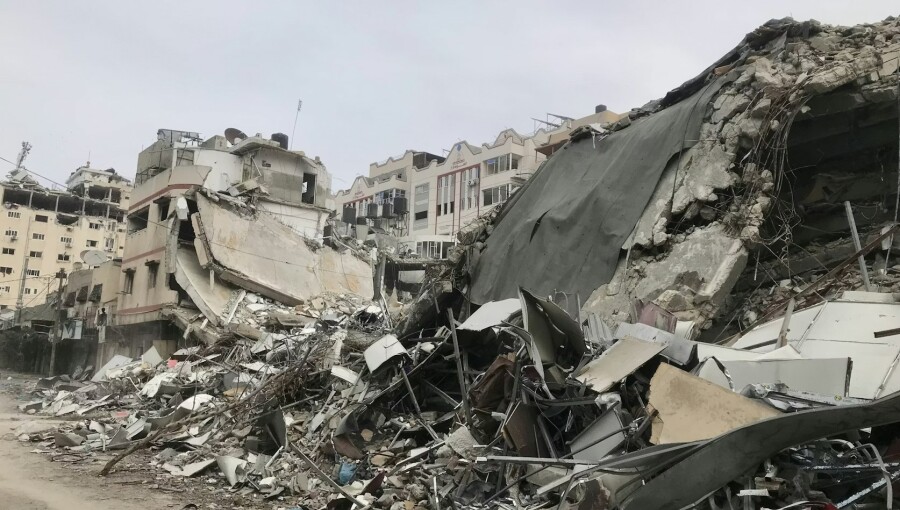
Gaza / Emad El Byed - Unsplash
By bno - Surabaya Office January 30, 2026

Indonesia officially announced its entry into the Gaza Peace Council at the World Economic Forum 2026 in Davos on January 22. The Gaza Peace Council is a Trump-backed initiative that, according to RRI, aims to safeguard a multilateral, humanitarian effort to reconstruct Gaza, RRI reports.

With the country’s seemingly ironic participation, a question arises: Was this the plan all along? Indonesia has been known to be a united front when it comes to supporting the liberation of occupied Palestine from the Israeli regime. But under President Prabowo Subianto’s leadership, Indonesia insists on not taking sides. Joining the Gaze Peace Council becomes a safe option.

What’s at stake

On the surface, the decision made sense. Indonesia, along with the United Arab Emirates, Jordan, Pakistan, and Saudi Arabia, cannot remain outside of the council as they took a vigilant stance on Palestinian issues. With political, security, and domestic stakes riding on the liberation issue, what’s left is the option to join. These countries have a strategic pattern, and it’s involving currying favour with Trump.

The general assumption is that the peace council was meant to ensure Gaza’s peace. But the board’s role kicks in with two bodies' mediation: the Gaza Executive Board and the National Committee for the Administration of Gaza (NCAG). The Gaza Executive Board has eleven members that Trump appointed, including Israel, but no Palestinian representatives. The NCAG, on the other hand, is a body made up of selected Palestinians with Arab and US partners, with the aim of Gaza’s rehabilitation and governance, returning the Palestinian Authority to Gaza.

During a meeting in Davos, Ali Shaath, NCAG’s High Representative, also stresses the Trump peace plan, indicating the Rafah crossing will be opened and the committed entry of humanitarian aid only after the return of the last hostage at Israel’s request. The next phase of the plan will include the deployment of the International Stabilisation Force and disarmament of Hamas, which many believe will defeat the purpose of the Palestinian liberation mission.

The advocates for the Gaza ceasefire, namely Egypt, Qatar, and Turkey, have now joined the same board, which continues to delude the peace effort.

Self-funded move is a statement

Following Indonesia’s decision to join the council, Minister of Defence, Sjafrie Sjamsoeddin stated that the country participates under a self-funded scheme. Sjamsoeddin said that it reflects Indonesia’s commitment to be a part of the international peace efforts independently, RRI reports.

The self-funded scheme will see the Indonesian Military (TNI) optimising its troops for the Peace Council mission. So far, the TNI commander has already presented one brigade as part of the preparation plan, followed by the plan to deploy one battalion.

A representative from the Ministry of Foreign Affairs lent her insight on the matter: “Indonesia's decision to join Trump’s so-called peace council is the country’s way to be involved directly in the discussion about Palestine’s future. From the government’s perspective, our position remains clear: We support a two-state solution and the establishment of a sovereign Palestinian state, with its people’s rights fully protected.” The source, who prefers to remain anonymous, added that the reason to join for Indonesia is so it can have a seat at the table and encourage a more balanced approach.

However, at the same time, the fact that the initiative is driven by the US leads to wide public disagreement and criticism, she noted.

Novaya Siantita, an Indonesian journalist, commented on the decision: “In my view, it feels like a move driven more by the need for validation than a genuine push for peace. Indonesia’s participation looks less like moral leadership and more like an attempt to appear active and relevant on the global stage, to get recognition for “doing something,” rather than actually changing anything.”

Presence without power

Despite painting the image of “peace for all”, Indonesian President Prabowo continues to receive backlash. A video showing the President stating that the suffering of Gazan people has significantly decreased is widely circulated. despite some reports still showing Israel’s continuous bombing. Tempo reports that this was a statement made in line with the country’s joining the Peace Council, signalling their national agenda.

“If people say this is purely for 'national interest’, then which nation are we talking about, because ordinary citizens don’t seem to gain anything from it. Without real influence over decisions or the agenda, joining this forum is just a presence without power. I think taking a risky political stance just to look strong internationally comes off as insecurity, paid for with public resources,” Novaya added.

Novaya continued to say what many Indonesians are expressing online: “Our tax money is distributed for a make-believe programme, with no certainties, led by a problematic leader. At a time when Indonesia has many urgent domestic needs, putting public money into something this unclear feels irresponsible. In the end, it risks becoming costly symbolism with no real benefit for peace, not for Gazans, and certainly not for Indonesians.”


Sex differences in brain growth emerge in the womb, study finds


University of Cambridge


Cambridge researchers have revealed a detailed picture of how the human brain grows from mid-pregnancy through the first weeks after birth and identified that sex differences in brain growth are apparent from mid-pregnancy onwards.

There has long been debate over exactly how early in human brain development sex differences first emerge, and what causes them. Previous research has typically studied prenatal or postnatal brain development alone but not both together. That means that until now it has not been possible to study brain growth across the prenatal to postnatal transition.

Researchers at the Autism Research Centre, University of Cambridge, analysed data that mapped how the human brain develops continuously across the prenatal to postnatal transition. This enabled them to develop a more accurate model of early human brain development and to pinpoint exactly when sex differences in brain growth first emerge.

The study used one of the largest perinatal brain imaging datasets ever assembled, collected by the Developing Human Connectome Project. The dataset consisted of nearly 800 prenatal and postnatal brain scans from mid-pregnancy to one month post-birth.

Yumnah Khan, a PhD student in the Autism Research Centre, who led the study, said: “The human brain undergoes its most rapid and complex development before and shortly after birth. But until now, very little was known about exactly how the brain grows during this formative period of life, and how males and females might differ in this process. Our study has documented the presence of prenatal sex differences in the growth of the human brain.”  

In research published in the journal Scientific Reports, the team identified that, on average, males showed greater increases in brain volumes with age, across the whole brain, compared to females.

Dr Alex Tsompanidis, a Senior Research Associate at the Autism Research Centre, and a member of the research team, said: “This study addresses the age-old question of whether nature plays a role in shaping sex differences in the brain. The findings suggest that prenatal biology sets the stage for such sex differences, even if postnatal experience influences these further.

“The next step is to test if the observed sex differences in human brain growth are driven by prenatal sex steroid hormones, such as testosterone and estrogen. Male fetuses are exposed to much higher levels of these hormones which we know play a role in shaping sex differences in the brain and behaviour in other animals. We need to test if the same is true in humans.”

The research also provided several other important insights into how the brain grows during early development. For example, different brain regions and tissues were found to mature at different rates. White matter – responsible for connecting different brain regions – was found to be the main contributor to brain growth during mid-pregnancy, while grey matter – responsible for cognition and information processing – was found to dominate growth during late pregnancy and after birth.

The researchers also found that early brain development is carefully timed to meet ongoing developmental demands. For instance, subcortical grey matter structures (those deeper within the brain, such as the amygdala, cerebellum, and thalamus) show earlier peak growth rates than cortical grey matter, suggesting that brain systems supporting basic functions mature earlier than those involved in higher-order cognition.

Dr Richard Bethlehem, an Assistant Professor in Neuroinformatics, and a member of the team, said: “Establishing these brain growth trajectories early in life is critical because these may help us understand how differences in early brain development contribute to diverse outcomes, including psychiatric and neurodevelopmental conditions such as autism, which is associated with differences in rates of brain growth.”

Professor Sir Simon Baron-Cohen, Director of the Autism Research Centre, who supervised the study, added: “These findings may help us understand why males and females show differences in the likelihood of neurodivergent outcomes such as autism. For example, the early sex differences in the brain may be due to prenatal sex steroids, and autistic people are exposed to elevated levels of prenatal sex steroid hormones. Future research needs to join the dots in this exciting field of developmental neuroscience.”

The study used data from the Developing Human Connectome Project, funded by the European Research Council. The research was also supported by the Wellcome Trust, the Simon Foundation Autism Research Initiative, and a PhD studentship from Trinity College, Cambridge.

Reference

Khan, YT, et al. Mapping brain growth and sex differences across prenatal to postnatal development.  Scientific Reports; 15 Jan 2026; DOI:10.1038/s41598-025-33981-w