Friday, January 30, 2026

SPACE/COSMOS

Humans head back toward Moon for first time in 50 years: Everything to know about NASA's Artemis II

Here’s everything you need to know about NASA’s Artemis II mission
Copyright Credit: AP Photo


By Theo Farrant
Published on 

NASA Astronauts will soon be heading back to the Moon for the first time in 50 years - but why are they going, who’s going, and what will they get up to?

For the first time in more than half a century, humans are preparing to venture back towards the Moon.

NASA's Artemis II mission, scheduled for launch on 6 February this year, will send four brave astronauts on a daring journey around the Moon, before returning to Earth's atmosphere at a record speed of approximately 25,000 miles per hour (40,000 km/h).

While the voyage will not include a Moonlanding, it represents a key step in the United States' plan to establish a long-term human presence beyond low Earth orbit.

Here’s a full lowdown on the Artemis II mission and why you should be tuning in for when it launches.

What is Artemis II?


Artemis II is the second mission in NASA'as Artemis programme, launched in 2017 to return humans to the Moon and eventually send astronauts to Mars. It will also provide important data that will be used for future Moon missions

It follows Artemis I, an uncrewed test flight that successfully orbited the Moon in late 2022.
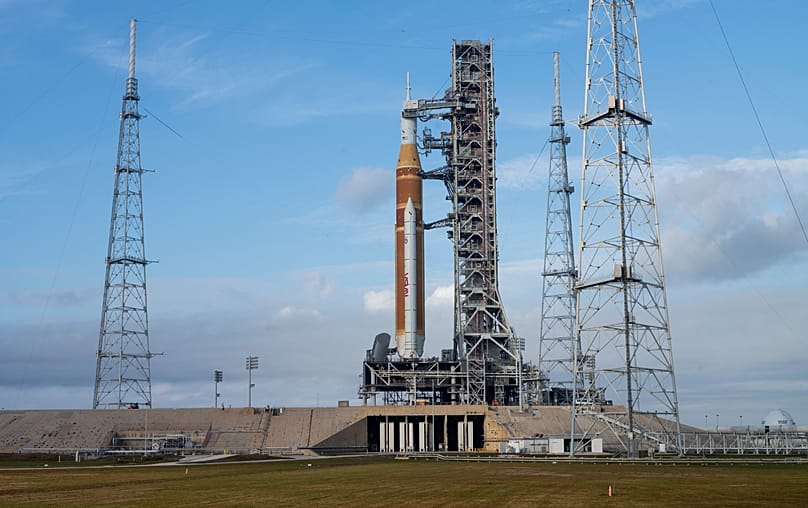
NASA's new rocket Artemis II sits on Kennedy Space Center's Launch Pad 39-B, 22 January 2026. Credit: AP Photo

For Artemis II, astronauts will fly aboard NASA's newOrion spacecraft, launched on the Space Launch System (SLS) rocket.

It will be the first time humans have flown on either vehicle, and the first time any crew has travelled near the Moon since Apollo 17 in 1972.

Why won’t the mission land on the Moon?

Unlike later Artemis missions, Artemis II is not designed to put astronauts on the lunar surface. Instead, the crew will orbit the Moon, passing around its far side before returning to Earth.

The mission is intended as a full end-to-end test of the systems that will eventually be used for landing missions.

NASA is using Artemis II to prove that its spacecraft, rocket and life-support technologies are safe and reliable enough to carry humans into deep space.

Artemis II mirrors Apollo 8, the 1968 mission that first sent astronauts around the Moon without landing.

What is the significance of this mission?

Although it may appear modest compared with a Moon landing, Artemis II carries significant political and strategic weight.

Sending humans beyond low Earth orbit requires long-term funding commitments, reliable technology and sustained political support.

Crewed missions signal seriousness in a way robotic missions do not, giving international partners and commercial companies the confidence to align their own plans with NASA's timeline.

From left, Canadian Space Agency astronaut Jeremy Hansen, mission specialist, Christina Koch, pilot Victor Glover and commander Reid Wiseman at the Kennedy Space Center. Credit: AP Photo

“This is a massive milestone for NASA and the Artemis programme because this is going to be the first time that a crew of humans will see the far side of the Moon, and is such an important milestone in NASA's eventual goal of getting two feet, human feet, back on the lunar surface," said John Pernet-Fisher, a research fellow at the University of Manchester.

"It's also exciting because it's a huge technological achievement. The huge new rocket and the spacecraft that they're riding in, and they're also going to be the fastest moving humans that have ever existed on reentry when they come back into the Earth's atmosphere. We expect them to be going about 25,000 mph," he added.

Who will be onboard?

The Artemis II crew will consist of four astronauts, including three Americans, Reid Wiseman, Victor Glover, and Christina Koch, and one Canadian, Jeremy Hansen.

Canada’s participation highlights the international nature of the Artemis programme, which now includes more than 60 countries signed on to the Artemis Accords.

What will the astronauts do during the mission?

Shortly after launch, the crew will begin testing Orion’s core life-support systems, including air, water and safety equipment.

This will also be the first time astronauts test a deep-space toilet system - a notable upgrade from the Apollo era, when crews relied on so-called “relief tubes".
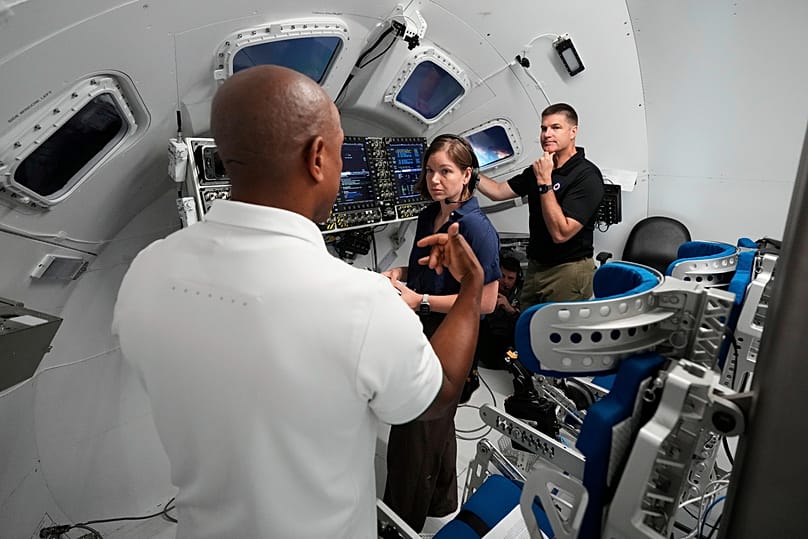
NASA pilot Victor Glover, Canadian astronaut Jenni Gibbons, and CSA mission specialist Jeremy Hansen training together in the Orion mission simulator at Johnson Space Center. Credit: AP Photo

“SLS and the Orion module that’s going to sit atop it is basically the next generation of rocket technology," said Pernet-Fisher.

"So back in the Apollo days, we had the Saturn V with the Apollo module on top. These are the modern equivalents, and specifically the SLS, the Space Launch System, is designed to be such a large rocket that it’s actually capable of perhaps even going a bit further eventually in the future."

He said that if NASA continues on this path, "it could well see missions to Mars, it could see things going deeper into space, for instance, it's been suggested that it's powerful enough to reach Jupiter, for instance."

How long is the mission expected to last?

An estimated 10 days, from launch to splashdown.

What comes after Artemis II?

If the mission is successful, it will pave the way for Artemis III and future missions aimed at building a human presence on and around the Moon, including the Lunar Gateway space station.

Europe made

The Orion craft relies on the German-made European Service Module for air, water and propulsion. It is a cylindrical module that provides electricity, water, oxygen and nitrogen, as well as keeping the spacecraft at the right temperature and on course.


Airbus defence chief: Europe could make 'quantum leap' in space but must abandon 'grand schemes'
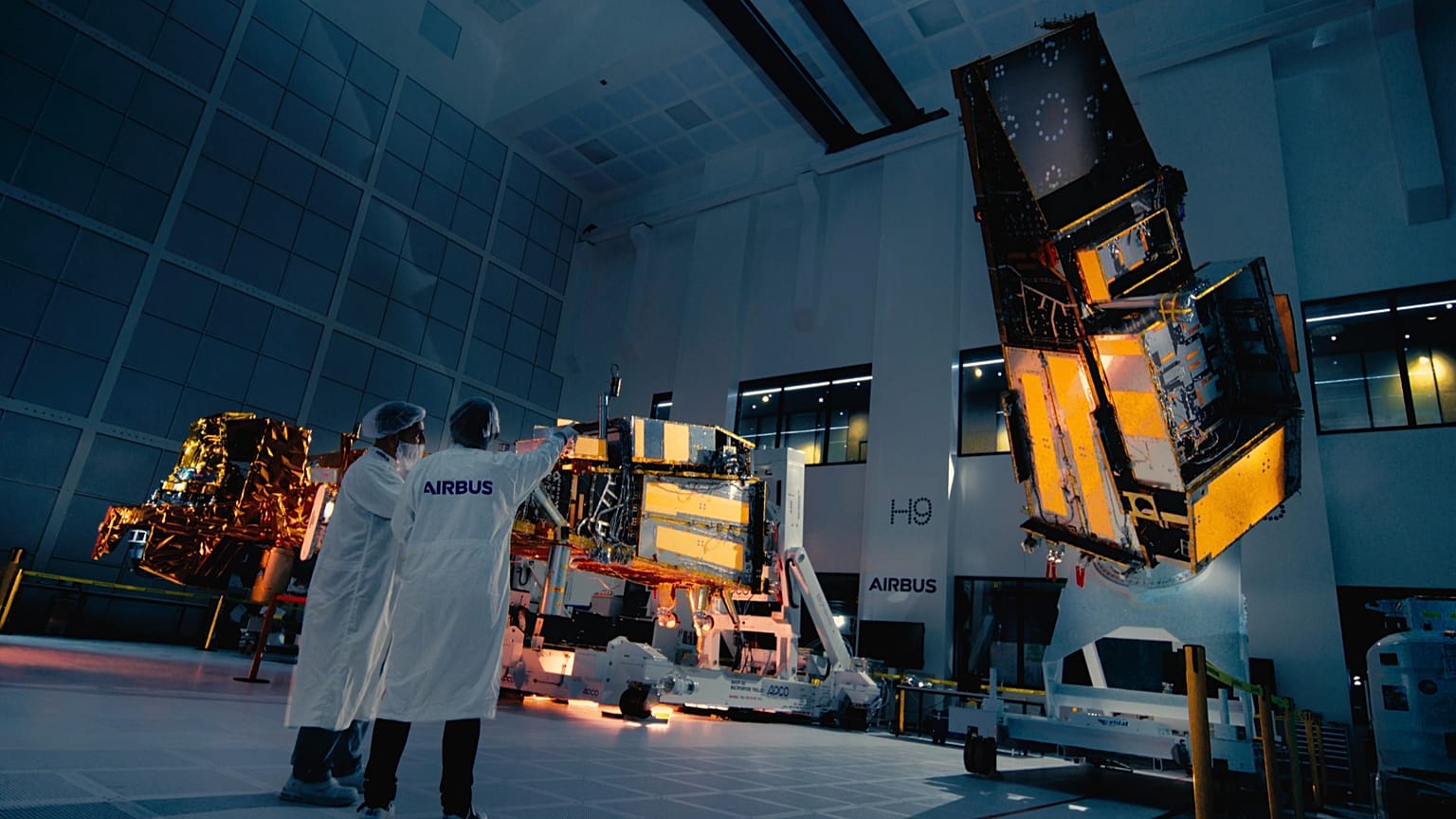
Three meteorological satellites in the cleanroom at Airbus' Friedrichshafen site, Germany, on 6 May 2025.
Copyright Airbus Defence and Space GmbH 2025


By Alice Tidey
Published o 

The EU's answer to Elon Musk's Starlink system will only be operational in 2029. As the CEO of Airbus Defence and Space sees it, the EU went about it completely the wrong way.

Europe has the chance to make a "quantum leap" in space technology over the coming years and boost its defences, but only if the EU stops wasting years on "grand schemes", Airbus Space and Defence CEO Michael Schöllhorn told Euronews.

The continent risks falling further behind in space unless it moves quickly from planning to action, Schöllhorn said.

“We have a gap when it comes to what I call active space defence, being able to act, protect, and counteract in space against adversaries that want to do something to our infrastructures, to our satellites,” he said.

The European Commission has pitched a so-called Space Shield as part of its Defence Readiness Roadmap, which aims to significantly bolster the bloc's ability to defend itself before 2030.

Space is seen as crucial to that effort, notably when it comes to intelligence, surveillance and reconnaissance as well as fast and secure communication. Strategic enablers, which include space assets, are now designated a priority area for investment by the European Commission.

For Schöllhorn, one of the problems that explains the space capability gap is one of scale, with European companies much smaller than their US counterparts. He attributes this to governments under-investing over the last several decades due to a lack of understanding about the strategic importance of space.

'A quantum leap' before 2030

The Commission's plan to rearm Europe aims to secure €800 billion of investment in the sector before 2030, especially in the nine priority areas that include strategic enablers, ammunition, air and missile defence, and drones.

Germany, which has opted against using any of the financial instruments the EU's executive has come up with to boost defence spending, has announced a €500 billion package for the next four years, including €35 billion for military space defence.

“What the Americans have always had is a budget at least 10 times (the size of the EU's). Even with everything that the Europeans are spending now, there's still at least three times higher budget in the US than compared to Europe – and that doesn't even take into account all the things that we call 'black programmes',” he said.

Airbus, Leonardo and Thales signed a Memorandum of Understanding in October 2025 to form a major joint venture that will merge their respective space activities into a single European space company. But even after joining forces, the resulting company would only be the fourth biggest in the world behind Lockheed Martin, SpaceX and Boeing, Schöllhorn said.

Still, he is upbeat about Europe's ability to catch up fast, telling Euronews that European industry will ultimately have the means and the capacity to meet the demand from member states.

"It depends again on the system, but I think before the decade’s over, we can have a quantum leap in terms of capability building,” he said – while warning that this can only happen if authorities provide industry with "practical definitions of programmes and solutions" so that companies can get started.

'Grand schemes on paper are worth nothing'

Schöllhorn also warned that excessive bureaucracy could undermine those ambitions, calling for the "unwinding" or "curbing back" of some regulations, and to rethink outdated rules that he said are no longer adapted because they were set up "when the world was totally different".

The way the EU went about defining its Infrastructure for Resilience, Interconnectivity and Security by Satellite (IRIS²) project "was an example of how not to do it", he said.

IRIS² is a planned multi-orbital constellation of 290 satellites that aims to support a large variety of governmental applications in surveillance, crisis management, connection and protection of key infrastructures as well as security and defence that was approved in 2024.

It is meant to be the EU's improved version of Elon Musk's Starlink, but is well behind that system's progress.

"Well, Starlink is on its third iteration," Schöllhorn said. "We, excuse me for saying it so clearly, thought politically so arrogantly that we can surpass them in one go in a few years. That's not a good definition of a programme."

Instead, he said, the EU should have acted fast by using what was already available and then building on that.

IRIS² is now expected to be operational in 2029.

Ultimately, Schöllhorn said, Europe must prioritise concrete action over lofty ambitions. "Grand schemes on paper are worth nothing," he said.


Russia Targeting Lunar Power Station By 2036


How a base on the moon might look (Image: NPO Lavochkin)

January 30, 2026 
By World Nuclear News

Roscosmos has signed a contract with NPO Lavochkin for the creation of a Russian lunar power station by 2036 – with an expectation it will necessitate three missions to the Moon, in 2033, 2034 and 2035.

Roscosmos, Russia’s federal space agency, said the purpose of the nuclear power station on the moon would be “long-term power supply to consumers (moon rovers, observatory) of the Russian Lunar programme, as well as infrastructure facilities of the International Lunar Research Station (including facilities of foreign partners)”.

As part of the power plant project, which features Roscosmos, Rosatom and the Kurchatov Institute, there will be development of spacecraft, ground-based experimental testing, flight tests and deployment of infrastructure to the Moon. Roscosmos said the project was “an important step toward creating a permanent scientific lunar station and transitioning from one-time missions to a long-term lunar exploration programme”.

According to Interfax, Vasily Marfin, CEO of NPO Lavochkin, said during his presentation at the plenary session of the 50th Academic Readings on Cosmonautics in Memory of Korolev, the missions in 2033 and 2034 would be for support and infrastructure delivery, with the power module transported to the Moon in 2035.

He was reported to have stressed the complexity of the project and the uncertainties, and added: “The power module is being developed in cooperation with Rosatom and under the scientific supervision of the Kurchatov Institute.”

Russia and China have signed agreements over recent years to cooperate on the creation of a lunar base – with ​China National Space Administration and Roscosmos leading cooperation on the development of the International Lunar Research Station (ILRS).

A number of other countries, including Belarus, South Africa and Serbia, have signed up to participate in the project which, according to China’s official Xinhua news agency, is expected to be built in three phases in the 2030s.

It also reported in 2024 that Chinese researchers were considering basalt as a material to build the lunar base – using local materials on the moon would save large costs compared with sourcing materials from Earth.

The Reuters news agency reported last year on China’s ‘555’ plan – which aims to invite 50 countries, 500 international scientific research institutions, and 5,000 overseas researchers to join the ILRS.

There are also other projects looking at establishing permanent lunar bases, including using nuclear energy as a power source. Earlier this month NASA and the US Department of Energy said they had recently signed a memorandum of understanding to solidify their collaboration and advance the “vision of American space superiority” set out in an Executive Order signed by US President Donald Trump on 18 December. As well as “returning Americans to the Moon by 2028” – through the Artemis Program – this order includes deploying nuclear reactors on the Moon and in orbit, including the development of a lunar surface reactor by 2030.

In Europe, France’s Framatome and the Italian Agency for New Technologies, Energy and Sustainable Development, ENEA, announced last September that they were to explore advanced technological solutions for nuclear reactors to power future settlements on the Moon. Their memorandum of understanding covers three areas: studies regarding the fuel required for the reactor, with a view to ensuring both efficiency and safety; the development of new materials capable of withstanding the extreme conditions in space; and the use of additive manufacturing for reactor components.


Paralysed British student controls computer with thoughts using Elon Musk's Neuralink brain implant


By Theo Farrant & AP
Publishd o 

Doctors say the early Neuralink results are promising, but the technology still remains experimental.

A British medical student paralysed in a diving accident has regained a degree of independence after receiving a brain implant developed by Elon Musk’s company Neuralink, as part of an early-stage clinical trial in London.

Sebastian Gomez-Peña is among the first patients in the United Kingdom to test the device, which allows users to control a computer using only their thoughts.

Implanted during a five-hour operation at University College London Hospitals (UCLH), the chip connects to the brain via microscopic threads and transmits neural signals wirelessly to a computer.

Offering hope to people living with paralysis

From a hospital room in London, Gomez-Peña can now move a cursor, open files and play chess on a laptop without touching it. The system interprets patterns of brain activity associated with intended movement and converts them into digital commands.

“It’s a massive, massive change in your life where you can suddenly no longer (use) any of your limbs, and this kind of technology kind of gives you any piece of hope,” he said.

“Everyone in my position tries to move something of the body to see if there is any form of recovery, but now I think, I’m moving my hand to the right, to the left, I’m taking my fingers, and the technology just understands what I want to do and it does it.”

Gomez-Peña was injured shortly after beginning medical school. "I dived, I hit the floor and hit my head, and alongside breaking my neck, I also broke my front two teeth and that’s how I started," he said.

How does the brain chip work?

Carried out at UCLH, the procedure used a surgical robot designed by Neuralink to place electrodes into a precise area of the brain.

The robot inserts ultra-thin threads into the surface of the brain. Each thread is around ten times thinner than a human hair and contains multiple electrodes that can detect electrical activity from individual groups of neurons.

In Sebastian’s case, the electrodes were inserted around four millimetres into the motor cortex, the region of the brain that controls hand and finger movement.

The threads connect to a coin-sized chip that sits inside a circular opening in the skull, flush with the bone. Once implanted, the chip records patterns of brain activity and transmits that data wirelessly to an external computer.

Early results promising, but long-term effects unknown

Gomez-Peña is one of seven people taking part in the UK trial and one of 21 worldwide, including participants in the US, Canada and the United Arab Emirates.

“This technology, it is going to be a game-changer for patients with severe neurological disability, and those patients really have very little to improve their independence," said Dr Harith Akram, the lead investigator for the UK trial at UCLH.

Doctors involved in the trial say Gomez-Peña’s control of the system is fast and precise. Elsewhere, some participants have learned to type using virtual keyboards or operate devices using thought alone.

However, the findings have yet to be published in peer-reviewed journals, and the technology has not been approved for widespread medical use.

Researchers say larger and longer trials will be needed to assess long-term safety, durability and effectiveness before regulators could consider licensing the device.

ALASKA

ConocoPhillips’ Winter Oil Exploration Plans Can Go Ahead, Federal Judge Rules

January 30, 2026 
 Alaska Beacon
By James Brooks

(Alaska Beacon) — A federal judge in Alaska declined on Tuesday to stop oil exploration efforts by ConocoPhillips in the federally controlled National Petroleum Reserve-Alaska on the North Slope.

In a 17-page order, Judge Sharon Gleason concluded that a group of environmental and tribal groups did not show that they were likely to succeed in a lawsuit seeking to block the company’s program, and for that reason she denied their request for a preliminary injunction that sought to stop the company’s work.

Sovereign Iñupiat for a Living Arctic, the Center for Biological Diversity and The Wilderness Society filed suit against Interior Secretary Doug Burgum in December, saying that ConocoPhillips’ work would damage the area’s tundra.

They claimed the Bureau of Land Management used arbitrary standards when approving ConocoPhillips’ work.

Gleason concluded otherwise, writing, “BLM conducted a reasonably thorough analysis of the impacts of the Winter Program on tundra in the project area on various types of vegetation. BLM concluded that it ‘expected impacts to vegetation would be minor and would be further minimized through applicable mitigation measures.’”

Gleason’s decision came days after a mobile oil rig known as Doyon 26 tipped over while being transported for use in the exploration program. She concluded that, based on a ConocoPhillips report, the accident didn’t merit a delay in her decision, and the company said the work would continue with a substitute rig.

“ConocoPhillips welcomes the District Court’s decision denying the preliminary injunction motion, enabling our exploration program to continue as planned,” said Megan Phillips, director of communications and community investment for ConocoPhillips Alaska, by email. “We recognize the strategic importance of resource development in the state and look forward to building on our track record of responsibly exploring and developing Alaska’s resources in ways that benefit all Alaskans.”

The plaintiffs in the case said they were disappointed by Gleason’s decision.

“This ruling is difficult for many of us who live close to these decisions and their consequences, especially as we are still processing the recent rig collapse and diesel spill near Nuiqsut,” said Nauri Simmonds, executive director of Sovereign Iñupiat for a Living Arctic. “Incidents like this show how quickly risks on the land become risks for the people who rely on it. Our safety, our food sources, and the places we depend on deserve more than rushed approvals and delayed explanations. While this ruling allows exploration to continue for now, we remain committed to ensuring the Western Arctic is treated with the care and respect that future generations deserve.”

While limited to ConocoPhillips’ winter drilling program, Gleason’s decision comes as courts consider legal challenges to oil work in the National Petroleum Reserve, which is located to the west of Prudhoe Bay.

Until recently, most North Slope oil development has taken place on state land. Future development is expected to occur in the reserve and in the Arctic National Wildlife Reserve to the east of Prudhoe Bay.

Orders like the one published this week could lay the legal groundwork for future cases affecting development on federal land in the area.


Alaska Beacon
Alaska Beacon is an independent, nonpartisan news organization focused on connecting Alaskans to their state government. Alaska, like many states, has seen a decline in the coverage of state news. We aim to reverse that.
Sustainable Approaches For Agriculture And Livestock In Myanmar – Analysis

Farmer in Burma / Myanmar

Shwetaungthagathu Reform Initiative Centre
By Hnin Eaindra Khine

Myanmar, particularly more than half of the population dependent on the livestock and agriculture sector, is now struggling with the prolonged polycrisis: the impact of the COVID-19 pandemic, ongoing political conflict, severe economic downturn, severe human rights violations, and environmental degradation.


Key Takeaways:

The lack of technical and financial assistance from the government is a major challenge for rural livestock and agricultural farmers.

Circular feeding could be a significant agrarian change in the husbandry sector and help to improve sustainable development.

The ongoing civil war continues to hinder agricultural sector development, limiting market access and livelihood opportunities.


Already developed agricultural countries depend largely on machines and technology. However, least-developing and fragile countries like Myanmar relyheavily on conventional agriculture and traditional animal husbandry. According to the data from 2021, waste and by-products from the agriculture sectors around the world contribute approximately 11.7% of global greenhouse gas emissions. Since agriculture, including livestock farming, is the second largest source of GHG emissions worldwide, it is crucial to promote sustainable livestock farming practices that support long-term environmental sustainability and development.

Furthermore, agricultural practices in Myanmar are a major driver of climate change. An estimated 83 to 90% of the country’s total greenhouse gas emissions come from the agriculture, forestry, and other land use (AFOLU) sector. That is significantly higher than the global average, where AFOLU contributes roughly one-quarter of total emissions.
The Impact of Varieties of Disasters on Farmers in Myanmar

Climate change is one of the challenges in achieving Sustainable Development Goals (SDGs) across the globe. Even small changes in temperature, as well as extreme weather conditions, have severe impacts on crop growth and the yields. In addition, resilient crop varieties and sustainable farming practices are one of the adaptation strategies for farmers to cope with climate change.


In Myanmar, disasters driven by climate change, such as floods, storms and earthquakes, have already affected crop and livestock production severely. In addition, the consequences of the 2021 military coup caused socio-economic disaster, especially in disadvantaged rural areas. Many villages were displaced, leading to the loss of farmland and the unsustainable expansion of new farmland in another area. At the same time, farmers are experiencing biological threats such as Apple snail infestations, which have destroyed several acres of paddy fields. In some cases, farmers are unable to re-cultivate paddy after the fields have been damaged. Moreover, pesticides are often ineffective, as the snails have adapted and developed resistance to commonly used chemicals.

On top of that, during the ongoing civil war, farmers have no access to receive any technical assistance from the government in a politically unstable country like Myanmar. And internationally funded projects can only be found in relatively stable regions. However, most of these projects prioritise humanitarian aid and disaster response rather than long-term sustainable livelihood development. Following the recent Mandalay earthquake in March 2025, even the livelihood-focused organisations such as LIFT also shifted their attention to post-earthquake relief efforts. Additionally, many project areas now overlap because NGOs are unable to reach conflict-affected regions due to restrictions from the Myanmar military government.

Current Agricultural and Livestock Farming Practice


Most farmers in Myanmar continue to rely on traditional (conventional) agricultural methods and outdated post-harvest technologies. Livestock production is also extensive and traditional, with nearly all rural households raising animals, particularly poultry and swine, for home consumption or supplementary income. Practices such as burning crop residues, overusing chemical fertilisers, disposing of animal manure improperly, and over-relying on commercial feed contribute significantly to environmental degradation. Waste and by-products from farms release methane, ammonia and nitrous oxide, all potent greenhouse gases which intensify climate change and global warming.

More than 60% of Myanmar’s labour force is employed in the agriculture and livestock sectors. Livestock farmers heavily rely on commercial feed, which is often expensive. Farmers prepare their feed with no knowledge of the quality of feed formulation and nutritional value. They particularly use carbohydrate-rich broken rice, rice bran, paddy seeds and groundnut cake.

Additionally, feeding costs have become a major challenge for farmers due to severe inflation. As of March 2025, Myanmar’s inflation rate has reached 28.67%, a significant increase from 0.75% in December 2020, two months before the military coup. From then on, the country’s socio-economic situation has further deteriorated since the 2021 military coup. During this period, the prices of livestock feed, chemical fertilisers, and other essential farm inputs have skyrocketed, causing a financial burden on farmers. In contrast, the farm-gate prices of paddy have not increased properly, resulting in leaving farmers with very low profits. Hence, farmers depend more on livestock farming for supplementary income. However, many smallholders struggle to afford commercial feed, ultimately threatening both their livelihoods and the long-term sustainability of the husbandry sector. This widening gap between production costs and income threatens farmers’ livelihoods and undermines the long-term sustainability and resilience of Myanmar’s agriculture and livestock sectors.

On top of that, nearly 300 agricultural students graduate annually from Yezin Agricultural University, making the imbalance ratio of agricultural professionals to the 7 million farmers. It further hinders the development of the agricultural sector.


Feasible Solutions for Agrarian Change


Since approximately 70% of the population in Myanmar resides in rural areas, livelihoods heavily depend on livestock and agriculture. These subsectors provide both income opportunities and access to nutrient-rich food. However, they also contribute to resource depletion, overuse of biomass, and over-rely on commercial feed, chemical fertilisers, and pesticides, resulting in greenhouse gas emissions and environmental degradation.

There are many potential solutions for sustainability in livestock farming, but one of the most effective approaches is circular feeding practice. Circular feeding not only reduces feeding costs but also contributes to SDG 2 (Zero Hunger), SDG 8 (Economic Growth), SDG 12 (Sustainable Consumption and Production), and SDG 13 (Climate Action). Commercial feed can be partially replaced with high-protein, farm-made alternatives, such as banana or hyacinth silage, fodder plants like duckweed, azolla and wolffia, and protein-rich insects like mealworm and BSF larvae. Additionally, by-products from livestock farming, such as animal manure, can be composted, used to produce biogas, or fed to Black Soldier Fly (BSF) larvae as protein conversion. To implement this effectively, farmers need both financial assistance and technical assistance.

The main nutrients required for poultry and swine are protein, minerals, vitamins, and carbohydrates. High protein can be obtained from insects and from fodder plants such as azolla, duckweed, and Wolffia, which also provide minerals. Banana and water hyacinth silage supply not only protein but also fibre, while carbohydrates can be sourced from farm by-products such as rice bran, broken rice, and maize bran.

Black Soldier Fly (BSF) larvae are highly protein-rich insects, containing 30–35% crude protein. Fodder plants such as azolla and Wolffia provide at least 20% protein and 20-30% of other minerals and vitamins. The advantage of it is that it can be cultivated in small spaces, even in the household farmyard. In addition, water hyacinth and banana silage, very easy to find in our surroundings and simple to process, have a higher crude protein content and fibre content than the fresh. During fermentation, water and carbohydrates decrease, concentration of the crude protein and fibre increases.

In addition, feed, in the livestock sector, accounts for around 83 % of total energy consumption through raw material sourcing, feed production, packaging and transport. By reducing reliance on commercial feed and replacing it with circular feed, farmers can lower greenhouse gas emissions from production and transport, reduce farm waste, and improve the feed conversion ratio (FCR) and increase income, ultimately enhancing both environmental sustainability and farm efficiency.

Another feasible and sustainable approach for both livestock and agriculture is the practice of polycultural agriculture, such as rice-duck farming and rice-fish farming, which are suitable for Myanmar’s agro-climatic context. Both farming systems are environmentally friendly as they reduce the need for chemical fertilisers and pesticides, thereby improving natural pest control, enhancing overall productivity and providing farmers with an additional source of income. Additional benefits include enhanced food security for smallholder households during the crisis and, over the long term, a reduction in methane emissions. Therefore, these farming methods in lowland rice production are recommended as an effective climate adaptation and mitigation strategy and supporting economic resilience.


To conclude, the lack of agricultural and livestock technicians is also a significant challenge in Myanmar. Ongoing civil conflicts have further hindered the development of sustainable agricultural practices, as foreign-funded NGO projects often cannot reach the least developed and conflict-affected areas. Promoting sustainable changes in animal husbandry, such as circular feeding, offers a viable solution to reduce environmental degradation while enhancing economic resilience. By adopting these practices, farmers can achieve a balance between environmental responsibility and economic stability, strengthening their capacity to withstand socio-economic shocks during periods of crisis.


About the author: Hnin Eaindra Khine is a Junior Research Fellow at the Sustainability Lab of the Shwetaungthagathu Reform Initiative Centre (SRIc). She is also currently interning at RecyGlo Myanmar, where she supports various environmental sustainability projects.


Source: This article was published by The Sabai Times

Shwetaungthagathu Reform Initiative Centre

The Shwetaungthagathu Reform Initiative Centre (SRIc) is a hybrid think tank (non-partisan) and consultancy firm that advances sustainable governance, policy innovation, and sustainability literacy in Myanmar. Through its Sustainability Lab, SRIc conducts in-depth public policy research and analysis to promote sustainable development and guide Myanmar toward a more resilient, equitable, and environmentally conscious future. SRIc provides strategic policy advocacy, CSR consultation, and the development of sustainability roadmaps grounded in Environmental, Social, and Governance (ESG) principles. These services support public institutions and private sector actors in aligning their operations with the Sustainable Development Goals. By integrating rigorous research with actionable consultancy, SRIc supports responsible business practices, fosters innovative CSR strategies, and designs impactful sustainability pathways. SRIc contributes to local transformation & global sustainability efforts through this dual approach.
Tariffs, Technology, And The New Geopolitics Of Pharmaceutical Trade – Analysis

January 30, 2026 
Observer Research Foundation
By Lakshmy Ramakrishnan

While speaking at the World Economic Forum last week, US President Donald Trump reiterated his interest in “acquiring” Greenland — not through force, but through tariff policies. Threatening to impose additional tariffs on eight European nations over their support for Greenland’s status as an autonomous territory of Denmark, Trump’s speech cast uncertainty over the robustness of economic interdependence.

By reviving arguments on US dependence on global supply chains for medicines and alleged unfair drug pricing, the Greenland crisis illustrates how medicines are increasingly being positioned as instruments of geopolitical leverage, highlighting the vulnerability of supply chains. With the EU and India having inked a Free Trade Agreement (FTA) this week, and with the threat of tariffs still looming, pharmaceuticals will undoubtedly become a major focal point of deliberation. India’s own linkage with the US in the pharmaceutical space — where India is one of the largest suppliers of generics to the US — underscores how tariff threats carry considerable risk for health security.
Pharmaceuticals Under Section 232

The pharmaceutical sector faced a great deal of uncertainty last year when Trump threatened to impose tariffs on pharmaceuticals, citing national security concerns. A Section 232 investigation, which assessesnational security risks arising from the import of pharmaceuticals, was initiated in April 2025 by the administration. The outcome of the investigation will likely be disclosed in March this year after Trump reviews the investigation’s recommendations and determines whether tariffs will be applied to the sector. Despite an impending outcome, the administration repeatedly signalled its intention to apply pharmaceutical sector-specific tariffs, framing them as necessary to ensure drug manufacturing and reduce drug costs for Americans. Initially suggesting tariffs of up to 250 percent, the administration later announced it would impose 100 percent tariffs on patented and branded drugs unless a company had committed to building manufacturing plants in the US. Subsequently, in October 2025, the administration stated that it was delaying this rollout as it began talks with countries and major drugmakers over measures to reduce drug pricing in the US.

Fragility of Transatlantic Pharma Trade

Consequently, trade deals were negotiated with countries including South Korea, Switzerland, and Japan to minimise levies on pharmaceuticals. The United Kingdom (UK) landed a landmark zero-tariff deal with the US on pharmaceuticals in exchange for the UK’s National Health Service (NHS) paying approximately 25 percent more for medicines. This deal was catalysed after leading pharmaceutical firms – MSD, AstraZeneca, and Eli Lilly – halted or cancelled expansion of their businesses in the UK, while following through on expansion plans in the US. While these deals offered a respite, deeper structural vulnerabilities in transatlantic pharmaceutical trade surfaced.

For Ireland, the US is its largest export market, and the US-EU trade deal – signed by Trump and European Commission President Ursula von der Leyen in August 2025 and yet to be ratified – placed a cap of 15 percent on pharmaceuticals exported by the European Union, placating its pharmaceutical industry. Under the deal, the EU is protected from additional tariffs that may result from the Section 232 review. In Davos last week, the pharmaceutical industry braced for impact as Trump reignited the tariff debate by threatening to levy an additional 10 percent – bringing total tariffs to 25 percent – on European countries that contributed to troop deployment to Greenland. This called into question the sanctity of the transatlantic trade deal that was negotiated in August 2025, prompting EU lawmakers to pause ratification. In turn, the EU conveyed the possibility of rolling out a trade ‘bazooka’ or an Anti-Coercion Instrument, which comprisespunitive measures that restrict the economic activity of trade competitors – in this case, the US. Although the prospect of “acquiring” Greenland appears to have been put on hold by Trump after a meeting with NATO Secretary General Mark Rutte, the crisis reinforced the notion that pharmaceuticals can become a focal point in geopolitical rows.

Denmark, Novo Nordisk, and Strategic Exposure

Trump’s proposed acquisition of Greenland is not new. During his first term as president, he stated his intentions, which were rebuked by Danish Prime Minister Mette Frederiksen, leading to the cancellation of a scheduled visit to Denmark. Last year, the administration restated its intent to acquire Greenland, and, in response, CEOs of major Danish firms – including the CEO of pharma major Novo Nordisk – met with state officials to discuss the crisis.

Recognising the significant reliance of the US market on Novo Nordisk for insulin products and weight loss drugs, including Wegovy, which is a direct competitor to America’s Eli Lilly, it came as no surprise when, in addition to the threat of tariffs, another coercive economic strategy emerged. Seventeen pharmaceutical firms were sent letters in July last year, outlining steps to reduce drug costs for Americans. The drug pricing policy – most-favoured nation (MFN) – places the cost of select innovative drugs at the lowest price available in a basket of developed countries. Major pharmaceutical firms began scaling up investments in the US by acquiring smaller firms, expanding their existing footprint, and entering into MFN agreements. As a consequence, in November 2025, the US government entered into an MFN agreement with Novo Nordisk to reduce drug expenditure for Americans. Under this agreement, the firm is exempt from tariffs for the next three years, contingent on adherence to the terms by all parties. Collectively, these developments reflect a weaponisation of economic dependence, undermining trust and faith in international trade.

Tariff uncertainties highlight the overdependence Denmark has on Novo Nordisk. The company’s market value in April 2024 was US$570 billion – larger than Denmark’s GDP – and it is a vital driver of the country’s economy. Sixty percent of Novo Nordisk’s sales are generated in North America, and its major competitor in weight loss drugs is the American drugmaker Eli Lilly. Economic concentration around a single company, heavily dependent on US markets, heightens economic vulnerability — particularly to external shocks such as tariffs — drawing parallels with Finland’s experience following Nokia’s setbacks in the 2000s and 2010s. While Novo’s MFN agreement with the US takes cognisance of this vulnerability, the European Parliament supported the Critical Medicines Act earlier this month as a means to insulate the bloc’s supply of medicines from geopolitical tensions. This Act takes into consideration the region’s dependence on active pharmaceutical ingredients (APIs) from China and India, and anticipates that a similar dependence on the US for innovative medicines could emerge in the future. As the Act takes shape, a key pillar – international cooperation through strategic partnerships – will need considerable deliberation. As India is a critical supplier of APIs to the EU and shares the common goal of driving innovation in the pharma space, this would be an ideal avenue for deliberation.

India-EU Pharma Cooperation in an Era of Uncertainty

Against this backdrop, the new India-EU FTA has taken on a more strategic role. While pharmaceuticals have historically been kept outside the purview of punitive trade measures, developments over the past year underscore the growing importance of supply chain resilience and innovation partnerships. In the context of India-US pharma trade, generic medicines were spared from tariff measures, reflecting a recognition of their role in US health security. However, India lags in high-value innovation, an area of increasing strategic significance in global trade dynamics. India is home to several multinational pharmaceutical companies, and an increasing number of firms are incorporating AI-enabled drug discovery into their portfolios. AstraZeneca expanded its Global Innovation and Technology Centre (GITC) in Chennai to support its infrastructure and capabilities in this sector. Similarly, the Start-up Incubation and Innovation Centre (SIIC) of the Indian Institute of Technology-Kanpur (IIT-K) partnered with Boehringer Ingelheim India to fosterhealthcare innovation.

Further, the European Medicines Agency (EMA) and the US Food and Drug Administration (FDA) recentlyreleased guiding principles on the use of AI in drug development, which could serve as a reference point for international collaboration. Institutional partnerships that focus on joint research and development, innovation-based partnerships, and the harmonisation of AI regulations can serve as stabilising platforms to weather tariff uncertainties while ensuring the supply of critical medicines.


Conclusion


The Greenland episode illustrates how rapidly tariffs can be repurposed as geopolitical instruments. The evolving tariff landscape and rapid technological shifts in pharmaceutical innovation highlight the limits of visualising trade and industrial policy in silos. From an Indian and European vantage point, the challenge is not only to insulate pharmaceuticals from periodic trade disruptions but also to harness this moment to facilitate institutional cooperation around supply chain resilience, regulatory alignment, and innovation.

As AI-enabled drug development becomes more central to health security, convergence in standards across regulators, research organisations, and industry will become all the more relevant, as much as tariffs. A more strategic India-EU partnership in pharmaceuticals, premised on joint research and development, interoperable regulatory pathways, and shared innovation spaces, offers a durable avenue to manage uncertainty while strengthening access to critical medicines.


About the author: Lakshmy Ramakrishnan is an Associate Fellow with the Centre for New Economic Diplomacy at the Observer Research Foundation.


Source: This article was published by the Observer Research Foundation.


Observer Research Foundation

ORF was established on 5 September 1990 as a private, not for profit, ’think tank’ to influence public policy formulation. The Foundation brought together, for the first time, leading Indian economists and policymakers to present An Agenda for Economic Reforms in India. The idea was to help develop a consensus in favour of economic reforms.
Why ‘Gen Z Protests’ Meant Different Things In Bangladesh And Nepal – Analysis


Protest in Nepal. Photo Credit: हिमाल सुवेदी, Wikipedia Commons

January 30, 2026
By Arijit Mazumdar


Over the past two years, protests in both Bangladesh and Nepal were widely described as “Gen Z movements.” Images of young demonstrators circulated across social media platforms, reinforcing the impression that South Asia was experiencing a generational wave of political unrest—echoing youth-led mobilizations seen elsewhere, from Hong Kong to Iran—rooted in economic insecurity, frustration with entrenched elites, and demands for accountability.

The label was convenient—but misleading. While young people were central to protests in both countries, the movements that unfolded differed fundamentally in their political logic, organizational character, and political consequences. Treating them as manifestations of the same phenomenon obscured how institutions, regime type, and political opportunity shape youth mobilization. It also encouraged misplaced expectations about what these protests could realistically accomplish.

Now that the protest cycles have ended, the contrast between Bangladesh and Nepal is clearer. Despite similar generational imagery, the two cases reveal how youth-led mobilization can produce sharply different forms of political change depending on the systems in which it operates.

Bangladesh: From Student Protest to Political Rupture


In Bangladesh, youth participation in the protests was inseparable from a political system that had steadily narrowed space for competition and dissent. Over the past decade, under Prime Minister Sheikh Hasina, political authority became increasingly centralized, elections lost credibility as mechanisms for change, and opposition activity faced mounting constraints. In this environment, street mobilization emerged as one of the few remaining ways to express collective grievance.

The initial spark for the protests was specific and concrete, rooted in anger over public-sector job allocation and perceptions of unfairness in access to employment. What surprised many observers was how quickly a narrowly framed student grievance escalated into a nationwide political confrontation. The protests began in June 2024, but the mobilization soon expanded beyond university campuses. High unemployment among educated youth, rising living costs, inflationary pressures, and long-standing frustration with political exclusion fed into a wider challenge to the governing order.

As protests intensified, the state responded with force. Curfews, arrests, and restrictions on communication signaled the government’s determination to reassert control. Yet repression failed to contain the unrest. Student-led mobilization widened into a broader uprising in July 2024 that ultimately forced Prime Minister Sheikh Hasina to step down and flee to India, ending a prolonged period of political dominance.

The aftermath marked a clear rupture rather than a return to equilibrium. An interim government was installed, reshaping the political landscape and opening the path toward a new electoral cycle. A constitutional referendum on the July Charter—a comprehensive reform framework developed after the July 2024 uprising and endorsed by much of Bangladesh’s political spectrum—is planned to coincide with the February 2026 general elections. The charter proposes broad changes to governance, including stronger rights protections and new limits on executive power, subject to voter approval.

In Bangladesh, the protest wave did not simply register dissatisfaction; it produced a break in political continuity and reset the terms of political competition.

Yet the roadmap is clearer than the destination. The existence of a charter and an electoral timeline do not guarantee reform. While the July Charter outlines ambitious changes, its implementation depends on political consensus, institutional capacity, and sustained elite commitment—none of which have yet been tested in a polarized post-uprising environment. Removing a dominant leader did not automatically resolve deeper governance challenges or ensure political stability.

The transition has also exposed new fault lines. Reports of attacks on Hindu minorities following the uprising, along with the renewed visibility of Islamist parties such as Jamaat-e-Islami, underscore how periods of political flux can create openings for identity-based mobilization. Managing minority protection while regulating political competition will test the capacity of post-uprising institutions and shape whether reform momentum consolidates or fragments.

Nepal: Protest as Crisis Trigger in an Open System


Nepal’s protest cycle unfolded in a very different setting. Unlike Bangladesh, Nepal is an electoral democracy with regular leadership turnover, competitive parties, and constitutionally protected political freedoms. Protest did not substitute for elections; it operated alongside them, expressing frustration with how democracy had functioned in practice.

The immediate trigger was a sweeping government decision in September 2025 to restrict access to social media platforms, widely perceived as an attempt to curb expression and shield political elites from scrutiny. The ban touched a nerve, particularly among younger citizens for whom digital platforms had become essential tools for communication, employment, organization, and political voice.

What followed was a rapid escalation. Protests that began as largely student-led demonstrations in Kathmandu quickly spread to other urban centers, drawing in young professionals, activists, and digital workers. As crowds grew, confrontations with security forces became more frequent. Efforts to enforce the restrictions and control the narrative only deepened perceptions of governmental overreach, accelerating the erosion of authority.

Facing mounting pressure, Prime Minister K.P. Sharma Oli resigned, and the social media restrictions were lifted. Parliament was dissolved, and general elections are expected in early March 2026 under an interim administration, even as established parties and new political actors jockey for position ahead of the vote.

Yet the meaning of this outcome differed from Bangladesh’s experience. Nepal’s political system has long been characterized by coalition instability, frequent leadership changes, and elite circulation. In this context, protest accelerated a crisis rather than creating one.

Because electoral turnover and coalition collapse are familiar features of Nepal’s political life, elite concessions and leadership change functioned as pressure-release mechanisms rather than precursors to deeper institutional transformation. Once these concessions were secured, the protests quickly lost momentum. The resignation of a prime minister and reversal of a controversial policy fit within an established pattern of political volatility rather than signaling a regime-level rupture.

When the protests subsided, Nepal’s underlying challenges remained. Corruption, weak governance, and public distrust of political parties continued to shape political life. K.P. Sharma Oli remains chairman of the Communist Party of Nepal (Unified Marxist–Leninist) and is expected to remain the party’s public face in the March 2026 general elections. The mobilization forced Nepal’s elites to respond, but it did not fundamentally reconfigure the system that produced popular frustration in the first place.


Same Label, Different Political Mechanisms


Seen together, the two cases show why the “Gen Z protest” label obscures more than it reveals. In Bangladesh, youth mobilization emerged from political closure. With institutional channels blocked, protest escalated into a confrontation that broke through a closed system and forced a leadership transition. Change came through rupture—and introduced significant uncertainty about what follows.

In Nepal, youth mobilization emerged from disillusionment within democracy. Protest acted as a catalyst, transforming an unpopular decision into a legitimacy crisis that toppled a government. Change came quickly, but within a system accustomed to crisis-driven adjustment rather than structural reform.

Generational language is appealing because it captures visible demographic patterns and resonates with global narratives of youth activism. But it often distracts from the institutional conditions that shape protest outcomes. Age may influence who mobilizes, but political systems ultimately determine what mobilization can achieve.

For policymakers and analysts, this distinction carries practical implications. Misreading protests as purely generational risks flawed expectations about their durability, escalation potential, and policy impact. In more closed systems, youth-led protest may push toward rupture, with destabilizing but potentially transformative effects. In more open yet stagnant systems, protest is more likely to force short-term recalibration without altering the structures that generate recurring unrest.

Bangladesh and Nepal demonstrate that similar images of young demonstrators can mask profoundly different political dynamics. Understanding those differences is essential not only for interpreting recent unrest, but for assessing how future protest movements may reshape—or fail to reshape—South Asia’s political landscape.


Arijit Mazumdar
Arijit Mazumdar is Professor of Political Science and Director of International Studies at the University of St. Thomas in Minnesota. He is the author of Indian Foreign Policy in Transition: Relations with South Asia (Routledge). His research focuses on South Asian politics and Asian security and diplomacy, with particular emphasis on India’s foreign policy.


Bulgarian journalist’s warnings of Europe’s “complete destruction” in war with Russia goes viral

Bulgarian journalist’s warnings of Europe’s “complete destruction” in war with Russia go viral
The people in Bulgaria are increasingly worried by the prospects of war with Russia. / bne IntelliNews
By Ben Aris in Berlin January 29, 2026

A stark warning from well-known Bulgarian journalist Vasil Vasilev, claiming that a war with Russia could lead to the “complete physical destruction of Europe,” is gaining traction across eastern European social media, reflecting deepening divisions over the region’s geopolitical future and growing anxiety about escalation in Ukraine.

“European leaders are filling Russia with hatred and fail to realize that a war with it could end in the complete physical destruction of Europe,” Vasilev said in a video that has gone viral online.

The remark, shared widely on pro-Russian Telegram channels and Facebook groups in Bulgaria, Serbia, Slovakia and beyond, highlight how narratives sympathetic to the Kremlin continue to circulate in southern Europe despite official EU policy firmly backing Ukraine.

Vasilev, a former parliamentary deputy and long-time commentator on Bulgarian national television, has built a following in recent years by criticising Western influence and Nato expansion. His commentary appeals to audiences wary of Brussels and Washington, particularly in countries where historical, religious or economic ties with Russia remain strong. Support for Ukraine is strongest in the Nordic states, but those in the southeastern corner of Europe are much more divided and traditionally closer to Moscow.

Although Vasilev holds no official position, his message has resonated amid rising regional tensions and constant warnings from intelligence services and Nato General Secretary Mark Rutte that Russia is preparing to invade Europe

Russia could attack a Nato country within the next five years, the Western military alliance's chief said in stark remarks in December. "Russia is already escalating its covert campaign against our societies," Mark Rutte said in a speech in Germany. "We must be prepared for the scale of war our grandparents or great-grandparents endured."

The German intelligence agencies have been making similar predictions, which Moscow dismisses as hysteria.

The spectre of direct Nato–Russia conflict and the destruction that would bring has been thrown into relief in the public imagination by the images coming out of Kyiv where over a million households have been plunged into darkness during one of the coldest winters in decades as Russian President Vladimir Putin tries to freeze Ukraine into submission with intensified strikes on Ukraine’s energy infrastructure.

Vasilev’s comments play into Kremlin-aligned talking points that cast Russia as encircled and under existential threat from Western powers. Russian state media and affiliated platforms have amplified these views, portraying Europe’s leaders as reckless and provoking nuclear confrontation. The threat of a continental war has been invoked repeatedly by Russian officials, including former President Dmitry Medvedev, who in January warned that escalation could lead to “global catastrophe.”

The EU has so far refrained from censoring figures like Vasilev, citing freedom of expression. However, national authorities in several member states have expressed concern about coordinated disinformation campaigns. The European External Action Service has previously flagged pro-Kremlin narratives in Bulgaria and Slovakia as part of a broader hybrid strategy aimed at eroding public trust in Nato and the EU.

While support for Ukraine remains high in much of central and eastern Europe, public opinion is more fragmented in the Balkans. In Bulgaria, recent polls indicate a significant portion of the population views NATO's role in the war with suspicion. Vasilev’s appeal lies in this grey zone, where traditional Slavic and Orthodox affinities intersect with scepticism about Western alliances.

Security analysts warn that inflammatory rhetoric, even from non-state actors, can heighten political instability. “Echoing the language of nuclear threat from public figures—even without official standing—helps normalise the idea that war with Russia is inevitable or justified,” according to the EU.

As Brussels prepares for another round of sanctions against Russia and Nato countries contemplating sending peacekeepers to Ukraine, the information battle continues alongside the military one. Vasilev’s message—widely dismissed by Western leaders—nonetheless reflects an undercurrent of fear, fatigue and division in Europe especially in the southern states.