Friday, January 30, 2026

How Trump’s trade threats have reshaped Europe’s global strategy

Catalysed by the actions of US President Donald Trump since his return to office one year ago, the European Union has scrambled to finalise a slew of trade agreements, underscoring the bloc’s desire to diversify as transatlantic relations are tested to the limit.


Issued on: 28/01/2026 - 
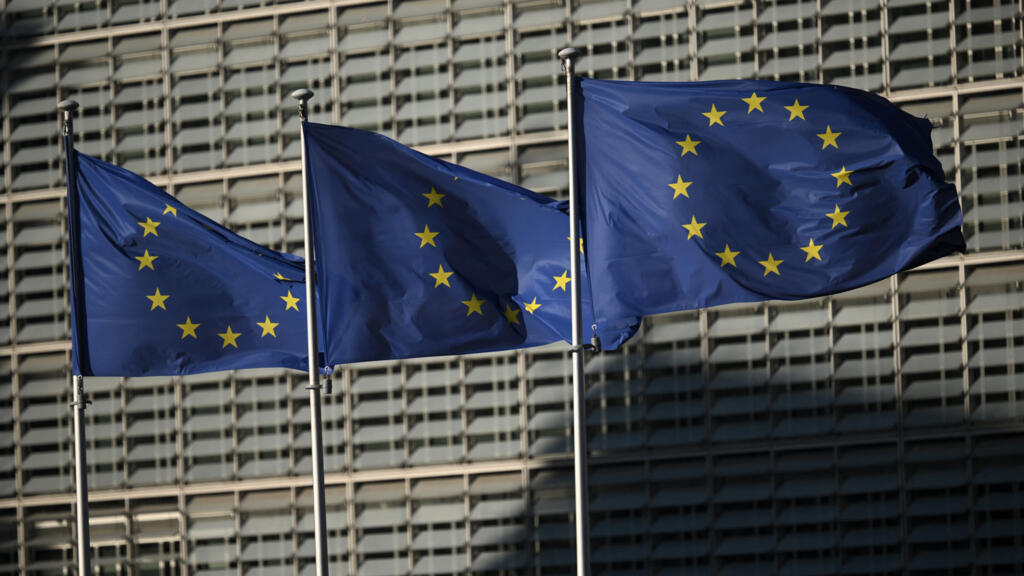
European Union flags outside the Berlaymont building, the headquarters of the European Commission, in Brussels on 15 December 2025. AFP - NICOLAS TUCAT

For decades, the Euopean Union – the world’s largest trading bloc – has operated within an international order anchored by close economic and security ties with the United States.

However, Washington’s renewed willingness to wield tariffs, security guarantees and diplomatic pressure as bargaining tools has reinforced a growing conviction in Brussels that Europe must broaden its partnerships and reduce its exposure to political shock waves.

Depsite being heckled as weak and irrelevant by the White House, the EU has responded with an outward-looking strategy.

Over the past year, the bloc has struck or revived trade deals across Asia and Latin America, upgraded ties with key partners in the Indo-Pacific and pushed ahead with negotiations in the Gulf.

Trade diversification gathers pace

Of late, European leaders have been frank about what is driving this shift. Speaking at the European Parliament last week, Cyprus president Nikos Christodoulides – who currently holds the EU’s rotating presidency – said the assumptions underpinning Europe’s prosperity could no longer be taken for granted.

“The international order we relied upon for decades is no longer a given,” he said. “This moment calls for action, decisive, credible and united action. It calls for a union that is more autonomous and open to the world.”

Shifting up a gear – into a faster, more assertive trade agenda – the EU has finalised a sweeping agreement with India, concluded its first trade deal with Indonesia and signed a long-delayed pact with the Mercosur nations of South America.

The Mercosur deal alone creates the prospect of a free trade area covering more than 700 million people.

Talks are also advancing with partners in the Gulf, including the United Arab Emirates.

Despite transatlantic tensions, these agreements are more of a recalibration rather than a total rupture. Analysts say Europe’s drive to diversify was already under way, shaped by concerns over China’s ever-growing economic clout.

“This movement towards diversification, looking for new partners as well as building self-reliance, was driven home by the fracture of the transatlantic partnership,” according to Garima Mohan, a senior fellow at the German Marshall Fund. “The timing of these deals says something about the world we live in.”

The unpredictability of US policy has played a key role. Even when tariff threats are later withdrawn, they have underscored how quickly trade can become entangled with unrelated political disputes.

For Brussels, spreading risk across multiple partners is increasingly seen as simple prudence.

“There is a hope that things will change, given the importance of the US for us,” says Ivano di Carlo, a senior policy analyst at the European Policy Centre. “But there is also a realisation now that we are a bit more alone in this world.”

From trade to strategic autonomy

Trade policy is only one part of a wider shift that also spans defence and energy. Russia’s 2022 invasion of Ukraine exposed weaknesses in Europe’s security architecture, while criticism from the Trump administration over low defence spending injected new urgency into long-running debates.

EU leaders have since agreed to raise defence budgets, with €150 billion in loans earmarked for areas ranging from air and missile defence to drones, cyber systems and artificial intelligence.

France has been a leading advocate of greater “strategic autonomy”, a concept that has gained ground as Washington has signalled its security priorities lie elsewhere.

As the EU cut its reliance on Russian supplies, it increased imports from the United States. Today, over 14 percent of EU oil imports and 60 percent of liquefied natural gas come from the US – improving short-term security while creating new dependencies.

“We do not want to replace one dependency for another – we need to diversify,” said Dan Jørgensen, the European commissioner for energy and housing, speaking in Hamburg this week.

For policymakers, the links between trade, defence and energy are becoming clearer.

As Garima Mohan put it, “Decoupling is easier said than done.” But by leaning into its strength as the world’s largest trading bloc, the EU is betting that diversification offers the best way through a more fragmented global order.
Climate change 'supercharging' deadly floods in southern Africa

A "perfect storm" of climate change and cyclical La Niña weather patterns have been fuelling the catastrophic flooding sweeping southern Africa for the past month, according to climate scientists.

Issued on: 29/01/2026 - RFI

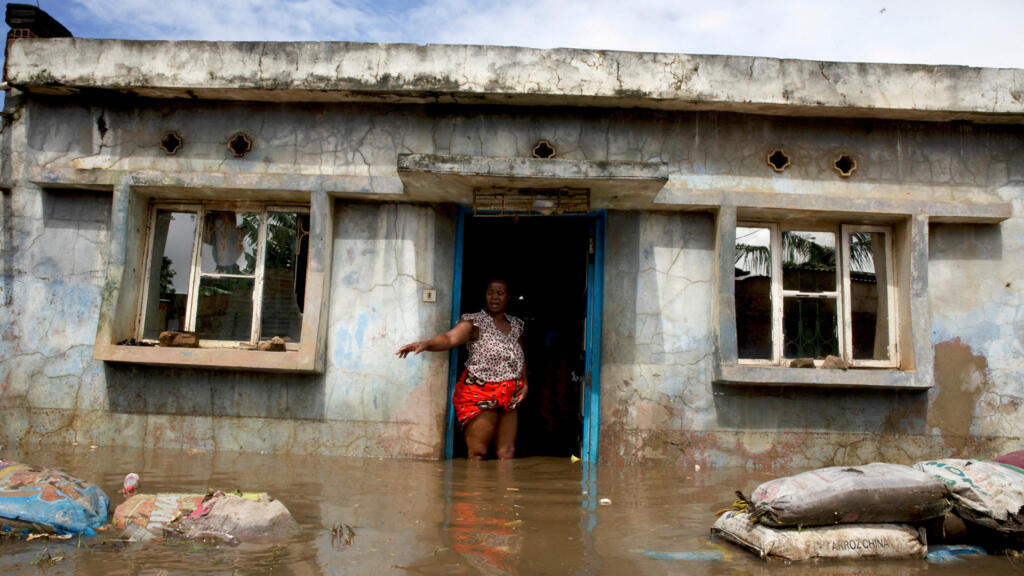
A flood victim stands at her flooded home after weeks of heavy rainfall in Boane District, Maputo, Mozambique, on 19 January, 2026. © REUTERS - AMILTON NEVES

Torrential rains and floods have killed more than 100 people in South Africa, Mozambique, Zambia, Zimbabwe and Eswatini since December, and displaced hundreds of thousands of others.

Some areas received "over a year’s rain in just days", said World Weather Attribution (WWA), an international team of scientists studying the link between climate change and extreme weather.

The intensity of such extreme rainfall events has increased by 40 percent since pre-industrial times, according to the group – a sign that warmer ocean temperatures linked to greenhouse gas emissions are partly to blame.

"Data confirms a clear move toward more violent downpours," WWA said.

The La Niña weather phenomenon also worsened things. "This effect was compounded by the current La Niña, which naturally brings wetter conditions to this part of the world, but is now operating within a more moisture-rich atmosphere," the report said.

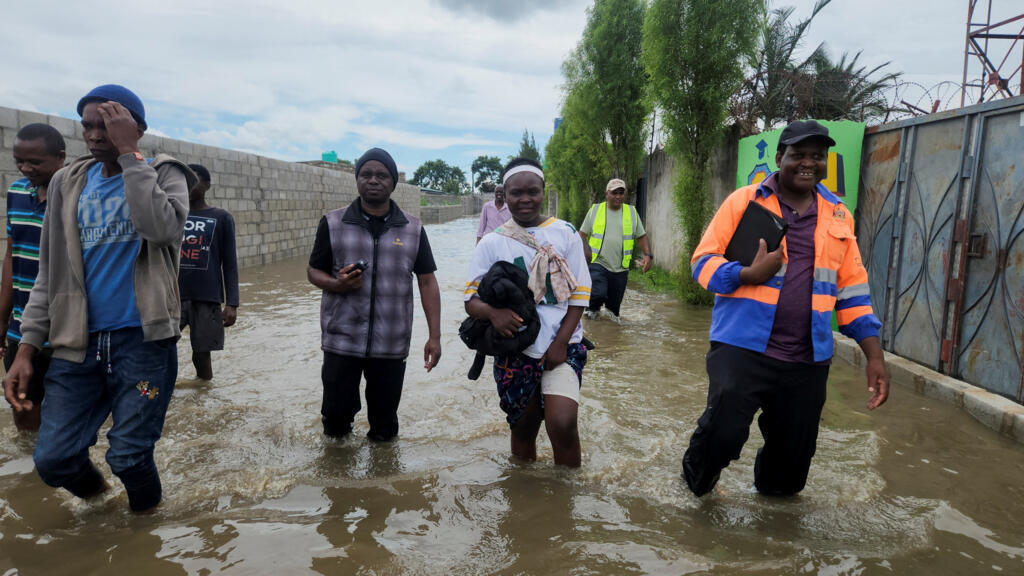
Residents walk with government officials through a flooded area after heavy rain in Kanyama, in Lusaka, Zambia, on 24 January, 2026. @ REUTERS - MOSES MWAPE

Oceanic and temperature shifts


Flooding in south-eastern Africa has become more frequent and severe as climate change makes storms in the adjacent Indian Ocean more powerful.

La Niña involves the temporary cooling of temperatures in the central and eastern Pacific Ocean. The World Meteorological Organisation has predicted a weak La Niña in this cycle, but warned that warmer-than-normal sea temperatures linked to climate change are increasing the chance of floods and droughts.

"Human-caused climate change is supercharging rainfall events like this with devastating impacts for those in its path," said Izidine Pinto, a senior climate researcher at the Royal Netherlands Meteorological Institute and co-author of WWA's report.

"Our analysis clearly shows that our continued burning of fossil fuels is increasing the intensity of extreme rainfall, turning [it]... into something much more severe."

Food shortages in Mozambique

In Mozambique, more than 180,000 hectares of farmland have been flooded, leaving food hard to come by.

"Before the floods, a bag of rice cost 1,600 meticals, or 20 euros; today it costs 2,300, or 30 euros," said Marta Josè Bila, head of a emergency shelter in Xai Xai, capital of the hard-hit southern province of Gaza.

"Charcoal costs 1,500 meticals – 19 euros – whereas before it cost 750, so less than 10 euros," she said.

In shelters like this one, set up to host displaced people, community kitchens share what food remains.

"Today, we prepared two pots of rice, two pots of ugali, and one pot of chicken. It's a lot of work, but because we're doing it together, it becomes easy," said Melusi Ernesto Cosamanti, the 64-year-old in charge. She and her fellow cooks serve more than 1,700 meals a day.

Lora Salvador Mondlane has been living at the shelter with her children since losing her home. "We eat what we can," she said. "We either have breakfast or dinner. The portions are small, not enough for everyone. But we have no choice.

"Everything was washed away, including our food."


South Africans 'cut off from the world'

In South Africa, burst rivers forced the closure of Kruger National Park, one of the country's main tourist draws. The damage is expected to take years to repair and cost millions of dollars.

Fifteen tourist camps are still closed, with some completely inaccessible, said the Minister of Forestry, Fisheries and the Environment, Willie Aucamp. Hundreds of people were evacuated and no lives were lost.

While animals instinctively move to high ground to escape the floods, people living nearby are at risk as crocodiles sweep beyond their usual habitats.

South Africa's northern regions were under a red weather warning for over a week. Hundreds of homes have been destroyed, and the army has deployed helicopters to rescue people sheltering on rooftops and in trees.

"Some areas are inaccessible," Ali Sablay, head of mission for the NGO Gift of the Givers, which is assisting victims with essential supplies, told RFI.

"Many bridges and roads have been washed away. Communities are completely cut off from the world. They have no electricity. All their food is contaminated, and there is no drinking water."

This article has been partially adapted from reporting in French by RFI correspondants Gaëlle Laleix in Mozambique and Joséphine Koeckner in South Africa, with newswires.
French lawmakers approve bill to end ‘marital duty’ after consent concerns

French lawmakers have unanimously approved a bill to end the notion of "marital duty", stating clearly that marriage does not oblige spouses to have sex. The move aims to remove a long-standing legal ambiguity that critics say weakened sexual consent and allowed outdated ideas to cloud divorce cases.


Issued on: 29/01/2026 - RFI

Protesters hold placards reading "Marriage = Slavery" and "Stop rape culture" during a demonstration in support of Gisele Pelicot on the sidelines of the trial of her former husband and other men accused of rape and sexual abuse, in Avignon, southern France, on 25 November 2024. © Christophe SIMON / AFP

The cross-party bill, backed by more than 120 MPs, passed the National Assembly on Wednesday with 106 votes in favour and zero against.

It now heads to the Senate for approval.

The legislation amends the civil code to specify that living together does not create any obligation for spouses to have sexual relations.

While French law has never formally included a sexual duty within marriage, courts have at times interpreted the expectation that spouses will share a home as implying a shared bed

That interpretation had concrete consequences. In 2019, a man obtained a divorce after judges ruled that his wife’s refusal to have sex amounted to a serious breach of marital duties.


A case that changed the debate

The woman, now aged 69 and wishing to remain anonymous, challenged the ruling after the Versailles court of appeal granted the divorce entirely at her fault.

After failing in France’s highest court, she took the case to the European Court of Human Rights in Strasbourg.

That court ruled in her favour, saying a spouse who refuses sex should not be considered at fault in divorce proceedings. In a unanimous judgement, the court said “any non-consensual sexual act constitutes a form of sexual violence”.

The judges rejected the argument that consent to marriage implied consent to future sexual relations, warning that such reasoning would strip marital rape of its criminal character.

“I hope this decision will mark a turning point in the fight for women’s rights in France,” the woman said in a statement sent by one of her lawyers.

Lawyer Lilia Mhissen added: “This decision marks the abolition of marital duty and an archaic vision of the family.”

Clearing the law

“The decision of today will bind French judges, who will no longer be able to consider that a community of life implies a community of bed,” said Delphine Zoughebi, another lawyer for the woman.

France’s civil code lists four duties attached to marriage – fidelity, support, assistance and cohabitation – but does not mention sex.

Lawmakers backing the bill say spelling this out removes any room for judges to revive older interpretations.

The bill is expected to be examined by the Senate next, with supporters aiming for it to become law before summer 2026.

Last year France added the principle of consent to its legal definition of rape, following countries including the Netherlands, Spain and Sweden.

Notion of women as property a 'depravity baked into law', expert says

Issued on: 29/01/2026 - 
12:49 min


French MPs on Wednesday unanimously approved a bill seeking to end "marital duty", after criticism about its use to ignore sexual consent in marriage and marital rape. Michele Goodwin, Professor of Constitutional Law and Global Health Policy at Georgetown University, says that "legislatures have played a significant role in keeping women far behind" and that "because of these philosophies in law, women could be sexually abused by their husbands and even their boyfriends".


'Forever chemicals' could cost Europe €1.7 trillion by 2050

PFAS pollution in Europe could cost society up to €1.7 trillion by 2050, as the European Union weighs how to deal with so-called “forever chemicals” that persist in the environment and the human body.


Issued on: 29/01/2026 - RFI

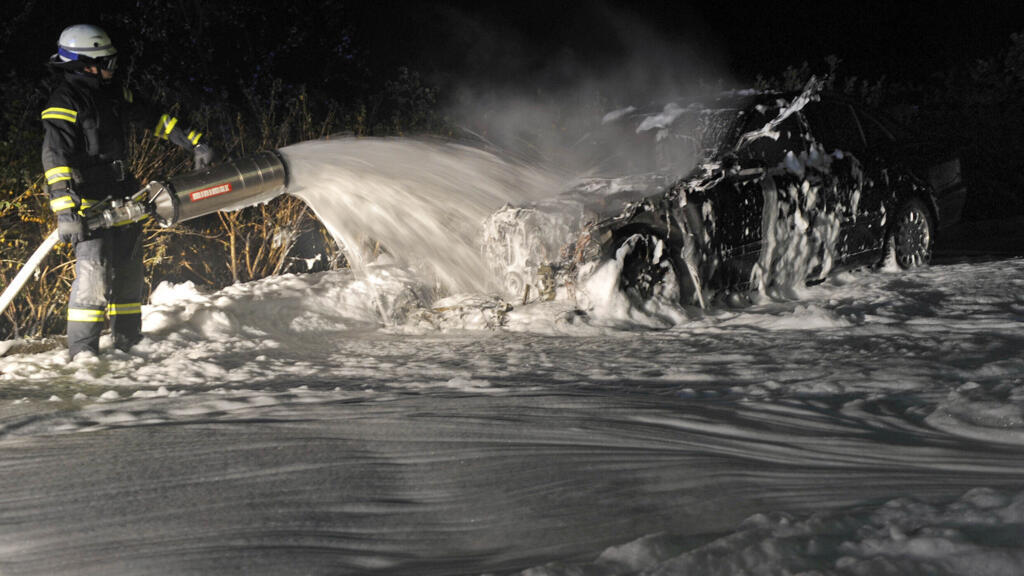
Firefighting foam is a known source of PFAS pollution and has been targeted by EU restrictions because of its long-term environmental impact. 
© ASSOCIATED PRESS - Gero Breloer

Widely used by industry, PFAS – or per- and polyfluoroalkyl substances – are now found across soil, water and food chains.

Exposure to PFAS is known to increase the risk of cancers, hormonal disruption and immune system disorders, as well as other health problems. Treating these illnesses carries costs that are ultimately borne by the public.

On Thursday, the European Commission published a study to measure the long-term environmental and health costs if pollution continues at current levels.

The report sets out what the Commission describes as a conservative estimate of the financial burden PFAS place on society. It examines several possible futures, looking at environmental damage alongside health impacts

Cost of doing nothing

If regulations and standards remain unchanged, the study estimates that PFAS pollution would cost European society around €440 billion by 2050. This figure only covers health costs linked to a small number of currently regulated PFAS substances, out of the thousands that exist.

The report also finds that treating polluted water alone would cost more than €1 trillion if emissions continue at current levels. In contrast, cutting PFAS releases at the source by 2040 could save around €110 billion.

Because PFAS remain in the body and the environment for decades, the report said early action is essential to limit long-term damage.

The study identifies newborns, children, people living near contaminated sites and workers at those sites as the populations most exposed to PFAS pollution.

The commission said in a statement that it is committed to protecting these groups while also preventing wider social and economic consequences. It said a balanced approach is needed as alternatives to PFAS are developed for key industrial uses.

“Providing clarity on PFAS with bans for consumer uses is a top priority for both citizens and businesses,” said Jessika Roswall, the Commissioner for Environment.

“Consumers are concerned, and rightly so. This study underlines the urgency to act.”

Three possible futures

One scenario examined in the study assumes PFAS remain authorised but standards become stricter and more protective. Under this option, many contaminated sites would need to be cleaned up, pushing the total cost to around €1.7 trillion by 2050.

The most optimistic scenario is a complete ban on PFAS in Europe.

In that case, the chemicals would gradually disappear from people’s bodies over several years, leaving mainly the cost of cleaning up polluted sites. This would be the least expensive option overall, with an estimated bill of about €330 billion.

However, the report said this scenario may be overly optimistic, as a full ban faces strong opposition from many industrial sectors.

Several of the most harmful PFAS substances, including PFOS, PFOA and PFHxS, have already been banned in the European Union. In 2024, restrictions were extended to PFHxA and related substances in products such as consumer textiles, food packaging, cosmetics and some firefighting foams.

In October 2025, the EU introduced phased-in bans on all PFAS in firefighting foams. Under EU drinking water rules, all member states must also monitor PFAS levels to meet new safety limits.

The European Chemicals Agency is assessing a proposal for a universal PFAS restriction, with its opinion expected by the end of 2026.
RFI EXCLUSIVE

Evidence shows Russian oil tanker was 'deliberately' attacked near Dakar

A tanker that left Russia and ran into trouble off the coast of Senegal in November 2025 appears to have been deliberately targeted by explosives placed in strategic locations on its hull, according to video footage obtained and verified by RFI.


Issued on: 29/01/2026 - RFI

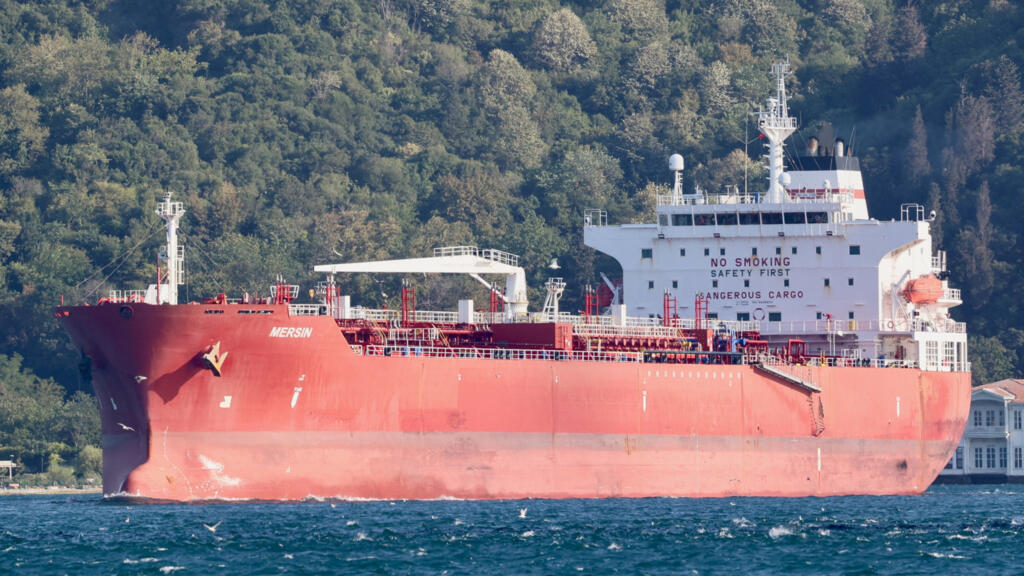
The oil tanker Mersin transits the Bosphorus in Istanbul, 13 August 2025. 
REUTERS - Yoruk Isik


Having left the Russian port of Taman on 21 August, 2025, the Mersin – a tanker operated by Turkish shipping company Besiktas – first stopped in Togo before arriving in Senegalese waters.

In a video seen by RFI, filmed the day after the incident on 28 November 2025, damage to the hull of the Mersin can be seen in four places – two on the port side and two on the starboard side – which caused the ship to take on water in its engine room.

The holes, the largest of which is more than a metre wide, reveal the ship's partially damaged piping.

The images suggest the ship was sabotaged using strategically placed explosive devices.

According to several military experts, the precise nature of the holes, their location below the waterline and the spread of micro-cracks around the main impact points all point to the use of magnetic mines planted by trained divers.

The hull is dented inwards at the breach points, also confirms that the shock wave came from outside the ship.

Around 5 kilograms of explosives would have been needed for each hole in order to pierce the ship's hull, which is made of steel plates "between 15 and 20mm thick", according to an engineer specialising in the offshore oil sector, consulted by RFI.

A few days after the incident, the Port Authority of Dakar said divers would inspect the ship, but as yet no official conclusion on the cause of the incident has been made public.

Neutralise not sink

This deliberate targeting of the Mersin's engine room demonstrates a desire to neutralise the ship rather than sink it, along with the 39,000 tonnes of fuel on board.

According to a naval specialist, only a country with advanced diving capabilities and resources would be capable of carrying out such a meticulous operation.

This is the first time that a ship suspected of belonging to the Russian "shadow fleet" – vessels used to circumvent Western sanctions – has been targeted in African waters.

The Mersin remains moored some 20 kilometres from Senegal's capital, where it has been since the suspected attack.

According to the Port Authority of Dakar, the tanker is now stabilised, after initial fears that the damage could have provoked an oil spill. The breaches have been sealed and the engine room, which was flooded, is being pumped out. However, the fuel on board has not yet been removed.

Going dark

Russia has reportedly built up a flotilla of ageing oil tankers under opaque ownership to circumnavigate sanctions imposed by the European Union, the United States and the G7 group of nations over Moscow's full-scale invasion of Ukraine in 2022.

The EU lists 598 vessels that are banned from European ports and maritime services. The US – which seized a Russian-flagged tanker in the north Atlantic early in January – lists 183 vessels and asserts an extraterritorial right to act against them.

According to experts, and a briefing paper by the European Parliament, the "shadow fleet" obscures the ownership of vessels, and ensures the companies managing them are outside Russia and fly flags of convenience – or even sometimes falsely claimed flags.

In addition, the vessels have been observed turning off their Automatic Identification System, to go "dark" at sea, where ship-to-ship transfers of Russian oil occur.

According to the Kyiv School of Economics, which runs a Russian Oil Tracker, "the top three flags used by Russian shadow-fleet vessels transporting crude oil are false/unknown flag, Sierra Leone, and Cameroon".

It said management companies for the vessels were located in the United Arab Emirates, the Seychelles, Mauritius and the Marshall Islands, among others.

With newswires, and partially adapted from this article in French by Pauline Le Troquier, RFI correspondent in Dakar.
After Trump-fueled brawls, Canada-US renew Olympic hockey rivalry

Toronto (Canada) (AFP) – The US-Canada men's hockey Olympic rivalry, born a century ago, has produced plenty of teeth-clenching drama, but after political tension spilled onto the ice last year, the upcoming Winter Games showdown could serve up the fiercest clash yet.

Issued on: 30/01/2026 - RFI

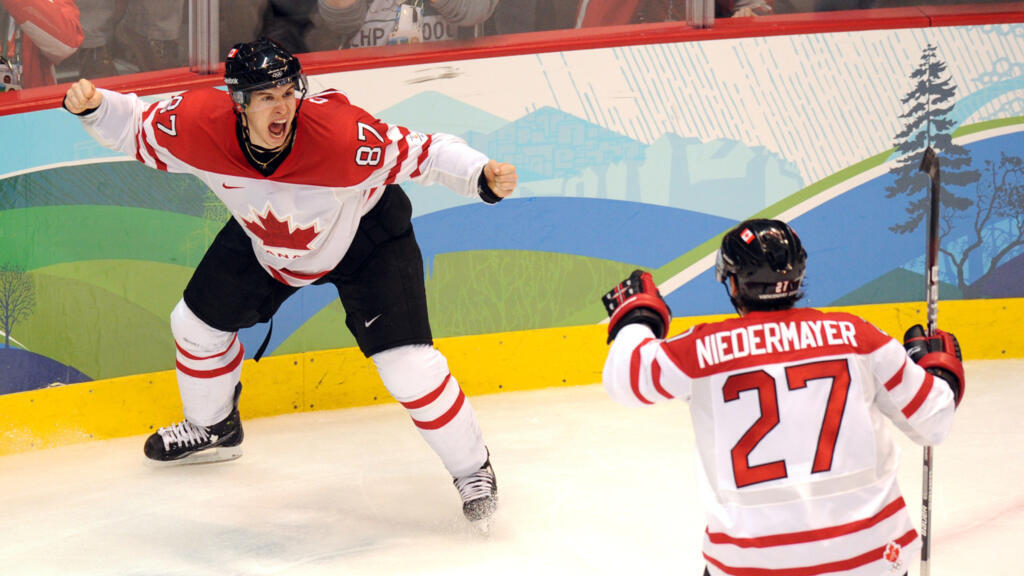
Sidney Crosby celebrates after scoring the gold medal winning goal at the Vancouver Olympics © YURI KADOBNOV / AFP


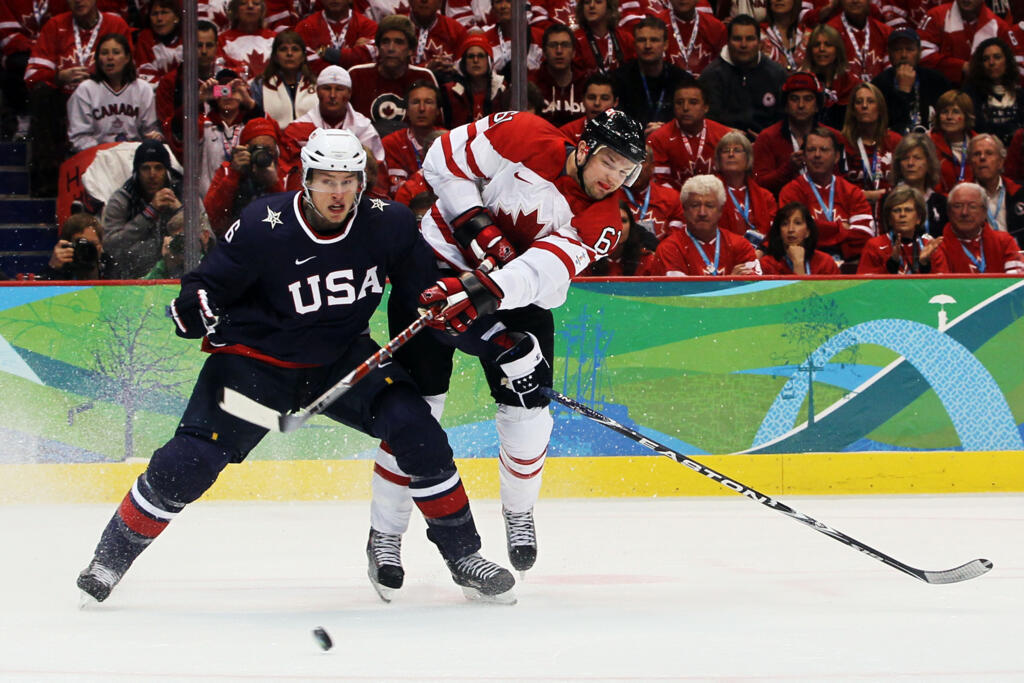
Rick Nash played in what many consider the rivalry's signature Olympic match: the gold medal game at Vancouver 2010. Canada won it.

"I don't think I slept the night before," Nash, a three-time Olympian and former National Hockey League star, told AFP.

Canadian hockey fans still cherish their country's image as the dominant hockey nation, recoiling at evidence the Americans are now an equal power.

When Canadian superstar Sidney Crosby scored in overtime to secure gold on home ice, it brought collective national relief.

When the puck went in, Nash leaped over the boards, joining his teammates in mobbing Crosby.

Rick Nash playing in the gold medal game against the United States in Vancouver 2010 © BRUCE BENNETT / GETTY IMAGES NORTH AMERICA/AFP


"It felt like a huge weight off our shoulders," said Nash, now an executive with his former team, the Columbus Blue Jackets. "That is the loudest arena I have ever played in."

The last 15 years have not produced equivalent Olympic tension.

Canada dominated the Sochi 2014 tournament, and NHL players did not go to the 2018 or 2022 Games, muting their importance.

Last year, the NHL organized the 4 Nations Face-Off, a new tournament with no historical weight, which hockey historian Eric Zweig told AFP initially looked set to be a "goofball" event.

But in the run-up to the February tournament, President Donald Trump launched a trade war and talked repeatedly about annexing Canada.

The hockey tournament quickly took on outsized significance.

– 'Awesome hockey' –

Canadians started booing the US national anthem at sporting events.

Matthew Tkachuk of Team USA fights Canada's Brandon Hagel at the 4 Nations Face-Off last year © Minas Panagiotakis / GETTY IMAGES NORTH AMERICA/AFP


American hockey players took exception, leading to three fights in the early seconds of a US–Canada preliminary round game.

Trump then called the US team before the final, which Canada won in overtime.

"It was awesome hockey," Nash said. "I think we created a lot of momentum, a lot of buildup, going into these Olympics."

"I feel like we gained a lot of new fans from that whole tournament," he added.

That list may include Trump himself.

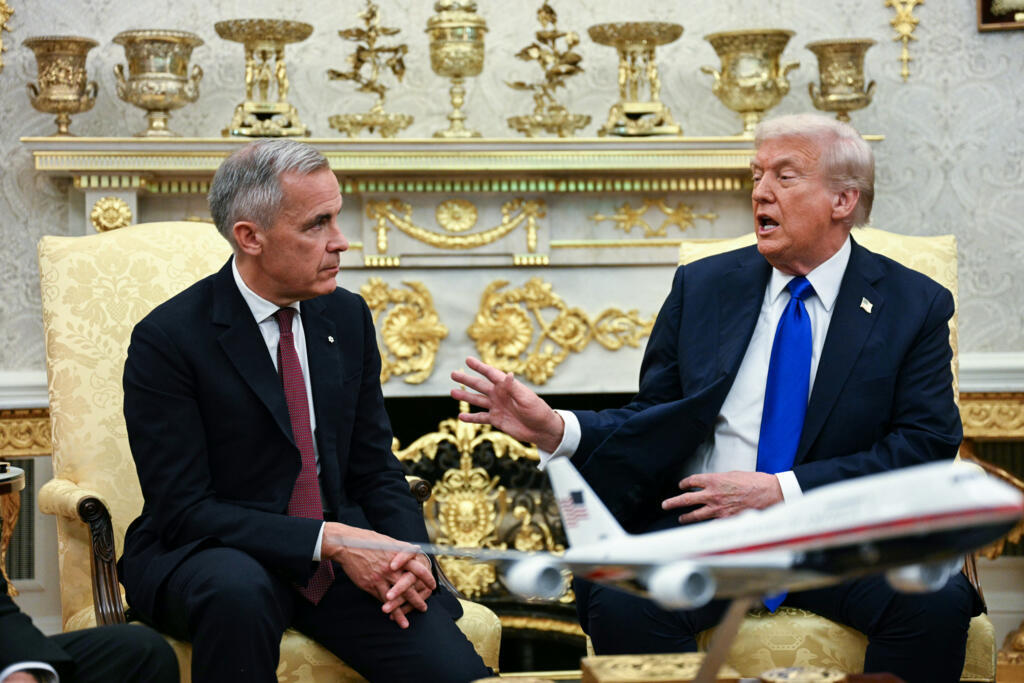
"How good were those games!" the president said to Canadian Prime Minister Mark Carney at the White House in October, nine months after the tournament, suggesting the slugfest made an impression.
US President Donald Trump meets Canadian Prime Minister Mark Carney in the Oval Office in October 2025 © Jim WATSON / AFP


"I'm not the biggest hockey fan," Trump said, but he called the US–Canada showdowns some of the greatest games he'd seen.

– 'Canadian tears' –

The United States and Canada may not play each other at the Milan-Cortina Olympics, although both sides are heavily favored to make the medal round.

If they do meet, the game would add to a rivalry older than the Winter Olympics, which began in 1924.

In the spring of 1920, ahead of the Antwerp Summer Games, organizers held a hockey tournament in the Belgian city, part of an early Olympic festival.

The European teams got demolished.

Canada beat Czechoslovakia 15–0 and the United States beat Sweden 29–0, astonishing scores in hockey.

Ahead of the April 25 US–Canada match, "people are jamming the streets before the game," as Belgians devised ways to sneak into a sold-out rink, Zweig said.

"Everybody knows this is going to be the best hockey game ever played in Europe."

Canada won 2-0 but over the 20th Century, the intensity of the North American Olympic rivalry eased.

The Soviet Union, and later Russia, became Canada's main adversary and the NHL, growing as a professional league, did not send its players to the Olympics until 1998.

Nash, born in 1984, said that for him Russia was the biggest test growing up, but things began to shift when the United States and Canada met for the gold in Salt Lake City in 2002.
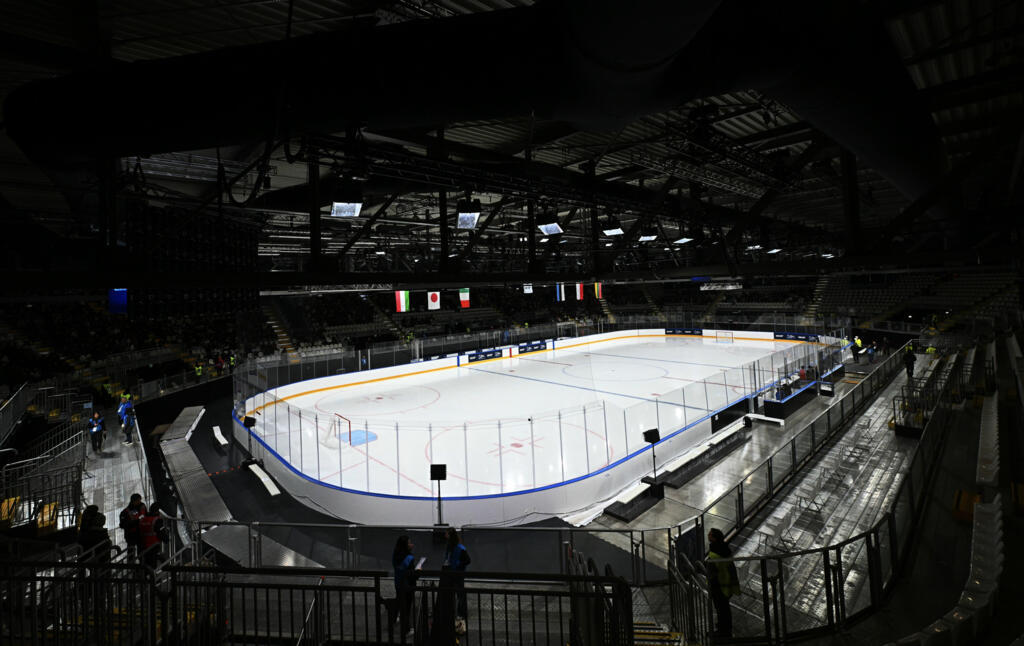
The rink in Milan that will host the 2026 Olympic hockey tournament © Stefano RELLANDINI / AFP

The rivalry "took another step" after the ferocious tournament last year, he said.

US Olympic broadcaster NBC has released an ad for the 2026 Games starring actor Jon Hamm making an emotive speech to the US men's hockey team.

"You're going to Milan to bring home the greatest prize of all," Hamm says, with the star US player Jack Eichel replying: "Canadian tears."

Public focus may be on a potential US-Canada grudge match, but Nash stressed the teams have different priorities.

"As a player, I can guarantee you, the only thing on your mind is a gold medal. You don't care if it's Norway, Latvia, the US or whoever."

© 2026 AFP


Monarch butterflies face a 3,000km migration. Can they survive with dwindling nectar supplies?

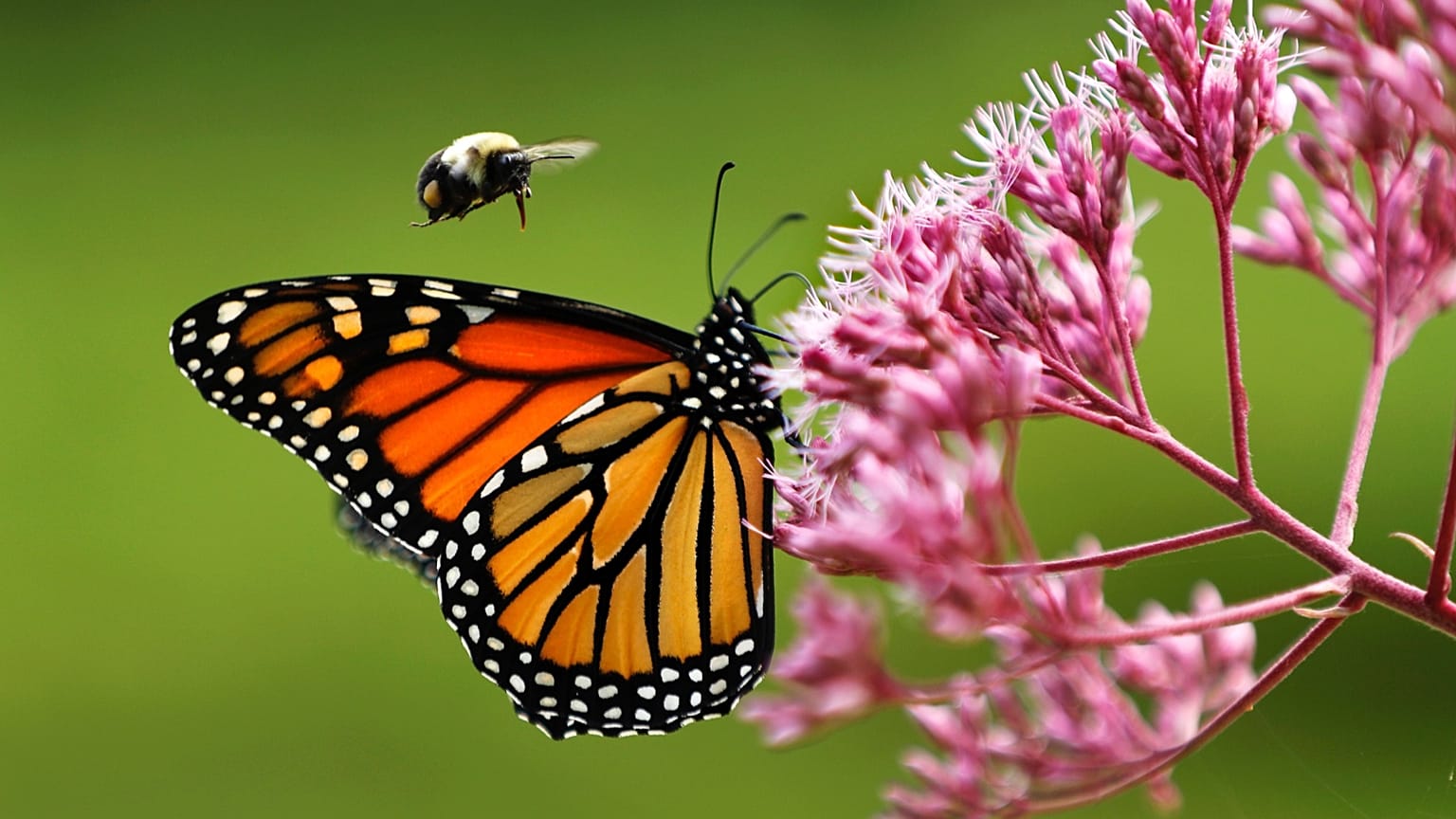
A monarch butterfly is buzzed by a bumblebee as it sips nectar on a Joe Pye weed, Wednesday, Aug. 28, 2019, in Freeport, Maine.
Copyright Copyright 2019 The Associated Press. All rights reserved.


By Liam Gilliver
Published on 

One of the world’s most iconic migrations is at risk, as rising temperatures alter the quality of vital flower nectar.

Every autumn, millions of monarch butterflies embark on a treacherous journey - flying more than 3,000 km from Canadian fields all the way to Mexico’s mountain forests for the winter.

It’s a migration that attracts swathes of tourists, as crowds gather across America to marvel at the distinctively orange insects filling the sky. At the end of winter, these butterflies fly north to the US where they lay eggs on milkweed plants.

For years, the monarch butterfly has shown resilience amid the growing threat of climate change. Despite being the size of a large paperclip, they have managed to survive through habitat loss, extreme weather and the growing use of pesticides.

But now, there’s a new snag in their epic trek - and it’s all down to flower nectar.

How climate change is impacting flower nectar

Back in the summer of 2023, a team of scientists from the University of Ottawa started looking at the plants monarchs depend on during their migration.

Published in the journal Global Change Biology Communications, the study found that a tiny increase in temperature (0.6℃) was enough to lower the quality of the nectar that these plants produced. Monarchs that fed on these “warmed” blooms built up around a quarter less body fat than their counterparts.

“It’s the warming that is making the nectar less nutritious,” says Professor Heather Kharouba, who led the experiment.

“Even though the butterflies could eat as much as they wanted, they couldn’t make up for the lower-quality nectar.”

The study found that as temperatures warmed, late-season flowers produced less nectar, and what they did produce was lower in sugar.

‘A wake-up call’ to protect the monarch butterfly

Scientists and conservationists have long expressed concern about the future of monarchs, but this study uncovers a more subtle risk.

“We’re seeing that climate change can hit pollinators indirectly, by degrading the resources they count on,” adds Kharouba.

“I believe the findings are a wake-up call for anyone working to protect these butterflies and, really, for anyone planting a garden or maintaining a park as the planet heats up.”

The study has been used as the focus of a new exhibition titled Flutterings: Monarchs and Climate Change.

Curated by Canadian visual artist Valérie Chartrand, it hopes to spark new conversations about how we care for creatures around us and demonstrate how art-science collaborations can “deepen public understanding of complex environmental issues”.

A floating power station? China’s flying wind turbine hits milestone with grid-connected test


By Theo Farrant
Published on 


Wind power could son come from the sky as China has successfully tested a megawatt-class airborne turbine that generates electricity while hovering 2000 metres up.

China has completed a test flight of what it says is the world’s first megawatt-class high-altitude wind power system designed for urban deployment.

The enormous S2000 Stratosphere Airborne Wind Energy System (SAWES) flew at an altitude of 2,000 metres in southwest China’s Sichuan Province, generating electricity and successfully connecting to the power grid - a world first for a high-altitude wind power device.

The aircraft-like structure functions as an “airborne power station” and combines an airship platform with wind turbines to capture stronger, more stable winds high above the ground.

"Traditional wind turbines operate by rotating their blades when wind strikes them, thereby generating electricity. This generator functions similarly, except that power generation occurs not at ground level but in the air," said Weng Hanke, co-founder and chief technology officer of Beijing Linyi Yunchuan Energy Technology.

"It harnesses wind energy to drive its blades for electricity production, which is then transmitted via overhead cables from the air down to the ground," he added.


A new possibility for renewable energy

During the test flight, the S2000 ascended for around 30 minutes and generated 385 kilowatt-hours of electricity. The system measures roughly 60 metres long, 40 metres wide and 40 metres high.

“We have achieved breakthroughs in the aerodynamic and structural design of these large, unconventional aerial vehicles, which form part of our proprietary technologies,” Weng said.

“Secondly, the entire power generation system has overcome challenges in high-power-density, medium-voltage direct-current transmission technology, enabling it to maintain lightweight construction while ensuring higher transmission efficiency.”

As well as providing electricity, the system can also support communications and monitoring equipment.

“In terms of application scenarios, beyond generating electricity for grid-like conventional power systems, it serves other purposes," Weng said.

"It can carry specialised equipment such as communication devices and ground monitoring apparatus, thereby acting as an enabler for the low-altitude economy,” he added.

For now, it’s still in test phase but could one day be the future of wind power in cities.


https://plawiuk.blogspot.com/search?q=AIRSHIPS


Portugal builds Europe's first dedicated drone carrier, D João II

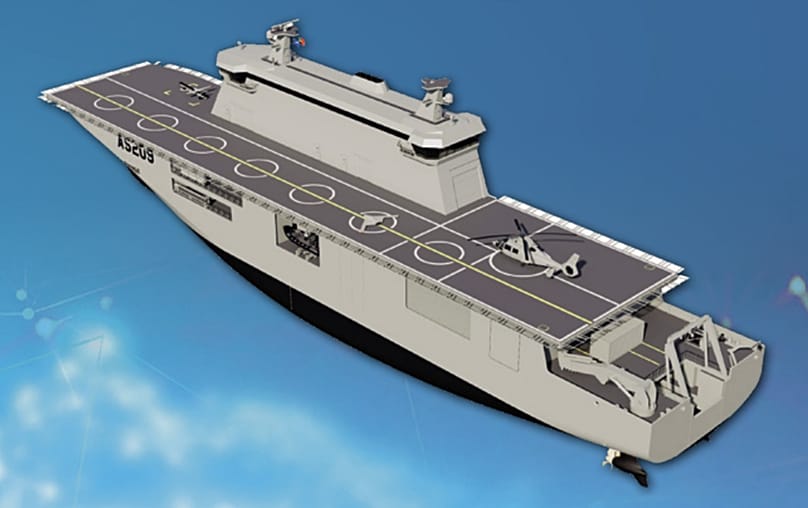
Portuguese Navy's Multifunctional Naval Platform
Copyright Marinha de Portugal

By João Azevedo
Published on 

Portugal's new drone carrier, D João II, will challenge traditional aircraft carriers, offering high flexibility and lower costs. Built by Damen for €132 million, it can switch mission profiles within a week.

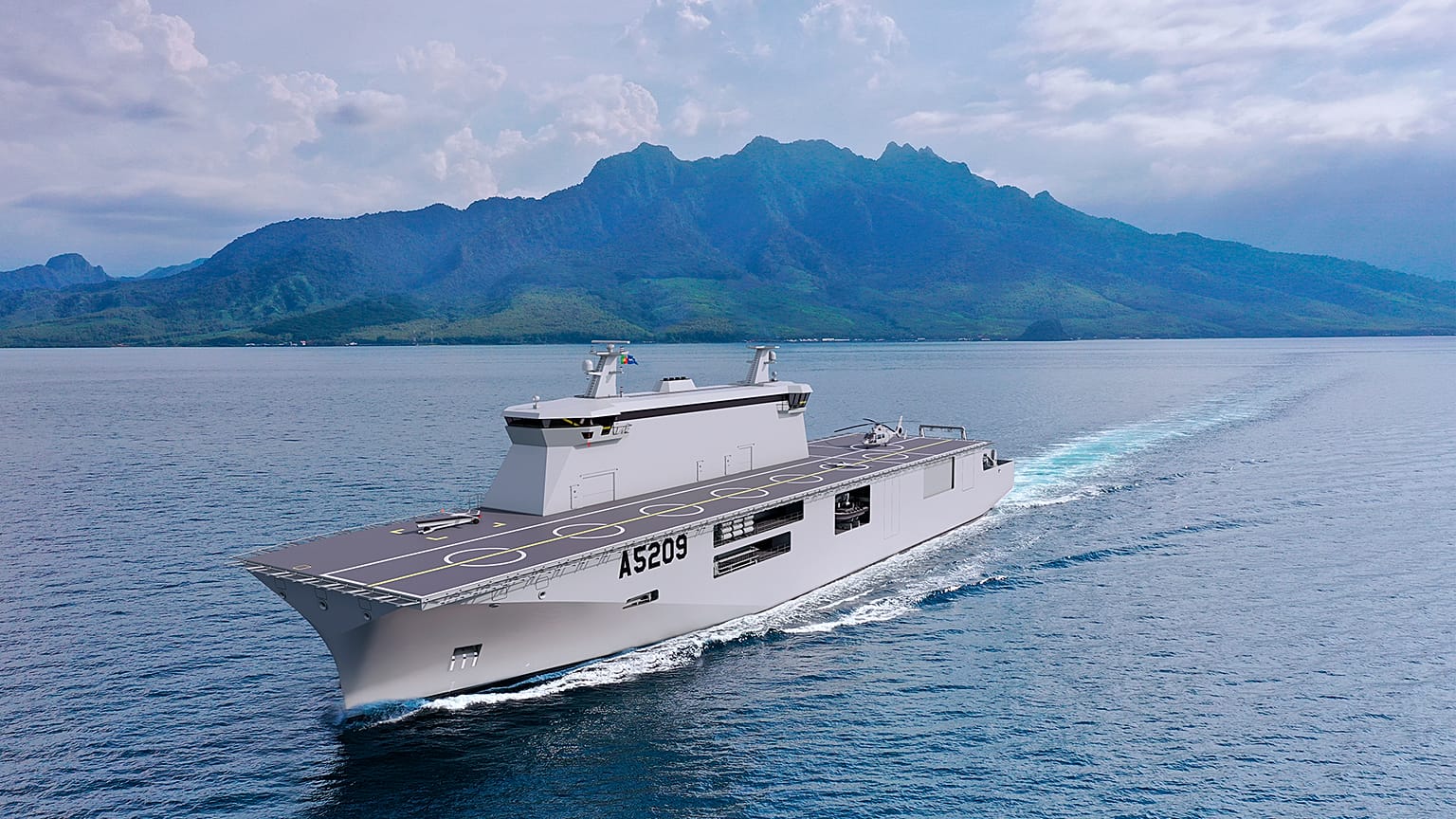
Portugal is building Europe's first dedicated drone carrier, a warship designed to operate unmanned aerial, surface and underwater systems that could challenge the dominance of traditional aircraft carriers.

The 107.6-metre NRPD João II is scheduled for delivery in the second half of this year.

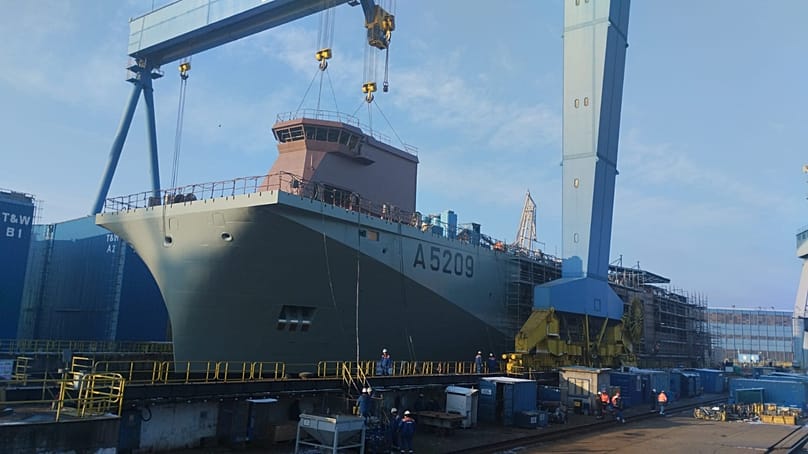
Dutch company Damen is building the vessel in Romania's Galati at a total cost of €132 million, mostly funded by EU recovery funds.

The warship can switch between different mission profiles within a week by swapping out systems and equipment.

"This approach allows the ship to maintain high functional flexibility, switching between different mission profiles without significant structural compromises," Ricardo Sá Granja, spokesman for the Portuguese Navy, said.

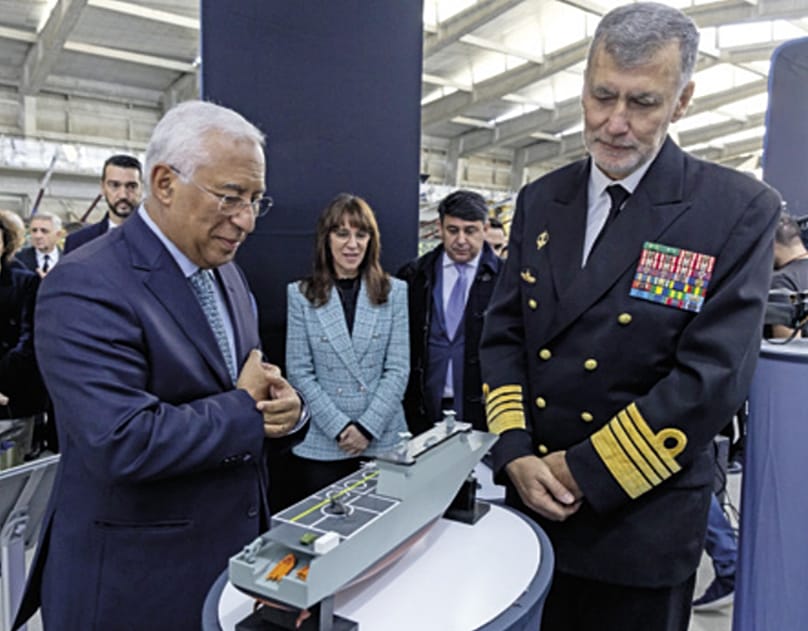
António Costa (left), former Prime Minister of Portugal, and Gouveia e Melo (right), former Chief of Staff of the Navy, at the contract signing ceremony for the drones carrier.
António Costa (left), former Prime Minister of Portugal, and Gouveia e Melo (right), former Chief of Staff of the Navy, at the ceremony to sign the contract for the drones carrier. Marinha

The project was conceived by Henrique Gouveia e Melo, former Chief of Staff of the Navy and candidate in this year's presidential elections.

At the contract signing in November 2023, Gouveia e Melo called it "a point of no return for modernity".

The Portuguese Navy did not patent the concept. The company that won the tender has already received expressions of interest from navies in other European countries.

Cost advantage over traditional carriers

Unmanned systems allow military forces of smaller countries to extend their operational reach at reduced costs.

A US Ford-class nuclear aircraft carrier costs around $13 billion, while Britain's Queen Elizabeth has a price tag of over $1 billion.

Drones allow forces to concentrate and project power more quickly with lower risks for operators.

At least three navies have already acquired or are developing flat-deck ships designed to carry autonomous aerial systems: China, Iran and Turkey.

Construction of the Portuguese Navy's Multifunctional Naval Platform at the Damen shipyard in Galati, Romania
Construction of the Portuguese Navy's Multifunctional Naval Platform at the Damen shipyard in Galati, Romania Marinha

The D João II is designed to reach 15.5 knots and carry a crew of 48, with space for 42 specialists, including scientists and drone operators. In emergencies, it can temporarily accommodate a further 100 to 200 people.

The 94-metre deck allows landing and launching of aerial drones. The ship has a hangar for assembling and maintaining vehicles, plus systems including a stern ramp for launching surface and underwater drones.

Simulation of the deck of the Portuguese Navy's Multifunctional Naval Platform
Simulation of the deck of the Portuguese Navy's Multifunctional Naval Platform Marinha

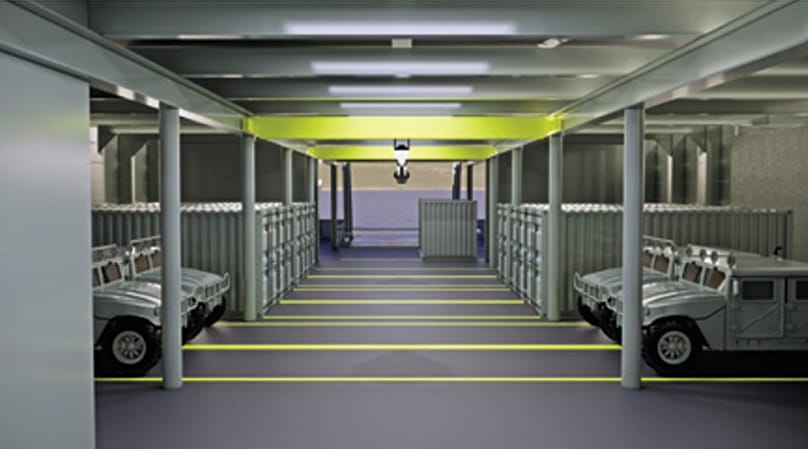
The vessel can accommodate 18 containers including hyperbaric chambers and hospital structures, 18 light vehicles and 10 boats. A remotely operated vehicle can reach depths of 6,000 metres.

The vessel was designed for 45 days of autonomy, allowing long operations without close logistical support.

From science to security

Mission profiles include collecting real-time data on Portuguese waters, environmental monitoring, search and rescue operations, disaster assistance, maritime surveillance and evacuating citizens from conflict zones.

The vessel can operate multiple unmanned vehicles simultaneously. Aerial and surface drones will be used for environmental monitoring, maritime surveillance and oceanographic data collection. Underwater vehicles will conduct inspection, detection and seabed mapping.

Simulation of vehicles inside the Portuguese Navy's Multifunctional Naval Platform
Simulation of vehicles inside the Portuguese Navy's Multifunctional Naval Platform Marinha

Unmanned systems on board will be nationally manufactured whenever possible. The Navy has established cooperation protocols with Portuguese companies producing such vehicles.

International partnerships are also planned. Last year, Portuguese Prime Minister Luís Montenegro signed an agreement with Ukraine for joint production of underwater drones during his first visit to Kyiv as head of government.

"Portugal and Ukraine have unmanned vehicle expertise that is at the forefront of the world today," Montenegro said.

Countering hybrid threats

Portugal's national maritime space covers around 4 million square kilometres, making it the EU's largest coastal state. With the third-largest Exclusive Economic Zone in Europe, 18 times larger than the mainland, Portugal faces increased obligations in the marine ecosystem.

Russia's naval activity in the Atlantic has increased in recent years. The navy tracked 143 Russian ships along the Portuguese coast between 2022 and 2024.

In 2025, at least eight were detected in waters under Portugal's jurisdiction, including submarines equipped with long-range missiles and spy ships capable of destroying submarine cables.

Data collected on board will help counter contemporary hybrid threats such as sabotage of submerged critical infrastructure or covert actions. The ship will be deployed at national level and within the EU framework.

Sá Granja acknowledged that command and control of dispersed unmanned vehicle fleets is a demanding technical challenge.

The Navy has been developing architectures based on redundant data links, robust encryption, network segmentation and the ability to operate in degraded or autonomous conditions.

At a conference in Washington this month, Rear Admiral Christopher Alexander of the US Navy estimated that by 2045 almost 45% of the US surface force will comprise unmanned systems.

The D João II was designed using architecture based on open systems principles, allowing integration of emerging technologies such as artificial intelligence.

These capabilities can be applied to processing large volumes of data, assisted navigation, sensor fusion and decision support, always with human supervision.

The vessel's modularity means it could, in the future, integrate new capabilities without compromising its primary function as a multi-purpose ship.


European apples tainted with 'pesticide cocktails', new study claims

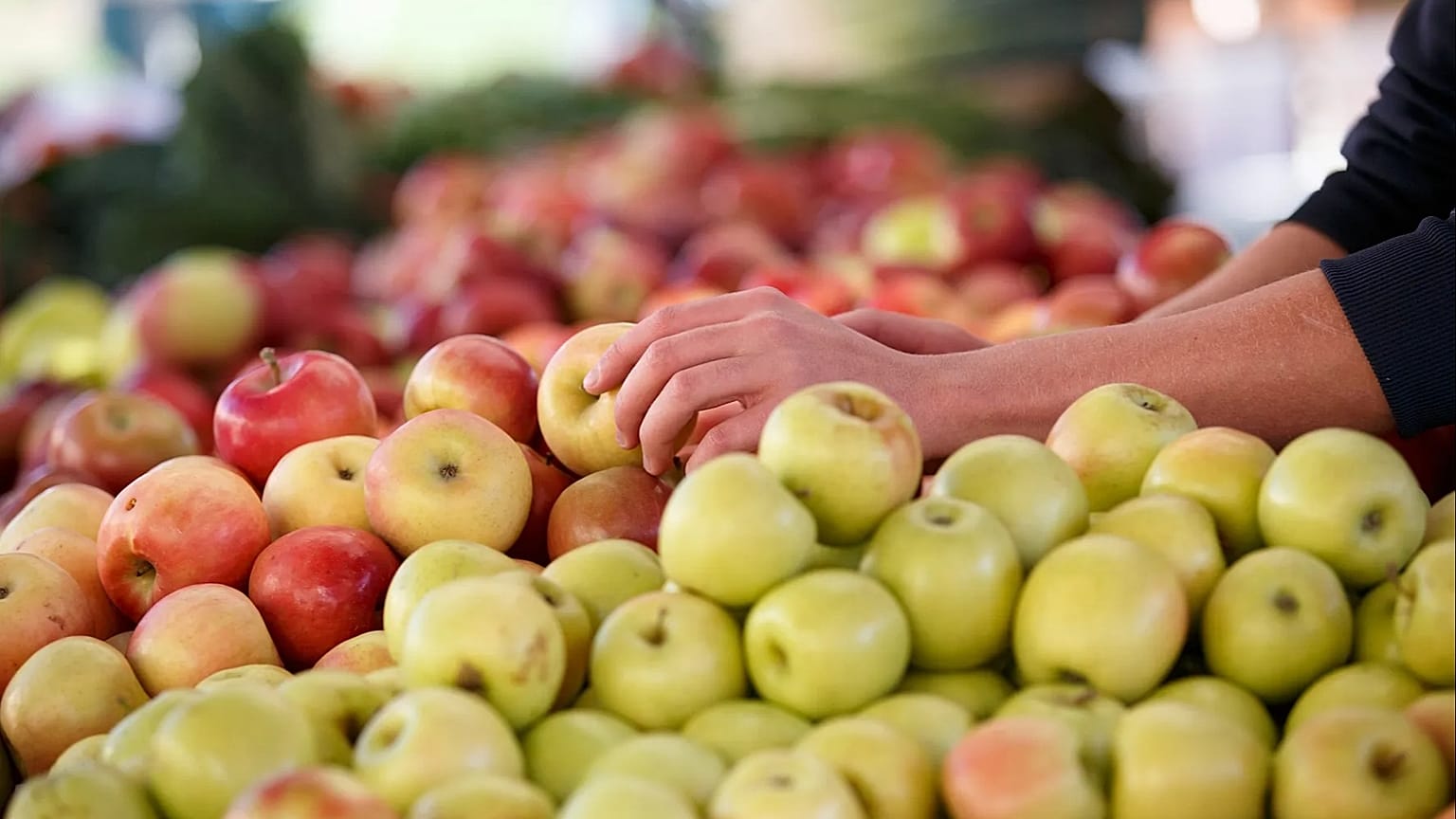
Apples are displayed at a farmers' market.
Copyright AP Photo / J. Scott Applewhite

By Marta Pacheco
Published on 

New research criticises the European Union's risk assessment procedure for assessing pesticides in silos instead of focusing on the impact of the "cocktail" effect – the combination of several pesticide residues present in fruits and vegetables.

Thirteen European countries are selling apples in markets and supermarkets with a concerning abundance of pesticide residues, commonly known as "cocktails of pesticides", according to an NGO report urging the European Union to regulate exposure to these chemicals.

Belgium, Croatia, Czechia, Denmark, France, Germany, Hungary, Italy, Luxembourg, the Netherlands, Poland, Spain, and Switzerland have reported contamination in apples, according to the latest report from Pesticide Action Network (PAN) Europe, which criticises the EU's risk assessment procedure for looking at pesticides in silos and disregarding the "cocktail" effect.

"One of the most striking results is that 85% of the tested apples contained multiple pesticide residues," said Gergely Simon, campaigner at PAN Europe. "The European Food Safety Authority (EFSA) was tasked 20 years ago to develop a methodology to regulate the cocktail effects of pesticides, but they still do not fulfil this legal obligation."

The report points out that if these apples were to be sold as processed baby food, 93% of them would exceed the EU legal limit of pesticide levels for children under 3 years old.

"Young parents are not aware that feeding their children with fresh conventional fruits or vegetables strongly increases their exposure to pesticides, sometimes more than 600 times," said Simon. "Public authorities should inform them and promote organic food in priority."

The damning report comes as EU rules to address "cocktails of pesticides" remain in limbo, with numerous campaign groups urging the European Commission and EFSA to speed up cumulative risk assessment of pesticides.

While the issue of assessing the combined effects of multiple pesticides was first acknowledged in 2005, it was only in 2020 that EFSA conducted a pilot assessment of combined effects on the thyroid and nervous systems.

Since 2021, the Commission and EFSA have been working to expand cumulative risk assessments to more pesticide groups, aiming to fully integrate them into law by 2030.

An EFSA spokesperson told Euronews that the work to assess the "pesticide cocktail" problem is "complex", involving large datasets, new software tools and extensive collaboration with EU and international partners.

"We are currently preparing guidance on how to perform ‘prospective’ cumulative risk assessment – before the intended use of the pesticide is authorised – in the context of applications for maximum residue levels," the spokesperson said.

A pilot exercise with EU countries is planned for the end of 2026 to allow national experts to test the tool and methodology under development by the EU's food agency, EFSA's spokesperson said.

Pesticides and "forever chemicals"

PAN Europe's scientific study was conducted between 1 and 20 September 2025, during which researchers selected three to five samples of different locally produced conventional apples from supermarkets or markets, for a total of 59 nationally grown apple samples, according to the report.

The findings reveal that 71% of apple samples contained at least one residue of the EU category of the most toxic pesticides, 64% contained at least one residue of PFAS pesticides, also known as "forever chemicals", and 36% contained a neurotoxic pesticide.

Fludioxonil, a PFAS pesticide, was found in nearly 40% of the samples, according to the report, which noted the hazardous chemical was classified as an endocrine disruptor in the EU in 2024.

"It should have been banned, but EU member states have been blocking this for a year now. It is toxic to the liver and kidneys for humans, and it decimates fish and amphibians in aquatic environments," PAN Europe said in a statement launching the report.

The Commission proposed changes in December 2025 that would weaken pesticide regulation by allowing approvals to last indefinitely and removing the requirement to reassess pesticide toxicity against new scientific evidence every 10 to 15 years.

The proposal would also allow EU countries to ignore the latest scientific findings when evaluating pesticide risks.

"There is mounting scientific evidence that exposure to pesticides via food is related to infertility, and possibly to cancers," said Simon. "The constant exposure of citizens to mixtures of toxic substances via food, air or dust is not taken into account; this important issue must be tackled by regulatory bodies."

Euronews asked the European Commission for comment, but did not receive a response before publication.