Friday, January 30, 2026

Domestic Terrorism in Plain Sight: White


Supremacy, State Violence, and the Assault


on Democracy


January 30, 2026

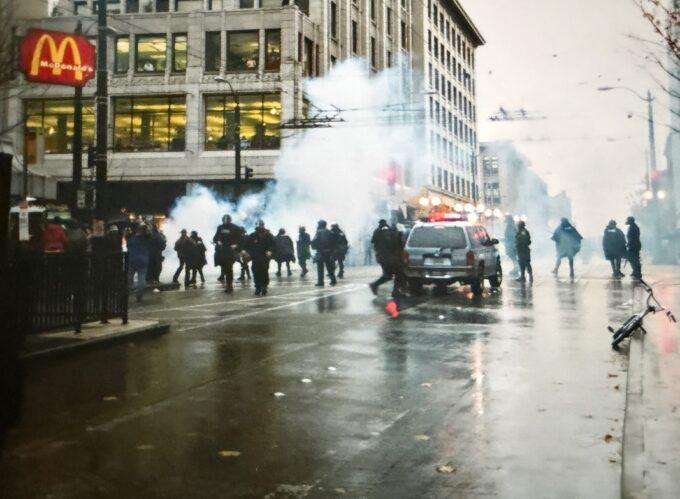
Photo: Jeffrey St. Clair.

The United States is under siege, not by a foreign enemy, but by the Trump administration, which has transformed governance itself into a form of domestic terrorism in the service of a white supremacist stateBy domestic terrorism, I mean the use of state-sanctioned intimidation, disappearance, and violence against civilian populations in order to discipline dissent, enforce racial hierarchy, and normalize fear as a mode of governance. Masked agents in unmarked vehicles, dressed in battlefield gear and operating beyond any recognizable legal authority, now stalk the streets, abducting, brutalizing, and in some cases killing people. Citizens and non-citizens alike are rendered disposable. Reason and the rule of law have collapsed, replaced by the naked exercise of state violence in defense of an apartheid politics.

This is a regime that has turned against its own people. It governs through disappearance, terror, and the routinization of cruelty. Harm, misery, violence, and murder are no longer deviations from democratic norms; they are the norms. In the Minneapolis area alone, federal agents have now been involved in multiple fatal shootings in recent weeks, including the January 7th state murder of 37-year-old mother Renée Nicole Good, a U.S. citizen shot and killed by an ICE agent during federal enforcement operations. The killing has sparked widespread protests and outrage across the Twin Cities and the nation as communities demanded accountability and justice. The Trump administration attempted to justify the killing by labeling Good a ‘domestic terrorist,’ weaponizing the term to deflect accountability and invert the meaning of state violence.

  Soon after Good’s death, federal agents were again captured on video in Minneapolis using lethal force that amounted to an execution in plain sight. The footage shows a man overwhelmed by a swarm of officers, pushed to the ground, and shot multiple times even as he lay motionless before them. Local officials confirm that the incident resulted in the death of 37-year-old ICU nurse Alex Jeffrey Pretti, who dedicated his life to caring for veterans. This marked the third shooting by federal immigration agents in the city in just a few weeks, deepening public outrage over what critics call unchecked violence by federal agents. Once again, despite multiple videos documenting the murder, including one showing a Border Patrol agent taking Pretti’s gun before he was killed, the Trump regime nevertheless claimed an agent shot him in self-defense, “a narrative Minnesota Gov. Tim Walz called ‘nonsense’ and ‘lies’.”

Within minutes of the killing, senior Trump administration officials moved swiftly to control the narrative. Trump’s deputy chief of staff, Stephen Miller, joined others in seizing on unverified claims to label Pretti a “domestic terrorist” and a “would-be assassin,” while accusing Democrats of “fanning the flames of insurrection” for crass political gain. These assertions were not merely reckless; they were strategic fabrications designed to invert victim and perpetrator, delegitimize dissent, and preemptively justify state violence. They also backfired on the administration, as an avalanche of videos stripped away the official lies and revealed the real assailants, federal agents who beat and killed not as rogue actors, but as executors of state-sanctioned terror. To understand these killings as anything other than isolated crimes is to confront the deeper historical system of violence from which they emerge.

State violence must be remembered and confronted not only in its most spectacular eruptions, such as the deployment of armed federal forces into America’s cities, but as a systemic condition rooted in a long history of imperial conquest, genocide, and racial domination. From the extermination wars against Indigenous peoples to slavery, lynching, and mass incarceration, violence has never been incidental to the American project; it has been one of its organizing principles. This history is embodied in the evolution of the carceral state, a political culture wedded to racist terror, and a punishing gangster form of capitalism that plunders labor, concentrates wealth, and thrives on mass inequality, impoverishment, and social misery. The machinery of death is thus both historical and existential, sustained by a culture of manufactured ignorance and permanent class and racial war. Such a system cannot be reformed without reproducing the very relations of domination on which it depends. It must be dismantled. Trump and his army of enforcers, in the streets and in the White House, are not a rupture from this history but its culmination, the moment when a long-standing regime of violence sheds its democratic disguise and rules openly through fear. The assassinations of Good and Pretti, however morally and politically repulsive, mark more than the tragic and shocking loss of two lives; they signal the death of American democracy, the unraveling of its civic culture, the collapse of its legal and cultural institutions, and the emergence of an upgraded form of fascism, a convergence that grimly fulfills the long history of violence through which America must now recognize itself.

That long history does not remain abstract; it is actively mobilized in the present through spectacle, coercion, and the strategic deployment of state power. Such claims echo across the upper reaches of the Trump administration and function as ideological weapons. They sanctify state terror, erase visual evidence of brutality, and flood the public sphere with a fascist politics of fear in which dissent is criminalized, truth rendered disposable, and violence recoded as both necessary and virtuous. Their purpose is unmistakable: to create the conditions for invoking the Insurrection Act by normalizing the spectacle of unarmed civilians being shot in cold blood.

These killings are not random excesses or rogue acts. They are calculated performances of power, intended simultaneously to shock the public into paralysis and to provoke mass resistance that can then be cited as justification for escalating repression. The regime’s logic is brutally circular: protest is met with violence, violence generates outrage, outrage is labeled insurrection, and insurrection becomes the pretext for extinguishing democracy at gunpoint. State-sanctioned violence is thus framed as the only means of restoring “order,” even as it becomes the mechanism through which democratic life is suffocated.

Here, Václav Havel’s warning in The Power of the Powerless takes on renewed urgency. Havel argued that authoritarian systems depend not only on repression but on the forced participation of citizens in a lie, a lie sustained through fear, ritualized obedience, and manufactured consent. What we are witnessing is precisely such a moment: an attempt to compel the public to accept an inverted moral universe in which state murder is called security and resistance is branded terrorism. The real danger lies not only in the violence itself but in whether society is coerced into living within its logic. Havel also insisted that dominant power must never be allowed the final word, and that the downtrodden and oppressed always carry within themselves the capacity to overcome their own powerlessness. It is precisely this insight that haunts the Trump regime and its band of executioners, for it reveals that their authority is neither total nor secure. Embedded within their displays of force are the very seeds of their undoing, taking root in the growing courage, solidarity, and resistance of those who refuse to live within the lie.

As Carole Cadwalladr has rightly observed, what taking place on the streets of Minneapolis is a test case. The city has become a political laboratory, a petri dish in which the administration is probing the limits of its power and measuring the resilience of democratic resistance. As she reported, drawing on an interview with conservative historian Robert Kagan, the strategy is deliberate: provoke street violence, manufacture chaos, and then invoke the Insurrection Act as a means of consolidating authoritarian rule. Minneapolis is not an aberration. It is a warning; it is a glimpse of a dark future.

The brutal, state-sanctioned assassinations of Good and Pretti, captured on cell phone videos, expose a cruelty that tears through history’s thin membrane and returns us to its darkest rituals. This malignant lawlessness summons an earlier terror, when the lynching of Black bodies was staged as public spectacle, when murder became entertainment and cruelty was recoded as a political theater of fear in the service of the Trump administration. These killings and the unceasing violence unleashed by ICE summon the memory of Kristallnacht, that moment in Nazi Germany when sanctioned brutality spread like a moral plague, destroying reason, annihilating decency, and choking off the very possibility of civic life. What we are witnessing is not an aberration but a warning, violence unbound from law or conscience, rehearsing the old lessons of hatred with new tools and new victims. The horror is not only unthinkable, it is historically familiar, and that familiarity should chill us to the bone. History in this case should not be a weapon of state terror, but a repository of dangerous memories, a resource for radical change.

This history of sanctioned brutality is not confined to memory or metaphor; it is institutionalized in the everyday operations of the contemporary carceral state. These deaths, and the escalation of federal deadly force within U.S. cities, are not isolated tragedies. They are part of a broader pattern, a rupture in the social contract and due process. ICE, in expanding its sprawling system of detention fortresses that critics have likened to creating its own gulags, oversaw at least 32 deaths in custody last year and additional deaths tied to recent enforcement actions, a carceral network where cruelty is built into the very architecture of state governance rather than treated as an aberration. This pattern of horror behind ICE’s prison walls should serve as a stark warning that violence, brutality, and cruelty now define the DNA of a democracy in retreat.

Trump’s delusional embrace of violence is no longer a matter of abstract rhetoric. It is evident in his racist and dehumanizing language, the expansion of the so-called war on terror, and his unapologetic support for imperial power, all of which work to make state-sanctioned violence thinkable, defensible, and increasingly legitimate. This violence is not deferred or symbolic; it is unfolding in real time, in spaces that should be protected from state power rather than violated by it. The regime of terror now operates simultaneously at home and abroad, the latter visible in the bombing of Iran and Yemen and in the invasion of Venezuela. What is unfolding domestically mirrors a violence long rehearsed beyond U.S. borders.

As Chris Hedges has observed, what we are witnessing is the return of violence long perfected abroad to our own streets, the “imperial boomerang” in action, where the tactics of occupation and repression once deployed in Fallujah or Helmand province are now repurposed against civilians here at home. Before we became the victims of such state terror, Hedges reminds us, we were often its accomplices.

In Minnesota, ICE agents have escalated targeted raids and detentions across neighborhoods and in close proximity to schools, shattering any remaining pretense that children are off limits. School officials in a Minneapolis suburb report that ICE vehicles have entered school property, followed buses, circled playgrounds, and detained students, including multiple minors swept up in the Trump administration’s immigration crackdown. As Columbia Heights Public Schools Superintendent Zena Stenvik stated publicly, ICE agents have been “roaming our neighborhoods, circling our schools, following our buses, coming into our parking lots and taking our children,” leaving a community that once regarded schools as sanctuaries with a sense of safety that has been deeply shattered.

The abduction of five-year-old Liam Conejo Ramos by ICE marks a chilling pedagogical moment in the worst sense of the term. Innocence itself is weaponized. A child’s terror becomes a warning to the nation: no one is beyond reach, not even those who should be most protected. Childhood is no longer a sanctuary; it has become a frontline. Schools, once imagined as fragile democratic spaces of care, learning, and protection, are now treated as legitimate sites of surveillance and coercion. When armed agents stalk school grounds and detain children, the message is unmistakable: fear has replaced care as the governing logic of the state. Liam Conejo Ramos’s case, one of several involving children detained near schools or on their way to class, demonstrates that the agents meant to enforce ‘immigration law’ now operate in ways that fracture communities and transform schools from sites of refuge into spaces of dread, state violence, and terminal abandonment.

ICE has mutated into an apparatus of terror bearing unmistakable resemblance to the Nazi Brownshirts (SA). It has become a toxic and ugly institution that no longer seeks legitimacy through persuasion, spectacle, or even propaganda It has blood in its mouth, feeding openly on the spectacle and normalization of violence. The work of dehumanization is complete. Repression no longer needs a narrative. Violence now speaks directly, efficiently, and publicly. The photograph of five-year-old preschooler Liam Conejo Ramos trembling in fear is not incidental; it is visual proof of a war on children that is already underway, a war that treats young lives as collateral damage in the consolidation of authoritarian power.

But this moment is not only one of terror; it is also a moment of profound pedagogical consequence. The Trump regime does not rely solely on repression, surveillance, and brute force; it depends on the continual production of fascist subjects willing to embrace its reign of terror as common sense, security, and patriotism. Fascism operates not only through the machinery of domination but through the colonization of consciousness, educating people to normalize cruelty, internalize fear, and confuse obedience with moral virtue. It educates by attacking public and higher education, stripping history of dangerous memories, ideas, and critical knowledge. It also works relentlessly to shape desires, loyalties, and perceptions, making violence appear necessary and dissent appear dangerous. Against this pedagogy of fear, resistance becomes an alternative form of education, one that awakens critical consciousness and restores the capacity to imagine justice. The assault on children, youth, independent media, organized resistance, and the future itself exposes the moral bankruptcy of the regime and clarifies the stakes of the struggle. Young people are learning, in real time, what power looks like when stripped of ethics and accountability, and they are also learning that democracy cannot survive without courage, solidarity, and collective action.

The United States is not on the brink of fascism; it is living inside it. Yet history teaches us that authoritarianism is never defeated by silence or compliance. It is challenged when people refuse to unlearn their capacity for outrage, when education becomes a practice of freedom rather than domination, and when youth transform fear into political consciousness. The mass resistance now unfolding in Minneapolis and spreading across the country is not a fleeting protest but a giant stirring, a force gathering its strength in the face of terror. What is required now is a shared awakening, a collective refusal to normalize terror or accept fear as the horizon of political life. It calls for a renewed commitment to a pedagogy of resistance, one that names injustice without hesitation, connects private suffering to public responsibility, and affirms, even in dark times, that another future not only remains possible but is already struggling to be born.

That future, however, depends on organized, nonviolent mass action led by workers, artists, intellectuals, cultural workers, youth, educators,  unions, community organizers, and mass democratic organizations that  understand that teaching, cultural production, and political struggle are inseparable practices. The tools required to confront authoritarianism are not new; they are part of a democratic inheritance forged through abolitionist movements, labor struggles, anti-colonial resistance, and the Black freedom struggle, this country’s most enduring and transformative force for democracy. Again and again, these traditions have shown that disciplined, mass-based collective movements can dismantle regimes of terror once deemed invincible. Under such circumstances, education should become central to politics and the struggle over identity, agency, and subjectivity, functioning as a fundamental force in social change. To reclaim democracy today is to recover this historical lineage, embrace the struggle over agency, reactivate its lessons in the present, and recognize that social hope is not an abstract retreat but a collective practice, one built through solidarity, historical memory, sustained resistance, and the refusal to surrender the future to fear.

Henry A. Giroux currently holds the McMaster University Chair for Scholarship in the Public Interest in the English and Cultural Studies Department and is the Paulo Freire Distinguished Scholar in Critical Pedagogy. His most recent books include: The Terror of the Unforeseen (Los Angeles Review of books, 2019), On Critical Pedagogy, 2nd edition (Bloomsbury, 2020); Race, Politics, and Pandemic Pedagogy: Education in a Time of Crisis (Bloomsbury 2021); Pedagogy of Resistance: Against Manufactured Ignorance (Bloomsbury 2022) and Insurrections: Education in the Age of Counter-Revolutionary Politics (Bloomsbury, 2023), and coauthored with Anthony DiMaggio, Fascism on Trial: Education and the Possibility of Democracy (Bloomsbury, 2025). Giroux is also a member of Truthout’s board of directors.

KURDISTAN

Syria, Kurdish-led SDF reach integration deal after weeks of clashes

Syria’s government and Kurdish-led forces struck a sweeping deal on Friday to integrate Kurdish fighters and their administration into the central state, after weeks of fighting that shrank Kurdish control across the country.


Issued on: 30/01/2026 
By: FRANCE 24
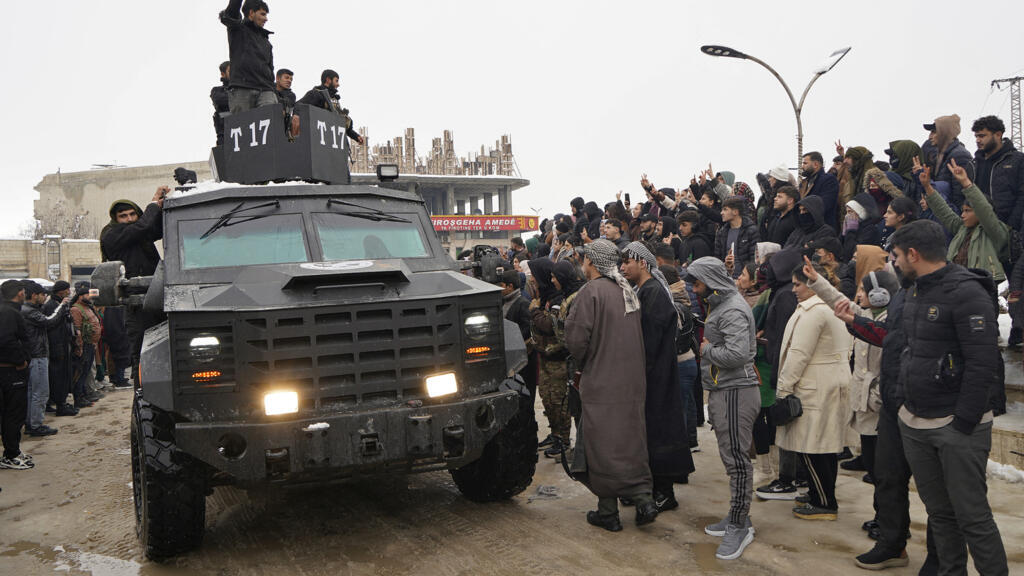
Members of Kurdish-led Syrian Democratic Forces (SDF) arrive at the Kurdish-held city of Ain al-Arab, also known as Kobane on January 23, 2026, after they withdrew from the Al-Aqtan prison in the Raqa province of Syria. © AFP

Syria's government and Kurdish forces reached a comprehensive agreement on Friday that included the gradual integration of the Kurds' forces and administration into the central state, following weeks of clashes between the two sides that led to a ceasefire.

The agreement, shared by the Kurdish-led Syrian Democratic Forces and Syrian state television, came after the Kurds lost control of swathes of territory to government forces during weeks of fighting.

They now find themselves restricted to Kurdish-majority areas, having once held sway over much of north and northeastern Syria.


The agreement stipulates that government forces will enter the Kurdish-controlled cities of Hasakeh and Qamishli in the northeast, while three Syrian army brigades will be created out of the SDF.

Damascus and the SDF on Sunday extended their ceasefire for 15 days while pursuing talks on integration.

Syria's new Islamist authorities, who took over after the ousting of longtime ruler Bashar al-Assad in December 2024, are seeking to extend state control across Syria.

Syrian security forces will "be deployed in the cities of Hasakeh and Qamishli" in the northeast, currently controlled by Kurdish forces, while a separate brigade will be created for the Kurdish-majority town of Kobane in the north.

The agreement deals a blow to the Kurdish minority's hopes for self-rule, after having established a de facto autonomous administration in areas under their control during Syria's 13-year civil war.

(FRANCE 24 with AFP)


The Kurds and the Syrian Regime

Thursday 29 January 2026, by Gilbert Achcar


Recent developments in northern Syria – particularly east of the Euphrates – carry grave implications for both the Kurdish condition and the broader Syrian situation. Let us examine these implications, beginning with the Kurdish issue.

The Autonomous Administration in northeastern Syria now finds itself in a critical predicament, having lost a substantial portion of the territory it hitherto controlled. These losses include predominantly Kurdish enclaves located within largely Arab regions, such as Aleppo, as well as predominantly Arab areas east of the Euphrates, notably Raqqa and Deir ez-Zor. The principal cause of this setback lies in the Trump administration’s abandonment of the alliance Washington had forged more than a decade ago with Syria’s Kurdish forces in the fight against ISIS. Tom Barrack, the Trump administration’s local representative, cynically declared that the usefulness of these Kurdish forces to Washington has “largely expired.”

Once again, the Kurdish national movement is paying the price for its reliance on an ally whose unreliability is historically well established. In the early 1970s, the Kurdish movement in northern Iraq, led by the Barzani family, wagered on the support of the Shah of Iran against the Baathist regime. That gamble ended in disaster when the Shah stabbed the movement in the back after securing his own objectives through a deal with Baghdad. Having used the Kurdish movement as a card in his confrontation with Iraq, he got rid of it once his goals were achieved. Since the 1990s, the Barzani family has allied itself with yet another bitter enemy of the Kurdish people: the Turkish state. They will not support the forces led by the Democratic Union Party (PYD) in northeastern Syria against Turkey and its allies, just as they do not support Kurdistan Workers’ Party (PKK) forces in northern Iraq in the face of repeated Turkish incursions. Instead, they seek to extend their influence into northern Syria with Ankara’s approval.

The PYD, for its part, is also reaping the consequences of the contradiction between its proclaimed principles and its actual practices. Although the party claims adherence to the anarchist ideas espoused by the leader of the PKK in the Turkish prison where he is detained, and subsequently adopted by his organization, it failed to establish genuine democratic self-rule in the Arab-majority areas it seized with US backing east of the Euphrates. Rather than empowering local communities, it imposed its authority in a manner widely perceived by the Arab population as Kurdish nationalist domination. This explains the rapid collapse of PYD-affiliated forces in those regions: local Arab tribes preferred to reintegrate into the Syrian state under the new Damascus regime, particularly as Washington shifted its support away from the Kurdish movement and toward the Syrian government. Had the Arab majorities in these regions experienced authentic democratic self-governance, they would undoubtedly have been willing to defend it against any attempt by a Damascus-based regime to dismantle it in order to reimpose centralized authority.

Turning to the Syrian situation more broadly, any observer of recent events cannot fail to notice the striking contrast between the new Syrian regime’s posture toward Kurdish-controlled areas in the north and its stance toward the Israeli occupation and the Druze-majority region bordering the occupied Golan Heights in the south. This contrast evokes the slogan raised by the Palestinian resistance and the Lebanese National Movement in 1976, following the brutal intervention of Hafez al-Assad’s regime to suppress them and extend Damascus’s control over Lebanon with Washington’s approval: “A lion [asad in Arabic] in Lebanon and a rabbit in the Golan.” A similar characterization aptly describes the behaviour of Ahmed al-Sharaa’s regime, which acts like a lion against the Kurds in the north while accommodating the Zionist state – going so far as to conclude security arrangements with it – despite its occupation of a strategic portion of Syrian territory for nearly half a century.

Whatever may be said about the undemocratic policies pursued by Hayat Tahrir al-Sham (HTS) in its drive to consolidate control over Syrian state territory – policies discussed previously (see “Syria: Fishing in Troubled Waters”, 6 May 2025) – a fundamental distinction nonetheless exists from the standpoint of the new regime’s interests between, on the one hand, extending its authority over the predominantly Arab areas east of the Euphrates, along with their oil fields, which represent a vital source of revenue for the Syrian state, and on the other hand, the continuation of its campaign against Kurdish-majority regions in the north, despite the high potential cost in lives and resources such a campaign entails, and although it offers no meaningful benefit to the new regime in Damascus.

This raises an obvious question: why is HTS pursuing a battle it does not need, at a time when it faces far more pressing political and economic priorities – priorities that serve its own interests, let alone the country’s? The answer lies plainly in the interests of the Turkish state. Kurdish autonomy in northeastern Syria constitutes a Turkish concern, rooted in its connection to the Kurdish national liberation movement that challenges the Turkish state itself from within. It is not, nor should it be, a Syrian concern. The involvement of the new Damascus regime in this conflict is simply another manifestation of its subservience to the Turkey-US alliance, just as the Assad regime was subordinate to the Iran-Russia axis. The principal beneficiary of this entire dynamic remains the Zionist government, whose regional power has been strengthened to an unprecedented extent.

27 January 2026

Translated for the author’s blog from the Arabic original published in Al-Quds al-Arabi on 27 January 2026. Feel free to republish or to publish in other languages, with mention of the source.


Attached documentsthe-kurds-and-the-syrian-regime_a9393-2.pdf (PDF - 981 KiB)
Extraction PDF [->article9393]

Syria
Should Kurdish freedoms be sacrificed for Syria’s centralisation?
Rojava: Political Autonomy, Social Bases, and Imperial Dynamics
Why Syria needs better governance...and a new kind of opposition
Syria’s future won’t be secure through Israel normalisation
Suweida Under Fire: The Consolidation of Power in Damascus, and Sectarianism

Kurdistan
Türkiye: From the Kurdish movement to mass mobilizations
Dissolution of the PKK and new perspectives
Kurdistan/Turkey: A Newroz of hope against a backdrop of coup d’état
Türkiye: Political Crisis and Democratic Movement
Kurdistan: ‘Turkey must choose between the status quo, endless war and peace with the Kurds’.


Gilbert Achcar grew up in Lebanon. He is currently Professor of Development Studies and International Relations at the School of Oriental and African Studies (SOAS) in London. A regular and historical contributor to the press of the Fourth International, his books include The Clash of Barbarisms. The Making of the New World Disorder (2006), The Arabs and the Holocaust: The Arab-Israeli War of Narratives (2012), The People Want: A Radical Exploration of the Arab Uprising (2022). His most recent books are The New Cold War: The United States, Russia and China, from Kosovo to Ukraine (2023) and the collection of articles Israel’s War on Gaza (2023). His next book, Gaza, A Genocide Foretold, will come out in 2025. He is a member of AntiCapitalist Resistance in Britain.


Should Kurdish freedoms be sacrificed for Syria’s centralisation?

Wednesday 28 January 2026, by Joseph Daher


Despite Ahmed al-Sharaa’s government and the Kurdish Syrian Democratic Forces (SDF), agreeing on another ceasefire on Tuesday, infighting and tensions in the country continue. [1]]


The SDF have called on a general mobilisation of Kurds to defend their territories amidst the government’s military offensives that seek to consolidate their power in Syria.

Weeks of clashes saw government armed forces advance into the Kurdish majority neighbourhoods of Sheikh Maqsoud and Ashrafiyeh in Aleppo, which resulted in the forced displacements of over 100,000 civilians. This culminated with government forces capturing large parts of the provinces of Deir Ezzor and Raqqa, following the withdrawal of the SDF.

Damascus’ military offensive in Aleppo, as well as other SDF-controlled areas, took place after the expiration of the 31 December 2025 deadline stipulated in the 10 March 2025 agreement. Brokered by Washington between the interim Syrian president Ahmed al-Sharaa and Mazloum Abdi, the head of the SDF, the agreement sought to integrate both civilian and military wings of the SDF into the state. However, the political deadlock remained.

What’s more, the military escalation took place just two days after a meeting in Damascus between the Syrian authorities and the SDF, which had US military personnel in attendance.

It’s clear that during the ongoing negotiations, the Syrian authorities were developing a plan to first launch a military operation in Aleppo, and then extend it to other SDF controlled areas. They rallied various Arab tribes – which have been in contact with al-Sharaa for some time now – in Deir Ezzor and Raqqa in order to prepare a general offensive against the SDF.

This was all done with the support of Turkey, as well as a green light from Washington.
Uncertainty

The initial 18 January ceasefire and 14-point agreement, provided for the entry of Syrian armed forces into the northeast of the country and the integration of the SDF into the national army. Nevertheless, this did not stop government military escalation.

A new agreement was settled on Tuesday 20 January. Syrian Arab News Agency (SANA) announced that Syrian government armed forces will not enter the centres of the cities of al-Hasakah and Qamishli. They will remain on the outskirts. Damascus also stated that Syrian military forces will not enter Kurdish villages, and that no armed forces will be present in those villages other than local security forces drawn from the residents of the area.

In addition, according to SANA, Abdi is expected to "propose a candidate from the SDF for the position of Deputy defence minister, as well as a candidate for Hasaka governor, names for parliamentary representation, and a list of individuals for employment within Syrian state institutions." However, many uncertainties remain regarding the viability of this agreements and its implementation.

At the same time, the situation in the notorious al-Hol camp in Hasaka – which houses families and affiliates of the Islamic State (ISIS) – is generating genuine fear, with alarming reports regarding the escape of hundreds of ISIS members.
Foreign support

Whilst the US (along with France) had officially been working to de-escalate tensions between the two actors, and despite being the SDF’s long-standing partner in the fight against the Islamic State (ISIS), Washington has not imposed any meaningful pressure to stop the Syrian government’s military actions.

In fact, the US has become an important supporter of the new ruling authorities, as evidenced by the multiple meetings between Trump and al-Sharaa, as well as the removal of Caesar sanctions in December 2025.
Clashes escalate between Syrian forces and SDF, forcing civilians to flee

On its side, Ankara has been pressuring the SDF to dissolve and integrate into the Syrian army. It is worth noting that Turkey considers the group an offshoot of the Kurdistan Workers’ Party (PKK), which it classifies as a terrorist organisation. Turkish officials have reiterated, on multiple occasions, since the beginning of the Syrian government’s military offensive that it is willing to fight Syrian Kurdish-led forces alongside the Syrian Army.

Turkey also shelled areas of Qamishli last night, and it is widely believed it provided significant logistic assistance in the latest military operations.

Following the fall of the Assad regime, Turkey has become one of the most important regional players in Syria, particularly in the north of the country. By supporting the Syrian authorities dominated by Hay’at Tahrir Sham (HTS), Ankara has consolidated its influence over the country.

Other than pushing for the return of Syrian refugees and seeking to profit from the economic opportunities offered by reconstruction, Turkey’s main objective is to deny Kurdish aspirations for autonomy, perceived as a national security threat, and dismantling the Autonomous Administration of North and East Syria (AANES).
Weaknesses

In just a few days, the Syrian ruling authorities captured two-thirds of the territories held by the SDF. Beyond the immediate geo-strategic aspects, this rapid advance also demonstrates the limitations of the AANES’ political project amongst non-Kurdish populations, especially Arabs. Over the years, sections of the Arab population have protested against discrimination, targeted ‘security’ practices, and imprisonment of activists, as well as lack of real representation within AANES institutions.

Instead of trying to develop strategies to win consent of Arab popular classes in the areas under their control, SDF leaders have instead collaborated with tribal leaders in order to manage the local populations. However, these tribal leaders are known for changing their loyalty according to the who the most powerful political actors of the moment are, and focusing on defending their own material interests. As the balance of forces have progressively shifted in the favour of Damascus, the tribal leaders followed suit.

Furthermore, the SDF’s leadership misplaced confidence regarding continued US support, as well as their lack of interest in building wider and deeper political alliances with the country’s democratic and progressive forces, weakened the sustainability of the SDF’s political project.

Ultimately, the recent military offensive by the government’s armed forces should be read as part of the continued attempt by current Syrian ruling elites to centralise power and its rejection of a more inclusive path for Syria’s future.

This has been the case since Assad’s fall. In the months that followed, significant human rights violations were committed under al-Sharaa’s leadership, notably the massacres of Alawite and Druze populations on the coast and in Sweida. Alongside these attacks, the ruling authorities have also sought to curb democratic rights and freedoms.

Furthermore, the ruling authorities and their supporters are accused of entertaining an aggressive discourse against Kurds and the SDF, with allegations of significant racism and human rights violations committed by government forces and affiliated armed groups.

For example, Syria’s Minister of Endowments, Mohammad Abu al-Khair Shukri, issued a religious directive urging mosques across the country to celebrate what he described as “conquests and victories” by Damascus-aligned forces in eastern Syria, and to pray for the success of the Syrian Arab Army’s soldiers.

Furthermore, by specifically encouraging the mention of verse six of Surah al-Anfal from the Holy Quran, it suggests that he intended to make a reference to the 1988 Anfal military campaign. This was carried out by Saddam Hussein against Kurds in today’s Kurdistan Iraq, which was marked by chemical attacks, mass killings, and widespread destruction.

Despite this concerning context, regional and international rulers have continued to support the Syrian ruling authorities, legitimising and strengthening their power over the country.

Therefore, despite al-Sharaa granting linguistic, cultural, and citizenship rights to the Kurdish population in Syria, as well as official positions within the state, legitimate fears remain.

A top priority now for progressive and democratic forces in Syria is to stop the bloodbath, allowing for the safe return of displaced civilians, and struggling against hate speech and sectarian practices in the country. Syria’s future is at stake. Indeed, the new ruling authorities have shown that their plans are not a radical rupture with the authoritarian practices of the former regime.

No plans for democratic and inclusive political representation and sharing of power are currently provided by Damascus. All Syrians seeking democracy, social justice and equality should be worried about these dynamics, and should struggle against them with all their might.

21 January 2026

Source: The New Arab.

Attached documentsshould-kurdish-freedoms-be-sacrificed-for-syria-s_a9390.pdf (PDF - 1021.3 KiB)
Extraction PDF [->article9390]

Footnotes


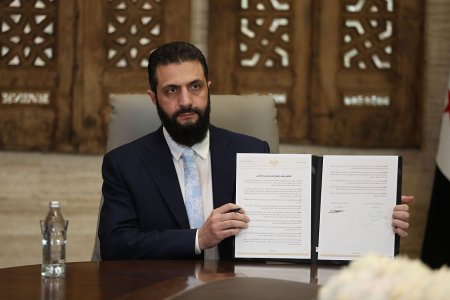
[1] Photo: Syrian President Ahmed al-Sharaa sighned a ceasefire agreement with the Kurdish-led Syrian Democratic Forces (SDF) on January 18, 2026. [GETTY


Joseph Daherr is a Swiss-Syrian academic and activist. He is the author of Syria After the Uprising: The Political Economy of State Resilience (Pluto, 2019) and Hezbollah: The Political Economy of Lebanon’s Party of God (Pluto, 2016), and founder of the blog Syria Freedom Forever. He is also co-founder of the Alliance of Middle Eastern and North African Socialists.


Kurdistan

Rojava: Political Autonomy, Social Bases, and Imperial Dynamics


Tuesday 27 January 2026, by Foti Benlisoy


The rapid advance in northeastern Syria of military forces affiliated with the Syrian transitional administration, resulting in their seizure of the large, predominantly Arab parts of the territory previously under the control of the Syrian Democratic Forces (SDF), undoubtedly constitutes a profoundly destabilizing development in terms of the region’s geopolitical balance. [1] At the time of writing, it was not yet clear whether forces loyal to the Damascus government would continue their advance into areas densely populated by Kurds, nor whether the declared ceasefire would once again be violated.

In such a scenario, an escalation of fighting and the re-emergence of attempts at massacres targeting civilians–similar to those previously witnessed along the coast and in Suwayda–cannot be ruled out. In the face of this possibility, which must not be underestimated, it is an unavoidable duty to engage in active solidarity with the Kurdish people, to demand an end to the operations carried out by forces affiliated with Damascus, and to stand firmly alongside the Kurds’ democratic national demands.

These developments, which radically transform the military and political balance of power in the country and effectively bring the Autonomous Administration of North and East Syria to an end, clearly amount to a serious defeat for the SDF. The SDF no longer enjoys the advantages that once derived, in negotiations with Damascus, from controlling roughly one third of the country’s territory. It is evident that the Sharaa administration, backed by the United States, will seek to establish a centralized system of governance, pushing the Kurds–at best–into the position of a minority granted certain cultural rights on an individual basis. The presidential decree issued on 17 January, which recognizes some aspects of Kurdish identity rights, makes clear that the Kurdish question in Syria is not being approached as an issue of self-government or self-determination, but rather as a minority rights problem. However, it should not be overlooked that the Sharaa administration–one that can hardly be said to embrace cultural and political pluralism as a guiding principle–has in practice contributed to the emergence of an aggressive, anti-Kurdish racist climate in the country, one that could very well lay the groundwork for a comprehensive assault on the Kurdish population.

Bourgeois Geostrategy and Revolutionary Politics

The defeat experienced here does not signify the end of Kurdish national demands, but rather the end of the Rojava experience–or, more precisely, of the experiment of the Autonomous Administration of North and East Syria. That an autonomous region once promoted as an alternative model for all of Syria should be effectively dismantled within a matter of days has sparked–and will rightly continue to spark–intense debate, both in Syria and across the region, regarding the geopolitical transformations such an outcome may trigger, as well as the extent to which regional and international powers shaped this result. The roles played by Turkey and the United States in facilitating Sharaa’s military operations, Israel’s pursuit of accommodation with the Sharaa administration that rendered this offensive possible, and the implications of these developments in northeastern Syria for other parts of the country–such as Suwayda–are all critical points of discussion.

Yet to leave the debate at this level–that is, to consign the defeat in Rojava to the exclusive domain of regional studies specialists, international relations experts, and military analysts–would be a grave mistake. Reducing the political and social developments of the region commonly referred to as the “Middle East,” a term coined by the British Foreign Office, to questions of geopolitics and geostrategy is a widespread and dangerous error. To interpret every development in the region as nothing more than a chessboard on which great powers and regional actors measure their respective power and interests is, from the outset, to exclude an entire geography from the field of radical or revolutionary politics.

In her article entitled “Social Democracy and The National Struggles in Turkey” published in 1896, Rosa Luxemburg pointed precisely to this problem:


In the party press, we all too often encounter the attempt to represent the events in Turkey (that is, in the Ottoman Empire – ed.) as a pure product of the play of diplomatic intrigue (…). What is above all striking about this position is that it is in no way fundamentally different from the bourgeois standpoint. In both cases, we have the reduction of great social phenomena to various ‘agents’, that is, to the deliberate actions of the diplomatic offices. On the part of bourgeois politicians, such points of view are, of course, not surprising: these people actually make history in this sphere, and hence the thinnest thread of a diplomatic intrigue has great practical importance for the position they take with regard to short-term interests. But for Social Democracy, which at the present time merely elucidates events in the international sphere, and which is above all concerned to trace back the phenomena of public life to deeper-lying material causes, the same policy appears to be completely futile. On the contrary, in foreign policy as in domestic politics, Social Democracy can adopt its own position, which in both spheres must be determined by the same standpoints, namely by the internal social conditions of the phenomenon in question, and by our general principles. [2]

From this standpoint, it is essential, when considering developments in Syria, not to limit ourselves to purely geopolitical debates but also to draw political lessons from this sudden transformation. For Rojava has been one of the most important experiences of this century for the international left. Like every major emancipatory movement, this experience must be assessed primarily on the basis of its concrete political and social practice. That, under the extremely harsh conditions of the Syrian civil war, an attempt was made–by reference to the idea of democratic confederalism–to establish a communalist, self-governing, and gender-egalitarian order, and that this experiment is now facing a serious retreat, constitutes a challenge that the radical and revolutionary left must confront.
Imperialism and resistance

The initial reaction of the international left to developments in Rojava was outrage at what was perceived as the United States’ betrayal of the Kurds. Rightly regarded as yet another example of imperialist hypocrisy, this development was often accompanied by a highly didactic, “we told you so” critique, asserting that the Kurdish movement should never have relied on U.S. support in the first place. Tariq Ali’s tweet, “Since 2001, some of us have pleaded with Kurdish leaders not to fall into the illusion that by collaborating with the United States they would be serving their own interests,”is a typical expression of this approach.

Whatever justified elements such a critique may contain, when advanced on its own and when it disregards the concrete conflicts and contradictions confronting the Kurdish movement, it risks reproducing the arguments of Turkish, Arab, and Persian nationalisms, which have long claimed that Kurdish national aspirations have, from past to present, almost always been nothing more than an instrument of imperialism.

Yet to question–in the name of an anti-imperialist political correctness–the fact that, a decade ago, the Kurdish movement, engaged in a life-and-death struggle against ISIS, received support and assistance from the United States, or even to present this support as the cause of today’s retreat, is akin to questioning the British support received by Yugoslav and Greek partisans in their resistance against the Nazis. At that time, the Kurdish movement was compelled, to borrow a metaphor used by Lenin in another context, to reach a compromise with imperialist “bandits” in order to “save its skin.” [3]

However, the struggle against ISIS and the Kurdish movement’s incorporation into the international anti-ISIS coalition produced, under the conditions of the Syrian civil war, a highly fragile and sui generis new geostrategic reality. U.S. support enabled the Kurdish movement–that is, the YPG/YPJ forces–to gain control over a vast territory far beyond the areas inhabited by Kurds. This represented a major opportunity for the movement, but it also brought with it enormous problems. The Kurdish movement found itself confronted with what is known as “overstretching,” that is, an expansion beyond its political and military capacities.

The way to mitigate, as far as possible, the pathologies created by the fact of de facto controlling nearly one third of the country with a limited social base lay in broadening the movement’s social foundations. This could only be achieved if the program implemented in these newly acquired territories found a concrete resonance among the local population, if it succeeded in mobilizing at least part of that population and binding it to the new order.
From Mobilization to Diplomacy

The creation of the Autonomous Administration of North and East Syria and the Syrian Democratic Forces was meant to respond precisely to this need: winning over the Arab population living in the territories liberated from ISIS. The claim was that the system of “democratic confederalism,” shaped through institutions of “democratic autonomy,” would constitute, across this vast geography in which Kurds are a minority, an alternative form of governance capable of serving as a model for the entire country. However, for this claim to become reality–and thus for the active consent of the Arab majority in these territories to be secured–this model would have needed to produce tangible transformations in the daily lives of the population, generate concrete gains, and offer a future horizon worth struggling for.

The rapid disintegration witnessed in the Arab-inhabited areas of the Autonomous Administration of North and East Syria, and the hasty retreat of SDF forces, compelled to withdraw abruptly in the face of what amounted to an uprising by the Arab population in the territories they controlled, demonstrate that this was not the case. They show that the autonomous administration lacked real foundations in Arab regions. This situation is often attributed to the shifting allegiances of Arab tribes in the region, but this explanation requires closer examination. Essentialist “explanations” that present Arab tribes’ sympathy for the Sharaa administration as a “natural” and immutable demographic fact rooted simply in their Arab identity, or that claim these communities are structurally incapable of sympathizing with political orientations such as democratic autonomy–supposedly specific to the revolutionary left–are merely manifestations of a new orientalist approach that reduces regional politics to an endless struggle among sects, clans, and tribes.

All of these debates about tribes constitute an indirect indicator of the extent to which the SDF prioritized compromises with tribal leaderships over political and economic measures aimed at empowering workers and the oppressed in the region and mobilizing them within the framework of democratic confederalism. The strategy of governing local Arab communities through agreements with tribal leaders and by granting them positions collapsed as soon as the balance of power shifted. Joseph Daher summarized this situation in a recent article as follows:


Instead of developing strategies capable of winning the consent of Arab working classes in the areas under their control, the SDF leadership opted to cooperate with tribal leaders in order to govern the local population. Yet these tribal leaders are known for shifting their allegiance according to the most powerful political actors of the moment and for prioritizing their own material interests. As power relations increasingly shifted in favor of Damascus, tribal leaders positioned themselves accordingly.[[Joseph Daher, “Should Kurdish freedoms be sacrificed for Syria’s centralisation?”].]

Because the SDF was unable to broaden its social base, its capacity to govern large parts of Syria became increasingly dependent on the diplomatic and military support provided by the United States. In order to ensure the survival of the autonomous administration, a political approach that prioritized diplomacy over social mobilization came to dominate. The consequences of this pragmatic relationship of dependence are now plain to see. With the shift in U.S. policy on Syria, it quickly became evident how fragile the foundations of the Autonomous Administration of North and East Syria were. At this point, however, what must be discussed is not abstract moral conclusions about the inevitable problems of dependency created by the support of one imperialist power or another. We already know that imperialist powers cannot be the friends of any people or any liberation struggle.

The crucial issue lies in the conditions that led to the deepening of this relationship of dependence. ISIS attacks, the deepening of ethnic and sectarian fault lines by the civil war, and especially Turkey’s hostile stance were factors that had already significantly narrowed the SDF’s room for maneuver over the past decade. Under these conditions, the sustainability of this atypical situation of territorial dual power that emerged from the struggle against ISIS could only have been possible through local organs of power rooted in popular demands, capable of mobilizing the population–or at least a significant part of it. Despite the Autonomous Administration of North and East Syria’s claims to the contrary, it is possible to say that it failed to achieve this in Arab-majority areas and was unable to render effective the institutions of democratic autonomy that might have expanded its social base. The retreat and disintegration now underway, which must be understood not only as military events but also as social phenomena, stem from this political weakness.
A Practical Internationalism

In the age of multipolar imperialism, we will clearly encounter ever more frequent examples of major social struggles, uprisings, and revolutionary initiatives being instrumentalized, “hijacked,” or betrayed by international and regional powers. Drawing the correct lessons from the Rojava experience is therefore essential. If internationalism is to cease being an abstract moral stance and acquire a practical character, we must confront the complex problems that Rojava has brought to the fore. Standing up to the pressure created by imperialist powers’ attempts to distort, appropriate, and absorb liberation struggles will not be possible by retreating behind abstract principles, but only through the construction of practices, organs, and institutions capable of enabling and sustaining social and political mobilization from below.

Debating the lessons of the experience of the Autonomous Administration of North and East Syria should not take precedence over our duty of solidarity; on the contrary, it should complement it. Today, solidarity with the Kurds of Syria who are under siege is not merely a moral duty, but a political necessity: as long as the Kurds – a people fragmented and subordinated following the imperialist partition after the First World War – are unable to exercise their right to self-determination and to secure their democratic national rights, the emergence of a progressive alternative in the region will remain an illusion. It is precisely for this reason that we need a practical internationalism that sees the Kurds’ struggle against this multidimensional oppression as inseparable from the resistance against Zionism in Palestine and from the uprising against the regime in Iran, and that understands all of these struggles as different–if contradictory–moments and stations of the same fight.

26 January 2026

Translated from Turkish by the Imdat Freni (Emergency Brake) Translation Collective.

Attached documentsrojava-political-autonomy-social-bases-and-imperial_a9384.pdf (PDF - 1012.1 KiB)
Extraction PDF [->article9384]

Footnotes


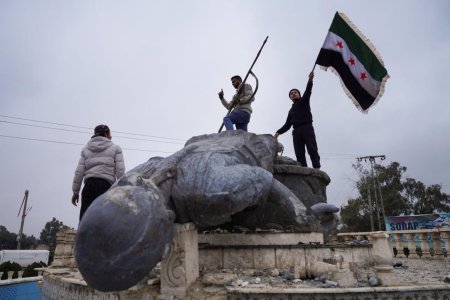
[1] Photo: A man waves a Syrian flag while a group of civilians destroy a statue of an SDF fighter in the city of Tabqa after the Syrian army took control of it, in Tabqa, Syria, on 18 January 2026. © Photo Reuters


[2] Article first published on 8, 9, and 10 October 1896 in the Sächsische Arbeiter-Zeitung, the press organ of the German Social Democrats in Dresden.


[3] Lenin, “Left-Wing Communism: an Infantile Disorder”.


Foti Benlisoy is a revolutionary Marxist activist from Turkey. His articles and books mainly focus on Marxism, ecology, and racism.
Palestine

Kamil Abu Haniesh – leader among Palestinian prisoners


Friday 30 January 2026, by Alex Fuentes


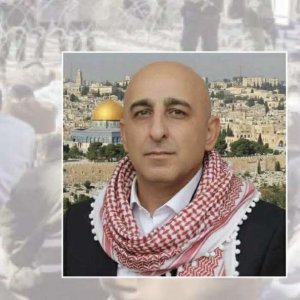
Today, thousands of Palestinians are imprisoned in Israel – and one of those who spent the longest time behind bars is Abu Haniesh, who has become a symbol of the struggle to which he has devoted his entire life.

Abu Haniesh was finally released from prison in October 2025 and deported to Egypt as part of an exchange agreement that freed nearly 2,000 Palestinian political prisoners.

His unique testimony was published in Internationalen, the media of the Swedish section of the Fourth International which sent us this translation.

He is undeniably a living presence. Kamil Abu Haniesh is one of the most well-known Palestinian political prisoners in Israeli prisons and a leading member of the Popular Front for the Liberation of Palestine (PFLP). He was first arrested in the 1980s and has spent more than two decades in Israeli prisons, often in long uninterrupted periods. Israeli courts sentenced him to life imprisonment, later commuted to fixed-term sentences. He has also been held without charge or trial – a practice that has long been criticised by human rights organisations.

Abu Haniesh is not only known for having been imprisoned, but for what he did while there. He has been a central leadership figure among Palestinian prisoners, particularly on the left, and has participated in and organised collective hunger strikes for improved conditions, including the right to education, healthcare and family visits. He has also contributed to political education and organisation among the prisoners – what is often described as a “prison university”.

Rather than being regarded primarily as a “security prisoner”, Abu Haniesh has above all been seen as a prisoner of conscience. His case illustrates how political resistance is criminalised as “terrorism”, particularly when it is left-wing and secular. Internationally, he has been highlighted by Palestinian prisoner organisations, left-wing organisations and solidarity movements in Europe and Latin America. Abu Haniesh is also considered one of the most prominent writers among Palestinian prisoners. Despite his incarceration, he has published around twenty books and hundreds of articles.

His long imprisonment demonstrates how the prison system is used not only as punishment, but above all as a political tool of control. Today, thousands of Palestinians remain imprisoned in Israel – and Abu Haniesh has become a symbol of the struggle to which he has dedicated his life. Abu Haniesh was finally released from prison in October 2025 and deported to Egypt as part of an exchange agreement that freed nearly 2,000 Palestinian political prisoners.[Internationalen]

Here is his testimony:

“I was born on 26 September 1975 in the village of Beit Dajan in the Nablus district, in occupied Palestine. For a period of two and a half years, I was subjected to continuous persecution by the Israeli occupation forces and survived several assassination attempts. Between 1994 and 2000, I was active in student political work at universities, where I held several leadership roles. During this period, I completed a bachelor’s degree in economics.

I participated in the First Intifada, which began in 1987, when I was only twelve years old, and my involvement continued for six years. During my time in captivity, I took part in more than seven hunger strikes as part of the struggle for basic rights. After my release, I completed my academic studies and obtained a master’s degree in Israeli studies.

Palestinian prisoners in Israeli prisons have for a long time been subjected to systematic and serious abuses. Even today – and particularly since 7 October 2023 – Palestinian prisoners have been subjected to direct, repressive and inhumane measures by the Israeli Prison Service. These measures are implemented within the framework of an explicitly repressive and racist policy, driven by the far-right minister Itamar Ben-Gvir, and include collective punishment, policies of starvation, physical and psychological violence, and the deprivation of the most basic human rights. Prisoners are subjected to beatings, the spread of disease, humiliation and systematic violations of their human dignity.

Despite these conditions, Palestinian prisoners have, for more than 60 years and through a long and persistent struggle, managed to defend their humanity and to win important collective rights through hunger strikes and organised resistance. Among these achievements are the right to family visits, access to the prison canteen, daily outdoor exercise, books, newspapers, university-level education, radio and television, clothing, food and electrical appliances. Through their struggle, prisoners have also built a moral, national and human value system and created an organised prisoner society, known as the “prisoners’ movement”, which has continuously defended its rights against the recurring abuses of the prison authorities.

Since 7 October 2023, the Israeli Prison Service has implemented a brutal and systematic policy of revenge against the prisoners. All previous rights and gains have been withdrawn. Prisoners have been completely isolated from the outside world – without visits, without access to the canteen and without sufficient or appropriate food. Clothing, blankets and personal belongings have been confiscated, electrical appliances banned, and prisoners prevented from leaving their cells for daily exercise.

An organised policy of humiliation, repression and collective punishment has been imposed, including severe beatings, the use of tear gas, isolation, starvation, stress positions, arbitrary transfers and other forms of treatment akin to torture. These measures have led to the deaths of around one hundred prisoners, to the widespread spread of disease, and to extreme suffering. Prisoners are also enduring severe cold after their winter clothing and blankets were confiscated, as well as a lack of hot water for hygiene, in the midst of a harsh winter.

We call on all free people around the world to show solidarity with Palestinian prisoners in their struggle and to exert continuous international pressure to force the occupying power to put an end to its criminal and inhumane abuses. Palestinian prisoners are freedom fighters who defend their people’s legitimate right to freedom, self-determination and human dignity. We look forward to broad international support from our friends across the world – in solidarity with the prisoners, with the children of Gaza, and with the Palestinian people’s struggle for liberation against a colonial system whose brutality history has borne witness to.”

28 January 2026

Source: Internationalen.


Attached documentskamil-abu-haniesh-leader-among-palestinian-prisoners_a9394.pdf (PDF - 950.3 KiB)
Extraction PDF [->article9394]

Palestine
From the Ashes of the Arab Spring
The ethnic cleansing of Gaza by NGOs and Somaliland
Palestinian COP30 coalition demands
Algerian feminists at the frontiers of solidarity
Hamas After 7 October: Resistance and Challenges


Alex Fuentes is editor of Internationalen, media of the SP, Swedish section of the Fourth International.