Saturday, February 14, 2026

Till death do us bark: Brazilian state lets pets be buried with owners

By AFP
February 10, 2026


A woman walks her dog at sunset in Porto Alegre, Brazil - Copyright AFP STRINGER

In pet-mad Brazil, the state of Sao Paulo will allow animals to be buried in family graves starting Tuesday, with a law recognizing “the emotional bond” that exists between humans and their household critters.

Brazil has the world’s third largest pet population, with 160 million animal companions, according to data from the Pet Brasil Institute.

The law was inspired by local dog Bob Coveiro, who lived for 10 years in a municipal cemetery after his owner was buried there.

When the dog died in 2021, he was allowed to be buried alongside his human.

Conservative governor Tarcisio de Freitas on Tuesday signed the so-called Bob Coveiro law that will allow pets to be buried in family graves or mausoleums across Sao Paulo state.

The measure comes as the country of 213 million people has been gripped by outrage over the death of a beloved community street dog named “Orelha” (Ear) in the southern coastal city Florianopolis — who was brutally killed by a group of teenagers, allegedly from wealthy families.

The case — which even drew the attention of President Luiz Inacio Lula da Silva — sparked protests in several main cities, and local media are following every twist and turn in the investigation.

With a declining birth rate and burgeoning middle class, Brazil’s strong pet culture is reflected in a growing range of services for pets, from luxury spas to hotels.

In January, Sao Paulo passed another law recognizing the “cultural significance” of the ubiquitous caramel-colored Brazilian street dog known as a “Caramelo” — which featured in a 2025 Netflix film.

The goal of the law was to “combat prejudice against animals without a defined breed.”
The secret to an elephant’s grace? Whiskers

By AFP
February 12, 2026


The whiskers on the trunks of elephants have unique properties that grant them a highly evolved sense of touch - Copyright AFP John MACDOUGALL

Maggy DONALDSON

An elephant’s trunk can surpass a human’s height and lift trees — a marvel of strength that’s conversely so gentle it can grasp a tortilla chip without breaking it.

So how do the thick-skinned animals with poor eyesight pull off such delicate tasks? In a word, whiskers.

New research published Thursday in the journal Science details how the whiskers that cover an elephant’s trunk have unique properties that lend the largest land mammals remarkable dexterity.

Elephants are born with about 1,000 of these bristles, lead author Andrew Schulz told AFP, many of them anchored in the trunk’s wrinkles to act like feelers and help the animals assess their surroundings.

A team of engineers, materials scientists and neuroscientists analyzed the geometry, porosity and material properties of these whiskers, and expected them to mimic the whiskers found on mice or rats — circular at a cross-section, solid and uniformly stiff.

In fact, elephant whiskers are almost blade-like, with a porous architecture similar to sheep horns, which helps with shock absorption while eating.

And a gradiated shape and structure from base to tip allows for an amplified sense of touch, Schulz said.

“The craziest finding that we had, I think, was that these whiskers have this transition from a really, really rigid base to a very, very soft tip,” said the researcher at the Max Planck Institute for Intelligent Systems in Stuttgart, Germany.

Part of elephants’ whisker evolution is to prevent breakage, said Schulz. Unlike most mammals with whiskers, those of elephants don’t grow back.


– Elephant-inspired advances –


Many animals have sensory hairs that can act as a radar, but few quite so precise as the elephant’s.

Schulz said a rat’s whiskers, for example, also picks up vibrations — but it’s akin to smashing down a handful of keys on a piano.

To an elephant’s whiskers, it’s more like hitting specific notes.

Researchers voiced excitement that cat whiskers have a similar kind of material intelligence and stiffness gradient.

The elephant’s gradiated structure can help with things like object differentiation while foraging and eating — which they spend the vast majority of their time doing.

Elephants are also well-documented using their trunks for social touch — “they’re using the outside of their trunk,” Schulz said, “so they’re using those portions that are covered in the whiskers.”

Caitlin O’Connell-Rodwell — a behavioral ecologist and elephant expert who has focused on how the giant mammals communicate and detect signals through their feet — called the findings “fascinating.”

“This is really exciting for me to see just more affirmation of how sensitive their trunks really are,” she told AFP.

“There’s some really interesting, intriguing thoughts for the next steps, for what one could ask in terms of the behavioral application of this,” O’Connell-Rodwell said.

“Not only would this allow them to say, reach up into a tree and feel around for fruit or a seed pod with better agility, but it also has implications for communication.”

There’s also a wealth of technological possibilities elephant whiskers could inspire, not least when it comes to robotics, Schulz said.

And “part of the novelty of this work is functional gradients exist everywhere in biology,” the researcher said.

The stiff base-to-soft tip structure also appears in rotator cuffs or ACL ligaments, he said for example — and better understanding those structures and how they might impact sensing could perhaps allow for improved repair techniques.

HAPPY VALENTINES DAY


OTO


FRATER SATURNIS

BOOK OF THE LAW LIBER VEL LEGIS


LA REVUE GAUCHE - Left Comment: Search results for VALENTINES DAY

Friday, February 13, 2026

Trump’s Concentration Camp Build-Out Includes Nearly $40 Billion for Warehouse Conversions

“Germany’s concentration camps didn’t start as instruments of mass murder, and neither have ours,” wrote talk show host Thom Hartmann recently. “History isn’t whispering its warning: It’s shouting.”


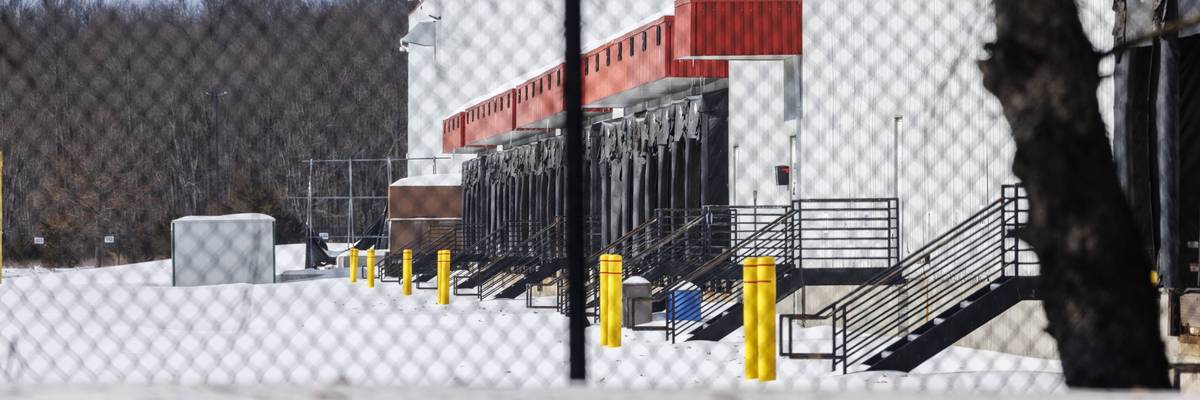
An empty warehouse is seen in Chester, New York on February 8, 2026. US Immigration and Customs Enforcement proposes a facility at a warehouse roughly two hours from New York City, but many locals and officials have objected to the plan.
(Photo by Matthew Hoen/NurPhoto via Getty Images)

Julia Conley
Feb 13, 2026
COMMON DREAMS

President Donald Trump’s anti-immigration agenda has supercharged opposition in cities where he has deployed federal agents to conduct raids, and communities in states including New York and Missouri are already working to block the next step the Department of Homeland Security plans to take in its push for mass deportations: acquiring massive warehouses across the country to use as immigrant detention centers.

US immigration and Customs Enforcement documents that were provided to Republican Gov. Kelly Ayotte of New Hampshire—one of the states where ICE aims to acquire a building and retrofit it to house at least 1,000 people at a time—show that the administration plans to spend $38.3 billion on its mass detention plan.

US Military Helping Trump to Build Massive Network of ‘Concentration Camps,’ Navy Contract Reveals


It would buy 16 buildings across the country to use as “regional processing centers” that could hold 1,000-1,500 people. Another eight detention centers would hold as many as 10,000 people at a time, with the detainees awaiting deportation.

The Washington Post reported that a review of state budget data showed that the amount of money the White House intends to pour into the project over the next several months is larger than the total annual spending of 22 US states.

“Thirty-eight billion dollars,” said Rep. Seth Moulton (D-Mass.). “That’s what Trump is spending to turn warehouses into human holding facilities. Not on schools. Not on healthcare. Not on veterans. On warehousing humans.”

Moulton also condemned ICE’s claim that the new network of detention facilities will ensure the “safe and humane civil detention” of immigrants.

At least six people died in ICE detention centers in January, and one of the deaths, that of Geraldo Lunas Campos at Camp East Montana in El Paso, Texas, was ruled a homicide.

Medical neglect and abusive treatment—including some that amounts to torture—has been reported at multiple facilities.

ICE has already spent more than $690 million purchasing at least eight warehouses in Maryland, Arizona, Georgia, Texas, Pennsylvania, and Michigan in recent weeks. Documents posted on Ayotte’s website show the agency is pursuing additional acquisitions in New Hampshire, New York, New Jersey, and Georgia.

Communities are already rallying against the plan and questioning whether the small towns ICE has selected have sufficient water and sewer infrastructure to support thousands of people detained in a warehouse.

In New York, Rep. Pat Ryan (D-NY) said last week that 25,000 people in his district have signed a petition opposing the use of a local warehouse to house immigrants and pointed to the “major corruption and graft” evident in the plan to purchase and run the warehouses.

“The site in my district that’s proposed is owned by one of Trump’s multibillionaire donors, who would directly financially benefit from this site,” said Ryan, referring to former Trump adviser Carl Icahn.


As Common Dreams reported Friday, private prison firm GEO Group raked in a record $254 million in profits last year as it secured contracts with the Trump administration to build new ICE facilities across the US.

ICE has attempted to make purchases in Oklahoma City; Kansas City, Missouri; and in Virginia, but those plans have fallen through, with the Kansas City Council passing a five-year ban on new nonmunicipal detention centers after the public learned that DHS was the potential buyer of a warehouse in the city.

Sen. Chris Van Hollen (D-Md.) has also joined his constituents in speaking out against ICE’s $100 million purchase of a warehouse in his state to house at least 1,000 people at a time.

“This administration is spitting in the face of communities from Minneapolis to Maryland and wasting our tax dollars. We won’t back down,” said Van Hollen late last month.


The details of the administration’s planned conversion of warehouses were reported less than two weeks after Pablo ManrĂ­quez of Migrant Insider revealed that a US Navy contract originally valued at $10 billion “has ballooned to a staggering $55 billion ceiling to expedite President Donald Trump’s ‘mass deportation’ agenda” and to help build “a sprawling network of migrant detention centers across the US.”

At Common Dreams last week, talk show host and author Thom Hartmann wrote that the warehouses Trump plans to use to hold people—purchased by an agency whose own data shows it has largely been detaining people with no criminal records—are best described as concentration camps like those used in Nazi Germany.

“By the end of his first year, [Adolf] Hitler had around 50,000 people held in his roughly 70 concentration camps, facilities that were often improvised in factories, prisons, castles, and other buildings,” wrote Hartmann. “By comparison, today ICE is holding over 70,000 people in 225 concentration camps across America,” with hopes to “more than double both numbers in the coming months.”

“Germany’s concentration camps didn’t start as instruments of mass murder, and neither have ours; both started as facilities for people the government’s leader said were a problem. And that’s exactly what ICE is building now,” he continued. “History isn’t whispering its warning: It’s shouting.”


Servicemembers thrown into chaos as Hegseth blacklists colleges they can attend

Matthew Chapman
February 13, 2026 
RAW STORY


Pete Hegseth (Reuters)

Secretary of Defense Pete Hegseth has created a nightmare for some servicemembers with a new policy that seeks to blacklist several colleges and universities from military tuition assistance, CNN reported on Friday.

Under the new policy, outlined in a memo last week, "Military officers could soon find dozens of top colleges and universities across the United States abruptly off limits for tuition assistance," as a part of Hegseth's "campaign against schools he describes as being biased against the US military and sponsoring 'troublesome partnerships with foreign adversaries.'"

The memo commands the military to “evaluate all existing graduate programs for active-duty members at Ivy League universities and any other universities that similarly diminish critical thinking and have significant adversary involvement, and determine whether they deliver cost-effective, strategic education for future senior leaders when compared to public universities and military masters programs.”

"The uncertainty about tuition assistance and eligible programs for Defense Department funding has led to confusion and concern amongst service members who have already applied or been accepted to these schools," said the report.

Additionally, the report continues, officials "said they were concerned it amounted to an attempt to purge diversity of thought from the military."

This comes as Hegseth, who has styled himself "Secretary of War" by an executive decree that carries no legal weight, got a brutal smackdown in federal court over his attempts to enact military punishment against Sen. Mark Kelly (D-AZ) for his role in a video reminding active-duty troops they have a responsibility to refuse orders that would constitute war crimes.
Kristi Noem's DHS secretly demands tech giants fork over names of ICE critics: report

Erik De La Garza
February 13, 2026 
RAW STORY


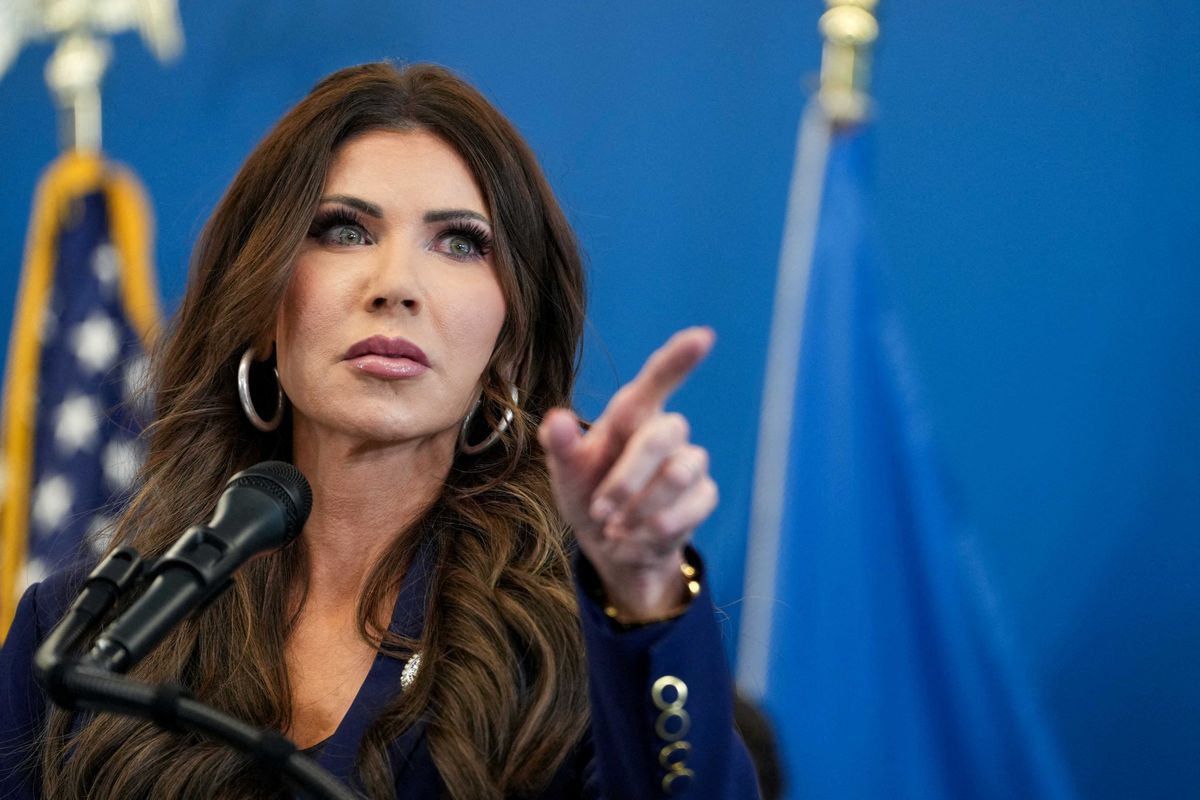
U.S. Homeland Security Secretary Kristi Noem gestures during a press conference to discuss ongoing U.S. Immigration and Customs Enforcement (ICE) operations, as part of U.S. President Donald Trump's immigration policy, at One World Trade Center in New York City, U.S., January 8, 2026. REUTERS/David 'Dee' Delgado

The Department of Homeland Security has expanded efforts to identify Americans who criticize or track Immigration and Customs Enforcement, sending hundreds of legal requests to major tech companies seeking information behind social media accounts, according to a report in The New York Times.

In recent months, DHS has issued administrative subpoenas to Google, Meta, Reddit, and Discord requesting names, email addresses, phone numbers, and other identifying data tied to accounts that comment on or monitor ICE activity. Four government officials and tech employees familiar with the requests told The Times the subpoenas have targeted accounts that lack real names and have criticized ICE or shared the locations of agents.

The Times reviewed two subpoenas sent to Meta over the past six months.

“Google, Meta and Reddit complied with some of the requests, the government officials said,” according to the Friday report. “The tech companies, which can choose whether or not to provide the information, have said they review government requests before complying.”

In some cases, users were notified and given 10 to 14 days to challenge the subpoenas in court.

“The government is taking more liberties than they used to,” said Steve Loney, a senior supervising attorney with the American Civil Liberties Union of Pennsylvania. “It’s a whole other level of frequency and lack of accountability.”

DHS said it has “broad administrative subpoena authority” but declined to answer questions about the scope of the requests. In court, department lawyers under the Trump administration have argued the subpoenas are necessary to protect ICE agents in the field.

DOJ attorney Sarah Balkissoon said DHS was acting “within their power to investigate threats to its own officers or impediments to their officers,” according to court documents reviewed by the Times.

A Google spokesperson said the company’s review process “is designed to protect user privacy while meeting our legal obligations.” Meta, Reddit, and Discord declined to comment.
'Obama was created': GOP lawmaker claims first Black president 'not organic' man

David Edwards
February 13, 2026 
RAW STORY


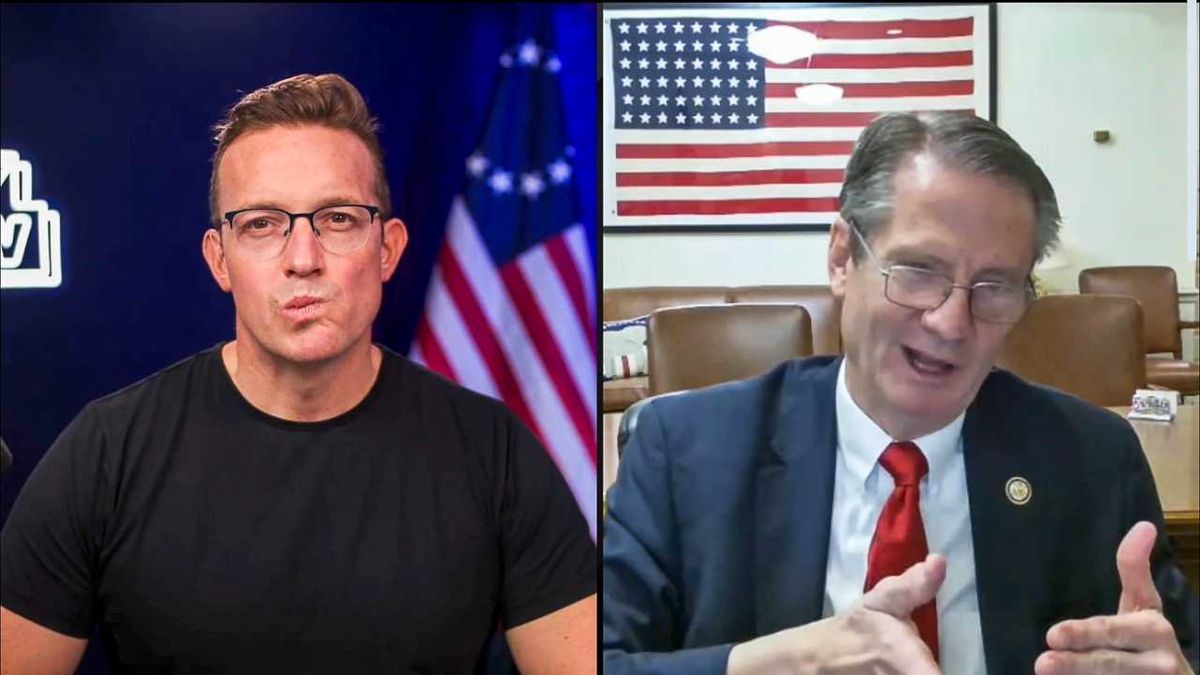
The Benny Show/screengrab

Rep. Tim Burchett (R-TN) asserted that former President Barack Obama was "created" and not an "organic" person.

During an interview with Burchett on Friday, MAGA influencer Benny Johnson suggested that Obama was implicated in covering up the crimes of sex offender Jeffrey Epstein.

"Like, Obama's the one, Obama's the one who's, like, sort of skated on this," Johnson argued. "And nobody's really brought up his name. But wait a second, like, the vast majority of Epstein's most heinous crimes took place while Barack Obama was president. Epstein got out of jail right as Barack Obama was being put into office."

"Obama is, like, signing executive orders," he continued. "You can, like, tie all this back to the Rothschild Bank. Like, he's, like, doing all this stuff. And he's, like, somehow, like, Obama's getting zero pushback on this. Why is nobody asking Obama, like, why didn't you do something about Jeffrey Epstein?"

"Because President Obama was created," Burchett alleged. "He was not, he's not organic. I mean, you pick this obscure guy from college who has zero records you have college professors that don't remember him ever being there and he runs and he's and all of a sudden people drop out of races and he's unopposed and he goes from a state senator to a to a U.S. senator to an unknown to be in the United States because he was created."

"They found somebody that fit their mold," he added. "But that's the way Obama was. You know, he fit the suit, and he was, he's a good-looking and articulate guy, and, you know, had a couple of kids and came up through the corrupt Chicago machine."

"And we got to start realizing this. And the conservatives just aren't good at creating anybody."


Seething Trump froze out 2 Senate Republicans after racist video criticism: report

Daniel Hampton
February 13, 2026 
RAW STORY


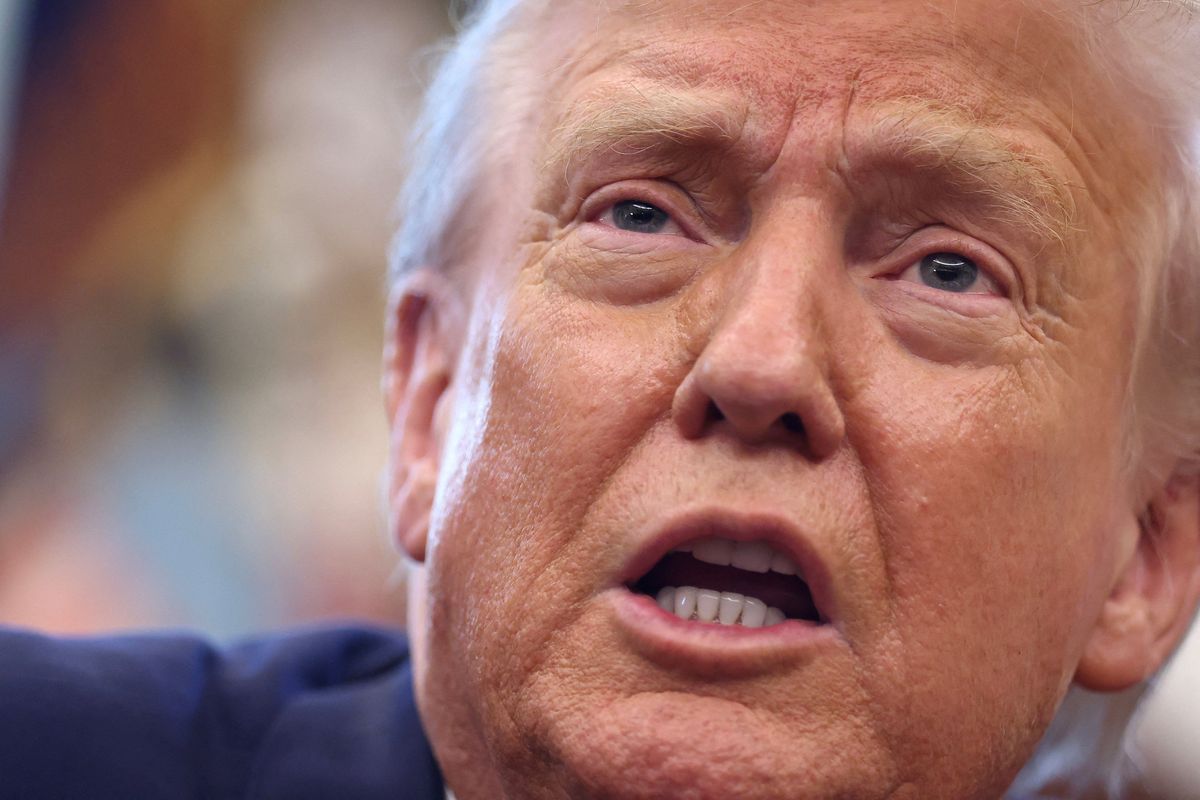
Donald Trump delivers remarks in the Oval Office. REUTERS/Kevin Lamarque

A simmering President Donald Trump privately fumed over the weekend at Mar-a-Lago at Republicans who dared to criticize his social media post sharing a racist video about the Obamas, according to a new report Friday.

After refusing to apologize, Trump spent days stewing and plotting payback against GOP allies who spoke out, CNN's Alayna Treene reported.

The targets of his ire: Sen. Tim Scott (R-SC), the sole Black Republican senator, and Sen. Katie Britt (R-AL).


“The president felt he could’ve handled that matter privately,” a senior Trump administration official told CNN about Scott. “He was like, ‘We work together all the time. He didn’t need to comment publicly.’”

Trump reportedly questioned the lawmakers' loyalty for publicly condemning the racist video and unleashed expletives while declaring Britt dead to him.

The video depicting the Obamas as apes stayed online for nearly 12 hours before removal — and only after GOP backlash forced the president's hand. Trump refused to accept responsibility, blaming an unnamed staffer while insisting "I didn't make a mistake."

The president and many of his closest aides privately believe Scott’s response led to the story gaining nationwide attention, according to the report.

Far-right activist Laura Loomer fueled his rage by presenting printouts of the senators' critical statements. She then posted that she was "compiling a list" of Republicans who "attacked" Trump with "false accusations of racism."

Trump rewarded loyalist Sens. Eric Schmitt (R-MO) and Lindsey Graham (R-SC) with golf invitations and Super Bowl party access, while freezing out Scott and Britt during the GOP's Palm Beach winter retreat.

Scott's office stayed silent on the report, while Britt's blasted the reporting as "classic fake news," touting her voting record alignment with Trump.

Another trusted institution has bitten the dust under Trump

Robert Reich
February 13, 2026 
RAW STORY


Donald Trump gestures as he speaks in the White House press room. 
REUTERS/Jonathan Ernst

Producer Alicia Hastey departed CBS News Wednesday, saying the work she came to do was “increasingly becoming impossible,” as stories were now evaluated “not just on their journalistic merit but on whether they conform to a shifting set of ideological expectations.”

Whose ideological expectations was Hastey referring to? Would it be impertinent for me to suggest it’s the sociopath in the Oval Office?

Hastey’s criticism came a little over two weeks after Bari Weiss, the anti-“woke” opinion journalist who became editor-in-chief at CBS News, unveiled her “21st-century” vision at a town hall meeting.

Weiss told producers and staff they were free to leave if they didn’t like it. Since then, at least six out of 20 CBS Evening News producers have accepted buyouts.

At that town hall meeting Weiss also named a bunch of new contributors — including the anti-aging influencer Peter Attia. In the latest tranche of Epstein files, Attia appears over 1,700 times, including in an email in which he tells Epstein that “p—y is, indeed, low carb.”

In a missive to the newsroom, Weiss declared that “We love America” should be a guiding principle for the relaunch of the CBS Evening News.

Meanwhile, Weiss has replaced Evening News anchors John Dickerson and Maurice DuBois with Tony Dokoupil — who was best known for hassling the writer Ta-Nehisi Coates for his “extremist” belief that apartheid is morally wrong.

In one of his first broadcasts, Dokoupil accepted without question Israel’s justification for violating the terms of the ceasefire when it killed three journalists in Gaza, reporting only that “Israel said it was targeting a group operating a drone affiliated with Hamas.”

Weiss faced blowback in December when she shelved a 60 Minutes report about Venezuelans being deported by the Trump administration to El Salvador’s notorious CECOT prison hours before it was set to air.

Sharyn Alfonsi, a long-standing 60 Minutes correspondent who reported the segment, accused CBS News of pulling it for “political” reasons.

“Our story was screened five times and cleared by both CBS attorneys and Standards and Practices,” she wrote in a note to the CBS News Team. “It is factually correct. In my view, pulling it now, after every rigorous internal check has been met, is not an editorial decision, it is a political one.”

The segment later aired on Jan. 18, drawing more than 5 million viewers.

The story CBS posted about Renee Good’s killing in Minneapolis reported that “the Immigration and Customs Enforcement agent who fatally shot Renee Good last week in Minneapolis, Jonathan Ross, suffered internal bleeding to the torso following the incident, according to two U.S. officials briefed on his medical condition.”

No identifiable source was given for CBS’s assertion of “internal bleeding.” A CBS News staffer reported “huge internal concern” that the source was an anonymous leak by the Trump administration meant for an outlet they could trust to run it, no questions asked.

Weiss doesn’t exactly report to Trump, of course. Trump runs CBS News the way he runs Venezuela — with a widely understood threat that he’ll wreak havoc if it doesn’t do what he wants.

As Trump told Dokoupil recently in a rambling nearly 13-minute interview, if Kamala Harris had won the presidential election in 2024, “you probably wouldn’t have a job right now.”

Perhaps CBS News didn’t edit Dokoupil’s rambling interview with Trump because, moments after it ended, White House press secretary Karoline Leavitt conveyed Trump’s threat that “if it’s not out in full, we’ll sue your ass off.”

You see the way Trump now controls CBS News. Dokoupil is Weiss’s newly minted anchor. Weiss is David Ellison’s newly minted head of CBS News. David Ellison is his father’s (Larry Ellison) newly minted head of Paramount, which is the new owner of CBS. Larry Ellison is a pal of Trump’s who contributes to Trump’s super PAC. And Trump? He allowed Ellison to buy CBS and now has the power to take the prized Warner Bros Discovery out of the clutches of Netflix and deliver it to Ellison as well.

Among David Ellison’s first moves at CBS was to gut DEI policies, appoint right-wing hack Kenneth R. Weinstein to a new “ombudsman” role, and appoint Weiss.

I’m old enough to remember when CBS News would never have surrendered to a demagogic president. But that was when CBS News — the home of Edward R. Murrow (who also revealed to America the danger of Joe McCarthy) and Walter Cronkite — was independent of the rest of CBS. And when the top management of CBS felt they had responsibilities to the American public that transcended making money for CBS’s investors.

America can survive without a 60 Minutes it can trust, just as we can survive without trustworthy editorial pages of the Washington Post — whose owner, Jeff Bezos, has demanded it reflect right-wing capitalism and whose newsroom he just gutted.

But at some point, as Trump continues to repress criticism of him and his regime, American democracy is compromised beyond repair.

**

Here, in contrast to the Trump suck-up CBS News has become, is the courageous CBS News’s Edward R. Murrow, from April 13, 1954:


Robert Reich is an emeritus professor of public policy at Berkeley and former secretary of labor. His writings can be found at https://robertreich.substack.com/. His new memoir, Coming Up Short, can be found wherever you buy books. You can also support local bookstores nationally by ordering the book at bookshop.org
These secretive decisions show a citizens' revolt against Trump is gathering serious pace


Robert Reich
February 12, 2026 
RAW STORY


Donald Trump gestures during remarks in Washington, D.C. REUTERS/Kevin Lamarque


I wanted to highlight and give you context for some important news that broke on Wednesday.

The news is that Donald Trump’s federal prosecutors have failed to secure an indictment against six Democratic lawmakers — all veterans of the military or the intelligence community — who posted a video in November reminding active-duty members of the military and intelligence community that they were obligated to refuse illegal orders.

The video enraged Trump.

“SEDITIOUS BEHAVIOR, punishable by DEATH!” he wrote on his social media site.

He shared another post saying, “HANG THEM GEORGE WASHINGTON WOULD !!”

Days later, the six lawmakers disclosed that the FBI had contacted the House and Senate, requesting interviews with them, indicating that a criminal investigation was under way.

Jeanine Pirro, the U.S. Attorney for Washington, D.C. and a longtime Trump ally, promptly asked a grand jury to indict them.

But the grand jury refused.

I can’t emphasize enough how rare it is for a grand jury to refuse to issue an indictment that’s requested by a federal prosecutor, because prosecutors exert so much control over them.

Grand juries aren’t like juries in regular trials. They meet in secret — 16 to 23 citizens summoned from the community.

No judge is present. No lawyers who represent defendants are present. No witnesses appear. Prosecutors are in total command — presenting evidence of a crime and asking grand juries to indict.

And the evidentiary standard is not whether a crime occurred “beyond a reasonable doubt,” but merely whether there is “probable cause” of a federal crime.

It’s not surprising, then, that federal grand juries have issued indictments in more than 99 percent of cases prosecutors bring to them. (For example, in 2010, of 162,000 federal cases federal prosecutors presented to grand juries seeking an indictment, only 11 resulted in grand juries deciding not to indict.)

As Judge Sol Wachtler, the former New York jurist, famously said, prosecutors are in such complete control of grand juries that they could get them to indict a ham sandwich.

But in 2025, something odd began happening. Federal grand juries in Los Angeles, Washington, D.C., and Virginia refused to indict. At least seven of these cases involved clashes between protesters and federal officers. A grand jury in Virginia twice refused to indict New York Attorney General Letitia James.

Then came yesterday’s grand jury’s rejection of Trump’s demand that the six lawmakers he targeted be criminally prosecuted.

It’s an amazing spectacle. Ordinary people serving on grand juries are refusing to indict people who have become entangled in Trump’s viciousness. A citizen’s revolt.

Because of the secretive nature of grand juries, it’s impossible to know for sure why this has been happening. But the rejections suggest that grand jurors may have had enough of prosecutors seeking harsh charges in a highly politicized environment.

After the grand jury refused to indict him and five others, Sen. Mark Kelly (D-AZ) called out “an outrageous abuse of power by Donald Trump and his lackeys. Donald Trump wants every American to be too scared to speak out against him. The most patriotic thing any of us can do is not back down.”

He’s exactly right. The Justice Department and its federal prosecutors have abandoned any pretense at neutral justice. They’re now flagrant flaks for Trump.

On Wednesday, Republican senators weighed in against the regime.

Sen. Thom Tillis (R-NC) accused the regime of using “political lawfare” to try to lock up its perceived enemies: “Thankfully in this instance, a jury saw the attempted indictments for what they really were.”

Sen. Chuck Grassley (R-IA), the Judiciary Committee Chair, said: “I think our law enforcement people ought to be spending their time on making our community safe and going after real law breakers.”

Senate Majority Leader John Thune (R-SD) offered: “That’s the judicial system at work.”

At Trump’s insistence, Pirro has opened a criminal investigation of Jerome Powell, chair of the Federal Reserve. The DOJ is also pursuing a criminal investigations of Democratic officials in Minnesota who opposed Trump’s immigration crackdown. It arrested the journalist Don Lemon over his presence at a church protest in Minneapolis. Last week the FBI searched an elections office in the Atlanta area, based on debunked claims that the 2020 presidential election was stolen.

Not only are Senate Republicans rising up against this but so are ordinary Americans. They’re — we’re — saying no to Trump’s vicious prosecutions, and no to the federal prosecutors pursing them. We’re saying no to Republican candidates in special elections. We’re saying no to ICE and Border Patrol troops in our cities. We’re shouting “ICE OUT” and “F--- ICE” at sporting events. We’re saying no at marches and demonstrations.

A citizen’s revolt is occurring across America against the mad king, including places — such as grand juries — where revolts almost never occurred before.

Mark my words, friends: We will be stronger for having gone through this.


Robert Reich is an emeritus professor of public policy at Berkeley and former secretary of labor. His writings can be found at https://robertreich.substack.com/. His new memoir, Coming Up Short, can be found wherever you buy books. You can also support local bookstores nationally by ordering the book at bookshop.org


Munich Security Conference warns of era of 'wrecking-ball politics'

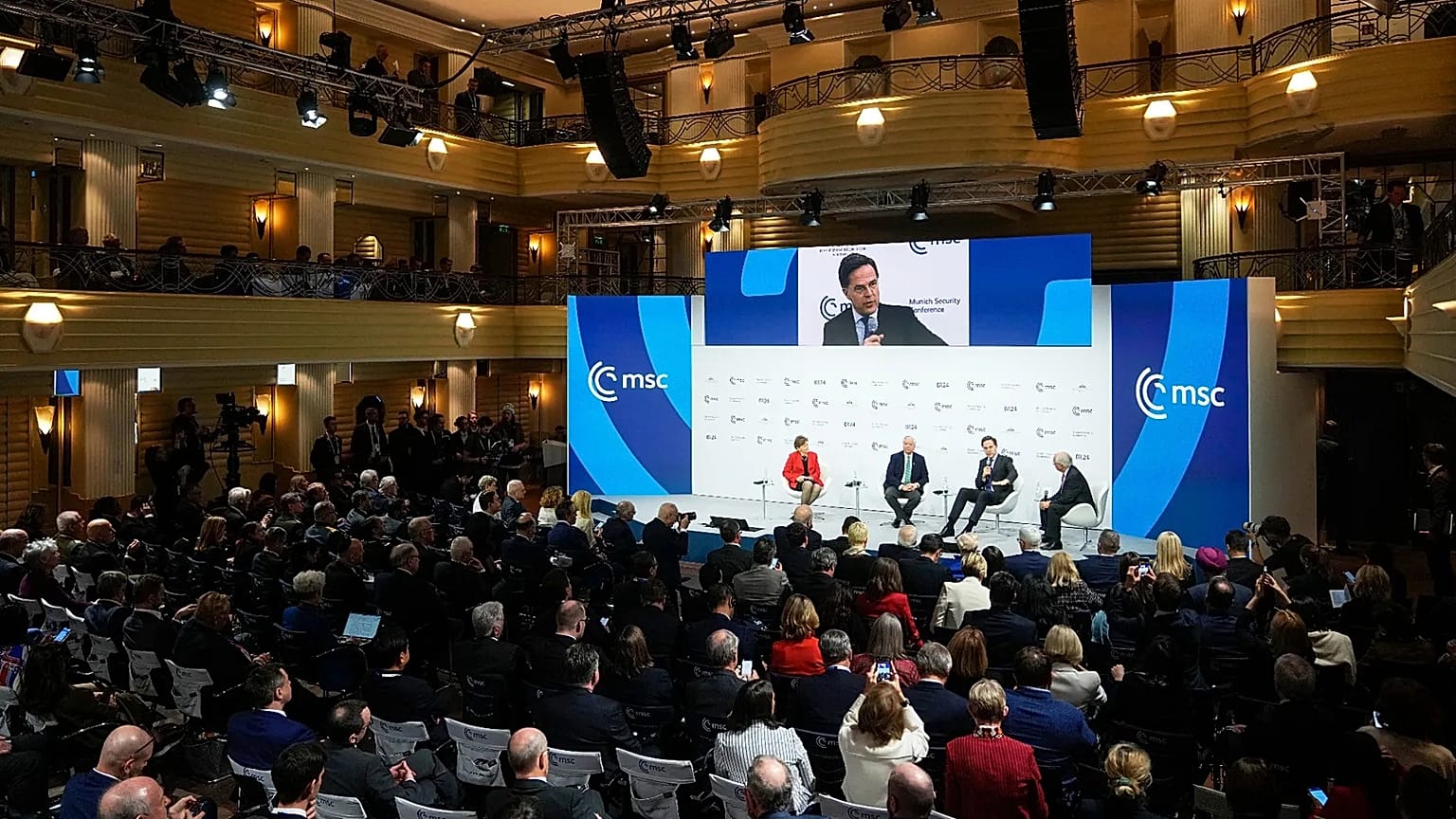
NATO Secretary General Mark Rutte, second right, speaks as he participates in a panel discussion during the Munich Security Conference in Munich, Feb. 15, 2025
Copyright AP Photo/Matthias Schrader

By Johanna Urbancik
 

As heads of state and government gather in Munich, a new report warns that the international order is under growing pressure, alliances are becoming more fragile, and geopolitical tensions are intensifying.

A large number of European and international heads of state and government will this week descend on Bavaria for the Munich Security Conference (MSC), which takes place from 13 to 15 February.

Around 65 heads of state and government are expected to attend, alongside some 450 representatives from global politics, academia and the defence industry.

In the foreword to the newly released 2026 MSC report, conference chair Wolfgang Ischinger writes that "rarely in the conference's recent history have there been so many fundamental questions on the table at the same time".

He points to core issues such as Europe's security, the future of the transatlantic partnership, and whether the international community is still capable of managing an increasingly "complex and contested" world

The report portrays a world in the midst of far-reaching political, economic and security upheaval. At its centre is a diagnosis that sets the tone for the entire document and the conference itself: "The world has entered a period of wrecking-ball politics."

'Reassurance, conditionality and coercion'

According to the report, cautious reforms and incremental policy adjustments are increasingly giving way to more radical restructuring that deliberately calls existing systems into question, or even seeks to dismantle them.

The country most prominently associated with this shift, it argues, is the United States. The very state that played a decisive role in building the post-war international order is now seen as one of the main drivers of its transformation. More than 80 years after it first took shape, that order is itself now "under destruction".

The report stresses that this is not just about individual policy decisions, but about a broader change in direction in US politics.

Washington, it argues, is challenging core principles that have shaped international cooperation for decades, from the role of international organisations and the importance of rules-based trade to close partnerships with democratic allies.

The effects of this shift are being felt worldwide, but especially in Europe, which has long relied on the US for security but which now experiences its partnership as "unsteady", shifting between "reassurance, conditionality, and coercion".

US Secretary of State Marco Rubio is expected to attend this year's conference. According to media reports, Vice President J.D. Vance's participation was initially confirmed, then cancelled a week later.

His speech at last year's conference was widely described as a "reckoning with Europe" and drew criticism from several politicians, including Germany's Chancellor Friedrich Merz and Defence Minister Boris Pistorius.
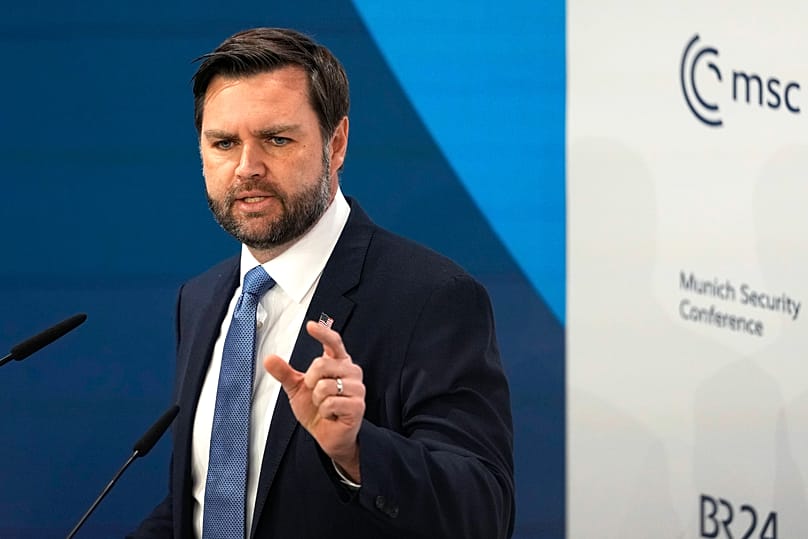
United States Vice-President JD Vance addresses the audience during the Munich Security Conference at the Bayerischer Hof Hotel in Munich, Germany, Friday, Feb. 14, 2025 AP Photo/Matthias Schrader

Chancellor Merz will lead this year's German delegation. NATO Secretary General Mark Rutte, European Central Bank President Christine Lagarde and numerous European heads of state and government are also expected to attend.

Rubio will attend "with a large delegation", and US congresswoman Alexandria Ocasio-Cortez has also confirmed her participation.

At the conference kick-off, US Ambassador to NATO Matthew Whitaker commented on the report's findings, rejecting its conclusions and stressing that the US has no intention of undermining NATO or other alliances.

"That's the first thing I reject; we're trying to make NATO stronger, not to withdraw or reject NATO, but make it work like it was intended as an alliance of 32 strong and capable allies," he said.

He reiterated that European allies must increase their defence spending and demonstrate that they can "deliver" on their commitments, including the new NATO spending targets.

Erosion of trust

Another key finding of the MSC report is a growing loss of trust in political systems. In many Western countries in particular, confidence is visibly declining.

Politicians are increasingly seen as "guardians of the status quo", "administering paralysed political systems that appear unresponsive to the majority of people". As faith in politics' ability to improve everyday life wanes, the report argues, electorates start to become open to more radical approaches. For many, abrupt breaks begin to seem more appealing than gradual change.

As a result, political actors who deliberately embrace confrontation and promise to tear down existing structures rather than reform them are gaining influence.

Before the conference, there was debate over whether the far-right Alternative for Germany (AfD) should be invited. Ischinger takes the view that the party should be included as long as it is not banned by the German authorities, and three AfD policy specialists, including Bundestag member RĂĽdiger Lucassen, are now set to attend.

Alongside the transatlantic relationship, the MSC report also addresses Russia's war on Ukraine and the associated hybrid threats facing Europe. It argues that Europe must prepare for a situation in which American support remains important, but can no longer be taken for granted.

Many European governments are therefore taking a dual-track approach: keeping the US closely engaged while at the same time building up greater capacity to act independently, for example through rearmament.

The report stresses that this sense of uncertainty is not only limited to Europe. In the Indo-Pacific, doubts are growing about the US' long-term commitment to the regional security order, while China's rise and "increasingly coercive behaviour" are contributing to a more "unstable" environment.

At the same time, the report also frames the current upheaval as an opportunity, noting that when old structures are shaken, "long-blocked" developments can begin to move again.

For instance, pressure on European NATO members has led many countries to significantly increase their defence spending. New partnerships are also emerging in trade, security and technology to end Europe's dependence on the US.

Yet whether this will ultimately lead to a more stable world remains uncertain – and many of the heads of government gathering in Munich this weekend worry that a looser global order could primarily benefit the largest and most powerful states.


'Under destruction': Europe's future

security in question at Munich conference


Global movers and shakers are gathering in southern Germany for the 62nd Munich Security Conference (MSC), which opens on Friday in the shadow of what its own report calls an international order “under destruction”.​


Issued on: 13/02/2026 - RFI

A copy of the Munich Security Report 2026, on display during a press conference in Berlin, Germany, on 9 February 2026. © Liesa Johannssen / Reuters

By:Jan van der Made


Organisers expect more than 60 heads of state and government, and around 100 foreign and defence ministers, to gather in Munich's Bayerischer Hof from Friday through Sunday. In total, more than 1,000 delegates from 120 countries are set to attend.

The 2026 Munich Security Report, titled “Under Destruction” and published last Monday, sets a stark tone.

It argues that the post-1945 order led by the United States is now being actively dismantled by “wrecking-ball politics” – not only by revisionist powers, but by movements inside Western democracies that favour demolition over reform.

The most powerful of the “demolition men”, it contends, is US President Donald Trump, whose administration has slashed foreign aid, walked away from key multilateral bodies and imposed sweeping tariffs that defy World Trade Organization rules.​

President Donald Trump speaks during an event to announce new tariffs at the White House, on 2 April 2025. @ AP - Mark Schiefelbein


According to the report, Trump’s second term has seen a “renunciation of core elements” of traditional US strategy: faith in multilateral institutions, support for an open trading system, and the role of “leader of the free world”.

Instead, it sketches an emerging order of transactional deals, regional spheres of influence and “neo-royalist” elites, in which private interests increasingly trump public ones.​

How Trump’s trade threats have reshaped Europe’s global strategy
European dependence

For Europeans, Munich comes at a moment the report describes as “a prolonged era of confrontation”.

Russia’s full-scale war against Ukraine, now approaching its fourth year, has shattered the post-Cold War security settlement, while Moscow steps up hybrid operations across the continent from cyber attacks to sabotage.​

At the same time, Washington’s “gradual retreat, wavering support for Ukraine, and threatening rhetoric on Greenland” have exposed Europe’s dependence on the US security umbrella, according to the MSC report.

It notes that US military assistance to Ukraine has dropped sharply since early 2025, forcing European allies and partners to shoulder most of the burden – including via a new NATO mechanism that channels European funds into US-made weapons for Kyiv.​

Europe’s defence dilemma: autonomy or dependence?

European leaders will arrive in Munich keen to show they are finally shifting from “security consumers” to security providers, pointing to steep increases in defence spending and efforts to coordinate industrial policy.

But the report warns of “multiple speeds” within Europe, as fiscally stronger northern and eastern states surge ahead while more indebted southern economies struggle with the new informal NATO goal to spend 5 percent of GDP on defence by 2035.​​

Beyond Europe, the report highlights China's economic and military dominance in Asia. It contrasts Washington's growing unease over Chinese pressure on Taiwan and in the South China Sea with US policies that hover between confrontational language, harsh tariffs and overtures to Beijing.​​


Chinese structures on the man-made Fiery Cross Reef in the disputed Spratlys group of islands in the South China Sea, on 20 March 2022. @ AP - Aaron Favila

Major test

The MSC report notes that in most NATO countries surveyed, majorities now see the US as a less reliable ally, and the West as less united than a decade ago.

The conference will again be a major test of transatlantic ties.

Last year’s incendiary appearance by Vice-President JD Vance, who claimed that mass immigration posed the most urgent danger to Europe, shocked many in the hall. This year, US Secretary of State Marco Rubio heads a large US delegation that includes some 50 members of Congress.


United States Vice-President JD Vance addresses the Munich Security Conference on 14 February 2025. @ AP - Matthias Schrader

Some 5,000 police officers will be on duty in Munich, with reinforcements from France, Austria, Switzerland and the Netherlands. Airspace over the city will be closed for the duration of the event.​

Outside the secure zone, 21 demonstrations are officially planned, including two large rallies against Iran’s government and a separate protest by opponents of the conference itself that could draw up to 4,000 people on Saturday.

Police also expect significant numbers of people for the Iran protests, with demonstrators arriving from across Europe.​


Europe set to 'circumvent America' as they do not trust Trump after 'betrayal': analysis
Ewan Gleadow
February 11, 2026


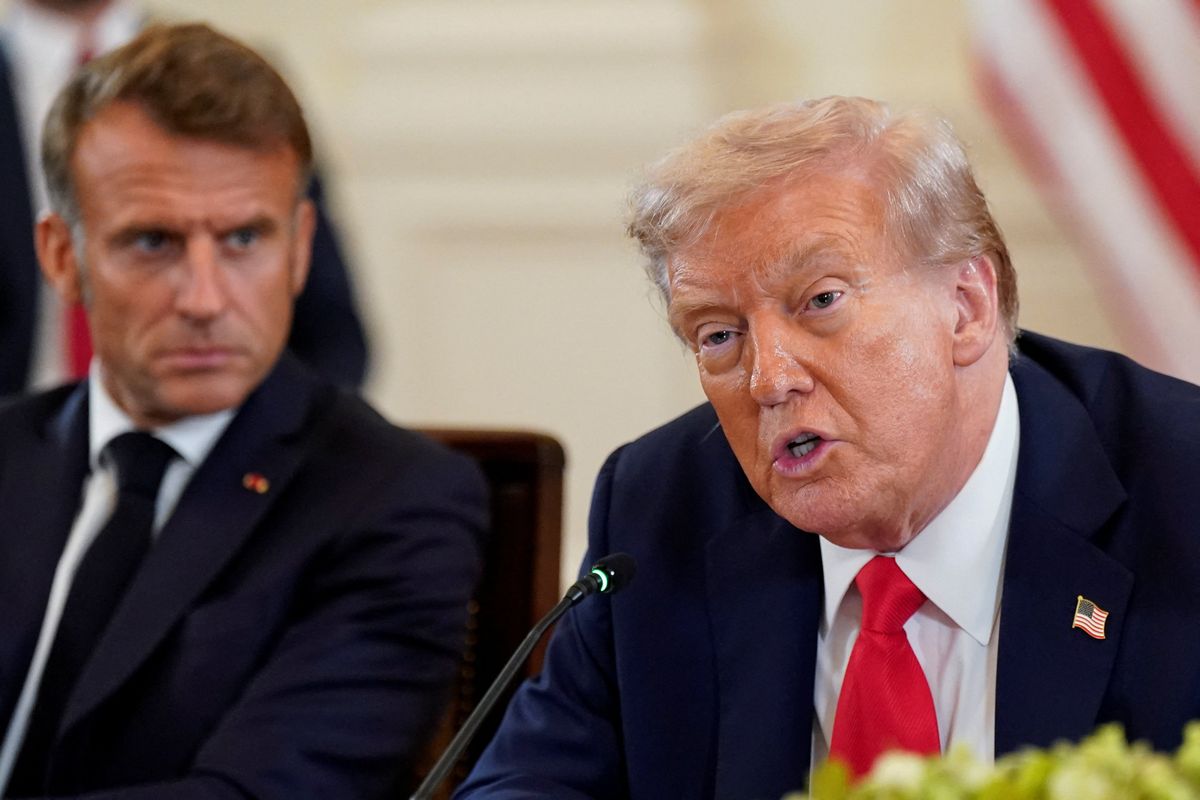
U.S. President Donald Trump speaks during a meeting with French President Emmanuel Macron, Ukrainian President Volodymyr Zelenskiy (not pictured) and European leaders amid negotiations to end the Russian war in Ukraine, at the White House in Washington, D.C., U.S., August 18, 2025. REUTERS/Al Drago

European nations may be set to freeze out the United States following Donald Trump's push to take control of Greenland, a political commentator has claimed.

Colonel Robert Hamlin believes NATO members, European countries, and world leaders are wary of Trump after his Donbas showmanship. Leaders will meet at a summit in Munich, Germany, later this month to deliberate on world affairs, and the US may find itself frozen out of such a conversation.

Col. Hamlin believes this could be a direct response from Europe after Trump tried to strongarm his way into ownership of Greenland. He wrote in The Hill, "As the grandees of geopolitics gather in Munich, the realization is dawning that there is not much to be done about Trump. Until voters rein him in, the goal will be to circumvent America and preserve what can be preserved.

"The question is whether there will be enough trust left whenever the U.S. comes to its senses and returns to the table. After the monumental Trump betrayal, that is not at all so clear."

The meeting could also see world leaders reduce their reliance on the US, with Col. Hamlin suggesting those countries meeting in Munich will try their best to stick to the rules.

"America’s erstwhile allies will try to preserve as much of the rules-based order as possible, reduce their vulnerability to U.S. coercion, and at least try to keep the door open for America to return if and when it chooses to do so," he wrote.

"But expect also economic and strategic workarounds, and the beginning of a campaign to project to American voters, with an eye to November, that their clueless leadership is engaged in terrible self-harm.

"The dense web of institutions and alliances built after World War II were not only primarily underwritten by the U.S., but also arguably made it the main beneficiary. This reality clashes violently with Trump’s narrative — cynical and seductive, but also stupid — that our allies have taken us for suckers."