Sunday, February 22, 2026

‘I Guess I Can Say I Am’: Trump Confirms He’s Considering Unprovoked Attack on Iran


One analyst predicted Iran would close the Strait of Hormuz and attack oil installations “in the hope of driving oil prices to record levels” should the US strike.


Brad Reed
Feb 20, 2026
COMMON DREAMS

US President Donald Trump on Friday confirmed that he’s considering launching an unprovoked military strike against Iran.

According to the New York Times, Trump was asked by reporters on Friday if he was considering attacking Iran, and he replied, “I guess I can say I am considering that.”

The US has for weeks been sending fleets of warships, including the world’s largest aircraft carrier, to the Middle East in apparent preparation for a massive military operation against Iran.

According to a Friday report from Al Jazeera, the buildup is the largest by the US Air Force in the region since the 2003 Iraq War, and it includes deployments of E-3 Sentry Airborne Warning and Control System (AWACS) aircraft, F-35 stealth strike fighters and F-22 air superiority jets, and F-15 and F-16 fighter jets.

Trump has not given any justification for launching such an attack, nor has he asked the US Congress to approve it, even though the Constitution gives the legislative branch the power to declare war.

Reps. Ro Khanna (D-Calif.) and Thomas Massie (R-Ky.) have been pushing for a vote in the US House of Representatives on a war powers resolution that would require Congress to debate and approve any act of war with Iran.

It is also not clear what goals the president would hope to achieve with the attack. A Thursday CNN report indicated that Trump is now weighing several options ranging from “more targeted strikes to sustained operations that could potentially last for weeks,” including “plans to take out Tehran’s leaders.”

Trita Parsi, co-founder and executive vice president of the Quincy Institute for Responsible Statecraft, wrote in a Friday analysis of Trump’s reported attack plans that there is little chance that the president will be able to achieve a quick victory over Iran simply because the offers he has made to its government are nonstarters.

“Since the US strategy... is to escalate until Tehran caves, and since capitulation is a non-option for Iran, the Iranians are incentivized to strike back right away at the US,” explained Parsi. “The only exit Tehran sees is to fight back, inflict as much pain as possible on the US, and hope that this causes Trump to back off or accept a more equitable deal.”

Parsi acknowledged that there is no way Iran can defeat the US militarily, but could “get close to destroying Trump’s presidency before it loses the war” through a number of maneuvers intended to spike the price of oil, including “closing the Strait of Hormuz” and attacking “oil installations in the region in the hope of driving oil prices to record levels and by that inflation in the US.”

“This is an extremely risky option for Iran,” Parsi conceded, “but one that Tehran sees as less risky than the capitulation ‘deal’ Trump is seeking to force on Iran.”

‘The Siege Must Be Broken’: Countries Called to Ship Fuel to Cuba After Trump Tariffs Struck Down


The US Supreme Court’s ruling “implies that Trump’s recent order imposing tariffs on countries selling oil to Cuba exceeds the president’s statutory authority.”

Julia Conley
Feb 20, 2026
COMMON DREAMS

With the centerpiece of President Donald Trump’s economic agenda—his use of an emergency law to impose tariffs on countries around the world—struck down by the US Supreme Court on Friday, analysts said the sweeping ruling should promptly end the Cuba blockade that his administration has pressured other governments to take part in, leaving millions of Cubans struggling with shortages of essentials.

The court ruled that the 1977 International Emergency Economic Powers Act (IEEPA) does not empower the president to “unilaterally impose tariffs,” as Trump has on countries across the globe, insisting that doing so would boost manufacturing and cut the trade deficit—despite mounting evidence that the tariffs have instead raised costs on American households.


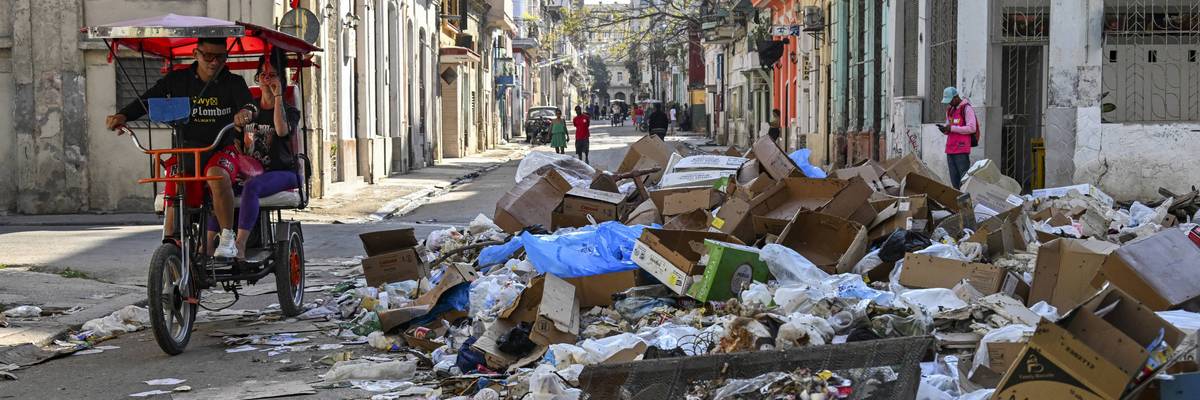
A bicitaxi rides past garbage piled up on a street in Havana, Cuba on February 17, 2026.
(Photo by Yamil Lage/AFP via Getty Images)


Trump also invoked the IEEPA last month when he issued an executive order accusing Cuba of supporting terrorism and posing a security risk to the US, and threatening to ramp up the use of tariffs against any country that sends oil, which Cuba’s economy relies on almost entirely for energy, to the island nation’s government.

US Secretary of State Marco Rubio has long pushed for regime change in the communist country his family immigrated from in the 1950s, and the administration called on the Cuban government to make “very dramatic changes very soon.”

With Trump’s use of the IEEPA struck down by the high court, some advocates and observers said that countries should quickly reverse their decisions to join the US in keeping oil from Cuba.

“As far as I can tell, this strikes down Trump’s ability to tariff countries that provide oil to Cuba. Hopefully a measure of relief,” said Michael Galant, a member of Progressive International’s secretariat and a researcher on sanctions. “The siege must be broken.”


The court handed down the ruling as the manufactured crisis unfolding in Cuba largely faded into the background in the corporate media, but an article in the New York Times on Friday described how the lack of fuel shipments has left Cubans facing frequent blackouts, gas shortages, growing piles of trash in the streets of Havana and other cities as sanitation trucks aren’t running, soaring food prices, and suspensions of some medical care at hospitals.

Researcher Shaiel Ben-Ephraim also described how the “completely unprovoked” oil blockade that was started “with very little public discussion” has led to a “rising mortality rate among the elderly and those with chronic illnesses who cannot access life-support or specialized care” and a surge in diseases such as dengue fever and Orupuche virus, “which have become increasingly fatal due to the shortage of basic medicines and rehydration fluids.”

“All this has occurred within weeks. A sustained blockade could lead to hundreds of thousands of deaths. All with no debate, no approval from Congress and no provocation from Cuba,” said Ben-Ephraim.

Jorge Piñón, who researches Cuba’s oil supply at University of Texas at Austin, told the Times that the country’s fuel reserves could be entirely depleted by mid-March.

Trump issued his executive order on Cuba weeks after invading Venezuela, abducting President Nicolás Maduro, and pushing for control of the South American country’s oil supply. Venezuela has long been a top provider of oil to Cuba. Trump’s tariff threat led Mexico, which became a lifeline for Cuba after the flow of oil from Venezuela stopped, to halt its shipments.

Galant noted that Trump will likely “continue to do all that he can to starve the island,” and the president said soon after the Supreme Court announced its ruling that he would use different executive powers to impose a 10% global tariff, suggesting he was not prepared to back down on the tariffs he imposed before taking aim at Cuba.

But critics urged countries that have tried to help Cuba since Trump’s executive order, as Mexico has by sending humanitarian aid packages, to reverse their decisions to halt oil shipments to the island.

“So which countries are gonna start sending fuel to Cuba now?” asked organizer Damien Goodmon.


After Supreme Court Kills Tariffs, Trump Plots ‘15% Tax Out of YOUR Pockets to Feed HIS Deranged Ego’

“Donald Trump is a gangster with no respect for the rule of law and no understanding of economics,” said former Democratic presidential candidate Tom Steyer.


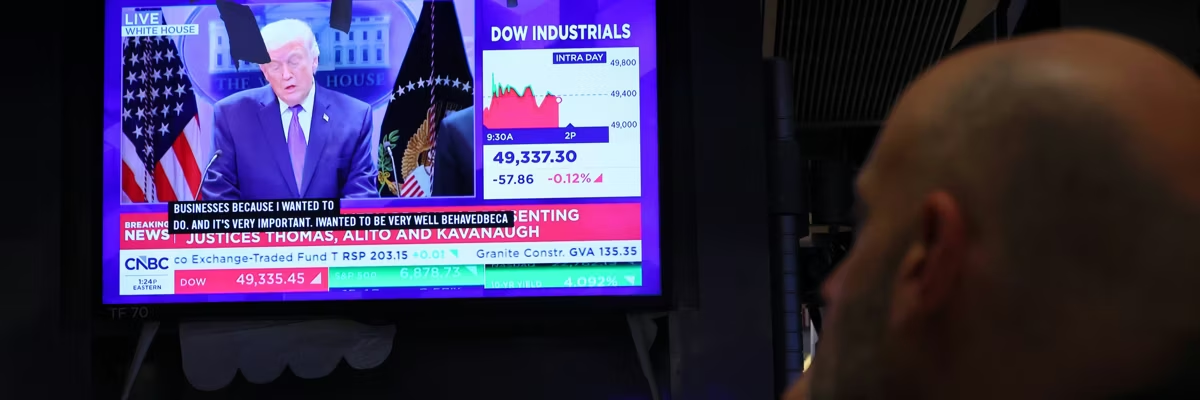
President Donald Trump’s press conference on tariffs is displayed on a television as traders work on the floor of the New York Stock Exchange on February 20, 2026 in New York City.
(Photo by Michael M. Santiago/Getty Images)

Jessica Corbett
Feb 21, 2026
COMMON DREAMS

Shortly after the US Supreme Court on Friday ruled against President Donald Trump’s use of emergency powers to impose sweeping tariffs, the Republican announced plans for a 10% global import tax under another law. By Saturday, he’d hiked it to 15%.

In a 6-3 decision penned by Chief Justice John Roberts, the high court found that “nothing” in the text of the 1977 International Emergency Economic Powers Act (IEEPA) “enables the president to unilaterally impose tariffs.” Trump responded by not only lashing out at the justices but also invoking Section 122 of the Trade Act of 1974 for a 10% global tariff beginning February 24.

Then, in a Saturday morning Truth Social post, Trump said:
Based on a thorough, detailed, and complete review of the ridiculous, poorly written, and extraordinarily anti-American decision on tariffs issued yesterday, after MANY months of contemplation, by the United States Supreme Court, please let this statement serve to represent that I, as President of the United States of America, will be, effective immediately, raising the 10% Worldwide Tariff on Countries, many of which have been ‘ripping’ the US off for decades, without retribution (until I came along!), to the fully allowed, and legally tested, 15% level. During the next short number of months, the Trump Administration will determine and issue the new and legally permissible Tariffs, which will continue our extraordinarily successful process of Making America Great Again GREATER THAN EVER BEFORE!!! Thank you for your attention to this matter.

Critics across the country swiftly blasted the announcement. Democratic strategist Jon Cooper argued that “Trump CANNOT legally impose a 15% global tariff because the US doesn’t meet the clear emergency economic conditions envisioned by Section 122. If Trump tries to invoke it, it would certainly face immediate legal challenges, economic pushback, and potential congressional scrutiny.”

Former Democratic presidential candidate Tom Steyer declared that “Donald Trump is a gangster with no respect for the rule of law and no understanding of economics. This is a 15% tax out of YOUR pockets to feed HIS deranged ego.”

California Gov. Gavin Newsom, who’s expected to seek the Democratic presidential nomination in 2028, similarly said that “Donald Trump just announced a NEW 15% TAX on the American people. He does not care about you.”

Another California Democrat, Congressman Ted Lieu, quipped that “crybaby Trump woke up this morning and still feels hurt from the Supreme Court slapping him. So he’s taking it out on the American people by increasing his 10% tax increase to 15%. These temporary tariffs will be challenged in court and Democrats will kill them when they expire.”


Elected Democrats have often spoken out against Trump’s legally dubious duties, but the GOP-controlled Congress hadn’t forcefully countered them. As Politico detailed Friday:
Before the ruling, while congressional Republicans had occasionally grumbled about the policy, they had largely fallen in line when actually required to vote on it. Now, the Supreme Court’s decision could put more pressure on them to break with the president...

Six House Republicans voted alongside Democrats last week to condemn Trump’s tariffs on Canada, sending the measure to the Senate, which has already seen significant GOP defection in other votes on the duty measures. Senior House Democrats have vowed to bring up at least three more similar resolutions that will force GOP members to choose between their adherence to free trade principles and their MAGA base.

Last week, Sen. Ed Markey (D-Mass.), ranking member of the Senate Committee on Small Business and Entrepreneurship, released a report laying out how Trump’s economic policies, particularly the tariffs, “are making life unaffordable for millions of American small businesses, their workers, and their customers.”

Markey held a virtual press conference with Massachusetts small business owners celebrating the Supreme Court’s Friday ruling. The senator said that “for the last year, Trump has created Pain on Main with an affordability crisis plaguing communities across the country. At the heart of it are Trump’s tariff taxes.”

“The Supreme Court did what was right and struck down these illegal tariffs. Trump said the small businesses who brought this case hate our country. He’s wrong. Small businesses are our country,” Markey continued. “I will keep fighting until every cent illegally collected from small businesses, consumers, and families in Massachusetts and across the country has been returned.”

Trump hikes global tariffs while still fuming over Supreme Court’s ‘ridiculous’ ruling

Alexander Willis
February 21, 2026
RAW STORY


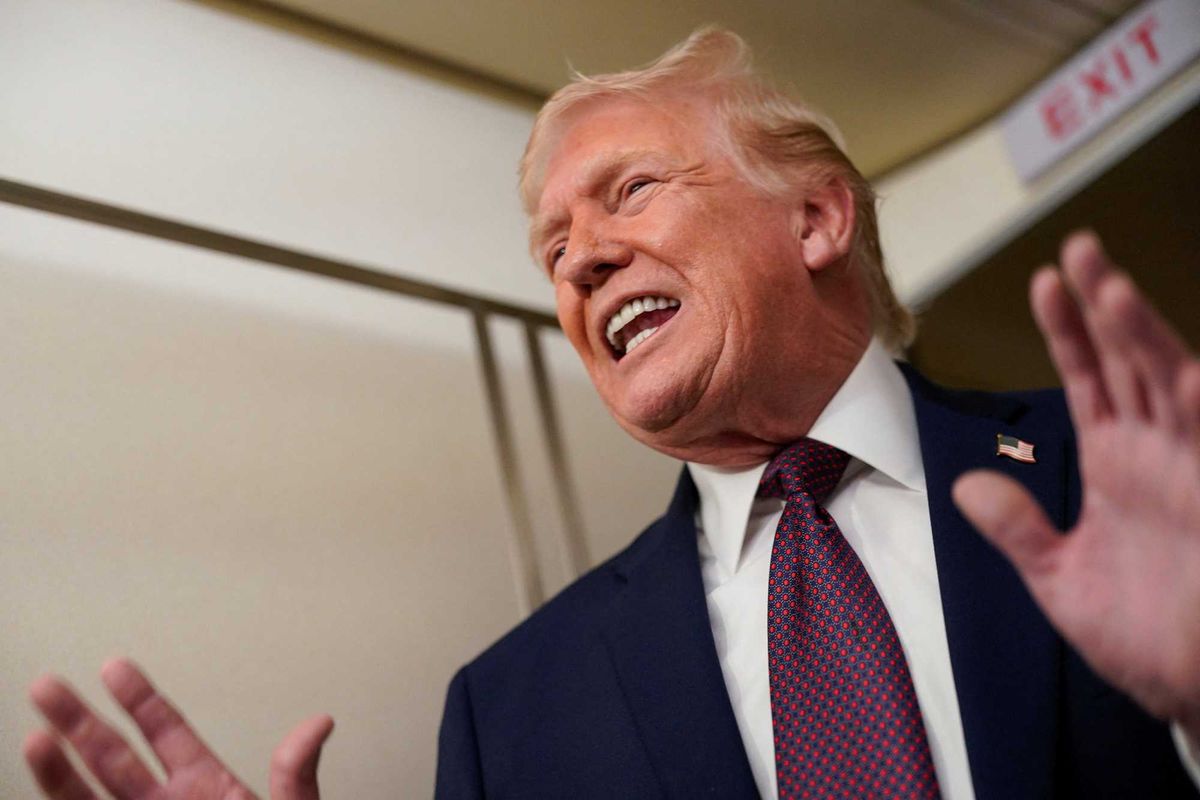
U.S. President Donald Trump speaks with members of the media aboard Air Force One en route from Florida to Washington, U.S., January 11, 2026. REUTERS/Nathan Howard

President Donald Trump announced a dramatic increase to global tariffs on Saturday in response to the Supreme Court’s ruling the day before against his so-called “reciprocal tariffs,” a ruling he slammed as “ridiculous” and “poorly written.”

“Based on a thorough, detailed, and complete review of the ridiculous, poorly written, and extraordinarily anti-American decision on Tariffs issued yesterday, after MANY months of contemplation, by the United States Supreme Court, please let this statement serve to represent that I, as President of the United States of America, will be, effective immediately, raising the 10% Worldwide Tariff on Countries, many of which have been ‘ripping’ the U.S. off for decades, without retribution (until I came along!), to the fully allowed, and legally tested, 15% level,” Trump wrote on his social media platform Truth Social.

“During the next short number of months, the Trump Administration will determine and issue the new and legally permissible Tariffs, which will continue our extraordinarily successful process of Making America Great Again - GREATER THAN EVER BEFORE!!!”

Shortly after the Supreme Court’s ruling Friday, Trump vowed to pursue “alternative” paths to imposing tariffs on other nations in an effort to circumvent the court’s decision. He also raged against the justices that ruled against his tariffs, including two of his own appointees, who he said he was "ashamed " of.


Economist flags Trump's one-day flip flop after having 'months to prepare' his next move

David McAfee
February 21, 2026
RAW STORY


Donald Trump (Reuters)

Donald Trump had "literally months to prepare" a response but still fumbled it, changing his mind after one day, according to an economist on Saturday.

The Supreme Court smacked down Trump's tariff policies in a stunning rebuke from the most conservative high court in modern history, and Trump responded by waffling his new plan, according to noted economist Justin Wolfers.

In response to the decision, Trump first said he had enacted a 10% global tariff by executive order. Then on Saturday, he raised it to 15% via a Truth Social Post.

"Based on a thorough, detailed, and complete review of the ridiculous, poorly written, and extraordinarily anti-American decision on Tariffs issued yesterday, after MANY months of contemplation, by the United States Supreme Court, please let this statement serve to represent that I, as President of the United States of America, will be, effective immediately, raising the 10% Worldwide Tariff on Countries, many of which have been 'ripping' the U.S. off for decades, without retribution (until I came along!), to the fully allowed, and legally tested, 15% level," Trump wrote this weekend.

Wolfers flagged the chaotic nature of the response, saying on X, "The President had literally months to prepare his response to the Supreme Court ruling, yet couldn't even stick with his decision on the s.122 (temporary) tariff from Friday to Saturday, raising it from 10% to 15%."


'Trump became enraged' and used expletives after news of Supreme Court smackdown: report

Nicole Charky-Chami
February 20, 2026 
RAW STORY


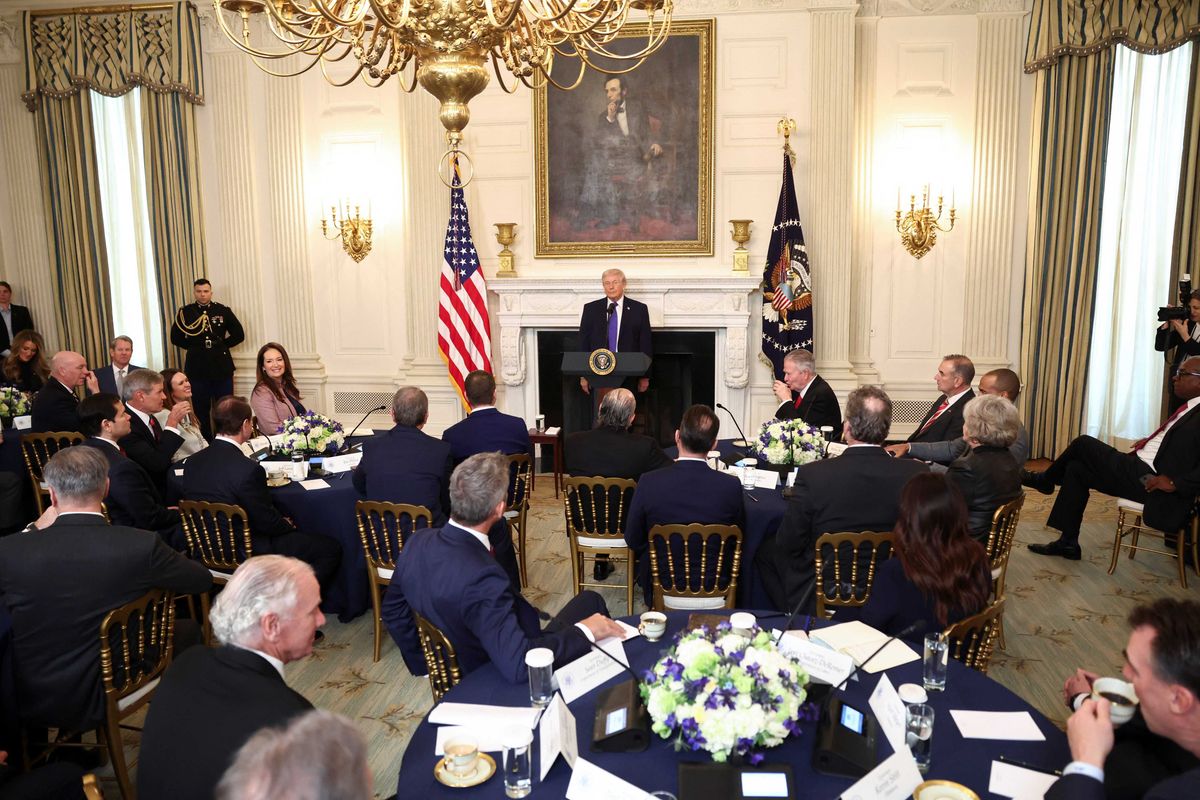
President Donald Trump holds a working breakfast with governors at the White House in Washington, D.C. on Feb. 20, 2026. REUTERS/Kevin Lamarque

President Donald Trump was reportedly infuriated Friday after the Supreme Court ruled that his tariffs were illegal.

Trump was hosting the National Governor's Association breakfast with a room full of the nation's governors at the White House when he found out about the high court's decision to strike down Trump's tariffs in a 6-3 vote.

"Apparently the gov breakfast had been going well, they were working together, and then President Trump became enraged. He started ranting about the decision, not only calling it a disgrace, but started attacking the courts at one point saying, these 'f------ courts,'" said CNN senior White House correspondent Kristen Holmes.


"This tariff policy — this could not be a bigger decision for President Trump — this could not be a bigger loss for President Trump," Holmes added. "Not only is so much of his economic agenda based on these tariffs, so much of his foreign policy is based on these tariffs. He has used these tariffs as leverage in almost every meeting that he has had around the world. He has touted them as the most important part of the economic agenda. So clearly, a huge loss, and he recognizes that today."

Trump and his administration have not yet made an official announcement in response. His team was reportedly meeting to determine next moves, Holmes said.


Farmers giddy as Trump dealt 'big loss' at Supreme Court

Matthew Chapman
February 20, 2026
RAW STORY


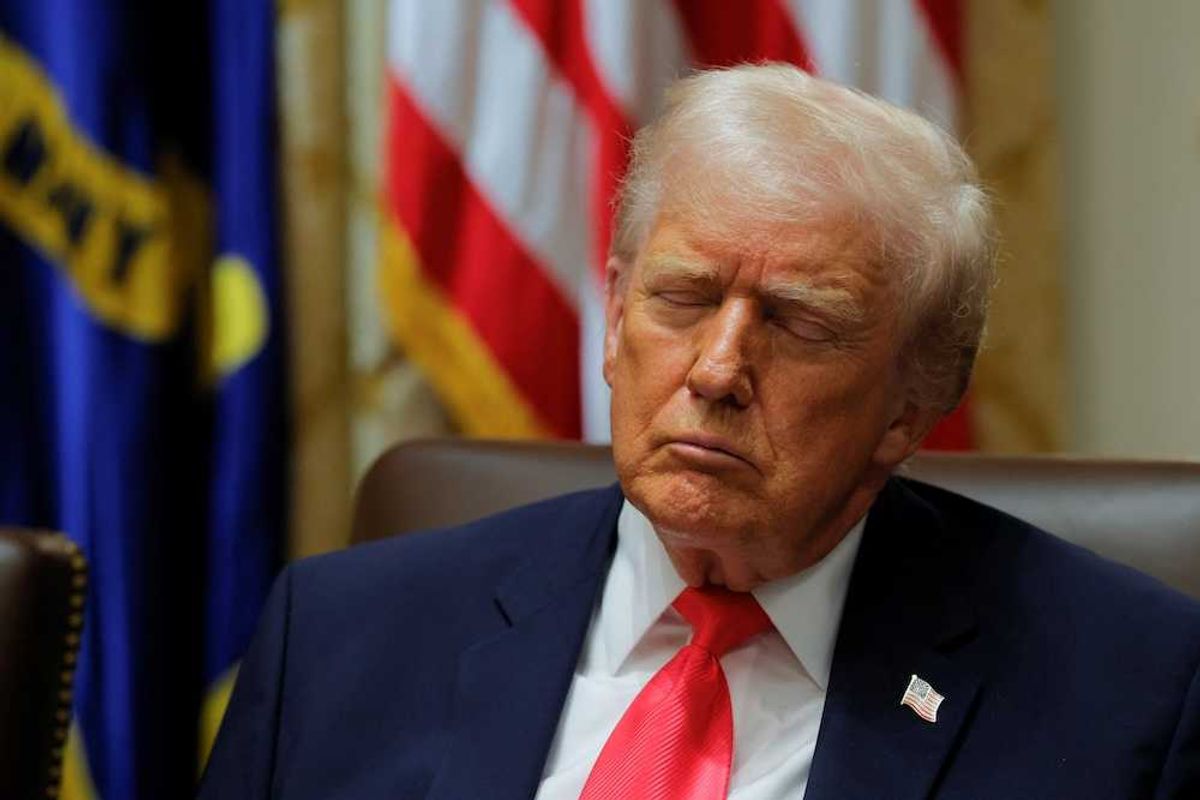
​GOP senator accuses Trump of having poor 'bedtime manners' after he's caught napping

John Boyd, Jr., the head of the National Black Farmers Association, celebrated Friday on MS NOW following the Supreme Court's decision invalidating President Donald Trump's authority to use emergency powers to enact tariffs.

"So, John, this morning you were feeling pretty positive," said anchor Antonia Hylton. "But now that President Trump says he's going to keep pushing these tariffs through no matter what, how are you doing?"

"Well, you know, I don't care how you look at it today — it's a big win for me and a big loss for this president," said Boyd, who has previously warned the tariffs are devastating farmers to the point of suicide. "That's why he was screaming to the top of his lungs at this press conference. He knows he lost in a big way today. And this is the first step in the right direction."

The ruling, he continued, is "the first real hard note that this president has heard from the Supreme Court since he became elected. 6 to 3 is a pretty sweeping, you know, victory. I don't care how you look at it."

The next step, said Boyd, is "we want to turn to Congress to see how we can get compensated for lost revenue from all of the hardship that these tariffs have cost us. In the soybean market alone, we lost $54 billion, and the president is proposing $12 billion. I mean, people, you can do the math there. What the Supreme Court didn't do is lay out how farmers like myself are going to recoup our losses based on the damage from the president's tariffs."

"But I don't care how you look at it today, this president lost and John Boyd won today, because I've been on your show saying that these tariffs are illegal," he added. "And the courts agreed with me today. And what the president said to the Supreme Court today was deplorable. He called them lapdogs and fools and RINOs. How does he think that other world leaders are looking at this decision and rating him today? It shows his lack of leadership skills."


Historian breathes sigh of relief over Trump's crippling blow: 'James Madison is smiling'


Nicole Charky-Chami
February 20, 2026 
RAW STORY


Tim Naftali, CNN's presidential historian, described why the nation's founding fathers would have approved of the Supreme Court's decision to strike back President Donald Trump's tariffs. (CNN/Screenshot)

A historian Friday described the historic impact of the Supreme Court's decision in its ruling against President Donald Trump's tariffs — something the nation's founders would have appreciated.

Tim Naftali, CNN's presidential historian and former head of the Nixon Presidential Library, explained why the high court's ruling was an active practice of what the Constitution was intended to do.

"Well, wherever he is, James Madison is smiling today. Tariffs are a tax. The founders decided that taxes should be the responsibility of the Article One branch, which is Congress," Naftali said.

"And today the U.S. Constitution worked as it's supposed to work, which is to keep various parts of the government in check when they overstep constitutional bounds," he added.

The court's decision was also one of many times throughout history that the Supreme Court has pushed back on a president.

"This is a huge moment in American history," Naftali said. "Donald Trump is not the first president to have been disappointed by the court. The courts in the 1930s invalidated Franklin Roosevelt's New Deal. That's what led to the first push to pack the court that was Roosevelt's response to the fact that he was so angry at the court for undermining the New Deal.


"In the end, the court changed, and the New Deal stayed. Richard Nixon was furious at the court for forcing him to turn over the tapes when he lost the case. U.S. v Nixon. Well, the Dobbs decision really unsettled the Biden presidency. And Obama was not happy with Citizens United."

He said it's not new for presidents to be unhappy about a Supreme Court decision, but it is American.

"It's the way that it works. Our system is supposed to work this way every so often. One of the branches is supposed to be disappointed when it can't engage in a power grab that is unconstitutional."


Even Without the 'Emergency' Powers SCOTUS Rejected, Trump Has a Bunch of Tariff Options

Jacob Sullum
Fri, February 20, 2026 
REASON


President Trump's claim of sweeping tariff authority under the International Emergency Economic Powers Act (IEEPA) was rejected by the Supreme Court, leading to a major setback for him.See more

President Donald Trump suffered a major setback today at the Supreme Court, which rejected his claim of sweeping tariff authority under the International Emergency Economic Powers Act (IEEPA). Trump could have avoided that embarrassing defeat if he was not so keen on asserting broad, unbridled powers based on a dubious legal interpretation, which is part of a pattern with him.

"When Congress grants the power to impose tariffs, it does so clearly and with careful constraints," Chief Justice John Roberts notes in Learning Resources v. Trump, the decision rejecting Trump's interpretation of IEEPA. As that observation suggests, there is no shortage of statutes that empower the president to impose tariffs. Trump himself already has used some of them and can be expected to do so again now that the Supreme Court has closed off this particular route. But all of those laws restrict presidential action by specifying acceptable rationales, requiring agency investigations, or limiting the size, scope, or duration of tariff hikes.

Because Trump wanted to avoid those restrictions, he instead latched onto IEEPA, a 1977 law that does not even mention tariffs and had never before been used to impose them. The government's lawyers cited an IEEPA provision that authorizes the president to "regulate" imports in certain circumstances. That provision, they claimed, included a hitherto unnoticed power to completely rewrite the tariff schedule approved by Congress. Trump maintained that IEEPA authorizes the president to impose any taxes he wants on any imports he chooses from any country he decides to target for any length of time he considers appropriate whenever he deems it necessary to "deal with" an "unusual and extraordinary threat" from abroad that constitutes a "national emergency."

That reading of the law was implausible for several reasons, not least because it rendered superfluous the many statutes that explicitly allow the president to impose tariffs. Section 232 of the Trade Expansion Act of 1962, for example, authorizes taxes on imports that "threaten to impair the U.S. national security." During his first term, Trump used that law to impose tariffs on steel and aluminum, which he expanded last year, raising the rate and applying the taxes to home appliances made from those materials. He also invoked Section 232 to justify tariffs on cars and car parts.

Unlike the power that Trump unsuccessfully claimed under IEEPA, his Section 232 authority is limited. It requires a Commerce Department investigation that must be completed within 270 days after it is initiated, focused on specific goods that supposedly implicate national security. While such determinations are frequently dubious, the resulting tariffs are much more narrowly targeted than the steep, indiscriminate "Liberation Day" tariffs that Trump announced last April, which applied to myriad categories of goods from scores of countries.

According to Trump, those tariffs were aimed (if that is the right word) at addressing the "unusual and extraordinary threat" posed by the overall gap between exported and imported goods. Leaving aside the question of whether that long-standing deficit qualifies as an emergency or even a problem, you might wonder why Trump invoked IEEPA to deal with it rather than a law that is much more obviously relevant.

Section 122 of the Trade Act of 1974 authorizes tariffs to address "large and serious United States balance-of-payments deficits" that present "fundamental international payments problems." That law was inapposite, the Trump administration's lawyers argued, because balance-of-payments deficits are different from trade deficits. But as trade policy experts Marc L. Busch and Daniel Trefler noted in response to that argument, "goods trade is the dominant component of the current account, which is at the heart of the balance of payments." The upshot is that "more than 90 percent of the balance of payments is the trade deficit."

Why would the government obscure that reality? Possibly because, as the U.S. Court on International Trade (CIT) noted when it rejected Trump's interpretation of IEEPA last May, "Congress's enactment of Section 122 indicates that even 'large and serious United States balance-of-payments deficits' do not necessitate the use of emergency powers and justify only the President's imposition of limited remedies subject to enumerated procedural constraints."

Those constraints include a 15 percent rate cap and a maximum duration of 150 days, which can be extended only with congressional approval. The CIT concluded that "Section 122 removes the President's power to impose remedies in response to balance-of-payments deficits, and specifically trade deficits, from the broader powers granted to a president during a national emergency under IEEPA by establishing an explicit non-emergency statute with greater limitations."

Another seemingly germane law is Section 201 of the Trade Act, which authorizes tariffs when a good "is being imported into the United States in such increased quantities as to be a substantial cause of serious injury" to U.S. manufacturers. Such tariffs are supposed to "facilitate positive adjustment to import competition." Trump is clearly aware of that provision, which he invoked in 2018 to impose tariffs on solar cells and modules. He also targeted imports of residential washing machines under Section 201. But like Section 232 and Section 122, Section 201 includes limits that evidently irked Trump.

Section 201 tariffs require an investigation by the U.S. International Trade Commission (ITC), which must be completed within 180 days after the ITC receives a petition from aggrieved domestic manufacturers. That process includes public hearings and solicitation of public comments, and any resulting tariffs, which can be no higher than 50 percent, are supposed to target a specific industry, as opposed to all goods from a given country or set of countries. The tariffs initially can be imposed for four years, which can be extended to eight years, but they must be gradually reduced if they last longer than a year.

Section 301 of the same law authorizes tariffs when the Office of the U.S. Trade Representative (USTR) determines, in response to a petition, that "an act, policy, or practice of a foreign country" either violates a trade agreement or "is unjustifiable and burdens or restricts United States commerce." We know Trump is familiar with Section 301 because he used it to impose tariffs on imports from China in 2018. But the pesky process it requires is a bit more complicated than simply issuing an executive order.

A Section 301 committee considers petitions, conducts hearings, and makes recommendations to the USTR, which has to consult with the relevant foreign government to investigate the possibility of a voluntary resolution. Any resulting tariffs automatically end after four years unless the USTR receives a request to extend them.

During the first Trump administration, the USTR looked into digital services taxes imposed by France and other countries. Last July, it launched an investigation of Brazil's "acts, policies, and practices" related to "unfair, preferential tariffs," "anti-corruption enforcement," "illegal deforestation," "ethanol market access," "intellectual property protection," "digital trade," and "electronic payment services." But instead of waiting for the outcome of that investigation, Trump suddenly, unilaterally, and sharply hiked tariffs on various Brazilian imports, including beef, based on his alleged authority under IEEPA.

Section 338 of the Smoot-Hawley Tariff Act of 1930 likewise targets "discrimination by foreign countries," but it may be more appealing to Trump because it seems to give him broader discretion. It authorizes the president to impose tariffs "whenever he shall find as fact" that a foreign country "discriminates in fact against the commerce of the United States, directly or indirectly," or that it is imposing "any unreasonable charge, exaction, regulation, or limitation which is not equally enforced upon the like articles of every foreign country." Based on such a finding, the president "shall by proclamation specify and declare new or additional duties" up to 50 percent.

Although the president's authority under this provision "appears to overlap with that of USTR under Section 301 of the Trade Act," the Congressional Research Service notes, "Section 338 does not appear to require any agency investigation or determination as a prerequisite to imposing tariffs." But it does charge the ITC with identifying practices that discriminate against U.S. commerce and informing the president about them, which "may raise a question as to whether the ITC must find that discrimination has occurred before the President may impose tariffs."

U.S. officials, including President Franklin D. Roosevelt, threatened tariffs under Section 338 on various occasions from 1935 to 1949, but none were actually imposed. "There appears to be no activity under Section 338 provisions since 1949," the Institute of Geoeconomics reports. It notes that "Section 338 measures would seem to run counter to the frameworks provided under the World Trade Organization and other trade agreements, allowing for the possibility that members may be permitted to impose retaliatory measures against the United States if Section 338 was used to impose tariffs."

Since Trump was unfazed by the fact that no president had ever used IEEPA to impose tariffs in the 48 years since that law was enacted, he is unlikely to be deterred by the fact that Section 338 has been dormant even longer. And even without Section 338, there are plenty of ways he can pursue his protectionist agenda, which is driven by a long-standing hostility to free trade rooted in fundamental economic misconceptions. Although opponents of that worldview scored a big victory today, they will have to continue their fight against the painful policies that Trump is determined to impose on American businesses and consumers.

The post Even Without the 'Emergency' Powers SCOTUS Rejected, Trump Has a Bunch of Tariff Options appeared first on Reason.com.

AMERIKAN GESTAPO

‘Caught lying’: Outrage mounts after ICE exposed for killing US citizen 11 months ago

Jessica Corbett,
Common Dreams
February 21, 2026 


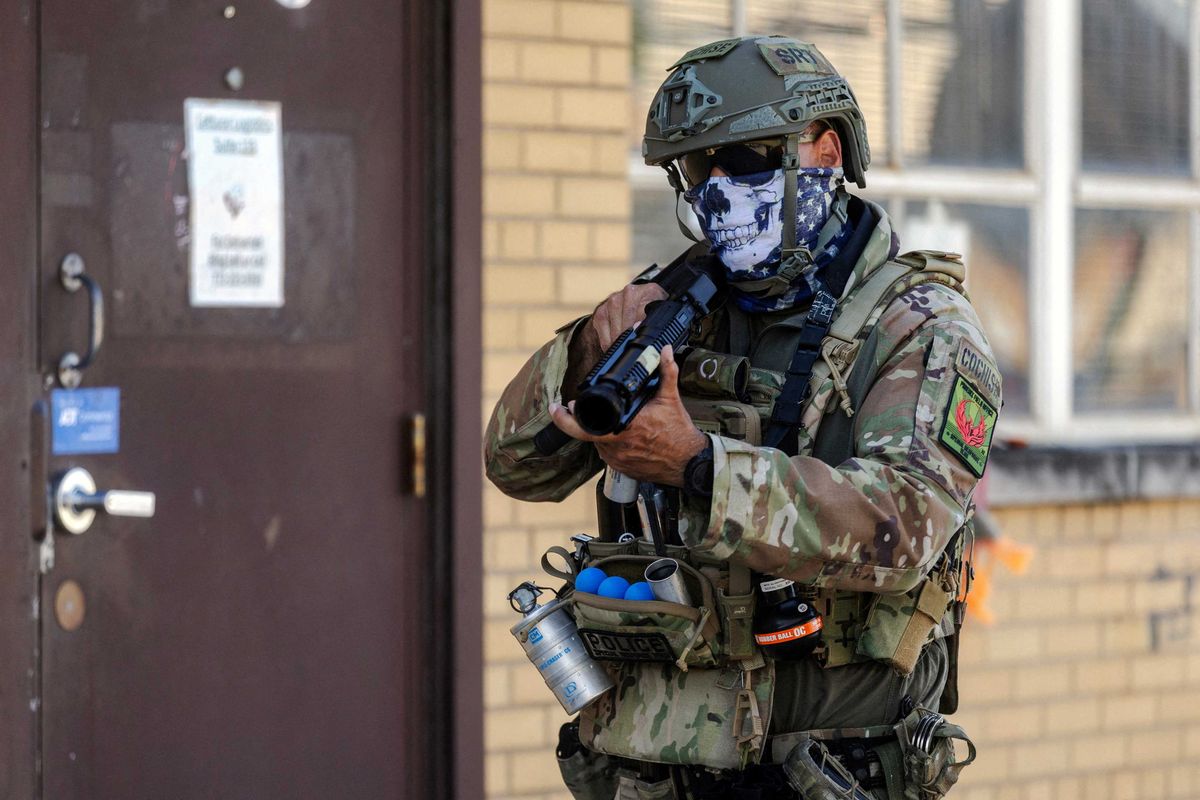
A federal agent aims at protesters at an ICE facility in Illinois. REUTERS/Jim Vondruska

Demands for accountability are mounting after internal records revealed this week that an officer with Immigration and Customs Enforcement’s Homeland Security Investigations fatally shot Ruben Ray Martinez, a 23-year-old US citizen, almost a year ago in South Padre Island, Texas.

“While Martinez’s death was reported in local media at the time, the reports did not identify HSI involvement or disclose that a federal agent fired the shots through the driver-side window,” Newsweek reported, citing publicly available information and records obtained by American Oversight through the Freedom of Information Act (FOIA).

“It shouldn’t take 11 months and a FOIA lawsuit to learn that the government killed someone,” American Oversight said on social media late Friday. Separately, the watchdog noted that “the details sound similar to the death of Renee Good,” a 37-year-old US citizen and mother of three fatally shot by officer Jonathan Ross last month in Minneapolis, Minnesota.

Good’s killing, and two Customs and Border Protection agents’ subsequent fatal shooting of 37-year-old US citizen and nurse Alex Pretti in Minneapolis, have fueled outrage over President Donald Trump’s mass deportation agenda, resulting in a congressional funding fight that has partially shut down the US Department of Homeland Security (DHS), which oversees both agencies.

ICE’s internal report on the Texas shooting states that HSI agents were helping redirect traffic at the site of a major accident early on March 15, 2025. Martinez and his passengers aren’t named, but the document claims that the driver of a blue four-door Ford “failed to follow instructions,” including verbal commands to stop and exit the vehicle.

Instead, the driver “accelerated forward, striking a HSI special agent who wound up on the hood of the vehicle. Upon observing this, HSI group supervisory special agent utilized his government-issued service weapon, discharging multiple rounds at the driver through the open driver’s side window,” according to the ICE report—a version of events that a DHS spokesperson echoed in a Friday statement added to the Newsweek article, which was initially published Wednesday.

The DHS spokesperson also said that the incident remains under investigation by the Texas Department of Public Safety’s Ranger Division, whose press secretary, Sheridan Nolen, confirmed that “this is still an active investigation by the Texas Rangers, and no other information is currently available.”

Charles Stam, a lawyer for the Martinez family, told the New York Times that the 23-year-old was the driver in the ICE report. Stam and another attorney, Alex Stamm, also said in a statement that eyewitness accounts of the scene don’t match the document.

“It is critical that there is a full and fair investigation into why HSI was present at the scene of a traffic collision and why a federal officer shot and killed a US citizen as he was trying to comply with instructions from the local law enforcement officers directing traffic,” the lawyers said.

The Times also reached Martinez’s mother, Rachel Reyes, who said her son worked at an Amazon warehouse in San Antonio and was out to celebrate his birthday. According to her: “He was a good kid. He doesn’t have a criminal history... He never got in trouble. He was never violent.”

Reyes also challenged the federal government’s narrative, telling the newspaper: “What they’re saying is different from what they told the family, so that’s adding insult to injury... They are making it sound different. I don’t appreciate their language.”

In a Friday interview with the Texas Tribune, American Oversight executive director Chioma Chukwu also called out the government: “What they’re telling the public is very different than what they’re doing behind closed doors. The only reason why we’re able to make these connections and really call into question the public statements that they’re making to mislead the public is because we’re able to get our hands on these documents... That should deeply concern everyone.”

The revelations this week have generated concern. André Treiber, the Democratic National Committee’s Youth Coordinating Council chair, wrote on social media Friday evening that “ICE murdered a Texan last March and we are only just learning about it now. They are once again offering the excuse that this was done in self-defense, but forgive me if I am extremely skeptical after they’ve been caught lying about that exact same thing multiple times already.”

Federal lawmakers also sounded the alarm on Friday. Congressional Progressive Caucus Chair Greg Casar (D-Texas) declared that “Americans deserve immediate answers and an independent investigation of the shooting.” Another Texas Democrat, Congressman Joaquin Castro, similarly called for “a full investigation,” including into the monthslong “cover-up.”

US Rep. Delia Ramirez (D-Ill.), whose Chicagoland district has also faced a recent ICE invasion, pointed to other deaths tied to the agency, including those of Silverio Villegas Gonzalez, who was shot by ICE in the Chicago suburb of Franklin Park last September; Keith Porter Jr., who was shot by an off-duty agent on New Year’s Eve in Los Angeles, California; and Linda Davis, a special education teacher in Savannah, Georgia, who was killed in a Monday car crash that involved a man fleeing ICE.

“For a whole year, DHS hid that they murdered Ruben, a young man in Texas, after a traffic stop. Just like they did with Silverio, Renee, Keith, Alex, and Linda, they lied and avoided accountability,” said Ramirez, who supports abolishing ICE. “How many more people have to be executed before my colleagues realize that reforms are not enough?”


US military airlifts small reactor as Trump pushes to quickly deploy nuclear power

Skeptics warn that nuclear energy poses risks and say microreactors may not be safe or feasible and have not proved they can meet demand for a reasonable price.


MATTHEW DALY
Sat, February 21, 2026 
AP


Energy Secretary Chris Wright, center, and Under Secretary of Defense Michael Duffey, left, listen as Isaiah Taylor, CEO of Valar Atomics, discusses a microreactor developed by Valar to generate nuclear power for the military and commercial customers, Sunday, Feb. 15, 2026, in-flight, on board a C-17. (AP Photo/Matthew Daly)(ASSOCIATED PRESS)


Energy Secretary Chris Wright speaks at a news conference at March Air Reserve Base, Calif., Sunday Feb. 15, 2026. (AP Photo/Matthew Daly)(ASSOCIATED PRESS)


A Valar Atomics microreactor is seen on a C-17 aircraft, without nuclear fuel, at March Air Reserve Base, Calif., Sunday, Feb. 15, 2026. The reactor was transported from March Air Reserve Base to Hill Air Force Base in Utah. (AP Photo/Matthew Daly)(ASSOCIATED PRESS)


Isaiah Taylor, CEO of Valar Atomics, left, speaks as Utah Gov. Spencer Cox, center, and Energy Secretary Chris Wright, listen, at Hill Air Force Base, Utah, Sunday, Feb. 15, 2026. (AP Photo/Matthew Daly)(ASSOCIATED PRESS)


Energy Secretary Chris Wright, center, tours a C-17 military aircraft as a microreactor was transported from March Air Reserve Base, Calif., to Hill Air Force Base in Utah, Sunday ,Feb. 15, 2026. (AP Photo/Matthew Daly)(ASSOCIATED PRESS)

Energy Secretary Chris Wright, right, speaks as Utah Gov. Spencer Cox listens, following a news conference at Hill Air Force Base, Utah. Wright and other officials were onboard as a Valar Atomics microreactor, without nuclear fuel, was transported from March Air Reserve Base in California to Hill Air Force Base. Cox met the plane in Utah. (AP Photo/Matthew Daly)(ASSOCIATED PRESS)

HILL AIR FORCE BASE, Utah (AP) — The Pentagon and the Energy Department for the first time airlifted a small nuclear reactor from California to Utah, demonstrating what they say is the U.S. potential to quickly deploy nuclear power for military and civilian use.

The nearly 700-mile flight last weekend — which transported a 5-megawatt microreactor without nuclear fuel — highlights the Trump administration’s drive to promote nuclear energy to help meet skyrocketing demand for power from artificial intelligence and data centers, as well as for use by the military.

Energy Secretary Chris Wright and Undersecretary of Defense Michael Duffey, who traveled with the privately built reactor, hailed the Feb. 15 trip on a C-17 military aircraft as a breakthrough for U.S. efforts to fast-track commercial licensing for the microreactors, part of a broader effort by the Trump administration to reshape the country's energy landscape.
A new emphasis on nuclear energy

President Donald Trump supports nuclear power — a carbon-free source of electricity — as a reliable energy source, even as he has been broadly hostile to renewable energy and prioritizes coal and other fossil fuels to produce electricity.

Skeptics warn that nuclear energy poses risks and say microreactors may not be safe or feasible and have not proved they can meet demand for a reasonable price.

Wright brushed those concerns aside as he touted progress on Trump’s push for a quick escalation of nuclear power. Trump signed a series of executive orders last year that allow Wright to approve some advanced reactor designs and projects, taking authority away from the independent Nuclear Regulatory Commission, which has regulated the U.S. nuclear industry for five decades.

“Today is history. A multi-megawatt, next-generation nuclear power plant is loaded in the C-17 behind us,” Wright said before the two-hour flight from March Air Reserve Base in California to Hill Air Force Base in Utah.

The minivan-sized reactor transported by the military is one of at least three that will reach “criticality” — when a nuclear reaction can sustain an ongoing series of reactions — by July 4, as Trump has promised, Wright said.

“That’s speed, that’s innovation, that’s the start of a nuclear renaissance,” he said.
Microreactors would be for civilian and military use

Currently, there are 94 operable nuclear reactors in the U.S. that generate about 19% of the country’s electricity, according to the U.S. Energy Information Administration. That's down from 104 reactors in 2013 and includes two new commercial reactors in Georgia that were the nation's first large reactors built from scratch in a generation.

Recognizing delays inherent to deployment of new, full-scale reactors, the industry and government have focused in recent years on more efficient designs, including a small modular reactor proposed by the nation’s largest public power company, the Tennessee Valley Authority.

Microreactors, designed to be portable, can “accelerate the delivery of resilient power to where it’s needed,” Duffey said. Eventually, the mobile reactors could provide energy security on a military base without the civilian grid, he and other officials said.


The demonstration flight “gets us closer to deploy nuclear power when and where it is needed to give our nation’s warfighters the tools to win in battle,” Duffey said.

The reactor transported to Utah will be able to generate up to 5 megawatts of electricity, enough to power 5,000 homes, said Isaiah Taylor, CEO of Valar Atomics, the California startup that produced the reactor. The company hopes to start selling power on a test basis next year and become fully commercial in 2028.
Some safety concerns haven't been addressed, experts say

Edwin Lyman, director of nuclear power safety at the Union of Concerned Scientists, said the transport flight — which included a throng of reporters, photographers and TV news crews — was little more than “a dog-and-pony show” that merely demonstrated the Pentagon's ability to ship a piece of heavy equipment.

The flight “doesn't answer any questions about whether the project is feasible, economic, workable or safe — for the military and the public,” Lyman said in an interview.

The Trump administration “hasn't made the safety case” for how microreactors, once loaded with nuclear fuel, can be transported securely to data centers or military bases, Lyman said.

Officials also have not resolved how nuclear waste will be disposed of, although Wright said the Energy Department is in talks with Utah and other states to host sites that could reprocess fuel or handle permanent disposal.

The microreactor flown to Utah will be sent to the Utah San Rafael Energy Lab for testing and evaluation, Wright said. Fuel will be provided by the Nevada National Security site, Taylor said.

“The answer to energy is always more,” Wright said. After four years of restrictions on fossil fuels and other polluting energy under the Biden administration, he said, “Now we’re trying to set everything free. And nuclear will be flying soon.”
Opinion

John Paulk disavowed conversion therapy. Will his new podcast finally dismantle the ‘ex-gay’ myth?

(RNS) — Paulk was the poster child of the movement that promised to 'cure' people of homosexuality. His re-emergence is likely to trigger victims of the debunked practice.


John Paulk, left, and Timothy Schraeder Rodriguez. 
(Photo courtesy of Timothy Schraeder Rodriguez)

Timothy Schraeder Rodriguez
February 20, 2026
RNS

(RNS) — When I was 19, I found myself abandoned at a Super 8 motel near the Portland, Oregon, airport, where I had been dropped by the youth pastor at the church where I had been working. Nine months into my internship at the church, the youth pastor had looked at my internet history and discovered that I had been spending time in gay online chatrooms.

There was “no place for people like me” in the church, he had said before depositing me at the motel. Five days later a family member came from Illinois to fetch me.

Desperate, I spent the five days before a family member could come to bring me back to Illinois reading “Growth into Manhood,” a book that promised to “fix” my sexuality. It began my eight-year journey through the grueling world of conversion therapy — the roundly debunked practice of attempting to deter homosexuality by psychological means.


In January, I was back in Portland to speak at the Q Christian Conference, one of the largest gatherings of queer-identified people of faith. They had invited me to talk about the harms of the “pray the gay away” movement, the subject of my forthcoming memoir, “Conversion Therapy Dropout: A Queer Story of Faith and Belonging.


RELATED: In new letter, Orthodox rabbis say Jewish law forbids ‘conversion therapy’

Being in the city where I once bought the book that tried to erase me, only to return years later with a book of my own, felt like the ultimate reclamation. But the most significant moment of my trip occurred at a quiet breakfast spot as I sat across from the man who was once the face of the movement that nearly cost me my life: John Paulk.

In the 1990s and early 2000s, Paulk was the “poster child” of the conversion therapy movement. An “ex-gay” man who married Anne, a former lesbian, he was held up by many in the conversion therapy world as living proof that homosexuality could be overcome through faith in God, adherence to its practices and heterosexual marriage.

While working for Dr. James Dobson at Focus on the Family, Paulk founded the Love Won Out conferences, which were held across the United States and abroad, regularly drawing thousands to hear testimonies from people who claimed to have “left the gay lifestyle.” The events presented a pseudopsychology that framed same-sex attraction as a preventable, treatable and, most of all, spiritual condition. Pastors, Christian counselors, concerned parents, church leaders and LGBTQ+ people struggling with their sexuality all came — and I did too, having devoured Paulk’s books, desperate for answers.

Paulk later became chairman of the board of Exodus International, the umbrella organization for more than 400 conversion therapy ministries in 17 countries. He and Anne appeared on “The Oprah Winfrey Show,” “Jerry Springer” and “60 Minutes” and made the cover of Newsweek, presenting their marriage and three children as the ultimate proof that change was possible.

After photos of Paulk leaving a gay bar in Washington, D.C., shattered his public image, the conversion movement simply reframed the story as a cautionary tale. It reminded all of us that even a “healed” man had to remain on guard against temptation.

But the public performance became unsustainable. Paulk left Focus on the Family in 2003 and moved to Portland with his family to make a fresh start.

In April 2013, Paulk issued a formal apology, dismantling the very foundation of the “ex-gay” testimony he once popularized. “I truly believed that it would happen,” he wrote of the promise of change. “And while many things in my life did change as a Christian, my sexual orientation did not… I do not believe that reparative therapy changes sexual orientation; in fact, it does great harm to many people.”

Following this bombshell, Paulk’s marriage dissolved, and he faded from the spotlight. He spent the next decade establishing himself in Portland’s culinary scene, mostly distant from his “ex-gay” past and far from the church pulpits and national talk shows he once frequented.

But while Exodus International closed and Love Won Out has withered away, conversion therapy is not a thing of the past. In the last year alone, according to research by The Trevor Project, the number of LGBTQ+ youth threatened with or subjected to conversion therapy doubled in a short period, rising from 11% to 22% between September 2023 and March 2025.

And Paulk’s own movement continues under familiar leadership. Although Love Won Out is gone, Anne, his ex-wife, serves as the executive director of the Restored Hope Network, a group of more than 30 ministries that continue to promote conversion therapy across the country. While John has spent a decade in the slow, difficult work of rebuilding his life, the organization his ex-wife leads has simply rebranded the same ideologies he now seeks to dismantle.

So even as the public view of LGBTQ+ issues has shifted, Paulk seemed to realize his hard-won private peace couldn’t outweigh his public responsibility. His first public reappearance in nearly two decades came in the 2021 Netflix documentary “Pray Away,” where he admitted: “My role was to get the message out that homosexuality was changeable, but I ached to love and be loved by a man.”

Now, John is taking part in a new six-part narrative podcast series, “Atonement: The John Paulk Story.” “I agreed to do this because silence doesn’t undo harm,” Paulk told me. “I want to pull back the curtain and show how these ministries operate and their goals, their ambitions and how far they stretch. For many years, I perpetuated an idea that hurt people. This is my attempt to tell the truth plainly.”

Paulk isn’t the only voice on the podcast. He’s joined by conversion therapy survivors, therapists, one of Paulk’s sons and even gay activist Wayne Besen, who had released the photo that outed Paulk. They echo what the American Psychiatric Association and other mental health organizations have said for decades: that any effort to change one’s sexuality is harmful.

The stakes of this truth-telling are personal and painful.

For conversion therapy survivors, encountering a former leader like Paulk can be triggering. We’ve seen too many perpetrators publicize their “redemption arcs,” prioritizing their healing over justice for victims. Victims’ stories shine a light on the damage caused by conversion therapy; focusing on a former leader, even if he is repeating his admission of the lie, undermines the anti-conversion movement. It validates our truth from the inside out.

Paulk seems to understand that atonement isn’t a plea for absolution. “I’m not returning to public life to recast myself as a victim or a hero,” Paulk said to me. “I’m here to tell the truth, to call out tactics that still exist and to support the broader work of protecting LGBTQ+ people.”

Our conversation felt particularly urgent given the current legal climate. In October, the U.S. Supreme Court heard oral arguments in Chiles v. Salazar, a case in which a Colorado therapist argues that her state’s 2019 ban against practicing conversion therapy on minors violates her First Amendment rights. Paulk warns that if the court decides in the therapist’s favor, it will award conversion therapy a “veneer of legitimacy.”

“Once something is labeled ‘therapy,’ it sounds safe and credible—especially to fearful parents,” he said. “That legitimacy creates a pipeline into shame-based interventions that teach young people to distrust themselves. These practices rarely look overtly abusive. They are framed as love.”


Paulk had once used “theological hooks,” as he called them, to achieve the same erasure of the self. “The lie I most regret perpetuating,” he admitted, “is that abandoning your homosexuality was the only way to be acceptable to God.”

Paulk, who no longer attends church, didn’t mince words when I asked what message he would preach to churches today. “The church should judge its teaching by its fruit. If it produces despair, shame and harm, it is not the gospel,” he said.

Paulk and I are not the people we were two decades ago. I am no longer the scared kid in the Super 8 parking lot, and he is no longer the man on the cover of Newsweek. We are both survivors of a machinery that demanded we trade our truth for a highly conditional belonging.

RELATED: Dr. James Dobson’s death ends a life, but not a legacy of lies and harm

“I live today with a deep respect for the people who were harmed, a clear-eyed understanding of my role in that harm and a quiet hope that honesty — however delayed — can still help prevent it from being repeated,” Paulk told me. “If there is any grace in telling this story now, it is found not in being seen, but in helping others live without shame, fear or conditions placed on who they are allowed to be.”

While we cannot erase the past, we can dismantle the systems that try to repeat it. If there is grace to be found in the ruins of the ex-gay movement, it is in the quiet, rigorous work of telling the truth, no matter how long it takes to surface.

Timothy Schraeder Rodriguez is a writer and LGBTQ+ advocate whose work explores the intersection of faith, sexuality and belonging. His forthcoming memoir, “Conversion Therapy Dropout: A Queer Story of Faith and Belonging,” tells the story of his eight years in conversion therapy and his journey to healing.


The UN says al-Hol camp population has dropped sharply as Syria moves to relocate remaining families

DAMASCUS (AP) — The statement did not say how residents had left the camp or how many remain. Many families are believed to have escaped either during the chaos when government forces captured the camp from the Kurdish-led Syrian Democratic Forces last month or afterward.


Associated Press
February 17, 2026

DAMASCUS (AP) — The U.N. refugee agency said Sunday that a large number of residents of a camp housing family members of suspected Islamic State group militants have left and the Syrian government plans to relocate those who remain.

Gonzalo Vargas Llosa, UNHCR’s representative in Syria, said in a statement that the agency “has observed a significant decrease in the number of residents in Al-Hol camp in recent weeks.”

“Syrian authorities have informed UNHCR of their plan to relocate the remaining families to Akhtarin camp in Aleppo Governorate (province) and have requested UNHCR’s support to assist the population in the new camp, which we stand ready to provide,” he said.

He added that UNHCR “will continue to support the return and reintegration of Syrians who have departed Al-Hol, as well as those who remain.”

The statement did not say how residents had left the camp or how many remain. Many families are believed to have escaped either during the chaos when government forces captured the camp from the Kurdish-led Syrian Democratic Forces last month or afterward.

There was no immediate statement from the Syrian government and a government spokesperson did not respond to a request for comment.

At its peak after the defeat of IS in Syria in 2019, around 73,000 people were living at al-Hol. Since then, the number has declined with some countries repatriating their citizens. The camp’s residents are mostly children and women, including many wives or widows of IS members.

The camp’s residents are not technically prisoners and most have not been accused of crimes, but they have been held in de facto detention at the heavily guarded facility.

Forces of Syria’s central government captured the al-Hol camp on Jan. 21 during a weekslong offensive against the SDF, which had been running the camp near the border with Iraq for a decade. A ceasefire deal has since ended the fighting.

Separately, thousands of accused IS militants who were held in detention centers in northeastern Syria have been transferred to Iraq to stand trial under an agreement with the U.S.

The U.S. military said Friday that it had completed the transfer of more than 5,700 adult male IS suspects from detention facilities in Syria to Iraqi custody.

Iraq’s National Center for International Judicial Cooperation said a total of 5,704 suspects from 61 countries who were affiliated with IS — most of them Syrian and Iraqi — were transferred from prisons in Syria. They are now being interrogated in Iraq.