Thursday, February 26, 2026

AB NDP’s Rakhi Pancholi dismantles Danielle Smith’s referendum claims

February 23, 2026
RABBLE.CA


UCP strategists must be thanking their Judeo-Christian deity she’s not the leader of the Opposition!
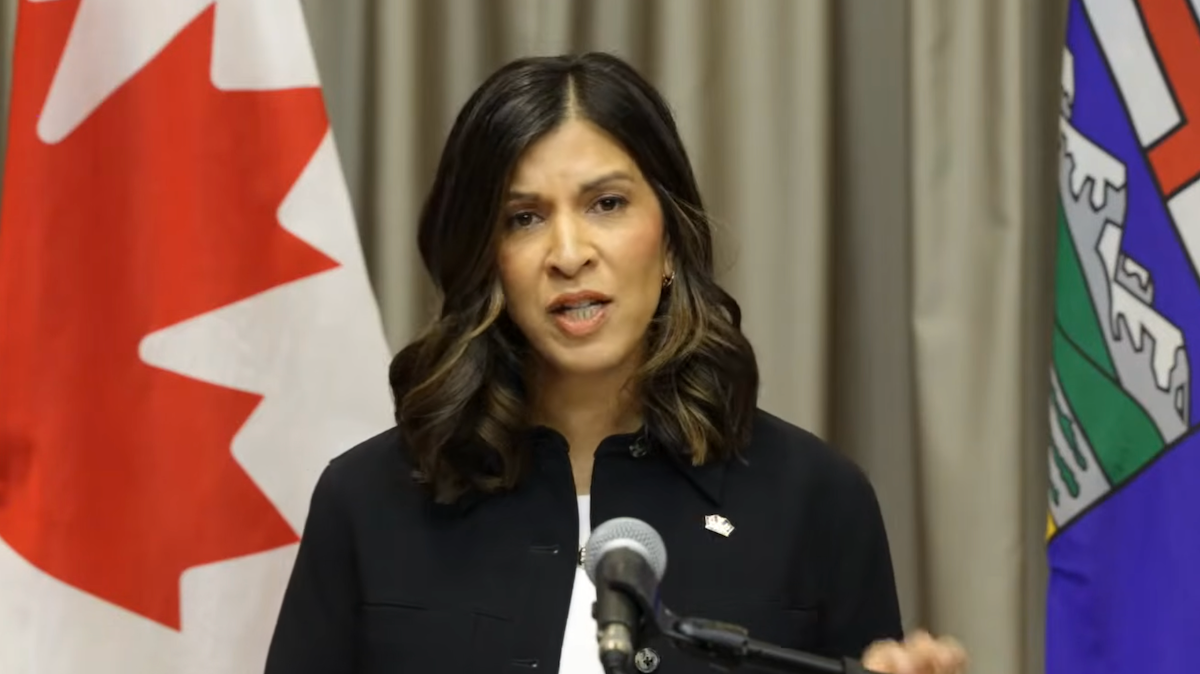
Alberta NDP Deputy Leader Rakhi Pancholi as she eviscerated Premier Danielle Smith’s claims and policies with forensic precision during a news conference Friday.
 Credit: Alberta NDP


With Alberta NDP Leader Naheed Nenshi nowhere to be found Friday morning, Rakhi Pancholi took up the task of eviscerating the long list of intentionally confusing referendum questions announced by Premier Danielle Smith in her prime-time televised message the day before, not to mention the way the premier coddles separatists, her dog whistling about immigration, and her refusal to take responsibility for her government’s fiscal mismanagement.

“Cut the bullshit! Call the election!” Pancholi began her Friday morning news conference, cutting right to the chase.

“Danielle Smith and the UCP did not campaign on nine new referendum questions,” the Opposition party’s deputy leader immediately continued. “They do not have a mandate from Albertans for this. Not on separatism, not on pulling out of the CPP, not on breaching the Charter rights of Albertans, not on coal mining in the Eastern Slopes, and not on bringing in two-tier health care!

“The premier is trying to distract us ahead of a UCP budget that will contain billions of dollars in deficits,” Pancholi rolled on. “She’s trying to distract us from separatism – which she put on the agenda and is already putting our province at risk. The premier is blaming oil prices and immigration for her poor planning and financial mismanagement.” (And, as ever, she’s also blaming long gone former prime minister Justin Trudeau, it must be added.)

After that, it just got better. Pancholi never faltered in her forensic deconstruction of the house of cards Smith has built, starting with the premier’s plan for nine murkily worded referenda next October 19, the point of which appears to be to create a constitutional crisis in Canada that will help break up the federation.

Over the next half hour, Pancholi repeated the mild profanity she started with two more times – just to make sure everyone was awake and understood that she, at least, had had enough of Smith’s constant nonsense, and that political discourse in Alberta is shifting whether the UCP likes it or not.

One imagines the post-adolescent pundits at this province’s plethora of well-funded right-wing propaganda platforms were sharpening their crayons to accuse Pancholi of having a potty mouth. It won’t work. She sounded impassioned, not profane. And Albertans who listen to her presentation will want to hear more.

On the low oil prices the premier blames for Thursday’s sad-sack deficit budget: “Oil production is hitting record levels, and resource revenue from the past five years is the highest it has been in decades. Only the UCP can blow a resource boom!”

On the premier’s pivot to condemning immigration from demanding it: “The hypocrisy on immigration is unreal! Less than two years ago, in 2024, Danielle Smith herself asked Justin Trudeau to increase immigration levels because Alberta wanted more than what Ottawa was offering. Also in 2024, she stated publicly that she wanted to double Alberta’s population to 10 million people, grow cities like Red Deer 10 times their size to one million, all while promoting the ‘Alberta is Calling’ campaign asking people from Canada and around the world to make Alberta their home.

“She did all this without a thought or plan for how to create the jobs, build the houses, schools and hospitals that we already needed!”

And now, Pancholi continued, the premier wants us to blame immigrants and asylum seekers and to send us to the polls to vote on a raft of referenda to enable such a campaign pulled right from the pages of Donald Trump’s agenda. “Again, what a load of absolute bullshit! She’s trying to make people angry about things that she can’t even back up with facts. She’s stoking the flames and raising the temperature. This is the opposite of leadership!”

Pancholi’s performance made an interesting contrast to the premier’s “media availability” the same day, during which Smith was by turns shouty, defensive, cranky and smug, all the while offering a master class in gaslighting. Just listening to Smith was exhausting. More than a whiff of panic was in the air.

But the UCP, after all, is a party that has made a cult of avoiding deficits at any cost. Now they’re going to bring down a budget expected to have a deficit of at least $6 billion to $8 billion because … what? They haven’t figured out the price of oil fluctuates?

Once again, Alberta is reduced to playing to poor little rich kid of Confederation, only this time with a separatist problem of its own creation to complicate matters. UCP fiscal incompetence will be revealed in all its glory Thursday, and blaming Trudeau and asylum seekers isn’t going to cut the mustard with anybody except the UCP’s MAGA base.

“The UCP has been in power for six years now,” explained Pancholi. “This is the premier’s fourth budget and will now be her second big deficit. Tell me how this is not a disaster in managing Alberta’s finances!”

When a reporter suggested it might be dangerous for the NDP to demand an election – after all, they might just get their wish – Pancholi said confidently she was willing to take the risk. As she put it in her formal remarks: Danielle Smith “wants to champion direct democracy? We have a direct democracy, and it’s called a general election. Call it!”

Packed Emergency Rooms, crowded classrooms, a million Albertans without a family doctor, no caps on sky-high insurance rates, soaring utility bills, the lowest minimum wage in Canada? “Where’s the premier’s leadership on any of this?”

So, concluded Pancholi, who ran for the NDP leadership in 2024 but dropped out in favour of Nenshi when his victory was clearly inevitable: “Cut the bullshit, premier! Stop with the distractions, and if you’re so convinced this is what Albertans want, call an election and let Albertans decide.”

It was a delight to see Pancholi tear into the UCP with an aggressive spirit that has been largely missing from Alberta politics on the Opposition side since Jason Kenney defeated Rachel Notley’s one-term government in April 2019.

This is what NDP members thought they were voting for when they chose Nenshi as leader in June 2024. Instead, it has been almost completely absent since Nenshi took over.

And where was Nenshi Thursday night, immediately after Smith’s remarks, or Friday morning for the news conference Pancholi handled so well? The deputy leader assured reporters that her leader had just returned from a well-deserved vacation and would reappear soon. I’m sure the UCP was relieved.

Danielle Smith remains a talented communicator skilled at setting political narratives before the Opposition gets out of their seats. She is not to be underestimated.

Pancholi, a lawyer by profession, seems to have the ability to destroy an overconfident and glib witness with forensic precision. With 20/20 hindsight, we can see that she might have been the perfect opponent for a premier with such a casual relationship with the truth and such a destructive ideology.

We can only hope that Nenshi has the sense to set her loose on the premier while he practices politics in full sentences, or whatever his passive strategy is called.


Alberta politics


David J. Climenhaga

David Climenhaga is a journalist and trade union communicator who has worked in senior writing and editing positions with the Globe and Mail and the Calgary Herald. He left journalism after the strike... More by David J. Climenhaga

Danielle Smith announces anti-immigration referendum for Oct. 19


February 20, 2026
RABBLE.CA


Alberta premier’s referenda may play in Ponoka but not in Powell River or Peterborough – that’s probably the idea.

Alberta Premier Danielle Smith during her fire-free fireside chat about Alberta’s economy and her referendum plans. Credit: Government of Alberta

Alberta Premier Danielle Smith yesterday announced a raft of referendum questions for October 19 demanding provincial intrusion into federal jurisdiction, cutting services to new Canadians and other anti-immigrant measures, and seeking significant changes to the Canadian constitution.

There will be five wordy policy referenda focusing on immigration and clearly designed to appeal to the United Conservative Party (UCP)’s base, but worded to sound reasonable at an inattentive glance. There will be four additional questions asking voters to approve an effort to negotiate major constitutional changes.

Needless to say, once it gets a border or two away from Wild Rose Country’s well-trained voters, all this is likely to float about as well as the proverbial lead balloon.

But if nothing changes in the way the federation is structured, that will be just fine with Smith and her political brain trust. This is because the plan described in her 13-minute televised message last night at suppertime is clearly designed to succeed at the first step, passage by a majority of however many Albertans bother to vote, and thereafter to get bogged down in opposition from other provinces and the complexities of the Canadian Constitution’s amending formula. This will advance the United Conservative Party’s separatist agenda.

In the meantime, with her finger-pointing about how falling oil prices and Liberal politicians are responsible for rising costs and tighter spending in Alberta, her televised chat yesterday evening was also an opportunity to lower expectations for next Thursday’s provincial budget.

As retired Mount Royal University political science professor Keith Brownsey observed yesterday after the video had been aired, “what we have here is a premier blaming immigrants for her government’s failures to maintain health care, education and other social services. What she forgot to mention is that most ‘immigrants’ to Alberta come from other parts of Canada.”

“I can guarantee that there will be no constitutional changes,” Dr. Brownsey added. “She seems to be setting the province up for a vote on independence.”

Smith acknowledged that all the referenda ideas came out of her government’s directed and supporter-packed “Alberta Next” policy snake-oil road shows, but framed that as if it were a good thing.

Throughout the fire-free fireside, she blamed most of the province’s problems on lower-than-expected oil prices, immigrants, and Justin Trudeau, not necessarily in that order. The focus on immigration was widely expected, in part thanks to a couple of her advisors’ intemperate social media posts in the previous few hours.

Smith pointed to Trudeau Era immigration policies as the cause of the province’s shortage of classroom space for the children of new Albertans. Never mind her UCP government’s failure to plan for growth everyone knew for years was coming, or to fund it.

And while she barely mentioned the lack of capacity in Alberta’s hospitals that has seen them descend into chaos in recent months, that glossed over the fact it’s been more than 40 years since a new hospital was built in Edmonton while the population of Alberta’s capital city has more than doubled. It would have been hard to deny that Trudeau was prime minister for less than a quarter of that time.

Naturally, Smith also made no mention of the multi-millions of dollars her government has hosed away on ideological projects and political mischief to own the Libs in Ottawa, like that $70 million for almost unusable children’s “Tylenot” purchased during a short-lived national shortage of acetaminophen in 2022. The Globe and Mail reported yesterday that that Alberta has just spent another $718,000 to destroy what was left.

Nor did Smith say anything about her call less than two years ago for Alberta’s population to double to 10 million people – the better to throw our weight around in Confederation. Or the UCP’s successful advertising campaigns calling on Ontario and B.C. residents to move here. This caught the attention of her own party’s highly influential MAGA base and by the summer of 2024 she had jumped onto the anti-immigration bandwagon.

So her dream of Red Deer, a city of 100,000 souls best known as a coffee and gas stop halfway between the fleshpots of Calgary and Edmonton, hitting a population of a million any time soon will have to be put back on ice for a long spell.

“Alberta taxpayers can no longer be asked to continue to subsidize the entire country through equalization and federal transfers, permit the federal government to flood our borders with new arrivals and then give free access to our most-generous-in-the-country social programs to anyone who moves here,” Smith complained, exploiting her government’s carefully nurtured popular misunderstanding of how federal transfer payments work.

Turns out the population growth she was demanding so recently is “financially crippling and undercuts the quality of our health care, education and other social services.” You know, like public health care, which her government is striving to dismantle.

Hilariously, the premier assured listeners that despite low oil prices and the cost of all those immigrants, “the approved wage increases for our doctors, nurses and teachers will remain in place so we can continue to attract the skilled professionals needed to catch up with our growth.”

Nice to know. I wonder who informed her that, unlike the United States she so admires, even governments in this country have to abide by legal contracts and the rule of law? Can you imagine what would have happened if the UCP had tried to roll back just-negotiated wages with skilled health-care professionals? It wouldn’t have been pretty.

So here are Smith’s planned referenda questions, in her own words: Do you support the Government of Alberta taking increased control over immigration for the purpose of decreasing immigration to more sustainable levels, prioritizing economic migration and ensuring Albertans have first priority to new employment opportunities?
Do you support the Government of Alberta introducing a law mandating only Canadian citizens, permanent residents and individuals with an Alberta approved immigration status will be eligible for provincially funded programs such as health, education and other social services?
Assuming that all citizens and permanent residents continue to qualify for social support programs, as they do now, do you support the Government of Alberta introducing a law requiring all individuals with a non-permanent legal immigration status to be resident in Alberta for at least 12 months before qualifying for any provincially funded social support programs?
Assuming that all citizens and permanent residents continue to qualify for public health care and education as they do now, do you support the Government of Alberta charging a reasonable fee or premium to individuals with a non-permanent immigration status living in Alberta for their and their families use of the health care and education systems?
Do you support the Government of Alberta introducing a law requiring individuals to provide proof of citizenship, such as a passport, birth certificate or citizenship card, to be eligible to vote in a provincial election to strengthen Alberta’s constitutional and fiscal position within a united Canada.

Needless to say, much of this makes little sense upon examination. It is mostly bad policy that would not save money and in some cases would violate the constitution we have now. In addition, it would be mean-spirited and often cruel. The final point is a solution in search of a problem, although one that is fiercely believed in by MAGA fantasists.

In addition, the government will seek approval to work with “other willing provinces” to amend the Canadian Constitution in four ways, Smith said. It is not completely clear if this is supposed to be one referendum question with four bullets or four referenda. Have provincial governments and not the federal government select the justices appointed to provincial Kings Bench and appeals courts?
Abolish the unelected federal Senate.
Allow provinces to opt out of federal programs intruding on provincial jurisdictions such as health, education and social services without losing any of the associated federal funding for use in their own provincial social programs.
Better protect provincial rights from federal interference by giving a province’s laws dealing with provincial or shared constitutional areas of jurisdiction priority over federal laws when in conflict with one another.

All these ideas are likely to be immediately rejected by other provinces. Which, as previously noted, is probably the point.

The NDP Opposition, foolishly, decided to wait until this morning after the news cycle has moved on to respond. That fits with Leader Naheed Nenshi’s wish to do politics in full sentences. It doesn’t show much understanding of how political discourse is carried on in this era, though. The UCP, I am sure, was delighted.


Alberta politics


David J. Climenhaga

David Climenhaga is a journalist and trade union communicator who has worked in senior writing and editing positions with the Globe and Mail and the Calgary Herald. He left journalism after the strike... More by David J. Climenhaga
Alberta Conservatives fume as Edmonton MP Matt Jeneroux jumps ship for the Liberals

February 20, 2026

It’s a pity the late Alberta Premier Jim Prentice isn’t still around to observe the right way to organize a mass floor crossing.


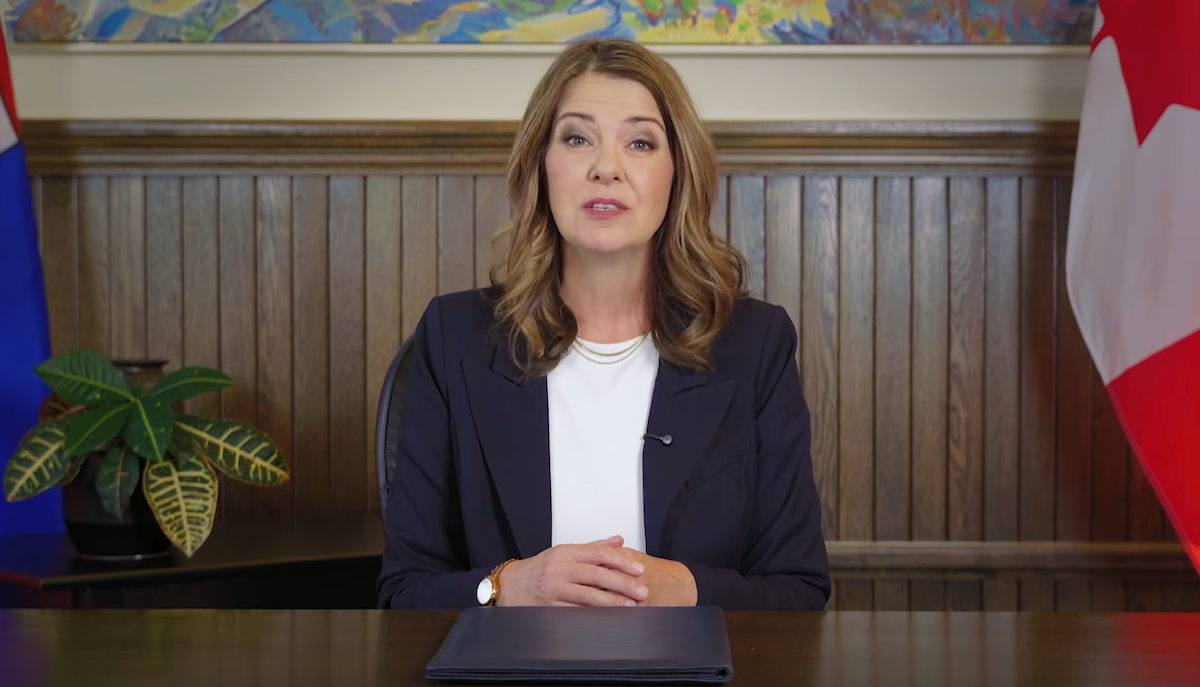
MP Matt Jeneroux giving a presentation when he was still a Conservative. Credit: Matt Jeneroux / Facebook

As everybody in Canada surely knows by now, Alberta Member of Parliament Matt Jeneroux has crossed the floor of the House of Commons to join Prime Minister Mark Carney’s Liberals, who whether you like it or not appear still to be the Natural Governing Party of Canada.

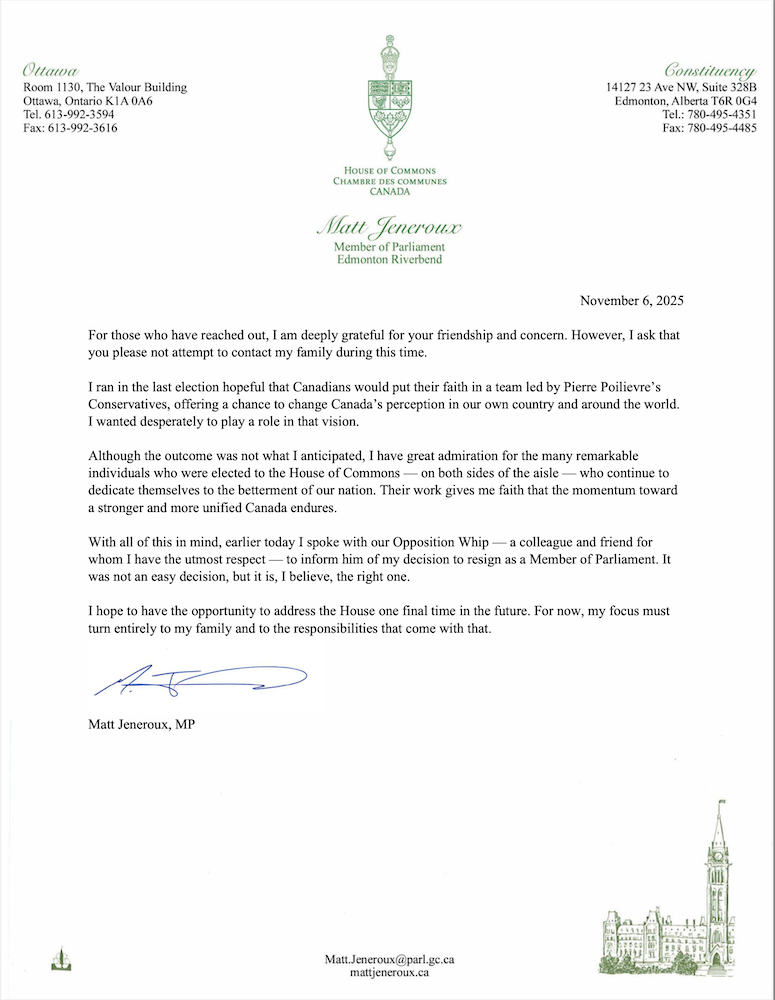
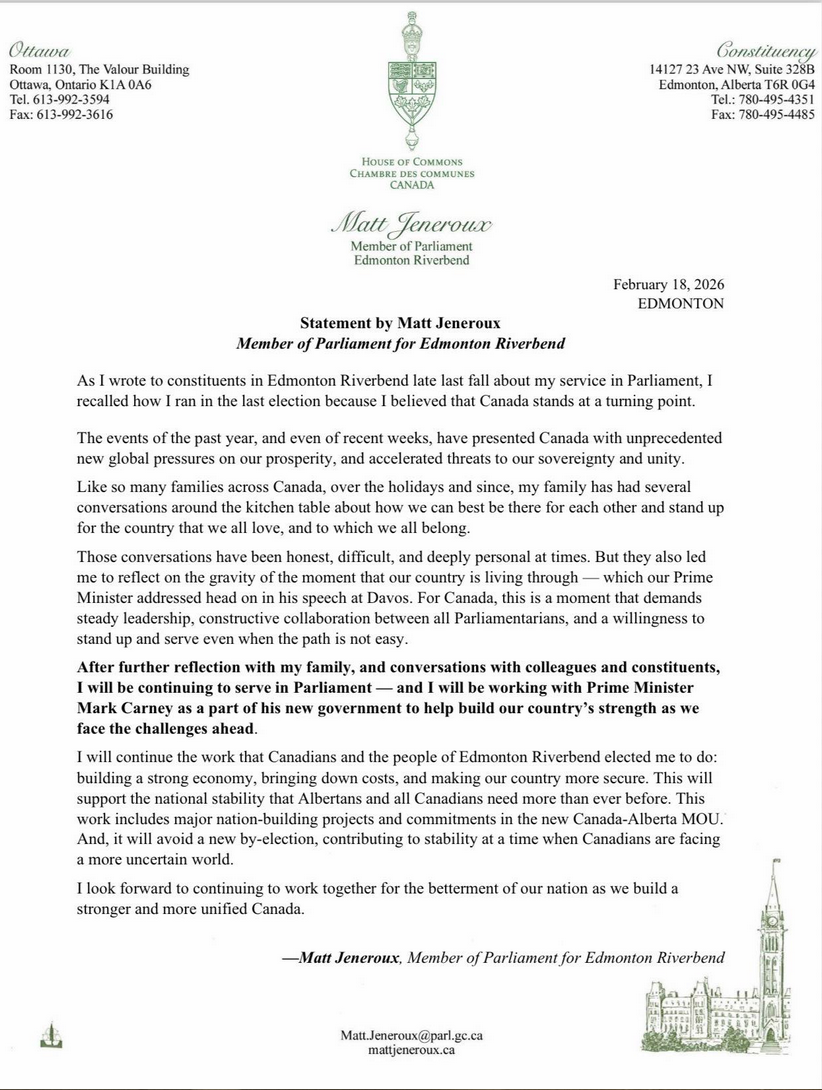
Jeneroux made the announcement in a letter published on social media in which he said after listening to Carney’s world-famous Rupture Address in Davos last month he had concluded we are living through a moment “that demands steady leadership, constructive collaboration between all Parliamentarians, and a willingness to stand up and serve even when the path is not easy.”

Accordingly, he continued, dropping his metaphorical bombshell: “After further reflection with my family, and conversations with colleagues and constituents, I will be continuing to serve in Parliament – and I will be working with Prime Minister Mark Carney as part of his new government …” Boom!

In a social media statement, Prime Minister Carney added that he was “honoured to welcome Matt Jeneroux to our caucus as the newest member of Canada’s new government. Building a stronger, more resilient, and more independent country will require ambition, collaboration, and occasionally, sacrifice.”

Naturally, the Opposition Conservatives are apoplectic. They must have thought last fall when there were rumours Jeneroux might be pondering executing a floor crossing that they had successfully bullied the former “progressive conservative” Edmonton MP into shutting up for the time being and then quitting quietly this summer.

Apparently things were bad enough at that time that Jeneroux felt compelled to issue a social media statement saying, no, no one had threatened him. He announced his plans to remain in Parliament for a spell, then quit, in the same fashion.

Pierre Poilievre, Leader of the Conservative Party of Canada who blew a 27-point lead in the polls to lose last April’s federal election and his own Ontario seat, immediately said Jeneroux had “betrayed the people of Edmonton Riverbend who voted for affordable food and homes, safe streets, and a strong resource sector.”

Well, one can feel a certain sympathy with that point of view and still not feel very sympathetic with Poilievre, who has too much of a whiff of the MAGA about him for a lot of Canadian voters.

There’s no question Poilievre has been wounded again by Carney’s strategy. With Poilievre now back in the saddle as the just-re-ratified Conservative leader and back in his native Alberta as short-term MP for Battle River-Crowfoot, he appears to be a liability both for the Conservatives and the folks in his riding who are stuck with him for the indeterminate future.

Meanwhile, Prime Minister Carney has found an unconventional route to building the majority he couldn’t quite win last April 28. Every time Poilievre scrambles back to his feet he gets knocked down again, just as he was in November when Nova Scotia MP Chris d’Entremont crossed to the Libs and in December when Ontario MP Michael Ma did the same thing. There are probably more Conservative MPs waiting in the wings, and maybe some New Democrats too if the party chooses the wrong leader next month.

We haven’t seen anything quite like this out here in Tory Blue Alberta since April 20, 1977, when Cactus Jack Horner of the Conservative Horner political clan made the same trip from the Opposition benches to Pierre Trudeau’s Liberal government’s side of the House. That made 4/20 a day that lived in infamy in Alberta until PM Justin Trudeau’s government legalized cannabis in in 2018, which may account for a certain amount of forgetfulness among much of the Conservative base.

Horner went straight into the Liberal cabinet, where he remained until 1979, when he was defeated along with the elder Trudeau’s Liberal government. By 1980, the Liberals were back, but without Horner, who was punished by the voters of his Crowfoot riding – perhaps ironically essentially the same territory as that now represented by Poilievre.

So those things may or may not be a harbinger of what will happen to Jeneroux, who may or may not have plans to remain in politics after the next federal election. In the meantime, he is said to abide in Vancouver when he’s not in Ottawa.

For the time being, Carney said in his statement: “As a new special advisor on economic and security partnerships, Matt’s leadership will contribute to strengthening Canada’s alliances and trade partnerships, advancing Canada’s leadership in global security cooperation, and building our strength at home.”

It’s a pity that the late Alberta Premier Jim Prentice isn’t still around to observe this demonstration of the right way to organize a mass floor crossing.

Prentice briefly appeared to be some kind of political genius on December 17, 2014, when it was revealed he had persuaded Wildrose Party leader Danielle Smith and eight of her MLAs to cross the floor of the provincial Legislature en masse to join his Progressive Conservative government.

Alas for all concerned, astonishment soon turned to outrage, Smith’s political career quickly soured for a long spell, and the ensuing brouhaha played a significant role in the election of Rachel Notley’s NDP in May 2015.

Probably the first political casualty of the mass floor crossings of 2014 was Rob Anderson, MLA for Airdrie at the time, who in 2010 had quit the PCs and crossed the floor to join the Wildrose Party and then crossed back with Smith, making him a double floor crosser. In January 2015, presumably reading the handwriting on the wall, he announced he was leaving politics.

Unfortunately for Alberta, it could be argued, like Smith, Anderson found a second life in politics with the United Conservative Party. She’s the premier and he’s her chief of staff, an intemperate social media commentator, and a co-author of the separatist Free Alberta Strategy that appears to have been fully adopted by the party.

Carney, meanwhile, is demonstrating a more effective way to use floor-crossings to keep his political opponents off balance is to make one bombshell announcement at a time.

Well, they call ’em the L-shaped party for a reason, and they sure can execute a smuggler’s turn on policy when necessary, faster than their Conservative rivals seem to be able to manage.


David J. Climenhaga

David Climenhaga is a journalist and trade union communicator who has worked in senior writing and editing positions with the Globe and Mail and the Calgary Herald. He left journalism after the strike... More by David J.


Avi Lewis answers rabble’s NDP leadership questionnaire


February 23, 2026
rabble.ca

rabble is asking each of the candidates for the NDP leadership seven questions on party strategy, Indigenous issues, dealing with Donald Trump and more. Here are the answers from Avi Lewis.


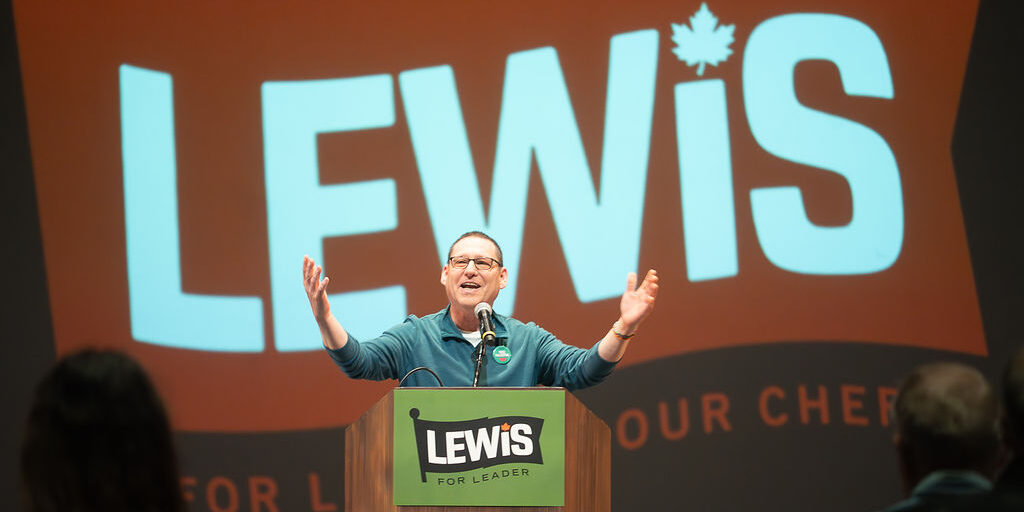
Avi Lewis at a campaign event. Credit: Avi Lewis / X

Please tell our readers three policies you would champion as NDP leader.

As NDP leader, I would champion the creation of public options in every sector of our economy where the market is failing. While one-in-four Canadians live in food-insecure households and food bank usage skyrockets, Galen Weston, the owner of Loblaws, is worth $18 billion. This is classic market failure, and shows who benefits and who suffers in our current economy, where every sector is dominated by a handful of colluding corporations. It’s why our campaign is proposing a public option for cell phones, internet, postal banking, and groceries. Think Costco run as a public service – a public network of 50 grocery stores across the country would offer 30 to 45 per cent cheaper food prices and cost $300 million a year to run. That’s just one half of one percent of the defence budget.

Second, we are running on a Green New Deal to create over a million good-paying union jobs in every corner of this country by investing two per cent of Canada’s GDP in tackling the climate emergency, creating decades of employment for trades workers, care workers, transportation workers, youth, scientists, fossil fuel workers, and more. This work will be supported by a new generation of green public corporations like neighbourhood utilities, heat pump manufacturers and installers, the care economy (care work is low carbon!) electric bus factories and more.

Thirdly, a national rent cap that will give power back to renters and put an end to steep rent hikes. The cap will mean that rent cannot be raised by more than the rate of inflation in each province or territory including for vacant units, so landlords cannot jack up rents between tenants. The federal government can do this by implementing backstop legislation that strengthens provincial and territorial rent controls.


Which Carney government legislative initiatives would you change, if you could, and in what way?

First of all, I would repeal the major projects provisions in Bill C-5. It allows the federal government to approve projects, including fossil fuel infrastructure, while bypassing consultations and environmental assessments. It’s the type of bill that would make Stephen Harper blush, ignoring Indigenous rights and flagrantly disregarding the fact that we’re in a climate emergency. We need powerlines, not pipelines – especially not if they’re rushed through over the objections of communities who are trying to protect our air, water and land.

Additionally, Bill C-12 is an assault on the fundamental rights of migrants, refugees, and all Canadian citizens. Rather than keeping us safe, this bill creates a deportation machine that drags us ever closer to the horrors happening in the US. This law opens the door to a new wave of human rights abuses, and tears at the social fabric of communities. We should scrap this law and follow the lead of Spain, who are giving legal status to half a million migrant workers.

Finally, I’m deeply concerned by provisions in Bill C-9 that restrict our constitutional right to peacefully protest. Bill C-9 is an attack on our civil liberties and charter rights. It is designed to limit freedom of expression and the ability of people to organize and speak out for justice, including and especially those organizing for justice in Palestine. I support the cross-country, multi-faith coalition of organizations – including many civil society groups and the Canadian Labour Congress, who are calling on the federal government to withdraw this dangerous legislation.

How would you combat separatism in Quebec and Alberta?

The stoking of Alberta separatism by Danielle Smith, who has cleared the way for a referendum to be held is a dangerous development. This is a cause that appears to be fuelled by American foreign interference, with Trump administration officials meeting with leading separatists. We must strongly reject these efforts, and do everything we can to help Naheed Nenshi win the next provincial election. In my meeting with Mr. Nenshi, I emphasized how I will do everything I can to make this happen, and thanked him for his and the Alberta NDP’s steady work opposing the most right-wing government in this country.

In addition to being dangerous, it’s also a distraction from Danielle Smith’s agenda of cuts and privatization. The UCP government recently passed Bill 11, a blueprint for American style two-tier health care in Alberta. It is an open invitation to US health insurance companies to come in and cannibalize our precious public health care system. We must not let this happen. That’s why the federal government needs to start strongly enforcing the Canada Health Act, to stop this sell off of medicare dead in its tracks.

Regarding Quebec separatism, the key to addressing it for the NDP is by demonstrating that we are a viable option for Quebec’s progressive majority. This includes having a leader who can not only communicate with people in Quebec in French, but also a leader who understands Quebec’s unique culture and politics. It means upholding the Sherbrooke Declaration and connecting with Quebeckers on the basis of shared social democratic values and ideas. I’m proud to have the support of Charles Taylor, who kept the flame alive for the NDP in Quebec decades before the Orange Wave. The task of reconnecting with Quebec would be fundamental if I have the honour of serving as leader.

What would your conditions be for supporting a Liberal minority government?


If the NDP holds a clear balance of power under my leadership I would like to go in with just one demand: proportional representation. Not a commitment to studying it further, doing it later, holding a referendum or some other way for the Liberals to wriggle out of the commitment – but its full implementation after a citizens’ assembly to decide the exact type of electoral system. It is the reform that unleashes all of the other reforms, and it will end once and for all the phenomenon of “strategic voting” where people feel pressure to vote against something, rather than voting for whichever party or candidate truly aligns with their values.

It is also vital to preventing false majorities where a party that wins 36 per cent of the vote wields almost absolute power. What happens if Poilievre wins the next election in such a scenario? All of the progress made by the NDP in the last parliament, from dental care to the first steps on pharmacare, will be put at risk. This is why electoral reform is so important. Rather than a menu of demands, the NDP should have one clear condition next time and it should be proportional representation.

If you were in charge of Canada-U.S. relations, what would your strategy be for dealing with the Trump administration?


We need an independent foreign policy that pursues alliances with a host of like-minded countries. There is strength in numbers, and we should prioritize deepening ties with progressive governments including Mexico, Brazil, Colombia and Spain, to stand up to Trump collectively. All of these countries have not hesitated to chart their own course on the world stage, including by condemning the genocide in Palestine and standing up against the bullying of smaller nations in the Western Hemisphere by the Trump administration. The Carney government has been silent on these matters, and the NDP must be a principled voice for human rights and justice without exceptions. In addition, we should not be pursuing deeper military integration with the United States, like the “Golden Dome” missile defence system, which Prime Minister Carney continues to entertain.

As well as an independent foreign policy, we must also build an independent and resilient domestic economy that can withstand the shocks of Trump’s tariffs. Our economy has become far too intertwined and reliant on our neighbour to the south. That’s why we’re running on a plan to expand public ownership, creating new Canadian crown corporations to deliver affordable services from groceries to telecoms to postal banking. And finally, we need to push back against the tariffs with a tax on oil and gas exports to the US, which will also help fund the creation of sustainable jobs and finance the transition to clean energy that we desperately need. 

What steps would you take to decrease growing economic inequality in Canada?

Our campaign is putting forward a comprehensive tax plan for the 99 per cent to tackle inequality and raise the money that we need to properly fund our public services. Inequality in this country has reached unfathomable levels. The top one per cent own almost a quarter of Canada’s net wealth. Meanwhile, the six biggest banks raked in $70 billion in profits last year. Fountains of wealth are being generated, but it’s not trickling down to working people, it’s stuck at the top. We need a government with the courage and political will to finally go after it.

That’s exactly what our plan proposes. The centrepiece of it is a wealth tax of one per cent on the top one per cent, rising to three per cent on the largest fortunes. Such a tax would impact only a small number of people, but it could generate $40 billion a year in new revenue. In addition, we’re calling for capital gains income to be treated the same as employment income, a tax on inheritance of wealth over $5 million, a new income tax bracket for the richest Canadians, a tax on excess corporate profits, and giving the CRA the resources it needs to go after tax cheats.

On the income support side, we would lift people out of poverty with a major increase to income support for disabilities (raising the Canada Disability Benefit to $2150 per month), seniors, families with children and low income adults. We would also create a national framework for a guaranteed liveable basic income, as proposed by Leah Gazan in Bill C-223, to establish a social floor below which no one can fall.

What measures are necessary to empower Indigenous communities in Canada and assure their prosperity?


Empowering and supporting Indigenous communities is threaded throughout our campaign platform on many levels – from our vision of an electric bus revolution that re-connects communities and addresses safety on every Highway of Tears in this land to investing in the care economy, including culturally-appropriate childcare and elder care, to ensuring that impacted Indigenous communities benefit from the wealth generated by mining on traditional territories.

When it comes to development on Indigenous lands, the UN Declaration on the Rights of Indigenous Peoples principle of Free, Prior, and Informed Consent must be fully respected and honoured. This requires true, meaningful consultation in partnership and collaboration with First Nations, Métis, and Inuit governments, including with traditional governance systems and structures. Meaningful consultation includes ensuring that all community voices who wish to participate are included in the formal process for projects, but additionally that communities are able to have continued dialogue with the federal government should new issues arise during project development and operations.

Another absolutely crucial element is adopting a “For Indigenous, By Indigenous” Housing Strategy. The housing crisis affecting First Nations, Inuit and Métis communities is a national emergency. Nearly one in six Indigenous people live in homes needing major repairs that are considered unsuitable for the number of people living there. This is a denial of fundamental human rights, and it has dire consequences for people’s health and wellbeing. The strategy would close the housing gap between Indigenous and non-Indigenous communities, through massive investments in urban, rural and Northern Indigenous housing projects, working alongside Indigenous leadership.

Finally, I would like to acknowledge Tanille Johnston’s plan for Indigenous reconciliation and empowerment, it’s an outstanding document that I fully support.


The future of the NDP might be a mass party


February 24, 2026
RABBLE.CA


Choosing between electoralism and movements is a false dichotomy. There is a future for the NDP as a mass party.


Photo of the NDP's 2023 convention in Hamilton, ON.
 Credit: NDP / Facebook


There are two commonly accepted modes of organizing that the NDP should adopt in debates around its future. Some argue that its focus should be on winning power, often described as electoralism, while others have argued that the NDP should be focused on connecting with grassroots movements and being their voice in parliament.

The NDP should be ‘le parti des urnes et de la rue’, an orientation I describe as movementism. These are debates that have been taking place in the NDP going back decades, and while they have been explicitly laid bare in this leadership race – with Heather McPherson modelling herself as the electoralist candidate, and Avi Lewis as the movementist candidate – there is another model for the NDP which is emerging in the debate, the NDP as a mass party.

A mass party is a democratic membership-based organization where an emphasis is placed on creating strong institutions for members to engage with. Decisions are led by membership, members engage with committees, shape policy, and engage with the structures of the party.

European mass parties engaged in the construction of ‘people’s houses,’ building cultural and leisure centres. Mass parties served as the political vehicle of the working class, but they are more than that; they must be intimately connected with, and, in the case of the people’s houses, provide a physical place for working-class life.

A mass party is also a crucial part of its members’ social lives and identity. The NDP, as a mass party, could take many forms. Bruce McKenna in Perspectives Journal envisions an NDP mass party as a mix of strong committees, renewed and active EDAs and regional councils, member-led debate and policy decisions. But it could also mean renewed extra-parliamentary organizing, working with labour to organize workplaces and create NDP labour affiliates, organizing tenant unions as part of EDAs activity or party enterprises. There is no shortage of books on left-wing theory, politics, history and practice in Canada; nothing would stop the NDP from establishing a publishing house and selling the books. Likewise, the NDP or affiliated organizations could construct socialized housing, build/purchase physical properties across Canada to turn into physical meeting places for socialist politics, organizing, events, and enterprises.

Ironically, despite being a product of 19th and 20th-century socialist politics, the model of a mass party has largely been adopted by the modern right. An array of cultural outputs, social media accounts, printing presses and party intellectuals, physical locations for members to meet and congregate, and a deep sense from the membership that they are a part of a history-defining movement have defined many right-wing populist parties, adopting the structure of a mass party despite its history.

It is not that winning elections or working with social movements is wrong or bad; it is that it is not enough. Under electoralism, wins are few and far between. And the governments elected, when they are elected, are unable to implement their agenda. A mass party builds not only the infrastructure to win, but it also creates the required institutions to deliver on the party’s agenda, what Ali Terrenoire, writing in Canadian Dimensions, described as a ‘state-in-waiting.’

Terrenoire, in a piece worth reading, also critiques the movementism orientation as well. As he correctly points out, modern…

“Social movements” suffer from many of the same coordination failures as parliamentary parties themselves. When conditions are favourable, these movements can grow rapidly, drawing energy from moments of crisis or outrage. Yet with few durable structures, weak mechanisms for internal discipline, and minimal costs to exit, they are just as prone to rapid collapse—or to fossilization within the NGO and advocacy ecosystem once the moment passes.

It is not that social movements cannot, and have not created social change; it is that the conditions for this social change require work that social movements are not adapted to.

This critique of social movements is one shared by Vincent Bevins, If We Burn (a text that should be required reading for all organizers).

Bevins maps out why these social movements that emerged throughout the early 21st century were unable to capitalize on their mass support and success. He argues that the hollowness of social movements as institutions, their horizontalism, and their lack of long-term planning resulted in the failure of most social movements he researched. The advice he receives from members of those social movements years later? ‘Join a party.’

The NDP debate over the structure of its party has been narrow in scope between movementism and electoralism. But NDP supporters, organizers, and interested individuals should watch the debate emerging around the NDP as a mass party. Two years after McKenna first wrote that “The embers of the mass party are still smouldering” discussion and debate around a mass party have taken on a life of their own.

Building a mass party is not a problem solved by one leadership race; it would require years-long intentional reshaping of the NDP, the left in Canada, and the NDP’s allied organizations. It would require hard, arduous, boring work, starting likely from the bottom up with the empowering of EDAs, committees, and the strengthening of party structures and institutions. Organizations like the Broadbent Institute, the Canadian Labour Congress, and social movement partners would need to be intimately involved. But it would be worth it.

The question facing the NDP is not whether to choose the ballot or the street, but whether it is prepared to become an institution capable of shaping both. Only a mass party enables us to do that.

James Adair is the co-president of the University of Ottawa NDP and Ontario New democratic Youth policy director. More by James Adair

Trade without accountability, pollution without borders
February 25, 2026
RABBLE.CA


No executive — in Washington, Ottawa or elsewhere — should have the unilateral power to dismantle protections, bypass accountability and impose dangerous consequences on people beyond their borders.


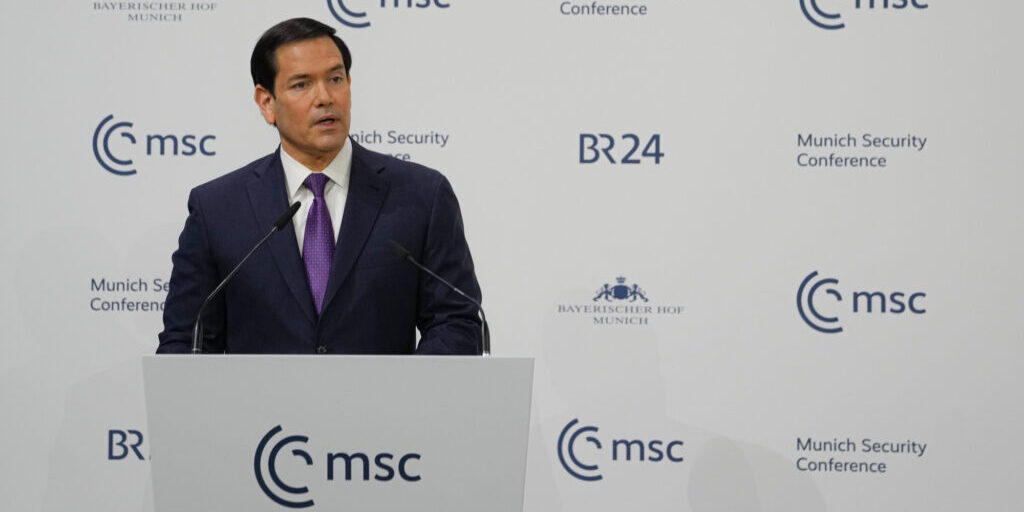
Secretary Marco Rubio speaking at the Munich Security Conference in Munich, Germany, February 14, 2026. Credit: US State Department.


A new international order is emerging, according to representatives at this year’s World Economic Forum in Davos, Switzerland, and at the Munich Security Conference — one of fragmented states acting in their own self-interest, sovereign fortresses sliding toward economic nationalism.

A Munich conference statement places much of the blame on Canada’s neighbour: “The international order is ‘under destruction’ because the country that has long shaped and defended it, namely the United States, is now governed by actors who prefer sweeping demolition over incremental reform and repair.”

The political fiction of fortresses hides the fact that dismantling the rule of law in one state shreds environmental, health and human rights accountability across borders, particularly where markets remain deeply integrated.

Canada, the United States and Mexico are bound by one of the world’s most integrated economic systems. Supply chains, energy systems, food production and manufacturing operate across borders that don’t recognize chemical pollution, toxic emissions and other ecological harms.

Yet the forthcoming review of the countries’ trade agreement is unfolding in a context in which one party — the U.S. — is rapidly breaking down environmental, health and safety regulations while demanding deeper market access.

In light of the recent repeal of the U.S. “endangerment finding” — the legal determination that greenhouse gases threaten public health and welfare — Canada and Mexico must defend science as the foundation of trade and regulation.

An integrated market with a rogue deregulatory state will inflict damage on the whole continent. Meaningful accountability regarding the human rights, ecosystem and public health impacts of trade is already lacking in the Canada-Mexico-U.S. agreement. Environmental provisions are weak, enforcement is constrained and climate obligations are absent.

As the U.S. accelerates deregulation — allowing factories to pollute more and exempting industries from rules that safeguard air, water, land and human health — any renewed trade agreement will export harm to people in Canada, Mexico and globally.

This is the reality of integration under deregulation. Carbon pollution, contaminated air and toxic water move through connected, borderless ecosystems. Supply chains predictably distribute toxic exposure to workers, Indigenous and other historically marginalized communities, children and the elderly. When environmental standards collapse in one jurisdiction on a continent with contiguous borders, everyone absorbs the costs.

Yet trade negotiations are framed as matters of national security and economic necessity — arguments used to justify secrecy, speed and public exclusion. Governments insist on prioritizing competitiveness over environmental and health safeguards. This political strategy is designed to shield trade governance from transparency, accountability and scrutiny.

The result is a black box: trade agreements are negotiated behind closed doors, insulated from democratic participation and ratified with little opportunity for meaningful challenge. Once in force, they restructure economies, lock in regulatory trajectories and leave future policy spaces without mechanisms capable of responding to the detriments they produce. This model is intensifying globally.

In the face of the U.S. threat, corporate executives are consolidating control over trade and investment policy. Legislatures are being sidelined and accountability mechanisms are being weakened or quietly abandoned. National security language has become the most powerful tool for normalizing this shift. In its shadow, environmental protection and public health are being reframed as expendable.

Canada and Mexico must urgently break the chain of deepened integration with the U.S., as the latter has proven to be driven by violence, openly hostile to regulation, dismissive of international norms and indifferent to the deleterious cross-border consequences of its policies. The only certainty is the increased pollution and regulatory chaos that can’t possibly be contained within U.S. borders.

No executive — in Washington, Ottawa or elsewhere — should have the unilateral power to dismantle protections, bypass accountability and impose dangerous consequences on people beyond their borders. Yet this is the model being normalized: centralized authority, minimal transparency and the erosion of public recourse, all in the name of trade and security.

The global public must wake up to this reality. Trade and investment agreements determine water and air quality. They govern decisions about whose land will be sacrificed and who will bear the long-term health costs. Treating trade governance as a sealed domain governed by security imperatives is reckless.

People across borders must reject the lies of securitized trade, demand transparency and insist that economic integration can’t come at the cost of life itself.


David Suzuki is a scientist, broadcaster, author and co-founder of the David Suzuki Foundation. Written with David Suzuki Foundation Director-General for Quebec and Atlantic Canada Sabaa Khan.

Learn more at davidsuzuki.org.


David Suzuki

David Suzuki is co-founder of the David Suzuki Foundation, an award-winning scientist, environmentalist and broadcaster. He is also a renowned rabble-raiser. The David Suzuki Foundation works... More by David Suzuki
Where joy grows: Bringing butterflies home
February 18, 2026
rabble.ca

For anyone looking for a hopeful, practical response to today’s environmental challenges, the invitation is simple: start where you live and notice what comes back.

A monarch butterfly. Credit: Derek Ramsey / Wikimedia Commons


February in Canada isn’t known for abundance. Days are short, ground is frozen and growth feels distant. And yet, beneath the surface, roots are holding and seeds are waiting. Much of the work of restoring nature begins this way: quietly, before anything is visible.

That matters, because pollinators are in trouble. Wild bees, butterflies and other insects are disappearing due to habitat loss, pesticide use, climate change and steady fragmentation of landscapes they depend on. Pollinators support healthy ecosystems and food systems, and their decline signals that our relationship with the natural world is out of balance.

A recent global study identified habitat loss as a leading driver of biodiversity decline worldwide. In simple terms, when we replace diverse landscapes with pavement, turfgrass and concrete, nature struggles. This is basic ecology.

What may be surprising is where many solutions are emerging. They aren’t limited to remote wilderness areas or sweeping policy reforms, important as those are. Increasingly, they’re taking shape in neighbourhoods, backyards and along boulevards.

The David Suzuki Foundation’s Butterflyway Project sprouted nearly a decade ago from the belief that everyday people could help restore habitat by transforming the places where they live, work and gather. It turns restoration into something tangible and, for many, genuinely joyful.

Since the first volunteer Butterflyway Rangers were trained in 2017, thousands of people in Canada have put that idea into action. They’ve planted native wildflowers, hosted plant and seed swaps and turned ordinary spaces into habitat for wild bees, butterflies and other pollinators. Along the way, they’ve also built friendships, shared knowledge and rediscovered the simple pleasure of watching something grow.

The Butterflyway Project is entering its 10th year. It’s burgeoned from a neighbourhood-scale experiment to a national movement grounded in science and grassroots community leadership.

The science behind this work is straightforward. Research consistently shows that native plants are far more effective than non-native species at supporting pollinators. Many insects rely on specific host plants to complete their life cycles. No host plant, no caterpillars. No caterpillars, no butterflies.

Studies also show that even small habitat patches can make a difference when they’re close to others. A single garden helps. A network of gardens increases the odds.

That’s where the Butterflyway model stands out. Rangers don’t just plant isolated gardens and hope for the best. They work toward creating Butterflyways: clusters of at least a dozen habitat gardens that together function as living webs of food and shelter. These connected spaces help counteract fragmentation in cities and suburbs.

The benefits extend beyond insects. Research links people’s access to green spaces with better mental health and greater resilience in the face of climate disruption. Restoring nature often restores something social as well. Gardens, it turns out, are excellent conversation starters, especially when someone asks why you’re growing plants they were taught to mow.

Butterflyways are built through relationships. Rangers are part of a nationwide network, but the real magic happens locally. Friends recruit friends. Neighbours recruit neighbours. Many Butterflyways begin with a single conversation and grow through trust and shared effort. Joy is contagious.

Some Rangers participate intensively for a season. Others have been involved since the early days. Many step back when life gets busy and return when they can. That flexibility allows people to stay bonded over time while caring for the places they call home.

There’s no single model for what Butterflyway involvement looks like. Throughout Canada, Rangers are installing habitat gardens, leading workshops and walks, hosting community events, advocating for pollinator-friendly municipal policies and creating local resources to share knowledge.

Some take on large, visible projects. Others contribute in quieter but equally important ways: tending one garden, sharing seeds with a neighbour or helping someone get started. Over time, these actions add up. One garden leads to another. One conversation leads to many.

Recruitment for the 10th cohort of Butterflyway Rangers is now open, until February 25. For anyone looking for a hopeful, practical response to today’s environmental challenges, the invitation is simple: start where you live and notice what comes back.

Nature is remarkably resilient when given a chance. So are the people and communities who come together to care for it. And joy grows from that shared work.

David Suzuki is a scientist, broadcaster, author and co-founder of the David Suzuki Foundation. Written with David Suzuki Foundation Rewilding Communities Program Manager Jode Roberts.

Learn more at davidsuzuki.org.


David Suzuki

David Suzuki is co-founder of the David Suzuki Foundation, an award-winning scientist, environmentalist and broadcaster. He is also a renowned rabble-raiser. The David Suzuki Foundation works... More by David Suzuki
Transport Canada union raising concerns over lackluster transparency

February 18, 2026
rabble.ca


Union of Canadian Transportation Employees members are responsible for things like aviation safety. They’re concerned how the cuts to the federal service will affect their work.

Passengers on an airplane. Credit: ClickerHappy / Pexels

The union representing workers at Transport Canada is raising concerns about a lack of transparency around how the department is restructuring and cutting jobs. The Union of Canadian Transportation Employees (UCTE), a component of the Public Service Alliance of Canada, said that without proper consultation or transparency, workers are forced to make life altering decisions in the dark.

The Government of Canada is aiming to shrink the federal public service by 10 per cent from the 2023-2024 peak by 2028-2029. As of February 11, more than 1,500 employees and about 50 executives at Transport Canada have received letters stating that their position may be affected by workforce adjustments.

At the same time, Transport Canada is undergoing a structural reorganization that will reduce its five administrative regions to three. The concurrent changes have caused concern to rise among workers, the UCTE president said.

“If they’re workforce adjusted, how are they going to be able to feed their families? How are they going to be able to take care of their kids? Their mental health is at play here because of the unknown,” Teresa Eschuk, president of the UCTE, said in an interview with rabble.ca. “I don’t think they [Transport Canada] are being very forthcoming with the employees, or they’re putting too much on them.”

READ MORE: Federal budget cuts to public sector will weaken services, unions warn

Eschuk said employees would benefit from knowing more about the ‘end game’ of these workforce adjustments and reorganizations. She said Transport Canada is calling weekly meetings about workforce adjustment but she would like to know the final number of how many jobs will be cut. In addition, Eschuk said she would want to see a copy of the assessment done to decide where workforce adjustment letters went.

“Employees are being asked to make life altering decisions about their employment future while key information about future organization structures, regional footprints, reporting, relationships and operational models is incomplete,” Eschuk said. “They’ve known for a long time that these cuts were coming. If they’re not prepared, then that’s on them. But don’t put that on the backs of our members.”

Eschuk also raised concerns about the cuts happening within inspection services. Transport Canada inspectors are already spread thin, she said.

In 2023, Canada scored 65.1 out of 100 in an audit of international safety standards performed by the International Civil Aviation Authority. While the aviation authority did not find significant safety concerns, it did recommend Transport Canada set up systems to monitor regulatory compliance by airlines and ensure proper training and fatigue management for air traffic controllers.

Eschuk said she wonders how Transport Canada can prepare to address the shortcomings raised in the audit.

“They really minimized their impact in their inspection process,” Eschuk said. “I have concerns about the audits and the inspections that our members are doing. Twenty years ago, it used to be hands-on, and it really seems that [Transport Canada] are turning to make this into a paper exercise”

In an email sent to rabble, Transport Canada said they will continue to work with bargaining agents to support employees through the changes.

“Transport Canada’s top priority and core mandate remains unchanged – ensuring a safe, secure, efficient, and environmentally responsible transportation system for Canadians,” Transport Canada communications advisor, Sau Sau Liu, wrote in the email. “No safety-critical frontline inspection or enforcement functions are impacted by these reductions, and Transport Canada’s ability to uphold the highest safety standards remains fully intact.”

While Transport Canada asserts that it will work with the bargaining agents and ensure no safety-critical functions are impacted, Eschuk said she still would like to have more transparency from the department. She noted that the Deputy Minister did request a meeting after UCTE put out a press release last Monday, but she felt it was not proactive enough.

“Did it really need to come down to me writing a letter to the deputy minister or to do a press release?” Eschuk said. “That’s what’s not appreciated, right? They keep saying they care about their employees, but they’re not showing it.”


Gabriela “Gabby” Calugay-Casuga (she/they) is a writer and activist based in so-called “Ottawa.” They began writing for Migrante Ottawa’s radio show, Talakayang Bayan, in 2017. Since then, she... More by Gabriela Calugay-Casuga
While resisting Trump, Carney is giving Canadian corporations a free-hand

February 19, 2026


As Prime Minister Mark Carney publicly focuses on US president Donald Trump, behind the scenes he is doing big favours for corporations by easing safeguards and other regulations.

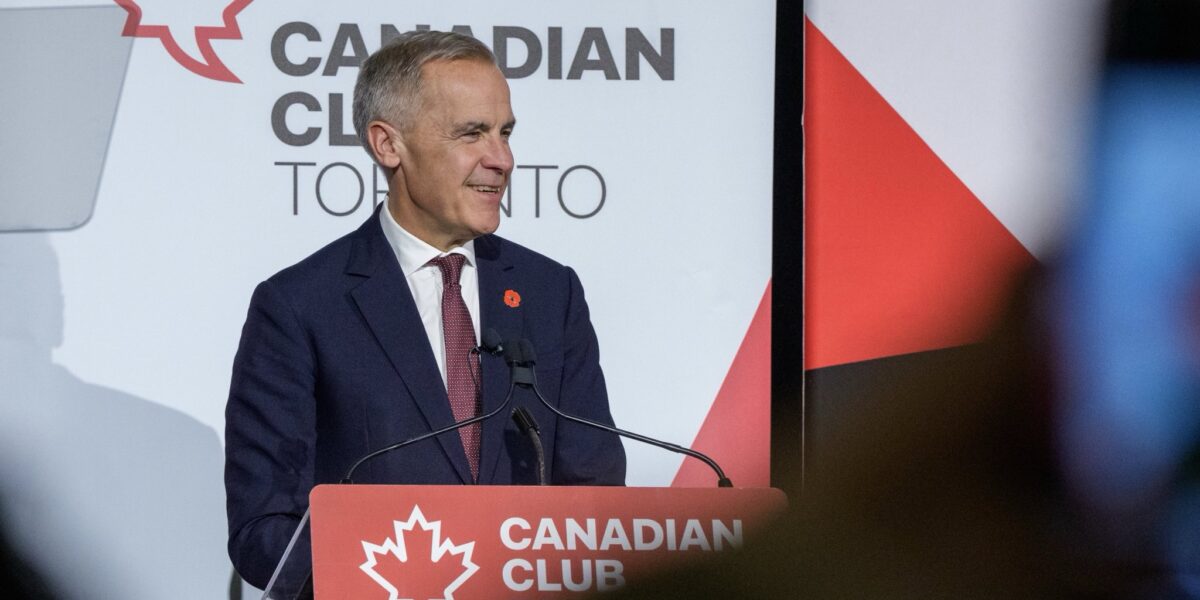
Mark Carney discussing the 2025 Budget at the Canadian Club in Toronto. 
Credit: Mark Carney / X


As Canadian fury grows against Donald Trump with each new outrage, Mark Carney has found a sweet-spot.

As long as Carney keeps his elbows up, signalling his defiance of the menacing U.S. president, Canadians have mostly given the prime minister a free hand in running the country.

And Carney has used this considerable leeway to quietly consolidate corporate power in Canada — with dangerous consequences that are receiving insufficient media attention.

Corporations have long had a dominant hand in shaping Canadian economic policies.

But Carney, with connections deep inside Canada’s corporate establishment, is making government even more acquiescent to business demands.

This rightward drift is most noticeable in Carney’s redirection of public funds from social programs towards military contracts, and his welcoming approach to Big Oil.

But it’s also evident in an extraordinary measure that Carney seems to be trying to sneak into law. The measure — hidden deep inside the mammoth omnibus Bill C-15 currently before Parliament — would give cabinet ministers sweeping powers to allow corporations to escape government regulations.

The measure would enable ministers to exempt an individual or corporation from any law (except criminal law), in order to promote the nebulous goal of “innovation, competitiveness or economic growth.”

Such exemptions would have to be “in the public interest.” If that sounds like a sufficient safeguard, you might be interested in some swamp land or steaks that Donald Trump is selling.

For decades, under both Liberal and Conservative governments, Ottawa has concluded it’s “in the public interest” for corporations to increasingly regulate themselves, that the proper role for government is, as business demands, to “get out of the way.”

It was this deregulatory mania that led to the horrific 2013 disaster in which a speeding, driverless train, pulling 72 oil tank-cars, derailed in the town of Lac-Megantic, Quebec, incinerating 47 people in flames that soared to 1,650C, according to Bruce Campbell, author of ”The Lac-Megantic Rail Disaster.”

Campbell meticulously documented how the tragedy stemmed from dozens of decisions, made by Canadian political leaders, that reduced Ottawa’s oversight of rail safety — in order to make railways more profitable.

Campbell notes that no public inquiry was held into the Lac Megantic tragedy, and no lessons appear to have been learned from it.

Indeed, two years after the disaster, Stephen Harper’s Conservative government passed the Red Tape Reduction Act, to reduce the regulatory “burden” that had “affected the cost of doing business.”

Now Carney is planning to take us further down this perilous deregulation path. He’s proposing to strengthen Harper’s anti-regulation Red Tape law by adding the new measure allowing cabinet ministers to grant regulatory exemptions to individuals and corporations.

The public would be mostly in the dark about these special regulatory favours; cabinet ministers would be able to keep details secret, based on considerations like “the protection of confidential or personal information.”

Like Harper, Carney maintains Canada has “too much regulation.” Overall, he’s closer to Harper than to his Liberal predecessor Justin Trudeau when it comes to yielding to the entreaties of business leaders, many of whom Carney knows personally.

Due to his key roles in central banking and global asset management, Carney is connected to 59 people who’ve become heads of Canada’s largest corporations, according to researchers working with the World Elite Database, an international consortium of scholars studying national power structures.

Lobbying disclosures show that, during his first nine months in office, Carney met with corporate lobbyists twice as many times as did Trudeau, and Carney met with the Business Council of Canada, representing Canada’s major CEOs, three times as often as Trudeau.

Reducing the “regulatory burden” has long been a key goal of corporate leaders. And, in Carney, they now have someone who appreciates how much their profitability can be improved by getting government out of the way.

It’s just that sometimes — like in Lac-Megantic — it’s better for government to be in the way.

This article was originally published in the Toronto Star.


Why I’m Suing Canada’s Largest Pension Fund Manager
 Op-Ed
February 25, 2026 
Rav Singh
National Farmers Union


I lost my farm last season. Unfortunately, many young farmers know exactly how this feels. For the last five years, I rented land in Caledon, Ontario, where I operated my farm, Shade of Miti, specializing in growing South Asian vegetables such as okra, ginger, and bitter melon. Since Shade of Miti came into being, my mantra has been “I will not be like other farms; I will survive.” Little did I know that so much of that “survival” is completely out of a farmers’ hands. The loss of my farm wasn’t a surprise. The amazing and supportive landowners I worked with were always clear about the pressures they were facing to sell. I went into my last season knowing it would most likely be the last time I would plant seeds on that land.


The last few months have been an emotional rollercoaster. I’ve tried to keep myself busy and stay focused on planning the next chapter of my life. For much of last year, I refused to look back, knowing that it would bring up a lot of emotions. When I finally did reflect, the same thought kept coming to my mind. “All that blood, sweat, and tears. All those 12-hour work days. All those times I could barely drive home because I had worked out in the field for the fourth day in a row during a heat wave. All those missed birthdays. Was it worth it?” Honestly, at first, I didn’t think it was. It wasn’t until I joined three young Canadians to sue Canada’s largest pension investment manager over alleged climate risk management that I realized how those long, hot, grueling days had actually fueled my commitment to address climate change.


One of the most important lessons I have learned as a small farm business owner is that my economic decisions have ripple effects. As I started collecting $6 here and there for a pint of tomatoes, I realized that, for the first time, I had the freedom to choose which bank my business would work with and where my “work” money would be invested. It was very important to me that the scaffolding of my business reflected the climate and environmental practices I used in the field. I learned about where my money was going, how it was being used, and what I could do to ensure my financial decisions aligned with my values (this process is very similar to how I assess the impact of one soil amendment over another).


I think it is one of Canada’s strengths that we have a mandatory national pension plan. And, I think we should all critically examine how this pension fund is managed in the public’s interest. As I learned more about the Canada Pension Plan Investment Board (CPPIB), I saw that decisions were made that I felt were not in my best interest, nor were they aligned with my personal and business values. So, in the midst of harvesting my last bitter melon and planting fall saag (spinach) seeds, I wiped the dirt off my pants, took off my steel-toed shoes, and joined Aliya, Chloe, and Travis to start a process to hold the CPPIB legally accountable.


By failing to account for the financial risks of climate change, we allege Canada’s largest pension investment manager, CPP Investments, which manages the Canada Pension Plan, is putting our public pensions at risk in two ways:The pension manager risks the future value of our pensions by locking contributors into fossil fuel investments that will exacerbate runaway climate change and destabilize the economy and financial system.The pension manager risks the future value of our pensions by locking contributors into fossil fuel investments as the rest of the world pivots to climate solutions. (Ecojustice, 2025)


As farmers, farm workers, and aspiring farmers, we see the devastating impacts of climate change every single day. Personally, I do not want my pension fund contributions invested in projects that exacerbate climate change and push me towards a future where there will be no…future. In addition to holding CPPIB accountable, I am looking forward to the ripple effects this lawsuit might have in the broader community. I hope our lawsuit inspires others to learn more about their pension funds and how their money is being invested. Most of all, I hope our legal action helps redirect us towards a future where we do not have to choose between climate action and economic gains, but recognize that it is possible to have both
.
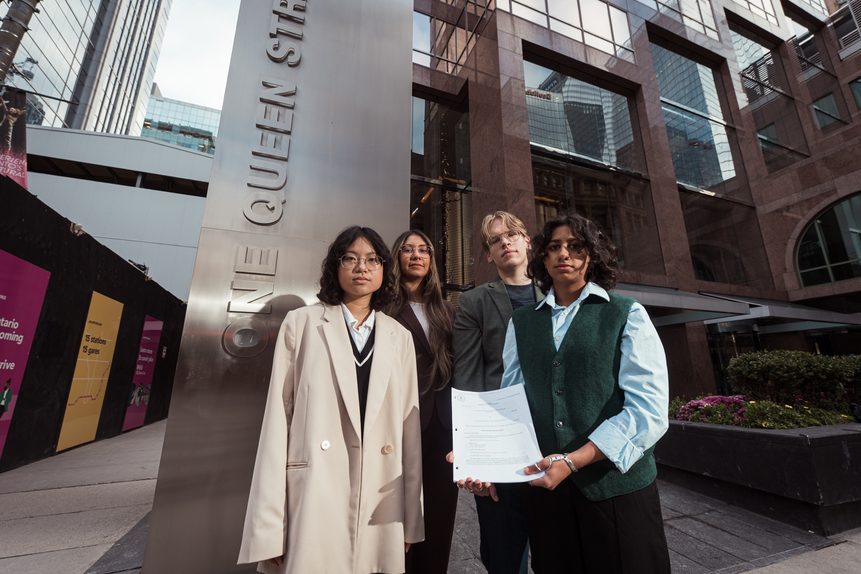
The four youth suing the Canada Pension Plan Investment Board. From left: Chloe Tse, Rav Singh, Travis Olson, and Aliya Hirji (Photo Credit: Andrew Jehan, Joshua Best, Ecojustice)


To learn more about the lawsuit, and climate change and pension plans read Suing Canada’s largest pension investment manager over alleged climate risk mismanagement (Ecojustice) and Four young Canadians take CPPIB to court to protect their pensions from climate risk (Shift).


Rav Singh (she/her) is a young farmer in southern Ontario and currently works with the Ecological Farmers Association of Ontario to support BIPOC farmers. Before farming, Rav was an environmental educator working with youth in the city on climate advocacy projects. She believes in the power of collective action, and in recent years has focused on the development of climate education materials for newcomers, farmland protection, and supporting youth entering agricultu
re.