CLIMATE REVANCHISTS
Italy calls for suspension of EU carbon market

The Italian Minister said the Emissions Trading System (ETS) has a "perverse effect" and is condemning European companies from being competitive with other countries, urging other member states to back the suspension.
Italy's Industry minister Adolfo Urso urged the European Union to suspend its carbon market until the bloc presents a revised proposal due this summer, citing the hardship faced by European businesses because of high power and carbon costs.
The Emissions Trading System (ETS) is the bloc’s mechanism for making companies pay for their pollution, with the dual aim of reducing emissions and encouraging industry to invest in more sustainable alternatives.
In Europe, the ETS currently covers heavy industries, power plants as well as airlines and shipping. Additional sectors such as international aviation, landfills and incinerators will be included in the upcoming review by the European Commission.
But Urso said the ETS is to blame for Europe's competitiveness problems because the bloc's climate policy tool has a "perverse effect" and is preventing European companies from competing with China and the United States.
"We are all aware that the mechanism of the ETS, as it is currently drafted, is only a tax, a tariff on the energy-intensive companies that struggle to remain competitive," Urso told reporters on the sidelines of a gathering of industry ministers in Brussels on Thursday. “It is necessary - we are all aware - to review it in a substantive way."
"To do this properly, it is necessary to suspend the ETS mechanism while awaiting a reform that must necessarily be comprehensive," Urso added.
Urso added: "If we are in the face of the collapse of the European chemical industry and the crisis of European ideology, we cannot wait for the time of negotiations within the European Union to find a solution."
The Italian minister said that in the meantime, "we are looking for an effective organic solution," adding that he will ask the European Commission to suspend the ETS.
Italy's plea joins that of industry leaders who have recently asked the EU to urgently act to reduce energy and carbon costs. German Chancellor Friedrich Merz has recently touted the same idea, driving down carbon market prices, only to backtrack on it a few days later.
Nordic business leaders back ETS
In a letter sent to Commission President Ursula von der Leyen and EU Climate Commissioner Wopke Hoekstra, a group of Nordic industry associations representing Finland, Sweden, Denmark and Norway urged the EU to maintain the ETS, highlighting its role as a key European advantage and as a source of certainty for investments in clean technologies.
They backed the ETS as a "market-based and technology-neutral policy instrument" that helps reduce carbon dioxide emissions.
"Reforming the system must be done carefully, because it has such a significant impact on the economy and competitiveness, in addition to the climate," the Nordic leaders suggested.
The four industry associations argued that future prosperity in the EU is linked to the ETS since its revenues can bring about decisive investments in clean energy production, critical infrastructure, electrification, and ultimately the decarbonisation of industry.
"Efficient use of the EU's own resources is central to achieving almost all the Union's major strategic aims, and these efforts require reliable access to both public and private financing," reads the letter dated 23 February and seen by Euronews.
Since its inception in 2005, the ETS has slashed emissions by 39%, with revenues exceeding €260 billion, according to the EU data.
Hindering technological innovation
Carlo Carraro, President Emeritus and Professor of Economics at Ca' Foscari University of Venice, criticised the Italian government’s stance on the ETS, saying the attack risks weakening a policy that has proven effective in reducing emissions in regulated sectors.
"Innovation and competitiveness are now inextricably linked to decarbonisation," Carraro said. "Hindering the transition exposes businesses to increasing technological and financial risks and makes the country less competitive".
Similar thoughts were voiced by Chiara di Mambro, Director of Strategy Italy and Europe at the environmental think tank ECCO.
"Suspending the ETS as proposed today or subsidising gas, as envisaged in the Government’s recent decree, would move Italy in the opposite direction (higher energy prices): weakening the price signal, increasing market uncertainty, and ultimately delaying the transition away from expensive fossil fuels," di Mambro said.
Italy is already on track to overhaul its electricity market, which would strip carbon costs from power bills. Instead, Di Mambro suggests using fiscal revenues or dividends from energy companies to reduce the burden of levies on electricity bills.
‘This reform is a disaster’: Climate groups slam Germany for scrapping renewable heating law
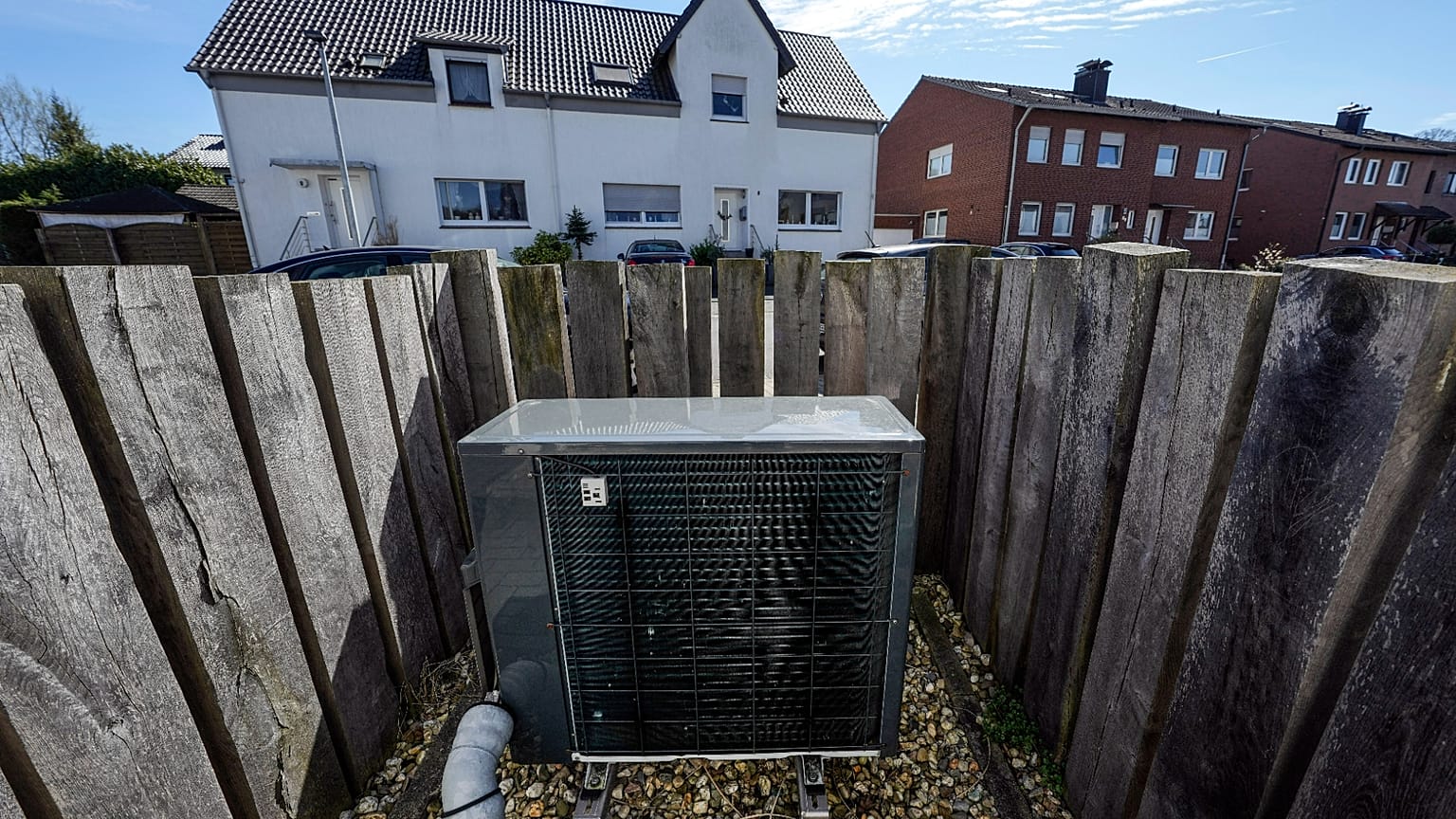
A revision of an existing law will now allow homeowners to use oil and gas as heating fuel instead.
Germany’s government has drawn heavy criticism from environmental groups after it agreed to remove parts of a controversial law on heating homes.
The legislation previously stated that newly installed heating systems were required to use at least 65 per cent renewable energy - such as a heat pump.
The reform will now allow homeowners to use oil and gas instead.
One critic has called the move "an unconditional fulfilment of all the wishes of the fossil fuel lobby".
Germany scraps renewable heating mandate
The law on renewable heating sources was passed in 2023, and hailed by climate experts as one of the most ambitious goals of the centre-left-led government in power at the time.
But critics pointed to the challenges presented by rising inflation, with one newspaper calling the bill “Habeck’s heating hammer”, referring to the legislation’s author, Robert Habeck of the Green Party.
The right-wing, climate-denying Alternative für Deutschland slammed the law’s promotion of heat pumps, accusing the Green Party of “forcing” households to make costly interventions and removing their freedom of choice.
Germany’s government has now agreed to scrap the renewable heating mandate, as well as the requirement for expert consultation when installing a new system.
‘This reform is a disaster’
The centre-right Christian Democratic Union (CDU) maintains that the modifications to the legislation will still align with the target to cut CO2 emissions from buildings, among the major sources of planet-warming pollution, while giving households greater choice as to which technology to use.
Proponents say the legislation plans for a greater use of ‘green’ fossil fuels.
Economy Minister Katherina Reiche said homeowners would be able to choose sources including “hybrid models, biomass; yes, even gas and oil heating, but with an increasing proportion of biogas or bio-oil”.
The ‘green’ credentials of biomass and biogas are highly debated as their production and combustion can lead to significant carbon emissions and ecosystem damage.
Campaigners have accused the government of abandoning its climate goals - which include hitting net zero emissions by 2045.
"This reform is a disaster," Green Party parliamentary group co-leader Katharina Dröge told the German Press Agency (dpa).
"The CDU and SPD [Social Democratic Party] have today made it abundantly clear: climate protection is completely irrelevant to this coalition,” she added. “The federal government has abandoned the achievement of the climate targets."
The managing director of the German Environmental Aid Association (DUH), Barbara Metz, described the revised law as "an unconditional fulfilment of all the wishes of the fossil fuel lobby".
‘An enormously expensive gas cost trap’
Germany is the biggest greenhouse gas emitter in the EU, with the nation still relying on oil and gas for nearly 80 per cent of its heating.
Despite the promise to switch to ‘climate-friendly’ fossil fuels, critics have pointed to the scarcity and rising cost of sources like biomethane on global markets.
Dröge criticised the government of “driving people into an enormously expensive gas cost trap" with the legislation reform.
Heat pumps cost more than gas boilers to buy and install, but they are more economical to run.
Germany subsidises 30-70 per cent of the cost of a new heat pump, funding that will continue to be offered until at least 2029 under the revised law.
“Especially in light of Trump, global crises and fossil fuel dependencies, this [legislation change] is short-sighted and dangerous," Julian Joswig, a Green Party politician, wrote on X.






.jpeg)