Friday, February 27, 2026

SEXOLOGY

European Commission says EU funds can be used for cross-border abortion access


By Evelyn Ann-Marie Dom & Vincenzo Genovese
Published on 

The decision comes in reaction to a campaign launched by the citizens' initiative "My Voice, My Choice", which raised 1,124,513 signatures across all 27 EU member states asking for improved access to safe abortions in Europe.

The European Commission said on Thursday that member states can use an EU social fund to provide access to safe and legal abortion for women who are barred from doing so in their home country.

The decision came in response to calls by the citizens' initiative "My Voice, My Choice" for the creation of an EU solidarity mechanism to guarantee safe and affordable access to abortion for all women.

Member states can make use of the bloc's existing European Social Fund Plus (ESF+), which contributes to social, education, employment and healthcare policies, voluntarily and in accordance with their domestic laws to provide such support.

The existing fund will "support women who need to travel, support women in their own country, support women in remote areas, and support women without financial means," EU Commissioner for Equality Hadja Lahbib said on Thursday.

The ESF+ has a €142.7 billion budget for the period 2021–2027, with funding allocated to countries determined by their population size.

However, the Commission stopped short of establishing a new funding mechanism, which was requested by the European Parliament in a non-binding resolution adopted in December.

"While no new legal instrument is being created, the Commission has formally acknowledged that the core objectives of our initiative can be achieved and outlined a concrete pathway to implement it in practice," coordinator of the "My Voice, My Choice" initiative Nika Kovač said in a statement.

The role of citizens' participation

"My Voice, My Choice" is a European Citizens' Initiative (ECI), a mechanism that allows citizens to call on the European Commission to propose new legislation.

If an initiative gets the support of at least one million people across at least seven EU countries, it must be discussed by the European Parliament, while the European Commission has a timeframe to either set out legislative measures or provide justification for not doing so.
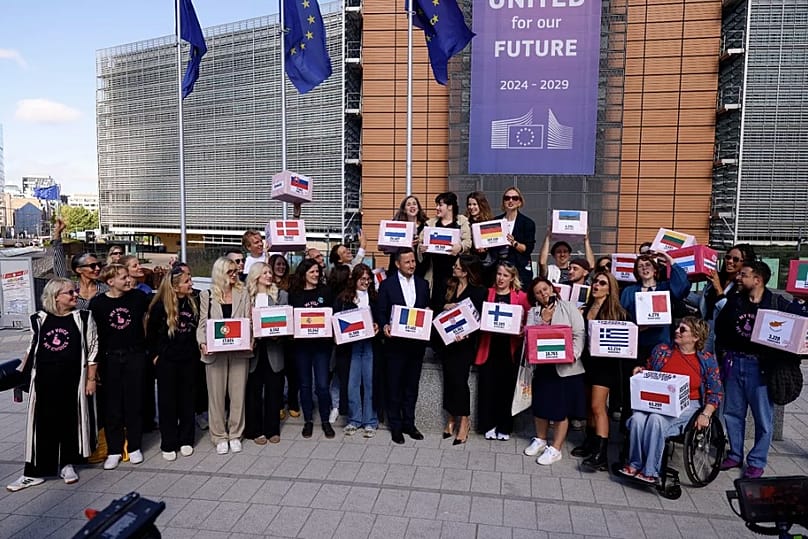
"My Voice, My Choice" signatories in front of the European Commission in Brussels, Belgium. September, 2025. Črt Piksi

"My Voice, My Choice" raised 1,124,513 signatures across all 27 countries. As a result, the European Parliament approved a non-binding resolution asking to establish a financing mechanism to help women with no acess to safe abortions in their home country.

The proposal was backed by over 100 European Members of Parliament, who sent a letter to the Commission’s President Ursula von der Leyen, increasing pressure on the institution ahead of its decision.

“When 1.2 million citizens raise their voices, when the European Parliament sends a clear democratic signal, and when civil society mobilises across the borders, the European Commission cannot look away," Kovač said at a press conference following the decision on Thursday.

In addition to attracting a large number of signatures, the initiative also sparked significant attention online.

"A strong online presence was really one of the crucial tools to this campaign, from collecting the signatures to applying pressure," communications director for the campaign Nika Povz said. "Our online community was our strongest ally and our biggest weapon."

Some EU countries have highly restrictive laws on abortion rights. A total ban is in force in Malta, where abortion is not allowed under any circumstances, while in Poland it is permitted only when conception follows sexual violence or when there is a risk to the woman’s health.

In January 2021, the Polish Constitutional Tribunal banned abortions in cases of fetal malformation, which until then had been the most frequent reason for terminating pregnancies in the country.

Other countries have more relaxed laws, but they lack legal protections that fully decriminalise abortion, wide service availability, national health coverage, or government-led information on the matter.

According to the European Abortion Policies Atlas 2025, several EU countries have taken steps to guarantee the right to safe abortions. France, for instance, made it a constitutional right, while Luxembourg and the Netherlands have removed mandatory waiting periods.

But other member states have recorded new restrictions, increased harassment of abortion providers, and the spread of disinformation on the topic.


Vasectomies on the rise in Poland as fertility rate hits record low

It is estimated that five thousand procedures are performed annually in Poland.
Copyright Wazektomia.com

By Aleksandra Galka Reczko
Published on 

In Poland, vasectomy is becoming an increasingly popular method of permanent contraception among men. In contrast, female tubal ligation is illegal on request.

Poland's population could more than double by 2100, according to figures from the United Nations.

The youngest adults are even called the "end-of-the-world generation" or the "climate catastrophe generation".

The State of the Young 2025 report indicates that 15 percent of those born between 1995 and 2006 have no children and do not intend to have any.

Permanent forms of contraception, such as vasectomy among men, are gaining in popularity. However, it is only men because tubal ligation, a similar procedure for women, is prohibited in Poland.

Five thousand vasectomies a year

There is a lack of precise statistics from the National Health Fund, as most vasectomies in Poland are performed privately.

Meanwhile, it is estimated that around five thousand are carried out annually.They are commercialised, and their advertisements can be found online and on roadside billboards.

Mateusz Siwik, owner of one of the Warsaw vasectomy clinics, told Euronews Health that the procedures are noticeably gaining popularity.

"In recent years, we have seen a systematic increase in interest in vasectomy. The year-on-year dynamic is around 15 percent," he said.

In his opinion, the increase in interest is a gradual process and is mainly due to "the greater availability of information and the breaking down of social stereotypes."

According to Siwik's observation, the patient population is socially diverse.

"They are mostly men in stable relationships, with two or more children, who have consciously made the decision to end family enlargement," he assessed.

A very masculine decision

Just such an example is Kamil Pawelski, a psychologist and influencer on the subject of masculinity, who underwent the procedure in 2020, two years after the birth of his second child.

"It was a decision driven by the fact that I knew I didn't want my wife to have hormone therapy because we were aware that it didn't affect her functioning well, her health. At the same time, we were also aware that we did not want to have any more children," he says.

As a blogger who emphasises masculinity and responsibility, Pawelski is a popular figure in Poland, but when he publicly announced the procedure, he did not receive the support he expected.

"Paradoxically, the biggest hate came to me from the men's side. I got very much support from women instead," he said.

"I think this is a very masculine decision. Although, of course, I wouldn't recommend this procedure to people who are considering having children in the future."

Medical tourism

Unlike vasectomy, tubal ligation on request is prohibited in Poland.

The procedure is regulated by Article 156-1 of the Penal Code, which states that whoever causes grievous bodily harm, including permanent inability to conceive, is liable to imprisonment from 3 to 20 years.

"In most Western European countries, the procedure of tying up the fallopian tubes is legal. More often than not, gynaecologists from abroad are surprised that in our country this is the law, that the possibility of performing this procedure is so limited and only allowed for medical reasons," says Rafał Zadykowicz, a specialist in obstetrics and gynaecology.

He also has an extensive practice abroad. In an interview with Euronews, he explains that in other countries, the law is less restrictive in this regard.

The limited access to the procedure has led to the development of so-called medical tourism, especially to neighbouring countries such as Germany, Czechia, and Slovakia, where clinics offer packages in Polish, including transport and accommodation.

"As Polish patients know, they are educated, they no longer ask for it. They simply turn to the relevant institutions or go abroad," said Zadykowicz.

French men are open to the idea, Italians, not so much

Both methods of sterilisation are legal in Western Europe.

Although statistics show that vasectomy is increasingly the preferred method among couples, as it is considered simpler and less invasive than tubal ligation.

In France, the number of vasectomies has increased from 1,940 in 2010 to more than 30,000 in 2022, especially among men under 40. In other countries, such as Spain and Austria, interest is also slowly growing. Meanwhile, Italy remains low, around 1 percent of men in their reproductive ages.

According to The Lancet, vasectomy is widely used in North America at around 12 per cent, and 11 percent in Oceania and Northern Europe. In Canada, it is the most popular method, with 22 percent of women relying on their partner's vasectomy. High rates are also recorded in the UK, New Zealand, and South Korea, with 17-21 percent. In developing countries, the marginal rate is at least 0.7 percent.

There are no such figures for Poland.

Poland with third place from the end

The discussion on access to sterilisation is combined with the one on alarmingly low fertility rates.

Poland struggles with one of the lowest fertility rates in the world. According to the Central Statistical Office, by 2025, the population will have fallen to 37.3 million, and the number of children and adolescents will have decreased by another 140,000.

The fertility rate (TFR) in 2024 reached a record low, around 1.10-1.16 children per woman according to various CSO/Eurostat sources, with an estimated 1.10 in 2025.

In 2024, Poland ranked third from last among OECD countries in terms of fertility, ahead of only Chile and South Korea.

In the European Union, the average TFR in 2023 was 1.38 children per woman, with the highest in Bulgaria at 1.81 and the lowest in Malta at 1.06. The downward trend has continued for years, with short bounces, for example, a rate of 1.53 was recorded in 2021 during the pandemic. After that, however, it declined again.

In Poland, there is now a heated debate over how to reverse the dramatic decline in fertility rates. A social policy programme offering tax-free financial support for children has been in place since 2016.

However, it does not address one of the key questions: why do people who could have children ultimately decide not to?


Men’s sperm move more quickly in summer than in winter, research shows
Men’s sperm move more quickly in summer than winter, research shows
Copyright Canva

By Roselyne Min
Published on 

The findings could matter for couples trying to conceive and for fertility clinics interpreting test results.

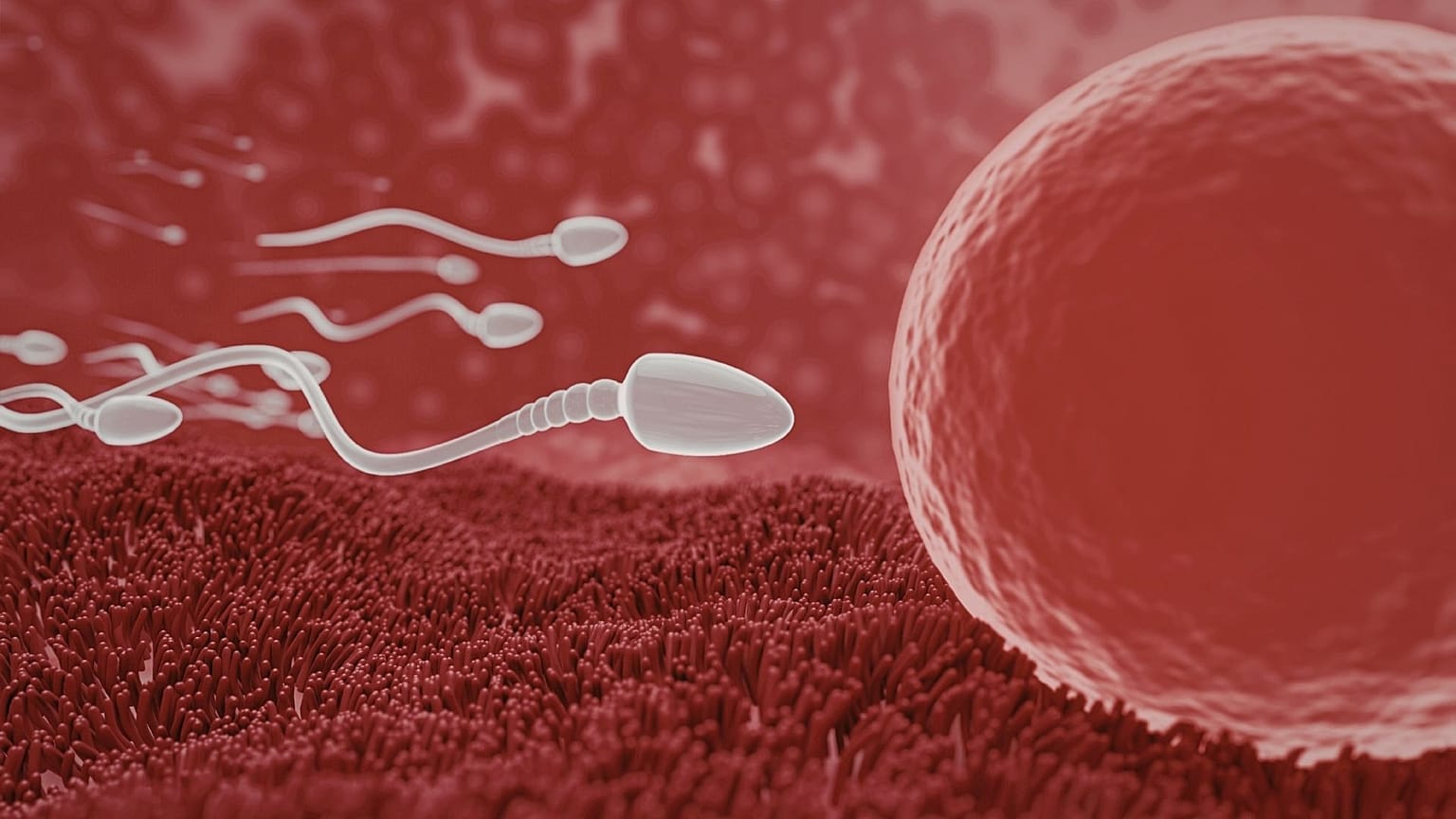
Men’s sperm move more quickly in summer than in winter, according to a large new study analysing more than 15,000 semen samples.

Researchers in Denmark, the United Kingdom, and Canada analysed semen samples from donors in Denmark and the United States.

They found clear seasonal changes in semen quality, measured by the concentration and number of progressively motile sperm, the sperm that swim forward effectively and are most likely to fertilise an egg.

The concentration of the fastest-moving sperm rose through spring, peaked in early summer and then fell to its lowest levels in mid-winter.

The findings could matter for couples trying to conceive and for fertility clinics interpreting test results. A semen analysis taken in summer may look different from one taken in winter.

However, the differences do not mean men are fertile only in summer or infertile in winter.

Overall, sperm production did not change across the year.

The total number of sperm and the volume of semen remained stable in all seasons. What varied was how well the sperm moved.

The total number of sperm and the volume of semen did not change with the seasons. That suggests that sperm production itself remains stable throughout the year.

Instead, what appears to vary is how well sperm move.

Scientists have long known that sperm development is sensitive to temperature.

However, previous studies have often suggested that sperm perform best in colder months, but results have been mixed and many involved smaller groups of men.

By analysing a large number of samples from two countries with very different climates, the new research suggests the seasonal pattern may be more consistent than previously thought.

The study was observational, meaning it shows a pattern but cannot explain exactly why it happens.

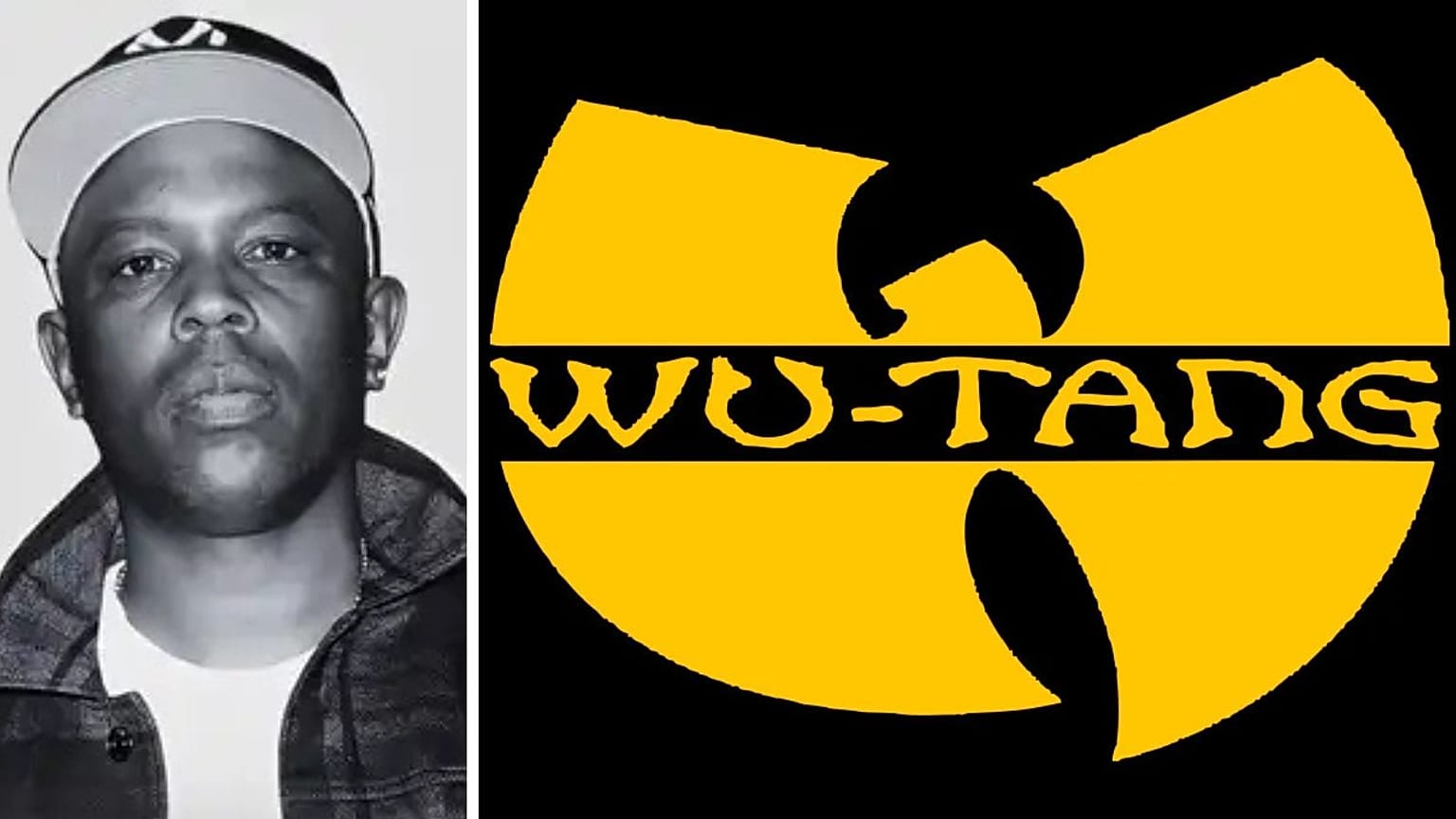
 

‘Rest in Power, Power’: Wu-Tang Clan co-founder Oliver ‘Power’ Grant dies aged 52

‘Rest in Power, Power’: Wu-Tang Clan co-founder Oliver ‘Power’ Grant dies aged 52
Copyright Instagram screenshots

By David Mouriquand
Published on 

While not a performing member of the group, Grant was one of the founding members of Wu-Tang Clan and executive produced the group’s early recordings – including their seminal debut album, 1993’s ‘Enter The Wu-Tang (36 Chambers)’.

Wu-Tang Clan founding member Oliver ‘Power’ Grant has died aged 52

The producer, actor and fashion mogul’s death was confirmed on Wu-Tang Clan’s official social media channels last night.

"Rest in Power, Power," the American hip-hop collective posted online.

A cause of death has not yet been disclosed.


Born in 1973 in Jamaica and raised in New York’s Staten Island, Grant grew up in the Park Hill Projects, where he met the future members of Wu-Tang Clan - RZA, Ghostface Killah, Method Man, Raekwon, Inspectah Deck, U-God, Masta Killa, and Cappadonna. They gave him the nickname “Power” over a game of chess.

While not a performing member of the group, Grant raised funds for Wu-Tang Clan and executive produced the group’s early recordings – including their seminal debut album, 1993’s ‘Enter The Wu-Tang (36 Chambers)’, which is widely considered as one of the greatest hip-hop albums of all time. He also oversaw their successful fashion line, Wu Wear, which launched in 1995 and was renamed Wu-Tang Brand in 2008.

Wu-Tang Clan members have posted tributes to their fallen brother.

Method Man posted a tribute, stating: “Paradise my brother safe travels! I am not OK.” GZA wrote: “We couldn’t have done it without him. Wu wouldn’t have come to fruition without Power. His passing is a profound loss to us all. My deepest condolences to the fam.”

Raekwon said: “POWER we been everywhere …. now you everywhere ! The most high is merciful love you.”

Ghostface Killah shared a series of broken-heart emojis with a “Power” logo with a halo.

The news of Grant’s death follows the announcement that Wu-Tang Clan have been nominated for the Rock & Roll Hall Of Fame 2026.

Ryanair and Wizz Air named worst airlines by passengers over ‘confusing’ add-on costs

BA and Ryanair have been named and shamed as the worst airlines.
Copyright Steve Lynes & Alan Wilson via Flickr


By Rebecca Ann Hughes
Updated 

Commenting on the worst-ranking airlines, Which? Travel editor Rory Boland advised passengers to "fly with anyone else, if you can".

Ryanair has finished bottom of an annual ranking of airline customer satisfaction by UK consumer champion Which?.

The group said it comes “as the penny drops for passengers that add-on fees mean budget carriers are no longer always the cheapest option”.

In the survey of more than 5,500 travellers, Jet2 topped the table in the short-haul category, while Singapore Airlines was top for long-haul.

Ryanair and Wizz Air named worst airlines

Ryanair was the worst-performing short-haul airline in the ranking with a score of 55%. The budget carrier scored two stars for its booking process, boarding, customer service and cabin environment and just one star for seat comfort.

One customer commented that “the plane is dirty and the seats are awful”.

Ryanair scored three stars for value for money, fewer than four other short-haul carriers – Jet2, Lufthansa, TUI and Aer Lingus.

“It is billed as a budget airline but they make money from extras which far outweigh price savings on other flight companies,” one survey participant said. Over a third of Ryanair's customers said something went wrong with their journey.

In the consumer champion’s survey, Wizz Air also finished near the bottom (59%).

The airline scored two stars in the majority of categories and three stars for value for money, with one respondent saying Wizz Air was “consistently terrible and overpriced”.

Travellers also complained about poor customer service and a lack of communication around delays.

easyJet scored 67% overall and three stars for its booking process. The budget airline’s punctuality has improved over the last two years, and it has cancelled fewer flights.

However, it received just two stars for customer service, seat comfort and cabin environment. The airline, like Ryanair, received three stars for value for money.

Turkish Airlines (66%), Loganair (65%) and Vueling Airlines (63%) were also at the wrong end of the short-haul table.

Budget airlines lose out over add-on costs

Which? says it has repeatedly found that the headline cost of flights from low-cost airlines can shoot up once cabin bags are added. These prices are often not displayed until towards the end of an exhaustive booking process, making calculating the full cost time-consuming and confusing.

Last month, the Advertising Standards Authority (ASA) made a ruling against easyJet as a result of a recent investigation into cabin bag pricing by Which?.

Even after checking hundreds of prices, the group was unable to find any flights where the bags could be taken on for anything close to the £5.99 (€6.90) claimed.

“Many other passengers fly with them because of the enticingly low headline fares,” says Rory Boland, editor of Which? Travel. “But ridiculously expensive charges for baggage and other add-ons mean they are no longer guaranteed to be the cheapest option.

“We’ve repeatedly found that airlines that include baggage and seat allocation in their fares can actually work out cheaper overall. Fly with anyone else, if you can.”

In response, a spokesperson for easyJet said: “We allow customers to pay for only what they want and no more, which enables us to keep fares low for everyone. With around 40% of our customers choosing to travel with just the fare and our customer satisfaction scores at a 10-year high, it’s clear that customers continue to value this choice and our service.”

A spokesperson from Wizz Air noted: “Which?’s survey relies on a tiny sample size. It surveyed 259 people, which is only 0.002% of the 12 million passengers carried on our UK flights in 2025.”

The company added that from October 2024 to December 2025, customer satisfaction rose by eight percentage points.

“At the same time, our flight completion rate in the UK was 99.7% – consistently among the best in the industry – while our on-time performance increased by 14% year-on-year.”

Jet2 tops ranking for short-haul travel

At the top of the ranking came Jet2 (76%), which proved to be the big winner for reliability.

Jet2 cancelled far fewer flights at the last minute than most of its rivals and clinched four stars for its booking process, customer service and value for money. One customer praised the generous luggage allowance compared with other budget airlines.

More than three-quarters of passengers said that there were no problems with their flight – compared with 63% for Ryanair.

Emirates excelled with its smooth booking process, seat comfort, food and value for money. Emirates

Other strong performers were Lufthansa (73%), Norwegian (73%), British Airways (72%), KLM (72%), TUI (72%), Aer Lingus (71%) and Air France (69%).

British Airways scored 72% in both the short-haul and long-haul categories. BA scored four stars for customer service and has also seen a big improvement in punctuality, with 74% of flights departing on time, up from 65% in the equivalent period last year, according to data from the Civil Aviation Authority (CAA).

Singapore Airlines and Emirates top long-haul ranking

For long-haul, Singapore Airlines received the highest customer score of 81%. The airline earned five stars for its cabin environment and customer service.

It was one of only two airlines to receive five stars for customer service. One customer said: “Cabin staff were very kind and accommodating. Food was excellent and the whole cabin environment was comfortable.”

The airline missed out on a Which? ‘Recommended Provider’ endorsement because of its no-show clause, meaning if you miss your outbound flight the airline will cancel your return ticket, or charge you extra to amend your trip.

Other top performers were Emirates (80%), Virgin Atlantic (79%), Qatar Airways (78%), Air Canada (77%), KLM (75%) and Etihad Airways (74%).

Emirates excelled with its smooth booking process, seat comfort, food and value for money. Customers raved about the customer service. One said: “It felt like I was flying first class, even though I booked economy.”

Virgin Atlantic was praised for its staff and cabin atmosphere, outperforming transatlantic rivals like Delta and United. The airline also received five stars for customer service.

In contrast, Aer Lingus received the lowest score for long-haul travel (65%). The airline scored just two stars for seat comfort and cabin environment – crucial categories for longer flights. It did, however, manage three stars for value for money, customer service, booking process, boarding process, and food and drink.

US airlines were also among the weaker performers, with Delta (70%), American Airlines (69%) and United Airlines (68%) all near the bottom of the table.


'Seriously CRIMINAL': Donald Trump threatens to deport Robert De Niro

Donald Trump threatens to deport Robert De Niro
Copyright AP Photo


By David Mouriquand
Published on 

The Oscar winning actor shared his prediction that Donald Trump “will never leave” office. He also attended a counter State Of The Union event during which he said he felt “betrayed by my country”.

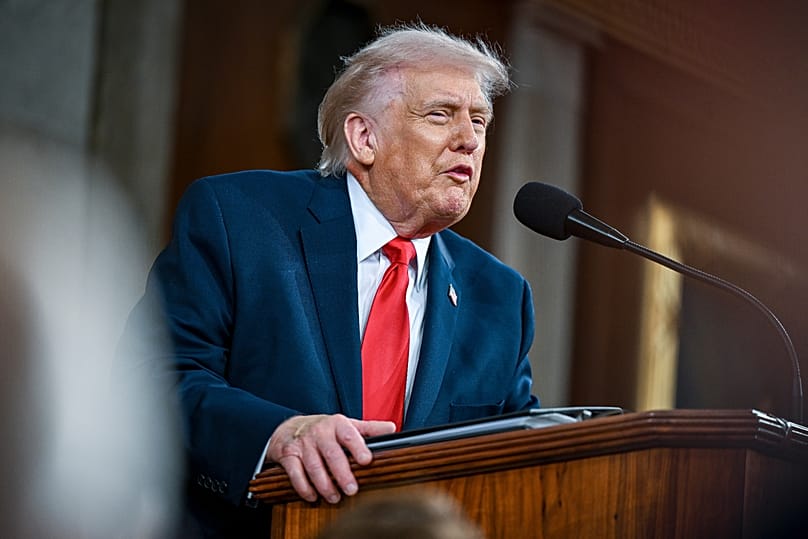
Following his State of the Union address, Donald Trump has delivered yet another irate rant on his Truth Social platform, in which he called for some of his opponents to be deported.

These include “lunatics” Rep. Ilhan Omar and Rep. Rashida Tlaib (both Democrats and American citizens), as they heckled Trump as he delivered his speech in the House chamber, and Oscar-winner Robert De Niro – following his impassioned speech prior to the State of the Union address.

De Niro, a longtime and fervent Trump critic, appeared on MS NOW to speak about the current US president, sharing his prediction that Trump “will never leave” office and that it is up to Americans to “get rid of him”.

“He will never leave. We have to make him leave,” said the actor. “He jokes now about nationalizing the elections. He’s not joking. We’ve seen enough already.”

The celebrated actor - and American citizen - also appeared at an event called State of the Swamp at the National Press Club, sponsored by Defiance.org, during which he told the crowd: “Tragically, we are now in a country of, by and for a handful of dishonest and greedy and cruel authoritarians.”

De Niro added: “The bottom line is that I feel betrayed by my country. It doesn’t have to be perfect but it does need to return to the values that gave us our strength and humanity.”

Donald Trump during his 2026 State of the Union address AP Photo

Trump was not best pleased, posting that Omar and Tlaib “should actually get on a boat with Trump Deranged Robert De Niro, another sick and demented person with, I believe, an extremely Low IQ, who has absolutely no idea what he is doing or saying - some of which is seriously CRIMINAL!”

He continued, regarding De Niro: “When I watched him break down in tears last night, much like a child would do, I realized that he may be even sicker than Crazy Rosie O’Donnell, who is right now in Ireland trying to figure out how to come back into our beautiful United States. The only difference between De Niro and Rosie is that she is probably somewhat smarter than him, which isn’t saying much.”

Last year, Trump threatened to revoke the US citizenship of actress and comedian Rosie O’Donnell, despite a decades-old Supreme Court ruling that expressly prohibits such an action by the government.

Following his re-election, O’Donnell moved to Ireland.

Prior to Trump’s State of the Union address, a Reuters/Ipsos poll found that six in 10 American think that Trump has become erratic as he ages, with 61 per cent of respondents (89 per cent of Democrats, 30 per cent of Republicans and 64 per cent of independents) saying they would describe Trump as having "become erratic with age."

The poll also showed that most Americans think the US’ political leadership is too old, with 79 per cent of respondents agreeing with the statement that "elected officials in Washington, D.C., are too old to represent most Americans."

The average age in the US Senate is 64, and 58 in the US House of Representatives.

White House spokesman Davis Ingle said the poll results were examples of "fake and desperate narratives."

However, according to another recent poll by Washington Post/ABC News/Ipsos, only 39 per cent of Americans approve of the way Trump is handling the job of president.


INTERVIEW

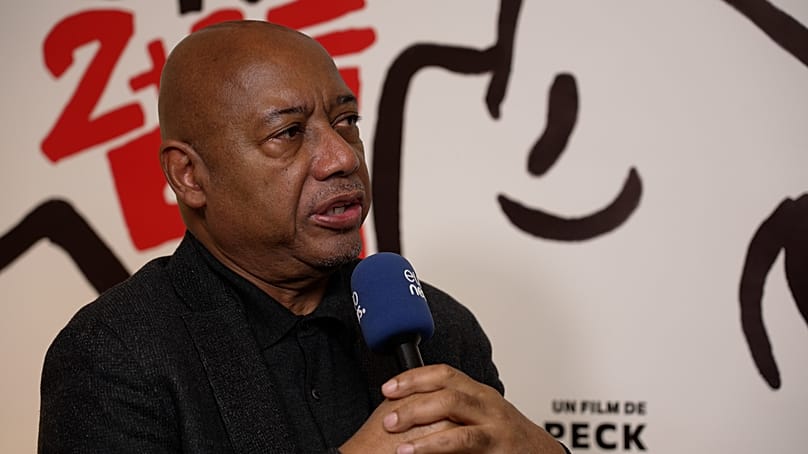
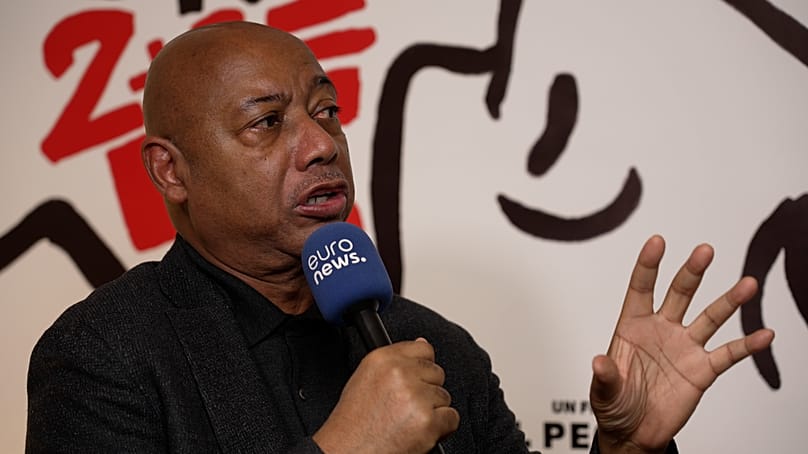
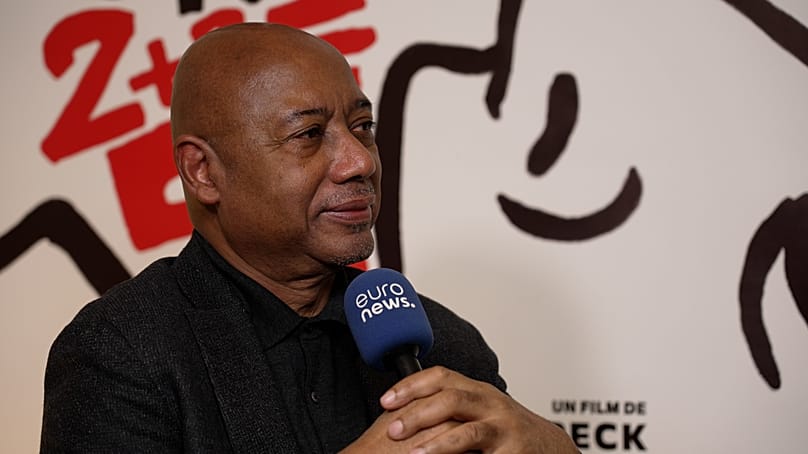
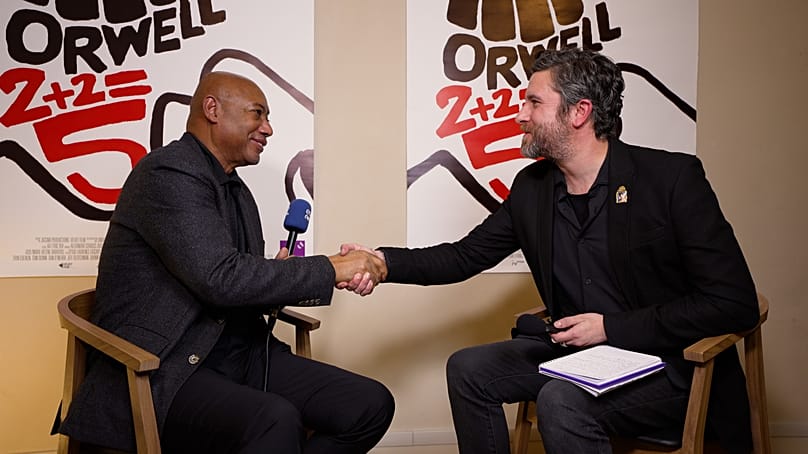
‘Filmmaking is political’: Raoul Peck on ‘Orwell: 2+2=5’, Donald Trump, and the dangers of AI

LONG READ

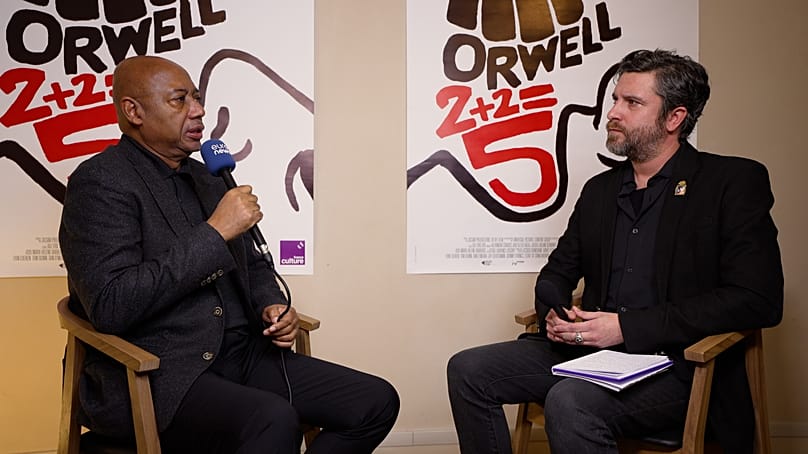
Raoul Peck and Euronews Culture's David Mouriquand Euronews Culture

Copyright Euronews Culture - Le Pacte - Velvet Film
Published on 19/02/2026 

"It’s a problem when you lose your connection with history. The ignorance is really incredible. Even though we had the facilities and instruments all along..." Euronews Culture sits down with Raoul Peck to discuss his new documentary, 'Orwell: 2+2=5' - one of the most urgent and vital films of 2026.


“The very concept of objective truth is fading out of this world. This prospect frightens me much more than bombs.”

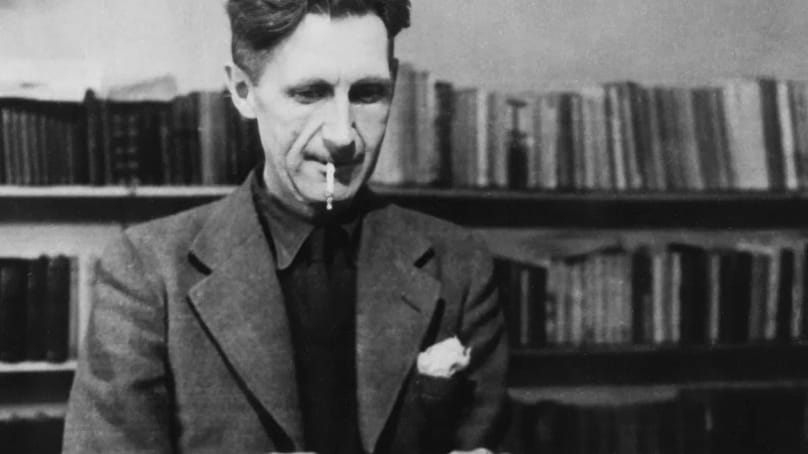
This ripped-from-the-headlines statement could have been written yesterday but it belongs to George Orwell, the world-renowned author of “Animal Farm" and "Nineteen Eighty-Four", who died 76 years ago.

Time marches on, but certain things don’t change. In fact, they often get worse.

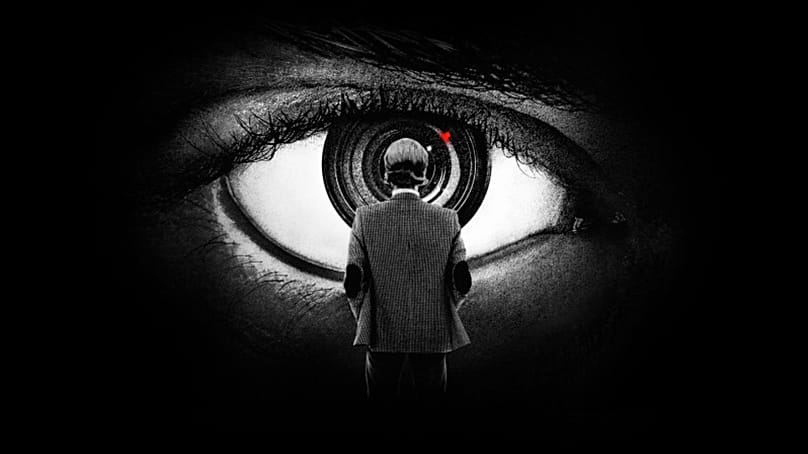
The quote features in Orwell: 2+2=5, the new documentary by Raoul Peck, the celebrated filmmaker and former Minister of Culture for Haiti who has continually questioned and explored the legacies of colonialism and the mechanics of oppression through his uncompromising filmography.

Following his Oscar nominated I Am Not Your Negro and his Peabody-winning HBO docuseries Exterminate All The Brutes, Peck takes the words of Orwell - read in voiceover by actor Damian Lewis - and connects the dots between the writer’s diary entries and present-day totalitarian regimes.

In making Orwell’s words collide with scenes from history and the modern day, Peck not only shows us that the past can inform the present but also exposes how the playbook for totalitarianism – as practiced in Orwell’s final dystopian novel – has been used as a blueprint by governments all over the world over the past century.

Haiti. Myanmar. Russia. Israel. The United States of America.

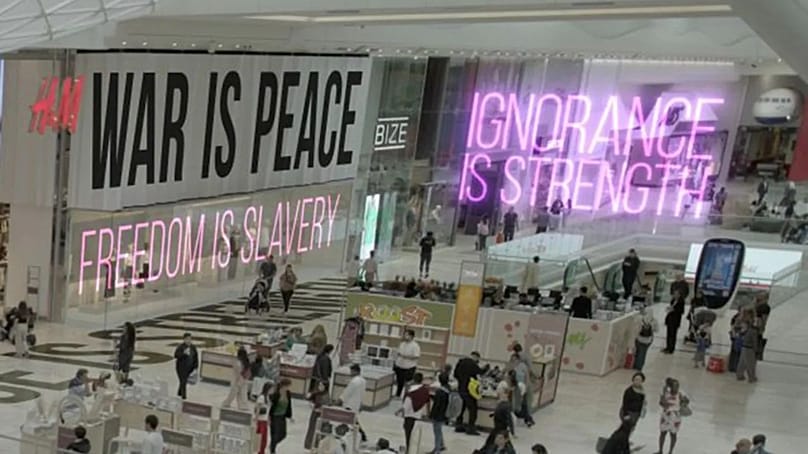
Orwell: 2+2=5 highlights not only how history repeats itself but how present-day figures like Donald Trump, Vladimir Putin and Benjamin Netanyahu have all adopted "Nineteen Eighty-Four"'s strategy of “Newspeak”, showing that sentences like “War is Peace”, “Freedom is Slavery”, “Ignorance is Strength” and “Two plus two equals five” don’t belong to the realms of dystopian fiction anymore. They resonate in our reality.

Euronews Culture sat down with Raoul Peck to discuss his essential new documentary, how the words of Orwell echo in the age of “fake news” and deepfakes, and how objective truth is threatened when language is corrupted and technology goes unregulated.

Raoul Peck and Euronews Culture's David Mouriquand Euronews Culture

I didn’t want to make a film exclusively about Donald Trump. It’s a film about Orwell, who wrote to give us the whole toolbox to recognise every attempt towards authoritarianism.
Raoul Peck

Euronews Culture: What was it that brought you on board for this project? Was it (documentarian and producer) Alex Gibney, or a more personal relationship with the writings of George Orwell?

Raoul Peck: Well, it came as a big, huge gift from Universal, who approached Alex Gibney to inquire if he would be producing such a film on Orwell. Alex called me and I asked him if I would have the freedom to do the film I wanted. He assured me that that was the case, and of course, I said yes! Because that's not something you get every day - to have access to the totality of an author’s body of work. And Orwell being this recognized figure in the whole world... So much as to become an adjective... That's not an offer that you can refuse.

I imagine that because you fled Haiti at a very young age to escape the Duvalier dictatorship, you were already all too familiar with the language of totalitarianism and its methods...

Not only that, I grew up with what we call “Newspeak” (the fictional language of the totalitarian superstate in Orwell's "Nineteen Eighty-Four") - the use of language in order to hide your real intention. That's an approach that you have in economy, in business, in all sorts of life. And indeed, coming from Haiti, you recognize very early on that words could have two meanings. Some governments talk about democracy and then support the dictatorship. I learned that very early on, with the Duvalier dictatorship and the support of the USA and part of European governments... On one side, they're talking about democracy. On the other side, they're making deals with governments or authoritarian regimes who are keeping their people down. I was aware of that contradiction very early on in my life.

Orwell: 2+2=5 Le Pacte - Velvet Film

We see how rapidly the degradation of democracy can happen, even in the most important beacon of democracy that was the United States. Because it’s not anymore.

Raoul Peck

There's a quote that stood out for me in the film, when Orwell talks about "Animal Farm". He said that it was the first time that he fused his political intent with his artistic intent. Does that mirror your own approach to filmmaking?

It does. When I started in cinema, you couldn't make any political ambition with art. Art was supposed to be something special, something pure. The same thing with entertainment. Everything became entertainment. Even news became entertainment. But I never believed that. It's not because it's entertainment that you can't put more weight in terms of content, and you will find a form to make it cinema. I always believed that filmmaking is political. I would say that I always had a political intention in making my films. I was glad that it was also Orwell’s intention from the start...

He is heard in the film as saying: "The opinion that art should have nothing to do with politics is itself a political attitude".

What he basically says is that the attitude to say, ‘Well, I am neutral’ or ‘I don't take a position’ is actually a political position. There is no such thing as ‘I don’t have an opinion’ or ‘I can’t act on what is happening in the place I live’. No, you are a citizen, and democracy means that you are an informed and educated citizen that takes part in the affairs of your city or society.

Democracy is not something that you can acquire once and for all. Especially in the western part of this planet, where, of course, you have been protected almost 50 years from immediate wars on your territory, with a few exceptions. But people got lazy, thinking that they have it and they don't have to do anything else to protect it. And now we see how rapidly the degradation of democracy can happen, even in the most important beacon of democracy that was the United States. Because it’s not anymore.

I have always believed in the value of fighting for freedom of speech, the freedom to be able to vote. It's a luxury in most parts of the world. But here in Europe, we live as if it’s perfectly natural and that it will grow by itself and that we don't have to do anything to defend it. No, we have to work on it every day.

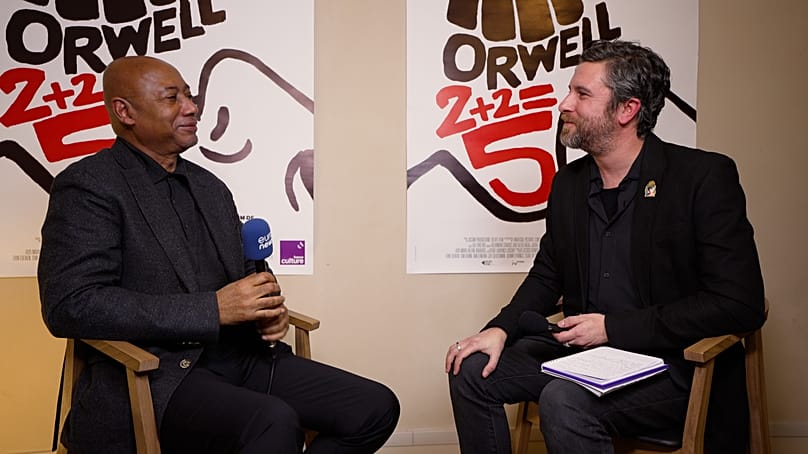
Raoul Peck Euronews Culture

It's misunderstanding to reduce Orwell to a specific type of totalitarianism. This film is also an instrument to understand that, to show the value and the layers of Orwell's understanding about the whole world.
Raoul Peck

The last time I spoke to you was 10 years ago for the release of I Am Not Your Negro. When watching Orwell: 2+2=5, I couldn't help but draw parallels between both films. You use the voice of deceased authors, both of whom were sincere and incredibly bold in their time, and make their voices reverberate in the present. You told me at the time that one of your aims with I Am Not Your Negro was to bring the voice of James Baldwin to a new generation that hadn't yet had the privilege of reading and hearing his words. But George Orwell is very different because he remains a household name – and as you say, has become an adjective. It’s gone as far as his words becoming overused in general discourse – whether it’s “collateral damage”, “alternative facts” or “Room 101”... These have been so overused and bandied about on the news and social media that they almost seem gutted of sense.

That's the problem with Orwell at some point. The name is as known as Coca-Cola, and I'm not sure that everybody really understands what it means. Don't forget, he died very young. He was 46, so he was not there to do the spinning of his work. So after his death, it was basically used against fascism - mostly against Stalinism and communism. That was the order of the day, and they forgot that Orwell's work has a much more universal goal. What he wrote was against any kind of totalitarianism. He wrote that "Nineteen Eighty-Four" is embedded in Britain because he wanted to demonstrate that that kind of behaviour or historical development could happen in the English speaking countries and Europe. So, it's misunderstanding to reduce Orwell to a specific type of totalitarianism. This film is also an instrument to understand that, to show the value and the layers of Orwell's understanding about the whole world.

Throughout the film, we hear Orwell’s words through his diary entries and his correspondence, all in the last years of his life as he’s finishing “Nineteen Eighty-Four". You keep things very personal.

In my experience, it is immensely more intense and efficient to let the author himself tell this story than the use of experts or talking heads, which are basically people mostly interested in giving their own angles on something. There is nothing more powerful for me than to give the stage to the author himself.

Hearing his voice also makes it very urgent, as well as haunting. One detail I enjoyed was the eeriness of both the beginning and the end, in which we see not only a photo of a baby Orwell with his Indian nanny, but also Koch’s bacillus...

It's one of the many layers that you have to find to make the film also emotionally resonant. I don't think I would like to make a film that is essentially intellectual. It's about cinema. Cinema is about emotion. And it's one of the tools that I use - music, images, graphics - to make sure that you are not only in the presence of just thoughts, but also of emotion, of exchanges, of collective community.

We see that aspect with your use of portraits in the film.

Yes, the portraits are important for this film. That's the human part. They are almost like the witness of what what is happening in the world. And yes, the bacillus – it's when you realise that it’s much more than politics - it’s also life itself. And when you use the subject of “I can't breathe”, it’s the analogy for all people who actually can't breathe in their society because they are not accepted or they are not considered like normal human beings.

I'm glad you mention music, because one of my favourite needle drops you’ve done was in I Am Not Your Negro, when you recontextualise Kendrick Lamar’s song ‘The Blacker The Berry’. Here, you use this eerie AI lullaby at the end. Why did you choose to end the film that way?

I wanted to come out of the film with a kind of irony - an irony that Orwell himself had. He had a lot of humour and wasn’t dark. He had his fight and he tried to take a stand, but at the same time, he had that incredible British dry humour. And so I wanted to capture this through that music, which is totally AI composed. And I hope people understand that it was AI generated, with words extracted from what Donald Trump has said. It was a kind of wink

AI is just technology, and like any technology, the problems usually come when it's totally in the hands of people that are using it for money, for profit.
Raoul Peck

You explore a great many topics in this film and spend some time dealing with tech, social media and AI as the new battlegrounds for objective truth. Can you tell me more about your use of AI-generated clips in the film?

In order to show what a specific technology can do, you have to show it and its use. It was important to show it. The only thing that I had to do was make sure I was being totally transparent. I say when I’m using it and when I’m showing it. AI is particularly worrisome and dangerous because it's a system that can create its own system. Even though we have to feed it, it can come to a place where it will be able to function by itself. The main problem is regulation.

After all, AI is just technology, and like any technology, the problems usually come when it's totally in the hands of people that are using it for money, for profit. If you are using it for education, if the state was paying for it, there wouldn’t be any problems because parliament or senators would give their advice on it. Pedagogues, teachers, scholars would tell us the best way to use it, how not to make it dangerous, how to control it... But now it's in the hands of people whose only goal is to make money out of it. There is even a race to be the first one to have the whole system, to have the most users possible.

The same happened to the internet. Originally, it was used in universities, and I remember having to go to my professor to have access to the internet, and we were using it for research. Then one day you start hearing that little song from AOL, and you knew it was over. You knew that you couldn't control the beast. And that's happening again. So we shouldn't be scared of that. We should fight to have regulation and unfortunately, government administration is always late in that fight.

Orwell: 2+2=5 Le Pacte

People make fun of Donald Trump, but I just see it as an exaggeration of behaviour that I've seen in Europe. The same use of language to destroy people is being used. It's just a little bit more polite.

Raoul Peck

We see many clips of Trump and Putin in the film, but also a lot of European figures – whether it’s Giorgia Meloni, Viktor Orban, Eric Zemmour... How do you view Europe's reaction to the rise of totalitarianism compared to the US?

Well, that's the thing... Europeans - and it's always bad to say 'European' as if there is just one unity- but in most countries, you can see that there is still denial. There is a denial that it can never happen here. But we forgot how many years of Berlusconi we had. It's a typical example of how it can happen in Europe. People make fun of Donald Trump, but I just see it as an exaggeration of behaviour that I've seen in Europe. The same use of language to destroy people is being used. It's just a little bit more polite, a little bit more intellectual sometimes, with more general culture. But the words mean what they mean. And you can see that a lot of things that happened in the US at some point, five or 10 years later, they happened in Europe.

It’s the same thing with I Am Not Your Negro - I remember the first discussion I had in France and some other European countries, and people would say, ‘Wow, the bad Americans, they are so racist.’ As if there is no racism in Europe! So the denial is sometimes very deep in Europe because it's hard to face reality. It's hard to hear what other people are telling you, even though you are living side by side with them. That’s why I did the film Exterminate All The Brutes. I went to the bottom of that story and showed that it's a link in European history and that racism was transported to the United States. They didn’t start it. Europe started it. It’s a problem when you lose your connection with history. The ignorance is really incredible. Even though we had the facilities and the instruments all along...

Raoul Peck Euronews Culture

The United States has an incredible capacity of denial. There are things happening right now that you would never think possible even one year ago...
Raoul Peck

Your film shows us that we’ve been given the tools, we have the blueprint - whether it’s Orwell’s “Nineteen Eighty-Four" or the film adaptations of that work. Or even films like Terry Gilliam’s Brazil or Steven Spielberg’s Minority Report – both of which feature in your film. We’ve been warned, and as you say at the end: “All that matters has already been written”. While that can feel hopeful in the sense we already have the instruments to recognise repeated patterns and counter the rise of totalitarianism, we’re still being duped by the same tactics that have been used again and again.

As Sven Lindqvist says in Exterminate All The Brutes, everything is already there. We just don’t want to acknowledge it.

But you know, I think it’s the result of the fact that Europe in particular has been thinking that they’ve had peace for 50 years and if the danger is not that close, they're always pushing confrontation back. It's like Europe in the 30s - people were heading into one of the most severe world wars still believing that it was still OK. Hitler invaded Austria. No, no. That's okay. He will stop. He invaded Poland? OK, but he better stop there. And then, a few months later, we were in a world war.

What I’m saying is that there is a tendency: when you don't react it’s because you're in a very privileged position. You don’t react because you think you don’t have to. But when you realize, it's usually too late.

Raoul Peck Euronews Culture

One definition I quote is that the degradation of language is the condition for the degradation of democracy, and the perfect arithmetic is two plus two equals five. We need to always be able to say ‘two plus two equals four’. It’s as simple as that.
Raoul Peck

Orwell: 2+2=5 premiered in Cannes last year and went on to screen in Toronto, before being released in the US in October. Considering it pulls no punches when it comes to Trump and his administration, have there been any reactions from US audience members that surprised you or stayed with you?

Some were thankful. Others in disbelief. Some in denial. The United States has an incredible capacity of denial. There are things happening right now that you would never think possible even one year ago...

To the extent you could continue to update this film with fresh footage from the US to illustrate the point further – there would be a constant correspondence between Orwell's words and what’s happening right now. Trump dehumanising the Obamas in that AI video, for instance, or even Pete Hegseth being given the title of Secretary of War...

That title is completely Orwell. But you know, I had to be careful with this film not to make a film about Trump. I didn’t want to make a film exclusively about Donald Trump. It’s a film about Orwell, who wrote to give us the whole toolbox to recognise every attempt towards authoritarianism. And that was my job as well. Trump is only one example, and probably the worst today. But we have to understand that it's everywhere. Any institution can become something different than what they pretend to be if we don't look at it, if we're not active. Because Trump, he will pass... The damage will be huge because it will take a few decades to bring the paste back in the tube, if we ever can... But the tools remain the same, words will be destroyed, and those who talk of peace are only making war. One definition I quote is that the degradation of language is the condition for the degradation of democracy, and the perfect arithmetic is two plus two equals five. We need to always be able to say ‘two plus two equals four’. It’s as simple as that.
ADVERTISEMENT


Orwell: 2+2=5 Le Pacte - Velvet Film

If I have to say that Netanyahu should be in prison, I will say it. (...) If you cannot say those words, there is no freedom of speech. There is no democracy if you can't even talk about this publicly.

Raoul Peck

The film explores this degradation of language, and one audience reaction that struck me was the sound of very uncomfortable laughter when the film lists examples and definitions of Newspeak. There was even applause when the definition for ‘Antisemitism 2024’ came up on screen, with the definition: “Weaponised term to silence critics of Israeli military action”. It sounded like it was a cathartic moment for some cinemagoers to read those words.

I was surprised myself about the response, which was overwhelming in the audience. One good friend of mine, who is from the Jewish religion even though she's not a follower, interpreted it differently, and I can understand why. But I understood that the reaction was the fact that many people felt that they were not able to criticize a right wing government making a genocide in Gaza. That was the response I felt. Because each time you touch the subject, you’re immediately accused of antisemitism. If they want to attack me on that, just watch my films. I've worked a lot on the Shoah and on genocide, so I can make the distinction between the use of the word and the propaganda that it's used for. If I have to say that Netanyahu should be in prison, I will say it. That's the reality. His own justice system has been trying to arrest him for many years. The war is also a result of that, because he doesn't want to go to jail. If you cannot say those words, there is no freedom of speech. There is no democracy if you can't even talk about this publicly.

Coincidentally or perversely, Orwell: 2+2=5 comes out around the same time as the Melania Trump documentary, Melania... It struck me that it would make for the ideal double bill with your film, because you'd have the so-called propaganda film on one side, and then Orwell giving you all the tools to explain what you've just seen on the other side...

First of all, I wouldn't call that a film. It’s not even propaganda, because propaganda can be more intelligent. This is basically a publicity stunt. It’s a bribe. This film happened because a network could spend $40 million to make it. I know many other filmmakers who would have loved to have that kind of money to make a more convincing film. And ethically speaking, no documentarian would accept to make a film where the subject is the executive producer of the film and basically calling the shots. That's ethically unacceptable. That's why I cannot call it a film.

Lastly, towards the end of your film, you include a segment with Edward Snowden. 10 years ago, he was everywhere and the subject of Laura Poitras’ doc Citizenfour. At one point, he says that his greatest fear is that “nothing will change”. And sadly, he’s been proven right to a certain degree. Do you share that same fear?

Absolutely. And it's heartbreaking because I see this young man in his 20s who sacrificed everything to tell us the truth. And now he's somewhere in exile in Russia. We just forgot about that. It's like a young man who goes to war for his nation and got killed and nobody cares. He took the risk to tell us what was going on and what he saw was absolutely a nightmare. And that nightmare is already there.

We lost that war long time ago. And now those potentially dangerous tools are in the hands of people who don't care about anything but themselves. I'm sure they don't even care if the world goes to war, because in their minds they will survive. It’s a kind of craziness that comes from people being drunk on their own power and don't see anything else. They’re not looking forward and they don't care what happens to America and the rest of the world after that. And they think they can get away with it. They won't get away with it. Even if it has been seen in other countries, I hope that Americans will not accept that the elections will be taken away from them. That's my whole hope.

Raoul Peck and Euronews Culture's David Mouriquand Euronews Culture

Orwell: 2+2=5 is out in the US, Denmark and Portugal. The film is released in more European cinemas - France and Spain - this month. France's Institut Lumière (Lyon) is currently doing a retrospective of Raoul Peck's works. Stay tuned to Euronews Culture for our review of Orwell: 2+2=5.