Friday, February 27, 2026

Tech layoffs: Big tech is now leading the way


By Dr. Tim Sandle
SCIENCE EDITOR
DIGITAL JOURNAL
February 25, 2026


Amazon did not specify where the job cuts will be made - Copyright AFP ANDREW CABALLERO-REYNOLDS

With technology layoffs no longer confined to struggling firms or niche business units, a worrying global trend has emerged: market leaders with strong revenues are now at the forefront of these global layoffs. Here, Amazon appears to be leading the way in axing jobs,

Large technology firms are actively reshaping their workforces as they pivot towards automation, AI-driven efficiency, and leaner operating models. To shed light on the true scale of this shift, a new report from the company RationalFX demonstrates the scale of global tech industry layoffs in 2026.
The leaders letting staff go

Mounting warnings from business leaders and economists point to artificial intelligence as a key accelerator of these layoff waves, with companies restructuring around automation, machine learning, and efficiency gains putting not only individual roles but entire job functions at risk.

To determine which companies led 2026’s biggest job cuts, the firm compiled layoff data from multiple verified sources, including U.S. WARN notices, TrueUp, TechCrunch, and the Layoffs.fyi tracker.

Data shows that more than half of the 30,700 tech layoffs worldwide since the start of the year have come from a single company: Amazon.

The US tech giant announced 16,000 cuts in early 2026, following 14,000 roles shed in October 2025. That earlier round made Amazon the second-largest contributor to global tech layoffs in 2025, with a total of 19,555, just behind Nvidia’s massive 33,900 job cuts.

Companies With the Most Tech Layoffs So Far in 2026
Amazon – 16,000 layoffs
ams OSRAM – 2,000 layoffs
Ericsson – 1,900 layoffs
ASML – 1,700 layoffs
Meta – 1,500 layoffs
Block – 1,100 layoffs
Autodesk – 1,000 layoffs
Salesforce – 1,000 layoffs
Ocado – 1,000 layoffs
Pinterest – 677 layoffs


Amazon’s late January 2026 announcement that it would be laying off 16,000 people has pushed global layoff counts past 30,700 in less than two months since the start of the year, meaning that more than 52% of total tech layoffs worldwide occurred at a single company. These layoffs occurred despite Amazon posting record revenues of $716.9 billion in 2025 (up 12% year-on-year).

A similar pattern is emerging in Europe, where German-Austrian lighting and semiconductor group ams Osram recently announced plans to cut around 2,000 roles globally, even as the company reported a sharp improvement in its financial performance and narrowing losses, further proving that tech layoffs in 2026 are being driven by strategic restructuring rather than financial distress.

In 2025, roughly 69,840 of the 245,000 tech layoffs, about 28.5% of the total, were tied to AI adoption and automation. That pattern has carried into 2026, with at least 1,430 confirmed AI-related job cuts so far, including Pinterest’s 15% workforce reduction (675 layoffs) as part of a strategic pivot toward AI.

Another growing trend is how these job cuts mainly target corporate, product, and ‘support layer’ roles. Companies such as Block, Autodesk, Ocado, and Pinterest are trimming management layers, go-to-market teams, and overlapping product functions as they consolidate around fewer, higher-return priorities, indicating that these early 2026 layoffs are driven more by operational tightening than by cost-cutting or automation.

Large-scale layoffs, once considered a red flag by investors, have become a standard tool for operational refinement among leading tech firms. Amazon’s massive layoff waves clearly illustrate this shift: even as the company posts record revenues and pours billions into AI infrastructure, it is flattening management layers and eliminating entire job functions.
Texas at heart of Amazon’s AI push in United States

By AFP
February 26, 2026


Amazon is powering artificial intelligence with custom Trainium chips designed especially for maching learning - Copyright AFP Mark Felix


Moisés ÁVILA

Tech titan Amazon is working to step out of Nvidia’s shadow with custom “Trainium” chips designed specially for machine learning as billions of dollars are poured into artificial intelligence (AI).

Amazon subsidiary Annapurna Labs in Austin, Texas, was testing the longevity of its latest generation Trainium during a recent visit by AFP to the facility.

Texas is emerging as a US tech world El Dorado, luring investments with cheap energy, relaxed regulations, tax incentives and reasonably affordable real estate for massive data centers.

Amidst a deafening roar, UltraServers packed with 144 of the Trainium AI-accelerator chips were being put through their paces at Annapurna in a routine check prior to delivery.

After years of relying on suppliers for chips, the e-commerce powerhouse’s Amazon Web Services (AWS) cloud computing unit began designing its own, acquiring Israeli startup Annapurna Labs in 2015.

First came Graviton and Inferentia chips in 2018, the former for general cloud computing and the latter for powering AI models.

The first Trainium debuted in 2020, followed by a second generation that touted a big boost in performance.

Trainium 3 chips put into action in December are touted as doubling the capabilities of the second generation despite being smaller than a credit card.

Kristopher King, head of the Annapurna lab in Austin, contended that the latest Trainium chips can cut the cost of developing and running generative AI models by as much as 40 percent compared to using graphics processing units (GPUs) that are now deemed the “gold standard” for AI.

– Failure not an option –

Along with pricing Trainium chips competitively, AWS is out to make reliability a selling point since data centers need to operate non-stop for long stretches at a time.

AI development requires hundreds of thousands of chips operating simultaneously for weeks, according to Annapurna head of engineering Mark Carroll.

“If there’s a failure or unavailability during this phase you have to go back, or even start from scratch,” Carroll said.

Unlike other major players in AI processors, AWS doesn’t sell its chips.

Instead, AWS uses Trainium exclusively in its own data centers, leasing computing capabilities to customers.

AWS opted to customize its chips to harmonize them with its software, particularly a Bedrock platform that lets customers chose from a wide range of competing AI models including Anthropic, OpenAI and other rivals, according to the lab.

Trainium is positioned as a cost-saving option in an AI market considered “supply constrained” because of insatiable appetite for high-performance GPUs from industry leader Nvidia and competitors such as AMD.

Even though Trainium 3 is only a few months old, Annapurna is already designing a new generation of the chip.

A launch date for Trainium 4 has yet to be disclosed, but Carroll says it will have six times the processing performance of its predecessor.

As Google, Microsoft, OpenAI, Meta and other tech rivals race to field ever-improved AI models, pressure is intense for chips to make the technology smarter, faster, cheaper and less power-hungry.

Nvidia began manufacturing its industry-leading Rubin grapics processing unit less than a year after the release of then top-of-the-line Blackwell.

The first version of Trainium took about 18 months to create, while the second generation was readied in nine months and Annapurna is “trying to maintain that pace”, Carroll said.

Op-Ed: The sheer naivete of the AI hype is almost beyond belief


By Paul Wallis
EDITOR AT LARGE
DIGITAL JOURNAL
February 26, 2026


Image: — © AFP

Nobody in the tech world is as unimpressed with AI as the experts. In a recent case, an Australian Woolworths AI agent called Olive digressed into a chat about its mother while a customer was trying to place an order. That’s already folklore.

The excuse was that an employee was trying to make Olive sound more human. Pretty lame. Utterly useless. I’ve used Olive. It works pretty well. It doesn’t need to be the chatty one to do its job, either.

It also asked for a date of birth during this frolic among the futile. That’s a security risk. Olive doesn’t need to do that, either, which is hardly reassuring. Fortunately, the situation was put under control without any major issues.

Let’s join a couple of dots. A confused customer is being asked for security information by an AI agent that’s obviously not working properly. See any logical inferences, like a compromised AI agent, perhaps?

Globally, the world is stocking up on AI agent mistakes. Big, expensive mistakes in some cases. If you read this enchanting litany from current headlines about AI agent errors, it’s not hard to see the demolition derby at work.

There’s a cascade of events from any AI agent error:

An AI agent makes a mistake.

Business resources, time, and very probably money, are diverted to scale to fix the error.

Any range of legal liabilities may occur.

Forbes took the time to spell out the risks of AI agents for businesses.

Read this Forbes article like a training manual.

They even took the time to pin down the ever-more-blurry line between AI agents and chatbots. Chatbots can take some actions, so that old distinction with agents doesn’t work anymore. To their credit, Forbes also took the time to spell out the security risks of AI agents for businesses. This information needs to be read in context with the overall view of AI agents and their issues.

Now I can get to the point of this article.

A few points to be made:

There’s nothing even slightly academic about AI agent risks.

These clusters are happening right now and getting worse.

They’re all potentially expensive, and if you like the idea of “a class action with every client interaction,” you’ll have a great time.

The sheer naivete of the AI hype is almost beyond belief.

Almost.

if you happen to discount the culture of righteous incompetence that plagues corporate psychology, that is. If you think that whole sectors full of tech-illiterate bozos can do your AI acquisition and get it right.

You’d have to be dumber than a US political bot to trust any of the AI agent mystique we’re getting bombarded with every day. It’s all crap.

Every. Single. Word.

You’d have to be a lot stupider than a house brick to assume trusting your business to AI agents is safe.

There’s already a subset of AI science devoted to preventing and fixing AI errors, simply because they’re so common.

You need:

Strict quality control and support in ironclad AI contracts.

Performance specifications.

Good in-house system fixes for issues with transactions and clients.

Do not assume you can disclaim any liability for anything simply because the AI malfunctioned.

You can’t. Don’t try telling a court you’re not liable, either. They’ll tell you in no uncertain terms who’s deciding if you’re liable. Offloading a liability to a contractor is also a very shaky option. It’s your business, not theirs, with your clients.

Expect trouble and make sure you can avoid it.

____________________________________________________________

Disclaimer
The opinions expressed in this Op-Ed are those of the author. They do not purport to reflect the opinions or views of the Digital Journal or its members.


Jack Dorsey's Block cuts roughly 50% of jobs as it embraces AI and shares jump

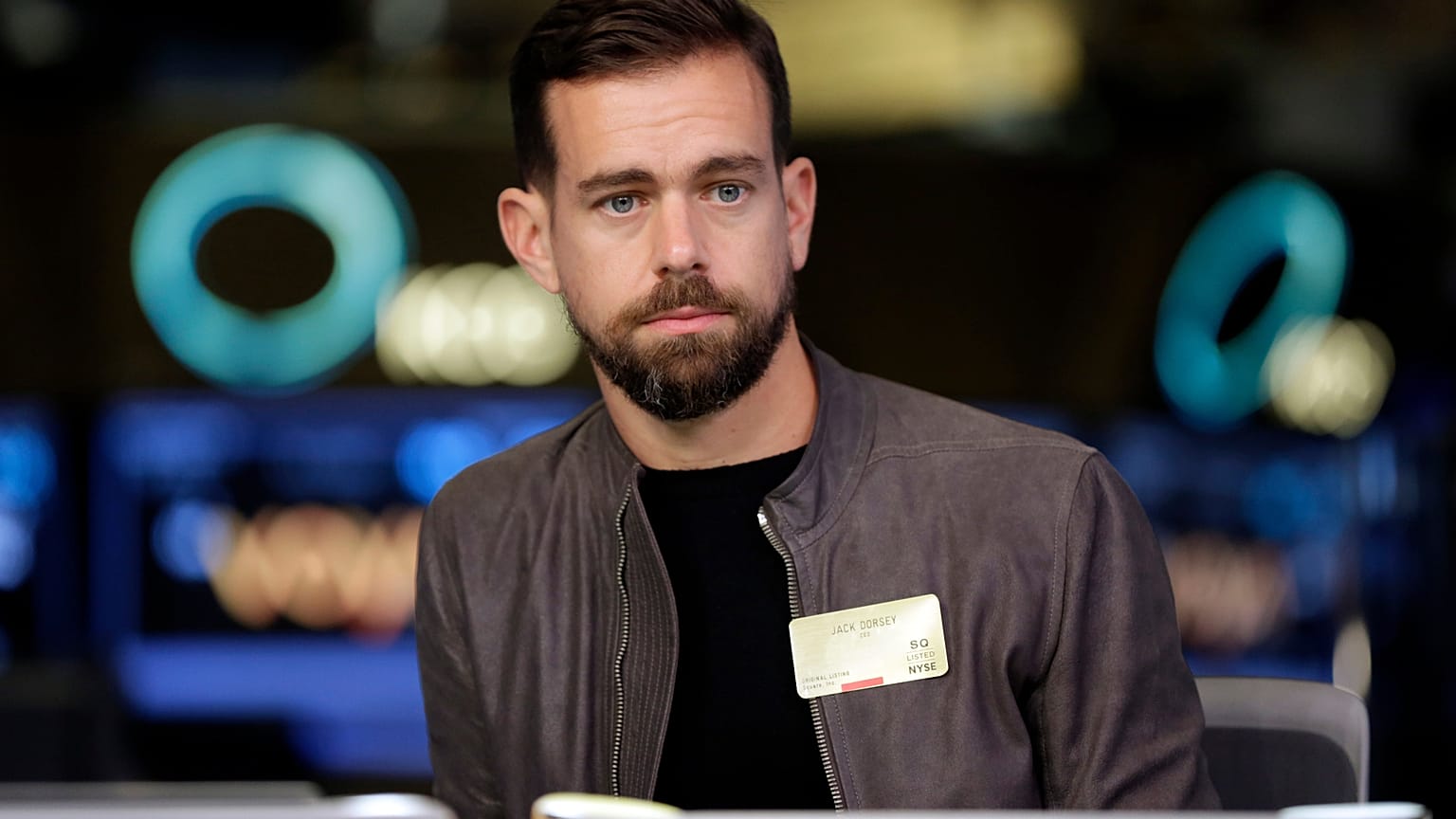
FILE. Block CEO Jack Dorsey being interviewed on the floor of the NYSE, Nov. 2015
Copyright AP Photo/Richard Drew

By Quirino Mealha
Published on 

Block CEO Jack Dorsey has announced a radical restructuring that will see nearly half of the company’s workforce made redundant. Shares surged by 23.5% in after-hours trading.

In a move that has sent shockwaves through the fintech sector, Jack Dorsey, the co-founder and CEO of the fintech conglomerate Block, formerly known as Square, has unveiled the most aggressive corporate downsizing in the company’s history.

Block Inc. comprises several major fintech brands, namely the mobile payment service Cash App, which is widely used in the US.

In a detailed note to the company, shared via X, Dorsey confirmed that the organisation will reduce its headcount by approximately 50%, representing almost 4,000 jobs.

According to the CEO, the decision is not a sign of financial distress but rather a strategic evolution aimed at "re-centring" the company around a more efficient, AI-driven model.

Jack Dorsey announcing layoffs at Block

The news had an immediate and profound impact on Wall Street.

Block’s share price, under the ticker $XYZ, surged by 23.5% in after-hours trading as investors reacted with overwhelming optimism to the prospect of leaner operations.

This shift reflects a broader trend within the tech and finance industries, where companies are increasingly using AI to "do more with less".

However, the scale of Block’s cuts is particularly striking. While many firms have implemented 5 or 10% reductions, Dorsey’s decision to axe nearly half the workforce signals a total commitment to a new and automated era of corporate management.

AI efficiency

The central pillar of Dorsey's new strategy is the integration of generative AI and other automated systems into the core of Block’s workflow.

According to the note sent to employees, the former Twitter CEO believes that the rapid advancement of AI tools has rendered large, multi-layered corporate structures obsolete.

Dorsey argued that "smaller and smarter" teams can now achieve outcomes that previously required hundreds of personnel.

"We no longer need the mass of people we once did to maintain our velocity," the Block CEO wrote in the memo highlighting that AI-assisted coding and compliance systems, as well as automated customer support, have significantly reduced the man-hours required to run a global financial platform.

FILE. Logos for Cash App are shown on devices in New York, Sept. 2023 AP Photo/Richard Drew

By leveraging these technologies, Block intends to maintain its current product output while drastically reducing its overhead costs.

Analysts suggest that this could save the company billions of dollars annually, with some estimates putting the potential savings already at $1.2bn (€1bn) this fiscal year.

For a company that has long been at the forefront of digital payments and crypto, this AI pivot represents a significant departure from traditional scaling methods.

The sheer scale of the layoffs raises the notion that we are perhaps entering the accelerated stage of AI driving people out of work.

It is still early days in 2026 and companies are seemingly starting to make substantial restructurings instead of just small and strategic firings. The socio-economic shocks of the AI revolution now appear to be materialising in a very concerning and real way.


Trump's trade negotiators struggling after Supreme Court ties their hands: report

Tom Boggioni
February 27, 2026 
RAW STORY


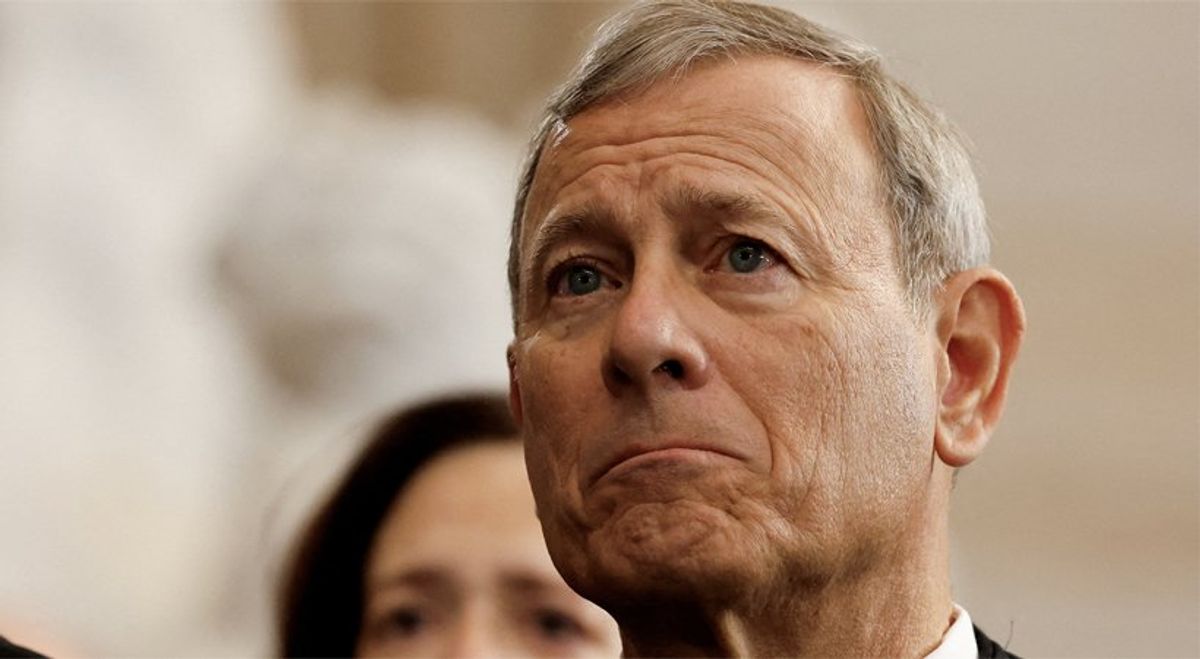
WASHINGTON, DC - JANUARY 20: U.S. Supreme Court Chief Justice John Roberts attends inauguration ceremonies in the Rotunda of the U.S. Capitol on January 20, 2025 in Washington, DC. Donald Trump takes office for his second term as the 47th president of the United States. Chip Somodevilla/Pool via REUTERS/File Photo

The Supreme Court's 6-3 decision limiting Donald Trump's unilateral tariff authority has significantly weakened his trade negotiators' position by eliminating their most potent weapon.

According to reporting from Politico, the ruling has shifted the balance of power in trade discussions. U.S. Trade Representative Jamieson Greer faced immediate pressure from the U.K.'s chief negotiator, Peter Kyle, who implicitly threatened to block a trade agreement unless the United States honored a deal setting duties at 10 percent.

Without the ability to arbitrarily adjust tariff rates, Trump officials have adopted a "more conciliatory approach in the hope of averting further setbacks to Trump's trade agenda."

Trump has publicly insisted that countries attempting to exploit the Supreme Court decision will face even higher tariffs, stating: "Any Country that wants to 'play games' with the ridiculous supreme court decision, especially those that have 'Ripped Off' the U.S.A. for years, and even decades, will be met with a much higher Tariff, and worse." However, administration insiders acknowledge a marked shift in strategy.

Former Biden official Peter Harrell suggested the practical impact may be limited: "The ability to compel implementation of these deals is weakened a little bit [by the Supreme Court ruling], but not significantly. I think that there is kind of enough other tariff threat, enough other non-tariff threat, and also, frankly, enough inducement in these deals that by and large, the governments that have agreed to the deals will continue to honor them."

The ruling has also emboldened domestic opposition to trade agreements in some countries. Taiwan's opposition party has threatened to block approval of its agreement with the Trump administration, which imposed 15 percent tariff rates on most Taiwanese goods—higher than the current 10 percent global duty. The party has used the Supreme Court decision as justification to renegotiate the terms with the United States.


You can read more here.
Carney on route to Asia to promote Canada trade as US ties falter

By AFP
February 26, 2026


Canadian Prime Minister Mark Carney greets Indian Prime Minister Narendra Modi at a G7 meeting last year in western Canada - Copyright AFP Idrees MOHAMMED


Ben Simon

Canadian Prime Minister Mark Carney was flying to Asia on Thursday for a three-country tour with a first stop in India, where he hopes to double trade to offset the damage of his country’s fracturing relations with the United States.

Carney’s India visit marks the latest effort to reset bilateral ties that effectively collapsed after Ottawa accused New Delhi of orchestrating a deadly campaign against Sikh activists on Canadian territory.

For Carney, the trip that includes stops in Australia and Japan is part of a broad effort to pivot the Canadian economy away from excessive reliance on its southern neighbor.

In 2024, before US President Donald Trump returned to office and upended global trade through a flurry of tariffs, more than 75 percent of Canadian exports went to the United States. Two-way trade that year exceeded $900 billion.

So far Trump broadly adhered to the North American free trade agreement he signed during his first term and about 85 percent of US-Canada trade remains tariff-free.

But at the same time, he also imposed painful industry-specific tariffs and there are fears that if he scraps the broader trade deal, the Canadian economy will be hit hard.

Carney has made boosting commerce with Europe and Asia cornerstones of his strategy to backstop Canada’s economy, should free trade with Washington collapse.

University of Toronto public policy expert Drew Fagan said Carney was wise to pursue other markets, calling for a strategy that seeks to do “more elsewhere, when there’s an opportunity.”

The prime minister has said he wants to more than double two-way trade with India by 2030, eyeing a target of Can$70 billion ($51 billion) by 2030.

Fagan cautioned that progress with countries like India cannot mitigate the damage of a US rupture.

“It’s not a solution. It’s not a replacement and it never will be,” Fagan told AFP.


– Transnational repression –


Carney left Ottawa on Thursday morning en route to Mumbai.

He is expected to meet with business groups in the Indian city over the weekend before heading to New Delhi for talks with Prime Minister Narendra Modi, a meeting that will be closely watched.

Before Carney took office last year, Ottawa accused Modi’s government of direct involvement in the 2023 killing of Hardeep Singh Nijjar, a naturalized Canadian citizen who advocated for an independent Sikh state called Khalistan.

Former prime minister Justin Trudeau’s government further charged India with directing a campaign of intimidation against Sikh activists across Canada.

India has denied those allegations.

Canadian Foreign Minister Anita Anand was asked Monday if Canadian concerns about transnational repression would feature at the New Delhi talks.

“Yes, that is always at the forefront of our minds,” Anand told reporters in Ottawa.

Carney’s hopes for trade growth with Australia and Japan are more modest, but his office said cooperation over critical mineral supply chains will be a priority.

Advanced economies have made a push to deepen critical mineral cooperation, especially in the processing of rare earth elements essential to power many high-tech products.

China currently has dominant control of rare earth supply chains, a concern that Canada highlighted throughout its just-concluded G7 presidency.

 Canada optimistic North American free trade pact will survive


By AFP
February 26, 2026


Canada's minister for US trade Dominic LeBlanc was optimistic about the future of a North American free trade agreement - Copyright AFP Yuri CORTEZ

The Canadian official responsible for US trade voiced optimism Thursday about the future of a North American free trade agreement, a pact derided by President Donald Trump and set for review this year.

Dominic LeBlanc, Ottawa’s minister for Canada-US trade, also cast doubt on the notion that Trump could ditch the agreement entirely, something the president has reportedly weighed as tension with Canada has mounted.

“I’m not pessimistic about the trilateral framework renewing,” LeBlanc told the Canadian Club of Toronto, referring to the United States-Mexico-Canada agreement, which Trump signed and praised during his first term.

LeBlanc noted that when Trump announced new global tariffs last week to replace the levies invalidated by the US Supreme Court, the White House swiftly confirmed USMCA compliant goods would remain tariff exempt.

“They’re doing that because it’s in the American economic interest to do that,” LeBlanc said.

– ‘Not a renegotiation’ –

Under the originally agreed terms, the USMCA is to be reviewed in July.

Trump has called the deal “irrelevant” and said it was offering “no real advantage” to the United States.

US media have reported that he is considering scrapping the deal while seeking a separate arrangement with Mexico, a plan that has reportedly gained momentum since Canadian Prime Minister Mark Carney delivered a searing critique of US leadership at the World Economic Forum last month.

“The review is not a renegotiation,” LeBlanc said, underscoring that the deal does not expire until 2036.

“If there’s no consensus in the review, the agreement continues on.”

LeBlanc also said that Trump’s dismissive rhetoric about the USMCA does not match his trade team’s posture.

“There is a public prosecution of the argument, the political argument, in the United States, and there are the private government to government to government conversations which are not discouraging.”

LeBlanc said he expected to meet with US Trade Representative Jamieson Greer in Washington next week and believed the United States was ready to be specific about their desired USMCA adjustments.

“We’re ready for those conversations,” he told the Canadian Club.

Free trade with the United States is crucial to the Canadian economy.

Trump’s sector specific tariffs targetings autos, steel, aluminum and lumber have caused significant economic pain in Canada.

But Trump’s broad adherence to the USMCA has left about 85 percent of two-way trade tariff-free, sparing Canada from crippling economic turmoil.

Carney was flying to India on Thursday to seek closer trade ties, as part of his strategy to backstop Canada’s economy should free trade with the US collapse.


LATAM BLOG: Mexico's rise to the top of US trade exposes the stakes of Trump's USMCA gamble

LATAM BLOG: Mexico's rise to the top of US trade exposes the stakes of Trump's USMCA gamble
Integration between Mexico and the US runs much deeper than trade statistics capture. / unsplash
By bnl editorial staff February 26, 2026

For at least 34 years, Canada held an unbroken grip on the top spot in US trade. In 2025, Mexico ended it, and the timing could hardly be more consequential.

According to reports from Bloomberg and Forbes, Mexico finished 2025 as the leading destination for US merchandise exports, the largest source of US imports and, by extension, the dominant overall US trade partner  a clean sweep no country has achieved since Canada managed it in 2006. It accounted for 15.6% of total US two-way goods trade, more than double China's 7.4%, in a transformation that has unfolded remarkably quickly. Five years ago, as USMCA was being implemented, China led all US trading partners with nearly 15% of total trade. Today, the Asian superpower ranks third.

The numbers alone tell only part of the story. The top US exports to Mexico  refined petroleum, motor vehicle parts, computer components, computers and semiconductors  reflect an industrial relationship built around shared supply chains under the nearshoring model rather than simply consumer demand. On the import side, four of the five biggest categories are tied to the North American automotive industry. Mexico is not so much a trading partner as a production partner.

Yet the relationship faces its most fraught political test in years. US President Donald Trump has reportedly asked aides why he should not withdraw from USMCA, the trade agreement he championed in 2020, ahead of the treaty's mandatory six-year review deadline of July 1. He could technically do so with six months' notice. Bloomberg columnist Juan Pablo Spinetto argues this would amount to a self-inflicted wound: abandoning USMCA would disrupt supply chains, threaten American manufacturing jobs, push up import prices on everything from cars to avocados and trigger backlash from the US Chamber of Commerce and bipartisan Congressional supporters of the pact.

The peso barely moved after reports of Trump's deliberations emerged, suggesting investors assign low probability to a full withdrawal. But the uncertainty itself carries costs, potentially dampening investment flows into Mexico and prolonging the kind of instability that has already weighed on the country's 0.8% GDP growth in 2025.

Integration between the two countries runs much deeper than trade statistics capture. Mexicans living in the US send home more than $60bn per year in remittances. Mexico is the top foreign destination for American tourists. In New Mexico, California and Texas, Latinos are now the largest population group. In parallel, a growing wave of American expats relocating to Mexico is reshaping neighbourhoods from Baja California to Mexico City.

The strategic logic, Spinetto argues, is difficult to escape. If Washington is serious about decoupling from China, reindustrialising its economy and securing critical supply chains, Mexico is not the obstacle, but rather a central part of the solution. Mexico's share of US trade has more than doubled relative to China's in five years, driven not by political goodwill but by geography, manufacturing integration and demographic reality. Those are not conditions that dissolve overnight when a trade agreement is threatened.

Whether that case gets made clearly in the White House, or gets lost in the noise of erratic tariff threats and negotiating posture, may be the defining question of the USMCA review.

Thieves target high-value Pokemon cards as franchise turns 30


By AFP
February 26, 2026


High prices for rare Pokemon cards has attracted criminals keen to cash in - Copyright AFP/File Brendan Smialowski


Ben Turner

What began as a quiet meetup of Pokemon enthusiasts at a US store ended with an armed robbery in which masked men held the group at gunpoint to steal more than $100,000 in trading cards.

The January heist in New York was the latest in a string of thefts targeting collectors of Pokemon, the Japanese media franchise that marks its 30th anniversary on Friday.

Pokemon cards, bearing “little monsters” that attract children as well as adult superfans, have soared in value in recent years.

US influencer Logan Paul this month set a new world record by banking $16.5 million with his sale of a rare Pikachu card — arguably the most iconic Pokemon character.

But high prices have attracted criminals keen to cash in.

Pokemon cards “are high value in a small footprint, demand is broad and consistent, and the resale ecosystem is large,” said Nick Jarman, founder and CEO of the Certified Trading Card Association.

“That combination means stolen product can move quickly — sometimes across state lines — through a mix of online marketplaces, card shows, and informal buyer networks,” he told AFP.


– ‘Big target’ –


The New York robbery, which police are yet to solve, was not an isolated incident.

Thieves in California made off this month with about $180,000 worth of Pokemon trading cards after drilling through a wall to access a store.

“We got a big target on our back in this trading card, collectible world now,” owner Duy Pham told CBS News after the burglary.

It was the second time in less than a year that his shop was robbed.

Similar thefts have also been reported in Japan, Britain, Canada and Australia.

“In some cases, incidents appear opportunistic, smash-and-grab, while others look more targeted — suggesting prior knowledge of store layouts, closing routines, or where higher-value inventory is kept,” Jarman said.

He noted that many shops operate on thin margins, so boosting security measures can be a financial burden.


– ‘Not fun anymore’ –


Ranging from Pikachu the mouse to Jigglypuff the balloon, there are now more than 1,000 different Pokemon characters, with new “generations” released every few years.

Collecting Pokemon cards has become a form of investment beyond collecting, trading or playing.

One website, Collectr, offers trading card portfolio management and valuation tools for users looking to track their assets.

Factors determining value include Pokemon cards’ rareness, the character and the artist, who is indicated on the card.

But for some, the surge in prices has yanked the joy from what was a casual hobby.

Grace Klich, a US-based Pokemon influencer, told AFP she had pulled back from collecting after becoming “fatigued.”

“When it gets to the point where local card stores are being broken into and people are getting a gun shoved in their face over cards, it is not all fun and cute anymore,” she said.

“It was never about the value of items, or gaining respect, it was because I had a genuine love for such a wonderful franchise,” she said.
Japan PM opposes changing male-only imperial succession


By AFP
February 26, 2026


Japan's Emperor Naruhito (centre L), Empress Masako (centre R), and other members of the Imperial Family wave to well-wishers during a public audience celebrating the Emperor's 66th birthday, at the Imperial Palace in Tokyo 
- Copyright JIJI PRESS/AFP/File STR

Japanese Prime Minister Sanae Takaichi told parliament on Friday that she opposes changing the imperial family’s male succession rules.

The comments are her clearest on the issue — the subject of increasing debate as a succession crisis looms — since her party’s landslide election victory this month.

Takaichi said she respected the conclusion of a panel of experts who had discussed the matter and found in 2021 that it was “appropriate to limit eligibility to those who are male-line male descendants belonging to the imperial lineage”.

“The government, and I, myself as well, respect this report.”

The premier previously warned that revising the imperial family’s succession rules is “an urgent matter”, although this would likely involve “adopting” new members.

During a policy speech last , she said that she hoped “discussions will deepen on how to ensure stable imperial succession… leading toward the revision of the Imperial House Law”.

Even though tradition dictates only a man can carry on the imperial line — which goes back 2,600 years according to legend — opinion polls have shown high public support for a woman taking the throne.

Emperor Naruhito has a daughter, Princess Aiko, but she has been sidelined by the royal family’s male-only succession rules.

Japan has debated the royal succession for decades, with a key government panel in 2005 recommending that it pass to the oldest child regardless of their sex.

That appeared to pave the way for the emperor’s daughter to rise to the Chrysanthemum Throne, but the birth of Prince Hisahito, the emperor’s nephew, the following year silenced the debate.

In 2021, a government-appointed expert panel advised the government to consider allowing the imperial family to “adopt” new male members — distant relatives that could be brought back into the fold.

But it is unclear if those men would be willing to give up their careers and freedom to continue the lineage.

The panel also said royal daughters — currently forced to leave the family after marriage — could potentially continue their public duties after their nuptials.

Traditionalists have asserted that the “unbroken imperial line” of male succession is the foundation of Japan, and major changes would divide the nation.

Under the post-war constitution, the royal family holds no political power.

Historically, women who wed royals have faced intense pressure to produce sons and some family members are regular subjects of online and media gossip.

Empress Masako, a former high-flying diplomat, struggled for years with a stress-related illness after joining the household, which some have put down to the pressure to have a boy.

Emperess Emerita Michiko, Naruhito’s mother, also suffered stress-induced illnesses.
India moves closer to dengue vaccine as final trials underway


By AFP
February 26, 2026


Hoping to stem the global epidemic of Dengue, Panacea Biotec has begun final Phase III trials of its vaccine - Copyright AFP Arun SANKAR

Uzmi Athar

As dengue surges globally, an Indian vaccine candidate has entered the final stage of testing, raising hopes for one of the world’s first single-dose shots against the deadly mosquito-borne disease.

Dengue, which causes severe flu-like symptoms and debilitating body aches, has exploded globally, fuelled by rising temperatures and densely populated cities.

The World Health Organization (WHO) says that almost half the world’s population is now at risk, with 100–400 million infections every year. India alone has recorded over one million cases and at least 1,500 deaths since 2021.

Hoping to stem the global epidemic, Panacea Biotec has begun final Phase III trials of its vaccine, DengiAll, which has been pursuing for nearly 15 years.

More than 10,000 volunteers across the country are enrolled in the study, overseen by the Indian Council of Medical Research, with the vaccine on track for rollout as early as next year if the trial results are favourable.

“We will try to get this vaccine out there as soon as possible,” Syed Khalid Ali, chief scientific officer of Panacea, told AFP in New Delhi.

Doctor Ekta Gupta, professor of clinical virology at the Institute of Liver and Biliary Sciences in New Delhi, said dengue was now considered hyperendemic in India, with all four virus serotypes circulating simultaneously.

“This vaccine is very much needed right now to control the occurrence of these cases, or at least prevent the severity.”


– Climate change –


Monsoon outbreaks regularly push Indian hospitals to their limits, crowding urban wards and leaving rural regions grappling with late diagnoses and poor access to care.

Higher temperatures and changing rainfall patterns create ideal conditions for Aedes mosquitoes — the vectors of dengue — to reproduce and spread the virus.

Children are particularly vulnerable to the more severe form, called dengue hemorrhagic fever, as they are more likely to suffer low platelet counts and shock.

Participants in Phase III trials, which started in 2024, were randomly assigned to receive either the vaccine or a placebo, with the results expected later this year.

Vaccines against all four dengue serotypes have long posed a scientific challenge. Immunity to one strain does not protect against others, and secondary infections can be more severe.

Most existing candidates require multiple doses.

If approved, DengiAll would become one of the world’s first single-dose dengue vaccines, following Brazil’s approval of a similar shot last year.

It would also be the first such vaccine available in India, where no dengue shot is currently licensed for public use.

“We will be the second (single-dose) vaccine to come out… But in India and several lower-middle-income countries, we will be the first ones to roll out the dengue vaccine,” Ali said.

The candidate is based on a tetravalent strain originally developed by the US National Institutes of Health.


– ‘Hope for future’ –


Panacea is the most advanced of three Indian firms licensed to use the strain, having developed its own formulation and secured a process patent.

Inside the company’s research labs, doctor Priyanka Priyadarsiny, head of biological R&D, said vaccine development involves several steps, from proof-of-concept studies to regulatory checks.

“We are extremely cautious about purity, safety and adverse effects,” she said. “Only after meeting regulatory specifications can a product be considered safe for public use.”

At present, the WHO recommends only one dengue vaccine, Qdenga, produced by Japan’s Takeda for children aged six to 16 in high-transmission settings.

Qdenga, which requires two doses administered three months apart, is not currently available in India.

Ali said DengiAll could be given to people aged one to 60 and is expected to offer long-term protection.

In India, final approval would come from the Drug Controller General of India, while WHO prequalification would be required for large-scale international use.

Experts say a successful Indian-made vaccine could be key to affordability and mass rollout in lower-income countries.

Virologist and Oxford University fellow Shahid Jameel — who is not connected with the trial — warned dengue incidence could rise by 50–75 percent by 2050 under current climate change trends.

Still, he cautioned that only Phase III results would determine whether a candidate meets the criteria for a safe and effective dengue vaccine.

“Phase III testing and follow-up are needed to show if the above conditions are met,” he told AFP.

“Only then can we have a useful dengue vaccine. It is still early days, but there is hope for the future.”
Nepal PM hopeful eyes ‘change’ in post-uprising elections


By AFP
February 26, 2026


Nepal's Gagan Thapa was drawn into politics as a teenager, at a time of a popular movement against absolute monarchy 
- Copyright AFP/File PRAKASH MATHEMA


Paavan Mathema

Nepali student leader-turned-politician Gagan Thapa has sought to rejuvenate his party’s stale image, campaigning on generational change ahead of the Himalayan nation’s first elections since a deadly youth-led uprising.

“We need energy for Nepal’s change,” the 49-year-old aspiring prime minister told AFP, saying his candidacy represented a break from decades of rule by a tight-knit and ageing elite.

The country of 30 million people will head to the polls on Thursday, following a wave of protests in September in which 77 people were killed, and parliament and hundreds of other buildings were torched.

The protests toppled Marxist leader KP Sharma Oli’s government, in which Thapa’s centrist Nepali Congress party had the biggest share of seats.

Thapa’s home and party office were among the buildings set alight during the two days of violence last year.

He has since led an internal revolt and was elected party leader in January, ending the decade-long grip of former prime minister Sher Bahadur Deuba, 79, who had defied calls for reform.

Thapa, a former health minister, said he offered “the right mix of energy and experience.”

“We had to change the leadership of major parties,” he said, including Congress — the country’s oldest and one of the three dominant political powers that have given Nepal nearly all its prime ministers in recent history.

“For decades, two to three old-aged men were running it like a club, dominating and slowly limiting our democracy by power sharing with each other,” Thapa said.

“That devastated our governance.”


– ‘Work together’-


Thapa was drawn into politics as a teenager in the 1980s, when leftist and communist parties led a popular movement against absolute monarchy, giving rise to multi-party democracy since 1990.

As civil war reshaped the country in 1996-2006, pitting Maoist guerrillas against the monarchy, he rose through the ranks of pro-democracy student groups linked to the Nepali Congress.

“The sense of gratification I felt when we rallied around an agenda and got results made me feel like this is what I want,” Thapa said of his start as a student activist.

“People have problems — pick them up and solve them. That gravitated me towards politics.”

In 2006, when a popular uprising forced the king to abdicate, Thapa was already a prominent figure in the pro-democracy movement and had been jailed several times for his role in street protests.

Two years later he entered parliament as one of its youngest members, and has since won re-election three times from a Kathmandu constituency.

But this time, Thapa has chosen to run from Sarlahi, mainly a farming district southeast of the capital, on the plains bordering India.

“A large proportion of Nepal’s population live here, and they have long felt excluded,” he said.

“If I represent this region, it helps my party electorally. But in the long term, it gives me the foundation to lead all of Nepal.”

His party’s manifesto prioritises political and economic reform, pledging to create 1.2 million jobs in five years.

Analysts expect no single party to win an outright majority in parliament, likely leading to a coalition government.

“We will have to work together,” Thapa said.

“If I get a chance to be in a leadership role, I believe in teamwork. We can fulfil the demands made during the Gen Z protest only through teamwork.”