Friday, February 27, 2026

UPDATED

Green Party Scores Upset Win in UK Election in Blow to Labour, Far-Right Reform


“Instead of working for a nice life, we’re working to line the pockets of billionaires,” victorious Green Party candidate Hannah Spencer said during her victory speech. “We’re being bled dry.”


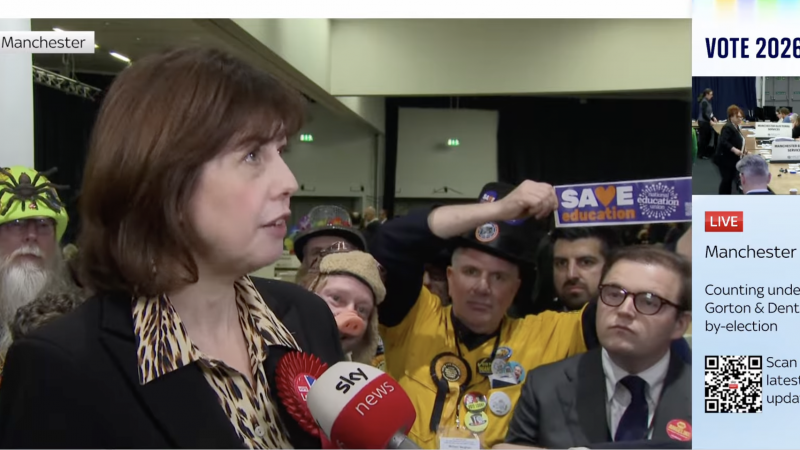
Green Party candidate Hannah Spencer visits Green Party volunteers at St Agnes Primary School polling station on February 26, 2026 in Manchester, England.
(Photo by Christopher Furlong/Getty Images)

Brad Reed
Feb 27, 2026
COMMON DREAMS


Green Party candidate Hannah Spencer on Thursday won an upset victory in a byelection in the Gorton and Denton constituency, delivering a blow to both Labour Prime Minister Keir Starmer and the far-right Reform Party led by Nigel Farage.

As reported by the Guardian, Spencer, a local plumber, won by overturning a 13,000-vote majority that the Labour Party achieved in the 2024 general election.

In fact, Labour fell to third place in the Thursday election, winning 9,364 votes, compared to 14,980 votes for the Greens and 10,578 votes for Reform.

In her victory speech, Spencer emphasized major class divides in the UK, where she said people are working increasingly harder for fewer benefits.

“Working hard used to get you something,” she said. “It got you a house. A nice life. Holidays. It got you somewhere. But now—working hard? What does that get you?... Instead of working for a nice life, we’re working to line the pockets of billionaires. We’re being bled dry.”

The Green Party said Spencer’s victory showed it was now a viable force in national elections, projecting that it is “on track to win over a hundred seats at the next general election, if the historic swing achieved to win Gorton and Denton is replicated nationwide.”

Green Party leader Zack Polanski hailed the election result and predicted “a tidal wave of new Green MPs” in future elections should current trends continue.

“When I was elected Leader of the Greens I said we were here to replace Labour and I meant it,” Polanski said. “Hannah was a fantastic candidate and I know she’ll make a brilliant MP.”

Starmer, who has pushed the Labour Party to the right on issues such as immigration and transgender rights during his tenure, reacted bitterly to the defeat in a letter he sent to other Labour MPs.

“The result in Gorton and Denton is deeply disappointing,” Starmer wrote. “Instead of a Labour MP who can be a local champion delivering for Gorton and Denton alongside a Labour Government and a Labour mayor, the people of Gorton and Denton now have a representative who is more interested in dividing people than uniting them.”

Starmer, whose job approval rating in polls is consistently under 20%, also predicted that “over the coming months, people will feel the benefit of the long-term decisions this government is taking.”

Socialist commentator Owen Jones, a longtime Starmer critic, gloated over the result in a social media post in which he reminded followers of Starmer’s past statement that left-wing voters could “leave” if they didn’t like the changes he was making to Labour.

“OK, Keir Starmer, we did as you asked us!” he wrote. “Happy now?”

UK Labour party loses parliamentary seat to left-wing Greens


By AFP
February 27, 2026


Left-wing Greens beat the Britain's ruling Labour party in crunch local polls - Copyright AFP Paul ELLIS


Peter HUTCHISON

Britain’s ruling Labour party on Friday lost a crunch local poll in one of its traditional northern English heartlands to the left-wing Greens, adding to the woes of unpopular Prime Minister Keir Starmer.

Labour also finished behind the hard-right Reform UK party in the by-election for the parliamentary seat of Gorton and Denton in Manchester, as the country’s traditional two-party system fractures.

The third-place finish in a seat that Labour has dominated for decades is likely to increase chatter about how much longer the 63-year-old Starmer can stay in office.

It also suggests that Britons appear more willing to look towards insurgent parties for answers on long-standing, hot-button issues like the high cost of living and irregular immigration.

Labour won the constituency with almost 51 percent of the vote at the July 2024 general election that swept Starmer to power and ousted the Conservatives from 14 consecutive years in office.

But the government has since been beset by numerous policy reversals and several rows, including over the appointment of Peter Mandelson, an associate of sex offender Jeffrey Epstein, as Britain’s ambassador to Washington.

Polls suggest Starmer is the most unpopular British prime minister since surveys began and earlier this month he faced down calls from within his own party to resign.

Hannah Spencer, a 34-year-old plumber and plasterer won with almost 15,000 votes and becomes the Green’s fifth MP in the 650-seat British parliament.

Reform candidate Matt Goodwin, a 44-year-old political scientist registered some 10,500 votes, while Labour won just over 9,300.

The vote was triggered by the resignation of former Labour MP Andrew Gwynne on health grounds.

Starmer has spent much of his time in office targeting Reform, which leads national polls, by toughening Labour’s immigration policies.

But the stance has alienated elements of the party’s left-wing base and young people, who appear to be turning towards the Greens, whose leader Zack Polanski is also appealing to pro-Palestinian supporters.

“The Green Party is offering hope to the wider society, marginalised people, and I think they’re the choice for working people,” writer Matt Alton, 31, told AFP on Thursday after casting his ballot.

Anti-immigration Reform UK, led by Nigel Farage, have led national surveys for over a year. The next general election is not expected until 2029.

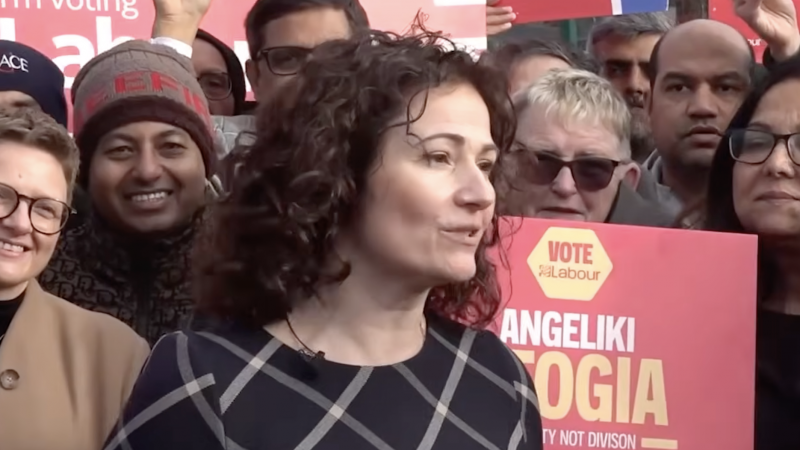
Labour’s candidate, Angeliki Stogia, was selected to run after the party’s ruling body blocked the candidacy of popular Manchester mayor Andy Burnham.

Burnham’s bid to become an MP was widely seen as a precursor for a potential leadership challenge from the party’s left against Starmer, who hails from the party’s centre right.

Starmer faces another critical period in May with elections in Scotland, Wales and London that pollsters predict will be painful for Labour.


Greens win Gorton and Denton by-election with 4,000 majority


TODAY
Left Foot Forward

Hannah Spencer is the first Green MP in the north of England
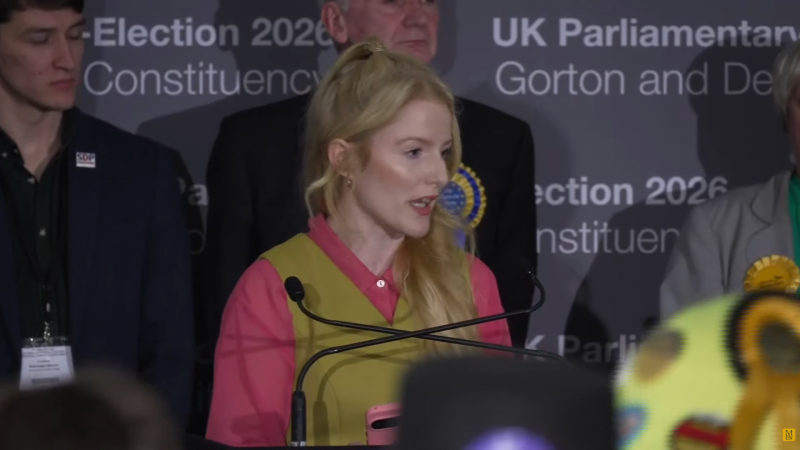


The Green Party has won the Gorton and Denton by-election with a majority of more than 4,000.

The Green Party’s Hannah Spencer picked up 40.6 per cent of the vote, beating both Reform and Labour in what was a three-way contest for the Greater Manchester constituency.

This marks the first time the Green Party has ever won a parliamentary by-election and the first time they have ever won a seat in the north of England.

Reform came second with 28.7 per cent of the vote. Labour came third with 25.4 per cent.

The full breakdown of the results was as followed.
Green Hannah Spencer 14,980 
40.6%

Reform Matt Goodwin 10,578 
28.7%

Labour Angeliki Stogia 9364 
25.4%

Conservative Charlotte Cadden 706 
1.9%

Liberal Democrats Jackie Pearcey 653
 1.8%

Monster Raving Loony Sir Oink A-Lot 159 
0.4%

Advance UK Nick Buckley 154
 0.4%

Rejoin EU Joseph O’Meachair 98
 0.3%

Libertarian Dan Clarke 47 
0.1%

SDP Sebastian Moore 46
 0.1%

Communist League Hugo Wils 29
 0.1%


Chris Jarvis is head of strategy and development at Left Foot Forward


Labour place third in Gorton and Denton by-election as Greens gain seat

Labour have been defeated in the Gorton and Denton by-election, losing to the Green Party who won with a majority of over 4,000 votes, after battling out in what polls had suggested was a knife edge fight across the campaign period.

The by-election was triggered by the resignation of the former suspended Labour MP Andrew Gwynne on health grounds, leaving the seat vacant less than two years after the constituency was first contested at the 2024 general election.

Green candidate Hannah Spencer won the by election with 14,908 votes, beating Labour candidate Angeliki Stogia who placed third with 9,364 votes. Reform UK’s Matt Goodwin secured 10,578 votes.

Made with Flourish • Create a chart

The loss brings Labour a heavy blow, losing a historic constituency, which in the previous 2024 election they had won with a majority of over 13,000 – and marking the first time the party has come third in a by-election it was defending since Mitcham and Morden in 1982.

Chair of the Labour Party Anna Turley said the result was “clearly disappointing” and said: “By-elections are normally difficult for the party of government, and this election was no different.

“We have had thousands of conversations over the last few weeks and we know the majority of voters here did not want the poisonous politics of Nigel Farage and Reform.

“We will continue to deliver a programme for government that tackles the cost of living crisis families are facing, creates opportunities for young people and invests in our public services.

“The politics of anger and easy answers offered by the Greens and Reform won’t deliver this.

“We will move forwards with a relentless focus on delivering the renewal communities across Britain want to see.”

The by-election came after several tough weeks for the Labour Party, with the resignation of the Prime Minister’s chief of staff Morgan McSweeney mid-campaign over advising the decision to appoint Peter Mandelson as US ambassador despite known links to disgraced pedophile Jeffrey Epstein, alongside Scottish Labour leader Anas Sarwar’s call for the Prime Minister to stand down over the Mandelson saga.

Many commentators had said that popularity for Labour would take too much of a hit to see off competitors in Gorton and Denton in the wake of the scandal, although activists said the issue had rarely been brought up on the doorstep.

Labour put up a strong fight on the campaign trail, reaching over 10,000 contacts with heights of 1000 activists out on the doorstep on polling day.

However, Labour was met with significant Green support across the constituency, entering the count knowing this by-election was going to be very difficult to call.

‘Absoute disaster for Labour’

A spokesperson for centre-left group Mainstream said: “The Gorton and Denton result is an absolute disaster for Labour. Clearly, we now risk no longer being seen as the natural home for progressive voters.

“This loss was avoidable. Angeliki, members and our party staff worked tirelessly, but our leader and sections of the NEC blocked the one candidate who could have won it for us. That decision now looks like a catastrophic error.

“We need an immediate and fundamental reset now.”

‘Labour leadership turned back on progressive majority’

Director of campaign group Compass Neil Lawson said the result proved there is “appetite in Britain for a bold progressive agenda for big change”.

He said: “Labour’s leadership has turned its back on the nation’s progressive majority and blocked the only candidate – in Andy Burnham – who could have spoken for this hopeful future.

“The two party stranglehold on the UK’s politics looks broken. Only a progressive alliance can defeat Reform and the causes of Reform.”

‘It’s time for a complete change in direction’

Left-wing pressure group Momentum hit out at the decision to block Andy Burnham from standing as the Labour candidate in the by-election and urged the leadership to make a “complete change in direction” to prevent defeats across the country in May’s local and devolved elections.

Co-chair Alex Charilaou said: “Losing a safe seat like Gorton and Denton could have been prevented if Andy Burnham wasn’t blocked from standing.

“Hundreds of hardworking Labour candidates up and down the country could face defeat in May. It’s time for a complete change in direction: the control-freakery and top-down politics has to end.”


UK Greens trounce far right in key election as Labour fall to disastrous third place
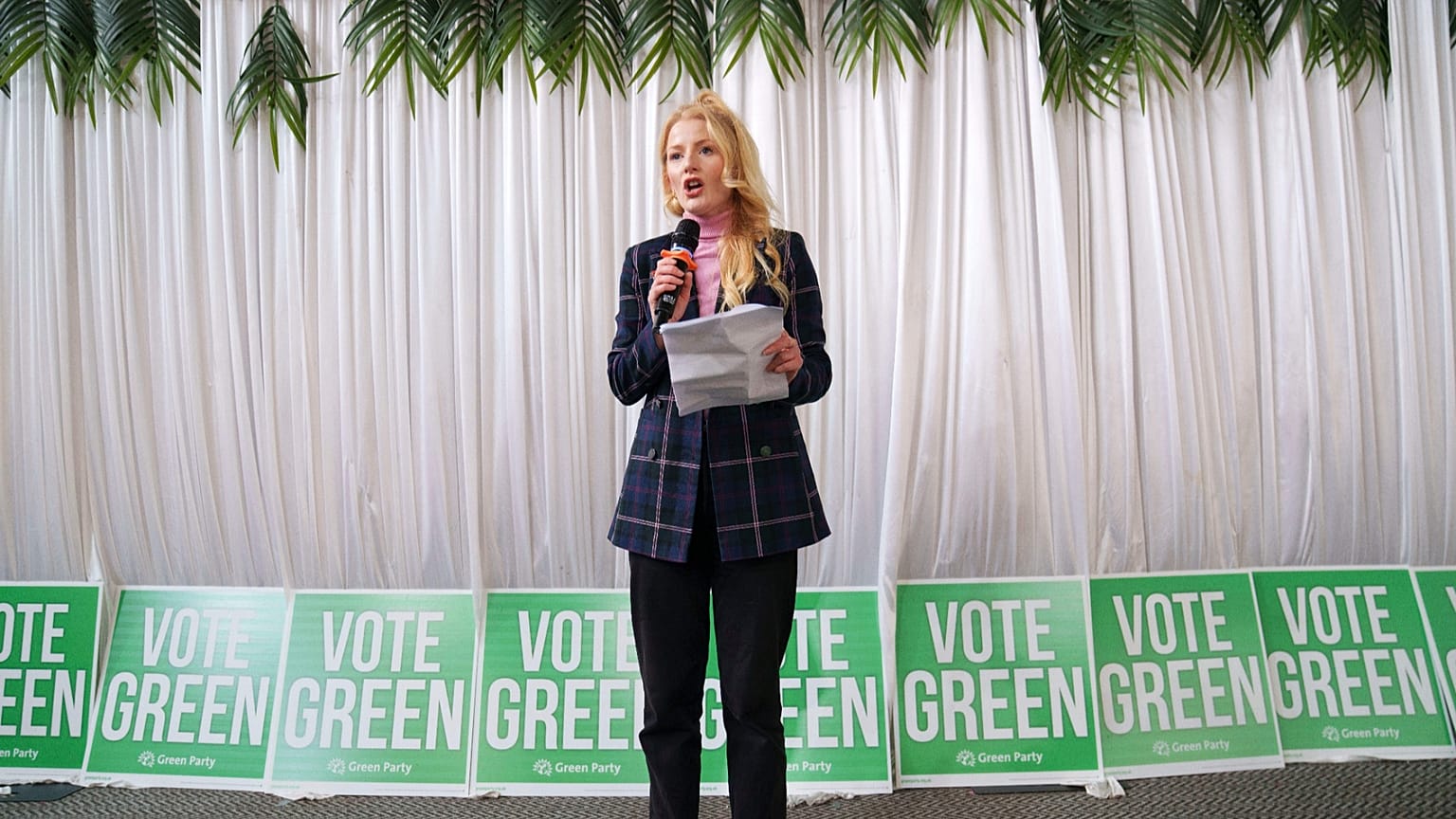
Copyright AP Photo

By Andrew Naughtie
Published on 

Two insurgent parties with a tiny number of MPs between them have shunted Britain's governing party into a humiliating defeat.

The Green Party of England and Wales has won a stunning victory in the most pivotal UK by-election in years, establishing itself as a major political force and beating Nigel Farage's far-right Reform UK into second place while the governing Labour Party suffered a humiliating defeat.

Held to fill the greater Manchester seat of Gorton and Denton, which was vacated by a Labour MP who resigned over racist and sexist WhatsApp messages about his party colleagues, the by-election pitted the UK’s strongest far-right and left-wing parties directly against each other.

In the final result, the Greens' Hannah Spencer won with 14,980 votes, beating Reform UK's Matt Goodwin on 10,578 and Labour's Angeliki Stogia on 9,364.

While they only have a combined 13 seats in the House of Commons, Reform and the Greens are increasingly dominating Britain’s political discourse, and Thursday’s result – coming off the back of the highest turnout in any by-election since 1983 – will fuel their overlapping claims that the traditionally dominant parties are in irreversible decline.

A new left rises

In her victory speech, Spencer stressed the economic difficulties faced by everyday people "working to fill the pockets of billionaires" and stressed the Greens' strong left-wing message of fairness for working-class people who have seen their neighbourhoods and life chances alike go into decline while working ever harder to maintain their standard of living.

"Everybody should get a nice life," she said. "And clearly I'm not the only person who thinks that."

Spencer also called out "politicians and divisive figures" who she said had scapegoated the area's large Muslim population and tried to turn white working-class locals against them.

"My Muslim neighbours are just like me: human," she said.

Having won four seats at the last general election, its best ever result, the Green Party has surged in the polls since choosing a new leader, Zack Polanski, last September.

Polanski was originally a member of the more centrist Liberal Democrats, but stormed out of the party in 2016 when he failed to make the shortlist of candidates to fight a pivotal by-election. Now an elected member of the London Assembly, he is highly popular on social media, where he projects himself as a cheerful and charismatic left-populist.
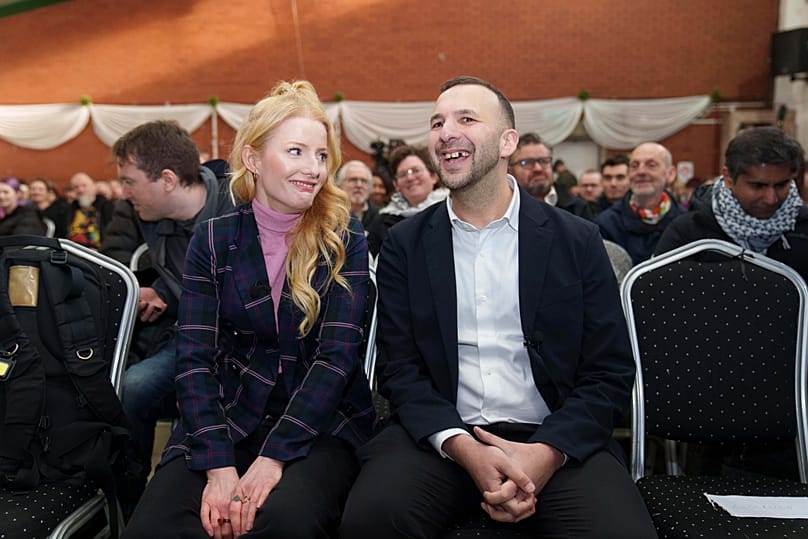
Green Party leader Zack Polanski, right, sits with the party candidate is the Gorton and Denton by-election Hannah Spencer AP Photo

While not departing from the Greens' baseline environmentalism, his most attention-grabbing proposals include withdrawing the UK from NATO, imposing higher taxes on the wealthy, and nationalising various utilities and services. He has also been a vociferous critic of Israel's war in Gaza.

The Greens’ meteoric polling surge under his leadership has eclipsed an attempted comeback by former Labour leader Jeremy Corbyn, whose attempt to form a new left-wing political force named Your Party has been dogged by financial and organisational chaos as well as a rift between him and co-founder Zarah Sultana – who, like Polanski, is highly popular with the online left.

Having quit the Labour Party in 2025 over the government's political direction and its stance on the war in Gaza, she now argues that the British government should "nationalise the entire economy". It is unclear when Your Party will begin contesting elections.

Extremists on the march

Despite only returning a handful of MPs at the last general election, Reform UK has consistently led nationwide opinion polls for some time, and achieved a wave of victories in local elections across England in May 2025. Pollsters estimate that the UK's first-past-the-post electoral system would have a high chance of forming a majority government were an election held tomorrow.

However, it has suffered from a number of disastrous candidate vetting failures and a steady flow of defections and resignations by both MPs and local councillors, many of whom have left the party after making outlandish or racist public statements.

The party’s ongoing effort to refute allegations of extremism meant it was something of a surprise when it decided to fight the Gorton and Denton contest with Goodwin, who has built a substantial personal following while espousing some of the most extreme views of any major party candidate in recent British political history.

Goodwin first came to public prominence in the 2010s as an academic studying the rise of right-wing populism, in particular Islamophobia. However, in the years following the UK's departure from the EU, he has morphed from a critic of right-wing movements and parties into an out-and-out advocate of far-right ideas.
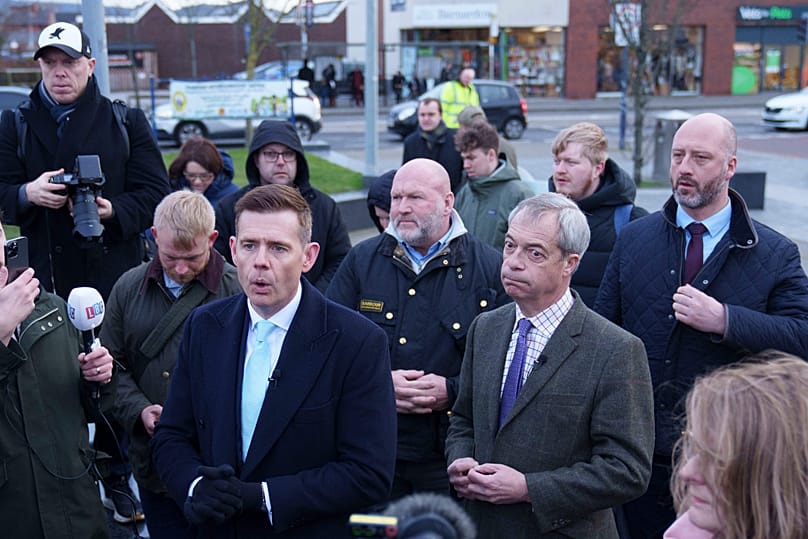
Reform UK's Matt Goodwin (centre) campaigns with party leader Nigel Farage. AP Photo

With tens of thousands of followers on social media and Substack as well as a show on right-wing TV channel GB News, Goodwin argues that immigration from non-European countries and cultures poses an existential threat to British and Western civilisation.

A leading proponent of the widely circulated right-wing claim that "London is over" thanks to rampant violent crime and the "displacement" of white British residents – claims easily proven untrue by abundant publicly available evidence – Goodwin has repeatedly advanced explicitly ethnonationalist conceptions of national identity.

In one particularly infamous interview last year, he opined that “Englishness is an ethnicity that is deeply rooted in a people that can trace their roots back over generations” and argued that British citizens with recent foreign heritage – among them former Conservative prime minister Rishi Sunak, who was born in Hampshire – cannot reasonably call themselves "English" in a true sense.

However, Goodwin himself and Reform are increasingly under pressure from even more extreme figures on the right, notably expelled Reform MP Rupert Lowe, whose recently founded party Restore claims to have 100,000 members and has attracted the backing of Elon Musk.

Lowe, who has promised to "remove millions of foreigners who shouldn’t be in our country, and chainsaw back the size of the state, vastly empowering the individual", has lately attacked Reform UK for his supposed moderation on “mass deportation” and racial difference in general.

In response, Goodwin – who among other things has promised to “slash welfare for non-Brits” – has responded to Restore supporters’ mockery by accusing them of providing a haven for “white supremacists, antisemites, racists and conspiracy theorists”.

Labour on life support

Meanwhile, the result in Gorton and Denton deals a heavy blow to the Labour government, in particular Prime Minister Keir Starmer, whom some pollsters judge to be the most unpopular prime minister in the history of modern British politics depending on what measure is used.

Having fallen well behind Reform in the polls – sinking to as low as fourth place in some surveys – the Starmer government has lately been rocked by the release of the so-called Epstein Files, which revealed that its chosen ambassador to Washington, Peter Mandelson, had not only continued a close friendship with convicted paedophile Jeffrey Epstein well after his first conviction but also passed him confidential information while serving as Business Secretary at the height of the 2009 global financial crisis.

The ensuing row forced the resignation of Starmer's chief of staff, and the prime minister was briefly expected to face an immediate leadership challenge. But the Gorton and Denton vote will be followed in May by simultaneous elections for the Scottish Parliament, Welsh Senedd and many English local governments, all of which are expected to be disastrous for the Labour Party.

With the exception of Manchester Mayor Andy Burnham, whose attempt to stand in Gorton and Denton was blocked by the Labour Party’s National Executive Committee, no candidate has so far emerged to directly challenge Starmer before the government has those elections behind it.


Read Keir Starmer’s letter to Labour MPs in

full after Gorton and Denton by-election

defeat


Today
Left Foot Forward

The Greens may have won here, but they simply do not have the resources, the activist base or the local knowledge to replicate this victory across the country



Following the Labour Party’s defeat in the Gorton and Denton by-election, Prime Minister Keir Starmer has written to all of the party’s MPs expressing his disappointment at the result, setting out the reasons he thinks were behind the defeat, while at the same time vowing to carry on despite calls in some quarters for him to go.

The Labour Party finished third in the constituency, a seat it had controlled for over 100 years and where it won with an absolute majority at the 2024 general election.

A number of unions and MPs on the left of the party have called on the Prime Minister to reflect on his own position, however the Prime Minister has vowed to carry on.

Here is the Prime Ministers letter in full:

Dear Colleagues,

The result in Gorton and Denton is deeply disappointing.

Instead of a Labour MP who can be a local champion delivering for Gorton and Denton alongside a Labour Government and a Labour mayor, the people of Gorton and Denton now have a representative who is more interested in dividing people than uniting them. We have to learn lessons from that, and we will.

I know this is a tough result for our movement but I still want to thank you for everything you did to support our brilliant candidate Angeliki Stogia. She did a fantastic job and Gorton and Denton deserved to have her as their MP.

We’ve seen the true colours of Zack Polanski’s Greens in this campaign. The Greens were able to capitalise on an endorsement from George Galloway to win over enough voters to push them over the line. Their willingness to welcome Galloway’s divisive, sectarian politics is a sign that the Greens are not the harmless environmentalists they pretend to be, and their position on legalising all drugs shows how unstable this electoral coalition is. It cannot survive a general election campaign.

It hurts, but this is the kind of result that we have often seen parties of government face. In by-elections people can make their voice heard without risking a change of government. I get it: people are rightly impatient to see the change they voted for.

It’s my job to make sure that happens. And I’m working day in, day out to see it through.

Over the coming months, people will feel the benefit of the long-term decisions this government is taking. Look at the good economic news we’ve had in the past week: inflation and borrowing coming down, retail sales and business confidence rising, energy bills falling. And look at the policies that are going to make a difference in people’s lives in the coming months: the landmark Employment Rights Act, money off energy bills, the cruel two-child limit scrapped, more free breakfast clubs opening, Pride in Place funding coming through, NHS waiting lists continuing to fall. It will show what we’ve been saying from the outset of this year: the country is turning a corner. These are all Labour policies, putting Labour values into action – policies no other party would or could deliver.

The Greens may have won here, but they simply do not have the resources, the activist base or the local knowledge to replicate this victory across the country. We’ve seen that before. We’ve seen it with the Lib Dems, who have often won mid-term by-elections against both the Conservatives and Labour, but never been able to come close to winning nationally. We’ve seen it with George Galloway, who won two mid-term by elections but held neither of those seats in a general election.

We will continue to warn of the risk the Greens pose: the risk of extreme policies like legalising all drugs and pulling out of NATO that most voters strongly reject, and the risk of splitting the progressive vote so that Reform come through the middle.

The next election is too important to let that happen. It’s a fight we can win, and we’re going to win it.

Best,

Keir

Labour MPs react to party losing Gorton and Denton seat

TODAY
Left Foot Forward News

Prominent voices on the Left have said that Labour needs to get back to 'being Labour
'


Despite the polls and predictions pointing to a knife-edge contest, when it came to it, the Gorton and Denton by-election wasn’t close.

The Greens’ Hannah Spencer won with a majority of 4,402 votes, beating Reform.

The result is a historic defeat for Labour. Gorton and Denton was a safe Labour seat, in an area that the party had held continuously since 1935, through several boundary changes.

Here are some initial reactions from Labour figures and trade unions following the party’s defeat.

Nadia Whittome, Labour MP for Nottingham East, said: “Our party has just come third in Gorton and Denton, a previously safe Labour seat – an area where we haven’t lost an election since 1931.”

Whittome said there were clear lessons to be learned and warned the party not to “ape Reform”.

She said: “In order to keep our voter coalition together we should be true to the progressive values that Labour is meant to stand for. The failure to do this meant large parts of our coalition fled to another progressive party.”

Whittome also criticised Labour for putting “factional interests ahead of anything else” by blocking Andy Burnham from standing as a candidate.

She also said: “The bizarre claims about the Greens in relation to drugs and sex workers were desperate, embarrassing, and harmful. It is no wonder they did not work and instead reflected badly on our party.”

Whittome said that the results “shows why first past the post isn’t fit for purpose. If the government doesn’t introduce proportional voting, a far right party could win the next general election outright on a minority of the vote.

“This possibility inevitably makes tactical voting essential in some seats, and Labour is playing with fire.”

Karl Turner, Labour MP for Kingston-upon-Hull, said the result was “a catastrophe”.

He told Times Radio: “The reality is we’ve ended up with a situation which we could have avoided, that’s just the truth. This was avoidable. But here we are, in Manchester, with the Greens. It’s the worst result the Labour Party could have ever had, frankly.

“So here we are with a situation where we can’t out-left wing the Greens, we tried to out-right wing Reform on immigration and other such matters.

“My message to Keir Starmer, the prime minister, is this: why don’t we try and be Labour?”

Andrea Egan, Unison’s general secretary said: “The Greens won because Labour under Starmer has abandoned progressive values, imitating the far-right instead of taking the fight to them.

“If the Government wants to survive it urgently needs to stand up for workers and defend the fundamental values of our movement.”

General secretary of Unite, Sharon Graham, said: “Labour need now to ditch the gimmicks and get back to being Labour – not New Labour claptrap, not one that plays games but real Labour.”

She said that “workers and families are hurting”, and told Labour to “Stop listening to your rich mates and start listening to everyday people”.

Olivia Barber is a reporter at Left Foot Forward


How trade unions have reacted to Labour’s defeat in the Gorton and Denton by-election
TODAY


‘Wake up and listen’.


Following the Labour Party’s defeat in the Gorton and Denton by-election, a number of trade unions have given their reaction, calling on the party to change course.

The Green Party won the by-election, with Labour coming third in the tightly contested race, 5,616 votes behind the Greens on 14,980 votes, while Reform UK finished second with 10,578 votes. The result represents a 25.3% drop in Labour’s vote compared to 2024.

Reacting to the party’s defeat, Unite, have called on the government to ‘wake up and listen’.

Unite general secretary Sharon Graham said: “If Labour needed any further wake up calls – this is clearly one. Labour need to now ditch the gimmicks and get back to being Labour – not new, not one that plays games, but real Labour.

“Workers and families are hurting. We have a cost of living crisis largely being ignored and investment in jobs for the here-and-now being blocked by a Treasury that doesn’t seem to understand the basics of what is needed to build Britain.

“Stop listening your rich mates and start listening to everyday people.”

UNISON called on the government to stand up for workers and defend ‘fundamental values’.

UNISON general secretary Andrea Egan said: “The Greens won for a simple reason. Many traditional Labour supporters, in Manchester and across the country, want to see progressive values robustly defended against the far-right, not gleefully abandoned.

“A Labour government should be standing up for workers, defending migrants and refugees, and taking the fight to Nigel Farage rather than letting him set the agenda.”

Egan went on to add: “If the government wants to survive, it urgently needs to stand up for workers and defend our fundamental values.”

The head of the Fire Brigades Union, Steve Wright, says “Labour’s entire strategy of framing politics as “it’s us v Reform” is in tatters.

He said: “The party’s traditional core vote is collapsing before our eyes. This result represents a halving of the vote compared to 2024. That should set alarm bells ringing across the labour movement.

“If the government does not change course immediately, it will face heavy losses in the May elections, and at that point, the political consequences for Keir Starmer will become unavoidable. The game will be up unless there is a decisive shift in direction.

“The Labour Party needs to listen to the people, not Parliament. It needs to listen to its members and affiliated unions, not corporate lobbyists.”

Basit Mahmood is editor of Left Foot Forward


MPs, union leaders and organisations react to ‘bruising’ Gorton and Denton result
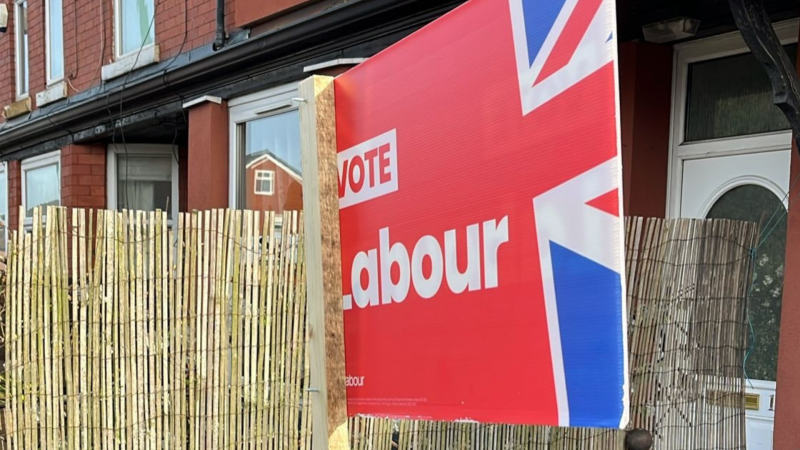

Photo: Angeliki Stogia

MPs, trade union leaders and Labour-linked organisations have expressed their disappointment and anger following the party’s dismal result at the Gorton and Denton by-election.

Labour were pushed to third in the constituency, as the Greens secured their first by-election win and first seat in the north of England, with Reform candidate Matthew Goodwin placing second.

Many Labour voices have called for a change in course following the result, with demands to shift to the left, while others have instead said the party needs to focus on addressing the issues that matter to the public, including the cost of living crisis and improving public services.

PM describes result as ‘very disappointing’

Prime Minister Keir Starmer has described the result as “very disappointing” but vowed to keep fighting for change.

He told broadcasters: “Incumbent governments quite often get results like that mid-term, but I do understand that voters are frustrated, they’re impatient for change.

“I came into politics late in life, as it happens, to fight for change for those people need it. The people who need an NHS that works for them, to be able to doctors appointment when they need it, to get the money they need in their pockets to pay their bills, and to have decent and better life.

“I will keep on fighting for those people as long as I’ve got breath in my body.”

First past the post ‘not fit for purpose’

However, Nottingham East MP Nadia Whittome pointed the blame for the by-election loss at the party’s leadership and said that Labour must not ape Reform, not put factional interests above all else and not play dirty.

She also called for a change in the voting system away from first past the post, describing it as “not fit for purpose”.

Whittome said: “If the government doesn’t introduce proportionate voting, a far-right party could win the next general election outright on a minority of the vote. This possibility inevitably makes tactical voting essential in some seats, and Labour is playing with fire.”

‘Stop treating progressive voters with contempt’

Richard Burgon also said the blame for the loss lay at Starmer’s door and accused him of putting “factional interests over having the candidate best placed to win, Andy Burnham”.

He said that the party’s leadership needed to “stop treating progressive voters with contempt” and called for a “return to real Labour values”.

Hull East MP Karl Turner said that the situation in Gorton and Denton could have been avoided and described the result as the “worst result the Labour Party could have ever had”.

Turner told the Huffington Post: “We are with a situation where we can’t out-left wing the Greens, we tried to out-right wing Reform on immigration and other such matters.

“My message to Keir Starmer, the Prime Minister, is this: why don’t we try and be Labour?”

Rayner says result in neighbouring seat is ‘wake up call’

Former Deputy Prime Minister and rumoured leadership contender Angela Rayner said the result should be a “wake up call” for Labour and said: “It’s time to really listen – and to reflect”.

Rayner, MP for the neighbouring constituency of Ashton-under-Lyne, said: “Voters want the change that we promised – and they voted for.

“If we want to unrig the system, if we want to make the change we were sent into government to make, we have to be braver.

“A labour agenda that puts people first.

“That’s what all of us across our movement need to rededicate ourselves to.”

‘We don’t need a shift to the left’

However, North Durham MP Luke Akehurst said that the result in Gorton and Denton confirmed that “Labour’s broad but fragile 2024 coalition faces potent threats from both left and right”.

He said: “We need to avoid kneejerk responses that address the concerns of one wing of support we need at the expense of losing the other, and focus on the core agenda around tackling the cost of living crisis and improving public services which all the voters we need to win back would share.”

Similarly, MP for Rugby John Slinger said that Labour should “stay calm” – and noted that the Conservatives lost all but one of 21 by-elections between 2010 and 2015, but still went on to win the 2015 general election.

“We don’t need a ‘shift to the left’ – because this is a Labour government delivering on Labour values already. Outside the hyper intense focus and unique nature of a by-election, people want a stable government, whose ministers are resolutely focused on their interests and to not sell simplistic solutions, but just get on with the job of improving our country.

“We’re in government, and governments lose by-elections. We need to dust ourselves down and get on with the job of government.”

However, another 2024 intake MP, generally considered loyal to Starmer, described it bluntly as a “total f**king disaster.”

‘Galloway won seats mid-term, only to lose them again’

Labour has sought to compare the Green Party’s success in a historically Labour seat to that of George Galloway, and that the party would regain the seat at a general election.

A Labour source said: “The Greens can win a by-election, but they cannot win a general election.

“George Galloway, who backed the Greens in this by-election, won seats mid-term, only to lose them again – and he certainly never became Prime Minister.

“The Green Party’s policies, including legalising all drugs and withdrawing from NATO, are not a serious programme for government.”

Unite: ‘Stop listening to rich mates and listen to everyday people’

Union leaders have expressed their anger following the result, with Unite general secretary Sharon Graham to “ditch the gimmicks and get back to being Labour”.

She said: “Workers and families are hurting. We have a cost of living crisis largely being ignored and investment in jobs for the here-and-now being blocked by a Treasury that doesn’t seem to understand the basics of what is needed to build Britain.

“Stop listening to your rich mates and start listening to everyday people.”

‘Labour face heavy losses in May without change of course’

Fire Brigades Union general secretary Steve Wright said that Labour’s strategy of framing the contest as ‘us versus Reform’ “is in tatters” and that the party’s traditional core vote is “collapsing before our eyes”.

“If the government does not change course immediately, it will face heavy losses in the May elections, and at that point, the political consequences for Keir Starmer will become unavoidable. The game will be up unless there is a decisive shift in direction.

The Labour Party needs to listen to the people, not Parliament. It needs to listen to its members and affiliated unions, not corporate lobbyists. And it must end the now completely discredited factionalism that has come to define far too much of its internal culture and decision-making.”

‘Labour must rediscover radical soul’

General secretary of the TSSA Maryam Eslamdoust said that Labour’s lurch to the right under Starmer’s leadership had resulted in a “haemorrhaging” of votes to the Green Party.

She said that a change in leader would not be enough and said: “Labour must rediscover its radical soul and start to deliver for the British public by extending public ownership of key industries like water, energy, and mail, as well as substantially increasing the minimum wage for all workers. 

“Only by embracing ‘Real Labour’ policies, that must also include a wealth tax to fund public services, will we be able to win back support from the voters who switched from our party to the Greens.”

‘Labour must confront twin populisms we face’

Fabian Society general secretary Joe Dromey also branded the by-election as dealing a “bruising result” to Labour and that a fragmentation of Labour’s coalition has lost one of the party’s safest seats.

“Labour must confront the twin populisms that we face. We need to stand up more strongly against the division peddled by Farage, and we must expose the simplistic solutions offered by Polanski.

“But Labour must also articulate a bold, hopeful and unifying vision of the future. One which shows our values in action, and which reunites our coalition.
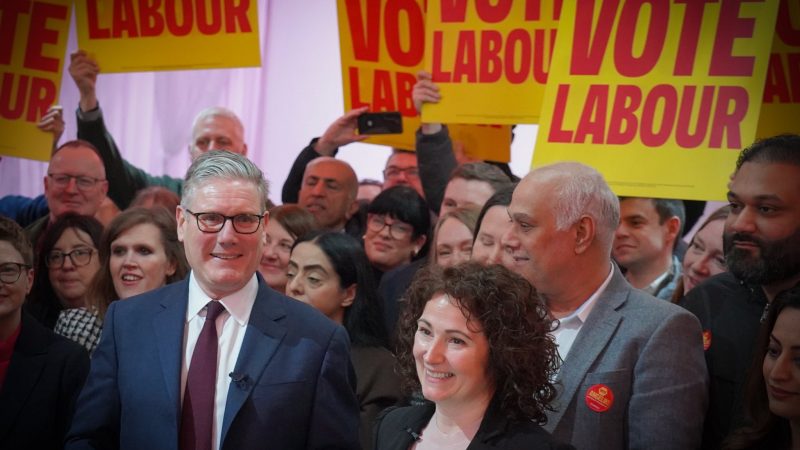

Photo: Angeliki Stogia

So, let’s start with the good news – Reform UK does not have a new MP. Matt Goodwin suffered a bad loss.

At the start of this campaign it was very much felt that Reform could easily take this seat.  Perhaps we’re now seeing that the ‘teal wave’, which had been seemingly unstoppable for so long, may have in fact crested.

However, that’s about all the electoral good news for Labour today (though we do have our usual round up of how Labour is delivering in government). Coming third in a seat that we’d previously held by over 13,000 votes is going to raise inevitable questions for Labour’s leadership and strategy. In particular, their relentless focus on Labour to Reform switchers – which has opened up space to Labour’s left which the Green Party capitalised on to devastating effect last night to win their fifth MP and first in the north of England.

Some realism will be needed when asking these questions.

First of all, midterm by-elections do tend to produce results that are unfavourable to the sitting government – especially one that is unpopular. Secondly, it will be reasonable to argue that there has not yet been time for the things Labour has done right to bear fruit.

None of which is to argue that last night’s result was inevitable.

The most obvious question this morning is would Labour have done better if Andy Burnham had been the candidate?

That is to take nothing away from Labour’s Angeliki Stogia who fought a very positive, very energetic campaign. But the Greater Manchester Mayor’s popularity, especially when contrasted with the UK Labour Government overall, is significant. Could running this popular figurehead have made Labour the more obvious ‘stop Reform’ choice? Obviously nobody can prove a counterfactual, but some reports from the doorstep show that people were saying that they would have voted for Burnham but could not vote for Labour more broadly.

Even this inevitably leads to even tougher questions. If Burnham had won, that would have created an expensive and difficult by-election for that Greater Manchester mayoralty. Is the calculation, therefore, that it was better to risk this mid-term by-election loss in order to prevent putting that mayoralty at risk of being run by populists of the left or the right?

That is the case that Keir Starmer will have to make. He made it known that he led from the front in blocking Andy Burnham’s candidacy. Therefore, he will need to make the argument that this was the right thing to do for the party overall in a long-term strategic approach even if it might have been the wrong tactic in Gorton and Denton.

Let’s be blunt – the circumstances of this by-election could not have been worse for Labour. Not only had the whole campaign started with a high profile internal row over Burnham’s candidacy but throughout the short campaign one news story has dominated  – that of the relationship of Peter Mandelson with Jeffrey Epstein and Mandelson’s influence with senior figures in Keir Starmer’s government.

This row has already resulted in the loss of a number of staff from Number 10 including Starmer’s right hand man Morgan McSweeney. Many of these were also figures who were largely involved in trying to bring the Party to particularly focus on those Labour to Reform switchers at the expense of leaving our left flank exposed. With them leaving, that may already be changing, but that doesn’t mean that there aren’t lessons still to be learned.

When I was speaking to our reporter James Tibbitts before the result came in last night, he said that one thing that had clearly struck him was the internal unity that had been displayed in Gorton and Denton. People working from across the factions of the party to get behind the candidate and to pull positively in the same direction.

Now, obviously, this result is not what any of those people wanted. But that energy, that working together rather than fighting each other may well be a key part of turning around Labour’s fortunes going forward.

If we simply make this a chance to attack the leadership and revive internal fights, we might lose something very precious and very fragile that Labour members started to rebuild on those doorsteps. However, if we also mistake the need for unity for a need for blind loyalty, we will fail to have the difficult conversations about where, how and why Labour is getting things wrong.

Both unquestioning loyalty and factional infighting are blind alleys. Instead, Labour must continue to work in the spirit of unity but to do so with honesty and transparency and encourage a discussion between all of the parts of the party; a discussion where all feel as valued and energised as they did on those doorsteps yesterday. All find a way to feel part of what is being built enabling them to pull in the same direction and to work to make this Labour government a success in policy, political, electoral and cultural terms.

There’s still time to do that but the clock is ticking. LabourList will continue to provide a platform for all those wishing to discuss all things Labour in that spirit of honesty, togetherness and transparency.

For today, we want to thank the thousands of activists who hit the doorsteps in Gorton and Denton. We want to thank Angeliki Stogia for running an incredible and positive campaign and we want to thank you, our readers, for ensuring that LabourList is the space that Labour needs to ensure that we can be a robust, forward-looking, positive and energised party.

We saw defeat last night and it hurts. But underneath that we may also have seen positive signs of things to come. Let’s build on that.


Jeremy Corbyn pledges to ‘work constructively with the Greens’ following Gorton and Dentoby-election
TODAY
Left Foot Forward

He also congratulated Hannah Spencer on her victory
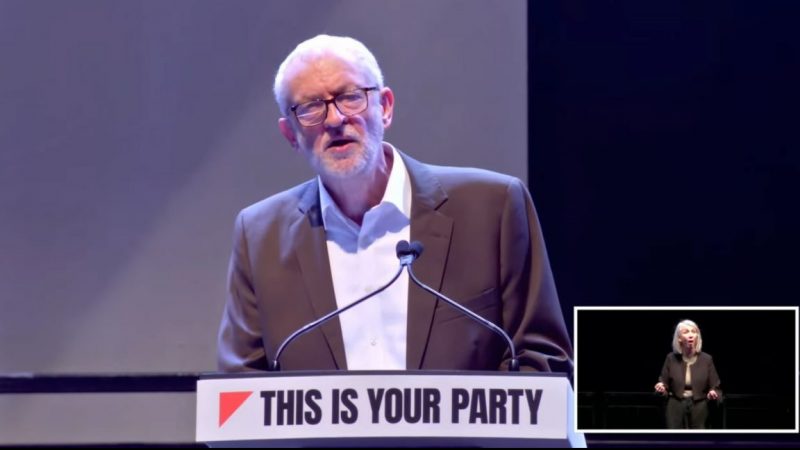


The former Labour Party leader Jeremy Corbyn has pledged that his new political outfit – Your Party – will ‘work constructively with the Greens’ following the Gorton and Denton by-election.

Corbyn also congratulated the Green Party candidate – now MP – Hannah Spencer for her victory in the by-election. Corbyn endorsed the Green Party in the by-election.

Speaking following the by-election, Corbyn said: “Congratulations to Hannah Spencer on a stunning victory.

“Proud to support a campaign built on hope and humanity.

“Under our new leadership team, Your Party will work constructively with the Greens, because there is only one way we can bring about real change: together.”

Corbyn’s comments also follow the elections to the Your Party Central Executive Committee (CEC) – the collective leadership body that will be running the party. In those elections, the slate backed by Corbyn – The Many – won 14 of the 24 seats on the CEC.

Chris Jarvis is head of strategy and development at Left Foot Forward


Matt Goodwin slammed for claiming Reform lost by-election due to ‘Muslim sectarianism’ and alleged family voting

TODAY
Left Foot Forward News


'You got whipped. But instead of being gracious, you make up an arrant, racist libellous story'



Matt Goodwin, GB News presenter and Reform’s candidate in the Gorton and Denton by-election was rejected at the polls yesterday.

Goodwin ran his campaign saying that only he would prioritise the people of Gorton and Denton, and not Muslim voters.

At the polls, Goodwin’s message was rejected. The Greens’ Hannah Spencer won 14,980 votes, and Goodwin came second, with over 4,400 fewer votes.

After losing, Goodwin issued an inflammatory losing statement claiming that Reform had lost due to Muslim sectarianism.

Goodwin wrote on X: “We are losing our country. A dangerous Muslim sectarianism has emerged. We have only one general election left to save Britain. Vote Reform every chance you get. I will continue the fight. I will always fight for you. I will stand at the next general election. Matt.”

Both Goodwin and Nigel Farage have also been saying that there had been evidence of “family voting” in polling booths yesterday. Family voting is where two voters use one polling booth at the same time, and can involve husbands telling their wives how to vote.

Democracy Volunteers raised the issue after the polls closed, and appears to have not reported the allegations to the police.

A spokesperson for the local council’s acting returning officer said that if the observers had been “so concerned about alleged issues they could and should have raised them with us during polling hours so that immediate action could be taken”.

The statement added: “It is extremely disappointing that Democracy Volunteers have waited until after polls have closed to make such claims.”

Democracy Volunteers did not mention race or ethnicity, but Farage said it raised concerns about “democratic process in predominantly Muslim areas”.

Reacting to Goodwin’s statement, one X user, Mike Galsworthy, said: “You got whipped.

“But instead of being gracious, you make up an arrant, racist libellous story …which there is no police validation of…

– and which you think accounts for over 4,000 votes?? Really? This is Trump tactics on your part – it’s undermining democracy in a sulk.”

Investigative journalist Carole Cadwalladr wrote on X: “This is racism, pure and simple. It’s also a test. The UK press needs to describe it for exactly what it is: that Reform’s candidate made a racist and inflammatory losing statement.”

Salma Yaqoob wrote: “Almost feel sorry for the haters who are trying to spin Muslims voting for a woman in a party led by a gay Jewish man is evidence of Islamist sectarianism.

“In fact it’s evidence of genuine tolerance, rejection of superficial identity politics and ability to prioritise tackling common concerns of cost of living, protecting public services and rejecting war mongering. And the promotion of mutual respect and individual freedoms.

“The coming together of people is terrifying for the ruling elites.”

Olivia Barber is a reporter at Left Foot Forward


Israeli Settlers Killed Palestinian American Teen in Rising Assault on West Bank

NOT A PEEP OUT OF WHITEHOUSE

Loved ones are mourning Nasrallah Abu Siyam, a US citizen born in Philadelphia who was shot by Israeli settlers.
February 26, 2026

Friends of Nasrallah Abu Siyam, who was killed by Israeli settlers on February 19, 2026, gather at a makeshift memorial on a hill overlooking Mukhmas.
Theia Chatelle

Red poppies dot the hillside in the West Bank where Israeli settlers from the Neve Erez outpost killed 19-year-old Palestinian American Nasrallah Abu Siyam, a U.S. citizen born in Philadelphia.

On February 22, Abu Siyam’s closest friends gathered with a village elder to pay their respects at a makeshift memorial on a hill overlooking Mukhmas, the Palestinian village in the West Bank where the Israeli settlers killed Abu Siyam. The winter rains have come to Israel and the West Bank, but Abu Siyam’s blood had not been washed from the ground. Stones surrounded the site of his killing, marked with a Palestinian flag.

The group of 12 knelt and recited prayers with the village elder, who urged them to focus on prayer and reflection during the holy month of Ramadan instead of revenge. Abu Siyam was the sixth Palestinian American killed by Israeli settlers or the Israeli military in the West Bank since October 7, 2023. More than 230 Palestinians were killed by Israeli forces and settlers in the West Bank last year.

Present at the makeshift memorial service was a Palestinian American named Akram Abu Ali, who lives in Bergen, New Jersey, and works in wholesale supply. Abu Ali told Truthout that he knew the Abu Siyam family from growing up in the village and was at the scene in Mukhmas when Israeli settlers killed Abu Siyam. He said he was visiting his family in Mukhmas for Ramadan, as he does every year, and did not expect violence.

Like many West Bank villages, Mukhmas has a significant Palestinian American population, Abu Ali said. This is the result of a wave of immigration from the West Bank to the United States following the Six-Day War in 1967 and Israel’s occupation of the territory. Those who were able to leave passed their U.S. citizenship to their children and grandchildren.


West Bank Settlers Have Injured More People in 2025 Than Last 2 Years Combined
Israeli settler violence has hit a record high this year, with explicit backing from the government.  By Sharon Zhang , Truthout December 4, 2025


Turmus Ayya, a wealthy Palestinian town in the central West Bank, has a Palestinian American population in the thousands and is frequently targeted in settler attacks. According to Abu Ali, an eyewitness to the events on the hillside, the trouble began when seven or eight settlers entered a sheep pen and began leading hundreds of sheep away from the village toward Ma’ale Mikhmas.


“What’s stopping these guys from coming in tomorrow, burning houses, burning cars, stealing more sheep, or maybe going into homes and stealing furniture?”

In response to increasing settler violence, the village council had installed a security system with cameras and motion detectors. When word spread in a village WhatsApp group that settlers were stealing sheep, a group of Palestinian youth went out to confront them. Footage of the incident shows Palestinian youth throwing rocks at the settlers, who then called the Israeli military.

About 40 minutes later, Israeli forces arrived and deployed tear gas and stun grenades. The Palestinian Red Crescent said Palestinians were injured by settler fire and beatings by Israeli forces.

Abu Ali and other eyewitnesses, who spoke to Truthout on the condition of anonymity, said one settler — who has not been publicly identified — warned the group: “If you guys get close, I’m gonna shoot you.” Palestinians responded, “All we want is the kid. We are not here to fight. We just want to, you know, don’t kill this kid that you guys are beating on.”

Abu Siyam was struck in the leg. Another Palestinian was shot in the leg after a bullet deflected off a phone in his pocket. Four people were injured in the attack, in addition to Abu Siyam, who died on the way to a hospital in Ramallah.

Independent journalist Jasper Nathaniel, who spoke with family members and eyewitnesses, reported that the ambulance was held at a checkpoint while exiting the village, adding to the delay. Palestinians in the West Bank have frequently reported being held up at checkpoints while en route to hospitals.

Médecins Sans Frontières, in its February 2025 report “Inflicting Harm and Denying Care,” documented dozens of cases of Palestinians seeking medical care who were impeded by the Israeli military at checkpoints.


The killing marked another red line, with settlers increasingly targeting Palestinian population centers in Area A, which is nominally governed by the Palestinian Authority.

After news of Abu Siyam’s death, the U.S. State Department said: “We can confirm the death of a U.S. citizen in the West Bank on Feb. 18. We extend our deepest condolences to the family and expect a full, thorough and transparent investigation into the circumstances surrounding the death.”

The U.S. has a long track record of failing to hold the Israeli government accountable for investigating and prosecuting those who kill U.S. citizens in the West Bank. On July 11, 2024, Palestinian American Sayfollah Musallet was beaten to death by Israeli settlers in Sinjil in the occupied West Bank, but the U.S. did not launch an independent investigation.

Abu Siyam was the first person from the village killed by Israeli settlers — a grim milestone that residents said does not bode well for Mukhmas.

“What’s stopping these guys from coming in tomorrow, burning houses, burning cars, stealing more sheep, or maybe going into homes and stealing furniture?” Abu Ali said. “We are a village. We’re choked. There is nowhere for us to go. We’re stuck here.”

In recent years, several new settler outposts have been established on the hilltops surrounding Mukhmas, leading to more frequent confrontations. Such incidents, along with expanding settlements, have prompted Israeli and international activists to establish protective presence patrols in the village in hopes of deterring violence.


The UN secretary-general urged Israeli authorities “to take concrete steps to halt and prevent all acts of violence by Israeli settlers against the Palestinian population.”

Abu Ali said he fears that young people, who, unlike him, are not permitted to leave the West Bank, could be driven to retaliate and risk their lives. “Focus on other things,” he said. “They’re young. Just stay away. Even if they come, you guys have to stay away.”

Rabbi Arik Ascherman, former director of Rabbis for Human Rights and founder of Torat Tzedek, spends many nights in Mukhmas as part of a protective presence effort. He has worked to counter settler violence for more than two decades.

“We have reached a tipping point where our work is becoming less and less effective. We just can’t keep up,” Ascherman said.

He said the killing marked another red line, with settlers increasingly targeting Palestinian population centers in Area A, which is nominally governed by the Palestinian Authority, rather than limiting attacks to rural enclaves in Israeli-controlled Area C, which have historically been more vulnerable to displacement.

Abu Ali said his family owns land on the outskirts of the village but cannot access it because it lies in Area C, where they say they face harassment from Israeli soldiers and settlers. “It’s not close to the settlement,” he said. “But it’s like, you’re not allowed to go there.”

Khalid, a West Bank resident who works at a supermarket in Mukhmas and asked to be identified by first name only for safety reasons, said conditions have deteriorated over the past year, with more frequent incursions by settlers from nearby outposts.

Many settler attacks occur in Area C, which is under full Israeli military control and home to many Bedouin communities that have struggled to secure land claims or building permits, leaving them vulnerable to displacement.

Israeli National Security Minister Itamar Ben-Gvir appeared in a video posted on X by Mustafa Barghouti informing a Palestinian Bedouin resident that his home was under a demolition order because it had been built without authorization from the Israeli Civil Administration. In the video, he says: “We took Tel Aviv, we took Be’er Sheva, and you think you will stay here?”

Following Abu Siyam’s death, the UN secretary-general urged Israeli authorities “to take concrete steps to halt and prevent all acts of violence by Israeli settlers against the Palestinian population” in line with Israel’s “obligations as the occupying power.”


“Increasingly, Palestinians are displaced from one village, only to be chased to the next by Israeli settlers.”

Noah Benninga, academic director of the Center for Research on Dutch Jewry at the Hebrew University of Jerusalem, has been involved in protective presence activism since the COVID-19 pandemic. He has spent many sleepless nights in Mukhmas, documenting incidents of settler violence in hopes that his presence as an Israeli Jew would deter attacks.

“Until October 7, the activism still largely worked,” Benninga said. “But now everything has changed. It just doesn’t work like it used to. We keep showing up, and increasingly, Palestinians are displaced from one village, only to be chased to the next by Israeli settlers.”

Shops in Mukhmas remained closed as the community observed a period of mourning. Posters declaring Abu Siyam’s martyrdom were plastered across the village. Some youth taped posters to the hoods of their cars as they drove through the streets.

“Everyone knows everyone here,” Abu Ali said. “It’s a small village.” With so many Americans, he added, residents joke that “just like the Israelis, we’re going to set up a toll at the entrance for the Americans to contribute when they come back.”


This article is licensed under Creative Commons (CC BY-NC-ND 4.0), and you are free to share and republish under the terms of the license.


Theia Chatelle

Theia Chatelle is a conflict correspondent based between Ramallah and New Haven. She has written for The Intercept, The Nation, The New Arab, etc. She is an alumnus of the International Women’s Media Foundation and the Rory Peck Trust.
Interview

Robin D. G. Kelley: It’s Not Enough to Abolish ICE — We Have to Abolish the Police


“What’s happening now has happened before,” Kelley said, underscoring the anti-Blackness foundational to US fascism.
PublishedFebruary 26, 2026

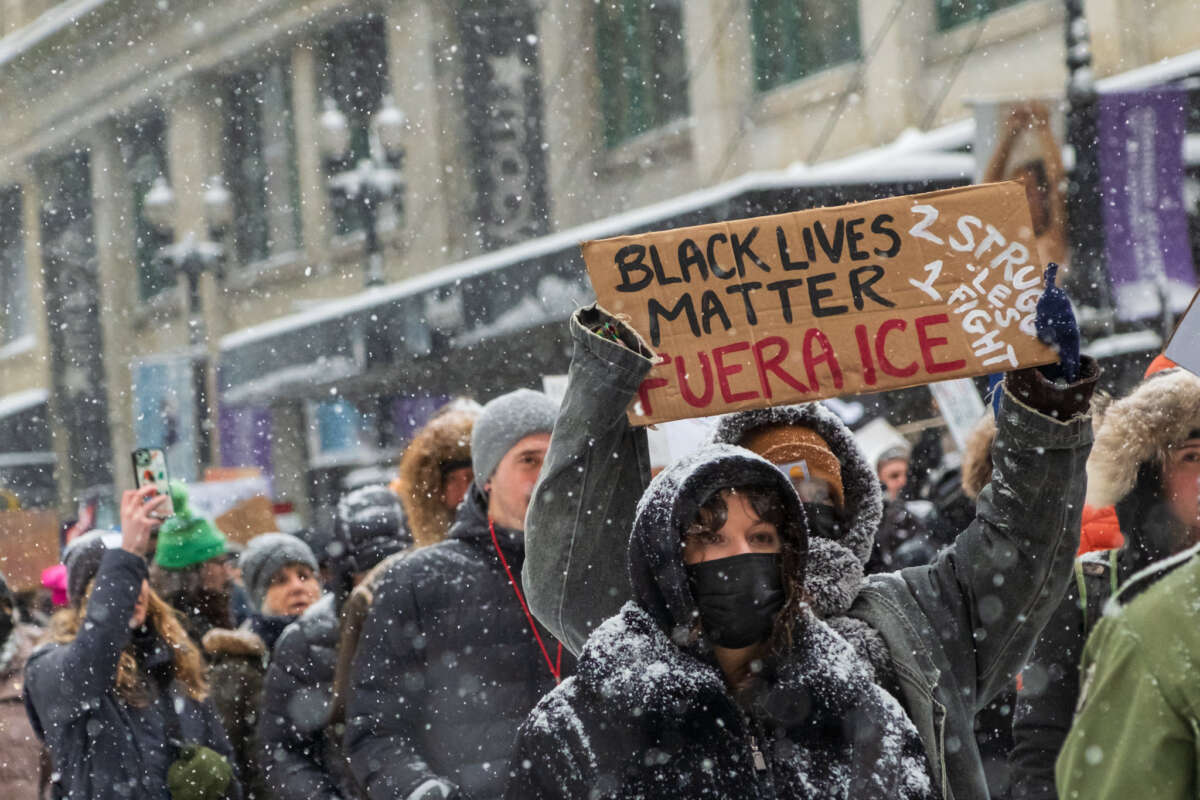
A protester holds a sign reading "Black Lives Matter Fuera ICE. 2 Struggles 1 Fight."

Under Donald Trump, U.S. Immigration and Customs Enforcement (ICE) has started appearing ever more like a private militia, unleashing brutal violence against families and displaying sycophantic loyalty to Trump as he mandates the dehumanizing treatment of immigrants.

In the days since January, when federal immigration agents in Minneapolis, Minnesota, killed 37-year-old Alex Pretti and 37-year-old Renee Nicole Good, it’s not surprising that ICE has begun drawing even more frequent comparison to Hitler’s fascist Brownshirts, the paramilitary wing of the Nazi Party.

As I’ve borne witness to these tragedies, I’ve often thought about how Black people meet this moment with an already-acute sense of what it means to live and die under the U.S.’s fascistic logics. For Black people, there were no killers in brown shirts, but there were plenty of killers in white sheets sanctioned through the support, encouragement, and participation of white law enforcement officers. The depth and complexity of what I’m feeling and thinking about this brutal historical resonance cries out for clarity and truth-telling. It is for this reason that I reached out to Robin D. G. Kelley, who is the Gary B. Nash Endowed Chair in U.S. History at the University of California, Los Angeles (UCLA), and author of several renowned books, including his newest and forthcoming book, Making a Killing: Capitalism, Cops, and the War on Black Life.

George Yancy: Robin, it is always an honor. As you said to Amy Goodman, “Jim Crow itself is a system of fascism, when you think about the denial of basic rights for whole groups of people, the way in which race is operating as a kind of nationalism against some kind of enemy threat, the corralling of human beings in ghettos. I mean, this is what we’ve been facing for a long time.” The point here is that this isn’t new. And we mustn’t forget. In The Black Antifascist Tradition: Fighting Back from Anti-Lynching to Abolition, Jeanelle K. Hope and Bill V. Mullen write, “On December 17, 1951, the US Civil Rights Congress, headed by Communist attorney William Patterson, presented a 240-page petition to the United Nations general assembly, entitled ‘We Charge Genocide.’” The charge of genocide was necessary, as it continues to be, because of the terror of anti-Blackness in this country, a form of terror that renders Black life fundamentally precarious and vulnerable to the forces of gratuitous state violence. I often fail to find the discourse to frame the ongoing history of anti-Blackness in this country. We’re not just talking about anti-Black beliefs and attitudes; it’s anti-Black fascism. I would like for you to talk about how war is an apt concept for critically thinking about the meaning and reality of anti-Blackness in the past and in the present.

Robin D. G. Kelley: Absolutely! No question! Anti-Blackness is foundational to U.S. fascism, which as you acknowledged, not only precedes the so-called “classical” fascism in Italy and Germany, but for Hitler and the Third Reich, a model for the racist and antisemitic Nuremberg laws. By the way, Robyn Maynard, a brilliant scholar/organizer, has an essay coming out in the Boston Review that maps out the history of anti-Blackness in U.S. immigration policies.

“Anti-Blackness is foundational to U.S. fascism.”

To your question, there are so many examples. Beginning in the present, we must never forget that the primary target of the Department of Homeland Security’s “Operation Metro Surge” in Minneapolis and St. Paul was the Somali population, Africans. It didn’t matter that the vast majority were U.S. citizens. Trump denigrated the entire community as “garbage” and declared: “I don’t want them in our country.” If we lived in a country where laws matter, the surge of nearly 3,000 ICE and Customs and Border Protection agents would be a direct violation of the civil rights of the Somali community.

Let’s also remember that the core anti-immigrant dog whistle that both Trump and JD Vance exploited in the run-up to the elections targeted Haitians in Springfield, Ohio, who had temporary protected status. The racist lies that Haitians were eating their (white) neighbors’ dogs (a literal dog whistle!) was strategic and, apparently, it worked.


“We must never forget that the primary target of the Department of Homeland Security’s ‘Operation Metro Surge’ in Minneapolis and St. Paul was the Somali population.”

But we can’t put all of this on Trump. Besides the long, long history of political, economic, military, and discursive war against the Haitian people, I can never erase the image of Haitian asylum seekers who had taken shelter under a bridge in Del Rio, Texas, being violently herded and brutalized by ICE agents on horses, as if they were fugitive slaves. It was the Biden-Harris administration, let’s not forget, that denied Haitians asylum and deported them in record numbers. More Haitians were deported under Joe Biden and Kamala Harris in their first few weeks in office than under Trump during his entire first term. Now, some might argue that Biden and Harris expanded the Haitian Family Reunification Parole Program, which grants “parole” to eligible migrants waiting for visas (dig the carceral language), but all this means is that they were granted temporary protections that forced them into low-wage, precarious work since their status was contingent on having a job, any job.

Let’s come back to the present. We all learned of the horrific murder of 43-year-old Keith Porter Jr. here in Southern California on New Year’s Eve. In case readers don’t know the story, Porter stepped outside his apartment and did what a lot of people do: fired off a few celebratory rounds from his rifle into the sky. Brian Palacios, an off-duty ICE agent who had recently moved into the same complex, wasn’t having it, so he put on his tactical gear, grabbed his weapons, went outside without identifying himself, and fatally shot Porter. The LAPD [Los Angeles Police Department] officers dispatched to the scene never asked Palacios to surrender his weapon, never gave him a sobriety test, didn’t investigate anything, really. The Department of Homeland Security’s liar-in-chief, Tricia McLaughlin, spun the incident as a “brave officer” taking out an “active shooter” after an exchange of gunfire. It just wasn’t true; every eyewitness confirmed there was no “exchange” of fire or hostilities. It was murder.


“If we lived in a country where laws matter, the surge of nearly 3,000 ICE and Customs and Border Protection agents would be a direct violation of the civil rights of the Somali community.”

This happened a week before Renee Nicole Good’s death, and yet Porter’s name is not mentioned among the martyrs of the anti-ICE resistance, except when Black folks complain about it. Not to take anything away from the extraordinary sacrifice made by Good and Pretti, but Porter was not white and he was not killed in the act of trying to stop ICE and protect his neighbors. Whereas Porter, much like George Floyd, was rendered a victim whose worthiness was constantly called into question, Good and Pretti were martyrs with whom it is impossible not to empathize.

Porter’s family and friends were pressed to do what Black families always do when they lose a loved one to state violence: reclaim his character by showing that he was a loving, doting father who called his mother every day, worked hard, and made everyone laugh. They had to make him human, to inform the (white) world that his life had as much value as that of Good and Pretti. It’s tired and should be unnecessary, and to her credit, even Renee Good’s sister, Annie Ganger, felt the need to remind people that the violence that took her sister’s life “isn’t new” and that it was unfair that “the way someone looks garners more or less attention. And I’m so sorry that this is the reality.” Meanwhile, the “brave” ICE agent (whose name the LAPD initially refused to release), it turned out, had a reputation for anti-Black and anti-Latinx racism, [allegations of perpetrating] child abuse, and had once showed up at a youth sporting event armed.


“The movement demanding justice for Keith Porter not only called out the complicity between the LAPD and ICE but also refused to treat federal agents as exceptional.”

The point I’m trying to make here isn’t simply that Keith Porter needs to be acknowledged but rather the violence that stole him from his family not only “isn’t new,” it is routine. As a Black man who was native to Compton, California, he had an invisible target on his back. He knew what it is like to live in a police state. Premature death at the hands of armed agents of the state is merely a hazard of being Black in America. This is why the movement demanding justice for Keith Porter not only called out the complicity between the LAPD and ICE but also refused to treat federal agents as exceptional, insisting that they are part of a larger matrix of state violence encompassing all law enforcement and the military. It’s not enough to “abolish ICE”; we have to abolish the police force and replace it with a radically different form of public safety. With regards to Keith Porter, of course randomly shooting a gun in the air is not safe and should not be permitted, but we have to address the reasons he even owns a gun. He and so many other folks like him just don’t feel safe, and U.S. settler culture is rooted in violence as a first response and guns as the chief instrument of violence. Police simply don’t help. Abolition requires changing the culture, not just eliminating the instruments of the culture.

Assuming that war is an apt concept, what does this mean in terms of how we ought to respond? I ask you this question with sincerity. There are those who will say, “Oh, Yancy must believe in armed struggle on the streets of America.” This would be a non sequitur. There is too much of my mother’s Christian sensibilities in me to hold this position. Indeed, I try, I struggle, to manifest agape (the sense of unconditional neighborly love) toward all human beings. But I love my children as you love your daughter. Indeed, for me, that love refuses a form of hospitality that facilitates their harm. I can’t possibly stand by when the Brownshirts come hammering at the door with fascistic bloodlust in their eyes. Here I’m reminded of Claude McKay’s poem, “If We Must Die.” Toward the end he writes:

O kinsmen! we must meet the common foe!

Though far outnumbered let us show us brave,

And for their thousand blows deal one death-blow!

What though before us lies the open grave?

Like men we’ll face the murderous, cowardly pack,

Pressed to the wall, dying, but fighting back!

I appreciate your invocation of Claude McKay. As you know, that poem is almost always cited as an expression of the so-called New Negro, the spirit of defiance that suddenly erupts in the wake of World War I and the “Red Summer” of 1919. But this is a misnomer since Black communities had been practicing armed self-defense since they were dragged to these shores. Armed self-defense is the tradition; nonviolent civil disobedience is the rupture, the break with the past. The historical record is clear and unambiguous, as we’ve seen in the writings (memoirs and scholarship) of Robert and Mabel Williams, Akinyele Umoja, Charles E. Cobb Jr., Kellie Carter Jackson, Lance Hill, Jasmin Young, Nicholas Johnson, Simon Wendt, and many others. These writers have shown us, time and time again, that African Americans have a very long and surprisingly successful tradition of armed self-defense against mob violence. Armed self-defense has saved countless lives.


“It’s not enough to ‘abolish ICE’; we have to abolish the police force and replace it with a radically different form of public safety.”

To be fair, militant nonviolent civil disobedience also courageously faces “the murderous, cowardly pack” and is undeniably “fighting back.” But Dr. Martin Luther King Jr.’s first impulse to keep a pistol by his bedside during the Montgomery bus boycott to protect his family against organized, state-sanctioned mob violence made perfect sense. You can’t win the racist mob or the brownshirts over with love, certainly not in the midst of war. This is why I find those commercials featuring an ICE agent who comes home to his kids and has his conscience suddenly pricked by a child’s query so frustrating, naïve, and ineffectual. If conscience mattered, the faces and screams of the people they brutalized, the lives they took, and the loved ones who had to bear witness would have convinced most of these dudes to quit their jobs long ago.

This kind of terror is not new; ICE and Border Patrol agents have been behaving like this for decades. Stephen Miller didn’t have to tell them what to do. Restraint must come before reeducation and redemption, and imposing restraint is impossible without consequences and accountability. As Dr. King said repeatedly in various speeches, “It may be true that the law cannot make a man love me, but it can restrain him from lynching me, and I think that’s pretty important also.”

War is certainly an apt concept here. It is how I frame the assault on Black people in my forthcoming book, Making a Killing: Capitalism, Cops, and the War on Black Life. As I write in the book, “Policing is war by another name…. Whether we call it a war on crime, a war on militants, a war on drugs, law enforcement at every level has turned many Black neighborhoods into killing fields and open-air prisons, stripping vulnerable residents of equal protection, habeas corpus, freedom of movement, even protection from torture.” But as the anthropologist Orisanmi Burton put it in his book, Tip of the Spear: Black Radicalism, Prison Repression, and the Long Attica Revolt, this is not a war we chose. He refers to sites of incarceration as “sites of counter-war,” which can be extended to virtually all Black and Black-led resistance to injustice, mob rule, criminalization, state violence, exploitation, and the very conditions that make Black people vulnerable to premature death. This counter-war holds out the possibility of freeing everyone, including those recruited to maintain systems of domination.

That said, I think the debate over whether we’re ready to go to war is a false debate because we’re already at war. We were at war before Trump came into office, before the neoliberal turn, before Jim Crow, before all of that. It begins with the kidnapping and trafficking of our African ancestors, and the violent dispossession of our Indigenous ancestors. Both processes fall under the category of genocide. John Brown was right to call American slavery “a most barbarous, unprovoked, and unjustifiable war of one portion of its citizens upon another portion.” These wars are fundamentally about turning flesh and earth into property, and whole peoples into combatants and commodities.


“Revolutionary pessimism is accompanied by what surrealist André Breton termed ‘anticipatory optimism’ — the commitment to struggle in dark times and preparing to prevail.”

We have to consider the centuries of continuous, protracted war. Once we acknowledge the reality of protracted war and counter-war, then we have to stretch our definition of “armed struggle.” In this asymmetrical war, guns are not the only weapons. Arson has been a weapon of the enslaved in their own counter-war against Christians holding them in bondage. Minneapolis is where they burned down the police station. Civil resistance has taken on so many forms that don’t fall neatly under traditional categories of “violence” or nonviolence, and have revealed the wide arsenal of “arms” people have deployed in struggle.

Again, in Making a Killing, which is as much if not more about collective resistance (counter-war) than acts of state violence (war), I write about rebellion in Cincinnati, Chicago, Louisville, St. Louis, New York, and elsewhere, and building on the work of Akinyele Umoja, who wrote We Will Shoot Back, I chart the tradition of armed self-defense in Mississippi in light of the police-perpetrated killing of Jonathan Sanders in 2015. Once we acknowledge the long war and redefine armed struggle, we’ll recognize that we’re already in it. We have to figure out what to do, how to strategize, and what it means when casualties of war are white people — which, of course, is not a new thing. It’s a rare thing and ebbs and flows, depending on the extent to which white people see this as their fight.

Your book Freedom Dreams: The Black Radical Imagination was published in 2002. That was 24 years ago. For many, it is no doubt hard to dream, and I mean this both literally and figuratively. There are times when I try to fall asleep at night and I become obsessed with a singular nightmare: the creation of private militias that have state approval to throw me in jail for writing something or for refusing to embrace Trump’s fascism or our having this discussion. I see hordes of Black people being shot in the streets with impunity. I see so many people being disappeared. I see American-style gulags. I see the complete disregard and overthrow of the Constitution where there are no checks and balances, where there is no longer a two-party system, where due process is nonexistent, and there are literally no exits out of this country. I see my neighbor turning me in because I expressed hatred toward white supremacy and shouted, “Love First!” over “America First!” In this case, perhaps all of those who care about freedom, community, their neighbors, and the importance of democracy “will find out,” as Trump said about Chicago, “why it’s called the Department of WAR.” I believe in the power of movements, but Trump is malicious and I have no doubt that he would, if given the opportunity (perhaps I should say, when given the opportunity), unleash the full might of the Department of War on us. How do we continue to dream, Robin, to have freedom dreams, when the U.S. continues to amplify the reality of dystopic nightmares?

I feel you. I also know we’ve been through worse. A “private militia” (read: mob and police) with “state approval to throw me in jail for writing something” or challenging the status quo by, say, trying to vote, or “hordes of Black people being shot in the streets with impunity,” and “American-style gulags” (keeping in mind how many gulags were actually modeled on U.S. convict labor camps) — and now we’re talking about Meridian, Mississippi (1871), Colfax, Louisiana (1873), Wilmington, North Carolina (1898), New Orleans, Louisiana (1900), Atlanta, Georgia (1906), Springfield, Illinois (1908), East St. Louis, Illinois (1917), Elaine, Arkansas (1919), and, as you and I discussed at length back in 2021, Tulsa, Oklahoma (1921). We have been here. But I understand that to say what’s happening now has happened before, sometimes worse, gives us little comfort.

I do want to make a case for the value of “freedom dreams” in times like these. I’m always reminding readers that what I called the Black radical imagination is not wishful thinking, not an escape from reality, not some kind of dream state conjured and nurtured independent of the day-to-day struggles on the ground. The main point of the book is that the radical visions animating social movements are forged in collective resistance and a critical, clear-eyed analysis of the social order. In fact, in the 20th-anniversary edition which came out in 2022, I underscore this point, writing, “The book does not prioritize ‘freedom dreams’ to the exclusion of ‘fascist nightmares.’ If anything, I show that freedom dreams are born of fascist nightmares, or, better yet, born against fascist nightmares.” The context in which I wrote it, the early Bush years, was decidedly an era of dystopic nightmares: a wave of police killings, culminating in the massive response to the murder of Amadou Diallo, 9/11, wars in Afghanistan and Iraq, accelerating neoliberalism, and so forth. Moreover, the movements I explore imagined freedom in the darkest of times: Black Exodus out of an Egyptland of lynching, disfranchisement, new forms of slavery, and segregation; Black embrace of socialist revolution at the height of fascism, global economic crisis, and anti-communism; and Black radical feminism in a moment of heightened sexual violence, femicide, carceral expansion, and an increasingly masculinist Black freedom movement.

In other words, all of these movements were fueled not by false optimism but by a deep understanding of the death-dealing structures of gendered racial capitalism. Freedom dreaming, as it were, is not a luxury; our survival as a people depends on envisioning a radically different future for all and fighting to bring it into existence. The fight or the struggle is precisely how visions of the future are forged, clarified, revised, or discarded.

I just mentioned the power of movements. Coming back to Freedom Dreams, you argue that that there is more that is needed to fight for freedom than organized protest, marches, sit-ins, strikes, and slowdowns. For you, surrealism is also necessary. You write, “Surrealism recognizes that any revolution must begin with thought, with how we imagine a New World, with how we reconstruct our social and individual relationships, with unleashing our desire and building a new future on the basis of love and creativity rather than rationality (which is like rationalization, the same word they use for improving capitalist production and limiting people’s needs).” When I read that passage again, I thought of the power of poiesis — that sense of creation or that sense of bringing something that is radically new into being. Speak to how surrealism continues to inform your understanding of liberation and perhaps even hope amid so much fear, pain, anger, and perhaps, like for me, nightmarishness.

Really great question, one I continued to ponder after writing Freedom Dreams. A critical argument I make in that chapter and elsewhere is that the Africans across the diaspora had been practicing or living surrealism long before Europeans named it. I gave examples, one being the blues. I left it undeveloped in the book, but since then have been thinking about the blues alongside Amiri Baraka, Toni Morrison, Hazel Carby, Fred Moten, Daphne Brooks, the brilliant geographer Clyde Woods, and French surrealist whom I don’t mention in Freedom Dreams, Pierre Naville. The blues, not just as music but epistemology, can be defined as a clear-eyed way of knowing and revealing the world that recognizes the tragedy and humor in everyday life, as well as the capacity of people to survive, think, and resist in the face of adversity — or, in your words, so much fear, pain, anger, and nightmarishness. True, rising nationalism, xenophobia, authoritarianism, militarism, neoliberalism, and the relative weakness of contemporary mass movements offers little reassurance that a liberated future is on the horizon. But the blues, as with the Black radical imagination, resists fatalism and inevitability. It demands and narrates action.


“We need to be abolition communist feminists. We are not only demolishers of worlds, we are builders.”

This is where I find Pierre Naville helpful. A founding member of the Paris Surrealist group and one of the first to join the Communist Party, in 1926 he published a pamphlet titled “The Revolution and Intellectuals,” which argued, among other things, that pessimism was not a reason for despair, withdrawal, melancholy, or bitterness. What he called the “richness of a genuine pessimism” (which he traced to Hegel’s philosophy and “Marx’s revolutionary method”) requires action and must take political form. Naville’s revolutionary pessimism was a critique of the optimism of Stalinist assertions about the inevitable triumph of socialism in the Soviet Union and the imminent fall of capitalism. It was also a critique of the “shallow optimism” of social democrats who believed that they could eventually vote their way into creating a socialist commonwealth. His revolutionary pessimism was not fatalistic resignation or an obsession with the “decline” of elites or nations or Western civilization. Rather, it was a call for collective revolutionary action by, and on behalf of, the oppressed classes. Revolutions are not inevitable, nor do they correspond with particular objective conditions. People just don’t have the luxury to wait for the “right conditions.” Instead, movements must interrupt historical processes leading to catastrophe, by any means necessary. It is not enough to “hope,” we must be determined.

Revolutionary pessimism, therefore, is accompanied by what surrealist André Breton termed “anticipatory optimism” — the commitment to struggle in dark times and preparing to prevail. I am hesitant to say “win” because, as I’ve written elsewhere, assessing movements only in terms of wins and losses obscures the power of movements to inform and transform us. Here is the power of poiesis, of making new worlds and new relationships — not from nothing but from love — rather than reforming or bandaging old systems. So we come full circle. It is not enough to be anti-capitalist and/or anti-prisons and police, to beat back a half-millennium of catastrophe. We need to be abolition communist feminists. We are not only demolishers of worlds, we are builders. As Ruth Wilson Gilmore once told an interviewer, “Abolition is figuring out how to work with people to make something rather than figuring out how to erase something…. Abolition is a theory of change, it’s a theory of social life. It’s about making things.”


This article is licensed under Creative Commons (CC BY-NC-ND 4.0), and you are free to share and republish under the terms of the license.


George Yancy

George Yancy is the Samuel Candler Dobbs professor of philosophy at Emory University and a Montgomery fellow at Dartmouth College. He is also the University of Pennsylvania’s inaugural fellow in the Provost’s Distinguished Faculty Fellowship Program (2019-2020 academic year). He is the author, editor and co-editor of over 25 books, including Black Bodies, White Gazes; Look, A White; Backlash: What Happens When We Talk Honestly about Racism in America; and Across Black Spaces: Essays and Interviews from an American Philosopher published by Rowman & Littlefield in 2020. His most recent books include a collection of critical interviews entitled, Until Our Lungs Give Out: Conversations on Race, Justice, and the Future (Rowman & Littlefield, 2023), and a coedited book (with philosopher Bill Bywater) entitled, In Sheep’s Clothing: The Idolatry of White Christian Nationalism (Roman & Littlefield, 2024).
Trump’s Economy Is Hurting Americans — and Setting Us Up for Long-Term Collapse

Trump boasts of a booming economy. He’s dead wrong. A year into Trump 2.0, the affordability crisis is worse than ever.
PublishedFebruary 27, 2026

Donald Trump holds up a chart as he speaks about the economy in the Oval Office of the White House on August 7, 2025, in Washington, D.C.BRENDAN SMIALOWSKI / AFP via Getty Images

President Donald Trump is boasting about the economy one year into his term. He claims that inflation has been defeated, growth is unprecedented, incomes are rising, and his tariffs are generating hundreds of billions for the U.S. economy. This is all hogwash, according to progressive economist Gerald Epstein, a leading global authority on macroeconomic policy and finance.

In the exclusive interview for Truthout that follows, Epstein explains how, in reality, Trump’s policies have created an affordability crisis, and the growing deficit and humongous public debt are now bringing the country close to a tipping point.

C. J. Polychroniou: The state of the U.S. economy in Donald Trump’s first year of his second presidency has evolved in various ways. Trump, of course, has boasted on multiple occasions that the economy is “booming” and that the U.S. is the “hottest country anywhere in the world,” but there is plenty of data to suggest that the reality is quite different. There is apparently an affordability crisis and consumer confidence has dropped to its lowest point in 12 years. Help us make sense of what’s going on with the economy under Trump 2.0. What exactly is the affordability crisis all about and how has it evolved since Trump’s return to the White House?

Gerald Epstein: Typical of Trump, he is boasting about the performance of the U.S. economy in the most hyperbolic terms. He even declared that his economy is “the greatest ever in history” in a recent interview on Fox Business Network. He points to the stock market and allegedly low inflation to back his claim. Is that the true state of the U.S. economy?

Donald Trump routinely barks that he inherited a terrible economy from Joe Biden and that he has turned it around: Now we have fast economic growth, low inflation, low consumer goods prices, high stock prices, and his great economy is going to get so good that it will be the best the world has ever seen. But basic economic data demonstrate that Trump’s boasts are simply wrong.

The best way to characterize the Trump economy compared to the economy the Biden administration left him, is this: Trump’s economy is mostly a continuation of Biden’s, but with a big tilt to the top, and with a big chance that it will soon run off the rails.

“Trump’s tariffs are not helping with the affordability crisis.”

The overall inflation rate is about the same now (2.7 percent at the end of 2025) as it was when Biden left office (2.9 percent); the unemployment rate (4.3 percent in January 2026) is slightly higher than it was when Biden left office (4.1 percent). The rate of growth is similar, as well as the rate of growth of average real wages (wages minus inflation).

Some things are much worse, and these are directly connected to Trump administration policies and, ironically, run directly counter to Trump’s self-stated objectives. Trump’s tariffs have raised the cost of many U.S. goods, as well as the cost of food, and lowered the profits of medium-sized and small businesses, which, unlike big firms, have much less flexibility and fewer resources to adjust. Trump’s immigration dragnet has harmed economic activity in key sectors such as housing construction and services. Tax changes have greatly increased health care costs and pharmaceutical companies have raised prices on hundreds of medicines, all of which affect millions of people as these increased costs reduce their standards of living. And the trade deficit in goods has reached a new height.

Though first dissing “affordability” as a sham issue, Trump has now embraced it and tried to dominate it, claiming that he will get prices down across the board. But as numerous polls have shown, most people are not buying what Trump is selling. For example, a Wall Street Journal poll from September 2025 finds that the share of people who say they have a good chance of improving their standard of living fell to 25 percent, a record low in survey dating to 1987, and nearly 70 percent of people believe that the “American Dream” — if you work hard you will get ahead — is dead, the highest level in the 15-year history of the polls.

However, in addition to the direct damage Trump has done with tariffs, immigration outrages, and tax changes, we must look at the deeper, indirect and longer-term impacts of his policies.

Trump’s corporate giveaways and tax cuts, along with massive expenditures on the military and ICE [Immigration and Customs Enforcement], are creating unprecedented increases in the federal budget deficit and debt. This outcome could very well increase financial instability in the not-too-distant future. The increases in the national debt, unmatched by true investment in our economy, reduce our country’s net wealth.

In fact, the Trump administration has been a wealth destruction machine. This might seem surprising given the run up in the stock market, but that is small potatoes compared to the overall destruction across the board:“Department of Government Efficiency” (DOGE) destruction of basic research at universities and in the government, dismantling research projects and teams, some of which were producing breakthrough discoveries that could enhance future human well-being and productivity growth.DOGE firing of government workers with decades of experience — human wealth that will not easily be able to find similarly socially useful positions elsewhere.The tearing up of the rule of law, along with important infrastructure for wealth creation and sustainability.Secretary Robert F. Kennedy Jr.’s near destruction of the country’s health infrastructure, undermining the public’s health.The fossil fuel destruction of our climate.

So, has Trump solved our affordability problem? Far from it. If you think it is bad now, just you wait.

Studies have found out that it is not foreign countries but U.S. consumers who are footing the bill for tariffs. If this is so, it would be logical to conclude that tariffs impact the purchasing power of low-income households, which in turn fuels the affordability crisis and may, subsequently, explain the sharp collapse in consumer confidence. Yet, there are those economists who claim that the affordability crisis has nothing to do with tariffs. Can you shed some light on the connection between Trump’s tariffs and the affordability crisis?

At least one thing is clear: Trump’s tariffs are not helping with the affordability crisis. Importantly, this fact stands in contrast to what Trump, his tariff cheerleaders Peter Navarro and Commerce Secretary Howard Lutnick, among others, have claimed. They have repeatedly told us that the tariffs would generate free revenue financed by foreign countries that Trump and company could toss back to the American people like so much candy. This is false, since, as you point out, it is the American consumers (and to some extent businesses) who are paying the tariffs in the first place. They claimed that these tariffs would “bring back” high-paying manufacturing jobs — another boost to affordability for Americans. This, too, is false. Manufacturing employment has actually fallen by 83,000 jobs since Trump came into office. Finally, Trump claimed that tariff threats would force foreign governments and companies to lower prices on goods they sell to the United States. But there is no evidence that this is occurring.


“Manufacturing employment has actually fallen by 83,000 jobs since Trump came into office.”

One “bright spot” on the affordability spectrum has been the decline in gasoline prices. But this is not due to tariffs, but rather to the relentless obsession of the Trump administration with fossil fuels and, by ignoring climate change, his attempt to transform the entire human race into fossils themselves.

The U.S. dollar also appears to be collapsing under Trump. Why is that happening, and what risks does a weak dollar pose to the U.S. economy?

I think “collapsing” is way too strong, but it is true that the U.S. dollar is falling relative to the currencies of some crucial trading partners, including Europe. Over the past year, the dollar has fallen relative to the euro. And, oddly enough, this has occurred despite the fact that there has been a huge increase in foreign investments into the booming U.S. stock market. All else equal, more inflows of financial capital into the U.S. should have increased the value of the dollar. Why is the dollar getting weaker? It almost certainly has to do with the erratic international policies of the Trump administration, including the kidnapping of foreign leaders, the random bombing of fishing boats, the erratic missile attacks in disparate places around the world from Nigeria to Iran, and the threats of invasion of our former allies — from Denmark to Canada. This is all joined by roving bands of out-of-control paramilitary forces on the streets of major American cities.

The U.S. dollar used to be a “safe haven” in the global financial world. When the world got tough, the tough bought the dollar. Now they ditch the dollar and buy gold and silver, whose prices have been mostly skyrocketing of late.

What risks does the apparent fraying of the dollar’s safe haven role and international role more generally have for the people of the United States? This question invites intense disagreement among economists who argue under the rubric of whether the U.S. dollar has created an “exorbitant privilege” for the United States.

When the world eagerly wants to hold dollars, it is easier for the United States to borrow from the rest of the world at a relatively cheap rate. This allows the U.S. government to shower favors on some Americans by cutting their taxes and to build bombs and aircraft carriers for others, all on money borrowed cheaply from foreigners: an exorbitant privilege indeed. Other economists claim this privilege is relatively small and we shouldn’t make too big a deal about it.

The issue is highly relevant. The United States government has been borrowing billions of dollars for decades now. The Congressional Budget Office recently told us that, with the reckless spending and tax giveaway policies of the Trump administration, the annual federal deficit will grow from $1.9 trillion in 2026 to $3.1 trillion in 2036, and the federal debt held by the public will rise from 101 percent of GDP this year to 120 percent in 2036, surpassing its previous high of 106 percent in 1946, just after World War II.

If foreigners lose more confidence in the dollar and U.S. treasury debt, the interest rates we have to pay on all this debt will go up and, if the rate gets higher than the growth rate of our economy, our debt payments relative to the size of our economy could grow, and grow and grow.

Is the U.S. likely to suffer a Venezuela-style collapse? Probably not. But as foreign investors and speculators get nervous, a shock like an international crisis, or big spike in oil prices, could be a weighty straw on a fragile camel.

Is a weak dollar good or bad for low-income households?

Generally, a weak dollar has two effects. It makes imports more expensive, so in that sense, acts like a tariff: not good for low-income households. On the other hand, it can make our exports more competitive and expand these exports. Will this benefit low-income households? Only, for the most part, if they work in export industries and they have the bargaining power to insist on getting some of the spoils accruing to the bosses from their improved export position. Usually, workers in low-income households do not have such bargaining power, as the neoliberal project of the last 35 years or so has decimated private unions.

Is the dollar doomed?

No. The most likely outcome is that it will continue to lose some of its luster, and like the rest of the U.S. economy under the Trump orgies of slash-and-burn economic policy, it will become just one among many internationally used currencies, rather than the coin of the global realm.


This article is licensed under Creative Commons (CC BY-NC-ND 4.0), and you are free to share and republish under the terms of the license.


C.J. Polychroniou

C.J. Polychroniou is a political scientist/political economist, author and journalist who has taught and worked in numerous universities and research centers in Europe and the United States. Currently, his main research interests are in U.S. politics and the political economy of the United States, European economic integration, globalization, climate change and environmental economics, and the deconstruction of neoliberalism’s politico-economic project. He is a columnist for Global Policy Journal and a regular contributor to Truthout. He has published scores of books, including Marxist Perspectives on Imperialism: A Theoretical Analysis; Perspectives and Issues in International Political Economy (ed.); and Socialism: Crisis and Renewal (ed.), and over 1,000 articles which have appeared in a variety of journals, magazines, newspapers and popular news websites. Many of his publications have been translated into a multitude of languages, including Arabic, Chinese, Croatian, Dutch, French, German, Greek, Italian, Japanese, Portuguese, Russian, Spanish and Turkish. His latest books are Climate Crisis and the Global Green New Deal: The Political Economy of Saving the Planet (with Noam Chomsky and Robert Pollin as primary authors, 2020); The Precipice: Neoliberalism, the Pandemic, and the Urgent Need for Radical Change (an anthology of interviews with Noam Chomsky, 2021); Economics and the Left: Interviews with Progressive Economists (2021); Illegitimate Authority: Facing the Challenges of Our Time (an anthology of interviews with Noam Chomsky, 2023); and A Livable Future Is Possible: Confronting the Threats to Our Survival (an anthology of interviews with Noam Chomsky, 2024).
Trump could cost 150,000 truckers their jobs — and they're all from one minority group


(REUTERS)
February 26, 2026
ALTERNET

President Donald Trump called for Congress to pass the so-called “Dalilah Law” requiring commercial drivers licenses to only go to legal residents — and in the process continued the MAGA movement’s targeting of the Sikh community.

"Many, if not most, illegal aliens do not speak English and cannot read even the most basic road signs," Trump said during his Tuesday night State of the Union message. "That's why tonight, I'm calling on Congress to pass what we will call the 'Dalilah Law,' barring any state from granting commercial drivers licenses to illegal aliens."

From bus drivers and over-the-road semi-trailer drivers to RV delivery haulers, America has 3.5 million licensed truckers, and the American Trucking Associations trade group (37,000-members strong) supports Trump’s efforts to both enforce immigration laws and “ensure that only properly trained, fully qualified, and English-proficient drivers are behind the wheel of 80,000-pound commercial motor vehicles.” Yet Trump’s approach may also target a group that MAGA repeatedly puts in its sites — Sikhs

“Among the strongest critics of the measures are India-born Sikhs, who make up about 150,000 members of the trucking community, according to regulatory data,” reported USA Today’s Trevor Hughes. “Tens of thousands of Sikhs sought asylum in the United States during the Biden presidency, many of them crossing the Mexican border without advance permission.” The article also pointed out that for thousands of people “the crackdown on foreign drivers would cause them to lose their jobs and homes in one fell swoop ‒ many truckers live in their semis” and simultaneously increase “freight costs from American consumers.”

The White House has often singled out Sikh truck drivers, in particular a California-licensed Sikh driver named Harjinder Singh was involved in a fatal August crash in Florida that killed three people. Trump officials claim Singh was in America illegally and did not speak English well enough to qualify for his license. Sikhs For Justice, a US-based group, donated $100,000 to the victims in the accident Singh is accused of causing.

Others in the Trump movement have expressed prejudice against Sikhs. In June Rep. Mary Miller (R-Ill.) misidentified a Sikh man as Muslim and argued that he should not have been allowed to pray on the House of Representatives floor because he is not a Christian.

“It’s deeply troubling that a Muslim was allowed to lead prayer in the House of Representatives this morning,” Miller said. “This should have never been allowed to happen. America was founded as a Christian nation, and I believe our government should reflect that truth, not drift further…”

Miller later posted a version that swapped the word “Sikh” for “Muslim.” Miller’s target was Giani Singh, a Sikh Granthi from southern New Jersey who had been “welcomes” to deliver the prayer by Rep. Jeff Van Drew (R-NJ).

FBI director Kash Patel has also been targeted by xenophobia. When he wished his followers a Happy Diwali on X (Diwali is celebrated by Sikhs, some Buddhists, Jains and Hindus), far-right Christian and white nationalists attacked Patel online. Diwali greetings were similarly attacked when expressed by Indian American Trump officials like former UN ambassador Nikki Haley, former presidential candidate Vivek Ramaswamy and Assistant Attorney General for Civil Rights Harmeet Dhillon.

Striking Nurses From Coast to Coast Stood Up to Corporate Forces and Won

Nurses in New York, California, and Hawaii claimed big contract victories after showing their power on the picket line.
February 27, 2026
Nurses from New York-Presbyterian/Columbia University Irving Medical Center strike outside the hospital on January 12, 2026, in New York City.Michael M. Santiago / Getty Images

Historic nurses’ strikes on both coasts of the United States took place simultaneously within the first two months of 2026, demonstrating the power of collective bargaining and solidarity in a common struggle against monied interests.

New York City’s largest nurses strike ever, numbering at about 15,000 striking nurses at its peak, culminated in agreements for workers at three private hospitals in the city after a one-month work stoppage that began on January 12 and ended on February 13. About 4,200 nurses at a fourth hospital ended their strike on February 21, after six weeks on the picket line.

At the same time, more than 30,000 nurses and other health care workers in California and Hawaii, employed by nonprofit health care provider Kaiser Permanente, ended their month-long work stoppage on February 24.

Members of the New York State Nurses Association (NYSNA), affiliated with National Nurses United, AFL-CIO, went out on a strike to protect their health insurance and pension benefits. Dania Muñoz, a nurse practitioner at Mount Sinai Hospital in New York City, explained that the private hospitals she and others were taking on are “some of the top paid hospital systems in the country.”

Muñoz was perplexed by the hospitals’ initial attempt to pull back on paying for health insurance premiums for their nursing staff. “They just said it was too expensive,” she explained, and yet, “they’re the ones that talk to health insurance companies and set rates.”

Related Story

Minneapolis Health Care Workers Are Organizing to Defend Their Patients From ICE
Organizing and rights trainings have helped health care workers protect their colleagues and their patients. By Marianne Dhenin , Truthout January 24, 2026

“Health care for health care workers … is definitely one of the biggest things that we were fighting for and that we were able to secure,” said Muñoz. According to NYSNA, “nurses at all four hospitals maintained their health and pension benefits, and won increased wages, protections against workplace violence, and safeguards against artificial intelligence.” This win came in spite of the fact that New York Gov. Kathy Hochul signed an executive order making it easier for hospitals to hire scab replacements for striking nurses — an order the nurses denounced by marching to Hochul’s office.

“Nurses at all four hospitals maintained their health and pension benefits, and won increased wages, protections against workplace violence, and safeguards against artificial intelligence.”

Lucky Longoria is a pediatric nurse at a Kaiser facility in Downey, California, and a member of United Nurses Associations of California/Union of Health Care Professionals (UNAC/UHCP). According to her union, the unfair labor practice strike, sparked by Kaiser walking away from the bargaining table, was the largest open-ended work stoppage of health care professionals in U.S. history. Longoria said she and her fellow health care professionals were on the picket line in part because “they were going to roll back our benefits.”

Like New York City nurses, West Coast Kaiser health professionals were striking over poor staffing and wages that have not kept up with inflation. Longoria explained that, in response to worker demands for a 25 percent pay raise over four years, unionized nurses have been offered a 21.5 percent increase from Kaiser, assurance that they will preserve their benefits, and a commitment to address union demands for better staff-to-patient ratios.

On its surface, New York City’s private, for-profit hospitals appear starkly different from Kaiser Permanente, a nominally nonprofit health care provider and HMO. But Kaiser’s business model is similar to for-profit health care providers. The corporation has been piling up billions of dollars in reserve and overpaying top executives — such as the company’s CEO, who makes nearly $13 million annually — while skimping on worker pay and staffing, and subsequently, patient care.

Kaiser, according to Longoria, has changed “focus away from patient care” by relying on underpaid and overworked staff, and moved its “focus towards investments.” According to an analysis by UNAC/UHCP of Kaiser’s financial disclosures, the nonprofit provider is sitting on $66 billion in unrestricted reserves, even as the company has continued increasing patient premiums and kept salaries flat. “Why not invest in your people? Why not invest in your patients?” asked Longoria.

In New York City, Muñoz had similar questions of the private hospitals she and others took on. “These hospital executives are paid millions of dollars and yet they say that they cannot afford health care or things that nurses are fighting for,” she said.

Immigrants are disproportionately represented in the health care field. It’s no surprise that nurses on both coasts made immigration-related demands at a time when the federal government has made the targeting of immigrants a centerpiece of its political agenda. As New York City’s Muñoz explained, “we wanted to make sure that our hospitals would say that ICE is not welcome in our facilities unless they had a judicial warrant.”


Health professionals were striking over poor staffing and wages that have not kept up with inflation.

While the NYSNA was unable to win the immigrant protections they asked for, Muñoz was heartened by the fact that her city’s new mayor, Zohran Mamdani, signed an executive order preventing federal agents from entering public hospitals. “We’re hoping that the private sector hospitals will follow suit and will also be part of that,” she said.

Meanwhile, UNAC/UHCP, as part of their review of Kaiser’s financial holdings, found that Kaiser Permanente Group Trust has investments in GEO Group and CoreCivic, the nation’s largest private prison corporations with major government contracts to detain immigrants.

According to Longoria, “we feel deprioritized when we hear that… they’re invested in prisons and detention centers, especially being health care providers and knowing the way that we feel about communities being terrorized by ICE.” She added, “the people who end up in detention centers are our patients.” While UNAC/UHCP has not explicitly called on Kaiser to divest from the private prison industry, it has backed recently-introduced legislation demanding greater transparency from Kaiser about its holdings.

While nurses on both coasts used their collective might to protect existing benefits and win new concessions on wages and staffing, the cost of picketing was steep. “This has been one of the coldest winters in New York for many years,” said Muñoz. “Nurses were outside … whether it was raining, whether it was snowing, whether it was cold or warm outside, we were out in all kinds of weather.”

Even on the West Coast, generally blessed with milder weather, picketing was painful. According to Longoria, “The hardest thing about being on the picket line is having a loss of control when it comes to the patient care that’s ongoing, even though we have to step away from the bedside.”

As a pediatric nurse, Longoria is used to caring for young patients with chronic conditions who might spend weeks or even months at the hospital. “They’re not just patients, they become family,” she said. “We don’t leave the job when we clock out; we took the worry with us and the worry was with us on the [picket] line.”

Still, “the camaraderie that we developed, that we nurtured,” said Longoria, was “miraculous.” She recalled experiencing joy, “while simultaneously feeling a little bit of a despair, a little bit of disappointment and a whole lot of fatigue.”

While health care workers on opposite sides of the nation were represented by two distinct unions, rank-and-file members found inspiration in each other’s respective efforts to prioritize patient care over profits. Longoria, who frequently posted about her picket line experiences on social media, showed her solidarity with New York City nurses in a joyful video montage of Southern California nurses tossing an apple — to represent the Big Apple — to one another while holding signs of encouragement and chanting, “from the West Coast to the East Coast, we stand with New York.” “We felt connected,” said Longoria.

Beth Loudin, a registered nurse with New York-Presbyterian, echoed the sentiment. “Although there was no formal coordination,” she said, “nurses in New York were really energized by the solidarity striking nurses showed on social media and tried to send it back.”

Union activity has surged in the United States in recent years. In 2025, nearly half a million peoplewho weren’t unionized, joined unions, bringing the total number of unionized people to 16.5 million. While this is not a large percentage of the population, according to the Economic Policy Institute, more than 50 million workers wanted to join a union but couldn’t. At a time of ongoing economic insecurity, there is a strong desire among workers to join forces and take on corporate employers.

Unionized nurses understand the stakes are high. “A lot of people think that this fight wasn’t political, but it was so political,” said Muñoz. “We’re talking about health care, we’re talking about fair pay, we’re talking about benefits and we’re talking about access to care, not just for our nurses … about access to health care in general. And once you start to disenfranchise a group of people, where does it stop?”

This article is licensed under Creative Commons (CC BY-NC-ND 4.0), and you are free to share and republish under the terms of the license.


Sonali Kolhatkar

Sonali Kolhatkar is a monthly contributor to Truthout. She is an award winning multimedia journalist and author. She is the host and executive producer of Rising Up With Sonali, a nationally syndicated weekly television and radio program airing on Pacifica stations and Free Speech TV. She was most recently Senior Editor at YES! Media covering race, economy, and democracy, and is currently Senior Correspondent for the Economy for All Project at the Independent Media Institute, and a monthly columnist for OtherWords, a project of the Institute for Policy Studies. Her writings have been published in LA Times, Salon, The Nation, In These Times, Truthdig, and more. Her books include Talking About Abolition: A Police-Free World is Possible (Seven Stories, 2025), Rising Up: The Power of Narrative in Pursuing Racial Justice (City Lights, 2023), and Bleeding Afghanistan: Washington, Warlords, and the Propaganda of Silence (Seven Stories, 2006). Her first novel, Queen of Aarohi will publish in 2027 by Red Hen Press. Her website is www.SonaliKolhatkar.com.