Monday, March 02, 2026

Pakistan–Afghanistan War

Neither Islamabad nor Kabul: A Left Perspective on the Pakistan–Afghanistan War


Sunday 1 March 2026, by Farooq Sulehria
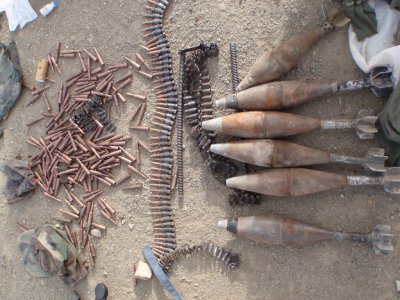


As cross-border strikes intensify and Pakistan’s defence minister declares “open war” against the Afghan Taliban government, the long arc of Islamabad’s Afghanistan policy appears under severe strain. Is this merely another episode in a volatile frontier relationship — or the blowback of decades of militarised strategy and proxy politics?

In this conversation with Alternative Viewpoint, Pakistani left activist, academic and journalist Farooq Sulehria examines the crisis through a structural lens: the legacy of “strategic depth,” the Frankenstein logic of jihadist patronage, the ideological character of the Taliban regime, and the dangers of campism within sections of the left. Rejecting both state militarism and theocratic authoritarianism, Sulehria argues that the current confrontation reflects a deeper crisis of the regional order — one whose costs will be borne overwhelmingly by working people on both sides of the Durand Line.

******

Alternative Viewpoint: Pakistan’s Defence Minister has declared an “open war” against the Afghan Taliban government. Is this escalation a tactical rupture, or does it mark the exhaustion of Pakistan’s long-standing Afghanistan doctrine?

Farooq Sulehria: It is neither a tactical rupture nor the exhaustion of the strategic depth doctrine. The declaration reflects Islamabad’s mounting frustration over an ongoing conflict. A declaration of war is not made lightly; preparations would have preceded it. Only after exhausting other avenues did Pakistan designate the very Taliban regime it once helped bring to power as an adversary. Ironically, Defence Minister Khawaja Asif himself had expressed gratitude when the Taliban defeated the United States and regained control of Kabul.

Border clashes have escalated since last October into Pakistani attacks on Kabul and other towns. Qatar, Turkey and China reportedly facilitated 65 rounds of talks between Kabul and Islamabad — all without resolving the TTP question. Meanwhile, Tehrik-e-Taliban Pakistan (TTP) has intensified its attacks inside Pakistan, operating from sanctuaries in Afghanistan. Nearly 1,000 terror attacks were reported last year, most attributed to the TTP.

Since October, Pakistan has closed its border and halted trade with Afghanistan. As a landlocked country, Afghanistan depends heavily on Pakistan for transit trade, including access to India, and for essential imports such as wheat, vegetables and medicines.

Simultaneously, nationalist militancy has intensified in Pakistan’s Balochistan province. Islamabad accuses India of backing Baloch separatists. The Taliban regime, in turn, has cultivated ties with New Delhi — much to Islamabad’s frustration — partly to counter Pakistani pressure.

For decades, Pakistan justified providing safe havens to the Afghan Taliban under the doctrine of “strategic depth” — the idea that Afghanistan would serve as a “friendly backyard” in the event of conflict with a much larger India. That logic continues to shape Islamabad’s thinking.

AV: The concept of “strategic depth” has influenced Islamabad’s policy for decades. Has this doctrine now collapsed, and if so, what might take its place?

FS: On the contrary, it appears far from collapsed. Commentators close to the establishment have floated the idea of regime change in Kabul. Whether Islamabad is actively pursuing such a course is difficult to substantiate, but such thinking cannot be ruled out. Pakistan has historically explored coups and political engineering in Afghanistan.

Such ideas may be unrealistic and even self-defeating. Yet they reveal the persistence — even obsession — with strategic depth. The current escalation reflects Islamabad’s desperation to rein in a Taliban regime that no longer behaves as a compliant proxy.

AV: Islamabad portrays the crisis as being centred on TTP sanctuaries in Afghanistan. To what degree is this conflict a result of Pakistan’s historical engagement in proxy warfare and its support for militant groups?

FS: This is a classic case of Frankenstein’s monster — or the sorcerer’s apprentice. Pakistan has long been both the origin and a breeding ground for Islamic fundamentalism. Since the so-called “Afghan Jihad” — derisively called “Dollar Jihad” by critics — the state fostered what can only be described as a jihad industry.

Initially, this infrastructure was directed against the Soviet occupation of Afghanistan; later it was turned toward India. The classification of some militants as “good Taliban” and others as “bad Taliban” indicates that the underlying policy logic has remained intact.

AV: At the same time, how should we assess the Taliban regime’s responsibility? Has Kabul failed—or refused— to restrain cross-border militancy for ideological or strategic reasons?

FS: The Afghan regime appears to have done little to rein in the TTP. Some argue that it lacks the capacity to fully control the group. There are ideological affinities, practical constraints and geopolitical calculations at play. The Taliban have also used the TTP card strategically — including to signal autonomy from Pakistan and to cultivate ties with other regional actors, including India.

AV: Should the current confrontation be viewed primarily as a clash between two regimes driven by security concerns, both influenced by decades of conflict, rather than merely as a straightforward instance of aggression and retaliation?

FS: It is a clash of barbarisms. Neither side can claim moral superiority. The Taliban regime has institutionalised what amounts to gender apartheid and rules through fear and intimidation. Its social base is limited, relying heavily on extremist religious constituencies.

At the same time, Pakistan’s military establishment governs through a securitised worldview, framing every issue as a matter of national security. Diplomatic space shrinks when both regimes privilege coercion over politics.

In this tragic scenario, civilians pay the price. Afghans have endured hellish conditions since 1979. People in Pakistan — particularly in Khyber Pakhtunkhwa — have suffered immensely since 9/11, caught between Taliban violence, state military operations and spiralling sectarian conflict. Western imperial interventions — from the Cold War to the War on Terror — laid the foundations for this catastrophe, but regional actors have since entrenched it.

AV: Since returning to power in 2021, the Taliban have struggled with economic collapse, diplomatic isolation, and internal factional tensions. How do these pressures shape their stance toward Pakistan?

FS: Soon after consolidating control, the Taliban signalled distance from Pakistan. They recognised that Islamabad lacked the economic and diplomatic leverage to guarantee legitimacy. Instead, they pursued ties with China, Russia, Turkey, the Gulf states — and, to Pakistan’s irritation, India.

Anti-Pakistan rhetoric from Taliban officials also plays well domestically, where Pakistan is deeply unpopular. Such posturing helps consolidate their internal legitimacy.

AV: From a left perspective, how should one characterise the Taliban regime today?

FS: There has been a tendency among some to portray the Taliban as Islamo-nationalists. Tariq Ali’s book The Forty-Year War in Afghanistan reflects this interpretation. I disagree. The Taliban represent one of the most extreme forms of Islamic fundamentalism.

Nationalism emphasises language, culture and shared historical identity. Islamic fundamentalism, by contrast, subordinates such categories to a transnational religious order governed by Sharia. Culture is often denounced as impurity; music and dance become sinful.

Some even framed the Taliban as an expression of class struggle. These misreadings were early signs of campism after 9/11 — where opposition to Western imperialism led some to romanticise reactionary forces.

AV: The Taliban claims it is defending Afghan sovereignty. How can one engage that claim critically?

FS: Pakistan frames TTP sanctuaries as violations of sovereignty; the Taliban frames air strikes as violations of sovereignty. Each invokes legality when convenient. It is a clash of barbarisms.

One may sympathise with Frankenstein or with his monster, but the outcome is devastation. The real victims are civilians on both sides of the Durand Line.

AV: Regional powers — China, Iran, Russia, and Gulf states — have moved quickly to call for de-escalation. What does this episode reveal about the fragility of the wider regional order?

FS: A couple of days after Pakistan’s declaration of war, the US-Israel attack on Iran and the ensuing situation have overshadowed the Pak-Afghan conflict. This conflict is not only regional, but it also underscores the growing number of nation-state wars. United Nations has become increasingly marginal. No matter how hypocritical and problematic the global liberal order was, the Trumpist alternative is proving even more dangerous. Incidentally, Trump has praised the Pakistani attack on Afghanistan.

AV: Both countries face severe economic crises. How does militarised escalation intersect with class realities?

FS: As always, the working classes will bear the burden — through displacement, unemployment, militarisation and deepening austerity. The continuing conflict in West Asia will exacerbate their suffering.

AV: In a conflict between a militarised postcolonial state and a theocratic regime, what principle should the left adopt? How can it oppose both militarism and religious authoritarianism without sliding into geopolitical campism?

FS: Pakistan cannot defeat the Taliban without adopting a genuinely secular orientation. That is fundamental. The Taliban regime should not be recognised, and solidarity must be extended to the Afghan people — especially women facing institutionalised apartheid.

The left must not align with either Islamabad or Kabul. We oppose the war and demand justice, democracy and accountability. We must hold both the Taliban and their regional or imperial backers responsible for war crimes.

It is disturbing to see even some self-described leftists supporting military escalation in the name of opposing fundamentalism. This reflects what I call “internal Orientalism” — a chauvinistic framing of the conflict as a civilisational struggle.

AV: Does this crisis create an opening to rethink security-state politics across the region — and is there any realistic space today for cross-border progressive solidarity between Pakistani and Afghan civil society forces?

FS: Rather than limiting ourselves to AfPak solidarity, we need a broader South Asia-wide project. Inside Afghanistan, civil society faces severe repression, so diaspora networks become crucial. In Pakistan too, progressive voices are marginalised.

Yet such a project is urgently needed. Our newspaper, Daily Jeddojehad (Struggle), will take modest initial steps in this direction. Only by building regional solidarity can we challenge both militarism and fundamentalism.

1 March 2026

Source: Alternative Viewpoint.

Researchers create world’s largest dog and cat tumour database


University of Liverpool


Researchers from the University of Liverpool’s Veterinary Data Science Group and the University of Las Palmas de Gran Canaria have created the world’s largest open-source database of canine and feline tumours, containing more than one million records. This unique resource aims to help transform understanding of factors influencing the risk of pets getting cancer.

The team brings together expertise in veterinary pathology, epidemiology, data science and clinical practice. By working with veterinary diagnostic laboratories and applying advanced methods for extracting and standardising diagnostic data, they have created a unified resource.

The size of the tumour registry makes it possible to study rare cancers and uncommon breeds in meaningful detail for the first time. Researchers worldwide can now access rich and standardised data to explore patterns previously hidden by fragmented reporting.

David Killick, Professor of Veterinary Oncology at the University of Liverpool, said: “It is important to understand risks for cancers – and this applies to pets too. But for dogs and cats, most cancer diagnosis data sit in private veterinary labs, inaccessible for research. Working through SAVSNET , our Small Animal Veterinary Surveillance Network, we wanted to see whether we could bring together large volumes of these data into one meaningful, research-ready database.

“This tumour registry is a major step towards better understanding cancer risk in pets. In addition to allowing better identification of breed related risk of specific tumour types, early analyses have raised the question of how neutering practices may influence risks of particular cancers. The scale of the data also opens new possibilities for exploring the genetic basis of these cancers.”

Jose Rodríguez Torres, PhD Veterinary Data Scientist at the University of Las Palmas de Gran Canaria, added: “Analysing cancer diagnoses is well established in human medicine, but similar work in animals has lagged behind due to fragmented data. This study is a leading step forward. With more than 200 breeds and more than 150 tumour types represented, these data can now be explored by researchers worldwide to better understand cancer risk across many tumour–breed combinations.”

Dr Francesco Cian from BattLab, one of the participating labs, and a co-author on the paper said ” It has been a pleasure to work with University of Liverpool and ULPGC on this project and to see a new use for the data we generate. Typically, our results are used by veterinarians to support owners and their pets. In this research, we were able to collate anonymised results and generate new knowledge about the tumour risk faced by individual pets across a wide range of cancers”.

The team plans to expand the registry by collaborating with additional laboratories and continues to collect data in real-time. As the Registry grows, analysis can be further refined – for example, by better understanding how dogs with tumours compare to the wider UK canine population.

The team have created a publicly accessible summary of the data to allow vets, owners and researchers to better understand tumour risk here.

An element of the team’s work, that focusses on dog tumours, is explored in a newly published paper in Veterinary and Comparative Oncology, ‘Epidemiology of Four Major Canine Tumours in the UK: Insights From a National Pathology Registry With Comparative Oncology Perspectives’ (DOI:10.1111/vco.70056).

The work is funded by Petplan Charitable Trust.


AI cancer tools risk “shortcut learning” rather than detecting true biology


Deep learning pathology models caught cheating


University of Warwick

Representative Pathology Image 

image: 

Whole slide image illustrating the detection of key histological structures such as glands and cells. Credit: Dr Fayyaz Minhas / University of Warwick

view more 

Credit: Dr Fayyaz Minhas / University of Warwick


New research warns that popular deep learning systems trained for cancer pathology may be relying on hidden shortcuts rather than genuine biological signals.

Artificial intelligence tools are increasingly being developed to predict cancer biology directly from microscope images, promising faster diagnoses, and cheaper testing. But new research from the University of Warwick, published in Nature Biomedical Engineering, suggests that many of these systems may be using visual shortcuts rather than true biology — raising concerns that some AI pathology tools are currently too unreliable for real-world patient care.

“It’s a bit like judging a restaurant’s quality by the queue of people waiting to get in: it’s a useful shortcut, but it’s not a direct measure of what’s happening in the kitchen.” says Dr Fayyaz Minhas, Associate Professor and principal investigator of the Predictive Systems in Biomedicine (PRISM) Lab in the Department of Computer Science, University of Warwick, and lead author of the study. “Many AI pathology models are doing the same thing, relying on correlations between biomarkers or on obvious tissue features, rather than isolating biomarker-specific signals. And when conditions change, these shortcuts often fall apart.”

To reach this conclusion, the researchers analysed more than 8,000 patient samples across four major cancer types — breast, colorectal, lung and endometrial — and compared the performance of leading machine learning approaches. While the models often achieved high headline accuracy, the team found this frequently came from statistical “shortcuts.”

For example, instead of detecting mutations in the cancer-associated BRAF gene, a model might learn that BRAF mutations often occur alongside another clinical feature such as microsatellite instability (MSI). The system then learns to use this combination of cues to predict BRAF status rather than learning the causal BRAF signal itself - meaning accurate cancer predictions work only when these biomarkers co-occur and become unreliable when they do not.

Kim Branson, SVP Global Head of Artificial Intelligence and Machine Learning, GSK and co-author says: “We've found that predicting a BRAF mutation by looking at correlated features like MSI is often like predicting rain by looking at umbrellas—it works, but it doesn't mean you understand meteorology. Crucially, if a model cannot demonstrate information gain above a simple pathologist-assigned grade, we haven't advanced the field; we've just automated a shortcut. The roadmap for the next generation of pathology AI isn't necessarily bigger models; it’s stricter evaluation protocols that force algorithms to stop cheating and learn the hard biology."

When performance of AI models was assessed within stratified patient subgroups, such as only high-grade breast cancers or only MSI-positive tumours, accuracy fell substantially, revealing that the models were dependent on shortcut signals that disappear once confounding factors are controlled.

For certain prediction tasks, the performance advantage of deep learning over human-derived clinical information was modest. AI systems achieved accuracy scores of just over 80% when predicting biomarkers, compared with around 75% using tumour grade alone — a measure already assessed by pathologists.

Professor Nasir Rajpoot, Director of the Tissue Image Analytics (TIA) Centre at University of Warwick and CEO of Warwick spin-out Histofy said: “This study highlights a critical point about the rollout of AI in medicine: to deliver real and lasting impact, the value of AI-based clinically important predictions must be judged through rigorous, bias-aware evaluation, rather than relying solely on headline accuracies that fail to account for confounding effects.”

Machine learning methods can still prove valuable for research, drug development candidate screening and for clinical triaging, screening, or supplementary decision support. However, the researchers argue that future AI tools must move beyond correlation-based learning and adopt approaches that explicitly model biological relationships and causal structure. They also call for stronger evaluation standards, including subgroup testing and comparison against simple clinical baselines, before looking at deployment in routine care.

Dr Minhas concludes: “This research is not a condemnation of AI in pathology. It is a wake-up call. Current models may perform well in controlled settings but rely on statistical shortcuts rather than genuine biological understanding. Until more robust evaluation standards are in place, these tools should not be seen as replacements for molecular testing, and it is essential that clinicians and researchers understand their limitations and use them with appropriate caution.”

Coauthor, Prof. Sabine Tejpar, Head of Digestive Oncology at KU Leuven says: “Clinical relevance of novel tools requires grounded tailoring to what is precise, correct and feasible for the individual patient. Too often, oncology is swept up by ‘innovation’ with limited or no impact on patient care, driven more by what can be provided or sold than by rigorous assessment of what is truly relevant for individual patients and their specific features.

“While progress often requires imperfect first steps, we should learn from the past and avoid oversimplification or overreach through inappropriate concepts. Complexity and variability are central challenges — but they are also exactly what these novel technologies must learn to embrace.”

ENDS

Notes to Editors

For more information please contact:

Matt Higgs, PhD | Media & Communications Officer (Warwick Press Office)

Email: Matt.Higgs@warwick.ac.uk | Phone: +44(0)7880 175403

About the study

The paper, 'Confounding factors and biases abound when predicting molecular biomarkers from histological images' is published in Nature Biomedical Engineering. DOI: 10.1038/s41551-026-01616-8

The large-scale analysis was led by first author Dr Muhammad Dawood during his PhD at the University of Warwick, now a postdoctoral fellow at the University of Oxford

Why this matters

  • Biomarkers guide treatment decisions. If AI tools confuse correlated signals, patients could receive inappropriate therapies.
  • High accuracy scores can be misleading. This study shows why deeper validation is essential before clinical deployment.
  • While AI promises faster and cheaper diagnostics, premature adoption could undermine confidence and lead to costly errors.
  • The findings point to a shift toward causal, biology-aware AI models that better reflect how disease actually works.

About the University of Warwick

Founded in 1965, the University of Warwick is a world-leading institution known for its commitment to era-defining innovation across research and education. A connected ecosystem of staff, students and alumni, the University fosters transformative learning, interdisciplinary collaboration, and bold industry partnerships across state-of-the-art facilities in the UK and global satellite hubs. Here, spirited thinkers push boundaries, experiment, and challenge conventions to create a better world.