Tuesday, January 14, 2025

Looking back at the American election: the oligarchic consensus and its contradictions

Saturday 11 January 2025, by Thierry Labica


It would be easy to analyse Trump’s victory as the result of a slow and inevitable progression of ultra-reactionary and fascist ideas among American voters. We must also analyse Harris’s defeat, which ultimately results from the fear of running a campaign in defence of workers.


Donald Trump has just been elected with increased support across the board compared to his first election in 2016. However, he is the one who presided over the murderous management of the Covid pandemic. Let us remember: he fomented the January 6, 2021 riot against the Capitol; he was found guilty (by a unanimous jury) of thirty-four counts of falsification of accounting in a concealed payment case; he was convicted of sexual assault (in 1996) and of defamation of his victim ,to whom he had to pay the sum of 5 million dollars (in 2023); he had to reimburse 25 million dollars to the students trapped in the “Trump University” scam; he entertained his audiences at his rallies by simulating fellatio with his microphone or by explicit comments about the genitals of an American golf star; and finally, he spread the most bizarre racist rumours about Haitian immigrants who supposedly ate pets in Springfield, Ohio.

Trump has already decided to surround himself, once elected, with a gallery of characters, each more enchanting than the one before; at the Department of Energy, a fossil fuel industry boss (Chris Wright) who is among the most determined opponents of the fight against climate change; a sexual assaulter (Pete Hegseth) at the Defence Department; another (Matt Gaetz) who is the subject of an investigation for sexual relations with an underage prostitute, drug use and embezzlement of campaign funds [1]; at the Health Department, a declared anti-vaccine conspiracy theorist (Robert F. Kennedy) with fluctuating “convictions” on the right to abortion.

Let us highlight the choice of Elon Musk and Vivek Ramaswamy (a biotech billionaire) to lead a new “Department of Government Efficiency“. Musk has already announced his plan to reduce spending in the US federal budget by at least a third ($2 trillion). However, firing all federal employees (15 per cent of the budget) would not even come close to achieving such a goal. To achieve this, Social Security (including ObamaCare ) and unemployment insurance will have to be done away with .
Ambivalence and contradictions of the result

However, the surge in the popular vote in favour of Donald Trump is not itself a reflection of strong support for him personally. A majority of American public opinion declares itself in favour of a lesser role for money in politics (62 per cent); in favour of reducing health costs and improving the education system (60 per cent); and although anti-immigration positions had a significant echo during the campaign, the fact remains that 56 per cent of Americans (against 40 per cent) say they are in favour of facilitating access to legal immigration for undocumented immigrants in the United States [2].

In 2022, according to the Pew Research Centre , 71 per cent of respondents believed that big companies had a "negative effect" on the life of the country, and 56 per cent judged banks and other financial institutions negatively [3]. While the figures vary from one survey to another [4], the generalization of distrust, even hostility, towards the powers of American capitalism seems to be the object of a widely shared opinion.
This explains, at least in part, some of the ambivalence in this election.

In several states, the vote in favour of Trump was accompanied by options that were out of step with his ultra-reactionary orientation. Of the ten states where the question of the right to abortion (to restore it or extend the period of access) appeared on the ballot, seven voted for the protection of abortion while giving a majority to Trump. In Missouri, 58.7 per cent of voters voted for Trump and, on the same ballot, they voted 51.6 per cent for the amendments to end the ban on abortion in the State Constitution and 57.6 per cent for increasing the minimum wage and extending access to sick leave [5]. It was same thing in Arizona. In Florida [6], the vote in favour of extending the period of access to abortion was 57.2 per cent, almost reaching the 60 per cent threshold necessary for the adoption of an amendment to the state constitution.

Many states put Trump in the lead while choosing Democratic candidates (Senate or Congress) at the local level. From this point of view, the re-election of Alexandra Ocasio Cortez in the 14th district of New York is emblematic: the clearly left-wing candidate was re-elected with 68.per cent, but by an electorate that, for one part, significantly strengthened the vote (+10 points, but still a minority in the state) for Trump for president. This situation was reflected in various ways in Michigan, Wisconsin, Nevada, and North Carolina. Nothing new, of course, but there is enough here to qualify a little the simplistic vision of an America politically polarized as never before.
Defeat of a right-wing campaign

In 2020, Biden won 81 million voters, compared to 74 million for Trump. Four years later, Trump won 77 million voters, compared to 75 million for Harris. Although the Republican candidate is making progress, it is mainly the Democrats who are losing ground. But the Democratic defeat seems to have led to an epidemic of soul-searching, the most racist of which is to blame the failure on the Arab-Americans of Michigan, who renounced their "historical allegiance" on the altar of American foreign policy and the genocide in Palestine [7].

The Democratic defeat is above all the defeat of a campaign conducted on the right, counting on a presumed captive electorate. Let us first note the way in which Harris reduced her programmatic message to the theme of the danger to democracy represented by the fascist Trump and to the question of reproductive rights. The problem here is that, on the one hand, Trump also campaigned on the question of safeguarding American democracy (without giving up the accusation of the “stolen election” in 2020) and that, on the other hand, many voters had the possibility of restoring or strengthening the right to abortion at the level of their own state. Racism and machismo also played against the black woman candidate.

Nevertheless, Harris was intent on sending signals in her campaign to right-wing voters who might not want Trump back in office, running alongside Liz Cheney and her father, Dick Cheney, George Bush Jr.’s vice president from 2001 to 2009 and a central figure in the fanatically hawkish American neo-conservatism of the early twenty-first century. Harris turned her back on everything that had made Bernie Sanders’s candidacies popular in the 2016 and 2020 primaries, and which Biden had been able to capitalize on.

The Democrats focused on macroeconomic indicators [8] (decline in the unemployment rate; GDP growth; inflation control), without taking into account the reality of millions of Americans and having a discourse that was even vaguely social-democratic: working-class and wage issues were almost non-existent in this campaign [9] not to mention no sign of any working-class presence in the social composition of the Democratic candidates across the country. And where had the issues of poverty and climate change gone?
Consensus for a representative oligarchy regime

The Democratic campaign, after having committed to denouncing the oligarchic monopolization served by Trump, quickly came to its senses: the Democratic Party should also be the party not only of the leaders of big companies (88 of whom expressed their support in September), but of billionaires erected as worthy representatives of entrepreneurial success and incidentally donors to a campaign whose cumulative cost amounted to sixteen billion dollars. On the podium of the Democratic Convention in August 2024 and in the immediate entourage of Harris’s campaign, billionaires JB Pritzker, Mark Cuban, Reid Hoffman and others came to put at the heart of the Democratic campaign everything that a majority of American public opinion rejects: the power of big companies, unprecedented concentration of wealth, the influence of money on politics.

Cuban and others also demanded that in return for their support, Harris commit to getting rid of Lina Khan, the chairwoman of the Federal Trade Commission (FTC), who successfully, for example, banned "non-compete agreements” which allow an employer to prohibit an employee, for a specified period, from going to work for a competing company. The Democratic left immediately rebelled against this big-business blackmail. In September, Alexandra Ocasio Cortez threatened: " Let me be clear, as soon as the billionaires give the [Harris-Walz ] tandem a pass : the first one who comes near Lina Khan, there will be an out and out brawl. And that’s a promise. It’s proof that this administration is fighting for working people”. .Sanders said, "Lina Khan is the best FTC chairwoman in modern history. By taking on corporate greed and illegal monopolies, Lina is doing an exceptional job of stopping corporate giants from ripping off consumers and exploiting workers. [10]."

Contempt for popular aspirations and anger in the face of the disproportionate power of the behemoths of American capitalism; contempt for the traditionally pro-Democrat popular electorate, presumed captive, condemned to loyalty, and which they therefore believed they could calmly ignore; contempt for all the pro-Democrat youth (and beyond) who spent the year demonstrating against American complicity in the genocide perpetrated by Israel in Palestine; distancing themselves from the main figures of the Democratic left whose enormous scores perhaps make us understand what should have been defended in this campaign – perhaps, and a little late. Without looking at the results of Tlaib, Omar and Sanders, the simple fact that in several states (Montana, Ohio, Pennsylvania), local Democratic candidates (for the Senate, Congress, a governorship) received more votes than Harris herself probably sums things up quite well.
Trump, the pandemic and the irony of history

But beyond these manoeuvres, there also remains, and above all, as Ben Davis explained in The Guardian, this very real fact: the anti-Covid measures at the end of Trump’s term, in counterpoint to the government’s catastrophic management of this crisis, resulted in the establishment of a form of "welfare state" that most Americans had never experienced. Hence, for 73 per cent of the public, the priority given to "the economy". This analysis deserves to be quoted at length.

"The massive expansion," writes Davis , "almost overnight of the social safety net and its rapid withdrawal, almost overnight, represent, in material terms, the greatest policy changes in American history. For a brief period, and for the first time in history, Americans had a real safety net: strong protections for workers and renters, extremely generous unemployment benefits, rent controls, and direct cash transfers from the U.S. government. Despite all the suffering caused by COVID, between late 2020 and early 2021, Americans briefly experienced the freedom of social democracy. They had enough cash to plan for the long term and make decisions based on their own wishes, not just to survive. […] By the end of Trump’s term, American living standards and levels of economic security and freedom were better than when he began, and with the loss of this expanded welfare state, the situation was worse by the end of Biden’s term despite the real successes of his reforms for workers and labour. This is why voters see Trump as someone more capable of looking after the economy," [11].

So it is the same Trump who is preparing to launch a phase of social violence whose scale is likely to prove unprecedented. The big American bosses absolutely need to monopolize public social spending to maintain their profits and their economic place in the world. This is also what is happening in France where various political leaders, such as Kasbarian or Pécresse, are now expressing their enthusiasm for the appointment of Musk and his liquidation project. The French government will change, but this fantasy of destruction remains.

Published on January 11, 2025.
L’Anticapitaliste Review No. 162, December 2024

P.S.


If you like this article or have found it useful, please consider donating towards the work of International Viewpoint. Simply follow this link: Donate then enter an amount of your choice. One-off donations are very welcome. But regular donations by standing order are also vital to our continuing functioning. See the last paragraph of this article for our bank account details and take out a standing order. Thanks.

Attached documentslooking-back-at-the-american-election-the-oligarchic_a8813-2.pdf (PDF - 929.6 KiB)
Extraction PDF [->article8813]

Footnotes


[1] Gaetz finally resigned his seat in Congress in mid-November


[2] Anna Jackson, “State of the Union 2024: Where Americans stand on the economy, immigration and other key issues”. Pew Research Centre, March 7, 2024. Amina Dunn and Andy Cerda, “Anti-corporate sentiment in US is now widespread in both parties”. Pew Research Centre, November 17 , 2024.


[3] Paul Wiseman and Hannah Fingerhut, “Americans’ faith in banks low after failures”: AP-NORC poll. AP, March 22, 2023.


[4] See the results of the Confidence in Institutions poll, at news.gallup.com and Beth Kowitt , “How Americans’ Trust in Big Business Went From Bad to Worse”. Bloomberg.com, September 25, 2024.


[5] In Missouri, in addition to the many national and statewide choices of candidate choices, there were approximately thirty-five additional statewide propositions up for vote.


[6] Amy O’Kruk , Annette Choi, Lauren Mascarenhas, Kaanita Iyer and Piper Hudspeth Blackburn, “Seven states vote to protect abortion rights, while efforts to expand access in Florida, Nebraska and South Dakota fail. CNN.com website, November 6, 2024.


[7] Raja Abdulhaq, “Instead of looking inwards, white liberals are -blaming Arab-Americans for Trump’s victory.” Middle East Eye, November 7 , 2024.


[8] Laurence Nardon and Abigail Labreck, “Kamala Harris’s Economic Agenda”. IFRI Briefing, October 7, 2024.


[9] Jared Abbott ,Fred DeVeaux, “Democrats Aren’t Campaigning to Win the Working Class”. Jacobin, April 22, 2024.


[10] Julia Shapero, “Ocasio-Cortez promises ’brawl’ if ’billionaires’ force out Lina Khan. The Hill, September 10, 2024.


[11] Ben Davis, “None of the conventional explanations for Trump’s victory stand up to scrutiny.” The Guardian, 9 November 2024. I thank Vasant Kaiwar for drawing my attention to this text.

Thierry Labica
Thierry Labica is a lecturer in British Studies at the University of Nanterre and a member of the NPA.

International Viewpoint is published under the responsibility of the Bureau of the Fourth International. Signed articles do not necessarily reflect editorial policy. Articles can be reprinted with acknowledgement, and a live link if possible.

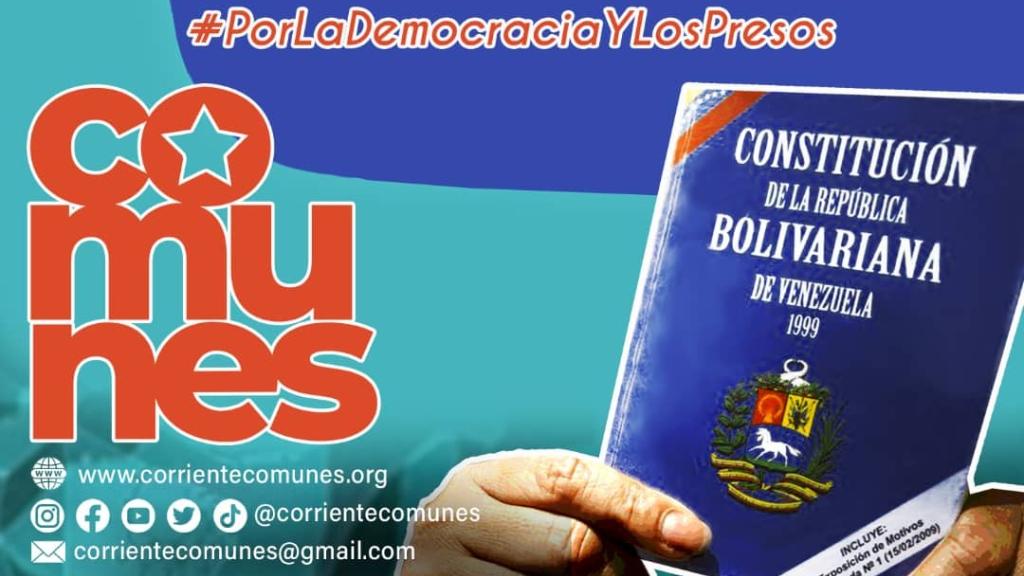
 

Comunes: Keys to understanding what is happening in Venezuela

 (plus statement: ‘A de facto government is born, let’s organise the rebellion’)


Published Mastodon

Comunes

First published in Spanish at Comunes. The translation below is based on a version that was first published at Comunes, which has been edited and in parts re-translated by Federico Fuentes for clarity.

Dear comrades from Latin America and the world who visit us, we welcome you from the communities, footpaths, streets, farms, factories and universities not visited by those who have destroyed the dream of a democratic and popular revolution. We would like to invite you to our communities to confront our reality, one that clashed with the official narrative. We want to have a conversation with you about the following:

Labour

The material conditions of the working class: Those of us who live from our work have been surviving for almost a decade on the lowest wages in the world and have lost the rights we won in the 20th century. The concept of wages has been destroyed while our children, siblings, parents and relatives have had to leave the country to avoid starvation. This is in stark contrast to the opulent lifestyle and consumption of the ruling political elite, something that is confirmed by the situation of those who live in the countries you come from, where Venezuelan migrants face disinterest from the country’s diplomatic offices. The government, with its ruling political elite that speaks of socialism, organises almost everyday extravagant dinners in hotels, restaurants and the presidential palace, while thousands of children go to bed with nothing in their stomachs. They talk about the country’s economic recovery while wages continue to fall. Who is benefitting from this economic growth? Whose economy is growing? It is not that of the working people.

Politics

The political freedoms of the people who live from their sweat faces a dramatic situation: The right to strike and protest has been taken from us in Venezuela. There is no possibility for workers’ complaints to be interpreted simply for what they are. The working class cannot protest as they do in your country, because they risk being accused of being conspirators or traitors. Would you accept that in your country? We have dozens of labour leaders and workers that have been prosecuted, persecuted or imprisoned, just for asking for a wage rise. Even worse, now simply thinking about rebellion from below and raising such opinions is enough to bother bureaucratic officials and the nouveau-riche above, who have converted this into a crime.

Democracy

Without the left there is no democracy: There is no organic left-wing within the PSUV [United Socialist Party of Venezuela] — neither in its political and intellectual leadership or among its rank-and-file activists. Those committed to the project of sovereignty and peoples’ power defended by [former president Hugo] Chávez have been driven out by a sectarianism that defends the imposition of a neoliberal consensus at all cost. Every left party that stood by Chávez is today under legal investigation or has been intervened, with their rightful political leaderships stripped of their party’s electoral registration. Handpicked impostors imposed by the organs of power are rewarded for taking control of political organisations that have a decades-long tradition of struggle. In Venezuela, being critical and thinking critically, as you do in your country of origin, leads to the immediate intervention of political organisations. But the left continues to organise in the communities, embracing dreams of a better tomorrow and building hope for a brighter future. For the government, politics is reduced to obedience to its decisions. Chávez’s rebellious political thinking remains only in slogans and for “official” use in political events. They have stripped Chávez of his popular and rebellious character.

Fascism

Fascism with an ‘anti-fascist’ discourse: Whenever political tensions arise in the country, the right-wing leads fascist outbreaks of hatred and violence. It is true that the fascist right has grown in Venezuela, both out of the old conservative and social democratic parties, now converted into fierce anti-socialists, as well as from the PSUV, which has adopted neoliberal post-socialism as its ideology. This situation has built a path for consensus that threatens to become a new Social Pact (government–opposition) that attacks democratic freedoms and the hard-earned rights of the working class and people. In Venezuela, a neofascism is being hatched by the government, PSUV and the extremist right-wing opposition. The peculiarity is that the government pretends to conceal this with an anti-fascist discourse that lacks any concrete connection to Venezuela’s reality. Otherwise, ask yourself: why are the rights to abortion, equal marriage, the legalisation of marijuana, the right to strike and the rights of workers being disregarded, while a fear of dissent is installed? Why were dozens of teenagers arrested after July 28? And why have the government and the right-wing opposition turned their backs on them? Anti-fascism serves as a farce to conceal neoliberal authoritarianism: the social protests after July 28 — overwhelmingly popular and peaceful (and only marginally fascist and violent) — were successfully controlled through legal and state-parapolice repression. Beyond the electoral political conflict, we see a continuity of the economic model of exploitation and plundering. Defending the interests of capital demands sharpening the juridical-political and ideological instruments for controlling social conflict and class struggle. Today, the laws and proposed law against the blockade, hatred and fascist expressions, as well as laws on NGOs and electoral procedures, seek to strengthen these instruments of domination under the excuse of a fascist threat.

Geopolitics

Anti-imperialism in alliance with Chevron: Blaming the sanctions for worsening social conditions omits the fact that this deterioration began before them. At the same time, there is no doubt that sanctions have only made the situation worse. The rise in oil production of the past few years has allowed the government to supply energy to the gringos it claims to fight. Meanwhile, these companies extract oil without paying a single cent to the nation. Never in Venezuela’s history since oil exports began in the early 20th century have we exported oil under such neo-colonial conditions. The profits from these exports have in no way served to improve the daily life of the Venezuelan people. The rhetoric of anti-imperialism is nothing more than a slogan used by the nouveau-riche of Venezuela.

Neoliberalism

How the capitalist class is constituted in Venezuela: The capitalist class has been formed around the capture of oil rent, benefits from the currency exchange market, import licenses, and customs and tax exonerations. Obtaining political power is the means to get rich. That is why the radical right-wing and Madurismo are engaged in such an intense fight for control of the government, because both sectors represent the old and new capitalist class. There is no revolutionary productive model, or even remnants of it in resistance. There is only plundering of natural resources and economic liberalisation.

Land

The lands that Chávez gave to the campesinos have been returned to the landowners: [Ezequiel] Zamora’s idea of land for those who work it, which Chávez promoted, is now a caricature. What was yesterday granted to campesinos in an act of justice has today been taken away from them. The former landowners feel heard and cared for by Maduro’s government. To make matters worse, in the past few years, 12 million hectares have been handed over to international agribusiness in what they called the Eastern Agrarian Special Economic Zone.

Production

Goodbye to expropriated factories: Maduro’s government has just handed over 350 public enterprises to the section of the capitalist class represented by Conindustria, in an attempt to close deals with all factions of the capitalist class. Meanwhile, the workers of these enterprises have not yet received their severance payments or social benefits. What we have is the Pax of the rich and the pacts of the crooks.

Bolivarianism

Democracy as Bolivarianism’s terrain: In 1996, Chávez called upon us to build a revolution using democracy as our political weapon. Millions of Venezuelans not only supported his call but built advanced forms of participation. Today, democracy is restricted to elections, whose results are accommodated to the needs of those in power. The July 28 election, in which millions of Venezuelans participated, ended up being a mockery as the National Electoral Council proceeded, against the law and Venezuela’s electoral tradition, to violate the right to vote and the will of the people. Months after the election, the people still do not have mechanisms to verify if their will was respected. Democracy is not a matter of FAITH but a verifiable and auditable exercise by the population. Without political democracy, the only option left is a further weakening of the possibilities of the working class to have a voice.

Chávez

Chávez’s project has been betrayed: A new Chávez, a revolutionary caricature, has been tailor-made to fit the needs of those in power. Meanwhile, in the streets, the people continue supporting the Chávez of “Por Ahora” (For Now) of 1992. Chávez will return when we are able to weave resistances together against Maduro’s betrayal of the Bolivarian revolutionary project. Chávez has been betrayed, and the people know it.

Constitutional reform

Enshrining neoliberalism and authoritarianism: In 1999, we created a constitution in the service of a homeland based on social justice. The whole project of radical transformation of Venezuelan society is contained in the Constitution we elaborated and approved in a referendum during the period of rising popular protagonism. To reform it when neoliberal and authoritarian ideas strive to impose themselves can only mean a step backward in terms of our legal framework. There is a well-known phrase Chávez used to say: “Everything within the Constitution, nothing outside of it”.

Organise

Organise to change reality: Paraphrasing Guaraní writer Tadeo Zarratea: “We do not want to change the commissioner or the judge. That is not what we need. What affects us is our reality, which is what we want to change. We organise ourselves precisely to change our reality. We ask you to understand that the people are not in the presidential palace.”

Support

We want to meet with popular movements and the left that struggles: We would cherish a dialogue with you from the standpoint of the people who organise and resist. We know that you live, breathe and support the struggles of your people. Today we ask you to support the struggles of the Venezuelan people, not the survival of those who profit from power in the name of the people.

We would like to leave you with a brief thought: During the past 25 years in Venezuela there has been a revolution and a government, as simultaneous processes. For many years, the revolution, composed of social movements, trade unions, organisations, and political parties, was under the leadership of Chávez and achieved epic feats in terms of building a transformative social model that promoted production, labour, organisation, rebellion and a just redistribution of wealth amid constant conflicts with imperialism and unpatriotic capitalists. With Chávez, we were in government, which was fundamental for accelerating the gains of the revolution. With Chávez at the head of the government, we were moving in a revolutionary and popular direction. But in the past 10 years, the Bolivarian Revolution has lost protagonism and is no longer expressed in government policies. The results are in plain sight. In this document, we address some of them, hoping that we can discuss them with you. Do not be misled, do not believe that by supporting the government, you are supporting the Bolivarian Revolution.

We invite you to be part of building this new dream of social justice that our people are weaving, always unbowed and rebellious, even if at times we seem in a state of calm.


A de facto government is born, let’s organise the rebellion

Published in Spanish at Comunes. The translation below is based on a version that was first published at Comunes, which has been edited and in parts re-translated by Federico Fuentes for clarity.

In light of the presidential inauguration of Nicolás Maduro on January 10, 2025, we, activists and militants from popular sectors who make up of the Political Current COMUNES, express the following:

  1. We all know what happened in Venezuela on July 28. The Nicolás Maduro government that begins on January 10 is the result of a series of unconstitutional and unlawful actions committed by the public powers to override the will of the majority. It signifies the opening of a new stage in the political history of the country, in which the total loss of democracy is intertwined with the seizure of the state by economic, political and military elites. On January 10, 2025, a de facto government will be born in Venezuela.
  2. Social injustice and the loss of democracy go hand in hand. The Maduro government, resting on an alliance of business sectors, the arbitrary use of force and the systemic dissemination of falsehoods, has suspended in practice the civil and political rights enshrined in the Constitution (to vote, to demonstrate, to express oneself, to not be arbitrarily detained, to have a fair trial, to not be tortured, etc), as well as social rights (decent wages, pensions, and incomes; quality education, food and health; a clean environment). To maintain their privileges and neoliberal policies, the elites need an unequal society and an exploited people occupied with simply surviving, without rights and democracy, fearful and demobilised.
  3. Beneath the apparent “normalisation” lies our insurgence, waiting for the moment and manner to express itself. In these moments, our state of mind as a people is one of indignation and rage, but also frustration and fear. There are reasons for this. The National Electoral Council and the Supreme Justice Tribunal mocked the will of the majority. The mobilisations against electoral fraud were repressed by the police, military and para-police groups. Young people from popular sectors and activists continue to be unjustly imprisoned by the Public Prosecutor’s Office and the courts, with the complicity of the Ombudsman’s Office and the Public Defense. But arbitrariness and repression are not enough to make our indignation and desire for change disappear, they can only contain it, partially and temporarily. Our rebelliousness continues to simmer — sometimes on low heat, at other times on high and crackling heat — waiting for the means and moments to express itself in pursuit of profound democratic transformations.
  4. One cannot cook with smoke. Ensuring that our rebellion helps bring about democratic changes that favour social justice is our main challenge. This is not a short-term endeavor. That is why we reject the false hope sowed by the right, which is wagering on our salvation from invading armies, mercenaries or new US sanctions (that harm the people and benefit Maduro’s corrupt clique). For the solution to our crisis to be long-lasting and favorable to the rights of the majority, it must come from within and not from outside. It must come from the popular sectors and not the right or imperialism, who are co-responsible for the crisis we are living through.
  5. Wishful thinking will not bring change, let’s organise the rebellion. Below we are suggesting some actions in which we can come together to transform the country, according to everyone’s possibilities and availability.
  • Come together in multiple ways: In small gatherings with neighbours, co-workers and fellow students, or with Venezuelans migrants abroad, to organise popular organisations to defend rights, the constitution and social justice. If you believe that you are at risk, this should be done without much fanfare. But we need to come together and build organic networks that can push for change. Individualised anger and atomisation will only produce more frustration, but organised rebellion can open paths.
  • Debate and reflect: In our organisations or informal spaces we must collectively reflect on the causes, consequences and solutions to the country’s crisis. How did we get here? Who benefits from the loss of democracy, our low wages, or the loss of sovereignty over our resources? What can we do, from where we are, to transform the situation in the country?
  • Small actions wherever we are: From small discussion groups about a problem of local or national interest, to large forums and statements taking a position on issues of collective interest.
  • Mobilise in the streets, demand our rights: We must continue to demand, in the streets and through different means, our rights: to a decent salary, income and pensions; full freedom and reparation for those unjustly detained; the rights of teachers and our children to a quality education, with 5 days of class a week; the right to functioning public services, to denounce corruption and to demand accountability over public resources; the right to request the annulment or reform of anti-democratic laws; and respect of the will of the people. Although Maduro’s government is unconstitutional, it rules over the territory and population. That means it is obliged to guarantee the rights of the people. We, the people, are with the constitution, even if those in power ignore it. Struggle will open paths for us.
  • Unity: The organisations of the comunes — the common and everyday people — need to come together. First among ourselves and then with other organisations from the popular and democratic camp, around a plan of struggle and a minimum program for the transformation of the country.

They want us isolated: Let’s organise and unite!

They want us silent: Let’s debate and express our rebellion and proposals!

They want us paralysed by fear: Let’s mobilise to demand our rights, defend democracy and build social justice!

Countering Japan’s Defiance of International Whaling Conventions


 January 14, 2025

Facebook

Many members of the international community consider whale-hunting a barbaric practice that should have been banned decades ago.  But some countries have long viewed it as a vital commercial enterprise and in some cases, an emblem of their national culture.  These contrasting viewpoints figured prominently in the promulgation of the International Convention on the Regulation of Whaling (ICRW) signed in 1946.  Most signatories wanted to ensure that commercial whaling, then at its peak, wouldn’t result in the extinction of whales, whose numbers were dwindling rapidly.  Over the years, calls for a worldwide whaling “moratorium” and the establishment of regional whaling “sanctuaries” have gathered steam, but then, typically, have lost momentum.  Despite a growing worldwide concern for whales as a species worthy of permanent protection, powerful opponents have consistently vetoed efforts to shield them from harm as a matter of bedrock principle.

None of these powerful opponents has proven more consequential than the island nation of Japan.  It took Japan nearly a decade after signing the ICRW to become a member of the International Whaling Commission (IWC) charged with overseeing its implementation.  In the interim, Japan took to whaling with a vengeance, openly defying criticism from other ICRW signatories.  Moreover, even after joining the IWC, Japan has sought to exploit a number of loopholes in the ICRW to allow it to conduct whale-hunting with impunity.   Finally, in December 2018, in the midst of ongoing disputes over how best to reform the ICRW, Japan announced that it was leaving the IWC altogether. Today, virtually alone in the world community, Japan no longer recognizes any international authority to regulate its whaling operations.

How has Japan managed to escape criticism for so long?  Two reasons stand out.  First, ever since it hosted the Kyoto Accord in 1997, Japan has been recognized as one of the world’s pre-eminent leaders on the issue of climate change.  Where other nations have stalled and stonewalled, Japan has steadfastly promoted the cause.  Japan’s continued leadership is critical if the world is ever to establish effective limits on the release of greenhouse gasses.  This acknowledged role has given Japan significant leverage over the international community on other issues like whaling.

The same is true of Japan’s increasingly important security role in the Asia-Pacific.  Japan is viewed, especially by the United States, as a critical bulwark against the advance of China.  In recent years, Japan, even at the risk of fomenting domestic civil unrest, has agreed to increase annual defense spending and to adopt a more aggressive military posture in the Pacific. This issue has figured prominently in the US-Japan bilateral relationship, blocking out all other concerns.  Despite pressure from international NGOs on the Obama administration to intervene with Japan over its ever expanding whaling operations, Washington never bothered to register a protest over the issue, much less raise it formally in high-level diplomatic meetings.

Several other nations, including Iceland and Norway, have also remained steadfast hold-outs on the whaling issue.  But their resistance to annual whale-hunting quotas and their determination to exploit loopholes in the ICRW pales in comparison to Japan’s long history of fierce opposition and outright flaunting of the convention.

Japan’s position on whaling rests, in part, on a largely fictitious portrait of itself as a nation with an inherent cultural “right” to whaling, based, in part, on the presence of aboriginal peoples in its midst.  Japan has also made a mockery of the ICRW’s protocol that allows for the limited capture and killing of whales for strictly “scientific research” purposes.  Japan’s national whaling research “institute” captures a large number of whales annually beyond what might be reasonably needed for mere “study.”  And, after the nominal “research” is conducted,  Japan simply kills the whales and then proceeds to sell their blubber and oil on the global market.  In other words, Japan’s research on whales is really just a fig leaf for ongoing commercial exploitation.

The lengths to which Japan has gone to denigrate whales as a species are truly extraordinary.  Japan has never subscribed to the view widely held in the West — and by science generally — that whales are mammals of superior intelligence and therefore deserving of special protection.  In fact, in the Japanese language, the whale is designated with characters that identify it as a “big fish” – and not a mammal at all.  Japanese officials regularly point to what they view as the hypocrisy of Western nations killing deer and cows in large numbers for their own consumption without compunction while attacking and stigmatizing Japan as if it were a rogue anti-humanitarian nation for hunting whales.  Japan has even suggested that whales prey on other fish species, depleting their stocks, and that killing them to reduce their numbers is no different from stomping on ”cockroaches.”  Needless to say this view is not widely shared.

Japan’s departure from the IWC may actually contain a silver lining.  It permits the remaining members to focus on continuing efforts to upgrade the IWRC.  Over the years, the international community, under growing pressure from the “Save the Whales” movement and NGOs like Greenpeace, has tried to balance commercial and humanitarian concerns.  Most nations have not violated the prohibition on hunting whale calves, for example.  This, combined with annual quotas and the establishment of regional whale “sanctuaries — like the one in the Indian ocean established in 1979 — and the worldwide temporary moratorium on whaling declared in 1986, has given whales the space to regenerate and to survive.

Indeed, some whale species are thriving again.  In early 2021, New Yorkers were shocked to witness the reappearance of humpback whales in the harbor and rivers around Manhattan for the first time in a decade. Still, blithe optimism about the likely survival of whales, in the absence of further global action, is unwarranted. At least 14 individual whale species, including the North American Right whale remain  “endangered.”  The Blue whale is close to extinction, with just 400 individual members still barely surviving.  And the once highly populous sperm whale has declined to one-third of its original numbers.  Indeed, a large-scale resumption of commercial whaling, which the IWC has allowed in past years after periods of regeneration, still poses a threat to whale survival across the board.  In the face of continued defiance from Japan, Iceland and Norway, there is a pressing and urgent need for additional global intervention.

What should be done?  The resumption of the 1986 moratorium, which groups like the World Wildlife Fund have advocated, is unlikely to meet with approval.  President Obama, who had endorsed that idea as a candidate, ultimately caved in under pressure from other IWC members.  However, much more could be done to create an enforcement mechanism with real teeth.  One consensus idea is to establish lower annual quotes for each nation and to eliminate the scientific research loophole.  Another is to place international monitors aboard whaling ships as well as whale “counters” and DNA testers at whaling stations to verify numbers and types of catches, in conformity with more rigorous quotas and catch guidelines.  Finally, and most intriguingly, subsuming the authority of the IWC under a special U.N. body or an entirely new body that could forge a more global consensus on whaling and allow for stronger enforcement of the Convention beyond the members of the IWC may be warranted.

But where will this bold new leadership come from?  Apparently, not from the United States.  In early 2023, President Biden, like President Obama, did seek to exert pressure on Japan to join a new Indo-Pacific Cooperation Agreement, but the perceived need to secure Japan’s economic cooperation in the region once again weakened Washington’s resolve.  In  the end, the administration caved in to steadfast Japanese opposition.  Biden had another opportunity to make progress just two months ago when the IWC met in Lima, Peru to discuss the latest proposal to establish a whale “sanctuary” in the South Atlantic – an effort that has consistently failed since it was first proposed in 1998.  But the administration — caught up in the turmoil of Biden’s failed re-election bid, and its problematic hand-off to Kamala Harris – became distracted and dropped the ball.

In the absence of more aggressive US leadership, there’s unlikely to be more progress in challenging Japan’s open defiance of the norms of the ICWR.  Of course, the incoming Trump administration could try again, on the theory that its aversion to global climate change action might actually weaken Japan’s leverage over Washington on the whaling issue. But that assumes that Trump has a genuine interest in global conservation of any kind. There’s not much evidence that he does, and given his ideological aversion to state-led regulation generally, organizing a global campaign against whaling, even under pressure from advocacy groups, seems highly unlikely.

Still, anti-whaling advocacy shows no sign of abating.  Just two weeks ago, the government of Denmark freed Paul Watson, a Japanese anti-whaling activist for which Japan had sought extradition to stand trial, owing to his alleged role in aggressively confronting a Japanese whaling ship back in 2010.  Japanese authorities wanted him tried in Japan for allegedly causing serious injury to a crew member.  But Denmark rebuffed the request and set Watson free. Denmark, which has no extradition treaty with Japan, decided that Watson wouldn’t get a fair trial in Japan and felt that the charges against him were probably unwarranted.  Watson hailed his release and said his time in jail had merely allowed him to continue his fight against Japan and other countries flouting international anti-whaling norms.  For Denmark, and for other IWC members, it was a clear shot across the bow of Japan and its aggressive whaling ships.

What lies ahead?  The history of the ICRW and the IWC illustrates how difficult it is for a regime born in an era of big-power commercialism and geo-politics to transition to a 21st century globalist perspective based on more universal rights and principles.  The original fifteen signatories, all of them active whaling nations, ensured that the framework document was fundamentally about regulating the whaling industry, not about protecting whales per se.  Given the obstacles to modifying the basic language of the ICRW, that’s not likely to change anytime soon.

However, with enough political will, fueled by pressure from the WWF and other groups, a future Democratic administration, with or without Japan’s concurrence, could push for profound changes in the way the IWC understands its mandate. Despite its failure this year, the Commission will meet again in two years, consistent with its biennial schedule, to review the condition of whale stocks and to modify conservation measures among the member nations, as appropriate.  Its scientific commission, which meets annually, can review the status of whale research, and determine whether whaling even for “research” purposes is still warranted.

Currently, Japan, plus Iceland and Norway, continue to harvest about 44,000 whales annually, but most other nations barely harvest whales at all.  In 1980, some 80,000 whales were killed annually worldwide; by 1985 that figure had fallen to 40,000.  Today, barely 2,000 whales are killed by all nations combined, for overtly commercial purposes.  Even Japan sets an annual quota for its whaling under the fictitious rubric of “research.”  The fact is, there is a declining global demand for whale meat, except as a bait source for fishing (mainly for sharks), and whale oil, which was once in high demand to make candles and to power vehicles, has long ago been supplanted by petroleum and other sources.  Whale oil is still highly prized by some pharmaceutical companies in the making of its niche products, but it’s hardly an essential commercial ingredient in any one industry.

The upshot?  While concern for whales as a steady spur to industrial progress first inspired global action to regulate whaling, it could well be that a continuing shift in the technology of industrial production will help whales survive pressures toward extinction.  While some aboriginal peoples do retain compelling reasons to whale hunt locally for basic subsistence purposes, commercial whaling on a mass scale has largely outlived its original rationale.  Japan’s assertion of  a national prerogative to whale hunt is out of step with the march of international human rights, which includes the rights of other planetary creatures to be free of undue human exploitation.  In an era in which climate change and a global pandemic threaten the planet on a heretofore unforeseen scale, it’s time for the international community to articulate a fundamental new vision for how humanity as a whole relates to Nature – and therefore, to herself.

Stewart Lawrence is a long-time Washington, DC-based policy consultant.  He can be reached at stewartlawrence811147@gmail.com.