Tuesday, February 25, 2025


French-Cypriot Team Unveils a Resident AUV System for Reef Monitoring

CMMI
Courtesy CMMI

Published Feb 25, 2025 6:53 PM by The Maritime Executive


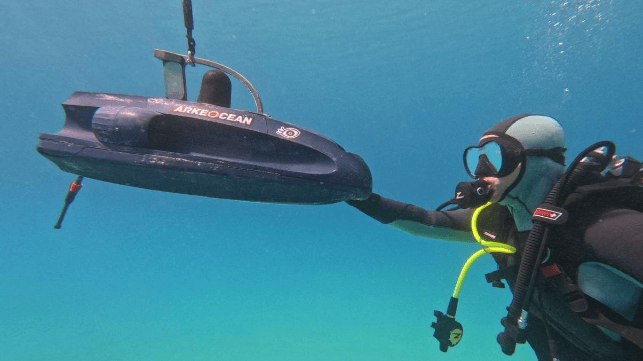
Researchers in France and Cyprus have debuted an autonomous drone sub system that is designed to reside on reefs and monitor environmental conditions on long timescales, without human intervention for recharging or maintenance. 

The "EONIOS" project, a joint effort between French AUV builder Arkeocean, the Cyprus Marine and Maritime Institute (CMMI), Cypriot tech firm SignalGeneriX and consultancy Lanego, unveiled a micro-USV "swarm" system on Monday at a press conference in the resort town of Ayia Napa. France's ambassador to Cyprus, Clélia Chevrier Kola?ko, was the guest of honor and keynote speaker. 

The AUVs are paired with a docking system for recharging, and will provide 24/7 monitoring. Each drone can stay on station for up to a month at a time, thanks to the charging dock. The system incorporates swarming technology to allow the mini-AUVs to communicate and act together, and should be much less expensive than tethered solutions. 

The testing phase is under way at the Ayia Napa marina, but the first real deployment for the drone subs will be at an artificial reef off Limassol, off Cyprus' south coast. The cement-based reef structure will contain the docking station, as well as a transmitter that will allow the AUVs to send information back to shore. 

The AUV system also has potential applications in defense, an Arkeocean executive told AP, as it can loiter for long periods and operate without detection below the surface. 


Successful Tests for Hugin to U.S. Navy

Kongsberg Discovery
Hugin Superior Poster

Published Feb 25, 2025 8:00 AM by The Maritime Executive


[By: Kongsberg Discovery]

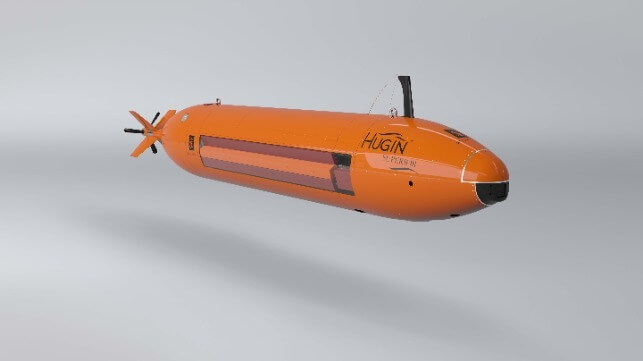
Kongsberg Discovery successfully completes acceptance testing of a HUGIN Superior Autonomous Underwater Vehicle system for the Defense Innovation Unit and U.S. Navy.

Only one year after being awarded a 24-month frame contract for Large Diameter Unmanned Underwater Vehicles (LDUUV) by the Defense Innovation Unit (DIU), KONGSBERG completed acceptance testing and delivery of the first HUGIN Superior Autonomous Underwater Vehicle (AUV) for this customer.

A valuable asset for the U.S. Navy
This final testing was completed at the beginning of the year in Norway. The vehicle will now go on to provide real-world operational relevance and enhance the undersea capabilities of the U.S. Navy.

Impressed by the pace
The completion of this effort is a testament to DIU’s commitment to fulfilling its mission of accelerating the adoption of commercial technology for national security. In the last year, the DIU team performed a rigorous technology assessment which culminated in the order and delivery of a highly capable HUGIN AUV system in a short time.

“KONGSBERG is excited to be expanding our relationship with the U.S. Navy and provide the cutting-edge capabilities that come standard with our HUGIN Superior AUV system. We applaud the DIU team for enabling this transfer of capability to the warfighter at an accelerated pace and look forward to valuable operator feedback and continued partnership to further evolve our product line,” said Rich Patterson, Vice President of Sales, Uncrewed Platforms Division.

A cutting-edge tech for underwater
KONGSBERG’s HUGIN Superior is a proven AUV system that has been in active use by both commercial and military customers since 2019. It provides immediate operational capability for Subsea and Seabed Warfare (SSW), Intelligence Preparation of the Operational Environment (IPoE), Mine Countermeasures (MCM), and inspection of critical undersea infrastructure at delivery with no required modifications. With full ocean depth design, an endurance of over 70 hours, a navigational accuracy of <0.04% of distance travelled, and multiple mapping and imaging sensors, it leads the large AUV market in reliability and capability.

KONGSBERG has an extensive history of developing AUVs. From the first HUGIN dive in 1993 to the record-breaking multi-week mission of HUGIN Endurance last summer, HUGIN continues to be the gold standard of AUVs on the market. HUGIN is tightly integrated with KONGSBERG acoustic sensors, autonomy, navigation, and battery technology resulting in a finely tuned system that produces the highest quality data.

The products and services herein described in this press release are not endorsed by The Maritime Executive.


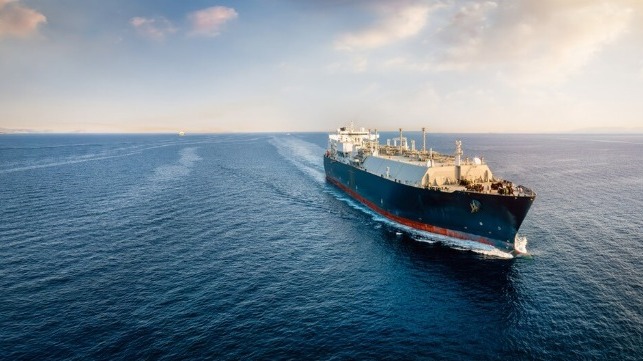
Mexico’s LNG Ambitions Face the Trump Era and Environmental Concerns

Proposals to export U.S. natural gas via Mexican LNG terminals face uncertainty amid trade tensions and community pushback

iStock
Courtesy iStock

Published Feb 23, 2025 9:52 PM by Dialogue Earth


[By Emilio Godoy and Patrick Moore]

Last September, just off the Gulf coast of the Mexican city of Altamira, the country’s first shipment of liquefied natural gas (LNG) left a floating facility run by US company New Fortress Energy, bound for Europe.

The new venture is part of a wave of gas investment that has arrived in the country in recent years, targeting markets in Europe and Southeast Asia with US-produced, Mexico-processed natural gas, liquefied by cooling to -162C in a process that compresses its volume to allow for easier shipping.

Since the beginning of the decade, significant increases in global LNG infrastructure have been announced, with USD 1.1 trillion worth of new terminals under development as of last year. This has been driven by forecasts of growing gas demand in Asia, soaring output from the US, and Europe’s efforts to cut down on its dependency on Russian gas imports following the invasion of Ukraine in 2022 – a landscape that has led US producers to set their eyes on new ports on the Mexican coast that could shorten shipping routes to overseas markets.

But ambitions of a potential boom in Mexico may be running up against mixed weather in the global gas market, as well as political developments on both sides of the border. This includes the prospect of tensions between returned US president Donald Trump and his Mexican counterpart Claudia Sheinbaum over trade and tariffs, migration and a host of other issues.

Environmental campaigners, meanwhile, have continued to voice concerns over the potential consequences of a build-up in LNG infrastructure that could position Mexico as the world’s fourth-largest exporter of the fuel.

“The industry talks about gas being a transitional fuel and replacing coal in Asia, but that is not the case. It is more polluting than coal, because of all the steps involved in exporting it,” said Nichole Heil, research and campaigns coordinator for the Private Equity Stakeholder Project (PESP), a non-profit focusing on the impacts of private funds.

“Part of the problem is also the export of emissions,” she added. “The United States exports them to Mexico, Mexico sends them to Asia, and they are not included in the emissions accounting.”

A cross-border bet on LNG

The US and Mexico have a long-standing relationship in the gas sector. Mexico imports more than half of its gas supply, almost all of it via pipelines from its northern neighbour, with a growing network transporting gas from hubs in Texas, Arizona and New Mexico.

The prospect of exporting and processing LNG via this network has seen at least half a dozen projects pitched in Mexico. In addition to the Altamira terminal that made its first shipment in 2024, works to build an export terminal at the Costa Azul hub on the country’s west coast are underway, with operations expected to begin in 2026. Elsewhere on the west coast, the Vista Pacífico, Saguaro and Amigo terminals have been proposed.

As US investors eye projects, Mexico’s national power company, CFE, has also sought to get in on the action. It proposed the Salina Cruz export terminal in the southern state of Oaxaca and the Coatzacoalcos facility on the Gulf coast of the state of Veracruz.

These proposals have seen Mexican and US developers such as CFE, Mexico Pacific and Sempra Infrastructure strike deals with financers and potential LNG buyers including banks and multinational energy firms from Australia, China, France, Japan, Malaysia, Singapore and South Korea.

However, proposed LNG projects in Mexico have also been contingent on acquiring permits for the re-export of US gas issued by the Department of Energy, which allow for shipments to countries with which the US does not have free trade agreements – a roster that includes the European Union and nearly all Asian nations.

The issuing of LNG export permits had been paused since January 2024 as former US president Joe Biden’s administration called for a review into their climate impacts.

The measure generated uncertainty over projects, court battles, and anger in the industry, but was revoked on 20 January, day one of Donald Trump’s return to the White House – true to pledges he made during his election campaign.

The lifting of the Biden-era order has been welcomed by the sector, but analysts remain uncertain about the wider impacts Trump’s return will have on ambitions for Mexican LNG exports, even with his firm backing for fossil fuels – notoriously promising to “drill, baby, drill”. Commentators have highlighted political risks from potential US policies, both domestic and those targeted at Mexico, that could raise tensions between the two countries.

LNG shipments may yet get caught up in the trade war unleashed by President Trump, which has so far included imposing an additional 10% tariff on Chinese goods starting 4 February. Mexico, meanwhile, negotiated an extra month to avoid an announced 25% US tariff on the country’s goods, after President Sheinbaum agreed on 1 February to US demands to increase security at its northern border.

For Heil, the PESP researcher, Trump’s push for more LNG has serious consequences. “Outside of questionable economic gains for Americans, the uncertain demand for LNG, suppressed private equity returns, and financial liabilities associated with LNG impacts on local communities and the environment create a shaky foundation for the LNG industry and its potential future,” she says.

Environmental concerns

The role of natural gas and its liquefied form in global energy systems is a source of fierce debate, including its contested labeling as a “bridge” or “transition fuel” in the switch to renewables-based systems.

On the expansion of Mexican LNG infrastructure, environmentalists have expressed fears over the potential impacts along these new supply chains. These include methane leaks during liquefaction, transportation and regasification processes, among other problems, that would contribute negatively to emissions.

The proposed Saguaro project, in particular, has attracted strong opposition from a coalition of more than 30 community and environmental organizations, as well as the US-based NGO, the Natural Resources Defense Council (NRDC), which has described it as the “wrong project, wrong place.”

Mima Holt, the NRDC’s global coordinator for international climate, said that processes to evaluate new projects must consider potential economic and environmental impacts. “That includes climate impacts and the unique characteristics and needs of special places like the Gulf of California,” she noted. “The ‘Aquarium of the World’ is not a sacrifice zone for the whims of the American oil industry.”

Pablo Ramírez, director of the climate change campaign at Greenpeace Mexico, questioned the development of LNG projects in the country.

“They do not take into account environmental and social liabilities, and those costs are not reflected in the terminals,” he told Dialogue Earth. “What we have seen is that the plan for these projects between private companies and the Mexican government is a new form of maquila,” he added, referring to Mexican factories that assemble and manufacture for export. “We manufacture gas that is not ours, generating wealth that does not stay here and assuming liabilities. CFE is looking for a rate that will pay off exports and the gas pipelines it manages.”

Meanwhile, the relocation of US gas export operations has been pitched by supporters as a method of cutting certain emissions in its supply chains, namely those from shipping.

In its 2022 environmental assessment of the Vista Pacífico project, the US Department of Energy estimated that life-cycle emissions of LNG shipped from New Orleans to Shanghai – a route that requires going through the Panama or Suez canals, or long voyages around southern continental capes – would total 688 kilograms of CO2 equivalent per megawatt-hour of power generated using the fuel. Of this, 76 kilograms – or 11 percent – would come from tanker transport.

In comparison, transporting LNG directly across the Pacific, between Shanghai and Topolobampo in western Mexico, where the Vista Pacífico facility is being proposed, would reduce overall emissions by between 3% and 7% due to the shortened route, the assessment noted.

Boom or bubble?

Beyond the potential environmental impacts of a global LNG infrastructure build-out, some analysts have also cast doubt on the long-term economics of export projects, amid a mixed outlook for demand.

Rather than a boom, organizations such as the Institute for Energy Economics and Financial Analysis (IEEFA) have warned of a bubble as LNG potentially reaches oversupply by 2026.

A few years on from Europe’s rush to find new suppliers after Russia’s invasion of Ukraine, the continent’s LNG demand is now in decline as its countries pursue ambitious clean energy targets by the end of the decade.

Meanwhile, in Asia – the region forecast to account for the majority of future LNG demand growth – varying challenges around project delivery and fiscal issues may dampen demand, the IEEFA says. It also suggests that Chinese policies favouring domestic industries will likely constrain the country’s import demand.

PESP’s Nichole Heil raised the prospect of such investments becoming faltering assets. “As the global momentum shifts towards reducing carbon emissions and adopting renewable energy, investments in gas pipelines and LNG facilities with long payback periods may not deliver the expected returns. This poses risks for institutional investors, especially pension funds, which rely on consistent returns,” she told Dialogue Earth.

Rachel Eunbi Shin, an energy supply chain researcher at the South Korean NGO For Our Climate, said that the industry has encouraged oversupply to stimulate artificial demand. “Demand is falling; most players are buying LNG and planning to resell it, creating an artificial market. But the infrastructure is increasing,” she told Dialogue Earth from Seoul.

As for Mexico’s projects, President Sheinbaum has not expressed a government stance on the wave of LNG projects, but praised Mexico Pacific’s investment last October when she met the corporation’s CEO Sarah Bairstow.

This article appears courtesy of Dialogue Earth and may be found in its original form here

The opinions expressed herein are the author's and not necessarily those of The Maritime Executive.
Iranian Naval Vessels Call in Malaysia for the First Time

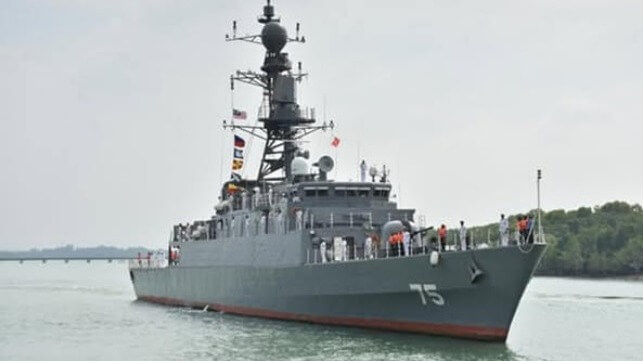
IRINS Dena (F75) entering Port Klang (Royal Malaysian Navy)

Published Feb 23, 2025 11:23 PM by The Maritime Executive


Two Iranian naval vessels commenced a visit to Port Klang, in Malaysia’s Malacca Straits on February 21. Malaysian newspapers describe the visit as the first made by Iranian naval vessels.

In the second such tie-up in the past few weeks, when in the past the two entities were rarely seen working together operationally, Iran’s regular Navy (Nedaja) deployed the Moudge Class frigate IRINS Dena (F75) and the IRGC Navy (Nedsa) contributed the drone carrier Shahid Mahdavi (C110-3). It is the Mahdavi's first operational deployment outside home waters.

The Iranian flotilla has been at sea for at least three weeks, cruising off Pakistan, India and Sri Lanka, but also deeper into the Indian Ocean south of the Equator.

Rear Admiral Shahram Irani, the Nedaja commander, told Press TV that the deployment to Malaysia was one of five flotillas currently deployed outside Iranian home waters.  Besides the flotilla customarily stationed in the Red Sea, a flotilla with naval cadets aboard is known to be on a long-range cruise, and two other flotillas are believed to be in the Indian Ocean. This level of activity is unusually high, and reflects Iranian fears of a further Israeli attack to neutralize Iran’s nuclear weapons program.


German Navy Thwarts Another Sabotage Attempt

Hessen
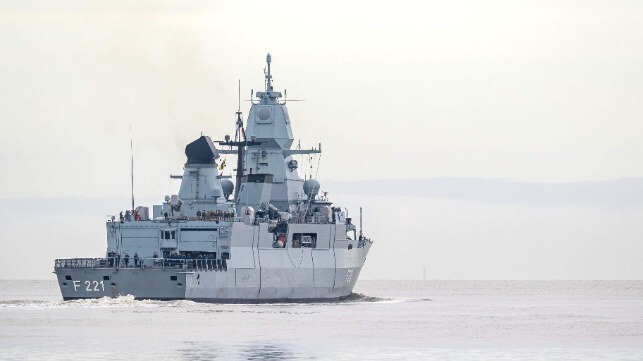
Hessen (file image courtesy Bundeswehr)

Published Feb 23, 2025 9:25 PM by The Maritime Executive


Germany's navy has reported a pattern of suspected sabotage targeting its warships over the past year, and a new attempt was reported just last week. According to German outlets, someone appears to have tried to contaminate the drinking water system of the frigate Hessen. 

WDR, NDR and Süddeutsche Zeitung reported last week that an unknown perpetrator made an attempt to put a large quantity of waste oil into the Hessen's freshwater tanks. The frigate was moored at the German Navy's main base in Wilhelmshaven for repairs, and a contractor was hired to refill the vessel's tanks with clean water. The attempted contamination was prevented, and sources within the German Navy told media that they had ruled out the possibility of an accident. 

A police investigation is under way into the circumstances of the case, and Germany's Federal Office for Military Counterintelligence (BAMAD) has joined the effort.

Hessen is well-known from her time on patrol in the Red Sea last year, where she helped to defend merchant shipping from Houthi attacks. Beginning in February, Hessen took up station off Yemen as part of EU Operation Aspides, and was shooting down her first drones within days. During one of her earliest engagements, the crew misidentified an American drone as a Houthi munition and targeted it with two SM-2 missiles. Against the odds, both missed for "technical reasons." The frigate returned to Germany in early May, having spent three months on deployment. 

The apparent attempt to sabotage Hessen is the latest in a string of incidents affecting German warships in port. In 2024, a German Navy minehunter was damaged by unknown personnel while in shipyard in Rostock. Several cable harnesses were severed, according to Spiegel. In addition, an unknown saboteur dumped dozens of kilos of metal filings into the oil sumps of the main engines aboard the brand new corvette Emden, according to multiple German media outlets. The contamination was detected and cleaned out, and Emden has been successfully delivered. 

WWIII

Taiwan Detains Suspicious Ship Linked to China After Offshore Cable Damage

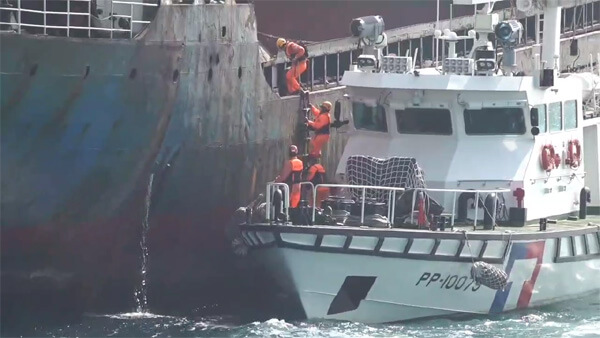
Taiwan detains cargo ship
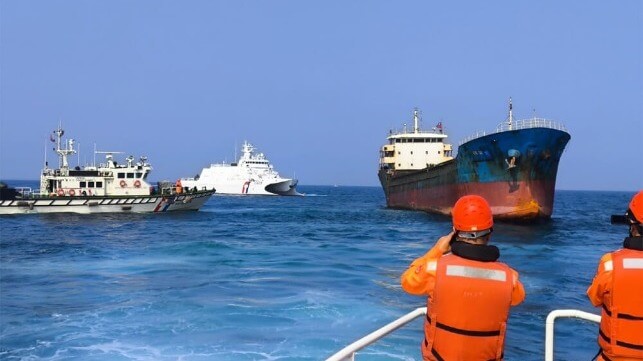
Taiwan Coast Guard directed the vessel to port for an investigation (Coast Guard Administration)

Published Feb 25, 2025 10:50 AM by The Maritime Executive


Taiwan’s Coast Guard Administration confirmed it has detained a suspicious vessel for further investigation as the country’s telecom provider Chunghwa reported operations of one of its offshore cables had been interrupted. The vessel which is believed to have Chinese ownership but is flying the flag of Togo was directed into port where it was boarded for investigation.

Taiwan had reported in January that it was increasing its offshore surveillance and patrols in response to a perceived threat from Communist China. The island nation experienced a cable outage in January 2025 which it said might have been caused by another ship related to China and in 2023 lost communications links to one of its small offshore islands after another cable was severed. The Navy started a new tracking system to identify suspicious vessels focusing they reported on ships flying a flag of convenience.

The Coast Guard had been deployed to investigate the vessel which is showing an identity of Hongtai 168 after the monitoring system observed the vessel anchored since February 22 approximately six nautical miles off the fishing village of Jiangjun in southwest Taiwan on the Taiwan Strait. The Coast Guard reports a shore station had attempted to contact the vessel seven times since it anchored offshore but received no reply.

Today, February 25, at just after 0300 local time the vessel was observed starting to move away from its anchorage in a northwest direction. At approximately the same time, the Coast Guard was asked to investigate after Chunghwa Telecom reported its main subsea cable to Penghu was apparently severed and it had switched to a backup to maintain communications.


Taiwan Coast Guard boarded the vessel after it was directed into port (Coast Guard Administration)


The Coast Guard intercepted the vessel but was unable to board it due to high seas and a high freeboard. Two additional vessels were dispatched to assist and the Togo-flagged ship was directed into Anping Port where it arrived at midday and was boarded for further inspection.

The vessel appears to have been built in 2006 and previously reported ownership by Chinese interests. It is 1,800 dwt.

Taiwanese officials are questioning the identity of the vessel. They reported there was a crew of eight Chinese nationals aboard who said the vessel was Hongtai 168. That name is painted on the hull as well but the AIS signal is broadcasting Hongtai 58. Officials are calling the vessel a “makeshift ship,” but they believe it is backed by Chinese capital.

They noted that while there is an apparent break in the cable it is unclear if it was intentional sabotage or an accident. Further investigations are underway to clarify the circumstances.


Russian Research Vessel Sinks in Icing Conditions in Novorossiysk

Sinking research vessel
Via Russian social media

Published Feb 25, 2025 8:22 PM by The Maritime Executive


A Russian research vessel has gone down because of heavy icing conditions at the port of Novorossiysk, Russia, according to dissident media outlet Crimean Wind. 

The small research vessel Ashamba, operated by the Shirshov Institute of Oceanology, was moored at a marina in Novorossiysk last weekend during a severe winter storm. The crew could not counter the ice buildup fast enough to avoid a capsizing, and the vessel gradually listed to port and sank. 

The risk of pollution is reportedly limited, as the vessel had a small quantity of diesel on board. The owner is deploying booms to contain any pollution, and is making plans to raise the wreck. 

The Transport Prosecutor's Office for Novorossiysk has launched an investigation into the casualty, and is looking at whether there may have been any breaches of maritime regulations. Separately, the Investigative Committee of Russia's transport division has started the process of beginning its own investigation, according to Russian outlet PortNews. 

Damaged freighter still awaiting port of refuge

According to Ukrainian sources, the aging freighter Pavel Grabovskiy remains stuck near the port of Azov because local authorities refuse to provide a port of refuge. 

On February 16, the 46-year-old Grabovskiy began taking on water through a hole in the hull while under way in the Sea of Azov. Tugboats were deployed to provide it with assistance, and Russian authorities assert that the situation is stable. 

Petro Andryushchenko, head of Ukraine's Center for the Study of Occupation, told Channel 24 that the freighter is still stuck at sea after more than a week. 

"Apparently, the situation is much more serious, but they are trying not to disclose it, given the recent tanker accidents in the Black Sea. As of yesterday, the ship was in a roadstead near the port of Azov. Its repair in the open sea is much more difficult than in the port, but it was not allowed to dock," said Andryuschenko.


Ocean Infinity Relaunches Search for Long-Lost Flight MH370

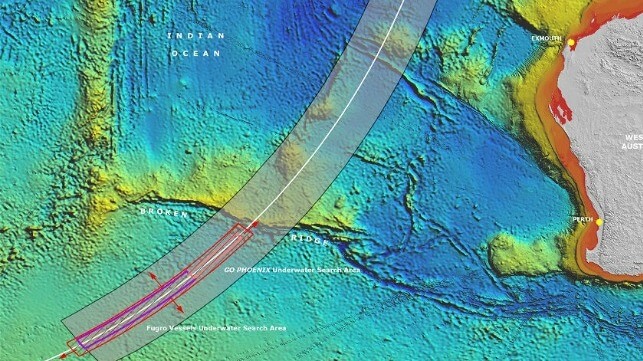
MH370
The 2014-17 search area for Flight MH370

Published Feb 25, 2025 10:37 PM by The Maritime Executive


Deep ocean search company Ocean Infinity has rebooted the hunt for Flight MH370, a Boeing 777 that disappeared over the Indian Ocean 11 years ago. 

In the early hours of March 8, 2014, Malaysia Airlines Flight MH370 took off from Kuala Lumpur, headed north for Beijing. The plane then reversed course and made for the Indian Ocean, and at about 0214, it passed out of radar range as it headed west over the Strait of Malacca. MH370 never arrived at its destination, and all passengers and crew were presumed lost at sea. Pieces of the aircraft floated ashore in Tanzania, Reunion and South Africa, confirming that it had crashed, but a three-year seabed search failed to turn up any sign of the wreckage on the bottom.

Ocean Infinity has agreed to undertake a new search on unusual terms: a reported "no-find, no-fee" arrangement. If it finds the wreck site, it will receive $70 million; the details of the contract are still being finalized, even though deployment and operations have already begun, Malaysian transport minister Anthony Loke told reporters on Tuesday. 

It is a high-profile test for Ocean Infinity's new low-crew survey techniques. The company has deployed the Armada 7806, a Vard-built compact survey ship designed to perform ROV and AUV search operations with less overhead and lower fuel consumption than a conventional platform. The 78-meter hulls have two moonpools for underwater vehicle deployment, and can operate ROV missions with as little as 16 crewmembers on board. 

AIS data provided by Pole Star suggests that the Armada 7806 finished her transit and arrived on station in the Indian Ocean on Monday. As of Tuesday, she was holding position and broadcasting her status as restricted in ability to maneuver, indicating AUV or ROV survey operations. 

 BALOCHISTAN IS A COUNTRY

Iran's Security Forces Fight Separatists in Port City of Chabahar

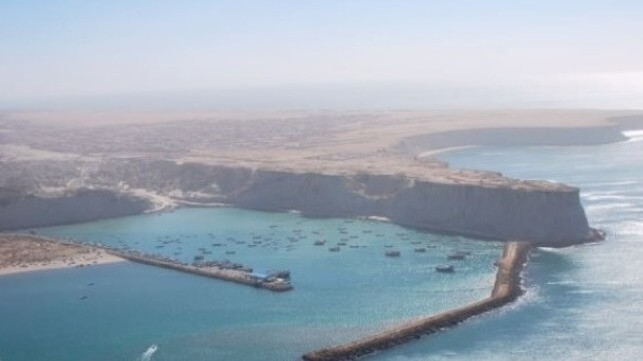
Chabahar
Port of Chabahar, Iran (file image)

Published Feb 25, 2025 11:31 PM by The Maritime Executive


Fighting is continuing for a fourth day in Iran’s southeastern port city of Chabahar.

Chabahar is the principal port in Iran’s Sistan-Baluchistan province, which borders Pakistan’s Baluchistan. On both sides of the border, Baluchi separatists have mounted attacks on central government security forces, but attacks have intensified on the Iranian side of the border. Over the past six months, under the pretext of carrying out training exercises, the Islamic Revolutionary Guard Corps (IRGC) has mounted large-scale sweep operations across Sistan Baluchistan, and has suffered a steady flow of casualties.

The fighting in Chabahar broke out on February 22, when Jaish Al Adl separatists forced the evacuation of a government building responsible for the administration of rural affairs, then blew it up. Jaish Al Adl also attacked the Chabahar office of the Islamic Revolution Housing Foundation. A protracted gun battle was taking place in central Chabahar on the morning of February 25, widely shared on social media, as IRGC security forces attempted to surround a Jaish Al Adl position.

For external observers of Iran, it is difficult to gauge when local fighting will spread to other restive areas and spark a wider insurrection. The Iranian Crown Prince in exile, interviewed on February 25, believes Iran is already “in a revolutionary, or at the very least, a pre-revolutionary fervor," he said. “It’s escalating every day.”

But more pertinently, the IRGC – as an acute internal observer of the scene –- evidently also believes this to be the case, mounting large-scale internal security exercises, focused on border areas with large minority populations. These ‘exercises’ are a mix of mobilization rehearsals, intimidatory shows of force and an opportunity to launch pre-emptive strikes on what are thought to be forces opposed to the Islamic regime. Besides Sistan Baluchistan, these ‘exercises’ have also covered the Kermanshah area of western Iran, the traditionally restive Arabic-speaking Khuzestan across the border from Basra, and Tehran itself. The IRGC’s primary role is not defense of the country, but protection of the Islamic Revolution and its leaders, and the areas where the IRGC has exercised are the first places to look for any further uprisings sparked by the activity in Chabahar.

A particular area of concern for the IRGC appears to be the southern coastline abutting the Gulf of Oman, which has seen increased levels of both Iranian regular and IRGC naval activity.  Rear Admiral Shahram Irani, the regular Iranian Navy commander, told Press TV recently two of his five deployed flotillas were covering this southern flank from the Indian Ocean. 

The unprecedented levels of IRGC activity have been accompanied by a series of statements from the IRGC’s senior leadership.  These statements reflect concern that the country may face further attacks from Israel, but also from the United States, aimed at neutralizing Iran’s covert nuclear weapons development program.  Such statements have threatened a True Promise-3 operation, a larger scale ballistic missile and drone attack than Operation True Promise-2 launched against Israel on October 1, 2024. The Iranians have also brandished their ability to mount drone attacks from ships, and have been resupplying their Houthis allies. On the political front, the Iranian leadership has intensified its courting of allies and sympathizers, seeking to enmesh them in its defense and security arrangements.

 POSTMODERN NATUROPATHY

High dietary fish intake may slow disability progression in MS


Anti-inflammatory, neuroprotective properties of nutrients found in fish may be key. Findings underscore potential importance of diet in managing MS, say researchers


BMJ Group


A high dietary intake of lean and oily fish may slow the progression of disability in people with multiple sclerosis (MS), suggests a comparative population based study, published online in the Journal of Neurology Neurosurgery & Psychiatry.


The anti-inflammatory and neuroprotective properties of the nutrients found in fish may be key, say the researchers, who add that their findings underscore the potential importance of diet in managing the disease.

Emerging evidence indicates that diet may have a role in the development of inflammatory diseases, including MS, explain the researchers. 

While previously published research has linked fish consumption with lower levels of disability among those with MS, few studies have looked at whether it might slow or lessen the progression of disability, they point out. 

To explore this further, they drew on 2719 newly diagnosed participants (average age 38) in The Epidemiologic Investigation of Multiple Sclerosis (EIMS) study, a Swedish nationwide population based case-control study, all of whom were recruited between April 2005 and June 2015.

On entry to EIMS, all participants provided information on environmental exposures and lifestyle habits, including their consumption of lean and oily fish, which was categorised as: never or seldom; 1 to 3 times a month; and weekly, and scored from 2 to 6, depending on whether they ate lean or oily fish, or both. 

Their disease progression, measured using the Expanded Disability Status Scale (EDSS), was tracked for up to 15 years through the Swedish MS Registry.

Confirmed disability worsening was defined as an increase in the EDSS score of at least 1 point from baseline, sustained between two further check-ups, at least 6 months apart.

The highest fish consumption at diagnosis was associated with a 44% lower risk of confirmed disability worsening as well as a 45% lower risk of progressing to EDSS 3 and and a 43% lower risk of progressing to EDSS 4 compared with those who ate none or very little.

And the more lean and oily fish that was consumed, the lower was the risk of confirmed disability worsening and progression to EDSS 3 and 4, trends analysis indicated.

In 2021, 1719 participants completed an online follow-up questionnaire which assessed changes in fish intake over time. Some 412 (24%) had altered their fish consumption: 288 had increased it; 124 had decreased it. 

Those who increased their score from 2–3 to a score of 5–6 within 5 years after diagnosis (133) had a 20% lower risk of confirmed disability worsening, compared with those who continued to eat little or no fish (400). 

Only 16 participants increased their fish consumption from a baseline score of 2 to a score of 5–6, but they had a 59% lower risk of confirmed disability worsening, compared with those who remained at the lowest level of consumption (101).

The findings held true even when the potentially influential factors of physical activity, weight (BMI), smoking, alcohol intake, and sun exposure were accounted for. They also remained similar when further adjustment was made for vitamin D level.

This is an observational study, and as such, no firm conclusions can be drawn about cause and effect. And further research to validate the findings and investigate the underlying biological mechanisms is required, say the researchers.

But they suggest: “While omega-3 fatty acids, predominantly found in oily fish, may contribute to reduced disability progression, the beneficial effects observed from lean fish consumption suggest that other factors may also play a significant role. One such factor is taurine, an amino acid found in significant amounts in fish and seafood.”  

They explain: “Taurine is the most abundant free amino acid in the brain and, although there are endogenous mechanisms for its production, an exogenous supply is necessary to meet physiological needs.”  

They add: “Taurine has diverse cellular functions, including cytoprotective actions through antioxidative and anti-inflammatory effects, making it a potential therapeutic agent for neurological disorders.” 

And they conclude: “The results underscore the potential role of diet, particularly fish consumption, as a modifiable factor that could complement existing therapeutic strategies for MS.” 


Use of strong synthetic opioids during surgery linked to poor composite experience of pain


Findings highlight need to reassess intraoperative pain relief strategies, say researchers


BMJ Group


The use of powerful synthetic opioids, such as sufentanil and remifentanil, during surgery is linked to a subsequent poor ‘pain experience’---a composite of emotional, cognitive, and physical aspects of pain— suggests research published in the open access journal Regional Anesthesia & Pain Medicine.


The findings highlight the need to reassess intraoperative pain relief strategies to reduce complications after surgery and improve the quality of patient care, say the researchers.

Most patients experience moderate to severe pain after surgery, which is not only unpleasant for them, but can also hinder their recovery and increase their chances of subsequent complications, explain the researchers. 

Recent research suggests that the experience of pain encompasses more than intensity alone, and includes emotional and cognitive dimensions, they add. 

To identify factors potentially associated with poor ‘pain experience’ after surgery they carried out a secondary analysis of a clinical trial aimed at evaluating the effectiveness of sedatives given before surgery on the entire surgical experience.

The trial involved 1062 adults under the age of 70 at 5 French teaching hospitals. They had been randomly assigned the day before surgery to receive either lorazepam (sedative), nothing, or a dummy drug. 

Preoperative anxiety was assessed using a validated scale (APAIS), which measures anxiety about anesthesia and surgery as well as the patient’s desire for information about the procedure.

Pain, sleep quality, and wellbeing were assessed using the Visual Analogue Scale (VAS), which measures the frequency and intensity of pain, while patient experience and satisfaction were measured the day after surgery using the EVAN-G questionnaire, which covers 26 items across dimensions.

For the current study, 971 patients with EVAN-G scale scores were included in the analysis. This showed that 271 (28%) reported a poor pain experience on the first day after surgery.

Influential factors included age, an APAIS score above 11, VAS scores for pain, sleep quality and wellbeing, tobacco use, long term opioid use and type of surgery. 

But the use of strong opioids, such as remifentanil or sufentanil, during general anaesthesia was strongly and independently linked to postoperative pain experience, with these patients almost 27 times as likely to report a poor one.

Patients given postoperative drugs to treat anxiety and those who reported amnesia were, respectively, 8 times and 58% more likely to have a poor pain experience the day after surgery, while higher VAS acute pain, and lower wellbeing, scores on day 1 were also predictive. 

Older age was associated with a lower likelihood of poor pain experience as were no preoperative sedative use and orthopedic surgery—51% and 71% lower, respectively—seriously ill patients with an ASA 3 score, as defined by the American Society of Anesthesiologists, were 5 times more likely to report poor pain experience.

This is an observational study, and as such, can’t establish cause. And the researchers acknowledge the lack of standardised anesthesia and pain relief protocols across the different hospitals, which may limit the generalisability of the findings. 

“While opioids are central to perioperative analgesia, their intraoperative administration—especially of potent agents like remifentanil and sufentanil—may paradoxically contribute to heightened postoperative pain,” note the researchers, by way of an explanation for their findings.

They conclude: “Aspects of pain beyond its intensity “are often overlooked, but…are critical in predicting the transition from acute to persistent postsurgical pain. 

“Therefore, understanding the determinants of a poor pain experience could reveal new elective targets for perioperative care, going beyond the management of pain intensity alone.”