Thursday, March 06, 2025

Revealed: Millions of foreign citizens excluded from voting in the UK due to complex voting rules


4 March, 2025 


'We have to question whether democracy is living up to its name when over four million people are excluded from voting.'


Millions of residents in the UK cannot vote in elections due to the country’s “complex and contradictory” voting rules.

A new report commissioned by the Migrant Democracy Project highlights the scale of disenfranchisement among foreign citizens in the UK.

An estimated 4.4 million residents are not able to vote in Parliamentary elections due to strict eligibility criteria.

Even in local elections, where the rules are less restrictive, 1.2 million people remain unable to vote.

On average, 6,676 residents per English Westminster constituency are unable to vote.

The constituency with the highest number of disenfranchised residents is Kensington and Bayswater, with 32,980 foreign citizens unable to vote.

In general elections, only British, Irish or qualifying Commonwealth citizens can vote.

The Scottish and Welsh Parliaments have control over the franchise for local elections in their respective areas.

EU citizens could historically vote in local elections in the UK. However, following Brexit, devolved governments have taken different approaches.

Since Brexit, the UK government has signed bilateral treaties with some, but not all EU countries, to allow mutual voting rights in local elections to continue.

Scotland and Wales have granted all foreign citizens with legal residency the right to vote in national and local elections.

The report, What if everyone could vote?, argues that simplifying voting rules and introducing residence-based voting would give millions of UK residents a political voice, creating a more inclusive democracy and making elections easier for electoral officials to administer.

The Migrant Democracy Project points out that residence-based voting has long existed in the UK for citizens from Commonwealth countries who can immediately participate in Westminster elections upon moving to the UK.

Commenting on the report, Lara Parizotto, Executive Director of the Migrant Democracy Project, said: “We have to question whether democracy is living up to its name when over four million people are excluded from voting.

“This report exposes the huge democratic gap where some migrant communities have full voting rights while millions of others have no right to vote at all. The UK must urgently follow the examples of Scotland and Wales and extend the right to vote to all.”

Olivia Barber is a reporter at Left Foot Forward
UK

CRIMINAL CAPITALI$M

Dyson ventilators given ‘preferential treatment’ in ‘affront’ to procurement rules, Covid inquiry told


5 March, 2025 
Left Foot Forward News


Gove was described as insistent that an order be placed with the Dyson company.


TweetShareWhatsAppMail


Brexiteer and vacuum cleaner tycoon James Dyson received “preferential treatment” in securing a COVID-19 contract for his company to produce 10,000 ventilators, the covid inquiry has heard.

In a submission on procurement from Covid-19 Bereaved Families for Justice UK, Pete Weatherby KC, noted that Michael Gove was “described as INSISTENT that an order be placed” with the Dyson company.

According to the report, in a meeting on 25 March 2020, despite advice that Dyson’s units would fail clinical tests, Gove “acknowledged he was under political pressure to ensure we have followed up with Dyson”.

The submission also notes that civil service officials felt under increased pressure to agree to deals involving offers that were strongly supported by ministers.

Gove then made a decision, against commercial advice, to place a provisional order with Dyson for its ventilator model.

By April 2020, when it was clear the Dyson model would no longer be pursued, Former Government Chief Commercial Officer, Gareth Rhys Williams was warned by Lord Agnew, a minister, that:

“We are going to have to handle Dyson carefully… l suspect we’ll have to buy a few machines, get them into hospitals so that he can then market internationally, being able to say they are being used in UK hospitals…

“We both need to accept that it will be a bigger decision than we can both make. Remember he got a personal call from the PM. This can’t be ignored.”

In the end, the government did not purchase any ventilators from Dyson.

However, Weatherby told the inquiry that the procurement expert Professor Albert Sanchez Graells had described the manner in which Dyson was treated as an “affront to the procurement rules”.

Sanchez said that the ministers’ decision to include Dyson in the ‘Ventilator Challenge’ and award the company a contingent contract meant it favoured the company for reasons unrelated to the procurement process.

Olivia Barber is a reporter at Left Foot Forward
Majority of Britons blame Trump for row in Oval office with Zelensky, poll finds

4 March, 2025


Looks like self-proclaimed ‘patriot’ Nigel Farage is at loggerheads with the British public.


A majority of Britons believe that U.S. President Donald Trump is to blame for the unprecedented row in the Oval office in front of the world’s cameras between him, Vice-President JD Vance and Ukrainian President Volodymyr Zelensky.

Last week, Trump and his vice-president, JD Vance, accused Zelensky of not being grateful enough for the military aid America has given his country since it was invaded by Russia in 2022. Trump clashed with the Ukrainian President in a furious exchange at the White House, with the US president telling his Ukrainian counterpart to make a deal with Russia “or we are out”.

At one point, a journalist even asked the Ukrainian president – who has worn military-style clothes ever since the war began – why he was not wearing a suit.

Those scenes were widely condemned, with European leaders expressing solidarity with Kyiv and Zelensky.

Now the British public have also given their verdict on who they think is to blame for the row.

According to polling carried out by YouGov, 67% of the public blame President Trump, while just 7% blame Zelensky for the row.

Looks like self-proclaimed ‘patriot’ Nigel Farage is at loggerheads with the British public. The Reform UK leader continues to peddle the Kremlin’s talking points, yesterday blaming Zelensky for the row.


Nigel Farage’s popularity plummets among British voters amid Ukraine crisis


Yesterday
Left Foot Forward

While the majority of European leaders expressed solidarity with Zelensky after the unprecedented bust up, Farage has instead criticised Zelensky.


Nigel Farage’s popularity among British voters has plummeted, due to his response to the Ukraine crisis and his ‘fawning’ over Russian President Vladimir Putin.

Farage, who likes to portray himself as a patriot, has previously expressed admiration for Putin “as a political operator because he’s managed to take control of running Russia”. This despite Putin’s appalling human rights record, invasion of Ukraine and silencing of political opponents.

In recent weeks, President Trump has ripped apart the post war consensus, choosing to cosy up to Russia, upending U.S. foreign policy and has also falsely blamed Ukraine for the war.

Last week saw an extraordinary and unprecedented bust up in the Oval office between President Trump, Vice-President JD Vance and Ukrainian President Volodymyr Zelensky in front of the world’s cameras.

Trump and his vice-president, JD Vance, accused Zelensky of not being grateful enough for the military aid America has given his country since it was invaded by Russia in 2022. Trump clashed with the Ukrainian President in a furious exchange at the White House, with the US president telling his Ukrainian counterpart to make a deal with Russia “or we are out”.

While the majority of European leaders expressed solidarity with Zelensky after the unprecedented bust up, Farage has instead criticised Zelensky.

The Reform UK leader also blamed the Ukrainian President for last Friday’s Oval Office row, accusing him of being ‘rude’.

Farage’s views have been at loggerheads with the British public, with polling showing that the majority of the public are supportive of Ukraine and blame Trump for the row.

Now a YouGov poll has found that the number of voters with a favourable view of Farage has fallen from 30% to 26% since mid-February, while the number with an unfavourable view has risen from 60% to 65%. That gives him an overall rating of minus 39.

The Prime Minister’s favourability rating, meanwhile, has risen from minus 40 to minus 28 over the same period.

Basit Mahmood is editor of Left Foot Forward
Favourability of USA among European countries plummets following return of Donald Trump, poll finds


5 March, 2025 


'In Great Britain, Denmark, Sweden, Spain and Italy, these are the lowest figures for USA favourability since we began tracking this question'.


Favourability ratings towards the USA among European countries have slumped after Donald Trump returned to the White House, a new poll has found.

Trump has caused alarm among European nations, with his threats to impose tariffs, decision to cosy up to President Putin while attacking Zelensky, and contempt for the post-war rules based order.

YouGov’s latest EuroTrack survey shows that favourable attitudes towards the United States in several Western European countries have slumped since President Trump’s re-election, with favourable attitudes falling by between six and 28 percentage points.

‘The Eurotracker finds that opinion towards the US is least positive in Denmark, at 20%, with Sweden coming next on 29%. Only around a third of people in Germany (32%), France (34%) and the UK (37%) have a favourable view of the US now. Italians and Spaniards are the most likely to have a favourable view, although this still represents fewer than half of people there feeling this way, at 42% and 43% respectively’.

YouGov states: “In Great Britain, Denmark, Sweden, Spain and Italy, these are the lowest figures for USA favourability since we began tracking this question”.

More than half of people in Britain (53%), Germany (56%), Sweden (63%) and Denmark (74%) now have an unfavourable opinion of the USA.

Basit Mahmood is editor of Left Foot Forward
UK
Petitions to cancel Donald Trump’s state visit gather thousands more signatures


Yesterday
Left Foot Forward News


Can the humble petition stop Trump’s visit?


TweetShareWhatsAppMail


The number of signatures on e-petitions calling for the cancellation of Donald Trump’s state visit invitation continues to increase.

Over 100,000 people have now signed a Stop Trump Coalition petition calling for Trump’s state visit to be cancelled. A separate 38 Degrees petition is close to reaching 200,000 signatures.

The offer of a second state visit makes Trump the first elected political leader in modern history to be hosted for two state visits by a British monarch.

During a meeting with Trump at the White House last Thursday, Prime Minister Keir Starmer handed him a letter from King Charles III inviting him for a state visit to the UK.

In the past week alone, Trump has sparked widespread outrage and condemnation calling President Volodymyr Zelenskyy “ungrateful” for US’ military aid.

On Monday, Trump made a shock announcement pausing military aid to Ukraine following his disastrous meeting with Zelenskyy last Friday.

No date for Trump’s second state visit has been set yet.

The 38 Degrees petition says “a huge petition signed by hundreds of thousands of us will show Trump, The King and the PM how unwelcome the US president truly is. It’s the first step in stopping this terrible idea.”

In a recent opinion piece, the Guardian’s Zoe Williams questions the effectiveness of protests and petitions in blocking Trump’s visit, saying: “there is no imaginable world in which King Charles pays attention to an e-petition”.

However, the increasing number of signatures highlights the public’s strong opposition to Trump.

A YouGov poll from January revealed that 58% of the British public dislike Trump. On the issue of his state visit, a YouGov poll found that 42% believe it should be cancelled, 43% think it should go ahead, and 15% are unsure.

Olivia Barber is a reporter at Left Foot Forward


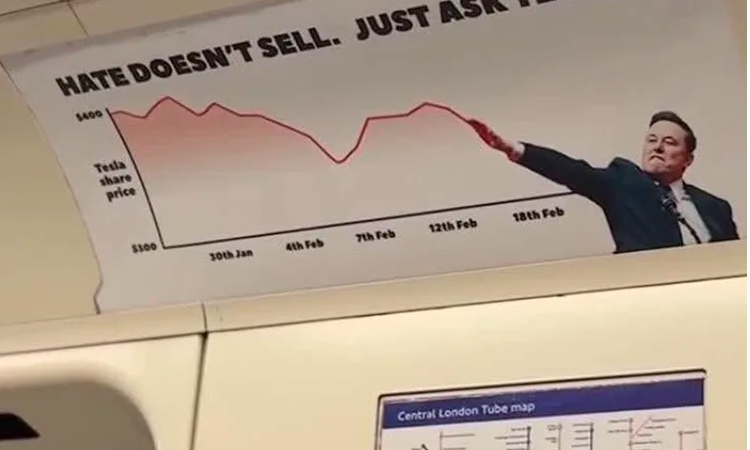
Musk meltdown: London tube ad mocks Tesla boss over falling share prices


3 March, 2025 
Left Foot Forward


The tube ads show a graph with Tesla’s falling share price, along with a picture of Musk carrying out what was alleged to be a Nazi salute.


Trump supporter and billionaire owner of Tesla, Elon Musk, is being brutally mocked on the London tube, with ads ridiculing him over his company’s falling share price.

The ads, featuring on the underground, and which have already gone viral online, highlight the alarming fall in Tesla’s share price – which largely worsened after Donald Trump’s inauguration.

Musk’s support for Trump has proved to be toxic for his business interests, as progressives hit back. Last month, we reported how Tesla sales have slumped in Europe during January, with Elon Musk’s ‘toxic influence’ on the brand being blamed as among the reasons why.

Musk who has been rewarded for spending $250 million on Trump’s campaign for the White House with a role in his administration, has been widely condemned in recent months for his support for far-right parties in Europe as well as attempted interference in the elections of other countries.

Musk was also widely condemned for giving a Nazi-style salute at a Trump inauguration rally. The latest figures show that Tesla experienced a decline in sales across five European countries in January, including a fall of nearly 12% in the UK.

The company performed poorly in other European countries too, recording a 63% decline in January sales for Tesla in France, drops of 44% and 38% in Sweden and Norway, and a 42% decline in the Netherlands.

The tube ads show a graph with Tesla’s falling share price, along with a picture of Musk carrying out what was alleged to be a Nazi salute.

The ad states: “Hate doesn’t sell – just ask Elon Musk”.


Elon Musk loses over $100,000,000,000 since December

3 March, 2025 
Left Foot Forward

Some have put the falls in Tesla sales down to Musk’s involvement with President Trump.


More than $100billion has been wiped off the value of Tesla, after a collapse in sales in Europe, spelling more misery for its owner and tech billionaire Elon Musk.

It was recently reported that Tesla sales have slumped in Europe during January, with Musk’s ‘toxic influence’ on the brand being blamed as among the reasons why. Musk’s support for Trump has proved to be detrimental for his business interests, as progressives hit back.

Musk, who has been rewarded for spending $250 million on Trump’s campaign for the White House with a role in his administration, has been widely condemned in recent months for his support for far-right parties in Europe as well as attempted interference in the elections of other countries.

Musk was also criticised for giving a Nazi-style salute at a Trump inauguration rally. The latest figures show that Tesla experienced a decline in sales across five European countries in January, including a fall of nearly 12% in the UK.

The company performed poorly in other European countries too, recording a 63% decline in January sales for Tesla in France, drops of 44% and 38% in Sweden and Norway, and a 42% decline in the Netherlands.

With Tesla stocks declining by 25% this year, that has resulted in a loss of $100 billion since December.

Some have put the falls in Tesla sales down to Musk’s involvement with President Trump. Last month saw protests outside Tesla showrooms in cities including New York, Seattle, Kansas City and across California, with many of those taking part carrying placards likening the Trump administration to Nazis.

Basit Mahmood is editor of Left Foot Forward


UK

The new Mick Lynch: Eddie Dempsey elected the new general secretary of RMT

Olivia Barber
Yesterday
Left Foot Forward News


Just like the legendary Mick Lynch, Dempsey bosses media interviews


TweetShareWhatsAppMail


Eddie Dempsey has been elected as the new general secretary of the RMT, and, starting tomorrow, will replace Mick Lynch who announced his retirement back in January.

42-year-old Dempsey has been assistant general secretary of the National Union of Rail, Maritime and Transport Workers since 2021.

In an interview with PA News agency, Dempsey said: “There will be no backward step or taking the foot off the gas. We are absolutely united in the direction of this union.

“We will continue to be a voice for working class workers.”

He will celebrate his appointment playing a game of bingo with his wife at the local social club.

Back in 2022, the Independent described Dempsey as “the new Mick Lynch” after he filled in for Lynch in some TV interviews and showed off his own excellent interviewing skills.

During an appearance on Jeremy Vine, Dempsey was asked whether rail workers were being “greedy” for demanding higher pay.

He completely took down the reporter’s line of questioning, stating: “I have to tell you, it’s a bit of a cheek having a programme asking if a trade union is being greedy for asking for a pay rise.”

“”The FTSE 350 top companies in this country – their profits have gone up 73 per cent since 2019. When are we going to ask if they are being greedy?”.

Dempsey was born and raised in New Cross, South East London, to Irish parents.

He says his first political act was to join a demonstration against the Iraq War.

Dempsey served as secretary of the London branch of the Connolly Association, the oldest migrant workers’ organisation in Britain, which supports the aims of Irish Republicanism.

He joined the railway in 2008 and has worked as station staff and a train driver.

Lynch said: “It has been an honour to serve as RMT General Secretary, representing our members in their struggles for better pay terms and conditions. Eddie Dempsey is a committed trade unionist who has played a pivotal role in our union’s recent successes.

“He has the experience, determination, and leadership qualities to take RMT forward, and I have every confidence that he will continue to stand up for our members with strength and resolve.”

Olivia Barber is a reporter at Left Foot Forwa
rd


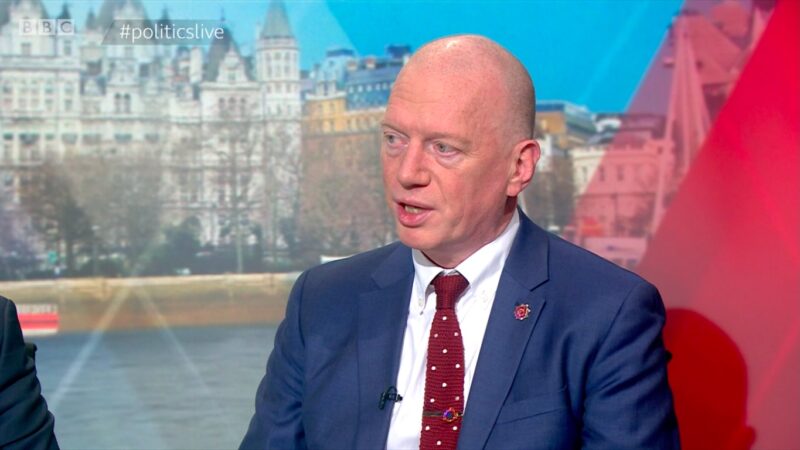
Ex-FBU leader Matt Wrack nominated to become NASUWT general secretary


Former Fire Brigades Union general secretary Matt Wrack is tipped to take over as the leader of an education union.

The national executive of the NASUWT is understood to have backed Wrack to replace Dr Patrick Roach, who is stepping down as general secretary.

While a nomination process is now underway, Schools Week reports the teachers’ union has not had a contested election for the position for more than three decades.

Wrack had served as leader of the Fire Brigades Union for almost 20 years before his defeat to Steve Wright in January. However, an investigation was launched by a government watchdog into their recent election after more than 3,000 members did not receive ballots, raising the prospect of a potential rerun of the vote.

The FBU will not be re-running the election after Matt Wrack declined an offer to stand, meaning Steve Wright has been confirmed as general secretary.

READ MORE: New FBU general secretary on the danger of austerity, fighting Reform at work and socialism starting at home

Should Wrack be successful, he would be the first general secretary in the union’s history to have not come from a teaching background.

An NASUWT spokesperson said: “The National Executive endorsed the nomination of Matt Wrack as its candidate for election to the position of NASUWT general secretary.

“In accordance with the rules of the union, all NASUWT local associations are now entitled to nominate candidates for the position of general secretary and submit nominations by April 19 2025.”


How Roman society integrated people who altered their bodies and defied gender norms

(The Conversation) — There may have been fear of gender-diverse people in the ancient world, but they played a crucial role. In Rome, they were viewed as vital to the city’s safety.


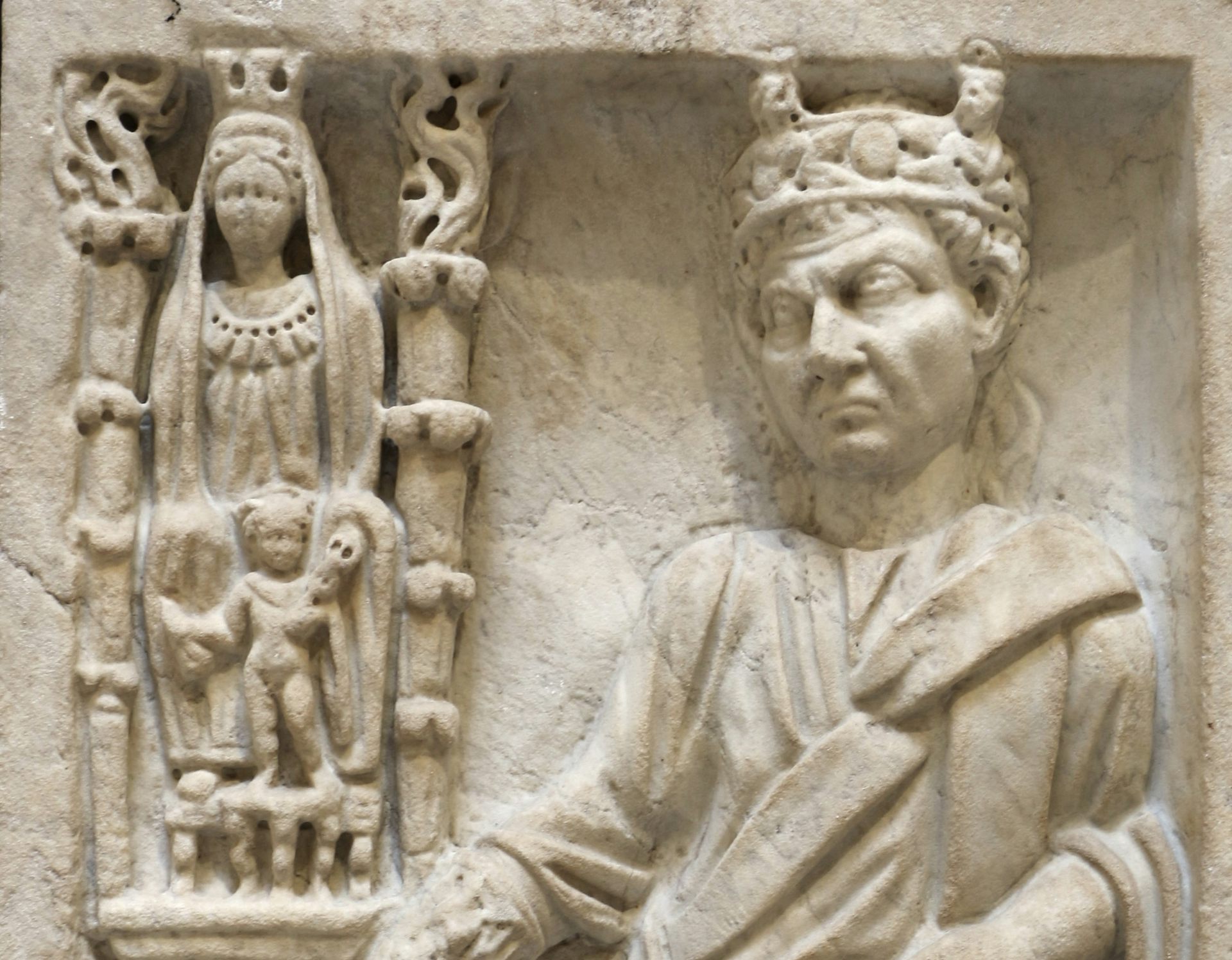
A relief showing a gallus making sacrifices to the goddess Cybele and Attis. (Sailko via Wikimedia Commons, CC BY)

Tom Sapsford
February 25, 2025

(The Conversation) — A few weeks into his second term, President Donald Trump signed two executive orders restricting the rights of trans workers in the federal government. The first was a renewal of the ban on transgender people joining the U.S. military – initially signed in 2017 and later repealed by President Joe Biden in 2021. The second was a more sweeping memo that recognizes only two sexes in federal records and policies.

In the ancient Roman world, which I study, biological sex and gender expression did not always line up as neatly as the president is demanding to see in today’s government.

In antiquity, there were masculine women, feminine men and people who altered their bodies to match their gender expression more closely. In particular, two figures – the cinaedus and the gallus – provide examples of men whose effeminate behavior and modified anatomies were striking yet still integrated into Roman society.

The cinaedus and the commander in chief


In ancient Rome, some men who did not fit neatly within gender categories were called “cinaedi.” They were usually adult males singled out for their extreme effeminacy and nonnormative sexual desires.

The cinaedus was already a recognizable figure in ancient Greece and was first mentioned in the fourth century B.C. by Plato. He says little more than that a cinaedus’ life was terrible, base and miserable. Later Roman authors provide more detail.

Martial, a Roman poet writing in the first century A.D., for instance, describes a cinaedus’ dysfunctional penis as like a “soggy leather strap” in one epigram. In the same century, the Roman novelist Petronius has a cinaedus suggest that both he and his fellows have had their genitals removed.

In a fable by Phaedrus, also written in the first century A.D., a barbarian is threatening the troops of the military leader, Pompey the Great. All are afraid to challenge this fierce opponent until a “cinaedus” volunteers to fight.

The cinaedus is described as a soldier of great size but with a cracked voice and mincing walk. After pleading permission in a stereotypically lisping manner from Pompey the Great, his commander in chief, the cinaedus steps into battle. He quickly severs the barbarian’s head and, with army agog, is summarily rewarded by Pompey.

In Phaedrus’ fable, the cinaedus is untrustworthy. He is described as having stolen valuables from Pompey early on in the tale and then later swears on oath that he hasn’t.

Yet the moral of Phaedrus’ fable of the soldier-cinaedus is that such deceptive appearances and actions might actually be strategically successful in military matters. The cinaedus has an edge over Pompey’s other soldiers precisely due to his disarming effeminacy. In the tale, this doesn’t at all diminish his skills as a lethal fighter. Rather, the cinaedus’ effeminacy combined with his martial valor ultimately lead to the barbarian’s defeat.

Trans priests and the safety of the Roman state


The galli, another group that lived in the heart of the city of Rome, also blurred gender roles. They were males who had castrated their genitalia in dedication to the Great Mother goddess Cybele, who was their protector.

As reported by several ancient sources, including Cicero and Livy, in 204 B.C. the Roman state consulted a set of prophetic scrolls called the Sibylline Oracles on how best to respond to the pressures it faced as a result of the Second Punic War – Rome’s prolonged conflict with Carthage and its fierce military general, Hannibal.

The oracles’ answer – and Rome’s subsequent action – was to import a strange and foreign religious order from Asia Minor into the heart of Rome, where it would remain for the next several hundred years.

The temple of Cybele was located on the Palatine Hill, next to several important shrines, monuments and later even the residence of the Emperor Augustus. As the poet Ovid tells us, each year during Cybele’s festival the galli would proceed through the streets of Rome carrying a statue of the goddess, while ululating wildly in time with the sound of wailing pipes, banging drums and crashing cymbals.

More so than the figure of the cinaedus, ancient literary sources present the galli’s gender difference similarly to modern-day trans women, often using feminine pronouns when describing them.

For instance, the poet Catullus details the origin story of the galli’s founder figure, Attis, who was Cybele’s mythical consort and chief priest. Notably, Catullus switches from using masculine adjectives to feminine ones at the very moment of Attis’ self-castration.

Attis.


Similarly, in his novel, “The Golden Ass,” the second century A.D. writer Apuleius has one gallus address his fellow devotees as “girls.”

While several ancient sources mock these figures for their gender-nonconforming appearance and behaviors, it is nevertheless evident that the galli held a sacred place within the Roman state. They were viewed as being important to Rome’s continued safety and prominence.

For example, Plutarch in his “Life of Marius” relates that a priest of the Great Mother came to Rome in 103 B.C. to convey an oracle that the Romans would be triumphant in war. Though believed by the Senate, this priest, Bataces, was mocked mercilessly in the plebian assembly. However, when the individual who had insulted Bataces swiftly died of a terrible fever, the plebians too gave this oracle and the goddess’s prophetic powers their backing.

Today’s trans issues

Behind Trump’s executive orders are two assertions: first, that transgender identity is a form of ideology: a modern invention created to justify deviance from one’s sex as assigned at birth; second, that transgender identity is both a form of disease and of dishonesty.

The reissued military ban doubles down on the perceived dishonesty of trans folk, contrasting it with the ideals and principles needed for combat. The order states that the “adoption of a gender identity inconsistent with an individual’s sex conflicts with a soldier’s commitment to an honorable, truthful, and disciplined lifestyle.”

Taking a long view of gender diversity across millennia has shown me that many individuals in antiquity certainly lived lives outside of the clear-cut formula that the Trump administration has stated, namely that “women are biologically female and men are biologically male.”

Gender diversity is not simply a late 20th- or early 21st-century phenomenon. However, the fear that gender-diverse people are diseased and devious likewise arises in several ancient sources. In the classical world, these fears seem limited to the realms of satire and fantasy; in our current time, we are seeing these fears being harnessed for government policy.

This article incorporates material from a story originally published on Aug. 1, 2017.

(Tom Sapsford, Assistant professor of Classical Studies, Boston College. The views expressed in this commentary do not necessarily reflect those of Religion News Service.)
From the 1970s to Spotify: New Age music is experiencing a revival among Gen Z

(RNS) — Once dismissed by some religious groups, New Age music is gaining renewed interest among young spiritual listeners.


(Photo by Alma Snortum-Phelps/Unsplash/Creative Commons)


Fiona Murphy
March 3, 2025

(RNS) — Imagine you are walking into a spa, and you are likely to hear an immersive soundscape of soft harmonies, resonant tones and gentle textures submerging your senses.

You are experiencing New Age music, a genre designed to promote relaxation, mindfulness and internal healing. Nonmelodic compositions featuring soft piano notes, delicate harp scales, the shimmering chimes of crystal bowls and ambient synthesizers characterize the genre.

Often labeled as “spa music,” New Age has experienced a resurgence in recent years, gaining popularity alongside the rise of wellness culture and spirituality and a decline in organized religious participation, especially among younger generations. And while overcoming religious backlash was a challenge New Age artists and producers faced when the genre first gained traction about 50 years ago, today artificial intelligence poses a new threat.

“I feel like we live in a society where we are bombarded by stimuli all of the time, especially if you have social media,” said Ava Rian Buckler, a 25-year-old former professional astrologer who now does creative consulting in Indiana.

Rian Buckler was diagnosed with attention deficit hyperactivity disorder, or ADHD, which makes her mind particularly restless, she said. Around 2018, she began feeling increasingly overwhelmed, so she decided to delete her social media accounts and came across New Age music online.

“Listening to healing vibrations, I felt like my attention was coming back to me,” she said. “I felt like my energy was coming back to me.”



(Photo by Antoni Shkraba/Pexels/Creative Commons)

Rian Buckler describes herself as deeply spiritual rather than religious, having grown up in a nondogmatic Christian household. She often listens to New Age music at a low volume while she sleeps because she said she believes that’s when her subconscious is most receptive to its therapeutic properties.

According to HowMusicCharts.com, some of the genre’s most notable artists, such as Brian Eno, Laraaji and Steven Halpern, have seen a renewed interest over the past 15 years. Dozens of YouTube channels created in the last several years dedicated to healing sound vibrations have gained millions of subscribers. And in the broader study and relaxation music category, LoFi Girl, a 24/7 livestream of lo-fi beats, has become one of YouTube’s most-viewed channels, amassing 14 million subscribers since posting its first “easy-listening” video five years ago.

“The thing that I’m really proud of is that we’ve managed to normalize (New Age) and make it part of what young people think of as music as opposed to being something that’s like sort of music with an asterisk,” said Douglas Mcgowan, a Grammy-nominated music producer and owner of Yoga Records, a Los Angeles-based label dedicated to preserving and promoting New Age music and other niche genres.

Yoga Records is known for its archival work and has played a key role in reintroducing classic New Age albums to modern audiences. Mcgowan said that since founding Yoga Records in 2008, he has seen it as his mission to highlight the potential for listeners to find meaning in New Age.

“To me, New Age is a type of secular, profound and spiritual experience,” Mcgowan said. “It’s a personal feeling of wonder. It’s the feeling that you get from a beautiful sunset rather than going to a church or a mosque.”

The genre traces its roots in the United States to the 1970s, when musicians began experimenting with sound as a tool for stress reduction. At the forefront of the movement was Halpern, who is regarded as the pioneer of the genre.



Musician Steven Halpern. (Photo courtesy Steven Halpern)

“I was the first person healed by my music,” said Halpern, who has released over 100 albums and has hundreds of thousands of monthly listeners on streaming platforms. A video published to his YouTube channel called “Steven Halpern Great Pyramid OMs Cymatics” has over 500,000 views. Halpern was also nominated for a Grammy Award for best New Age album in 2013.

“Healing comes from a balance of body, mind and spirit,” he said. “In the 1980s, the major music labels said, ‘We’re going to call it contemporary instrumental because New Age has a spiritual component to it that we don’t want to get involved with.'”

According to Halpern, healing music can synchronize brainwaves with the alpha state, a neurological pattern linked to relaxation and balance. He references research on the physiological effects of sound, including 1994 findings that suggested his music helped maintain healthy blood flow whereas harsh, stress-inducing sounds cause white blood cells to clump together, potentially leading to health effects.

In earlier days, Halpern said, New Age music faced backlash from religious groups. For example, in Pastor Bob Larson’s 1989 book “Straight Answers on the New Age,” Halpern was labeled a “ringleader of the demonic cult music that they call New Age music.”


Some of the many albums by Steven Halpern available on his website. (Screen grab)

“I said, ‘What?’” Halpern recalled. “I work with angels. I work with powers of light.”

Some religious groups opposed New Age music because of its association with meditation, which they viewed as contrary to Christianity. But Halpern considers his work a continuation of ancient healing traditions, which he connects to biblical references, the teachings of Edgar Cayce (a late self-proclaimed American clairvoyant), Sufi masters and the mathematical principles of Pythagoras. Halpern was inspired by historical uses of music in the temples of Egypt, Greece and China.

“I wanted to hear a contemporary version of what healing music would sound like in the 20th century, and there was nothing available,” Halpern said.

When music stores in California said they had no place for his work, Halpern, who is a classically trained jazz musician, found success at metaphysical bookstores, yoga centers and crystal shops. He soon was part of building a musical movement.

Fifty years later, as popular streaming services such as Spotify make music more accessible than ever, New Age musicians and producers now are contending with AI-generated music.


“The whole AI revolution really hit my part of the music field,” Halpern said. “It’s never going to hit Beyonce because you can’t fake her. But the arrangement of things? That’s a different story,” adding that New Age music is an easier target for fabrication because of its structural simplicity, repetition and lack of vocals.

“You see very clearly that New Age music is really sort of the first music that is falling to artificial intelligence,” Mcgowan said.

In recent years, Spotify has faced scrutiny for the proliferation of AI-generated beats, ambient tones and New Age music on its platform, which cuts company costs of paying artists.

“In my case, I saw my royalties (on Spotify) go down 70% in one month,” Halpern said. “It was shocking.” Halpern said that, across multiple platforms, Apple Music, Spotify and Pandora, this is the case.

This trend underscores growing concerns that the rise of AI-generated compositions could diminish the genre’s spiritual and wellness essence, which many listeners seek.

“Nobody has shown me any AI New Age music that has meant anything to me,” Mcgowan said. “I’m not saying it’s not possible — in fact, I’m saying it’s inevitable — but my focus on New Age music of the past has always been about creating an anchor in reality. Like, it’s about grounding us in a historical bedrock that is solid and real.”


Halpern also said because of costs, much potential research on the healing properties of New Age music has remained unexplored, which also remains true for AI-generated music.

Younger listeners like Rian Buckler are also approaching AI-generated music with caution.

“I want to support real humans who have been doing this for a long time, especially people like Steven Halpern,” she said, adding, however, that if an advanced AI model was specifically designed with healing frequencies and programmed with a deep understanding of the genre’s history and its effects on the brain, she could be open to listening to it.

“But as far as everyday use, I don’t think anybody’s doing that yet,” she said.
Who are the Mennonites in a Texas community where measles is spreading?

While it’s not immediately clear which Mennonite community has been affected, the Gaines County area includes a community with a distinctive history.


A vehicle drives past a sign outside of Seminole Hospital District offering measles testing Friday, Feb. 21, 2025, in Seminole, Texas. (AP Photo/Julio Cortez)

Peter Smith
February 27, 2025

The Mennonite population being affected by a measles outbreak in West Texas is part of a larger, loosely affiliated group of churches worldwide with varied beliefs and leadership structures — and with sometimes strained or distant relations with health officials and other public authorities.

Who are the Mennonites?


Mennonites are part of the wider Anabaptist family of churches, which emerged in 1525 as the radical wing of the Protestant Reformation in Central Europe. Other Anabaptist branches today include the Amish, Brethren and Hutterites. Anabaptists believed that a true biblical church had to follow such principles as non-violence, unconditional forgiveness, adult baptism, church discipline, and a refusal to bear arms or swear oaths.

Early Anabaptists suffered persecution and martyrdom under Catholic and Protestant rulers in Europe, a history that still influences some groups today in their suspicion of governmental authorities, including public health officials.

Mennonites, named for an early leader, Menno Simons, vary widely in practice today.

Some Mennonites have largely assimilated into mainstream culture and dress, with a focus on working for peace and social justice in the larger society. Other Mennonites maintain traditions similar to the Amish, with tight-knit, separatist communities marked by such things as limited technology, nonviolence, male leadership and traditional dress, including women’s head coverings. Still others are somewhere on a continuum between such practices.

There are more than 2 million baptized believers in 86 countries in Anabaptist-related churches, according to the Mennonite World Conference.

What are Old Colony Mennonites in Texas?

The outbreak has particularly affected Gaines county and some adjacent areas.

While it’s not immediately clear which Mennonite community has been affected, the Gaines County area includes a community with a distinctive history.

Many other North American Amish and Mennonites trace their roots to immigration directly from Western Europe in the 18th and 19th centuries, said Steven Nolt, professor of history and Anabaptist Studies at Elizabethtown College in Pennsylvania.

In contrast, the Seminole area includes a community of Old Colony Mennonites, which has a much more circuitous history of migration, Nolt said.

Old Colony Mennonites migrated first to the Russian Empire, then to Canada, then to Mexico, fleeing government pressures to assimilate, according to Nolt. As economic conditions deteriorated in Mexico, some moved to such areas as Gaines County and other communities in Texas and nearby states in the 1980s and 1990s. All along, they have preserved their Low German dialect and other cultural distinctions.


Gaines County is also home to one of the highest rates of school-aged children in Texas who have opted out of at least one required vaccine, with nearly 14% skipping a required dose last school year.

What are Mennonite views on vaccines?

“Historically and theologically, there has not been any religious teaching against immunization in Mennonite circles,” Nolt said via email. “There’s no religious prohibition, no body of religious writing on it at all. That said, more culturally conservative Mennonite (and Amish) groups have tended to be under-immunized or partially-immunized.”

Partly, he said, that’s because they don’t engage as regularly with health care systems as more assimilated groups do. Many traditional Anabaptist groups did accept vaccinations that were promoted in the mid-20th century, such as for tetanus and smallpox, but they have been more skeptical in recent years of newly introduced vaccines, Nolt said.

But Old Colony groups who arrived in the late 20th century also “missed the whole mid-century immunization push, as they weren’t in the U.S. at that time.”
What are state laws on student exemptions from vaccines?

All 50 states and the District of Columbia require vaccines for students to attend school, according to the National Conference of State Legislatures. Many states align their mandates with recommendations from the Centers for Disease Control and Prevention.

All states allow exemptions for medical reasons, while most allow exemptions for religious or personal reasons, or both. Only five states — California, Connecticut, Maine, New York and West Virginia — have allowed no non-medical exemptions, according to the conference, but West Virginia is taking steps this year to allow religious or philosophical exemptions.

Texas law allows exemptions for “reasons of conscience, including a religious belief.”

U.S. kindergarten vaccination rates dipped in 2023, and the proportion of children with exemptions rose to an all-time high, according to federal data posted in 2024.
___


Associated Press religion coverage receives support through the AP’s collaboration with The Conversation US, with funding from Lilly Endowment Inc. The AP is solely responsible for this content.