Sunday, March 30, 2025

'Manufactured chaos': Trump officials blasted for 'absurd' Social Security fraud claims

March 29, 2025


Elon Musk, the de facto head of the Trump administration's Department of Government Efficiency, was berated anew Friday after insidiously tarring millions of Social Security recipients as "fraudsters"—a tactic critics called part of an orchestrated Republican scheme to destroy the vital earned benefits program.

Musk and seven DOGE staffers—all of them men—appeared on Fox News Thursday, where the world's richest person called the Trump administration's crusade to eviscerate the federal government under pretext of improving efficiency "the biggest revolution in the government since the original revolution" in 1776.

The DOGE staffers repeated unfounded claims that Social Security is riddled with fraud; that in some cases, 40% of calls to the Social Security Administration phone center are fraudulent; and that millions of people aged 120 and older are registered with SSA.

Acknowledging that DOGE's wrecking-ball approach to government reform is getting "a lot of complaints along the way," Musk said: "You know who complains the loudest, and with the most amount of fake righteous indignation? The fraudsters."

Musk's comments echoed those of billionaire U.S. Commerce Secretary Howard Lutnick, who suggested on a podcast last week that only a "fraudster" would complain about a missed Social Security check.

Responding to what she called Musk's "absurd claim," Nancy Altman, president of the advocacy group Social Security Works (SSW), said Friday that "the truth is that Social Security has a fraud rate of 0.00625%, far lower than private sector retirement programs."

"It is Musk and DOGE who are inviting in fraudsters," she continued. "Scammers are already rushing in to take advantage of the confusion created by DOGE's service cuts."

Critics have denounced the Trump administration for sowing chaos at SSA and other federal agencies by planning to lay off thousands of workers, slashing spending, and implement other disruptive policies. Cuts in SSA phone services were reportedly carried out in response to a direct request from the White House, which claimed it is simply working to eliminate "waste, fraud, and abuse."

"The truth is that Social Security has a fraud rate of 0.00625%, far lower than private sector retirement programs."

This "DOGE-manufactured chaos," as Altman calls it, has already led to the SSA website crashing several times in recent weeks and hold times of as long as 4-5 hours for those calling the agency.

Sen. Elizabeth Warren (D-Mass) on Thursday noted that while it would be clearly illegal for President Donald Trump and DOGE to cut Social Security benefits without congressional authorization, there are other ways for the administration to hamstring the agency.


Referencing a new in-person verification rule that was delayed and partly rolled back this week, Warren said:
Say a 66-year-old man qualifies for Social Security. Say he calls the helpline to apply, but he's told about a new DOGE rule, so he has to go online or in person. He can't drive. He has trouble with the website, so he waits until his niece can get a day off to take him to the local office, but DOGE closed that office, so they have to drive two hours to get to the next closest office. When they get there, there are only two people staffing a 50-person line, so he doesn't even make it to the front of the line before the office closes and he has to come back. Let's assume it takes him three months to straighten this out, and he misses a total of $5,000 in benefits checks, which, by law, he will never get back.

"This scenario is a backdoor way Musk and Trump could cut Social Security," the senator added. "That's what I'm fighting to prevent."

Democratic lawmakers and others argue that the Trump administration's approach is "a prelude to privatizing Social Security and handing it over to private equity," as Sen. Ron Wyden (D-Ore.) said earlier this week.

"Improving Social Security doesn't start with shuttering the offices that handle modernization, anti-fraud activities, and civil rights violations," the senator asserted. "It doesn't start with indiscriminately firing or buying out thousands of workers, and it doesn't start with restricting customer service over the phone and drawing up plans to close field and regional offices."

These and other moves, including the nomination of financial services executive Frank Bisignano as SSA commissioner, belie Trump's claim that he is "not touching" Social Security, upon which 70 million Americans—including nearly 9 in 10 people aged 65 or older—rely for their earned benefits.

So do Trump and Musk's own words. The president has called Social Security a "scam" and Musk recently referred to it as "the biggest Ponzi scheme of all time."

"No one who thinks Social Security is a criminal Ponzi scheme should be anywhere near our earned Social Security benefits or the sensitive data we provide the Social Security Administration," said SSW's Altman.


Kansas House backs antisemitism bill — but refuses to condemn all racism

WHITE CHRISTIAN ANTI SEMITISM IS:
PRO ZIONIST
ANTI PALASTINIAN
ISLAMOPHOBIC
ANTI FREE SPEECH
WHITE SUPREMACIST


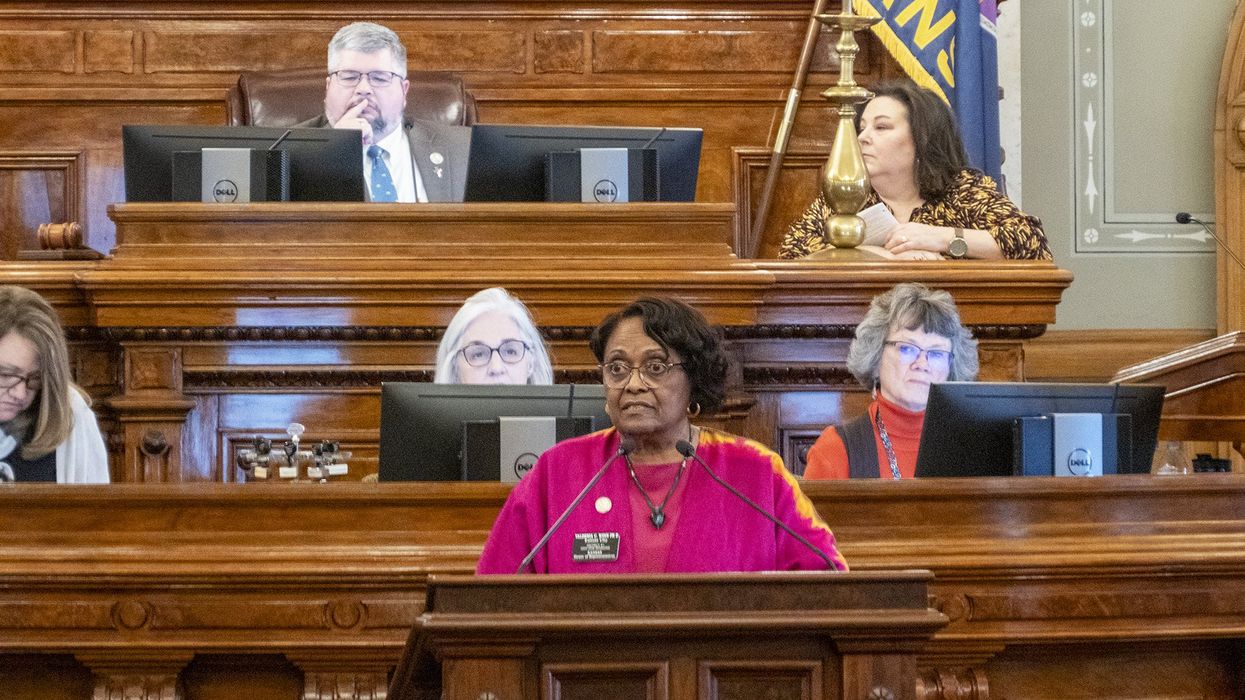
Rep. Valdenia Winn, a Kansas City Democrat, asks the House during a March 19, 2025, session to support her amendment to declare all forms of racism are against the public policy of Kansas. The House rejected her amendment on a party-line vote. 
(Sherman Smith/Kansas Reflector)

March 26, 2025

TOPEKA — House Republicans refused to consider a plea from Democratic Rep. Valdenia Winn to send a message that there is no place for racism in the state of Kansas.

Winn, a Kansas City Democrat, proposed an amendment to House Bill 2299, which declares that antisemitism is against the public policy of the state. She wanted to expand the language to condemn all forms of racism and discrimination.

“This is not rocket science,” Winn said during a March 19 debate in the House. “This is not trigonometry. This is basic.”

Republicans wouldn’t hear it.

Rep. Susan Estes, a Wichita Republican, objected to Winn’s proposal under a House rule that says amendments have to be “germane” to the existing bill. That sent members of the rules committee into a scramble to conceive a reason to reject the Democrat’s idea.

The way Rep. Susan Humphries explained it, the test for whether an amendment is germane is whether the amendment would expand the scope of the bill, a test rarely applied to amendments proposed by Republicans. The Wichita Republican, who serves as rules chair, explained the situation through a metaphor: You can’t expand a bill about apples to be about all fruit. Under that standard, she ruled, the House could not consider Winn’s proposal.

“I am not opposed to having an act that declares racism to be against public policy,” Humphries said. “Like, let’s do that if we feel like it’s needed. That wording, that expanding from antisemitism to discrimination and racism is an expanding and super close call. But this amendment is not germane.”

Republicans determine which bills get a hearing and whether they advance, making it unlikely that Winn could get anywhere with a standalone bill that dealt with racism.

Rep. Stephanie Clayton, an Overland Park Democrat, argued the amendment was germane because “anyone who had the most rudimentary knowledge of history would understand is that antisemitism is racism.”

“So when we’re talking about apples, oranges, fruit, squares, rectangles, whatever analogy you want to use for what is broad and what isn’t, racism and antisemitism are the same thing, ergo, this amendment is germane,” Clayton said.

Winn said her amendment “does not dilute the bill. It does not say an apple is not a fruit, and all these other things.”

“Let’s make Kansans clear of our intent, that there’s no place for discrimination and/or antisemitism and/or racism in the state of Kansas,” Winn said. “That’s all the amendment. There’s no ‘gotcha’ here, any place, there’s nothing else. It’s simple, people.”

Winn challenged Humphries’ ruling, but the House supported Humphries’ ruling with an 86-36 party-line vote. The House then passed the bill by a 116-8 vote.

Estes introduced the bill, and the House Education Committee that she chairs sponsored the bill. It relies on a definition of antisemitism established by the International Holocaust Remembrance Alliance.

The bill outlaws encouragement, support, praise, participation in or threat of violence or vandalism against Jewish people or property. It makes it illegal for people to wear a mask to conceal their identity while intending to harass or discriminate against Jewish students, faculty or employees on school property. And it bans antisemitic curriculum in any domestic or study abroad programs or classes.


Rep. Pat Proctor, a Leavenworth Republican, said he struggled with the bill, having spent 25 years in the Army fighting for freedoms, including free speech.

But, he said, he was bothered by the recent vandalism of a Catholic church in Wichita.

“And it occurred to me that if that had been Christians attacking a mosque, it would have been all over the country. It would have been on CNN, it would have been on Fox News, it would have been on MSNBC, and all over the country, everybody screaming in outrage, an attack on Muslims, but because it was an attack on Christians, you heard nary a word,” Proctor said.

Vandalism and threats of violence are not free speech, he said.

“Why is it OK for folks to attack Jewish students because they support some people on the other side of the world — but it’s not OK, hypothetically, for somebody to be attacking a mosque?” Proctor said.

The Kansas chapter of the Council on American-Islamic Relations issued a statement of solidarity with the Catholic community following the vandalism at St. Patrick’s Catholic Church.

Rep. John Carmichael, a Wichita Democrat whose district includes the church, disputed Proctor’s assessment of the news coverage.

“It was not ignored,” Carmichael said. “The FBI was on the scene that very day, investigating on the basis that this was motivated by religious animus, and I guess the representative from Leavenworth perhaps listens to Fox News. I listened to CNN, and I heard plenty about it on the national news.”

Kansas Reflector is part of States Newsroom, a nonprofit news network supported by grants and a coalition of donors as a 501c(3) public charity. Kansas Reflector maintains editorial independence. Contact Editor Sherman Smith for questions: info@kansasreflector.com.
'Just let it go': Outrage as campus refuses to cancel white supremacist's speech


(Sharon Sullivan for Colorado Newsline)
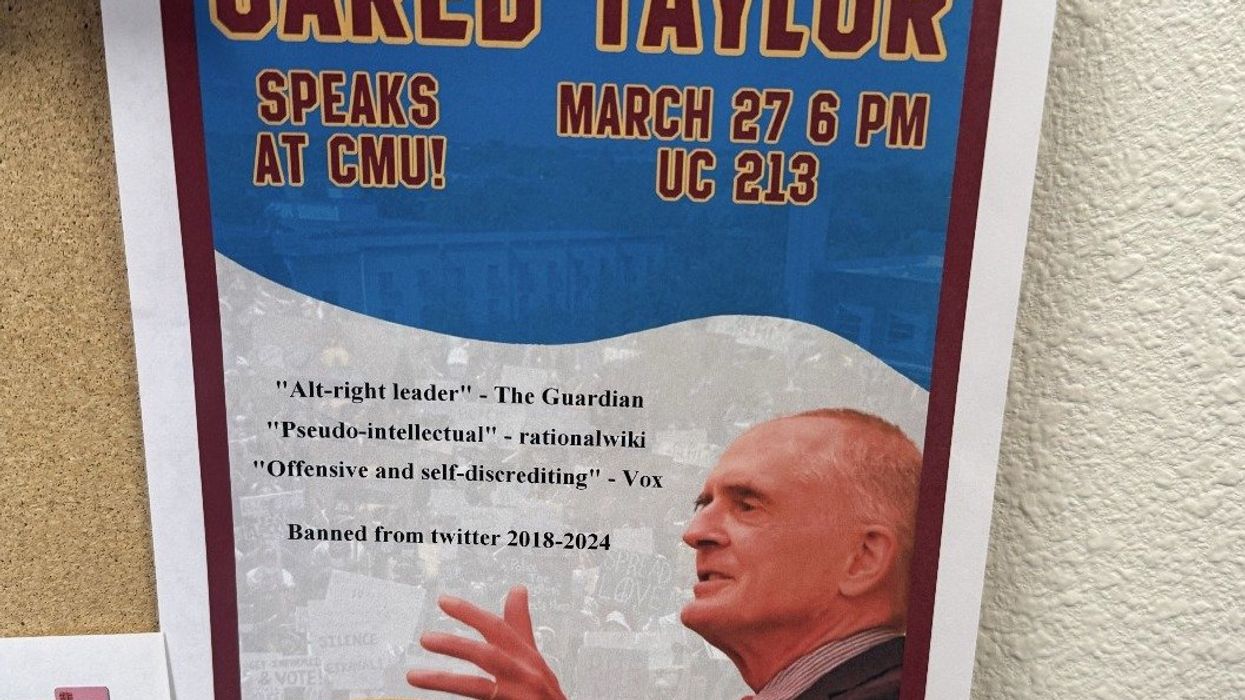
A flyer on the Colorado Mesa University campus in Grand Junction advertisers an appearance Thursday by white supremacist Jared Taylor.

March 27, 2025


Some Grand Junction community members, including Colorado Mesa University students and alumni, are angry about a white supremacist speaker scheduled to talk at the University Center on Thursday.

The Southern Poverty Law Center describes the speaker, Jared Taylor, as the 1990 founder of the New Century Foundation, “a self-styled think tank that promotes pseudo-scientific studies and research” that purports to show the superiority of white people.


The Foundation is known for its American Renaissance magazine and website, which often features proponents of eugenics, as well as anti-Black racists. The New Century Foundation also sponsors conferences attended by Klansmen, neo-Nazis and other white supremacists, according to the SPLC.

Students and community members have planned a protest prior to the event, at 4 p.m. on the corner of 12th Street and North Avenue in Grand Junction. The group will gather there before marching through CMU campus to the University Center.

Max Applebaugh, a 21-year-old CMU junior majoring in business, founded the Western Culture Club with five members about a month ago, after another club had cut ties with him over personal disagreements, he said. One of the Western Culture Club’s first actions was to invite Taylor to campus to speak. Applebaugh is president of the club. He is also secretary of the conservative CMU-Turning Point USA club.

“I’ve been wanting to bring Jared Taylor for a few months now,” Applebaugh said. “I had a personal connection — a lawyer friend named Jason Lee Van Dyke, based in Texas, who made it possible. He paid for Taylor’s flight, accommodations and stay.”

Van Dyke is a former member of the Proud Boys extremist group and is known for representing far-right defendants in court, according to Cleveland.com.

Fifteen CMU students who are opposed to Taylor coming to their campus attempted to quash the invitation by joining the Western Culture Club and electing new members. They had hoped to rescind the invitation but the college administration refused to recognize the election, several members said.

One of the students, senior Tahirah Pedro Bochmann, said they asked the club’s faculty advisor — business instructor Georgann Jouflas — to recognize the election, which Bochmann said Jouflas declined to do.

“She said we should ‘just let it go,'” Bochmann said.

Freedom of speech is easy to support when you agree with what is being said. It becomes much more difficult when you do not.
– CMU business instructor Georgann Jouflas

Jouflas said she had become acquainted with Applebaugh when he was her student the prior semester. She said she was impressed that he was always reading before class, typically a history book, as opposed to being on his phone or computer. She said she enjoyed their conversations and his intellectual curiosity, so when he asked if she’d sponsor his club, she agreed.

She said her role was not to approve or disapprove of the club’s speakers but to guide it through the process of securing approval from CMU’s Student Life, which she said she did. Jouflas said she wished the club had chosen a different speaker.

“I do not support white supremacy in any form,” she said. “Freedom of speech is easy to support when you agree with what is being said. It becomes much more difficult when you do not.”

University President John Marshall did not respond to phone or email requests for comment by the time of publication. Director of Student Life Trey Downey also did not respond to a request for an interview.

Applebaugh, who said he grew up in Frisco, acknowledges that Taylor’s ideas about race make some people feel uncomfortable.

“(Taylor) describes himself as a white advocate,” Applebaugh said. “And that people should have the option to their own spaces.”

Applebaugh said he considers himself a white nationalist and libertarian.

“I do believe strongly in advocating for the interests of white people, because there are forces in America that are anti-white,” he said.

Colorado Newsline is part of States Newsroom, a nonprofit news network supported by grants and a coalition of donors as a 501c(3) public charity. Colorado Newsline maintains editorial independence. Contact Editor Quentin Young for questions: info@coloradonewsline.com.
Thousands are feared dead in Myanmar’s quake. Trump’s USAID cuts will cause even more unnecessary deaths


Photo by Dinis Bazgutdinov on Unsplash

March 29, 2025

In early 2021, after a decade of political and economic reforms, Myanmar looked like it was finally beginning to shake off the hangover of decades of military rule. Foreign investment was growing, and standards of living were gradually improving.

In February that year, however, the military again grabbed power after ousting Aung San Suu Kyi’s democratically elected government in a coup. This sent the country spiralling towards civil war and social and economic collapse.

In the latest addition to the daily misery of Myanmar’s long-suffering people, a huge 7.7-magnitude earthquake hit the centre of the country on Friday. Its epicentre was just outside Mandalay, the county’s second-largest city.

The Thai capital of Bangkok, more than 1,000 kilometres from the epicentre, experienced extensive damage too. Video images showed a collapsing building under construction and sloshing rooftop infinity pools causing waterfalls down high-rise condominiums.

Information on the extent of the damage in Myanmar was slower to emerge, given the junta has largely banned social media and communications apps, such as Facebook, Instagram, WhatsApp, Signal and X.

The death toll has now passed 1,000 at the time of writing. US Geological Survey modelling, however, suggests there could be more than 10,000 deaths and economic losses potentially exceeding the country’s gross domestic product (GDP).

Unusually for the isolationist military juntas of Myanmar, its leader, Min Aung Hlaing, immediately issued a call for international assistance.

The junta, however, has full control of as little as 21% of the country in the ongoing civil war, with the rest contested or controlled by ethnic armed groups and resistance fighters. This indicates some hard-hit areas of the country may be inaccessible to international aid.

Compounding these difficulties, the Trump administration has decimated the US Agency for International Development (USAID) activities in the country. This will make it far more challenging to determine the areas most in need and distribute any aid on the ground.

Natural disasters in Myanmar

Along with its history of brutal and authoritarian military rule since gaining independence in 1948, Myanmar is also regularly afflicted by natural disasters.

At least 430 people are believed to have died in floods last September due to the remnants of Typhoon Yagi. In 2023, Cyclone Mocha reportedly killed about 460 of the Rohingya ethnic minority, who are largely confined to government camps in Rakhine state in inhuman conditions.

The worst natural disaster in living memory, however, was Cyclone Nargis in 2008, which left at least 140,000 dead. On that occasion, the military junta resisted international assistance, likely resulting in many unnecessary deaths.

At that time, there was no independent media in Myanmar and it was almost impossible to find out what was actually happening on the ground.

Fortunately, the proliferation of mobile phones in the last decade has allowed information to spread much more widely, even with the junta’s internet blocks and other methods of censorship currently in place.

When Cyclone Nargis occurred – the year after the iPhone was launched – only around 1% of the Myanmar’s population had mobile phones. By the time of the coup in 2021, Myanmar had a smartphone penetration rate of 114%. (This means the country has more smartphones than people.)

Foreign assistance has been compromised

While Min Aung Hlaing has gone farther than his predecessor in 2008 in asking for international help, US President Donald Trump’s actions have ensured that any aid will be far less effective than it would have been two months ago.

On Friday, the same day the earthquake hit, the Trump administration told Congress it would cut nearly all remaining jobs at USAID and shut the agency, closing all USAID missions worldwide.

Jeremy Konyndyk, the president of Refugees International and a former USAID official, called the move “a total abdication of decades of US leadership in the world”. He argued the firings would cut “the last remnants of the team that would have mobilised a USAID disaster response” to the earthquake.

In 2024, USAID spent US$240 million (A$380 million) in Myanmar, around one-third of all multilateral humanitarian assistance to the country.

However, since Trump’s inauguration in January, the number of USAID programs in Myanmar has shrunk from 18 to just three. Several NGOs and at least seven US-funded hospitals operating along Myanmar’s border with Thailand have been shut down.

Myanmar’s exiled independent media outlets, which shine a light on the military’s atrocities, have also seen their funding slashed by the Trump administration’s USAID cuts.

What happens now?

The day before the earthquake, Min Aung Hlaing addressed troops at the 80th anniversary of Armed Forces Day Parade. He announced national elections would go ahead in December – a vote that human rights groups are already calling a “sham”.

There is no conceivable way elections of any integrity can be held in the country under military rule or while the civil war continues to rage.

Military-backed parties have been overwhelmingly rejected by Myanmar’s electorate in every remotely free or fair election over the last four decades. This includes the most recent elections held in 2020, won by the National League of Democracy (NLD), led by Aung San Suu Kyi.

While the world should welcome – and urgently respond to – Min Aung Hlaing’s invitation for international assistance, this doesn’t mean the past is forgotten. Thousands of innocent lives have been lost as a result of the military’s unnecessary and destructive 2021 coup.

If the NLD had remained in government, the country would be infinitely more prepared to deal with consequences of this earthquake. Once again, the military’s brutal rule – and Trump’s draconian aid cuts – will no doubt cause more unnecessary suffering and deaths.

Adam Simpson, Senior Lecturer, International Studies, University of South Australia

This article is republished from The Conversation under a Creative Commons license. Read the original article.

'Even the rich are worried': Experts warn of 'scariest' signs amid 'stagflation' fears


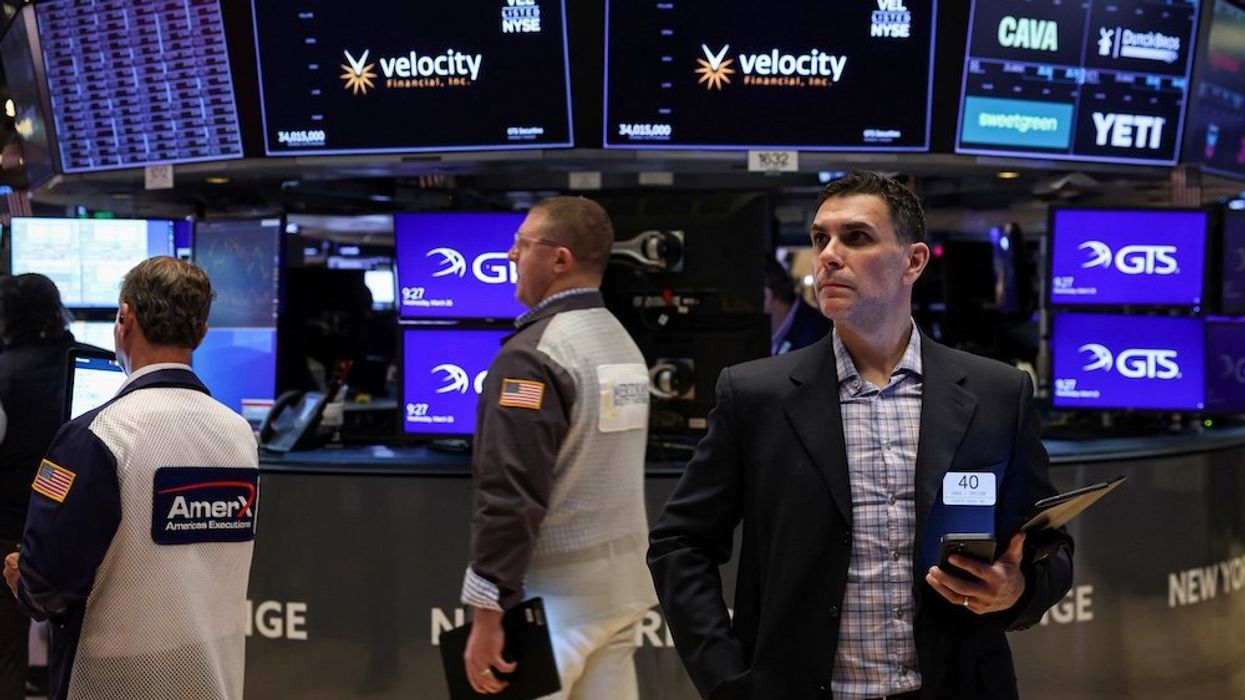
Traders work on the floor at the New York Stock Exchange (NYSE) in New York City, U.S., March 26, 2025. REUTERS/Brendan McDermid

NEW CIVIL RIGHTS MOVEMENT
March 28, 2025

Warning signs are flashing red in a week where troubling economic news has turned unmistakably grim. Consumers should brace for a surge in terms like “inflation,” “stagflation,” “Trumpflation,” and “recession” dominating the headlines.

Reports are now showing consumer confidence has plummeted to its lowest level in 12 years, the markets are currently tanking, analysts have downgraded predictions for stocks, core inflation is rising, GDP projections have been sliced in half or are now negative, unemployment is expected to increase, and some major corporations are projecting sales decreases.

All this comes just days before what President Donald Trump has repeatedly declared will be “Liberation Day,” April 2, when he says he will announce major increases to his existing tariffs campaign.

The Washington Post’s chief economics reporter, Jeff Stein:


Barely more than two months into Trump’s second term, economic experts are issuing warnings.

 Long explained.
“In the ‘vibe-cession’ under Biden, people gave the economy poor grades. But they were generally optimistic about their personal finances (esp the rich),” Long noted. “Under Trump 2025, people at all income levels are worried they will be worse off in a year. This is the type of situation that causes people to really pull back on spending. This is what is different than 2023 or 2024.”
Pointing to another chart, Long writes, “Wow. Huge drop in consumer sentiment among all income groups.”

“Even the rich are worried now.”
Consumer sentiment “is down more than 30% since November,” she says.
“People are worried they will lose their jobs. Two-thirds of consumers expect unemployment to rise in year ahead–> highest concern since 2009,” she noted, adding, “People are fearful tariffs will drive up prices.”
“Even high-income consumers are concerned about their personal finances; only 26% of higher-income consumers expect to be better off financially in a year, down from 42% in August 2024.”

It gets worse.
“Inflation expectations are surging due to Trump’s tariffs,” she writes. “I continue to think the Trump team is really misreading how different 2025 is compared to 2017/2018. People are watching prices closely now.”
Princeton University economics professor Alan Blinder, considered to be among the most influential economists in the world, blasted the President this week in a Wall Street Journal op-ed: “Trump Plays Recession Roulette With the American Economy.”

“I thought the probability of a downturn was nearly zero. Now one is likely, and we may see stagflation,” he wrote. “Trump’s actions seem designed to drive the U.S. economy into the ground. This would truly be a Trumpcession.”

For those unfamiliar with those terms, keep reading.
“Start with high tariffs. The president’s press secretary may think tariffs are tax cuts. In fact they are tax increases—probably big ones. And any tax increase saps the purchasing power of consumers. Take away enough and you’re flirting with a consumer-driven recession—or stagflation, since tariffs also drive up prices. The stock market understands the peril and is dancing to tariff news.”
Blinder warns that measures of uncertainty “have all leapt skyward recently.”

“What about immigration, both legal and illegal, and its effects on the availability of labor? What about the impending battle over extending—or even expanding—the 2017 tax cuts? What will be left of health and safety regulation when Elon’s musketeers are finished with it? How many Americans feel comfortable about their tax and Social Security records sitting in Mr. Musk’s computers?”

Long also points to stagflation.
“Bank of America economists now believe that ‘modest stagflation’ is the most likely outcome for the US this year, and that the combination of low growth and elevated prices will likely keep future Fed rate cuts on hold,” she writes.

For those who want to dive into some numbers, this one isn’t too hard to understand. The Federal Reserve Bank of Atlanta, known as the Atlanta Fed, now shows that U.S. gross domestic product, or GDP —the value of all goods and services produced in the country—is now expected to drop by nearly three percent.


Even Fox News is warning on inflation, saying, “too many goods are rising at too fast of a price.”

Watch the video below or at this link.


FORWARD TO THE PAST

Alarm as Florida Republicans move to fill deported workers’ jobs with children: ‘It’s insane, right?’


Governor Ron DeSantis leads push to loosen child labor laws as immigration crackdown leads to workforce shortage


Richard Luscombe in Miami
Sat 29 Mar 2025 1

Beneath the smugness of Ron DeSantis, at Florida leading the nation in immigration enforcement lies something of a conundrum: how to fill the essential jobs of the scores of immigrant workers targeted for deportation.

The answer, according to Florida lawmakers, is the state’s schoolchildren, who as young as 14 could soon be allowed to work overnight shifts without a break – even on school nights.

A bill that progressed this week through the Republican-dominated state senate seeks to remove numerous existing protections for teenage workers, and allow them, in the Florida governor’s words, to step into the shoes of immigrants who supply Florida’s tourism and agriculture industries with “dirt cheap labor”.

“What’s wrong with expecting our young people to be working part-time now? That’s how it used to be when I was growing up,” DeSantis said at an immigration forum with Donald Trump’s “border czar”, Tom Homan, in Sarasota last week.


“Why do we say we need to import foreigners, even import them illegally, when teenagers used to work at these resorts, college students should be [doing] all this stuff.”

Unsurprisingly, the proposal has alarmed immigration advocates and watchdog groups concerned about child labor abuses and exploitation.

They point out that there is nothing “part-time” in the language of the companion senate and house bills currently before lawmakers, which instead will permit unlimited working hours without breaks for 14- and 15-year-olds who are schooled at home or online, and allow employers to require 16- and 17-year-olds to work for more than six days in a row.

“It’s essentially treating teens who have developing bodies and minds like adults, and this will allow employers to schedule them for unlimited hours, overnight and without breaks, and this is during the school year,” said Alexis Tsoukalas, senior policy analyst at the Florida Policy Institute (FPI), an independent research and economic analysis group.

“It’s important to remind people that teens can work. They can get that experience and some extra money if they need it. But there have to be protections in place to protect our most vulnerable, and if we pass this that’s absolutely not going to happen.”


Meanwhile, an attempt by the state senator who sponsored the bill, the Sarasota Republican Jay Collins, to paint it as an issue of parental rights rather than a way to cover Florida’s deportation-driven labor shortfall also failed to impress critics.

“We’re not talking about The Jungle by Upton Sinclair,” he told the chamber on Wednesday, referring to the 1906 novel that described horrific and dangerous conditions endured by cheap immigrant laborers, including children, in Chicago’s meat-packing industry – an environment that still exists today.

DeSantis, he insisted, “is talking about those soft skill benefits to children growing”, and said his bill was aimed at teenagers working in places like grocery stores.

Tsoukalas rejected Collins’s claim. “There’s different arguments that people will put on the floor in order to do what they think it takes to get a bill passed. Given some of the justifications that state leaders have made in recent days, it’s clear that they are linking the immigration issue and child labor,” she said.

“When the sweeping anti-immigrant bill of 2023 passed, we did warn there would be impacts on the labor force and the economy given how reliant we are on immigrant labor. Of course, not all of those people are undocumented, but as we’ve seen recently at the federal level all types of people, even permanent residents, are getting threatened with deportation.

“Combined with what’s going on at the state level, that absolutely is a concern. It’s no surprise that last year, and then again this year, we’re talking about the need to fill gaps with other forms of labor.”

According to the US Census Bureau, more than 27% of Florida’s workforce is foreign-born.

The Farmworker Association of Florida, which represents tens of thousands of low-income, immigrant laborers, says about 60% of its membership is undocumented, and most vulnerable to detention and deportation. Others are among half a million Haitians nationwide who Trump has ordered to leave the US by August after he rescinded their temporary protected status.

Pushback from FPI and other groups persuaded Florida lawmakers to drop some of the harsher provisions in a child labor law that passed last year, and opponents are dismayed to find them back under consideration.skip past newsletter promotion

The state was singled out in a 2024 report by Governing for Impact and the Economic Policy Institute that recorded a surge in workplace injuries and violations involving minors – some in the agricultural industry where hazards include exposure to toxic chemicals and dangerous machinery.

The report noted a corresponding push in at least 30 mostly Republican-controlled states to weaken workplace protections for children, and warned the second Trump administration would seek to escalate the rollback.

“We’ve been saying since 2023 that this is a way for them to exploit minors, it was when they passed this large, anti-immigrant omnibus and the same year that they tried to pass the first law gutting child labor protection,” said Thomas Kennedy, spokesperson for the Florida Immigrant Coalition.

“The only short-term answer to workforce shortages has always been net migration and they’ll never go for that because of their politics. So their only answer is to widen the parameters of who can work, and you either go older or you go younger, and they chose to go younger.”

Kennedy and Tsoukalas are hopeful that Republicans who said they were uncomfortable with some parts of the bill will ultimately decide to vote against it. According to the Miami Herald, the Republican state senators Nick DiCeglie and Tom Wright helped move it out of the commerce and tourism committee on a 5-4 vote, but said it “needed work”.

Republican Joe Gruters joined three Democrats in voting against, saying: “We need to let kids be kids.”

Kennedy, however, pointed to another Republican bill that progressed this week that would allow employers to pay interns and apprentices less than minimum wage.

“To recap, they made the state hostile to immigrants. They deported a bunch of people, or scared people into not coming, or moving out of the state. They exacerbated worker shortages, so now they’re trying to gut child labor protection standards, while at the same time passing a law that would allow them to classify these children and other workers as interns,” he said.

“It’s insane, right?”


Everything you say to an Alexa speaker will now be sent to Amazon


Photo by Nicolas J Leclercq on Unsplash

March 29, 2025


Amazon has disabled two key privacy features in its Alexa smart speakers, in a push to introduce artificial intelligence-powered “agentic capabilities” and turn a profit from the popular devices.


Starting today (March 28), Alexa devices will send all audio recordings to the cloud for processing, and choosing not to save these recordings will disable personalization features.
How do voice assistants work?

A voice assistant works by constantly listening for a “wake word”, such as “Alexa”. Once woken, it records the command that is spoken and matches it to an action, such as playing a music track. Matching a spoken command to an action requires what computer scientists call natural language understanding, which can take a lot of computer power.

Matching commands to actions can be done locally (on the device itself), or sound recordings can be uploaded to the cloud for processing. On-device processing has improved substantially in recent years, but is still less accurate than using the cloud, where more computer power is available.
Amazon is making two changes today

Alexa devices send recordings to the cloud by default. However, some high-end Echo models previously supported a setting called “Do not send voice recordings”.

If this setting was enabled, all recordings were processed locally. In practice, only a tiny fraction of Echo users (around 0.03% had this turned on.

In the first change, this setting is being disabled, and all recordings will be sent to the cloud.

Once in the cloud, recordings can be deleted or saved.

Saved recordings are used for Amazon’s Voice ID feature, which distinguishes between speakers in the same household and aims to provide a personalised experience.

Alexa users also have a setting called “Don’t save recordings”, which, if enabled, deletes cloud recordings once they’re processed. In the second change, if the “Don’t save recordings” setting is enabled, Voice ID will stop working, and with it, access to personalised features such as user-specific calendar events.

This two-step change means Alexa users need to make a trade-off between privacy and functionality.
Alexa loses a lot of money

Put simply, Amazon needs Echo devices to start making money.

As US voice assistant expert Joseph Turow has detailed, Amazon began selling Echo devices very cheaply as a “loss leader”. Amazon says it has sold more than 500 million Alexa devices, but between 2017 and 2021 alone the company lost more than US$25 billion on the project.

Amazon is looking to generative AI to turn the business around, with a US$8 billion investment in OpenAI competitor Anthropic.

\
Amazon has invested US$8 billion in AI developer Anthropic.Amazon

In February, Amazon launched a new AI-powered Alexa+ system. It promises more natural interaction and the ability to carry out tasks such as booking flights. Alexa+ is currently only available in the United States.

“Agentic capabilities” such as booking flights require detailed profile information about the user on whose behalf they are acting. This would include details such as preferred products or services.

Voice ID and data from spoken commands assist Amazon in tying preferences to a particular person.

An AI-powered intermediary


How will Alexa+ help Amazon make money? The first way is via direct subscription fees: the service will eventually only be available to Amazon Prime members or people who pay US$19.99 per month.

But what may prove more important is that it will help Amazon to position itself as an intermediary between buyers and sellers. This is what Amazon already does with its existing e-commerce platform.

It’s easy to see the system in action when you search for a product on Amazon’s website. Alongside items sold directly by Amazon, you are presented with products from multiple sellers, each of whom pays Amazon to be listed.
Everybody pays the platform

Agentic capabilities are likely to have a similar business model. Service providers – such as airlines or restaurant reservation companies – would pay Amazon when Alexa+ refers customers to them.

Amazon’s move is part of a broader phenomenon termed “platform capitalism”. This takes in the crowdsourced content of social media platforms, “sharing economy” businesses such as AirBnb, and the automated gig work of the likes of Uber.

Platform capitalism has delivered benefits for consumers, but in general the greatest benefits flow to those who own the platforms and design their infrastructure, services and constraints.

How to protect your privacy

After receiving a US$25 million fine from the US Federal Trade Commission for retaining childrens’ voice recordings in contravention of US laws, Amazon has overhauled Alexa’s privacy settings.

The settings can be viewed and changed from the Alexa app on your smartphone, under “More > Alexa Privacy”. Alexa users may wish to review the settings in “Manage your Alexa Data” to choose how long recordings are saved for and which voice recordings to delete. Recordings may also be deleted using a voice command.

As Alexa+ becomes available more widely, users will need to decide whether they are comfortable sharing data about their preferences with Amazon to enable agentic capabilities.


Some Alexa privacy settings are still available.Amazon

What are the alternatives?


For users who are uncomfortable with the privacy settings now available with Alexa, a private voice assistant may prove a better choice.

The Home Assistant Voice Preview is one example. It gives people the option to have voice recordings processed on-device, but offers less functionality than Alexa and can’t work with as many other services. It’s also not very user-friendly, being aimed more at technical tinkerers.

Users may face a trade-off between privacy and functionality, both within Alexa itself and when considering alternatives. They may also find themselves grappling with their own place in the increasingly inescapable systems of platform capitalism.

Kathy Reid, PhD Candidate, School of Cybernetics, Australian National University

This article is republished from The Conversation under a Creative Commons license. Read the original article.
Podcasting was once a rebel medium for diverse voices. Now it’s slowly being consumed by big media


Shutterstock

March 30, 2025

Podcasting was once the underdog of the media world: a platform where anyone with a microphone and an idea could share their voice.

With low barriers to entry and freedom from institutional gatekeeping, it promised to amplify marginalised voices and allow underrepresented groups to tell their own stories, on their own terms.

Today, however, this promise seems increasingly strained as corporate interests tighten their grip on the industry. As money flows in, the podcasting space is beginning to resemble the rest of the digital media world – driven by advertising revenues and political polarisation.

The promise of podcasting

Six years ago, audio scholars Martin Spinelli and Lance Dann described podcasting as a “revolutionary” medium for its ability to inspire empathy through innovative forms of audio.

Podcasting was heralded as a format that broke through the barriers of traditional media by offering new ways to engage with underrepresented voices and ideas. Media and cultural studies pointed to the direct-to-ear delivery – free from the biases of visual culture – as a uniquely intimate way to consume content.

Globally, the industry boomed as a result of pandemic lockdowns, with the number of podcasts on Spotify skyrocketing from 450,000 in 2019, to 1.5 million in 2020.

Listenership has also surged in Australia. According to a 2024 report by Edison Research, we’ve seen a 20% increase in listenership from 2022 to 2024 – with 48% of the those aged 12 and above having listened to a podcast within the past month.
From open space to rat race

In his 2024 book Podcasting in a Platform Age, podcast researcher John Sullivan warns the podcasting space is being increasingly dominated by a handful of powerful media companies that dictate what and who gets visibility.

Larger podcasts with higher production budgets, celebrity hosts and backing from major networks are attracting larger audiences, with independent creators struggling to get a foot in the door.

At the time of writing, of the top 50 most popular podcasts in Australia, more than half (52%) come from overseas, and primarily the United States.

Of the 24 Australian-made podcasts on the list, 80% are backed by a media organisation, with most (64%) connected to major networks such as LiSTNR, which is owned by Southern Cross Austereo. Only 12% of the Australian podcasts on the list come from truly independent creators without any corporate funding or major production support.

Why does it matter that large-network ownership is on the rise? To understand this, it helps to first understand how ads keep podcast networks in business – and how this can impact content decisions.

Deepening ideological divides


Advertisers follow the crowds. In a podcasting context, this means they’re more likely to funnel their dollars into large networks, further bolstering their resources.

At the same time, networks want to drive as many ears to their ad sponsors as possible. To do this, they focus on producing content they know will get the most engagement.

The result is a vicious cycle in which attention and advertising power feed each other, making it even harder for independent voices to break through. Over time, this feedback loop can lead to less content diversity and more polarisation.

According to Spotify’s 2024 Wrapped, American podcaster Joe Rogan took out the top podcast spot for the fifth year in a row globally.    Shutterstock

It’s here that we’re seeing an increase of politicians using podcasts to push their views and cultivate ideological loyalty.

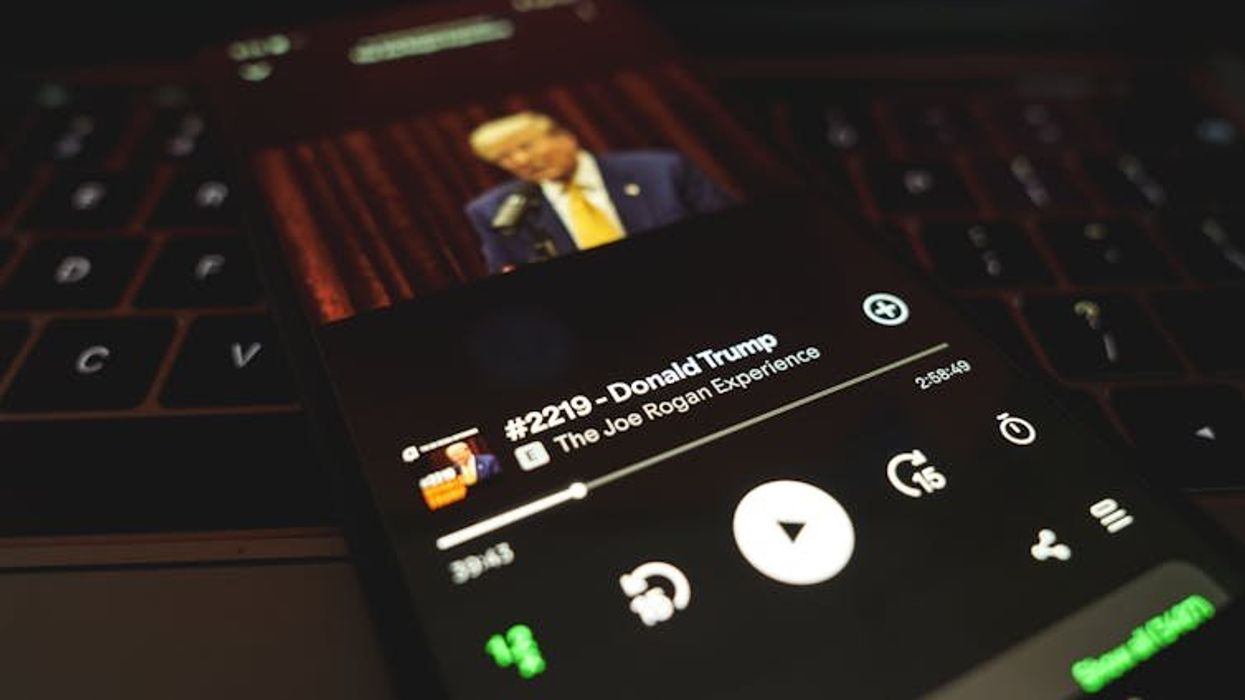
In the lead-up to the 2024 US election, Kamala Harris appeared on Call Her Daddy (the second most popular Spotify podcast in 2024), while Donald Trump was on The Joe Rogan Experience (the most popular). Both interviews were later fact-checked and found to contain false or misleading claims.

Trump’s interview in particular was flagged by CNN for having 32 false claims. Nonetheless, analysts and researchers pointed to it as a driver behind his success with young male voters.

The political podcasting trend is also playing out in Australia ahead of the next federal election.

Late last year, Opposition Leader Peter Dutton appeared on the podcast Diving Deep With Sam Fricker. This was followed by an appearance on Straight Talk, hosted by businessman Mark Bouris, in January.

More recently, Prime Minister Anthony Albanese and Greens leader Adam Bandt separately appeared on It’s A Lot with Abbie Chatfield.

According to 2022 Pew Research Centre data, 55% of Americans said their major reason for listening to podcasts was “to learn”, while 29% said they wanted to stay up-to-date with current affairs. But information-hungry listeners may be getting shortchanged, as podcasts are less likely to be fact-checked against the same editorial standards that govern traditional media.

As platform researcher Michael Bossetta notes, although large platforms such as Spotify have the potential to create a more informed world, they are more likely to push content that keeps users hooked (that is, content they already enjoy and/or agree with).

Recommender algorithms also have a role to play. One 2020 study found that while Spotify’s personalised suggestions increased user engagement by 28.90%, they also reduced the individual-level diversity of podcast streams by 11.51%.

But platforms do have the power to do better. They could, for instance, use their algorithms to prioritise content diversity. This would help ease the “engagement-diversity trade-off”, in which personalisation increases engagement, but limits the diversity of content consumed by an individual.

That said, it’s unlikely platforms will voluntarily change the way they operate. If meaningful reforms are to happen, they will more likely have to come from government regulations or through independent governing bodies.

In the meantime, listeners aren’t powerless. While we can’t stop algorithms from pushing certain content to the top of our feeds, we can disrupt them by actively seeking out independent voices and diverse stories.

Corey Martin, Lecturer/Podcast Producer, Swinburne University of Technology

This article is republished from The Conversation under a Creative Commons license. Read the original article.
'The President is a dangerous threat': Lutheran bishops take a stand


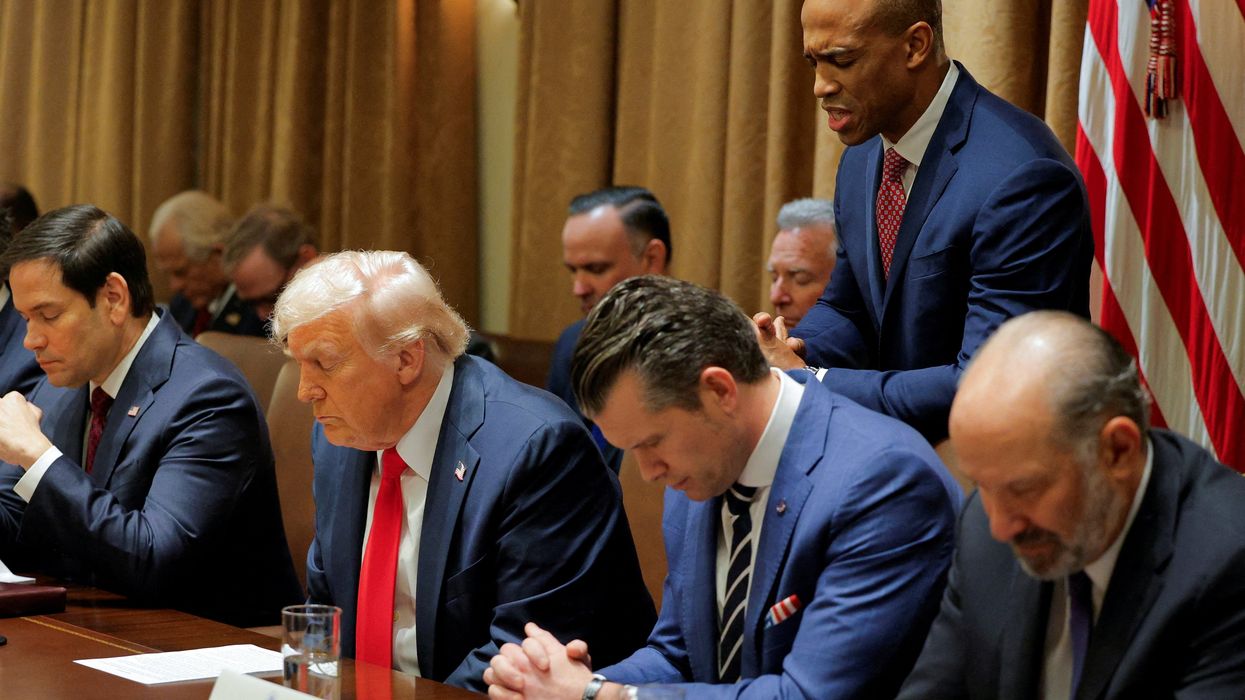
U.S. Secretary of Housing and Urban Development Scott Turner leads a prayer as U.S. President Donald Trump hosts his first cabinet meeting with Elon Musk in attendance, in Washington, D.C., U.S., February 26, 2025. REUTERS/Brian Snyder

Wisconsin Examiner
March 27, 2025

Who gets to decide what is Christian? What does religious liberty look like today? With so much unsettling and destabilizing news coming from the new administration in Washington, DC, it’s hard to keep up with and keep track of everything. We believe, however, that a recent decision by the President is a dangerous threat to religious liberty, promotes Christian Nationalism, and all people who care about our democracy need to take note.

We, the Lutheran (ELCA) bishops in Wisconsin and Upper Michigan, are concerned about an executive order signed by President Trump on Feb. 6 that established a new “Task Force to Eradicate Anti-Christian Bias.” This task force has the duty to “identify any unlawful anti-Christian policies, practices, or conduct by an agency.” While some might think that all Christians would support an effort to root out “anti-Christian bias,” that’s not the case. We believe this executive order is a threat to the religious pluralism enshrined in the Constitution and does not actually protect Christians. Instead, this order aligns the federal government with Christian Nationalism, a dangerous conflation of fundamentalist Christianity, conservative politics, and fierce patriotism that distorts what it means to be an American citizen and an engaged Christian in society.

With this executive order, the federal government has given itself the authority to define what might be considered “anti-Christian,” and therefore also the authority to define what is Christian — a power which belongs to the Church alone, not the federal government. This executive order violates religious freedom, corrupts the separation of church and state, and creates a more hostile environment for Christians and all citizens who believe differently than the current administration and its religious advisors.

We feel so strongly that this task force is a threat to our values and our freedom that we wrote a public statement and invited religious leaders and others to sign on (https://www.wichurches.org/articles/religious-liberty). We now have over 250 signers, and we invite all who care about religious freedom and the preservation of our democracy to join us.

Christian Nationalism is a dangerous ideology that distorts the Gospel and turns Jesus and Christianity into a weapon for power and division instead of a movement towards love and justice. It demands that a particular brand of Christianity be privileged by the state and impose that singular belief system in order to be a “good American.” (For more information on Christian Nationalism, check out www.christiansagainstchristiannationalism.org.)

In order to protect religious freedom, the federal government must not align with one religious ideology but rather honor the constitutional mandate to defend space for religious pluralism and ensure that each member of society is free to practice their religion, or no religion, while keeping the peace and working together for the common good. Please join us as we call upon the President of the United States and all elected officials to protect religious freedom in our country and uphold the constitution of the United States of America.

Faithfully,

Bishop Paul Erickson, Greater Milwaukee Synod ELCA

Bishop Anne Edison-Albright, East Central Synod of Wisconsin ELCA

Bishop Felix Malpica, La Crosse Area Synod ELCA

Bishop Martin Halom, Northwest Synod of Wisconsin ELCA


Bishop Katherine Finegan, Northern Great Lakes Synod ELCA

Bishop Joy Mortensen-Wiebe, South-Central Synod of Wisconsin ELCA

Wisconsin Examiner is part of States Newsroom, a nonprofit news network supported by grants and a coalition of donors as a 501c(3) public charity. Wisconsin Examiner maintains editorial independence. Contact Editor Ruth Conniff for questions: info@wisconsinexaminer.com.
Trump wants to 'eliminate' FEMA. 
Could the states fill the gap


Photo by Brian 
McGowan on Unsplash
March 30, 2025

President Donald Trump appears to be serious about getting the federal government out of disaster response. Earlier this week, his secretary of homeland security, Kristi Noem, said in a Cabinet meeting that she would move to “eliminate” the Federal Emergency Management Agency, the beleaguered agency that handles relief and recovery after extreme weather events, and has reportedly conferred with FEMA’s Trump-appointed interim leader about winding down the agency.

Noem’s announcement was just the latest in a series of Trump administration moves to radically decrease or eliminate the federal government’s role in responding to climate-driven disasters. Just after taking office, the president mused about eliminating FEMA and then convened a council to consider the agency’s future. In recent weeks, he has laid off hundreds of staff who work on resilience and preparedness. And last week, Trump signed an executive order that called for state and local governments to “play a more active and significant role in national resilience and preparedness” and directed agencies to “streamline” their disaster resilience efforts.


Trump’s unprecedented efforts to weaken FEMA come at a time when many disasters are intensifying due to climate change. A study of more than 750 recent heat waves, wildfires, and flood events found that around 75 percent of these events had been made significantly worse by human-caused warming. Though experts say there is merit in the idea of beefing up state and local emergency preparedness, they also caution that the Trump administration’s slash-and-burn approach to remaking the federal government could backfire when it comes to FEMA. While they acknowledge that disaster response needs reform, they also argue that a total withdrawal by the federal government would leave many communities in the lurch, especially those that can’t fund disaster recovery on their own.

For much of American history, a state that suffered a disaster had to plead with Congress for a one-off infusion of money, then figure out how to spend that money on its own. In 1980, the Carter administration created FEMA to speed up the government’s response to worsening disasters. The agency got its own multibillion-dollar pot of money to reimburse states for disaster response, including for disasters that are too small to get a special transfer from Congress. Over the past 45 years, it has distributed billions of dollars in grants to help local areas prepare for future disasters, reduce flood risk, and — more recently — address climate change. The agency also coordinates multistate responses to large disasters, summoning search-and-rescue and cleanup teams from across the country after big hurricanes.

In the decades since FEMA’s botched response to 2005’s Hurricane Katrina, the agency has been a frequent target of criticism by politicians and the public. Local officials often complain that federal involvement tends to slow down disaster response, and emergency management experts warn that it disincentivizes state and local authorities from taking action to reduce climate risks. FEMA’s programs to increase disaster resilience come with reams of paperwork, and the agency often pays to rebuild the same areas over and over again without reducing actual risk.

Trump’s recent executive order pushing for a bigger state and local role in disaster response echoes some past criticism of the agency, calling for reforms “to reduce complexity and better protect and serve Americans.”

“A lot of this stuff in the order, I look at it, and it just sounds like Emergency Management 101,” said W. Craig Fugate, who served as FEMA administrator under then-president Barack Obama. He said emergency managers have long maintained that state and local governments should not rely on federal aid and to make them whole after disasters, and need to find their own ways to reduce risk over the long run.

However, other experts fear that what Trump is proposing could leave cities and states unable to pay for much-needed resilience projects—and that a rapid shuttering of FEMA would leave most states and local governments unprepared to fill the gap.

“The Trump administration aims to shift most of the responsibility for disaster preparedness to state and local governments, asking them to make more expensive infrastructure investments without outlining what support the federal government will provide,” said Shana Udvardy, senior climate resilience policy analyst at the Union of Concerned Scientists, an environmental advocacy organization.

Trump’s public statements and executive orders on the issue have been vague — so vague, in fact, that Udvardy called them “baffling.” If Noem and Trump tried to wind down the agency altogether, the move would likely face similar legal challenges as his attempts to destroy the Department of Education — neither agency can lawfully be closed without congressional approval. But in theory, if the administration prevailed in closing FEMA, or moved some of its operations to the Department of Homeland Security, there are a few ways the change could play out.

One scenario would be a return to the situation that existed before FEMA, when states had to seek direct help from Congress or another federal agency every time they suffered a disaster. Congress works differently now than it did in the decades before FEMA existed — it often takes months or years for lawmakers to send out long-term recovery money after a disaster such as the 2023 Maui wildfires, which can make it hard for local governments to find money to develop replacement housing and restore public infrastructure. Congress is also far more polarized than it used to be, even on the issue of disaster aid — Republican leaders have suggested they might impose political “conditions” on wildfire assistance to California, goading the state to change its policies on immigration or water management.


Without a centralized disaster fund like the one FEMA has, the party in control of Congress would control who gets relief money, which could delay or derail rebuilding efforts in states run by the out-party.

Another possibility, whether or not FEMA is abolished, would be for Congress to provide a flat amount of preparedness money to each state and let states decide how to spend it, which is how some other big federal programs work. But this scenario could also be subject to political maneuvering: When the Department of Housing and Urban Development distributed its own disaster recovery block grant to Texas after Hurricane Harvey, the state government allegedly favored white and rural areas over Black and Latino residents in Houston, according to a federal probe.

If FEMA shrank or disappeared, it’s unclear who would coordinate lifesaving aid between states during large disasters. But if states continued to receive robust disaster funds from Congress, and if they distributed this money equitably, it could potentially speed up a spending process that is often described as being slow and bureaucratic.

For instance, in Harris County, Texas, which encompasses the massive Houston metro area, floodplain officials said that removing federal oversight could accelerate the process of acquiring and demolishing so-called “repetitive-loss” homes — those that flood multiple times. Officials would no longer be subject to federal paperwork requirements before they bought out homes.


“Currently, every level of government is involved when utilizing federal grant programs for flood mitigation,” said James Wade, who leads the county’s home buyout program. “Removing one level of government may help expedite the process.” Wade’s program could certainly use some paperwork relief. Thanks in large part to federal grant requirements, it can take as long as five years for the county to purchase and destroy a flooded home, during which time flood victims have no choice but to wait or flip their homes to private buyers.

But if Trump’s reforms led to a reduction in overall federal disaster funding — as seems likely, given his focus on cutting spending — the county might not be able to keep up its current pace of adaptation projects. The county flood control district has applied for no fewer than 14 FEMA grants, for stormwater upgrades as well as buyouts, and a shift away from national funding could make it harder to fund these essential projects.

The district “relies heavily on federal programs to leverage the local funds for flood mitigation,” said Wade. Under Trump’s new approach, “The question is who decides how to allocate the funds to the states and how much each is allocated.”

A reduction in federal grant money for resilience projects could force local governments to make harder choices. This wouldn’t always be a bad thing. Fugate pointed to the state of Florida, which rolled out strong building codes after Hurricane Andrew in 1992, forcing developers to build houses that could withstand strong winds. The move led to up-front costs for builders, but reduced damage in the long run.


The problem with this tough-love approach is that many states and local governments aren’t ready to handle disaster resilience on their own — they don’t have the expertise to design new building codes or plan for climate change, and they don’t have the money to build infrastructure that can protect against existing flood and fire risk. Past administrations have rolled out a number of reforms to help these communities design and fund such infrastructure projects: In 2020, FEMA began providing “direct technical assistance” to help rural communities and low-income areas figure out their vulnerabilities and design projects. It also changed its scoring for grant applications to privilege rural and disadvantaged communities more. (The direct technical assistance page is now unavailable on FEMA’s website.)

Udvardy, of the Union of Concerned Scientists, said that taking FEMA out of the resilience equation would leave smaller and poorer communities in the lurch, without either the money or expertise they needed to reduce their risk. This would cost the government and disaster victims more in the long run.

“Based on the indiscriminate way this administration has laid off staff with deep expertise and upended critical science … I am very concerned that the implications of this order will mean less support for communities to help them prepare for and recover from the disasters to come,” said Udvardy.

The worst-affected places would be rural areas in poor states like West Virginia, where the federal government is the only entity with the resources to finance even basic adaptation projects like flood retention ponds or home elevations. Many of these areas supported Trump last year by wide margins.


The rural city of Grants Pass, Oregon, is already experiencing the potential consequences of such a federal shift. The city has been working to secure $50 million from a FEMA grant program designed to enhance climate resilience. The city’s water treatment plant is almost 100 old, and it sits right next to the flood-prone Rogue River. In the event of a big storm or earthquake, the plant could flood or collapse, leaving locals without clean drinking water.

Grants Pass has already raised utility rates on its 33,000 customers to fund the construction of a new plant, but it was still falling short of the money it needed for such a large project. In 2023, FEMA advanced the city’s grant application to build a new treatment plant away from the floodplain, which the local public works director called “incredible good fortune.”

But late in February, the state of Oregon informed Grants Pass that FEMA had canceled all coordination meetings around the grant program, and now city officials have no idea if they’ll receive the money they’ve spent years counting on.

“This grant is a critical piece of our funding strategy,” said Jason Canady, the city’s public works director. “We are concerned, but at this point we are not sure what actions can be taken to ensure an award will be forthcoming.”

Fugate, the former FEMA administrator, said that cuts to federal resilience funding would split the nation into haves and have-nots. States and cities that have the staffing and money to pursue adaptation efforts would do so, and might even be able to complete some projects faster than they can right now. But rural areas would no longer have access to federal money that enables them to even consider reducing climate risk. People living in those places will have less protection from future disasters, exposing them to the risk of death or injury, and will have a harder time recovering after disasters, which could push them into poverty.

“They’ll have more flexibility — with less money,” said Fugate.

Grist is a nonprofit, independent media organization dedicated to telling stories of climate solutions and a just future. Learn more at Grist.org