It’s possible that I shall make an ass of myself. But in that case one can always get out of it with a little dialectic. I have, of course, so worded my proposition as to be right either way (K.Marx, Letter to F.Engels on the Indian Mutiny)
Thursday, April 03, 2025
Harvard Divinity School pauses religion and conflict educational initiative, cuts its staff
(RNS) — Hilary Rantisi, the associate director of the program, and the sole Palestinian American employed at the divinity school, said she was told her position was not renewed
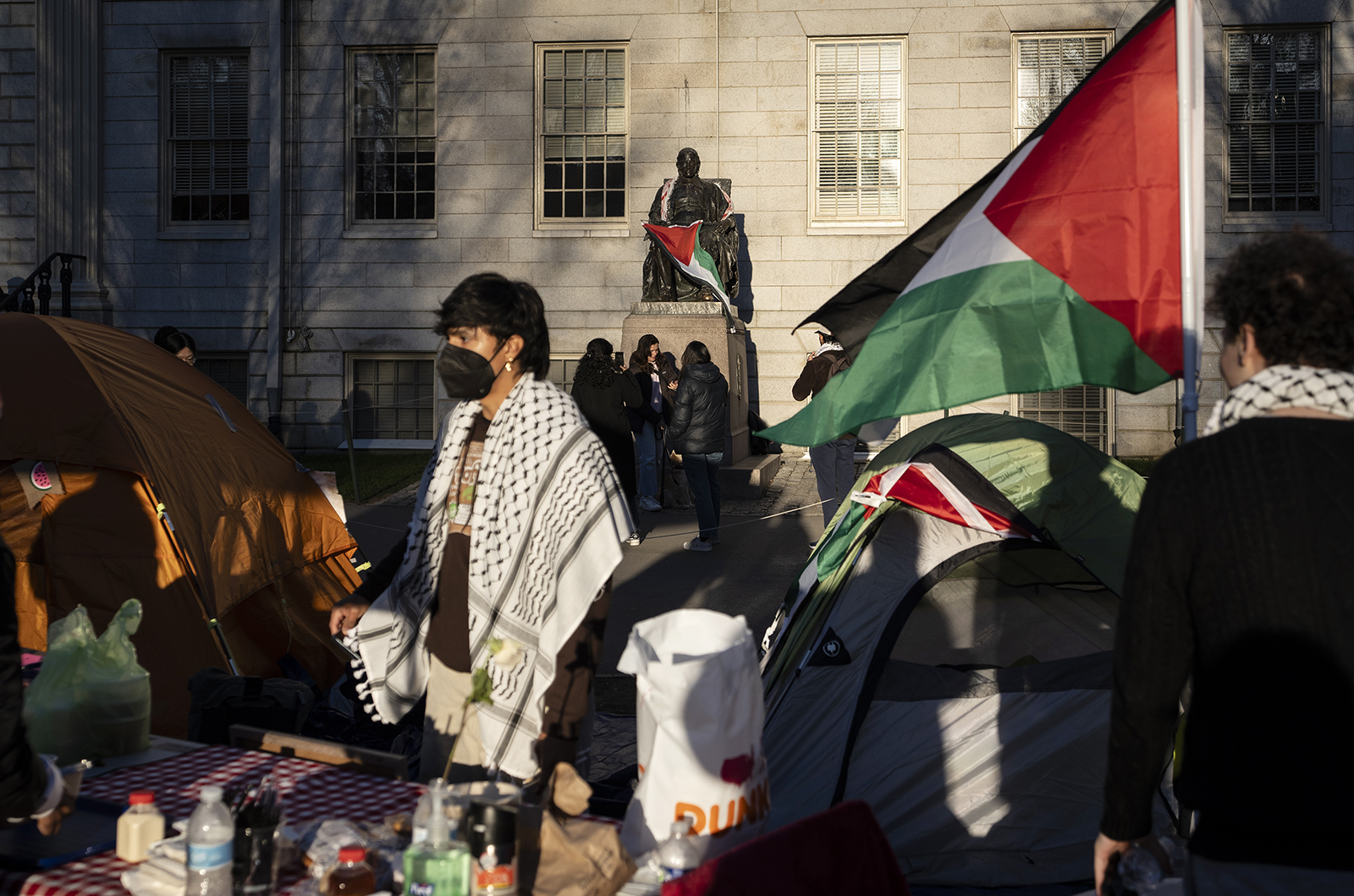
. A student protester stands in front of the statue of John Harvard, the first major benefactor of Harvard College, draped in the Palestinian flag, at an encampment of students protesting against the war in Gaza, at Harvard University in Cambridge, Mass., April 25, 2024. (AP Photo/Ben Curtis, File)
(RNS) — Harvard Divinity School announced last week it was pausing its Religion, Conflict and Peace Initiative, a program that focused on Israel-Palestine as a case study.
On Wednesday (April 2), it cut the last remaining position in the initiative.
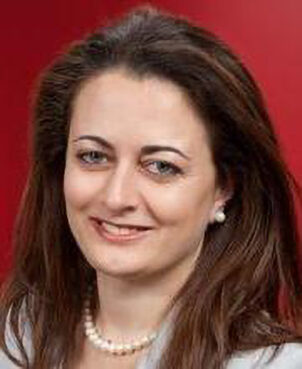
Hilary Rantisi, the associate director of the program, said she was told her position will not be renewed. She is also the sole Palestinian American staff member at the divinity school. Her last day is at the end of June. She did not comment further.
The news follows a cascading series of events that include the departure of two leaders of Harvard University’s Center for Middle Eastern Studies and the suspension of the Harvard School of Public Health’s partnership with Birzeit University in the West Bank.
Harvard is facing a Trump administration threat to cut $9 billion in contracts and grants for failing to protect Jewish students from antisemitism and promoting “divisive ideologies over free inquiry.” The Trump administration has already indicated it might pull hundreds of millions in federal funds from Columbia University and the University of Pennsylvania for failing to address accusations of antisemitism on campus.
Hilary Rantisi. (Photo via HDS)
The divinity school declined to comment to RNS beyond the statement on its website, which says it is pausing the initiative “in order to rethink its focus and reimagine its future.” The change will be implemented in the next academic year.
The announcement posted last week also cited “long- and short-term budgetary issues” related to the initiative’s loss of financial support and said the divinity school will face a reduced budget next fiscal year.
In the wake of the Israel-Hamas war, the Religion, Conflict and Peace Initiative had come under intense criticism, mostly from Jewish groups arguing it was biased toward the Palestinian narrative and against Israel. The program’s chief offering, a class called “Narratives of Displacement and Belonging in Israel-Palestine,” included a two-week trip to Israel and the occupied West Bank. It was canceled this past semester.
Then in January, Diane L. Moore, the associate dean of the Religion and Public Life program at Harvard and a key partner of the Religion, Conflict and Peace Initiative who helped develop the class, departed one semester before she was set to retire. And in February, the assistant dean for the Religion and Public Life program, Hussein Rashid, who is Muslim, announced he was resigning at the end of the spring semester, saying in a letter to students that anti-Muslim bias was rampant at Harvard.
Rantisi, who is Christian, was born in Jerusalem and grew up in the West Bank city of Ramallah. She earned a master’s degree in Middle East studies from the University of Chicago. She has worked at Harvard since 2001 and was the director of the Middle East Initiative at Harvard’s Kennedy School of Government before the program came under the divinity school’s purview.
“As an alumna of the school, I’m just enraged,” said Atalia Omer, a professor of religion, conflict and peace studies at the University of Notre Dame who co-taught the Harvard Divinity School class. “As someone who was a part of building the curriculum, I’m devastated, and very, very sad. This was the one place at Harvard broadly where we had a very robust programming on understanding Palestine-Israel as a case study.”
Omer is Jewish and a native of Israel. She, along with Rantisi and Moore, developed the class, which was first offered in a different format in 2019, and then offered annually to look deeply at the sometimes conflicting narratives of Jews, Palestinians — both Muslims and Christians — living in the region.
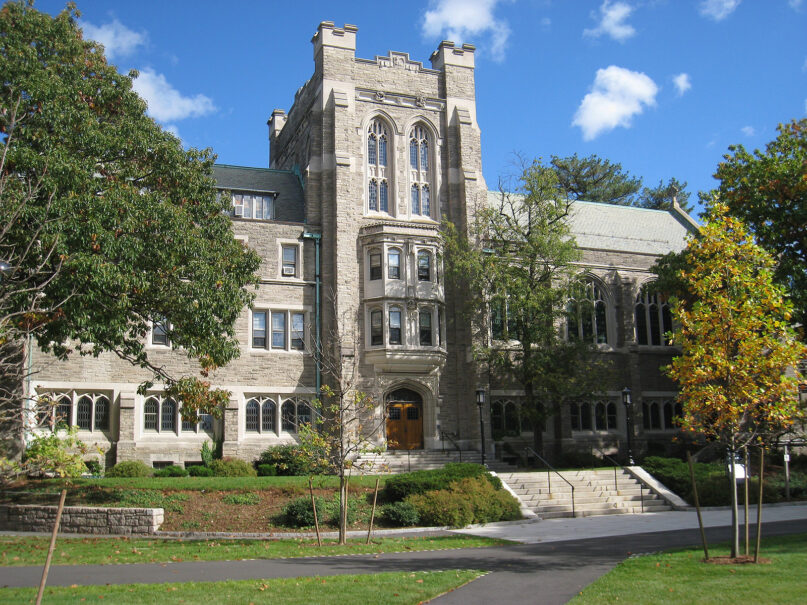
Swartz Hall, formerly Andover Hall, home to the Harvard Divinity School at Harvard University in Cambridge, Mass. (Photo courtesy of Wikimedia/Creative Commons)
In addition to the class, the Religion, Conflict and Peace Initiative invited visiting scholars to teach at the divinity school. It offered internship opportunities for students, a fellows program, reading groups for Harvard faculty and other public events on campus.
Harvard came to public attention among several U.S. schools with active pro-Palestinian student encampments last year protesting the war in Gaza. Its former president, Claudine Gay, resigned after a congressional hearing where she was unable to unequivocally say whether calls on campus for the genocide of Jews would violate the school’s conduct policy.
In January, Harvard settled two lawsuits with Jewish groups that claimed the school had not taken appropriate steps to keep its campus from becoming a hostile environment for Jewish and Israeli students in the aftermath of the Oct. 7, 2023, Hamas attack on Israel and the ensuing war.
As part of the settlement, Harvard also agreed to adopt the controversial International Holocaust Remembrance Alliance’s definition of antisemitism when investigating complaints.
At least four students in the divinity school were interviewed by a committee collecting information about the Religion, Conflict and Peace Initiative on Wednesday. Later that day, the divinity school announced the program was being paused.
Sarah Kahn, a master of theological studies student at the divinity school who is Muslim, said she was shocked. She had listed the program specifically in her application to the school.
“The program was instrumental to my experience at Harvard Divinity School,” said Kahn, who had attended the initiative’s events. “It was a program that really valued this kind of anthropological and intimate knowledge of ethnic conflict and religious conflict, and was committed to resolving them on the terms of the people most impacted.”
Opinion
Turkey's president arrested his top opponent. Here's why it matters to the beleaguered free world.
(RNS) — Erdoğan's arrest of the Istanbul mayor is aimed at quelling an increasingly vocal political opposition. But Ekrem İmamoğlu is also indispensable to the Turkish president as a symbol of religious toleration — and a foil to Erdoğan's Islamist ideal.
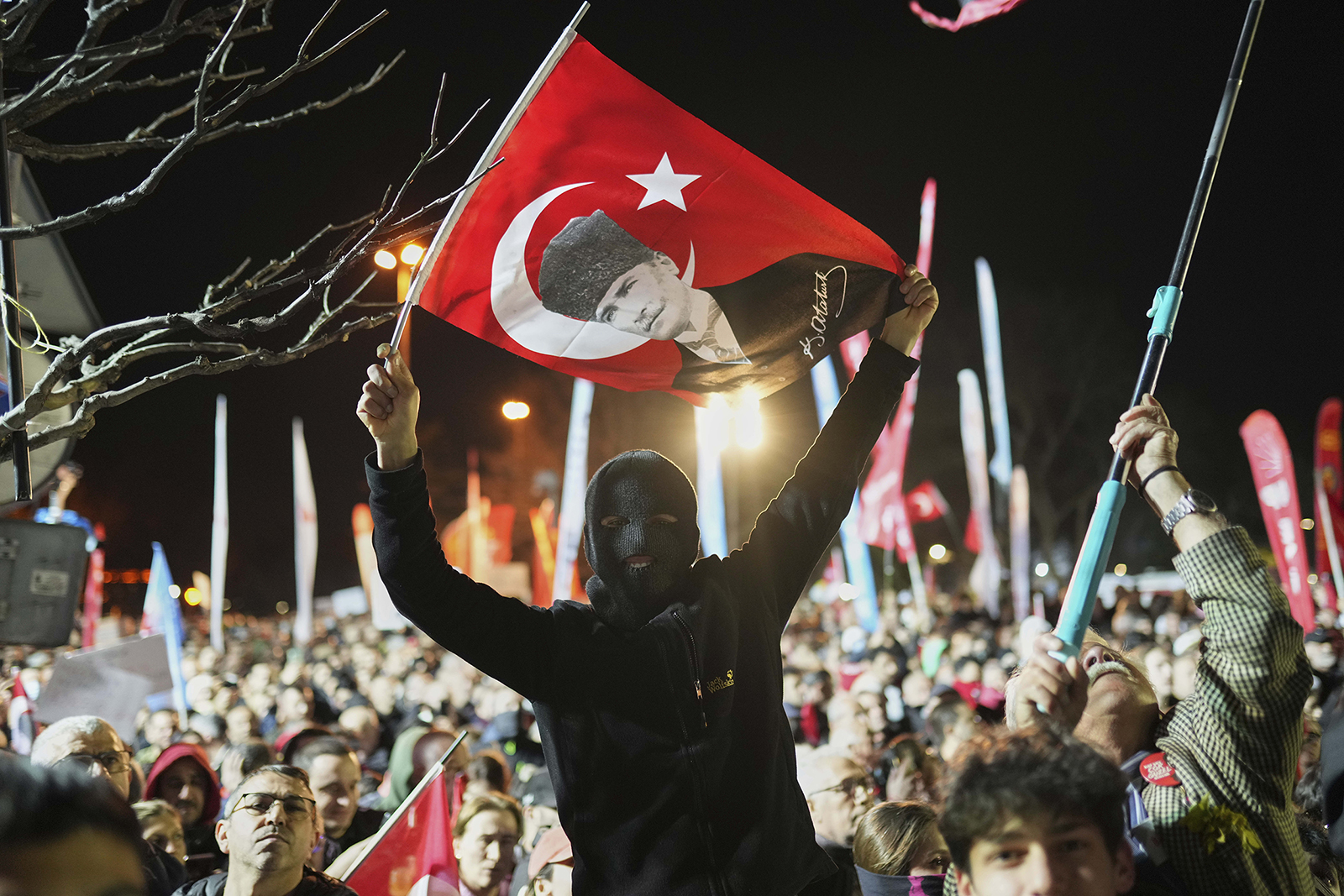
Demonstrators shout slogans during a protest after Istanbul's Mayor Ekrem İmamoğlu was arrested and sent to prison, in Istanbul, Turkey, Tuesday, March 25, 2025. (AP Photo/Francisco Seco)
(RNS) — Earlier this month, the now-former mayor of Istanbul, Ekrem İmamoğlu, was arrested on corruption charges along with 100 other opposition leaders. The arrests have provoked massive demonstrations across the country, not least because many Turks believe the arrests are a thinly veiled crackdown by Turkish strongman President Recep Tayyip Erdoğan on the increasingly popular opposition as a 2028 general election approaches. İmamoğlu is by far the most prominent of those opposition figures.
The conflict in Turkey in many ways mirrors the domestic tensions playing out in many parts of the world, as the rising tide of authoritarianism does battle against the liberal world order. Turkey’s history and geopolitical position makes its post-postmodern struggle unique, but also of wider concern. With the fate of religious pluralism in the Balkans and (one might argue) the very survival of Christianity in the Middle East in question, the outcome of Turkey’s political conflict is important for most anyone west of Moscow.
For nearly a century after Mustafa Kemal Atatürk invented the modern Turkish state, Turkey was not just secular, but aggressively secular. One of the “six arrows” of Kemalist ideology was the stringently areligious civic life the French call laïcité. If anything Turkey’s version outdid that of France, particularly in its anti-clericalism. The Kemalist consensus began to crumble at the end of the 20th century, however, and the election of Erdoğan to the presidency in 2014 (after 11 years as prime minister) marked what many believed would be the end of its dominance in Turkey.
This was due in part to Erdoğan’s purported moderate Islamist leanings. In fact, like many budding strongmen of our era, Erdoğan exhibits no particular ideology beyond his own power, but he did recognize the growing power of Islamist factions in the country and has curried favor with them. In 2020, for instance, he oversaw the reconversion of the Hagia Sophia into a mosque after its 85 years as a museum.
Modern Islamism and the Ottoman past have also shaped Erdoğan’s foreign policy and soft power strategy. Turkey has funded the building of mosques throughout the Balkans and eastern Mediterranean, including the new Turkish-funded Namazgah Mosquethat Erdoğan personally inaugurated in Tirana, Albania, last year, and the massive Ottoman-style mosque in the disputed territory of Northern Cyprus completed in 2018. From Syria to Gaza to Kosovo, Erdoğan has sought to position Turkey as an explicitly Muslim state and himself as the leader of the Muslim world.
The effects for Turkey’s religious minority communities — most notably its significant Christian community — has been devastating. Turkey regularly appears on human rights watch lists, often for violations of religious freedom.
But the fact that such a response was even necessary highlights what is at stake for Turkey’s religious and ethnic minorities and for the future of religious freedom. Erdoğan still envisions Turkey as a place that has no room for non-Muslim Turks, precisely because his personal opportunities rest on the existence of the quintessential “other” — and for the Ottomanist, that other is still, as it has been for centuries, the Greek.
If Erdoğan is allowed to triumph in his battle against the more tolerant İmamoğlu, the fate of Turkey’s minority groups will inevitably be a darker one. Its dwindling Christian community is watching closely as Ottamanist rhetoric and Islamic policies put them directly in the crossfire. The world must wait to see if the Turkey that emerges from this conflict is Atatürk’s pluralist and secular dream or an Ottoman-inspired authoritarian and nationalist nightmare. (Katherine Kelaidis, a research associate at the Institute of Orthodox Christian Studies in Cambridge, England, is the author of “Holy Russia? Holy War?” and the forthcoming “The Fourth Reformation.” The views expressed in this commentary do not necessarily reflect those of RNS.)
Opinion
Christians believe human fallibility too great to allow unchecked power for our leaders
(RNS) — If the political realm will not stand up to the autocratic pretensions of the current president, it falls to people of faith to take nonviolent action.
(RNS) — Authoritarianism is not only a political issue, it’s a theological one. The human capacity for evil is too great to allow individuals to have too much unchecked political power.
Unfortunately, the current Congress, many of whose members call themselves believers, is already showing that it will succumb to the autocratic pretensions of the current president. The courts may battle for due process and the rule of law, but the president, who wants no limits on executive power, may in the end disobey the courts. In such a constitutional crisis, other voices must stand up.
For many reasons — theological and moral — people and communities of faith are mobilizing, acting with courage and leadership for the common good. For the past four Wednesdays in March, clergy and laypeople have held a multifaith vigil on the grounds of the U.S. Capitol, calling upon Congress to live up to its constitutional role as a check against a rapidly expanding executive power. Last Wednesday (March 26), they pleaded with members of Congress to preserve funding for food and health care to the poor and life-saving international aid to the most vulnerable around the world, now facing cuts at the hands of the White House.
People across the country and around the world recognize the spiritual component of these battles. After the vigil, a Danish reporter asked me, “Why did American Christians overwhelmingly vote for Trump and why is there no Christian movement to oppose him?”
The question exposed two narratives that are out there: That in this moment of deepening crisis, Christians are not speaking out, and that all Christians in America support Donald Trump. Both are untrue.
According to PRRI, 68% percent of white Christians voted for Donald Trump — 6 in 10 of white mainline Protestants and white Catholics and 85% of white evangelical Christians. In sharp contrast, 83% of Black Christians did not vote for Trump. A majority of Hispanic Catholics also did not, though most Pentecostal and other evangelical Christian Hispanics did.
In addition, according to PRRI, the majority of those white Trump voters are adherents or sympathizers of Christian nationalism, while those who are skeptical or outright reject that tribal power-centered (and, I would add, heretical) ideology refused to vote for Trump on religious grounds.
Black church leaders testify they and their forebears have been to these hard places before and remind us that God is still God. The early church was a minority, countercultural community. We — the third of white Christians who voted against Trump — must learn to be one, too. There are tens of millions of us.
Already, 27 faith organizations have brought a lawsuit against the Trump administration to prevent Immigration and Customs Enforcement agents from raiding sensitive locations, including houses of worship. The case will have a hearing on April 4, and the evening before, people of faith will gather at National City Christian Church in Washington for an interfaith prayer vigil, showing that Christians and people of all faiths stand united in protecting American values of religious freedom and fulfilling our religious mandate of welcome.
There will be other opportunities in the coming weeks and months for Christians to let their voices be heard. As the House and Senate go on recess over Holy Week and the week of Easter, members of Congress will return to their home districts and states. Many Christian leaders are planning a #PublicWitness campaign at that time, calling on people of faith to organize ecumenical public events and to schedule meetings with their member of Congress to discuss upcoming votes on Medicaid, SNAP, foreign aid and immigration, in which biblical values are clearly at stake.
These pastors and priests, Catholic sisters and lay leaders, denominational leaders and bishops are prepared to pay the cost of protesting cruel and unjust policies and willing to be arrested in their collars, robes and other religious identifications.
The Rev. Jim Wallis. (Courtesy photo)
In the weeks and months ahead, other critical and, for us, moral votes about the poor and vulnerable will continue to come up in Congress. We will protest nonviolently and faithfully as a testimony to the theological matters at stake. Together, we will find the way forward and answer the question so many people have: “What can I do?” (The Rev. Jim Wallis is Arch-Bishop Desmond Tutu chair and director of Georgetown University’s Center on Faith and Justice and the author, most recently, of New York Times best-seller, “The False White Gospel: Rejecting Christian Nationalism, Reclaiming True Faith, and Refounding Democracy.” The views expressed in this commentary do not necessarily reflect those of RNS.)
The ADL quietly eliminated its anti-bias educational program
(RNS) — In the wake of the Oct. 7, 2023, Hamas attack on Israel, the ADL shifted its focus to combating antisemitism.
(RNS) — The Anti-Defamation League has fashioned itself as the “leading anti-hate organization in the world.” But these days, it appears to be focused mostly on fighting antisemitism specifically.
Beginning in 2023, it phased out its signature anti-hate educational program, A World of Difference Institute, without formally announcing it, the magazine Jewish Currents first reported on March 27.
In a statement, an ADL spokesperson acknowledged the program was eliminated. Updates to its educational offerings that reflect a focus on antisemitism are also noted on its website.
“We are always evaluating our programs, and phased out the A World of Difference® Institute in 2023 for efficiency reasons, as it reached a fraction of our more scalable programs,” the statement said.
Begun 40 years ago, the educational program reached thousands of schoolrooms each year and was designed to “challenge prejudice, stereotyping and all forms of discrimination.” The program consisted of a trained facilitator offering workshops to teach teachers and students how to fight bias, strengthen pluralism and promote democratic ideals.
But in the wake of the Oct. 7, 2023, Hamas attack on Israel and the ensuing war in Gaza, the ADL appears to have shifted its focus. In addition to tracking antisemitism, it has become increasingly vocal in championing Israel. ADL CEO Jonathan Greenblatt has repeatedly said that anti-Zionism is antisemitism. He has called for the campus organization, Students for Justice in Palestine, to be investigated for providing “material support” to Hamas and endorsed stronger measures to end pro-Palestinian student protests against Israel’s war in Gaza.
In January, it defended Elon Musk after he twice gave what many interpreted as a fascist Nazi salute at an event celebrating Trump’s inauguration, advising those who were upset to give Musk “the benefit of the doubt and take a breath.”
Anti-Defamation League CEO Jonathan Greenblatt delivers a prerecorded video message during the ADL’s National Leadership Summit, May 1, 2022. (Video screen grab)
Most recently, it applauded the Trump administration’s move to deport former Columbia student activist and permanent U.S. resident Mahmoud Khalil, saying there should be “swift and severe consequences for those who provide material support to foreign terrorist organizations.”
It has also lobbied for the International Holocaust Remembrance Alliance’s working definition of antisemitism, which critics say conflates the Jewish people with the Israeli state.
The ADL’s mission statement is twofold: “to fight the defamation of the Jewish people and secure justice and fair treatment to all.”
The spokesperson for the ADL said the organization has not retreated from its mission and pointed to its No Place for Hate initiative, a self-directed, student-led program that allows schoolchildren to survey their school’s climate, sign a petition and implement other activities to challenge bias and bullying.
“ADL is committed to anti-bias education; we have a variety of programs and a growing library of educational resources,” the statement said.
But the website used to have hundreds of model lesson plans devoted to anti-bias and diversity that are no longer there. Its antisemitism and Holocaust awareness classroom lessons remain.
Danielle Bryant, a former ADL education director in Austin, Texas, wrote in a March 4 op-ed in The Daily News that she quit working for the organization after it honored Jared Kushner in 2024 for his work on the Abraham Accords, a set of agreements on Arab-Israeli normalization signed between Israel and the United Arab Emirates and between Israel and Bahrain during Trump’s first administration.
The ADL, Bryant wrote, “shields Israel from criticism over its decades-long oppression of the Palestinian people and dangerously conflates that critique with antisemitism, while giving cover to right-wing extremists.”
Evangelical, Catholic groups: 1 in 12 Christians could be impacted by Trump deportations
“The Overwhelming Majority of Immigrants at Risk of Deportation are Christians”
(RNS) — The report serves as both a theological and data-driven refutation of the president’s campaign pledge to enact 'the largest deportation in US history.'
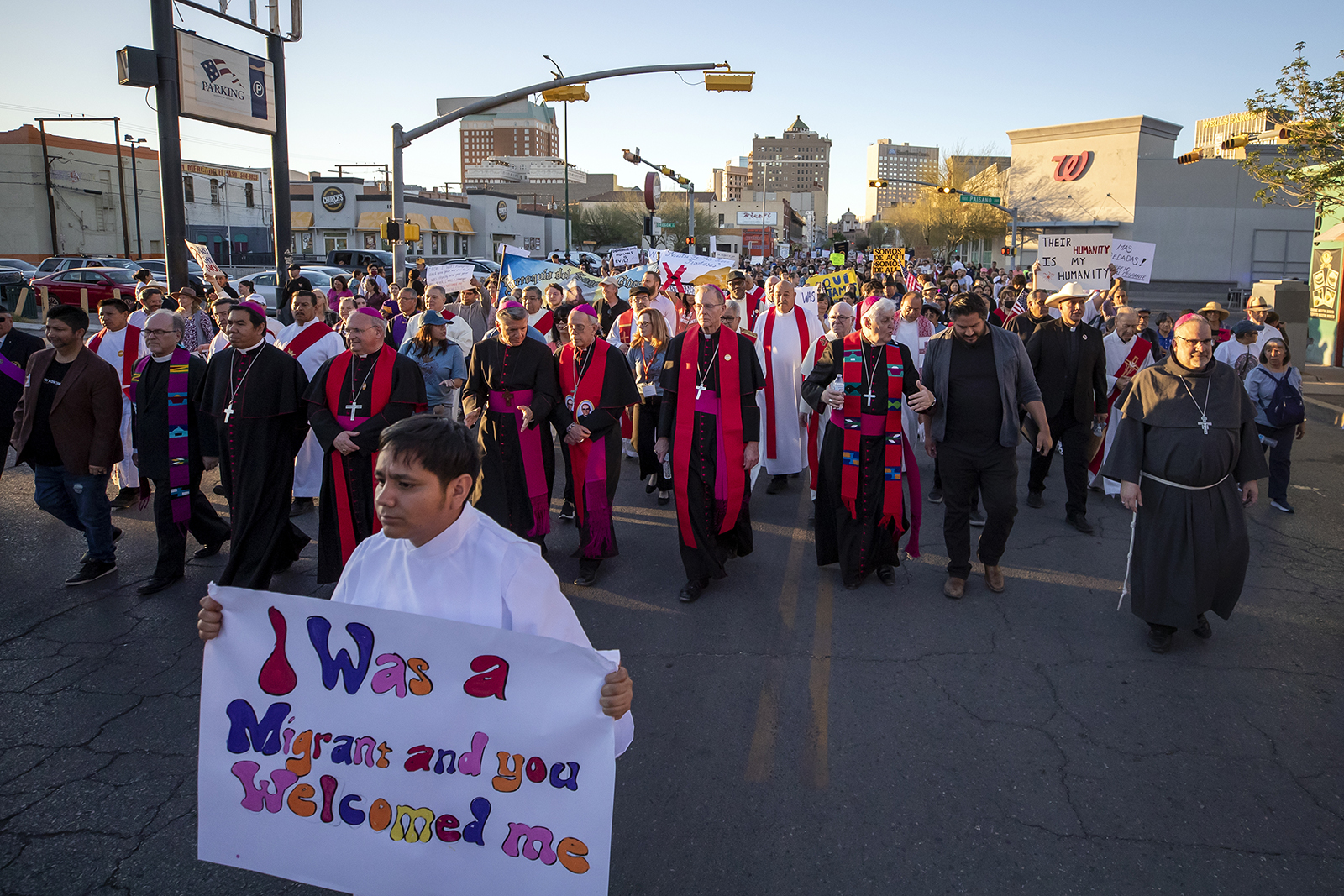
Catholic bishops lead a march in solidarity with migrants, Monday, March 24, 2025, in downtown El Paso, Texas. (AP Photo/Andres Leighton)
WASHINGTON (RNS) — A new report published by four prominent Catholic and evangelical organizations claims that around 1 in 12 Christians in the U.S. are vulnerable to deportation or live with a family member who could be deported by President Donald Trump’s administration, one of several data points religious leaders hope will alert Christians to the plight facing their fellow faithful.
“We’re sounding the alarm that all American Christians need to be aware of what’s being proposed,” Matthew Soerens of World Relief, one of the authors of the report, said during a call with reporters on Monday (March 31). He spoke alongside representatives from other well-known religious organizations listed as co-authors on the report: the U.S. Conference of Catholic Bishops, the National Association of Evangelicals and the Center for the Study of Global Christianity at Gordon-Conwell Theological Seminary.
“Our prayer with this report is that American Christians will recognize that these proposed deportations, to whatever extent they ultimately become a reality, are not just a policy issue but a dynamic that will impact us, followers of Jesus who were knit together in unity under Christ,” Soerens said.
The report, titled “One Part of the Body: The Potential Impact of Deportations on American Christian Families,” a reference to the biblical book of 1 Corinthians, serves as both a theological and data-driven refutation of the president’s campaign pledge to enact “the largest deportation in U.S. history.”
Authors of the study said they pulled data from several sources — such as religious demographic breakdowns from Pew Research and data on immigrant populations from the immigration reform advocacy group FWD.us — to conclude that there were more than 10 million Christian immigrants in the U.S. at the end of 2024 who are now vulnerable to deportation. That number includes undocumented immigrants as well as those with legal status that could be revoked by the government — namely, asylum seekers awaiting a final court proceeding as well as people protected by programs and designations such as Temporary Protected Status, Deferred Action for Childhood Arrivals, Deferred Enforced Departure and humanitarian parole.
Trump has already made moves that could impact several of these groups. In addition to the White House press secretary declaring in January that any undocumented immigrant is seen “as a criminal” by the Trump administration, U.S. Secretary of Homeland Security Kristi Noem has reversed TPS extensions for Venezuelans and Haitians and announced termination of parole processes for several groups.
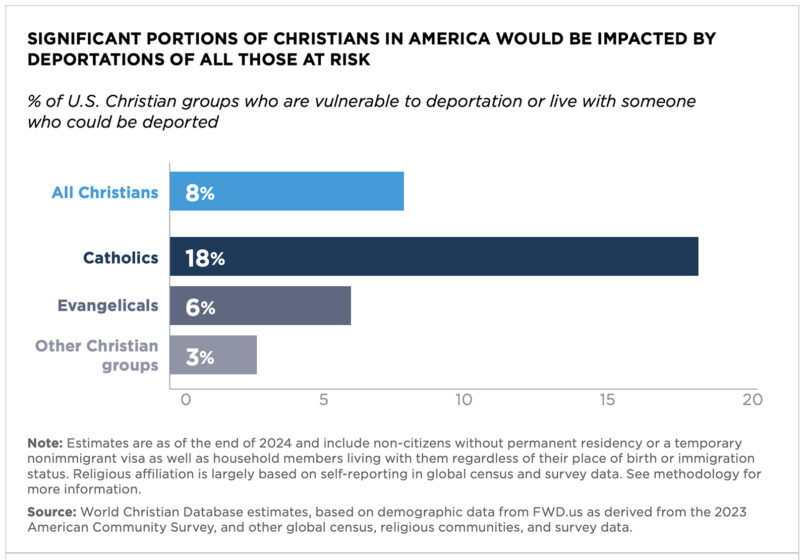
“Significant Portions of Christians in America Would Be Impacted by Deportations of All Those at Risk” (Courtesy graphic)
The report, which does not include legal permanent residents or green card holders in its list of people vulnerable to deportation, also notes that “nearly 7 million U.S.-citizen Christians live within the same households of those at risk of deportation.”
“Most of these U.S. citizens are spouses or minor children of the immigrant at risk of deportation,” the report adds.
The report, which also includes the stories of immigrants as well as religious arguments in defense of migrants, claims 18% of U.S. Catholics are vulnerable to deportation or live with someone who could be deported, as well as 6% of evangelicals in the country and 3% of other Christian groups.
The authors hope the data will help fellow Christians recognize the potential impact of Trump’s proposed deportations on their communities and churches.
“If even a fraction of those vulnerable to deportation are actually deported, the ramifications are profound — for those individuals, of course, but also for their U.S.-citizen family members and, because when one part of the body suffers, every part suffers with it, for all Christians,” the report states.
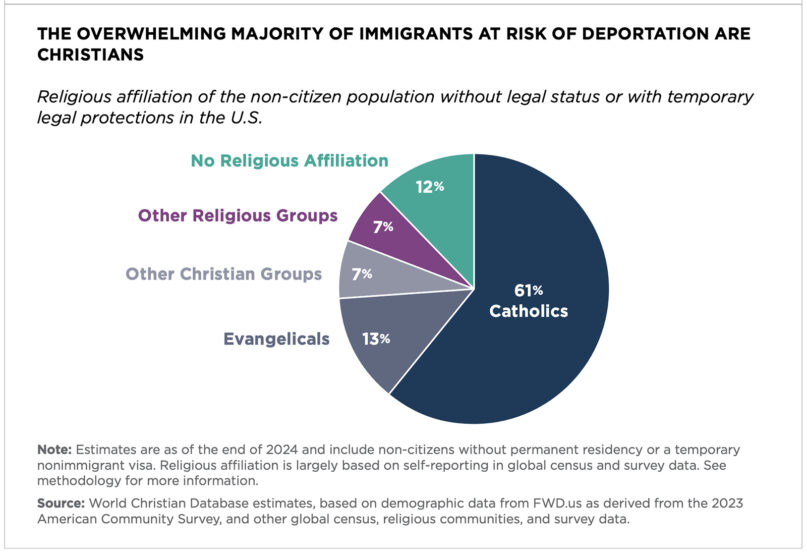
Anthea Butler, a professor of religious studies at the University of Pennsylvania, said the data could function as a “massive wake up call” for Catholic leaders, noting the report found Catholics make up 61% of those potentially at risk of deportation.
“For Catholic parishes, for Catholic ministries, this is a disaster,” Butler said. “The Overwhelming Majority of Immigrants at Risk of Deportation are Christians” (Courtesy graphic)
Speaking to reporters on Monday, Bishop Mark Seitz of El Paso confirmed the data shows “Catholics are overrepresented in those currently at risk for deportation,” adding that roughly 1 in 5 Catholics could be deported or have a family member deported under the new administration’s deportation policies.
Evangelical leaders on the call also repeatedly insisted the situation facing evangelicalism is dire.
“We want churches to grow, and … the administration’s mass deportation policies and congressional support of that would be, in fact, a church decline strategy, removing millions from active membership of churches,” Walter Kim, head of the National Association of Evangelicals, told reporters.
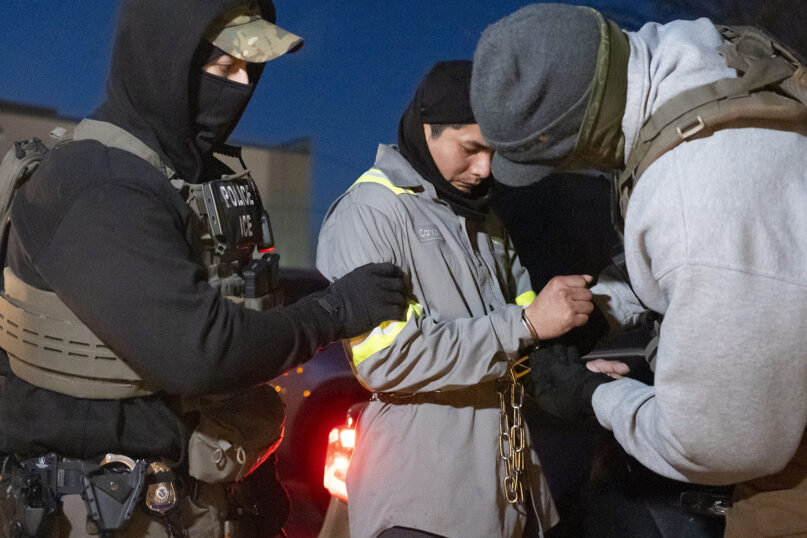
U.S. Immigration and Customs Enforcement officers adjust the handcuffs on a detained person, Jan. 27, 2025, in Silver Spring, Md. (AP Photo/Alex Brandon)
Myal Greene, head of World Relief, addressed his own remarks on the call to Republican lawmakers on Capitol Hill, where he used to work.
“We can’t just give a blank check to this effort to carry out mass deportations and mass detentions that would separate families on a massive scale, would decimate the American church and send vulnerable people who have not broken any law into horrifying humanitarian crises,” Greene said.
Trump has faced faith-based pushback to his immigration proposals and policies ever since he first emerged as a political force in 2015, but that criticism has most often come from Mainline Protestant Christians, Jewish Americans and Muslims. Recent weeks have seen unusually pointed criticism emerge from within conservative Christian groups that backed the president in November.
Catholics voted 59% for Trump, but their leadership has issued multiple statements in support of immigrants since Trump was elected, prompting a war of words with Vice President JD Vance. Himself a Catholic, Vance accused Catholic bishops of resettling “illegal immigrants” and suggested in an interview that Catholic bishops are only supporting immigrants in order to protect their “bottom line.” The allegation drew rebukes from leaders such as Bishop Seitz, who called the suggestion “a tremendous mischaracterization.” Even Pope Francis weighed in, with a February letter to U.S. bishops that generally criticized Trump’s immigration policies.
In addition, the Trump administration is currently embroiled in two separate immigration-related lawsuits brought by Catholic groups: One led by the U.S. Conference of Catholic Bishops, which is challenging the federal government over Trump’s decision to freeze the refugee resettlement program, and a similar suit filed by Catholic Charities of the Diocese of Fort Worth, which largely oversees refugee resettlement in Texas.
Butler sees a growing tension between Catholic leadership and many of the people in their pews — a tension she believes clergy “have not really quite dealt with.”
“On one hand, you have a big, giant denomination who is going to be profoundly affected by people being renditioned — and I’m going to use the word renditioned — out of this country who are faithful and loyal Catholics,” Butler said. “But on the other hand, you have Catholic suburbanites and others who voted for Trump who are, like, ‘Okay, this is cool.'”
Evangelicals, a group long deemed crucial to Trump’s support, have been less visible in efforts to challenge Trump on immigration, but Monday’s new report points to increasing — or at least increasingly public — discontent among conservative Protestants. In March, World Relief and other prominent evangelical groups organized a public vigil on Capitol Hill to condemn the administration’s cuts to the U.S. Agency for International Development and foreign aid in general, arguing the changes will cost vulnerable people their lives.
The report organizers suggested Monday that most Christians who voted for Trump either don’t support his immigration policies or don’t fully understand the impact they could have. Kim, head of the NAE, cited recent polling showing that less than one-fifth of evangelicals support deporting immigrants who have spouses or children who are U.S. citizens, have been in the country for 10 years or more, or who are willing to pay a fine as restitution for their violation of any immigration law.
Bishop Seitz agreed.
“The people that are being numbered among those under threat of deportation are not people who are harming our community, but rather building it up,” he said.
This piece has been updated to clarify that World Relief, not World Vision, participated in the vigil on Capitol Hill.
Philippines Former President Duterte arrested by the International Criminal Court (ICC)
Accused of crimes against humanity, Rodrigo Duterte was taken to The Hague (Netherlands) on March 11, where the International Criminal Court (ICC) is located. The charges are the tens of thousands of extrajudicial killings committed under his rule in the name of his "war on drugs."
Rodrigo Duterte presided over the Philippines for two terms, from 2016 to 2022. In the name of fighting crime, he extended nationwide the use of death squads, which had been his trademark when he was mayor of Davao, in Mindanao in the south of the archipelago. Regardless of the innocent people murdered without investigation or trial, or the numerous "blunders," he thus imposed his reign, and the image of a strong, macho, deliberately vulgar man with an aggressive sexism, who is unrestrained by either laws or humanitarian considerations. Duterte thought he was protected
The Philippines joined the "Rome Statute" in 2011, on which ICC mandates depend. Under President Duterte, the Philippines left it (effectively breaking it in 2018). He believed he was thus protected and did not fail to copiously insult the ICC. His arrest was nevertheless made possible by the conjunction of two factors: the Hague Court declared itself competent to act for acts committed before 2018, and the current president, Ferdinand Marcos Jr., known as "Bong Bong," gave his consent for him to be taken to the Netherlands.
Alliances between powerful family clans, "political dynasties," make and break governments in the Philippines today. The presidential contest is dominated by a confrontation between the Marcoses and the Dutertes, all the more violent because they were once allies. Didn’t Sara Duterte (Rodrigo’s daughter) publicly declare that she would have "Bong Bong" assassinated? Pro-Duterte supporters (including Imee Marcos, Ferdinand’s sister; families can be divided and ambitions tortuous) are now campaigning against the ICC—denounced as the judicial arm of the current presidential clan—and its intrusion as a colonial act, appealing to powerful feelings of loyalty and national pride. Battle between dynastic clans
The scale of the crimes committed under Duterte’s presidency justifies (oh so much!) his arrest. The fact that this arrest is being carried out by the ICC is due to the fact that the Philippine justice system has proven incapable of doing so itself (at the risk of opening a Pandora’s box, given the numerous complicity). It is not yet known whether the former president will be remanded in custody in The Hague pending his trial. In the Philippines, the political conflict is taking on a new dimension, with the mobilization of Duterte’s supporters, who still enjoys significant popular support patiently built up with unlimited use of social media (à la Trump).
The return to the rule of family clans, once the progressive momentum of the 1986 uprising had been exhausted, had profoundly deleterious effects. All the mechanisms of elite corruption and subordination of the working classes (combining threats and cronyism) were in full swing. For one sector of the population, if the justice system proves incapable of ensuring security in working-class neighborhoods, let’s turn a blind eye to the summary brutality. The institutional space of left-wing forces has shrunk like shagreen leather. The weakness of the left forces
Ferdinand Marcos Senior imposed martial law, which was overthrown in 1986. Not a great democratic legacy. The police and the army remain confident in their impunity, sanctioned by the two rival families. Thus, in Mindanao, where conflicts are intertwined, the military’s orders today are to shoot their targets on sight, rather than seek to capture them. Negotiations for the peace process have stalled. Old and new businessmen (from the ranks of the MILF, the Muslim Liberation Front) want to seize the forest and mineral wealth of the ancestral territories of the mountain people, 86 of whose leaders have been assassinated. The spectacular conflict between the Dutertes and the Marcoses should not obscure the extent of social and territorial inequalities and the duty of solidarity with left-wing forces.
If you like this article or have found it useful, please consider donating towards the work of International Viewpoint. Simply follow this link: Donate then enter an amount of your choice. One-off donations are very welcome. But regular donations by standing order are also vital to our continuing functioning. See the last paragraph of this article for our bank account details and take out a standing order. Thanks.
Pierre Rousset Pierre Rousset is a member of the leadership of the Fourth International particularly involved in solidarity with Asia. He is a member of the NPA in France.
International Viewpoint is published under the responsibility of the Bureau of the Fourth International. Signed articles do not necessarily reflect editorial policy. Articles can be reprinted with acknowledgement, and a live link if possible.
Ukraine:
Feminist group Bilkis addresses Brussels Conference
Wednesday 2 April 2025, by Ivanna Vynna Ivanna Vynna, a member of the Ukrainian feminist group Bilkis, took part on 27 March 2025 in the workshop on feminist struggles in Ukraine at the Brussels conference organised by the European Solidarity Network with Ukraine. The text of her speech is published below.
If Russia has not yet fought you on the battlefield, it is doing so in the field of information, influencing elections in your country, spreading disinformation and promoting propaganda. It denies the existence of Ukrainians as members of a distinct nation and refuses to recognise imperialist policies as criminal. It destroys nations that aspire to decolonisation, threatens women with sexual violence (which has become its military strategy), kidnaps children and demonises homosexuals.
Even its so-called liberal voices serve only one purpose: to justify and normalise Russia. Ukraine is blamed: it is ‘to blame’, it has ‘provoked’, it ‘lets itself do too much’, along with other rhetoric often applied to those who suffer violence. So we must remember that the fault always lies with those who took up arms and crossed an internationally recognised border (including one they themselves recognised).
Right now, for us at Bilkis, it’s important to participate in the transformations of Ukraine by amplifying the voices of women and queer people, addressing violence and inequality, and promoting inclusion. We have made significant progress in these areas: the end of professions forbidden to women, the updating of spelling rules for the use of feminine forms, laws against hate crimes, sex education and the fight against gender-based violence. Ukraine is developing despite all the hardships of war.
Ukrainian society is becoming increasingly aware of gender issues and the need for decolonisation. This is the logical continuation of our cultural and intellectual tradition, which was interrupted by the Soviet occupation. Our feminist movement was closely linked to the movement for independence from empires (at the time, the Russian and Austro-Hungarian empires). However, resistance to Russian colonisation remained a question of survival, as it was for many countries in Central and Eastern Europe. Because if Ukraine does not resist, it will be the next victim. Russian propagandists talk openly about this on prime-time television.
As far as the activities of the Bilkis organisation are concerned, we are united by five fundamental values:
Feminism (the fight for women’s rights) Horizontality (absence of hierarchies and domination, collective decision-making, open communication, equality of voices) Social equality (we care about the rights of vulnerable groups, social justice and the development of tools for public influence) Decolonisation (we oppose colonial policies and wars of aggression, and defend the independence and development of formerly colonised nations) Intersectionality (we talk about discrimination, bearing in mind the multiplicity of inequalities and power relations that cause it).
We began our activities in 2019 by collecting and publishing accounts of violence against women. This annual tradition continues: we call on local illustrators and photographers to share publications on social networks and spread the stories of Ukrainian women in order to create a space for condemning violence and supporting each other.
In November 2024, we launched the ‘FemObjective’ film club, where we meet twice a month for feminist film screenings, talks and debates. Among the films we have screened are ‘Le Journal d’une adolescente’, ‘Persepolis’, ‘Blink Twice’, ‘Disclosure’ and many others. On 8 March this year, we organised a screening of ‘When the Trees Fall’ by Ukrainian director Marysia Nikitiuk, and the filmmaker herself gave a talk on female sexuality in film.
We also have a YouTube project, Dear Diary, which features video essays on society, film and popular culture through the lens of intersectional feminism. To date, eight episodes have been broadcast and our channel has over 5,000 subscribers. Topics covered in the videos include compulsive heterosexuality, rape culture, toxic tolerance and many others.
Most of the participants in Bilkis are vegans. For us, it’s important to take care of the environment, resist reckless consumerism and offer everyone the chance to get rid of the superfluous and receive the necessary for free. In 2022, we launched our ‘Space of Things’ social project.
We also published two zines.The electronic versions are available in our Instagram profile description. The first, entitled ‘Activist’, tells the story of women activists who protect us on the front line, provide humanitarian aid or help Ukraine to survive in other ways. The second, self-published, ‘Les Autres sont comme nous’, is a collection of stories about the lives of homeless women. These are reflections on the female experience of homelessness and on ways of strengthening solidarity.
Of course, we also organise street actions. On 8 March, we co-organised the ‘Demand justice, not women’ action in Lviv and put up posters against violence against women in Kyiv. A few days later (on 30 March), we planned an action in Lviv for the Transgender Day of Visibility.
Our Instagram profile is a project in its own right. We regularly post information on the rights of women and LGBTQI+ people in Ukraine. This includes texts on misogyny in various fields (medicine, history, etc.), recommendations for feminist and queer books and films, announcements of events, and much more. Our Instagram page is viewed over 230,000 times a month. We currently have over 6,500 followers, and these are just our numbers for our page.
We are currently looking for financial resources, as funding for gender equality programmes has been drastically reduced due to the shift to the right. We need funds to support our current projects and create new ones. For example, we want to start translating left-wing feminist literature into Ukrainian, as there is currently very little available. We would also like to create an interview project with women from various professions.
We would greatly appreciate any financial or informational support for our organisation!
We take part in international events to remind the world that the Russian-Ukrainian war is still going on. And that Russia is the aggressor, just as it was in Chechnya, Moldova and Georgia. It begins by forcibly Russifying, destroying local culture and intellectuals, and then claims that this is the way it has always been. Culture in the hands of an empire is a weapon of appropriation, devaluation and destruction. To counter this, and not just in Ukraine, we plan to focus more on defending international issues in the future. We find it very useful to look for points of connection, in our experiences and our cultures, with the countries that support us, in order to create common information projects and to mutually amplify our voices.
International Viewpoint is published under the responsibility of the Bureau of the Fourth International. Signed articles do not necessarily reflect editorial policy. Articles can be reprinted with acknowledgement, and a live link if possible.
Warmongering has reached fever pitch in Europe. It all started with the US under Trump deciding that paying for the military ‘protection’ of European capitals from potential enemies was not worth it. Trump wants to stop the US paying for the bulk of the financing of NATO and providing its military might and he wants to end the Ukraine-Russia conflict so he can concentrate US imperialist strategy on the ‘Western hemisphere’ and the Pacific, with the aim of ‘containing’ and weakening China’s economic rise.
Trump’s strategy has panicked the European ruling elites. They are suddenly concerned that Ukraine will lose to the Russian forces and before long Putin will be at the borders of Germany or as UK premier Keir Starmer and a former head of MI5 both claim, “in British streets”.
Whatever the validity of this supposed danger, the opportunity has been created for Europe’s military and secret services to ‘up the ante’ and call for an end to the so-called ‘peace dividend’ that began after the fall of the dreaded Soviet Union and now begin the process of rearmament. The EU Foreign Policy Chief Kaja Kallas spelt out the EU’s foreign policy as she saw it: “If together we are not able to put enough pressure on Moscow, then how can we claim that we can defeat China?”
Several arguments are offered for rearming European capitalism. Bronwen Maddox, director of Chatham House, the international relations ‘think-tank’, which mainly presents the views of the British military state, kicked it off with the claim that “spending on ‘defence’ “is the greatest public benefit of all” because it is necessary for the survival of ‘democracy’ against authoritarian forces. But there is a price to be paid for defending democracy: “the UK may have to borrow more to pay for the defence spending it so urgently needs. In the next year and beyond, politicians will have to brace themselves to reclaim money through cuts to sickness benefits, pensions and healthcare.” She went on: “If it took decades to build up this spending, it may take decades to reverse it,” so Britain needs to get on with it. “Starmer will soon have to name a date by which the UK will meet 2.5 per cent of GDP on military spending — and there is already a chorus arguing that this figure needs to be higher. In the end, politicians will have to persuade voters to surrender some of their benefits to pay for defence.”
Martin Wolf, the liberal Keynesian economic guru of the Financial Times, launched in:“spending on defence will need to rise substantially. Note that it was 5 per cent of UK GDP, or more, in the 1970s and 1980s. It may not need to be at those levels in the long term: modern Russia is not the Soviet Union. Yet it may need to be as high as that during the build-up, especially if the US does withdraw.”
How to pay for this? “If defence spending is to be permanently higher, taxes must rise, unless the government can find sufficient spending cuts, which is doubtful.” But don’t worry, spending on tanks, troops and missiles is actually beneficial to an economy, says Wolf. “The UK can also realistically expect economic returns on its defence investments. Historically, wars have been the mother of innovation.” He then cites the wonderful examples of the gains that Israel and Ukraine have made from their wars: “Israel’s “start up economy” began in its army. The Ukrainians now have revolutionised drone warfare.” He does not mention the human cost involved in innovation by war. Wolf moves on: “The crucial point, however, is that the need to spend significantly more on defence should be viewed as more than just a necessity and also more than just a cost, though both are true. If done in the right way, it is also an economic opportunity.” So war is the way out of economic stagnation.
Wolf shouts that Britain needs to get on with it: “If the US is no longer a proponent and defender of liberal democracy, the only force potentially strong enough to fill the gap is Europe. If Europeans are to succeed with this heavy task, they must begin by securing their home. Their ability to do so will depend in turn on resources, time, will and cohesion ….. Undoubtedly, Europe can substantially increase its spending on defence.” Wolf argued that we must defend the vaunted “European values” of personal freedom and liberal democracy. “To do so will be economically costly and even dangerous but necessary… because “Europe has ‘fifth columns’ almost everywhere.” He concluded that “If Europe does not mobilise quickly in its own defence, liberal democracy might founder altogether. Today feels a bit like the 1930s. This time, alas, the US looks to be on the wrong side.”
‘Progressive conservative’,FT columnist Janan Ganesh spelt it out baldly: “Europe must trim its welfare state to build a warfare state. There is no way of defending the continent without cuts to social spending.” He made it clear that the gains working people made after the end of WW2 but were gradually whittled away in the last 40 years must now be totally dispensed with. “The mission now is to defend Europe’s lives. How, if not through a smaller welfare state, is a better-armed continent to be funded?” The golden age of the post-war welfare state is not possible anymore. “Anyone under 80 who has spent their life in Europe can be excused for regarding a giant [sic] welfare state as the natural way of things. In truth, it was the product of strange historical circumstances, which prevailed in the second half of the 20th century and no longer do.”
Yes, correct, the gains for working people in the golden age were the exception from the norm in capitalism (‘strange historical circumstances’). But now “pension and healthcare liabilities were going to be hard enough for the working population to meet even before the current defence shock…..Governments will have to be stingier with the old. Or, if that is unthinkable given their voting weight, the blade will have to fall on more productive areas of spending … Either way, the welfare state as we have known it must retreat somewhat: not enough that we will no longer call it by that name, but enough to hurt.” Ganesh, the true conservative, sees rearmament as an opportunity for capital to make the necessary reductions in welfare and public services. “Spending cuts are easier to sell on behalf of defence than on behalf of a generalised notion of efficiency…. Still, that isn’t the purpose of defence, and politicians must insist on this point. The purpose is survival.” So so-called ‘liberal capitalism’ needs to survive and that means cutting living standards for the poorest and spending money on going to war. From welfare state to warfare state.
Poland’s Prime minister Donald Tusk took the warmongering up another notch. He said that Poland “must reach for the most modern possibilities, also related to nuclear weapons and modern unconventional weapons”. We can presume that ‘unconventional’ meant chemical weapons? Tusk: “I say this with full responsibility, it is not enough to purchase conventional weapons, the most traditional ones.”
So nearly everywhere in Europe, the call is for increased ‘defence’ spending and rearmament. European Commission President Ursula von der Leyen has proposed a Rearm Europe Plan which aims to mobilise up to €800 billion to finance a massive ramp-up in defence spending. “We are in an era of re-armament, and Europe is ready to massively boost its defence spending, both to respond to the short-term urgency to act and to support Ukraine, but also to address the long-term need to take on more responsibility for our own European security,” she said. Under an ’emergency escape clause’, the EU Commission will call for increased spending on arms even if it breaks existing fiscal rules. Unused COVID funds (E90bn) and more borrowing through a “new instrument” will follow, to provide €150 billion in loans to member states to finance joint defence investments in pan-European capabilities including air and missile defence, artillery systems, missiles and ammunition, drones and anti-drone systems. Von der Leyen claimed that if EU countries increase their defence spending by 1.5% of GDP on average, €650 billion could be freed up over the coming four years. But there would be no extra funding for investment, infrastructure projects or public services, because Europe must devote its resources for preparing for war.
At the same time, as the FT put it, the British government “is making a rapid transition from green to battleship grey by now placing defence at the heart of its approach to technology and manufacturing.” Starmer announced a rise in defence spending to 2.5% of GDP by 2027 and an ambition to reach 3% into the 2030s. Britain’s finance minister Rachel Reeves, who has been steadily cutting spending on child credits, winter payments for the aged and disability benefits, announced that the remit of the Labour government’s new National Wealth Fund would be changed to let it invest in defence. British arms manufacturers are cock a hoop. “Leaving aside the ethics of weapons production, which deters some investors, there is plenty to like about defence as an industrial strategy” said one CEO.
European and US arms companies share prices.
Over in Germany, the Chancellor-elect in the new coalition government, Friedrich Merz, pushed through the German parliament a law to end the so-called ‘fiscal brake’ that made it illegal for German governments to borrow beyond a strict limit or raise debt to pay for public spending. But now military deficit spending has priority above everything else, the only budget with no limit. The defence spending target will dwarf the deficit spending available for climate control and for badly needed infrastructure.
Germany's project annual deficit spending.
Annual government spending due to the new German fiscal package will be larger than the spending boom that came with the postwar Marshall Plan and with German reunification in the early 1990s.
Germany: fiscal plans, annual outlays as % of GDP
That brings me to the economic arguments for military spending. Can military expenditure kickstart an economy that is stuck in a depression, as much of Europe has been since the end of the Great Recession in 2009? Some Keynesians think so. German arms manufacturer Rheinmetall says that Volkswagen’s idle Osnabrück factory could be a prime candidate for conversion to military production. Keynesian economist, Matthew Klein, co-author with Michael Pettis of Trade Wars are Class Wars, greeted this news: “Germany is already building tanks. I am encouraging them to build many more tanks.”
The theory of ‘military Keynesianism’ has a history. One variant of this was the concept of the ‘permanent arms economy’ that was espoused by some Marxists to explain why the major economies did not go into a depression after the end of WW2, but instead entered a long boom with only mild recessions, that lasted until the 1974-5 international slump. This ‘golden age’ could only be explained, they said, by permanent military spending to keep up aggregate demand and sustain full employment.
But the evidence for this theory of the post-war boom is not there. UK government military spending fell from over 12% of GDP in 1952 to around 7% in 1960 and declined through the 1960s to reach about 5% by the end of the decade. And yet the British economy did better than at any time since. In all the advanced capitalist countries, defence spending was a substantially smaller fraction of total output by the end of the 1960s than in the early 1950s: from 10.2% of GDP in 1952-53 at the height of the Korean War; to only 6.5% by 1967. Yet economic growth was sustained pretty much through the 1960s and early 1970s.
OECD military expenditure as % of GDP.
The post-war boom was not the result of Keynesian-style government spending on arms, but is explained by the post-war high rate of profitability on capital invested by the major economies. If anything, it was the other way around. Because the major economies were growing relatively fast and profitability was high, governments could afford to sustain military spending as part of their geopolitical ‘cold war’ objective to weaken and crush the Soviet Union – the then main enemy of imperialism.
Above all, military Keynesianism is against the interests of working people and humanity. Are we in favour of making arms to kill people in order to create jobs? This argument, often promoted by some trade union leaders, puts money before lives. Keynes once said: “The government should pay people to dig holes in the ground and then fill them up.” People would reply. “that’s stupid, why not pay people to build roads and schools.” Keynes would respond saying “Fine, pay them to build schools. The point is it doesn’t matter what they do as long as the government is creating jobs”.
Keynes was wrong. It does matter. Keynesianism advocates digging holes and filling them up to create jobs. Military Keynesianism advocates digging graves and filling them with bodies to create jobs. If it does not matter how jobs are created then why not dramatically increase tobacco production and promote the addiction to create jobs? Currently, most people would oppose this as being directly harmful to people’s health. Making weapons (conventional and unconventional) is also directly harmful. And there are plenty of other socially useful products and services that could deliver jobs and wages for workers (like schools and homes).
The UK government’s defence minister John Healey recently insisted that boosting the arms budget would “make our defence industry the driver of economic growth in this country”. Great news. Unfortunately for Healey, the UK’s arms industry’s trade association (ADS) estimates the UK has around 55,000 arms export jobs and another 115,00 employed in the Ministry of Defence. Even if you include the latter, that is only 0.5% of the UK workforce (see CAAT’s Arms to Renewables briefing for details). Even in the US, the ratio is much the same.
There is a theoretical question often at debate in Marxist political economy. It is whether the production of weapons is productive of value in a capitalist economy. The answer is that it is, for arms producers. The arms contractors deliver goods (weapons) which are paid for by the government. The labour producing them, therefore, is productive of value and surplus value. But at the level of the whole economy, arms production is unproductive of future value, in the same way that ‘luxury goods’ for just capitalist consumption are. Arms production and luxury goods do not re-enter the next production process, either as means of production or as means of subsistence for the working class. While being productive of surplus value for the arms capitalists, the production of weapons is not reproductive and thus threatens the reproduction of capital. So if the increase in the overall production of surplus value in an economy slows and the profitability of productive capital begins to fall, then reducing available surplus value for productive investment in order to invest in military spending can damage the ‘health’ of the capitalist accumulation process.
The outcome depends on the effect on the profitability of capital. The military sector generally has a higher organic composition of capital than the average in an economy as it incorporates leading-edge technologies. So the arms sector would tend to push down the average rate of profit. On the other hand, if taxes collected by the state (or cuts in civil spending) to pay for arms manufacture are high, then wealth that might otherwise go to labour can be distributed to capital and thus can add to available surplus value. Military expenditure may have a mildly positive effect on profit rates in arms-exporting countries but not for arms-importing ones. In the latter, spending on the military is a deduction from available profits for productive investment.
In the greater scheme of things, arms spending cannot be decisive for the health of the capitalist economy. On the other hand, all-out war can help capitalism out of depression and slump. It is a key argument of Marxist economics (at least in my version) that capitalist economies can only recover in a sustained way if average profitability for the productive sectors of the economy rises significantly. And that would require sufficient destruction in the value of ‘dead capital’ (past accumulation) that is no longer profitable to employ.
The Great Depression of the 1930s in the US economy lasted so long because profitability did not recover throughout that decade. In 1938, the US corporate rate of profit was still less than half the rate of 1929. Profitability only picked up once the war economy was underway, by 1940 onwards.
US corporate rate of profit.
So it was not ‘military Keynesianism’ that took the US economy out of the Great Depression – as some Keynesians like to think. US economic recovery from the Great Depression did not start until the world war was underway. Investment took off only from 1941 (Pearl Harbor) onwards to reach, as a share of GDP, more than double the level that investment stood at in 1940. Why was that? Well, it was not the result of a pick-up in private sector investment. What happened was a massive rise in government investment and spending. In 1940, private sector investment was still below the level of 1929 and actually fell further during the war. The state sector took over nearly all investment, as resources (value) were diverted to the production of arms and other security measures in a full war economy.
US private versus government investment % of GDP.
But is not increased government investment and consumption a form of Keynesian stimulus, but just at a higher level? Well, no. The difference is revealed in the continued collapse of consumption. The war economy was paid for by restricting the opportunities for workers to spend their incomes from their war-time jobs. There was forced saving through the purchase of war bonds, rationing and increased taxation to pay for the war. Government investment meant the direction and planning of production by government decree. The war economy did not stimulate the private sector, it replaced the ‘free market’ and capitalist investment for profit. Consumption did not restore economic growth as Keynesians (and those who see the cause of crisis in under-consumption) would expect; instead it was investment in mainly weapons of mass destruction.
The war decisively ended the depression. American industry was revitalized by the war and many sectors were oriented to defence production (for example, aerospace and electronics) or completely dependent on it (atomic energy). The war’s rapid scientific and technological changes continued and intensified trends begun during the Great Depression. As the war severely damaged every major economy in the world except for the US, American capitalism gained economic and political hegemony after 1945.
Guiglelmo Carchedi explained: “Why did the war bring about such a jump in profitability in the 1940‐5 period? The denominator of the rate not only did not rise, but dropped because the physical depreciation of the means of production was greater than new investments. At the same time, unemployment practically disappeared. Decreasing unemployment made higher wages possible. But higher wages did not dent profitability. In fact, the conversion of civilian into military industries reduced the supply of civilian goods. Higher wages and the limited production of consumer goods meant that labour’s purchasing power had to be greatly compressed in order to avoid inflation. This was achieved by instituting the first general income tax, discouraging consumer spending (consumer credit was prohibited) and stimulating consumer saving, principally through investment in war bonds. Consequently, labour was forced to postpone the expenditure of a sizeable portion of wages. At the same time labour’s rate of exploitation increased. In essence, the war effort was a labour‐financed massive production of means of destruction.”
Let Keynes sum it up: “It is, it seems, politically impossible for a capitalistic democracy to organize expenditure on the scale necessary to make the grand experiments which would prove my case — except in war conditions,” from The New Republic (quoted from P. Renshaw, Journal of Contemporary History 1999 vol. 34 (3) p. 377 -364).