Friday, December 26, 2025


JD Vance Is Wrong: DEI Is Not What’s Dividing America—He Is

In the America that Vance envisions, people are only judged for “who they are”—unless they’re immigrants, transgender, women, Muslims, or people of color.
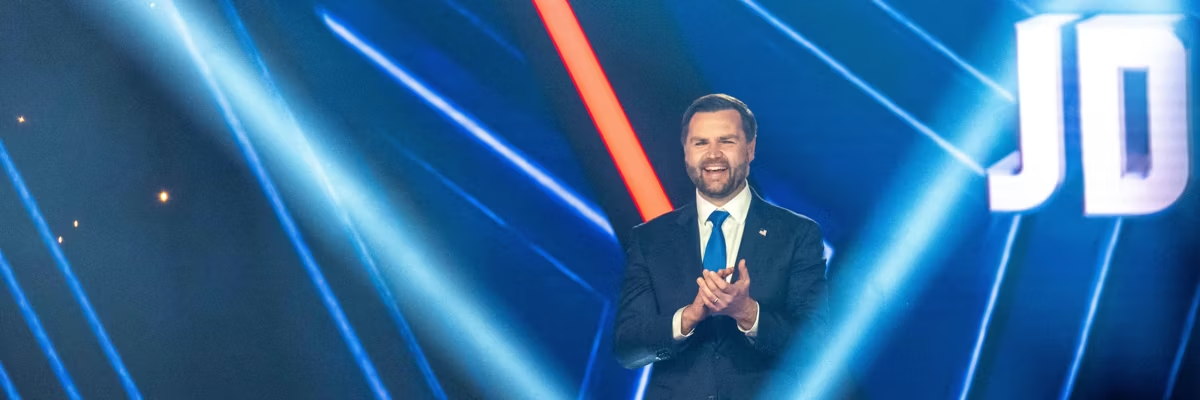


US Vice President JD Vance arrives at the Turning Point’s annual AmericaFest conference, in remembrance of late right-wing political activist Charlie Kirk, in Phoenix, Arizona on December 21, 2025.
(Photo by Olivier Touron / AFP via Getty Images)

Jordan Liz
Dec 26, 2025
Common Dreams


On December 21, at Turning Point USA’s annual national conference, Vice President JD Vance took to the stage to denounce the evils of diversity, equity, and inclusion initiatives.

He told the crowd:
We don’t treat anybody different because of their race or their sex, so we have relegated DEI to the dustbin of history, which is exactly where it had belonged. In the United States of America, you don’t have to apologize for being white anymore. And if you’re an Asian, you don’t have to talk around your skin color when you’re applying for college. Because we judge people based on who they are, not on ethnicity and things they can’t control. We don’t persecute you for being male, for being straight, for being gay, for being anything. The only thing that we demand is that you be a great American patriot. And if you’re that, you’re very much on our team.

For Vance, DEI and affirmative action policies are so vile that it “pisses [him] off a million times more” than racial slurs aimed at his own children by an actual white supremacist.

This is because DEI policies, in his view, are specifically designed to harm white men. On December 17, Vance posted on Twitter that, “A lot of people think ‘DEI’ is lame diversity seminars or racial slogans at NFL games. In reality, it was a deliberate program of discrimination against white men. This is an incredible piece that describes the evil of DEI and its consequences.”

The “incredible piece” is an article by Jacob Savage entitled “The Lost Generation.” Savage argues that “DEI wasn’t a gentle rebalancing—it was a profound shift in how power and prestige were distributed.” A redistribution that, Savage argues, harmed “white male millennials” who saw opportunities that would have ordinarily gone to people like him go to people of color and women instead. Savage’s grievance is premised on the assumption that the people who succeed in his place were less qualified—the type of people that he would have triumphed over if not for DEI.

Much of the article is typical anti-DEI rhetoric. But, toward the end, Savage makes the following—almost insightful—point:
It’s strange and more than a little poisonous to see yourself buffeted by forces beyond your control. But there’s also a comfort in it. Because it’s less painful to scroll through other people’s IMDb pages late at night, figuring out what shortcut—race, gender, connections—they took to success, than to grapple with the fact that there are white men my age who’ve succeeded, and I am not one of them. I could have worked harder, I could have networked better, I could have been better. The truth is, I’m not some extraordinary talent who was passed over; I’m an ordinary talent—and in ordinary times that would have been enough.

Savage, like Vance and most anti-DEI advocates, champions “American meritocracy.” Yet, he is somehow upset and surprised that someone with “ordinary talent” failed to succeed. Isn’t this outcome exactly what true, unfettered meritocracy would produce? If everyone, regardless of race, sex, and gender, were able to compete equally, then those who are not “extraordinary” would always struggle to find financial security and success.

The actual problem that Savage is unknowingly pointing to is not DEI. It’s capitalism. Within a capitalist system that prioritizes maximizing profits over people’s well-being, and a political system that offers little to no protection for those capitalism leaves behind, most people will struggle to survive. That is by design.

Capitalism will always, by its very nature, produce “winners” and “losers.” The more people there are competing for a steadily decreasing number of jobs, the more “losers” there will be. A problem that AI—aided by the Trump administration’s effort to eliminate any regulations against it—will likely worsen in the coming years. The only real “winners” in this dynamic are the ultra-wealthy class who continue to succeed regardless of their own individual talents.

He is evoking racial animosity to distract his supporters from the real problems that capitalism is generating and that the Trump administration is ignoring.

If Vance really cared about treating people equally and with dignity, then he would concern himself with tackling the affordability crisis, increasing wages, lowering healthcare costs, building more social safety nets—all issues that the Trump administration is currently failing to address. Worse even, this administration is actively working to undermine many of the programs that would help people like Savage who are struggling to get by.

No matter what Vance says, being “a great American patriot” will never be enough to succeed within the current capitalist system. And Vance knows this. In Hillbilly Elegy, Vance discusses the significance of “social capital,” or leveraging the networks of people and institutions around us to “connect us to the right people, ensure that we have opportunities, and impart valuable information.” For Vance, his social capital, which included Yale professors, tech billionaires, and former presidential speechwriters, was critical to his success. However, that capital is reserved for the upper class. As he writes, “Those who tap into it and use it prosper. Those who don’t are running life’s race with a major handicap. This is a serious problem for kids like me.”

Ultimately, Vance is not concerned with equality or discrimination. His attacks on DEI are nothing more than a smokescreen. He is evoking racial animosity to distract his supporters from the real problems that capitalism is generating and that the Trump administration is ignoring. He is hoping to exploit people’s genuine frustrations with the status quo to become president in 2028.

Vance preaches inclusivity, but his entire social and political ideology is divisive. He claims that, “We all got wrapped up over the last few years in zero sum thinking. This was because the people who think they rule the world pit us against one another.” But the reality is that Vance’s pro-capitalist, Christian nationalist, and ethnonationalist values are all zero sum ways of thinking that function precisely to divide people.

Vance says that “in the United States of America, you don’t have to apologize for being white anymore.” Yet, white people have never had to apologize for being white. This is performative anger. Vance is using the same rhetoric still used by the KKK—“Never! Never! Apologize for Being White!—to fuel hatred and contempt for his own political gain.

In the America that Vance envisions, people are only judged for “who they are”—unless they’re immigrants, transgender, women, Muslims, or people of color. Within the very same speech that Vance champions equality for all, he attacks Somali Americans. He tells the audience that “Democrats are not sending their best. Omar Fateh was Ilhan Omar’s candidate for mayor of Mogadishu. Wait, I mean Minneapolis. Little Freudian slip there”—smiling as the crowd laughed along.

As one of his former friends puts it, Vance is a “chameleon. Someone who is able to change their positions and their values depending on what will amass them political power and wealth. And I think that’s really unfortunate, because it reflects a lack of integrity.” His drastic change of heart about Trump is proof of how easily he can change his colors. Vance went from Trump is “America’s Hitler” to now serving as his vice president within the span of a few years. His anti-DEI rhetoric is just another political maneuver meant to serve his own interest.

All that said, Vance is right about one thing—“The people who think they rule the world pit us against one another.” Those people include him. We can’t let him succeed.


Our work is licensed under Creative Commons (CC BY-NC-ND 3.0). Feel free to republish and share widely.

Jordan Liz
Jordan Liz is an Associate Professor of Philosophy at San José State University. He specializes in issues of race, immigration and the politics of belonging.
Full Bio >
Instacart, Stop Using American Shoppers as Lab Rats During an Affordability Crisis

The grocery delivery app is conducting large-scale, hidden pricing experiments on unsuspecting shoppers to determine just how much money they can extract from customers on the groceries they buy to feed their families.


People shop for groceries during the grand opening of Stater Bros. Markets at the site of an old Kmart on Arlington Ave. and Van Buren Blvd. in Riverside on Wednesday, September 28, 2022.
(Photo by Watchara Phomicinda/MediaNews Group/The Press-Enterprise via Getty Images)


Lindsay Owens
Dec 26, 2025
Inequality.org

Somewhere, a mom taps through her grocery app while waiting in the school pickup line, purchasing a box of Wheat Thins for $5.99. Across town, someone else scrolls through the same grocery app and adds the exact same box of Wheat Thins to their cart. For them, the crackers ring up at $6.99. It is the same item, from the same store, at the same time, but one unlucky shopper is stuck paying a higher price. Neither shopper has any idea this pricing game is even being played.

This is not a hypothetical scenario. Increasingly, it’s happening all over the country. Right now, grocery delivery app Instacart is conducting large-scale, hidden pricing experiments on unsuspecting shoppers to determine just how much money they can extract from customers on the groceries they buy to feed their families.


Report Exposes Instacart’s Hidden AI Price Experiments That Could Cost Families $1,200 Per Year


Watchdog Celebrates Victory Over Instacart Pricing Scheme—But Says Broader Corporate Abuse Remains

How do we know? Our team at Groundwork Collaborative had a feeling Instacart might be experimenting on shoppers, so we decided to run an experiment on them. Alongside our partners at Consumer Reports and More Perfect Union, we recruited over 400 volunteer secret shoppers to shop for the same basket of 20 items at the same grocery store at the same time. We ran the experiment in four different stores across the country.

The results were damning: At every store we tested, shoppers were charged different prices for an identical basket of groceries. Overall, Instacart basket totals varied by about 7%, with some items posting differences as high as 23%. For example: the exact same basket of groceries from a Safeway store in Seattle, Washington ran some shoppers $114.34, while other shoppers were charged $123.93. At a Target in North Canton, Ohio, prices varied by as much as $6, as some shoppers rang up a total of $84.43, while others were charged $87.91 or as much as $90.47.

Unfortunately, Instacart’s predatory pricing is just one small piece of a much larger–and rapidly growing–economy of extraction.

Based on the company’s own estimates, this “Instacart tax” could drain as much as $1,200 from American households’ pocketbooks each year.

Meanwhile, Instacart is gloating about their ability to use unaware shoppers as guinea pigs to pad their bottom line profits. On their website, the company notes that, “End shoppers are not aware that they’re in an experiment. For any given shopper in any given store, prices only change on a few of the products they shop and only by a small margin; it’s negligible.” But we’re facing the greatest food affordability crisis in a generation. As grocery prices continue to rise and reliance on Buy Now, Pay Later is accelerating, it is painfully evident that an additional $1,200 a year is anything but negligible for many American families.

Unfortunately, Instacart’s predatory pricing is just one small piece of a much larger–and rapidly growing–economy of extraction. Enabled by corporate consolidation and artificial intelligence technologies, companies across industries now deploy a dizzying array of tactics designed to extract maximum profit from each individual. They tack on hidden fees; collude with their competitors on price increases; and individualize prices for consumers based on granular, personal data.

These predatory pricing strategies are not about managing scarcity or efficient markets. They’re corporations experimenting with your willingness to pay to see exactly how much they can squeeze out of you.

Since its release last week, our report has struck a national chord—earning front-page coverage in the New York Times, primetime coverage on broadcast news, and featuring in a video that has already amassed nearly 2 million views. Instacart’s own stock even dropped 6% the day after our report was published, which the Wall Street Journal attributed in part to our investigation.

This reaction is unsurprising: Americans dislike being surveilled, they resent being gouged, and they certainly don’t like being lab rats for profit-driven experimentation. Fair and honest markets are the bedrock of a healthy economy—and companies like Instacart jeopardize that trust by making prices opaque and unpredictable.

Our message to Instacart—and any corporation that would try to replicate their pricing experiment—is simple. Close the labs. American shoppers are not guinea pigs.

This work is licensed under a Creative Commons Attribution-Share Alike 3.0 License.


Lindsay Owens
Lindsay Owens is the Executive Director of Groundwork Collaborative.
Full Bio >

British Activist Blasts ‘Sociopathic Greed’ of Big Tech After US Judge Blocks His Detention

“I chose to take on the biggest companies in the world, to hold them accountable, to speak truth to power. There is a cost attached to that,” said Imran Ahmed, one of five Europeans targeted by the Trump administration.


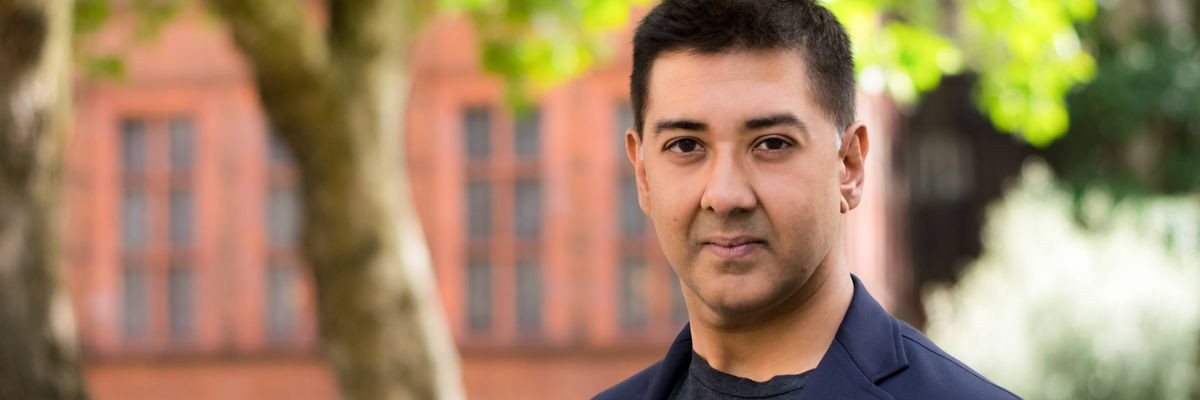
Imran Ahmed, CEO of the Center for Countering Digital Hate, is one of five Europeans targeted by the Trump administration with a travel ban.
(Photo: Imran Ahmed)


Jessica Corbett
Dec 26, 2025
COMMON DREAMS


After a US judge on Thursday blocked President Donald Trump’s administration from detaining one of the European anti-disinformation advocates hit with a travel ban earlier this week, Imran Ahmed suggested that he is being targeted because artificial intelligence and social media companies “are increasingly under pressure as a result of organizations like mine.”

Ahmed is the CEO of the Center for Countering Digital Hate (CCDH). The 47-year-old Brit lives in Washington, DC with his wife and infant daughter, who are both US citizens. While the Trump administration on Tuesday also singled out Clare Melford of the Global Disinformation Index, Josephine Ballon and Anna-Lena von Hodenberg of HateAid, and Thierry Breton, a former European commissioner who helped craft the Digital Services Act, Ahmed is reportedly the only one currently in the United States.

On Wednesday, Ahmed, who is a legal permanent resident, sued top Trump officials including US Attorney General Pam BondiImmigration and Customs Enforcement acting Director Todd Lyons, Secretary of Homeland Security Kristi Noem, and Secretary of State Marco Rubio in the District Court for the Southern District of New York.

“Rather than disguise its retaliatory motive, the federal government was clear that Mr. Ahmed is being ‘SANCTIONED’ as punishment for the research and public reporting carried out by the nonprofit organization that Mr. Ahmed founded and runs,” the complaint states. “In other words, Mr. Ahmed faces the imminent prospect of unconstitutional arrest, punitive detention, and expulsion for exercising his basic First Amendment rights.”

“The government’s actions are the latest in a string of escalating and unjustifiable assaults on the First Amendment and other rights, one that cannot stand basic legal scrutiny,” the filing continues. “Simply put, immigration enforcement—here, immigration detention and threatened deportation—may not be used as a tool to punish noncitizen speakers who express views disfavored by the current administration.”


Our people-powered journalism cannot survive without you

Your support allows Common Dreams to continue covering the stories and amplifying the voices that the corporate media never will. Make a tax-deductible year-end gift to ensure we can sustain the reporting needed to meet the challenges of 2026.


Just a day later, Judge Vernon Broderick, an appointee of former President Barack Obamaissued a temporary restraining order, blocking the administration from arresting or detaining Ahmed. The judge also scheduled a conference for Monday afternoon.

The US Department of State said Thursday that “the Supreme Court and Congress have repeatedly made clear: The United States is under no obligation to allow foreign aliens to come to our country or reside here.”

Ahmed’s lawyer, Roberta Kaplan, said that “the federal government can’t deport a green-card holder like Imran Ahmed, with a wife and young child who are American, simply because it doesn’t like what he has to say.”

In the complaint and interviews published Friday, Ahmed pointed to his group’s interactions with Elon Musk, a former member of the Trump and administration and the richest person on Earth. He also controls the social media platform X, which sued CCDH in 2023.

“We were sued by Elon Musk a couple of years ago, unsuccessfully; a court found that he was trying to impinge on our First Amendment rights to free speech by using law to try and silence our accountability work,” Ahmed told the BBC.

Months after a federal judge in California threw out that case last year, Musk publicly declared “war” on the watchdog.

“What it has been about is companies that simply do not want to be held accountable and, because of the influence of big money in Washington, are corrupting the system and trying to bend it to their will, and their will is to be unable to be held accountable,” Ahmed told the Guardian. “There is no other industry, that acts with such arrogance, indifference, and a lack of humility and sociopathic greed at the expense of people.”

Ahmed explained that he spent Christmas away from his wife and daughter because of the Trump administration’s track record of quickly sending targeted green-card holders far away from their families. He said: “I chose to take on the biggest companies in the world, to hold them accountable, to speak truth to power. There is a cost attached to that. My family understands that.”

The British newspaper noted that when asked whether he thought UK politicians should use X, the former Labour Party adviser told the Press Association, “Politicians have to make decisions for themselves, but every time they post on X, they are putting a buck in Mr. Musk’s pocket and I think they need to question their own consciences and ask themselves whether or not they think they can carry on doing that.”

Ahmed also said that it was “telling that Mr. Musk was one of the first and most vociferous in celebrating the press release” about the sanctions against him and the others.

“He said it was great, and it is great, but not for the reasons that he thinks,” the campaigner said. “Because what it has actually done is give a chance for the system to show that the advocacy that we do is both important and protected by the First Amendment.”


Sanctioning Fever: The United States, European Union, and Free Speech


At present, there is a pot-calling-the-kettle-black approach being taken by the European Union and the United States regarding the imposition of sanctions upon individuals deemed hostile to free speech. On December 23, the US State Department announced that it would bar five European citizens accused of spearheading efforts to pressure US tech giants to censor or suppress American opinions. This came after the European Union’s own tilt to sanctioning individuals accused of spreading Russian misinformation or disinformation, particularly about the Ukraine War.

Those caught in the State Department vice are former EU Commissioner for the internal market Thierry Breton, a key figure behind the Digital Services Act (DSA), Josephine Ballon and Anna-Lena von Hodenberg of the German legal aid organisation HateAid, British head of the US-based Center for Countering Digital Hate (CCDH) Imran Ahmed, and Clare Melford, co-founder of the Global Disinformation Index (GDI).

Von Hodenberg and Ballon assisted Jewish college students sue the social network platform X over the dissemination of antisemitic content while Ahmed, in particular, has been praised for his work by the Jewish Federations of North America (JFNA) and Jewish Council for Public Affairs (JCPA) on advancing social media hygiene. “He is a valuable partner in providing accurate and detailed information on how the social media algorithms have created a bent toward antisemitism and anti-Zionism, and he will remain a valuable partner,” insisted the JFNA’s head of government relations, Dennis Bernard. Given that many a policy decision by the Trump administration to withdraw from international institutions – the UN Human Rights Council comes to mind – has been based on thinly justified accusations of antisemitism, this was side splittingly comic.

US Secretary of State Marco Rubio was suitably bolshie in making the announcement, calling the barred individuals “leading figures of the global censorship-industrial complex”. “For too long, ideologues in Europe have led organized efforts to coerce American platforms to punish American viewpoints they oppose. The Trump Administration will no longer tolerate these egregious acts of extraterritorial censorship.”

Sarah Rogers, the US Undersecretary of State for Public Diplomacy, had her share of stones to cast, lashing Breton for “ominously” reminding “[Elon] Musk of X’s legal obligations and ongoing ‘formal proceedings’ for alleged noncompliance with ‘illegal content’ and ‘disinformation’ requirements under the DSA.” Ahmed’s organisation was taken to task for its 2022 “Disinformation Dozen” report lacerating anti-vaccination advocates, among them the current US Secretary of Health, Robert F. Kennedy Jr.

A spokesperson for GDI called the sanctions an “authoritarian attack on free speech and an egregious act of government censorship.” The Trump administration had yet again used “the full weight of the federal government to intimidate, censor, and silence voices they disagree with.” The actions were “immoral, unlawful and un-American.” French President Emmanuel Macron saw matters in terms of autonomy, calling the decision intimidatory and coercive “aimed at undermining European digital sovereignty”.

The European Union can hardly claim to be saintly on the subject of protecting free speech either. When it comes to discussing Russian policies, tolerance for its exercise shrinks. (Consider, for instance, the imposition of EU sanctions on experts associated with the Russia-based international forum, the Valdai Club.) The recent, most troubling case of Jacques Baud, a retired Swiss colonel living in Brussels who finds himself the target of an executive sanctions listing, stands out. The listing was made as part of the Russia hybrid-threats framework adopted in October 2024 (Decision 2024/2643 and Regulation 2024/2642) covering such non-military actions as the dissemination of disinformation and propaganda, cyberattacks and interference in elections. Member States are directed to take measures against “natural persons” who are involved, for instance, in “planning, directing, engaging in, directly or indirectly, supporting or otherwise facilitating the use of coordinated information manipulation and interference” in favour of Russia.

Baud, according to the EU sanctions tracker, is described as “a former Swiss army colonel and strategic analyst [and] a regular guest on pro-Russian television and radio programmes. He acts as a mouthpiece for pro-Russian propaganda and makes conspiracy theories, for example, accusing Ukraine of orchestrating its own invasion in order to join NATO.” An odd curriculum vitae to warrant an executive listing that is punitive and lacking curial assessment.

For holding and promoting such views, an asset freeze has been placed upon him within the EU jurisdiction, along with an entry and transit ban across the EU. Stranger in this whole affair is the fact that Switzerland does not subscribe to this monochrome sanctions regime. A situation of the absurd has been created: a Swiss national residing in Brussels who is effectively incapable of returning to Switzerland for expressing views no good European should have.

Attacking a viewpoint deemed unsavoury and out of step with accepted, if not dictated opinion, is the very essence of censorship. The mood of the moment is that of a bouncy militarism in Europe, a reverie of warmongering committing Member States to ever increasing defence budgets against imaginary jackboots awaiting to make their way to Paris and Brussels. Those wishing to question the Ukraine narrative in terms of history and origin, or the need for the prolongation of war, have become targets.

These formulas deny debate, endorse a police version of history, and affirm fundamentalist scripts. Stick to the script, or else. It becomes chilling to then see various countries and political entities punish those with undesirable, even unsavoury opinions. This might be a good time for the EU to drop all pretence on the subject and admit that opinions are there to be policed by the stuffy mandarins of the day. And while there is much to be said that is problematic about such restrictive, babying instruments as the UK’s Online Safety Act and the EU’s DSA, preventing activists and researchers from travelling to a country where free speech is protected seems similarly perverse.

Binoy Kampmark was a Commonwealth Scholar at Selwyn College, Cambridge. He lectures at RMIT University, Melbourne. Email: bkampmark@gmail.comRead other articles by Binoy.
UK tech campaigner sues Trump administration over US sanctions


By AFP
 December 25, 2025


Imran Ahmed (right), pictured with Hari Sreenivasan, is a British national and US permanent resident - Copyright GETTY IMAGES NORTH AMERICA/AFP/File JP Yim

The chief of a prominent anti-disinformation watchdog has sued President Donald Trump’s administration over a US entry ban, calling it an “unconstitutional” attempt to expel the permanent American resident, court filings showed Wednesday.

Imran Ahmed, a British national who heads the Center for Countering Digital Hate (CCDH), was among five European figures involved in tech regulation whom the US State Department said Tuesday would be denied visas.

The department accused them of attempting to “coerce” US-based social media platforms into censoring viewpoints they oppose. The European Union and several member states strongly condemned the move and vowed to defend Europe’s regulatory autonomy.

Ahmed holds US permanent residency, commonly known as a “green card.”

“I am proud to call the United States my home,” he said in a statement. “My wife and daughter are American, and instead of spending Christmas with them, I am fighting to prevent my unlawful deportation from my home country.”

The campaigner filed his complaint in a New York district court against Secretary of State Marco Rubio, Under Secretary of State for Public Diplomacy Sarah Rogers, Attorney General Pam Bondi, and Secretary of Homeland Security Kristi Noem.

Ahmed faces the “imminent prospect of unconstitutional arrest, punitive detention, and expulsion” from the United States, the court filing said.

“My life’s work is to protect children from the dangers of unregulated social media and AI and fight the spread of antisemitism online. That mission has pitted me against big tech executives — and Elon Musk in particular — multiple times,” Ahmed said.

There was no immediate reaction from the State Department.

– Others targeted –

The visa ban also targeted former European commissioner Thierry Breton, Anna-Lena von Hodenberg and Josephine Ballon of the German nonprofit HateAid, and Clare Melford, who leads the UK-based Global Disinformation Index (GDI).

Condemning the move, the European Commission said that it was seeking clarification from US authorities, and if needed it “will respond swiftly and decisively to defend our regulatory autonomy against unjustified measures.”

Breton, the former top tech regulator at the European Commission, often clashed with tycoons including Musk — a Trump ally — over their obligations to follow EU rules.

The State Department has described him as the “mastermind” of the EU’s Digital Services Act (DSA), which imposes content moderation and other standards on major social media platforms operating in Europe.

The DSA stipulates that major platforms must explain content-moderation decisions, provide transparency for users and ensure researchers can carry out essential work, such as understanding how much children are exposed to dangerous content.

But the act has become a bitter rallying point for US conservatives who see it as a weapon of censorship against right-wing thought in Europe and beyond, an accusation the EU furiously denies.

Ahmed’s CCDH also frequently clashed with Musk, reporting a spike in misinformation and hate speech on the social media platform X since the billionaire’s 2022 takeover. The site was previously called Twitter.

Last year, a California court dismissed X’s lawsuit against CCDH that accused the nonprofit of a smear campaign.


At least five killed in attack during evening prayers at mosque in Nigeria

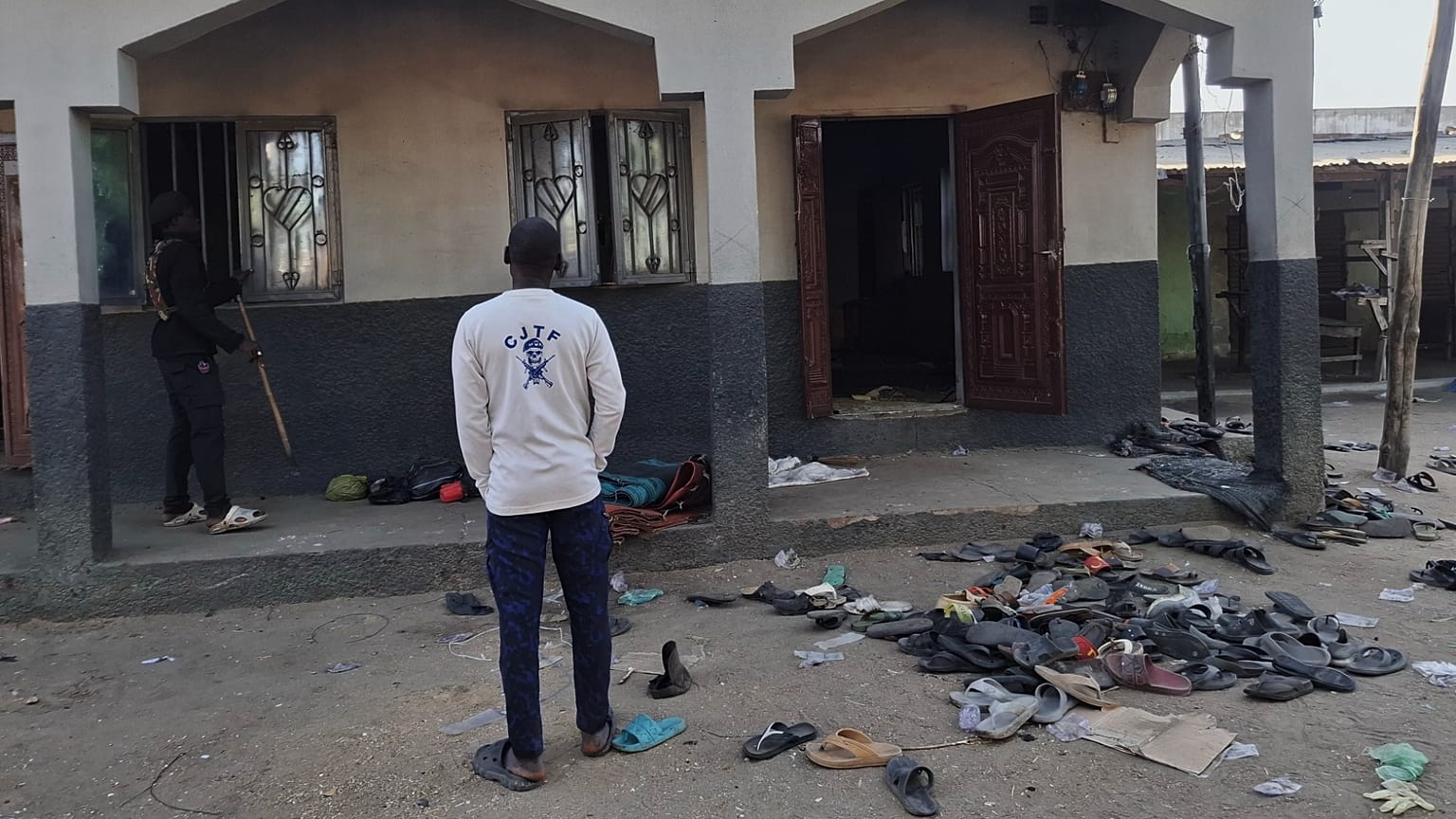
People inspect the scene of a deadly bomb explosion at a mosque in Maiduguri, Nigeria, Thursday, Dec. 25, 2025.
Copyright Copyright 2025 The Associated Press. All rights reserved

By Euronews with AP
Published on 

Police believe the explosion was likely a suicide attack after finding fragments of a suspected suicide vest at the site.

At least five people were killed and 35 were injured after a bomb exploded during prayers at a mosque in the northeastern city of Maiduguri in Nigeria's Borno state on Wednesday night.

Police said the attack was likely a suicide attack, a police spokesperson said in a statement, fragments of a suspected suicide vest were found at the site of the blast.

Borno State Governor Babagana Zulum called the attack "utterly condemnable, barbaric and inhumane," several local media reported.

“Attacking a place of worship is a desecration of its sanctity at a time when Muslim faithful are performing acts of worship,” he added.

The explosion comes at a time of heightened security concerns in Nigeria's northern region, where the country is battling multiple armed extremist groups, including Boko Haram and its splinter group, Islamic State West Africa Province (ISWAP).

No group has claimed responsibility for the attack, although extremists have previously targeted mosques. The use of suicide bombers has also been linked to Boko Haram, which has claimed responsibility for similar attacks across the northeastern region in the past.

CHRISTIAN CRUSADE

“What kind of Christianity murders people on Christmas?”

Critics Argue Striking Nigeria Won’t ‘Make Americans Safer’ as US Warns of ‘More to Come’


“Seems like the Armed Services committees ought to do some oversight regarding the expensive and pointless Christmas fireworks display in Nigeria,” said one legal expert.


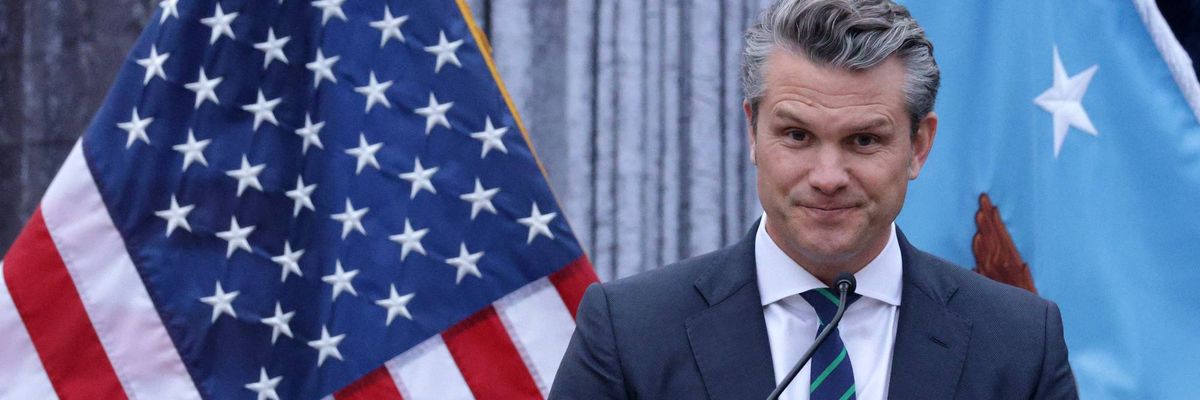
US Secretary of Defense Pete Hegseth speaks during a Christmas service at the Pentagon on December 17, 2025 in Arlington, Virginia.
(Photo by Alex Wong/Getty Images)


Jessica Corbett
Dec 26, 2025
COMMON DREAMS

After the Trump administration bombed alleged Islamic State targets in Nigeria on Christmas Day, Gen. Dagvin Anderson of US Africa Command claimed that “our goal is to protect Americans and disrupt violent extremist organizations wherever they are,” and Defense Secretary Pete Hegseth warned of “more to come,” while critics advocated against any more American violence.

President Donald Trump said Thursday that he launched a “powerful and deadly strike against ISIS Terrorist Scum in Northwest Nigeria, who have been targeting and viciously killing, primarily, innocent Christians, at levels not seen for many years, and even Centuries!”


‘Pretty Explicit White Nationalism’: Trump National Security Strategy Document Leaves Critics Aghast

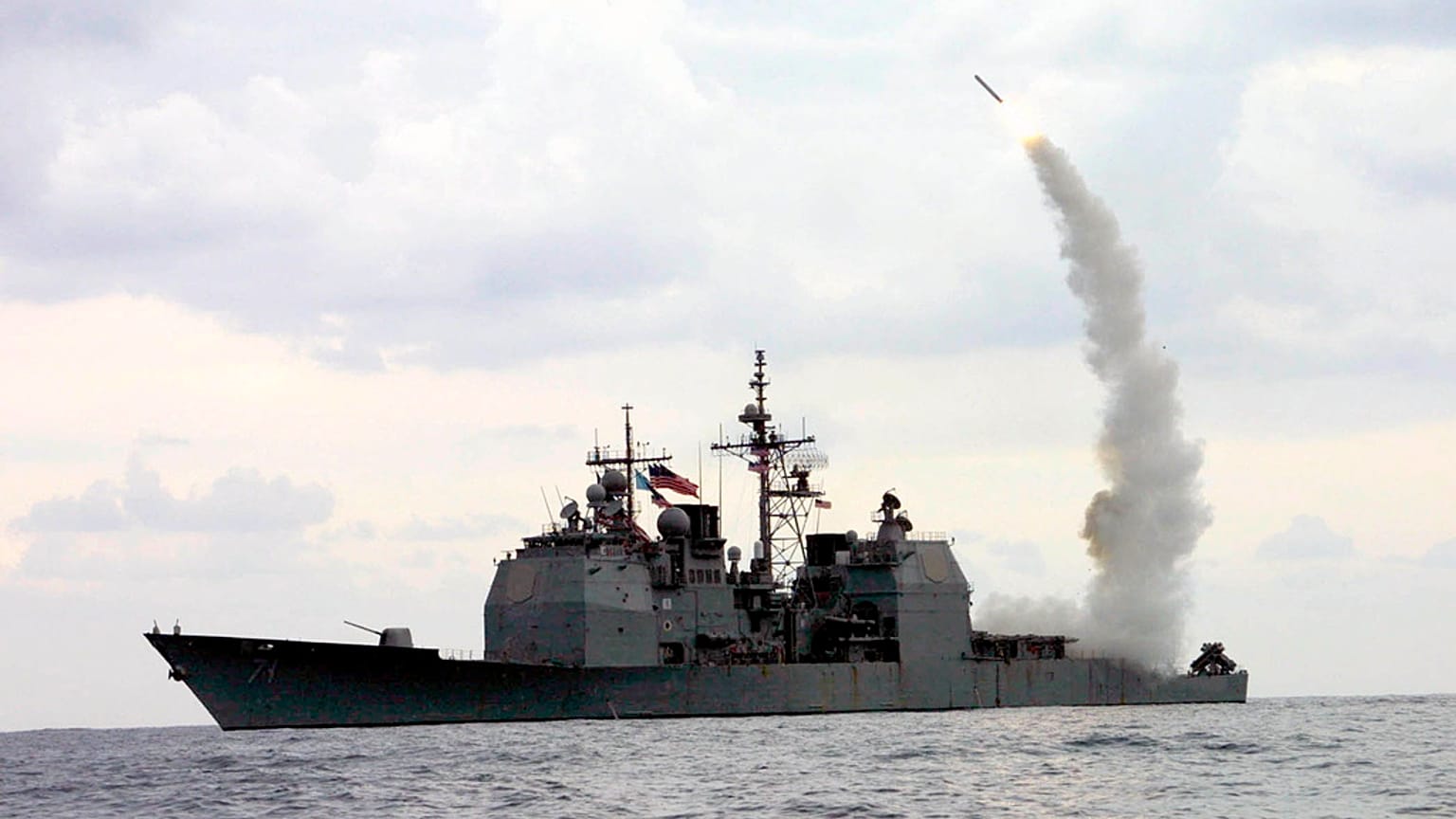
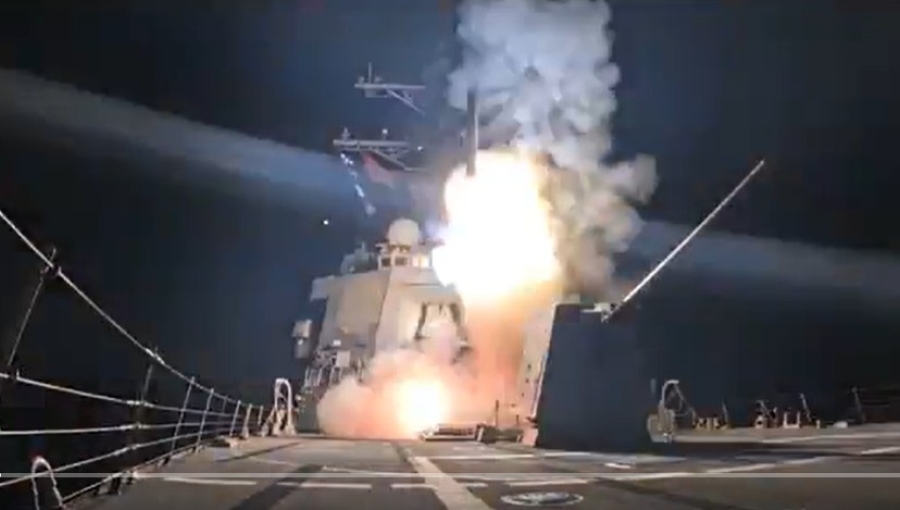
Specifically, according to the New York Times, which spoke with an unnamed US military source, “the strike involved more than a dozen Tomahawk cruise missiles fired off a Navy ship in the Gulf of Guinea, hitting insurgents in two ISIS camps in northwest Nigeria’s Sokoto State.”

The Nigerian Ministry of Foreign Affairs acknowledged cooperation with the United States that “includes the exchange of intelligence, strategic coordination, and other forms of support.”

However, Nigerian Foreign Minister Yusuf Maitama Tuggar also countered the Trump administration’s framing of the airstrikes as part of a battle against a “Christian genocide.”

The minister stressed during a Friday appearance on CNN that “terrorism in Nigeria is not a religious conflict; it is a regional security threat.”


The Associated Press spoke with residents of Jabo, a village in Sokoto, about the confusion and panic spurred by the strikes:
They... said the village had never been attacked by armed gangs as part of the violence the US says is widespread, though such attacks regularly occur in neighboring villages.

“As it approached our area, the heat became intense,” recalled Abubakar Sani, who lives just a few houses from the scene of the explosion.

“Our rooms began to shake, and then fire broke out,” he told AP. “The Nigerian government should take appropriate measures to protect us as citizens. We have never experienced anything like this before.”

Jennifer Kavanagh, director of military analysis at Defense Priorities, a US think tank that that promotes restraint, and diplomacy, said in a statement that “the US action taken in Nigeria while Americans celebrated the Christmas holiday is an unnecessary and unjustified use of US military force that violates Mr. Trump’s promises to his supporters to put American interests first and avoid risky and wasteful military campaigns abroad.”

As Common Dreams reported after the strikes, despite dubbing himself the “most anti-war president in history” and even seeking a Nobel Peace Prize, Trump has now bombed not only Nigeria but also Afghanistan, Iran, Iraq, LibyaPakistanSomaliaSyria, and Yemen, plus alleged drug trafficking boats in the Caribbean Sea and Pacific Ocean, since the start of his first term in 2017.


“Airstrikes in Nigeria will not make Americans safer, no matter the target,” Kavanagh argued. “There are no real US interests at stake in Nigeria, a country that is an ocean and over 5,000 miles away. The country is home to a long-running insurgency, but violence and unrest in Nigeria pose no threat to the US homeland or national security interests abroad. Furthermore, despite Mr. Trump’s claims, there is no evidence that Christians are targeted by Nigeria’s extremist groups at a rate higher than any other religious or ethnic group in the country. Killings of civilians, to the extent they occur, are indiscriminate.”

As CNN reported:
“Yes, these (extremist) groups have sadly killed many Christians. However, they have also massacred tens of thousands of Muslims,” said Bulama Bukarti, a Nigerian human rights advocate specializing in security and development.

He added that attacks in public spaces disproportionately harm Muslims, as these radical groups operate in predominantly Muslim states...

Out of more than 20,400 civilians killed in attacks between January 2020 and September 2025, 317 deaths were from attacks targeting Christians while 417 were from attacks targeting Muslims, according to crisis monitoring group Armed Conflict Location & Event Data.

Kavanagh noted that “the United States has been conducting strikes on ISIS and other terrorist group targets in Africa now for over two decades and the number and power of militant groups on the continent has only increased. The whack-a-mole strategy is ineffective at controlling insurgencies or eliminating terrorist groups. It also needlessly expends scarce US resources and does so at a time when Americans are concerned about economic challenges at home.”

“Chasing terrorist groups around the globe is the opposite of the ‘America First’ foreign policy voters expected when they returned Mr. Trump to the White House,” she added. “To keep his commitment, he must make the attack in Nigeria a one-off.”

Medea Benjamin of the anti-war group CodePink similarly says in a video shared on social media Friday: “We have to ask, is this Donald Trump’s idea of America First? The American people do not want to be dragged into yet another conflict, and this was done without congressional approval, without public debate, without any transparency.”


Former libertarian US Congressman Justin Amash (R-Mich.) has also emphasized in multiple social media posts since Thursday that “to carry out an offensive military action in another country, the approval the president of the United States needs is from the Congress of the United States, not from a foreign government.”

Brian Finucane, a senior adviser at the International Crisis Group and nonresident senior fellow at the New York University School of Law, suggested congressional action, saying that it “seems like the Armed Services committees ought to do some oversight regarding the expensive and pointless Christmas fireworks display in Nigeria.”

Meanwhile, progressive campaigner Melissa Byrne asked, “What kind of Christianity murders people on Christmas?”


US launches 'numerous' strikes targeting Islamic State militants in Nigeria, Trump says


Copyright AP Photo

By Symela Touchtidou & George Dimitropoulos & Euronews
Published on 26/12/2025 -


The "powerful and deadly" strikes were carried out against so-called Islamic State group militants "targeting and viciously killing, primarily, innocent Christians," the US president wrote on social media on Thursday night.

The US carried out "powerful and deadly" strikes on Thursday against so-called Islamic State group (IS) militants in northwestern Nigeria, US President Donald Trump announced on Thursday.

The attack marked a major escalation in an offensive that Nigeria's overstretched military has struggled with for years, as it is battling multiple armed groups.

Trump said that "terrorist scum" targeted in the strikes were "viciously targeting and killing mostly innocent Christians."

The US military "executed numerous perfect strikes," Trump said.

The US Africa Command (AFRICOM) later said Thursday's attack was a joint operation, part of an exchange of intelligence and strategic coordination between the two countries.

In November, Trump ordered the US military to prepare for action in Nigeria to counter Islamist extremist groups.

The strikes launched by the US are considered crucial help for Nigeria’s security forces, which are often overstretched and outgunned as they fight multiple security crises across different regions.

In states like Sokoto, the military frequently carries out airstrikes targeting militant hideouts and Nigeria has embarked on mass recruitment of security forces.
Cooperation with the Nigerian government


On Friday morning, Nigeria's foreign ministry said in a statement that the country's authorities "remain engaged in structured security cooperation with international partners, including the United States of America, in addressing the persistent threat of terrorism and violent extremism".

"This has led to precise attacks on terrorist targets in Nigeria through airstrikes in the northwest," the statement added.

President Bola Ahmed Tinubu insisted that the country is religiously tolerant and said security challenges affect people "irrespective of religions and regions."

Trump has previously designated Nigeria a "Country of Particular Concern" due to the "existential threat" it poses to its Christian population. The designation by the US Department of State allows for sanctions against countries "engaged in serious violations of religious freedom."

Nigeria’s security crisis impacts both Christians, predominant in the south, and Muslims, who form the majority in the north, according to residents and security analysts.

Jihadist groups such as Boko Haram and the Islamic State of West Africa have wreaked havoc in northeastern Nigeria for more than a decade, killing thousands of people, yet most of them were Muslims, according to ACLED, a group that analyses political violence around the world.

The armed groups operating in Nigeria, Africa's most populous country, include at least two organisations linked to the Islamic State: the Islamic State of West Africa, an offshoot of Boko Haram that operates mainly in the northeast, and the lesser-known Islamic State's Shahel Province (ISSP), known locally as Lakurawa, with a strong presence in the northwest.

US and Nigerian authorities did not specify which organisation had been targeted.

The motives for attacks vary, but armed groups often exploit the absence of state and security forces in remote areas, making recruitment easier.

Evidence shows that these areas have among the highest levels of poverty, hunger and unemployment in the country.

Nigeria's Minister of Defence Christopher Musa has previously stated that military action accounts for only 30% of what is needed to address the country's security crisis, with the remaining 70% dependent on good governance.

Trump says “MERRY CHRISTMAS to all, including the dead Terrorists” (sic) after strikes in Nigeria

Trump says “MERRY CHRISTMAS to all, including the dead Terrorists” (sic) after strikes in Nigeria
A US missile being launched against Islamic terrorists in Nigeria / US Department of War - X
By bno - Taipei Office December 26, 2025

Donald Trump said the US military had carried out what he described as a powerful and deadly strike against Islamic State fighters in north-western Nigeria, an operation Washington says was conducted in close co-ordination with Nigerian forces, the BBC reports.

The US president claimed the attacks targeted Islamist militants responsible for killing civilians, accusing them of violence aimed primarily at Christians. In a statement on his Truth Social platform late on Christmas Day, Trump said the US would not allow what he called radical Islamic terrorism to flourish under his leadership.

“Tonight, at my direction as Commander in Chief, the United States launched a powerful and deadly strike against ISIS Terrorist Scum in Northwest Nigeria, who have been targeting and viciously killing, primarily, innocent Christians, at levels not seen for many years, and even Centuries! I have previously warned these Terrorists that if they did not stop the slaughtering of Christians, there would be hell to pay, and tonight, there was” Trump penned on the social media site.

He added thart “The Department of War executed numerous perfect strikes, as only the United States is capable of doing. Under my leadership, our Country will not allow Radical Islamic Terrorism to prosper” before closing “May God Bless our Military, and MERRY CHRISTMAS to all, including the dead Terrorists, of which there will be many more if their slaughter of Christians continues” (sic)

US Africa Command later confirmed that air strikes were carried out in Sokoto state in conjunction with Nigerian authorities. Nigeria’s foreign minister, Yusuf Maitama Tuggar, said the action was a joint operation against terrorist groups and stressed that it was not linked to any particular religion. He added that the mission had been planned for some time and was based on intelligence supplied by Nigeria, the BBC added.

Tuggar did not rule out further operations, saying any future action would depend on decisions taken by leaders in both countries. Nigeria’s foreign ministry later said the strikes formed part of ongoing security co-operation with international partners to counter violent extremism, resulting in precision hits on militant targets in the north-west.

The intervention follows Trump’s order last month for the US military to prepare options to confront Islamist militants in Nigeria. It also comes amid growing claims in some US political circles that Christians are being subjected to systematic persecution in the country - itself an assertion strongly disputed by Nigerian officials and independent monitors.

According to the BBC, groups tracking violence say there is no evidence that Christians are being killed at higher rates than Muslims in Nigeria, which is broadly split between the two faiths. Data compiled by conflict monitoring organisations indicate that Islamist insurgencies in the north-east, including Boko Haram and Islamic State West Africa Province, have killed thousands over the past decade, with most victims being Muslim.

Nigeria’s president, Bola Tinubu, has repeatedly insisted that the country’s security crisis cuts across religious and regional lines. Advisers to the president have said Nigeria welcomes international assistance but emphasise that any military action must respect the country’s sovereignty and be conducted jointly.

Trump announces Christmas night strikes against ISIS in Nigeria

Robert Davis
December 25, 2025 
RAW STORY


President Donald Trump announced on social media that the U.S. conducted a strike against ISIS in Nigeria on Christmas night.

"Tonight, at my direction as Commander in Chief, the United States launched a powerful and deadly strike against ISIS Terrorist Scum in Northwest Nigeria, who have been targeting and viciously killing, primarily, innocent Christians, at levels not seen for many years, and even Centuries!" Trump wrote on Truth Social. "I have previously warned these Terrorists that if they did not stop the slaughtering of Christians, there would be hell to pay, and tonight, there was."

"The Department of War executed numerous perfect strikes, as only the United States is capable of doing," the post continued. "Under my leadership, our Country will not allow Radical Islamic Terrorism to prosper. May God Bless our Military, and MERRY CHRISTMAS to all, including the dead Terrorists, of which there will be many more if their slaughter of Christians continues."

The Christmas night strikes in Nigeria are just the latest in a long series of strikes the Trump administration has conducted. According to reports, the administration has struck 22 alleged drug boats in international waters and killed nearly 100 people. The administration has also bombed Iran's nuclear facilities, although experts questioned the premise for those strikes.


US Launches Christmas Strikes on Nigeria—the 9th Country Bombed by Trump

Trump—who calls himself “the most anti-war president in history”—has now bombed more countries than any president in history.


Brett Wilkins
Dec 25, 2025
COMMON DREAMS

President Donald Trump—the self-described “most anti-war president in history”—has now ordered the bombing of more countries than any president in history as US forces carried out Christmas day strikes on what the White House claimed were Islamic State militants killing Christians in Nigeria.

“Tonight, at my direction as Commander in Chief, the United States launched a powerful and deadly strike against ISIS Terrorist Scum in Northwest Nigeria, who have been targeting and viciously killing, primarily, innocent Christians, at levels not seen for many years, and even Centuries!” Trump said Thursday in a post on his Truth Social network.

“I have previously warned these Terrorists that if they did not stop the slaughtering of Christians, there would be hell to pay, and tonight, there was,” the president continued. “The Department of War executed numerous perfect strikes, as only the United States is capable of doing.”

“Under my leadership, our Country will not allow Radical Islamic Terrorism to prosper,” Trump added. “May God Bless our Military, and MERRY CHRISTMAS to all, including the dead Terrorists, of which there will be many more if their slaughter of Christians continues.”


A US Department of Defense official speaking on condition of anonymity told the Associated Press that the United States worked with Nigeria to conduct the bombing, and that the government of Nigerian President Bola Tinubu—who is a Muslim—approved the attacks.

It was not immediately known how many people were killed or wounded in the strikes, or whether there are any civilian casualties.

The Nigerian Ministry of Foreign Affairs said that “terrorist violence in any form, whether directed at Christians, Muslims, or other communities, remains an affront to Nigeria’s values and to international peace and security.”

The US bombings followed a threat last month by Trump to attack Nigeria with “guns-a-blazing” if the country’s government did not curb attacks on Christians.

Northwestern Nigeria—including Sokoto, Zamfara, Katsina, and parts of Kaduna State—is suffering a complex security crisis, plagued by armed criminal groups, herder-farmer disputes, and Islamist militants including Islamic State West Africa Province (ISWAP/ISIS) and Boko Haram. Both Christians and Muslims have been attacked.

Since emerging in Borno State in 2009, Boko Haram has waged war on the Nigerian state—which it regards as apostate—not against any particular religious group. In fact, the majority of its victims have been Muslims.

“According to the Armed Conflict Location and Event Data Project, more Muslims than Christians have been targeted in recent years,” Chloe Atkinson recently wrote for Common Dreams. “Boko Haram has massacred worshipers in mosques, torched markets in Muslim-majority areas, and threatened their own coreligionists.”

“The crisis in Nigeria is not a holy war against Christianity.”

“It is true that Christian communities in the north-central regions have suffered unimaginable horrors as raids have left villages in ashes, children murdered in their beds, and churches reduced to rubble,” she said. “The April massacre in Zike and the June bloodbath in Yelwata are prime examples of the atrocities taking place in Nigeria.”

“The crisis in Nigeria is not a holy war against Christianity,” Atkinson continued. “Instead, it’s a devastating cocktail of poverty, climate-driven land disputes, and radical ideologies that prey on everyone and not just any distinct group.”

“By framing Nigeria’s conflict as an existential threat to Christians alone, Trump is not shining a spotlight on the victims,” she added. “Instead, he is weaponizing right-wing conspiracy theories to stoke Islamophobia, the same toxic playbook he used to fuel his ban on Muslims, and which left refugee families shattered at America’s borders.”

Former libertarian US Congressman Justin Amash (R-Mich.) noted on X that “there’s no authority for strikes on terrorists in Nigeria or anywhere on Earth,” adding that the 2001 Authorization for Use of Military Force (AUMF)—which was approved by every member of Congress except then-Rep. Barbara Lee (D-Calif.)—“is only for the perpetrators of the 9/11 attacks.”

“The War Powers Resolution doesn’t grant any authority beyond the Constitution,” Amash added. “Offensive military actions need congressional approval. The Framers of the Constitution divided war powers to protect the American people from war-eager executives. Whether the United States should engage in conflicts across the globe is a decision for the people’s representatives in Congress, not the president.”


In addition to Nigeria, Trump—who says he deserves a Nobel Peace Prize—since 2017 has also ordered the bombing of Afghanistan, Iran, Iraq, LibyaPakistanSomaliaSyria, and Yemen, as well as boats allegedly transporting drugs in the Caribbean Sea and Pacific Ocean. Trump has also deployed warships and thousands of US troops near Venezuela, which could become the next country attacked by a president who campaigned on a platform of “peace through strength.”

That’s more than the at least five countries attacked during the tenure of former President George W. Bush or the at least seven nations attacked on orders of then-President Barack Obama during the so-called War on Terror, which killed more than 940,000 people—including at least 432,000 civilians, according to the Costs of War Project at Brown University’s Watson Institute for International and Public Affairs.

Trump continued the war on ISIS in Iraq and Syria started by Obama in 2014. Promising to “bomb the shit out of” ISIS fighters and “take out their families,” Trump intensified the US campaign from a war of “attrition” to one of “annihilation,” according to his former defense secretary, Gen. James “Mad Dog” Mattis. Thousand of civilians were killed as cities such as Mosul, Iraq and Raqqa, Syria were flattened.

Trump declared victory over ISIS in 2018—and again the following year.

Some social media users suggested Trump’s “warmongering” is an attempt to distract from the Epstein files scandal and alleged administration cover-up.

“Bombing Nigeria won’t make us forget about the Epstein files,” said one X user.