Tuesday, January 13, 2026

Neo-Liberalism Meets Religious Extremism: Bangladesh’s Fragile Future

 January 12, 2026

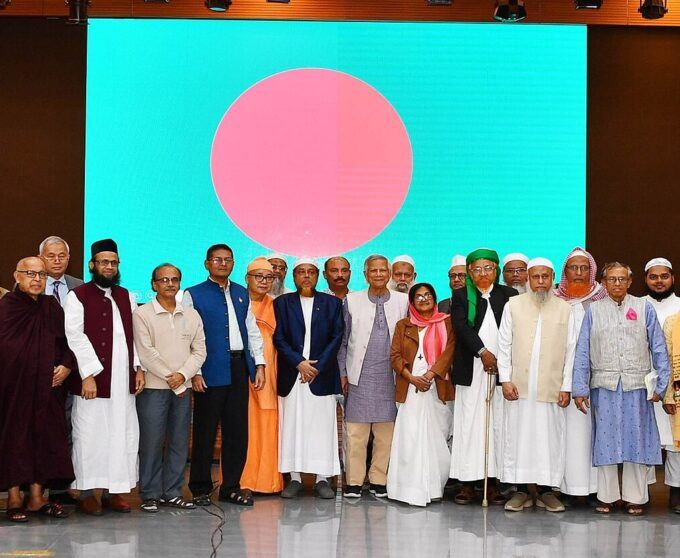
Yunus meeting with the leaders of various religious communities of Bangladesh. Photograph Source: Press Information Department – pressinform.gov.bd (archive) – Public Domain

Following Sheikh Hasina’s removal from the position of Prime Minister of Bangladesh, Muhammad Yunus assumed leadership of a non-partisan interim government. His strategy for political survival involved forming alliances with Islamist parties and cultivating strong connections with global neo-liberal forces. A notable early sign of the interim government’s inclination to accommodate religious fundamentalist elements was its decision to lift the ban on the controversial right-wing Jamaat-e-Islami Bangladesh (JIB).

Simultaneously, the administration adopted a neoliberal economic agenda aligned with the International Monetary Fund’s (IMF) recommendations. By systematically marginalizing left and centre-left political parties and activists, the Yunus government appears to be steering toward the establishment of an ultra-right regime characterised by social and economic conservatism.

The Yunus administration’s accommodation of Islamist fundamentalism extends beyond the legitimization of the Jamaat-e-Islami Bangladesh (JIB). The party has become a key player in the interim government’s decision-making process, positioning itself as a significant stakeholder in the reform commissions initiated by the government. JIB has also taken the lead alongside other extreme right-wing groups, such as Hefazat-e-Islam, Islami Andolan Bangladesh, and Khelafat Majlis. These groups have not only increased their strength and legitimacy but have also actively supported Yunus’s reform agenda in exchange for concessions concerning cultural and educational policies. As a result, the interim government has yielded to their demands, which included the removal of music and physical education instructors in primary schools and a tolerance for demands aligned with Islamist ideologies, such as restrictions on women’s rights. This evolving alliance has significantly transformed the political landscape of Bangladesh.

Islamist leaders have leveraged their influence to promote ideological shifts, including calls to dilute secular principles within constitutional reforms, while mobilising mass demonstrations to assert their power. There have been numerous violent attacks on media outlets, including the most prominent Bengali and English daily newspapers, a leading music school, and progressive and secular cultural institutions such as Udichi, a respected left-leaning cultural organisation. Over the past 17 months, approximately 2,500 attacks have been reported against minority religious, ethnic, and sectarian communities, reflecting a clear agenda to radicalise society and promote a regressive social order. In one particularly tragic incident, a young Hindu man was beaten to death by an extremist mob, and his body was hanged from a tree and set ablaze. Critics argue that this development undermines the secular foundations of Bangladesh and increases societal polarisation, as Yunus’s reliance on Islamist legitimacy compromises his tenure in office for the sake of long-term ideological shifts in the nation.

The current economic situation in Bangladesh is highly precarious. The interim government has implemented measures to tighten fiscal and monetary policies to control inflation and restore the external balance. The process of rebuilding reserves has commenced following recent exchange rate reforms. However, little success has been achieved in both areas. Persistent issues, such as weak tax collection and a capital shortage in the banking sector, continue to pose significant risks to the country. The proposed banking sector reforms, as recommended by the International Monetary Fund (IMF), are likely to further hinder economic growth. Inflation has surged to nearly 9 percent, with the food inflation reaching around 14 percent. Non-performing loans (NPLs) increased from BDT 3.45 trillion in December 2024 to BDT 4.2 trillion by March 2025. As a result, the NPL ratio is above 24 percent, far exceeding the global distress benchmark of 10 percent. Additionally, there is widespread industrial turmoil, exacerbated by factory closures, rising unemployment, and a chaotic capital market, all contributing to a notable increase in the number of people living below the poverty line.

Critics from a socialist perspective contend that the efforts of Muhammad Yunus’s interim government to implement an IMF-prescribed policy framework signify a shift towards neo-liberal restructuring. Bangladesh, like many developing countries, often relies on international institutions such as the IMF and World Bank. Previously, toward the end of the Hasina administration, an IMF loan was approved to stabilise the economy and safeguard the foreign currency reserves, which had been severely impacted by the global economic crises following COVID-19 and the Russia-Ukraine conflict. The Hasina government had garnered praise for driving economic growth primarily through a developmental state model and domestic policy leadership, rather than relying on externally imposed reforms.

Although they had to recalibrate their policy at the end, Muhammad Yunus’s interim government made a more radical move. Yunus’s regime, which received support from organisations like the IMF and World Bank, made a significant pivot by adhering to their prescribed framework. As local businesses grapple with escalating energy costs and infrastructural challenges, the Yunus administration continues to focus on reform rhetoric and purported foreign investment. Regressive policies underpin the reform agenda, and the additional foreign investment secured during this period was primarily attributable to intra-company fund transfers, driven by high borrowing costs and exchange-rate volatility.

Over a span of 17 months in office (up to December 2025), Mr. Yunus travelled to 14 different countries, while scarcely visiting any district or divisional cities in Bangladesh. This further demonstrates his persistent efforts to appease international neoliberal forces rather than to engage with the wider population in Bangladesh. He has assembled a cronyistic advisory council of elitists who appear to have a closer alignment with Western capitalism than with the lived experiences of ordinary Bangladeshi citizens. Moreover, the recent agreement with APM Terminals, a subsidiary of the Maersk Group, to develop and operate new terminals at Chittagong Port raises questions about transparency. As a result, despite the Yunus regime’s assertions of economic recovery and ambitious greenfield projects, the reality is bleak. Rising inflation, currency depreciation, and a decline in institutional credibility have contributed to low public confidence and increased risk.

Economists warn that the government’s ‘ill-timed policies’, which include contractionary monetary measures and sudden tax hikes in an environment marked by low local investment and deteriorating law and order, have stunted growth, which currently lags below 4 percent, a significant decline compared with the past 17 years. Rather than promoting stability, the Yunus era has exposed the vulnerabilities of Bangladesh’s economic foundations, placing the nation perilously close to an economic crisis.

The Yunus administration, navigating a complex landscape of right-wing religious fundamentalists, local and international neo-liberal operatives, and a power-driven military establishment, seems to be exploiting the judiciary to undermine democratic left and centre-left political forces. With over 400,000 political activists imprisoned and 200 individuals killed by mobs (mostly right-wing activists and Madrasa students) only in 2025, echoes of the Jakarta Method are evident. This situation reflects a sustained effort to stifle progressive and centre-left politics in Bangladesh while establishing a tyranny of extremist religious indoctrination, which serves as a façade for economic exploitation.

It is essential for progressive and democratic individuals and institutions worldwide to condemn the Yunus administration and call out its regressive, authoritarian, and exploitative actions. Muhammad Yunus, a Nobel Laureate, garners acclaim from global civil society. However, it is important to remember that his counterpart in Myanmar, Aung San Suu Kyi, has been subject to criticism for her alleged involvement in ethnic cleansing and human rights violations against the Rohingya Muslims. Therefore, a Nobel Peace Prize does not confer immunity or a clean slate; Muhammad Yunus should not be seen as an exception. As Bangladesh approaches its general election, it is crucial to scrutinise the credibility of any election conducted under the oversight of such a questionable administration.

This article was produced by Globetrotter. 

Bidit L.Dey is a Professor of Marketing at Northumbria University (UK).

CHEERING FROM THE SIDELINES

Son of Last Iranian Shah Asks Trump to Back Military Coup as Protests Rage

“What is clear is that President Trump does not now have Congress’ authorization for the use of military force in Iran,” said one expert.


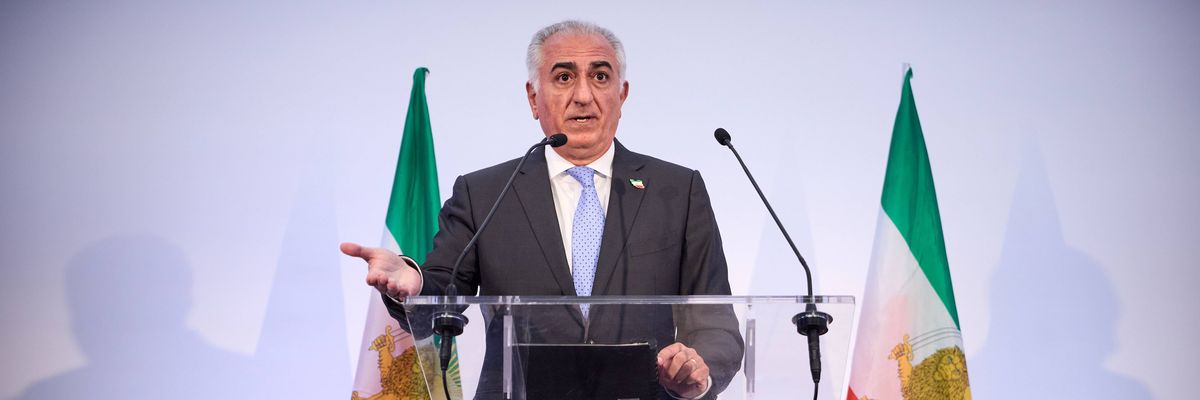
Reza Pahlavi, the eldest son of the last Shah of Iran, addresses the media during a press conference on June 23, 2025 in Paris, France.
(Photo by Kiran Ridley/Getty Images)

Jake Johnson
Jan 12, 2026
COMMON DREAMS

The son of Mohammad Reza Pahlavi, who brutally ruled Iran for decades with backing from the United States and other Western powers, has urged US President Donald Trump to intervene militarily and support the overthrow of the Iranian government amid an escalating protest movement that has faced violent repression.

“The people of Iran have responded and reacted positively to a promise of intervention,” Reza Pahlavi, who has lived in exile since the 1979 revolution and ouster of his father, said in a Fox News appearance on Sunday when asked if he wants US forces to “take out” Ali Khamenei, Iran’s supreme leader.

“We need to cut the snake’s head off for good so it can no longer be a threat to Iranian interests, to American interests, to regional interests,” said Pahlavi, who has been accused of opportunistically coopting the protest movement, which began late last month over the collapse of the nation’s currency. “The only solution is to make sure this regime goes down for good and the Iranian people can liberate themselves.”

Hours after Pahlavi’s comments, Trump told reporters that the US military is looking at “some very strong options” to intervene in Iran, a country whose nuclear facilities the Trump administration bombed last year.

The Wall Street Journal reported Sunday that Trump, fresh off his unlawful and deadly attack on Venezuela, is set to receive a briefing on Iran from top administration officials on Tuesday. According to the newspaper, the meeting “will be a discussion about the next steps, which could include boosting anti-government sources online, deploying secretive cyber weapons against Iranian military and civilian sites, placing more sanctions on the regime, and military strikes.”

“One option under discussion is the possibility of the US sending terminals of Starlink, a satellite-based internet service owned by Elon Musk, into Iran for the first time during the Trump administration, officials said, which could help protesters skirt a recent internet shutdown in the country,” the Journal reported. “Trump said he would speak with Musk about sending Starlink satellite-internet terminals into Iran.”

“Reports that the United States and Israel may be considering military strikes in Iran are deeply concerning.”

Iran’s foreign minister, Abbas Araghchi, said Monday that Iranian leaders are willing to negotiate with the US.

“We are not looking for war, but we are prepared for war—even more prepared than the previous war,” said Araghchi. “We are also ready for negotiations, but negotiations that are fair, with equal rights and mutual respect.”

Expert observers expressed horror at the Iranian government’s treatment of demonstrators while also warning against military intervention by outside powers, including the United States.

Matt Duss, executive vice president of the US-based Center for International Policy, said in a statement Monday that “indications that widespread demonstrations by brave Iranians are being met with a brutal, deadly crackdown by the Iranian government are horrific.”

“This violence should be unequivocally condemned,” said Duss. “It is important for other countries and multilateral bodies to vocally stand for the right of Iranians to protest. It is also critical that no country attempts to intervene inside Iran in a manner that could further endanger or undermine the protestors.”

“Reports that the United States and Israel may be considering military strikes in Iran are deeply concerning,” Duss continued. “It is difficult to know what the impact of such attacks would be on the plight of the Iranian protestors, and even less clear what the follow-on consequences would be for the Iranian people and security in the region. Israeli and US strikes against Iranian government targets last year were broadly opposed by Iran’s people and diaspora across almost the entire political spectrum.”

“What is clear is that President Trump does not now have Congress’ authorization for the use of military force in Iran,” he added. “Any US strikes would be illegal under both US and international law. The administration should instead focus its efforts on working multilaterally to press Iran’s government to end the killing and other abuse of its own citizens.”

Who is Reza Pahlavi — and what are his links to Iran?


News Desk
January 12, 2026 
DAWN
Reza Pahlavi, the exiled son of the last Shah of Iran, attends a press conference about the situation in Iran, in Paris, France on June 23, 2025. — Reuters/File

While Iran has grappled with widespread deadly protests for the past two weeks, Reza Pahlavi, the US-based son of Iran’s ousted shah, Mohammad Reza Pahlavi, has once again emerged as an anti-government figurehead.

The protests began on December 28 in response to soaring prices, before turning against the authorities in Iran, who have governed since the 1979 Islamic Revolution. However, Supreme Leader Ayatollah Ali Khamenei has expressed defiance and blamed the United States.

Pahlavi has urged Iranian government workers and security forces to join the swelling protest movement. He has also hinted at his plans to return to Iran at a time that he believed was “very near”.

He has even requested US President Donald Trump, who has repeatedly threatened to get involved if force is used on protesters, to “be ready to intervene to help the people of Iran”.

So what links does Pahlavi have to Iran’s history, and what are the stakes for him in establishing a role in the ongoing crisis?

Born in Tehran on Oct 31, 1960, as the heir to the late Shah of Iran Mohammad Reza and Empress Farah Pahlavi, Reza Pahlavi was officially named crown prince at the age of seven.

He has lived in exile since his father was ousted by the 1979 revolution, a year before he died.Iran’s ousted late shah Mohammad Reza Pahlavi. — photo courtesy Pahlavi Centenary

As per his website, Pahlavi left Iran for jet fighter training in the United States Air Force in 1978. “During this same period, the building unrest in Iran led to the royal family’s departure in January 1979,” his website says about his father’s ouster.

Pahlavi completed his higher education with a degree in political science from the University of Southern California. He volunteered to serve Iran’s military as a fighter pilot during the Iran-Iraq War in the 1980s, but was declined by the Islamic regime.

Pahlavi married Yasmine Etemad-Amini on June 12, 1986. They have three daughters (all of whom he has named as his heirs successively): Noor Pahlavi (born April 3, 1992), Iman Pahlavi (born Sept 12, 1993), and Farah Pahlavi (born Jan 17, 2004).

The late shah’s heir has also authored three books: Gozashteh va Ayandeh (Kayhan Publishing, 2000); Winds of Change: The Future of Democracy in Iran (Regnery, 2002); and Iran: L’Heure du Choix [Iran: The Deciding Hour] (Denoël, 2009).

Ties outside Iran

Pahlavi’s website highlights that he remains in touch with “opposition groups, both inside and outside” Iran, and advocates for the establishment of a secular democracy in the country.

“He calls for regime change through non-violent civil disobedience, and for a free and open referendum on a new government of Iran,” the website reads.

While Iran and Israel are arch-enemies under the current regime, they both enjoyed warmer ties under Pahlavi’s father.

In October last year, Israeli-funded online campaigns in the Persian language used fake social media personas and AI to boost Pahlavi’s image and destabilise the Iranian regime, parallel investigations by Israeli newspapers and the University of Toronto’s Citizen Lab found.

During the 12-day Iran-Israel war last year, Pahlavi urged Khamenei to step down “for the sake of the Iranian people”.

In a similar fashion, during the ongoing protests, the late shah’s son called for replacing the flags outside of Iranian embassies with the pre-Islamic revolution flag, which protesters briefly succeeded in doing so in London.

Iran raids homes for Starlink equipment as communications crackdown intensifies

Iran raids homes for Starlink equipment as communications crackdown intensifies
Iranians have smuggled in Starlink into the country since 2022. / bne IntelliNews
By bnm Tehran bureau January 12, 2026

Iranian security forces are conducting house-to-house searches to confiscate satellite dishes and Starlink internet equipment, according to opposition sources and messages circulating on social media on January 12, according to one expatriate-based account tracking satellite internet activity in Iran.

Iranians have relied on the low-key internet connections over the past two weeks to leak out videos, messages and information, as more than 500 people have been reportedly killed, according to human rights groups monitoring the situation. Other figures put the death toll from protests against the government at more than 4,000, but these could not be independently verified. 

Messages in Persian warned users that the disruption of Starlink connections has become more severe and widespread than in previous days. "Dear Iliya, this is probably my last message to you. Remember each house, each satellite dish view and Starlink. Like the 1990s," one message said.

Iran has had a long history of targeting those with traditional satellite dishes throughout the 1990s, according to bne IntelliNews on the ground in Tehran over the past decade. However, in more recent years, the internet has become the battleground between the regime in Tehran and those wanting to view content from abroad. The situation has completely changed in recent years, however, with smuggled Starlink internet modems and dishes being brought into the country via Iraq and the Persian Gulf countries. 

Ilya Hashemi, who tracks the situation, said security services are "raiding homes and confiscating satellite and Starlink equipment, deepening a deliberate digital blackout to hide mass killings."

Opposition channels warned Iranians using Starlink to hide their devices carefully, stating that military forces are actively searching for the equipment. "Protecting this information transmission channel is more important now than at any other time," one message said.

Hashemi reported on January 10 that simultaneous access to 80% of contacts using Starlink had been cut off, suggesting authorities are using tools to disrupt radio waves and GPS alongside internet cuts.

Starlink, operated by Elon Musk's SpaceX, provides internet access via satellite, bypassing ground-based infrastructure that governments can more easily control. The service has become a tool for protesters in countries with heavy internet restrictions. There has been ongoing previous negotiations to allow the service in the country, but talks ended in failure earlier in 2024. 

Iran has maintained a near-total internet blackout since January 8, cutting off international communications and mobile-to-mobile text messaging. Phone calls were also blocked at night on January 9 and 10.

The communications shutdown came after protests that began on December 29 intensified following Pahlavi's calls for coordinated nationwide demonstrations on January 8. Human rights organisations have documented at least 116 deaths through January 10, though US and Israeli officials suggest the actual toll is significantly higher.

There is reportedly more than 30,000 Starlinks active in Iran, since 2025, according to a previous article by bne IntelliNews, which monitors the internet situation in the country. 

Regular internet connections appear to be entirely disconnect, bar a few government connected websites, and news agencies including Mehr and Tasnim, according to the latest investigations from abroad. 

How Iran is enforcing an unprecedented digital blackout to crush protests

As protests continue across Iran, authorities are enforcing a near-total digital blackout – cutting internet and phone communications – as rights groups warn that hundreds of demonstrators have been killed. The shutdown is choking the protest movement and limiting what can be seen, verified and reported beyond Iran’s borders.


Issued on: 12/01/2026 - RFI

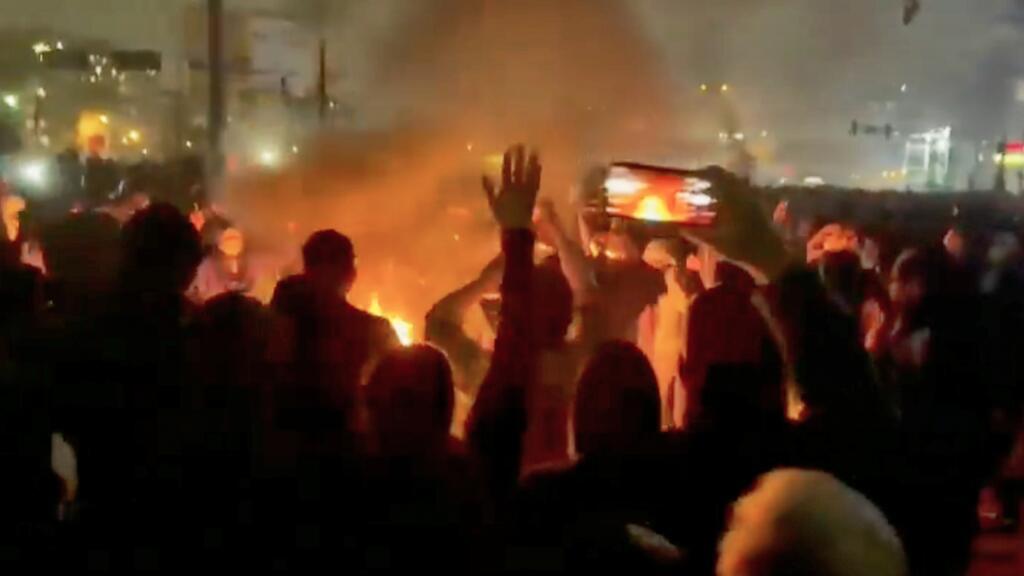
An image taken from a video shared on social media shows protesters gathered around a bonfire in the streets of Tehran, as Iran remains largely cut off from the outside world, Friday 9 January 2026. AP

The blackout is making it far harder for protesters to communicate and for images and eyewitness accounts to reach the outside world. It has also disrupted daily life in Iran, where banking, payments and many basic services rely on digital networks.

For more than two and a half days, Iran has been largely cut off from the outside world and from itself. The flow of information inside the country and abroad has slowed to a trickle, with most Iranian websites inaccessible from outside Iran.

The nationwide shutdown began late on Thursday and quickly spread across the country. The independent monitoring group NetBlocks said the blackout had lasted for more than 60 hours, with national connectivity stuck at around 1 percent of normal levels.

“This censorship measure represents a direct threat to the safety and wellbeing of Iranians at a critical moment for the country’s future,” the organisation said.

Data published by the US-based internet infrastructure company Cloudflare also showed a massive collapse in online traffic coming out of Iran.

France's Iranian diaspora divided over deadly protests back home


Protesters targeted

The demonstrations began on 28 December in Tehran, triggered by shopkeepers protesting against the rising cost of living and the collapse of the national currency. In the early days of the movement, the authorities focused their restrictions on urban areas and centres of unrest.

In Tehran, internet cuts targeted neighbourhoods known for protests, including Narmak, Molavi and the Grand Bazaar. The severity of the restrictions varied depending on location and internet provider.

In an analysis published by Filter Watch, a project that monitors online censorship in Iran, Nargès Keshavarznia from the human and digital rights group Miaan described how the shutdowns were closely synchronised with moments of mobilisation.

Internet access dropped sharply during protest gatherings and sometimes eased when streets emptied.

Earlier in the protests, Iran’s National Information Network, a domestic intranet developed since 2016 to allow the country to function while disconnected from the global internet, often remained accessible.

While international traffic was heavily restricted, some internal services continued to operate. That changed on Thursday night.

“Overall, all communication is impossible,” Amir Rashidi, an Iranian expert on cybersecurity and digital rights, told RFI, saying conditions had sharply worsened.

“It’s not just the internet that’s cut, but also phone communications, whether mobile or landline, inside the country and to or from abroad.”

Rashidi said the situation was constantly changing from one region to another, but making a phone call had become extremely difficult. “Sometimes you dial a number, you hear ‘beep, beep, beep’, and then nothing,” he said.


Shutdown unprecedented


To get around the restrictions, more Iranians have turned to Starlink, a satellite internet service that allows users to connect without relying on local networks. In recent days, however, these devices appear to have been targeted by jamming attempts.

“Iran seems to have strengthened its ability to control these techniques for restricting internet access,” Valère Ndior, a law professor at the University of Western Brittany and a specialist in digital governance, told RFI.

Iran has repeatedly shut down communications during periods of unrest, notably during the 2019 protests, in 2022 after the death of Mahsa Amini – a 22-year-old woman who died in custody after being arrested by Iran’s morality police – and during the conflict with Israel in June 2025.

But Rashidi said the current blackout goes further than anything seen before. Even the National Information Network is down, he said, a situation without precedent.

“This national internet was one of the key tools of control for the Iran,” Rashidi said. Usually, he explained, people could still move within a closed internal network even if access to the outside world was blocked.

“Normally you can’t leave the building, but you can still move from room to room,” he said. “Now you’re stuck in a single room. You can’t even change rooms.”

The authorities are therefore accepting the paralysis of their own infrastructure to shut down every channel of communication, a sign that they believe “their survival is at stake”, Rashidi added.

Unseen repression

Despite the blackout, protests have continued. A small number of videos circulating on social media, likely shared via satellite connections, show crowds marching in Tehran, Mashhad and other cities. The images could not be fully verified.

The digital silence has heightened fears of a violent crackdown taking place out of sight.

The Centre for Human Rights in Iran, a US-based non-profit, warned on Sunday that “a massacre is under way in Iran”, saying it had received “direct testimonies and credible reports” of hundreds of protesters killed.

The Norway-based group Iran Human Rights also reported that at least 192 demonstrators had been killed over two weeks of protests.

Other NGOs have warned the true number of deaths may be even higher, with some hospitals reporting more than 500 fatalities and rights advocates warning that the blackout is hindering efforts to document casualties accurately.

Beyond repression, the blackout is hitting daily life and the economy. “Cash machines don’t work, banks aren’t operating normally, people can’t cash cheques or access their money,” Rashidi said.

Ndior said it was still too early to measure the full impact, but warned that “the economic cost could run into hundreds of millions or even billions of dollars”.

Meanwhile, the X account of Iran’s supreme leader, Ali Khamenei, continued to post messages. On Saturday evening, he wrote: “If God wills it, soon God will spread a feeling of victory in the hearts of all the Iranian people.”

This article was adapted from the original version in French by RFI's Aurore Lartigue

Support for the People’s Struggle: A Statement on the Developments in Iran


 January 12, 2026

During the current uprising in Iran, the perspectives of labour activists should have been central. Instead, because they ran against the dominant currents of warmongering and Pahlavi monarchist nostalgia, their voices were marginalised in both Persian-language and international media.

As usual, attention was lavished on Iranian figures who openly justify war and are funded by the United States and Israel, or on those who—offering no principled opposition to foreign intervention, monarchist reaction, separatism, or the Mujahedin—treat the mere overthrow of the existing government as a universal remedy.

For this reason, and in order to make clear to a global audience that these views are far from universal, we aim to amplify the voices of labour activists in Iran. We ask you to listen to a different voice: one emerging from the deepest experiences of suffering, exploitation, and class oppression.

The following statement is by the Syndicate of Workers of Tehran and Suburbs Bus Company (Vahed), a trade union in Greater Tehran. It was translated into English by Sepideh Jodeyri.

+++

Popular protests and strikes across cities throughout the country have now entered their eleventh day. Despite an intensified security crackdown, the heavy deployment of police and security forces, and widespread violence against protesters, the movement remains broad, dynamic, and diverse. According to reports, protests have taken place at no fewer than 174 locations in 60 cities across 25 provinces, with hundreds of demonstrators arrested. Tragically, at least 35 protesters—including children—have been killed during this period.

From December 2017 to November 2019, and again in September 2022, Iran’s oppressed people have repeatedly taken to the streets to demonstrate their rejection of the prevailing political and economic order and its structures of exploitation and inequality. These movements are not driven by nostalgia for the past, but by the determination to build a future free from the domination of capital—one grounded in freedom, equality, social justice, and human dignity.

While expressing our solidarity with popular struggles against poverty, unemployment, discrimination, and repression, we categorically oppose any return to a past marked by inequality, corruption, and injustice. We believe that genuine liberation can only be achieved through the conscious, organized leadership and participation of the working class and oppressed people themselves—not through the revival of outdated and authoritarian forms of power.

Workers, teachers, retirees, nurses, students, women, and especially young people—despite mass repression, arrests, dismissals, and relentless economic hardship—continue to stand at the forefront of these struggles. In this context, the Syndicate of Workers of Tehran and Suburbs Bus Company (Vahed) stresses the necessity of sustaining independent, conscious, and organized forms of protest.

We have stated repeatedly, and we reaffirm once again: the path to liberation for workers and the oppressed does not lie in the imposition of leaders from above, nor in reliance on foreign powers, nor through factions within the ruling establishment. It lies in unity, solidarity, and the building of independent organizations in workplaces, communities, and at the national level. We must not allow ourselves to once again become victims of power struggles and the interests of the ruling classes.

The Syndicate also strongly condemns any promotion, justification, or support for military intervention by foreign governments, including the United States and Israel. Such interventions lead not only to the destruction of civil society and the killing of civilians, but also provide further pretexts for repression and violence by the state. Past experience has shown that Western hegemonic powers place no value whatsoever on the freedom, livelihoods, or rights of the Iranian people.

We demand the immediate and unconditional release of all detainees and insist on the identification and prosecution of those responsible for ordering and carrying out the killing of protesters.

Long live freedom, equality, and class solidarity.

The path forward for workers and the oppressed is unity and organization.

-Syndicate of Workers of Tehran and Suburbs Bus Company (Vahed)

The Syndicate of Workers of Tehran and Suburbs Bus Company (Vahed) is a significant, independent trade union in Iran, established in 1958, representing thousands of bus drivers in the Greater Tehran area who work primarily for the United Bus Company


A new popular uprising in Iran

Monday 12 January 2026, by Sarah Selami

 January 12, 2026


The recent mobilizations in Iran began on Sunday, 28 December 2025, with a strike by traders in the Tehran bazaar, in the face of the dizzying fall of the national currency and hyperinflation making economic activity unpredictable. They quickly spread to students and the popular classes in many cities, expressing a general rejection of poverty, extreme social inequality and tyranny.

Response from the regime

The government has sought to appease the protesters in the bazaar through tax concessions, while closing the protesting universities and strengthening repression and security measures against the youth and the mobilized popular classes. But the movement continues, affecting at least 88 cities, especially small and medium-sized ones, while some large cities are also experiencing mobilizations in certain neighborhoods.

On the ninth day of this mobilization, more than a thousand people were arrested, including many teenagers, and at least thirty-six demonstrators, including two teenagers, were killed. Two members of the repressive forces also died.
Deep social anger

Young people, and especially students, form the heart of these mobilizations, with a notable participation of the inhabitants of small, disadvantaged towns, hard hit by inflation, the fall of the national currency and the rise in prices.

This mobilization reflects a deep and lasting social anger, stemming from decades of injustice, precariousness and repression, and not from a simple currency fluctuation. The worsening of inequality and poverty is the result of a structural crisis in Iran’s political and economic system, reinforced by international sanctions, governance marked by corruption and clientelism, as well as by the policies pursued by the Islamic Republic.

Faced with these mobilizations, the authorities have responded with repression, mass arrests and violence. However, the experience of the movements of 2017, 2019 and 2022 shows that this strategy has never made it possible to impose submission in the long term. The current protests are thus part of a continuity of recurrent protests.

Attempts at instrumentalization and their consequences

The United States and Israel have tried to instrumentalize these mobilizations in the context of their conflict with the Islamic Republic, under the pretext of “defending the Iranian people,” despite their role in unprecedented violence against civilians in the region and beyond.

Finally, recent statements by US and Israeli leaders, as well as intelligence agencies, have provided the Islamic Republic with an additional pretext to intensify repression, justify arrests, and accuse protesters of acting for foreign interests.

At the same time, Reza Pahlavi, the “heir to the crown,” and his reactionary supporters, who favor foreign military intervention, have tried to present themselves as a political alternative to “liberate” Iran. They even manipulated videos and falsified protest slogans in order to present the son of the former Shah as a popular leader. These maneuvers have discredited the monarchist current and reinforced the rejection of the demonstrators, who reaffirm their refusal of any imposed tutelage or authority.

Perspectives and solidarity

As for popular mobilizations, it is difficult to predict their duration or their ability to push back the government, especially since they have not yet entered a structured political phase, despite radical slogans such as “death to the dictator”, and no credible political alternative exists. This widespread anger can only be transformed into an effective force through the convergence of the general protest movement and struggles in the workplaces, working-class neighborhoods and universities.

However, the youth and popular classes of Iran deserve the international support of social and political forces in solidarity in their struggles against the high cost of living, social injustices and tyranny.

9 January 2026

Translated by International Viewpoint


Attached documentsa-new-popular-uprising-in-iran_a9359.pdf (PDF - 952.3 KiB)
Extraction PDF [->article9359]


Sarah Selamiis an activist of Solidarité Socialiste avec les Travailleurs en Iran (Socialist Solidarity with Workers in Iran) in France.


What we know about the deadly anti-regime protests in Iran

EXPLAINER

Iran has been rocked by nationwide demonstrations for the past two weeks. What began as anger over the country’s ailing economy quickly escalated into violent – even deadly – anti-regime protests, prompting the regime to shut down communications networks. Here is what we know about the unrest.


Issued on: 12/01/2026 
By: FRANCE 24


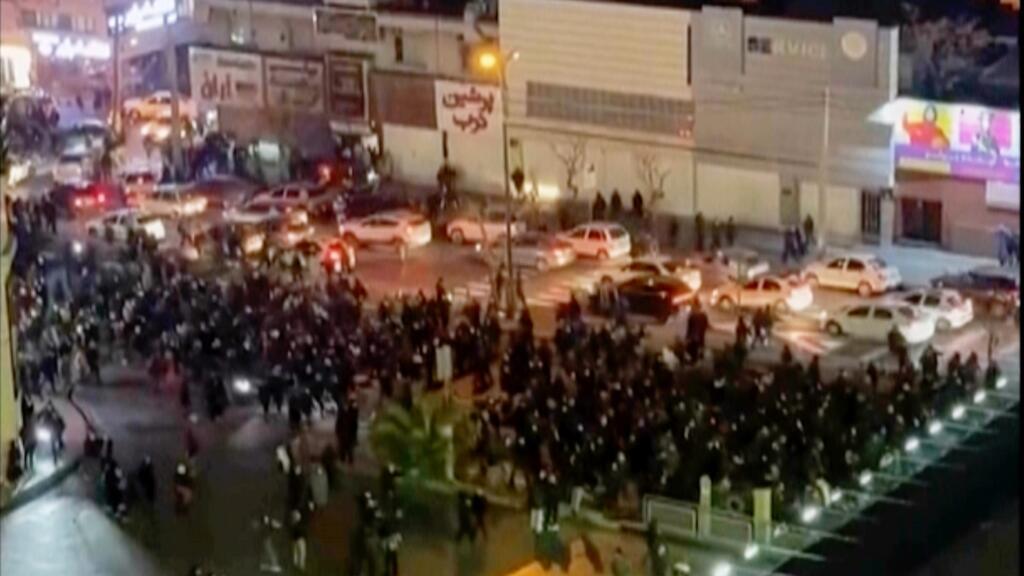
In this frame grab from video obtained by the AP outside Iran shows people blocking an intersection during a protest in Tehran, Iran, on January 8, 2026. © UGC via AP

Nationwide protests in Iran sparked by the Islamic Republic’s ailing economy are putting new pressure on its theocracy as it has shut down the internet and telephone networks.

Tehran is still reeling from a 12-day war launched by Israel in June that saw the United States bomb nuclear sites in Iran. Economic pressure, which has intensified since September when the United Nations reimposed sanctions on the country over its atomic programme, has sent Iran’s rial currency into a free fall, now trading at over 1.4 million to $1.

Meanwhile, Iran’s self-described “Axis of Resistance” — a coalition of countries and militant groups backed by Tehran — has been decimated since the start of the Israel-Hamas war in 2023.

A threat by President Donald Trump warning Iran that if Tehran “violently kills peaceful protesters”, the US “will come to their rescue”, has taken on new meaning after American troops captured Venezuela’s Nicolas Maduro, a longtime ally of Tehran.

“We’re watching it very closely,” Trump has warned. “If they start killing people like they have in the past, I think they’re going to get hit very hard by the United States.”

More than 500 protests


More than 500 protests have taken place across all of Iran’s 31 provinces, the US-based Human Rights Activists News Agency reported early Monday. The death toll had reached at least 544, it said, with more than 10,600 arrests. The group relies on an activist network inside of Iran for its reporting and has been accurate in past unrest.

The Iranian government has not offered overall casualty figures for the demonstrations. Foreign media have been unable to independently assess the toll, given that internet and international phone calls are now blocked in Iran.

Understanding the scale of the protests has been difficult. Iranian state media has provided little information about the demonstrations. Online videos offer only brief, shaky glimpses of people in the streets or the sound of gunfire. Journalists in general in Iran also face limits on reporting such as requiring permission to travel around the country, as well as the threat of harassment or arrest by authorities. The internet shutdown has further complicated the situation.

But the protests do not appear to be stopping, even after Supreme Leader Ayatollah Ali Khamenei said “rioters must be put in their place”.

Cost-of-living crisis

The collapse of the rial has led to a widening economic crisis in Iran. Prices are up on meat, rice and other staples of the Iranian dinner table. The nation has been struggling with an annual inflation rate of some 40 percent.

In December, Iran introduced a new pricing tier for its nationally subsidised gasoline, raising the price of some of the world’s cheapest gas and further pressuring the population. Tehran may seek steeper price increases in the future, as the government now will review prices every three months. Meanwhile, food prices are expected to spike after Iran’s Central Bank in recent days ended a preferential, subsidised dollar-rial exchange rate for all products except medicine and wheat.

The downfall of ‘Axis of Resistance’

The protests began in late December with merchants in Tehran before spreading. While initially focused on economic issues, the demonstrations soon saw protesters chanting anti-government statements as well. Anger has been simmering over the years, particularly after the 2022 death of 22-year-old Mahsa Amini in police custody that triggered nationwide demonstrations.

Some have chanted in support of Iran’s exiled Crown Prince Reza Pahlavi, who called for protests Thursday and Friday night.

Iran’s “Axis of Resistance”, which grew in prominence in the years after the 2003 US-led invasion and subsequent occupation of Iraq, is reeling.

Israel has crushed Hamas in the devastating war in the Gaza Strip. Hezbollah, the Shiite militant group in Lebanon, has seen its top leadership killed by Israel and has been struggling since. A lightning offensive in December 2024 overthrew Iran’s longtime stalwart ally and client in Syria, former president Bashar al Assad, after years of war there. Yemen’s Iranian-backed Houthi rebels also have been pounded by Israeli and US airstrikes.

China meanwhile has remained a major buyer of Iranian crude oil, but hasn’t provided overt military support. Neither has Russia, which has relied on Iranian drones in its war on Ukraine.

Iran’s nuclear programme


Iran has insisted for decades that its nuclear programme is peaceful. However, its officials have increasingly threatened to pursue a nuclear weapon. Iran had been enriching uranium to near weapons-grade levels before the US attack in June, making it the only country in the world without a nuclear weapons programme to do so.

Tehran also increasingly cut back its cooperation with the International Atomic Energy Agency (IAEA), the UN’s nuclear watchdog, as tensions increased over its nuclear programme in recent years. The IAEA’s director-general has warned Iran could build as many as 10 nuclear bombs, should it decide to weaponise its programme.

US intelligence agencies have assessed that Iran has yet to begin a weapons programme, but has “undertaken activities that better position it to produce a nuclear device, if it chooses to do so”.

Iran recently said it was no longer enriching uranium at any site in the country, trying to signal to the West that it remains open to potential negotiations over its atomic programme to ease sanctions. But there’s been no significant talks in the months since the June war.

US-Iran ties post-Islamic Revolution

Iran decades ago was one of the United States’ top allies in the Middle East under Shah Mohammad Reza Pahlavi, who purchased American military weapons and allowed CIA technicians to run secret listening posts monitoring the neighbouring Soviet Union. The CIA fomented a 1953 coup that cemented the shah’s rule.

But in January 1979, the shah fled Iran as mass demonstrations swelled against his rule. Then came the Islamic Revolution led by Ayatollah Ruhollah Khomeini, which created Iran’s theocratic government.

Later that year, university students overran the US Embassy in Tehran, seeking the shah’s extradition and sparking the 444-day hostage crisis that saw diplomatic relations between Iran and the US severed.

During the Iran-Iraq war of the 1980s, the US backed Saddam Hussein. During that conflict, the US launched a one-day assault that crippled Iran at sea as part of the so-called “Tanker War”, and later shot down an Iranian commercial airliner that the US military said it mistook for a warplane.

Iran and the US have seesawed between enmity and grudging diplomacy in the years since. Relations peaked with the 2015 nuclear deal, which saw Iran greatly limit its programme in exchange for the lifting of sanctions. But Trump unilaterally withdrew America from the accord in 2018, sparking tensions in the Middle East that intensified after Hamas’s October 7, 2023, attack on Israel.

(FRANCE 24 with AP)