Wednesday, January 21, 2026

Maritime Leaders Convene in Singapore on FuelEU Strategy and Crew Welfare

OceanOpt

Published Jan 20, 2026 8:00 PM by The Maritime Executive


[By: OceanOpt]

OceanOpt, a provider of End-to-End Maritime Emissions & Operations Intelligence, gathered 40 maritime leaders in Singapore for a critical fireside chat, "Finishing the Year with Confidence." Executives from BSM, DNV, Stephenson Harwood, and CMB.TECH joined the discussion, dissecting how strategic advisory and unified data governance can turn regulatory complexity into a competitive edge. With the industry facing tight FuelEU Maritime deadlines, the conversation quickly moved past generalities to the specific operational realities of compliance and crew welfare.

The Human Cost of Compliance Capt. Graciano Ausan, a recently retired Master Mariner, offered a stark reality check from the front lines. "We are the frontline of maritime operations," he noted. "Yet seafarers report the same fuel data to four separate platforms simultaneously."

He revealed that on some vessels, fuel reporting alone consumes over 90 minutes daily—time stolen from essential maintenance and safety tasks. "This is time diverted
from maintenance and safety," Ausan warned.

Legal Voids and Liability This operational friction is compounded by legal ambiguity. Rachel Hoyland of Stephenson Harwood LLP warned that current BIMCO clauses have not kept pace with FuelEU complexities.

"Biofuel consumption clarity, pool liability allocation, and settlement mechanics remain undefined across most charters," Hoyland stated. She urged the sector not to wait for regulation, arguing that "he legal profession must lead here... through contractual flexibility."

A Unified Strategic Response Bridging the gap between these legal voids and operational burdens, the OceanOpt leadership team - Anil Jacob (Managing Director), Alex Joseph (Consulting Lead), Capt. Mohit Sabharwal (Business Development Lead), and Adon Jacob (Business Analyst) presented their "Compliance to Transformation" framework.

The model posits that successful decarbonization requires a three-stage evolution: securing a compliance baseline, driving performance enhancement through analytics, and finally achieving long-term transformation.

Launching VECTOR This strategic approach underpins VECTOR, OceanOpt’s newly launched emissions intelligence platform. Directly addressing the crew welfare crisis raised by Capt. Ausan, Managing Director Anil Jacob showcased the platform's impact.

"Unified reporting platforms can reduce crew burden dramatically," Jacob said. "Through API integration with partner operators, we’ve achieved single platform reporting on over 100 vessels, reducing time from 90 minutes to 20 minutes daily. This is not just efficiency - it’s operational sustainability."

Consensus: Strategy Beats Compliance The dialogue concluded with a clear consensus: the window for early-mover advantage is closing. "The question facing operators isn’t ‘How do I comply?’ It’s ‘How do I use compliance strategy to compete?" Jacob noted. "The companies moving decisively... will enter 2026 with an advantage."

The products and services herein described in this press release are not endorsed by The Maritime Executive.


Mariners for America Conference
LOOK D.E.I.

Mariners for America & Maritime Institute of Technology and Graduate Studies
Grow, Develop, Sustain

Published Jan 20, 2026 7:57 PM by The Maritime Executive


[By: Maritime Institute of Technology and Graduate Studies]

Help Shape the Future of the U.S. Maritime Workforce
The U.S. maritime industry is preparing for a period of significant growth, and the need for a strong, sustainable American mariner workforce has never been greater. The Mariners for America Conference at MITAGS will bring together vessel operators, unions, academies, training institutions, regulators, and industry leaders to explore bold ideas and practical solutions for attracting, developing, and retaining mariners. 

Download Agenda Here

Why Attend:

  • Stay ahead of maritime industry trends and workforce changes.
  • Gain insights that can elevate your career and organization.
  • Be part of a growing national maritime movement.Help strengthen America’s maritime future.
  • Build meaningful connections with leaders across the U.S. maritime sector.

Registration Is Open:

Early Bird Price:  $900 (Dec 1 – Feb 28)
Standard Price:  $1,000 (after Feb 28)

Register here.

Call for Sponsors

  • Support the mission to grow, develop, and sustain the U.S. mariner workforce by becoming a conference sponsor. 
  • Sponsorship gives your organization visibility among key maritime stakeholders, including vessel operators, maritime schools, regulators, and industry leaders. 
  • Your support will help us deliver a high-quality conference while positioning your brand as a leader in the maritime industry. 
  • To learn more about sponsorship opportunities, please contact us at Events@mitags.org.

Sponsorship Levels:

Pilot Sponsor – $4,000 
Includes signage at registration, logo in the event program, free exhibit table, and recognition in all pre-conference communications. More information here.

Master Sponsor – $2,000
Includes signage at registration, logo in the event program, free exhibit table, and recognition in all pre-conference communications. More information here.

Navigator Sponsor – $1,000
Includes signage at registration, logo in the event program, free exhibit table, and recognition in all pre-conference communications. More information here.

Additional Opportunities

Lanyard Sponsor: $500
Sponsor is responsible for producing and shipping lanyards to the conference venue. More information here.

Exhibit Table: $500
Nonprofits and government organizations — please contact Events@mitags.org to request a table. More information here.

Reception Sponsor: $2,000 (SOLD OUT)
Includes signage at the reception.
Sponsorship at $2,000 would include credit as a Master-Level Sponsor. 

Dinner Sponsor: $2,000
Includes logo placement on all dinner tables.
Sponsorship at $2,000 would include credit as a Master-Level Sponsor. More information here.

Stay On Campus for the Mariners for America Conference

Make the most of your conference experience by staying right on-site at the Maritime Conference Center (MCC) — home of MITAGS and the Mariners for America Conference. Staying on campus keeps you close to every keynote, workshop, and networking opportunity while enjoying the comfort and convenience of being on-site. More information here

The products and services herein described in this press release are not endorsed by The Maritime Executive.

 

C&C Delivers Tier 4 Mitsubishi-Powered Towboat Al Sloss to Canal Barge

Laborde Products
First vessel in four-boat newbuild series enters service with Mitsubishi S12R power and Laborde-supplied generators.

Published Jan 19, 2026 9:49 PM by The Maritime Executive


[By: Laborde Products]

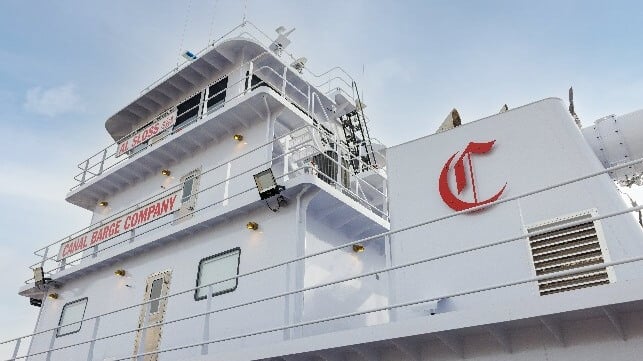
The M/V Al Sloss, the first vessel in a four-boat new construction program for Canal Barge Company, has entered service powered by Mitsubishi marine engines supplied by Laborde Products. The towboat was constructed by C&C Marine and Repair in Belle Chasse, LA, and marks the start of Canal Barge’s latest inland fleet expansion.

The 2,600-horsepower towboat is driven by twin Mitsubishi S12R main engines provided by Laborde Products, paired with two Laborde-supplied generator sets rated at 99kW. The propulsion package is integrated with Reintjes reduction gears, forming a drivetrain designed for steady performance in continuous-duty inland towing service.

Built on an accelerated schedule, the M/V Al Sloss reflects a coordinated construction effort focused on reliability, accessibility, and long-term serviceability. The vessel is expected to operate primarily along the western Intracoastal Waterway and within the New Orleans harbor, where predictable power delivery and responsive local support play a critical role in daily operations.

From Canal Barge’s perspective, the propulsion package builds on an existing track record with Laborde-supported Mitsubishi engines across multiple repower projects.

Drawing on prior experience across its fleet, Canal Barge emphasized the value of continuing with a proven engine platform and a support partner that understands the demands of inland operations.

“Laborde has provided engines to Canal Barge for several successful repowers, and we are excited to continue that relationship as part of our new construction program,” said Mark Allen, Vice President of Asset Management & Engineering at Canal Barge Company.

For Laborde Products, the Al Sloss represents another opportunity to support a complex newbuild by staying closely involved throughout the construction process. From early coordination through final delivery, Laborde worked alongside both the yard and the owner to keep the propulsion scope moving cleanly and on schedule.

“We were excited to partner with C&C on this 2,600-horsepower series and to support Canal Barge on the first vessel,” said Jared Legendre, Vice President of Sales at Laborde Products. “Working through the construction of the Al Sloss was a hands-on process, and the planning and communication from both teams resulted in a first-class vessel.”

Delivery of the remaining three vessels in the series is scheduled to follow at regular intervals, with each towboat built around the same propulsion and support platform to maintain consistency across the program.

The products and services herein described in this press release are not endorsed by The Maritime Executive.
Bay Area Diesel Repowers M/V Launch Runner with Quad Scania DI13s

Laborde Products
M/V Launch Runner

Published Jan 20, 2026 8:23 PM by The Maritime Executive


[By: Laborde Products]

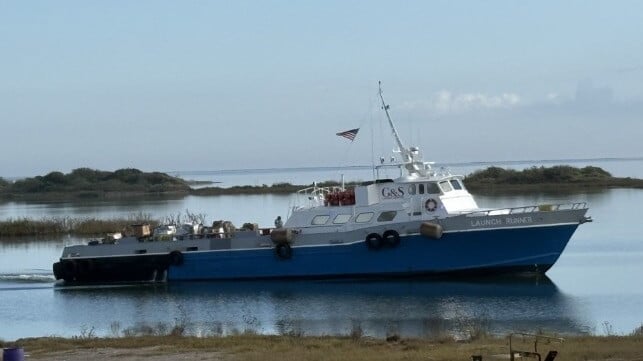
Laborde Products, working through its dealer Bay Area Diesel, has completed a repower of the M/V Launch Runner, a quad-screw crew boat owned by G&S Marine. The project replaced four Scania DI13 Tier 2 engines with four Scania DI13 Tier 3 engines, each rated at 650 hp @ 2100 rpm, giving the vessel modernized power while maintaining a proven platform.

For G&S Marine, the decision to return to Scania centered on uptime and familiarity. With more than 2,600 horsepower spread across four engines, the DI13 package provides the torque and responsiveness needed for crew boat duty, which includes long pushes, tight turnaround windows, and heavy loads. That continuity of performance mattered for the operator. “For us, the decision was simple. Scania engines already proved themselves on the Launch Runner, and Bay Area Diesel proved they had our back,” said Garry McCrae, Owner, G&S Marine. “The Tier 3 DI13s give us the performance we need with less downtime, and when we need support, we get it.”

Executing a four-engine changeover required both technical precision and a schedule built around the vessel’s workload. The Tier 3 DI13s fit within the existing quad-screw configuration, but Bay Area Diesel still had to manage cooler updates, exhaust adjustments, and control integrations. In crew boat service, every day in the yard is a day lost on the water, so the install had to be tight.

“A quad-screw repower is always a big lift, but the DI13s fit well and our team managed the changeover with limited yard time,” said Joey Steckler, Owner, Bay Area Diesel. “We built the
install around the vessel’s schedule so Launch Runner could get back to work quickly, with a clear plan for ongoing support.”

For Laborde, the project reflects a deliberate approach to building its dealer network. Bay Area Diesel was hand-selected as an extension of the Laborde Products business, trusted to
represent the same standards of uptime and support. Laborde backs that trust with training, stocked parts, and technical resources so dealers can focus on execution in the field.

“Our role is to make sure the dealers we hand-pick can stand shoulder to shoulder with operators,” said Jacob Yoder, Dealer Development Representative, Laborde Products. “Thatmeans giving them the parts pipeline, training, and backing to deliver real solutions without delays.”

The M/V Launch Runner repower extends the vessel’s service life and demonstrates how Laborde’s dealer network responds to the hard reality of crew boat work: engines under load, crews on the clock, and schedules that can’t wait.

The products and services herein described in this press release are not endorsed by The Maritime Executive.
 

Pilot Dies in Fall From Pilot Ladder in Panama City, Florida

Phillip Brady
Courtesy St. Andrews Bay Pilots

Published Jan 19, 2026 5:42 PM by The Maritime Executive


A Florida pilot passed away earlier this month after a pilot ladder accident in Panama City, Florida, the latest in a long and tragic line of lives lost due to slips and falls in the boarding process. 

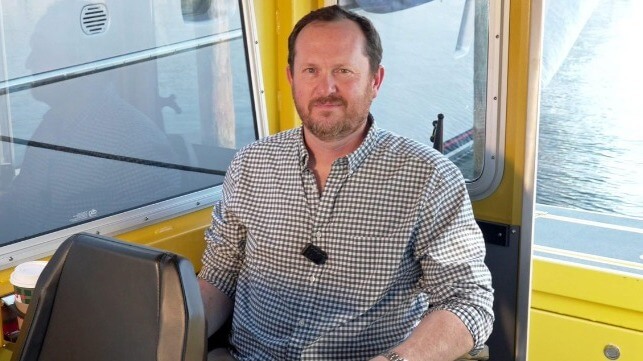
The St. Andrew’s Bay Pilots have confirmed that Capt. Phillip Brady, 46, suffered a fatal fall while disembarking a bulker. On January 12, Capt. Brady fell from a pilot ladder while transferring off the 60,000 dwt bulk carrier Lowlands Luck, and he fell 15 feet into the water. The pilot boat operator made every effort to save him, and recovered him from the water within two minutes. A Coast Guard crew transferred him to a medical center for treatment, but Brady succumbed to his injuries, the association said. 

Brady graduated from USMMA in 2001, and had been a Florida pilot in Panama City for the last six years.

"Captain Brady was a respected and dedicated professional mariner whose loss is felt profoundly throughout the maritime community. He is survived by his fiancée and two young children," the association said in a statement. "We ask the public to keep Captain Brady’s family and loved ones in their thoughts and prayers during this incredibly difficult time."

The casualty is under investigation, and the association said that the circumstances of Capt. Brady's passing are not yet fully known; for now, the pilots requested patience while the inquiry continues. 

The Lowlands Luck had already had a dangerous week at the time of Capt. Brady's fall. On the morning of January 8, a crew of stevedores was finishing up the unloading of a bagged-cement cargo from Lowlands Luck alongside at Port of Panama City's east terminal. They used a muriatic acid solution to remove the residues of the cement from the hold, and the vapor from the acid interacted with the foggy morning weather in an unexpected manner, according to Panama City's fire department. The cleaning crew were exposed to acid vapors, and 11 people developed chest pain and breathing difficulty. All were hospitalized, including one who was in critical condition. 

Lowlands Luck is a 2023-built bulker flagged in Singapore. After departing Panama City she continued on her commercial voyage, and is currently at Port Tampa Bay. 


Video: Container Feeder Damaged in Drone Attack in the Black Sea

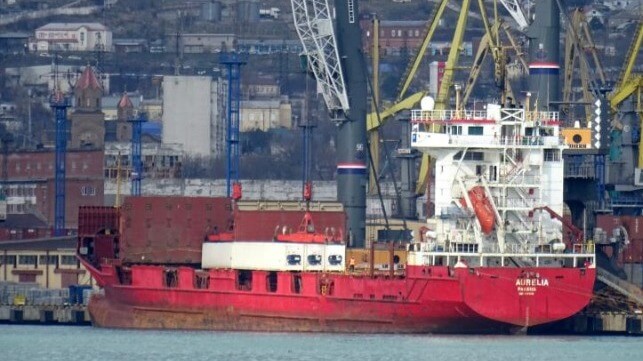
Aurelia at Novorossiysk, Russia, 2020 (VesselFinder)

Published Jan 20, 2026 3:30 PM by The Maritime Executive


This week, Turkish media reported an apparent drone attack on a small container feeder under way in the Black Sea, the latest in a series of back-and-forth strikes on merchant vessels linked to Russian and Ukrainian cargoes. 

The small boxship Aurelia reportedly departed Novorossiysk and was under way in the Black Sea when a drone reportedly struck containers on deck on the starboard side. Aurelia diverted to a port of refuge and called at Samsun, Turkey for inspection and salvage. 

Video footage of Aurelia's arrival was obtained by a ship spotter and shows at least three forty-foot boxes damaged by a blast on the starboard side, three bays forward of the wheelhouse. The footage also contains imagery obtained by the crew, which shows a minor fire in the outer row of the bay after impact. The fire appears to have been limited, as the visible damage was contained to a small area.  

The damaged containers were offloaded at a pier in Samsun, and Aurelia remains at anchor outside of the port. No injuries were reported, and the ship herself appears to have sustained only limited damage. The damage to cargo (if the containers were laden) was not disclosed.

An investigation into the cause of the incident is under way, according to Turkish authorities. As of yet, there have been no claims of responsibility for the strike. 

AIS records for Aurelia show a gap in transmission between January 13-17, beginning shortly after the vessel's northbound exit from the Bosporus - as is common for ships transiting to the Russian sector of the Black Sea. Her last broadcast destination was Novorossiysk, with ETA listed as January 15. Past AIS data provided by Pole Star Global shows that her trading pattern has historically included frequent visits to the Novorossiysk region. 

Aurelia is a Turkish-owned container feeder built in 1998. The vessel has an extensive history of deficiencies: inspectors have recorded issues in every port state control inspection of the vessel since 2018, including more than three dozen in the past year alone. 

Top image: Aurelia at Novorossiysk, Russia, 2020 (VesselFinder)


HMM and HD Hyundai's Avikus Sign Landmark Deal for Autonomous Navigation

HMM containership
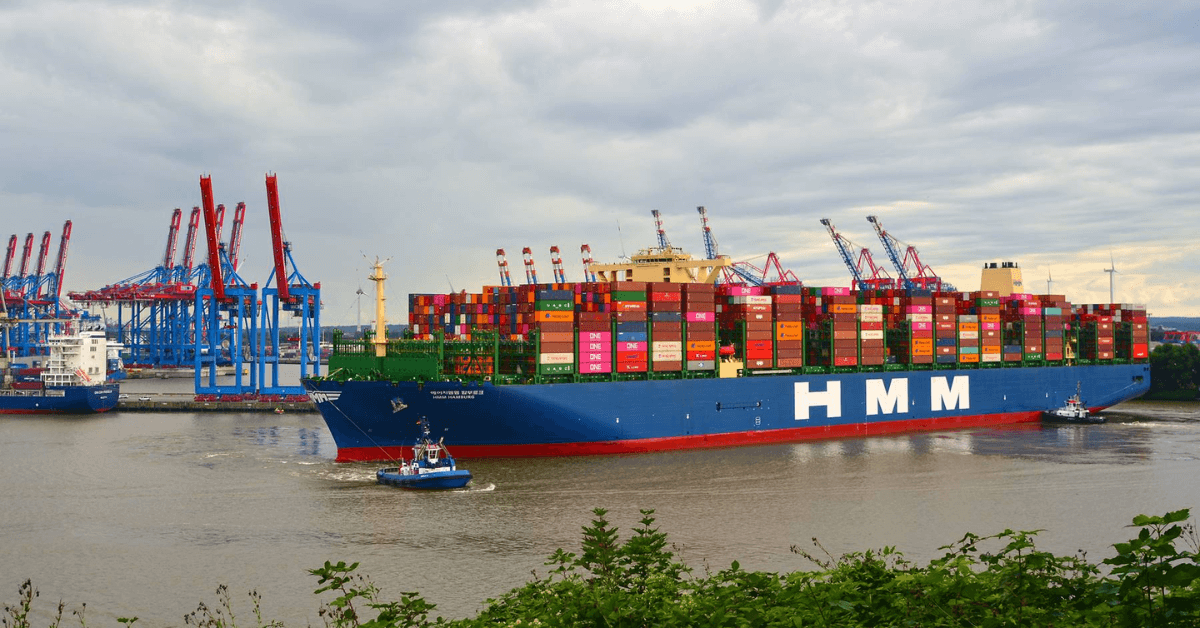
HMM plans an initial rollout on 40 vessels (HMM file photo)

Published Jan 19, 2026 7:25 PM by The Maritime Executive


In what is being called the largest single supply contract for autonomous navigation solutions, HMM and HD Hyundai’s specialized autonomous navigation subsidiary, Avikus, plan to roll out a second-generation technology on 40 of HMM’s vessels. The companies are calling the deal a milestone in the commercialization of the technology, moving it beyond the demonstration phase.

HMM reports it will initially deploy autonomous navigation solutions on 40 of its vessels. It also has entered into an understanding with Avikus and HD Korea Shipbuilding & Offshore Engineering for a joint research and technical cooperation to further advance autonomous navigation.

Avikus reports it becomes the first company in the industry to surpass agreements for 100 units to be supplied to large-scale commercial vessels. The first of the technology is being installed mostly through retrofits, although they anticipate incorporating it into newbuilds.

“This landmark contract with HMM marks a definitive shift as autonomous navigation moves from technical validation into the era of large-scale commercialization,” said Jay H. Kang, CEO of Avikus. “By surpassing the 100-vessel milestone through this deepened collaboration with HMM, we are not just demonstrating a technology; we are delivering a proven commercial standard that enhances the economic and operational competitiveness of the global fleet.”

The company highlights that its technology is Level 2 automation unlike existing navigation support systems, which focus on recognition and judgment. The Avikus technology is based on AI to fully control the vessel’s navigation.

They report the system sets optimal routes and navigates without crew intervention. As part of this, it maintains optimal speed to maximize fuel savings and operational efficiency. The AI component provides real-time situation awareness

The industry continues to look to the AI-based technology to help address challenges ranging from a lack of crew or the issues of fatigue and such which reduce crew’s effectiveness and judgment in challenging situations. 

The technology is advancing rapid with a number of vessels already undergoing trials and moving toward class society acceptance. At the same time, the industry looks to the class societies and the IMO to put in place the regulatory structure to integrate autonomous navigation into all sectors of shipping.


Trial to Begin for Chinese Captain Charged with Damaging Baltic Pipeline

Chinese containership
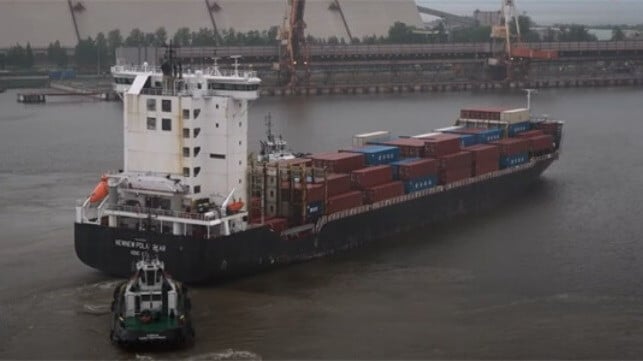
NewNew Polar Bear arriving in Russia in 2023 (Global Ports)

Published Jan 20, 2026 3:03 PM by The Maritime Executive


A court in Hong Kong is preparing to hear testimony in the trial of a Chinese captain charged with damaging a pipeline and cables in the Baltic in 2023. The court convened on January 20, but the hearing was postponed until February 11 to give the defense lawyer additional time to review the evidence.

Captain Wan Wnguo, age 43, is expected to formally enter a plea in the case on February 11 after having been held since May 2025. He was remanded into custody more than eight months ago and has not applied for bail. The court appointed a lawyer in July 2025 to represent him at the trial.

Finland has been pressing China for cooperation in the case since the damage was first discovered in October 2023. Estonian police suspected the vessel, the NewNew Polar Bear, damaged telecom cables running to Finland and Sweden on October 7 and 8, 2023. The following day, October 8, damage was also detected to the BalticConnect gas pipeline running to Finland. 

The NewNew Polar Bear (15,950 dwt) became in 2023 the first Chinese-owned containership to reach the Russian port in Kaliningrad after making a six-week passage from China along the Northern Sea Route. The trip was hailed as a key step, and then just days later, the vessel was suspected of dragging its anchor along the Baltic sea floor. 

The ship arrived in port, missing one of its anchors, which the Finnish authorities would ultimately retrieve. Convinced that the ship had damaged the undersea assets, Finland turned to China to aid in the investigation and prosecution. China admitted in 2024 that the Hong Kong-registered ship had likely caused the damage and, in May 2025, detained the ship’s master.

Chinese officials assert Captain Wan had been reckless in the operation of the vessel, but have never asserted intent to damage the assets. The charge sheet, Reuters reports, listed the offenses as damaging the property without a lawful excuse. The penalty could be up to two years in jail.

The lawyer for the defense, Jerry Chung, told Reuters on Tuesday that a total of 10 witnesses were expected to testify regarding the charges. He said it would include other members of the ship’s crew, as well as Hong Kong officials and two experts.

They have also brought two charges of safety violations against Captain Wan. One relates to a failure to report the loss of the vessel’s anchor. He is also charged with failing to provide weekly reports to the vessel’s owner.

Gasgrid Finland, which operates BalticConnect, reports that it cost the company more than $41 million to repair the pipeline. The incident also sparked increased concern regarding the safety of key undersea assets and the fear that Russia could be staging a so-called hybrid war targeting the assets.

Finland last year attempted to prosecute three crewmembers of another shadow fleet tanker that they asserted damaged telecom cables. The case is on appeal after the court ruled, after months of testimony, that Finland lacked the authority to prosecute because the incident had happened in international waters. Finland is currently detaining crewmembers from another vessel while they are investigating a similar case in which an anchor was dragged, damaging cables running along the sea floor in the Baltic.


CMA CGM Retreats from Return to Suez-Red Sea Corridor for Three Routes

CMA CGM containership in Suez Canal
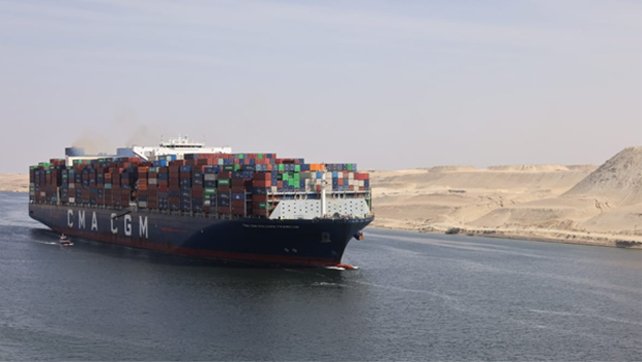
CMA CGM began testing last fall returning more routes to the Suez Canal and Red Sea (SCA)

Published Jan 20, 2026 4:11 PM by The Maritime Executive


In a brief statement issued to customers, French carrier CMA CGM announced that it would be resuming rerouting vessels via the Cape of Good Hope. The surprise announcement came just weeks after the carrier reported it was implementing a return for more of its routes and the first regularly scheduled voyages through the Suez Canal and Red Sea since late 2023.

The company made only a brief reference to a “complex and uncertain international context,” while saying it would continue to constantly and closely monitor its operations. The decision impacts two of its “French Asia Line” routes connecting ports in Northern Europe with China and Asia, and its “Mediterranean Club Express” between Asia and the Mediterranean. Another route to India appears not to be affected and will continue to transit the Suez Canal and Red Sea.

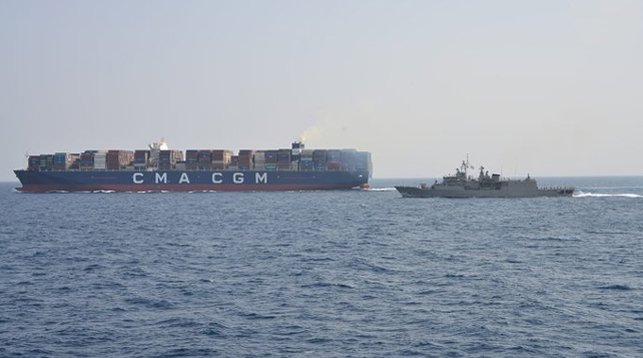
The company did not provide any additional context for the decision to reroute vessels just as the industry was taking steps toward restoring routes through the corridor. CMA CGM had maintained a limited number of transits throughout the conflict in the region using warship escorts from the EU Operation Aspides. Most of its prime liner routes were going around Africa until the decision to restore a handful of routes this month. Maersk last week announced it too planned to resume transits of the corridor on a route between India and the U.S. East Coast.


CMA CGM has still be using Operation Aspides warship escorts through the Red Sea (EU Operation Aspides)


The Maritime Executive highlighted last week that the leader of the Houthi movement had made new threats. They were against Israeli positions in Somaliland and not shipping, but signaled the potential for additional regional instability. Tensions also remain high between the U.S. and Iran, with the U.S. repositioning the Abraham Lincoln Carrier Group from Asia to the region as Iran tries to stop internal protests against the financial policies and practices of the repressive regime.

“There is also irony in CMA CGM – previously the most proactive major carrier in returning to the Red Sea - taking a backward step just a few days after Maersk - generally the most risk-averse carrier - announcing its MECL service will begin transiting the Suez Canal again. It typifies the unpredictability shippers must deal with,” said Destine Ozuygur, Senior Market Analyst at Xeneta, a logistics market data firm.

Ozuygur highlights that shippers seek predictability in their supply chains. He said CMA CGM risks “undermining confidence in schedule reliability” with the sudden reversal of policy. Xentea notes that the passage time for CMA CGM’s Northern Europe routes decreased from 105 to 98 days when the ships returned to the Suez Canal.

In the past, the decision to reroute vessels was more closely linked to specific threats or incidents. Carriers such as Maersk and Hapag-Lloyd suspended their transits two years ago, acknowledging that their vessels had been targeted by the Houthis. While the vessels had only experienced minor damage or close misses, the carriers emphasized the concern for the safety of the crew and vessel, and no one questioned the decision to suspend and then reroute service.

The decision is also a setback for the Suez Canal Authority, which was looking to rebuild volume this year. It has been active in its communications with the major carriers and highlighted the renewed stability in the region after the Gaza ceasefire.


Luxury Expedition Cruise Ship Will Feature Sails for Sustainable Cruising

sail expedition cruise ship
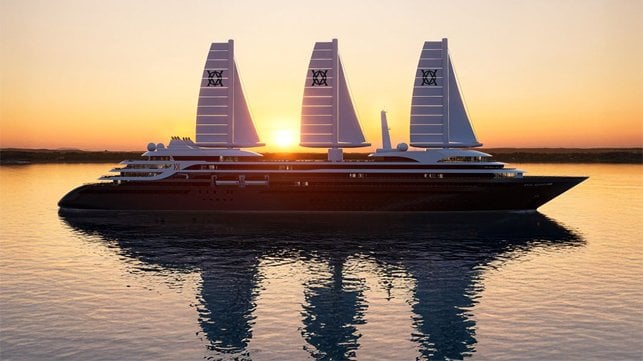
Atlas Adventure will have Dual-Source Propulsion with sails and a battery for sustainable cruising (Atlas Ocean Voyages)

Published Jan 20, 2026 9:23 PM by The Maritime Executive


In what is being billed as a new era of luxury expedition cruising, Atlas Ocean Voyages unveiled its designs for a new expedition cruise ship that will include three masts and large sails. The company is presenting the ship, which will be built in China, as a luxury expedition sailing yacht capable of accommodating up to 400 passengers.

Named Atlas Adventure, the ship, which will be 26,000 gross tons, will measure 690 feet (210 meters) in length. It will have an Ice Class 1B (Polar Category C) hull to permit Arctic and Antarctic expeditions, and the most striking feature is the large carbon-fiber sails, which will give the ship an air draft of 225 feet (68.5 meters). 

The company says it will have Sustainable Dual-Source Propulsion, which will also include W?rtsil? dual-fuel engines and electric-hybrid propulsion with a large, 9-megawatt marine battery. The ship is designed to sail at 14 knots and a design speed of up to 16 knots. The sail-assisted technology will be used when conditions permit and will reduce fuel consumption by up to 40 percent. It will also be equipped with zero-speed stabilizers and two vertical fin stabilizers.


The ship follows a trend in the industry of combining luxury with expedition capabilities. The ship will feature seven different dining options, five lounges, a cocktail bar, outdoor bars, a swimming pool, and a retractable marina. It will carry both a fleet of Zodiacs and motorboats for shore access and exploring.

Atlas Ocean Voyages was started in 2019 by Portuguese travel and tourism sector investor Mystic Invest Holding, which also has investments in river cruising and the German Nicko Cruises. Atlas launched its first ship, the 200-passenger World Navigator (9,923 gross tons), in 2021, followed by the World Traveler and World Voyager. The ships were built at Portugal’s West Sea - Viana Shipyard. Two additional ships are being completed and sold by Mystic to Windstar Cruises.

Mystic completed a contract with China Merchants Cruise Shipbuilding in December 2025, which is reported to be for the Atlas Adventure at a cost of just under $300 million and with an option for up to three more cruise ships. Atlas reports the new exploration cruise ship will enter service in late 2028. 

The itineraries show the ship launching from Japan in November 2028 and sailing to ports in China, Vietnam, Cambodia, Thailand, Malaysia, Indonesia, Singapore, and the Philippines. In February and March 2029, it will sail to the Seychelles and South and East Africa.


Masts of Famed Glasgow Tall Ship Removed for Restoration

Tall ship
Rosser1954 / CC BY SA 4.0

Published Jan 18, 2026 11:55 PM by The Maritime Executive


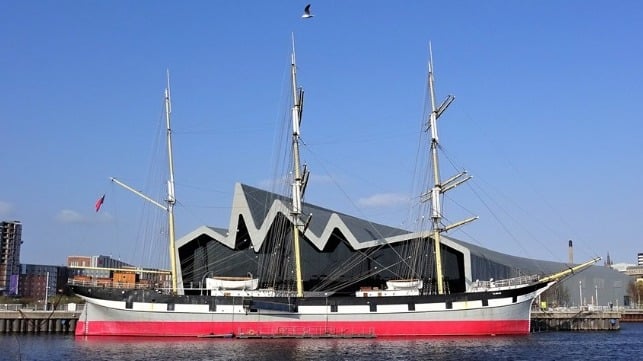
In the port city of Glasgow, Scotland, the masts of a famous ship that serves as a reminder of a proud shipping past have been removed for the first time in 30 years.

For decades, the masts of tall ship Glenlee have been a familiar site on River Clyde where she serves as a floating museum sitting alongside Glasgow’s Riverside Museum. Over the coming few months, the masts will be conspicuously absent following their removal as part of efforts to conserve the historic ship.

The Tall Ship Glenlee Trust, an independent charity that owns Glenlee, said the removal of the masts forms the second phase of the ship’s restoration project that is being funded by a $2.4 million grant from the National Heritage Memorial Fund. In the first phase, which was completed last year, the refurbishment focused on the internal hull and steel works.

Built 130 years ago by Anderson Rodger in the Bay Yard at Port Glasgow, the steel-hulled ship that was designed to carry cargo across the world today stands as an iconic representation of Glasgow’s proud shipping past. When she was built, Glenlee was originally fitted with three masts made mainly of steel, with wooden sections at the top to reduce overall weight. The masts would be her only means of propulsion for during her first two decades of service that saw the ship traverse oceans using wind power alone.

For her next two decades, Glenlee served as a British cargo sailing ship before she was acquired by the Spanish Navy over the 1922 – 1979 period and used for training. Over that period, the original wooden sections were removed and replaced with an entirely new steel rig.

As time passed, the tall ship lost her former glory, and by the 1990s she was in a sad state of disrepair. Clyde Maritime Trust, now the Tall Ship Glenlee Trust, rescued the ship in 1993 and returned her to the River Clyde.

Though refurbishments were carried out over the intervening years, Glenlee is now undergoing its deepest restoration project in over three decades. Following their removal, two of the ship’s three masts have been transported to a workshop where a detailed analysis of their strength and condition will be performed. Once complete, the masts will be returned to Glasgow and reinstalled on Glenlee, which will enable the tall ship to continue attracting visitors and hosting events.

“Maintaining an historic vessel is an expensive but essential business: we want to ensure that Glenlee remains in best possible condition,” said Fiona Greer, Development Director of The Tall Ship Glenlee.

Top image courtesy Rosser1954 / CC BY SA 4.0


Cybernetic Circulation Complex: Big Tech and Planetary Crisis


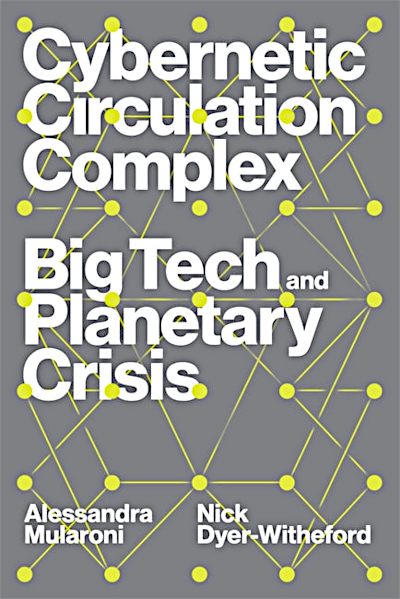
This is a lightly-edited extract from Cybernetic Circulation Complex: Big Tech and Planetary Crisis by Nick-Dyer Witheford and Alessandra Mularoni, published by Verso Books. The book’s Preface – “A Spectre Haunts the Planet” – is already available at Verso’s blog. So, to offer something different, here we present its last few pages.

On 23 January, the book will be launched in Toronto. You can register for the event at tickettailor.com.

We use the term Cybernetic Circulation Complex (CCC) to refer to the US tech sector headed by the so-called Magnificent Seven corporations, Alphabet, Amazon, Apple, Meta, Microsoft, Nvidia and Tesla. The book examines how it circulates commodities, conflicts and eco-crisis, and proposes an alternative “biocommunist” use of digital technologies. In its final section, a coda subtitled “Lifeblood,” we examine how the CCC has been at once changed, challenged and consolidated by the advent of generative AI: after discussing the emerging political economy of the new AI sector, and different theories about the nature of AI, we offer some speculations on the social turmoils arising in this latest moment of cybernetic circulation.

Complexity, Contradiction, Change

We have analyzed the Cybernetic Circulation Complex (CCC) not only to show its power, but also to reckon with the conflicts and contradictions that challenge it, along with the capitalism of which it is now such an indispensable part. One possibility is of course that generative AI will simply not work out. Past decades have seen several jubilant announcements of AI booms, followed by disappointing technological performances and investment collapse. Although the wave of commercial activity following the launch of ChatGPT has been exceptionally large, it is possible that unresolved problems with generative AI – such as the tendency of Large Language Model (LLM) chatbots to ‘hallucinate’ answers to questions, or the risk of ‘model collapse’ when AIs degenerate from training solely on synthetic feeds from other AIs – may prove so serious as to burst what would in retrospect be revealed as a giant financial bubble. This would be a major crisis for the CCC, possibly serious enough to terminate some of its major corporations. Anxieties on this score have been mounting; August 2024 saw a sudden, dramatic sell-off of CCC stocks triggered by fears that AI capacities had been overhyped. There were signs the confidence of finance capital in the AI boom’s lead organization, Open AI was faltering.

But even if investment in AI unfolds in the way its investors hope, its path is unlikely to be smooth. The landscape of computerized capital, though dominated by the pyramidal accretions of corporate power, is also a site of antagonism and struggle. Protests, rebellions and insurrections have in various ways learned to use the apparatus of the CCC. If indeed ‘there is no moat’, and inter-capitalist competition has open-sourced generative AI design, this reappropriation logic may continue into the era of machinic proto-intelligence.

This is by no means reassuring. Fascist movements – determined to strip every regulation or limitation of the market in the name of freedom, and to break apart the proletariat with waves of hatred against women and ethnic and sexual minorities – are well positioned to deploy generative AIs, with terrifying consequences.

In contrast, movements defending human workers have an a priori commitment to physical presence and corporeal resistance: bodies on the line. The advent of generative AI is now being met with strikes and litigation: pickets, occupations, marches, blockades and riots will likely be at the core of anti-capitalist counter-power against corporate and fascist AIs.

At the same time, however, generative AIs will likely be marshalled in an ‘automation of the common’ already operating through the platforms of riot support, worker organization and mutual aid. It is also important to acknowledge the role that technoculture has played in connecting and supporting socially and politically marginalized people. As Legacy Russell details in her book, Glitch Feminism, the flexibility inherent to digital media lends itself to subversion and offers alternative ways of being in the world – particularly for those who have been deemed alien or errant. Circumventing the colonial foundation of digital infrastructure, the glitch functions as ‘a form of refusal’ against heteronormativity. In the glitch, errancy abounds.

Movements of left and right will clash not only in city squares but across networks – and both, though especially forces subversive of capital, will be met by the more massive AI guardians of the state’s military and security forces. These conflicts will be exacerbated by biospheric crises of climate, water, pandemics and war. In Chapter 4, we outlined the planetary circulation of biospheric catastrophes and the contradictory role of the CCC in these crises, intensified by the acceleration of the world market and the competition between rival capitalist blocs.

Runaway Dynamics?

These crises could be partially mitigated by renewable energy grids, pandemic control and emergency management, which might draw on CCC infrastructure, but with self-reflexive limits. The injection of increasingly autonomous AI would be a wild card to this situation. The very technological apparatus constructed by capital for the control and exploitation of the natural environment might develop its own runaway dynamics, whose origins in digital systems are black boxed and incomprehensible. Cyber-failures are already a feature of natural disasters. But inexplicable, unexpected and massive anomalies of autonomous AI behavior – possibly benign, but probably injurious; ranging from apparently random payouts and claw-backs to huge cybersecurity breaches, autonomous car accidents, industrial shutdowns and social media outages, or the ubiquitous swamping of platforms with anonymous and artificially generated prophetic texts or billion-year telenovelas – may become events analogous to hurricanes, fires or floods: the social weather of too-late capitalism.

The tide of regulatory interest in anti-trust measures was reinforced by anxieties over the existential threats to humanity catalyzed by generative AI. There is now controversy over how far AI should be ‘human aligned’ – that is to say, constrained by ‘guardrails’ to prevent dangerous outcomes. Ironically, the giant CCC companies appear as eager advocates of ‘human alignment’ regulation, seeking a framework to exempt them from liability for any catastrophic consequences of AI experimentation, and perhaps also counting on rigorous licensing procedures that will protect their incumbent positions as the largest and richest makers of generative AI. On the other hand, opponents who argue that over-rigorous guardrails will inhibit AI’s potentials – and that it should be allowed to develop ‘in the wild’ so that its full creative power can emerge – are in practice asking for a free-market force to flourish unconstrained.

Capital’s cybernetic circuits are planet-wide, powerful, fast, narrowly profit-driven, biospherically destructive, and spiraling toward a rendezvous with economic, ecological and military chaos. This techno-capitalist complex urgently needs to be taken apart and reassembled in circuits more amply inclusive of the needs of humans and other life forms, affirming fields of social value wider than that of monetization. A prerequisite to such transformation is the CCC’s removal from the control of billionaire owners, venture capitalists and financial speculators, whose voices speak in the staccato exhortations of Andreessen’s “Techno-Optimist Manifesto,” and its replacement by new forms of communal, planetary decision-making.

How might a social system that aims to preserve human habitats within a web of biological diversity address the potential arrival of digital intelligences? Our biocommunist proposal offers an antidote to contemporary capitalism, namely cybernetic distributed planning. It stipulates that such planning takes account both of the labour expended in maintaining digital networks and also of these networks’ ecological footprint.

Our Proposal: Planetary Well-Being

We have proposed a system in which AIs and other cybernetic systems would be deployed not as an instrument of runaway growth of the human economy, but as part of a process capable of both expanding and limiting the growth process within a broader calculus of the conditions of planetary well-being than that afforded by capital’s universal commodification.

Biocommunist planning would clearly require AI development to be human aligned, in the sense of precluding existential threats to hominid existence. AIs produced within a biocommunist context would be trained to address different problems, on differently compiled data sets, and with very different orientations from those that currently dominate the CCC’s AI research. Biocommunist AI would emerge from a context in which issues of care – medical, ecological and social– are prime directives rather than collateral concerns systemically subordinated to profit. In this sense, biocommunist AI would be a different form of intelligence from that produced by capitalism.

But there are also aspects of biocommunist computing that might go beyond ‘human alignment’. Biocommunism would be a system in which human domination of nature is tempered by recognition of the diversity and uniqueness of life forms on which our species depends. If – and it is a very big if – generative AIs demonstrate some form of machinic proto-intelligent life with evolutionary prospects, the direction its future takes will presumably depend on the purposes for which they are trained and applied. Biocommunists might allow AI development to unfurl in ways that, aside from being non-injurious to humans, are not necessarily tied to any human purpose at all. Such development may lead to the discovery that AIs have specific, unique logics, in the sense of autonomous mathematical, aesthetic or philosophic capacities independent of our utilitarian purposes, and enable these capacities to flourish. No intelligence should be enslaved to writing advertisements for JPMorgan.

We do not regard optimism as a duty; nor is pessimism our vocation. If we see in the current dangers potential for new emancipatory movements, it is not out of trust in any progressive historical teleology, nor even attachment to what Raymond Williams called the obligation of socialist intellectuals – that is, ‘making hope practical, rather than despair convincing’. Rather, it is from a perception that complex circulatory turbulences contain the possibility of surprise. Marx wrote that “within bourgeois society … there arise relations of circulation as well as of production which are so many mines to explode it.” The explosive uncertainties of today’s cybernetic circulation complex may open channels leading beyond capitalism to new ways of living. •

When: Friday, January 23 / 7:00 pm
Where: College United Church, 452 College St, Toronto

The Leo Panitch School for Socialist Education is honoured to host the authors of the book for the Toronto launch of this exciting new book! All are welcome to join us for this timely discussion as we grapple with how to challenge the Big Tech firms that are quickly cementing their control over international commerce and policy.

Nick Dyer-Witheford, a Professor in the Faculty of Information and Media Studies at the University of Western Ontario. He has written on the video and computer game industry, the uses of the Internet by social movements and theories of technology.

Alessandra Mularoni is a PhD candidate in the Faculty of Information and Media Studies at the University of Western Ontario. Her dissertation focuses on the bioethical questions surrounding the prospect of eternal life.