U.S. Indicts Captain from Fugitive Shadow Tanker Reports NY Times
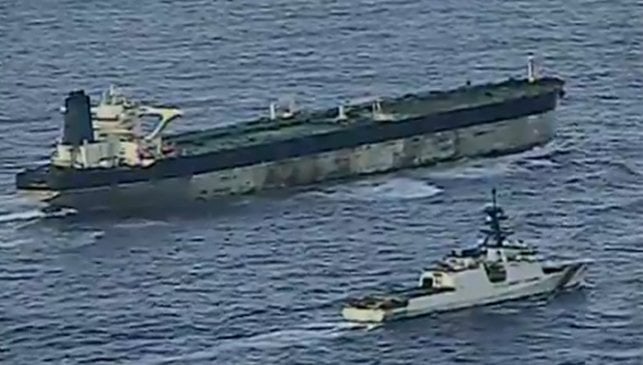
The captain of the tanker Marinera (Bella 1) has reportedly been officially indicted in the United States, according to a report from The New York Times. The paper writes on February 17 that an indictment was filed last week on February 12, although the White House and the U.S. Department of Justice declined to comment to the reporters from The New York Times.
Avtandil Kalandadze, a Georgian citizen, the Times writes, is being brought up on two charges, but it did not indicate in which court. One of the federal counts is reported to be the use of a false flag, i.e., Guyana, when the U.S. first intercepted the vessel on December 20 in the Caribbean. The second charge relates to disobeying the commands from the U.S. Coast Guard to stop the tanker and allow U.S. forces to board the ship for an inspection.
The Russian media outlet Verstka detailed the chase and seizure with interviews from the crew. It says the U.S. was hailing the tanker daily on the radio, but the crew did not respond. It says the ship’s manager “told the captain to turn around and head into the Atlantic.”
The Coast Guard first encountered the tanker when it was inbound to Venezuela to load a crude oil cargo. The vessel was operating under the false flag and had previously been sanctioned by the United States in June 2024 as the Bella 1 for its involvement with the Iranian oil trade. At the time, the U.S. said the vessel was registered in Panama, but the AMP pointed out that it was removed from Panama’s registry in October 2024. Equasis shows the flag, then went to Guyana and remained listed as such until it moved to Russia while the U.S. was pursuing the tanker. But the vessel never reached a port to make the flag change official.
The U.S. executed a seizure warrant for the tanker on January 7 and then took it to Scotland, where it was reported that it would replenish. The U.S., however, removed the crew from the tanker, and in a last-minute move, the wife of the captain filed with a Scottish court trying to block his removal from Scotland. While the case was in court, the media reported the U.S. removed him from the country overnight between January 26 and 27 by placing him aboard the Coast Guard cutter Munro.
The U.S. is reportedly planning to also indict the chief mate of the tanker, whom it also continues to detain. It is unclear where he is, and his name has not made its way into the media.
The other crew were told they were free to leave, and some returned home, although most of the Ukrainian crew reportedly went to third countries, fearing repercussions if they returned home from a ship that was claiming to be Russian. Verstka reports that five of the crew have agreed to come to the United States to provide evidence in the case against the captain and chief mate.
U.S. Coast Guard Cutter Returns Home After Escorting Two Seized Tankers
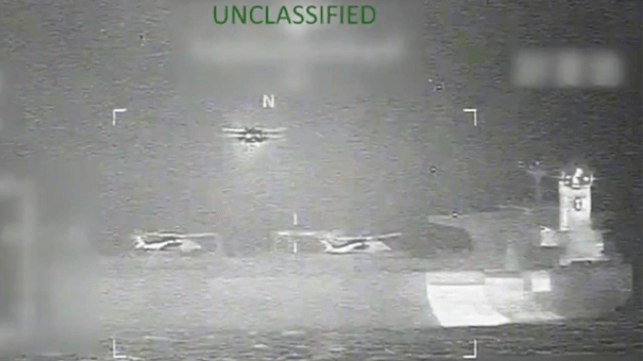
The U.S. Coast Guard cutter Mohawk has completed a rare mission. On Saturday, the cutter returned to her home port in Key West after spending 60 days in U.S. Southern Command, where the crew had the opportunity to escort two seized, sanctioned oil tankers into U.S. custody.
"Our dedicated crews are the frontline of maritime security," said Cmdr. Taylor Kellogg, commanding officer of Mohawk. "Their vigilance and expertise were instrumental in the successful interdiction and escort of these tankers, preventing illicit oil [profits] from destabilizing the Western Hemisphere. This is a clear demonstration of the Coast Guard’s commitment to enforcing international law."
The action started with the capture of the tanker Centuries. With support from the other armed services, and permission from the flag state, a Coast Guard tactical team boarded the vessel on December 20 and took control. After the boarding, Mohawk provided an escort for Centuries throughout her transit to the anchorage off Galveston, where the VLCC remains.
Mohawk got a second call shortly after. On January 15, a combined force boarded the Aframax tanker Veronica (Galileo, IMO 9256860) and captured the vessel. Mohawk was tasked with providing an escort once again, and got under way for the Caribbean promptly. Taking over from the boarding team, Mohawk watched over Veronica as the tanker transited to an anchorage off Puerto Rico. Taken together, according to the Coast Guard, the two transits took 17 days and 2,700 nautical miles.
To date, the Coast Guard has contributed to nine tanker boardings in the Caribbean, Atlantic and Indian Ocean, some resulting in vessel capture and others ending in a return to trading.