It’s possible that I shall make an ass of myself. But in that case one can always get out of it with a little dialectic. I have, of course, so worded my proposition as to be right either way (K.Marx, Letter to F.Engels on the Indian Mutiny)
Thursday, February 26, 2026
ICYMI
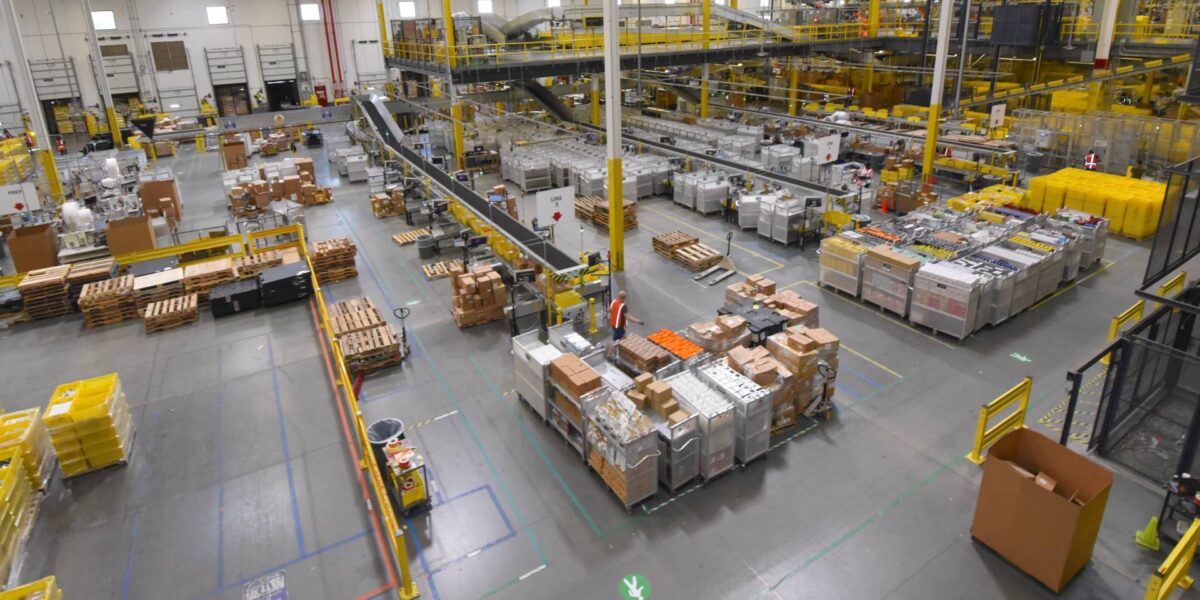
Amazon illegally imposed a wage freeze on unionized employees in B.C.
Amazon illegally imposed a wage freeze on unionized employees, according to a ruling by the B.C. Labour Relations Board. Warehouse workers in Delta B.C., represented by Unifor, did not receive their scheduled wage increases at the end of 2025. The complaint filed by Unifor said the employer blamed the union “coming in” for the wage freeze.
At the same time, workers in and around the Vancouver area received their annual wage increase. The warehouse in Delta is the only unionized Amazon facility in Canada. Unifor National representative, Mario Santos, called Amazon’s actions an anti-union tactic.
“Amazon wants to punish workers who have been actively engaged in bargaining a fair collective agreement. Amazon wants you to blame the union,” Santos wrote in a letter to Unifor members at the Delta warehouse. “The facts are this: there is nothing in the law prohibiting wage increases during your first year of unionization.”
The B.C. Labour Relations Board found this action to be in violation of section 45 of the Labour Relations Code which states that employers cannot alter a term or condition of employment within 12 months of a union certification or until a collective agreement is reached. The ruling will likely result in over $1 million being paid out to the Delta warehouse workers.
“This decision confirms what Amazon workers have been saying all along—the company broke the law by singling out unionized workers for unfair treatment,” said Unifor National President Lana Payne. “No worker should be punished for exercising their legal right to join a union, and today’s ruling sends a clear message that Amazon is not above the law.”
Workers at the Delta Amazon Warehouse are the only unionized Amazon workers in Canada. The corporation is infamous for its anti-labour actions that have affected their employees.
Last year, Amazon abruptly closed seven facilities in Quebec after a facility north of Montreal unionized and began efforts to secure a collective agreement. Before a deal could be reached, Amazon shut down operations in the province, leaving 1,700 permanent employees and 250 temporary workers without jobs.
The Confédération des syndicats nationaux, which represented the unionized Amazon workers in Quebec, is fighting for the province’s labour tribunal to overturn Amazon’s decision. Hearings began in September.
The road to unionization for Amazon workers in Canada has been tumultuous. The victory of the recent complaint filed by Unifor marks a step towards the first collective agreement with Amazon in the country.
Unifor said it would make efforts to expedite the process given the track record of the shipping giant. The union is asking for arbitration to avoid further delay and harm.
“Time and again, Amazon has used procedural delays and abused its incredible power to punish and discriminate against unionized workers at YVR2,” said Unifor Western Regional Director Gavin McGarrigle. “That is exactly why we’re seeking to expedite negotiations toward a strong union contract. Workers deserve stability, dignity, and accountability from their employer.”

Gabriela Calugay-Casuga Gabriela “Gabby” Calugay-Casuga (she/they) is a writer and activist based in so-called “Ottawa.” They began writing for Migrante Ottawa’s radio show, Talakayang Bayan, in 2017. Since then, she... More by Gabriela Calugay-Casuga
Israeli Analysis Affirms Gaza Health Ministry’s Official Palestinian Death Count
One Israeli expert placed discrepancies in the list at “around 1%.” Another said the error rate appears even lower.
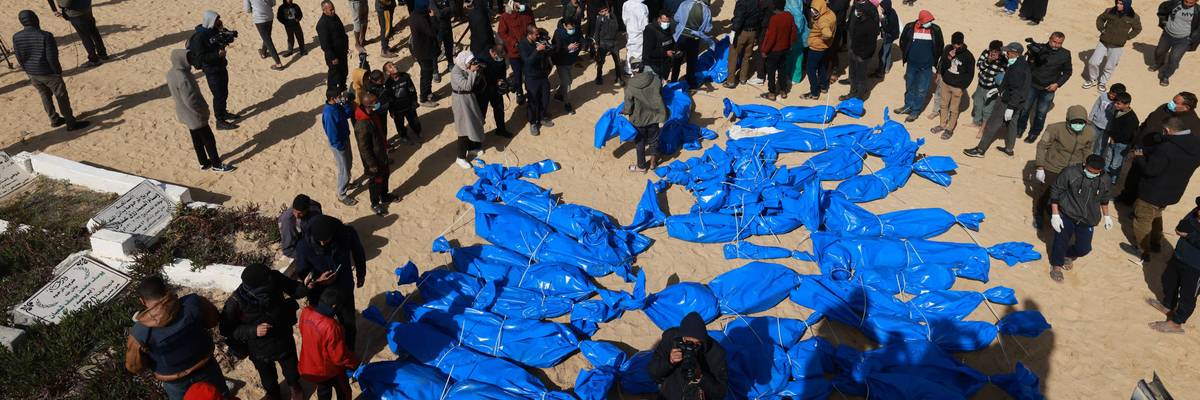
Palestinians watch as Gaza Health Ministry workers prepare to bury the bodies of unidentified Palestinians returned by Israel at a mass grave east of Rafah in the southern Gaza Strip on January 30, 2024. (Photo by Mohammed Abed/AFP via Getty Images)
An Israeli analysis published Tuesday examining the Gaza Health Ministry’s list of Palestinians killed during Israel’s US-backed annihilation of the Gaza Strip largely affirmed the official death count, while noting some imperfections in the 2,000-page document.
Haaretz, Israel’s oldest daily newspaper, dissected the Gaza Health Ministry’s (GHM) database of Palestinians killed by Israeli forces in Gaza, which at the time contained nearly 70,000 names—it’s now over 72,000—in part by using artificial intelligence to analyze the massive file.
“A consensus has taken shape: Even if the list has weaknesses, including the fact that it does not differentiate between combatants and civilians, it reflects the scale of the disaster inflicted on Gaza and its people,” article author Nir Hasson wrote. “It also forms the basis for allegations that Israel committed war crimes, crimes against humanity, and even genocide.”
Lee Mordechai, a historian at the Hebrew University of Jerusalem who says Israeli is committing genocide in Gaza, told Hasson, “It’s clear that the list isn’t 100% accurate and that it has errors, but I think they’re around 1%.”
Gabriel Epstein, an associate at the US-based Israel Policy Forum who was formerly skeptical of the GHM list, “now believes it is largely accurate and may even slightly undercount the dead,” according to Hasson.
“Epstein reviewed the list obtained by Haaretz,” the article states. “He found 24 duplicates and 38 entries with problems in the ID numbers. That means 99.91% of the entries were complete, with verified ID numbers. He also found that 64 deaths that had appeared on earlier lists were later removed, while 158 names removed by March of last year were added back.”
The GHM list notably only contains the names of people who died from combat-related violence, not from “hunger, disease, accidents, or the collapse of the health system.”
It also does not include the thousands of people who are missing and likely dead and buried beneath the rubble of the 80% of Gaza’s buildings that have been destroyed or damaged during the war.
Other research, including multiple peer-reviewed studies in the prestigious British medical journal the Lancet, have also concluded that the ministry was undercounting the number of people killed by Israel’s war on Gaza.
As for the issue of Hamas not differentiating between combatants and civilians on the ministry’s death list, an investigation last year by Israeli journalist and filmmaker Yuval Abraham and Guardian senior international affairs correspondent Emma Graham-Harrison analyzed classified Israel Defense Forces intelligence data showing that 5 in 6 Palestinians killed by Israeli troops through the first 19 months of the war were civilians. The probe obliterated IDF claims of a historically low civilian-to-combatant kill ratio.
Last September, Former IDF Chief of Staff Herzi Halevi—who was in command for much of the war—said that “over 10%” of Gaza’s approximately 2.2 million people “were killed or injured” since October 2023. Halevi’s acknowledgment tracked with GHM figures showing at least 228,815 people killed or wounded at the time.
In January, Israeli media outlets including Haaretz, the Jerusalem Post, and the Times of Israel reported that the IDF accepted the accuracy of GHM’s death count, which at the time stood at over 71,000.
Israeli officials and media, along with their supportive US counterparts during both the Biden and Trump administrations, once cast doubt upon or outright denied GHM figures because the ministry is under Hamas’ control. These aspersions came in addition to widespread Israeli and US denials of Israel’s forced famine and starvation deaths and IDF war crimes in Gaza.
“As the months have passed, claims of fabrication and exaggeration have largely remained confined to Israeli television panels,” Hasson wrote in the new analysis. “At the end of January, an apparent dispute over the number of dead seemed to end in Israel when a senior army source confirmed that the IDF recognizes that 70,000 people died, precisely the figure cited by Gazan authorities.”
“Even if the argument over the total number of dead is, for now, largely settled, disagreement in Israel continues over who the dead were,” he continued. “How many were gunmen, how many were affiliated with Hamas, how many were killed under circumstances that meet the conditions of international law?”
“None of this alters the stark figures in the table,” Hasson added. “Of the recorded deaths, 20,876, about 30%, are young girls, teenage girls, and women. Another 3,220 were aged 65 and over, including the final name on the list, Tamam al-Batsh, who was 110 when she died.”
While Israel officials continue to insist that GHM figures are “misleading and unreliable”—or even “fake”—Hasson noted the general consistency between Israeli and Palestinian tallies across past Israeli attacks on Gaza. During Operation Cast Lead (2008-09), the Palestinian count was 23% higher than Israel’s. For Operation Pillar of Success (2012), Israel’s tally of Gazan deaths was 11% higher than the Palestinian figure. In Operation Protective Edge (2014), the Palestinian count was 8% higher. And during 2021’s Operation Guardian of the Walls, Palestinian officials counted 10% more Gaza deaths than Israel.
The United Nations and US administrations of both major political parties have long acknowledged the GHM’s accounting of Palestinian casualties in Israeli attacks, including the assault that began in October 2023.
Hasson noted that “it has been increasingly harder to find Israeli officials commenting on the subject” of the GHM death count in the ongoing war as evidence of its accuracy mounts.
“Since the war began,” he said, “Israel has made no serious effort to demonstrate that the list is false or to present an alternative. It has not proven even once that a person listed as deceased is in fact alive.”
Wednesday, February 25, 2026
Canada Vows Aid for Cuba as Trump Oil Embargo Fuels Humanitarian Disaster
Mexico earlier this month also stepped up aid shipments to Cuba during the
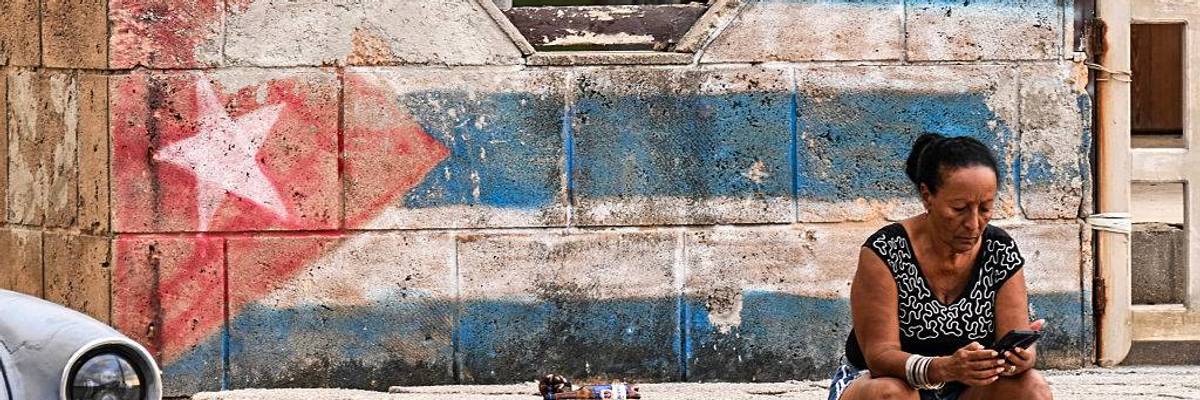
Trump administration’s oil embargo. A woman looks at her cellphone on a street in Havana on February 23, 2026. (Photo by Yamile Lage/AFP via Getty Images)
The Canadian government on Monday announced plans to send aid to Cuba, which is currently being squeezed economically by a US oil embargo.
As reported by the Associated Press, Canadian Foreign Minister Anita Anand revealed that the government is “preparing a plan to assist,” adding that “we are not prepared at this point to provide any details” of what it will entail.
A Canadian aid package to Cuba would be the latest rebuff to US foreign policy. The two long-time allies have been at odds since President Donald Trump took office last year and slapped hefty tariffs on Canadian products, while also vowing to make the country into the “51st state” of the US.
Canada wouldn’t be the first US ally to step up help for Cuba, as Mexico earlier this month sent two ships loaded with more than 2,000 tons of goods and food to the island nation.
The shipments to Cuba were aimed at easing the humanitarian crisis intensified by the Trump administration’s oil embargo, which began shortly after the administration invaded Venezuela and abducted President Nicolás Maduro in January.
Trump has vowed to slap tariffs on any country that sends oil to Cuba, although the US Supreme Court’s ruling last week slapping down his powers to unilaterally enact tariffs through the International Emergency Economic Powers Act has potentially neutered that threat.
Earlier this month, a group of United Nationshuman rights experts called the Trump blockade of Cuba “a serious violation of international law and a grave threat to a democratic and equitable international order,” and “an extreme form of unilateral economic coercion with extraterritorial effects.”
Medea Benjamin, co-founder of the anti-war group CodePink, traveled to Cuba recently and spoke to local residents who described the devastating impact of the oil blockade.
“With no gasoline, buses don’t run, so we can’t get to work,” Marta Jiménez, a hairdresser from Holguín, told Benjamin. “We have electricity only three to six hours a day. There’s no gas for cooking, so we’re burning wood and charcoal in our apartments. It’s like going back 100 years.”
Cuban fuel crisis: a Russian tanker is on route. Will Trump let it through?
The Russian oil-carrying tanker, identified by maritime tracking data as the Sea Horse and flagged in Hong Kong, is expected to arrive in Cuba in early March with nearly 200,000 barrels of fuel, most likely diesel, as per Kpler data. / pixabay
By bnl editorial staff & NewsbaseFebruary 23, 2026
A tanker widely believed to be carrying Russian fuel is heading towards Cuba, potentially setting the stage for a fresh confrontation between Moscow and Washington as the island struggles under a de facto US fuel embargo that has crippled power generation, transport and basic services.
The situation bears distant echoes of the Cuban Missile Crisis of 1962, when Soviet vessels carrying nuclear warheads brought the two superpowers to the brink of war. The stakes this time are incomparably lower, but Cuba could once more find itself at the centre of a geopolitical standoff, this time over desperately needed oil rather than nuclear warheads. Fulton Armstrong, the former CIA lead Latin America analyst, told the New York Times: "Since the Cuban Missile Crisis, this is the biggest step. And the Cubans will have to make a decision on whether to surrender."
The tanker, identified by maritime tracking data as the Sea Horse and flagged in Hong Kong, is expected to arrive in Cuba in early March carrying nearly 200,000 barrels of fuel, most likely gasoil, according to shipping data and analysis by maritime intelligence firm Kpler cited by Bloomberg. The cargo is believed to be of Russian origin, though neither Moscow nor Havana has confirmed the shipment. Russia's embassy in Cuba has denied publishing any official communication about the vessel, dismissing circulating reports, including claims that the tanker was being escorted by a Russian destroyer, as false. What is not in dispute is the scale of US efforts to prevent any fuel from reaching the island.
While the Trump administration has stopped short of formally declaring a blockade, it is functioning as one, the NYT reported, citing a US official who spoke on condition of anonymity.
The architect of the policy is Secretary of State Marco Rubio, the first US-born Cuban to hold the post, who has made no secret of his ultimate ambition. "We would love to see the regime change," he told Congress last month.
According to people familiar with the matter cited by Axios, Rubio has been conducting backchannel discussions with Raúl Guillermo Rodríguez Castro, grandson of former leader Raúl Castro, in what officials describe as an exploratory effort to identify a negotiated pathway to political transition, following a playbook Washington has already tested in Venezuela, where it cultivated relationships within the existing power structure ahead of Nicolas Maduro's removal.
President Donald Trump signed an executive order in late January declaring a national emergency over an "unusual and extraordinary threat" from Cuba, threatening tariffs on any country supplying oil to the communist-run island, already subject to a punishing trade embargo for over 60 years. The measures have succeeded in frightening off potential suppliers, with Mexico halting shipments despite President Claudia Sheinbaum's public misgivings.
A massive US naval deployment, the largest the Caribbean has seen in decades, has been enforcing Washington's oil embargo, building on the operational experience gained during the campaign against Venezuela that culminated in Maduro's capture in January. Caracas had long been Cuba's dominant oil supplier, accounting for roughly 58% of petroleum imports as recently as 2023, but its removal from the equation left the island scrambling for alternatives.
The deterrent effect has been tangible and swift. On January 19, a petrochemical tanker, the Mia Grace, departed Lomé, Togo, carrying what analysts believe was several hundred thousand barrels of diesel or fuel oil, reportedly purchased by Cuban state company Cubametales through a European intermediary. The African token of solidarity never arrived: midway through its Atlantic crossing, the vessel quietly altered its destination to the Dominican Republic. No shots were fired, no boarding took place: the mere prospect of US reprisals was enough.
According to a NYT analysis of shipping data, a separate vessel linked to Cuba subsequently made the five-day journey to Curaçao, consuming precious fuel reserves in the process, only to leave the port empty-handed. Shortly afterwards, the US Coast Guard stopped a Colombian fuel oil tanker that had approached to within 70 miles of Cuban waters, escorting it away from the island.
The case of the Ocean Mariner illustrates Washington's reach with particular clarity. According to the NYT, the vessel loaded around 84,500 barrels of fuel oil in Colombia in late January, transmitting its destination as the Dominican Republic before altering course towards Cuba on February 10. The following day, still some distance from the Cuban coast, it abruptly reversed course as a US Coast Guard vessel pulled alongside. The tanker was escorted into Dominican waters, where it sat full of fuel for several days before being directed north towards the Bahamas – the same destination used for Venezuelan tankers seized by US forces late last year.
Cuba's Foreign Minister Bruno Rodríguez has condemned the measures as illegal under international law, asserting Havana's right to import fuel from willing suppliers and describing US actions as naked political pressure. The United Nations has echoed those concerns, warning that failure to meet Cuba's energy needs risks triggering a humanitarian crisis.
The human cost, meanwhile, is already severe. Cuba generates more than four-fifths of its electricity from ageing Soviet-era oil-fired plants, and the supply shock has rippled through nearly every sector of life on the island. Blackouts lasting up to 20 hours a day have been reported across the country. Hospitals have postponed operations, water pumping stations have been disrupted, schools have cancelled classes and trash goes uncollected on Havana's streets as fuel-dependent municipal services grind to a halt. A shortage of jet fuel has forced major airlines to suspend routes and many tourist resorts to shut down, dealing a severe blow to an industry that provides a crucial source of hard currency for the cash-strapped island.
Rohit Rathod, a senior oil analyst at Vortexa, told Bloomberg he estimates the country's reserves could be depleted by late March, a timeline that could trigger social unrest severe enough to threaten the government. Cuba recorded zero oil imports in January, the first such month since 2015, and has received just one shipment so far in 2026, as per Kpler data.
For Russia, the Sea Horse's reported journey represents an opportunity to project influence close to US shores at a moment when Western sanctions have forced Moscow to seek alternative markets for its own fuel exports. Kremlin spokesman Dmitry Peskov has described Cuba's fuel situation as critical, accusing Washington of pursuing "unilateral coercive measures" and reiterating Moscow's readiness to support its long-standing ally. Russia, already heavily sanctioned over its invasion of Ukraine, has little additional trade exposure to US reprisals, a point Peskov himself made plain: 'We don't want an escalation, but on the other hand,” he said. “Our trade with the United States is almost nonexistent.”
Yet the Kremlin's willingness to act carries its own complications. Russia has extensive experience operating a shadow fleet of tankers and alternative insurance arrangements, infrastructure developed over three years of circumventing sanctions on its own fuel exports, and could in theory sustain a modest supply line to Cuba if Washington turns a blind eye. The question is whether it will.
Should the Sea Horse be permitted to discharge its cargo without interference, it could open the door to further shipments, handing Moscow a propaganda coup and raising questions about the credibility of US sanctions enforcement. There are parallels to China's continued purchases from Russia's Arctic LNG-2 plant over the past six months, despite those trades violating US sanctions – a pattern that has demonstrably weakened the deterrent effect of Western economic pressure.
Should Washington move to intercept the vessel, however, it would risk further straining relations with Moscow at a delicate moment, with Ukraine peace talks now tentatively under way as the full-scale invasion nears its fourth anniversary. What happens to the Sea Horse will say much about how far both sides are prepared to go.
Report: Product Tanker with Russian Fuel Appears Bound for Cuba
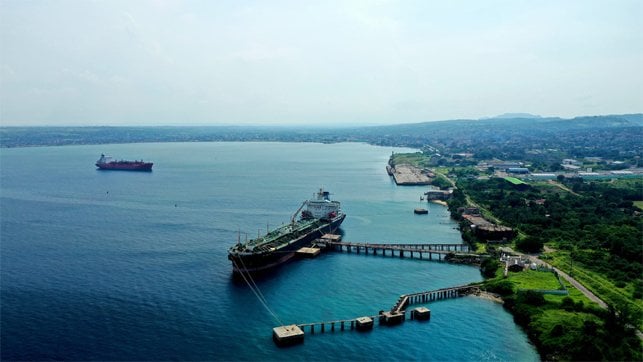
Tankers at the Cuban port of Matanzas in 2024 (posted by Eduardo Rodríguez Dávila)
A Chinese-owned MR tanker appears to have loaded a cargo of Russian fuel and is now heading toward Cuba. Based on an analysis of data by maritime intelligence firm Windward and Marine Traffic, the ship might be set to challenge the U.S. embargo on Cuba as early as next weekend.
Russian officials have repeatedly said that they were prepared to provide aid to Cuba and the Communist government since Donald Trump announced the country a “hotbed of spies” and threatened tariffs on any country that aided Cuba with fuel deliveries. Russian Deputy Foreign Minister Sergi Ryabkov spoke of potential financial aid, while Kremlin spokesperson Dmitry Peskov said discussions were underway about how Russia could provide assistance.
The Russian Embassy in Havana told Reuters earlier in the month that a fuel delivery was expected “soon,” while Russia also called for a diplomatic approach to Cuba. It pointed out the humanitarian needs on the island, with analysts suggesting the fuel supply was as low as 20 days. The United States cut off Cuba’s fuel supplies from Venezuela, but there was a report in The Economist that the United States might permit a humanitarian fuel delivery for cooking and to run the water system.
Windward and Marine Traffic are tracking the Hong Kong-flagged MR tanker Sea Horse (27,000 dwt). Built in 2002 and managed from China, the vessel appears to have undertaken a ship-to-ship transfer near Cyprus, with Windward reporting it likely loaded Russian middle distillate originating from the Black Sea ports. Windward says the vessel’s draft increased on February 8 and reports it could reach Cuba on March 2.
The ship’s AIS signal is transmitting that it is bound for Gibraltar. However, it passed Gibraltar days ago. The last estimates place it near the middle of the Atlantic, sailing due west. The Sea Horse is not under any sanctions.
If it reaches Cuba, it would be the first delivery since January 9. The U.S. stopped a crude oil tanker from leaving Venezuelan waters, and at least two or three other tankers have turned back, intimidated by the U.S. presence.
The tanker Ocean Mariner, as previously reported, sailed from Colombia and entered the Windward Channel off Haiti. The vessel made a sudden “U” turn and headed south of the Dominican Republic. The New York Times reported a U.S. Coast Guard vessel had approached the tanker and hailed it, inquiring about its destination. It said the Dominican Republic, and it has been loitering near Santo Domingo. It later proceeded to Nassau in the Bahamas, reportedly with a USCG shadowing its movements.
Another small tanker that regularly made the runs between Curacao and Cuba, The New York Times reports, also appeared to abandon a supply run. The Gas Exelero (3,100 dwt), the paper reports, sailed to Curacao in early February but returned to Cuba apparently empty. A third tanker, the Greek-owned Nicos IV (45,364 dwt), docked in Matanzas, Cuba, last month, but it was unclear if it had a cargo aboard. The vessels each have only represented a token supply that would do little to alleviate the long-term challenge.
It is unclear currently if the U.S. Coast Guard would interdict the Sea Horse as the vessel arrives in the Caribbean. So far, the U.S. appears only to have used its presence to intimidate vessels from approaching Cuba. The U.S. did permit a humanitarian aid shipment from Mexico to reach Cuba, but it did not have fuel supplies.
THE EPSTEIN CLASS
DOJ Under Fire for Withholding Epstein Files Related to Alleged Trump Child Sex Assault
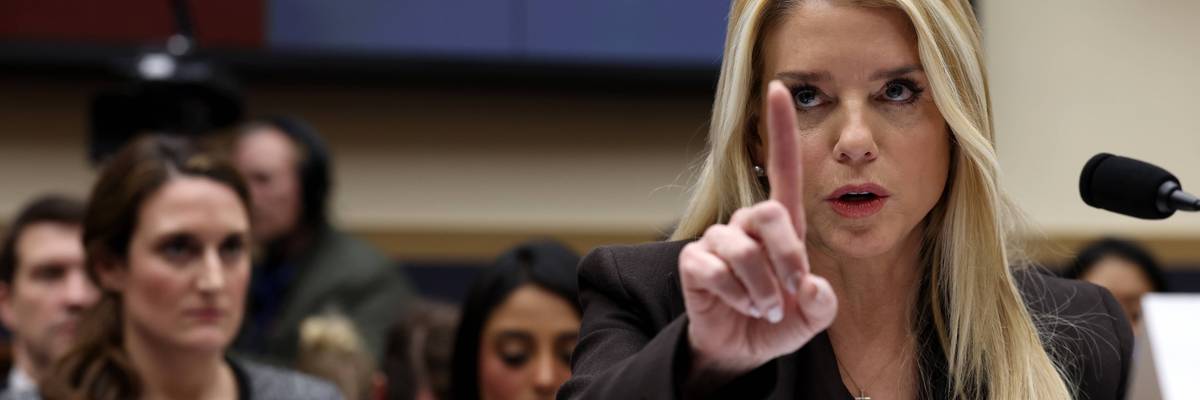
“Covering up direct evidence of a potential assault by the president of the United States is the most serious possible crime in this White House,” said one Democratic congressman. US Attorney General Pam Bondi testifies before the House Judiciary Committee on Capitol Hill in Washington, DC on February 11, 2026. (Photo by Win McNamee/Getty Images)
The top Democrat on the House Oversight Committee announced Tuesday that an investigation will be opened into the US Department of Justice’s withholding of Epstein files related to an alleged sexual assault on a 13-year-old girl committed by President Donald Trump decades ago.
“For the last few weeks, Oversight Democrats have been investigating the FBI’s handling of allegations from 2019 of sexual assault on a minor made against President Donald Trump by a survivor,” Oversight Committee Ranking Member Robert Garcia (D-Calif.) said in a statement.
“Yesterday, I reviewed unredacted evidence logs at the Department of Justice. Oversight Democrats can confirm that the DOJ appears to have illegally withheld FBI interviews with this survivor who accused President Trump of heinous crimes,” he continued. “Oversight Democrats will open a parallel investigation into this.”
“Under the Oversight Committee’s subpoena and the Epstein Files Transparency Act, these records must immediately be shared with Congress and the American public,” Garcia added. “Covering up direct evidence of a potential assault by the president of the United States is the most serious possible crime in this White House cover-up.”
The Trump administration is accused of continuously flouting the Epstein Files Transparency Act—which mandated that all materials related to convicted child sex criminal and longtime former Trump friend Jeffrey Epstein be released by December 19. But critically, the law gives Attorney General Pam Bondi wide discretion to redact large amounts of information that could harm “national security.”
Files on Epstein—who died under mysterious circumstances in a New York City jail cell in 2019 while awaiting trial on federal sex trafficking charges—that have not been released to the public despite the transparency law “include what appears to be more than 50 pages of FBI interviews, and notes from conversations with a woman who accused Trump of sexual abuse decades ago when she was a minor,” NPRreported Tuesday.
That minor was allegedly introduced to Trump around 1983, when she was 13 years old.
“[REDACTED] stated Epstein introduced her to Trump, who subsequently forced her head down to his exposed penis which she subsequently bit,” a DOJ file on the alleged incident states. “In response, Trump punched her in the head and kicked her out.”
The child is one of more than two dozen women who have accused Trump of raping, sexually assaulting, or sexually harassing them.
In 2023, a civil jury in New York City found Trump civilly liable for sexually abusing and defaming journalist E. Jean Carroll and awarded her $5 million. In a separate defamation trial, Trump was ordered to pay Carroll another $83.3 million.
Trump, who denies any wrongdoing, is challenging these civil awards. Trump also denies an allegation that he and Epstein “brutally raped” a 13-year-old girl identified by the pseudonym “Katie Johnson” at a 1994 party.
As NPR reported Tuesday: Other files scrubbed from public view pertain to a separate woman who was a key witness for the prosecution in the criminal trial of Epstein’s co-conspirator, Ghislaine Maxwell, who is serving a 20-year prison sentence for sex trafficking. Maxwell is seeking clemency from Trump. Some of those documents were briefly taken down and put back online last week, while others remain hidden, according to NPR‘s comparison of the initial dataset from January 30 with document metadata of those files currently on the Justice Department website.
Earlier this month, Rep. Jamie Raskin (D-Md.) said that the unreacted Epstein files, which he had viewed, contained “more than million” references to Trump.
Robert Glassman, an attorney representing a woman who testified against Maxwell, blasted the DOJ for its “ridiculous” handling of the Epstein files.
“The DOJ was ordered to release information to the public to be transparent about Epstein and Maxwell’s criminal enterprise network,” he told NPR. “Instead, they released the names of courageous victims who have fought hard for decades to remain anonymous and out of the limelight. Whether the disclosures were inadvertent or not—they had one job to do here and they didn’t do it.”
Responding to the NPR report, Rep. Ted Lieu (D-Calif.) said on X, “I guarantee if these files exonerated Trump, they would have been released,” adding that Bondi “must resign, and she must be prosecuted.”
Democratic National Committee Rapid Response Director Kendall Witmer released a statement Tuesday asserting that “Donald Trump continues to lie about his relationship with Jeffrey Epstein, while his administration works overtime to hide the truth about Epstein’s heinous crimes from the American people.”
“Tonight at the State of the Union, Trump will be in the same room as survivors of Epstein’s crimes, whom he has denied transparency and justice,” Witmer added. “He and his administration must be held accountable for protecting pedophiles.”
Democratic lawmakers including Garcia, Raskin, and Senate Minority Leader Chuck Schumer (D-NY) have invited Epstein survivors as guests to Tuesday night’s speech by Trump.
Elisa Batista, campaign director at the advocacy group UltraViolet Action, said in a statement Tuesday that we are in solidarity with the courageous survivors showing up in defiance of Trump’s attempts to change the conversation at the State of the Union tonight.“
Batista continued: Their bravery represents the will of millions of Americans who are demanding accountability not just for all those who enabled Jeffrey Epstein, but also for public officials like Attorney General Pam Bondi who continue to protect those abusers and enablers by refusing to release all of the Epstein files.
When it comes to the Epstein class, the real state of the union remains unchanged: These powerful abusers and enablers believe they will be shielded by their wealth, networks, or influence. Now, like before, it’s been the fearless insistence of survivors that’s stood in the way of efforts by politicians like Trump and Bondi to sweep the full legacy of Epstein’s child sex trafficking network under the rug.
“No matter how much Trump and Bondi try to distract us from the fact that they broke the law to keep the public in the dark about the extent of Epstein’s child abuse, we, survivors and allies, will not allow them to forget their role in offering cover for Epstein and his enablers,” Batista added.
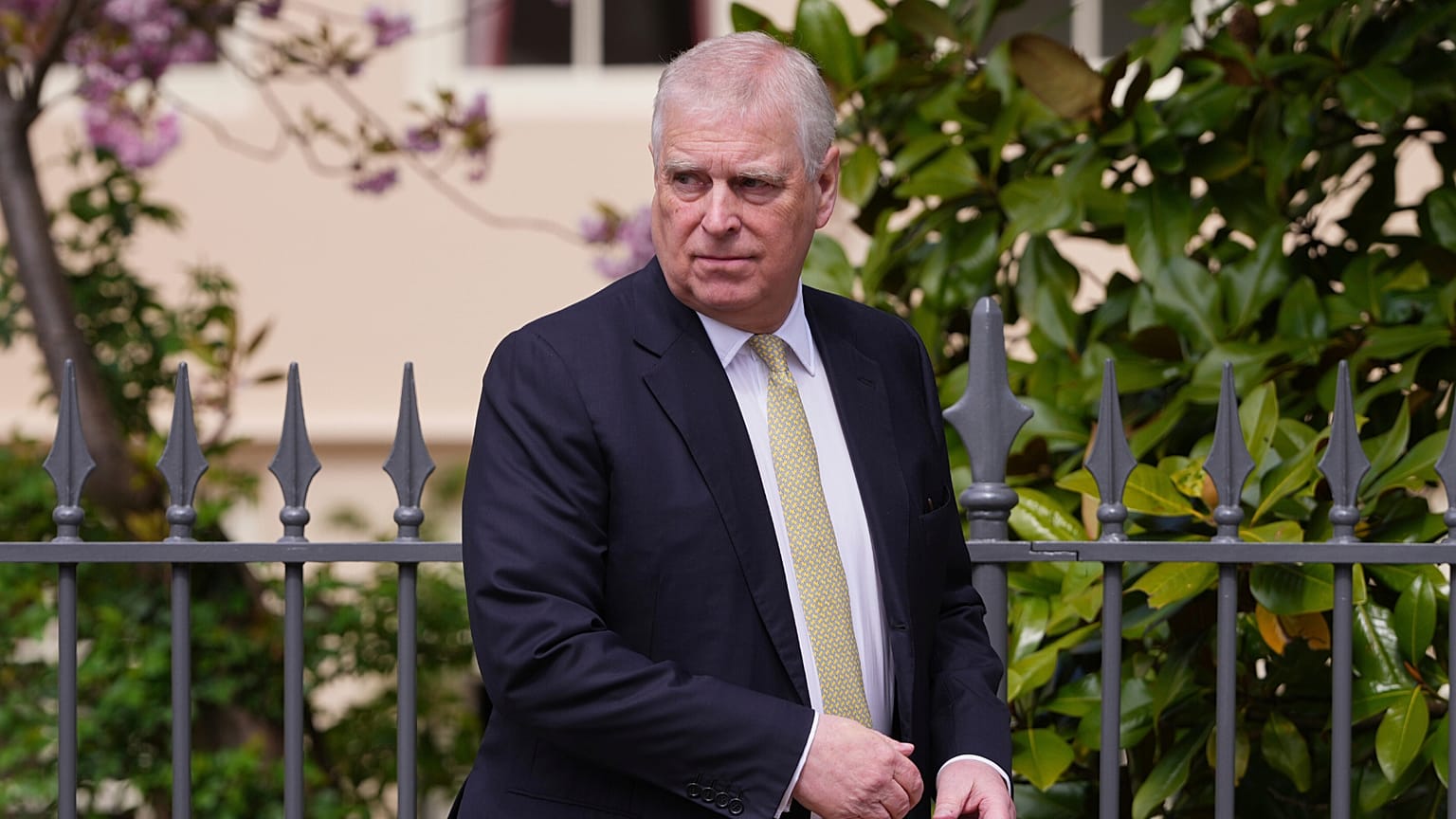
Activists hang Prince Andrew photo in Louvre to protest Epstein-related misconduct Activists hung a framed photograph of Andrew Mountbatten-Windsor, the younger brother of Britain's King Charles, in Paris’ Louvre museum Sunday. The photo showed the former Prince Andrew shortly after his arrest last week for suspicion of misconduct in public office, related to his association with convicted sex offender Jeffrey Epstein.
Activists with the anti-billionaire group Everyone Hates Elon said they put the photo in the Louvre to send a message that Mountbatten-Windsor should be brought to justice.
Taken by the Reuters news agency, the photo is an unflattering shot of Mountbatten-Windsor in the back of a car, attempting to hide from photographers after leaving a police station on the day of his arrest.
Prince Andrew arrested
The photo, which was accompanied by the caption "He's Sweating Now", was on display near the Mona Lisa, which had previously been splashed with soup by environmental activists.
The photo was up for 15 minutes before Louvre staff removed it.
Mountbatten-Windsor was arrested on Thursday on suspicion of misconduct in a public office, following allegations that he sent confidential government documents to Epstein while serving as a trade envoy.
British police said on Friday they were contacting former protection officers who worked for Mountbatten-Windsor and were urging anyone with allegations of sex offences connected to Epstein to come forward. 'He's sweating now'
The caption posted under the photo hung in the Louvre referenced to a claim made in court by Virginia Giuffre, who accused Mountbatten-Windsor of sexually abusing her when she was a teenager at properties owed by Epstein or his associates.
She said that Mountbatten-Windsor had sweated on her at a nightclub. Mountbatten-Windsor, who has denied meeting Giuffre, said in a BBC interview that he could not sweat.
He settled a civil lawsuit in 2022 brought in the United States by Giuffre, who died by suicide last year.
Mountbatten-Windsor has always denied any wrongdoing in relation to Epstein and said he regretted his "ill-judged association" with him.
(with Reuters)
UK government to release confidential documents on former prince Andrew's appointment as trade envoy
Lawmakers approved a motion Tuesday demanding publication of the documents, after Andrew Mountbatten-Windsor was arrested on charges related to allegations that he shared government reports with Jeffrey Epstein while he was trade envoy.
The British government will release confidential papers related to the former Prince Andrew’s appointment as trade envoy after pressure from lawmakers in a scathing parliamentary debate
During Tuesday's debate, lawmakers called for greater accountability from the royal family and said the king’s brother had put his friendship with Jeffrey Epstein ahead of his duty to the country.
A motion was approved demanding publication of the documents, after Andrew Mountbatten-Windsor was arrested on charges related to allegations that he shared government reports with Epstein while he was trade envoy. Prime Minister Keir Starmer’s government backed the motion, assuring its passage.
“Frankly, it is the least we owe the victims of the horrific abuse that was perpetrated by Jeffrey Epstein and others, the abuse that was enabled, aided and abetted by a very extensive group of arrogant, entitled and often wealthy individuals in this country and elsewhere,” Trade Minister Chris Bryant said for the government.
'Rude, arrogant and entitled'
Mountbatten-Windsor, who was stripped of his royal titles last year, is being probed by police over allegations that he shared sensitive documents with Epstein during his time as envoy.
The former prince was arrested last week on suspicion of misconduct in public office, and his brother King Charles III has said the "law must take its course".
Liberal Democrat leader Ed Davey said Andrew's association with Epstein, and that of Mandelson, who was bailed in the early hours of Tuesday, were a "stain on our country".
"We must begin to clean away that stain with the disinfectant of transparency," he said.
The Liberal Democrats had deployed a little-used parliamentary mechanism intended to force ministers to disclose files, which stem from when Tony Blair was Labour prime minister 26 years ago.
Bryant described Mountbatten-Windsor as being engaged in a constant "self-enriching hustle'' — a "rude, arrogant and entitled man who could not distinguish between the public interest, which he said he served, and his own private interest.''
While the government agreed to release the files, Bryant said the publication of some documents may be delayed until police finish their investigation.
The push for the files on Andrew comes as the government prepares to release in early March a first set of documents relating to the 2024 appointment of Mandelson as UK ambassador in Washington.
There was a ghost at Trump's feast — it will be back to haunt him soon enough
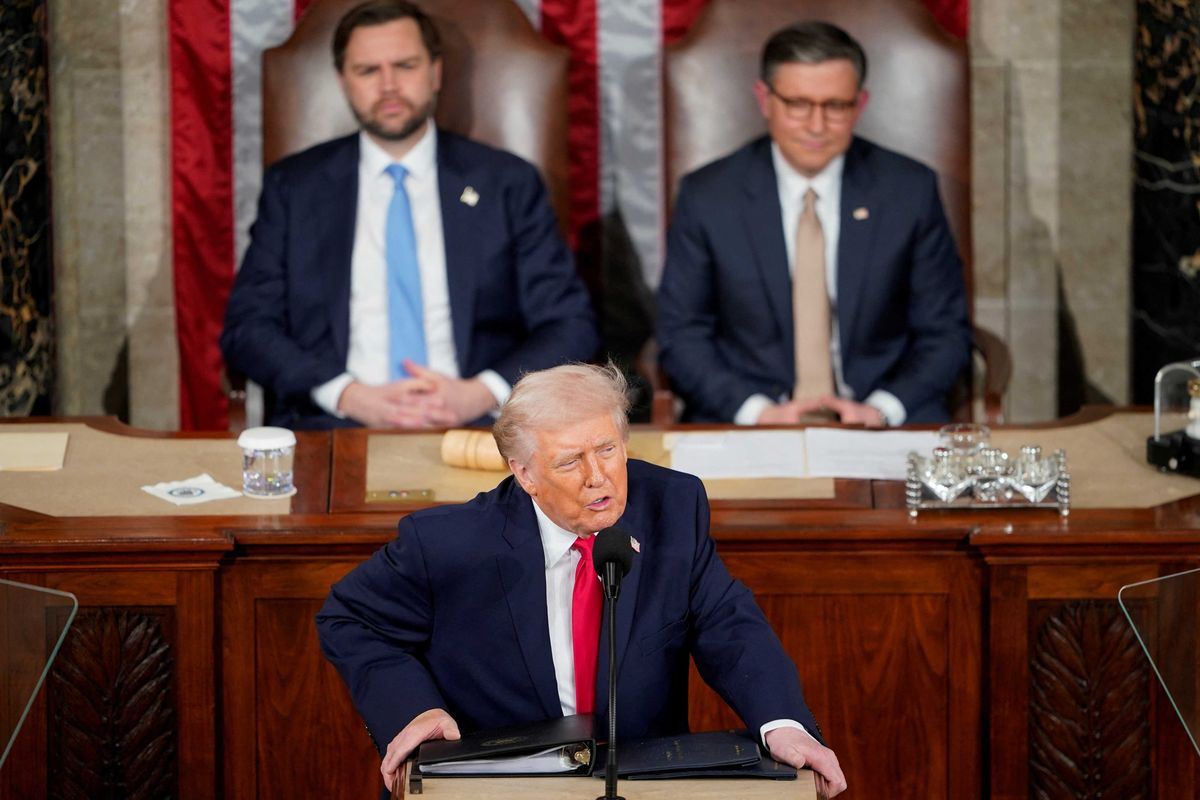
Donald Trump delivers the State of the Union address. REUTERS/NATHAN HOWARD
Donald Trump’s State of the Union speech was pretty much exactly what we expected: one that depicted a nation utterly unlike the one we live in: where the economy is glowing with health, mass deportations of undocumented immigrants are going swimmingly, democracy is flourishing, everyone is ecstatic over our leadership, and respect from the international community stands at an all-time high.
This delusional picture was painted by the president over 107 torturous minutes, a wildly rambling explosion of syllables that claimed to describe “The Golden Age of America” but in fact flailed through lies, half-truths, exaggerations, and condemnations that bore little resemblance to reality.
It was a charade as shameless as the man himself, using war heroes, gold medal-winning Olympic athletes, and victims of immigrant crime as political props. It employed the most violent, gory imagery to describe incidents intended to emphasize the ongoing need for mass deportations but that made him sound like a bloodthirsty sadist.
Oh, and the Epstein Files? Never came up. Trump failed to acknowledge the survivors who were in the chamber. Shocker!
Trump claimed to have “inherited a nation in crisis” with a “stagnant economy” and a “wide open border” as well as “rampant crime,” but in a single year to have “achieved a transformation like no one has ever seen before and a turnaround for the ages” and an “economy that is roaring like never before.”
In fact, the economy is in free fall and he has divided the country like never before while threatening to transform our democracy into a fascist state — largely succeeding in turning allies into our enemies and peaceful communities into strife-torn zones of fear and paranoia.
A few of the most cringeworthy moments:“I will always protect Social Security and Medicare!” Trump declared. Oh yeah, except for that more than $1 trillion in catastrophic cuts to Medicaid and a ravaging of Social Security’s infrastructure.“Stand up if you believe the first duty of the American government is to protect American citizens, not illegal aliens,” Trump proclaimed. Most Democrats didn’t, giving Trump his midterm campaign photo op as he shook his head and scowled. “Liar! You killed Americans!” shouted Rep. Ilhan Omar (D-MN). He claimed once again to have “ended eight wars” but stopped short of demanding the Nobel Peace Prize. A grateful nation sighed in silent relief.Trump bragged about booting 2.4 million people off food stamps, as if helping people starve was a virtue.As Trump dove into immigration, crime, alleged election insecurity, and gender-related issues, he motioned toward the stone-faced Democrats and went off-script. “These people are crazy!” he shouted. “Boy oh boy, we’re lucky we still have a country with people like this. Democrats are destroying our country, but we’ve stopped it just in the nick of time.” A clear case of projection. He claimed his invisible policies would soon drive down high health-care costs somehow caused by Democrats, despite the elimination of Affordable Care Act subsidies in Trump’s so-called Big Beautiful Bill and millions facing accelerating charges or being booted off their insurance entirely.“Tariffs will replace income tax!” he declared, purportedly as a way to fund the federal government. This spoke to Trump’s habit of just saying whatever sounds good in the moment, even if it’s utterly insane.There was his quick aside rejecting his loss in 2020 (you may have heard this before) by noting almost under his breath, “This should be my third term. Strange things happen.” Did this mean he could have gone against the Constitution and run for a third term had he won in 2020? Is his predicted refusal to ever leave office what he meant by “Strange things happen”? It's unclear, like much of what he babbles. Trump is appointing Vice President J.D. Vance to head up a “war on fraud” task force. Speaking of putting the wolf in charge of the hen house.“The cheating in our elections is rampant!” Trump screamed. “It’s rampant … They want to cheat. They have cheated. And their policy is so bad that the only way they can get elected is to cheat and we’re going to stop it.”
This was the same old BS. But it was also incredibly dangerous, continuing to push the idea that the only way the Democrats win is through fraud when in fact that’s the Republican plan, for the midterms and beyond. It serves to justify whatever Trump will do, from the SAVE Act to stationing ICE agents at the polls to working the courts to God knows what else.
The constant standing ovations from Republicans seemed especially prolonged, the “spontaneous” chants of “USA! USA!” particularly boorish and annoying.
As many voices on social media were quick to point out, this sounded more like a MAGA campaign rally than an address on how well, or not, the union was doing. Trump has only one gear. He doesn’t do unity or compassion or humility. It’s all about, “I’m amazing,” “I’ve done more and better than anyone,” and “These other guys are all scumbags and lunatics.”
But Trump’s bluster is destined to have the opposite effect of what he intends. The nearly two-thirds of the country that disapprove of his performance aren’t interested in a deceiver and a braggart. It will only infuriate the multitudes who know he’s feeding them a steady diet of horse manure.
A carefully choreographed sideshow like the one Trump centered on Tuesday may give him a small popularity bounce this week, but it won’t last. In fact, the blizzard of false claims is fated to backfire and send his numbers plummeting further.
Whether or not this even matters to him is unclear. But it should rightly scare the hell out of those Republicans facing elections in November.
Ray Richmond is a long-time journalist/author and an adjunct professor at Chapman University in Orange, CA.
OPINION
This MAGA fixation proves dystopia is now at our doorstep
Women wearing MAGA hats attend a march in Washington. REUTERS/Aaron Schwartz
The dining room table is the civic and moral hearth of our house on Constitution Street. Upon it rest a stack of utility and other bills to be sorted and paid (with cursing as necessary), issues of various magazines including The New Yorker and Fortean Times, a dog-eared Tom Wolfe anthology, and a shaker of sea salt, a squeeze bottle of raw honey and a red-topped dispenser of soy sauce. There are chocolates still being rationed from Valentine’s Day, an airplane plant, and dozens of other artifacts of daily living.
The thing that is new on the table is Kim’s application for a passport.
I picked it up when I went downtown to the post office the other day, knowing she might need it. She has studied it and made lists of documents required, some of which are at hand and others which are not. She has her birth certificate, but unless she can find legal evidence of the dissolution of her past marriage, she’ll have to request those from Missouri.
It’s not that we’re planning a trip out of the country, but that Kim would like to keep voting. She’s cast a ballot in every general election since she turned 18 and became eligible, but MAGA-inspired legislation kicking around in the U.S. House and Senate would, if passed, impose onerous new rules that require proof of citizenship, such as a birth certificate. For married women who have taken a husband’s last name, now or in the past, one of the few viable options would be a passport.
Dubbed the SAVE Act, for “Safeguard American Voter Eligibility,” the legislation would do just the opposite and disenfranchise millions. The House recently passed, 218-213, an amended version of the act that replaces the document requirement with a photo ID provision and directs states to submit voter rolls to the Department of Homeland Security. Since 2012, Kansas has required voters to show photographic identification at the polls. Eleven states, including Kansas, have already agreed to hand over voter data to the feds.
But Republicans have ratcheted up rhetoric around the bill to further Trump’s (and Kansas Attorney General Kris Kobach’s) claims of massive voter fraud by undocumented migrants. These claims have been repeatedly and soundly debunked, with a recent government review flagging only about 1 in 5,000 registrations. But even that number may be overstated. The verification tool used by the government is prone to mistakenly flag some citizens as potential noncitizen voters. With MAGA’s legions preparing for an all-out assault on voting rights before this fall’s midterm elections, it seems prudent for Kim to have her newly-minted passport in hand before going to vote.
This worry, on an otherwise bright February week in east central Kansas when snow and ice was just a memory, was yet another example of dystopia at the doorstep. This “show me your papers” strategy is one long favored by authoritarian regimes, past and present. The goal is to discourage voting by making it as difficult, or as risky, as possible. Also, the SAVE Act neatly folds into the Trumpian obsession with who is and who isn’t American, a centerpiece of his tinpot regime from the beginning of his second term.
The Supreme Court will hear challenges to his executive order to end birthright citizenship on April 1. This is so mind-numbing I don’t even have a joke for the date. Words and reason appear poised to fail us, given the current bench.
Among the reasons I rely so heavily on books in these columns is for the galaxy of ideas they contain. Books are the cultural currency of a rational civilization, and when you find the right book to cite, it either invokes a knowing response in the reader or, if they are unfamiliar with the title, a curiosity about the work mentioned. There are a handful of books that nearly everyone has read, or has been forced to read in high school, ranging from Fitzgerald to Orwell, that are particularly effective in illustrating a point.
Federal District Judge Cynthia Rufe also reached for George Orwell in issuing her Feb. 16 decision that the Trump administration could not scrub references to George Washington’s enslavement of nine Black people from a National Parks Service site in Philadelphia.
Rufe prefaced the ruling with a passage from Orwell’s dystopian novel, Nineteen Eighty-Four:
All history was a palimpsest, scraped clean and reinscribed exactly as often as was necessary. In no case would it have been possible, once the deed was done, to prove that any falsification had taken place.
“As if the Ministry of Truth in George Orwell’s Nineteen Eighty-Four now existed,” Rufe began, “with its motto ‘Ignorance is Strength,’ this Court is now asked to determine whether the federal government has the power it claims — to dissemble and disassemble historical truths when it has some domain over historical facts. It does not.”
The city of Philadelphia sued the Trump administration after it removed exhibits about slavery from an outdoor exhibit on the site of a house once used by presidents Washington and John Adams. The removal followed an executive order last year to eliminate “divisive narratives” from museums and sites operated by the federal government. Although Washington had nine enslaved people at the Philadelphia home, during his life nearly 600 enslaved persons lived or worked at his Mount Vernon estate in Virginia.
“In its argument,” Rufe writes, “the government claims it alone has the power to erase, alter, remove and hide historical accounts on taxpayer and local government-funded monuments within its control. Its claims in this regard echo Big Brother’s domain” in Nineteen Eighty-Four:
The largest section of the (government’s) Records Department consisted simply of persons whose duty it was to track down and collect all copies of books, newspapers, and other documents which had been superseded and were due for destruction.
“The government here likewise asserts truth is no longer self-evident, but rather the property of the elected chief magistrate and his appointees and delegees, at his whim to be scraped clean, hidden, or overwritten. And why? Solely because,” Rufe writes, “as Defendants state, it has the power.”
Rufe is not only sounding the alarm of an encroaching dystopia, but is referencing the most famous line from the document upon which American democracy is built, the Declaration of Independence.
“We hold these truths to be self-evident, that all men are created equal, that they are endowed by their Creator with certain unalienable Rights, that among these are Life, Liberty and the pursuit of Happiness.”
It is the greatest sentence ever written, asserts a new book by historian Walter Isaacson. It may not rank as a literarily perfect sentence, but it is undoubtedly the most revolutionary and influential political statement put to paper. It was an aspirational sentence, an idea that we have spent the past 250 years trying to grow into, our journey marked by grievous failure and luminous success.
Voting equality was at the center of this struggle, with Black persons and women and young people and Native Americans claiming hard-won victories. But now we are sliding back into a regressive past through gerrymandering and legislation in red states to disenfranchise or suppress voters. The latest front in the assault on voting is a move, articulated by Trump earlier this month, to nationalize elections.
Never mind that elections are constitutionally controlled by the states. Nationalizing elections would create chaos and fear and provide an excuse for Trump to send armed federal agents to monitor polling places. Those boots could belong to ICE, and they could be expected to use the same restraint as they did in Minneapolis, where two American citizens were shot to death while observing the deportation surge there.
Add to this nightmare scenario the actual warehousing of migrants (and presumably some citizens) snared in immigration sweeps. It used to be that “warehousing” was a term for prison overcrowding, but under the Trump administration it has become a literal strategy. ICE, now the highest-funded law enforcement agency, is buying or attempting to buy warehouses in at least 18 sites across the country to provide space for an additional 100,000 detainees. Some of the purchases, such as in Kansas City, Missouri, have fallen through because of public outcry. Elsewhere, such as in Socorro, Texas, the $38 billion program advances as warehouses are slated to become concentration camps, housing thousands of people. The Socorro facility alone is expected to hold 8,500 individuals.
To call these facilities anything but concentration camps is to deny reality. For comparison, some of the mass internment sites that held Japanese Americans during World War II were similar in size. Camp Amache at Granada, Colorado, held 7,500 over an area of about one square mile.
If we don’t change course, America is about to make a terminal mistake driven by racism and blatant criminal intent. Racist because ICE isn’t stopping white people on the street, unless they’re protesting. Criminal because due process (which under the Constitution is guaranteed even to noncitizen migrants) is being denied. What is emerging is the kind of dual state historians have warned us about.
The rule of law continues to function for one segment of society, those at the top, whose wealth or cultural or political privilege keeps their environment relatively stable. Their livelihoods and civil rights are not being threatened. In fact, if they happen to be connected to the current regime, their lives might be temporarily better than ever. But at the other end are the undocumented migrants who have been unjustly blamed for stealing elections and taking away American jobs and who are subject to capture, warehousing and deportation. In between are otherwise ordinary Americans whose careers and reputations and sometimes lives are at risk for having liberal tendencies such as speaking out on behalf of the oppressed, teaching history as fact and not propaganda, or leading lives of personal nonconformity.
Democracy requires the balancing of conflicting values, an adherence to an equitable rule of law, the protection of vulnerable populations, elections conducted in nonpartisan safe zones, and checks on the disproportionate or capricious use of power. Dystopias – both real and fictional – despise all of these.
In 2024, on the occasion of my 100th Kansas Reflector column, I examined America’s growing fascination with fascism. I also described how opinion editor Clay Wirestone had dubbed my brand of commentary as “late-breaking history.” What I have done, in most of my pieces, is to link some current event to something similar in the past. Today you are reading my 200th opinion essay, and the speed of the political moment over two years has outstripped my ability to compare it to something historical.
Like Judge Rufe, I rely on Orwell.
At the end of Nineteen Eighty-Four, Winston Smith is broken by the state. He has betrayed his lover, Julia — and she him. Through gin-scented tears, Winston has finally surrendered and come to “love” Big Brother.
That’s the end of the story, but not the book.
In an appendix, Orwell gives us the “Principles of Newspeak,” the totalitarian language of the state. Newspeak, a kind of propagandist babble, was in the novel used to control the masses by changing history and purging language of original thought. All language must be scrubbed and bent to conform to ideology, although there were some remnants of the past that were difficult or unsuitable for transforming into Newspeak. The example given that was impossible to change or classify as anything other than CRIMETHINK began like this:
We hold these truths to be self-evident …
That was written in 1949.
Well, I guess I found a historic hook after all.
The passport application remains on the dining room table, waiting for Kim to gather the rest of the documents required. With luck, she and millions of other American women won’t have to rely on their passports to vote come November. Without luck, her passport — and mine — just might be needed for an unexpected trip out of the country. Or across state lines.
Max McCoy is an award-winning author and journalist. Through its opinion section, the Kansas Reflector works to amplify the voices of people who are affected by public policies or excluded from public debate. Find information, including how to submit your own commentary, here