Showing posts sorted by relevance for query Lac-Megantic. Sort by date Show all posts

Wednesday, March 01, 2023

East Palestine crash highlights dangers of toxic chemicals transported by rail

Ten years ago, a train loaded with crude oil derailed in Lac-Megantic, Quebec, killing dozens


The aftermath of the derailment of a train carrying hazardous waste in East Palestine, Ohio. Reuters

Willy Lowry
Washington
Feb 28, 2023

When I first saw the images of overturned train cars, fire and black smoke billowing up into the sky above East Palestine, Ohio, I was immediately transported back to the nightmare scene of a wet July morning nearly 10 years ago, when a train carrying crude oil derailed in Lac-Megantic, Quebec.

In the early hours of July 6, 2013, 73 train carriages parked for the night on the outskirts of town broke free from their moorings and began barrelling downhill, picking up speed on the way.

After hitting a bend in the track as they entered the centre of town, the cars — loaded with the highly flammable and toxic fuel — slammed into the ground and buildings, killing nearly 50 people, some as they slept, others as they danced the night away at a popular bar.

As a cub reporter for the Canadian Broadcasting Corporation, I was there, witnessing the shocking aftermath.

I’ll never forget the thick, black smoke that hovered over the once picturesque village of 6,000 people.

In those early hours, it was not yet apparent that this would be one of the worst disasters in Canadian history, nor that it would reverberate across the country for years to come, as questions of rail safety still linger.

As I pulled my car to a stop next to a ribbon of red caution tape signifying that this was as close to the burning village that I would be able to get, the severity of the situation quickly became apparent.


Firefighters douse a blaze after a train loaded with oil derailed in Lac-Megantic, Quebec, on June 6, 2013. AFP


Helicopters circled above as throngs of firefighters ran helplessly towards the blaze, which by that point had already been burning for more than six hours.

Acrid smoke hung in the thick summer air, enveloping building after building and masking the pristine lake that gives the town its name.

I started to talk to the handful of residents who were lingering by the cordon trying to see what remained of their town.

Everyone I spoke to that morning knew someone yet to be accounted for.

For more than a century, the railway ran through the heart of downtown Lac-Megantic, connecting Montreal to eastern Canada. In the late 19th century when the railway was built, it was an economic lifeline that allowed the village to grow and prosper into a thriving tourist town.

It was a huge victory for burgeoning communities across Canada to get a rail line. It would often mean the difference between withering up or blossoming into a real destination.

But that lifeline turned into a fiery inferno that changed Lac-Megantic and the country forever.

In the aftermath of the explosion, the town’s then-mayor Colette Roy-LaRoche and other officials called for tighter regulations on rail safety across North America.

Ms Roy-LaRoche even travelled to Washington in 2014 to ask the US Congress to act.

She attended an event at the Capitol with other North American mayors and, according to Canadian media at the time, no members of Congress bothered to show up, choosing instead to send staffers.

In 2015, the US Department of Transportation and Transport Canada agreed to phase out the DOT-111 tankers that were involved in the Lac-Megantic tragedy and widely used to carry fuel and other flammable substances across North America.

But now, nearly 10 years later, another tragedy has unfolded on the continent's criss-crossing tracks, once again raising questions about rail safety.

Roughly 25 million Americans live near rail tracks where crude oil and other chemicals are transported.

Why are trains carrying toxic chemicals allowed to travel along tracks that go through town after town after town, exposing these populations to potential danger?

Derailments are more common than one might think, with 1,093 occurring in the US last year.


Portions of a Norfolk and Southern freight train on fire after it derailed in East Palestine, Ohio. AP


While the vast majority of derailments are simply minor nuisances for the rail companies, some have the potential to cause great harm.

In the case of East Palestine, fortunately no one was killed but the environmental and health implications are extremely troubling.

Federal and state officials have said it is safe for residents to return to their homes, but locals appear distrustful of that assessment with some complaining of “mystery illnesses” — about 45,000 animals have died in the area.

Some residents are reportedly suffering from nausea, headaches, rashes and other symptoms believed to linked to the incident. Others say their house pets are sick or have died.

“I think this should be a wake-up call for the value of investing in prevention in terms of people's lives and economic costs,” said Mathy Stanislaus, executive director of the Environmental Collaboratory at Drexel University and a former assistant administrator at the Environmental Protection Agency under Barack Obama.

The rail industry may not have adequately heeded the wake-up call from Lac-Megantic, but it gets another chance to from East Palestine. Until it does, how many more will needlessly suffer?

Updated: February 28, 2023,

Wednesday, July 05, 2023

Ten years after Lac-Megantic rail disaster, fish not biting 'like they used to'

Story by The Canadian Press

© Provided by The Canadian Press

LAC-MÉGANTIC, Que. — Pierre Grenier says that ever since the 2013 train derailment in Lac-Megantic, Que., spilled 100,000 litres of crude oil into the Chaudière River, the fishing hasn't been the same.

Anglers like him are catching fewer fish, and their catches are increasingly adult fish, a sign that fewer fish are being born. The fish, Grenier said, "don't bite like they used to."

Experts with Quebec's Environment Department will be deployed in the coming weeks to study the rehabilitation of the river since a runaway train carrying crude oil derailed and exploded 10 years ago, killing 47 people and destroying parts of downtown. The department says it will analyze levels of hydrocarbons in river sediments, the health of animals that live on the riverbed and the overall state of fish populations.

Grenier, president of Lac-Megantic's association of hunters and anglers, says his group has helped the province maintain the health of the region's fish stocks, including by introducing new species into Lake Megantic, which feeds the Chaudière River. But, he said, stocking the lake hasn't had the desired effect.

"We stocked brown trout four years after the disaster, but anglers aren't catching them," he said. "Is the water suitable for the feeding and reproduction of fish? If it's contaminated, we need to know."

Grenier pointed to the location of the spill, where the lake drains into the river. "Right here, the water was full of oil, and it was flowing down into the Chaudière River. Have any toxins remained throughout the lake?" he asked, adding that he hopes the upcoming studies by the Environment Department will answer the question.

In 2015, a summary report from the Environment Department concluded that fish caught at multiple stations along the river showed more deformities and other anomalies than in any other river in the province.


The last study by the provincial government on the effects of the oil spill in the waterway dates back to 2017. Government experts offered at that time a "reassuring" assessment of the health of the fish stock, despite the persistently high rate of anomalies.

"The fish integrity index has not improved, and the percentage of fish exhibiting anomalies (deformities, fin erosion, injuries, and tumours) which was very high in 2014, remained equally high in 2016," the researchers said in the 2017 study, adding that there was "no comparison" between these elevated rates of anomalies and what existed before the spill.

But the study also said sediments in the lake and river had low concentrations of pollutants and "did not warrant decontamination efforts." Oil-contaminated sediments "do not accumulate in the flesh of fish," which are safe to eat, the researchers said.

It was recommended that new studies be conducted before 2022, but for various reasons, including the COVID-19 pandemic, they have been delayed, government spokesman Frédérick Fournier said. Results from this summer's studies on the lake and the river should be published next year, he added.

Back in July 2013, it took 30,000 litres of fire-retardant foam to extinguish the flames caused by the explosion of oil-laden train cars. The foam contained perfluoroalkyl and polyfluoroalkyl substances — known as PFAS or "forever chemicals." Knowledge about these chemicals has significantly evolved in recent years, and they are now under scrutiny by Environment Canada. A draft report by the federal department, published in May, proposes concluding that "all substances in the class of PFAS have the potential to cause harm to both the environment and human health."

Studies by the provincial Environment Department immediately after the Lac-Megantic derailment concluded that there was no evidence the disaster led to a rise in the levels of PFAS in fish.

But Céline Guéguen, a Université de Sherbrooke chemistry professor, says the presence of those chemicals should be re-evaluated in the lake and in the river. "Ten years ago, we knew that forever chemicals existed, but we may not have had the technology to measure them accurately," she said.

Guéguen belongs to a group of researchers seeking funding to assess the contamination of the water 10 years after the spill. "We aim to contribute to improving knowledge about the health of the lake," she said. "If multiple experts delve into these questions, it can only be beneficial for the environment."

This report by The Canadian Press was first published July 5, 2023.

Stéphane Blais, The Canadian Press

Thursday, February 26, 2026

While resisting Trump, Carney is giving Canadian corporations a free-hand

February 19, 2026


As Prime Minister Mark Carney publicly focuses on US president Donald Trump, behind the scenes he is doing big favours for corporations by easing safeguards and other regulations.

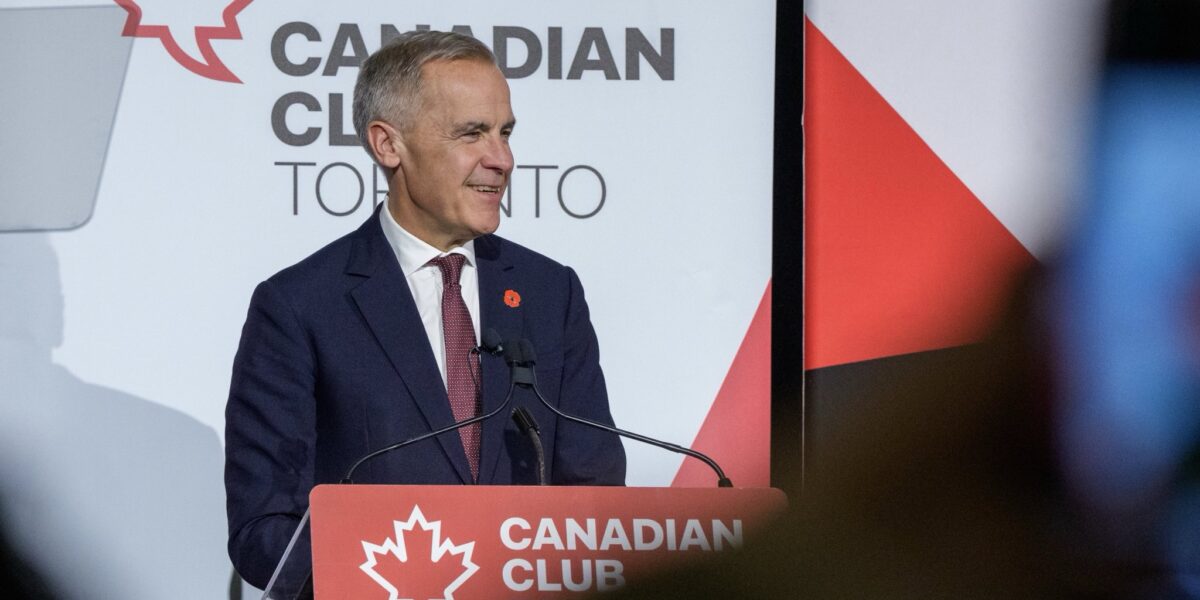
Mark Carney discussing the 2025 Budget at the Canadian Club in Toronto. 
Credit: Mark Carney / X


As Canadian fury grows against Donald Trump with each new outrage, Mark Carney has found a sweet-spot.

As long as Carney keeps his elbows up, signalling his defiance of the menacing U.S. president, Canadians have mostly given the prime minister a free hand in running the country.

And Carney has used this considerable leeway to quietly consolidate corporate power in Canada — with dangerous consequences that are receiving insufficient media attention.

Corporations have long had a dominant hand in shaping Canadian economic policies.

But Carney, with connections deep inside Canada’s corporate establishment, is making government even more acquiescent to business demands.

This rightward drift is most noticeable in Carney’s redirection of public funds from social programs towards military contracts, and his welcoming approach to Big Oil.

But it’s also evident in an extraordinary measure that Carney seems to be trying to sneak into law. The measure — hidden deep inside the mammoth omnibus Bill C-15 currently before Parliament — would give cabinet ministers sweeping powers to allow corporations to escape government regulations.

The measure would enable ministers to exempt an individual or corporation from any law (except criminal law), in order to promote the nebulous goal of “innovation, competitiveness or economic growth.”

Such exemptions would have to be “in the public interest.” If that sounds like a sufficient safeguard, you might be interested in some swamp land or steaks that Donald Trump is selling.

For decades, under both Liberal and Conservative governments, Ottawa has concluded it’s “in the public interest” for corporations to increasingly regulate themselves, that the proper role for government is, as business demands, to “get out of the way.”

It was this deregulatory mania that led to the horrific 2013 disaster in which a speeding, driverless train, pulling 72 oil tank-cars, derailed in the town of Lac-Megantic, Quebec, incinerating 47 people in flames that soared to 1,650C, according to Bruce Campbell, author of ”The Lac-Megantic Rail Disaster.”

Campbell meticulously documented how the tragedy stemmed from dozens of decisions, made by Canadian political leaders, that reduced Ottawa’s oversight of rail safety — in order to make railways more profitable.

Campbell notes that no public inquiry was held into the Lac Megantic tragedy, and no lessons appear to have been learned from it.

Indeed, two years after the disaster, Stephen Harper’s Conservative government passed the Red Tape Reduction Act, to reduce the regulatory “burden” that had “affected the cost of doing business.”

Now Carney is planning to take us further down this perilous deregulation path. He’s proposing to strengthen Harper’s anti-regulation Red Tape law by adding the new measure allowing cabinet ministers to grant regulatory exemptions to individuals and corporations.

The public would be mostly in the dark about these special regulatory favours; cabinet ministers would be able to keep details secret, based on considerations like “the protection of confidential or personal information.”

Like Harper, Carney maintains Canada has “too much regulation.” Overall, he’s closer to Harper than to his Liberal predecessor Justin Trudeau when it comes to yielding to the entreaties of business leaders, many of whom Carney knows personally.

Due to his key roles in central banking and global asset management, Carney is connected to 59 people who’ve become heads of Canada’s largest corporations, according to researchers working with the World Elite Database, an international consortium of scholars studying national power structures.

Lobbying disclosures show that, during his first nine months in office, Carney met with corporate lobbyists twice as many times as did Trudeau, and Carney met with the Business Council of Canada, representing Canada’s major CEOs, three times as often as Trudeau.

Reducing the “regulatory burden” has long been a key goal of corporate leaders. And, in Carney, they now have someone who appreciates how much their profitability can be improved by getting government out of the way.

It’s just that sometimes — like in Lac-Megantic — it’s better for government to be in the way.

This article was originally published in the Toronto Star.


Saturday, February 25, 2023

Ohio train: Americans blind to toxic dangers rolling through towns

Kayla Epstein - BBC News, New York
Fri, February 24, 2023

Officials inspect the crash site of the East Palestine, Ohio, train derailment

Every day, trains laden with potentially harmful materials, like the one that derailed in East Palestine this month, rumble through American towns and cities. Often, residents are unaware of the danger.

Environmental experts warn that without stricter regulation from Congress and increased transparency requirements for dangerous materials passing through residential areas, many more towns and cities will be left in the dark and unprepared, as East Palestine was before a 3 February derailment unleashed a toxic onslaught on the town.

"Millions of people deal with it every single day, they probably just don't know it," says David Masur, executive director of PennEnvironment.

"The potential for a catastrophic train derailment and fire or explosions has been high, it's certainly been something experts have warned about for many, many years".

The Federal Railroad Administration (FRA), which regulates the industry, does not provide lists of the rail lines that hazardous materials travel, according to an agency spokesperson.

Railroad companies are loathe to disclose much information about hazardous cargo and routes the material travels, citing security concerns. Local governments can request information from the railroads annually for the purpose of planning their emergency response.

One of the people left in the dark was Ohio's own governor.

Norfolk Southern had not notified officials that vinyl chloride and other hazardous materials would be winding its way along the tracks that ran through East Palestine the day of the disaster, said Ohio Governor Mike DeWine.

"This train apparently was not considered a high-hazardous material train, therefore the railroad was not required to notify anyone here in Ohio about what was in the rail cars coming through our state," Mr DeWine said at a 14 February press conference.

"If this is true … this is absurd, we need to look at this. Congress needs to take a look at how these things are handled."

At a tense town hall on 15 February, East Palestine's residents expressed frustration at the lack of knowledge about the risk that passed through their backyards each day.

"I wouldn't know what to say if anything could have prevented this, because there's never no information about trains that are going through this town," said Wes Durkis, a local maintenance worker. "My whole life, they just come and go, and we don't know."


An Ohio EPA official inspects a waterway in East Palestine for signs of contamination


Freight trains are used to carry materials both innocuous and hazardous over long distances.

An expansive network of Class-1 railroads, which are operated by the major railroad freight companies and one passenger company, wind their way through America's coasts, heartlands and metropolises each day, racking up millions upon millions of miles every year.

Many of them carry potentially flammable or toxic substances, like crude oil or petrochemicals.

About a thousand train derailments occur in the US each year, according to the FRA. Leaks from trains carrying hazardous materials happen rarely. Only nine such incidents occurred in 2022, according to FRA data. The year with the highest number of hazardous material releases, 2020, only saw 20 such incidents.

But accidents do happen, and when they occur, they can devastate a community.

In 2005, a Norfolk Southern train carrying pressurized chlorine gas crashed in Graniteville, South Carolina, sending a toxic plume over the town. Nine people were killed in the crash and thousands had to evacuate.

A year later, the town's residents told The Washington Post they still suffered consequences from the fallout.

In 2012, a train carrying vinyl chloride - the same chemical primarily involved in the East Palestine incident - derailed in Paulsboro, New Jersey. Cars containing the substance derailed off a bridge and released 23,000 gallons of the chemical.

In 2015, a train carrying crude oil derailed and exploded in the state of West Virginia, destroying a house and contaminating the local drinking water.

North American rail tragedies were not limited to the US. In 2013, a train carrying oil derailed and exploded in the Canadian town of Lac-Megantic, Quebec, killing 47 people and forcing 2,000 residents to evacuate.


Derailed crude oil tankers in downtown Lac-Megantic, Quebec in 2013

In many circumstances, local emergency responders were not prepared to deal with a chemical spill or explosion due to a lack of knowledge about the substances passing through their communities, a ProPublica investigation into railroads used to transport oil found. Emergency managers throughout the US told the investigative outlet that they did not receive notifications about dangerous materials traveling by rail.

Given that these freight lines run through major US cities, as well as small towns like East Palestine, millions of Americans are potentially at risk, environmental experts said.

In Pennsylvania alone, 3.9 million people lived within the evacuation zone of trains carrying crude oil, a study conducted by PennEnvironment found in 2015. That included hundreds of thousands of people in the Philadelphia metro region.

Any changes to railroad regulations would require the federal government to act; states and cities do not have much power to regulate the rail industry because it operates across state lines.

After the accident, East Palestine's residents are hyper-aware of the trains that have resumed passage through their town. And they know just as little about what the carriages carry as they did before the disaster, they say.

"The day they lifted the evacuation, there were trains going through in the background carrying the same thing," said Lisa Hamner, a frustrated East Palestine resident whose business sits just meters from the derailment site.

"What's the next town going to be? It's sad."

Bernd Debusmann Jr contributed to this report.

Sunday, October 02, 2022

A Railroad Megamerger Could Be A Boon To Canada’s Dirty Oil Industry

Alexander C. Kaufman
Sat, October 1, 2022 

A railroad megamerger could create a new route for shipping crude oil from Canada into the U.S. (Photo: Illustration: Kyle Ellingson For HuffPost)

Shortly after 1 a.m. on July 6, 2013, Bernard Théberge stepped outside a bar in eastern Québec for a cigarette. At just that moment, a runaway freight train carrying 2.1 million gallons of oil throttled into Lac-Mégantic, a tiny town near the Maine border. The train derailed and exploded in a giant fireball. When he saw the flames, Théberge started pedaling away on his bike. Soon after, the entire downtown was decimated, killing 47 in Canada’s deadliest rail accident since 1894.

“Smoking saved my life,” Théberge later told The Globe and Mail newspaper.

It was hardly the first accident of its kind. In 1996, a train carrying propane and natural gas flew off the tracks and exploded in an inferno that burned for weeks in a rural Wisconsin town, forcing 3,000 people to evacuate for nearly a month. Miraculously, no one was injured.

The chief executive of the Wisconsin rail company behind the accident would go on to serve as CEO of Montreal Maine and Atlantic Railway, the company responsible for the Lac-Mégantic disaster 17 years later. MMA, as the firm was known, changed hands twice more, becoming a subsidiary of Canadian Pacific Railway in 2020.

Deregulation on both sides of the border has allowed railroads to rake in cash by cutting costs and consolidating the continent’s railways from 40 major rail companies in 1980 to just seven today.

Now Canadian Pacific is eying an even bigger prize — with a potential payoff from connecting Canada’s uniquelydirtyoil fields to U.S. refineries on the Gulf of Mexico and creating what analysts say could be an attractive new backup route for crude producers if pipelines shut down. If successful, it could increase how much oil is passing by rail through certain parts of the United States, despite a long line of catastrophes. Since 2013, at least 20 more oil-freighting locomotives — dubbed “bomb trains” by environmentalists — went off the rails across North America.

The Calgary-based giant is seeking approval from U.S. regulators to buy rail giant Kansas City Southern in a $27 billion deal that would fuse the two smallest of the remaining so-called Class 1 railways into the first system with connections to the U.S., Canada and Mexico — but leave the continent with just six separate operators. The so-called “NAFTA super railway” could increase rail traffic of fast-moving, miles-long trains by over 300% in some regions.

At a regulatory hearing on the deal Wednesday, Daniel Gluba, the former mayor of Davenport, Iowa, gave a grave assessment of what that could mean for a stretch of his Mississippi River city that hosts baseball games and festivals.

“When one of those trains derails while passing through one of these events,” Gluba said, “it won’t be 47 people killed like tragically happened in Canada, it will be hundreds of people.”

“This is a disaster of monumental proportions just waiting to happen.”


A Canadian Pacific Railway freight train follows the Bow River at Morant's Curve in Banff National Park, Canada. (Photo: Arterra via Getty Images)

Currently, crude mostly makes its way from the tar sands producers in Alberta down to refiners in Texas and Louisiana via pipelines, which analysts say will continue to be the case, since rail shipments are always more expensive. The fraction of U.S. imports that do travel by train come by way of Canadian National Railway, which boasts North America’s longest rail network.

But Canadian Pacific and Kansas City Southern have long sought a piece of that market. Last year, Canadian Pacific started running specialized new oil trains carrying Canadian imports through Minnesota. The company declined to tell the Minneapolis Star Tribune how many of the new trains it was running. But the railroad’s chief marketing officer told Wall Street analysts in a July 2021 earnings call that he expects “the business to ramp up to 15 or 20 trains per month” as they travel down to Port Arthur, Texas.

In 2019, the two firms inked an unprecedented 10-year deal to haul oil bitumen — a thicker, more viscous type of crude that operators say is less prone to accidents because the flammable diluting substances are removed — from Canada down to the U.S. Gulf, using a new technology Canadian Pacific said is much safer and less likely to explode.

Railway officials say the flow of oil won’t be impacted by any merger.“The volume of crude oil shipments from source to refinery is determined by macroeconomic forces that will not be affected by the transaction, so the [Canada Pacific-Kansas City Southern] combination will not cause more crude oil to be shipped by rail,” Patrick Waldron, a Canadian Pacific spokesperson, wrote in an email.

But if the U.S. Surface Transportation Board gives the Canadian Pacific-Kansas City Southern merger the green light, the new route could make it cheaper and easier to ship crude that may have otherwise flowed through the now-defunct Keystone XL pipeline.

“It is a deliberate, intentional workaround for the loss of Keystone; at least, the fossil fuel industry is viewing it that way,” said Conan Smith, president of the Michigan Environmental Council, which opposes a merger that would likely increase shipments of oil through an area of Detroit known as the Great Lake State’s most polluted ZIP code.

“The oil industry has been looking to increase transport to those southern states by any means necessary,” he added. “The introduction of a secondary route is going to make that more viable.”

The federal regulator earlier this month extended the deadline for environmental comments on the proposed merger to Oct. 14.


Firefighters spray wagons at the site of the train wreck in Lac-Megantic July 14, 2013. (Photo: Mathieu Belanger via Reuters)

Canadian Pacific said it’s hoping to see the biggest bump in profits after the merger from hauling cargo shipments. Known as “intermodal” shipments, the category has been one of the few sectors where railroads have seen significant growth in recent years as trucking gobbled up the freight market.

As a result, the railroad giant said its deal would help take long-haul trucks off the road. Railroads have often complained that trucking companies are unfairly subsidized in that they don’t pay to maintain federal highways, despite the damage increased tractor-trailer traffic causes, while rail operators are solely responsible for maintaining rail lines.

Intermodal shipping, Waldron said, would be the “primary driver” of new traffic, and could actually be a climate benefit, since the company projects it could reduce demand for as many as 64,000 tractor-trailer trucks.

U.S. imports of Canadian oil increased by nearly 50% between 2013 and 2021, according to Energy Information Administration data. But shipments by rail peaked in 2019 and plunged in 2020, when pandemic-induced lockdowns sent oil markets into chaos. Rail shipments returned to 2018 levels again in January 2021, but have declined steadily since.

The reason: Two pipelines got up and running. Last October, the Line 3 replacement project, a hotly protested 1,031-mile pipeline carrying crude from Alberta to Wisconsin, started operation, marking the first expansion of Canadian export capacity in at least six years.

Then Marathon Petroleum reversed the flow of the Capline Pipeline, a 632-mile conduit that had carried crude drilled off the Gulf Coast northward to refiners in the Midwest. The reversal project, completed in January 2022, will at maximum capacity ship 200,000 barrels of oil per day from Illinois to Louisiana. Its initial shipments are “100% Canadian crude,” the pipeline’s operator, Plains All American Pipeline, said in a November earnings call.

“Shipping oil by rail, no matter how you slice it, is going to be more expensive than shipping oil by a pipeline,” said Clark Williams-Derry, an oil analyst at the Institute for Energy Economics and Financial Analysis, a nonprofit research outfit. “It is unlikely that oil by rail would be the first choice for Canadian producers to try to get oil down to the Gulf, because it’s so expensive.”

What this does is make that second option more attractive and a little more beneficial to oil producers because they may be able to get it to the Gulf at a slightly lower cost.Clark Williams-Derry, Institute for Energy Economics and Financial Analysis

But part of what makes it so costly is that every time a railcar switches to another company’s tracks, it pays that railroad a fee. Since rail shipments are usually a “backup policy, almost like insurance if the pipeline system fails, or it’s overloaded, or there’s too much production,” he said the combined railroads could offer a cheaper route.

“What this does is make that second option more attractive and a little more beneficial to oil producers because they may be able to get it to the Gulf at a slightly lower cost,” Williams-Derry said.

Analysts polled by S&P Global last year said a spike in rail shipments would only come if more pipelines shut down. The Dakota Access Pipeline, which primarily conveys crude from North Dakota’s Bakken oil fields to U.S. refineries, will face a legally mandated environmental review that activists hope could lead to the closure of a project that has already leaked multiple times. In Canada, opposition is mountingagainst the contentious Trans Mountain Pipeline, which would funnel oil from Alberta to British Columbia.

If those projects fail, or if legal challenges or activists disrupt the flow of oil through operating pipelines, then there would likely be an uptick of shipments by rail.

The Surface Transportation Board’s approval of the Canadian Pacific-Kansas City Southern merger is not guaranteed. The Biden administration has signaled greater skepticism of industry consolidation, and appointed multiple members to the five-person board with backgrounds in passenger rail.

Indeed, President Joe Biden, known throughout his career as “Amtrak Joe” for his enthusiastic commutes on the Northeast rail corridor, has vowed to vastly expand the nation’s network of passenger trains.

“We have an opportunity to transform our train systems as essential infrastructure of this country,” environmental activist Winona LaDuke wrote in an op-ed opposing the merger. “After all, trains are the most efficient way to move freight. And those trains should be safe, full of people and not dangerous freight.”


Kansas City Southern workers repair a broken railroad signal after a massive tornado passed through the town killing at least 123 people on May 25, 2011, in Joplin, Missouri. (Photo: Mario Tama via Getty Images)

Outside the Northeastern U.S., Amtrak’s trains use freight rail lines, and federal laws require passenger locomotives to get priority access.

“There’s a lot of friction there because they don’t mix too well, operationally speaking,” said Lawrence Gross, a freight transportation analyst and founder of Gross Transportation Consulting. “Freight trains are supposed to get out of the way, but freight trains are two miles long, so they’re not agile.”

Compared to the lucrative cargo shipments, the passenger trains with only a few coaches “carrying 60, 70, 100 people” are “gumming up the works from a railroad perspective,” he said.

While unions representing rail employees nearly crippled the U.S. freight system in a fight over working conditions, others in the labor movement have opposed a merger they say could reduce jobs at West Coast ports. The deal would “greatly harm our maritime and industrial labor by diverting the cargo coming through our US ports in favor of Canadian ports,” United Steelworkers Local 592 President Jared Moe told Sen. Maria Cantwell (D-Wash.) in a February 2022 letter.

“This will ultimately cost much of our community their livelihoods,” he said.

Warning that the merger would mean Canadian Pacific decamps from its Minneapolis headquarters for Kansas City, Missouri, Rep. Betty McCollum (D-Minn.) urged the Surface Transportation Board Chairman Martin Oberman to “strongly consider” the “potential negative economic impacts on our community” in a letter sent earlier this month.

Rep. Katie Porter (D-Calif.) said in a five-page letter to the board: “The proposed merger represents a grave threat to competition in the domestic rail industry, which is already highly consolidated. It would likely lead to job losses, harm to other industries reliant on railroads, and more fragility in American supply chain infrastructure.”

Perhaps unsurprisingly, rival Class 1 railroads have raised objections to the deal. But “while there’s the feeling that if you had a combination of two of these giants, it would create a behemoth that others would have to match,” ending up “with just two or three railroads in North America,” Gross said the merger would allow two of the smallest companies to compete in a system already dominated by bigger giants.

“You could make the case that this is bringing the system more into balance than it was before,” he said.

The Surface Transportation Board held three days of hearings on the merger this week in Washington, D.C. On Friday, the regulator added another three days of hearings, set for next week.

Whether the oil shipments will weigh on the approval is difficult to tell.

“If you don’t have the pipeline and it makes economic sense, the stuff is going to move by rail, one way or the other,” Gross said. “This becomes more of a story of how it moves rather than whether it moves.”

This article originally appeared on HuffPost and has been updated.
Related...

Voters Killed A Project To Get New England Off Fossil Fuels. A Court May Have Just Saved It.


How A Major Tar Sands Pipeline Project Threatens Indigenous Land Rights


A Massive Rail Strike Looms As Unions Fight For Sick Leave

Monday, March 22, 2021

Biden-Buttigieg put the brakes on 
'bomb trains'


Sarah Okeson,
 DCReport @ RawStory
March 20, 2021

President Joe Biden, known as "Amtrak Joe" for his train trips to Washington, D.C., from Delaware as a senator, could reverse the Team Trump approval of "bomb trains" carrying carrying liquefied natural gas.

The Trump rule financially benefits an energy company tied to a hedge fund that loaned millions to the Trump Organization and the Kushner Companies. New York prosecutors are examining those financial ties to Trump.

Transportation Secretary Pete Buttigieg said during his confirmation hearing that he planned to take a "hard look" at the rule.

Liquefied natural gas is even more volatile than Bakken crude oil carried on trains like the one that derailed and caught fire on July 6, 2013, in Lac-Mégantic, Quebec, killing 47 people. Most of the victims had to be identified with DNA samples and dental records. The bodies of five of the people were never recovered.

In April 2019, Trump called for federal rules to be rewritten so trains could carry liquefied natural gas. Drue Pearce, the political appointee who was the deputy administrator of the Pipeline and Hazardous Materials Safety Administration, helped shepherd the regulation through the agency.

The Biden administration asked a federal judge in February to put lawsuits challenging the rule on hold to give Biden regulators time to review Trump's rules that affect climate disruption. Biden issued an executive order the day after he was sworn in to review rules that may worsen greenhouse gas emissions.


Earthjustice, one of the environmental organizations involved in the lawsuits, said the rule could bring LNG railroad cars through virtually all major U.S. cities and that a disaster could destroy an entire city.

Vapor clouds from liquified natural gas that ignite can burn as hot as 2,426 degrees. Liquefied natural gas is odorless because ethyl mercaptan, the foul-smelling compound added to natural gas for residential use freezes above the boiling point for liquefied natural gas.

On Oct. 20, 1944, liquefied natural gas leaked from a storage tank at East Ohio Gas Co. in Cleveland and got into the sewer lines, causing explosions over a square mile. The explosions and fires spread through 20 blocks, killing 130 people and destroying 79 homes and two factories in a neighborhood of Slovenian immigrants.


The Trump regulation financially benefits New Fortress Energy, a publicly traded company founded by billionaire Wes Edens. Fortress Investment Group, a New York City hedge fund co-founded by Edens, was part of a deal to loan the Trump organization $130 million to help build the Trump International Hotel and Tower Chicago in 2005.

Manhattan District Attorney Cy Vance Jr. has subpoenaed documents from Fortress about the deal.

Trump couldn't pay the loan which ultimately grew to about $150 million, according to documents filed in the New York Supreme Court by New York Attorney General Letitia James. She is investigating possible fraud by the Trump Organization.


James said that Fortress forgave more than $100 million of the loan, money that may have been taxable.

Fortress also loaned $57 million in October 2017 to a Jersey City, N.J., real estate project owned by Kushner Companies. Trump's son-in-law, Jared Kushner, transferred his stake in the project to a family trust.

SoftBank Group, a Japanese firm, bought Fortress Investment Group in 2017.


PHOTO'S ARE OF LAC MEGANTIC QUEBEC TRAIN EXPLOSION

Wednesday, December 23, 2020


PIPELINES DON'T DERAIL

Train cars carrying crude oil derail, burn north of Seattle


BELLINGHAM, Wash. — Seven train cars carrying crude oil derailed Tuesday and five caught fire, sending a large black plume of smoke into the sky north of Seattle close to the Canadian border, authorities said.

© Provided by The Canadian Press

The derailment in the downtown Custer area closed nearby streets and spurred evacuation orders during a large fire response, Whatcom County officials said on Twitter. Interstate 5 was temporarily closed in the area in both directions.


Later Tuesday, the Whatcom County Sheriff's Office tweeted that the fires were under control and the evacuation order had been lifted but roadblocks would remain in place. Fires at the site remained active, the Sheriff's Office added, and residents were asked to stay inside once they returned home.

“Everyone’s in danger at a scene like this, but fortunately there were no injuries,” Sheriff Bill Elfo said at a news conference.

Jenny Reich, who owns Whimsy Art Glass, was preparing to open her shop and told The Seattle Times that while she is accustomed to train noises, “all of a sudden it was a really big noise, and everything was shaking.”

Black smoke obscured her view, emergency personnel arrived, and Reich said she was advised to evacuate her business. She grabbed her wallet, keys and dog and left.

Home to five oil refineries, Washington state sees millions of gallons of crude oil move by rail through the state each week, coming from North Dakota and Alberta, Canada, according to the state Department of Ecology.

The seven cars derailed at about 11:46 a.m. Tuesday, BNSF Railway spokesperson Courtney Wallace said at the news conference. She said two people were on board the 108-car train headed from North Dakota to the Ferndale Refinery, owned by Phillips 66.

“BNSF is working with local authorities to assess and mitigate the situation,” the railway said on Twitter. “The cause of the incident is under investigation.”

The state Department of Ecology said a command centre had been set up at the scene with the railway and federal Environmental Protection Agency officials.

Matt Krogh, director of U.S. Oil & Gas Campaigns for the environmental group Stand.earth, is based in Bellingham near the derailment and told The Associated Press he could see the smoke. He said the incident was another example of how transporting crude oil by train – especially in large numbers of tankers — is “very, very dangerous.”

He cited the 2013 fiery derailment of a train carrying crude in Lac Megantic, Quebec, which killed 47 people, and a 2016 derailment in Mosier, Oregon, along the Columbia River that caused people to evacuate.

Krogh said crude oil is volatile and there are often track maintenance concerns. Among other things, Krogh and his group would like to see a reduction in the number of tank cars allowed per shipment.

“I think we got lucky today,” he said, referring to the derailment in Custer.

Democratic U.S. Rep. Rick Larsen, D-Wash., said in a statement Tuesday he was concerned about the derailment. Larsen is a senior member of the House Transportation and Infrastructure Committee.

“I worked closely with the Obama administration to create strong rules to make the transport of oil by rail safer," Larsen said. "Clearly there may be more work to do.”

Custer, a small town of several hundred people, is about 100 miles (161 kilometres) north of Seattle.

Lisa Baumann, The Associated Press

Friday, June 11, 2021

Fight over Canadian oil rages on after pipeline’s demise


1 of 9
FILE - In this Jun 12, 2019, file photo, walking up Main Street the procession protesting against the Keystone XL pipeline makes its way to Andrew W. Bogue Federal Courthouse in Rapid City, S.D. The sponsor of the Keystone XL crude oil pipeline says it's pulling the plug on the contentious project, Wednesday, June 9, 2021, after Canadian officials failed to persuade the Biden administration to reverse its cancellation of the company's permit.(Adam Fondren/Rapid City Journal via AP)
BILLINGS, Mont. (AP) — The Keystone XL is dead after a 12-year attempt to build the oil pipeline, yet the fight over Canadian crude rages on as emboldened environmentalists target other projects and pressure President Joe Biden to intervene — all while oil imports from the north keep rising.

Biden dealt the fatal blow to the partially built $9 billion Keystone XL in January when he revoked its border-crossing permit issued by former President Donald Trump. On Wednesday, sponsors TC Energy and the province of Alberta gave up and declared the line “terminated.”

Activists and many scientists had warned that the pipeline would open a new spigot on Canada’s oil sands crude — and that burning the heavily polluting fuel would lock in climate change. As the fight escalated into a national debate over fossil fuels, Canadian crude exports to the U.S. steadily increased, driven largely by production from Alberta’s oil sands region.

Even before the cancellation, environmentalists had turned their attention to other projects, including Enbridge Energy’s proposal to expand and rebuild its Line 3 pipeline in Minnesota, the target of protests this week that led to the arrest of some 250 activists.

“Don’t expect these fights to go away anytime soon,” said Daniel Raimi, a fellow at Resources for the Future, an energy and environmental think tank in Washington. “This is going to encourage environmental advocates to do more of the same.”

Bill McKibben, an author who was arrested outside the White House while protesting the Keystone XL in 2011, said its defeat provides a template to kill other pipelines, including Line 3 and the Dakota Access Pipeline from North Dakota’s Bakken oil field.

Describing Keystone XL as “a carbon bomb,” McKibben said Line 3 is the same size and “carries the same stuff. How on earth could anyone with a straight face say Line 3 passes the climate test?”

Enbridge said the cancellation of Keystone XL will not affect its projects, describing them as “designed to meet current energy demand safely and in ways that better protect the environment.”

A second TC Energy pipeline network, known simply as Keystone, has been delivering crude from Canada’s oil sands region since 2010. The company says the line that runs from Alberta to Illinois, Oklahoma and the Gulf Coast has moved more than 3 billion barrels of oil

Canada is by far the biggest foreign crude supplier to the U.S., which imported about 3.5 million barrels a day from its neighbor in 2020 — 61% of all U.S. oil imports.

The flow dropped slightly during the coronavirus pandemic but has largely rebounded. Import volumes have almost doubled since the Keystone XL was first proposed in 2008, according to the U.S. Energy Information Administration.

The Canadian Association of Petroleum Producers said Thursday that it expects no immediate effect on production from Keystone XL’s cancellation, but the group predicted more oil would be moved to the U.S. by rail.

A series of fiery accidents occurred in the U.S. and Canada after rail shipments of crude increased during an oil boom on the Northern Plains, including a 2013 incident in which 47 people were killed after a runaway train derailed in the Quebec town of Lac-Megantic.

The dispute over Keystone XL and other lines raised diplomatic tensions between the two countries, but Canadian Prime Minister Justin Trudeau adopted a conciliatory tone with Biden, who canceled the pipeline on his first day in the White House.

Canada uses much less oil than it produces, making it a huge exporter, and 98% of those exports go to the U.S., according to the Natural Resources Canada.

Trudeau raised Keystone XL as a top priority with Biden while acknowledging that the president had promised in his campaign to cancel the line.

Both leaders have taken heat at home over Keystone, with Republicans slamming Biden for shutting it down while construction was underway, costing hundreds of jobs. The project was meant to expand oil exports for Canada, which has the third-largest oil reserves in the world, and provincial officials in Alberta wanted Trudeau to do more to save it.

The White House declined to comment on the cancellation. Spokesman Vedant Patel declined to say if Biden plans to address increased crude exports from Canada or intervene in other pipeline disputes.

His action on Keystone “signals at least some appetite to get involved,” but pipelines that have operated for years would be tougher targets, Raimi said.

Winona LaDuke, executive director of the Indigenous-based environmental group Honor the Earth, called on Biden to withdraw an Army Corps of Engineers permit for Line 3 and to order a new study.

“He could stop the project,” she said. “Don’t ask us to be nice to Enbridge. They’re all over our land. They’re hurting us.”

The Biden administration has been “disturbingly quiet” on Line 3 and the Dakota Access line, said Michael Brune, executive director of the Sierra Club. He urged the administration to declare both unacceptable.

Fiercely opposed by Native Americans, the Dakota Access pipeline was the impetus for protests that were quashed by law enforcement. The Biden administration has not sought to stop the line, and it’s still in court after a judge revoked its permit but allowed oil to keep flowing.

Alberta sank more than $1 billion into Keystone XL last year to kick-start construction. Officials in the province are considering a trade action against the U.S. to seek compensation.

Keystone XL’s price tag ballooned as the project languished, increasing from $5.4 billion to $9 billion.

Another question: What to do with pipe already in place at the U.S.-Canada border and other infrastructure along its route.

Jane Kleeb, a pipeline opponent in Nebraska, said state regulators should revoke the permit they approved for a route through the state. Otherwise, she said, TC Energy might try to sell the easements to another company.

Until the state acts, farmers and ranchers will continue to face TC Energy attorneys in court, “protecting their property from an eminent domain land grab by a foreign corporation,” she said.

___

Daly reported from Washington and Flesher from Traverse City, Michigan. Rob Gillies contributed from Toronto and Grant Schulte from Omaha, Nebraska.

___

Follow Brown on Twitter: @MatthewBrownAP

Thursday, November 03, 2022

Why this Thunder Bay folk singer brought back his 1979 protest song to speak out against nuclear waste

Jon Thompson - CBC


What's old is new again in the debate around whether to store nuclear waste in northwestern Ontario.


Rodney Brown is a well-known folk singer and music teacher in Thunder Bay, Ont., he re-recorded his 1979 Freight Train Derailed to protest a plan to bury nuclear waste in northwestern Ontario.© Submitted by Rodney Brown

In 1979, when Atomic Energy of Canada was consulting on its plan to bury nuclear waste near Atikokan, Thunder Bay folk singer Rodney Brown's gave a five-minute deputation expressing his opposition to the plan.

That deputation was a performance of his new song, Freight Train Derailed.

Now 43 years later, another process designed by the Nuclear Waste Management Organization has whittled possible burial sites down to two communities including Ignace, a community of about 1,300 150 kilometres north of Atikokan, and 250 kilometres north of Thunder Bay.

And Rodney Brown is re-releasing Freight Train Derailed, this time with a new music video, to protest the project.

The plan is for a $23-billion nuclear disposal site where the nuclear waste management organization wants to inter some three million spent nuclear fuel bundles in a sprawling network of tunnels and holes 500 metres below the ground.

The controversial project is nearing the end of a years-long consultation project with communities and First Nations about whether they are willing to host the site either near Ignace or South Bruce, near London, Ont. Organization officials have said they welcome public discourse and debate, while promising a safe solution in line with international best practices.

People in Ignace are concerned about the long-term environmental and health effects of the project, but others note that it could bring back jobs and business in the economically-depressed town.

Amid that backdrop, Brown felt the time was right to bring back his protest song.

"The nuclear industry now, it's not the same kind of panel I saw in '79," Brown said. "Now it's a marketing company."


Brown originally wrote Freight Train Derailed for a play. Though the theatre troupe didn't end up using the song, its theme struck a nerve. Then, just months after Brown's deputation, a train carrying chlorine gas and other chemicals derailed in Mississauga. The accident caused an evacuation that affected 200,000 people.

The seeming increase in rail accidents was wind in the sails of Thunder Bay's anti-nuclear movement.

Brown drove from Thunder Bay to Atikokan to demonstrate against burying the waste in the area. When he arrived, he found mass unemployment due to the recent closure of the Steep Rock Iron Mines.

"The Atikokan people weren't excited about [nuclear waste] either," Brown recalls. "But there were so many jobs lost there and everybody was desperate. They needed jobs and I'm sure it's the same kind of thing now going on in Ignace. Everybody's looking at money and jobs."

Giving an old song new life

An old ally from that movement who now works with the advocacy group Environment North offered to pay for Brown to shoot a music video so Freight Train Derailed could once again bring attention to the cause.

Brown always felt the song needed a third verse so he added lyrics about the Mississauga crash, the Lac-Megantic crude oil train explosion in 2013, and the dangers of transporting nuclear waste.

The videographer introduced him to music engineer Ryan MacDonald, to re-record the song. MacDonald is also the leader of the Honest Heart Collective, a Thunder Bay-based rock band whose latest songs are charting in Italy.

The pair agreed to combine their bands and re-record the song as an inter-generational collaboration.

MacDonald doesn't identify as an activist. He grew up in the 1990s when Brown was best known as a children's performer and MacDonald can still recite the school song that Brown wrote and would perform when he visited to teach music.

"Rodney was one of — if not the first — musician who inspired me to play music," MacDonald says. "It was a big full-circle moment for me, working in the recording studio that I built with my friends in the Honest Heart Collective, to be recording the guy that got me into wanting to record music in the first place."

For Brown, the experience has opened his eyes to a new generation that is making, teaching, and recording music in Thunder Bay's north core. Brown notes how MacDonald is the same age as he was when he wrote Freight Train Derailed.

And while Brown marvels at new technology that has made quality recording affordable for independent artists to reach wider audiences, Brown laments that political progress hasn't turned out to be so linear.

He notes that political activism goes far back in history, from the labour movement of the last 150 years, even back to the French Revolution in the 18th century.

"The older you get the more you see how things go in circles," Brown said. "When I was involved in all this stuff, I thought we were on new ground, new territory, but we weren't."

Sunday, February 19, 2023

Four rail-borne risks moving through North American communities


Saul Elbein
Sat, February 18, 2023 

Communities alongside rail lines had two more close calls this week as freight trains carrying hazardous materials derailed in Houston and Detroit.

For the communities where this week’s wrecks took place, the damage was less severe than symbolic: a reminder of the importance of rail-borne hazardous materials to every part of the economy just after the crash in East Palestine, Ohio.

Houston is the capital of the nation’s petroleum industry, part of a sprawling crescent of refineries, crackers, factories and liquefaction plants stretching from Baytown, Texas, to the Mississippi River industrial corridor in Louisiana — sometimes called Cancer Alley.

And Detroit — the once-and-future heartland of American automotive manufacturing — is now a rising hub of electric vehicle and battery manufacturing, a suite of high technologies whose exotic chemistries depend on hazardous materials.

For example, liquid chlorine — carried in the train that derailed in Detroit — is an essential component in wind turbines, solar panels and electric vehicle batteries, according to the Chlorine Institute.

The crashes in both regions — one a rising hub of clean energy, the other of fossil fuels — underscored the risk posed by hazardous materials moving through the nation’s towns and cities.

That is a risk that is often invisible until, suddenly, it explodes.

Since 2015, the U.S. rail system has been responsible for 106 derailments in which hazardous materials were released, according to Federal Railway Administration data analyzed by The Hill.

In 2022 alone, the agency tracked ten derailments containing hazardous materials, which ranged from a pair of propane-carrying cars overturned in Maine to a 44-car derailment in Iowa that sent 65,000 gallons of asphalt into an Iowa creek.

Last year also saw a spill of 19,300 gallons of hydrochloric acid from a derailment in Oklahoma and 20,000 gallons of nervous system-distorting methyl methacrylate monomer — a key ingredient in fake nails.

In East Palestine, approximately 36 cars derailed — 11 of which carried hazardous materials.

If that wreck had happened in 2022, it would have been in 8th place in terms of cars destroyed.

Still, these trains — especially in emergency situations — pose unseen risks.

“Local communities don’t know what’s in these trains,” said Kristen Boyle, an attorney with public interest law firm Earthjustice. “Local communities can’t find out. They can’t stop the trains from going through, and they have been unable to get safety regulations.”

“And then they’re the ones left with, you know, the explosion,” she added.

Representatives from the Department of Transportation told The Hill that the agency doesn’t monitor the real-time movement of hazardous materials across the country. Trains carried about a million tons per day by rail in 2017, the last year the government released numbers.

The nation’s rail trade groups have been quick to point out that this system is very safe on a train-by-train basis. According to the Associated of American Railroads (AAR), trains are ten times as safe per mile as trucks, and 99.9 percent of hazmat-containing rail shipments make it to their destination without incident.

But trains also carry far more cargo than trucks — making the risks of a spill far more severe. And the sheer volume of U.S. rail travel means that even a failure rate of 0.1 percent can lead to a lot of damage.

For example, about 20,000 rail shipments of vinyl chloride — the highly explosive and carcinogenic chemical that Norfolk Southern contractors poured in a ditch and burned off in East Palestine — cross the country each year, according to the American Chemical Society.

That 99.5 percent success rate would still allow for 100 possible releases of a hazardous chemical — such as crude oil, ethanol, vinyl chloride or methane.

CRUDE OIL

One recent boom in hazardous material transport by rail dates back to the coincidence of two historic phenomena in the 2010s that drove a boom in crude oil transports by rail.

The first was the boom in “fracked” oil and gas, and second, the discovery of shale plays far from traditional pipeline complexes.

These two developments created a radical shift in the geography of the U.S. oil industry — one that created a need for new routes to connect new wells to new or existing coastal export terminals.

And when the proposed export pipelines projects — such as Keystone XL, the Dakota Access Pipeline and Atlantic Coast Pipeline — foundered against dedicated local opposition in rural farm counties, the booming oil and gas industry turned to rail.

In March of 2010, just 1.2 million barrels of oil were moved by train — a quantity that peaked at 35 million in October of 2014, mostly out of the new fracking fields in the Midwest, according to the U.S. Energy Information Agency (EIA).

The rail transport boom didn’t last — in part because investors slammed the brakes on an oil industry that it saw as irresponsibly overproducing.

But even as transport volumes fell, by November 2022 they still remained six times higher than where they had been in 2021. That month, 7.27 million barrels crossed the U.S. by train.

That number still represented about 90,000 carloads of crude oil per day — each hauling about 13,500 gallons, according to AAR.

And if a proposed merger between Canadian Pacific and Kansas City Southern is approved, it will create direct routes for exporting Canadian tar sands through the United States, Houston Public Media found.

That would be the same product that exploded in 2013 in the small Quebec town of Lac Megantic, killing 47.

Environmental and civil society groups are calling on the Biden administration to restore oil train safety rules weakened by Trump, as The Hill previously reported.

ETHANOL

In December, the Environmental Protection Agency proposed new rules intended to spur the production of enough biofuels and e-fuels, such as ethanol, to replace up to 180,000 barrels of oil per year.

About 95 percent of the ethanol moved in the U.S. in the first half of 2022 moved by rail — and rail exports of both ethanol and biofuels are rising, according EIA.

Biodiesel shipments by rail have also increased fivefold since 2010.

Rail biodiesel shipments were just 2.6 million barrels per year — but had soared to 13 million by 2019. Ethanol, meanwhile, has increased from 208 million barrels per year in 2010 to 237 million in 2022.

As with everything else, a higher volume of transport means a higher volume of spills.

In 2017, an ethanol train derailed and caught fire in northwestern Iowa after a bridge collapsed beneath it. In 2019 authorities in Utah blew up 11 biodiesel and propane cars derailed in a Union Pacific wreck.

VINYL CHLORIDE

The train that crashed in East Palestine carried vinyl chloride, a key ingredient used to make plastic. It is the kind of petroleum-based chemical that the fossil fuel industry is betting on in a greening world, CNBC reported.

Plastic use is projected to double in wealthy countries by 2060 — and most of those plastics will be “primary” plastics, or single-use, non-recycled ones, according to a report by the Organization for Economic Cooperation and Development.

The continued dominance of single-use plastics means increased risk from toxic chemicals at both ends of the supply chain. Under this production scenario, the OECD found that plastic waste discharged into the environment would triple, with unknown consequences to public health and the environment.

But it also means a boom in the production and transport of plastic precursors — the volatile ingredients used to make them — will also have to increase.

For example, according to one industry report, vinyl chloride production is expected to grow 6 percent annually over the next five years.

That puts local communities on the hook for safety decisions made in the faraway boardrooms of the Class I Freight railroads. In the case of East Palestine, those decisions represented a twofold mistake by Norfolk Southern, environmental attorney Frank Petosa told the Hill.

First, Petosa pointed to the railroad’s “failure” to maintain the train’s wheels — causing the derailment and the subsequent fire.

But that mistake was compounded by a more serious one: the lack of proper safety release valves in the cars carrying vinyl chloride so that pressure could not be let out to avoid an explosion once the train — which was not considered highly flammable — caught fire.

Then the railroad capped this off with a final error, Petosa said. With no way to safely relieve pressure as the cars burned, Petosa noted, “they chose a solution that made everything worse. They chose to just, you know, poke holes in the tanks, release them into a burn pit and create an environmental disaster.”

METHANE

The expansion of plastics production goes alongside another boom in fossil fuels — the increase in the transport of methane, the explosive chemical commonly known as natural gas.

Since the Obama administration, the fossil fuel industry has characterized the nation’s gas industry as an energy weapon against Russia. The industry is in the midst of a historic buildout.

The main driver in this growth is a flood of new terminals — many of which will be serviced by rail. The Federal Energy and Regulatory Commission has approved 16 new LNG export terminals.

The LNG industry will help drive an estimated increase in U.S. consumption of petroleum will grow for the next 25 years — a growth that can be primarily accounted for by the rise in LNG exports, according to the EIA.

By 2050, the agency predicted that the U.S. would be producing 25 percent more gas than it consumed — most of it coming from new shale gas developments in corners of the United States, like the Bakken Shale of North Dakota.

Many of the new wave of natural gas terminals — built on the Gulf Coast, where shelter-in-place orders from chemical spills are a regular occurrence — will not need rail connections.

That is because they are connected to oil and gas wells by dense pipeline networks laid over the past century of oil and chemical production.

But others will be in areas where fossil fuels are a relative novelty — and where the only way to get volatile gasses in and out is by truck or trail.

For example, New Fortress Energy’s Miami LNG plant could process about 740,00 gallons of LNG per day — which would be supplied by trucks and trains moving through a densely populated city, a report from Food and Water Watch found.

Then there is the proposed LNG export terminal in Gibbstown, New Jersey — which a dozen New Jersey and Pennsylvania towns are fighting largely because of the fear that LNG-bearing cars would become “bomb trains” in a derailment.

LNG is so energy-dense that a single train carrying 22 cars of the substance contains approximately the same explosive energy as the atomic bomb that destroyed Hiroshima, Japan, in 1945, according to a 2020 comment by Earthjustice.

In a worst-case scenario — in which LNG spreading unchecked in a pool rapidly turns to explosive vapor, triggering a fireball — flames would put people and structures at risk as far as 1.5 miles from the leak, according to a report by the National Academy of Sciences.

The NAS also found that bystanders as far as .4 miles from the spreading pool of flaming LNG — or a quarter mile from that fireball — could get s and bystanders could get second-degree burns at nearly half a mile away, according to a report by the National Academy of Sciences.

Like the oil train brakes mentioned above, the LNG-by-rail issue is another regulatory whipsaw between the Obama, Trump and Biden administrations.

In 2020, the Trump Administration permitted the shipment of refrigerated methane — also known as liquefied natural gas, or LNG — via rail without special safety precautions.

The administration made this decision over the protests of both its own National Transportation Safety Board (NTSB) and the Pipeline and Hazardous Materials Safety Administration.

The NTSB found that LNG shipments would likely start slowly and ramp up over time. But “the risks of catastrophic LNG releases in accidents is too great not to have operational controls in place before large blocks of tank cars and unit trains proliferate,” the agency found.

Under a policy called “energy dominance,” the Trump administration approved LNG-by-rail anyway, without the restriction that the NTSB had requested.

In November 2021, PHMSA suspended the Trump rule, but it has yet to promulgate a new rule or officially repeal the old one.

Any potential federal rule would be vulnerable in the event of a Republican presidential victory in 2024.

Even if it does, Boyle of Earthjustice noted, transport of uncompressed gas — which is still flammable, if less dramatically so — is still legal.

For the latest news, weather, sports, and streaming video, head to The Hill.