Showing posts sorted by date for query coelacanths. Sort by relevance Show all posts

Tuesday, October 06, 2026

CRYPTOZOOLOGY
A Fish Hidden in a Museum Drawer for 150 Years Just Filled a 50-Million-Year Gap

Ashley Driggs
Mon, October 5, 2026


 Canva.com


Key takeaways

A fossil of a new coelacanth species, Macropoma gombessae, was discovered in a London museum drawer after being overlooked for over 150 years, filling a 50-million-year gap in the evolutionary history of coelacanths.

A single fossil, overlooked in a London museum for over a century, has upended what scientists thought they knew about an enduring creature of the deep. For more than 150 years, this specimen sat undisturbed amid countless other relics, its true value hidden until researchers took a closer look, armed with cutting-edge technology.

The fish in question is a coelacanth, a species so ancient and enigmatic that it earned the nickname "living fossil." Coelacanths are rare survivors, once believed wiped out alongside the dinosaurs. Yet the fossil in the Natural History Museum contained secrets that would illuminate a 50-million-year stretch of evolutionary history no one had expected to fill.


coelacanth


A Discovery Hiding in Plain Sight

The story began in the fossil halls of London, home to specimens collected before the light bulb was invented. When researchers revisited one coelacanth fossil from the Lower Cretaceous Gault Formation, using high-resolution scans and X-ray computed tomography, they found it wasn't just another ancient fish. The results revealed a new species: Macropoma gombessae.

This species is now the oldest known member of its genus. Its discovery addresses a crucial gap in the family tree of coelacanths, offering insight into how these prehistoric fish evolved into the creatures found near Africa's Comoros Islands today. For decades, evolutionary biologists puzzled over missing links in the coelacanth lineage. Here was one, hiding in a museum drawer all along.

The name "gombessae" reverberates with cultural memory. It pays tribute to the "Gombessa," which local Malagasy and Comorian communities have long used to describe coelacanths. The term means "inedible fish" or "worthless fish," a striking reminder that today's scientific treasures were once dismissed by those who lived alongside them.


Coelacanth on black background


Peering Inside with Modern Eyes

None of this would have come to light without the new imaging techniques now at paleontology's disposal. Instead of risking damage by cutting or drilling into the precious fossil, scientists used digital scans to reconstruct its bones down to the finest details.

X-ray computed tomography made it possible to see the inner structure of this ancient fish as never before, revealing features that connect it to both its Cretaceous relatives and modern coelacanths. For the researcher who first recognized the fossil's significance, the ability to digitally manipulate an object of such age and rarity was remarkable and transformative for the study of evolutionary history.

This approach is revolutionizing how museums operate. Once viewed as static storage rooms, natural history collections are being reimagined as research powerhouses, places where even centuries-old specimens can yield new discoveries as technology advances. Old fossils, it seems, still have new stories to tell.
Reshaping a Story of Survival

Perhaps no animal embodies resilience like the coelacanth. After disappearing from the fossil record more than 60 million years ago, its presumed extinction was upended in 1938, when a living specimen was hauled up off South Africa. The fish became a symbol of evolutionary stasis, seemingly unchanged by the passage of time and catastrophe


Latimeria or Coelacanth (Latimeria chalumnae Smith), A living fossil, the oldest known living lineage of Sarcopterygii (lobe-finned fish and tetrapods).

But the identification of Macropoma gombessae reshapes this narrative. Rather than a tale frozen in evolutionary amber, the coelacanth's story is richer and more complex. The new fossil reveals subtle shifts and adaptations that bridge ancient and extant forms, showing that even so-called "living fossils" defy our expectations of biological change, or the lack thereof.

For those maintaining museum collections, the find highlights the ongoing value of these institutions. Generations may pass before a specimen's true importance emerges. But as research tools evolve, so too does our understanding of the living world's history, waiting quietly in the dark, dusty drawers of the past.


Beyond the Fossil Cabinet

The rediscovery of a single coelacanth fossil, hidden for so long, demonstrates how much is left that we do not know. As scientists revisit collections with new eyes and new tools, the boundaries of evolutionary history shift. Each specimen, old or new, offers another opportunity to see the natural world in greater detail and to appreciate the winding, unexpected paths life takes across millions of years.

A-Z Animals.


Thursday, March 26, 2026


Shell-cracking turtles defied mass extinction at the end of the Cretaceous period


Staatliche Naturwissenschaftliche Sammlungen Bayerns
Reconstruction of a snail-eating turtle 

image: 

Reconstruction of a snail-eating turtle of the group Baenidae. It is sitting on a land turtle of the genus Basilemys, which became extinct at the end of the Cretaceous period. In the background is a skull of Tyrannosaurus rex.  

view more 

Credit: Joschua Knüppe, Palaeoartist


The mass extinction at the boundary between the Cretaceous and Paleogene periods was catastrophic, wiping out much of Life on Earth. Vertebrate groups that dominated at the time, such as dinosaurs and many large marine reptiles, fell victim to the effects of the asteroid impact around 66 million years ago. However, the catastrophe did not affect all organisms to the same extent: turtles, for example, survived with only minimal losses.

A new study by the research group led by Serjoscha Evers, paleontologist at the Bavarian State Collection of Natural History (SNSB), now shows that turtles that fed on hard-shelled organisms such as gastropods and bivalves survived the mass extinction largely unscathed. And they were more than five times more likely to survive than turtles that hunted fish or were purely herbivorous.

Apparently, this ecological adaptation in turtles had an impact on their probability of survival. “We are observing an ecological filter. Specializing in hard-shelled food gave these turtle species an evolutionary advantage,” explains author Serjoscha Evers. "This is probably due to the resilience of these food sources themselves – mainly gastropods and bivalves – to the catastrophic effects of the impact. Herbivores had difficulty surviving in the nuclear winter following the impact, with effects on the entire food chain, including carnivores. Mollusks and other opportunists, on the other hand, were able to survive well. Turtles that specialized in such prey were therefore under less pressure."

The diet of turtles is revealed by special anatomical features of their jaws. On this basis, Serjoscha Evers and his doctoral student Guilherme Hermanson from the University of Fribourg in Switzerland constructed a large data set that includes all turtle lineages at the Cretaceous-Paleogene boundary. This enabled the paleontologists to use statistical models to assess how diet as an ecological factor influenced the probability of extinction in turtles.

Senior author Serjoscha Evers is director of the Urwelt-Museum Oberfranken, one of ten museums belonging to the Bavarian State Collection of Natural History (SNSB). Guilherme Hermanson is a doctoral student at the University of Fribourg in Switzerland.

Prehistoric fish: coelacanths heard underwater using their lungs


A study by UNIGE and MHNG shows that 240-million-year-old coelacanths could hear underwater using an ossified lung


Université de Genève

Prehistoric fish: coelacanths heard underwater using their lungs 

image: 

3D rendering of the skeleton of Graulia branchiodonta. The auditory organ includes the bony wings (red) on the ossified lung (white) which transmitted sound vibrations to the inner ear (not shown) located in the prootic bone in the skull (pink) 

view more 

Credit: © L. Manuelli–MHNG


How did ancient fish perceive their environment in the deep-sea? An international team led by scientists from the Natural History Museum of Geneva (MHNG) and the University of Geneva (UNIGE) reveals that some coelacanths – fish living 240 million years ago – used their lung to detect sounds underwater. These findings, published in the journal Communications Biology, were obtained using synchrotron imaging, an especially powerful X-ray technique. They shed new light on the evolution of sensory systems in vertebrates.


Coelacanths have fascinated biologists since their rediscovery in the 20th century. These fish, now represented by two species of the genus Latimeria, are more closely related to terrestrial vertebrates than to other fishes. While modern species live at great depths and breathe exclusively through gills, their ancestors from around 240 million years ago displayed a much wider diversity of forms and habitats. Some had a well-developed lung covered with bony plates arranged like roof tiles. Until now, this organ has mainly been interpreted as an adaptation for air breathing.


To explore its potential additional functions, a research team led by Lionel Cavin, curator at the Natural History Museum of Geneva and adjunct professor in the Department of Genetics and Evolution at the Faculty of Science of the University of Geneva, analyzed Triassic coelacanth fossils discovered in Lorraine (France). The fossils were examined using the European Synchrotron Radiation Facility (ESRF) in Grenoble. This particle accelerator made it possible to investigate the internal structure of the fossils with micrometric precision.


A new auditory system revealed by imaging
The images revealed an exceptionally well-preserved ossified lung, featuring wing-like bony structures at its extremity. At the same time, the study of embryos of modern coelacanths highlighted a canal connecting the organs of hearing and balance located on either side of the skull.


By combining these observations, the scientists suggest that these two structures formed a complete sensory system. Sound waves captured by the ossified lung would have been transmitted to the inner ears via this canal, enabling the animal to perceive sounds underwater. “Our hypothesis is based on analogies with modern freshwater fish such as carp or catfish. In these species, a structure known as the Weberian apparatus connects the swim bladder to the inner ear. This system allows them to detect underwater waves and therefore hear underwater. The air bubble contained in the swim bladder is essential for detecting these waves, which would otherwise pass through the fish’s body undetected,” explains Luigi Manuelli, a doctoral student in Lionel Cavin’s group and first author of the study.


A capacity lost over the course of evolution
For now, this anatomical feature has only been observed in two species of Triassic coelacanths. However, it may have been more widespread among ancient coelacanths possessing an ossified lung. “This auditory ability was likely gradually lost as the ancestors of modern coelacanths adapted to deep marine environments. Their lung regressed, making this system unnecessary,” suggests Lionel Cavin.


Remarkably, some structures associated with the inner ear have nonetheless been preserved. “These anatomical remnants now provide valuable insight into the evolutionary history of these fish – and perhaps also into that of our own aquatic ancestors,” the researcher concludes.


Wednesday, January 28, 2026

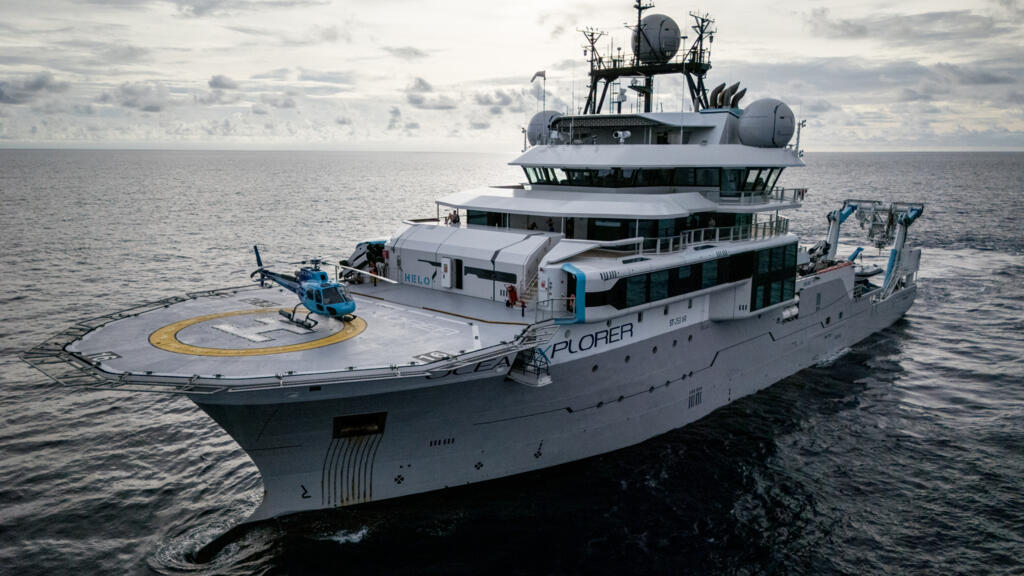
OceanXplorer: a 'one-stop shop' for marine research

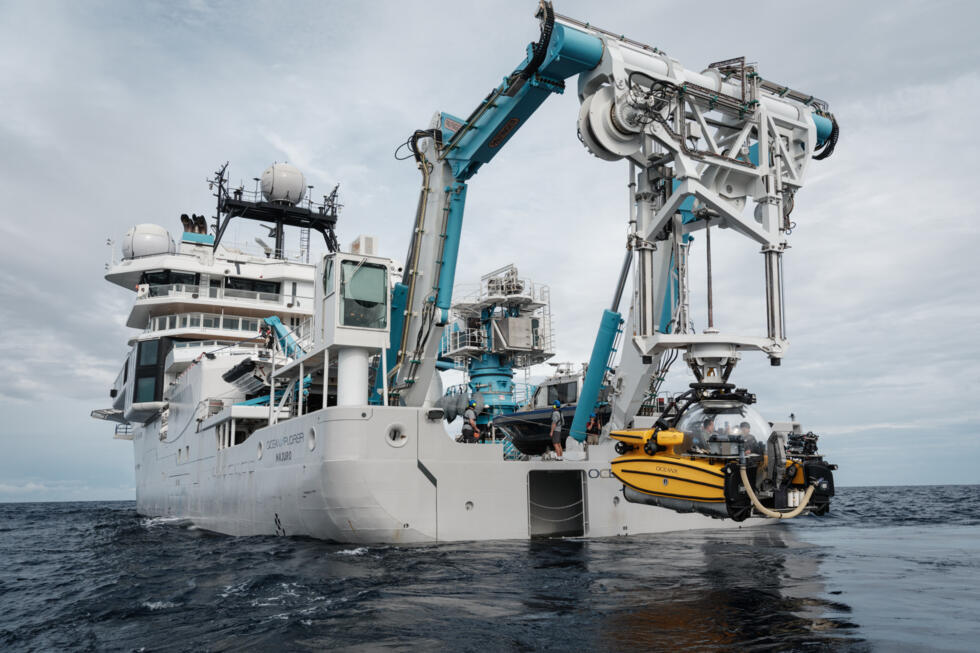
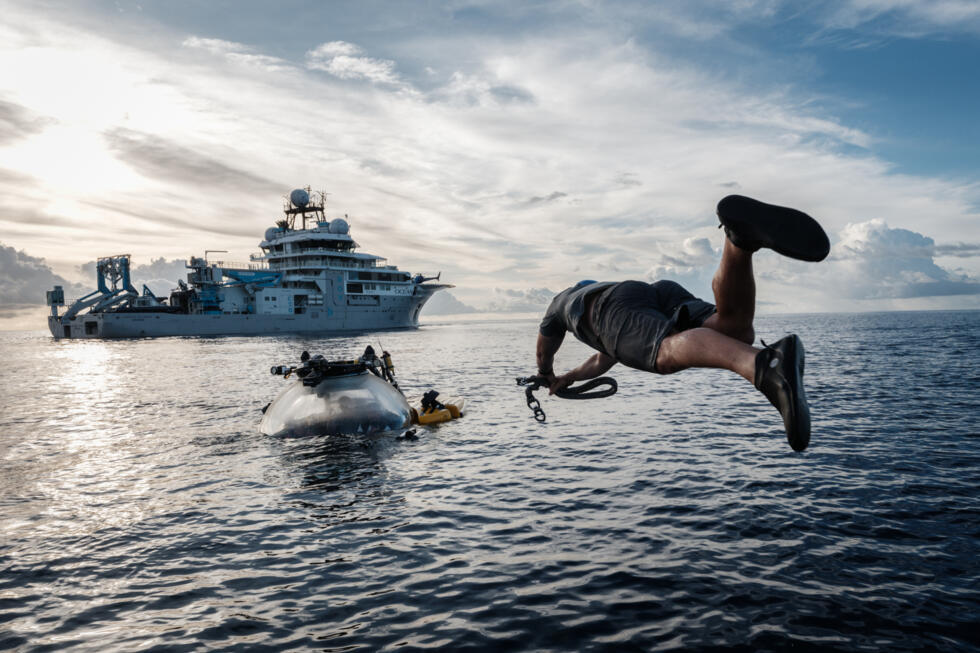
Aboard Oceanxplorer (Indonesia) (AFP) – This month, AFP reported from OceanXplorer, a high-tech marine research vessel owned by billionaire-backed non-profit OceanX, as it studied seamounts off Indonesia.


Issued on: 26/01/2026 - FRANCE24


AFP reported from OceanXplorer, a high-tech marine research vessel owned by billionaire-backed non-profit OceanX © YASUYOSHI CHIBA / AFP

The ship pairs advanced scientific research with high-end media content to make marine biology and conservation accessible.

A one-stop shop

A former oil exploration ship, OceanXplorer belongs to OceanX, which was founded by wealthy investor Ray Dalio and his son Mark.

There are two submersibles -- one with 8K cameras and a science vessel equipped to collect samples © Sara HUSSEIN / AFP

It was retrofitted with everything from laboratories for genetic sequencing to helicopters for aerial surveys.

It is a "researcher's dream", according to Sekar Mira, a cetacean specialist on board from Indonesia's National Research and Innovation Agency (BRIN).

"It is essentially a one-stop shop for ocean science," said mission lead Andrew Craig. "There's nothing else like it in the world."
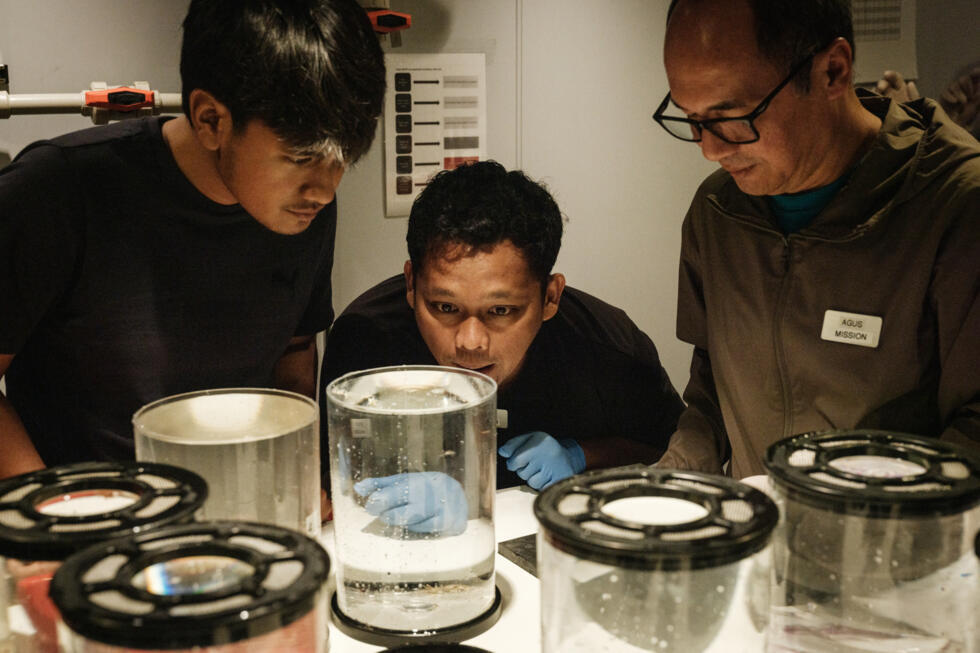
Rotating science teams

OceanXplorer has been at sea almost continuously since 2021. AFP joined as it surveyed biodiversity on a deep-sea mountain chain off Sulawesi island.

Each mission brings in local government and research institutions, and a new team of local scientists © YASUYOSHI CHIBA / AFP

This time they include "megafauna" specialist Sekar, researching whales and dolphins, and genetics and molecular biotechnology expert Husna Nugrahapraja, who is "bioprospecting" compounds for new medicines.

"We will extract the DNA and then we want to do what is called metagenomic sequencing... and then we try to mine the data," said Husna, an assistant professor at Institut Teknologi Bandung.

Being able to do all that on board is "really impressive," he added.

BRIN marine biologist Nur Fitriah Afianti scrutinises plastic waste from thousands of metres below the surface for helpful microbes.

"Maybe the microbes can digest the plastic waste. Maybe, I hope," she said.
eDNA work

The visiting scientists are supported by OceanX experts like Larissa Fruehe, a specialist in environmental DNA (eDNA).

Every organism is releasing their DNA into their respective environment -- filtering those paints a picture of what has passed through © Sara HUSSEIN / AFP

She calls it "the coolest thing ever" because of its potential to detect species long after they have left an environment.

"Every organism is releasing their DNA into their respective environment" in the form of feathers, hair, scales, mucus or even faeces, Fruehe said.

Filtering those traces from soil, air or water paints a picture of what has passed through.

OceanXplorer can "run a whole eDNA workflow in its entirety, from sampling to actual bioinformatic analysis", Fruehe said.

Among those working with eDNA on board is coelacanth specialist Alex Masengi.

He is hunting for signs of the ancient fish at 900 metres, far below its known range.
Hollywood touches

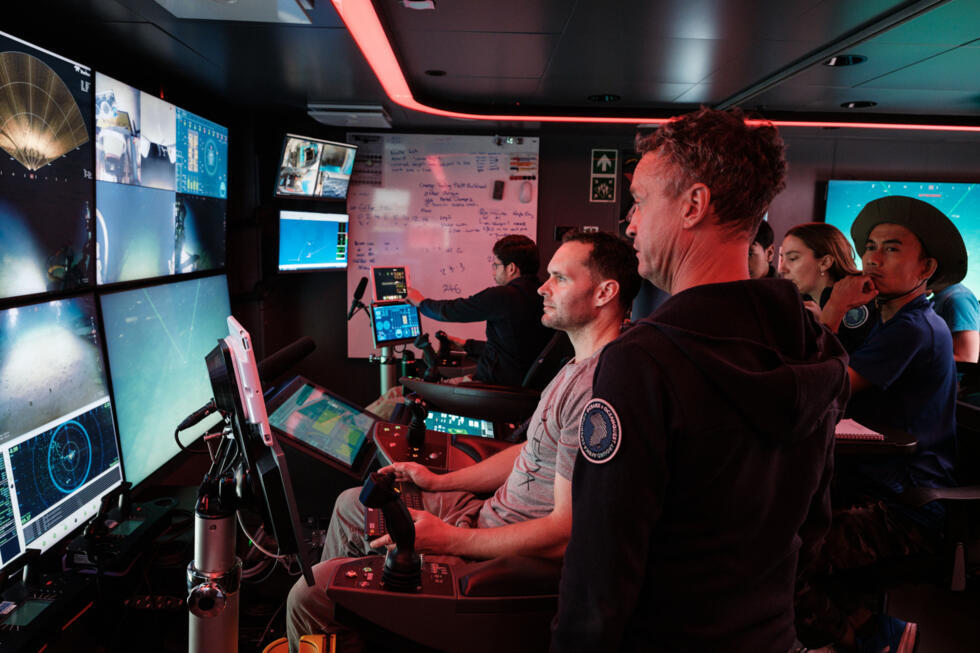
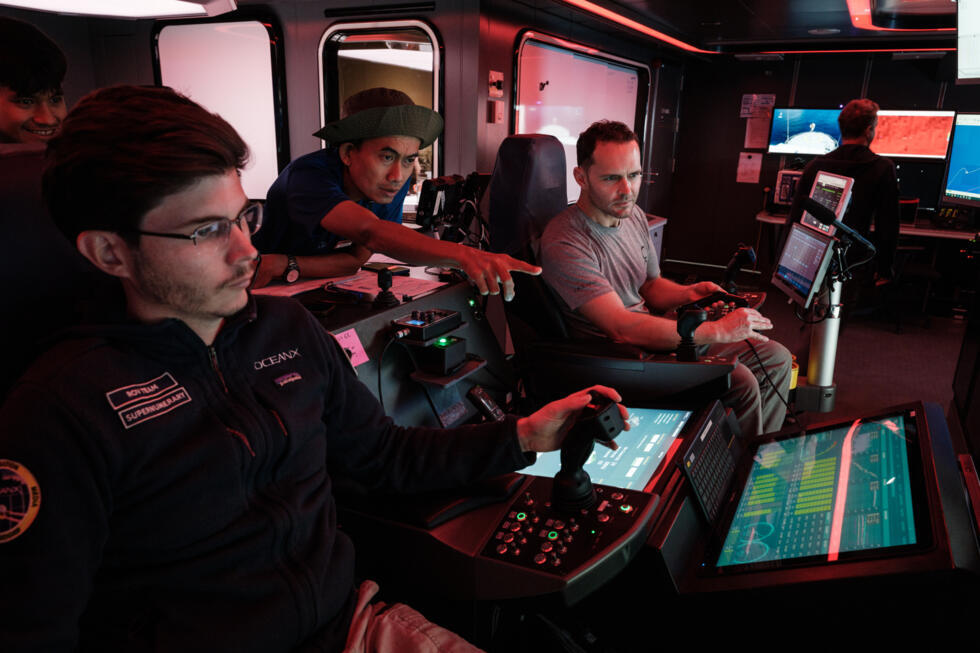
OceanX brought in Hollywood designers to make the ship telegenic, with a futuristic "mission control" and customisable lighting for optimal filming conditions.

OceanX brought in Hollywood designers to make the ship telegenic, with a futuristic "mission control" and customisable lighting for optimal filming conditions © YASUYOSHI CHIBA / AFP

It is a deliberate attempt to make marine science compelling for a mass audience, including OceanX's four million TikTok followers.

OceanX does not advertise the ship's cost or its operating budget, but its parent body's 2024 US tax filing reported over $44 million in expenses.

Much of that comes from the Dalio family, though outside grants help fund missions too.

Privately funded science can be controversial, but OceanX notes that its research is all publicly accessible, and it partners with government and institutions often unable to expend their limited resources on marine science.
Research and filming firsts

OceanXplorer trips have generated dozens of scientific papers, on everything from deep-sea shark behaviour in the Red Sea to whales and dolphins off Indonesia.

Its cameras have filmed rare footage of groups of coelacanths near Indonesia, and observed newly discovered brine pools in the Red Sea © Sara HUSSEIN / AFP

Its cameras have filmed rare footage of groups of coelacanths near Indonesia, and observed newly discovered brine pools in the Red Sea.

In between missions, students are invited on board as part of OceanX's education mission.

"It's about conservation, it's about education and it's about exploration," said Craig.

"They want to go to new places, they want to explore, and they want to bring back that knowledge and make it available to the public."

© 2026 AFP

'So little we know': in submersibles revealing the deep sea

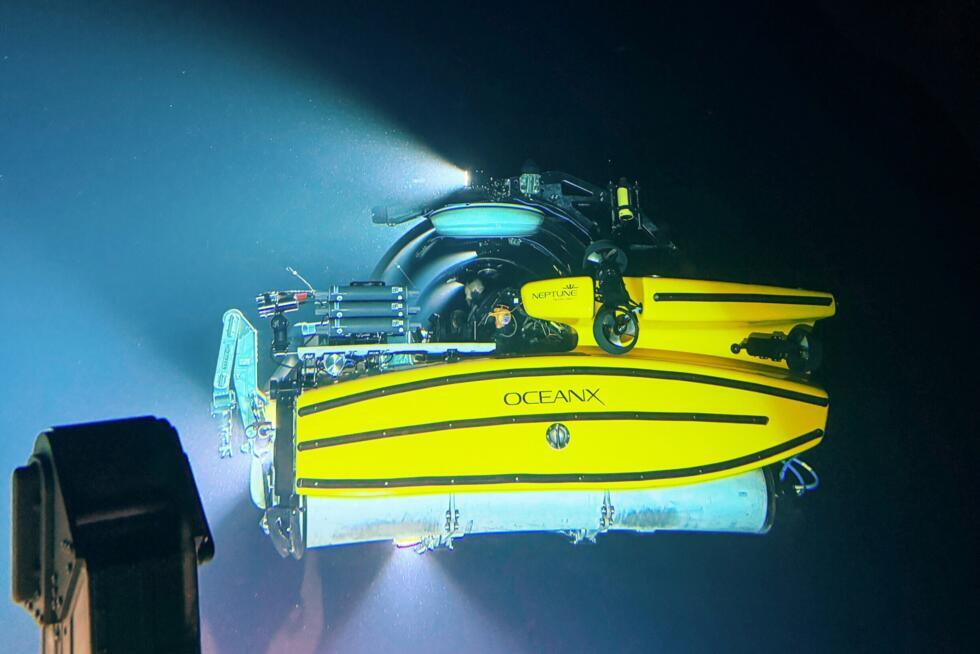
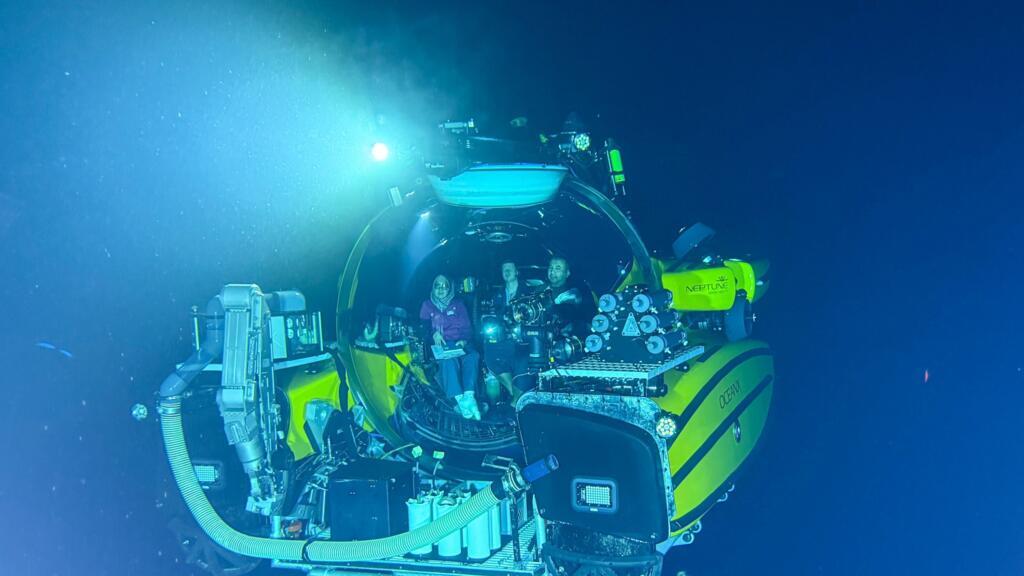
Aboard Oceanxplorer (Indonesia) (AFP) – A dome-fronted submersible sinks beneath the waves off Indonesia, heading down nearly 1,000 metres in search of new species, plastic-eating microbes and compounds that could one day make medicines.


Issued on: 26/01/2026 - FRANCE24

The vessel's powerful light beams can be used to elicit the display of light called bioluminescence that many deep-sea animals produce © Sara HUSSEIN / AFP

This month, AFP boarded one of two submersibles belonging to OceanX, a non-profit backed by billionaire Ray Dalio and his son that brings scientists onto its OceanXplorer ship to study the marine world.

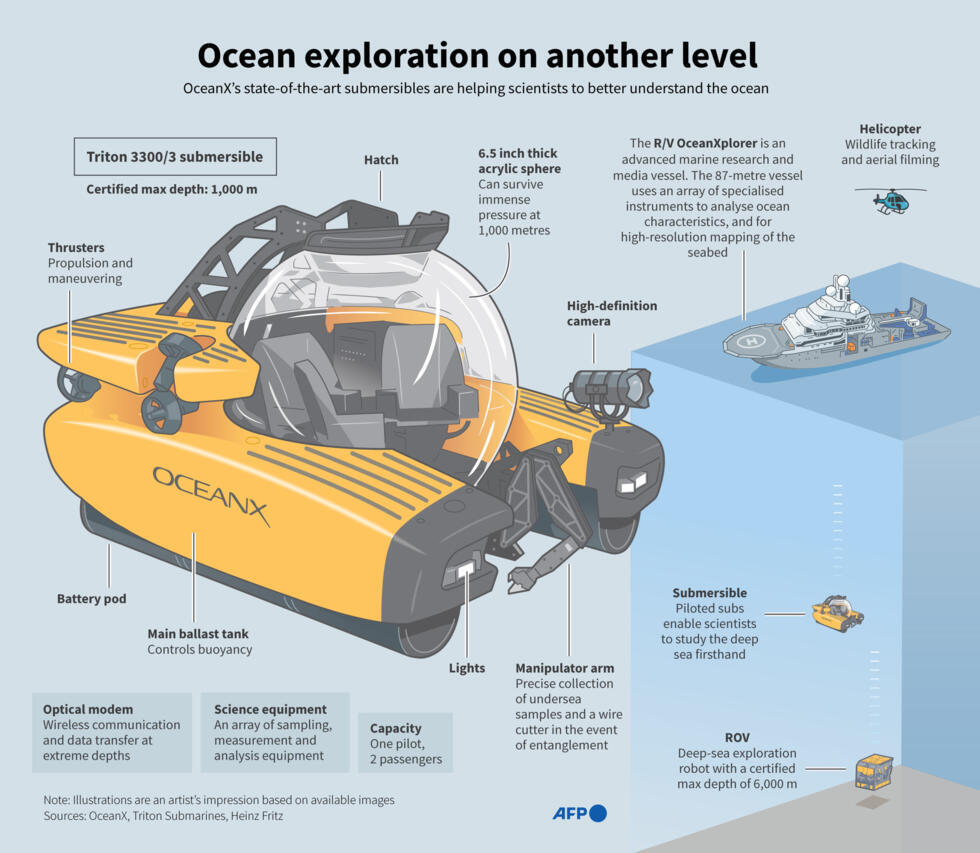
The ship boasts labs for genetic sequencing, a helicopter for aerial surveys and a remotely operated vehicle (ROV) capable of descending up to 6,000 metres (19,700 feet) under the ocean surface.

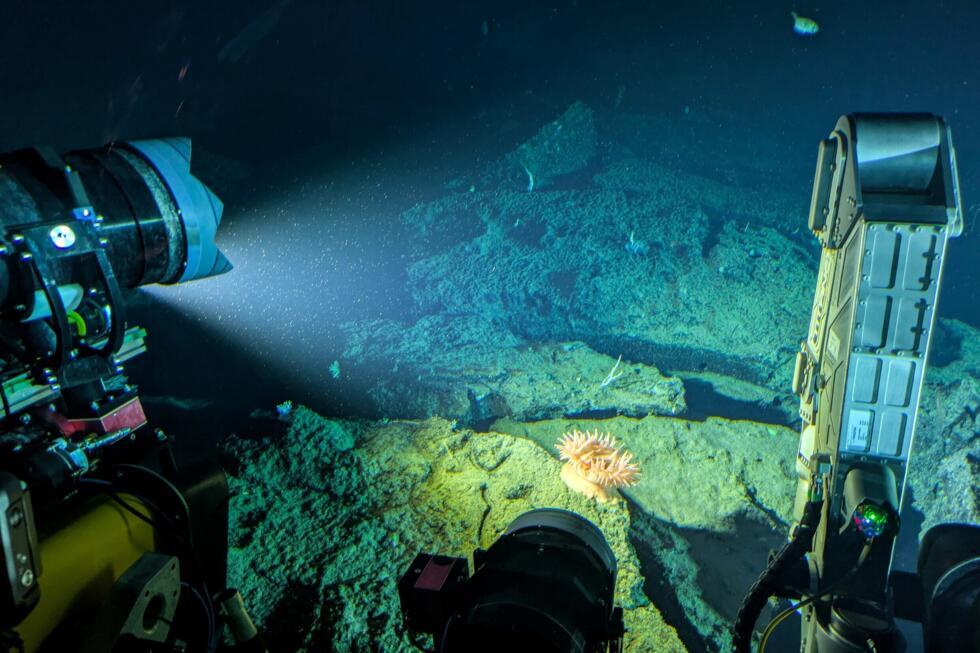
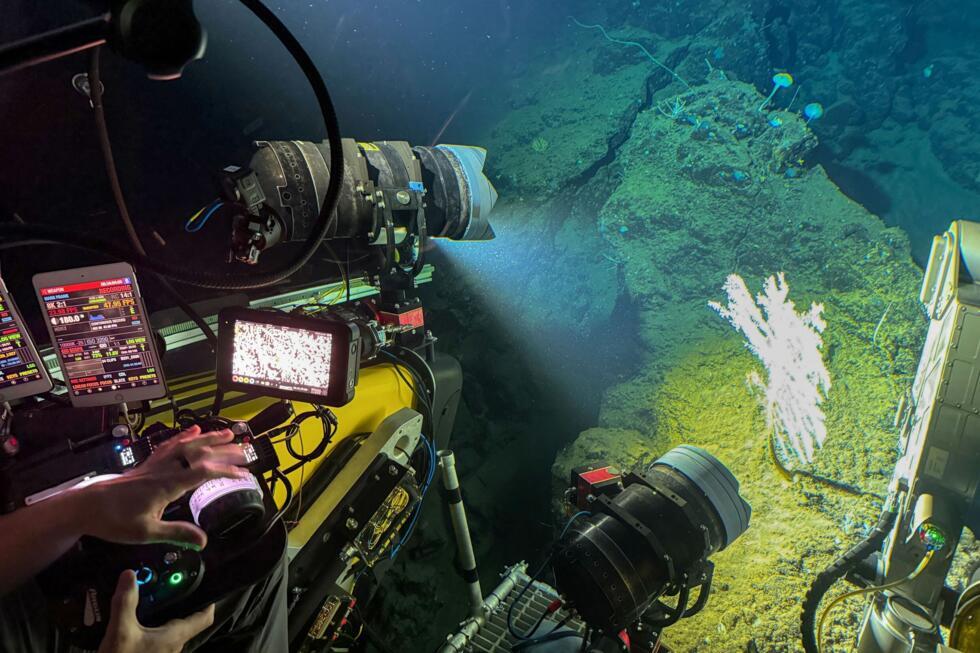
Its two submersibles have everything from hydraulic collection arms and suction tubes to high-definition cameras, allowing them to uncover the improbable life found in some of the harshest conditions on Earth.

The ship's latest mission focuses on a seamount chain off Indonesia's Sulawesi island that scientists on board mapped last year.


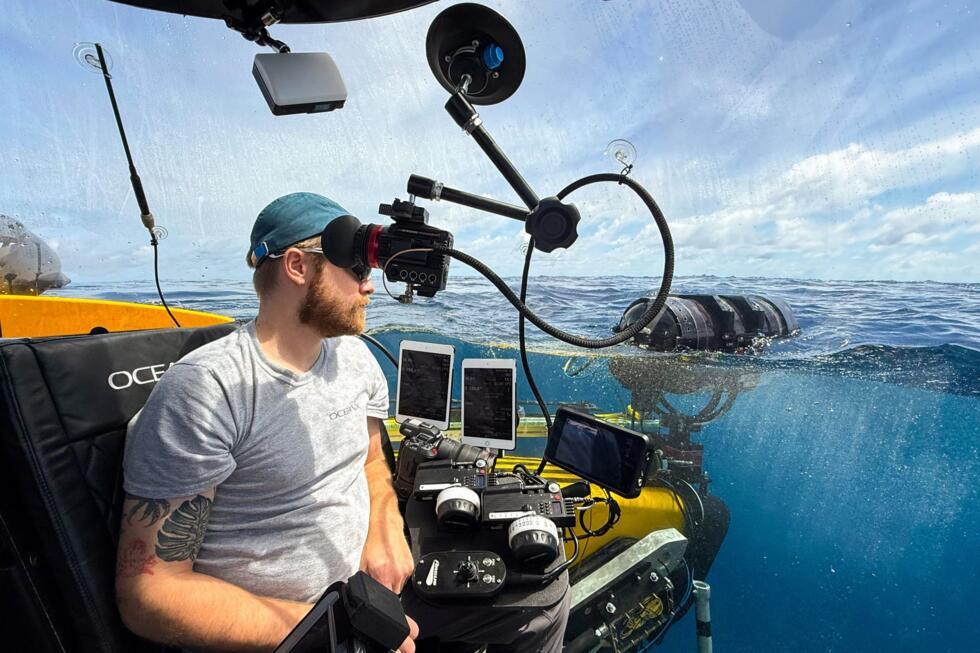
A dome-fronted submersible sinks beneath the waves off Indonesia, heading down nearly 1,000 metres in search of new species © Sara HUSSEIN / AFP

A new team of Indonesian scientists is now surveying its biodiversity, including with submersible dives that put the researchers right into the environment they are studying.

As the sub dropped below 200 metres, the last traces of light disappeared, and indigo faded into total darkness.

Husna Nugrahapraja, an Indonesian scientist on the mission, admitted feeling "a little bit nervous and anxious" as he descended on his first submersible trip.

It is a "very lonely" environment at first, the assistant professor at Institut Teknologi Bandung told AFP.

The craft's lights offered the only illumination, revealing drifts of "marine snow" -- a shower of debris, including decomposing animals, that falls continuously into the depths and creates the impression of an old television stuck between stations.

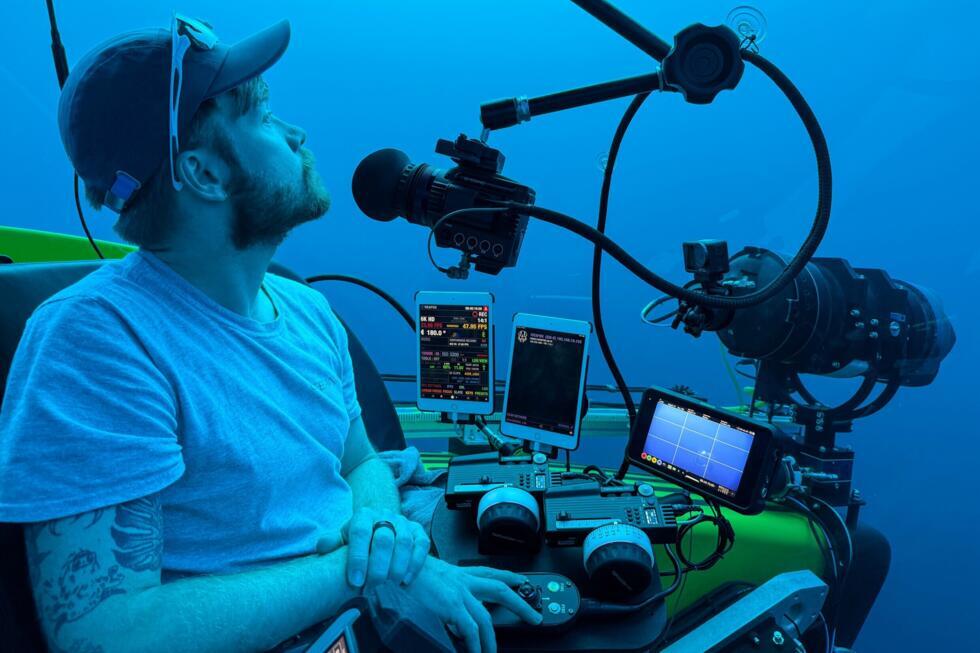
OceanXplorer's Nadir submersible is designed for high-end media content © Sara HUSSEIN / AFP


Marine life that most people never see floated into view, including delicate comb jellies with pulsing fairy-light illuminations along their sides.

Siphonophores -- largely translucent creatures in fanciful shapes resembling toddlers' drawings -- glowed as they drifted by, and silver, fingernail-sized fish skittered out of the sub's wake.

Finally, Husna said, "we arrive on the sea bed... (where) we can see many unique organisms", from delicate sea stars to fronded soft corals.
'Quite different'

OceanXplorer's Neptune submersible is designed for scientific collection and observation, while its Nadir vessel has high-end cameras and lights for media content.


The ship boasts labs for genetic sequencing, a helicopter for aerial surveys and a remotely operated vehicle © YASUYOSHI CHIBA / AFP


That reflects OceanX's view that compelling images make research more accessible and impactful.

"We get a lot of scientists come on who are very sceptical about subs," he told AFP.

"Pretty much without fail every sceptical scientist that comes on board who gets to go on a dive changes their opinion."

The nearly 360-degree view gives them "a totally different perspective" to the flat video fed up to the ship by the ROV.

"It's quite different when you see it yourself," Husna said.

The submersibles also offer unique experiences, including the flashes of light called bioluminescence that many deep-sea animals produce to communicate, for defence, or to attract mates.

The vessel's powerful light beams can be used to elicit the display.

First, all the lights are switched off. Even the internal control board is covered, plunging the craft's occupants into total darkness.


Ocean exploration on another level © Nicholas SHEARMAN / AFP


Then the sub flashes its lights several times while those on board close their eyes.

When they open them, a seascape galaxy of stars appears -- the bluish-white flashes of creatures from plankton and jellyfish to shrimp and fish responding to the sub lights.

Pollock, who has spent hundreds of hours diving in submersibles, counts some of the more spectacular "flashback bioluminescence" events as among the most memorable moments in his career.

Submersibles are used in many fields, but many now associate them with the 2023 underwater implosion of the Titan, which killed five people on a trip to explore the Titanic wreck.

Pollock stressed that, unlike Titan, OceanXplorer's vehicles are designed, manufactured and inspected regularly in accordance with industry body DNV.

"The subs are designed safe" and equipped with back-up systems including four days of emergency life support, he said.
'So little we know'

For deeper exploration, the scientists rely on OceanX's ROV, operated from a futuristic-looking "mission control" where two crew members sit in gamer-style armchairs.
For deeper exploration, scientists steer a remotely operated vehicle from a futuristic-looking 'mission control' © YASUYOSHI CHIBA / AFP


A bank of screens shows the largely barren seabed, as an operator uses a multi-jointed joystick to operate the robot's hydraulic arm from thousands of metres above.

It resembles a space mission, with an intrepid rover traversing desolate distant terrain. But here there are aliens.

At least that is how some of the species encountered appear to the untrained eye.

There's a bone-white lobster, suctioned up for examination at the surface, and a horned sea cucumber whose mast-like spikes collapse into black spaghetti when it arrives on the ship.

And there's a deep-sea hermit crab, living not inside a shell, but a sea star the team can't immediately identify. The crab has laid lurid orange eggs inside its long-dead host.

Not every collection is a success: a delicate red-orange shrimp daintily eludes the suction tube, swirling its long antenna as it swims almost triumphantly beyond reach.

When the ROV returns, there is an excited dash for the samples including seawater, sediment and a forearm-length sea lily coated with dripping orange goo.

Crustacean specialist Pipit Pitriana from Indonesia's National Research and Innovation Agency is fascinated by the captured lobster, as well as some pearl-sized barnacles she thinks may be new to science.

Large parts of the ocean, particularly the deep sea floor, are not even mapped, let alone explored.

Large parts of the ocean, particularly the deep sea floor, are not even mapped, let alone explored © YASUYOSHI CHIBA / AFP

And while a new treaty to protect international waters entered into force this month, the ocean faces threats from plastic pollution and rising temperatures to acidification.

"Our Earth, our sea, is mostly deep sea," Pipit said.

"But... there is so little we know about the biodiversity of the deep sea."

© 2026 AFP

Tuesday, September 02, 2025


Bite by bite: How jaws drove fish evolution


U-M study traces jaw innovation and evolution in a once-mighty group of fish


University of Michigan

Dipterus 

image: 

Whole skeleton of Dipterus, an extinct lungfish from the middle Devonian period. Specimen (UMMP 16140) from the University of Michigan Museum of Paleontology.

view more 

Credit: E.M. Troyer/University of Michigan


ANN ARBOR—If you're reading this sentence, you might have a fish to thank.

Fish were the first animals to evolve jaws. They use their jaws primarily to eat, but also for defense, as tools—such as to burrow or to crack open hard food—and even as a form of parental care: some fish carry eggs or their young in their mouths. Jaws are a trait that scientists think fueled evolution among vertebrates, including us. 

Now, a University of Michigan study has shown that a now rare group of fish called lobe-finned fishes enjoyed an explosion of diversity between about 359-423 million years ago. They were an especially diverse group containing many species with rapidly evolving jaws and new innovations in feeding modes. In contrast, the other major group of fishes at the time, ray-finned fishes, had jaws that evolved much more slowly. 

This is surprising because at some point, several million years later, their evolution stalled out. The most famous of these "living fossils" is likely the coelacanth, once thought to be extinct but discovered to be living in the deep ocean in 1938 by one of the most well-known women in science, Marjorie Courtenay-Latimer. Today, just eight species of lobe-finned fishes are recognized by scientists. By contrast, ray-finned fishes comprise about 33,000 species today and include just about any fish you can think of, from goldfish to bass to seahorses. 

The study, led by U-M postdoctoral researcher Emily Troyer, is published in the journal Current Biology and supported by the National Science Foundation. 

Troyer said the study underscores the importance of looking to ancient fossil records to discover new information about the process of evolution. They didn't expect to see such a disparity in evolutionary might between lobe-finned fishes and ray-finned fishes—something that wouldn't have been known if not for the fossil record of Silurian and Devonian fish.

"When you're looking at evolution, you can learn so much from looking at the past," Troyer said. "Without the fossil record, we would have no idea of this inverted role reversal."

The age of fishes

While scientists have long suspected the role of jaws in vertebrate evolution, there was little work that compared jaw evolution among early fishes. The study authors examined 3D models from CT scan data of 86 different species of fishes from the Silurian and Devonian periods, beginning about 443 million years ago—before even trees existed. They found that the lobe-finned fishes, lungfish and coelacanth, in particular, displayed the fastest rates of change and the most innovation in jaw shape and function. 

"This is a really striking result, primarily because lungfish and coelacanths today are represented by only eight living species, with not much jaw diversity going on. However, if we look back in time 400 or so million years, we see this striking inversion. During the Devonian, we have a lot more species and a lot more innovation within their jaws," Troyer said. 

To determine this, the research team digitally mapped each 3D model to examine both the form of the jaw and the function by determining the mechanical advantage of the jaw, or how much force the fish could exert when they bit down.

"Essentially, the higher the mechanical advantage of the jaw, the stronger the bite force," Troyer said. 

The research team found that the shape of lungfish jaws really took off in the early Devonian period. Their jaws grew big and thick, with heavy muscle. This likely gave them the ability to eat hard-shelled prey such as early clams and crustaceans. 

"With their really hefty jaws, they were able to eat really hard food," Troyer said. "We think these new feeding strategies might be causing jaws to need to be shaped like this, and that some of these major innovations are associated with their ecosystems during this time."

Rafael Rivero-Vega, co-first author and recent U-M doctoral graduate, collected CT scan data and visited museums to create additional 3D scans of nearly every available, complete lobe-finned fish jaw fossil for his dissertation. He then mapped important characteristics of the jaws in order to test for "adaptive radiation," or the rapid diversification of animals due to changes in their environment.

Rivero-Vega was struck by the research's revelation that each fish group was experiencing "a unique evolutionary moment in their ancient past."

"Some fishes were diversifying their jaws rapidly in shape and size, only later to stay essentially unchanged once they filled a specialized niche, others had similar characteristics but a wider variety of shapes and sizes, and yet others had similar form but wouldn't change until after they had already transitioned onto land," he said. 

"It's a great example of how innovations in shape, form and function can be explored by different fish groups at their own pace as long as they experience the appropriate evolutionary pressures. And all of this happened hundreds of millions of years before the dinosaurs. Fishes are awesome."