Wednesday, September 02, 2026

Russia’s Jet-Powered Drones: A Major New Threat To Ukraine Amid Speeding Arms Race – Analysis

The image shows Geran drones stored near Tsymbulova in Russia's Oryol region. Photo Credit: RFE/RL

Key Takeaways:

  • Russia is fielding jet Shahed variants (Geran-3/4/5; Ukraine cites ~3,000/month of the last two) with operator video via MESH hops: Geran-4 ~350 kph, Geran-5 up to ~600 kph and ~950 km—July jet use up fivefold even as total Shahed launches fell.
  • Targets this summer include energy sites and a new logistics push (warehouses, rails, Odesa/Mykolayiv ports); front-line 100 km is worst, but jets have reached Kyiv. Interceptors and cheap drones struggle at those speeds.
  • Kyiv is racing jet interceptors (Alexa Spatium announced Aug. 21), turrets, and SAM upgrades; next worry is the faster Banderol hybrid. HUR says Western (plus ~1/3 Chinese) parts persist with markings lasered off; strikes on launchers and Alabuga are the other lever.

A jet-engine roar passes over a Ukrainian train stuck on the tracks during an air-raid alert as dozens of passengers shelter in a wooded area nearby. Moments later, a black drone strikes the locomotive, engulfing the train in an orange flash of fire and forcing passengers to flee.

The scene was captured in a video posted online by Ukrainian President Volodymyr Zelenskyy’s adviser on defense technology, who said it might have been evidence of one of Russia’s latest military inventions: the Shahed Seeker.

Also known by its Russian name, Geran-4, the drone is yet another modification of the Iranian-origin Shahed, which was provided to Moscow by Tehran in the early stages of Russia’s full-scale invasion of Ukraine in 2022.

Back then, Shahed drones changed warfare, forcing the Ukrainian military to develop and adapt its air defenses in response to regular, large-scale, and often deadly air attacks.

Now they are being domestically produced by Russia in large numbers. And in the past year some of them, like the Geran-4, are now jet-powered and equipped with remote-control technology, leaving Kyiv with yet another technological challenge to address.

‘Major Problem’

Well into the fifth year of its all-out war on Ukraine, Russia has not pulled back on its relentless bombing campaign aimed at forcing Kyiv to comply with President Vladimir Putin’s demands.

However, over the past two months, there has been a notable change in approach: The number of Shahed drones largely launched in Russian air attacks on Ukraine has fallen by at least half. Yet the threat they pose has increased significantly.

While the majority of the drones used by Russia are still powered by internal combustion engines and have already become a common target for Ukrainian air defenses, the country’s military reported the number of jet-powered drones had increased fivefold in July.

“It is a major problem,” Danylo Shenhelskiy, a military liaison manager on a leading charity organization’s project to counter Russian drones, told RFE/RL’s Ukrainian Service. “In some areas, jet-powered Shaheds literally make up the majority of the Shaheds being used.”

“We knew that these jet-powered Shaheds existed,” Shenhelskiy said, but “there was a belief in military circles that the Russians wouldn’t be able to scale up production because they would need a more expensive turbojet engine and so on.”

As of now, three versions of Russia’s jet-powered drones are known to the public: the Geran-3, Geran-4, and Geran-5. According to the Ukrainian military news site Militarniy, Russia produces nearly 3,000 of the latest two models every month.

While the Geran-3 is largely the same drone as previous versions of Russia’s Shahed prototypes, modified only with a jet engine — it has already been intercepted multiple times by the Ukrainian military — the later versions have more significant upgrades, providing them with a considerable speed advantage.

According to an official from Ukraine’s military intelligence agency, HUR, who spoke to RFE/RL’s Ukrainian Service, the Geran-4 can reach speeds of around 350 kilometers per hour, while the Geran-5 can reach speeds of up to 600 kph and has a range of as far as 950 kilometers.

Unlike previous Geran versions, which were launched toward pre-programmed coordinates, the latest versions of these drones equipped with additional technology can be controlled online, the official said: “They have the capability to directly carry out a strike targeted by an operator.”

The Russian military uses MESH modems for that purpose, the official said. At around $3,500 per unit, these modems are significantly more expensive than the Starlink terminals used by Ukraine, but they allow the drones to be operated from control stations located in Russia and in Russian-occupied parts of Ukraine.

Receiving a signal from one of the stations, a MESH-equipped drone can then relay it to the next drone, which can pass it on to another, creating a chain. But the strength of the signal decreases with each hop, limiting the ability to control the drones over longer distances.

According to HUR, the Russian military is constantly searching for the most effective ways to use its new technology. For example, the drones cross the border at maximum speeds and at certain altitudes but approach their targets at extremely low altitudes.

“With stable communications and video guidance, they can strike higher-value targets because they can see the situation and prioritize which targets to hit. This is an even bigger problem for Ukrainian air defenses, as they can begin to adapt and respond more effectively,” Shenhelskiy said.

“Unfortunately, there is no effective means that can intercept them on a large scale and with certainty,” he said, adding that areas within 100 kilometers of the front line are the most at risk.

At the same time, the newest jet-powered Geran drones have already been spotted over Kyiv, nearly 200 kilometers from Russia’s Bryansk region.

What Are The Targets?

One of the most frequent targets for Russia’s jet-powered drones this summer has been Ukrainian energy infrastructure sites, French OSINT analyst Clement Molin told RFE/RL, warning that Russia’s latest air strike campaign might be only the beginning.

“The aim is to disrupt the operation of Ukrainian industry,” he said, adding that more attacks on energy sites could be expected in the autumn, as colder weather sets in.

“Jet-powered Geran 4/5s are a big emerging problem that will worsen through the winter as Russia produces more. Their increased speeds, payloads, and operator control at long distances complicates interception, but there are counters [in the works],” Dara Massicot, an expert on Russia’s armed forces and senior fellow at the Carnegie Endowment for International Peace, wrote on X.

For the past four winters, the Russian military has sought to paralyze Ukraine’s energy system, leaving thousands of people across the country with no heating and electricity amid freezing temperatures.

Molin, who has been following Russia’s invasion of Ukraine on a daily basis, also said Russia has recently found another priority target for its jet-powered drones: logistics.

“Russia has indeed been using its drones against logistics facilities, which is quite a new phenomenon,” he said.

“Russia struck around 60 warehouses across Ukraine [in July], including a supermarket, as well as numerous warehouses used for drone production and by the military and civilian industries across the country.”

Molin also noted that Russia has carried out strikes on numerous transport facilities across Ukraine, including trains throughout the country — particularly in the Dnipropetrovsk region — as well as seaports in the southern cities of Odesa and Mykolayiv.

Russian strikes have caused significant delays to train schedules in recent months, disrupting some of the key routes in Ukraine from Kyiv and the eastern regions. These routes carry civilians out of frontline areas and across the country on a daily basis.

One Threat After Another

As the Russian military continues to advance its jet-powered drone technology, which largely outpaces Ukraine’s drone interceptors, Kyiv is now racing to find a practical, cost-effective response amid a shortage of air-defense missiles capable of engaging targets traveling at such speeds.

“The entire military community working specifically on interception is currently focused on finding a solution to this problem,” said Shenhelskiy.

He added that “many” Ukrainian manufacturers are experimenting with ways to intercept or shoot down the latest Geran drones alongside the military but said he did not “see any large-scale solution that works reliably and consistently.”

While Ukraine’s Defense Ministry announced on August 21 that the country had produced its first jet-powered drone interceptor, Alexa Spatium, Andriy Lebedenko, deputy commander-in-chief of the Armed Forces of Ukraine, said at a briefing in July that several parallel air-defense projects were under way in Ukraine.

Along with new interceptors, he said Kyiv was working to produce remote-controlled turrets, munitions with programmable fuses, upgrades to surface-to-air missile systems, and missile weaponry.

“We are developing aircraft-type platforms that will also carry weapons on board, allowing them to maneuver at speeds ranging from 300 to 800 kilometers per hour and at altitudes where jet-powered Shahed drones operate,” Lebedenko said.

“In our view, this is the most scalable option. We can scale it up for mass production, and it is economically viable,” he added.

Shenhelskiy, meanwhile, is already forecasting the next, even bigger threat from Russia: a hybrid drone-cruise missile. He says he believes it will replace jet-powered drones once Ukraine develops a sufficient response to them.

In fact, Russia is already using such a weapon, called the Banderol, mostly against the Kharkiv and Odesa regions, with HUR saying it “can be launched from a ground-based launch system,” allowing the Russian military to have a limited number of its carriers.

“The more jet-powered Shaheds we intercept, the more Banderols there will be, and they are even harder to intercept,” Shenhelskiy said. “They fly at 550-600 kilometers per hour, making them physically impossible to intercept with interceptor drones.”

“Unfortunately, our air force and other air defense units still face a shortage of air defense missiles, and that is a problem…. Everyone wants it cheap and fast. But intercepting fast-moving targets will be expensive and take time,” he added.

Experts agree that an additional part of the effort to counter the increasing number of strikes by jet-powered drones would be to target their launch stations, remote-control bases, and the Alabuga factory in Russia’s Tatarstan region where the drones are produced.

“It is much harder to change the launch site if the launchers are hit. This would force the Russians to suspend launches for several days or weeks until they set up new ones. This is a major challenge for Ukraine,” said Molin.

This year, Ukrainian forces have stepped up long- and medium-range strikes inside Russia and Russian-occupied Ukrainian territory, targeting military sites as well as oil and gas facilities in an effort to curb Moscow’s energy revenues and push the Kremlin toward negotiations.

Western Parts, Russian Drones

While searching for a technological solution to counter Russia’s jet-powered drones, Kyiv may also need to make a political push toward its Western partners: A significant share of the components used to produce Russia’s Geran drones are of Western origin.

Russia seeks to produce some of the components for the drones domestically. But products from the United States, Japan, Germany, Switzerland, and other technologically advanced countries still make up the majority. Chinese components account for roughly one-third.

For example, a HUR official told RFE/RL that Russia has been using German-made Infineon components in the power distribution units of its first Geran drones and continues to use them in later models.

The original markings on Western-made components have been removed with lasers, he added: “By removing the markings, they conceal the batch number, which could be used to trace the particular supply chain, who the components reached, and through whom they ended up in Russia.”

He said Kyiv sees some components disappear from Russia’s drones only to reappear in later models, while others are eventually replaced with Chinese equivalents as Moscow builds complex supply chains involving third countries to procure the components it needs in the face of sanctions.

Despite this, the HUR official said the sanctions are “helpful,” adding: “If sanctions were not working — in terms of making it more difficult for them to access the components they need — then both the number of systems and possibly some degree of further development would continue to grow.”

Adapted by Mykyta Peretiatko from the original Ukrainian-language report

  • Donbas.Realities is a regional news outlet of RFE/RL’s Ukrainian Service

  • Roman Pahulych covers defense and security for Donbas.Realities of RFE/RL’s Ukrainian Service. He has worked for RFE/RL since 2018 after stints as a reporter for Ukrainian news Channel 24 — both in Ukraine and abroad.

EU readies fresh cash for Ukraine’s air defence as Patriot stocks run low
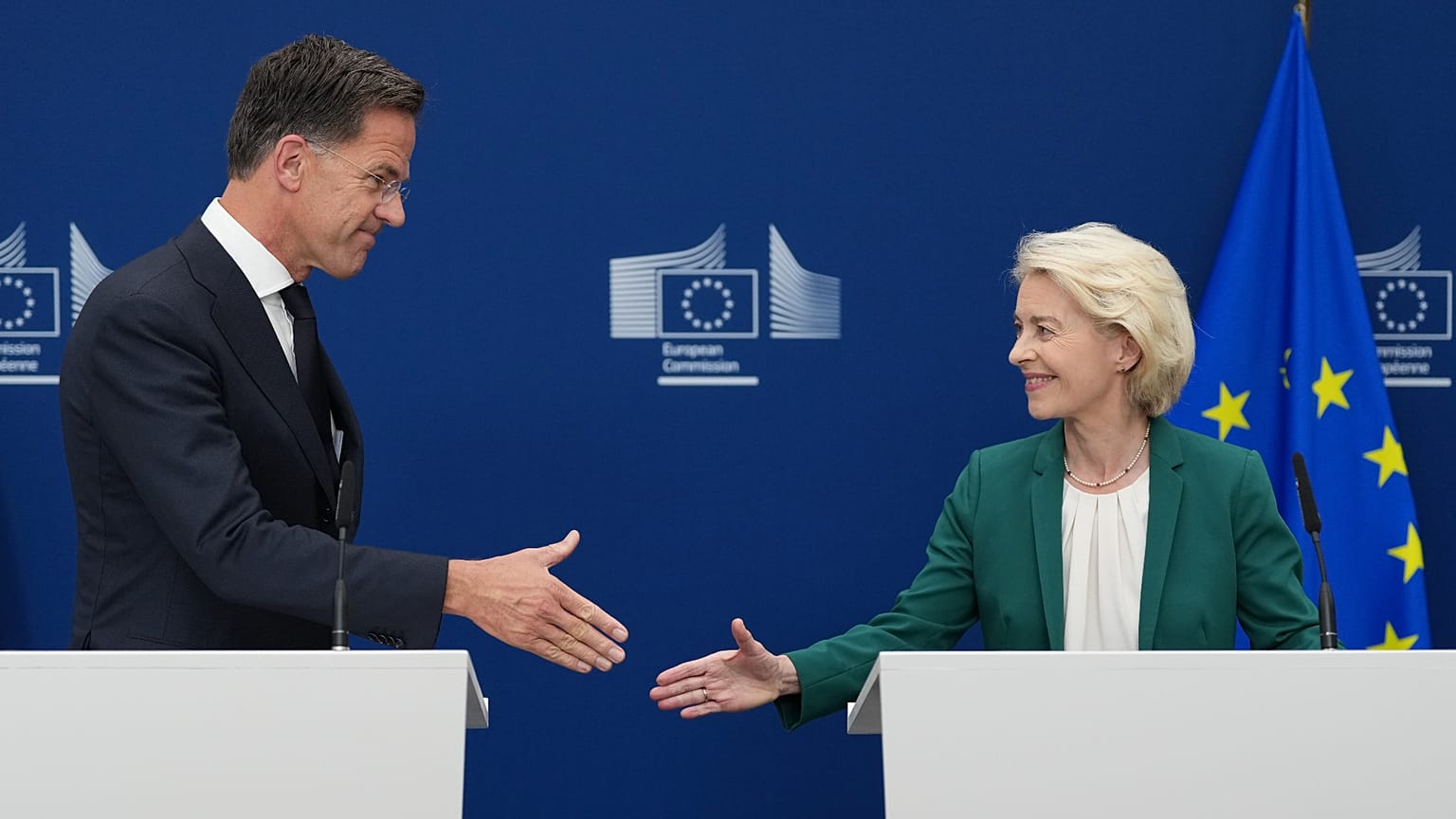
European Commission President Ursula von der Leyen, right, and NATO Secretary General Mark Rutte at a press conference in Brussels, Wednesday, Sept. 2, 2026.
Copyright AP Photo/Virginia Mayo

By Luca Bertuzzi & Sasha Vakulina
Published on

The EU is weighing a multibillion-euro Ukrainian request for PAC-3 Patriot interceptors as Russia steps up air attacks. Brussels hopes to approve the funding as early as next week, with talks also underway over a possible NATO contribution.

Brussels is assessing a new payment request from Kyiv worth several billion euros to bolster Ukraine’s air defences, as Russia intensifies its aerial attacks and Ukraine seeks more US-made Patriot interceptors.

“We have received a new payment request. It is worth several billion euros and would cover Ukraine’s air defences, including the highly advanced PAC-3 Patriot air defence systems,” European Commission President Ursula von der Leyen said at a joint press conference with NATO Secretary General Mark Rutte.

EU countries now need to approve a derogation from the conditions of the Ukraine Support Loan, which limits non-European sourcing to 35% of the value of a defence product unless no European alternative is available.

The Commission president did not disclose the exact amount requested, as doing so could have put pressure on member states to approve the full sum sought by Kyiv, a Commission official who asked not to be named told Euronews.

Part of the payment could also come from NATO, although discussions were still ongoing, the official added. No other derogations were requested under this payment apart from the one covering the Patriots.

Russia has intensified its aerial attacks on Ukraine in recent weeks, at times launching as many as 30 ballistic missiles in a single night and further straining Kyiv’s already depleted stocks of interceptors.

Patriots are among the most advanced systems available for intercepting ballistic missiles. They take considerable time to manufacture, while stocks have been depleted by more than four years of war in Ukraine and by the US-Iran conflict earlier this year, which forced Gulf states to use large numbers of their own interceptors.

At an informal meeting of EU defence ministers in Ireland earlier this week, EU officials lobbied member states with significant remaining stockpiles to share them with Kyiv. So far, however, the pressure has failed to produce the hoped-for results.

“Member states are currently looking at Ukraine’s request, but I can say it’s going in the right direction,” von der Leyen said.

According to Ukrainian media reports, Kyiv has asked the European Commission to allow it to spend around €2 billion on Patriot interceptor missiles. The number of missiles that sum could purchase would depend primarily on the terms of the deal.

For Kyiv, however, the main challenge is not funding but availability.

In July, Ukrainian President Volodymyr Zelenskyy said Ukraine would need at least 140 Patriot interceptors to defend against a single Russian attack involving around 70 ballistic missiles.

Ukraine has already secured a derogation for US-made Patriots under the €90 billion loan, alongside another allowing the procurement of Chinese drone components, even as France ramps up pressure to phase out non-European suppliers.

National representatives are due to discuss the request on Monday, with a view to approving it as early as next week. The Commission would then need signed procurement contracts before it could disburse the payment.

Von der Leyen also pointed to Freya, a pan-European anti-ballistic missile defence project led by Ukraine’s Fire Point and involving several European companies, as a potential way to help close a critical gap in Europe’s air-defence capabilities.

“Since June, we have issued €8.5 billion for drones and missiles for Ukraine from this loan. And this money would also buy fighter jets from European industry,” she said.

 

How Would Transferring Law Enforcement Over Israeli Settlers To Police Deepen De Facto Annexation Of The West Bank? – Analysis

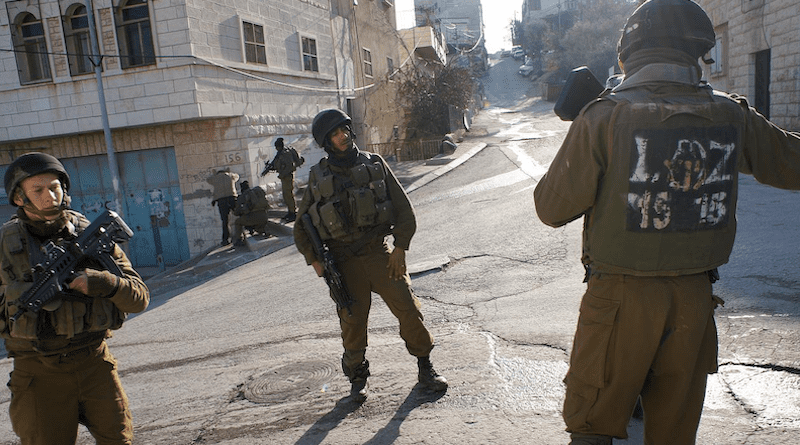
Gilbert Checkpoint Soldiers Hebron Golani Checking Israel Middle East


By Sherouk Zakaria

Key Takeaways:

  • Defense Minister Katz on Aug. 17 ordered an IDF plan (two-week clock) to give Israeli police “civilian enforcement” over West Bank settlers while the army keeps authority over Palestinians—analysts call it another shift from temporary occupation command to permanent civilian institutions.
  • Context cited: Smotrich’s 2023 Settlement Administration, Hillel Roth’s 2024 Civil Administration powers, Feb. 2026 land-purchase easing into Areas A/B; Yesh Din 2005–25 data that ~94% of settler-violence files close without indictment; OCHA 1,380+ settler incidents in 2026; Katz already ended Israeli administrative detention.
  • Palestinian analysts (Mustafa, AbuMousa) and HRW/UN COI say uniforms matter less than impunity and Oslo’s Area C being absorbed; Israel rejects systematic enablement and blames a fringe—Qusra’s siege is the on-the-ground test.

Israel’s proposed transfer of law enforcement powers over settlers in the occupied West Bank from the military to the police would further embed Israeli civilian institutions in the territory, in a move analysts said marks another step toward de facto annexation.

Defense Minister Israel Katz said on Aug. 17 that he had instructed the Israeli Defense Forces to prepare a plan to hand over responsibility for “civilian enforcement” concerning Israeli settlers in the West Bank to the police. Under the proposal, to be drawn up within two weeks, the military would retain authority over Palestinians across the territory.

While analysts said the transfer would do little to curb settler violence against Palestinians, they noted its significance lies in shifting another function of West Bank governance from the military — whose authority as an occupying power is legally temporary — to Israel’s permanent civilian institutions.

Tahani Mustafa, political analyst and visiting fellow at the European Council on Foreign Relations, said the move was part of steady measures taken by Israel to entrench a new reality on the ground through institutional, legal, and structural means.

“This is basically a combination of all three mechanisms that Israel has been pursuing since Oct.7 war on Gaza,” Mustafa told Arab News.

Under international occupation law, the military commander acts as a temporary administrator of the occupied territory. Transferring this authority to permanent civilian institutions erodes that distinction, Mustafa said.

“By putting it into the hands of civil powers, you’re in effect making that now part of the territory of Israel,” she added.

Katz’s announcement came amid a surge in settler violence and an ongoing siege by violent settlers of Palestinian residents in the village of Qusra, southeast of Nablus, despite the deployment of Israeli forces.

The proposed transfer would build on a series of measures taken by Prime Minister Benjamin Netanyahu’s government to reshape the administrative structure of the West Bank by shifting powers over planning, land and enforcement into Israel’s domestic governing institutions, alongside a rapid expansion of settlements since the October 7, 2023 war in Gaza.

In February 2023, far-right Finance Minister Bezalel Smotrich was given authority over key West Bank civilian affairs within the Defense Ministry, including settlement planning and land policy, through a newly created Settlement Administration.

The process deepened in May 2024, when powers previously held by the military-run Civil Administration over matters including planning, construction, land transactions, registration and government property were delegated to a civilian deputy, Hillel Roth.

In February, Israel’s security cabinet eased restrictions on Israeli land purchases and expanded Civil Administration enforcement into Areas A and B, both under Palestinian civil authority.

For Palestinians, the Israeli police takeover in the West Bank would do little to protect them from the soaring settler violence.

Jaser AbuMousa, a Palestinian political analyst and senior fellow at the Middle East Institute, said suspected Israeli offenders are already investigated by police and prosecuted in civilian courts rather than the military courts used for Palestinians.

“The Israeli police already have jurisdiction over Israeli citizens in the West Bank. Settlers have never been tried in military courts; they are investigated by police and prosecuted in Israeli civilian courts,” AbuMousa told Arab News.

The IDF hands Israeli suspects detained in the West Bank over to the police for interrogation or arrest, who often release the suspects without charge.

Israeli rights organization Yesh Din, which has tracked offenses from 2005 to 2025, found that 93.6 percent of investigations into settler violence against Palestinians closed without an indictment, and only about 3 percent ended in full or partial conviction.

Offenses committed by Israelis against Palestinians showed that the police failed in investigating 82 percent of these cases.

The Palestinian Wall and Settlement Resistance Commission warned that Israel’s proposal to transfer enforcement to the police could weaken the field response to settler attacks, especially if Israeli soldiers withdraw from the initial intervention duties without an immediate and effective police response.

Although the proposal has not yet come into force, the commission said the directive’s political impact began before implementation. “It sends a message about the priority given to protecting outposts,” the commission said.

Katz’s proposal comes after he ended the use of administrative detention against Israeli civilians in November 2024, scrapping a measure that allowed the military to detain suspects without charge or trial and remove them from the West Bank.

The decision widened an already stark disparity in how Israelis and Palestinians are subjected to detention in the West Bank. At the time Katz announced the policy, seven Israelis were being held in administrative detention, compared to none today.

In comparison, Israel was holding 3,198 Palestinians in administrative detention without charge or trial by August 2026, according to Israel Prison Service figures provided to Israeli rights group HaMoked.

Rights groups and Palestinians say the government’s policies have further emboldened settlers.

The existing legal system has produced a decades-long accountability gap, with human rights organizations and international bodies accusing Israeli authorities of actively facilitating and enabling settler violence and fostering a climate of impunity.

According to Yesh Din, in roughly half of the nearly 30 incidents of organized mass settler violence documented between 2023 and late 2025, soldiers or police were present, sometimes assisting the attacks directly or indirectly.

“This is because settler violence serves Israel’s objectives to expand its control over the occupied territory by terrorizing and exercising violence against Palestinians while maintaining a semblance of the rule of law,” Yesh Din wrote in its January report.

A UN Commission of Inquiry in June said settler violence functioned as a means of implementing Israeli state policy, with authorities and violent settlers working toward shared objectives including settlement expansion, annexation and the displacement of Palestinians from their land.

On Aug. 20, Human Rights Watch said settlers received “financial, material, and legal backing” from the Israeli state and that armed attacks frequently took place under the protection of Israeli forces.

Israel has repeatedly rejected accusations that it systematically enables settler violence, dismissing concerns as overblown and attributing the attacks to fringe groups of a few hundred youths.

For AbuMousa, therefore, the real question is the extent to which the move would further normalize an existing system.

“Katz is not introducing policing where there was none. He is proposing to move a responsibility that has been exercised badly from one Israeli body to another,” AbuMousa told Arab News.

“For a farmer in Qusra, the uniform in front of him matters less than the fact that nobody is stopping what is happening,” he added.

Experts also pointed to another blurring on the ground. The distinction between settlers and Israeli security forces has become difficult to draw on the ground.

A growing number of settlers became officers after attending hardline ideological pre-military academies.

Following the Oct. 7, 2023 war, thousands of settler reservists were mobilized into local defense units responsible for protecting settlements in the West Bank as most soldiers were sent to fight in Gaza and Lebanon.

According to Yesh Din, around 7,000 settlers were armed and mobilized into these units during the first months of the war.

While many are no longer on active reserve duty, the military has allowed them to keep their firearms and uniforms, according to Yesh Din, enabling soaring violence by settlers posing as soldiers.

Netanyahu’s government inaction was also widely seen as part of efforts to win over blocs of ultranationalist voters ahead of the election campaign in October.

Violence in the West Bank reached record levels this year as extremist settlers routinely enter Palestinian towns, clashing with villagers, burning homes, mosques and cars, and stealing livestock.

By late July, the UN Office for the Coordination of Humanitarian Affairs had documented more than 1,380 settler-related incidents in 2026 across more than 250 Palestinian communities — an average of about 6.6 incidents a day.

More than 2,300 had been displaced by settler attacks and related access restrictions this year, while 87 Palestinians have been killed by Israeli settlers and soldiers in the West Bank, according to the Palestinian Authority’s Health Ministry.

The growing settler violence and rapid settlement expansion drew regional and international condemnation.

Today, more than 500,000 Israelis live in settlements in the West Bank, which are illegal under international law, among 3 million Palestinians in the territory.

The longer-term significance of Katz’s proposal also lies in what it means for the framework established by the 1995 Oslo II agreement that divided the West Bank into Areas A, B and C.

Area A placed civil and internal security affairs under the Palestinian Authority; Area B placed civil affairs and Palestinian public order under the PA while Israel retained overriding security powers; and Area C remained under full Israeli civil and security control.

AbuMousa said that under Oslo, Israeli police are not meant to operate in Areas A and B without coordination, but the February 2026 cabinet decisions already pushed Civil Administration enforcement into both. “A permanent Israeli civilian police presence would go further,” he told Arab News.

The deeper problem was that Area C, which Oslo envisaged as temporary and negotiable, is being absorbed into permanent Israeli institutions.

“Thirty-one years on, Israel is registering land title there, opening it to direct purchase and now discussing permanent civilian policing,” he told Arab News.

“The PA continues administering people in Areas A and B while Israel consolidates control over the territory around them.

“That is not a step toward sovereignty. It is municipal administration inside somebody else’s planning regime.”

Why Syria’s Sweida Remains A Flashpoint For Damascus And The Druze – Analysis


September 2, 2026
Arab News
By Robert Edwards


Key Takeaways:

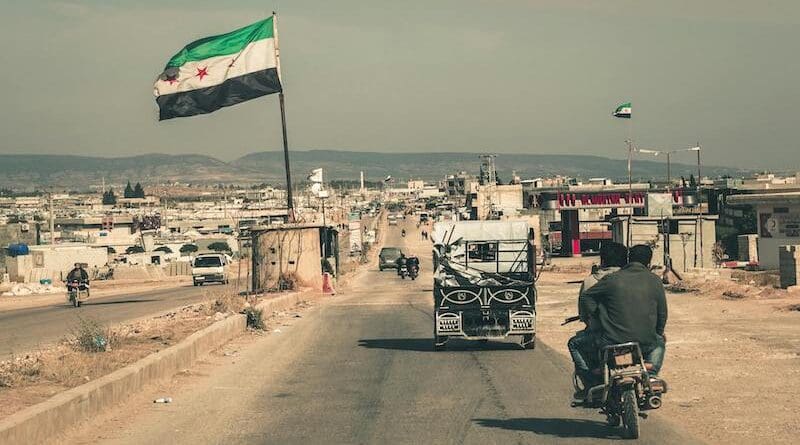
Monday clashes in western Sweida wounded at least 10 Internal Security Forces after two civilian deaths; the Druze-majority province has stayed outside full Damascus control since Assad fell in December 2024.

The National Guard under Sheikh Hikmat Al-Hijri—formed August 2025 after July fighting that UN/NGOs put at ~1,700 dead—runs sectors and checkpoints; analysts (Mahmoudian) cite Assad-era militia autonomy and fear of Islamist attack if weapons are given up.

Al-Hijri has floated self-rule or a “State of Bashan” and praised Israel, which struck Syrian forces in July 2025 citing Druze protection and a Golan buffer; Damascus sees a sovereignty threat, Israel a de facto buffer—and a wider Israel–Syria fight if Sweida explodes.

Renewed fighting in Syria’s southern Sweida province has underscored how fragile the country’s post-Assad political settlement remains and how far Damascus still has to go to establish its authority over the Druze heartland.

At least 10 members of Syria’s Internal Security Forces were wounded on Monday during clashes with local armed groups in the western countryside of Sweida, according to Syrian state media. The fighting followed the deaths of two civilians in clashes west of Sweida city.

The violence is the latest manifestation of a conflict that has simmered since the fall of Bashar Assad in December 2024. Sweida city and much of the surrounding province remain outside the full control of Syria’s new authorities.

Among the most powerful forces operating there is the so-called National Guard, a Druze-dominated armed group affiliated with Sheikh Hikmat Al-Hijri, one of the community’s most influential religious leaders.

The confrontation goes to the heart of one of the most difficult questions facing Syria’s new government: How can Damascus build a unified state when communities that have spent years protecting themselves remain unwilling to surrender their weapons and accept central authority?

“During the later years of the Assad regime, the Druze enjoyed some degree of autonomy,” Arman Mahmoudian, a research fellow at the University of South Florida’s Global and National Security Institute, told Arab News.

“They had local Druze militias that were responsible for much of their own security, operated checkpoints, and exercised a certain level of control over the area.”

That arrangement meant the new government did not inherit a province under full central control when Assad fell.

“There was essentially an unspoken social contract between the Assad regime and these militias,” Mahmoudian said. “So, by the time Ahmad Al-Sharaa and his government came to power, there was already an established degree of semiautonomy in Sweida.”

For the Druze, giving up that autonomy has proved difficult. For Damascus, tolerating armed groups outside the state’s command structure is equally problematic. The result has been a prolonged standoff.

The roots of the confrontation stretch back well before the creation of the National Guard. Sweida is the heartland of Syria’s Druze minority, a small, close-knit religious community whose members also live in significant numbers in Lebanon and Israel.

The province has historically enjoyed a degree of local autonomy, while its armed factions have often acted as the primary guarantors of security. After Assad’s fall, fears over security and representation quickly resurfaced.

Sectarian violence that erupted around Damascus in April and May 2025 spread south to Sweida, killing more than 100 people. The crisis escalated dramatically in July, when fighting between Druze and Bedouin groups drew in Syrian government forces and allied tribal fighters.

At least 1,700 people were killed and tens of thousands displaced during the violence, according to the UN, nongovernmental organizations and local accounts.


For many Druze in Sweida, the July bloodshed confirmed their fears that surrendering their weapons could leave them vulnerable.

“The issue is trust,” Mahmoudian said. “Druze minorities across the Middle East have historically been targeted by radical Islamist militias.

“Many of them worry that if they surrender and hand over their weapons, which remain their primary means of self-defense, they could once again become vulnerable to attacks.”

That distrust has made integration into the Syrian state considerably harder. The July 2025 violence also fundamentally altered the balance of power inside Sweida. In the aftermath of the fighting, Druze armed factions reorganized themselves.

The National Guard was formally established in August 2025 under the de facto leadership of Al-Hijri, bringing together the majority of the province’s armed groups under a common structure.

It divided Sweida into military sectors, established an internal security apparatus and took responsibility for the front lines facing government-held territory.

The force is presented by Al-Hijri’s camp as a defender of Sweida and its civilian population. In practice, it has also become a parallel security structure, exercising considerable control over movement and daily life in parts of the province.

Tensions within the community have also surfaced in recent weeks after Druze students in Sweida were initially prevented from traveling to government-held areas to sit their exams. The local administration later allowed them to leave the province to take the examinations.

Syrian journalist Ghassan Ibrahim, editor-in-chief of the Global Arab Network, accused Al-Hijri’s forces of deliberately escalating tensions.

“Militias of the ‘National Guard’ affiliated with Hisham Al-Hijri continue their escalation in Sweida, targeting sites of the Internal Security Forces with heavy machine guns on the western axes,” Ibrahim wrote in a message posted on social media site X.

He accused Al-Hijri’s media operation of seeking to “twist the facts and manufacture a new victimhood narrative” and said the leader was attempting to regain popular support after losing some of his previous standing.

The accusation reflects the view of Damascus that the National Guard is not a legitimate local security force but an armed challenge to the authority of the state.

In the eyes of Al-Hijri’s supporters, however, the group is a necessary shield against a government they do not trust. That fundamental disagreement has left the two sides trapped in a cycle of confrontation.

“I believe what the latest round of violence reveals, first and foremost, is that the ceasefire reached in July 2025 did not resolve the conflict; it merely froze it,” Mahmoudian said.


The dispute is not simply over security. At its core is a fundamental disagreement about Sweida’s political future.

Damascus wants the province brought under the authority of the central government. Al-Hijri has increasingly advocated some form of self-rule, while at various points raising the possibility of an independent Druze entity or a protected arrangement outside direct Syrian sovereignty.

His rhetoric has become increasingly explicit. In August, Al-Hijri described Syria’s Druze as an “integral part of the State of Israel,” praised Israel’s state-building model, and referred to religious and ideological common ground.

The remarks represented a striking escalation in his public positioning. They also highlighted the increasingly important role Israel has played in the Sweida crisis.

Israel intervened militarily during the July 2025 violence, launching airstrikes against Syrian government forces and saying it was acting to protect the Druze and prevent hostile forces from approaching its border.

For Al-Hijri’s camp, Israel’s intervention reinforced the argument that an external power could provide the security guarantees Damascus has failed to offer. For Damascus, the relationship is profoundly threatening.

Mahmoudian said Israel’s involvement reflects two overlapping interests, the first of which is the protection of its own Druze population.

Israel has a significant Druze community whose members are deeply integrated into Israeli society, including the military and other state institutions. That has created a domestic political interest in the fate of Druze communities elsewhere, particularly in neighboring Syria.

The second is Israel’s broader security strategy.

“Since the Oct. 7, 2023, attack, we have seen a persistent Israeli policy of trying to establish buffer zones between itself and territories that it perceives as potential security threats,” Mahmoudian said. “A similar pattern appears to be emerging in Syria.”

Israel, he argued, is interested in preventing the militarization of southern Syria, particularly close to the Golan Heights.

“As long as Sweida maintains a degree of autonomy and Damascus does not establish a significant military presence there, Israel may view the presence of Druze militias as a form of de facto buffer between Israeli-controlled territory and Syrian government forces.”

Al-Hijri’s increasingly warm language toward Israel is controversial even within the broader Druze community. His comments have been interpreted by critics as evidence of a political project that goes beyond protecting Sweida and toward a redefinition of its relationship with Syria.


Al-Hijri has spoken of creating an independent “State of Bashan” — a historical name for the region — and has suggested that its future could involve independence, protected status or association with another country.

His public statements about Israel have further raised questions over whether his camp ultimately seeks autonomy within Syria or a much more fundamental break.

That creates a dilemma for Damascus. Trying to impose central authority by force risks reigniting sectarian bloodshed. But allowing an autonomous armed enclave to persist risks undermining the government’s claim to sovereignty.

For now, Mahmoudian does not believe Sweida itself poses a direct threat to Syria’s territorial integrity. The wider picture, he argues, is actually somewhat more encouraging, particularly after the Kurdish-led Syrian Democratic Forces agreed to integrate into the Syrian state.

But Sweida could still have a broader impact.

“One issue is that it could set a precedent for autonomy and signal to other minorities that feel threatened, such as the Alawites and Christians, that if they remain persistent and find a foreign guarantor, they may be able to secure privileges similar to those enjoyed by the Druze,” Mahmoudian said.

That could generate new demands for autonomy or contribute to instability elsewhere. The greater danger, however, is the internationalization of the conflict.

“If the conflict escalates and the new Syrian government adopts a much more aggressive approach toward the Druze in Sweida, resulting in a full-scale armed confrontation between Damascus and local Druze forces, Israel could become directly involved,” Mahmoudian added.

“If Israel chooses to become more directly involved, this could lead to the outbreak of a broader conflict between Israel and Syria.”

That is what makes Sweida so disproportionately important to Syria’s future.


About Arab News

Arab News is Saudi Arabia's first English-language newspaper. It was founded in 1975 by Hisham and Mohammed Ali Hafiz. Today, it is one of 29 publications produced by Saudi Research & Publishing Company (SRPC), a subsidiary of Saudi Research & Marketing Group (SRMG).
View all posts by Arab News →

America Praised The ICC Until It Came For An Ally – OpEd


Key Takeaways:

  • Amman commentator Osama Al-Sharif argues that after years of Global South complaints about a hollow UNSC, Washington has since the Gaza war turned on the ICC—sanctions on judges and the court’s president—after 2024 warrants for Netanyahu and Gallant, having praised the 2023 Putin warrant.
  • He quotes the late Sen. Lindsey Graham’s reported line that the court is for “Africa and thugs like Putin,” not “democracies like Israel and the United States,” and lines up Ukraine territorial acquisition, 2025 Iran strikes, and a January seizure of Venezuela’s president as the same exceptionalism.
  • His warning: if the Rome Statute court (120+ parties; the U.S. signed but voted against the final statute) is dismantled, illegal wars become the rule; protecting a flawed ICC is treated as a test of whether law still binds the strong.

For years, countries in the Global South have accused the West of hypocritical behavior: applying international law selectively and openly breaking it to serve their narrow interests. In their view, the UN Security Council lost its credibility long ago, with the Palestinian issue being a case in point — decades of Israeli occupation, dozens of unenforced resolutions and a council dominated by greater powers.

The track record of the UNSC speaks volumes about blatant double standards, while the term “rule of law” has become hollow boilerplate.

But something has changed in the last three years. It is no longer just the UNSC that is being hollowed out. Since Israel launched its war on Gaza — now approaching its third anniversary with no end in sight — the US has turned its attention to undermining another pillar of international justice: the International Criminal Court in The Hague.

That institution is now in the White House’s crosshairs and, ironically, the assault on it exposes the antithetical rhetoric of key US officials and lawmakers when it comes to observing international law and respecting its sanctity.

The Nuremberg trials, held in the wake of the Second World War, established a radical idea: that even the most powerful leaders could be held personally responsible for atrocities, not just the states they represented. That idea sat mostly dormant for decades. Genocides in Rwanda and the former Yugoslavia in the 1990s revived the idea and launched a rare drive to make war criminals accountable under international laws and conventions.

In 1998, more than 120 countries signed the Rome Statute, creating a permanent court to fulfill that goal. The ICC’s mission was simple and, at the time, widely supported by Western democracies, but not by the US, which, interestingly, signed the founding treaty but voted against the final Rome Statute over concerns about American military protection. The ICC’s message was clear: No one should be able to commit genocide, war crimes or crimes against humanity and walk away untouched simply because they hold power.

For years, the ICC mostly prosecuted African warlords and rebel commanders, which drew fair criticism about geographic imbalance. But it was always designed to apply to everyone, anywhere.

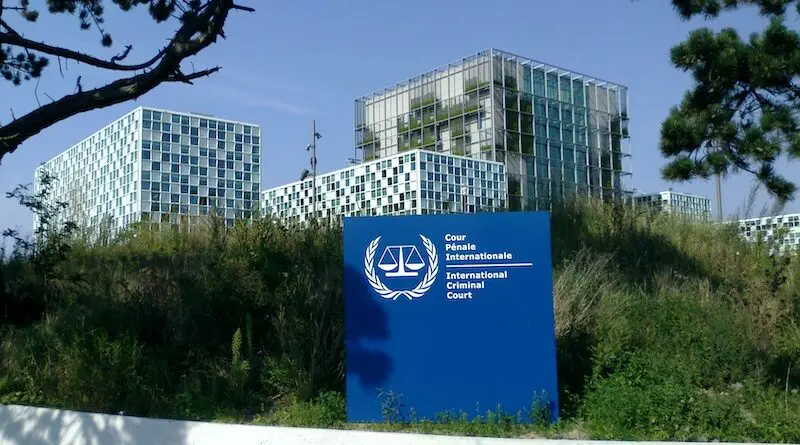
Since the ICC issued arrest warrants against Benjamin Netanyahu and then-Israeli Defense Minister Yoav Gallant in 2024 for potential war crimes and crimes against humanity in Gaza, the reaction from Washington has not been to challenge or question the evidence, as it has done with South Africa’s genocide file against Israel at the International Court of Justice. Instead, it has chosen to attack the court and its prosecutor. It has declared that it is seeking to dismantle the court, calling it an illegitimate organization that threatens American sovereignty.

The Trump administration and members of Congress have sanctioned ICC judges and prosecutors, frozen their assets and threatened them with travel bans and legal action. The most recent target was the president of the court herself, sanctioned directly by the State Department.

One of the US objections to the ICC is the assertion that the court acts illegitimately by claiming jurisdiction over nonmember states that have not signed the Rome Statute.

Compare that to how Washington reacted when the same court, applying the same law, issued an arrest warrant against Russian President Vladimir Putin in 2023 for the allegation that Russia had unlawfully deported Ukrainian children. Back then, American officials praised the warrant as a legitimate act of accountability. Nothing about the court’s mandate has changed between 2023 and today. What has changed is that the court has targeted Israel’s conduct in Gaza.

Late Sen. Lindsey Graham put the double standard into words more bluntly than most officials dared. He reportedly told the ICC’s prosecutor that the court was, in his words, for “Africa and thugs like Putin” — not for “democracies like Israel and the United States.” Graham, who did not mince his words, captured the underlying logic driving the US campaign against the ICC: international law is treated as a tool to use against rivals, not a universal standard to be held to. American exceptionalism also meant that the application of international law was selective.

The US and Israel are, in effect, waging a campaign to destroy an institution that was built specifically so that absolute power alone could never be a shield against justice. But this is not happening in isolation. The sense of exceptionalism fits a pattern stretching across nearly every major conflict of the last four years.

Russia’s full-scale invasion of Ukraine in 2022 broke one of the most basic rules of the international order: that no country should acquire the territory of another by force. The world rightly condemned it. But that condemnation, especially by Western powers, now looks less like adherence to a universal principle and the preservation of the law and more like the fulfillment of a political objective. In 2025, Israel and the US struck Iranian nuclear facilities without any authorization from the UNSC, relying on the same argument as Moscow: preemptive self-defense — an argument that Western governments ironically refused to accept in the Russian case.

The International Court of Justice in 2024 found it plausible that Palestinians in Gaza had a right to be protected from genocide as it heard South Africa’s case against Israel. Then, in January, American forces crossed another line, breaching another international law: they seized Venezuela’s sitting president from his own capital and flew him to New York to face charges many legal experts consider weak — with no UNSC resolution and no self-defense justification to back it up.

It would be easy to look at all of this and conclude that international law is abstract at best — that in a world that has seen illegal wars and invasions waged under false pretexts by superpowers, courts and treaties are decorative at best and that only the weak are bound by them. That conclusion is dangerous and describes a bleak, fraught future.

The entire point of the ICC was to bypass the political will of any government, including the most powerful ones. A court that holds accountable only weak states, rebellious leaders and countries unfriendly to the big powers is not really a court of international law.

The world order is shifting quickly and some would say it is teetering, as once-strong democracies shift toward authoritarianism. A multipolar world is emerging, alliances are being tested and states are watching closely to see whether the rules of the postwar era will hold. If the ICC survives the US-Israeli assault, it will send a message that accountability is still possible, however imperfect and slow.

In reality, the onslaught is not only against the ICC but against the 120 countries that signed its statute. If the court collapses, the message is far more dangerous: that the invasion of Ukraine, the war in Gaza, the annexation of Palestinian and Arab lands, and the kidnapping of a foreign head of state are no longer aberrations.

Protecting the ICC, flaws and all, is no longer a matter of legal technicality. It is one of the last real tests of whether the rule of law survives this decade.

  • Osama Al-Sharif is a journalist and a political commentator based in Amman. X: @plato010