Wednesday, September 02, 2026


Spain government in disarray as conflicting reports swirl over Morocco’s role in Ceuta

Spanish Pedro Sanchez speaks to reporters
Copyright Copyright 2026 The Associated Press. All rights reserved

By Maria Tadeo
Published on

The crisis deepened Wednesday after a leaked report alleging Moroccan forces helped push migrants across the border blindsided the government. Madrid denies having ignored warnings of an imminent breach.

The Spanish government was plunged into crisis on Wednesday after a leaked police report suggested Moroccan forces played a role in pushing migrants into Ceuta in an unprecedented border violation, putting Madrid on the defensive.

Multiple media outlets, citing a law enforcement document, alleged Moroccan authorities helped push migrants by sea, acted “passively” and concluded that the mass influx of around 80,000 migrants into the Spanish enclave was not accidental.

The allegations have triggered a political frenzy, putting Spain’s Interior Ministry on the back foot.

The Spanish Interior Minister, Fernando Grande-Marlaska, under fire for his handling of Spain's most serious national security breach in modern history, ordered police to clarify the claims, which directly contradict the government's narrative.

A senior police official later denied that any report directly blaming Morocco exists, but the statement did little to calm tensions as the Sánchez government struggles to contain the crisis, with thousands of migrants still stranded in the city to the frustration of local residents.

Protests in support of Ceuta took place across Spain on Wednesday.

The war of leaks also indicates the Spanish interior ministry, one of the most politically sensitive government departments, seems to have lost control of a part of its police, looking to either embarrass the government or bring to light new information.

It is not uncommon for the Spanish government and opposition to accuse each other of “lawfare”, in reference to courts or police departments seen as politically aligned for partisan gains.

The question of how much the Spanish government knew in the hours prior is central to its political survival as Sánchez faces his most serious crisis to date ahead of an election in 2027.

Opposition leader Alberto Núñez Feijóo told reporters that the government “knew it — and covered it up.”

Serious consequences

Spain has not blamed Morocco, even after it described the dramatic events in Ceuta, where more than 150 people died at sea, as a violation of its territorial integrity while calling for solidarity from its European neighbours.

Instead, Madrid has pointed to false social media claims pegged to a court ruling and human traffickers as the principal drivers of the mass influx— a position echoed by the European Commission, which, even as the border collapsed, continued to describe Morocco as a “trusted partner” in tackling irregular migration.

A spokesperson for the European Commission refused to comment on the leaked report, describing it as a national matter.

Earlier this week, Sánchez also suggested that Russia and Israel played a role in amplifying disinformation. Spain and Israel have clashed over the war in Gaza.

Still, questions remain over how Moroccan authorities, who also patrol the border, failed to detect and break up the buildup of migrants along the border.

Juan Fernando López Aguilar, a former socialist justice minister and a member of the European parliament, told Euronews this week "it is only obvious, it couldn't have happened without some overlooking by the Moroccan authorities."

“That’s common sense. But the government has to act based on facts and evidence,” he told Euronews’ flagship show Europe Today.

Spanish ministers have given conflicting accounts of what they knew in the days prior and whether intelligence agencies had passed on critical information.

The issue is politically sensitive: any failure to act on warnings related to national security would amount to serious negligence and could fuel calls for a vote of no confidence in the prime minister and his government.

Ceuta ‘at breaking point’

Beyond the politics, the Spanish government is also facing serious operational difficulties on the ground in Ceuta, where around 5,000 migrants — about half of them understood to be minors — remain in the city. Local authorities put the figure closer to 10,000.

On Wednesday, Ceuta President Juan Jesús Vivas said the city was at breaking point, directly blaming Morocco and accusing Rabat of harassment.

“Morocco has had and continues to have an unwavering objective: to suffocate, harass and bring down our two cities,” he said, referring to Ceuta and its twin city, Melilla, also located in North Africa.

“I think no one doubts that what has happened to us is not a migration crisis. What has happened is that Spain’s territorial integrity has been violated.”

Vivas has demanded that all migrants be returned, describing this as the only way to restore normality in Ceuta. But Spanish authorities face a difficult balancing act.

Strict laws protecting minors prevent immediate returns, even if they crossed illegally, while local authorities have yet to facilitate public spaces for migrant identification, leading to more administrative delays.

Facing scrutiny from its European neighbours, Madrid has also pledged that the situation in Ceuta will not affect the Schengen area, which allows for free movement of people in the EU, but that is limiting its ability to transfer migrants to mainland Spain away from Ceuta to provide relief.

Faced with the complex situation, Spanish authorities have now requested assistance from Frontex, the EU agency responsible for the bloc’s external borders.

Moroccan authorities have argued that Spain’s mass regularisation plan announced earlier this year may have acted as an incentive for migrants to cross.


No Evidence Morocco Was Behind Ceuta Surge, Says Spanish PM Sánchez

Spain's Prime Minister Pedro Sánchez. Photo Credit: Video screenshot @sanchezcastejon, X


By Inés Fernández-Pontes


Key Takeaways:

  • After a month of silence, PM Pedro Sánchez told Cadena Ser that Spain has no intel pinning Morocco for the late-July rush of ~80,000 into Ceuta; he blames social-media rumors about a Supreme Court bar on immediate sea-arrival returns, plus alleged Russian, Israeli, and far-right disinfo.
  • Israel’s FM Gideon Saar called that a “brazen lie”; Spanish opposition, experts, and some former officials still say Moroccan border forces opened or stood down a militarized crossing.
  • Madrid has not summoned Ambassador Benyaich (unlike 2021 after 10,000 crossed) and Sánchez called trust in Rabat “necessary” despite Moroccan ministers restating claims on Ceuta and Melilla.

(EurActiv) — Pedro Sánchez, Spain’s prime minister, has moved to clear Morocco of any role in the late-July influx of 80,000 into Ceuta, blaming social media disinformation for triggering the unprecedented crisis.

Breaking a month of public silence – and under mounting party criticism over his response – Sánchez defended his handling of the episode on Monday, insisting “it is still not clear” what happened on 30-31 July in the tiny Spanish city in North Africa

“We are still investigating,” the prime minister said in an interview with radio network Cadena Ser. “There is no information from the state security forces and bodies, nor from our own or any intelligence centre, that casts doubt on the participation of the Moroccan authorities.”

Instead, Sánchez pointed to the official line backed by Madrid and Rabat: that online disinformation surrounding an earlier Spanish Supreme Court ruling helped trigger the rush. The ruling barred the immediate return of migrants arriving by sea in Ceuta and Melilla, Spain’s other North African exclave.

“After July 30 and 31, rumours and disinformation spread on social networks linked to Russia and Israel, and to an ultra-right international that always uses migration to attack both Spain and Europe and divide it,” he said.

Israel reacted with anger, accusing the Spanish leader of “lying shamelessly”. “This is a brazen lie. Continuing to spread defamatory lies will not distract from Sanchez’s disgraceful failure to manage his country’s affairs,” Israel’s Foreign Minister Gideon Saar wrote on X.

Spanish lawmakers across the political spectrum, along with experts and former top officials, have pointed at Moroccan border forces for either actively or passively allowing the mass crossing through a normally heavily militarised border.

Sánchez’s ruling Socialists, however, have so far shown little appetite for a public showdown with Rabat.

Despite the prime minister initially condemning a “violation of Spain’s territorial integrity”, Foreign Minister José Manuel Albares has not yet summoned the Moroccan ambassador to Spain, Karima Benyaich. Nor have Spanish ministers taken action over repeated comments in recent weeks by Moroccan ministers claiming Ceuta and Melilla.

Pressed on Rabat’s annexation claims over the Spanish cities, the prime minister dodged the question and said cooperation with Morocco is not only “positive” but “necessary”.

“A lack of trust in Morocco would only further aggravate an already complex situation,” he said. “Certain accusations are being made that are very serious, dangerous, and also gratuitous.”

During the past 2021 migrant crisis, in which an enraged Morocco eased border controls allowing 10,000 migrants to storm Ceuta, Albares’ predecessor did summon the Moroccan ambassador to express the government’s “rejection” of the mass influx.

The move came in retaliation for Spain allowing Sahrawi leader Brahim Ghali to receive medical treatment in the country.

Spanish police chief denies existence of report blaming Morocco for Ceuta migrant crossings

Grande-Marlaska during a meeMigrants try to cross from Morocco into the Spanish enclave of Ceuta, 30 July, 2026ting in Brussels.
Copyright AP Photo

By Cristian Caraballo & Gavin Blackburn & Greta Ruffino
Published on

Madrid demanded an explanation from its own police after an explosive leaked police report suggested that Moroccan security forces were involved in transporting and pushing migrants towards the border.

Spain's police chief, Francisco Pardo, has told Interior Minister Fernando Grande-Marlaska that there is no police report attributing to Moroccan security forces the planning or execution of the events in Ceuta at the end of July.

The response comes after Marlaska asked police to clarify a leaked report in which Spanish police blamed Moroccan security forces for orchestrating a mass entry of migrants to the enclave of Ceuta last week, ministry sources said on Wednesday.

Spanish Prime Minister Pedro Sánchez said on Monday that Morocco was not responsible, instead accusing Israel, Russia and the far right of spreading disinformation about the mass entry of around 70,000 migrants into Ceuta.

Sánchez told Cadena SER radio that "no intelligence service with which the Spanish government normally cooperates" had suggested "any involvement in one way or another of the Moroccan authorities."

Online newspaper El Español reported on Tuesday that Spain's National Centre for Immigration and Borders (CENIF) said the incident "was guided by Moroccan security forces...with an objective other than migration" in an explosive leaked report.

Interior Minister Fernando Grande-Marlaska demanded police chief Francisco Pardo to check and clarify the information, which was reportedly sent to a judge collecting information on the incident, according to ministry sources.

In his comments, Grande-Marlaska implies the Spanish government found out through media reports about allegations, which would put in question Madrid's narrative that the influx was mostly led by social reports and amplified by human traffickers.

Spain's Interior Minister Fernando Grande-Marlaska talks to reporters during a press conference in Valletta, 4 March, 2023 AP Photo

"Any such information should have immediately been made available to the National Security Council...and to other bodies with powers in this field," the minister said in his letter to the police chief, sent after the newspaper report was published.

More than 70,000 migrants entered the small Spanish territory in north Africa on 30-31 July, swimming or crossing on foot from neighbouring Morocco in an unprecedented rush that left scores dead.

Some analysts have suggested the crisis may have been a message sent to Spain by Morocco over the disputed Western Sahara after Sánchez visited Rabat's historic enemy Algeria in July.

The Western Sahara is a former Spanish colony largely controlled by Morocco but claimed by the Algerian-backed pro-independence Polisario Front.

Political flashpoint

The influx triggered fresh tensions within the European Union over the sensitive topic of immigration and dealt a blow to one of its main achievements, the Schengen free-travel zone.

Italy's right-wing government imposed border checks for one month on travellers from Spain after the crisis, with Madrid reciprocating a week later.

Both governments announced a 15-day extension of the controls on Monday.

Although the vast majority of the migrants returned to Morocco within hours, thousands remain in the tiny territory of 18 square kilometres and 84,000 inhabitants, many living rough on the streets.

Their fate has become a major political flashpoint, with the conservative and far-right opposition demanding that all those who entered Ceuta, including minors, be returned to Morocco.
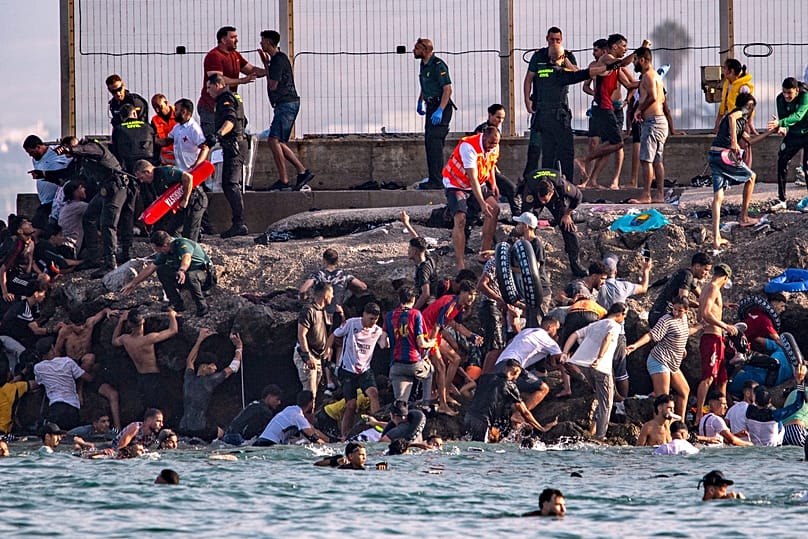
Migrants try to cross from Morocco into the Spanish enclave of Ceuta, 30 July, 2026 AP Photo

Ceuta residents have held regular demonstrations over what they say are security and hygiene problems linked to the influx.

Sánchez said that 6,000 spaces at reception centres would soon be available in the territory for migrants, whose status must be verified by the Spanish authorities before any possible return to Morocco.

He also pledged an additional €168 million in aid for Ceuta to respond to the crisis.

At the end of August, Madrid asked the European Commission (EC) for the support from Frontex, Europol and the European Union Agency for Asylum (EUAA) to assist with the screening and processing of migrants who are staying irregularly in Ceuta.


Conservative and far-right MEPs rally against Spain’s government over Ceuta crisis
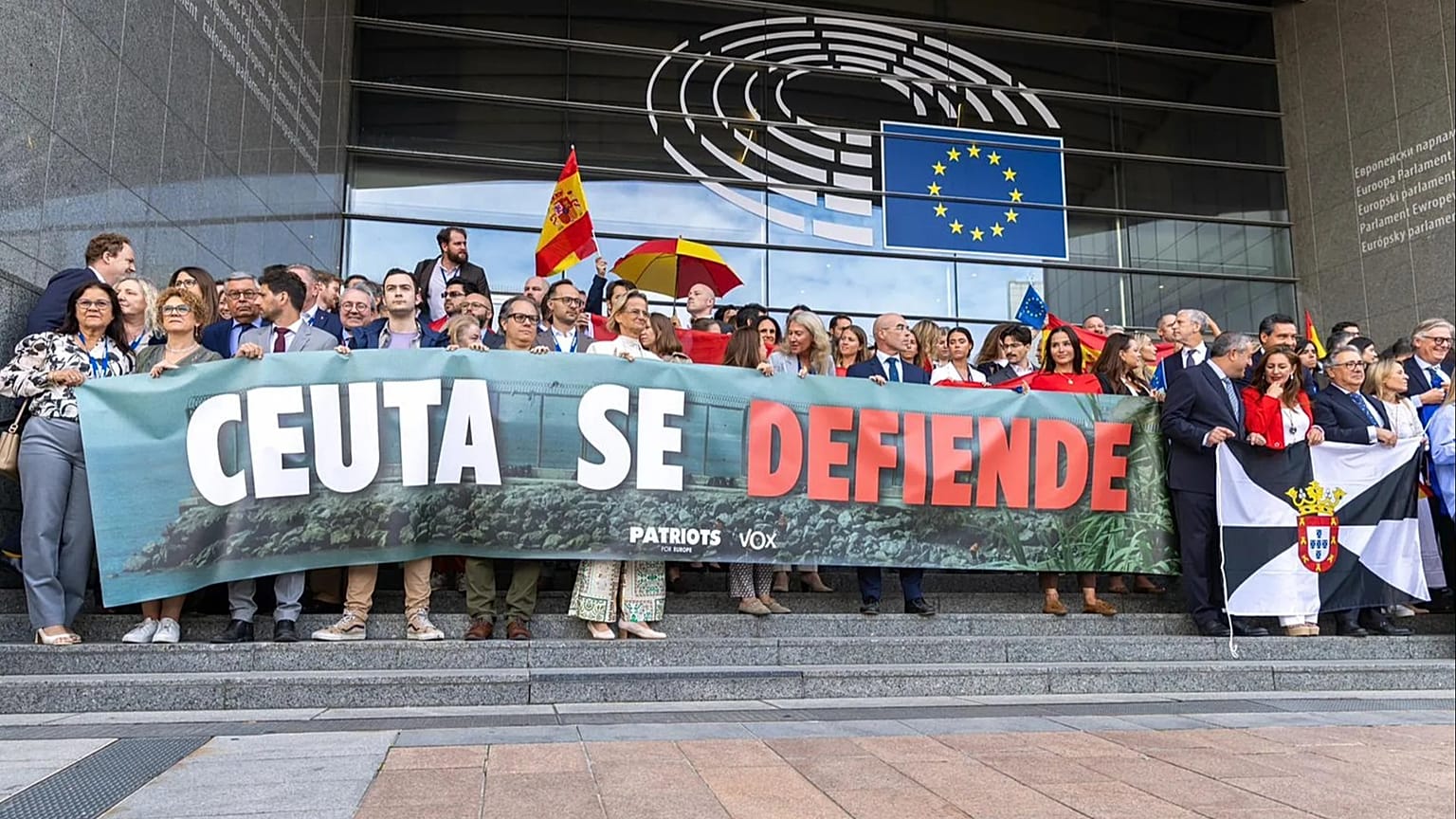
MEPs from PfE and EPP gathering in front of the European Parliament in Brussels
Copyright Euronews

By Vincenzo Genovese
Published on

Lawmakers from the European People’s Party and Patriots for Europe are accusing Pedro Sánchez of abandoning the Spanish exclave, as a press report suggests the mass entry incident was guided by Moroccan security forces.

Around 500 people gathered in front of the European Parliament in Brussels on Wednesday to protest against the Spanish government’s handling of the crisis in Ceuta, where several thousand of more than 70,000 migrants who arrived in the exclave on 30 July remain.

MEPs and staffers from the centre-right European People’s Party and far-right Patriots for Europe gathered in the area in front of Parliament, waving the flags of Ceuta and Spain, and accusing Spanish Prime Minister Pedro Sánchez of failing to defend Spain’s territorial integrity and sovereignty.

Two separate demonstrations were launched by Spain’s Popular Party and Vox in Brussels on Ceuta Day. Despite being organised separately, both gatherings took place at the same time and in the same location, with EPP and PfE lawmakers standing side by side.

“Sánchez has handed over responsibility for the security of Ceuta to a third country,” EPP vice-president Dolors Montserrat told reporters, claiming the Spanish Prime Minister “is bowing” to Morocco.

Online newspaper El Español reported on Wednesday that Spain's National Centre for Immigration and Borders (CENIF) had concluded the incident "was guided by Moroccan security forces", contradicting Sánchez’s stance that there is no proof of any involvement by the authorities in Rabat.

Madrid has so far avoided publicly blaming Rabat for the incident. It generally considers Morocco a cooperative partner in migration management.

Spanish Interior Minister Fernando Grande-Marlaska asked police chief Francisco Pardo to verify the information, which CENIF reportedly sent to a judge gathering information on the incident, according to ministry sources.

Vox, the leading Spanish far-right party, claims Sánchez has “betrayed” his own country and is pushing to activate Article 102 of the Spanish Constitution, which would trigger a criminal trial against the prime minister and his cabinet.

“The situation is untenable. This government cannot continue to lead Spain,” Vox MEP Jorge Buxadé Villalba told reporters, claiming this is the “hardest hour” for the country since the Catalan attempted secession in 2017.

Vox’s MEPs also sent a letter to Commission President Ursula von der Leyen, EU foreign policy chief Kaja Kallas and Home Affairs Commissioner Magnus Brunner.

They call for condemning and sanctioning Morocco, declaring the massive entry “an act of hybrid warfare” and immediately suspending all international agreements between the EU and Morocco, as well as the granting of visas to Moroccan citizens.

The European Commission told Euronews it will not comment on leaks and considers the ongoing investigation into Morocco’s involvement “a matter for the national authorities.”


Spanish PM Sanchez says Israel and Russia spread disinformation on Ceuta migrant crisis


Centre-left Spanish Prime Minister Pedro Sanchez on Monday alleged that social networks linked to Israel and Russia had spread disinformation about the July migrant crisis in the Spanish exclave of Ceuta. He said the alleged smear campaign, which he maintained had also been magnified by far-right networks, had been driven in part by Madrid's opposition to the wars in Ukraine and the Middle East.


Issued on: 31/08/2026 - 

By: FRANCE 24


Migrants who crossed from Morocco into Spain return to a beach after being expelled from the area the previous day, as Spanish police escort them in the Spanish exclave of Ceuta, Friday, August 21, 2026. © Antonio Sempere, AP


Russia and ​Israel both ​spread and amplified disinformation related to the mass entry ​of migrants ‌into ⁠Spain's North African exclave ‌of Ceuta last month, Prime ⁠Minister Pedro Sanchez said on Monday, ​citing research ‌by the European Union's foreign policy body, the European External Action Service (EEAS).

"After July 30 and 31, there was a spread of rumours and disinformation, from social networks linked both to Russia and to Israel, and to an ultra-right international that always uses migration not only to attack Spain, but also to attack Europe and divide it," Sanchez told Cadena Ser radio.

Sanchez ‌said it was "evident" that ​the two countries had used the crisis to criticise ​the Spanish ​government, as they were ​at odds with Madrid ​over its position on the wars in Ukraine and the ⁠Middle East.

The prime minister also ruled out any responsibility on the part of the Moroccan authorities in the sudden influx of migrants who arrived in the Spanish territory.

"No intelligence service with which the Spanish government normally cooperates sheds any doubt, or rather, suggests any doubt, about the involvement in one way or another of the Moroccan authorities," he said.

Israel's Foreign Minister Gideon Saar on Monday snapped back at the Spanish PM, saying he was "lying shamelessly" about the accusations made against Israel.

"In his interview with Cadena SER today, he lied again, astonishingly accusing Israel of disseminating misleading information regarding the events in Ceuta. This is a brazen lie. Continuing to spread defamatory lies will not distract from Sanchez's disgraceful failure to manage his country's affairs," Saar wrote on X.

The vast majority of the roughly 70,000 people to have entered Ceuta have since been returned to Morocco, according to Spanish authorities.

Spain's left-wing government has said between 3,500 and 7,000 migrants remain in the territory, including unaccompanied minors. Ceuta's right-wing leaders allege it is at least 10,000.

Sanchez said on Monday that at the time of the influx, disinformation was being spread online – including by human trafficking groups. Incorrect statements included that migrants cannot be deported if they enter Ceuta by swimming – a claim that remains false.

"We are continuing to investigate" what happened, Sanchez said.

(FRANCE 24 with Reuters and AFP)


Monoskop.org

https://monoskop.org/images/9/95/Hardt_Michael_Negri_Antonio_Empire.pdf

4.3 The Multitude against Empire. 393. Notes. 415. Index. 473. Page 11. PREFACE. Empire is materializing before our very eyes. Over the past several decades, as ...

Rebels-library.org

http://rebels-library.org/files/multitude.pdf

Page 1. MULTITUDE. WAR AND DEMOCRACY. IN THE AGE OF EMPIRE. MICHAEL HARDT ... Empire calls on war for its legitimation, the multitude calls on democracy as its ...


Newleftreview.org

https://newleftreview.org/issues/ii120/articles/empire-twenty-years-on.pdf

Just as today's. Empire was formed in response to the insurgencies of the multitudes from below, so too, potentially, it could fall to them, as long as those.


Your Smartwatch Is Lying To You About How Many Calories You Burned


FIU researchers compared four watches (Apple Watch Series 8, Fitbit Sense 2, Samsung Galaxy Watch 5, Garmin Forerunner 955) with a COSMED K5 lab analyzer in 58 adults on a recumbent bike; typical calorie-burn error was ~15–25%, worse as body fat rose (PLOS One).

Apple was closest; Garmin and Samsung overestimated most; Fitbit data were dropped after glitches (including one-calorie workouts). A displayed 500 kcal could be nearer 350—enough to flip an intended deficit.

Authors treat watch calories as a ceiling, not a ledger: prefer heart-rate zones and personal trends over one-session totals, and do not slash food to “make up” the gap while strength-training accuracy is still being tested.


Smartwatches can significantly overestimate how many calories people burn during exercise, and their calorie estimates become less accurate as body fat increases, according to a new Florida International University study. The study was published in PLOS One.

FIU researchers tested four popular fitness trackers — the Apple Watch Series 8, Fitbit Sense 2, Samsung Galaxy Watch 5 and Garmin Forerunner 955 — against clinical-grade laboratory equipment that measured participants’ true energy use.

Researchers found typical errors in smartwatch calorie estimates of about 15% to 25%, with averages for the worst-performing watches climbing much higher. Apple was the most accurate. Garmin and Samsung overestimated the most.

That means if a smartwatch says someone burned 500 calories during a workout, the real number could easily be closer to 350. The discrepancy could be especially important for people who use fitness trackers and calorie-burn estimates for weight management.

“You can’t treat the calories burned number it gives you as an accurate number, because it’s not,” said Jason Kostrna, the study’s lead author and an associate professor of kinesiology and exercise science in FIU’s College of Arts, Sciences & Education. “You could be hundreds of calories off each week and easily end up in a calorie surplus when you think you’re in a calorie deficit.”

For the study, researchers had 58 adults ride a recumbent bike through a controlled workout alternating between moderate and vigorous intensity. Each participant wore one of the smartwatches while a COSMED K5 metabolic analyzer, the kind of gold-standard equipment used in clinical labs, measured their true energy use.

The jury is still out on Fitbit. During testing, it produced repeated glitches — in some sessions reporting implausibly small numbers, such as a single calorie for an entire workout, and in others failing to generate a reading at all. Since many of the measurements were erroneous, the researchers filtered out the data.


Kostrna says the team doesn’t have a definitive answer for why these trackers struggle with higher body fat percentages. He believes the algorithms used to estimate calorie burn may play a role.

“When the companies are developing those algorithms, we don’t know where the test data is coming from,” he said. ” That’s why I think it’s beneficial for the companies to see this type of data, so they can refine their products over time.”

Kostrna is now studying how well the watches estimate calories during traditional strength-training workouts.

How to use your smartwatch data

Researchers say smartwatches can still be useful, as long as users understand their limitations. They recommend treating calorie-burn numbers as a ceiling rather than a precise measurement and rounding down for a more conservative estimate. Because the study found accuracy worsened as body fat increased, people using wearables for weight management may want to build in additional margin.

But researchers caution against trying to compensate by cutting food intake too aggressively. The body still needs fuel to recover and train consistently.

Instead of calories burned during a single workout, users can lean more on measurements wearables tend to handle better, including heart rate and time spent in different heart-rate zones. Tracking personal trends over time also can be more useful than focusing on a single day’s calorie total.

“Track your own trends over time. And if tracking helps, enjoy it,” Kostrna said. “If it becomes too much, don’t fixate on it. Focus on how you’re feeling and use data to get a little better over time.”


Star Trek Day: London Science Museum aims for Vulcan salute Guinness World Record

Copyright NBC screenshot - Star Trek - Canva

By David Mouriquand
Published on

Star Trek fans are hoping to set a simultaneous Vulcan salute world record to celebrate the iconic show’s 60th anniversary next week.

This year’s Star Trek Day is a special one. Taking place on Tuesday 8 September, the 2026 edition of the annual celebration will mark the seminal show’s 60th anniversary.

How best to celebrate? By breaking a record, naturally.

Hundreds of fans are gearing up to set the Guinness World Record for the largest simultaneous Vulcan salute at London’s Science Museum.

For the heathens amongst you, the Vulcan salute is the gesture made famous by Leonard Nimoy's character Spock. It involves raising your hand, palm forward, with the middle and ring fingers parted. The split fingers form a “V” shape - and do keep your thumb pointing outward, there’s a good first officer.

It first appeared in the 1967 episode of the TV series titled “Amok Time” and is usually accompanied by the phrase “Live long and prosper”.

If verified by an adjudicator, the simultaneous Vulcan salute attempt would set a new Guinness World Record, as none currently exists in the category.

Leonard Nimoy at the LA premiere of "Star Trek Into Darkness" - Tuesday 14 May 2013 AP Photo

Glyn Morgan, head of collections and principal curator at London’s Science Museum, said: "It feels very special to bring Star Trek fans together at the Science Museum for an official Guinness World Record attempt on Star Trek Day.”

“For 60 years, Star Trek has connected bold storytelling with big questions about science, technology and what might be possible in the future, themes that sit at the heart of the Science Museum.”

He added: “After a popular Star Trek Lates earlier this year, we’re delighted to invite fans back for another evening exploring the ideas, imagination and real-world science behind the franchise, and a final opportunity to experience the Star Trek Warp Trail.”

The free Star Trek Warp Trail includes props and uniforms from the shows and films, and explores the lasting connection between the franchise’s visionary storytelling and real-world scientific innovation. The popular trail will close on Sunday 13 September.

Elsewhere, Trekkies will have no shortage of ways to celebrate the 60th anniversary, as fan events, screenings, and partnerships are rolling out across the globe next week.

Live long and salute.

SPACE/COSMOS

Declining Star Formation Not Caused By Simple ‘Fuel Crisis’

FAST and DESI reshape our view of cosmic evolution CREDIT Image by National Astronomical Observatories of China and Shanghai Astronomical Observatory of CAS


Key Takeaways:

  • FAST plus DESI stacking of ~2.5 million galaxies (Nature Astronomy, Sept. 1) finds that over 4.5 billion years the cosmic star-formation rate fell to about 1/2.5 of its old level while neutral atomic hydrogen (HI) density only fell to about 1/1.4.
  • That mismatch undercuts the simple “the fuel ran out” story: HI, seen in the faint 21-cm line, is still a large reservoir between the cosmic web and the molecular clouds that actually make stars.
  • Authors shift the question to conversion efficiency—weaker inflow and lower density may stall HI → H₂ even while HI stays relatively plentiful—setting a late-universe baryon-cycle benchmark.

The universe has been having fewer and fewer stellar “babies.” Over the past 4.5 billion years, the rate of star birth has crashed to less than half of what it once was. But here’s the twist: the most essential “fuel” for making stars has barely decreased.

This finding comes from an international team led by researchers from the Chinese Academy of Sciences (CAS), in collaboration with the Dark Energy Spectroscopic Instrument (DESI) project. They used China’s Five-hundred-meter Aperture Spherical radio Telescope (FAST) to make high-precision measurements of cosmic neutral atomic hydrogen over the past 4.5 billion years.

The study reveals that while cosmic star formation has declined dramatically over this period, neutral atomic hydrogen (HI)—a vital gas reservoir for galaxies—has only decreased slightly.

This finding was published online in Nature Astronomy on Sept. 1.

Why has it become harder for the universe to form new stars? That question has long been central to the study of galaxy formation and evolution. A natural explanation is that, as the universe ages, the cold gas that fuels star birth is steadily consumed, inevitably driving a decline in star formation. If that were true, however, the drop in the star formation rate should be matched by a simultaneous sharp depletion of the cold gas reservoir. But such depletion has not been detected.

HI is a key cold-gas reservoir in galaxies that links the large-scale cosmic gas cycle to internal star formation and is mainly detected via its extremely faint 21-centimeter radio emission line. Unfortunately, individual signals for distant galaxies are often swamped by background noise.

For this reason, astronomers long faced a frustrating dilemma: deep observations could not cover large areas, while wide-field surveys lacked the sensitivity to detect faint signals. As a result, the evolution of total HI mass in the low-to-intermediate redshift universe has remained difficult to measure directly and reliably.

To overcome this bottleneck, the new study integrated FAST’s ultra-high radio sensitivity with DESI’s massive optical spectroscopic survey. The researchers analyzed a vast sample of about 2.5 million galaxies, covering nearly one-third of the sky. Using an innovative HI spectral stacking technique, they aligned and stacked the faint, otherwise undetectable radio signals based on precise galaxy redshifts. This allowed them to extract the average HI signal from the noise, tracing the evolution of cosmic neutral hydrogen with unprecedented statistical precision and sample size.

The highly precise measurements revealed a striking disparity: 4.5 billion years ago, the cosmic star formation rate was about 2.5 times higher than today, while the corresponding neutral atomic hydrogen density was only about 1.4 times its current level. This indicates that while star formation activity plummeted, the cosmic HI reservoir did not dry up synchronously. This striking contrast shows that rapid hydrogen depletion cannot explain the decline in star formation.

Shifting focus

According to the researchers, this breakthrough effectively shifts the scientific focus from “whether the gas is depleting” to “why it is increasingly difficult to form stars despite abundant neutral hydrogen reserves.”

Stars are primarily born in denser molecular gas clouds, and neutral atomic hydrogen sits at a critical intermediate stage between the large-scale cosmic gas supply and the formation of molecular gas. The study suggests that the most important late-time changes may occur not in the total HI reservoir itself, but rather in the gas flow through the baryon cycle. As the gas supply from the cosmic web weakens and gas density declines, the efficiency of converting HI into molecular hydrogen likely drops. This mechanism allows the HI reservoir to stay relatively stable, even as the molecular gas that directly feeds stars gradually dwindles.

As a result, the significance of this work goes far beyond merely measuring how much hydrogen is in the universe. Instead, it provides crucial new clues for understanding why the massive stellar engines of the universe are gradually shutting down.

According to the researchers, the joint observation by FAST and DESI establishes a brand-new observational benchmark for unraveling the late-stage cosmic gas cycle, the decline of star formation, and the broader evolution of galaxies.

The research was led by scientists from the National Astronomical Observatories of China, the Shanghai Astronomical Observatory of CAS, and Shanghai Jiao Tong University, in collaboration with researchers participating in DESI. The study includes contributors from research institutions across Asia, North America, and Europe, highlighting the scientific power of combining sensitive radio observations with large-scale optical spectroscopy.


SwRI Study Helps Unravel How The Sun’s Corona Transforms Into Solar Wind

This illustration shows how the Sun’s magnetic field shapes and directs the heliospheric current sheet (HCS). A Southwest Research Institute study used data from the European Space Agency’s Solar Orbiter to help define the early-stage composition of the HCS. This will help scientists construct more accurate models of how the solar wind affects space weather that can impact the Earth. CREDIT: Southwest Research Institute


Key Takeaways:

  • SwRI analysis of ESA Solar Orbiter data (Astrophysical Journal) gives the closest look yet at the heliospheric current sheet—the Sun’s north–south magnetic boundary, twisted into a “ballerina skirt” that divides the heliosphere.
  • Crossing a fold ~26 million miles from the Sun (inside Mercury’s orbit), instruments saw a drop in the iron-to-oxygen ion ratio aligned with the polarity flip—so the HCS is a compositional sorter in the corona, not only a magnetic switch.
  • That does not settle how the million-mph solar wind is launched, but it constrains models of current-sheet formation, heating, and magnetic connectivity that space-weather forecasts depend on.

A Southwest Research Institute (SwRI) study of data from the European Space Agency’s (ESA) Solar Orbiter gives the most detailed view of the heliospheric current sheet (HCS) to date. The HCS is a sprawling undulating surface emanating from the Sun to beyond the solar system, which serves as the boundary between the Sun’s north and south magnetic field hemispheres.

Anchored deep in the solar surface, the HCS acts as a high-speed pipeline, carrying crucial data and information from the raw corona straight into space. “For decades, scientists have faced a cosmic paradox: how does the Sun blast a continuous supersonic stream of charged particles into space at over a million miles per hour,” asks SwRI’s Dr. Keiichi Ogasawara, lead author of the study.

“Known as the solar wind, this invisible torrent shapes space weather, powers auroras on Earth, and can disrupt modern satellite technology,” Ogasawara said. “The key to solving this puzzle lies in magnetic connectivity. By tracing magnetic field lines to the solar surface, scientists can link local surface activity directly to solar wind gusts. The HCS offers a prime connection point thanks to its distinct, oppositely directed magnetic signatures.”

The new study, published in The Astrophysical Journal, provides scientists with a better understanding of the origin and composition of the HCS and will help to define its relationship with the solar wind. As the Sun rotates, the HCS is twisted like a huge “ballerina skirt,” spiraling outward through the solar system and dividing the heliosphere into separate hemispheres where the Sun’s magnetic field points in opposite directions. In one hemisphere, the field pushes away from the Sun, while in the opposite hemisphere the field pulls toward the Sun. The heliosphere is a vast bubble of plasma created by the solar wind that streams out in all directions from the Sun. It surrounds the entire solar system and shields it from much of the high-energy galactic radiation found in interstellar space.

The Solar Orbiter recently passed through a fold of the HCS at about 26 million miles from the Sun, which is closer than the innermost planet Mercury, allowing researchers to study the youngest version of the solar wind ever observed. Solar Orbiter used its high-quality field, plasma and composition instruments to study how particle populations behave in this mysterious region.

SwRI researchers studying the Solar Orbiter’s observations found a clear and distinct change in the composition and makeup of ions within the HCS. An ion is an atom that has either lost electrons and become positively charged or gained electrons and become negatively charged.

“Within the HCS region, we identify a decrease in the ratio of iron and oxygen ions that lines up closely with the magnetic sector boundary itself,” said Ogasawara. “While the overall plasma on both sides is similar, we find a clear compositional change that is tightly aligned with where the magnetic polarity flips. This suggests that the HCS is not just a magnetic feature, it is also linked to how the Sun sorts ions in the corona and releases them into the solar wind.”

While this new data does not define HCS origins, the researchers believe that it helps to set boundaries for future models and theories.

“We have provided a detailed, multi-aspect view of an HCS crossing close to the Sun, and we showed that it includes organized, measurable variations of the types and amounts of particles within the plasma. It’s not just a simple flip of the magnetic field,” Ogasawara said. “This offers clear constraints that future models of current sheet formation, solar wind heating and magnetic connection must satisfy. Our work is less about proving any one theory and more about defining what any successful theory has to explain.”

Not Tiger, Not Wolf: Australian Thylacine Skull Reveals Far Different Hunting Style

Flinders University Professor Vera Weisbecker and thylacine snout - with models of a wolf, fox and crocodile upper jaws. CREDIT: T Bawden (Flinders University)


Key Takeaways:

  • Flinders-led work in Nature Communications says thylacine skulls were not wolf-like despite the “dog-head” name: an oversized cranium with a long, slender, mace-tipped snout suited high-speed snapping at bandicoot-scale prey, not pinning sheep.
  • The mix of a grey-wolf-sized skull on a much lighter body has no living mammalian analogue; researchers liken the strike to crocodile and predatory-fish jaws rather than canid crushing.
  • Genomic parallels with wolves in skull-growth regulators coexist with adult dissimilarity; the authors frame livestock-predator myths as part of why the species was hunted out and urge protection of remaining unique Australian mammals.

A new study led by Flinders University has flipped the historic narrative about Australia’s thylacine, finding the native apex predator known as the ‘Tasmanian tiger’ was significantly different from the wolves and wild dogs it was likened to before being hunted to extinction.   

In-depth investigations on historic thylacine (Thylacinus cynocephalus) skull specimens indicate their jaws were probably unsuited to holding down large animals like sheep – instead their long, deep jaw would have been able to subdue relatively small prey with powerful snapping bites.

This photo is of a pair of Thylacines, a male and female, received from Dr. Goding in 1902. The Thylacine (Thylacinus cynocephalus) is a large, carnivorous marsupial also known as the Tasmanian Tiger or Tasmanian Wolf. Photo Credit: Baker; E.J. Keller, Wikipedia Commons

“Our latest findings on their feeding adaptations counter the myths that drove the thylacine to extinction,” says study lead Professor Vera Weisbecker, from the College of Science and Engineering at Flinders University.

“Thylacines were often compared to Northern Hemisphere predators such as wolves, jackals and foxes from the dog family Canidae. This resemblance gave them their species name ‘cynocephalus’, meaning ‘dog-head.’

“But thylacines were in fact more closely related to kangaroos than to dogs. They were marsupials, whose ancestors separated from the other mammals long before the dinosaurs went extinct.”

In a major re-interpretation of the thylacine’s biting behaviour, published in Nature Communications, the research team from Flinders University and The University of Melbourne found that thylacine skulls sported a unique combination of features which did not match any known adaptations of living carnivorous mammals.

The strange combination of an oversized skull, long and tall upper jaw and mace-like widened snout sparked the researchers’ curiosity and revealed the thylacine had a bite unlike any other living meat-eating mammal.

Co-author Dr Douglass Rovinsky says: “Even though the average thylacine may have weighed only half as much as the average wolf, its vastly oversized skull is about as large as a grey wolf’s skull.

“But while it was big, it wasn’t really shaped like the skull of a big predator. Instead, the thylacine’s snout was long and slender, almost delicate – not robust like the snout of a grey wolf. It very much looks like the snout of a fox or jackal, which can be much smaller than thylacines.”

Researchers say this strange combination allowed thylacines to use high-impact snapping to catch small-to-medium prey such as the rabbit-sized bandicoots.  

“The longer a jaw is, the faster its tip moves when an animal bites. This increases the impact of the strike. We think that the thylacine’s huge skull size allowed it to withstand these bite forces,” says Professor Weisbecker.

Strangely, while the thylacine may have been the last living mammal to sport a ‘big head, lethal snap’ adaptation, the trait combination is common outside of mammals.

“Many crocodiles and predatory fishes have long, fast-snapping jaws used to catch agile prey like fish. Their jaws are often much longer, and frequently sport tall and widened tips,” she adds.

The findings are an intriguing addition to a previous study by University of Melbourne School of BioSciences co-authors Professor Andrew Pask and Dr Axel Newton which revealed similarities between Tasmanian tiger and wolf DNA regions that regulate gene expression responsible for skull formation.

“These genomic similarities might explain our previous finding that regions of thylacine and wolf skulls show similar growth patterns, even though they are quite dissimilar as adults,” they say.

“Together, these findings point to exciting new opportunities in combining evolutionary biology, anatomy and genomics to explain how unique shapes like the thylacines’ skull evolve.”

Professor Weisbecker notes that the team’s findings highlight the tragedy of the thylacine’s recent extinction.

“Thylacines were hunted because of myths that they were ferocious predators of livestock, when there was little evidence for this. Their extinction is a story of ignorance and lack of respect for Australia’s unique wildlife and its Indigenous custodians.

“As a country at the global forefront of mammal extinctions, we need to do all we can to safeguard equally irreplaceable surviving species.”

High Noise Levels Worse Than Air Pollution, Poorly Erected DGs An Irritating ‘Noise Generator’ – OpEd


A hospital diesel generator in Nerul East, Navi Mumbai, ran for nearly two days in a Silent Zone (50 dB day / 40 dB night); the author measured home levels with a NIOSH SLM app often above commercial-zone limits and argues for acoustic treatment of the DG, not relocation.

He treats noise as a health equal of air pollution: WHO Europe 2011 (heart disease, hypertension, children’s cognition), CSIR-NEERI 2020 (MMR sites over WHO limits), hospital-front readings >100 dB from honking, Eid/DJ spikes to 116 dB, plus 2025 BMJ work on noise as a chronic cardiovascular and mental-health stressor.

Enforcement is called weak; CPWD Building Code 2016 already specifies insulation—roughly ₹4–8 lakh for a 1,200 sq ft flat versus ~₹1.5 crore property cost—so homeowners should treat residences as noise-compliant rather than wait for civic action.


Recently, a continuous, intrusive hum from a hospital’s diesel generator (DG) disrupted the peace of mind of the residents in two neighbouring buildings in Nerul East, Navi Mumbai. For nearly two days, the civic-minded residents endured this irritating noise, leading them to raise measured objections and formal queries regarding the disturbance in their otherwise quiet neighbourhood

Generally, DGs are well designed and erected. Their manufacturing and deployment are mature industrial activities. DGs have built-in sound barriers and other noise-suppressing features to bring their noise levels within permissible limits.

Since hospitals are designated as Silent Zones, their boundaries must respect stricter limits of 50 dB(A) in the day and 40 dB(A) at night, requiring specialized acoustic setups. Noise level is measured indecibels (dB), a unit used to describe how loud a sound is. The higher the decibel number, the louder the sound. Because the decibel scale is logarithmic rather than linear, an increase of 10 dB represents roughly a tenfold increase in sound intensity. (30 dB A quiet library;60 dB A normal conversation; 80 dB Heavy city traffic.)


The noisy generator needs a relook and probably not relocation, as some angry residents unrealistically demanded.

By downloading an App-NIOSH SLM into my i-phone, I could measure noise levels in my residence. Though our plot is “residential” the noise levels were often more than those of “commercial” zone. The “Noise nuisance” episode was an additional unwanted “Bonus”!

Air pollution

When my family shifted from the well-landscaped and well-designed Anushaktinagar in 2005, we had concerns about air pollution in Navi Mumbai. There was some reason for that. I had access to the report of an interagency project in which scientists from the Bhabha Atomic Research Centre (BARC) and Atomic Energy Regulatory Board led by Dr R K Garg an eminent scientist found that vehicular pollution is the major source of pollution contrary to the popular perception by people and media that industrial sources are the major suspects! The “noise” pollution from vehicles is very difficult to regulate and control primarily because of our drivers’ honking habit!

Noise is as harmful as air pollution

In 2011, the WHO European Region published a book titled “Burden of Disease from Environmental Noise (2011). It recognised that environmental noise is as harmful as air pollution. That fact came to notice many decades after the damage was done making it no longer an issue to be thrown under the carpet!

“While there is evidence that road traffic noise increases the risk of ischaemic heart disease, including myocardial infarction, there is less evidence for such an association with aircraft noise because of a lack of studies. However, there is increasing evidence that both road traffic noise and aircraft noise increase the risk of hypertension”, the book concluded

One of the chapters in the book contains a summary of evidence linking noise and cognitive impairment in children

Other studies

In 2020, the scientists of the National Environmental Engineering Research Institute (CSIRNEERI) found that noise levels in153 locations across nine municipal corporations in the Mumbai Metropolitan Region (MMR)-including Navi Mumbai exceeded WHO guideline values. Although Navi Mumbai was least noisy, the levels still surpassed both national and international norms. Rising noise levels is due to traffic congestion, honking, construction and demolition, commercial expansion, and increasing builtup density.

The Times of India (TOI, 25 April 2017) reported that the noise levels recorded between noon and 3 PM outside six hospitals in Mumbai exceeded 100 dBs. This was due to vehicular traffic and primarily by habitual honking by drivers. (Permissible limits 50 dB(A) in the day and 40 dB(A) at night!)

In 2022, the NGO Awaaz Foundation found that the noise levels during the Eid celebrations at Mohammed Ali Road near JJ Hospital shot up to 116.3 decibels owing to DJ’s blasting music. (The Hindustan Times, HT 11 Oct 2022)

Last year, the National Green Tribunal (NGT) directed Pune police and MPCB to strictly enforce noise regulations during Ganapathy Festival.


Despite such actions, violations remain common. Noise often exceeds permissible levels.
Health impact of Noise: Robust scientific evidence

According to a 2025 British Medical Journal (The BMJ) paper by Razai et al, environmental noise is a major public health crisis, acting as a chronic stressor that triggers cardiovascular, metabolic, and mental health issues. Long-term noise exposure from traffic directly alters human biology and demands a multi-tiered response involving policy, clinical practice, and personal protection.

Homeowners must make their residences noise standard compliant. Sensitive groups such as children and the elderly spend most of the time at home. Loud noise can damage the delicate structures of the inner ear of infants potentially leading to permanent hearing loss.

Expecting strict enforcement of noise control measures by authorities is unrealistic. It will be foolhardy for any homeowner to ignore the robust scientific evidence linking noise to cardiovascular disease, sleep disruption, stress, and cognitive impairment.
Seminal contributions of CPWD

In its Building Code 2016, the Central Public Works Department (CPWD) addresses noise control measures by acoustic design, sound insulation, and noise level limits. The technology is readily available. It is not cheap but essential when you consider the health benefits.

Remedial measures affordable

For a 1200 square ft flat, one may have to spend about Rs 4 lakhs to 8 lakhs, not too high as the cost of the flat in an affordable suburb may be as high as Rs 1.5 crores or more. Costs of remedial measures are ballpark numbers. You can pick and choose; there are many companies in this business. The actual estimate depends on many factors. If you choose basic compliance, it may be cheaper. Information on the adverse impact of environmental noise is yet to reach the public

This article is dedicated to the memory of Dr. R K Garg. A few days ago, I had the privilege of briefly discussing with him the findings of the interagency study he led. His admirable insight, scholarship, and dedication to science left a lasting impression on everyone who met him.


About Dr. K S Parthasarathy

Dr. K S Parthasarathy is former Secretary, Atomic Energy Regulatory Board and a former Raja Ramanna Fellow in the Strategic Planning Group, Department of Atomic Energy, Mumbai. Dr. K S Parthasarathy may be contacted at ksparth@yahoo.co.uk
View all posts by Dr. K S Parthasarathy →