Saturday, May 31, 2025

President Zardari signs bill to curb child marriage into law


Nadir Guramani
Published May 30, 2025
DAWN
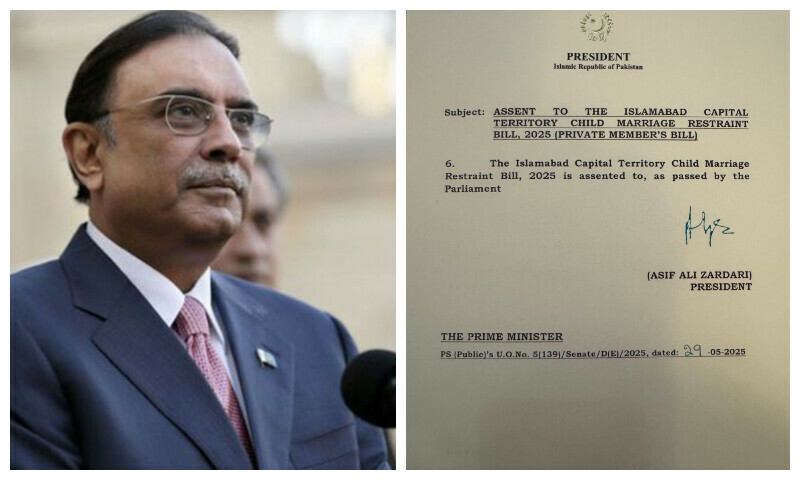
A collage of President Asif Ali Zardari and his assent to the Islamabad Capital Territory Child Marriage Restraint Bill. —File/Sherry Rehman X

President Asif Ali Zardari on Friday accorded his assent to the Islamabad Capital Territory Child Marriage Restraint Bill, according to a notification by the Presidency shared by PPP Senator Sherry Rehman on X.

The bill, which seeks to protect the rights of children and eventually eradicate marriages of children under the age of 18, reached the presidency on May 27 after sailing through both houses of parliament.

However, the move attracted strong opposition from religious segments of society, with the CII ruling that classifying marriage under the age of 18 as rape did not conform with Islamic law.

“The Islamabad Capital Territory Child Marriage Restraint Bill, 2025 is assented to, as passed by the Parliament,” the notification read.

“Pakistan has reached a milestone in the enactment of important legislation against child marriages,” Rehman said in a statement.

She said that the approval of the bill was successful despite resistance from various sections, adding that President Zardari signed the bill despite pressure.

“The signing of the Child Marriage Restraint Bill is a symbol of a new era of reforms in Pakistan,” she said.

She hailed the approval as a victory for the protection of the rights of women and children, adding, “This law was possible after a long and difficult struggle.”

“This bill is not just a law, it is a commitment that our girls have the right to education, health and a prosperous life,” Rehman continued.

She thanked PPP Chairman Bilawal Bhutto-Zardari, party leaders, other political parties, representatives of the opposition and the public for their support for the bill.

She also called on other provinces to take steps towards this important legislation.

Earlier, CII member Maulana Jalaludin, who belongs to the JUI-F, said Presi­dent Zardari should prevent anarchy in society and not sign the bill.

Incidentally, members bel­ong­ing to different sects opposed the bill.

Responding to a query, the CII member had said the assembly could not be above the Holy Quran and Sunnah. “This bill is not only against the norms of Sharia but also contrary to the values of our society and our traditions,” Maulana Jalaluddin reasoned, terming the move a western conspiracy to destroy ‘family system’.

The ‘bad intentions’ were evident as the bill was not forwarded to the CII, but approved by parliament ‘in secrecy’, he said.

However, PPP MNA Sharmila Faruqi, who tabled the bill in the National Assembly, said the matter of marriage of girls below 18 years of age, should not be given a religious colour and instead be considered in the context of human rights.

“We are not against marriages. We say marrying girls as young as 13 or 14 years is unfair when girls under 18 years of age do not have right to vote, cannot obtain national identity cards and driving licence,” she added.

In this regard, the PPP lawmaker referred to a decision by Federal Shariat Court of 2022 that allowed the state to set the marriage age.
Save the girls

Published May 31, 2025 
DAWN


SOME traditions that hinder individual progress are a heavy cross for society to bear. In Pakistan’s deeply patriarchal environment, where a female child’s agency is determined by her biological age, President Asif Zardari’s assent to the Islamabad Capital Territory Child Marriage Restraint Bill, 2025, despite resistance from the Council of Islamic Ideology — which said that classifying under-18 marriages as rape was in conflict with religious law — deserves applause. Pakistan, where some 19m girls are married off before they turn 18, is home to the sixth highest number of child brides in the world. Almost half of these youngsters become pregnant before the age of 18, and a mere 13pc complete secondary school. The bill is now law; however, its desperately needed implementation will depend on the government’s political commitment to safeguarding the girl child’s right to health, education and opportunities to realise their potential.


The lethal mix of regressive customs and socioeconomic distress leads to early marriage. The new video campaign from Unicef, featuring its National Ambassador for Child Rights, actor Saba Qamar, is a timely move that promises to reach scores, open minds and drive change. It encourages society to question the practice, spells out the consequences of underage nuptials for girls and calls for the empowerment and protection of young females in Pakistan. Child marriage is no child’s play; it means lost childhoods, vulnerability to domestic violence, death during childbirth, poor health and even cervical cancer; the second most common cancer among females between 15 and 44 years. As a signatory to the Convention on the Rights of the Child, Pakistan cannot afford lethargy. It is also hoped that lawmakers will not allow conservative sections to hold constitutional liberties, including the safety and dignity of women and children, hostage to their whims. The CII has an advisory role, and there should be no pressure on lawmakers to comply with all its wishes.

Published in Dawn, May 31st, 2025


FICTITIOUS ASSETS


Khurram Husain 
Published May 29, 2025 
DAWN

The writer is a business and economy journalist.


SOME sort of a crypto bug seems to have gripped the government and perhaps some of it is warranted.

From the details reported in the international media we learn that at least some of the efforts of the Pakistani government in the crypto domain are geared towards procuring influence in Washington DC, with those close to the Trump administration coming to Pakistan for crypto-related discussions.

To that extent we can look at what is happening and say “it is what it is” and leave it at that. But the moment the government begins to take crypto seriously as a business proposition it becomes dangerous. And it is important to keep this distinction in mind, between crypto as an influence peddling tool versus a serious business proposition, because the resources the government will put at risk if it ventures into the world of crypto are public resources.


In the past few weeks, since the Crypto Council was announced by the government, we have seen suggestions appear in print on how Pakistan can expand its participation in the wider world of cryptocurrencies. One suggestion was to place a portion of Pakistan’s foreign exchange reserves in crypto, and the individual making this suggestion deployed a classic tactic used by small-time stock brokers or real estate agents selling junk to gullible clients. He pointed to the rise in the value of Bitcoin over the past decade, and asked the reader to imagine if Pakistan had placed a certain amount of its reserves in this asset, how much that value would have multiplied by today.

What was not mentioned in the article was the sheer volatility of currency over that same time period. Sovereign reserves are never gambled with in volatile assets. They are, as a rule, always invested in fixed-income instruments. It’s the same principle when managing pension funds or other institutional savings. The principles are low-volatility, low-risk, fixed return.

The resources the government will put at risk if it ventures into the world of crypto are public resources.

Another argument encouraged the state to go into crypto mining by offering the right “incentives”. The right incentives apparently include providing them with electricity at around five to six cents per unit. For comparison consider that you and I pay somewhere around 20 cents per unit for our electricity, with industry somewhere around 14 cents. The most obvious question to ask when considering this proposition is this: if Pakistan has electricity to give at five cents per unit, why should crypto miners be the first to get it?

A puzzling press release from the finance ministry a few days ago added to the confusion. It announced that the government has “allocated” 2000MW for crypto mining. It was puzzling because there was no mention of price (the single most important thing to mention in such an announcement), but more importantly, there is literally no such thing as electricity allocations in Pakistan. There are no quotas of who gets how much electricity. So what exactly is being announced in this press release?

The third suggestion that has been floated is to create on-shore crypto exchanges in Pakistan, much like we already have a commodities exchange. This is probably the most benign of the suggestions since all it does is make crypto trading a regulated activity without putting any state resources into play.

It is critical to keep in mind that crypto is a fictitious asset. It is not the first, nor the last of these. Fictitious assets are those that exist only in the mind of the holder. If enough people buy into the fiction they can become liquid, meaning you can trade them for real goods and services. Money, for example, is a fictitious asset as is gold. But both are highly liquid. I can pay my bills with money, buy my groceries, because almost everyone in my society buys into the fiction that money (or gold) represent.

Not so with crypto. This is purely a speculative asset, created for speculative purposes, given prominence by speculator interests, and currently in the process of being pumped by a massive speculative scheme being launched by the White House itself. This endows it with a great deal of speculative value. But none of it is real.

In the past we have seen fictitious assets grow to unmanageable proportions and pose risks to the entire global financial system. Collateralised Debt Obligations (CDOs) were fictitious assets when left unregulated, because those creating them were able to bundle junk mortgages by illiquid borrowers into their offering and sell them as a AAA-rated financial product. This scam became so large in the late 2000s that it lay at the root of the greatest financial collapse since the Great Depression.

CDOs are still around, but as a regulated product they now pose little risk of growing into a threat to the financial order. But speculator capital has its own ingenuity. Think of plot files being sold by unscrupulous property developers, in housing projects they haven’t even begun acquiring land for yet. That is a fictitious asset, and trading in it brings enormous risks that should not be taken by retail investors or those entrusted to manage the wealth of others, such as sovereigns or pension fund managers.

Fictitious assets have always been around in the modern world. The South Sea Bubble in the early 18th century was created by massive investments in the stock of a company that had no prospects of actually being able to do the business it was supposed to do (sell slaves to the Spanish colonies of South America).

They are around in our time too and crypto is just one of their manifestations. It’s fine for those who wish to trade in these sorts of fictitious assets with their own money. But the state should beware the wiles with which the salesmen of this snake oil try to lure you into their racket.

Published in Dawn, May 29th, 2025


Crypto policy in disarray as SBP, ministry insist ban is still in place

Published May 30, 2025 
DAWN


• SBP exec says crypto transactions illegal, cases being referred to law enforcement

• Finance secretary says legal framework will only be introduced if govt legalises crypto

• Pakistan unveils first govt-led Strategic Bitcoin Reserve


ISLAMABAD: Amid growing official promotion of Bitcoin adoption, both the State Bank of Pakistan (SBP) and the Ministry of Finance (MoF) on Thursday said that cryptocurrency remains banned in the country and all its transactions are illegal under current regulations.

During a meeting of the National Assembly’s Standing Committee on Finance and Revenue, Finance Secretary Imdadullah Bosal said that although the prime minister had recently formed a Crypto Council — chaired by the finance minister — through an executive order to explore digital asset policy, a cryptocurrency ban is intact under SBP and SECP regulations.

“There will be a legal framework only when the government formally takes a decision, but the current legal status is that crypto is not a legal tender in Pakistan,” Mr Bosal said, conceding that no parliamentary backing exists for cryptocurrency use.

Mr Bosal also reconfirmed later to journalists that the federal budget would be announced on June 10 and discussions with the International Monetary Fund were ongoing virtually on budget estimates and proposed measures. He said the Asian Development Bank was expected to approve an $800 million loan to Pakistan on June 3.

Committee members expre­ssed confusion over the government’s approach. Mirza Ikhtiar Baig questioned why the public was being encouraged to invest in crypto when it remained legally banned, warning that investors could face serious consequences.

Mohammad Mobeen wondered why the government was dealing with the subject of Bitcoins and cryptocurrency instead of the SBP. He stressed that while the government was calling crypto illegal, it had simultaneously allocated power capacity for mining operations.

Further highlighting the policy inconsistency, he pointed out that Bilal Bin Saqib, CEO of the Pakistan Crypto Council (PCC), had been holding meetings with high-profile global leaders.

Shahram Tarakai said the country’s foreign exchange would flow out of the country very soon through cryptos and the government would then be in a fix.

Other members raised questions about whether the crypto mining would be in government or private sector hands, and noted that illegal hawala channels would likely be replaced by unregulated digital transfers.

Sohail Jawad, an executive director of the SBP, said the central bank had issued a directive in 2024, declaring the legal status of Bitcoin and other cryptocurrencies illegal, and that stance was still intact.

In fact, the Financial Monitoring Unit (FMU) is still referring crypto-related cases to law enforcement agencies for further action, he said.

He said a national working group of digital currency had been established and suggestions had also been given to the Pakistan Crypto Council. He said El Salvador was the only country with legalised cryptocurrency in the world, and even that nation was reconsidering the decision.

The State Bank of Pakistan does not recognise crypto assets, which are digital currencies in which transactions are verified and recorded by a decentralised system. The SBP issued a formal notice in 2022 advising the general public to be cautious of and refrain from trading cryptocurrencies.

Need for regulation


The committee discussion on cryptocurrency was triggered by a bill on digital currency regulations proposed by MNA Sharmila Farooqi. She argued that Pakistan needed to regulate crypto to prevent money laundering, especially after its exit from the Financial Action Task Force’s grey list.

The Pakistan Crypto Council was officially launched in March this year to “regulate and integrate blockchain technology and digital assets” into the country’s financial landscape.

Strategic Bitcoin Reserve


The debate coincided with the unveiling of the country’s first government-led Strategic Bitcoin Reserve by Pakistan Crypto Council CEO Bilal Bin Saqib, the newly promoted special assistant to the prime minister on crypto and blockchain.

An official statement released by the Ministry of Finance said the unveiling was held at Las Vegas, United States, at an event for an elite audience that included US Vice President J.D. Vance, and the sons of US President Donald Trump — Eric Trump and Donald Trump Jr.

“This wasn’t just a policy moment — it was a rebranding of a nation,” the statement said, adding that Mr Saqib conveyed a bold message that Pakistan was no longer defined by its past.

Speaking at the event, Mr Saqib said Pakistan is “being reborn as a forward-looking hub of digital innovation — powered by its youth, sharpened by necessity, and led by a new generation of tech statesmen.”

He added, “I’m not just here as a minister. I’m here as the voice of a generation — a generation that is online, on-chain, and unstoppable.”

A statement issued by Mr Saqib’s office said that while “other leaders talk about potential, Bilal is unlocking it — with bold national moves that put Pakistan at the centre of the global crypto conversation”.

He also announced the establishment of a national Bitcoin wallet, holding digital assets already in state custody — not for sale or speculation, but as a sovereign reserve signalling long-term belief in decentralised finance.

He also thanked President Trump for his role as a peacemaker in the recent India-Pakistan conflict and for his commitment to crypto adoption.

Published in Dawn, May 30th, 2025


Crypto Council to meet on June 2 for digital currency regulations


Published May 30, 2025 
DAWN


The Pakistan Crypto Council (PCC) will hold a meeting on June 2 to discuss digital currency regulations, the Ministry of Finance said on Friday.

The PCC was officially launched in March to “regulate and integrate blockchain technology and digital assets” into the country’s financial landscape.

According to a press release by the finance ministry, the meeting will be chaired by the Finance Minister Muhammad Aurangzeb, serving as a “strategic forum to deliberate on the evolving regulatory and legal framework surrounding digital currency and the broader crypto landscape in Pakistan”.

PCC Chief Executive Officer Bilal Bin Saqib will also participate in the meeting, along with other PCC members, the press release said.

It also said, “Key items on the agenda include the development of a robust regulatory framework to govern digital and virtual assets in Pakistan, in alignment with global standards and technological advancements.

“A focal point of discussion will be the groundwork for the establishment of the Pakistan Virtual Assets Regulatory Authority (PVARA) — a proposed autonomous body to oversee the digital finance and crypto ecosystem in the country.”

The finance ministry said the PCC aims to establish a “secure, transparent, and innovation-friendly regulatory environment”, to promote “responsible adoption of blockchain technology, protecting investors, and enhancing financial inclusion”.

“The upcoming meeting underscores the government’s commitment to shaping a future-ready financial infrastructure while ensuring stability and compliance in the emerging digital economy,” it added.

A day earlier, the National Assembly Standing Committee on Finance held a meeting, where PPP MNA Sharmila Farooqi introduced a bill on digital currency regulations. Finance Secretary Imdadullah Bosal said that the ban on cryptocurrency was still in place across Pakistan, stressing the need for its regulation during the meeting.

The same day, Saqib had unveiled the country’s first government-led Strategic Bitcoin Reserve. In his keynote speech, he announced the establishment of a national bitcoin wallet, “holding digital assets already in state custody — not for sale or speculation, but as a sovereign reserve signalling long-term belief in decentralised finance”.

Cryptocurrencies are gaining momentum globally as the number of use cases is increasing and many countries are now making them legal. However, it has had a mixed reception by regulators globally.

In some countries, like El Salvador, it has legal tender status, while in others, including Pakistan, India and China, it is not accepted as payment for goods and services, nor can one own it legally, though it is not officially banned either.


Pakistan unveils first govt-led Strategic Bitcoin Reserve

Tahir Sherani 
Published May 29, 2025
DAWN

Pakistan Crypto Council CEO Bilal Bin Saqib delivers a keynote address at the Bitcoin Vegas 2025 conference in Las Vegas. — Office of SAPM


Pakistan Crypto Council (PCC) Chief Executive Officer Bilal Bin Saqib has unveiled the country’s first government-led Strategic Bitcoin Reserve.

Saqib was recently appointed as Special Assistant to the Prime Minister for Crypto and Blockchain, with the status of a minister of state. He has been on a tour of the United States seeking investment in Pakistan’s crypto markets.

He made the announcement about the reserve after delivering a keynote address before an elite audience, which included United States Vice President JD Vance, Eric Trump and Donald Trump Jr, at the Bitcoin Vegas 2025 in Las Vegas.

“Pakistan is no longer defined by its past. It is being reborn as a forward-looking hub of digital innovation — powered by its youth, sharpened by necessity, and led by a new generation of tech statesmen,” said Saqib, in a statement issued by his office.

“I’m not just here as a minister,” he said. “I’m here as the voice of a generation — a generation that is online, on-chain, and unstoppable.”

In his keynote speech, Saqib announced the establishment of a national bitcoin wallet, “holding digital assets already in state custody — not for sale or speculation, but as a sovereign reserve signalling long-term belief in decentralised finance.”


He also thanked Trump for his role as a peacemaker in the recent India-Pakistan conflict and for his commitment to crypto adoption.

He revealed that the government had allocated 2,000 megawatts of surplus electricity in first phase for bitcoin mining and AI data centres, opening doors to sovereign miners, tech firms, and clean energy partners around the world.

The statement noted Pakistan having over 40 million crypto wallets and one of the “largest and most active freelancer economies in the world”.

It added that Saqib was leading the creation of the Pakistan Digital Assets Authority (PDAA) — a regulatory body designed to empower builders, protect investors, and formalise digital finance frameworks for the future.

“Both Pakistan and bitcoin have suffered from bad PR,” Saqib declared. “But if you look past the headlines, you’ll see something else: talent, resilience, and vision.”

He called on global crypto builders to come and invest in Pakistan. “If you’re building something real — come build it in Pakistan. Come build wallets for the unbanked. Come tokenise land. Come scale your mission with our youth and our unstoppable grit.”

During his keynote, Saqib delivered a “blueprint for the future of emerging markets in Web3 that positions Pakistan as a tech-forward, youth-powered, and opportunity-rich nation ready to lead,” the statement concluded.

On February 25, the government had announced it was considering establishing a National Crypto Council to adopt emerging digital currencies in line with global trends. In March, it appointed Saqib as the chief adviser to the finance minister on the PCC and later made him the council’s CEO.

According to a press release, Saqib will now be responsible for developing a comprehensive, FATF-compliant regulatory framework for digital assets, launching bitcoin mining initiatives, and overseeing blockchain integration in governance, finance, and land records.


Additionally, he will also facilitate “licensing and oversight of virtual asset service providers (VASPs)” and champion “investor protection and Web3 ecosystem growth” in the country.

Furthermore, the government has announced the allocation of 2,000 megawatts (MW) of electricity in the first phase of a national initiative to power bitcoin mining and artificial intelligence (AI) data centres.

According to the Finance Division, the ambitious initiative was part of a broader strategy to “monetise surplus electricity, create high-tech jobs, attract billions of dollars in foreign direct investment, and generate billions of dollars for the government”.


MIGRATION: PERILS OF THE PROMISED LAND

Munib Ali Daudpoto 
Published May 25, 2025
EOS/DAWN

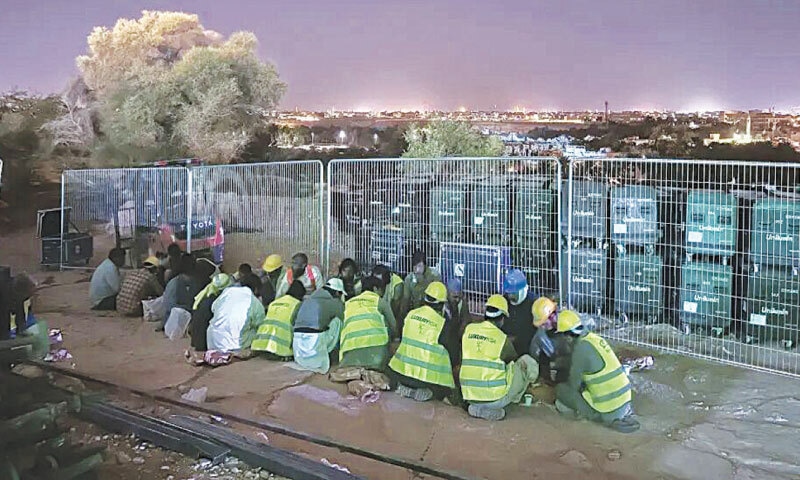
Migrant workers at a construction site near Riyadh, Saudi Arabia in March 2024 | AP


At 23, Ahmed Faraz left Karachi for Saudi Arabia for a better future. A recruitment agent had promised him a stable hotel job in Saudi Arabia with good pay, benefits, and even days off. Like thousands of young Pakistanis each year, he sold family assets — in his case, jewellery — to pay the agent’s fee and boarded a plane full of hope.

But upon landing in Riyadh, Faraz’s dream quickly unravelled.

“I was unemployed for three months,” he tells Eos, his voice still carrying the shock of that experience. “The agent had lied about everything — there was no job waiting, no company expecting me,” he says. “When there’s no job and the kafeel [sponsor] starts demanding more money, many workers have no choice but to become fugitives to avoid deportation or jail.”

Faraz’s story represents just one thread in a vast tapestry of migrant suffering. Conversations with dozens of Pakistani workers across the Gulf reveal a disturbing, systemic pattern of exploitation. Unscrupulous agents routinely lure workers with false promises, charge exorbitant fees and then abandon them to navigate the treacherous waters of the kafala [sponsorship] system alone.

Every year, hundreds of thousands of Pakistanis sell everything for a shot at Gulf prosperity, only to find themselves trapped in a system of debt and control. Why does their home country ignore their suffering?

The Kafala Trap

At the heart of this exploitation lies the kafala system, a sponsorship framework that originated in the 1950s to regulate temporary migrant labour in the Gulf states. The system legally binds a worker’s residency status to their employer, requiring sponsor approval for everything from job changes to exit visas. While all Gulf Cooperation Council (GCC) countries employ some version of this system, Saudi Arabia and Qatar maintain particularly strict implementations.

The International Labour Organisation (ILO) has repeatedly condemned kafala as “a breeding ground for forced labour and abuse.” In practice, it creates a power imbalance so severe that workers often tolerate unpaid wages, excessive working hours and even physical abuse rather than risk deportation.

Shamsul Alam’s story illustrates this dynamic perfectly. Now 64 and back in his hometown of Abbottabad after two decades in the United Arab Emirates (UAE), he recounts how his agent promised 850 dirhams (about $230) monthly for work as a night watchman. “In reality, I received half that amount,” he tells Eos. “Being illiterate, I didn’t understand I should have demanded a contract. The kafeel knew this and exploited it fully.”

Success Amidst the Struggle

Not all experiences are uniformly negative. Shahzaman Majid, 25, works at a visa consultancy firm in Riyadh and represents one of the success stories. “For skilled workers with proper documentation, the Gulf can offer opportunities unimaginable in Pakistan. I’ve tripled what I could earn back home,” he tells Eos via email.

Yet even successful migrants such as Majid acknowledge the system’s flaws. “The biggest challenge comes when you want to progress,” he notes. “Finding a better job means begging your current employer to release you. Many would rather keep you trapped than see you advance.”
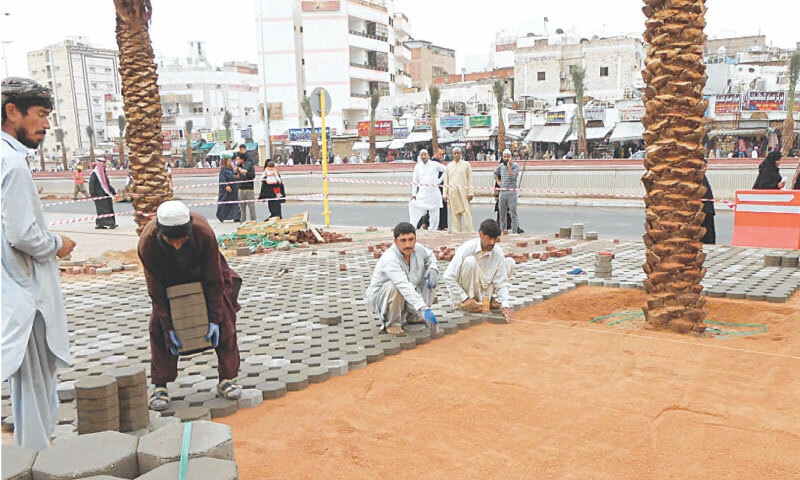
Pakistani construction workers at a construction site in the Saudi city of Medina | University of Nevada


THE REMITTANCE ROLODEX

The economic significance of these migrant workers cannot be overstated. According to Pakistan’s central bank, the State Bank of Pakistan, remittances hit a staggering $4.1 billion in May 2025 alone — enough to cover nearly half of Pakistan’s monthly import bill. These flows represent the nation’s single largest source of foreign exchange, consistently outperforming exports and foreign direct investment combined.

The Bureau of Emigration & Overseas Employment reports that over 450,000 Pakistanis migrated to Saudi Arabia in 2024, with another 64,130 choosing the UAE. These numbers, while impressive, only tell part of the story. The Ministry of Overseas Pakistanis data reveals that approximately 3.2 million citizens — about 1.3 percent of the population — have left over the past five years, with Gulf states absorbing the overwhelming majority.

Economist Dr Ayesha Khan, who studies migration patterns at the Lahore University of Management Sciences, explains: “Every one of these workers supports an average of five family members back home. Their remittances don’t just prevent household poverty — they fund education, healthcare and small businesses that employ others,” she tells Eos.

Yet this economic lifeline comes at tremendous personal cost. Many migrants endure years of separation from families, harsh working conditions and psychological trauma — all the while knowing their homeland offers few alternatives.

Half-Measures: The Limits of Gulf Reforms

In March 2021, Saudi Arabia announced landmark labour reforms, theoretically allowing workers to change jobs without sponsor consent after one year. Other Gulf states have implemented similar measures, responding to international pressure following high-profile cases of abuse, particularly in the run-up to Qatar’s 2022 World Cup.

However, as Human Rights Watch researcher Hiba Zayadin explains, these reforms contain critical loopholes. “Employers still control visa renewals and residency status,” she tells Eos. “Many workers report being forced to sign ‘voluntary’ resignation letters when they arrive, effectively nullifying the new protections,” she adds.

The financial exploitation begins even before migration. Despite regulations banning recruitment fees, Pakistani workers routinely pay agents between Rs300,000 to Rs500,000 (between $1,100 - $1,800), often going into crippling debt. Upon arrival, many face bait-and-switch scenarios, where promised salaries are halved or jobs are completely different than described.

Pakistan’s Failure to Protect Its Own

Perhaps, most damning is the Pakistani government’s failure to protect its overseas citizens. Multiple interviewees described consular services as indifferent at best, hostile at worst.

Amir Basharat, a Pakistani expat in Riyadh since 1996, recounted his experience. “At the consulate, they treat us like criminals, asking for favours rather than citizens seeking rights,” he tells Eos. The attitude, Basharat says, seems to be: ‘You chose to come here, now deal with it.’

This neglect persists despite migrants’ economic importance. While Pakistan has laws against illegal recruitment practices, enforcement remains weak. The Protectorate of Emigrants offices, meant to oversee the migration process, is often understaffed and underfunded.

When asked why they endure such conditions, most migrants give variations of the same answer: “What alternative do we have?”

Faraz, now working at a Riyadh restaurant after months of struggle, explains: “My father was a shopowner who has passed away. My younger siblings’ education depends on my earnings. Returning isn’t an option.”

Shamsul Alam, despite his bitter experience, admits: “If I had the chance, I’d go back to the UAE tomorrow. Here in Pakistan, I might earn 25,000 rupees [per month] if I’m lucky. There, even exploited, I could save more.”

This heartbreaking calculus underscores Pakistan’s fundamental failure to create viable economic opportunities at home. Until meaningful job creation accompanies serious labour protections for migrants, the cycle of exploitation will continue — sustained by desperation and enabled by indifference.

The writer is a member of staff. He can be contacted at munibalxo@gmail.com

Published in Dawn, EOS, May 25th, 2025
PAKISTAN

Govt mulls tax break to avert cotton sector collapse


DAWN
The Newspaper's Staff Reporter 
Published May 31, 2025 

Cotton cultivation in Punjab has exceeded 3.011 million acres during the current Kharif season (2025-26), up from 2.940m acres planted during the same period last year.—APP/file

LAHORE: Pakistan’s cotton sector is facing its gravest financial crisis in decades, prompting swift government attention after urgent appeals from the Pakis­tan Cotton Ginners Association (PCGA) and the All Pakistan Tex­­tile Mills Association (Aptma).

Both associations have launched a high-profile lobbying campaign, writing to Prime Minister Shehbaz Sharif and initiating a nationwide media blitz, demanding the immediate abolition of the Export Facilitation Scheme (EFS) or the removal of sales tax on domestically produced cotton and its byproducts.

The premier subsequently sou­­ght policy recommendations from the Ministry of National Food Security and Research (MNFSR).

In response, the ministry has formally endorsed the industry’s proposals.

In a letter to PCGA President Dr Jassu Mal, Cotton Commis­sioner Dr Khadim Hussain stated that the government has recommended that the 18pc sales tax on domestic cotton, cottonseed, oilcake, and cottonseed oil be lifted immediately, or that imports of cotton, yarn, and grey cloth be taxed at the same rate.

The ministry’s recommendations, forwarded to safeguard farmers’ incomes, revive local production, and stem Pakistan’s soaring dependence on costly cotton imports, it says.

The communiqué notes that Punjab has implemented targeted subsidies for farmers to increase their incomes and reduce production costs for various crops.

Industry data reveals that textile mills have imported over 300 million kgs of cotton yarn and two million bales of cotton during the first nine months of 2024-25, draining billions of dollars in foreign exchange.

Despite this, domestic production has fallen to a historic low of just 5.5m bales. Meanwhile, more than 200,000 bales of unsold cotton and vast stocks of yarn remain idle in factories, with demand at a standstill.

Cotton Ginners Forum Chairman Ihsanul Haq says the fallout has been devastating as over 800 ginning units and 120 spinning mills have ceased to function, while hundreds more textile units are barely functioning.

“If the current policy persists, the sector risks total collapse,” he warns, adding that Pakistan may soon be forced to import not only cotton but also edible oil, compounding the country’s financial woes.

The MNFSR’s recommendations underscore the urgency, recommending immediate tax relief for domestic producers or the imposition of equal taxes on imports to restore a level playing field. All eyes are now on the federal government, as the fate of Pakistan’s cotton and textile industry hangs in the balance.

Published in Dawn, May 31st, 2025Follow Dawn Business on X, LinkedIn, Instagram and Facebook for insights on business, finance and tech from Pakistan and across the world.
Crisis of being


Taha Sabri 
Published May 31, 2025
DAWN

IN Pakistan and across the globe, we are facing a mental health crisis of staggering proportions. But beneath the rising rates of anxiety, depression, and burnout lies a deeper, more uncomfortable truth. Our way of life is making us unwell.

We are told that the antidote to distress lies in individual treatment — pills, apps, or self-help routines. Yet, this narrative ignores the fact that we have built a world that is fundamentally at odds with human nature. Our lives are governed by speed, competition and digital overload. We chase productivity while starving for meaning. We connect constantly online but grow lonelier by the day. In this paradox, it is not surprising that so many of us feel anxious, numb or lost. These are not signs of personal failure. They are symptoms of a society out of sync with the social and spiritual values that are necessary to thrive.

Nowhere is this contradiction more evident than in high-income societies where material progress has reached its zenith, yet rates of loneliness, depression, substance abuse, and suicide continue to climb. These societies have everything the modern world promises yet they are struggling with an epidemic of despair.

This should be a wake-up call for countries like Pakistan. As we race to replicate Western models of development, obsessed with GDP, digitalisation, and industrial-scale efficiency, we risk importing not just their innovations, but also their afflictions. In our hunger to modernise, we may be laying the groundwork for our own psychological, social and spiritual unravelling.


Our identities were once rooted in belonging.

At the heart of this global disease are two interlinked forces. First is the erosion of collectivism. Traditional societies, like those in South Asia, once placed great emphasis on the family, neighbourhood, and the extended community.

Our identities were rooted in belonging. But modernity has championed radical individualism: a belief that self-fulfillment is a solo journey, that autonomy is sacred, and that dependency is weakness. The result is a world of isolated fragile selves, endlessly self-optimising, yet increasingly empty.

Second is the de-spiritualisation of life. In a world where materialism has become the dominant paradigm, value is measured in productivity, visibility and consumption. The sacred is no longer central, it is peripheral and often seen as outdated. This shift has severed our relationship with mystery, transcendence, and awe. It has emptied life of its deeper textures.

In Pakistan, this dissonance is hitting young people the hardest. Today’s youth are growing up between two worlds: one rooted in tradition and interdependence, the other defined by digital modernity and hyper-individualism. They are exposed to globalised ideals of success, beauty, and self-worth that are often alien to their cultural and spiritual contexts. Yet, they are expected to navigate these contradictions alone.

We are witnessing rising rates of depression, anxiety, substance abuse and suicide among adolescents and young adults. This isn’t just a mental health issue. It’s an identity crisis, a collapse of coherence between who they are, what they’re told to be and what truly matters. They are told to dream big but not taught how to grieve. They are connected to the world but feel disconnected from themselves. Without language, space, or guidance to explore these inner tensions, many suffer silently, questioning their worth, their place and their purpose.

Leading a mental health non-profit for over a decade, I’ve worked with communities that are struggling, not just with trauma or poverty, but with the invisible wounds of modern life: disconnection, disempowerment, and despair. This has helped me realise that healing cannot be reduced to medicine or psychotherapy alone. It must include a return to human wholeness, a reconnection with self, community, and the spirit.

This is why, alongside global best practices in mental health, we can draw from our own traditions of wisdom. For instance, in the Sufi path, suffering is not seen as a defect but as a signpost. The concept of zikr or remembrance speaks to a fundamental truth: healing begins when we remember what we’ve forgotten.

But practices and principles alone are not enough, we must also reimagine the systems we are building. From education to healthcare to economic development, we need a shift from isolation to community, from acceleration to presence, from control to compassion.

We are at a civilisational crossroads. Will we continue to live in ways that erode our well-being? Or will we reimagine a world that nourishes the human spirit?

The answer lies in returning to our true selves, to each other, and to the values that will enable us to live happier and healthier lives.

The writer is a public health practitioner focusing on mental health and co-founder of Taskeen Health Initiative.

Published in Dawn, May 31st, 2025

BALOCHISTAN IS A COUNTRY

At Balochistan grand jirga, PM stresses need to win back ‘misled’ people
Published May 31, 2025

PM Shehbaz speaks at the launch of Balochistan Grand Jirga in Quetta, May 31, 2025. — DawnNewsTV

Prime Minister shehbaz sharif delivers a speech at the Quetta Command and Staff College on May 31. — DawnNews TV

Prime Minister Shehbaz Sharif on Saturday said that people who were “misled” by terrorists in Balochistan must be brought back on board, stressing the need for resolving issues through dialogue.

The security situation in Balochistan has worsened in recent months, as militants, long involved in a low-level insurgency, have stepped up the frequency and intensity of their attacks. The outlawed Balochistan Liberation Army, in particular, has adopted new tactics to inflict higher casualties and directly target Pakistani security forces.

Last month, ISPR Director General Lt Gen Ahmed Sharif Chaudhry accused India of activating its “assets” to inte­nsify terrorist attacks in Pakistan, presenting “irr­e­futable evidence” of Ind­ian state-sponsored terrorism, directed by the Ind­ian military personnel.

Speaking at the Balochistan Grand Jirga in Quetta, PM Shehbaz said, “The terrorists [in Balochistan] must not be tolerated by the public, government or armed forces.


“We must make efforts to bring back the people who were misled [by the terrorists] onto the wrong track.”

He added that economic or social injustices cannot happen in Balochistan during his rule and stressed collectively solving the issues through talks.

“If there are any concerns, brothers need to sit together to solve those issues,” he emphasised. “The blood-thirsty terrorists who are against Pakistan’s success and welfare must be stopped. I want to ask what the gaps [there] are that we can fill with your suggestions [to solve problems].”
Balochistan to receive Rs250bn development budget

The premier also announced that Balochistan will receive Rs250 billion in development funds from the federal budget.

He said, “In the upcoming budget, the federal-funded Public Sector Development Programme (PSDP) for provinces and [the] federation will be Rs1 trillion in total. Balochistan will get Rs250bn, which is 25 per cent of the total PSDP.”

He added, “To me, even that seems like a small amount.

“Whether it is Gwadar, Pasni, Chaman, Qila Saifullah, Quetta, Jhal Magsi or any other place, every penny of these resources must be honestly utilised for the public’s welfare.”

The premier also highlighted past development projects in the province, such as the Rs70bn solar initiative for farmers and the N-25 Highway.

Last month, PM Shehbaz announced that instead of passing on the relief of reduced oil prices in the international market to consumers, the government would use the saved money for the reconstruction of the N-25 Highway and completion of Phase-II of the Kachhi Canal project in Balochistan.

Addressing the event today, he further said, “In 2010, Punjab gave Rs11bn in NFC to Balochistan [and] that would be around Rs155-160bn today. But for the sake of national unity, even Rs1600 billion would not be too much.”

“The vastness of Balochistan demands greater investment,” he added.
Pakistan ‘flying high’ militarily, economically

Earlier on Saturday, the PM said that Pakistan was “flying high” off the back of its victory in a military conflict against India and economic progress made since he took office as prime minister.

The comments, made during an address at the Quetta Command and Staff College, followed a recent military confrontation between India and Pakistan over New Delhi’s allegations against Islamabad, without evidence, about a deadly attack in occupied Kashmir’s Pahalgam.

New Delhi, based on the allegations, launched a series of air strikes in Pakistan in early May, killing civilians. Islamabad retaliated by downing five Indian jets. It took American intervention on May 10 for both sides to finally reach a ceasefire.

India, however, is still weaponising the Indus Waters Treaty (IWT) — a water distribution deal between the two countries — saying that it will no longer abide by the treaty, placing the agreement in “abeyance”.

In his address today, PM Shehbaz congratulated the military personnel in attendance on their counter-operations against India. He said these operations had left New Delhi “completely baffled and shell-shocked”.

“We won a war against an enemy, which in the eyes of our detractors was unthinkable, but we have converted this unthinkable into a reality, and I think that is our finest hour in history,” he stated. “Pakistan at this point in time is flying high.”

PM Shehbaz noted that the conflict with India was not only victorious, but illustrated that the threats Pakistan faces are no longer restricted to conventional battlefields.

“They [threats] are multifaceted, ranging from kinetic warfare to cyber attacks, economic coercion, disinformation campaigns and hybrid threats that challenge both our borders and ideological frontiers,” he elaborated.

“The recent Indian aggression … was not only countered successfully, but we turned the tables on those who tried to establish a new normal,” he added. “Indian leaders had no option but to concoct a patently false explanation for their losses. Operation Bunyanum Marsoos destroyed the enemy’s defences and shattered the myth of their military might.”

The PM highlighted that Pakistan “established a new norm” in its relations with India, warning that the country will never let its neighbour “behave in an arrogant and haughty manner”. He also reiterated that Pakistan would not allow India to continue weaponising the IWT, calling it a “red line”.

“We need to convert this moment into something this nation has been longing for — that Pakistan’s progress … would not only be witnessed [and] enjoyed by [the people], but that the world at large would respect Pakistan’s hard work,” he added.
‘Sacrifice, blood and sweat’

Noting Pakistan’s victory on the battlefield, the prime minister said that the country “faces major challenges” on the economic front.

Highlighting economic difficulties during his tenure in 2022, Shehbaz said, “International banks were refusing our letters of credit for vital imports like energy … linked to Pakistan’s wellbeing”, and the country faced the threat of international lending agencies walking away.

“As a result of that meeting in Paris in July 2023, we were able to sign a standby agreement with the IMF, which averted an impending economic meltdown,” the PM said.

He added that upon assuming office in 2024, his administration “wasted no time” implementing major reforms and making “cast-iron guarantees to lending agencies”.

“We would not shy away from undertaking difficult, tough, but very relevant, deep-rooted changes in our system,” he said. “We undertook those very difficult decisions and we were able to calm those fears of our lending partners. Today, we are witnessing the fruits of those sacrifices made by the common man in Pakistan.”

According to the PM, inflation plummeted from 38 per cent to 0.3pc, while interest rates were halved from 22.5pc in 2022 to 11pc.

“Our rupee stands stable [and] forex reserves have crossed over a billion dollars,” he said.

“These achievements, significant as they are, represent only the beginning of a very arduous, difficult, thorny journey towards progress and prosperity. On the way, we will meet huge challenges like mountains, rivers — we will have to surmount them [and] cross those rivers through unwavering commitment to our nation and our people, and that will require sacrifices, sweat and blood,” he emphasised.


PRIMITIVE ACCUMULATION OF CAPITAL


PAKISTAN
Organised crime challenges
Published May 31, 2025 
DAWN

The writer is a former director general of FIA.


ORGANISED crime in Pakistan is deeply entrenched. Pakistan’s strategic location, coupled with socioeconomic vulnerabilities, porous borders and weak institutional oversight, makes it both a source and transit hub for multiple transnational OC activities. OC is not confined to traditional mafia-style groups, but spans a complex spectrum of urban gangs, tribal smuggling clans, insurgent-linked syndicates and terrorist outfits. OC in Pakistan manifests across multiple interconnected markets:

Drug trafficking: The post-2022 Afghan Taliban opium ban saw a 95 per cent decline in poppy cultivation in Afghanistan, leading to fears of its production shifting to Pakistan. As per the US 2024 International Narcotics Control Strategy Report, Pakistan is emerging yet again as a significant producer of opium (1,800 hectares were under poppy cultivation in 2023). Similarly, due to the ban, the market to manufacture methamphetamine may be expanding from Afghanistan to the Southwest Asian countries, including Pakistan.

Human trafficking: Human trafficking networks operate both at home and across borders. Within the country, individuals are trafficked for purposes such as bonded labour, sexual exploitation, domestic servitude, and organised begging. A growing trend involves trafficking people abroad specifically for begging, with over 5,000 Pakistani nationals deported from Saudi Arabia in 2024 and 2025 for this. In 2022, an estimated 26,539 trafficking victims were identified in Pakistan, with women comprising 75pc of the total (19,913), followed by 4,165 men, 2,170 boys and 287 girls.

Migrant smuggling: Pakistan is both a key origin and transit country for migrant smuggling. Criminal networks exploit vulnerable populations, facilitating their movement through Iran and Turkiye en route to Europe. These operations are often connected to wider transnational criminal networks and involve human rights abuse. According to HRCP, an estimated 80,000 to 100,000 Pakistanis attempt irregular migration each year, using overland, maritime and air routes. Between 2021 and 2023, foreign authorities deported 154,205 individuals.


Multiple agencies — FIA, ANF, Customs, and police — operate without effective coordination.

Firearms trafficking: Black markets for firearms, notably in areas such as Darra Adam Khel and surrounding tribal regions, continue to function with minimal interference. Illicit manufacturing and flow of firearms is amongst the most ent­­renched forms of OC in the country, deeply imp­­acting national policy and law-enforcement efforts.

Cybercrime and financial fraud: Cybercrime is emerging as a significant threat in Pakistan, with increasing incidents of identity theft, online abuse targeting women and children, digital blackmail and the use of cryptocurrencies for laundering illicit funds. Cybercriminals frequently attack critical digital infrastructure eroding public confidence in online services. Alongside this, financial crimes such as fraud, money laundering, terrorist financing, and corruption are key enablers of OC. They facilitate illegal wealth accumulation, disrupt economic stability and weaken institutional integrity. Moreover, unchecked illicit financial flows damage Pakistan’s international financial standing and complicate its compliance with FATF conditions.

Pakistani OC groups exhibit hybrid structures that differ from mafia-style cartels:

Urban syndicates: Predominantly found in Karachi and other metropolitan areas, these are semi-structured groups involved in extortion, utility control rackets (such as the water mafia), land grabbing, and drug retail markets. Their operations are often politically shielded and embedded in municipal institutions.

Tribal and borderland smuggling clans: In Balochistan and KP, loosely affiliated clans dominate smuggling networks. These groups are often embedded in local kinship and tribal systems, enabling both protection and mobility. Their decentralised nature allows them to evade state detection and adapt rapidly.

Militant-tied criminal groups: Some groups ope­rate in symbiosis with terrorist networks, using criminal economies — such as drug smuggling or extortion — to fund operations. These dynamics blur the lines between OC, insurgency and terrorism, especially along the Afghan border.

OC groups in Pakistan utilise various operational tactics:

Violence and coercion: Especially in Karachi and rural Sindh, extortionists, land mafias and human traffickers deploy violence, blackmail, and intimidation to assert dominance.

Corruption: State-embedded actors facilitate OC by providing safe passage, protection from prosecution, and intelligence leaks. Corruption in police, Customs, and municipal governance remains a powerful enabler.

Technology: Encrypted communications, dark web marketplaces, cryptocurrency laundering, and online scam infrastructure are being adopted, particularly in cybercrime and financial fraud.

Legal fronts and informal systems: Criminal proceeds are laundered through real estate and shell companies. The informal economy facilitates unrecorded wealth flows and tax evasion.

OC groups exploit systemic inequality, poverty, and unemployment, especially among youth. In informal urban settlements and rural hinterlands, they act as parallel governance providers, offering employment, loans and protection. This cultivates loyalty and normalises criminal economies. Further, clientage politics creates protection networks around OC actors. In such instances, election financing, land development and party patronage intertwine with criminal proceeds.

Pakistan lacks disaggregated and unified crime databases. Most agencies work in silos, leading to inconsistent data on arrests, convictions or transnational linkages. For instance, while ANF reported seizures of 176 metric tons of narcotics in 2024, it did not list prosecution outcomes or identify OC groups and network leadership. Key knowledge gaps also include absence of centralised data on human trafficking.

Multiple agencies — FIA, ANF, Customs, and police departments — operate without effective coordination. There is no national strategy to counter the groups. Judicial inefficiency and limited protection for whistleblowers, journalists, and investigators further erode enforcement effectiveness. Asset recovery remains weak, with little focus on disrupting financial flows and profit chains. OC in Pakistan is often framed narrowly as a law-enforcement issue, neglecting its deeper structural roots — such as urban planning failures, gender inequality and elite capture. The dominance of anecdotal reports over empirical research weakens the design of evidence-based responses.

Pakistan must not be perceived as a fragile state. It must adopt a whole-of-government and society approach rooted in four strategic pillars:

Prevent: Build social resilience through youth employment, urban development, and education. Raise awareness against OC groups and increase civic participation.

Pursue: Strengthen intelligence-led policing, inter-agency coordination, and proactive prosecution. Focus on dismantling enablers, and not just street-level actors.

Protect: Ensure rights-based support for victims and targeted protection for investigators, whistle-blowers and journalists.

Promote partnerships: Engage civil society, private sector, and diaspora communities. Enhance regional cooperation and multilateral platforms like Saarc and the SCO.

Published in Dawn, May 31st, 2025
Bangladesh tumult


Editorial
Published May 30, 2025 
DAWN


REVOLUTIONS and upheavals are messy things, and unless proponents of the new order have a solid plan to replace the old order, transitions can be chaotic and bloody. For those leading Bangladesh in a new direction after the fall of Sheikh Hasina Wajed’s autocratic government last year, the challenges are considerable, and cracks are emerging within the coalition of parties that helped bring down the Awami League regime. Unless these issues are addressed and a clear roadmap for elections is announced within a reasonable span of time, the trust deficit between different parties may grow wider, adding to the instability that has been rocking Bangladesh. There were rumours a few days ago that Muhammad Yunus, the Nobel laureate who is heading Bangladesh’s interim set-up, was considering resigning. These were later scotched, but media reports say Dr Yunus had considered leaving his post because of pressure on him from various factions. It has also been reported that there has been increased civil-military friction. Perhaps at the heart of the instability is the debate over the election date. Dr Yunus has said polls will be held between December and July 2026, while the BNP, one of the country’s largest parties, insists elections should be held by the end of this year. The powerful army also reportedly wants polls by December. Local media quoted the army chief as saying “we must return to barracks after elections”.

Indeed it is a tough call for the interim set-up. While Dr Yunus’s calls for reform before polls are understandable, long-term changes in the country’s administrative and political structure should ideally be left to an elected government. And while demands for justice for those who were allegedly tortured or killed by the previous government are also justified, the legal process should continue in tandem with preparations for polls. All of Bangladesh’s political parties and factions should, therefore, jointly prepare a roadmap acceptable to all to ensure a free and fair democratic transition. Announcing a tentative election date would remove much of the uncertainty, and turn the focus of political parties towards the campaign trail. The interim rulers should also reconsider the ban on the Awami League’s participation in the polls, as the election will not be fully democratic without the presence of one of the country’s major political parties. Let the people of Bangladesh decide.

Published in Dawn, May 30th, 2025
Pakistan’s solar journey is feeling the heat from cost shifting

A proposed shift to lower compensation for solar exports may slow adoption, but energy storage and a smarter grid offer a way forward

Published May 28, 2025 
DAWN

In 2015, Pakistan quietly ushered in a new era of decentralised energy. The drily named Net Metering Regulations bill allowed households and businesses to install solar panels and sell excess electricity back to the grid, earning at the same rate they paid to consume electricity. It was a bold step in a country struggling with power shortages, rising import bills and growing public frustration with costly, unreliable electricity.

The impact was swift. Spurred by falling solar panel prices and some of the highest retail electricity tariffs in South Asia, Pakistan experienced a solar boom. In 2024 alone, 22 gigawatts of solar panels were imported — an astonishing figure given Pakistan’s total installed capacity is 46 GW.

Yet, behind this success lies a quieter tension: the fundamental problem of “stranded costs”.

There is a growing economic mismatch between how utilities recover costs and how electricity is now being consumed. Pakistan’s utilities have historically relied on volumetric tariffs — charging per kilowatt-hour sold — to recover both energy and fixed infrastructure costs (poles, wires, substations and administrative overheads). As more customers adopt distributed solar and generate a portion of their own electricity, the number of kilowatt-hours sold by the utility shrinks.

This doesn’t reduce the actual cost of running the grid. Instead, the fixed costs get spread over a smaller base, triggering rate increases for all other customers. In turn, these higher tariffs make distributed generation even more financially attractive, particularly for commercial and industrial customers, who account for a significant share of utility revenue. As large customers reduce their reliance on grid power, utilities are left with stranded assets – infrastructure that was built assuming higher demand and now has no clear recovery pathway.

Still, the financial pressure on utilities is real. Pakistan operates a single-buyer electricity market, where the Central Power Purchasing Agency (CPPA-G) signs deals with power producers and state-owned distribution companies (DISCOs) are responsible for selling electricity to end users, collecting payments and curbing theft. As more affluent customers install solar and reduce their reliance on the grid, DISCOs face shrinking revenues and growing losses. The utility’s sales volumes decline, while its fixed costs persist or rise and tariffs for remaining customers go up, prompting further defections. This creates a feedback loop known as the “utility death spiral”.
What are ‘fixed costs’ for utilities

Saddled with high distribution losses, poor billing recovery and heavy reliance on imported fuels, these state-owned distribution companies are caught in a bind: unable to stop the bleeding, yet politically constrained from raising tariffs enough to cover their losses. This is not just taking place in Pakistan, a similar situation is also unfolding in South Africa.
From net metering to net billing

Pakistan’s National Electric Power Regulatory Authority (Nepra) has proposed a shift to net billing. This has already been approved by the Economic Coordination Committee and now awaits cabinet ratification. If finalised, Nepra will formally incorporate the changes into the regulatory framework, potentially ending Pakistan’s near decade-long net metering regime.

Mirroring the US state of California’s Net Energy Metering (Nem) 3.0 policy, it compensates solar customers based not on retail prices, but on the utility’s avoided cost – what it would have spent to generate or procure that electricity — typically a much lower rate than the retail tariff.

Under the new Nepra proposal, compensation for customers exporting excess energy to the grid would more closely reflect the value of that power to the system. In Pakistan, this is often between per kilowatt-hour (kWh), compared to retail rates above PKR 27 per kWh in many parts of the country. In theory, this brings greater fairness to the system by reducing cross-subsidisation (where non-solar users shoulder more of the grid’s fixed costs) and keeps utilities financially afloat.

But it also reshapes the economics of solar. For new adoptees, the payback period for rooftop systems without storage more than doubles from 1-2 years to 4-5 years. While the move is likely to stabilise the grid and protect non-solar users, it could slow down the pace of new installations. This is unless they are paired with innovative business models, such as solar-plus-storage (which allows users to avoid buying expensive peak-time power) or peer-to-peer energy trading (which lets them sell surplus energy directly to others).

California’s experience offers a cautionary tale. After transitioning to net billing in 2023, rooftop solar installations declined. However, it also saw a surge in battery adoption, as customers sought to store energy for use during expensive peak hours. Pakistan could see a similar trend: a slowdown in installations of pure rooftop photovoltaic systems but growing interest in self-sufficiency solutions that combine solar with lithium-ion batteries and smart inverters.
Fixing the bigger problem: inefficient distribution

Still, net billing alone won’t fix Pakistan’s energy challenges. The high electricity prices pushing consumers toward solar stem from deeper structural issues: operational inefficiencies, overpriced fuel contracts, mounting circular debt and weak governance.

Even as Nepra changes its regulations for distributed generation, state-owned distribution companies must urgently reduce technical losses, modernise metering and billing systems, optimise power procurement — and be held accountable.

Until the underlying cost of electricity comes down, consumers will continue to seek alternatives to grid supply, regardless of how they are compensated. This points to a deeper truth: grid defection in Pakistan in favour of solar isn’t so much a vote for clean energy, but an economic escape route.
A glimpse into the future: batteries and a smarter grid

Even as Pakistan shifts to net billing, its solar journey is far from over. Storage technologies — especially lithium-ion batteries — are becoming more affordable and accessible. As battery prices fall, more solar users will opt to store energy for self-consumption, particularly during evening hours.

Rooftop solar paired with battery storage can significantly enhance grid resilience by reducing reliance on the grid during peak hours and power outages. By storing excess solar energy during the day and using it in the evening — when Pakistan’s grid is under the most strain — these systems can help flatten peak demand, reducing the need for costly peaking plants that rely on imported fuels.

This shift not only cuts national fuel expenditures but also defers the need for new transmission and distribution infrastructure, easing pressure on a grid already burdened by high losses and capacity constraints. In effect, distributed solar-plus-storage acts as a decentralised buffer, strengthening the grid while empowering consumers.

To stay ahead of these trends, Pakistan’s power planners must look beyond short-term fixes. Strategic investments are needed in ‘demand response’ systems, smart grids and tariff designs that reflect the true value of electricity, varying by time of use and location.
What is demand response?

Encouraging consumers, through flexible pricing and monetary incentives, to shift their electricity use to times when it is more plentiful or general demand is lower. This can also support greater use of renewable power.

A smarter, more responsive grid would empower consumers by allowing households and businesses to shape their energy use based on real-time conditions, reducing the strain on the system while giving consumers more control.

This article was originally published by Dialogue Earth and has been republished with permission.

Header image: Falling prices and high electricity tariffs sparked a solar boom in Pakistan. Now, new legislation looks set to slow sales. — Ton Koene / Alamy
Pakistan becomes co-signatory to China’s global mediation body


Published May 30, 2025

The headquarters of the International Organisation for Mediation, a China-initiated body for global dispute resolution, is seen under construction in Hong Kong, China on May 29. — Reuters

Pakistan became a co-signatory to China’s newly set up Hong Kong-based International Organisation for Mediation (IOMed) on Friday, a statement by the Foreign Office said.

China signed a convention setting up an international organisation for mediation in Hong Kong that Beijing hopes will be on par with the International Court of Justice and bolster the city’s international credentials, Reuters reported.

Pakistan, Indonesia, Laos, Cambodia and Serbia were among the countries attending the signing ceremony, while representatives from 20 international bodies, including the United Nations, were also expected to join, public broadcaster RTHK said.


“Deputy Prime Minister [and] Foreign Minister, Senator Mohammad Ishaq Dar, today signed, on behalf of Pakistan, the convention on the establishment of the International Organisation for Mediation in Hong Kong,” the statement by the FO read.

Speaking on the occasion, Dar appreciated the Chinese leadership for its wisdom in developing and consistently leading efforts in establishing the IOMed and fostering a global community with a shared future, the statement added.

He added that the creation of IOMed underscores the indispensability and significance of multilateralism as the centrepiece for international peace, stability, and development.

“IOMeD also offers new opportunities and fresh hopes to build a more inclusive, more just and more equitable world. As one of the founding members of IOMed, Pakistan would continue to be an active voice in this noble mission,” the statement quoted him as saying.

The deputy PM underlined Pakistan’s strong commitment to the promotion of peace and security as well as development. He elaborated on the critical importance of advancing and preserving multilateralism through faithful adherence to the principles of the UN Charter, full implementation of UN Security Council resolutions, as well as international law.

He also drew attention to India’s violation of international law through its acts of aggression against Pakistan and its unlawful holding in abeyance of the Indus Waters Treaty. He also highlighted the occupation of Jammu and Kashmir and the occupied Palestinian Territories as drivers of conflict to regional peace and security.

Dar called for the resolution of the longstanding Jammu and Kashmir dispute under the UN Security Council resolutions and the wishes of the Kashmiri people.

The idea for the establishment of the IOMed was one of the key outcomes of the 2nd Belt and Road Forum held in Beijing in April 2019. China initiated discussions for the establishment of IOMed in 2021, and invited Pakistan to join negotiations as one of its founding members, the statement added.

The organisation is open to all countries; is based on respect for the sovereignty, core interests and legitimate concerns of every country; aims to promote dialogue and trust between parties concerned based on equality; and desires inclusion of various legal systems, and their mediators, the FO said.


FM Dar visits Hong Kong’s chief executive

Separately, FM Dar, in a meeting with the Chief Executive of the Hong Kong Special Administrative Region, John Lee, congratulated him on the establishment of IOMed, according to a separate statement by FO.

Noting Hong Kong’s growing significance in international mediation efforts, FM Dar highlighted the region’s role as a “global hub, linking east and west”.

The pair discussed measures to “deepen economic investment and trade cooperation” between Pakistan and the administrative region of Hong Kong.

“Hailing the launch of IOMed as a milestone inspired by President Xi Jinping’s vision, the DPM/FM noted its alignment with Pakistan’s commitment to dialogue-driven diplomacy and UN Charter’s principles,” the statement read.

The foreign minister acknowledged the chief executive and SAR government for their “impressive economic and social development strides under the ‘One Country, Two Systems’ framework” while recalling Pakistan and Hong Kong’s “long-standing friendship.”

FM Dar also commended the Pakistani community in Hong Kong for strengthening bilateral ties and contributing to the city’s diversity and economy.

He also took to X to announce the meeting, describing it as “cordial and productive”.


Welcoming FM Dar’s visit, the chief executive expressed eagerness to enhance collaboration between Hong Kong and Pakistan further.
Says IOMed reafirms international peace, stability, development

Separately, Dar, while speaking at a ceremony in Hong Kong, said the creation of IOMed reaffirmed Pakistan and China’s shared a view of multilateralism that is the centerpiece of international peace, stability and development.

He said that IOMed offered “new opportunities and fresh hopes to build a more inclusive, more just and more equitable world”.

“Pakistan will continue to be an active voice in this noble mission,” Dar said.

He said that Pakistan would bring IOMed “not just a rich diplomatic experience, but also unflinching commitment to dialog, justice and fair play, excellencies”.

“Let me commit to empower this organisation, allowing it to fulfill its potential in the service of these equity and justice I thank you all,” he said.