Enbridge says it would pitch new Alberta-B.C. pipeline only under right conditions

CALGARY — Alberta Premier Danielle Smith has expressed confidence one or more private-sector pipeline operators will come forward with a plan to ship oilsands crude to the Port of Prince Rupert, B.C., and test the federal government’s new regime to speed along projects deemed in Canada’s national interest.
But if pipeline companies are keen on proposing a new West Coast pipeline project in the near future, they’re not saying so publicly.
“We’ve been in active conversations with many pipeline companies, and I feel like we’re pretty close to having either one or a consortium come forward,” Smith told reporters on Tuesday.
Enbridge Inc. is Canada’s biggest shipper of crude oil with a vast cross-border network. It’s also the company behind the scrapped Northern Gateway oilsands pipeline to the B.C. port of Kitimat, south of Prince Rupert and further inland.
The company said in a written statement Wednesday that it would explore market-diversifying projects, provided the demand is there from customers.
It would also take “real provincial and federal legislative change” around climate policy, regulatory timeliness and Indigenous participation.
“We will be there to build what is needed for our shippers, for Alberta and for Canada — that’s our job, our mission as a company — but only when the conditions make sense and the right framework is in place,” Enbridge said.
Meanwhile, South Bow Corp. would only say it “carefully evaluates all opportunities, especially those that complement our current assets and strengthen our existing corridor.”
South Bow has no infrastructure in B.C. Its Keystone system serves U.S. Midwest and Gulf Coast refineries.
The CEO of federally owned pipeline operator Trans Mountain Corp. told reporters earlier this month that his company is among those Smith has spoken to about spearheading a new pipeline.
But Mark Maki said “optimizing the existing kit” is a priority over building something new for now.
Trans Mountain flows to the B.C. Lower Mainland is currently the only way Alberta producers can meaningfully access Asia-Pacific markets.
The new pipeline Smith envisions would ship one million barrels of oil per day, and would be the “anchor tenant” on a corridor that houses other infrastructure.
Richard Masson, an executive fellow at the University of Calgary’s School of Public Policy, said it’s hard to see how Smith can entice a private company to get on board.
“She’s pushing to be seen to be doing something and to try and take advantage of the mood in the country,” he said.
“And my concern is that if you only put one option on the table and that option has lots barriers to being realized, you’re going to end up with a lot of disappointed people later.”
For Enbridge, Masson said one stumbling block would be how a potential new West Coast system may affect the economics of its Mainline system, which on any given day is the largest-single conduit for Canadian crude flowing by pipeline to the United States.
A new pipeline would likely have to be underpinned by decades-long commitments from customers to pay to use it, whereas the Mainline is more flexible, he said.
If customers are already locked into paying to use any potential West Coast system, there’s more incentive to move crude on that before the Mainline.
“That means volumes that would be going down the Enbridge Mainline get pulled off and put on to the new system,” Masson said. “So Enbridge seems like an unlikely company unless there is some kind of industry or government support, so that they weren’t worse off on the Mainline system.”
South Bow, which was spun off last year from TC Energy, is a smaller company and is unlikely to have the capacity for such an undertaking, Masson said.
Trans Mountain — a Crown corporation — delivered its expansion last year at a massively higher cost than when it was first proposed.
“So, not easy to see that happening unless the federal government says, ‘We want you to do it, so do it,’” Masson said.
As for other Canadian energy infrastructure players like Keyera Corp. and Pembina Pipeline Corp., a crude pipeline wouldn’t be a fit as they’re more geared toward natural gas, he added.
“Their investors would be unhappy if they got into it because it’s such a big project compared to the size of the company and it’s outside their core expertise.”
Another major obstacle is the federal government’s tanker ban on the West Coast, which ultimately spelled the end of Northern Gateway.
During the pitched debate over that defunct project, First Nations and environmental groups were vehemently opposed to crude oil tankers sailing along the rugged, island-dotted northern B.C. coast and raised alarm over the ecological damage that could result from a spill.
Smith and industry players have been pushing Ottawa to lift the ban, but to date there’s no sign the Liberal government will oblige.
“This is simply not an area where we can have a pipeline,” said Anna Barford, oceans campaigner with Stand.Earth in Vancouver.
“When Alberta says pipelines, for us that means tankers.”
This report by The Canadian Press was first published June 25, 2025.
Enbridge Looks to Raise Canada’s Oil Flows to U.S. via New Pipeline
- Enbridge and Energy Transfer are exploring a new Illinois pipeline link to expand Canadian oil shipments by 200,000 bpd amid surging oil sands production.
- Oil sands production is on track to hit a record 3.5M bpd in 2024, with forecasts of 3.9M bpd by 2030.
- Alberta plans a new pipeline to British Columbia’s northwest coast, aiming to reduce reliance on U.S. markets and boost overseas oil exports.
Rising Canadian oil production and continued demand for more shipping capacity at the key U.S. refining hubs have prompted Canada’s pipeline giant Enbridge to test interest from potential shippers for a new pipeline in Illinois linked to the Mainline system.
Enbridge is considering raising the crude shipment capacity from Canada to the United States via the pipeline that could boost oil flows by 200,000 barrels per day (bpd).
Enbridge and its partner Energy Transfer are gauging potential shippers’ interest in an open season until mid-July for a proposed new link, the Southern Illinois Connector, Enbridge has told Bloomberg in response to questions.
Southern Illinois Connector would entail reconfiguring and upgrading existing systems and building a new segment. The pipeline is expected to receive Canadian crude from Enbridge’s Mainline system and connect to Energy Transfer’s crude oil Pipeline at Patoka, sources with knowledge of the plans told Bloomberg.
The open season for the Southern Illinois Connector is in response to increased demand for additional capacity from Illinois to the U.S. Gulf Coast, Enbridge said.
Enbridge operates the Mainline system, moving more than 3 million barrels a day of crude oil and liquids from Western Canada to the demand markets in the United States. Overall, Enbridge moves 30% of the crude oil produced in North America, for 65% of all U.S.-bound Canadian oil exports, 40% of U.S. oil imports, and about 25% of North American oil exports.
More shipping capacity out of Canada would be welcome news for producers who are raising output from the oil sands to record highs and will continue to smash records this decade.
Despite lower oil prices, Canada’s oil sands production is expected to reach an annual all-time high of 3.5 million barrels per day (bpd) this year, thanks to optimization and efficiency at producing assets, S&P Global Commodity Insights said in its latest 10-year outlook earlier this week.
Oil sands volumes are expected to top 3.9 million bpd by 2030, per S&P Global Commodity Insights. Efficiencies, optimization, and favorable economics are expected to drive production growth at Canada’s oil sands, S&P Global Commodity Insights says
Despite market volatility, Canada’s energy producers have maintained spending and production guidance so far this year, showing more resilience compared to some of their counterparts in the United States.
The potential increase in Canada’s oil flows to the U.S. via the new Illinois pipeline proposed by Enbridge and Energy Transfer would accommodate rising Canadian oil production and meet industry demand at the U.S. refining centers.
Canada’s oil-producing province of Alberta is also seeking additional shipping capacity within Canada to boost Canadian oil exports to customers outside the United States.
Alberta could receive, within weeks, a proposal from a private company for a new pipeline to British Columbia’s northwest coast, Alberta Premier Danielle Smith told Bloomberg News in an interview earlier this week.
Earlier this month, Smith said that Alberta is working to engage private backers for a new pipeline to ship about 1 million barrels per day (bpd) of crude from Canada’s oil-producing province to British Columbia.
The pipeline would run from the oil sands in Alberta to the Port of Prince Rupert on British Columbia’s northwest coast, and to international markets afterwards, according to the plans of the province.
Amid soured relations with its top trading partner under U.S. President Donald Trump, Canadian policymakers at both the federal and provincial levels have started to realize they may have too hastily scrapped over the past decade Alberta-to-coast pipeline projects that could have diversified Canada’s oil and gas exports.
The expanded Trans Mountain route is currently the only pipeline shipping Alberta’s landlocked crude for exports on tankers from the West Coast.
Alberta is also betting on a restart of its dialogue with the federal government after Canadian Prime Minister Mark Carney pledged that the federal authorities would work to fast-track major projects to make Canada an energy superpower.
By Tsvetana Paraskova for Oilprice.com
- Enbridge and Energy Transfer are exploring a new Illinois pipeline link to expand Canadian oil shipments by 200,000 bpd amid surging oil sands production.
- Oil sands production is on track to hit a record 3.5M bpd in 2024, with forecasts of 3.9M bpd by 2030.
- Alberta plans a new pipeline to British Columbia’s northwest coast, aiming to reduce reliance on U.S. markets and boost overseas oil exports.
Rising Canadian oil production and continued demand for more shipping capacity at the key U.S. refining hubs have prompted Canada’s pipeline giant Enbridge to test interest from potential shippers for a new pipeline in Illinois linked to the Mainline system.
Enbridge is considering raising the crude shipment capacity from Canada to the United States via the pipeline that could boost oil flows by 200,000 barrels per day (bpd).
Enbridge and its partner Energy Transfer are gauging potential shippers’ interest in an open season until mid-July for a proposed new link, the Southern Illinois Connector, Enbridge has told Bloomberg in response to questions.
Southern Illinois Connector would entail reconfiguring and upgrading existing systems and building a new segment. The pipeline is expected to receive Canadian crude from Enbridge’s Mainline system and connect to Energy Transfer’s crude oil Pipeline at Patoka, sources with knowledge of the plans told Bloomberg.
The open season for the Southern Illinois Connector is in response to increased demand for additional capacity from Illinois to the U.S. Gulf Coast, Enbridge said.
Enbridge operates the Mainline system, moving more than 3 million barrels a day of crude oil and liquids from Western Canada to the demand markets in the United States. Overall, Enbridge moves 30% of the crude oil produced in North America, for 65% of all U.S.-bound Canadian oil exports, 40% of U.S. oil imports, and about 25% of North American oil exports.
More shipping capacity out of Canada would be welcome news for producers who are raising output from the oil sands to record highs and will continue to smash records this decade.
Despite lower oil prices, Canada’s oil sands production is expected to reach an annual all-time high of 3.5 million barrels per day (bpd) this year, thanks to optimization and efficiency at producing assets, S&P Global Commodity Insights said in its latest 10-year outlook earlier this week.
Oil sands volumes are expected to top 3.9 million bpd by 2030, per S&P Global Commodity Insights. Efficiencies, optimization, and favorable economics are expected to drive production growth at Canada’s oil sands, S&P Global Commodity Insights says
Despite market volatility, Canada’s energy producers have maintained spending and production guidance so far this year, showing more resilience compared to some of their counterparts in the United States.
The potential increase in Canada’s oil flows to the U.S. via the new Illinois pipeline proposed by Enbridge and Energy Transfer would accommodate rising Canadian oil production and meet industry demand at the U.S. refining centers.
Canada’s oil-producing province of Alberta is also seeking additional shipping capacity within Canada to boost Canadian oil exports to customers outside the United States.
Alberta could receive, within weeks, a proposal from a private company for a new pipeline to British Columbia’s northwest coast, Alberta Premier Danielle Smith told Bloomberg News in an interview earlier this week.
Earlier this month, Smith said that Alberta is working to engage private backers for a new pipeline to ship about 1 million barrels per day (bpd) of crude from Canada’s oil-producing province to British Columbia.
The pipeline would run from the oil sands in Alberta to the Port of Prince Rupert on British Columbia’s northwest coast, and to international markets afterwards, according to the plans of the province.
Amid soured relations with its top trading partner under U.S. President Donald Trump, Canadian policymakers at both the federal and provincial levels have started to realize they may have too hastily scrapped over the past decade Alberta-to-coast pipeline projects that could have diversified Canada’s oil and gas exports.
The expanded Trans Mountain route is currently the only pipeline shipping Alberta’s landlocked crude for exports on tankers from the West Coast.
Alberta is also betting on a restart of its dialogue with the federal government after Canadian Prime Minister Mark Carney pledged that the federal authorities would work to fast-track major projects to make Canada an energy superpower.
By Tsvetana Paraskova for Oilprice.com
Alberta is Gearing Up for a New Oil Pipeline to Prince Rupert
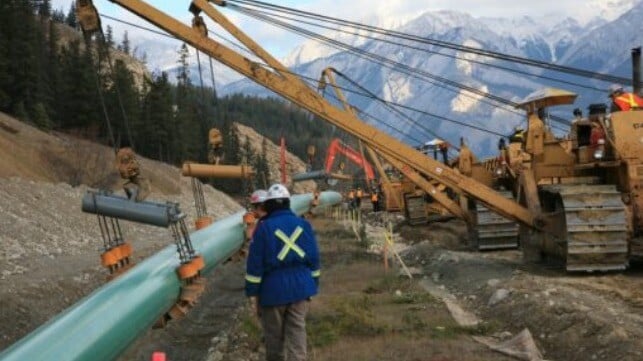
Alberta's top provincial leader believes that now that Canada has a growing national consensus on the need to fast-track seaborne oil exports, a privately-backed proposal to build a new oil pipeline from Alberta's tar sands fields to the port of Prince Rupert could be announced sometime this summer.
The oil industry is the province's economic mainstay, and its desire for export capacity has long been a source of friction with its neighbors. For years, activists and politicians in British Columbia opposed an expansion of the only pipeline system from Alberta to the Pacific - the Trans Mountain line - and the Canadian federal government finally nationalized the project to complete it (at great financial cost).
That existing 900,000 bpd line ends in a terminal in Burnaby, B.C., which is restricted to partial loads on small Aframax tankers because of draft restrictions in Vancouver's harbor. The tanker size limit increases transport costs.
Albertan exporters would rather have access to a deeper harbor, and Prince Rupert more than qualifies. It is the deepest ice-free natural harbor in North America, with a depth at the inner harbor entrance of 115 feet. This is deep enough to navigate a fully-laden VLCC, the most economical tanker class for long-distance trade.
At present, however, that would be illegal: Canada has a federal ban on large tankers in northern British Columbia's Inside Passage, one of the most remote and environmentally-pristine coastlines in North America. But with changing geopolitical winds and strained relations with Canada's biggest oil buyer, the United States, Canada's political leaders have reached a consensus agreement that diversified energy exports must now come first. This time, B.C. premier David Eby has raised only one objection: if a new pipeline happens, it must be privately funded.
That plan appears to be in the works. Alberta Premier Danielle Smith told Bloomberg that it is "probably weeks" before a private party puts out a proposal for a new pipeline to Prince Rupert. It would be "the most credible and the most economic of all of the pipeline proposals the private sector would consider," she told Bloomberg this week.
The last comparable proposal - Enbridge's Northern Gateway line to Kitimat, a small port in the Great Bear Rainforest - was rejected by Prime Minister Justin Trudeau in 2016.

Canada’s First Large-Scale LNG Facility Starts Production
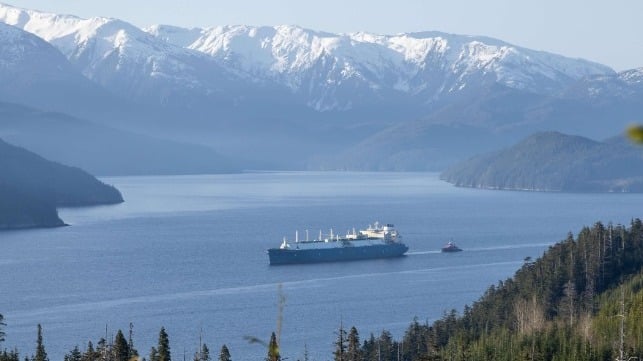
LNG Canada confirmed that it produced its first LNG last weekend and remains on track to begin export shipments in the coming days or weeks. It marks a major milestone for the project, which has been years in the making, and becomes Canada’s first large-scale LNG export terminal.
The project is reported to have cost as much as C$40 billion (US$29 billion) and is also the first LNG terminal in proximity to the Pacific Coast offering shorter transport distances to Asia. It is a joint venture led by Shell and includes Malaysia’s Petronas, Mitsubishi, Korea Gas, and PetroChina. The Canadian government has called it the “largest single private sector investment” in the history of Canada.
While confirming the production, LNG Canada has not announced the details for its first export. Reuters, however, reports that LNG carrier Gaslog Glasgow is approaching the Canadian coast and appears ready to take the shipment. They are estimating its arrival date as June 29, and reports are that two other gas carriers also appear bound for the terminal, which is located approximately 400 miles from Vancouver.
The facility remains on schedule with the details released by the operator. In April, it received its first inbound cargo to begin the cooldown process ahead of production. Once fully operational by late this year or in 2026, it will have a capacity of 14 million metric tons (mtpa). The partners are also considering a plan to double production to 28 mtpa with an investment decision expected in 2026.
The exports will be targeting Asia and are expected to start a shift of Canada’s LNG exports from the United States to Asian customers. In addition to China, Japan’s Mitsubishi is expected to begin its first imports of LNG from this facility.
The LNG is being shipped via pipeline from the northeast reaches of British Columbia to the plant near Vancouver for processing and preparation for export. While it will be the first Canadian facility, it is expected that over the next few years, Canada will continue to develop its export capacities. Already, two smaller facilities, Woodfibre LNG and Cedar LNG, are under construction due to be completed in 2027 and 2028.
Canada is poised to become a significant supplier to Asia. It is expected to be a strong competitor to both the United States, which ships LNG from the Gulf Coast, and Qatar, which is completing a major expansion project for its LNG operations.

No comments:
Post a Comment