Bee attack in southern France leaves 3 hospitalized, 24 injured
By Katie Scott
Posted July 7, 2025
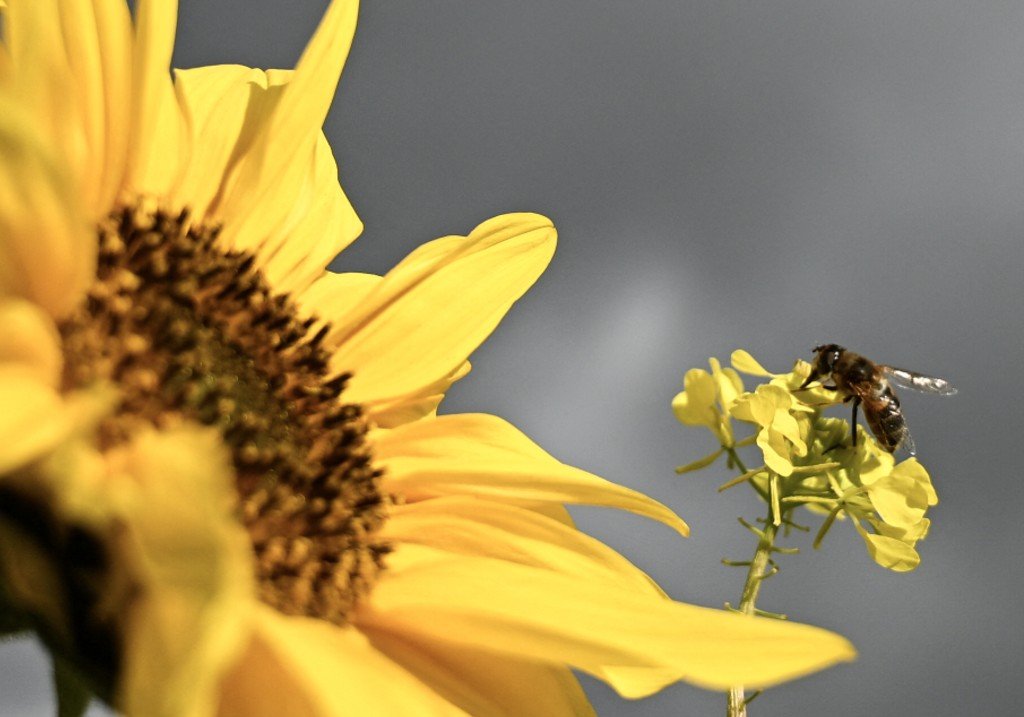
A rare bee attack in the French town of Aurillac left 24 people injured, including some critically, according to local authorities.

People walking in the south-central France town were stung over a period of 30 minutes on July 6, according to The Associated Press.
Firefighters and medical teams were rushed to the scene to treat the victims, while police set up a security perimeter until the bees stopped their attack.
Aurillac Mayor Pierre Mathonier told French broadcaster BFM TV on July 7 that the three people in critical condition were sent to a local hospital and their condition has since improved.
One of them, a 78-year-old, had to be resuscitated in the fire department’s ambulance after cardiorespiratory arrest. That person is now in stable condition, Mathonier said. The two others “are in good health,” he added.
Mathonier told the media that the bees may have become aggressive after their rooftop hives were attacked by Asian hornets. He said the rooftop beehives were installed in a downtown hotel more than 10 years ago.
He also said that the beekeeper has removed the beehive and relocated it outside of the town.
“All ended well,” Mathonier told the public television network France 3. “The emergency services were perfectly coordinated. There was no panic in Aurillac, but a number of people were stung.”
Mathonier added that a 78-year-old victim was stung 25 times.
Lt. Col. Michel Cayla, in charge of the local fire services, said he had never experienced such an attack.
“In terms of the number of victims, the panic among the people and the severity of some of the injuries, it was impressive,” he told broadcaster TF1.
Reactions to stings from honeybees and wasps range in severity from minor to potentially fatal, according to the Mayo Clinic. In most cases, stings only cause a brief, sharp pain, along with slight swelling and redness.
If you’re allergic to insect venom, a more severe reaction, called anaphylaxis, can occur and require emergency medical attention, the Mayo Clinic explains
— With files from The Associated Press
Voracious honey bees threaten the food supply of native pollinators
Researchers raise concern of native species being outcompeted by non-native honey bees, which were found to extract nearly 80 percent of available pollen in a day at a key hotspot of bee biodiversity
image:
Honey bees and other pollinating insects contribute billions of dollars to the American economy.
view moreCredit: Keng-Lou James Hung
The majority of the earth’s plant species, including our crop plants, rely on the services of animal pollinators in order to reproduce. Honey bees and other pollinating insects annually contribute billions of dollars to the U.S. economy, and are responsible for nearly a third of the food that ends up on our tables. Our modern agricultural industry is so reliant on honey bees that humans have introduced them worldwide, and in many cases, they have escaped human management and risen to prominence in natural ecosystems as non-native, feral populations. And, like any other non-native organism, feral honey bees may perturb native ecosystems when they become sufficiently abundant.
Feral honey bees have greatly proliferated in Southern California, along with the rest of the Southwestern United States. A new study by University of California San Diego biologists Dillon Travis, Joshua Kohn, David Holway and Keng-Lou James Hung is calling attention to the threat posed by non-native honey bees to the diverse native pollinators of the San Diego and broader Southern California region. These researchers previously estimated that honey bees comprise up to 90 percent of all bees visiting flowers of multiple native plant species in the region.
The new study, published in the journal Insect Conservation and Diversity, a Royal Entomological Society journal, estimates the impact honey bees may be having on populations of native bees in this important global hotspot of native pollinator biodiversity. The researchers found that honey bees remove about 80 percent of pollen during the first day that a flower opens. This finding is important because all bees in the region — and the vast majority of bee species worldwide — use pollen to raise their offspring. The amount of pollen removed daily by honey bees from just one hectare (2.5 acres) of native vegetation is enough to provision thousands of native bees per day during the peak bloom of native shrubs, the researchers found.
Because honey bees are larger than most native bee species in Southern California, the new study calculated that honey bees now comprise 98% of all bee biomass in this ecosystem. If the pollen and nectar used to create honey bee biomass were instead converted to native bees, populations of native bees would be expected to be roughly 50 times larger than they are currently.
“Although honey bees are rightly considered an indispensable asset to humans, they can also pose a serious ecological threat to natural ecosystems where they are not native,” said Hung, who earned his PhD from UC San Diego and is now an assistant professor at the University of Oklahoma. “The plight of the honey bee is an issue of animal husbandry and livestock management, whereas when it comes to conservation issues here in North America, honey bees are likelier to be part of the problem, not a solution or a target for conservation.”
In another cause for concern, a study published in 2023 by Travis and Kohn showed that plants pollinated by honey bees produce lower-quality offspring compared with offspring from native pollinators.
While bees in general are being threatened by habitat loss, climate change and chemical pollution, the researchers say that such a level of honey bee pollen exploitation is not well documented, and could well pose an additional and important threat to native bee populations in places where honey bees have become abundant. Even as the number of managed honey bee colonies is increasing worldwide due to the commercial beekeeping industry, many species of native pollinators are declining. “Public concern for honey bees often fails to consider their potential negative effects on native pollinators,” the authors note in their report.
“Honey bees are incredibly effective at extracting resources like pollen and nectar,” said Travis, who earned his PhD at UC San Diego in 2023. “Unlike the vast majority of native bee species in the region, honey bees can communicate to their nestmates the locations of rewarding plants and quickly remove most of the pollen, often early in the morning before native bees begin searching for food.”
The new study used pollen-removal experiments to estimate the amount of pollen extracted by honey bees using three common native plants (black sage, white sage and distant phacelia — also known as distant scorpion weed) as targeted pollen sources. The researchers found that just two visits by honey bees removed more than 60 percent of the available pollen from flowers of all three species. Such prodigious rates of pollen exploitation leave scant pollen for the more than 700 species of native bees in the region.
“The most surprising finding was the extraordinarily small number of individual native bees observed that were as large or larger than honey bees,” said Professor Emeritus Kohn of the Department of Ecology, Behavior and Evolution. “Particularly rare were bumble bees, which made up only 0.1% of all bees we observed.”
With the new study shedding light on the steep honey bee/native bee imbalance in San Diego and Southern California, the researchers say resource consumption by honey bees should receive greater attention as a potential factor in pollinator declines. One step to address the situation could be increased guidance on whether and where large-scale contract beekeepers are allowed to keep their hives on public lands after crops have bloomed, to limit opportunities for honey bees to outcompete native species for scarce resources provided by native vegetation.
“In areas with threatened bee species, natural preserve managers may also want to consider systematic removals or relocations of non-native honey bee colonies to provide wild bees a fighting chance,” said Hung.
Researchers found that honey bees remove about 80 percent of pollen during the first day that a flower opens.
Credit
Keng-Lou James Hung
Journal
Insect Conservation and Diversity
Method of Research
Experimental study
Subject of Research
Animals
Article Title
Pollen exploitation by non-native, feral honey bees: potential consequences for interspecific competition
Article Publication Date
7-Jul-2025
Heat and heavy metals are changing the way that bees buzz
Society for Experimental Biology
image:
A buff-tailed bumblebee (Bombus terrestris) buzz-pollinating a flower of the tomato family.
view moreCredit: Mario Vallejo-Marin
Ongoing research into the effect of environmental change on the buzzing of bees reveals that high temperatures and exposure to heavy metals reduces the frequency (and audible pitch) of non-flight wing vibrations, which could have consequences on the effectiveness of bee communication and their role as pollinators.
“People have been long interested in how insect flight muscles work, as these muscles power the most efficient flight systems in nature,” says Dr Charlie Woodrow, a post-doctoral researcher at Uppsala University. “However, many do not know that bees use these muscles for functions other than flight.”
These important non-flight muscle vibrations are used in communication, defence and buzz-pollination. “Buzz pollination is an incredible behaviour whereby a bee will curl its body around the pollen-concealing anthers of some flowers, and contract the flight muscles up to 400 times per second to produce vibrations which shake the pollen loose,” says Dr Woodrow.
“We want to understand how variation in these vibrations affects pollen release, to understand plant reproduction and pollinator behaviour,” says Dr Woodrow. “This inspired us to research how non-flight buzzes differ within and between species, and the drivers affecting these buzzes.”
Dr Woodrow’s experiments were carried out using colonies of buff-tailed bumblebees (Bombus terrestris), a common European species that are well studied. Using accelerometers, Dr Woodrow and his team were able to measure the frequency of the buzz, which corresponds to the audible pitch. “They are super easy to use in the field,” he says. “We press these against the thorax of the bee, or against the flower the bee is visiting, and we can record the vibrations the bee produces.”
Dr Woodrow and his team also coupled the accelerometry with thermal imaging, which shows them how bees deal with the extra heat that they generate when buzzing. “We have also been using high-speed filming to uncover never before seen behaviours,” says Dr Woodrow. “For example, we recently discovered that bees don’t just vibrate on flowers, but they periodically transmit these vibrations to flowers by biting.”
“We have recently found that temperature plays a vital role, much more than was previously appreciated, and this work is currently in review for publication,” says Dr Woodrow. “This has many implications for how we study buzz-pollination, as temperature is not really something that has been considered up to this point.”
As well as increased temperatures, exposure to heavy metals was also shown to reduce the contraction frequencies of the flight muscles during non-flight buzzing, which Dr Woodrow is working on in collaboration with Dr Sarah Scott at Newcastle University, UK. However, the researchers were surprised to find no differences in the effect of temperature on buzzing when the experiments were reproduced in the Arctic compared to those further south, suggesting underlying muscle physiology, rather than local adaptation, may be responsible for determining the properties of a bee’s buzz.
The benefits of understanding the impact of environmental change on a bee’s buzz include unique insights into bee ecology and behaviour, helping to identify the species or regions most at risk, and the improvement of AI-based species detection based on sound recordings. “Perhaps buzzes could even be used as a marker of stress or environmental change,” says Dr Woodrow. “For example, we now know that certain environmental pollutants can affect the buzzes bees produce, so they could even serve as an indicator of ecosystem health.”
“It is important we understand how these changes will affect non-flight buzzes because they are responsible for so many aspects of a bee’s ecology,” says Dr Woodrow. “If these vibrations are disrupted, this could lead to poor communication in the colony, inefficient thermoregulation, or poor resource acquisition for their offspring.”
Perhaps most concerningly for humans and wildlife alike, a reduction in buzz-pollination could have potentially serious consequences for plant reproduction and biodiversity. “For example, buzz-pollination is energetically expensive and causes the bee to generate metabolic heat – therefore if the environment gets too warm, it may simply choose to avoid buzz-pollinated flowers,” says Dr Woodrow.
As well as furthering our understanding of how environmental change may be affecting bee buzzes, there are also applications for robotics and the future safeguarding of pollination services. “We are working towards understanding bee vibrations through micro-robotics, so our results are also going towards developing micro-robots to understand pollen release,” says Dr Woodrow.
This research is being presented at the Society for Experimental Biology Annual Conference in Antwerp, Belgium on the 8th July 2025.
A buff-tailed bumblebee (Bombus terrestris) buzz-pollinating a flower of the tomato family [VIDEO] |
During, buzz-pollination, the buff-tailed bumblebee (Bombus terrestris) reaches body temperatures of almost 40 °C.
Credit
Charlie Woodrow

No comments:
Post a Comment