Heathrow’s runway folly: billions for business as usual, while our communities and planet pay the price

AUGUST 22, 2025
By Paul Beckford
The proposed expansion of Heathrow Airport stands as a defining test of this Government’s commitment to people, place, and the planet.
Cost – who pays for it?
The figures alone are mind-boggling, with Heathrow’s proposal now totalling £49bn – without the contribution required for new road and rail connections. This megaproject could cost three times what the airport’s entire current asset base is worth. This is before we account for the eye-watering £17 billion in existing debt that Heathrow is already servicing.
There remains a big question about whether Heathrow can even afford a third runway? The latest analysis from S&P suggests not, with expansion requiring a massive new capital injection from shareholders to make even a £25 billion build possible. Yet Heathrow’s own business plan for 2027–2031 includes only a £2 billion capital injection — the rest will be paid for by borrowing. This means a whopping 17% hike in landing charges, that will be passed onto the airlines and will result in ordinary hard-working passengers footing the bill.
Even the airlines that use the airport aren’t on board. They know the real financial burden will fall on them under current regulatory models and will force them to increase fares for the travelling public. So why is the Government pushing for expansion when the industry itself is so unenthusiastic?
To make matters worse, the runway would require major upgrades to the road and rail network at an estimated public cost of £5-15 billion (in 2018 prices). Heathrow has said it will pay for the runway itself but has not ruled out seeking additional public funds for these vital surface access improvements. Of course, any public funding spent in support of Heathrow expansion would reduce available capital investment for other potential projects like the Bakerloo line extension or Crossrail 2. Surely such funds would be much better spent elsewhere around the country spreading economic opportunity to all corners of the UK?
Destruction of local communities and disruption to local transport networks
But the true cost of this vanity project is the irreversible devastation to communities and ecosystems. Nearly 800 homes will be destroyed outright, with another 4,750 rendered uninhabitable due to noise and pollution from the proximity of the runway.
Communities that have thrived for generations, villages like Sipson and Harmondsworth, stand to be wiped off the map, families forced to leave, and neighborhoods torn apart.
Local families also face the prospect of the M25 motorway carved and tunnelled beneath their feet — an engineering folly that will disrupt the daily lives of 200,000 commuters at one of the UK’s busiest interchange points. The knock-on impact of the local road network from construction still remains unassessed by Government.
According to analysis by Transport for London, a third runway will increase delays at junctions and result in slower average speeds on local road networks, incurring costs and potentially increasing emissions. An expanded Heathrow will result in 170,000 additional daily passenger and staff trips compared to today. An additional 18,000 freight trips per annum are also forecast. So, expansion brings a significant risk that the public-funded improvements to the transport network over the past two decades will be wiped out entirely.
Devastating environmental impacts
Perhaps most fundamentally, a third runway would drive up the UK’s carbon emissions, threatening not only local but global efforts to mitigate climate change. Heathrow is already the single biggest source of carbon emissions in the UK and expansion will add an extra seven megatonnes of CO2 per year.
Government climate advisers have warned against additional airport capacity until emissions are demonstrably falling—a warning that, so far, has been ignored. The Department for Trade’s own Jet Zero Strategy effectively admits that it’s not possible to meet the Climate Change Committee’s recommendation for keeping aircraft emissions within the limits of the Climate Change Act while building a third runway, but seems to have no answer on how it will account for this. What is clear is that any increased emissions at Heathrow will make it far more difficult for the country to meet its obligations under the Paris Agreement, undermining the UK’s international credibility.
Further, neither Heathrow nor the Government have comprehensively considered the non-CO2 impacts from Heathrow’s expansion proposals. The latest academic research shows that whilst there are a lot of uncertainties on how to measure such impacts, it is likely that other greenhouse gases from aircraft have a trebling effect in terms of global warming.
A third runway would bring up to 270,000 additional flights each year – that’s 756 more a day – which is the same number that currently arrive and depart at Gatwick! Expansion on this scale would make London by far the most overflown city in Europe. More than 700,000 people are already exposed to harmful levels of aircraft noise under the Heathrow flight paths – that’s equivalent to 28% of all people across Europe that are impacted by noise pollution and a higher total than Heathrow’s five biggest European competitors combined.
A third runway would likely double that figure, exacerbating the physical and mental health problems this causes. It would result in many communities experiencing constant aircraft noise for the first time, possibly up to 13 hours a day and communities currently overflown losing several hours of much needed respite every day.
Expansion would also mean that hundreds of thousands more people will suffer under increased road congestion and the toxic burden of worsening air pollution. In fact, credible estimates from the Mayor of London’s 2016 report suggest the health impacts on the NHS over the coming decades could hit £25 billion – closer to £34bn when accounting for inflation.
If air quality limits are to be met, then it will rely on measures to be implemented by the Mayor of London. Such measures will of course have been designed to improve the public health of Londoners, not for the benefits to be undermined by increased pollution from an expanded Heathrow.
And what about our irreplaceable natural heritage? Five rivers, part of the vital, ancient network of the Bucks & Herts Chilterns’ precious chalk streams, would be diverted, culverted, or lost. Over 1,200 hectares of Green Belt across West London, Buckinghamshire and Hertfordshire would be sacrificed — green spaces that are meant as a bulwark for nature and a lifeline for city dwellers in a warming world.
Expansion is not needed
We must question if the expansion is even needed. Heathrow’s own data show a persistent decline in business traffic: down 20% since 2019 and showing no sign of recovery in their forward planning. The airport is losing its hub status, with transfer traffic falling from 27.4% in 2012 to just 21.4% today — and still in decline. The future projected growth is primarily leisure flights, and this growth will help to deepen the tourism deficit which current sits at around £42bn per annum.
In a climate and biodiversity crisis, does anyone believe we should spend tens of billions to funnel more tourists onto flights, when smaller, smarter investments can help transform more parts of the country in a sustainable manner?
Standing up for people and planet
An expansion of this magnitude should not, and cannot, be rushed through to suit short-term political expediency. The facts show there’s no justification for this economic, social, or environmental vandalism. The money, the land, the health and the very quality of life for millions could all be lost for no discernible national benefit – just the opportunity for a foreign owned corporate entity to squeeze a few more holidaymakers through an already overstretched airport, charging them more for the privilege and facilitating the export of cash that could be spent in the UK.
Now is our moment to demand a future-fit transport policy — one that puts people and planet before polluters and profiteers. This is not just about one runway. It’s about where we draw the line. This expansion isn’t needed. It isn’t affordable. And it isn’t right.
The health of our communities and planet are worth far more than another runway for Heathrow. So, let’s stand up, as campaigners and as citizens, and demand better for Britain. Let’s say no to another runway for Heathrow. Let’s say yes to sustainable, equitable investment in public infrastructure that supports our communities, strengthens our economy, and protects our environment for generations to come.
Paul Beckford is the Policy Director of the No 3rd Runway Coalition.
Image: Thousands say ‘No’ to Heathrow expansion. https://www.flickr.com/photos/hacan/3666970579 Attribution: HACAN/hacan.org.uk Licence: Attribution-NoDerivs 2.0 Generic CC BY-ND 2.0 Deed
More than half of Labour members oppose Heathrow expansion, poll reveals
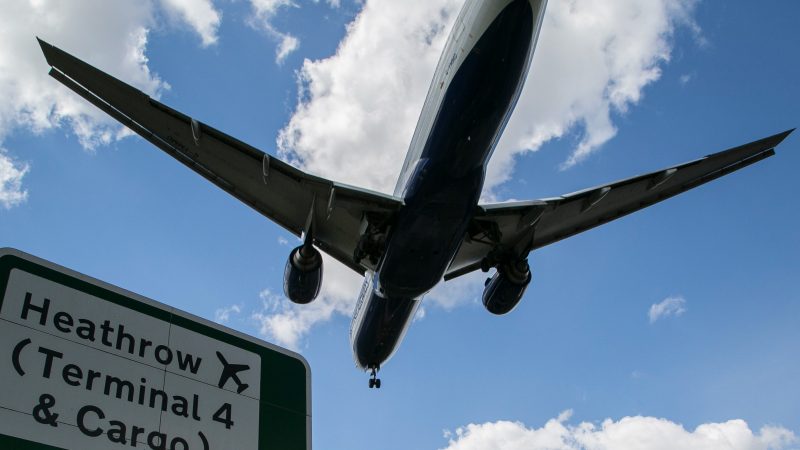
A majority of Labour members oppose the expansion of Heathrow Airport, exclusive polling by Survation for LabourList has revealed.
Asked to what extent, if at all, they supported or opposed the expansion, 52% said they either somewhat or strongly opposed it. This compared to just 27% who said they supported the expansion.
A further 19% said they neither supported nor opposed it, and two percent answered “don’t know”.
Opposition to the expansion was strongest among those aged 65 and older, with a net support of -39. Support for the expansion was highest among the 18-24 age group at 42%, compared to 40% opposed.

Opposition was also strongest among members who voted for Rebecca Long-Bailey in the leadership election, at 75%.
The expansion has proven controversial. It has been mooted for years, with little movement on the issue by successive Tory governments.
That was until Labour put the project at the centre of its growth agendlaboa, with Rachel Reeves promising that building a third runway would “unlock further growth” and “boost investment”.
Not everyone in the cabinet was happy about the announcement, however, with rumours swirling that Ed Miliband would resign over the issue.
London mayor Sadiq Khan also expressed dismay at the expansion, threatening to take legal action against the government over the matter.
And it’s clear the members don’t support it either, with the issue becoming yet another wedge between the leadership and the party’s rank and file.
Despite this, Miliband has remained in post, and the expansion looks set to push ahead, despite the opposition.
Survation surveyed 1,021 readers of LabourList, the leading dedicated newsletter and news and comment website for Labour supporters, who also said they were Labour Party members between August 5 and August 9.
Data was weighted to the profile of party members by age, sex, region and 2020 Labour leadership vote, targets for which were derived from the British Election Study and the results of the 2020 leadership election.
‘Heathrow third runway is the wrong answer to the wrong question’
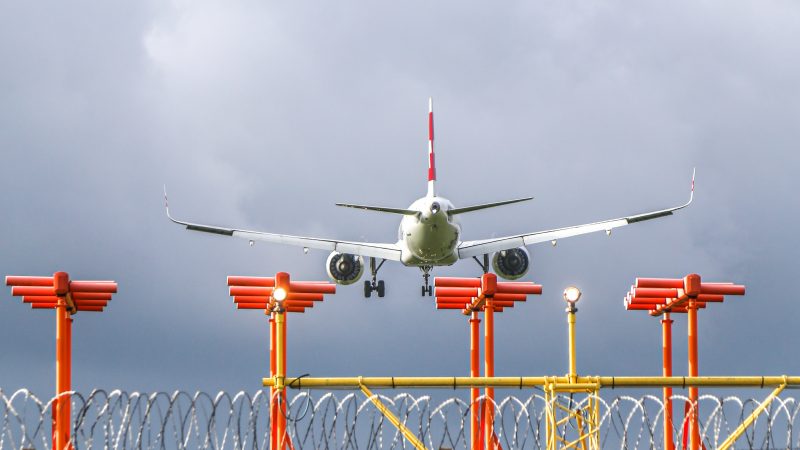
My long-standing opposition to expansion at Heathrow has been a cornerstone of my twenty years as the MP for Hammersmith and as Leader of the Council before that. The arguments for a third runway claim to support growth and national interest, yet fundamentally ignore the realities of our climate obligations, public health, and the long-term wellbeing of communities like my constituents.
The so-called economic benefits have been consistently overstated while the costs to public health, residents, and the public purse remain underplayed. Let us be clear: Heathrow expansion is not essential to London’s economy. London already attracts more business travellers and tourists each year than any other city in the world, and most have no strong preference for which airport they use.
Further, Heathrow’s own data show a persistent decline in business traffic: down 20 percent since 2019 and showing no sign of recovery in their forward planning. The future projected growth is primarily leisure flights and this only will help to deepen the tourism deficit which currently sits at around £43bn per annum.
‘Costs will inevitably be passed onto ordinary passengers’
Recent analysis from S&P suggests that Heathrow will struggle to afford expansion. They conclude that a third runway would require an unprecedented flood of capital from shareholders to make the financial case viable.
However, Heathrow’s own business plan for the next five-year regulatory period includes just £2 billion of actual shareholder capital out of a £10bn investment. The rest will be raised through borrowing and the debt repaid through an eye-watering 17% increase in landing charges to airlines.
Such costs are inevitably passed straight onto ordinary passengers. No wonder the airlines are not supportive of the current proposals and recognise expansion cannot take place at any cost.
To make matters worse, expansion at Heathrow would require major upgrades to the road and rail network at an estimated public cost of £5–15 billion (in 2018 prices). Heathrow has said it will pay for the runway itself but has not ruled out seeking additional public funds for these vital surface access improvements—funds that could be much better spent on other public transport projects in London or spread across the regions of the UK.
‘Expansion could double number of people exposed to harmful aircraft noise’
It is vital that we do not forget about the human cost in all this. At least 781 homes will be bulldozed under Heathrow’s proposal. Another 4,750 could become uninhabitable thanks to their proximity to the new runway. A third runway will increase delays at junctions and result in slower average speeds on local road networks, incurring costs and potentially increasing emissions.
Local communities under the flightpath already endure unacceptable levels of noise and air pollution, with devastating impacts on health and quality of life. Yet, a third runway would bring up to 270,000 additional flights each year, that’s 756 more every day – which is the same number that currently arrive and depart at Gatwick! 28% of all people across Europe that are impacted by noise pollution already live under Heathrow’s flight paths, a higher total than Heathrow’s five biggest European competitors combined. Expansion of flight numbers at the scale proposed will potentially double the number of people exposed to the harmful effects of aircraft noise.
‘Framing opposition as ‘blockers’ is unhelpful’
Aviation is already one of the fastest-growing contributors to greenhouse gas emissions and the potential for alternative aviation fuels to reduce emissions is vastly outweighed by the sector’s projected growth. No credible climate test can be passed by any new runway at Heathrow, and to claim otherwise is to wish away both science and the legal targets this Government wishes to uphold.
Framing opposition to major projects or developments, whether from local residents, environmental experts or elected representatives as “blockers” is unhelpful. Genuine and long-term growth will only be achieved when we invest in a fully integrated public transport system, not by repeating the old mistakes of carbon-intensive mega-projects. Governments and scheme promoters should not ignore considered objections that advocate long-term sustainability.
The Government’s current position appears at odds with its own policy tests, which demanded that any airport expansion deliver on climate, air quality and noise, nationwide connectivity, and value for money. A third runway unequivocally fails on all these counts. Heathrow expansion is an outdated answer to the wrong question. Britain’s future prosperity depends not on more tarmac, but on leadership that prioritises sustainability, community well-being, and genuine, inclusive economic renewal


No comments:
Post a Comment