ALL CAPITALI$M IS STATE CAPITALI$M
Carl Gibson,
AlterNet
August 22, 2025
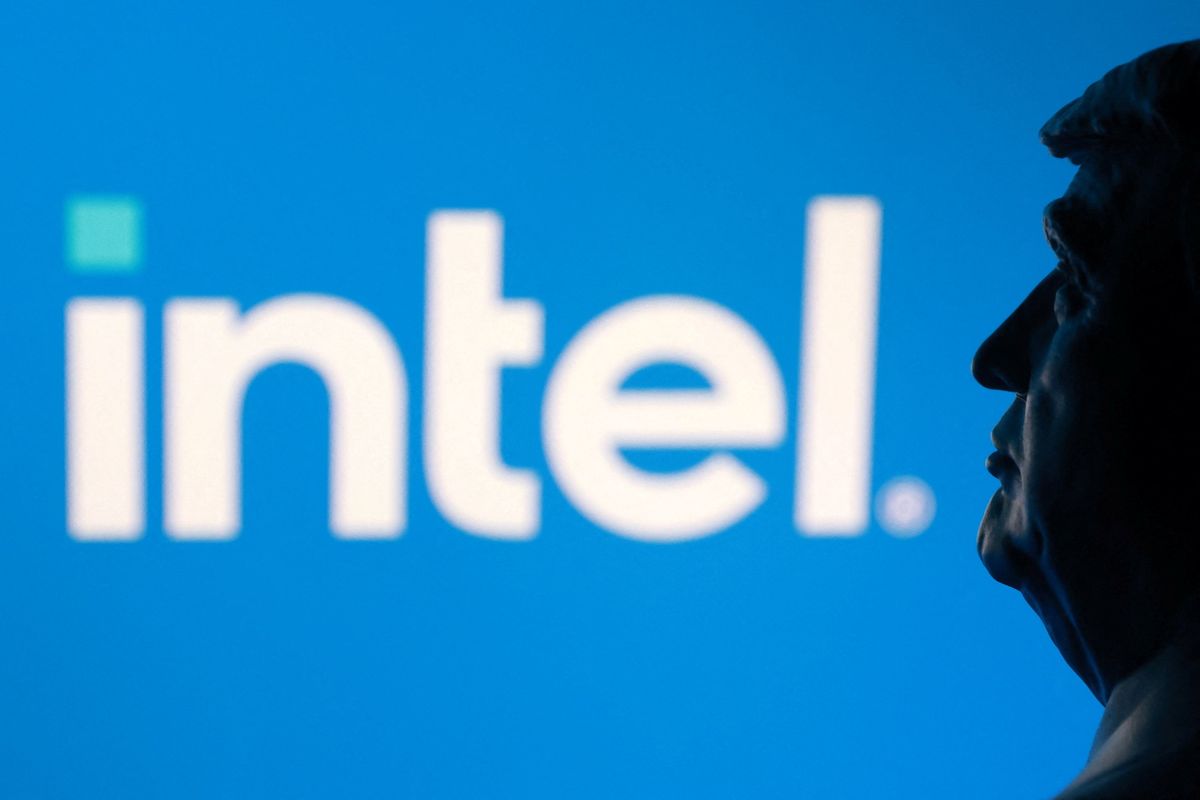
A 3D-printed miniature model depicting U.S. President Donald Trump and Intel logo are seen in this illustration taken August 22, 2025. REUTERS/Dado Ruvic/Illustration
On Friday, President Donald Trump announced that the U.S. government was now a part-owner of a major publicly traded tech company. The reaction among his base was less than enthusiastic.
Trump announced via his Truth Social platform that as of Friday the U.S. is a multibillion-dollar shareholder in Intel as part of an agreement with CEO Lip-Bu Tan — with the U.S. supposedly paying nothing for its new stake. The announcement notably came roughly two weeks after Trump's angry social media tirade against Tan, in which he demanded that Tan "resign immediately" from his role due to his investments in Chinese tech companies.
"It is my Great Honor to report that the United States of America now fully owns and controls 10% of INTEL, a Great American Company that has an even more incredible future," Trump wrote in his signature style of oddly placed capital letters. "I negotiated this Deal with Lip-Bu Tan, the Highly Respected Chief Executive Officer of the Company. The United States paid nothing for these Shares, and the Shares are now valued at approximately $11 Billion Dollars. This is a great Deal for America and, also, a great Deal for INTEL. Building leading edge Semiconductors and Chips, which is what INTEL does, is fundamental to the future of our Nation. MAKE AMERICA GREAT AGAIN! Thank you for your attention to this matter.
While some of the responses to the Trump administration's post on X announcing the news were complimentary, many replies were deeply critical of the government taking ownership of a private company. One user who described themselves in their bio as a "Constitutional Conservative" wrote: "Not what I voted for. I voted against this specifically." Conservative podcast host @amandatalks_ tweeted: "ngl [not gonna lie] don't love this guys."
"I'm a Republican but I do not agree with this," another user posted. "Government and privately owned businesses should not mix."
"Governments shouldn't own private business," tweeted retired Naval officer Mike Rodman.
Aerospace engineer Michael Heil also weighed in, responding to the White House's post by writing: "Not good. Even partial government ownership of private industry is socialism."
August 22, 2025
A 3D-printed miniature model depicting U.S. President Donald Trump and Intel logo are seen in this illustration taken August 22, 2025. REUTERS/Dado Ruvic/Illustration
On Friday, President Donald Trump announced that the U.S. government was now a part-owner of a major publicly traded tech company. The reaction among his base was less than enthusiastic.
Trump announced via his Truth Social platform that as of Friday the U.S. is a multibillion-dollar shareholder in Intel as part of an agreement with CEO Lip-Bu Tan — with the U.S. supposedly paying nothing for its new stake. The announcement notably came roughly two weeks after Trump's angry social media tirade against Tan, in which he demanded that Tan "resign immediately" from his role due to his investments in Chinese tech companies.
"It is my Great Honor to report that the United States of America now fully owns and controls 10% of INTEL, a Great American Company that has an even more incredible future," Trump wrote in his signature style of oddly placed capital letters. "I negotiated this Deal with Lip-Bu Tan, the Highly Respected Chief Executive Officer of the Company. The United States paid nothing for these Shares, and the Shares are now valued at approximately $11 Billion Dollars. This is a great Deal for America and, also, a great Deal for INTEL. Building leading edge Semiconductors and Chips, which is what INTEL does, is fundamental to the future of our Nation. MAKE AMERICA GREAT AGAIN! Thank you for your attention to this matter.
While some of the responses to the Trump administration's post on X announcing the news were complimentary, many replies were deeply critical of the government taking ownership of a private company. One user who described themselves in their bio as a "Constitutional Conservative" wrote: "Not what I voted for. I voted against this specifically." Conservative podcast host @amandatalks_ tweeted: "ngl [not gonna lie] don't love this guys."
"I'm a Republican but I do not agree with this," another user posted. "Government and privately owned businesses should not mix."
"Governments shouldn't own private business," tweeted retired Naval officer Mike Rodman.
Aerospace engineer Michael Heil also weighed in, responding to the White House's post by writing: "Not good. Even partial government ownership of private industry is socialism."
'Washington is becoming Chinatown': Wall Street Journal bashes Trump's 'statism' move
Robert Davis
August 24, 2025
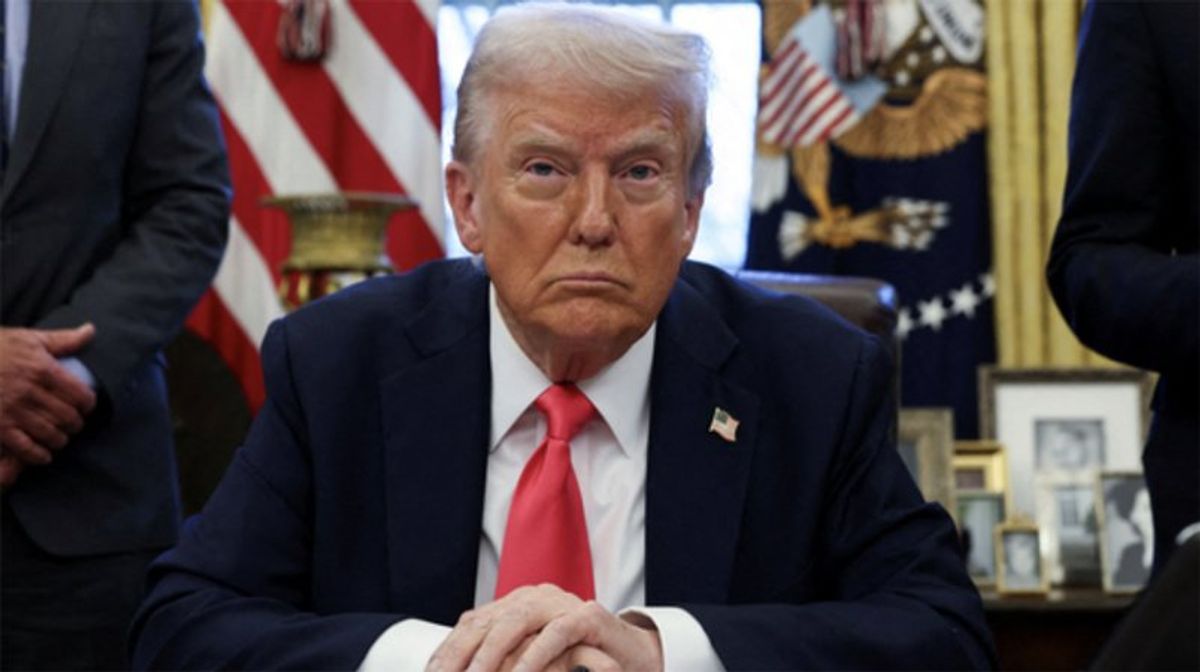
Donald Trump (Photo via Reuters)
The Wall Street Journal's conservative editorial board bashed President Donald Trump's latest business move, arguing that it models China's "statism."
On Friday, Trump announced that the U.S. government is taking a 10% stake in computer chip-maker Intel. The government is paying the company $8.7 billion in all, with the funds coming from an approved but not yet paid grant under the U.S. CHIPS and Science Act and the Secure Enclave program, according to a statement from the company.
The Wall Street Journal's editorial board slammed the deal in a new op-ed, arguing that the deal will stifle innovation at the struggling company
"In the name of competing with China, the U.S. is imitating its model of state-run business," the editorial reads in part. "Washington is becoming Chinatown."
"Mr. Trump accused Kamala Harris of being a socialist, but the Biden Administration never nationalized companies," the editorial continues.
The Journal's editors also found it curious that Trump's policies have not yet received significant pushback from Republicans in Congress.
Why aren’t Republicans pushing back on Mr. Trump’s Intel deal?" the editors asked. "They might consider how the next Democratic President could use the government’s stake to press the left’s political imperatives—Intel profits to build low-income housing? Statism is gaining currency on the political left and right, resulting in a bizarre fusion of ideas."
Read the entire editorial by clicking here.
Robert Davis
August 24, 2025
RAW STORY
Donald Trump (Photo via Reuters)
The Wall Street Journal's conservative editorial board bashed President Donald Trump's latest business move, arguing that it models China's "statism."
On Friday, Trump announced that the U.S. government is taking a 10% stake in computer chip-maker Intel. The government is paying the company $8.7 billion in all, with the funds coming from an approved but not yet paid grant under the U.S. CHIPS and Science Act and the Secure Enclave program, according to a statement from the company.
The Wall Street Journal's editorial board slammed the deal in a new op-ed, arguing that the deal will stifle innovation at the struggling company
"In the name of competing with China, the U.S. is imitating its model of state-run business," the editorial reads in part. "Washington is becoming Chinatown."
"Mr. Trump accused Kamala Harris of being a socialist, but the Biden Administration never nationalized companies," the editorial continues.
The Journal's editors also found it curious that Trump's policies have not yet received significant pushback from Republicans in Congress.
Why aren’t Republicans pushing back on Mr. Trump’s Intel deal?" the editors asked. "They might consider how the next Democratic President could use the government’s stake to press the left’s political imperatives—Intel profits to build low-income housing? Statism is gaining currency on the political left and right, resulting in a bizarre fusion of ideas."
Read the entire editorial by clicking here.
Trump thinks owning a piece of Intel would be a good deal for the US. Here's what to know

An Intel sign is shown at the chipmaker's global headquarters in Santa Clara, Calif. on Friday, Aug. 8, 2025. (AP Photo/Terry Chea · Associated Press
MICHAEL LIEDTKE
Wed, August 20, 2025
SAN FRANCISCO (AP) — President Donald Trump wants the U.S. government to own a piece of Intel, less than two weeks after demanding the Silicon Valley pioneer dump the CEO that was hired to turn around the slumping chipmaker. If the goal is realized, the investment would deepen the Trump administration's involvement in the computer industry as the president ramps up the pressure for more U.S. companies to manufacture products domestically instead of relying on overseas suppliers.
What’s happening?
The Trump administration is in talks to secure a 10% stake in Intel in exchange for converting government grants that were pledged to Intel under President Joe Biden. If the deal is completed, the U.S. government would become one of Intel's largest shareholders and blur the traditional lines separating the public sector and private sector in a country that remains the world's largest economy.
Why would Trump do this?
In his second term, Trump has been leveraging his power to reprogram the operations of major computer chip companies. The administration is requiring Nvidia and Advanced Micro Devices, two companies whose chips are helping to power the craze around artificial intelligence, to pay a 15% commission on their sales of chips in China in exchange for export licenses.
Trump’s interest in Intel is also being driven by his desire to boost chip production in the U.S., which has been a focal point of the trade war that he has been waging throughout the world. By lessening the country's dependence on chips manufactured overseas, the president believes the U.S. will be better positioned to maintain its technological lead on China in the race to create artificial intelligence.
Didn’t Trump want Intel’s CEO to quit?
That's what the president said August 7 in an unequivocal post calling for Intel CEO Lip-Bu Tan to resign less than five months after the Santa Clara, California, company hired him. The demand was triggered by reports raising national security concerns about Tan's past investments in Chinese tech companies while he was a venture capitalist. But Trump backed off after Tan professed his allegiance to the U.S. in a public letter to Intel employees and went to the White House to meet with the president, who applauded the Intel CEO for having an “amazing story.”
Why would Intel do a deal?
The company isn't commenting about the possibility of the U.S. government becoming a major shareholder, but Intel may have little choice because it is currently dealing from a position of weakness. After enjoying decades of growth while its processors powered the personal computer boom, the company fell into a slump after missing the shift to the mobile computing era unleashed by the iPhone’s 2007 debut.
Intel has fallen even farther behind in recent years during an artificial intelligence craze that has been a boon for Nvidia and AMD. The company lost nearly $19 billion last year and another $3.7 billion in the first six months of this year, prompting Tan to undertake a cost-cutting spree. By the end of this year, Tan expects Intel to have about 75,000 workers, a 25% reduction from the end of last year.
Would this deal be unusual?
Although rare, it’s not unprecedented for the U.S. government to become a significant shareholder in a prominent company. One of the most notable instances occurred during the Great Recession in 2008 when the government injected nearly $50 billion into General Motors in return for a roughly 60% stake in the automaker at a time it was on the verge of bankruptcy. The government ended up with a roughly $10 billion loss after it sold its stock in GM.
Would the government run Intel?
U.S. Commerce Secretary Howard Lutnick told CNBC during a Tuesday interview that the government has no intention of meddling in Intel's business, and will have its hands tied by holding non-voting shares in the company. But some analysts wonder if the Trump administration's financial ties to Intel might prod more companies looking to curry favor with the president to increase their orders for the company's chips.
What government grants does Intel receive?
Intel was among the biggest beneficiaries of the Biden administration’s CHIPS and Science Act, but it hasn’t been able to revive its fortunes while falling behind on construction projects spawned by the program.
The company has received about $2.2 billion of the $7.8 billion pledged under the incentives program — money that Lutnick derided as a “giveaway” that would better serve U.S. taxpayers if it’s turned into Intel stock. “We think America should get the benefit of the bargain,” Lutnick told CNBC. “It’s obvious that it’s the right move to make.”

No comments:
Post a Comment