WAR IS ECOCIDE
Ukraine hits Russia’s Druzhba oil pipeline again with drones

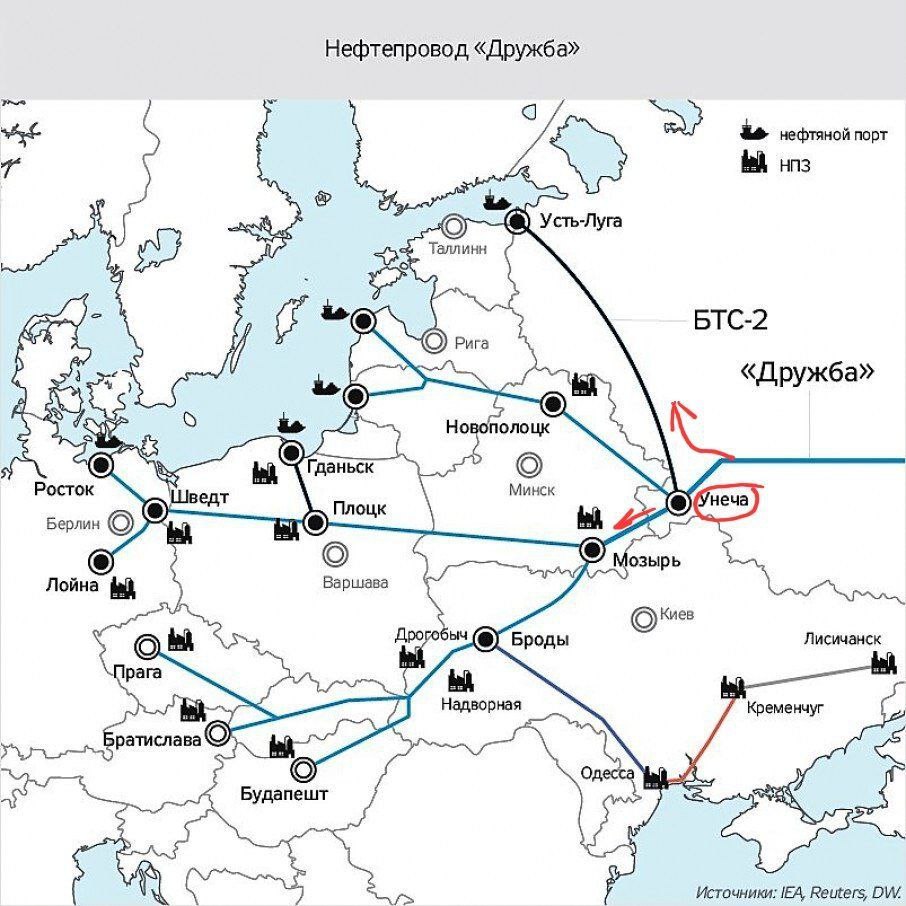
Ukraine has carried out another strike on the Druzhba oil pipeline, hitting the Unecha oil pumping station, Russian officials confirmed on August 21. The attack is the latest in a series of incidents targeting the Soviet-era pipeline that delivers Russian crude to central Europe.
The Unecha facility in Bryansk region has been a repeated target. The previous strike occurred there on August 14, followed by an attack on August 18 at the Nikolskoye terminal. Despite the disruption, transit flows were restored within days. On August 20, Hungary and Slovakia announced that crude shipments via Druzhba had resumed.
Prior to that attack, supplies were temporarily suspended in an attack on the pipeline in March. Kyiv is increasingly attacking Russian oil refining and transport infrastructure inside Russia.
The campaign by Kyiv to restrict Russian oil flowing to Europe via Druzhba opened in August last year, when Kyiv imposed sanctions on Russian oil major Lukoil that sells oil to Hungary, effectively excluding it from using the Druzhba pipeline. Lukoil’s obligations were quickly taken up by other state-owned Russian oil companies, and the move was seen as Kyiv testing the waters to see how its Western allies would react to a reduction of oil supplies to the European market.
The Druzhba pipeline, one of the world’s longest oil transport systems, has supplied Russian crude to several European countries for decades, including Hungary, Slovakia and the Czech Republic. Operators have previously stressed that damage from drone and missile attacks has been localised, allowing flows to restart after emergency repairs.
Moscow has said the Ukrainian attacks threaten Europe’s energy security, while Kyiv argues they are a legitimate response to Russia’s ongoing war and missile attacks on Ukraine’s territory.
Hungary and Slovakia, both heavily dependent on Druzhba for oil imports, have repeatedly voiced concern over interruptions but confirmed that deliveries were back to normal this week.
Since Russia launched its missile war following a devastating missile barrage in May, Ukraine has stepped up attacks on Russia's energy infrastructure using a new class of long-range drones in an effort to starve Russia’s military of oil products and hurt its exports.
On the night of August 21, Ukraine's Armed Forces also targeted infrastructure and production facilities at the Novoshakhtinsky Oil Products Plant in Russia's Rostov region. This marks the ninth refinery hit by Ukraine in August. Ukraine performed a strike near the fuel and lubricants depot that supplies Russian forces in the Voronezh region.
Ukrainian strikes on Russian oil refineries have caused a record spike in wholesale gasoline prices across Russia and led to fuel shortages in several regions. On August 20, the price of A-95 (Euro-95) gasoline on the stock exchange hit RUB82,300 ($1,023) per ton, a 55% increase from the start of the year and an 8% rise since early August.
The growing fuel crisis has been made worse by Ukrainian attacks on railway infrastructure in central Russia, which has disrupted fuel transportation. As well, these rail and air transport disruptions have caused more people to rely more heavily on cars, boosting fuel demand.
The Druzhba pipeline operates outside of the oil import ban from Russia to the EU after Central European countries, and Hungary in particular, won exemptions to the twin oil sanctions imposed at the end of 2022. Unlike most other European Union countries, Slovakia and neighbouring Hungary have kept up their dependence on Russian energy and get most of their crude through the Druzhba pipeline.
Chronology of strikes on refineries.
August 02
1. Novokuibyshevsky Refinery
2. Ryazan Refinery
August 07
3. Afipsky Refinery
August 10
4. Saratov Refinery
August 14
5. Volgograd Refinery
August 15
6. Syzran Refinery
August 21
7. Novoshakhtinsky Refinery
Are Ukraine's Flamingo cruise missiles really made in Ukraine?
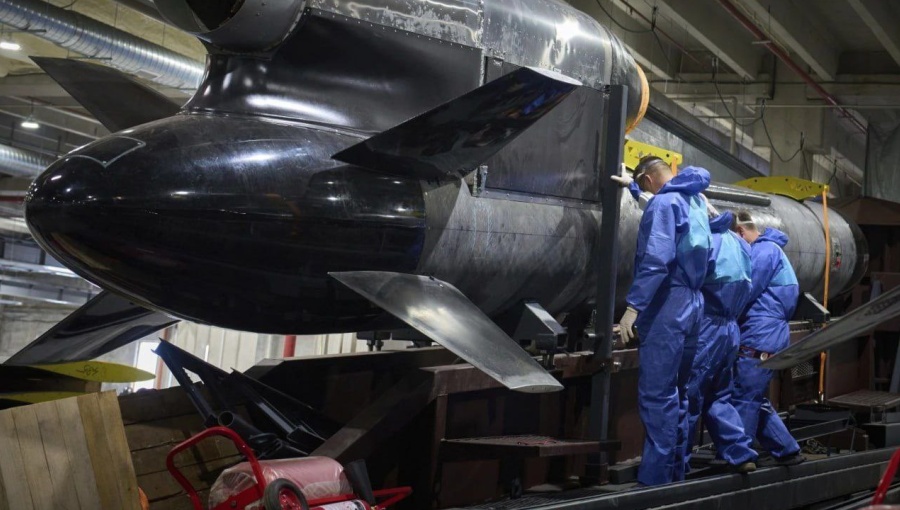
A camera crew from Associated Press was granted access to the Fire Point factory at an undisclosed location inside Ukraine to witness the production of Ukraine’s new Flamingo cruise missile.
Iryna Terekh, head of production at drone manufacturer Fire Point and a former architect, joined in 2023 when the target was 30 drones per month. Output has since surged to about 100 drones per day, each costing $55,000. She said Fire Point’s FP-1, with a 60kg payload, is responsible for 60% of Ukrainian strikes deep inside Russian territory. But the factory has recently upgraded and moved on to the serial production of the Flamingo missiles, so named because a factory error meant the first prototypes came out pink. Fire Point is producing roughly one Flamingo per day, and by October they hope to build capacity to make seven per day, Terekh said.
Unanswered questions
The sudden appearance of the jet powered Flamingo and its rapidly accelerating production rate has raised a series of questions that have led some to question the Ukrainian origins of the missile – at this point pure speculation.
“The Ukrainian company claims they aim to produce 8 Flamingos per day in October. This raises a red flag for me, suggesting they are probably not manufacturing any missiles but rather assembling kits that arrive pre-made, in an effort by European countries to evade the missile treaty, which limits these countries from exporting long-range missiles to Ukraine,” journalist and Ukraine-watcher Patrica Marins wrote in a social media post.
The release of AP’s report is also extremely timely. Russia recently did the same thing, allowing an unidentified camera crew into a factory in its vast hinterland churning out hundreds of upgraded Shahed drones. Since Moscow launched a devastating missile barrage on Kyiv and other cities, the number of missile and drone attacks has quadrupled to some 750 per day.
Now Kyiv has countered with its own drone and missile factory report. Ukraine is looking for leverage in the mooted bilateral meeting between Russian President Vladimir Putin and Zelenskiy. Putin believes that he has the upper hand on the battlefield as the Armed Forces of Russia (AFR) continues to make steady, albeit slow, progress on the battlefield and is prepared to fight on, according to reports, if the peace talks fail. Ukraine needs to show it can hold its own in a protracted war.
The appearance of powerful Ukrainian missiles that can cause real damage to Russia’s military and energy infrastructure will improve Zelenskiy's hand at the negotiating table and comes in the week where Kyiv struck Russia’s crucial Druzhba oil pipeline to Hungary for a second time in a week.
“Maybe all of this is just a staged show to strengthen Ukraine’s position in negotiations,” says Marins. “We’re at a crossroads: either Ukraine is bluffing, or it’s preparing to escalate the war to another level.”
Ukraine’s defence industry
Ukraine’s defence industry has been growing fast from a standing start at the start of the war with Russia in February 2022. Last month Ukrainian President Volodymyr Zelenskiy said that Ukraine now provides itself with between 40% and 50% of all the arms it needs and Kyiv’s foreign partners are increasingly investing in local production under the successful Danish model rather than digging into their dwindling stockpiles to supply Ukraine with materiel.
While Ukraine has amazed the world with its innovative use of drones and ramped up production to produce over 2mn units this year, it produces almost no missiles at all. Russia has a long history of missile production that gives it a huge strategic advantage on the battlefield and has since caught up with drone production. But after the US ran out of money for Ukraine at the start of last year, the Kremlin used its high precision and powerful missiles to destroy all of Ukraine’s non-nuclear power infrastructure.
As Ukraine faces the same problem this year – US Secretary for Defence Pete Hegseth briefly cut off Ukraine’s supplies of military hardware again in July until Trump’s ““big announcement” Europe-will-pay deal – it still lacks the ability to make the missiles it needs to target Russian military and economic assets in the hinterland to denigrate Moscow’s ability to supply its troops and pay for the war.
The Western allies have been sparing in their supply of missiles. The US finally agreed to send Ukraine the most powerful HIMARS and ATACMS in 2022 and 2023 respectively, but they came with a long list of restrictions. Likewise, Europe has supplied Ukraine with its Franco-British Storm Shadow missiles, but those went out of production 15 years ago and the first batch from revived production are only due to arrive this autumn. And Berlin has flatly refused to supply Ukraine with its state-of-the-art Taurus cruise missiles, despite lifting restrictions on their export in theory, that would be a game changer. So, Ukraine has begun to produce its own missiles, which it is free to use as it likes.
Missile arms race
Russia is well ahead in the missile arms race, leading some to ask if Ukraine can go it alone. Given the current discussions on providing Ukraine with security guarantees, one of the most discussed options on the table is not to provide Ukraine with Nato-lite bilateral security promises, as suggested by Italy’s Prime Minister Giorgia Meloni in March, but simply to beef up the Armed Forces of Ukraine (AFU) so that Ukraine can provide for its own security.
That means providing Ukraine with the powerful long-range ballistic and cruise missiles it currently lacks. Russia has ramped up its missile production and is currently making an estimated 1,200 per year or 23 a week. But Russia is at the limit of its missile production. Everything it produces is immediately used.
Thanks to its Cold War arms race legacy, Russia has developed an extensive mix of high- and low-tech missiles and bombs that vastly outgun Ukraine’s current production abilities. At the top of the range are the new hypersonic missiles that Putin showcased during his 2018 state of the nation speech and are so fast he claims that the US has no counter to them. The newest addition to this class of ICBM is the Oreshnik missile that has a range of 5,000km and can reach any European capital in under 20 minutes. Russia recently agreed to station some Oreshniks in Belarus and last year already began to store some of its nuclear missiles there. At the low end of the scale are Russia’s repurposed FAB glide bombs – a WWII gravity bomb with wings and an engine strapped onto its back that has a massive payload of up to 3,000kg of explosives.
Ukraine has been developing and producing cruise missiles to counter the Russian arsenal. An early entry to the war was the home-made surface-to-ship Neptune missile that spectacularly sank Russia’s Black Sea fleet flagship, the Moskva in April 2022. The missile has since been adapted so that it can be used against land-based targets.
Since then, progress has been slow. Zelenskiy announced in September last year that it has developed and tested its own cruise missile, the Palyanytsia. It was first deployed in August 2024, and it has a range of approximately 600-700 km, allowing it to target Russian military airfields and Bankova doesn’t need US permission to use it. The Palyanytsia is a hybrid between a missile and a drone, which makes it unique and hard for Russian defences to counter, however, since Zelenskiy’s announcement there have been battlefield reports of its use.
The Flamingo is a quantum leap ahead from the Palyanytsia. The contrast between the slow development of the Palyanytsia, its limited capabilities and its lack of any impact on the fighting, compared to the sophistication, high production forecasts and range and power of the Flamingo have only fuelled speculation that the missile is actually foreign-made.

No comments:
Post a Comment