Witness-tampering allegations turn spotlight from Becciu to Vatican prosecutor
(RNS) — The Vatican appeals court admitted a defense bid to recuse prosecutor Alessandro Diddi, shifting the spotlight from Becciu to the conduct of the prosecution itself.

Cardinal Angelo Becciu attends a consistory inside St. Peter’s Basilica, at the Vatican, on Aug. 27, 2022. (AP Photo/Andrew Medichini, File)
Claire Giangravé
September 23, 2025
VATICAN CITY (RNS) — Cardinal Angelo Becciu, who was convicted of fraud and embezzlement and sentenced to 5 ½ years in prison by a Vatican court, appealed his case on Monday and Tuesday (Sept. 22-23).
Becciu, formerly the third-highest-ranking prelate at the Vatican, and eight others were found guilty in a 2023 Vatican megatrial revolving around a controversial purchase of real estate in London using Catholic funds that were partially destined for the pope’s charitable causes. As they brought their case before the six judges of the Vatican Court of Appeal this week, the defense moved to recuse the Vatican prosecutor Alessandro Diddi, accusing him of judicial meddling during the original trial.
On Monday, the Vatican appeals court accepted the motion of admissibility of the recusal. Diddi will have three days to respond, or his case will be brought before the Vatican’s highest court of appeal, the Court of Cassation, composed of four cardinal members. Until then, Diddi said he will not attend the hearings.
“Finally, I have the possibility to defend myself from a series of insinuations,” Diddi told the court. “I want to take advantage of the three-day period to express my considerations calmly, in order to dissolve the doubts that in these months have been raised about the conduct of the investigation.”
More than 3,200 pages of WhatsApp messages between Francesca Chaouqui and Genevieve Ciferri suggest the two conspired to coach Monsignor Alberto Perlasca, the prosecution’s star witness, on his testimony. Chaouqui, a former member of the Vatican’s commission for economic reform, was previously accused in 2015 of leaking sensitive documents.
Perlasca, who had been a longtime aid for Becciu when the cardinal was head of the Vatican Secretariat of State’s administrative office, offered key testimony during the trial. According to the defendants, Diddi operated behind the scenes through Chaouqui and Ciferri to manipulate Perlasca. According to the defendants, the messages raise doubt about Diddi’s impartiality.
“With his intervention this morning, Professor Diddi has personalized the Becciu trial, transforming it into a matter that involves his office and perhaps the entire judicial institution,” said Cataldo Intrieri, the lawyer of the financier Raffaele Mincione, after Monday’s hearing. “Does he not realize he risks turning the Becciu trial into the ‘Diddi affair’?” he added.
The “Diddi affair” also risks becoming a catalyst for the broader accusations that have been made against the Vatican judicial system, with defendants criticizing its lack of transparency, its dated legal norms and the ways it is subject to the pope. During the investigations into the controversial London property deal, Pope Francis intervened at least four times with decrees to strengthen the power of the prosecutors and reform financial oversight.
If the Court of Cassation upholds the recusal it would be a significant blow to the prosecution and it would also call into question the validity of the initial trial. Diddi has been involved with the Becciu trial for years and is familiar with the history and legalities of the case. In a 2021 decree, Pope Francis updated the code of criminal procedure to clarify that the office of the promoter of justice is present at all three levels of judgment, including appeal.
During the second day of trial, the court focused on procedural objections raised by the defense and prosecution. Discussions centered on the Vatican’s 1913 Code of Criminal Procedure, along with email and paper findings. The defense also argued that the prosecutor’s office mishandled the deadlines and format of its own appeal, meaning that if the judges agree, the prosecutor’s appeal might be considered invalid. This would make the appeal trial much shorter, focusing solely on the convictions.
The next trial date has been scheduled for Thursday.
(RNS) — The Vatican appeals court admitted a defense bid to recuse prosecutor Alessandro Diddi, shifting the spotlight from Becciu to the conduct of the prosecution itself.
Cardinal Angelo Becciu attends a consistory inside St. Peter’s Basilica, at the Vatican, on Aug. 27, 2022. (AP Photo/Andrew Medichini, File)
Claire Giangravé
September 23, 2025
VATICAN CITY (RNS) — Cardinal Angelo Becciu, who was convicted of fraud and embezzlement and sentenced to 5 ½ years in prison by a Vatican court, appealed his case on Monday and Tuesday (Sept. 22-23).
Becciu, formerly the third-highest-ranking prelate at the Vatican, and eight others were found guilty in a 2023 Vatican megatrial revolving around a controversial purchase of real estate in London using Catholic funds that were partially destined for the pope’s charitable causes. As they brought their case before the six judges of the Vatican Court of Appeal this week, the defense moved to recuse the Vatican prosecutor Alessandro Diddi, accusing him of judicial meddling during the original trial.
On Monday, the Vatican appeals court accepted the motion of admissibility of the recusal. Diddi will have three days to respond, or his case will be brought before the Vatican’s highest court of appeal, the Court of Cassation, composed of four cardinal members. Until then, Diddi said he will not attend the hearings.
“Finally, I have the possibility to defend myself from a series of insinuations,” Diddi told the court. “I want to take advantage of the three-day period to express my considerations calmly, in order to dissolve the doubts that in these months have been raised about the conduct of the investigation.”
More than 3,200 pages of WhatsApp messages between Francesca Chaouqui and Genevieve Ciferri suggest the two conspired to coach Monsignor Alberto Perlasca, the prosecution’s star witness, on his testimony. Chaouqui, a former member of the Vatican’s commission for economic reform, was previously accused in 2015 of leaking sensitive documents.
Perlasca, who had been a longtime aid for Becciu when the cardinal was head of the Vatican Secretariat of State’s administrative office, offered key testimony during the trial. According to the defendants, Diddi operated behind the scenes through Chaouqui and Ciferri to manipulate Perlasca. According to the defendants, the messages raise doubt about Diddi’s impartiality.
“With his intervention this morning, Professor Diddi has personalized the Becciu trial, transforming it into a matter that involves his office and perhaps the entire judicial institution,” said Cataldo Intrieri, the lawyer of the financier Raffaele Mincione, after Monday’s hearing. “Does he not realize he risks turning the Becciu trial into the ‘Diddi affair’?” he added.
The “Diddi affair” also risks becoming a catalyst for the broader accusations that have been made against the Vatican judicial system, with defendants criticizing its lack of transparency, its dated legal norms and the ways it is subject to the pope. During the investigations into the controversial London property deal, Pope Francis intervened at least four times with decrees to strengthen the power of the prosecutors and reform financial oversight.
If the Court of Cassation upholds the recusal it would be a significant blow to the prosecution and it would also call into question the validity of the initial trial. Diddi has been involved with the Becciu trial for years and is familiar with the history and legalities of the case. In a 2021 decree, Pope Francis updated the code of criminal procedure to clarify that the office of the promoter of justice is present at all three levels of judgment, including appeal.
During the second day of trial, the court focused on procedural objections raised by the defense and prosecution. Discussions centered on the Vatican’s 1913 Code of Criminal Procedure, along with email and paper findings. The defense also argued that the prosecutor’s office mishandled the deadlines and format of its own appeal, meaning that if the judges agree, the prosecutor’s appeal might be considered invalid. This would make the appeal trial much shorter, focusing solely on the convictions.
The next trial date has been scheduled for Thursday.
Texts reveal behind-the-scenes maneuvering of the Vatican’s ‘trial of the century’
VATICAN CITY (AP) — Their four years of conversations, from 2020-2024, provide a parallel, behind-the-scenes version of one of the most tumultuous periods in Vatican history, when Pope Francis authorized a trial of 10 people, including a cardinal, into alleged financial misconduct.
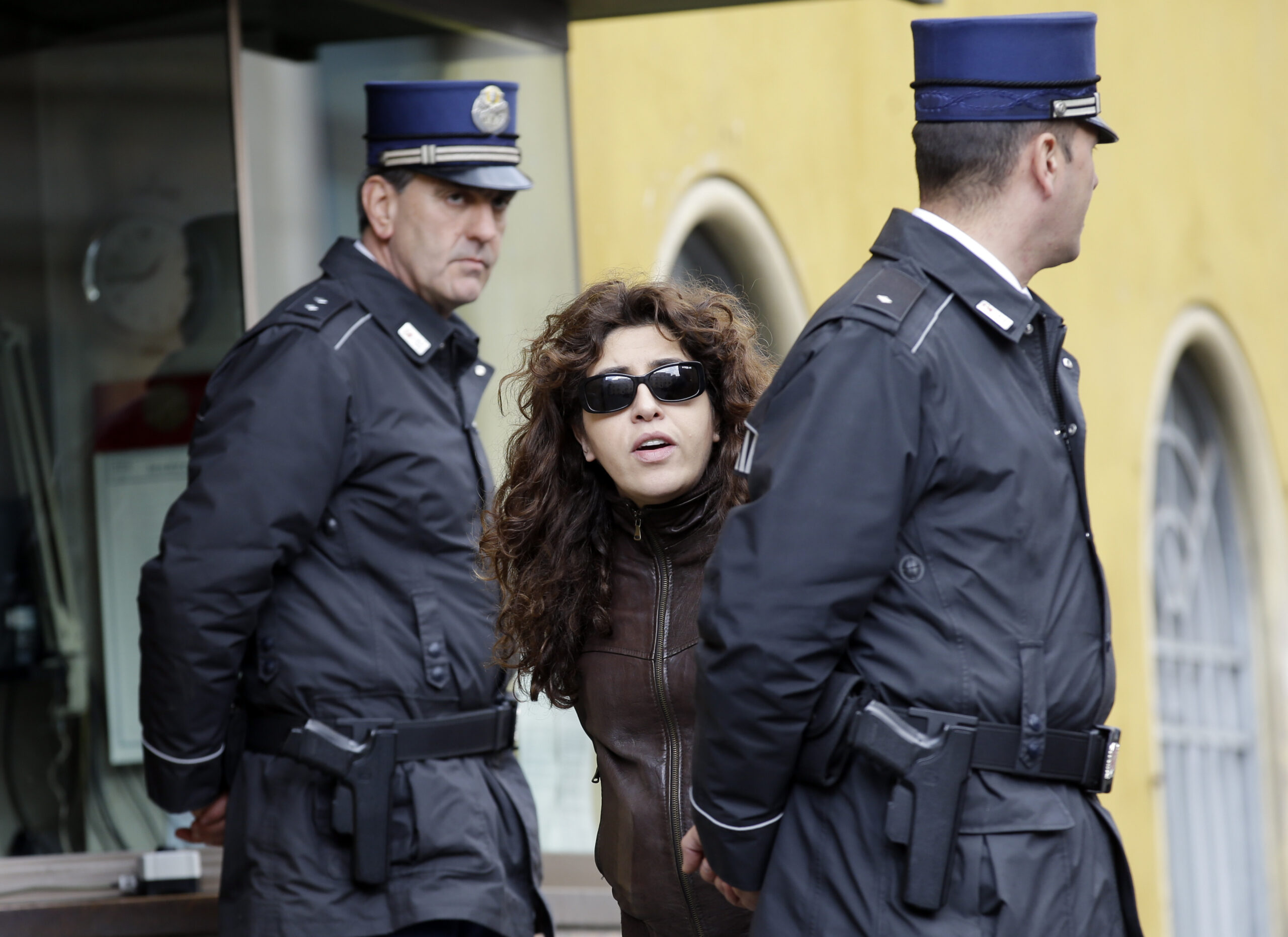
Nicole Winfield
September 22, 2025
VATICAN CITY (AP) — In the last two years, defense lawyers have acquired 3,225 pages of WhatsApp messages between two women who were tangential to the Vatican’s “trial of the century,” but were actually intimately aware of the investigation and in some ways involved.
Their four years of conversations, from 2020-2024, provide a parallel, behind-the-scenes version of one of the most tumultuous periods in Vatican history, when Pope Francis authorized a trial of 10 people, including a cardinal, into alleged financial misconduct.
The chats, written in Italian and translated here by The Associated Press, suggest that these two women helped persuade one of the original prime suspects in the case, Monsignor Alberto Perlasca, to change his story and turn on his former boss, Cardinal Angelo Becciu. Perlasca was spared indictment; Becciu was convicted.
According to the chats, first reported on by Domani newspaper and published by other Italian media, public relations specialist Francesca Chaouqui implied to Perlasca family friend Genevieve Ciferri that she enjoyed close contact with Vatican investigators and Francis, and wanted to help Perlasca. She assured Ciferri that everyone from the pope on down knew and approved of their maneuvering to help Perlasca feel supported so he would implicate Becciu.
Key text exchanges
Ciferri feared that Chaouqui was just boasting and on May 19, 2024, she demanded Chaouqui reassure her that police, Prosecutor Alessandro Diddi and Francis all “knew and agreed on your collaboration with the investigations, and in particular had direct knowledge of the collaboration you established with me.”
Chaouqui assures her they were in agreement but warned: “If it gets out that we all agreed, it’s the end.”
Ciferri: “Please be clear, you understand how important it is for me to be fully convinced. Because you know the doubts and skepticism to which, due to my weakness and insecurity, I have always been subject during our relationship, which has now turned into affection. Are you confirming that all the people I mentioned, including the Holy Father, were in agreement and aware of everything? And are you confirming that you have never lied to me about anything? And do you also make me understand how serious it could be for the trial if both you and Prof. Diddi are found to have lied shamelessly during the proceedings? Because then I too would agree that for the good of the church, it would be better to put a tombstone on it!”
Chaouqui: “You have to distinguish between two levels.”
Ciferri: “I don’t understand …”
Chaouqui: “The level of truth where everyone from the pope down knew what we were doing. And the other level, which is the trial level. Where we have to claim that no one knew, because if we all knew, the trial is null and void and it’s a conspiracy. Understand?”
Ciferri: “Okay, now I understand. I will act accordingly, nothing to fear. Thank you, Francesca, that’s all.”
In a text message to The Associated Press, Diddi declined to comment on the chats. “The trial is the venue where the adversarial process must take place,” he wrote. Chaouqui declined to comment.
In a statement to AP, Ciferri said the chats were of no importance to the appeals trial itself. She said they were instead a “collateral” affair that is being investigated separately, after she filed complaints with Vatican prosecutors against Chaouqui for what she called “psychological manipulation and suffering.”
“Continuing to exaggerate the importance of the chat messages makes no sense and is only a useless pretext, while the appeal will be based on the actual crimes and the individual responsibilities of each person for each count,” Ciferri wrote.
An audio file reveals more
In April, Italy’s Domani newspaper produced an audio file purportedly of the Vatican’s police commissioner, Stefano De Santis, giving instructions to Chaouqui about what Perlasca should say in his revised round of questioning, in August 2020. At the time, Perlasca was still a suspect and had submitted to a first round of questioning in which he defended Becciu.
After he turned on Becciu, he became a key prosecution witness.
In the audio, De Santis suggests Perlasca discuss two other defendants who were eventually convicted: money manager Enrico Crasso and Perlasca’s deputy, Fabrizio Tirabassi.
“Francesca, given that he is in possession of the interrogation report, because he had a copy of it, he should read it and underline all the points where, in light of recent events, in light of recent facts, in light of the introspective work he has done within himself, he needs to clarify, just to qualify facts and acts that do not concern him, but concern others; just to say, once and for all, how the system of Crasso and Tirabassi in the years when he was head of the office developed in a way that he certainly found, having arrived after Crasso and after Tirabassi, but which he cannot fail to know about. In other words, he should take inspiration from that interrogation, from those questions, and clarify all those points and all the ‘I don’t knows’ he said at that time.”
The Vatican hasn’t disputed the authenticity of the audio or commented on its contents.
__
Associated Press religion coverage receives support through the AP’s collaboration with The Conversation US, with funding from Lilly Endowment Inc. The AP is solely responsible for this content.
VATICAN CITY (AP) — Their four years of conversations, from 2020-2024, provide a parallel, behind-the-scenes version of one of the most tumultuous periods in Vatican history, when Pope Francis authorized a trial of 10 people, including a cardinal, into alleged financial misconduct.
Nicole Winfield
September 22, 2025
VATICAN CITY (AP) — In the last two years, defense lawyers have acquired 3,225 pages of WhatsApp messages between two women who were tangential to the Vatican’s “trial of the century,” but were actually intimately aware of the investigation and in some ways involved.
Their four years of conversations, from 2020-2024, provide a parallel, behind-the-scenes version of one of the most tumultuous periods in Vatican history, when Pope Francis authorized a trial of 10 people, including a cardinal, into alleged financial misconduct.
The chats, written in Italian and translated here by The Associated Press, suggest that these two women helped persuade one of the original prime suspects in the case, Monsignor Alberto Perlasca, to change his story and turn on his former boss, Cardinal Angelo Becciu. Perlasca was spared indictment; Becciu was convicted.
According to the chats, first reported on by Domani newspaper and published by other Italian media, public relations specialist Francesca Chaouqui implied to Perlasca family friend Genevieve Ciferri that she enjoyed close contact with Vatican investigators and Francis, and wanted to help Perlasca. She assured Ciferri that everyone from the pope on down knew and approved of their maneuvering to help Perlasca feel supported so he would implicate Becciu.
Key text exchanges
Ciferri feared that Chaouqui was just boasting and on May 19, 2024, she demanded Chaouqui reassure her that police, Prosecutor Alessandro Diddi and Francis all “knew and agreed on your collaboration with the investigations, and in particular had direct knowledge of the collaboration you established with me.”
Chaouqui assures her they were in agreement but warned: “If it gets out that we all agreed, it’s the end.”
Ciferri: “Please be clear, you understand how important it is for me to be fully convinced. Because you know the doubts and skepticism to which, due to my weakness and insecurity, I have always been subject during our relationship, which has now turned into affection. Are you confirming that all the people I mentioned, including the Holy Father, were in agreement and aware of everything? And are you confirming that you have never lied to me about anything? And do you also make me understand how serious it could be for the trial if both you and Prof. Diddi are found to have lied shamelessly during the proceedings? Because then I too would agree that for the good of the church, it would be better to put a tombstone on it!”
Chaouqui: “You have to distinguish between two levels.”
Ciferri: “I don’t understand …”
Chaouqui: “The level of truth where everyone from the pope down knew what we were doing. And the other level, which is the trial level. Where we have to claim that no one knew, because if we all knew, the trial is null and void and it’s a conspiracy. Understand?”
Ciferri: “Okay, now I understand. I will act accordingly, nothing to fear. Thank you, Francesca, that’s all.”
In a text message to The Associated Press, Diddi declined to comment on the chats. “The trial is the venue where the adversarial process must take place,” he wrote. Chaouqui declined to comment.
In a statement to AP, Ciferri said the chats were of no importance to the appeals trial itself. She said they were instead a “collateral” affair that is being investigated separately, after she filed complaints with Vatican prosecutors against Chaouqui for what she called “psychological manipulation and suffering.”
“Continuing to exaggerate the importance of the chat messages makes no sense and is only a useless pretext, while the appeal will be based on the actual crimes and the individual responsibilities of each person for each count,” Ciferri wrote.
An audio file reveals more
In April, Italy’s Domani newspaper produced an audio file purportedly of the Vatican’s police commissioner, Stefano De Santis, giving instructions to Chaouqui about what Perlasca should say in his revised round of questioning, in August 2020. At the time, Perlasca was still a suspect and had submitted to a first round of questioning in which he defended Becciu.
After he turned on Becciu, he became a key prosecution witness.
In the audio, De Santis suggests Perlasca discuss two other defendants who were eventually convicted: money manager Enrico Crasso and Perlasca’s deputy, Fabrizio Tirabassi.
“Francesca, given that he is in possession of the interrogation report, because he had a copy of it, he should read it and underline all the points where, in light of recent events, in light of recent facts, in light of the introspective work he has done within himself, he needs to clarify, just to qualify facts and acts that do not concern him, but concern others; just to say, once and for all, how the system of Crasso and Tirabassi in the years when he was head of the office developed in a way that he certainly found, having arrived after Crasso and after Tirabassi, but which he cannot fail to know about. In other words, he should take inspiration from that interrogation, from those questions, and clarify all those points and all the ‘I don’t knows’ he said at that time.”
The Vatican hasn’t disputed the authenticity of the audio or commented on its contents.
__
Associated Press religion coverage receives support through the AP’s collaboration with The Conversation US, with funding from Lilly Endowment Inc. The AP is solely responsible for this content.

No comments:
Post a Comment