World leaders gathered in New York are putting climate action under the spotlight, using this week’s UN summit to lay the groundwork for November's Cop30 meeting in Brazil.
Issued on: 24/09/2025 - RFI
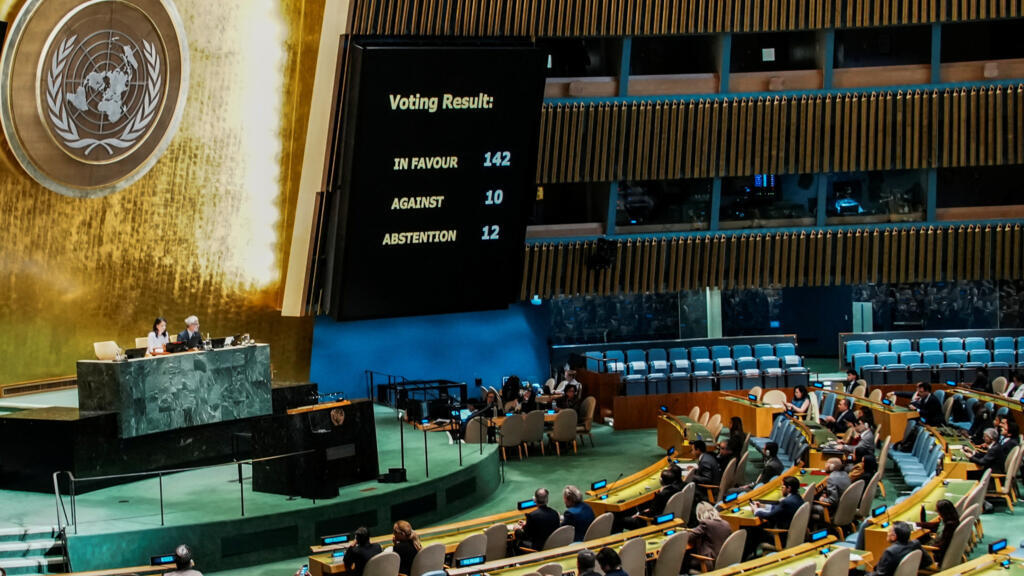 World leaders gathered in New York are putting climate action under the spotlight, using this week’s UN summit to lay the groundwork for November's Cop30 meeting in Brazil. REUTERS - Eduardo Munoz
With the United Nations General Assembly in full swing in New York this week, world leaders are preparing for a climate summit on Wednesday, aimed at injecting urgency into the faltering global fight against warming.
The meeting is widely seen as a staging post for November’s Cop30 in Belém, Brazil, where nations are expected to deliver the next big leap forward on climate action.
More than 110 heads of state, alongside business leaders and campaigners, are attending the sprawling Climate Week NYC, which boasts over 1,000 events.
The message from the sidelines is clear – progress is happening, but nowhere near fast enough.
“We’re here to power on,” said Helen Clarkson, head of The Climate Group, at the week’s opening. “It’s an uphill struggle, but we know we don’t have a choice. It’s up to us to protect what we love.”
'Building trust' key to solving climate crisis, Cop30 president tells RFI
Moment of contrast
The summit comes amid sharp contrasts. On the one hand, investment in renewables has surged to $2 trillion last year – double the outlay on fossil fuels – with solar now 41 percent cheaper than the cheapest fossil alternative.
“The economic case is clear,” European Commission President Ursula von der Leyen told a renewables gathering. “The momentum is real.”
On the other hand, the United States – host nation and historically a climate heavyweight – has been singled out for what analysts call the “biggest backslide in history” on climate policy.
Climate Action Tracker warned that recent rollbacks under President Donald Trump represent the most aggressive reversal they have ever documented.
Trump himself turned heads with a broadside against climate science during an address to the United Nations on Tuesday, using the moment to claim global warming is “the greatest con job ever perpetrated on the world.”
His stance has left allies dismayed but also galvanised others to press ahead regardless.
“Despair is not leadership. Fear has never built anything,” Australian billionaire Andrew Forrest said in New York.
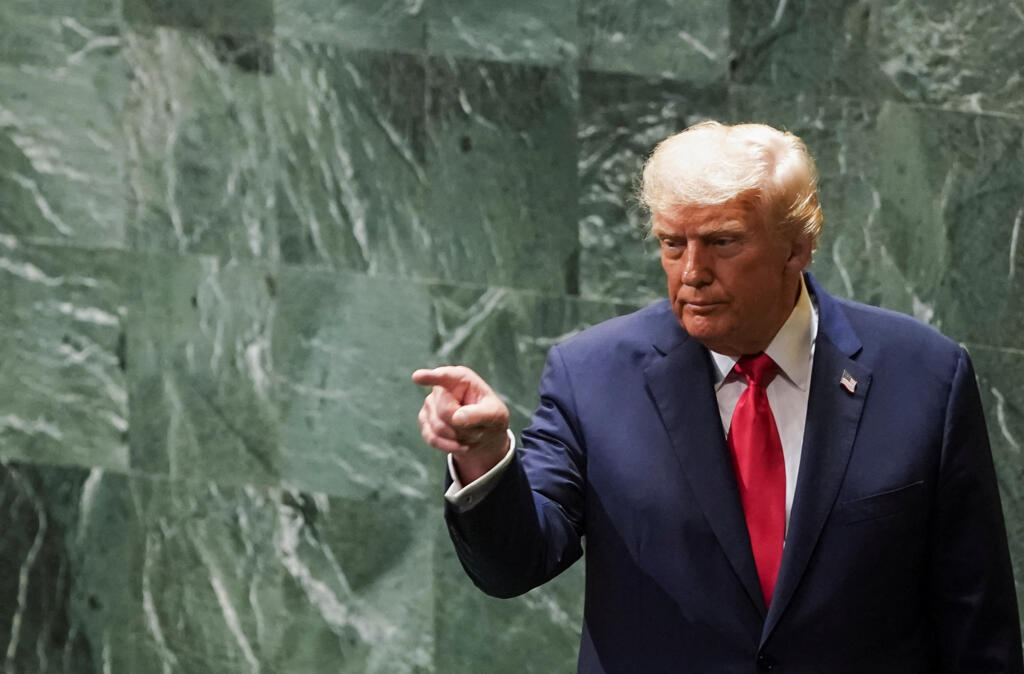
US President Donald Trump gestures after addressing the 80th United Nations General Assembly, in New York City, New York, 23 September 2025. © Alexander Drago / Reuters
Spotlight on China
All eyes, however, are on Beijing, as Chinese Premier Li Qiang will open the summit, with an update expected on his country’s 2035 emissions-cutting plan.
China is the world’s top polluter, responsible for about 30 percent of greenhouse gases, yet it is also racing ahead in green technology, from solar to electric vehicles.
Analysts expect China to pledge a modest reduction – “single digit to low double digit” percentage cuts – which may disappoint campaigners but still signals intent ahead of Cop30.
Crucially, Beijing is on track to peak emissions five years earlier than promised, thanks to its rapid roll-out of renewables.
“China has already become the green tech superpower of the world,” said Li Shuo of the Asia Society, who expects the country to under-promise but over-deliver.
Hope, with caveats
UN climate chief Simon Stiell is trying to keep the mood balanced between warnings and hope.
Without global cooperation, he says, the world is heading for five degrees of warming.
Now the trajectory is closer to three – still dangerous, but progress nonetheless.
“This new era of climate action must be about bringing our process closer to the real economy,” Stiell told delegates, launching a new “Build Clean Now” initiative to fast-track green industries.
Small island states, meanwhile, are making their voices heard.
Antigua and Barbuda’s Prime Minister Gaston Browne reminded leaders that “every degree of warming is an invoice” his Carribbean nation cannot pay.
Vanuatu and its allies in the Pacific are preparing a push at the UN General Assembly to require stronger action, citing this year’s International Court of Justice ruling that governments are legally bound to act.
Setting the stage for Brazil
With just weeks before Cop30 gets underway in Belém, the pressure is on.
Only 47 of 195 countries have submitted their updated national climate plans, even though they were due last February.
China and the EU are expected to show their hands in New York, while others may follow suit.
The idea is to give negotiators in Belém a clearer sense of where the world stands ahead of the summit's opening on 10 November.
The context is sobering, as the planet is already around 1.4°C warmer than pre-industrial levels, just a sliver below the 2015 Paris Agreement’s 1.5°C threshold.
Scientists warn that without sharper cuts, that goal will soon slip out of reach. Yet leaders here are keen to frame the summit as a springboard rather than a dead end.
As Stiell put it, “We are bending the curve. Still too high – but bending.”
(With newswires)
Nations deliver new climate targets ahead of climate summit
Louise Osborne
With just weeks to go until the international climate conference, nations are stepping up to submit new climate targets for 2035. But will they be enough to prevent a climate catastrophe?

Big climate emitters are falling behind
With less than two months to go before the start of the international COP 30 climate summit, taking place in Belem, Brazil, only 47 countrieshad delivered their climate goals by time of publication — representing just 24% of global emissions.
Big emitters including the European Union, and India are among those yet to submit their national targets. Some nations that have put forward domestic targets, like Australia and Japan, have been criticized for not showing stronger ambition and doing their fair share.
Many countries are expected to come forward with proposals. More than 100 nations have registered to speak at the UN Climate Summit,taking place on the sidelines of the UN General Assembly meeting in New York.
So, what are countries promising? And what does it mean for action on global warming?
European Union: Climate leader?
With a conflict on its borders, economic problems in some member states and a general political shift to the right, agreeing on a united response to the climate crisis has proven difficult for the 27-state bloc.
Just days before the climate summit, the EU indicated that it would not meet a deadline set by the COP30 Brazilian presidency to present its NDC before the end of September, instead issuing a statement of intent.
The document signaled the bloc's commitment to put forward a climate target before the November conference with a 2035 greenhouse gas reduction ranging between 66.25% and 72.5% compared with 1990 levels.
Stientje van Veldhoven, regional director for Europe at the World Resources Institute, said that while the statement showed "scope for progress", it risked "sending a confusing message, eroding investor confidence and undermining jobs, energy security, and competitiveness."
China: Green energy giant
The world's biggest emitter, China, produces around a third of all greenhouse gas emissions and is under pressure to set an ambitious domestic reduction target.
However, its pledge to cut emissions by 7-10% from peak is both "underwhelming and transformative," Andreas Sieber, associate director of policies and campaigns at climate group 350.org, said in a statement.
He added that the reduction "falls short of what the world needs" but noted that it "anchors the world’s largest emitter on a path where clean-tech defines economic leadership."
Speaking to DW before the target was announced, Li Shuo, the director of the China Climate Hub at the Asia Society Policy Institute, said that a decision-making factor in China's NDC was likely to be the EU's failure to submit its targets on time and the US withdrawal from the Paris Agreement.
"I think those factors in general will present challenges to high ambition," he said.
The new Chinese target uses the country's peak emissions as a baseline, with all likelihood that the nation has either already reached its peak emissions or will do so soon.
Experts speaking before the announcement, which was made by Chinese President Xi Jinping in a video address to the climate summit, said that while China was likely to make a low pledge, it was a commitment that the country would probably meet and possibly even overshoot.
"In the case of China, when they come up with a target, it's something that they are really committed to, to really fulfill," Sofia Gonzales-Zuniga, senior climate policy analyst with Climate Analytics, told DW. "In a way it could not be that it's not the most ambitious, but we can have a certain level of trust that they will reach what they are promising."
Brazil: The host with the most?
As host of the COP30 climate conference, Brazil has come under increasing scrutiny over its domestic targets.
Its plans to decrease its greenhouse gas emissions between 59 – 67% from 2005 levels by 2035 were met with criticism by experts who said that such a range created uncertainty and weakened accountability.
The country has also come under fire over plans to expand exploration of oil particularly around the mouth of the Amazon River.
However, Gonzales-Zuniga said that Brazil's recently published national strategy to reduce emissions adds clarity by specifying cuts in more specific sectors, for example, agriculture and deforestation, which account for three-quarters of the country's greenhouse gas emissions.
United Kingdom: The original gangster
Great Britain was the first country to initiate the Industrial Revolution, a period in history dating back to the mid-1700s, when fossil fuels were first burned to power industrial processes.
Indonesia: Phasing out fossil fuels
A high emitter in the Global South, experts say the climate goals due from Indonesia are ones to watch for.
With a reliance on fossil fuels and significant deforestation contributing to emissions, the island nation produces more than 3% of all global greenhouse gases, but that could be about to change.
United States: The dropouts
Former US President Joe Biden submitted a climate target for the United States last year, pledging to reduce carbon emissions by 61% and 66% by 2035 compared to 2005 levels.
Since then, however, President Donald Trump has withdrawn the US from the Paris Agreement, essentially voiding the commitment. In a recent report, experts said the country had experienced its "most abrupt shift in energy and climate policy in recent memory".
Still, despite the policy U-turn, the report forecasts that the US is still on a path to reduce its greenhouse gases by 26 – 35% by 2035.
Speaking about the Paris Agreement, Gonzales-Zuniga said there had been some success, with the projected temperature rise by the end of the century having fallen.
However, she added: "We have always stressed that it was never in line with the actual goal of 1.5, so there is still that emissions gap that we are dealing with."
This article was changed to update China's announced climate targets
Edited by: Sarah Steffen

Louise Osborne DW's Chief climate reporter provides expertise on the defining crisis of our time.
Louise Osborne
DW
24/09/2025
With just weeks to go until the international climate conference, nations are stepping up to submit new climate targets for 2035. But will they be enough to prevent a climate catastrophe?

Rising temperatures are leading to more extreme weather events globallyImage: Johannes P. Christo/Andalou/picture alliance
"The stakes could not be higher," a senior UN official told reporters ahead of the UN Climate Summit in New York. Heavy flooding, drought and ever longer heatwaves are just some of the extreme weather events that have battered communities over the past summer alone.
Climate disasters are "wreaking havoc" on every continent, the UN official added.
Scientists say human-caused global warming is driving the changes in Earth's climate and that rising temperatures will mean worse impacts in the long run.
To try to tackle the climate crisis world leaders agreed to limit the average global temperature rise to well below 2 degrees Celsius (3.6 degrees Fahrenheit), pursuing efforts to cap it at 1.5 degrees.
The deal was sealed under the 2015 Paris Agreement, with countries promising to renew and communicate their commitments via a so-called NDC, or nationally determined contribution, every five years.
The deadline for the 2035 NDC was in February, but few of the 195 parties that have ratified the accord met the date. Pressure is now on for nations to come forward with their commitments this week.
"The stakes could not be higher," a senior UN official told reporters ahead of the UN Climate Summit in New York. Heavy flooding, drought and ever longer heatwaves are just some of the extreme weather events that have battered communities over the past summer alone.
Climate disasters are "wreaking havoc" on every continent, the UN official added.
Scientists say human-caused global warming is driving the changes in Earth's climate and that rising temperatures will mean worse impacts in the long run.
To try to tackle the climate crisis world leaders agreed to limit the average global temperature rise to well below 2 degrees Celsius (3.6 degrees Fahrenheit), pursuing efforts to cap it at 1.5 degrees.
The deal was sealed under the 2015 Paris Agreement, with countries promising to renew and communicate their commitments via a so-called NDC, or nationally determined contribution, every five years.
The deadline for the 2035 NDC was in February, but few of the 195 parties that have ratified the accord met the date. Pressure is now on for nations to come forward with their commitments this week.
Big climate emitters are falling behind
With less than two months to go before the start of the international COP 30 climate summit, taking place in Belem, Brazil, only 47 countrieshad delivered their climate goals by time of publication — representing just 24% of global emissions.
Big emitters including the European Union, and India are among those yet to submit their national targets. Some nations that have put forward domestic targets, like Australia and Japan, have been criticized for not showing stronger ambition and doing their fair share.
Many countries are expected to come forward with proposals. More than 100 nations have registered to speak at the UN Climate Summit,taking place on the sidelines of the UN General Assembly meeting in New York.
So, what are countries promising? And what does it mean for action on global warming?
European Union: Climate leader?
With a conflict on its borders, economic problems in some member states and a general political shift to the right, agreeing on a united response to the climate crisis has proven difficult for the 27-state bloc.
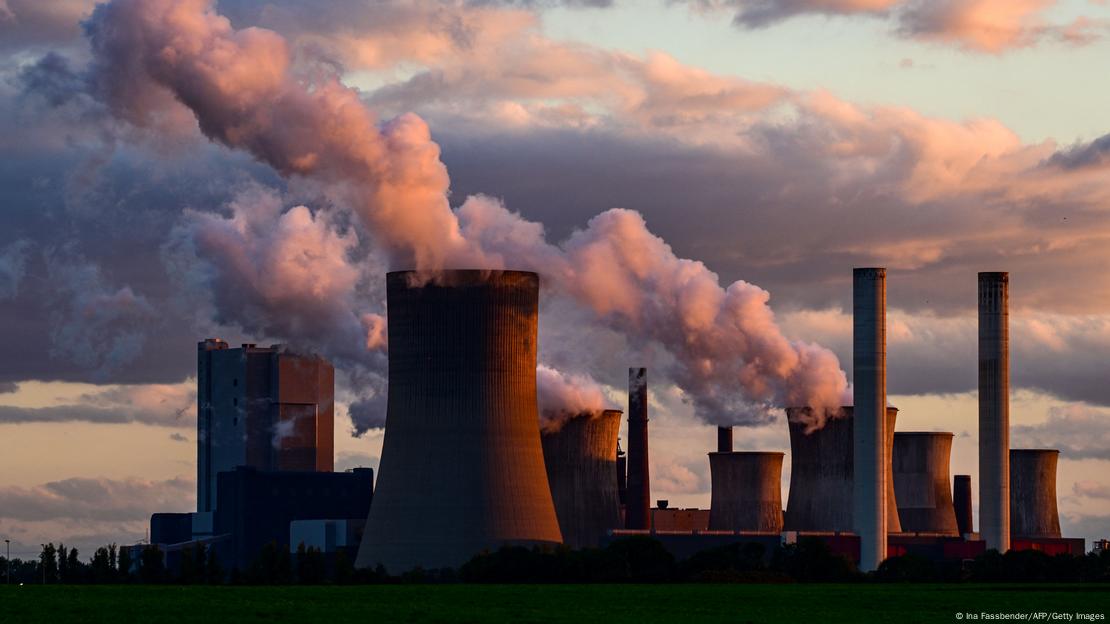
Just days before the climate summit, the EU indicated that it would not meet a deadline set by the COP30 Brazilian presidency to present its NDC before the end of September, instead issuing a statement of intent.
The document signaled the bloc's commitment to put forward a climate target before the November conference with a 2035 greenhouse gas reduction ranging between 66.25% and 72.5% compared with 1990 levels.
Stientje van Veldhoven, regional director for Europe at the World Resources Institute, said that while the statement showed "scope for progress", it risked "sending a confusing message, eroding investor confidence and undermining jobs, energy security, and competitiveness."
The EU is due to meet in October to discuss its climate targets
Image: Ina Fassbender/AFP/Getty Images
A proposal to reduce EU greenhouse gas emissionsby 90% by 2040 has been in the works for some time, but has yet to be agreed upon by all member states. Experts say the 2035 target would have an impact on that goal.
"The pathway matters: if the EU lands on the lower end of the range, like 66.3%, the final stretch to 90% just five years later will be a steep and uphill climb. That does not provide the long-term policy credibility that investors and companies need," added van Veldhoven.
A proposal to reduce EU greenhouse gas emissionsby 90% by 2040 has been in the works for some time, but has yet to be agreed upon by all member states. Experts say the 2035 target would have an impact on that goal.
"The pathway matters: if the EU lands on the lower end of the range, like 66.3%, the final stretch to 90% just five years later will be a steep and uphill climb. That does not provide the long-term policy credibility that investors and companies need," added van Veldhoven.
China: Green energy giant
The world's biggest emitter, China, produces around a third of all greenhouse gas emissions and is under pressure to set an ambitious domestic reduction target.
However, its pledge to cut emissions by 7-10% from peak is both "underwhelming and transformative," Andreas Sieber, associate director of policies and campaigns at climate group 350.org, said in a statement.
He added that the reduction "falls short of what the world needs" but noted that it "anchors the world’s largest emitter on a path where clean-tech defines economic leadership."
Speaking to DW before the target was announced, Li Shuo, the director of the China Climate Hub at the Asia Society Policy Institute, said that a decision-making factor in China's NDC was likely to be the EU's failure to submit its targets on time and the US withdrawal from the Paris Agreement.
"I think those factors in general will present challenges to high ambition," he said.
The new Chinese target uses the country's peak emissions as a baseline, with all likelihood that the nation has either already reached its peak emissions or will do so soon.
Experts speaking before the announcement, which was made by Chinese President Xi Jinping in a video address to the climate summit, said that while China was likely to make a low pledge, it was a commitment that the country would probably meet and possibly even overshoot.
"In the case of China, when they come up with a target, it's something that they are really committed to, to really fulfill," Sofia Gonzales-Zuniga, senior climate policy analyst with Climate Analytics, told DW. "In a way it could not be that it's not the most ambitious, but we can have a certain level of trust that they will reach what they are promising."
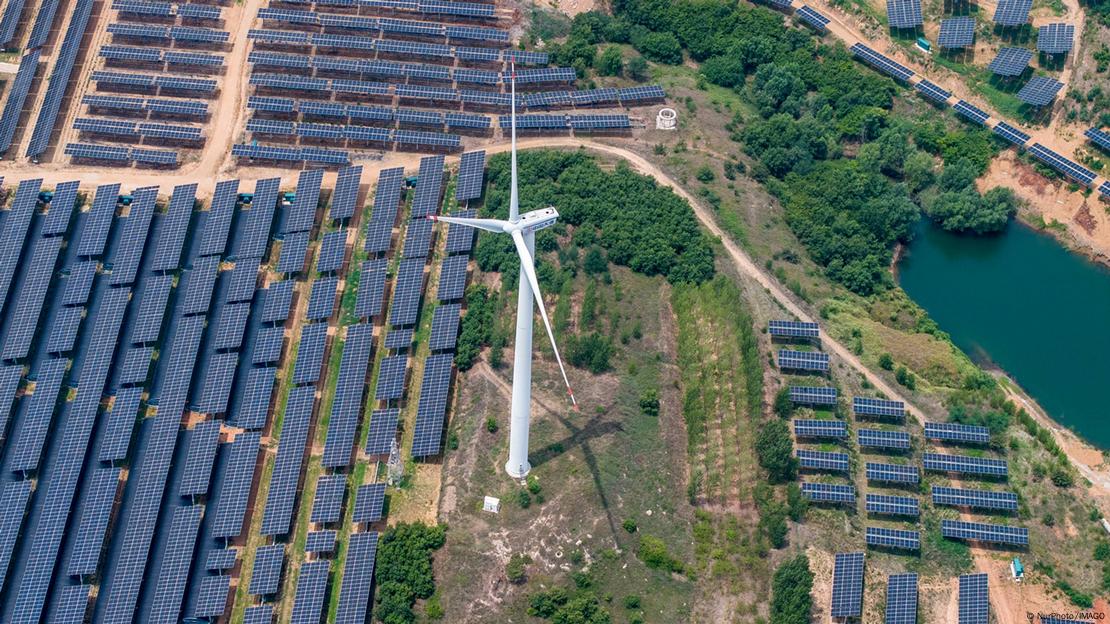
China has invested heavily in green technology in recent years
Image: NurPhoto/IMAGO
China is by far the globe's biggest investor in clean energy, with investment reaching around $625 billion in 2024 alone, according to the global energy think tank Ember,and Shuo said that was unlikely to change.
China is by far the globe's biggest investor in clean energy, with investment reaching around $625 billion in 2024 alone, according to the global energy think tank Ember,and Shuo said that was unlikely to change.
Brazil: The host with the most?
As host of the COP30 climate conference, Brazil has come under increasing scrutiny over its domestic targets.
Its plans to decrease its greenhouse gas emissions between 59 – 67% from 2005 levels by 2035 were met with criticism by experts who said that such a range created uncertainty and weakened accountability.
The country has also come under fire over plans to expand exploration of oil particularly around the mouth of the Amazon River.
However, Gonzales-Zuniga said that Brazil's recently published national strategy to reduce emissions adds clarity by specifying cuts in more specific sectors, for example, agriculture and deforestation, which account for three-quarters of the country's greenhouse gas emissions.
United Kingdom: The original gangster
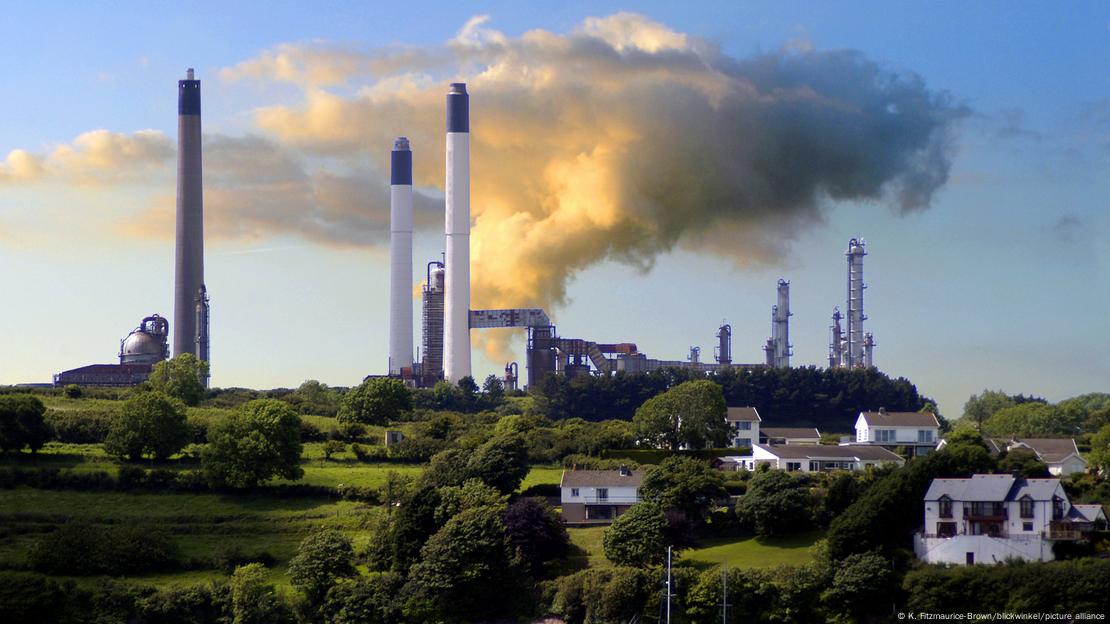
Great Britain was the first country to initiate the Industrial Revolution, a period in history dating back to the mid-1700s, when fossil fuels were first burned to power industrial processes.
The UK is promising to reduce emissions over the next 10 years, but has still to put in place policy to make its pledge a reality
Image: K. Fitzmaurice-Brown/blickwinkel/picture alliance
As one of the countries with the highest cumulative emissions — having emitted the most overall after the US, EU countries and China — some experts argue it has a particular responsibility to lower its emissions quickly.
And it seems that the former EU country has stepped up. As well as submitting its NDC on time, the UK government has promised to reduce its greenhouse gas emissions by 81% compared with 1990 levels.
"They came up with a target that, in terms of their domestic emissions reductions, would be 1.5-degree aligned. So that was really positive to see," said Gonzales-Zuniga, adding that compared to targets for 2030, it was "definitely an increase in ambition".
However, it's not as simple as that. The UK still needs to bridge the gap between its promises and the policies it needs to put in place to meet those pledges.
And there's more. According to the Carbon Action Tracker website, the UK's responsibility extends further than just domestic cuts.
"They have a responsibility to provide climate finance to developing countries to reduce emissions outside their borders, to be able to say that they're really contributing in a fair way to reduce emissions," said Gonzales-Zuniga.
As one of the countries with the highest cumulative emissions — having emitted the most overall after the US, EU countries and China — some experts argue it has a particular responsibility to lower its emissions quickly.
And it seems that the former EU country has stepped up. As well as submitting its NDC on time, the UK government has promised to reduce its greenhouse gas emissions by 81% compared with 1990 levels.
"They came up with a target that, in terms of their domestic emissions reductions, would be 1.5-degree aligned. So that was really positive to see," said Gonzales-Zuniga, adding that compared to targets for 2030, it was "definitely an increase in ambition".
However, it's not as simple as that. The UK still needs to bridge the gap between its promises and the policies it needs to put in place to meet those pledges.
And there's more. According to the Carbon Action Tracker website, the UK's responsibility extends further than just domestic cuts.
"They have a responsibility to provide climate finance to developing countries to reduce emissions outside their borders, to be able to say that they're really contributing in a fair way to reduce emissions," said Gonzales-Zuniga.
Indonesia: Phasing out fossil fuels
A high emitter in the Global South, experts say the climate goals due from Indonesia are ones to watch for.
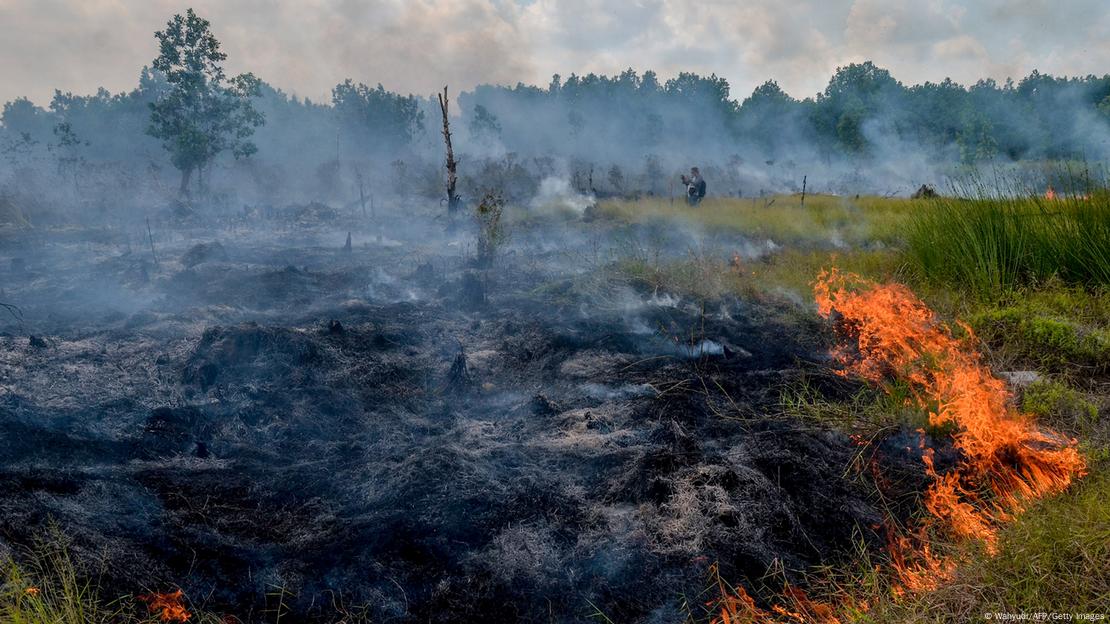
With a reliance on fossil fuels and significant deforestation contributing to emissions, the island nation produces more than 3% of all global greenhouse gases, but that could be about to change.
From 2001 to 2024, Indonesia lost around 20% of its tree cover
FROM BURNING FOR PALM OIL PLANTATIONS
Image: Wahyudi/AFP/Getty Images
President Prabowo Subianto has promised to phase out fossil fuel and coal-power plants within the next 15 years and wants to reach net zero by 2050, a full decade earlier than previously planned.
The country has not yet submitted its new domestic targets.
President Prabowo Subianto has promised to phase out fossil fuel and coal-power plants within the next 15 years and wants to reach net zero by 2050, a full decade earlier than previously planned.
The country has not yet submitted its new domestic targets.
United States: The dropouts
Former US President Joe Biden submitted a climate target for the United States last year, pledging to reduce carbon emissions by 61% and 66% by 2035 compared to 2005 levels.
Since then, however, President Donald Trump has withdrawn the US from the Paris Agreement, essentially voiding the commitment. In a recent report, experts said the country had experienced its "most abrupt shift in energy and climate policy in recent memory".
Still, despite the policy U-turn, the report forecasts that the US is still on a path to reduce its greenhouse gases by 26 – 35% by 2035.
Speaking about the Paris Agreement, Gonzales-Zuniga said there had been some success, with the projected temperature rise by the end of the century having fallen.
However, she added: "We have always stressed that it was never in line with the actual goal of 1.5, so there is still that emissions gap that we are dealing with."
This article was changed to update China's announced climate targets
Edited by: Sarah Steffen
Louise Osborne DW's Chief climate reporter provides expertise on the defining crisis of our time.

No comments:
Post a Comment