Carbon Capture, Fuel Cells, and Wind Propulsion for Net-Zero Cruise Ship
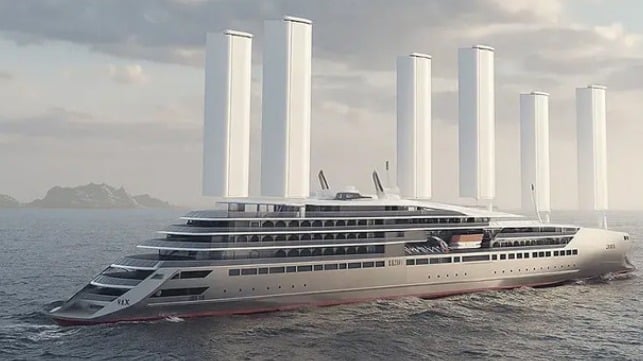
A partnership consisting of GTT and Bloom Energy is working together with France’s Ponant Explorations Group to combine fuel cells and marine carbon capture as part of a project to achieve the first net-zero cruise ship. The project, which was first revealed last year, reports that GTT, known for its containment systems and Bloom Energy will lead a joint innovation project to develop an integrated energy system to cover the vessel’s energy needs related to onboard consumption.
“This partnership is a key milestone in developing innovative and efficient ways to capture CO2 and embodies our commitment to finding new solutions to decarbonizing the maritime industry,” said Mathieu Petiteau, Newbuilding and R&D Director of Ponant Explorations Group. “It also marks another step forward for our Swap2Zero vessel project, co-funded by the European Union Innovation Fund and France 2030.”
The Swap2Zero Project was unveiled in 2023 with the goal of developing the first transoceanic ship aimed at carbon neutrality. The concept, which is being designed by firms LMG Marin and Stirling Design, envisions an 181-meter (594-foot) cruise ship with approximately 100 passenger cabins that would use 50 percent wind energy. They project a speed of 10 knots and total autonomy for an endurance of up to 30 days. It would reduce greenhouse gas emissions by more than 80 percent. Bureau Veritas is also participating in the project.
In addition to an optimized hull design, the vessel would have more than 1,000 square meters of photovoltaic panels. A low-temperature hydrogen fuel cell with be dedicated to propulsion with recycling of the water and heat produced. A high-temperature fuel cell would be dedicated to the needs of the ship’s hotel and also use heat recovery for hot water production.
In the joint innovation project, GTT will design and develop a marine carbon capture system compatible with Bloom Energy’s SOFC technology. According to the companies, the integrated solution will supply auxiliary electricity for the vessel, covering the hotel load for lights, hot water, and onboard services while capturing CO2 from the exhaust gases. The dual approach, combining emission reduction and the reuse of low-temperature energy from the ship’s cryogenic installations, they report, will further enhance the overall efficiency of the SOFC system through optimized thermal management.
“We see solid oxide fuel cells as a cornerstone of the maritime industry's low-carbon future,” said Aman Joshi, Chief Commercial Officer of Bloom Energy. “By integrating fuel cells with onboard carbon capture and sequestration, this initiative exemplifies how innovation and collaboration can accelerate the transition to cleaner, more sustainable shipping.”
The project was awarded a €40 million grant in 2024 from the EU to develop the designs that would contribute to the decarbonization of the maritime sector. They have said the project will serve as a catalyst for new energy solutions.
Ponant reports its goal is to have the vessel in service by 2030. It is one of several designs being explored to reach the goals of reducing emissions to achieve net-zero.
Hurtigruten and Vard also unveiled their SeaZero project, which they expect will achieve an overall 40 to 50 percent energy reduction with the capability to sail entirely emission-free during normal operation. They are using solar panels and retractable sails along with an innovative design.
Cyprus' Shipowners Call for Voting Down IMO's Net-Zero Framework
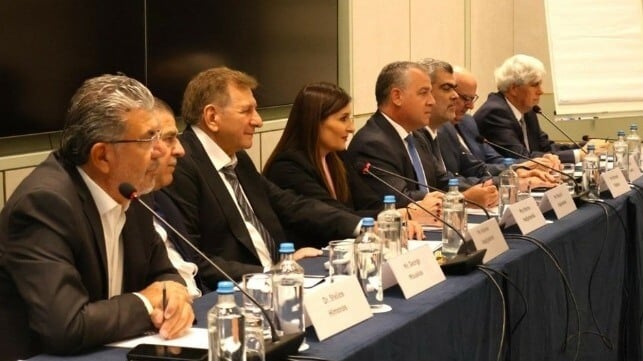
In the midst of high-stakes negotiations over the future of IMO's emissions rules, Cyprus' influential shipowners have publicly joined the side of the "nays" on the Net Zero Framework. In a statement, the Cyprus Union of Shipowners (CUS) called for the Cypriot government and other EU member states to vote against the proposal to allow more time for talks aimed at consensus.
"As currently drafted, the NZF poses a serious threat to the European shipping, economy, and energy security, and also represents a grave danger to small and medium-sized enterprises (SMEs)," the CUS argued. "In essence, it represents a multi-billion-euro tax that does not reduce emissions but instead shifts the cost to end-consumers."
The NZF is based on a fee structure on carbon emissions intended to incentivize green-fuel usage. But as the availability of green fuels on the market in the near term is extremely limited, many operators will likely pay the fee, feeding an IMO-administered fund at an estimated rate of about $10 billion per year (globally). These funds would be used to reward low-emissions ships, pay for green fuel infrastructure and R&D, and to offset the cost effects of the regulation on vulnerable states, notably shipping-dependent island nations.
The shipowners' association criticized the fee and fund plan, calling it a distraction. "Rather than reducing emissions, the framework diverts critical financial resources away from genuine technological and energy innovation, thereby slowing the transition to cleaner solutions," CUS asserted. "The result will be broad-based price increases, a higher cost of living and intensified inflation."
CUS warned of specific damage to small European shipowners, which could shrink the size of the EU-linked fleet through sales and early scrapping.
The shipowners' concerns are familiar territory, and can be found elsewhere. Given the absence of near-term alternatives, many operators will likely pay the NZF fees and continue to emit, according to a new review by researchers at Columbia University SIPA. Smaller operators and those on less competitive routes are the most likely to simply pay for compliance and then raise their rates to cover the cost, wrote researcher Evelyne Williams, a former deputy lead negotiator in the U.S. delegation at IMO. In addition, there are practical concerns about scaling up the operation of a global carbon fee system and building out IMO's structure to handle its administration, especially in the short timeframe before entry into force, she cautioned.
The CUS joins a growing list of opponents of the NZF, including the Trump administration, the government of Saudi Arabia, and an international coalition of prominent oil tanker owners. On the pro-NZF side, the International Chamber of Shipping, the European Shipowners Associations and the EU remain publicly supportive, along with a vocal coalition of small island developing states (which have concerns about rising seas).
IMO Secretary General Arsenio Dominguez has presented the agreement as imperfect, but better than the alternative - which he believes to be the proliferation of different regional and national carbon regulations (as found already in Europe). This future would have no carbon regulation role for IMO, and would leave shipping interests with less influence over the use of the carbon fees.
“The IMO Net-Zero Framework is not perfect. However, it provides a balanced basis for our further work," Dominguez said in opening remarks this week.

No comments:
Post a Comment