G-7 set to discuss joint response to China curbs on rare earths
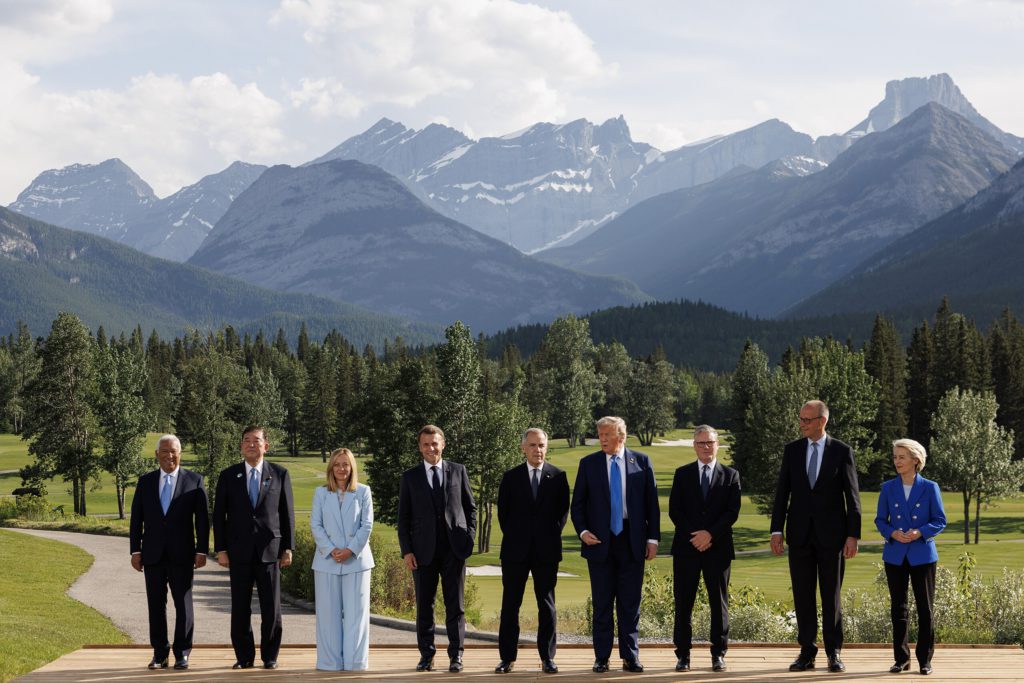
Finance chiefs from the Group of Seven industrial nations will consider a joint response to discourage China’s planned move to control the global supply of rare earths, officials said on Wednesday.

Germany Finance Minister Lars Klingbeil told reporters that the G-7 gathering later today will include a discussion of a common approach to address China’s actions with targeted measures, while cautioning against taking any steps that backfire on their economies.
Treasury Secretary Scott Bessent indicated the US would seek wider support beyond the G-7 — which also includes Canada, Japan, France, Italy and the UK — noting that finance ministers from around the world are visiting the US capital for the annual meetings of the International Monetary Fund and World Bank this week.
“We’re going to be speaking with our European allies, with Australia, with Canada, with India and the Asian democracies,” Bessent said at a CNBC-hosted forum in Washington. “We’re going to have a fulsome, group response to this, because bureaucrats in China cannot manage the supply chain or the manufacturing process for the rest of the world.”
China’s new rules, announced last week, require overseas firms to obtain Chinese government approval before exporting products containing even trace amounts of certain rare earths that originated in China.
That came as a surprise to US officials who thought they had agreed, as part of a tariff truce negotiated over several rounds, that China’s critical minerals should be allowed to flow to companies globally with minimal restrictions.
The Treasury chief also said that as far as he’s aware, President Donald Trump “is a go” on meeting President Xi Jinping later this month in South Korea. Bessent said there’s a “very good chance” that he heads out to Asia before Trump and meets with his Chinese counterpart, Vice Premier He Lifeng.
The latest spat between the world’s two largest economies has rattled markets in recent days. US stocks only partly recovered this week from a plunge Friday after Trump threatened massive tariffs on Chinese goods in response to China’s rare earth curbs.
Bessent also said the tariff truce could be extended if China postpones its rare earth restrictions. Since earlier this year, the US and China have agreed to 90-day truces on import duties of as high as 145%, with the next deadline looming in November.
Asia trip
Bessent said he expected trade announcements being made during Trump’s Asia tour. The president is expected to attend a summit with Association of Southeast Asian Nations in Malaysia before going on to Japan and South Korea, which will be hosting the annual Asia Pacific Economic Cooperation leaders meeting.
The US is “about to finish up” negotiations with South Korea, Bessent added. Those talks have lately revolved around the contours of a giant investment program. US-Canada talks are “back on track,” Bessent also said. He also indicated progress with India.
Bessent dismissed the notion that a slide in the stock market would force the Trump administration into a negotiating position with Beijing, saying that what spurs such talks is instead the economic interest of the nation. The US won’t negotiate with China “because the stock market is going down,” he said.
At the G-7 discussions Wednesday in Washington, officials will also discuss how to increase pressure on the Kremlin, particularly steps to expand the use of frozen Russian assets to help Ukraine, according to Germany’s Klingbeil.
(By Daniel Flatley and Kamil Kowalcze)
EU seeks US alliance to counter China rare earth crackdown
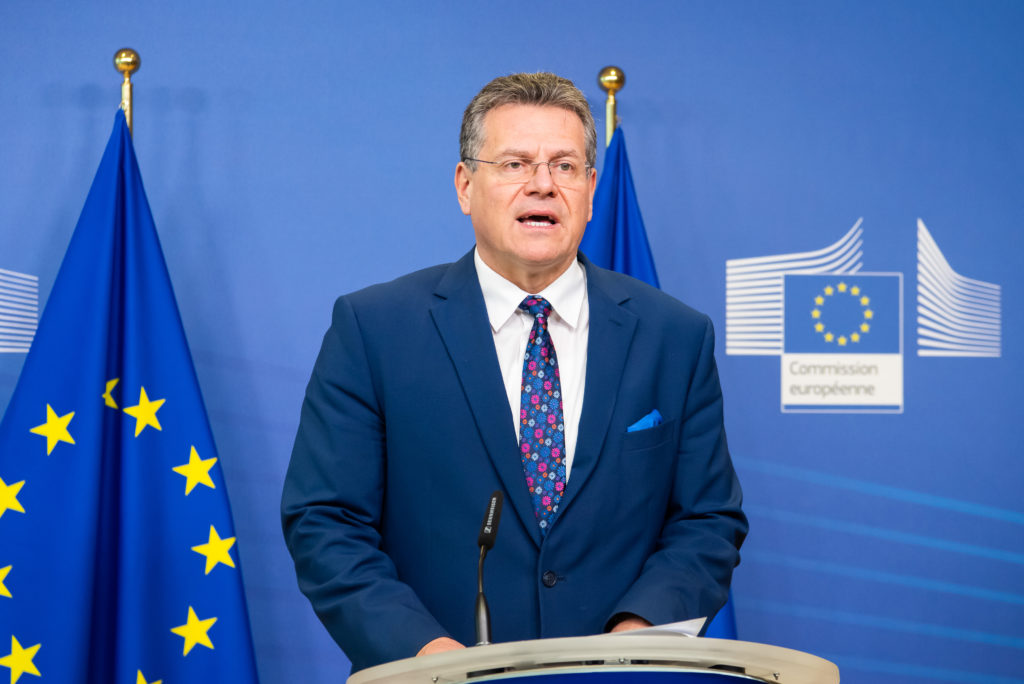
The European Union is seeking to coordinate with the United States and other G7 partners a response to tighter Chinese controls on the export of rare earth minerals, trade ministers and officials from the bloc said on Tuesday.
China, the world’s largest rare earth producer, dramatically expanded controls last week, adding new elements, refining technology and extra scrutiny for semiconductor users ahead of planned talks between Presidents Donald Trump and Xi Jinping.
European Trade Commissioner Maros Sefcovic called the measures unjustified and said EU ministers meeting in Denmark to discuss trade issues described them as a “critical concern”.
Previous Chinese controls announced in April caused shortages around the world, such as for carmakers, before a series of deals with Europe and the US eased the supply crunch.
Sefcovic said G7 finance ministers were likely to discuss options on Wednesday and added he had discussed the issue with US Commerce Secretary Howard Lutnick.
“We brainstormed yesterday that it would be advisable after this first discussion to have a G7 video call pretty soon,” he said before the EU ministers’ meeting.
Sefcovic said he was also likely to speak to his Chinese counterpart early next week.
Danish Foreign Minister Lars Rasmussen said the EU needed a united and “tough” response and to flex its muscles as “the world’s biggest trading bloc”.
“But we also need to be realistic. This is actually an area of common interest with our friends in the US. If we stick together we can much better pressure China to act in a fair way,” he said.
Trump’s immediate response was to threaten China with 100% tariffs, sparking a Wall Street sell-off.
Rasmussen did not favour tariffs, advocating instead frank and open discussions with Beijing.
Sefcovic also said that coordination with G7 partners could take the form of seeking to diversify supply, such as advancing joint projects to extract or process critical minerals.
“Of course these projects take time, but with this signal we got from China it’s clear we have to focus on accelerating these processes as much as possible,” he said.
(By Philip Blenkinsop; Editing by Susan Fenton)

No comments:
Post a Comment