Ramat Gan (Israel) (AFP) – A former Israeli hostage has said that all Gaza captives could have returned home "a long time ago", as relatives of newly released hostages described the torment endured by their loved ones.
Issued on: 16/10/2025 RFI

Arbel Yehud was held in captivity for nearly 500 days before being freed earlier this year under a previous Gaza truce.
She spoke on Wednesday at a press conference alongside families of newly freed hostages, including her partner Ariel Cunio, released this week along with the remaining living captives.
"We could have brought them back a long time ago," Yehud said.
She said the deal that was brokered by US President Donald Trump could have been struck earlier, in turn saving the lives of more hostages.
"While we are here, fortunate to embrace our loved ones, there are dozens of families that never will," said Yehud.
During their attack on Israel on October 7, 2023, which sparked the war, Hamas-led militants abducted 251 hostages to Gaza.
'Bombings do not save'
A vocal critic of the Israeli government, Yehud has participated in rallies calling for a ceasefire and the return of hostages.
Earlier this year, she accused authorities of endangering captives by stalling negotiations.
"I want you to know that when Israel blows up deals, it does so on the heads of the hostages," Yehud said at a rally earlier this year.
"Their conditions immediately worsen, food diminishes, pressure increases, and bombings and military actions do not save them, they endanger their lives."
Yehud's own release in January was marked by chaotic scenes, with television footage showing masked gunmen struggling to clear a path for her through crowds gathered to witness the exchange.
Critics of the Israeli government -- and especially of Prime Minister Benjamin Netanyahu -- argue that Israel could have ended the war months earlier, during a ceasefire agreed in January.
That truce lasted until mid-March, when Israel resumed strikes in Gaza.
This ceasefire, the second in the two-year war, was largely based on a three-stage plan announced by former US president Joe Biden in May 2024.
More than 30 hostages were released from Gaza as part of that truce.
'Start a new journey'
At the same press event on Wednesday, Sylvia Cunio, mother of Ariel and David Cunio, described the anguish of waiting for her sons' return after losing several family members in Hamas's October 7 attacks.
"My children are home! Two years ago, one morning, I lost half of my family. Two of my children, two of my daughters-in-law, and two of my granddaughters were lost on the face of the earth," Cunio said.
"The world collapsed on me and my family in an instant."
Cunio, who emigrated with her husband from Argentina to Israel in 1986, has also been active at weekly Tel Aviv rallies urging a ceasefire to secure the hostages' release.
"For two years, I didn't breathe. For two years, I felt like I had no air. And today, I stand here, in front of you, and I want to shout out loud, David and Ariel are here!" she said.
"I know it will take time until they recover, but I trust my children."
Also speaking Wednesday, Kobi Kalfon, father of freed hostage Segev Kalfon, said his son endured "extreme" suffering during his two years in captivity.
"It is important to note that his two years in captivity were truly difficult, reaching many extreme situations of hunger, mental, emotional and physical abuse," said Kalfon.
"We now start a new journey, his journey to rehabilitation. It will not be simple, but we will be with him, hand in hand."
© 2025 AFP
Kfar Aza (Israel) (AFP) – Two years after he survived Hamas's October 7 attack on Israel which killed 64 fellow residents of the Kfar Aza kibbutz, Avidor Schwartzman hopes his community can finally begin to overcome its pain.
Issued on: 16/10/2025-RFI
"We can start the healing process," Schwartzman told AFP, even if "we know that there are a lot of people who will not come back".
On October 7, 2023, Hamas commandos stormed over the barrier separating Gaza and Israel, around two kilometres (just over a mile) away from Schwartzman's kibbutz.
The militants set about burning down homes, looting and killing, before abducting 18 people from Kfar Aza and taking them hostage into the Gaza Strip.
Two of them died in captivity, while the last two to be released, Gali and Ziv Berman, were only returned by Hamas on Monday under a US-brokered deal to end the war in Gaza.
It took two days for the Israeli army to regain control of the kibbutz following the October 7 attack, and the violence killed 19 soldiers.
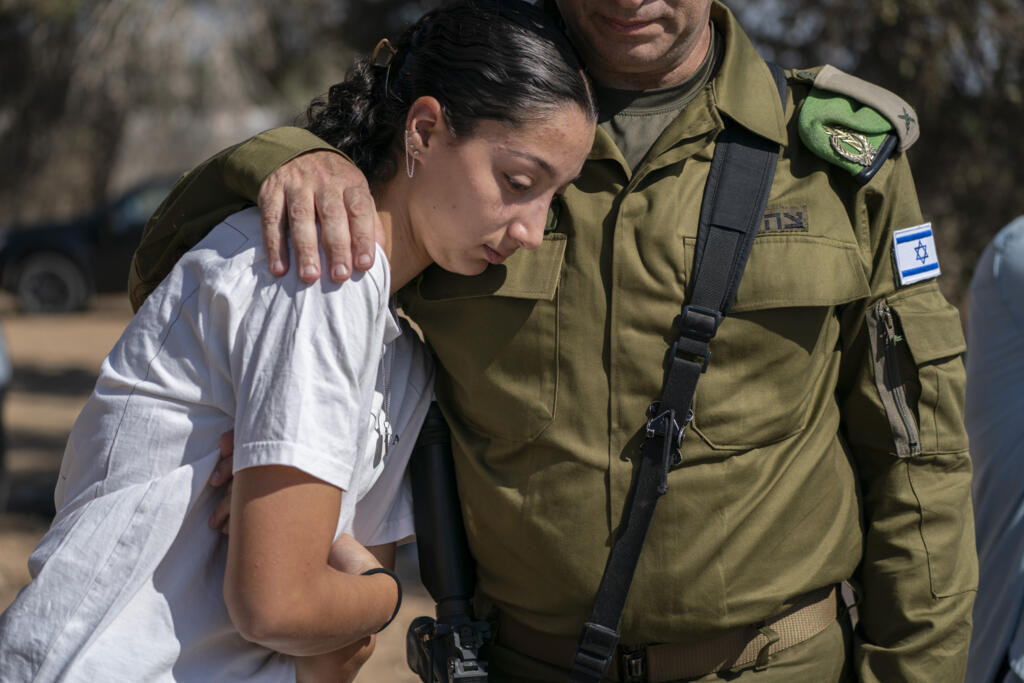
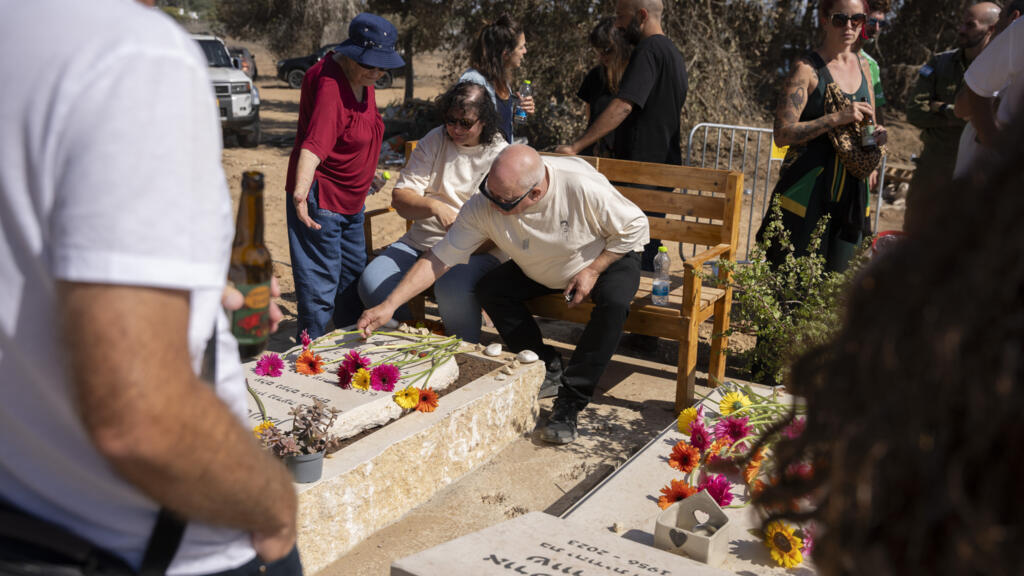
On Thursday, survivors of the attack in Kfar Aza gathered in the cemetery for a memorial to honour those killed that day.
At a state ceremony in Jerusalem to mark the second anniversary of the attack under the Jewish calendar, a torch was lit in memory of a young couple from the kibbutz, Sivan Elkabetz and Naor Hasidim, both killed by militants.
'Gives us hope
Elkabetz's father, Shimon Elkabetz, told AFP that the return of the surviving hostages on Monday sparked hope.
But he was of the view that the Israeli army should not leave Gaza "until the last of the (dead) hostages is back to be buried in Israel".
Israel has accused Hamas of violating the terms of the ceasefire agreement, under which the militants had until noon Monday (0900 GMT) to hand over all the hostages it still held in Gaza.
While Hamas handed over all 20 living hostages by the deadline, the group has only handed over nine of the 28 bodies, arguing it would need specialist equipment to retrieve the rest from Gaza's ruins.
Israel's defence minister on Wednesday threatened to restart the offensive if Hamas did not honour the deal.
Elkabetz agreed.
"Our soldiers are deep inside the Strip, and that is a good thing," he said.
'No home anymore'
At the Kfar Aza memorial, people placed flowers on the tombs of victims of the Hamas attack. Others, as per Jewish custom, laid stones.
On stage, survivors read out the names of the 64 victims, the noise of helicopters and drones overhead at times drowning out their voices.
Batia Holin could not hide her pain for "64 of my friends are gone, murdered".
Reconstruction work has begun, though much of the kibbutz is still damaged and only a handful of residents have come back to live in Kfar Aza.
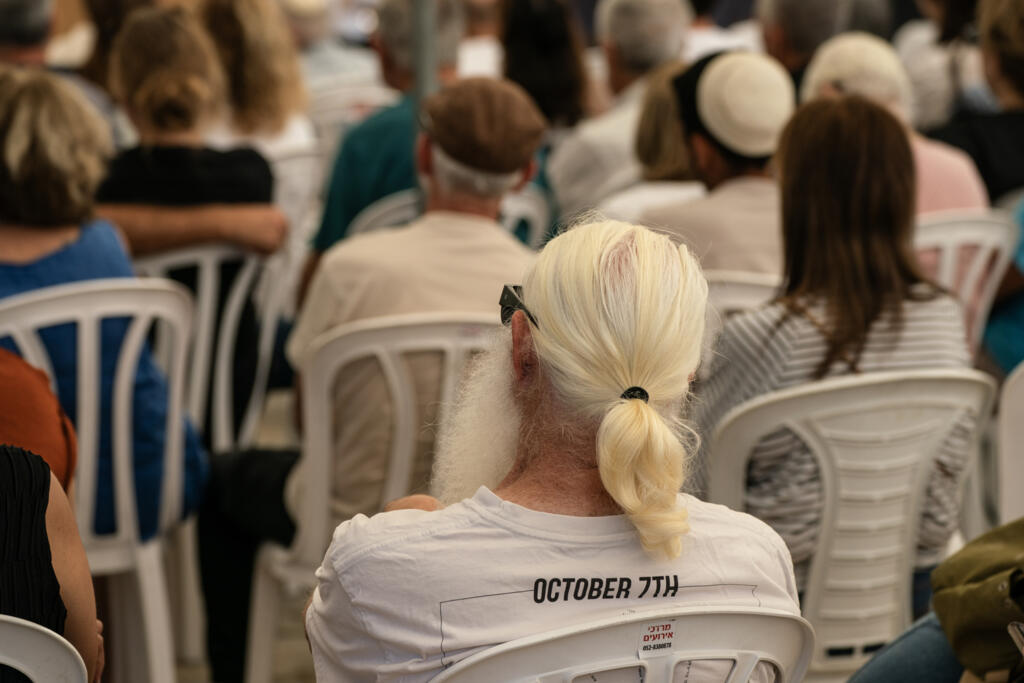
Holin, who has lived in Kfar Aza for 50 years, said she was struggling to imagine what the future might hold.
"I can't go to my home because I have no home anymore. It will take more two years maybe, and it's very difficult," she told AFP.
In April, the kibbutz opened a new neighbourhood of 16 housing units earmarked for younger people, to replace the old youth quarter destroyed in the attack.
Schwartzman, at 40 a father of two, lives in the neighbourhood. His wife lost both her parents in the October 7 attack.
While the road to recovery will be long, he says he is confident that others will follow and move back, like he has.
Several people he knew, Schwartzman said, had been "living here for several generations, three generations, maybe even four...
"So I guess this is the only place they can call home and that's why they want to come back."
© 2025 AFP
Worlds Extinguished: Hostage Returns,
Central Casting and the Gaza Ceasefire
Depending on which source you consult, the twenty-point peace plan of President Donald Trump for securing peace in Gaza shows much exultance and extravagant omission. The exultance was initially focused on the return of the hostages. It then shifted to the broader strategic goals of the various parties. Commentary on this point, even as the living Israeli hostages convalescence after their exchange for Palestinian detainees, sidesteps the Palestinian people, those fly in the ointment irritants who never seem to exit the political scene.
The peace plan, in effect, is being executed to eliminate Hamas and any semblance of a Palestinian militant movement in favour of an Israel-Arab-US axis of preferment and normalisation. Doing so puts a firm lid on Palestinian sovereignty and statehood in favour of sounder relations between Israel and the Arab states.
Consider, for instance, the views from the American Jewish Committee in their October 10 assessment. “President Trump’s unconventional approach created new diplomatic realities and forced Israel and key Arab states to align in new ways.” The peace plan was “the most credible framework to date for advancing Israeli-Arab peace, creating new opportunities for regional engagement, and countering Hamas’ ideology through a united alliance of Israel and Arab nations committed to peace, security, and prosperity.” Clearly, Palestinians are, if not footnotes, then invisible ink lines in such arrangements.
This attitude is also echoed in remarks made by the US Vice President, J.D. Vance. Palestinian subservience is assumed in any new proposed arrangement which prioritises Israeli security and a collective of overseeing nation states that will guard against any mischief in the Strip. “The President convinced the entire Muslim world really, both the Gulf Arab states, but as far as South-East Asia as Indonesia, to really step up and provide ground troops so that Gaza could be secured in safety.”
Egyptian Foreign Minister Badr Abdelatty gave some sense of what is expected. “We are going to support and commit troops within specific parameters,” he told CBS. A UN Security Council mandate would be required, along with clear specifications for what the mission of the troops on the ground would be, “which will be peacekeeping and providing training to Palestinian police.”
Trump’s near cinematic appearance on October 13 in the compact, claustrophobic Knesset after the handover of the hostages set the scene for Israeli grandstanding, staged mawkishness and denial. Netanyahu was in typical form, accusing Israel’s friends of blood libel stupidity for recognising Palestine; in doing so, they had effectively committed acts of antisemitism, buying “into Hamas’s false propaganda.” Massacring and starving those in the Gaza Strip warranted no mention, but disarming Hamas and demilitarising the enclave did. With praise for both himself and Trump, Netanyahu spoke of jointly forging “a path to bring the remaining hostages home and end the war. End a war in a way that ensures the disarming of Hamas, the demilitarisation of Gaza, and that Gaza would never again pose a threat to Israel.”
He also thanked Trump for “fully” backing the decision to make the last murderous assault into Gaza City. This “military pressure” provided momentum that eventually saw Hamas capitulate. The US President then “succeeded in doing something that no one believed was possible. You brought most of the Arab world, you did, you brought most of the world behind your proposal to free the hostages and end the war.”
Opposition leader Yair Lapid, for his part, explicitly denied any genocide or “intentional starvation” of the Palestinians, then proceeded to overlook them in calling on “all the nations of the Islamic world” to engage Israel.
Trump’s own speech was meandering, personal and free of complex turns. He spoke about his envoy Steve Witkoff as a Henry Kissinger who did not leak, an emissary of singular genius. An interruption by Hadash lawmakers Ayman Odeh and Ofer Cassif, both demanding that Palestine be recognised, did not faze him. And then came mention of the Ukraine War, and Russian President Vladimir Putin and more adulatory remarks for the US delegates who have paid homage to the US God King. They were all part of “central casting”.
Not a sliver of reference to the Palestinian cause for sovereignty made an appearance, which continues to moan under the strategic expediency of it all, the residents of Gaza doomed to indefinite invigilation at the hands of Trump’s “Board of Peace”. More to the point, he was happy to admit providing weapons at the request of “Bibi” at a moment’s notice. The US made “the best weapons in the world, and we’ve given a lot to Israel, … and you used them well.” But the slaughter could not continue, and the Israeli PM would be remembered “far more” for accepting the peace agreement. “The timing for this is brilliant. I said, ‘Bibi you’re going to be remembered for this far more than if you kept this thing going, going, going, kill, kill, kill.’”
The Palestinians, granted brief respite from military violence, will be desperately wary. When Lapid mentioned that Trump had “saved far more than one life, and life is an entire world”, it can also be assumed that killing one life kills a world. Some 68,000 Palestinian worlds (a conservative estimate) were extinguished by the munitions and weapons of Israel and its backers. As humanitarian workers return to Gaza, they see the horrors of a lunarscape of devastation. If only Trump had considered paying a visit to that particular part of earth.

No comments:
Post a Comment