After sweeping away the Nepalese government in early September and shaking up the Philippines, a wave of protests initiated by Generation Z has now spread to Madagascar and Morocco. In each case, the demands are similar, with a sense of injustice informed by images on social media.
Issued on: 02/10/2025 - RFI
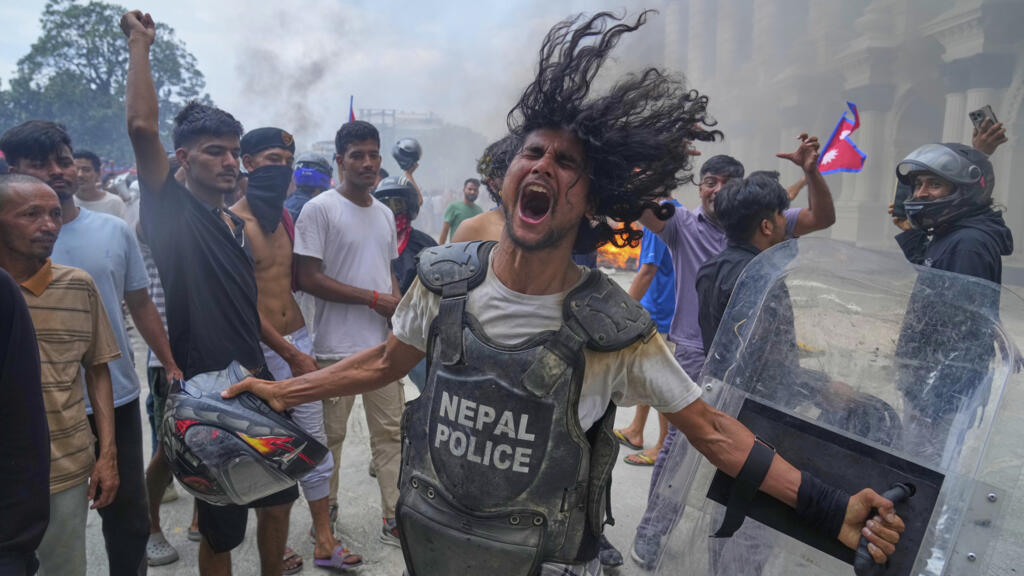
Young Nepalese people protest in front of the government headquarters in Kathmandu, 9 September. AP - Niranjan Shrestha
A surge of rebellion led by young people born between 1997 and 2012 is rewriting the rules of protest, with the smartphone the new megaphone.
Over the past three years, the pace at which these movements are changing the status quo has accelerated.
In 2022, it took five months for Sri Lankan students and activists to topple the Rajapaksa dynasty, which had clung to power for nearly two decades. In 2024, Bangladeshi Prime Minister Sheikh Hasina was ousted in just six weeks. In Nepal last month , it took a mere 48 hours for protests to bring down the government of Khadga Prasad Sharma Oli.
The profile of these movements is strikingly consistent, with the crowds overwhelmingly young and hyper-connected. They are members of Generation Z – the first cohort to grow up entirely in the digital age, with social media seen not as an accessory but the lens through which they interpret the world
A surge of rebellion led by young people born between 1997 and 2012 is rewriting the rules of protest, with the smartphone the new megaphone.
Over the past three years, the pace at which these movements are changing the status quo has accelerated.
In 2022, it took five months for Sri Lankan students and activists to topple the Rajapaksa dynasty, which had clung to power for nearly two decades. In 2024, Bangladeshi Prime Minister Sheikh Hasina was ousted in just six weeks. In Nepal last month , it took a mere 48 hours for protests to bring down the government of Khadga Prasad Sharma Oli.
The profile of these movements is strikingly consistent, with the crowds overwhelmingly young and hyper-connected. They are members of Generation Z – the first cohort to grow up entirely in the digital age, with social media seen not as an accessory but the lens through which they interpret the world
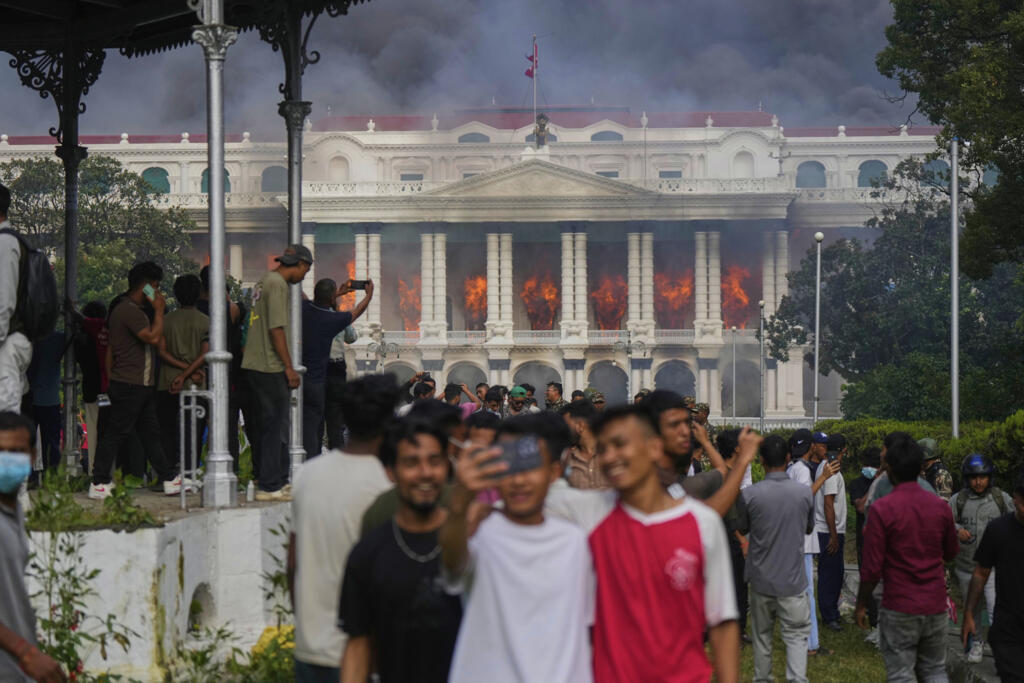
Young Nepalese people take selfies in front of the Nepalese government headquarters, set on fire by protesters in Kathmandu on 9 September. AP - Niranjan Shrestha
'They see everything'
If the grievances vary by country – from corruption to education to basic services – the underlying themes are universal: anger at injustice, impatience with inequality and frustration at hypocrisy.
“These young people today are acting on demands that go beyond the purely political. They have a radical need for consistency, a need for authenticity,” says Elodie Gentina, a professor at the IESEG School of Management and a specialist in Gen Z.
"They want to compare everything, they judge everything, they see everything, because they have constant access to social media. They are also very aware of the contradictions between the promises made by leaders promises and their actions. They detest institutional hypocrisy – as seen in Nepal, where leaders talked a lot about modernity but at the same time blocked access to 26 social networks."
Anger that had been building online over the privileged offspring of the political elite flaunting their wealth on Instagram, in a country where 20 percent of 15 to 25-year-olds are unemployed, spilled over on to the streets.
'They see everything'
If the grievances vary by country – from corruption to education to basic services – the underlying themes are universal: anger at injustice, impatience with inequality and frustration at hypocrisy.
“These young people today are acting on demands that go beyond the purely political. They have a radical need for consistency, a need for authenticity,” says Elodie Gentina, a professor at the IESEG School of Management and a specialist in Gen Z.
"They want to compare everything, they judge everything, they see everything, because they have constant access to social media. They are also very aware of the contradictions between the promises made by leaders promises and their actions. They detest institutional hypocrisy – as seen in Nepal, where leaders talked a lot about modernity but at the same time blocked access to 26 social networks."
Anger that had been building online over the privileged offspring of the political elite flaunting their wealth on Instagram, in a country where 20 percent of 15 to 25-year-olds are unemployed, spilled over on to the streets.
The 'amplifier' effect
“Social media plays the role of emotional and political amplifier. It allows the sharing of images that can be inspiring, but also shocking. Gen Z are constantly comparing themselves to others, and that creates emulation. The viral logic of social networks transforms isolated frustrations into collective movements that become extremely powerful,” Gentina told RFI
In Indonesia, student protests earlier this year adopted an unlikely banner: the pirate flag from One Piece, a manga series in which the hero, Luffy, fights a corrupt and tyrannical world government.
A pop culture reference quickly became a unifying symbol, with the same imagery being adopted in Madagascar and Morocco.
In Madagascar, the triggers for the unrest were blackouts, water shortages and demands for basic freedoms. In Morocco, a collective calling itself "Gen Z 212" emerged online, calling for education and healthcare reform, and questioning the billions poured into hosting the 2030 World Cup while everyday needs go unmet.
“These are purely social demands,” says Souad Brahma, president of the Moroccan Association for Human Rights, speaking to RFI. “The right to a dignified life – that means education, healthcare, decent housing. And through certain slogans, they also call for an end to corruption.”
“Social media plays the role of emotional and political amplifier. It allows the sharing of images that can be inspiring, but also shocking. Gen Z are constantly comparing themselves to others, and that creates emulation. The viral logic of social networks transforms isolated frustrations into collective movements that become extremely powerful,” Gentina told RFI
In Indonesia, student protests earlier this year adopted an unlikely banner: the pirate flag from One Piece, a manga series in which the hero, Luffy, fights a corrupt and tyrannical world government.
A pop culture reference quickly became a unifying symbol, with the same imagery being adopted in Madagascar and Morocco.
In Madagascar, the triggers for the unrest were blackouts, water shortages and demands for basic freedoms. In Morocco, a collective calling itself "Gen Z 212" emerged online, calling for education and healthcare reform, and questioning the billions poured into hosting the 2030 World Cup while everyday needs go unmet.
“These are purely social demands,” says Souad Brahma, president of the Moroccan Association for Human Rights, speaking to RFI. “The right to a dignified life – that means education, healthcare, decent housing. And through certain slogans, they also call for an end to corruption.”
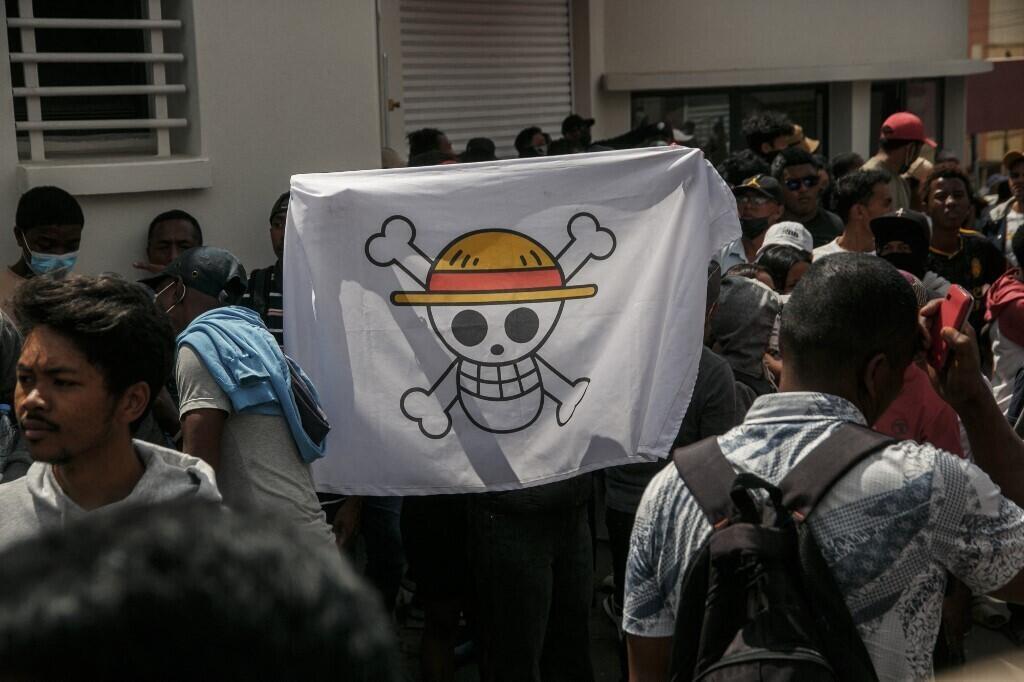
Protesters wave the flag of the Japanese manga series ‘One Piece’ in the streets of Antananarivo on 30 September. AFP - RIJASOLO
Demographic weight
“More than against [individual] governments, Generation Z is rebelling against a model of governance that no longer works for them,” explains Gentina.
"They deem it too top-down, too opaque, too slow. These young people demand transparency and concrete results. They can no longer tolerate inconsistency between words and actions."
With more than a third of the world’s population belonging to Gen Z, demographics are on their side. In parts of Asia, they account for half the population, making their voices impossible to ignore.
As for where they might rise up next, all eyes are on India. The world's most populous nation also has the largest Gen Z population on the Asian continent, and those hundreds of millions of young people have not been spared by the mass unemployment, inequality and corruption that plague the country.
This article has been adapted from the original version in French.
Demographic weight
“More than against [individual] governments, Generation Z is rebelling against a model of governance that no longer works for them,” explains Gentina.
"They deem it too top-down, too opaque, too slow. These young people demand transparency and concrete results. They can no longer tolerate inconsistency between words and actions."
With more than a third of the world’s population belonging to Gen Z, demographics are on their side. In parts of Asia, they account for half the population, making their voices impossible to ignore.
As for where they might rise up next, all eyes are on India. The world's most populous nation also has the largest Gen Z population on the Asian continent, and those hundreds of millions of young people have not been spared by the mass unemployment, inequality and corruption that plague the country.
This article has been adapted from the original version in French.
Morocco Gen Z protests enter sixth day with calls to oust government
Mass protests in Morocco entered a sixth day on Friday, with the youth-led movement GenZ 212 demanding that the government be removed. The group said the authorities had failed to protect citizens’ constitutional rights and respond to basic social needs.
04/10/2025 - RFI
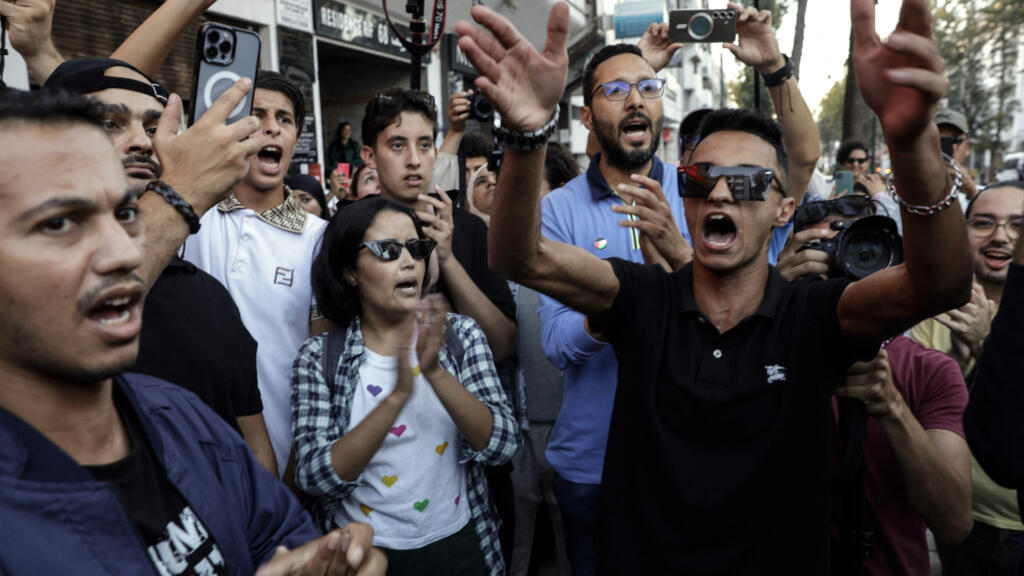 The group which has been organising demonstrations in Morocco has called for the dismissal of the government. AFP - ABDEL MAJID BZIOUAT
By: Paul Myers
Three people have died since the demonstrations began. Hundreds have been arrested and nearly 300 people – mostly members of the security forces – have been injured in clashes and scuffles, the interior ministry said.
It added that 80 public and private buildings and hundreds of cars had been vandalised.
GenZ 212 also called for the release of all those detained in connection with what it described as peaceful protests.
The group, whose main organisers remain unknown, said its demand for the government’s dismissal was based on a constitutional article that gives the king the power to appoint and dismiss the prime minister and cabinet.
Online forums
GenZ 212 has mainly used the online messaging platform Discord to mobilise protests. It has repeatedly said it rejects the violence and vandalism reported in several towns and cities.
Prime Minister Aziz Akhannouch, head of the National Rally of Independents, chaired a meeting on Tuesday attended by coalition partners Fatima Zahra Mansouri, Mohamed Mahdi Bensaid and Nizar Baraka.
“After reviewing the developments linked to youth expressions in online and public spaces, the government affirms that it listens carefully to and understands the social demands,” the politicians said in a communique.
"We are ready to respond positively and responsibly through dialogue and discussion within institutions and public forums, and by finding realistic, implementable solutions that serve the interests of the nation and citizens.”
Reforms underway
Health Minister Amine Tehraoui on Wednesday told parliament several reforms were underway, but acknowledged that they were still insufficient to close the gaps in the sector.
Since the demonstrations started, hundreds of mostly young people have been arrested.
The interior ministry said more than 400 people had been arrested since the demonstrations began, most of them young.
A spokesperson added that 80 public and private buildings as well as hundreds of cars had been vandalised.
Mass protests in Morocco entered a sixth day on Friday, with the youth-led movement GenZ 212 demanding that the government be removed. The group said the authorities had failed to protect citizens’ constitutional rights and respond to basic social needs.
04/10/2025 - RFI
The group which has been organising demonstrations in Morocco has called for the dismissal of the government. AFP - ABDEL MAJID BZIOUATBy: Paul Myers
Three people have died since the demonstrations began. Hundreds have been arrested and nearly 300 people – mostly members of the security forces – have been injured in clashes and scuffles, the interior ministry said.
It added that 80 public and private buildings and hundreds of cars had been vandalised.
GenZ 212 also called for the release of all those detained in connection with what it described as peaceful protests.
The group, whose main organisers remain unknown, said its demand for the government’s dismissal was based on a constitutional article that gives the king the power to appoint and dismiss the prime minister and cabinet.
Social inequality
The rallies have been driven by anger over social inequality and failing public services. Protests swelled after reports last month of the deaths of eight pregnant women at a public hospital in the southern city of Agadir.
“Moroccan youth are taking to the streets to call for functioning hospitals, quality schools and decent jobs. They’re rejecting billions being spent on stadiums for the World Cup, while basic services are collapsing," Tahani Brahma, a researcher and secretary general of the Moroccan Association for Human Rights, told RFI.
Most importantly, Moroccan youth do not want promises, they want their rights.”
Morocco was chosen last October, along with Portugal and Spain, to host the 2030 centenary edition of the World Cup. Six venues will be in Morocco, three in Portugal and 11 in Spain.
Spending on new stadiums and refurbishing existing ones for the World Cup and the upcoming Africa Cup of Nations is estimated to exceed €5 billion.
The rallies have been driven by anger over social inequality and failing public services. Protests swelled after reports last month of the deaths of eight pregnant women at a public hospital in the southern city of Agadir.
“Moroccan youth are taking to the streets to call for functioning hospitals, quality schools and decent jobs. They’re rejecting billions being spent on stadiums for the World Cup, while basic services are collapsing," Tahani Brahma, a researcher and secretary general of the Moroccan Association for Human Rights, told RFI.
Most importantly, Moroccan youth do not want promises, they want their rights.”
Morocco was chosen last October, along with Portugal and Spain, to host the 2030 centenary edition of the World Cup. Six venues will be in Morocco, three in Portugal and 11 in Spain.
Spending on new stadiums and refurbishing existing ones for the World Cup and the upcoming Africa Cup of Nations is estimated to exceed €5 billion.
Online forums
GenZ 212 has mainly used the online messaging platform Discord to mobilise protests. It has repeatedly said it rejects the violence and vandalism reported in several towns and cities.
Prime Minister Aziz Akhannouch, head of the National Rally of Independents, chaired a meeting on Tuesday attended by coalition partners Fatima Zahra Mansouri, Mohamed Mahdi Bensaid and Nizar Baraka.
“After reviewing the developments linked to youth expressions in online and public spaces, the government affirms that it listens carefully to and understands the social demands,” the politicians said in a communique.
"We are ready to respond positively and responsibly through dialogue and discussion within institutions and public forums, and by finding realistic, implementable solutions that serve the interests of the nation and citizens.”
Reforms underway
Health Minister Amine Tehraoui on Wednesday told parliament several reforms were underway, but acknowledged that they were still insufficient to close the gaps in the sector.
Since the demonstrations started, hundreds of mostly young people have been arrested.
The interior ministry said more than 400 people had been arrested since the demonstrations began, most of them young.
A spokesperson added that 80 public and private buildings as well as hundreds of cars had been vandalised.

No comments:
Post a Comment