With ‘Enemies’ Like These, Who Needs Friends?: Trump’s China Diplomacy – Analysis
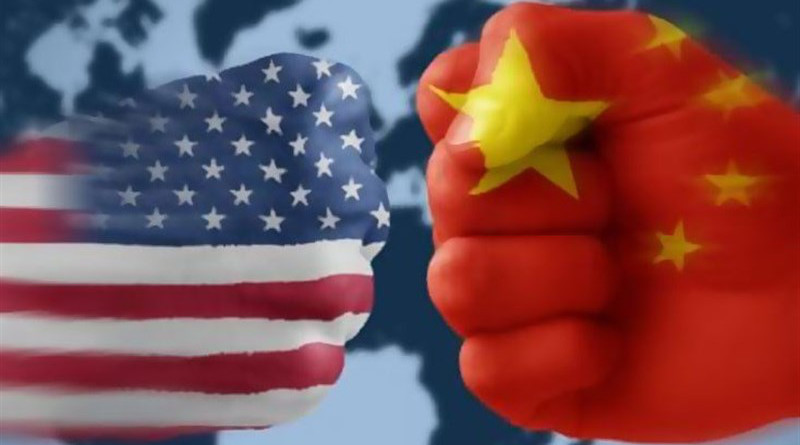
By Observer Research Foundation
By Amrita Narlikar
Not yet even a year into his second term, President Donald J. Trump seems to be on a mission to prove the late Henry Kissinger right: it may be dangerous to be America’s enemy, but to be America’s friend is fatal.
The Trump administration has already managed to disappoint and alienate several of its closest allies and strategic partners. But continue along the current trajectory, and Trump 2.0 might surpass Kissinger’s warning with a new twist: to be in the bad books of the United States (US) may ironically offer some advantages. And if it now pays to be America’s rival, and hurts to be a friend, then something fundamental is going wrong with Trumpian diplomacy.
The US Narrative on China
China is an illustration of the muddle that American diplomacy has become.
The first Trump administration dealt with China as a threat; the Biden administration, too, did not let its guard down. Despite some turnarounds, the direction of travel was clear: diversification away from China, as well as intensified cooperation with partners in minilateral settings (such as the Quad). Slowly but surely, European narratives expressing concern about the geoeconomic threats posed by China also intensified, and transatlantic coordination grew. From the perspectives of Asian countries caught up in border and maritime disputes with China, these were welcome and timely moves.
China continued to be in the firing line as part of candidate Trump’s election campaign for the 47thPresidency. Although Agenda 47 announced that all foreign producers would face universal baseline tariffs, China was singled out in several ways. Trump promised that if he were re-elected, he would “reclaim our economic independence from China… revoke China’s Most Favoured Nation trade status and adopt a four-year plan to phase out all Chinese imports of essential goods–everything from electronics to steel to pharmaceuticals. This will include strong protections to ensure China cannot circumvent restrictions by passing goods through conduit countries”.
New rules would be put in place to prevent US companies from investing in China, and federal contracts would be banned for companies that outsource to China. With his return to power, Trump seemed to be holding course with his anti-China promises. His choice of appointees in the administration pointed to “a new hawkish China policy”.
Pete Hegseth, Secretary of Defence, was unambiguous in his NATO speech, identifying the “Communist Chinese with the capability and intent to threaten our homeland core national interests in the Indo-Pacific. The US is prioritising deterring war with China in the Pacific, recognizing the reality of scarcity, and making the resourcing tradeoffs to ensure deterrence does not fail”. So seriously was the Trump administration taking the China threat that it argued for a “division of labour” with European members of NATO “leading from the front” in Europe, and the US concentrating on the Pacific. The new administration’s message was loud and clear: China was a threat to American prosperity and security, and would be treated as such.
Unintended Consequences of Trump’s Diplomacy: China accrues benefits
The gamble against China could have paid off, had it been accompanied by the use of carrots elsewhere. Swift and deep trade, investment agreements with like-minded partners, which shared America’s concerns about the geopolitical and geoeconomic threats emanating from China, would have been useful for the task of realigning global supply chains and setting high standards on new technologies. Besides, efforts to close off Chinese access to the US market would be difficult to implement in isolation: Chinese products would make their way back into the US economy using loopholes and other conduits, unless major economies were on board with the US.
But the Trump administration did not follow this approach. Instead, it chose to apply its highly distributive bargaining behaviour not only towards China, but also towards trusted allies and strategic partners. Public admonitions, punitive tariffs, and other punishing measures, imposed indiscriminately on friends and foes alike, became a new norm in American diplomacy emanating from the President’s office. Some partners agreed to concessions that the US demanded, and received some respite from the initially announced tariffs. But irrespective of subsequent exemptions and carve-outs (or not), the delicate lines of trust that take decades to build were frayed: the US has shown itself to be an unreliable friend.
Against this background, China appears in a new light. While the US reprimands and insults its partners, China’s “wolf-warrior” diplomacy has taken a sweet turn. While the US tramples on the multilateral institutions that it had once led, China presents itself as their upholder and protector. While the US insists on “America First”, China stresses multi-polarity and offers a plethora of apparently inclusive initiatives such as the Global Civilisation Initiative, Global Security Initiative, and Global Development Initiative. Even if many do not buy into these narratives, they are turning out to be more influential globally than the American hardline MAGA narrative. Anti-China narratives seem to be softening.
Academic and policy debates on reforming the World Trade Organization (WTO) provide an illustration of the changing perceptions. Previous discussions had tended to raise questions about Chinese violations of the rules and the spirit of the organisation (e.g failure to uphold intellectual property rights, forced technology transfers, subsidies), while also looking askance at the US (particularly over its decision to block appointments in the Appellate Body, thereby paralyzing the WTO’s Dispute Settlement Mechanism–a Trump 1.0 move, which was also not rectified by the Biden administration). Today, the focus is far less on China’s trade transgressions, and the blame for the WTO’s dysfunctionality is being placed much more squarely on the US.
A recent paper has even made the case that the US and the WTO should part ways, and that “On the choice of whether the US should or should not be a member, the burden of proof should fall on those who argue in favour of retaining the US as a member”. This is an astonishing shift in scholarly debate and displays a steep decline in American smart power.
The Trump administration’s readiness to antagonise America’s friends is also having geopolitical repercussions. The thaw in India-China relations is motivated by several factors and has been in the works for some time now. The timing, however, is interesting: an explicit show of camaraderie between the two Asian giants comes despite China’s military and defence support to Pakistan during Operation Sindhoor, just a few months ago.
Powerful catalysts enabling this development include Trump’s tariff hikes against India, singling out India over Russian oil purchases (and turning a blind eye to Chinese and European purchases), new H1B visa fees that hit India severely as a supplier of skilled immigration to the US, all accompanied by rhetoric from key figures (e.g. Peter Navarro and Howard Lutnick) that is anything but diplomatic. If the US has been serious in eyeing China as a threat and genuine in its concerns about the balance of power in the Indo-Pacific, then even the cautious warming of India’s relations with China marks a failure in American diplomacy.[1]
It is worth mentioning that, in addition to the indirect gains that the US is now handing to China on a plate, it is further offering direct gains to boot. The tendency of Trump 1.0 to do “flip-flops” over China persists under Trump 2.0. The deal over TikTok is arguably not a win-win for both parties, but a win for China. The roller-coaster of American diplomacy today, replete with acerbic denunciations and sharp turnarounds, is one of the reasons why the #TALC (“Trump Always Chickens Out”) is trending on social media.
It did not have to be this way. There was much potential in what President Trump started out with in his second Presidency. This could have been an opportunity to strengthen partnerships with democracies, have serious conversations (and consequent policies) on legal versus illegal immigration, and secure global supply chains. Some element of surprise and reversals could have been used effectively as part of a grand strategy. Not all is yet lost; there is still concern in the world regions about other threats besides the US, and there are still problems that could be more effectively addressed were the US to return as a judicious player in the diplomatic game.
But as things stand, the US is rewarding its rivals and punishing its friends. This is not American exceptionalism at work; rather, it is an exceptional muddle.
- About the author: Amrita Narlikar, Distinguished Fellow, Observer Research Foundation and Honorary Fellow, Darwin College, University of Cambridge
- Source: This article was published by Observer Research Foundation
[1] The same could be said of the Trumpian effect in other settings too: the President’s denunciation and ridicule of the BRICS (and its member countries) seems to have injected new momentum into the grouping.

Observer Research Foundation
ORF was established on 5 September 1990 as a private, not for profit, ’think tank’ to influence public policy formulation. The Foundation brought together, for the first time, leading Indian economists and policymakers to present An Agenda for Economic Reforms in India. The idea was to help develop a consensus in favour of economic reforms.


No comments:
Post a Comment