DECRIMINALIZE DRUGS
Cocaine smugglers are plaguing international shipping companies
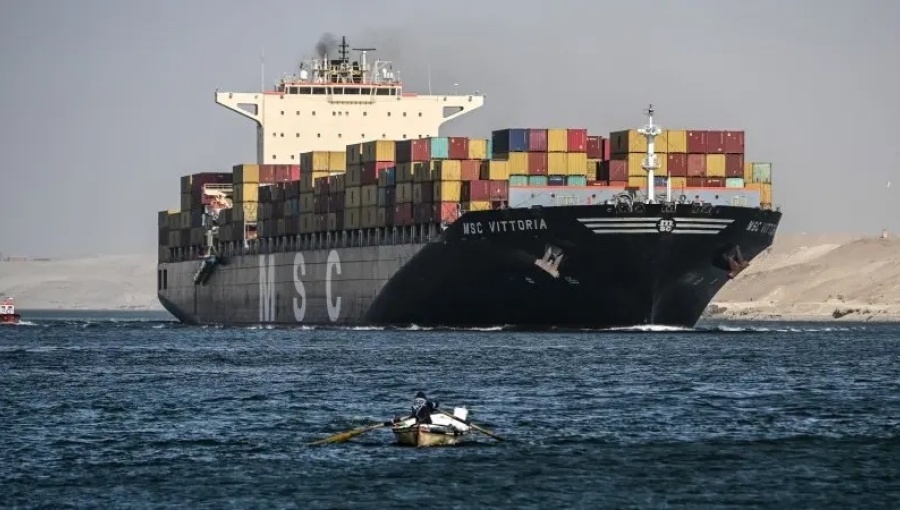
Cool Carriers, the world’s largest operator of specialised refrigerated cargo vessels, known as reefers, has rejected allegations broadcast by Danish TV2 linking the group to a cocaine-smuggling scheme off Denmark’s coast, insisting it had no operational control over the ships or the crew involved, the company told bne IntelliNews on December 8.
The scandal erupted after Danish broadcaster TV2 reported on a police investigation into drug drops carried out by armed gangs using fast boats. According to the investigation, gang members recovered bags of cocaine dumped at sea by passing container vessels. One of the gangsters, 26-year-old Albanian Mustafa Xhaferas, confessed and received a 15-year prison sentence.
In his testimony, Xhaferas claimed the consignments were thrown overboard from two ships — Cool Eagle and Cool Explorer — transporting bananas from Ecuador to St Petersburg. TV2 suggested the vessels were managed by Cool Carriers.
The company said the report was “categorically false.” Cool Carriers is the commercial operator of the two ships, but not the owner and has nothing to do with the day to day operations of the ships, which it leases, but does not run them. Operational control, including hiring and managing the crew, rests entirely with the third-party owners, decisions that Cool Carriers plays no part in making.
“This means we are twice removed from the crew,” Glenn Selling, chief operating officer at Cool Carriers AB based in Sweden said speaking to bne IntelliNews. “The crew are employed by agencies hired by the owners. We have nothing to do with those decisions. That is the owner’s responsibility, and the owner makes all those decisions. It's their responsibility. When the investigation was launched, the police didn’t even bother to interview us in connection with the case. We found out about it from the media.”
Selling stressed that the narcotics trade has become a systemic threat to global shipping and is infecting the whole industry. “It’s a problem on an industrial scale,” he told bne IntelliNews. “No one company can do anything against this on its own. We don’t have guns on board our ships. We can’t check everything. We need the help of the authorities. This is a problem of a scale that countries have to tackle. We of course do what we can.”
The group operates more than 50 refrigerated vessels, transporting fruit and other perishables. Its largest offices are in Cyprus and Sweden, with additional operations in Chile, South Africa and the US. It has no legal entities and no representation in Russia.
Cool Eagle and Cool Explorer are owned by third-party investors and only leased by Cool Carriers. As a commercial operator, the company books cargoes, arranges port handling, and manages commercial costs. It does not select or supervise crews, nor does it control onboard activity during voyages. “This is the job of the management company or the owner,” Selling said.
Cool Carriers has introduced multiple safeguards against smuggling, including mandatory hull inspections by divers, full pre-departure checks and strict rules preventing crew from disembarking in high-risk ports – especially in South America. “We welcome customs inspections at any time. We work closely with the authorities,” Selling said. But he added that responsibility for security ultimately lies with port authorities and local customs services.
Drug business exploding
On March 15 this year, the French Navy intercepted more than 6,386 kilograms of cocaine, valued at €371mn ($400mn), during a maritime operation off the Gulf of Guinea.
The bust was conducted in coordination with the United States Drug Enforcement Administration (DEA), the United Kingdom’s National Crime Agency (NCA), and the Maritime Analysis and Operations Centre–Narcotics (MAOC-N) based in Portugal.
The seizure is the latest in a series of large-scale cocaine interceptions as drug trafficking explodes on the back of rising supply and demand, much of it arriving in its final markets by sea, Maritime Crimes reported in July.
The latest seizures follow on from a record-breaking seizure of 24.5 tonnes of cocaine at the port of Hamburg in June 2024. That haul surpassed the previous record set six years earlier in July 2019, when US authorities intercepted 20 tonnes of cocaine aboard the MSC Gayane, a Liberian-flagged container ship docked in Philadelphia, operated by the world’s largest container shipping company. The Gayane seizure remains one of the largest ever recorded, with an estimated market value exceeding $1bn.
In total, authorities worldwide seized a stunning 1,838 tonnes of illicit substances in 2024, with 281 tonnes of that total being cocaine.
Cultivation of coca leaves is expanding with the bulk of the world’s production concentrated in a handful of counties in the northern parts of Latin America.
The United Nations Office on Drugs and Crime (UNODC) has reported that global coca production is nearing 2,700 tonnes, with approximately 355,000 hectares under coca cultivation. Colombia accounts for 230,000 hectares—65% of the global total—followed by Peru with 95,000 hectares (27%) and Bolivia with 30,000 hectares (8%). Smaller production areas remain in Panama, Nicaragua, Guatemala and Mexico.
Ecuador has emerged as a growing problem. Once a peaceful travel destination, it has seen escalating violence and political instability, creating fertile ground for cartels. Peru is similarly plagued as cities such as Lima, Trujillo and Arequipa have been wracked by extortion, contract killings and gang-related violence this year. This environment creates ideal conditions for cartels to operate. Workers and officials are routinely bribed to place narcotics on board vessels. “Gangs are relentless,” Selling said. A shipment of 1,000kg of cocaine can be worth more than $50mn on the streets of London.
“Record seizures indicate both the scale of trafficking and the increased efforts by international law enforcement,” the UNODC said in its latest report.
Maritime drug running has come into especially sharp focus recently as the Trump administration launches a series of military strikes on boats it claims are smuggling drugs from the north coast of Venezuela to the US, highlighting the widespread use of shipping to move large scale quantities of illicit substances.
Seas route remains the cartels’ preferred means of transport and stashing drugs in containers is the favourite ruse, in what has been dubbed a “rip-on/rip-off” system, according to a report in Maritime Crimes on the mushrooming illicit trade.
But another method, the “drop-off”, has grown in popularity as the ongoing game of cat and mouse between the drug enforcement agencies and the cartels plays out. Basically, traffickers throw packets of drugs over the side of the ship as it approaches port. It is either picked up from the seabed by divers later or the packets float and are retrieved using geolocation devices.
Finally, in a world of rapidly developing drone technology, the cartels also have started using self-propelled semi-submersibles (SPSS) to transport several tonnes of cocaine. The US Coast Guard is already regularly intercepting SPSS off the coasts of Texas, Florida and California, Maritime Crimes reports.
Cartels at sea
Sea routes remain the cartels’ preferred means of transport and containers are a convenient way to stash large amounts of drugs, making the largest multinational container ships especially vulnerable.
Cool Carriers has suffered from its first major narcotics incidents. But it has become a regular problem the world's biggest shipping companies are desperately working to curb.
Maersk and MSC, the world’s two largest cargo carriers, have repeatedly been targeted. Mexican authorities seized 102.5kg of cocaine from the Svendborg Maersk in 2020. Dutch prosecutors uncovered eight tonnes of cocaine in a Maersk refrigerated container in Rotterdam in 2023, the largest single seizure in the port’s history. Employees were arrested as part of the investigation.
Bloomberg reported in 2022 that MSC had been “infiltrated” by cocaine cartels, a claim the company strongly denied, saying smugglers used “groundbreaking methods” that “could not have been foreseen or predicted by any honest shipping company.” MSC said its staff were not mandated or equipped to confront organised crime that has hundreds of millions of dollars at its disposal in its subterfuges.
Multiple crew members from the MSC Gayane were later convicted in the US for participating in an operation that saw boats pulled alongside the vessel as drugs were hoisted aboard and hidden in containers.
Cool Carriers said its experience must be understood against this backdrop. Drug trafficking “acts as a parasite on the shipping industry,” Selling said, adding the group remains committed to full cooperation with authorities worldwide.
“This is not a problem any operator can solve alone,” he said. “But we will continue to do everything in our power to ensure our vessels remain safe and secure.”

No comments:
Post a Comment