DECRIMINALIZE DRUGS
Colombia’s Petro says drug consumption "is not criminal"
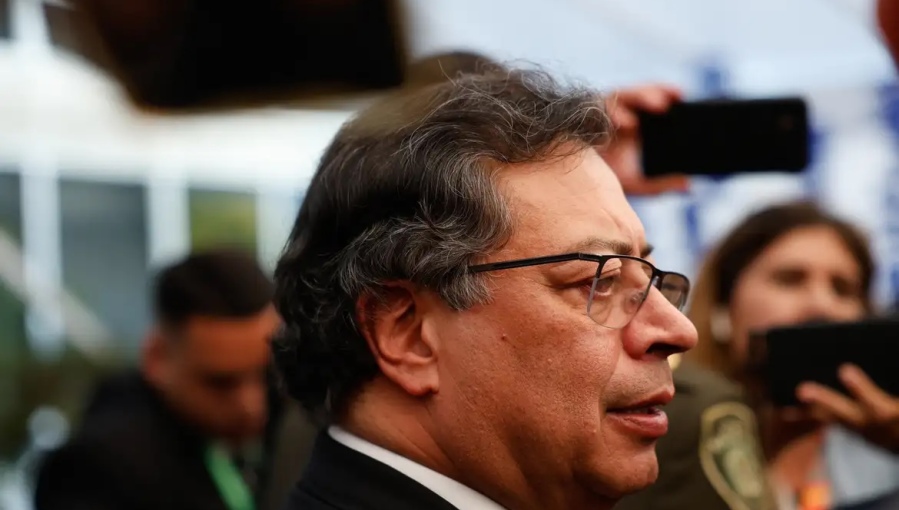
Colombian President Gustavo Petro Urrego has said that drug consumption should not be treated as a crime, arguing that users are shaped by social and emotional factors rather than criminal intent, in remarks delivered at the Police Community of the Americas (Ameripol) meeting on December 10, Infobae reported.
Petro stated the criminalisation of drug users reflects “social and power constructions” rather than scientific criteria, adding that Colombia’s decades of confronting cocaine trafficking demonstrated the need to address addiction through social and human-centred approaches instead of solely policing.
The president warned that competitive social environments can increase vulnerability to addiction and noted that Colombia’s historic focus has been on cocaine — and, to a lesser degree, marijuana — but that synthetic narcotics have introduced new complexities. Petro pointed out that substances such as fentanyl, responsible for most of the deadly drug overdoses in the US, require no crops and can be produced with industrial technology. Their personalised, small-scale manufacture makes detection harder, he said.
“Crime is not exclusively a police matter… it must be viewed from diverse and multiple perspectives," Petro said. He added that global trends are moving gradually towards decriminalisation and that Colombia “has learned” that penalising consumers is ineffective.
The US-sanctioned leftist leader, whom President Donald Trump has recently branded an "illegal drug dealer," also said Colombia is no longer home to the top leaders of drug-trafficking organisations as the industry has become transnational. He pointed to captured links in Medellín tied to groups from Albania, Croatia, Germany, the Netherlands, Sweden and Mexico, among others. According to Petro, the “ex-Colombian” model has been overtaken by multinational networks composed of varied nationalities and driven by global, not national, dynamics.
Petro’s latest remarks continue his controversial pattern of advocating for a permissive drug policy. During a televised cabinet meeting last February, he claimed cocaine was only illegal "because it is made in Latin America, not because it is worse than whiskey," and suggested global legalisation would allow it to be "sold like wine."
Colombia's cocaine seizures as a proportion of potential production reached 29% in 2024, the second-lowest figure in a decade, despite Petro's assertions of record confiscations, according to analysis by La Silla Vacía based on UN Office on Drugs and Crime (UNODC) data. The country is responsible for around 70% of the world's coca production, as per UN data.
The UNODC estimated Colombia produced 3,001 tonnes of cocaine in 2024, representing a 12.6% increase from 2023's 2,664 tonnes, with coca cultivation reaching a record 261,000 hectares, up 3.2% from 253,000 hectares the previous year.

No comments:
Post a Comment