Uber Pioneers First Fully Electric Zero-Emissions Ferry in London
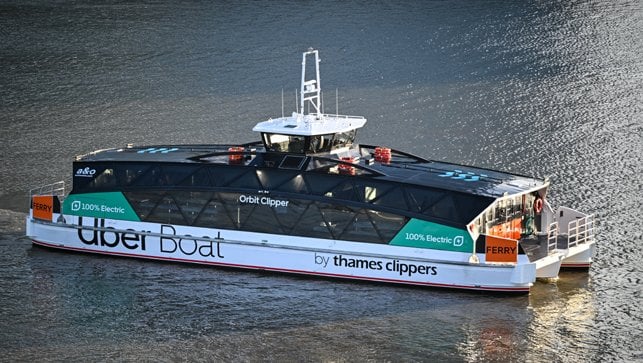
Ferry transport in London is entering a new phase, focusing on sustainability following the launch of a zero-emission vessel. The boat is being promoted as transforming the experience of passengers travelling along the Thames.
Four years after committing to introducing high-speed and eco-friendly vessels to operate on the Thames, Uber Boat by Thames Clippers is launching Orbit Clipper, the UK’s first fully electric zero-emissions ferry. On December 5, the new vessel completed its first passenger trip on the Thames, ushering in what is being described as a new era for sustainable transport in London.
Uber Boat by Thames Clippers reckons that the Orbit Clipper is a groundbreaking vessel in many aspects. The 150-passenger ferry with capacity for 100 bicycles features a roll-on/roll-off design that enables automated docking on both sides owing to its double-ended, self-docking, auto-mooring features. The vessel will operate between London’s Canary Wharf on the north side of the Thames and Rotherhithe on the south, offering an efficient and eco-friendly service for cross-river transport.
Built by UK’s Wight Shipyard Co, Orbit Clipper was partly funded by the UK government through the Department for Transport and Innovate UK. The 25-meter (82-foot) vessel with a maximum speed of 12 knots forms a major component of Uber Boat by Thames Clippers drive towards sustainable transport in London.
In recent years, the operator has added three hybrid high-speed vessels to its main fleet of River Buses, each cutting emissions by up to 90 percent and contributing to its ambitious target of reducing carbon emissions by 50 percent by 2035 and achieving net-zero by 2050. The boats operate on battery power while in Central London and recharge while using biofueled power on the rest of their journey.
“The launch of Orbit Clipper is a significant milestone for sustainable transport in London. As the UK’s first all-electric, zero-emissions vessel, it represents our commitment to reducing the city’s carbon footprint while continuing to provide reliable and efficient river transport,” said Sean Collins, Uber Boat by Thames Clippers CEO.
The new vessel is expected to replace the current cross-river ferry service, continuing to serve the growing number of passengers. Estimates indicate the vessel will, on average, ferry more than 20,000 passengers daily.
In operation for over 25 years, Uber Boat by Thames Clippers has spearheaded innovations in the marine sector, consistently supporting the Thames' role in London's sustainable transport future. As part of its mission, the company has also been exploring advanced fuel options, including compressed hydrogen gas, liquid hydrogen, and methanol.
Japan Licenses Its First Autonomous Navigation Ro-Pax Ferry
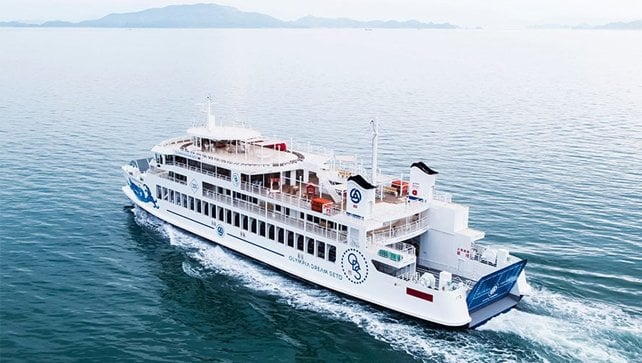
Japan is set to launch service aboard its first autonomous navigation ferry. The vessel Olympia Dream Seto recently completed the licensing process and will start sailing with the autonomous system on Thursday, December 11, as part of an ongoing government-sponsored project to advance autonomous navigation technology.
The Nippon Foundation hosted a demonstration of the autonomous system on Wednesday, highlighting it as a major milestone in the development of the technology. Reporters said the 60-meter (197-foot) ferry “gently pulled away from the pier and proceeded through calm waters. It also showed its ability to detect a ship ahead and reroute,” reported Kyodo News.
The nearly 1,000 gross ton ferry, which was built in 2019, is the first vessel successfully completed by the MEGURI 2040 project, which was launched in 2020. The ferry runs an approximate 70-minute route between Shin-Okayama Port and Shodoshima's Tonosho Port on the small islands off the coast of Japan. The ferry crosses the Seto Inland Sea and has a capacity for up to 500 passengers and 60 cars, or 10 buses. It operates at a speed of 13 knots with a crew of 10.
The MEGURI project was launched to advance autonomous navigation to the commercial stage. The Foundation highlights that it will help to reduce accidents caused by human error and will also address the growing shortage of seafarers. The project’s set a goal of achieving 50 percent unmanned operations of domestic ships by 2040.
The project conducted demonstration testing between January and March 2022. This included sailing in Tokyo Bay, which was designated as a congested waterway for the tests, with the Foundation highlighting the high vessel traffic in the region. It also completed a long-distance demonstration sailing approximately 750 km (over 460 miles).
Japan’s Ministry of Land, Infrastructure, Transport and Tourism established a study group in 2024 to consider the safety standards and inspection methods for autonomous shipping. The results were released in June 2025, setting the way for the Olympia Dream Seto to proceed.
The vessel’s systems were required to undergo an inspection before it was installed. This was completed in July and earned the vessel the “early-stage autonomous ship” designation. The second phase was completed on December 5, after the vessel demonstrated autonomous operations, and it received its certificate.
The ferry’s operator, Ryobi Ferry Company, says it will start using the system as the crew becomes more familiar with its operations.
At the same time, the MEGURI project is moving forward with additional vessels. The containership Mikage (749 gross tons) was also used in the first stage demonstrations and is being prepared for certification. In addition, the RoRo ship Hokuren Maru No. 2 is being prepared for demonstration voyages in areas where it could encounter both congestion with fishing boats and fog. Additionally, the newly-built domestic containership Genbu was built anticipating unnamed operations. These demonstrations are scheduled to be completed by April 2026.

No comments:
Post a Comment