
1 day ago
Jon Donnison & Rebecca Hartmann
BBC News, Suweida province, Syria
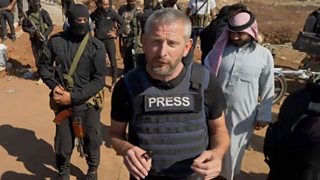
BBC report from last checkpoint before Suewida city
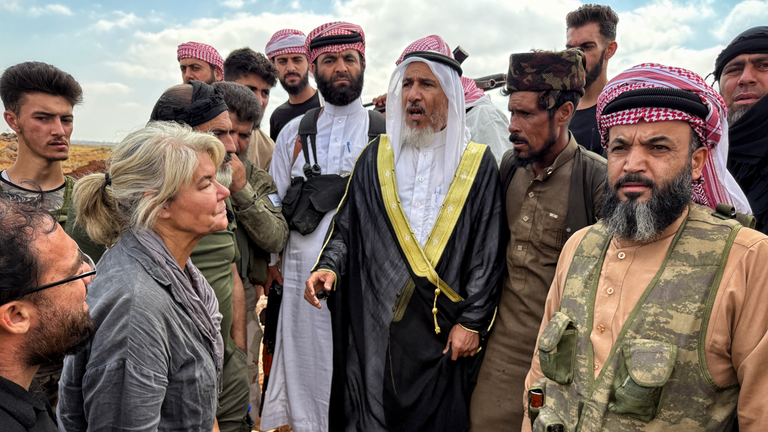
Bedouin fighters positioned outside the southern Syrian city of Suweida have told the BBC they will observe a ceasefire with the Druze community there, but have not ruled out resuming hostilities.
The Bedouin fighters have retreated from the city to surrounding villages in the province after a week of deadly sectarian clashes between Druze fighters, Bedouins and government forces, with Israel carrying out air strikes in support of the Druze.
On Sunday a UK-based monitoring group said there was a "cautious calm" in the region - but later said tribal fighters had attacked villages.
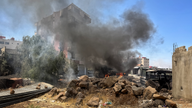
From the town of al-Mazara'a - a Druze town until last week when it was taken over by the Bedouin and now under Syrian government control - smoke could be seen across the fields rising from Suweida city.
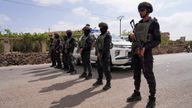
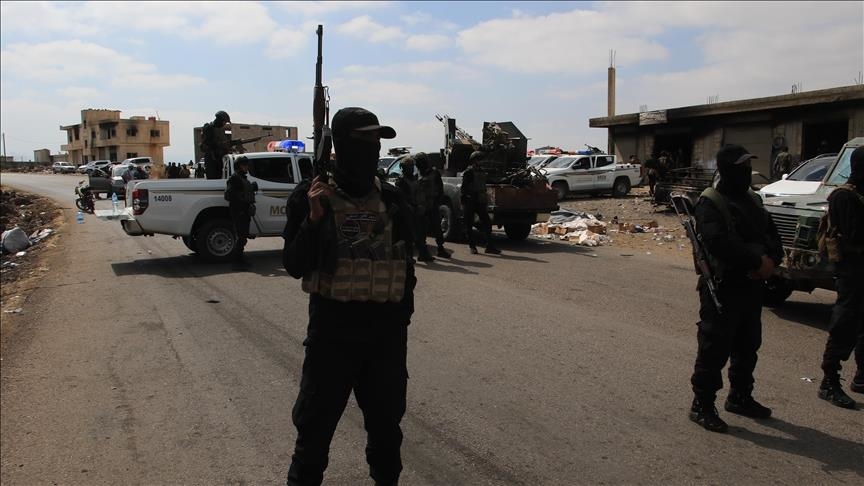
At a nearby checkpoint a mound of dirt cut across the road. Dozens of government security personnel were standing along it, all heavily armed and blocking the Bedouin from re-entering the city.
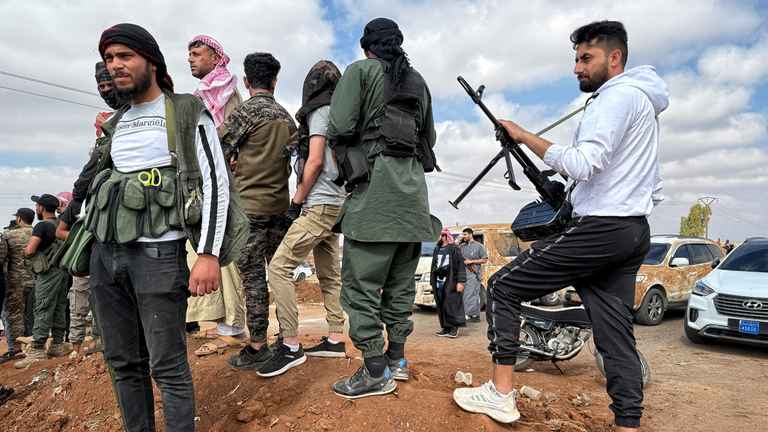
Hundreds of Bedouin fighters, many firing guns into the air, crowded the road.
They want the release of injured Bedouin people still in the city of Suweida, who they refer to as hostages. Otherwise, they say, they will force their way past the checkpoint and head back into the city.
"We did what the government have ordered us and we are committed to the agreement, and the government words and we came back, Suweida is 35km far from here," a tribal elder told the BBC.
"Currently our hostages and wounded are there, they are refusing to give us anyone... If they don't commit to the agreement we are going to enter again, even if Suweida will become our cemetery."
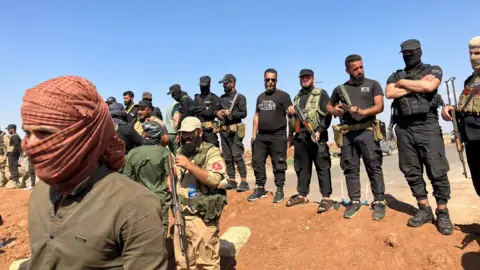
A monitoring group says there was a "cautious calm" in Suweida on Sunday
Long-running tensions between Druze and Bedouin tribes erupted into deadly sectarian clashes a week ago, after the abduction of a Druze merchant on the road to the capital Damascus.
Interim President Ahmed al-Sharaa's government responded by deploying forces to the city. Druze residents of Suweida told the BBC they had witnessed "barbaric acts" as gunmen - government forces and foreign fighters - attacked people. Israel targeted these forces, saying they were acting to protect the Druze.
Government forces withdrew and Druze and Bedouin fighters subsequently clashed. Both Druze and Bedouin fighters have been accused of atrocities over the past seven days, as well as members of the security forces and individuals affiliated with the interim government.
On Saturday, al-Sharaa announced a ceasefire and sent security forces to Suweida to end the fighting.
Local Druze fighters are once again in control of the city. But more than 1,120 people have been killed, the UK-based Syrian Observatory for Human Rights (SOHR) said.
The dead included 427 Druze fighters and 298 Druze civilians, 194 of whom were "summarily executed by defence and interior ministry personnel", the monitor said.
Meanwhile 354 government security personnel and 21 Sunni Bedouin were also killed, three of them civilians who it said were "summarily executed by Druze fighters". Another 15 government troops were killed in Israeli strikes, it said.
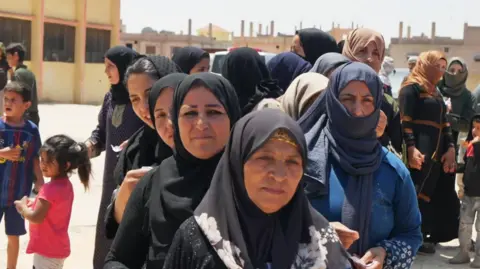
Bedouin families have been displaced from Suweida city
At least 128,000 people have been displaced by the violence, the UN migration agency said on Sunday. Suweida city has a severe medical supply shortage, the SOHR said.
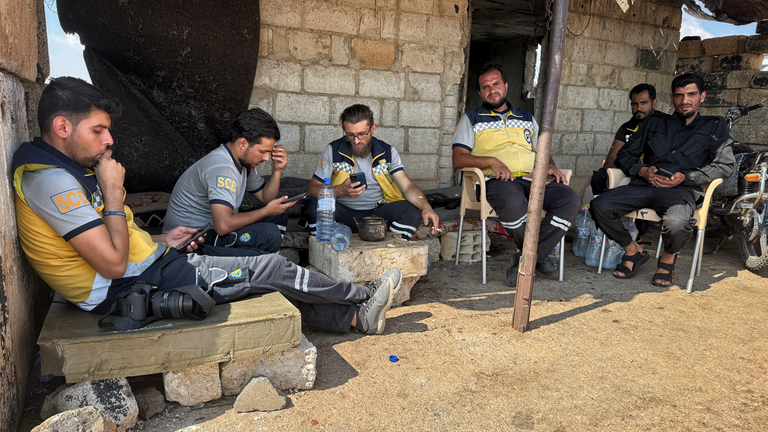
A first humanitarian convoy from the Syrian Red Crescent has reportedly reached the city. Israel's public broadcaster reported that Israel had sent medical aid to the Druze.
US Secretary of State Marco Rubio meanwhile has demanded that the government "hold accountable and bring to justice anyone guilty of atrocities including those in their own ranks" to preserve the possibility of a united and peaceful Syria.
In Mia'rbah, south-west of Suweida, Bedouin refugees gathered at what used to be a school. The village still bore the scars from years of civil war, with buildings lying in ruins and strewn with bullet holes.
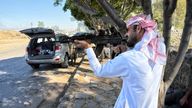
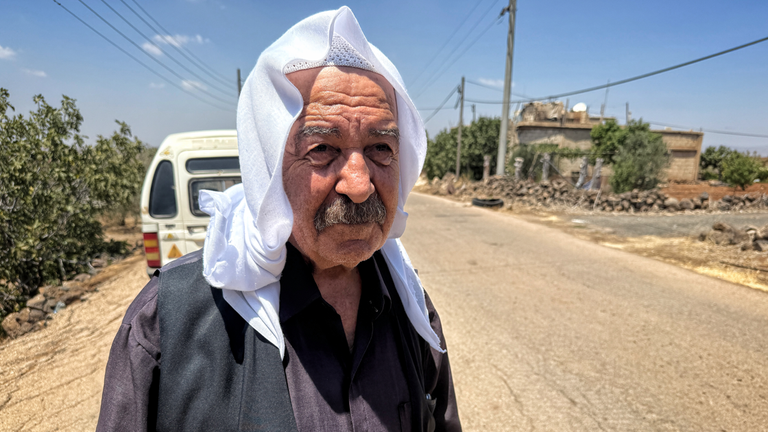
At the aid distribution centres elderly Bedouin women collected water from a tank on the back of the truck. Most of the people there were women and children.
Asked whether she thought Bedouin and Druze could live together, one woman displaced from Suweida city said it would depend on the government in Damascus.
"They can live together if the government will take over and rule, and if the government will provide peace and security," she said.
In the absence of government authority, she said she believed that Bedouin could not trust the Druze.
"They are traitors, without peace and security we can't live with them," she said.
Additional reporting by Jack Burgess
About 30,000 mostly Druze people are thought to be trapped inside the besieged city of Sweida and surrounding towns, with no electricity, little internet and dwindling supplies of food and water.
Alex Crawford
Special correspondent @AlexCrawfordSky
Monday 21 July 2025
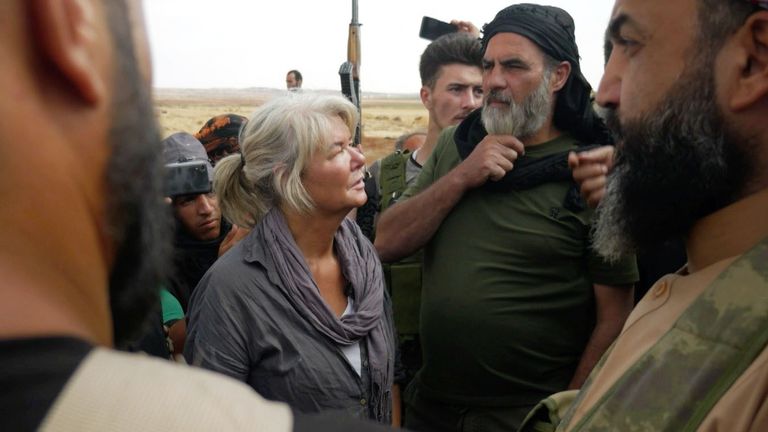
The main road entering the besieged Syrian city of Sweida from the west has changed dramatically over 12 hours.
A bulldozer, parked on the side of the road, has been used to create several berms to form a sand barrier around 25km (16 miles) from the city centre.
Dozens of Syrian security forces were standing in lines in front of the barricades when we arrived, and there were forces further up the road stopping vehicles from going any further.

The Arab tribal fighters we'd seen fighting furiously inside the city the day before were now all camped alongside the road. Some were sleeping on the back of their pick-ups.
"We're not giving up," one shouted to us as we walked towards the checkpoint.
The ceasefire agreement between Druze leaders who are bunkered down inside the city and the Bedouins - and the tribal fighters who have flocked to join them - has frustrated some.
Some of them, waiting with guns slung over their backs, are itching to return to battle. But for now, tribal leaders have instructed them to hold fire.
More on Syria
Who are the Druze and who are they fighting in Syria?
Inside Sweida: The Syrian city ravaged by sectarian violence - where bodies line streets and homes are burned
Every shop and home burned or ransacked: The Syrian city engulfed in tribal violence
How long that will last is probably key to Syria's future and whether it can be a peaceful one.
Khalaf al Modhi, the head of a group of tribes called United Tribes, told the group of fighters: "We are not against the Druze. We are not here to kill the Druze."
But he spent many minutes castigating the senior Druze cleric inside Sweida whom many of the tribes see as the agitator behind the violent clashes.
Hikmat al Hijiri is head of a Druze faction that is deeply suspicious of the new government led by Ahmed al Sharaa and is resisting ceding power to Damascus.
The retreat of the Arab tribes from the city centre means the Druze militia under Hijiri's control are now the ones deciding who goes in or out of the city.
About 30,000 mostly Druze people are thought to be trapped inside the city and surrounding towns, with no electricity, little internet and dwindling supplies of food and water.
The humanitarian situation is dramatically worsening by the day. But at the time of writing, there were still no agreed safe corridors to bring out those pinned inside.
On top of this, there are nearly 130,000 people displaced and forced out of their homes because of the fighting, according to UN estimates.
Maintaining the ceasefire is key to ensuring solutions are found to help those suffering, and quickly. It's also the most serious challenge facing the new Syrian leader and his interim government.
The level of distrust between the Hijiri-led Druze faction and the new government is strong and deep. So much so that the Druze leaders have refused to accept truckloads of aid organised by any of the government outlets.
The new Syrian leader has struggled to convince the country's minorities that their safety under his leadership is assured.
Druze civilians and human rights activists reported mass killings and executions of Druze by government troops who were sent in last week to quell the latest clashes between the Druze and Arab Bedouins who have been at odds for many years.

Government forces pulled out of the city only after Israel unleashed a spate of airstrikes, saying they were defending the Druze. The bombings killed hundreds of Syrian troops.
But with the withdrawal of the government troops, the Arab Bedouin population said the city's Druze militia embarked on a string of revenge atrocities.
That in turn led to thousands of tribal fighters massing from around the country to defend their Arab brethren.
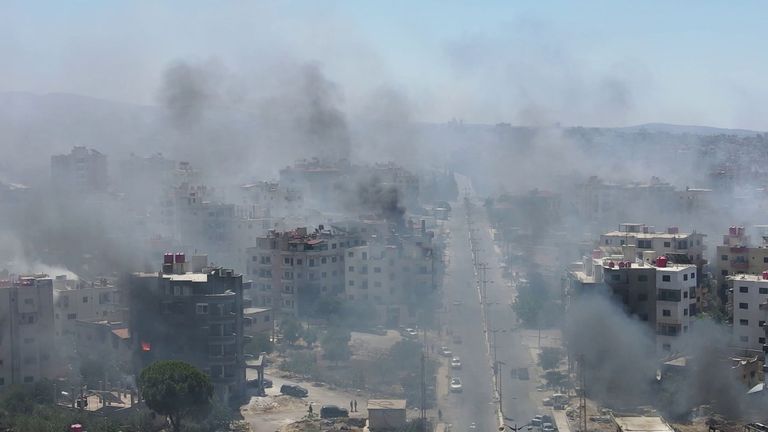
When we were inside the city, we saw multiple corpses lying on the streets, and many appeared to have been killed with a shot to the head.
Homes and businesses are still burning after mass pillaging as fighters retreated.
And now, there is a growing humanitarian disaster unfolding.
Additional reporting by camera operator Garwen McLuckie, specialist producer Chris Cunningham, as well as Syrian producers Mahmoud Mossa and Ahmed Rahhal.
July 21, 2025
By The Associated Press
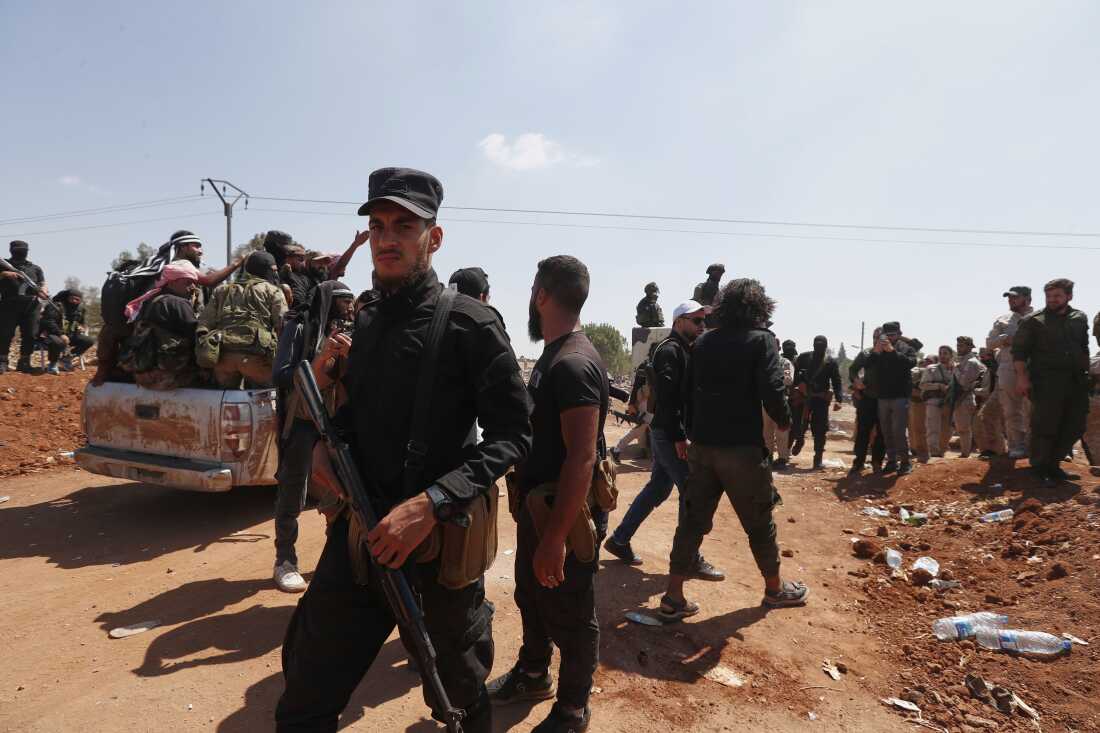
Syrian government security forces block Bedouin fighters, background, from entering Sweida province, in Busra al-Harir village, southern Syria on Sunday.Omar Sanadiki/AP
MAZRAA, Syria — Syria's armed Bedouin clans announced Sunday they had withdrawn from the Druze-majority city of Sweida following weeklong clashes and a U.S.-brokered ceasefire, as humanitarian aid convoys started to enter the battered southern city.
The clashes between militias of the Druze religious minority and the Sunni Muslim clans killed hundreds and threatened to unravel Syria's already fragile postwar transition. Israel also launched dozens of airstrikes in the Druze-majority Sweida province, targeting government forces who had effectively sided with the Bedouins.
The clashes also led to a series of targeted sectarian attacks against the Druze community, followed by revenge attacks against the Bedouins.
A series of tit-for-tat kidnappings sparked the clashes in various towns and villages in the province, which later spread to Sweida city, the provincial capital. Government forces were redeployed to halt renewed fighting that erupted Thursday, before withdrawing again.
Interim President Ahmad al-Sharaa, who has been perceived as more sympathetic to the Bedouins, had tried to appeal to the Druze community while remaining critical of the militias. He later urged the Bedouins to leave the city, saying that they "cannot replace the role of the state in handling the country's affairs and restoring security."
"We thank the Bedouins for their heroic stances but demand they fully commit to the ceasefire and comply with the state's orders," he said in an address broadcast Saturday.
Dozens of armed Bedouin fighters alongside other clans from around the country who came to support them remained on the outskirts of the city and were cordoned off by government security forces and military police. They blame the clashes on the Druze factions loyal to spiritual leader Sheikh Hikmat al-Hijri and accuse them of harming Bedouin families.
"We will not leave until he turns himself in alongside those with him who tried to stir sedition. And only then will we go home." Khaled al-Mohammad, who came to the southern province alongside other tribesman from the eastern Deir al-Zour province, told The Associated Press.
Aid convoys enter Sweida but tensions persist
The Bedouins' withdrawal brought a cautious calm to the area, with humanitarian convoys on their way. The Syrian Red Crescent said Sunday it sent 32 trucks loaded with food, medicine, water, fuel and other aid, after the fighting left the province with power cuts and shortages.
Syria's state news agency SANA reported that the convoy entered Sweida on Sunday, but accused al-Hijri and his armed Druze supporters of turning back a government delegation that accompanied another convoy.
The Foreign Ministry in a statement said the convoy accompanying the delegation had two ambulances loaded with aid provided by local and international organizations.
Syrian forces who fought Druze militias leave Sweida province under a ceasefire
Al-Hijri did not directly respond to the accusations but said in a statement that he welcomes any assistance for Sweida and slammed what he claims were distorted campaigns against him.
"We reaffirm that we have no dispute with anyone on any religious or ethnic basis," the statement read. "Shame and disgrace be upon all those who seek to sow discord and hatred in the minds of young people."
The U.N. International Organization for Migration said 128,571 people were displaced during the clashes, including 43,000 on Saturday alone.
U.S. envoy appeals for an end to fighting
Washington's special envoy to Syria, Tom Barrack, said the clashes and atrocities "overshadowed" an initial cautious optimism about the country's post-war transition and the international community's lifting of sanctions.
"All factions must immediately lay down their arms, cease hostilities and abandon cycles of tribal vengeance," Barrack said on X. "Syria stands at a critical juncture — peace and dialogue must prevail — and prevail now."
Among those killed in the weeklong fighting were dozens of Druze civilians slain in a series of targeted attacks in the city at the hands of Bedouin fighters and government forces. Videos surfaced online of fighters destroying portraits of Druze religious officials and notables in homes, and shaving the mustaches of elderly Druze, seen as an insult to culture and tradition. Druze militias in return attacked Bedouin-majority areas in theoutskirts of the province, forcing families to flee to neighboring Daraa province.
More than half of the roughly 1 million Druze worldwide live in Syria. Most of the other Druze live in Lebanon and Israel, including in the Golan Heights, which Israel captured from Syria in the 1967 Mideast War and annexed in 1981.
Syria's Druze largely celebrated the downfall of the Assad family that ended decades of tyrannical rule. While they had concerns about Al-Sharaa's de facto Islamist rule, a large number wanted to approach matters diplomatically. Al-Hijri and his supporters, though, have taken a more confrontational approach with Al-Sharaa, contrary to most other influential Druze figures. Critics also note al-Hijri's previous allegiance to Assad.
However, the recent clashes and sectarian attacks on the minority community have made a growing number of Druze in the area more skeptical about Damascus' new leadership and more doubtful of peaceful coexistence.
Efforts are underway to dissuade hundreds of reserve Druze soldiers from joining the fighting in Sweida; meanwhile, humanitarian aid convoys face obstacles and local hospitals struggle under severe shortages
Yoav Zitun, Lior Ben Ari|
Israeli security officials said Sunday that several Druze who crossed into Syria last week have yet to return, raising concerns that some may have moved into the fighting around the Druze Mountain egion.
The IDF estimate that a small number, possibly dozens, remain inside Syria. Authorities are investigating their whereabouts amid ongoing clashes in the area. At the same time, efforts are underway to dissuade hundreds of Druze former soldiers currently on inactive reserve status from joining relatives fighting in Sweida. The former soldiers have signed a petition threatening to join the conflict if the ceasefire that took effect Sunday collapses.
During a visit to the Gaza Strip, IDF Chief of Staff Lt. Gen. Eyal Zamir addressed troops, saying, “The massacre of the Druze in Sweida proves again that in the Middle East, those who cannot defend themselves cannot live in security. Terrorist organizations and jihadist groups pose a danger on all fronts and must be fought — as you are doing here.”
Syrian media reported that after more than a week of deadly and brutal fighting, a ceasefire took effect overnight in Sweida, the Druze-majority city. Syrian Interior Ministry spokesperson said forces loyal to Ahmad al-Sharaa entered the city and began enforcing order after Bedouin tribes withdrew.
Bedouin tribal leaders said their withdrawal was part of a ceasefire agreement but warned that any violations would be met with a severe response. Meanwhile, the Druze group “Men of Honor” claimed their counterattack forced the Bedouin retreat and allowed them to regain full control of Sweida. The Syrian Observatory for Human Rights confirmed the city is currently under Druze control.
Although the ceasefire agreement was reportedly reached Wednesday, its implementation was delayed. Overnight Friday to Saturday, a coalition helicopter reportedly landed near the city hospital, likely delivering medical teams from northeast Syria. At the same time, U.S. envoy Thomas Barrack announced that Israel had agreed to allow al-Sharaa’s forces to enter the province to enforce order.

Bedouin militia in Sweida
(Photo: Bakr Alkasem / AFP)
However, fighting resumed Sunday afternoon in several locations within Sweida province, including the villages of Ariqa, al-Majdal and Umm al-Zaytoun, according to Sabereen news. Militants demanded that forces loyal to Druze sheikh Hikmat al-Hijri surrender their weapons to the Syrian Defense Ministry. Footage showed masked gunmen in military uniforms. SyriaTV reported that a planned prisoner exchange in Umm al-Zaytoun did not take place, contrary to earlier announcements by al-Hijri.
U.S. envoy Barrack said all parties agreed on a ceasefire to take effect at 5 p.m. Sunday. “Violence can only be stopped through an agreement to cease hostilities and protect innocent civilians,” he said. He added that the next step toward lasting calm is the exchange of all hostages and detainees, with logistical arrangements underway.
Humanitarian aid convoys have faced major obstacles. The Syrian Foreign Ministry accused Sheikh al-Hijri of blocking aid shipments, blaming Israeli interference and the withdrawal of regime forces for the loss of control and disruption of relief efforts. The ministry also claimed the head of civil defense in Sweida was kidnapped four days ago by armed militias. The convoy’s return was attributed to al-Hijri’s refusal to allow government delegations entry.
Despite this, a Red Crescent convoy successfully entered Sweida. According to the Syrian Health Ministry, Israeli airstrikes delayed the convoy but safe corridors were later opened. Al-Hijri publicly refused to allow government aid entry, forcing regime vehicles to withdraw. The Druze spiritual leadership welcomed international humanitarian assistance but called for an end to incitement and attacks against Sweida.
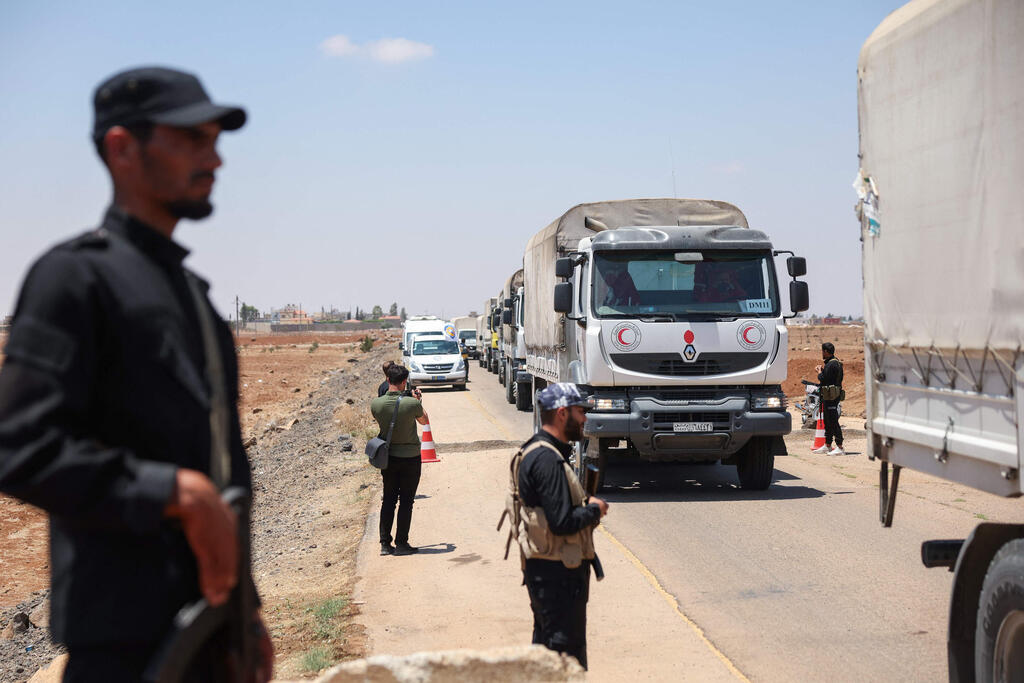
Humanitarian aid convoys in Sweida
(Photo: OMAR HAJ KADOUR / AFP)
Turkey is closely monitoring developments and fears Kurdish-led Syrian Democratic Forces might exploit the situation to push for partition. Turkish sources warn Ankara may intervene militarily, possibly alongside al-Sharaa’s forces, if Kurds do not implement integration with Damascus. Turkish Foreign Minister Hakan Fidan reportedly told U.S. Secretary of State Marco Rubio that recent Israeli strikes undermine efforts to maintain Syria’s unity.
The situation remains fragile amid ongoing violence, humanitarian crises and security concerns over Druze fighters crossing into Syria.

Calm returned to southern Syria's Sweida province on Sunday, according to reports, after a week of sectarian violence between Druze fighters and rival groups that killed more than 1,100 people.
Haberin Devamı
A ceasefire announced on Saturday appeared to be holding after earlier agreements failed to end fighting between longtime rivals the Druze and the Bedouin that spiralled to draw in the Syrian government, the Israeli military and armed tribes from other parts of Syria.
AFP correspondents on the outskirts of Sweida city reported hearing no clashes on Sunday morning, with government forces deployed in some locations in the province to enforce the truce.
The first humanitarian aid convoy entered the city on Sunday, Red Crescent official Omar al-Malki said, adding that it would be followed by others.
He said the convoy came "in coordination with the government bodies and the local authorities in Sweida", which are controlled by the Druze.
The Syrian government meanwhile said a Druze group blocked its own convoy from entering the city.
The Syrian Observatory for Human Rights said that since around midnight (2100 GMT Saturday), "Sweida has been experiencing a cautious calm", adding government security forces had blocked roads leading to the province in order to prevent tribal fighters from going there.
The Britain-based Observatory gave an updated toll late Sunday of 1,120 killed since the violence erupted a week ago, including 427 Druze fighters and 298 civilians from the minority group, as well as 354 government security personnel and 21 Sunni Bedouin.
'Totally calm'
Hanadi Obeid, a 39-year-old doctor, told AFP that "the city hasn't seen calm like this in a week".
The interior ministry said overnight that Sweida city was "evacuated of all tribal fighters, and clashes within the city's neighbourhoods were halted".
The Observatory had said Druze fighters retook control of the city on Saturday evening.
Interim President Ahmed al-Sharaa had on Saturday announced a ceasefire in Sweida and renewed a pledge to protect Syria's ethnic and religious minorities in the face of the latest sectarian violence since Islamists overthrew longtime ruler Bashar al-Assad in December.
A spokesman for Syria's tribal and clan council told Al Jazeera late Saturday that fighters had left the city "in response to the call of the presidency and the terms of the agreement".
A medic inside Sweida told AFP by telephone on Sunday that "the situation is totally calm... We aren't hearing clashes."
Residents of Sweida city, who number at about 150,000, have been holed up in their homes without electricity and water, and food supplies have also been scarce.
An AFP photographer said the morgue at Sweida's main hospital was full and bodies were lying on the ground outside the building.
The United Nations migration agency said more than 128,000 people in Sweida province have been displaced by the violence.
'Brutal acts'
U.S. special envoy to Syria Tom Barrack said Sunday that the country stood at a "critical juncture", adding that "peace and dialogue must prevail - and prevail now".
"All factions must immediately lay down their arms, cease hostilities, and abandon cycles of tribal vengeance," he wrote on X, saying "brutal acts by warring factions on the ground undermine the government's authority and disrupt any semblance of order".
Sharaa's announcement Saturday came hours after the United States said it had negotiated a ceasefire between Syria's government and Israel, which had bombed government forces in both Sweida and Damascus earlier in the week.
Israel, which has its own Druze community, has said it was acting in defence of the group, as well as to enforce its demands for the total demilitarisation of Syria's south.
U.S. Secretary of State Marco Rubio on Saturday urged the Syrian government's security forces to prevent jihadists from entering and "carrying out massacres" in the south, and called on Damascus to "bring to justice anyone guilty of atrocities including those in their own ranks".
Hundreds of civilians have died, including women and children, as families are forced to flee, says Syrian Network for Human Rights
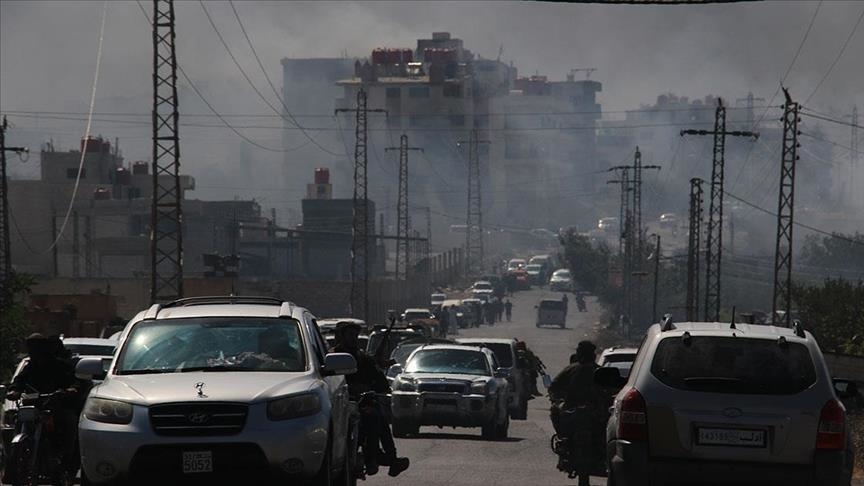
DAMASCUS/ISTANBUL
The number of documented deaths in clashes in Syria’s southern Suwayda province has risen to 426, the Syrian Network for Human Rights (SNHR) reported Sunday.
The clashes erupted a week ago between an alliance of Bedouin Arab and tribal forces and some Druze groups.
The fatalities occurred between July 13 and 20, according to a statement released by SNHR
The dead included seven children, 10 women, six health care workers and two media professionals, it said.
Earlier, SNHR reported that at least 321 people were killed and more than 436 injured in Suwayda between July 13 and 18, underscoring the rapid escalation and human cost of the fighting.
The clashes, which were halted through mediation efforts by the Syrian government and foreign actors, initially began on July 13 with armed confrontations between Bedouin Arabs and Druze factions.
Syrian security forces dispatched to intervene were ambushed shortly after their arrival.
Although a ceasefire was brokered, it was later broken by Druze forces affiliated with the Hikmat al-Hijri militia.
The situation worsened on July 16 when the Israeli military conducted strikes near the Syrian presidential palace and on the General Staff headquarters and Defense Ministry.
As Syrian troops withdrew from Suwayda, Hikmat al-Hijri began targeting Bedouin families with forced displacement and executions.
Thousands of tribal fighters reportedly entered the area from outside regions in support of the Bedouin Arabs.
On July 19, the Syrian government redeployed its forces to Suwayda and oversaw the withdrawal of Bedouin and tribal fighters from the city.
The true death toll remains uncertain, but observers believe the number casualties among armed groups and civilians may be significantly higher than current figures suggest.
Sheikh Muwafaq Tarif warns of ‘genocide’ in Syria’s south, says US silence could fuel more attacks on minorities
Omer Erdem and Gizem Nisa Demir |21.07.2025 - TRT/AA

ISTANBUL
Sheikh Muwafaq Tarif, the spiritual leader of the Druze community in Israel, appealed directly to US President Donald Trump on Sunday, urging him to intervene to protect the Druze population in southern Syria’s Suwayda province.
Tarif sent a message to Trump via the US ambassador to Israel, expressing grave concern over what he described as a campaign of violence against Druze civilians by radical armed groups in Syria, according to Israeli media reports.
He claimed that Suwayda is witnessing what amounts to a genocide, calling on Washington to act swiftly to shield the vulnerable population.
Notably, Tarif made no reference to the mounting international condemnation of Israel over its ongoing military campaign in Gaza.
Instead, he focused solely on the deteriorating situation in Syria, arguing that the attacks on the Druze population in Suwayda constitute serious violations of basic human rights and should be treated as crimes against humanity.
Tarif warned that continued silence from the US would be deeply troubling and could embolden further violence against minority communities in Syria.
The clashes, which were halted through mediation efforts by the Syrian government and foreign actors, initially began on July 13 with armed confrontations between Bedouin Arabs and Druze factions.
Syrian security forces dispatched to intervene were ambushed shortly after their arrival.
Although a ceasefire was brokered, it was later broken by Druze forces affiliated with the Hikmat al-Hijri militia.
The situation worsened on July 16 when the Israeli military conducted strikes near the Syrian presidential palace and on the General Staff headquarters and Defense Ministry.
As Syrian troops withdrew from Suwayda, Hikmat al-Hijri began targeting Bedouin families with forced displacement and executions.
Thousands of tribal fighters reportedly entered the area from outside regions in support of the Bedouin Arabs.
On July 19, the Syrian government redeployed its forces to Suwayda and oversaw the withdrawal of Bedouin and tribal fighters from the city.
The true death toll remains uncertain, but observers believe the number casualties among armed groups and civilians may be significantly higher than current figures suggest.
Smadar Perry|Yesterday | YNET
Jordan’s Bedouin tribal council issued a sharp statement on Sunday, warning Israel of severe consequences if the IDF violates the ceasefire and re-enters southern Syria to support Druze communities. The council threatened to confront Israeli Druze or IDF representatives entering southern Syrian villages, particularly in the Sweida region, where intense fighting against Druze residents took place.
The statement follows reports of Israeli Druze crossing into Druze villages in southern Golan Heights, while Jordan, refusing even humanitarian aid to Syria, expressed “full solidarity” with Bedouin tribes attacking Druze communities.
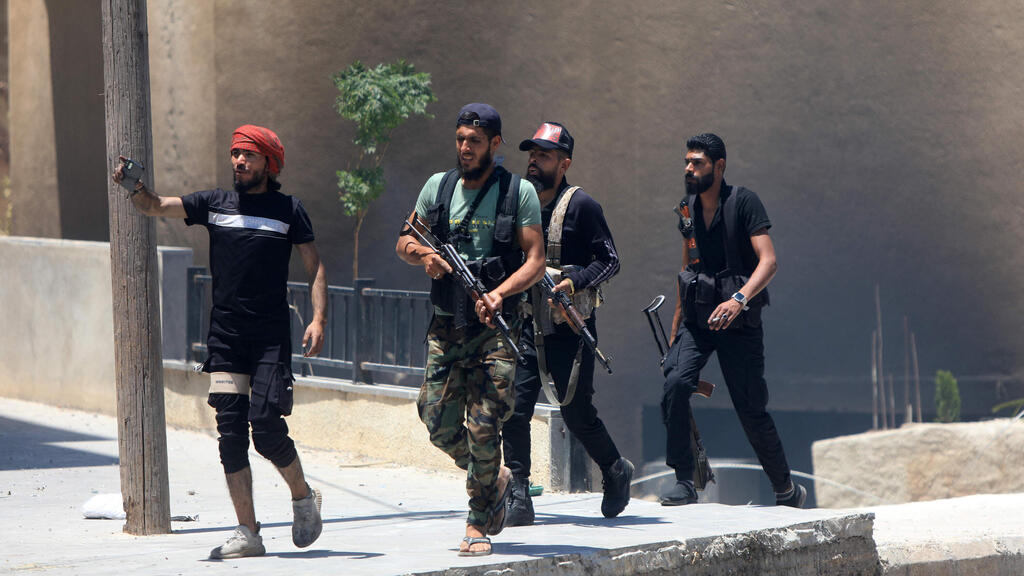
Confrontations in Syria
(Photo: Bakr ALKASEM / AFP)
Lebanese Foreign Minister Ayman Safadi, a Druze, met with U.S. envoy Thomas Barrack and Syrian Foreign Minister Asaad Hassan Al-Shaibani. Barrack praised Jordan’s “exemplary conduct” in urging all Syrian parties to reach agreements and halt violence.

Lebanese Foreign Minister Ayman Safadi
(Photo: THOMAS KIENZLE / AFP)
Safadi questioned the presence of Israeli forces in Syrian territory and why Israel allows its Druze citizens to cross the Golan Heights border into Syrian towns and villages. A senior Jordanian diplomatic source claimed Israel seeks to sow discord among Syrians, aiming to fragment the country into regions controlled by different ethnic groups.
The IDF estimates that a few, possibly dozens, of those who crossed the border last week have not returned, with some potentially heading to conflict zones in Sweida. Efforts are underway to calm hundreds of Druze IDF veterans on inactive reserve status, who signed a petition vowing to join their relatives fighting in Sweida if the ceasefire collapses.
Ministry has imposed security cordon around Suwayda after clashes between Bedouin Arab tribes and armed Druze factions
Rania Abu Shamala |21.07.2025 - TRT/AA
The Syrian Interior Ministry reached an agreement to evacuate civilians from the Suwayda province due to the ongoing security situation, the state-run news agency SANA reported Monday morning.
Ahmad al-Dalati, the province’s internal security chief, confirmed that the agreement followed intensive efforts by the Interior Ministry and “aims to facilitate the departure of civilians affected by the current conditions, ensuring their safety until the situation allows for a secure return to their homes."
He added: “We are fully committed to securing the exit of all civilians needing to leave Suwayda.”
“We will also allow entry for those wishing to return, as part of our ongoing efforts to restore stability and safety in the province.”
To support this initiative, the ministry has imposed a security cordon around Suwayda. “We have enforced a security perimeter to secure the area and halt combat operations,” al-Dalati said. “This measure is critical to safeguarding the reconciliation path and reestablishing stability in the region.”
On July 13, clashes erupted between Bedouin Arab tribes and armed Druze factions in Suwayda.
Israeli airstrikes followed, targeting Syrian military positions and infrastructure in Damascus. Israel used the pretext that the strikes were intended to protect Druze communities.
However, most Druze leaders inside Syria have rejected foreign intervention and reaffirmed their support for a unified Syrian state.
Israel’s military actions intensified following the collapse of Bashar al-Assad’s regime in December. After nearly 25 years in power, Assad fled to Russia, ending Baath Party rule in Syria. A transitional administration, led by President Ahmad al-Sharaa, took office in January.
While strategic considerations were still in play, the heart of the decision lay in defending the extended family of Israel’s own Druze—a gesture shaped as much by kinship as by security.

Israel has carried out hundreds of strikes in Syria over the past decade, so this week’s attacks on Syrian tanks en route to Sweida and on the country’s military headquarters in Damascus should not have come as a surprise.
Yet they did, because this time was different.
These were not routine operations targeting Iranian arms transfers or Hezbollah positions. They were driven by something else: a sense of responsibility toward the Druze community in Syria.
Dodging missiles and sleeping in shelters: How are Israelis impacted by Iran strikes?
Past strikes typically followed a narrow script: preventing weapons transfers, blocking entrenchment near the border, or responding to provocations. But this latest round marked a clear departure.
While strategic considerations were still in play, the heart of the decision lay in defending the extended family of Israel’s own Druze – a gesture shaped as much by kinship as by security

Some 152,000 Druze live in Israel, and since a 1956 agreement with community leaders, Druze men have been conscripted into the IDF, fighting and dying alongside their Jewish counterparts in every conflict since.
The phrase Brit damim – a covenant of blood – has become shorthand for a loyalty that has gone well beyond slogans.
And these Druze have brothers and sisters, aunts, uncles, and cousins in Syria who have come under attack by Sunni Bedouin clans and Syrian government forces. The Syrian Observatory for Human Rights said that more than 1,000 people have been killed over the last week in the Druze mountains area.
Israel's Druze population say they cannot stand by and watch from sidelinesIsrael’s Druze, who feel as deep a connection to their co-religionists in Syria as Jews do to their brethren abroad, say they cannot stand by and watch from the sidelines. They are both urging Israel to act and preparing to take up arms themselves to defend their kin across the border.
Israel did intervene, and its history with its own Druze population is central to understanding why it acted to protect Syrian Druze, even though it refrained from intervening just months ago when Alawites were being slaughtered elsewhere in Syria.
Israel’s strikes last week were not only about preventing a massacre – important in its own right – but about defending the extended family of a community it considers its “brothers.”
But there is more to the story than that. Israel’s actions are also about sending messages and correcting history.
There’s no way to understand this moment without going back to May 2000, when then-prime minister Ehud Barak abruptly pulled Israel out of southern Lebanon, leaving the South Lebanon Army (SLA) – its Christian and Druze allies – to face Hezbollah alone.
Some 6,000 SLA members and their families fled across the border, and many were resettled in Israel. But many others were captured, tried, and imprisoned.
This traumatic exit badly dented Israel’s image as a dependable ally. The message was clear: when interests shift, even blood partners can be abandoned.
That moment has haunted Israel ever since. It undermined its reputation as a loyal ally in the region and sent a chilling message to other minorities or militias contemplating alliance with the Jewish state: don’t count on a rescue when things go bad.
This week’s actions in Syria send a very different message and are also about correcting a historical stain.
There is also a message being delivered to other actors in the region, who are keen on seeing how reliable Israel is as an ally.
First and foremost in Gaza, where there have been efforts to align with certain clans willing to resist Hamas, such as the militia headed by Yasser Abu Shabab in the Rafah area.
For these actors, the Druze operation is instructive. It shows that Israel may be willing to use force not just in defense of itself, but in defense of those who side with it.
If Israel wants to erode Hamas’s hold on Gaza, it needs local allies. And those allies need a reason to believe that partnership with Israel doesn’t lead to a death sentence, that Israel does not forget those who stand with it. Watching the steps Israel is taking on behalf of the Druze in Syria might give them confidence in the future.
The actions in Syria, however, are risky. First of all, because intervening in Syria – however limited – always carries the potential for escalation. Secondly, because it puts Israel at odds with US policy.
Washington, to put it mildly, is not pleased with Israel’s recent actions in Syria. While Jerusalem may have seen the strikes as an act of defense and moral clarity, the Trump administration saw something else: unnecessary interference.
The administration is interested in propping up the regime of Syrian President Ahmed al-Sharaa as a way of creating stability in the region and has not hidden its desire to broker some kind of non-aggression pact between Israel and Syria. Just last month, Trump lifted long-standing sanctions against Damascus.
On Thursday, the US said it didn’t support the Israeli strikes, and State Department spokesperson Tammy Bruce said Trump and the State Department have “been very clear about our displeasure.”
On Sunday, Axios quoted one US official as saying that Trump “doesn’t like turning on the television and seeing bombs dropped in a country he is seeking peace in and made a monumental announcement to help rebuild.”
The US is concerned that the Israeli action might weaken Sharaa’s authority at a critical juncture and undermine months of careful diplomacy. From their perspective, Israel was introducing volatility at the very moment the US was trying to create stability.
This sets up an uncomfortable, though not unfamiliar, dynamic: Israel acting unilaterally to protect its red lines, even when that diverges from the US playbook.
This is not the first time that has happened, nor will it be the last.
What is compelling is that Israel was willing to take the risk this time to protect a community not even its own. The Syrian Druze never supported or fought for Israel. Quite the contrary. Nevertheless, their brothers in Israel have done so for decades, bravely and loyally.
'So it's a messy situation. Israel has to decide, with help from the United States, what it wants to do next with this government,' says James Jeffrey
Can Hasasu and Zehra Nur Celik |20.07.2025 - TRT/AA

WASHINGTON / ANKARA
Retired US diplomat James Jeffrey on Sunday criticized Israel’s military actions in Syria, warning that the country’s current policy risks destabilizing the region and undermining Syria’s territorial integrity.
“It's not clear what Israel is trying to do in Syria, because it has a government that is dramatically opposed to the Iranian presence, having fought the Iranians for 14 years,” said Jeffrey, a former US ambassador to Türkiye (2008-2010) and special envoy for Syria (2018-2020), in an exclusive interview with Anadolu in Washington.
“So the Israelis intervened, then struck very strongly at the Syrian government, and the US, in the form of Secretary (of State Marco) Rubio, had to intervene and to work a ceasefire, and for the moment, things are calm,” he said.
The retired envoy said recent developments raise the key question: What are Israel's goals in Syria?
He warned that a fragmented Syria – with the Druze south, Alawite west, and Kurdish northeast operating autonomously – could once again descend into civil war and open the door to renewed foreign intervention and Iranian expansion.
“How that is in the interest of anybody in the region, beginning with Jerusalem, I don't know,” he said.
“So it's a messy situation. Israel has to decide, with help from the United States, what it wants to do next with this government.”
Jeffrey called the issue critical for Israel, saying Syria now represents the most significant strategic front in the Middle East.
“The problem is the more the Druze in the south have an independent, autonomous position supported by an outside power with their own military forces, the more not only will the SDF and the Kurds generally want the same, but the Alawites in the west will want the same too and that's a recipe for the collapse of the country,” he warned, referring to the SDF, a group long supported by the US and dominated by the terrorist YPG/PKK.
He urged the international community to take a unified stance, stressing the importance of Arab states, the European Union, the UN, NGOs, the US, Türkiye, and – where possible – Israel, speaking with one voice in support of Syria’s central government.
On July 13, clashes erupted between Bedouin Arab tribes and armed Druze factions in Suwayda.
Israeli airstrikes followed, targeting Syrian military positions and infrastructure in Damascus. Israel used the pretext that the strikes were intended to protect Druze communities.
However, most Druze leaders inside Syria have rejected foreign intervention and reaffirmed their support for a unified Syrian state.
Israel’s military actions intensified following the collapse of Bashar al-Assad’s regime in December. After nearly 25 years in power, Assad fled to Russia, ending Baath Party rule in Syria. A transitional administration, led by President Ahmad al-Sharaa, took office in January.
- US monitors Damascus-Kurdish ties amid national unity risks
Jeffrey also commented on relations between Syria’s new central government and what he called “Kurdish groups” in the country.
“So that's something that the US is watching and trying to be helpful with between Damascus and the Kurds,” he said.
“An independent state with its own army in northeast Syria is totally detrimental to the unity of country,” he added.
Jeffrey warned that such a development could pose risks to Türkiye and harm what he called “reconciliation efforts” between the Turkish government and the PKK, a terrorist group that earlier this year pledged to lay down its arms.
“It also could pretend it could be a risk to Türkiye and a risk to the reconciliation between the PKK and the Turkish government. So that needs to be watched,” he said.
“But on the other hand, the US, which has of course been the supporter of the SDF, has made it clear to everyone that it will only go so far in trying to keep the SDF as a separate entity,” he added.
He said the US remains in contact with Damascus. US Envoy for Syria Tom Barrack, who also serves as ambassador to Türkiye, spoke with both sides in Damascus last week, according to Jeffrey.
“The SDF knows that it faces a powerful Turkish military,” he said. “If this thing is not resolved in a way that is peaceful for everybody, I think that the word that Turkish officials have used – irreversible – is correct, and I hear that from the Kurdish side as well.”
“I won't say ‘the Kurdish side’ because there are many Kurds who are not part of the PKK, I would say, from people close to the PKK also believe it's irreversible, and they generally accept it,” he said.
Jeffrey said Kurds have made significant progress in cultural integration and political participation in Türkiye, while the PKK has suffered military setbacks.
“So it doesn't make much sense to continue this struggle, does it?” he added.
The PKK, listed as a terrorist organization by Türkiye, the US, and the European Union, declared its dissolution this May after its imprisoned leader Abdullah Ocalan called for an end to armed attacks in February.
On July 11, thirty PKK members surrendered in Iraq’s Sulaymaniyah province and destroyed their weapons by tossing them into a burning cauldron.
Clashes in Syria's Druze heartland: who are the combatant?
Khaled Yacoub Oweis
Amman
July 20, 2025
The Druze-majority city of Sweida in southern Syria witnessed a week of heavy clashes coupled with an offensive by pro-government troops. A ceasefire appeared to be holding on Sunday.
Sweida is the capital of its province with the same name, which is home to 270,000 Druze, making it the heartland of the sect in Syria.
Over the past week, the minority suffered the biggest loss of life since mounting a failed revolt against French colonial rule from 1925 to 1927. Druze sources say that it will take days to find out how many members of the sect were killed, with many civilians killed in their homes in Sweida and surrounding villages. However, the toll could be more than 1,000, the sources said.
Hundreds of the attacking forces, composed of regular troops and paramilitary, are estimated to have been killed, many by Israeli air raids.
The sect is an offshoot of Islam and the Druze are mainly present in Israel, Jordan, Syria and Lebanon.
Druze resistance emerges
Before the attacks on the city on Sunday, about 3,000 Druze militiamen in Sweida were largely under the command of Laith Al Baalous, a Druze figure. Mr Al Baalous had advocated for accommodation with the government, led by Hayat Tahrir Al Sham, an offshoot of Al Qaeda. The group led the ouster of the regime of former president Bashar Al Assad in December.
Sheikh Hikmat Al Hijri, the most prominent in a triumvirate comprising the Druze spiritual leadership, resisted attempts by Mr Al Shara to control Sweida by appointing new security troops in the province, drawn from the ranks of HTS and its allies.
However, violence between the government and the Druze broke out first in Damascus, when militia allies of Mr Al Shara attacked Druze residential areas, killing dozens of civilians. The attacks stopped after Israel bombed targets belonging to the Syrian military and its auxiliaries in the capital and its outskirts. Israel said it has been carrying out strikes to defend the Druze community but some political analysts say Israel also wants the central authorities to remain weak.
The violence was followed by talks between Druze representatives and Damascus on handing control of Sweida governorate, but Mr Hijri resisted a proposal by Mr Al Shara to post 300 to 500 Druze security personnel allied with the president. During negotiations on readmitting former Druze soldiers into the new army, Mr Al Shara also rejected 2,700 names of out of 3,600 presented by Mr Hijri, according to sources in Jordan who have been following the events. Mr Al Hijri also labelled the Damascus government as extremist and anti-democratic.
The stalemate over the admission of HTS-linked security troops to Sweida set the scene for the government offensive, which came after clashes broke out between armed residents of a Sunni Bedouin quarter and Druze gunmen.

The clashes where prompted by the abduction of Adlalah Duwara, a vegetable seller and member of the Druze sect, while driving his lorry on the main road from Sweida to Damascus, which is under government control. His tribe responded by abducting a man in a Bedouin Sunni neighbourhood of Sweida, which started a cycle of abduction between the two communities.
The scale of attacks and killings during the subsequent government offensive led Druze factions to coalesce around Mr Al Hijri. This newfound unity, however, could be tested if Sweida remains under siege and no supplies reach the city.
Sweida's defenders
Over the past week, Mr Al Hijri took control over an umbrella organisation of 3,000 fighters in Sweida, called the military council. It has been joined by thousands of Druze residents of the province, many of whom are ex-soldiers who took up arms to defend their homes. Many had acquired weapons from the 15 Division, a unit of the former army that was based in Sweida.
“They are still short of anti-tank weapons,” said one of the sources in Jordan, adding that intimate knowledge of the terrain, as well as Israeli air support had helped the Druze ward off the offensive.
Although Israel has not attacked any Syrian targets from the air in the past 24 hours, its drones and other aerial reconnaissance remain posted over the skies of Sweida and over Deraa city, the launch pad of the government attacks, the source said.

Attacking forces and their core
The thrust of the initial offensive on Sweida last week was carried out by about 14,000 troops and auxiliaries. They were comprised of regular infantry divisions, backed by tank formations and spearheaded by sniper and special operations units. A unit of mostly Uighur foreign fighters, who specialise in penetrating urban defences and are now part of the army, was also posted to the northern outskirts of Sweida. However, Israeli air strikes forced these troops to withdraw from Sweida city to the northern and western countryside.
A second wave of attacks started on Saturday, and although the fighting has been framed as being between Bedouin and Druze, regional security sources said government troops were also heavily involved.
The new force, one of the sources said, is mostly the same troops who initially attacked Sweida. “This time, they wore [tribal] robes,” one official said, adding that the government transported thousands of Bedouin in the last several days from Aleppo in the north and Deir Ezzor in the east to the western outskirts of Sweida, but the main combatants, remained government forces.
The Bedouin who went to fight in Sweida with government backing belong to the Mawali and Baqqara tribes in Deir Ezzor, as well as the Okeidat tribe in Aleppo. Many members of these tribes had fought on the side of the former Assad regime in the 2011 to 2024 civil war but turned loyal to the new authorities after HTS ousted the former system.
“If authorities in Damascus want to preserve any chance of achieving a unified, inclusive and peaceful Syria … they must help end this calamity by using their security forces to prevent ISIS and any other violent jihadists from entering the area and carrying out massacres,” Secretary of State Marco Rubio said on X.
After the US warning, issued by Mr Rubio, government troops and their auxiliaries have retreated from a line of villages and towns to the west of Sweida, but remain close by, in the governorate of Deraa.
Among their main commanders is Shaher Amran, a security head in Deraa province, Ahmad Dalati, who is in charge of security in Sweida, Mouwafaq Al Dokhi, a Bedouin security official, and an intelligence operative known as Khattab, head of a newly created intelligence unit named Unit 555.

No comments:
Post a Comment