Israeli tanks kill 59 people in Gaza crowd trying to get food aid, medics say
21 July 2025 -
Palestinian medics said at least 59 people were killed and 221 wounded in the incident, at least 20 of them in critical condition. Casualties were rushed into the hospital in civilian cars, rickshaws and donkey carts. It was the worst death toll in a single day since aid resumed in Gaza in May.
In a statement, the Israel Defence Forces (IDF) said: "Earlier today, a gathering was identified adjacent to an aid distribution truck that got stuck in the area of Khan Younis, and in proximity to IDF troops operating in the area.
"The IDF is aware of reports regarding a number of injured individuals from IDF fire after the crowd’s approach. The details of the incident are under review. The IDF regrets any harm to uninvolved individuals and operates to minimise harm as much as possible to them while maintaining the safety of our troops."
Medics said at least 14 other people were also killed by Israeli gunfire and airstrikes elsewhere in the densely populated enclave, taking Tuesday's overall death toll to at least 73.
The health ministry said 397 Palestinians, among those trying to get food aid, had been killed and more than 3,000 were wounded since late May.
The incident was the latest in nearly daily large-scale killings of Palestinians seeking aid in the three weeks since Israel partially lifted a total blockade on the territory it had imposed for nearly three months.
Israel has been channelling much of the aid it is allowing into Gaza through a new US- and Israeli-backed group, the Gaza Humanitarian Foundation (GHF), which operates a handful of distribution sites in areas guarded by Israeli forces.
"The incident in question did not occur at a GHF site, but rather near a UN World Food Programme location," the foundation said about the incident on Tuesday.
The UN rejects the GHF delivery system as inadequate, dangerous and a violation of humanitarian impartiality rules. Israel said it is needed to prevent Hamas fighters from diverting aid, which Hamas denied.
Gaza authorities said hundreds of Palestinians have been killed trying to reach GHF sites.
The GHF said in a press release on Monday it had distributed more than three million meals at its four distribution sites without incident. The Gaza war was triggered in October 2023 when Palestinian Hamas militants attacked Israel, killing 1,200 people and taking 251 hostages, according to Israeli tallies. Israel's subsequent military assault on Gaza has killed nearly 55,000 Palestinians, according to Gaza's health ministry, while displacing nearly the entire population of 2.3-million and causing a hunger crisis. Since last week, Gaza Palestinians have kept an eye on the new air war between Israel and Iran, which has long been a major supporter of Hamas.
Gaza residents have circulated images of buildings in Israel wrecked by Iranian missiles, some saying they are happy to see Israelis experiencing a measure of the fear of airstrikes that they have endured for 20 months.
Reuters
21 July 2025 -
By Nidal al-Mughrabi and Hatem Khaled
TIMES LIVE, SOUTH AFRICA

A combination of screen grabs from video obtained by Reuters shows a girl running from the scene during Israeli strikes on a school sheltering displaced people at the Bureij refugee camp in the central Gaza Strip on July 17 2025
Image: Reuters TV/via REUTERS
Israeli tanks fired into a crowd trying to get aid from trucks in Gaza on Tuesday, killing at least 59 people, according to medics, in one of the bloodiest incidents yet in mounting violence as desperate residents struggle for food.
Video shared on social media showed around a dozen mangled bodies lying in a street in Khan Younis in the southern Gaza Strip. The Israeli military, at war with Hamas-led Palestinian militants in Gaza since October 2023, acknowledged firing in the area and said it was looking into the incident.
Witnesses interviewed by Reuters said Israeli tanks had launched at least two shells at a crowd of thousands who had gathered on the main eastern road through Khan Younis in the hope of obtaining food from aid trucks that use the route.
"All of a sudden, they let us move forward and made everyone gather, and then shells started falling, tank shells," said Alaa, an eyewitness interviewed by Reuters at Nasser Hospital, where wounded victims lay sprawled on the floor and in corridors due to the lack of space.
"No one is looking at these people with mercy. The people are dying, they are being torn apart, to get food for their children. Look at these people. All these people are torn to get flour to feed their children."
Israel issues new evacuation orders in central Gaza as hunger worsens
A combination of screen grabs from video obtained by Reuters shows a girl running from the scene during Israeli strikes on a school sheltering displaced people at the Bureij refugee camp in the central Gaza Strip on July 17 2025
Image: Reuters TV/via REUTERS
Israeli tanks fired into a crowd trying to get aid from trucks in Gaza on Tuesday, killing at least 59 people, according to medics, in one of the bloodiest incidents yet in mounting violence as desperate residents struggle for food.
Video shared on social media showed around a dozen mangled bodies lying in a street in Khan Younis in the southern Gaza Strip. The Israeli military, at war with Hamas-led Palestinian militants in Gaza since October 2023, acknowledged firing in the area and said it was looking into the incident.
Witnesses interviewed by Reuters said Israeli tanks had launched at least two shells at a crowd of thousands who had gathered on the main eastern road through Khan Younis in the hope of obtaining food from aid trucks that use the route.
"All of a sudden, they let us move forward and made everyone gather, and then shells started falling, tank shells," said Alaa, an eyewitness interviewed by Reuters at Nasser Hospital, where wounded victims lay sprawled on the floor and in corridors due to the lack of space.
"No one is looking at these people with mercy. The people are dying, they are being torn apart, to get food for their children. Look at these people. All these people are torn to get flour to feed their children."
Israel issues new evacuation orders in central Gaza as hunger worsens
Palestinian medics said at least 59 people were killed and 221 wounded in the incident, at least 20 of them in critical condition. Casualties were rushed into the hospital in civilian cars, rickshaws and donkey carts. It was the worst death toll in a single day since aid resumed in Gaza in May.
In a statement, the Israel Defence Forces (IDF) said: "Earlier today, a gathering was identified adjacent to an aid distribution truck that got stuck in the area of Khan Younis, and in proximity to IDF troops operating in the area.
"The IDF is aware of reports regarding a number of injured individuals from IDF fire after the crowd’s approach. The details of the incident are under review. The IDF regrets any harm to uninvolved individuals and operates to minimise harm as much as possible to them while maintaining the safety of our troops."
Medics said at least 14 other people were also killed by Israeli gunfire and airstrikes elsewhere in the densely populated enclave, taking Tuesday's overall death toll to at least 73.
The health ministry said 397 Palestinians, among those trying to get food aid, had been killed and more than 3,000 were wounded since late May.
The incident was the latest in nearly daily large-scale killings of Palestinians seeking aid in the three weeks since Israel partially lifted a total blockade on the territory it had imposed for nearly three months.
Israel has been channelling much of the aid it is allowing into Gaza through a new US- and Israeli-backed group, the Gaza Humanitarian Foundation (GHF), which operates a handful of distribution sites in areas guarded by Israeli forces.
"The incident in question did not occur at a GHF site, but rather near a UN World Food Programme location," the foundation said about the incident on Tuesday.
The UN rejects the GHF delivery system as inadequate, dangerous and a violation of humanitarian impartiality rules. Israel said it is needed to prevent Hamas fighters from diverting aid, which Hamas denied.
Gaza authorities said hundreds of Palestinians have been killed trying to reach GHF sites.
The GHF said in a press release on Monday it had distributed more than three million meals at its four distribution sites without incident. The Gaza war was triggered in October 2023 when Palestinian Hamas militants attacked Israel, killing 1,200 people and taking 251 hostages, according to Israeli tallies. Israel's subsequent military assault on Gaza has killed nearly 55,000 Palestinians, according to Gaza's health ministry, while displacing nearly the entire population of 2.3-million and causing a hunger crisis. Since last week, Gaza Palestinians have kept an eye on the new air war between Israel and Iran, which has long been a major supporter of Hamas.
Gaza residents have circulated images of buildings in Israel wrecked by Iranian missiles, some saying they are happy to see Israelis experiencing a measure of the fear of airstrikes that they have endured for 20 months.
Reuters
Gaza killings denounced as ‘disgrace to humanity’ by Belgian king
The EU’s top brass has not publicly responded to the reported deaths of over 100 aid seekers in Gaza over the weekend.

King Philippe of Belgium delivered a speech ahead of the country's national day.
July 21, 2025
By Tom Nicholson
The EU’s top brass has not publicly responded to the reported deaths of over 100 aid seekers in Gaza over the weekend.
King Philippe of Belgium delivered a speech ahead of the country's national day.
| Thierry Monasse/Getty Images
July 21, 2025
By Tom Nicholson
POLITICO EU
Belgium’s King Philippe said Europe “must show stronger leadership” on the crisis in Gaza, adding that “the current situation has gone on far too long” and “is a disgrace to humanity.”
Belgium’s head of state made the comments in a speech on Sunday ahead of the country’s July 21 national holiday. He said Belgium supports a call by U.N. Secretary-General António Guterres’ for “an immediate end to this unbearable crisis.”
At least 73 people were killed on Sunday while attempting to obtain aid across Gaza, the enclave’s health ministry said, scores of them at the Zikim crossing with Israel in the north of the territory. More than 150 people were reportedly wounded.
That followed the deaths of at least 32 people on Saturday as witnesses said Israeli troops shot at Palestinians seeking food from distribution outlets run by the Gaza Humanitarian Foundation. The group is backed by the U.S. and Israel and has led humanitarian efforts in Gaza since May, but according to the United Nations human rights office, 674 people have been killed near its distribution sites as of July 13.
Pope Leo XIV added his voice to the outcry on Sunday, saying after a prayer ceremony that “I once again call for an immediate end to the barbarity of this war.” The previous Thursday, Israeli shelling hit the only Catholic church in Gaza, killing three and prompting the pope to call for “the prohibition of collective punishment [and] the indiscriminate use of force.”
The weekend violence in Gaza did not draw a public response from the EU’s top brass, however. On the previous Tuesday, EU foreign ministers meeting in Brussels had declined to sanction Israel over its conduct in the war despite a human rights situation in Gaza described by the EU’s High Representative Kaja Kallas as “catastrophic.”
“We don’t have a ceasefire, and that’s why it is so much harder to provide that aid,” Kallas said after the July 15 Foreign Affairs Council. “But we really need to work for that to help the people because we don’t know how far the ceasefire really is [from being agreed].”
Belgium’s King Philippe said Europe “must show stronger leadership” on the crisis in Gaza, adding that “the current situation has gone on far too long” and “is a disgrace to humanity.”
Belgium’s head of state made the comments in a speech on Sunday ahead of the country’s July 21 national holiday. He said Belgium supports a call by U.N. Secretary-General António Guterres’ for “an immediate end to this unbearable crisis.”
At least 73 people were killed on Sunday while attempting to obtain aid across Gaza, the enclave’s health ministry said, scores of them at the Zikim crossing with Israel in the north of the territory. More than 150 people were reportedly wounded.
That followed the deaths of at least 32 people on Saturday as witnesses said Israeli troops shot at Palestinians seeking food from distribution outlets run by the Gaza Humanitarian Foundation. The group is backed by the U.S. and Israel and has led humanitarian efforts in Gaza since May, but according to the United Nations human rights office, 674 people have been killed near its distribution sites as of July 13.
Pope Leo XIV added his voice to the outcry on Sunday, saying after a prayer ceremony that “I once again call for an immediate end to the barbarity of this war.” The previous Thursday, Israeli shelling hit the only Catholic church in Gaza, killing three and prompting the pope to call for “the prohibition of collective punishment [and] the indiscriminate use of force.”
The weekend violence in Gaza did not draw a public response from the EU’s top brass, however. On the previous Tuesday, EU foreign ministers meeting in Brussels had declined to sanction Israel over its conduct in the war despite a human rights situation in Gaza described by the EU’s High Representative Kaja Kallas as “catastrophic.”
“We don’t have a ceasefire, and that’s why it is so much harder to provide that aid,” Kallas said after the July 15 Foreign Affairs Council. “But we really need to work for that to help the people because we don’t know how far the ceasefire really is [from being agreed].”
World Food Program condemns Israeli attack on Gaza food aid convoy
UN agency calls attack 'completely unacceptable,' urging safe and unhindered access to life-saving food as hunger and malnutrition surge in enclave
Gizem Nisa Demir |21.07.2025 - TRT/AA
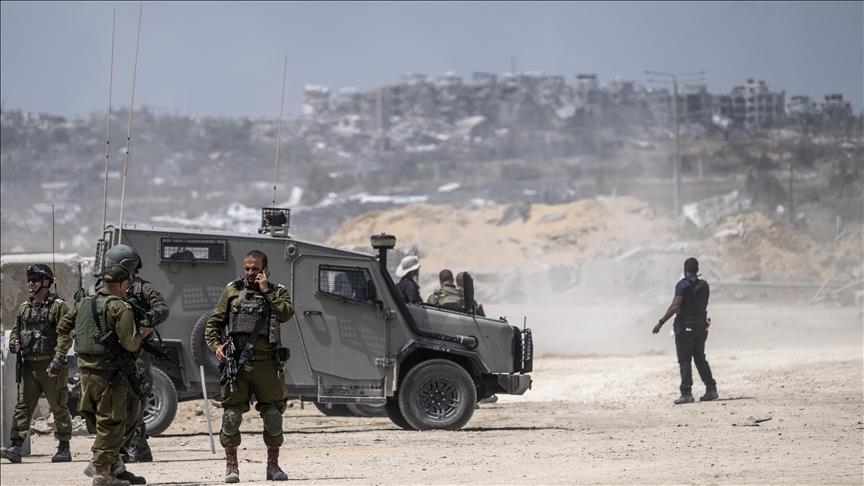
The World Food Program (WFP) condemned the Israeli military for firing on a humanitarian convoy delivering food aid to northern Gaza on Sunday morning, calling the attack “completely unacceptable” and urging an immediate end to violence against civilians seeking life-saving assistance.
The 25-truck convoy had entered Gaza through the Zikim crossing carrying vital supplies when “the surrounding crowd came under fire from Israeli tanks, snipers and other gunfire,” the UN agency said in a statement.
“These people were simply trying to access food to feed themselves and their families on the brink of starvation,” it said, expressing deep sorrow over “the loss of countless lives” and many more suffering life-threatening injuries.
The WFP criticized the breach of prior assurances by Israeli authorities that humanitarian convoys would not face military engagement.
“There should never, ever, be armed groups near or on our aid convoys,” it stressed. “Shootings near humanitarian missions, convoys and food distributions must stop immediately.”
The agency warned that without safer conditions for aid operations, it may be forced to suspend deliveries across Gaza.
“WFP teams accompanying convoys should not have to risk their own lives in the effort to save others,” the statement said.
Highlighting Gaza’s deepening hunger crisis, the WFP said nearly one in three people are going days without food, with malnutrition surging among 90,000 women and children urgently needing treatment.
“We urgently call on the international community and all parties to advocate for, and facilitate, the delivery of life-saving food aid to starving populations inside Gaza -- safely, securely, wherever families are, and without obstruction,” it added.
UN agency calls attack 'completely unacceptable,' urging safe and unhindered access to life-saving food as hunger and malnutrition surge in enclave
Gizem Nisa Demir |21.07.2025 - TRT/AA
The World Food Program (WFP) condemned the Israeli military for firing on a humanitarian convoy delivering food aid to northern Gaza on Sunday morning, calling the attack “completely unacceptable” and urging an immediate end to violence against civilians seeking life-saving assistance.
The 25-truck convoy had entered Gaza through the Zikim crossing carrying vital supplies when “the surrounding crowd came under fire from Israeli tanks, snipers and other gunfire,” the UN agency said in a statement.
“These people were simply trying to access food to feed themselves and their families on the brink of starvation,” it said, expressing deep sorrow over “the loss of countless lives” and many more suffering life-threatening injuries.
The WFP criticized the breach of prior assurances by Israeli authorities that humanitarian convoys would not face military engagement.
“There should never, ever, be armed groups near or on our aid convoys,” it stressed. “Shootings near humanitarian missions, convoys and food distributions must stop immediately.”
The agency warned that without safer conditions for aid operations, it may be forced to suspend deliveries across Gaza.
“WFP teams accompanying convoys should not have to risk their own lives in the effort to save others,” the statement said.
Highlighting Gaza’s deepening hunger crisis, the WFP said nearly one in three people are going days without food, with malnutrition surging among 90,000 women and children urgently needing treatment.
“We urgently call on the international community and all parties to advocate for, and facilitate, the delivery of life-saving food aid to starving populations inside Gaza -- safely, securely, wherever families are, and without obstruction,” it added.
Malnutrition reaches new heights in Gaza, children most affected
AFP/Nuseirat
July 21, 2025
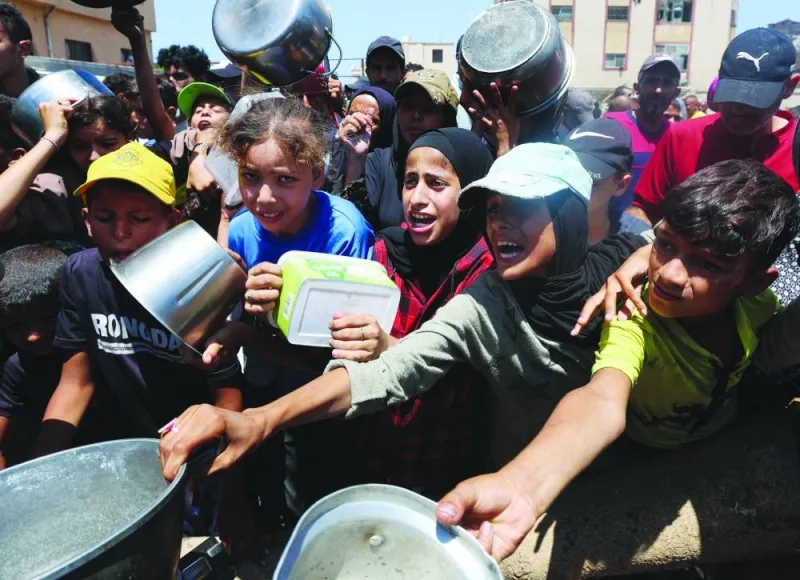
Palestinians gather to receive food from a charity kitchen, amid a hunger crisis, in Nuseirat, central Gaza Strip, yesterday.
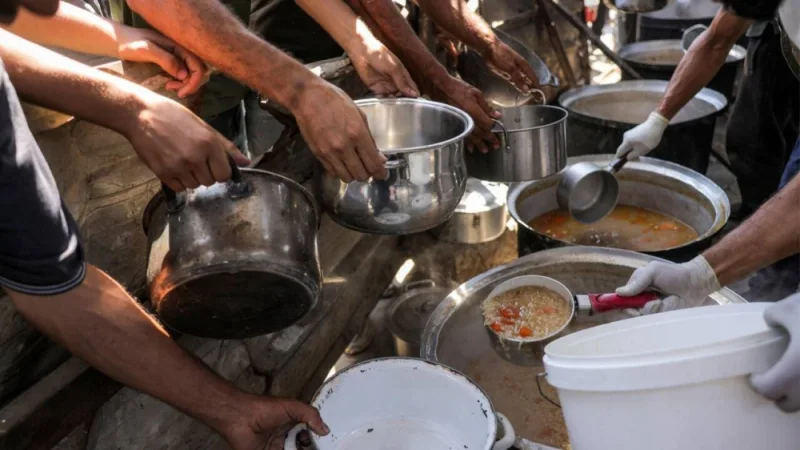
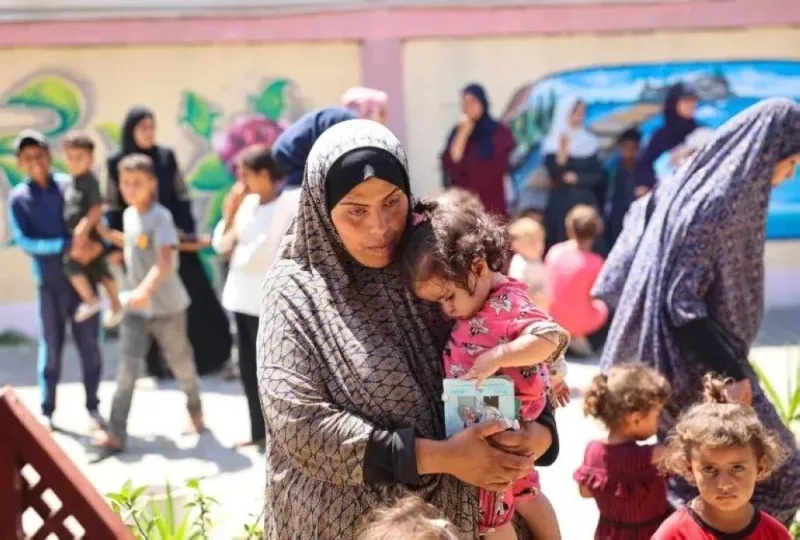
Palestinians gather to receive food from a charity kitchen, amid a hunger crisis, in Nuseirat, central Gaza Strip, yesterday.
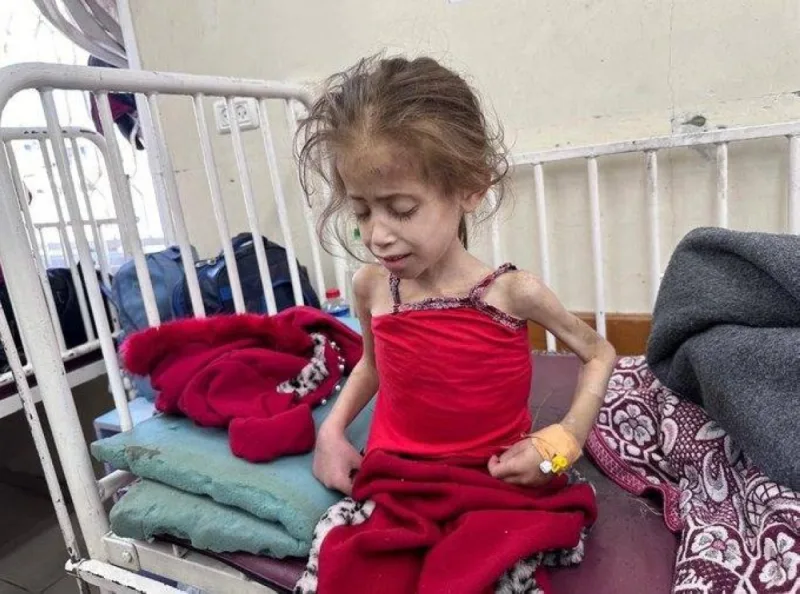
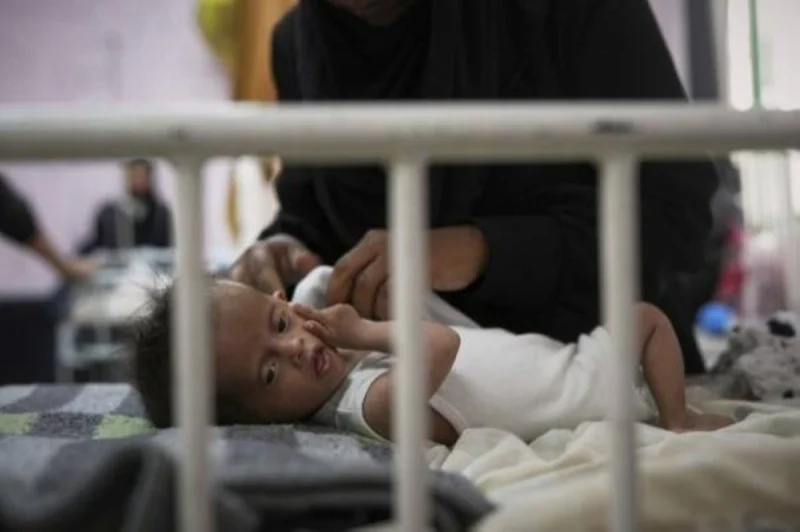
Gaza’s civil defence agency told AFP it has noted a rising number of infant deaths caused by “severe hunger and malnutrition”, reporting at least three such deaths in the past week.
“These heartbreaking cases were not caused by direct bombing but by starvation, the lack of baby formula and the absence of basic healthcare,” civil defence spokesman Mahmud Bassal said.
Ziad Musleh, a 45-year-old father displaced from Gaza’s north to the central city of Nuseirat, told AFP: “We are dying, our children are dying and we can’t do anything to stop it.”
“Our children cry and scream for food. They go to sleep in pain, in hunger, with empty stomachs. There is absolutely no food.
“And if by chance a small amount appears in the market, the prices are outrageous – no one can afford it.”
At a food distribution site in a UN-school-turned-shelter in Nuseirat yesterday, children entertained themselves by banging on their plates as they waited for their turn.
Several of them had faces stretched thin by hunger, an AFP journalist reported.
Umm Sameh Abu Zeina, whose cheekbones protruded from her thin face as she waited for food in Nuseirat, said she had lost 35 kilograms.
“We do not eat enough. I don’t eat, I leave the food I receive for my daughter,” she said, adding that she had a range of health conditions, including high blood pressure and diabetes. Gazans as well as the UN and aid organisations frequently complain that depleted stocks have sent prices skyrocketing for what little food is available in the markets.
The UN’s World Food Programme (WFP) warned in early July that the price of flour for bread was 3,000 times more expensive than before the war began more than 21 months ago.
WFP director Carl Skau, who visited Gaza City in early July, described the situation as “the worst I’ve ever seen”.
“A father I met had lost 25 kilograms in the past two months. People are starving, while we have food just across the border,” he said in a statement.
After talks to extend a six-week ceasefire broke down, Israel im
As stocks accumulated during the ceasefire gradually depleted, the Palestinian territory experienced the worst shortages since the start of the war. “Our kitchens are empty; they are now serving hot water with a bit of pasta floating in it,” said Skau. The effects of malnutrition on children and pregnant women can be particularly dire.
Medical charity Doctors Without Borders (MSF) said last week that its teams are seeing the highest number of malnutrition cases ever recorded by its teams in Gaza.
“Due to widespread malnutrition among pregnant women and poor water and sanitation levels, many babies are being born prematurely,” said Joanne Perry, an MSF doctor in Gaza.
“Our neonatal intensive care unit is severely overcrowded, with four to five babies sharing a single incubator.
Amina Wafi, a 10-year-old girl from the southern Gaza city of Khan Yunis, said she thinks of food constantly. MSF said that patients at its Gaza clinics do not heal properly from their wounds due to protein deficiency, and that the lack of food causes infections to last longer than they would in healthy individual
Palestinians gather to receive food from a charity kitchen, amid a hunger crisis, in Nuseirat, central Gaza Strip, yesterday.
Palestinians gather to receive food from a charity kitchen, amid a hunger crisis, in Nuseirat, central Gaza Strip, yesterday.
As malnutrition surges in war-torn Gaza, tens of thousands of children and women require urgent treatment, according to the UN, while aid enters the blockaded Palestinian territory at a trickle.
Gaza’s civil defence agency told AFP it has noted a rising number of infant deaths caused by “severe hunger and malnutrition”, reporting at least three such deaths in the past week.
“These heartbreaking cases were not caused by direct bombing but by starvation, the lack of baby formula and the absence of basic healthcare,” civil defence spokesman Mahmud Bassal said.
Ziad Musleh, a 45-year-old father displaced from Gaza’s north to the central city of Nuseirat, told AFP: “We are dying, our children are dying and we can’t do anything to stop it.”
“Our children cry and scream for food. They go to sleep in pain, in hunger, with empty stomachs. There is absolutely no food.
“And if by chance a small amount appears in the market, the prices are outrageous – no one can afford it.”
At a food distribution site in a UN-school-turned-shelter in Nuseirat yesterday, children entertained themselves by banging on their plates as they waited for their turn.
Several of them had faces stretched thin by hunger, an AFP journalist reported.
Umm Sameh Abu Zeina, whose cheekbones protruded from her thin face as she waited for food in Nuseirat, said she had lost 35 kilograms.
“We do not eat enough. I don’t eat, I leave the food I receive for my daughter,” she said, adding that she had a range of health conditions, including high blood pressure and diabetes. Gazans as well as the UN and aid organisations frequently complain that depleted stocks have sent prices skyrocketing for what little food is available in the markets.
The UN’s World Food Programme (WFP) warned in early July that the price of flour for bread was 3,000 times more expensive than before the war began more than 21 months ago.
WFP director Carl Skau, who visited Gaza City in early July, described the situation as “the worst I’ve ever seen”.
“A father I met had lost 25 kilograms in the past two months. People are starving, while we have food just across the border,” he said in a statement.
After talks to extend a six-week ceasefire broke down, Israel im
posed a full blockade on Gaza on March 2, allowing nothing in until trucks were again permitted at a trickle in late May.
As stocks accumulated during the ceasefire gradually depleted, the Palestinian territory experienced the worst shortages since the start of the war. “Our kitchens are empty; they are now serving hot water with a bit of pasta floating in it,” said Skau. The effects of malnutrition on children and pregnant women can be particularly dire.
Medical charity Doctors Without Borders (MSF) said last week that its teams are seeing the highest number of malnutrition cases ever recorded by its teams in Gaza.
“Due to widespread malnutrition among pregnant women and poor water and sanitation levels, many babies are being born prematurely,” said Joanne Perry, an MSF doctor in Gaza.
“Our neonatal intensive care unit is severely overcrowded, with four to five babies sharing a single incubator.
Amina Wafi, a 10-year-old girl from the southern Gaza city of Khan Yunis, said she thinks of food constantly. MSF said that patients at its Gaza clinics do not heal properly from their wounds due to protein deficiency, and that the lack of food causes infections to last longer than they would in healthy individual
‘They went out hungry, they came back dead’: Gazan parents mourn children killed during aid distribution
‘They were clearly children. The Israeli military could see that. But they didn’t hesitate,’ says mother of children killed by Israel
Nour Abuaisha and Ikram Kouachi |20.07.2025 - TRT/AA
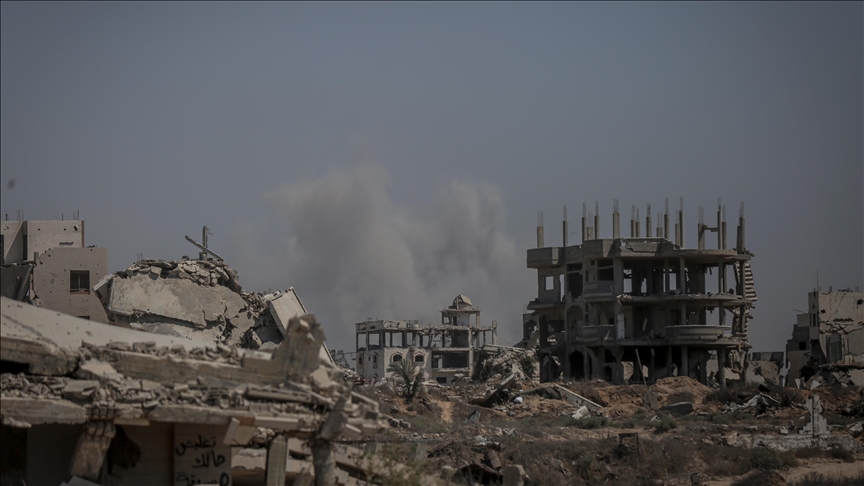
GAZA CITY, Palestine/ANKARA
A routine trip to collect food in Gaza has turned into a tragedy for the family of Palestinian father Hatem al-Nouri.
His two-year-old son Seraj went with his two brothers and a niece to a US-run aid distribution point in central Gaza last week in the hope of getting some food for the family.
As they reached the site, an Israeli warplane hit the four and other aid-seeking Palestinians, severely injuring Seraj while his two brothers – Omar and Amir – and niece Sama died, all under the age of 10.
“What was the crime of these children? Hatem asked, holding back his tears. “They were just hungry.”
The helpless father and his wife, Iman, sit by their son’s side at Al-Aqsa Martyrs Hospital, consumed with fear and heartbreak.
“They were hungry, just hoping for something sweet to eat,” said Iman, recounting how the four children left their home in Deir al-Balah to collect food and nutritional supplements from the aid site, run by US-based NGO Project HOPE.
“Seraj was crying for something sweet,” Iman said. “Five minutes later, they were bombed.”
Famine
Gaza has been teetering on the brink of famine under Israel’s stifling blockade.
According to Gaza’s government media office, over 650,000 children under five are now at risk of death by starvation amid the ongoing Israeli blockade, which has cut off food, fuel, and medical aid for months.
Due to fuel shortages, no ambulances could reach the four children after the Israeli attack. Instead, neighbors loaded their shattered bodies onto donkey carts to take them to the hospital.
According to Gaza’s Health Ministry, fuel shortages have forced hospitals to cut electricity to entire departments, and blood bank refrigerators have stopped working, threatening the lives of patients in need of urgent transfusions.
“When we brought Omar in, he was still breathing,” recalled his mother. “But no ambulance, no blood, and no emergency team could reach him in time.”
She believes her son could have been saved.
“They went to get food. That’s all. They came back as martyrs,” said their father, Hatem. “Seraj is between life and death… for the sake of something sweet-tasting.”
Deliberate targeting
The family are now pleading for their two-year-old son to be included in evacuation lists for medical treatment abroad, as Gaza’s few remaining hospitals are overwhelmed and critically under-equipped.
“I can’t lose him too,” said Iman. “Omar and Amir are already gone. My heart can’t take losing another.”
According to eyewitnesses and relatives, the children were sitting on the sidewalk outside the aid point when they were struck.
“They were clearly children,” Iman said. “The Israeli military could see that. But they didn’t hesitate.”
The attack was the latest in a pattern of Israeli strikes that have hit crowds of civilians waiting for food aid as famine and disease spread rapidly across the Gaza Strip.
According to official sources, the total death toll of those killed while seeking humanitarian aid has reached 922, with over 5,861 others injured since May 27.
With Israel's blockade choking off essential supplies and its continued bombardment devastating civilian life, calls for international intervention are growing louder, but Gaza’s families say help is coming too late.
Rejecting international calls for a ceasefire, the Israeli army has pursued a brutal offensive on Gaza since Oct. 7, 2023, killing nearly 59,000 Palestinians, most of them women and children.
The relentless bombardment has destroyed the enclave and led to food shortages and a spread of disease.
Last November, the International Criminal Court issued arrest warrants for Israeli Prime Minister Benjamin Netanyahu and his former Defense Minister Yoav Gallant for war crimes and crimes against humanity in Gaza.
Israel also faces a genocide case at the International Court of Justice for its war on the enclave.
‘They were clearly children. The Israeli military could see that. But they didn’t hesitate,’ says mother of children killed by Israel
Nour Abuaisha and Ikram Kouachi |20.07.2025 - TRT/AA
GAZA CITY, Palestine/ANKARA
A routine trip to collect food in Gaza has turned into a tragedy for the family of Palestinian father Hatem al-Nouri.
His two-year-old son Seraj went with his two brothers and a niece to a US-run aid distribution point in central Gaza last week in the hope of getting some food for the family.
As they reached the site, an Israeli warplane hit the four and other aid-seeking Palestinians, severely injuring Seraj while his two brothers – Omar and Amir – and niece Sama died, all under the age of 10.
“What was the crime of these children? Hatem asked, holding back his tears. “They were just hungry.”
The helpless father and his wife, Iman, sit by their son’s side at Al-Aqsa Martyrs Hospital, consumed with fear and heartbreak.
“They were hungry, just hoping for something sweet to eat,” said Iman, recounting how the four children left their home in Deir al-Balah to collect food and nutritional supplements from the aid site, run by US-based NGO Project HOPE.
“Seraj was crying for something sweet,” Iman said. “Five minutes later, they were bombed.”
Famine
Gaza has been teetering on the brink of famine under Israel’s stifling blockade.
According to Gaza’s government media office, over 650,000 children under five are now at risk of death by starvation amid the ongoing Israeli blockade, which has cut off food, fuel, and medical aid for months.
Due to fuel shortages, no ambulances could reach the four children after the Israeli attack. Instead, neighbors loaded their shattered bodies onto donkey carts to take them to the hospital.
According to Gaza’s Health Ministry, fuel shortages have forced hospitals to cut electricity to entire departments, and blood bank refrigerators have stopped working, threatening the lives of patients in need of urgent transfusions.
“When we brought Omar in, he was still breathing,” recalled his mother. “But no ambulance, no blood, and no emergency team could reach him in time.”
She believes her son could have been saved.
“They went to get food. That’s all. They came back as martyrs,” said their father, Hatem. “Seraj is between life and death… for the sake of something sweet-tasting.”
Deliberate targeting
The family are now pleading for their two-year-old son to be included in evacuation lists for medical treatment abroad, as Gaza’s few remaining hospitals are overwhelmed and critically under-equipped.
“I can’t lose him too,” said Iman. “Omar and Amir are already gone. My heart can’t take losing another.”
According to eyewitnesses and relatives, the children were sitting on the sidewalk outside the aid point when they were struck.
“They were clearly children,” Iman said. “The Israeli military could see that. But they didn’t hesitate.”
The attack was the latest in a pattern of Israeli strikes that have hit crowds of civilians waiting for food aid as famine and disease spread rapidly across the Gaza Strip.
According to official sources, the total death toll of those killed while seeking humanitarian aid has reached 922, with over 5,861 others injured since May 27.
With Israel's blockade choking off essential supplies and its continued bombardment devastating civilian life, calls for international intervention are growing louder, but Gaza’s families say help is coming too late.
Rejecting international calls for a ceasefire, the Israeli army has pursued a brutal offensive on Gaza since Oct. 7, 2023, killing nearly 59,000 Palestinians, most of them women and children.
The relentless bombardment has destroyed the enclave and led to food shortages and a spread of disease.
Last November, the International Criminal Court issued arrest warrants for Israeli Prime Minister Benjamin Netanyahu and his former Defense Minister Yoav Gallant for war crimes and crimes against humanity in Gaza.
Israel also faces a genocide case at the International Court of Justice for its war on the enclave.

Palestinian mother Alaa Al-Najjar mourns her three-month-old baby Yehia, who died due to malnutrition amid a hunger crisis, according to medics, at Nasser Hospital in Khan Younis, in the southern Gaza Strip July 20, 2025. REUTERS/Hatem Khaled
Gaza: Asharq Al Awsat
21 July 2025
AD ـ 26 Muharram 1447 AH
Israeli forces have issued evacuation orders for parts of Deir al-Balah, a central Gaza area previously designated as a “safe humanitarian zone.” Residents, many of whom had fled there under Israeli direction earlier in the war, were told to vacate the southwestern parts of the city amid claims of militant activity in the area.
This marks the first Israeli military operation in Deir al-Balah since the war began, with officials citing efforts to “intensify operations to dismantle enemy capabilities and terrorist infrastructure.”
The Israeli army’s directive included the evacuation of displaced persons living in makeshift tents. Leaflets were dropped and electronic notices distributed, requesting residents to head south toward Al-Mawasi, an already overcrowded strip.
The region under evacuation lies between central Deir al-Balah and southern Khan Younis. It houses nearly 100,000 people, many displaced multiple times, and includes Gaza’s largest EU-funded desalination plant, which has been out of service for months due to Israeli power cuts. If Israel advances on the ground here, it could mean the loss of another stretch of critical farmland, deepening the already catastrophic famine in the Strip.
A New Military Corridor in the Making?
Sources told Asharq Al-Awsat that Israel may be seeking to carve out a new military corridor, effectively separating Khan Younis from Gaza’s central region. Similar divisions were previously enacted when Rafah was isolated from Khan Younis. Observers now anticipate the same pattern could unfold between Khan Younis and Deir al-Balah.
Reports suggest Israeli troops might approach from northern Khan Younis to storm the southwestern flank of Deir al-Balah, thereby severing the area from the rest of the city. A comparable strategy was previously employed in the east-west split of Khan Younis through the so-called “Magin Oz Axis.”
Sources further warned that, blocking a ceasefire agreement, Israeli forces may attempt full control of the Netzarim Corridor, effectively dividing northern Gaza from the center. Currently, Israel controls the corridor’s eastern flank but has left the western side, Al-Rashid Street, accessible since the last ceasefire ended on March 18.
Such fragmentation of the Gaza Strip into isolated zones would grant Israel near-total operational control while pushing civilians into ever-smaller, overcrowded pockets, primarily along the coastline.
From Israel’s perspective, these military pressures are aimed at squeezing Hamas into more concessions in the ongoing indirect negotiations hosted by Qatar.
Sunday saw one of the deadliest days in recent weeks. Over 70 Palestinians were killed in northern Gaza as they gathered near the Zikim military zone, hoping to receive flour from a rare delivery of eight trucks, allowed in for the first time in over a week.
Witnesses say Israeli drone fire and artillery struck the crowd, leaving more than 150 injured, many of them children, teenagers, and women.
The Gaza Health Ministry confirmed 73 deaths, 67 of them in the north, and warned that many injuries were critical. The tragedy came just a day after 30 others were killed in southern Gaza on Saturday.
The incident brings the total number of civilians killed at or near aid distribution points - many of them backed by US humanitarian programs - to more than 1,000 since the end of May.
Hamas described the attacks as “escalation in the genocidal war,” accusing Israel of using food and aid as bait to target vulnerable civilians. “What’s happening in Gaza is a deliberate strategy of ethnic cleansing through hunger, thirst, and violence,” the group stated, urging immediate international intervention.
The humanitarian crisis in Gaza continues to spiral. In recent days, at least seven children have died from malnutrition. The Health Ministry reported 18 famine-related deaths within just the past 24 hours.
Israeli forces have issued evacuation orders for parts of Deir al-Balah, a central Gaza area previously designated as a “safe humanitarian zone.” Residents, many of whom had fled there under Israeli direction earlier in the war, were told to vacate the southwestern parts of the city amid claims of militant activity in the area.
This marks the first Israeli military operation in Deir al-Balah since the war began, with officials citing efforts to “intensify operations to dismantle enemy capabilities and terrorist infrastructure.”
The Israeli army’s directive included the evacuation of displaced persons living in makeshift tents. Leaflets were dropped and electronic notices distributed, requesting residents to head south toward Al-Mawasi, an already overcrowded strip.
The region under evacuation lies between central Deir al-Balah and southern Khan Younis. It houses nearly 100,000 people, many displaced multiple times, and includes Gaza’s largest EU-funded desalination plant, which has been out of service for months due to Israeli power cuts. If Israel advances on the ground here, it could mean the loss of another stretch of critical farmland, deepening the already catastrophic famine in the Strip.
A New Military Corridor in the Making?
Sources told Asharq Al-Awsat that Israel may be seeking to carve out a new military corridor, effectively separating Khan Younis from Gaza’s central region. Similar divisions were previously enacted when Rafah was isolated from Khan Younis. Observers now anticipate the same pattern could unfold between Khan Younis and Deir al-Balah.
Reports suggest Israeli troops might approach from northern Khan Younis to storm the southwestern flank of Deir al-Balah, thereby severing the area from the rest of the city. A comparable strategy was previously employed in the east-west split of Khan Younis through the so-called “Magin Oz Axis.”
Sources further warned that, blocking a ceasefire agreement, Israeli forces may attempt full control of the Netzarim Corridor, effectively dividing northern Gaza from the center. Currently, Israel controls the corridor’s eastern flank but has left the western side, Al-Rashid Street, accessible since the last ceasefire ended on March 18.
Such fragmentation of the Gaza Strip into isolated zones would grant Israel near-total operational control while pushing civilians into ever-smaller, overcrowded pockets, primarily along the coastline.
From Israel’s perspective, these military pressures are aimed at squeezing Hamas into more concessions in the ongoing indirect negotiations hosted by Qatar.
Sunday saw one of the deadliest days in recent weeks. Over 70 Palestinians were killed in northern Gaza as they gathered near the Zikim military zone, hoping to receive flour from a rare delivery of eight trucks, allowed in for the first time in over a week.
Witnesses say Israeli drone fire and artillery struck the crowd, leaving more than 150 injured, many of them children, teenagers, and women.
The Gaza Health Ministry confirmed 73 deaths, 67 of them in the north, and warned that many injuries were critical. The tragedy came just a day after 30 others were killed in southern Gaza on Saturday.
The incident brings the total number of civilians killed at or near aid distribution points - many of them backed by US humanitarian programs - to more than 1,000 since the end of May.
Hamas described the attacks as “escalation in the genocidal war,” accusing Israel of using food and aid as bait to target vulnerable civilians. “What’s happening in Gaza is a deliberate strategy of ethnic cleansing through hunger, thirst, and violence,” the group stated, urging immediate international intervention.
The humanitarian crisis in Gaza continues to spiral. In recent days, at least seven children have died from malnutrition. The Health Ministry reported 18 famine-related deaths within just the past 24 hours.
.jpg)

No comments:
Post a Comment