Nigerian Police Arrest 22 Crewmembers After Finding Small Cocaine Shipment
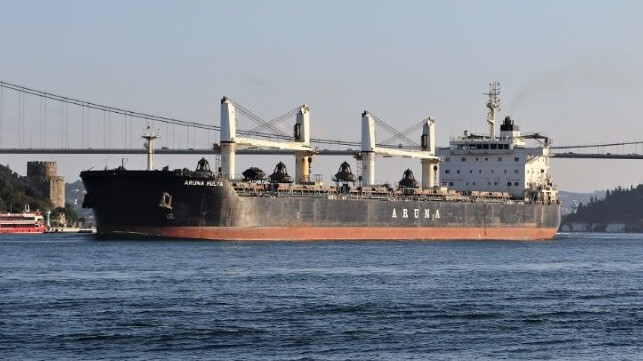
Nigerian authorities have arrested 22 crewmembers from a bulker after finding a small shipment of cocaine aboard the vessel.
In November, the bulker Aruna Hulya got under way from Santos, Brazil - a notorious cocaine-trafficking hub - and got under way on a transatlantic crossing to Lagos, arriving December 26. The vessel moored at the GDNL terminal complex in Lagos. Upon boarding, Nigerian authorities found about 32 kilos of cocaine inside the number-three hatch, officials said in a social media statement.
Santos' cocaine trade is dominated by the gang known as the First Capital Command (Primeiro Comando da Capital, or PCC), which has made the agricultural hub into one of the world's busiest drug transshipment centers. The PCC is known to have transportation and distribution partnerships with its overseas counterparts - the 'Ndrangheta mafia in European consumer markets, and the Balkan criminal networks that dominate the Brazil-to-West Africa-to-Europe cocaine transshipment pipeline.
Nigeria and its neighboring states have become a new stopover point on the ever-shifting network that connects abundant cocaine-producing regions in South America with users in Europe. From Brazil, the drugs arrive in Senegal, Ghana, Nigeria and neighboring states via a variety of maritime shipment routes. These kilo bricks are then transferred into "clean" containerized cargoes bound for European seaports. On arrival in Europe, a container from Nigeria looks less suspicious than a container from Santos, and the shipment might have higher odds of escaping detection by European customs.
In general, merchant ship crewmembers often do not have knowledge of the presence of a cocaine consignment in a cargo container, hold or sea chest on their vessel. Smuggling gangs working with port-side personnel often place the goods without the crew's involvement, then retrieve the contraband at the destination port. In cases where crewmembers are involved, participation is often limited to a small group; nonetheless, some national jurisdictions hold the entire crew accountable when drugs are found on board.
Nigeria has conducted mass arrests before. In November, Nigerian officials detained all 20 crewmembers of the bulker Nord Bosporus after finding 20 kilos of cocaine concealed in the vessel's cargo. Like Aruna Hulya, Nord Bosporus' last port of call was Santos.
Top image courtesy Cengiz Tokgoz / VesselFinder.

No comments:
Post a Comment