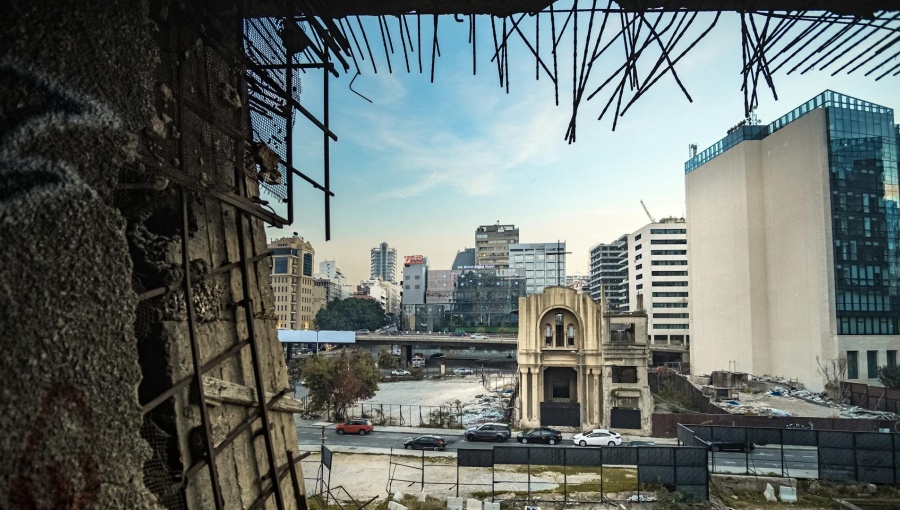
The Lebanese Cabinet's decision to increase gasoline prices and raise the value-added tax has sparked widespread protests and political opposition, with demonstrators blocking major roads in Beirut and other cities.
In response to growing demands for public sector salary increases by workers and unions, the government raised gasoline prices by LBP 300,000 ($3.35) per canister and raised the value-added tax by 1% to 12%.
This decision faced immediate rejection from parties both within and supporting the Cabinet, with Maroun al-Khouli, head of the General Confederation of Lebanese Workers' Unions, alleging that these increases are a direct attack on citizens’ economic rights. Lebanese MP Elias Hankash echoed this position, suggesting that a variety of cost-cutting measures should have been pursued as opposed to such tax and gasoline price hikes.
Protesters blocked the Ring Bridge, Cola Road, Khaldeh Triangle, and portions of Tripoli's Palma Highway before army forces reopened the routes, whilst demonstrations continued into the evening at Riad al-Solh Square in downtown Beirut, Lebanon 24 reported.
The tax increases expose deepening contradictions within Lebanon's governing coalition as electoral considerations increasingly influence policy decisions. Cabinet parties expressed public opposition to the measures yet failed to prevent their implementation, revealing what An-Nahar newspaper described as the government's failure to convince the public of the necessity or select less regressive revenue sources. The timing proved particularly damaging, coinciding with the election season and guaranteeing sustained criticism throughout the government's term.
"This government suffers from a fundamental flaw that allows it to replicate the 'Siniora mentality' without any obstacles," Al-Akhbar wrote, criticising the administration's accountant-focused approach that prioritises financial indicators whilst ignoring social and economic consequences. The newspaper noted that ministers received only brief scenarios outlining financial costs during the session, without a comprehensive analysis of policy implications.
Economist Kamal Hamdan characterised the decisions as a continuation of non-reformist approaches, whereby poorer consumers will finance wage adjustments for other poor and lower-middle-class groups. His assessment highlighted the government's pattern of implementing temporary allowances rather than structural reforms, repeating the subsidy-lifting and consumption tax increases prescribed by the International Monetary Fund since 2004.
While the Lebanese government's decision to implement these latest fiscal changes came after mounting pressure, with protestors blocking the entrance of the Lebanese Parliament during the deliberations on the national budget, these actions exhibit a tone-deafness to the financial plight of ordinary Lebanese citizens. As poverty continues to run rife, an Integrated Food Security Phase Classification (IPC) report found that food insecurity in Lebanon is set to spike. The number of people expected to face a food "crisis" or worse conditions is estimated to be 874,000 between November 2025 and March 2026, including 22,000 in "emergency" status. Projections for April through July 2026 indicate a rise to 961,000, with emergency-level cases surging to 63,000. One such issue begs the question as to why Hankash's approach is not being considered, namely whereby cost-cutting measures are implemented by the state rather than another financial squeeze on the public.

No comments:
Post a Comment