It’s possible that I shall make an ass of myself. But in that case one can always get out of it with a little dialectic. I have, of course, so worded my proposition as to be right either way (K.Marx, Letter to F.Engels on the Indian Mutiny)
Sunday, May 03, 2020

Kerry Bolton
In so doing the role of Russia in the unfolding of history from this era onward could be easily dismissed, opposed or ridiculed by proponents of Spengler, while in Russia his insights into culture-morphology would be understandably unwelcome as being from an Slavophobic German nationalist. However, while Spengler, like many others of the time in the aftermath of the Bolshevik Revolution, regarded – partially - Russia as the Asianised leader of a ‘coloured revolution’ against the white world, he also considered other possibilities. This paper examines Spengler’s views on Russia as a distinct culture that had not yet fulfilled her destiny, while Western civilisation is about to take a final bow on the world historical stage. His views on Russia as an outsider are considered in relation to the depiction of the Russian soul by seminal Russians such as Gogol.
Russia’s ‘Soul’
Spengler regarded Russians as formed by the vastness of the land-plain, as innately antagonistic to the Machine, as rooted in the soil, irrepressibly peasant, religious, and ‘primitive’. Without a wider understanding of Spengler’s philosophy it appears that he was – like Hitler – a Slavophobe. However, when Spengler wrote of these Russian characteristics he was referencing the Russians as a still youthful people in contrats to the senile West. Hence the ‘primitive’ Russian is not synonymous with ‘primitivity’ as popularly understood at that time in regard to ‘primitive’ tribal peoples. Nor was it to be confounded with the Hitlerite perception of the ‘primitive Slav’ incapable of building his own State.
To Spengler, the ‘primitive peasant’ is the well-spring from which a race draws its healthiest elements during its epochs of cultural vigour.
Agriculture is the foundation of a High Culture, enabling stable communities to diversify labour into specialisation from which Civilisation proceeds.
However, according to Spengler, each people has its own soul, a German conception derived from the German Idealism of Herder, Fichte et al. A High culture reflects that soul, whether in its mathematics, music, architecture; both in the arts and the physical sciences. The Russian soul is not the same as the Western Faustian, as Spengler called it, the ‘ Magian’ of the Arabian civilisation, or the Classical of the Hellenes and Romans. The Western Culture that was imposed on Russia by Peter the Great, what Spengler called Petrinism, is a veneer.
The basis of the Russian soul is not infinite space – as in the West’s Faustian (Spengler, 1971, I, 183) imperative, but is ‘the plain without limit’ (Spengler, 1971, I, 201). The Russian soul expresses its own type of infinity, albeit not that of the Western which becomes even enslaved by its own technics at the end of its life-cycle. (Spengler, 1971, II, 502). (Although it could be argued that Sovietism enslaved man to machine, a Spenglerian would cite this as an example of Petrinism). However, Civilisations cannot do anything but follow their life’s course, and one cannot see Spengler’s descriptions as moral judgements but as observations. The finale for Western Civilisation according to Spengler cannot be to create further great forms of art and music, which belong to the youthful or ‘ spring’ epoch of a civilisation, but to dominate the world under a technocratic-military dispensation, before declining into oblivion that all prior world civilisations. It is after this Western decline that Spengler alluded to the next word civilisation being that of Russia. At that stage Spengler could only hint at the possibilities.
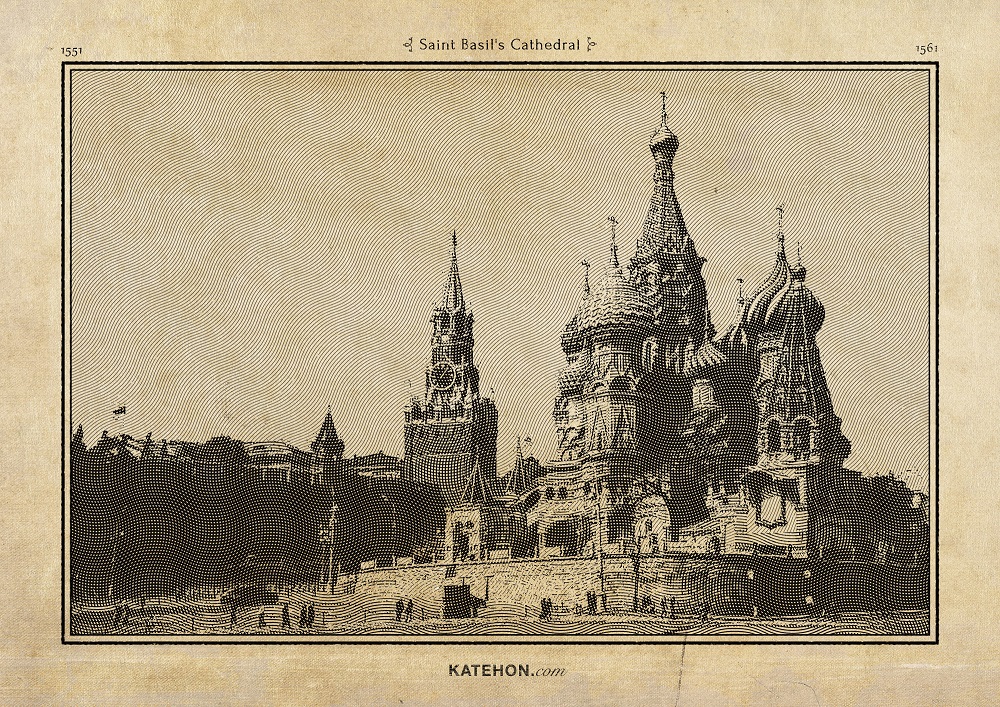
Hence, according to Spengler, Russian Orthodox architecture does not represent the infinity towards space that is symbolised by the Western high culture’s Gothic Cathedral spire, nor the enclosed space of the Mosque of the Magian Culture, (Spengler, 1971, I, 183-216) but the impression of sitting upon a horizon. Spengler considered that this Russian architecture is ‘not yet a style, only the promise of a style that will awaken when the real Russian religion awakens’ (Spengler, 1971, I, p. 201. Spengler was writing of the Russian culture as an outsider, and by his own reckoning must have realised the limitations of that. It is therefore useful to compare his thoughts on Russia with those of Russians of note.
Nikolai Berdyaev in The Russian Idea affirms what Spengler describes:
There is that in the Russian soul which corresponds to the immensity, the vagueness, the infinitude of the Russian land, spiritual geography corresponds with physical. In the Russian soul there is a sort of immensity, a vagueness, a predilection for the infinite, such as is suggested by the great plain of Russia. (Berdyaev, 1).
‘Prussian Socialism’, ‘Russian Socialism’
Of the Russian soul, the ego/vanity of the Western culture-man is missing; the persona seeks impersonal growth in service, ‘in the brother-world of the plain’. Orthodox Christianity condemns the ‘I’ as ‘sin’ (Spengler, 1971, I, 309). Spengler wrote of ‘Prussian Socialism’, based on the Prussian ethos of duty to the state, as the foundation of a new Western ethos under the return to Faith and Authority during the final epoch of Western civilisation. He contrasted this with the ‘socialism’ of Karl Marx, which he regarded as a product of English economics, (Spengler, 1919) as distinct from the German economics of Friedrich List for example, described as the ‘ national system of political economy’, where nation is the raison d’etre of the economy and not class or individual.
The Russian concept of ‘we’ rather than ‘I’, and of impersonal service to the expanse of one’s land implies another form socialism. It is perhaps in this sense that Stalinism proceeded along lines different and often antithetical to the Bolshevism envisaged by Trotsky et al. (Trotsky, 1936), and established an enduring legacy on Russia.
A recent comment by an American visitor to Russia, Barbara J. Brothers, as part of a scientific delegation, states something akin to Spengler’s observation:
The Russians have a sense of connectedness to themselves and to other human beings that is just not a part of American reality. It isn’t that competitiveness does not exist; it is just that there always seems to be more consideration and respect for others in any given situation.
Of the Russian concept of property and of capitalism, Berdyaev wrote:
The social theme occupied a predominant place in Russian nineteenth century thought. It might even be said that Russian thought in that century was to a remarkable extent coloured by socialistic ideas. If the word socialism is not taken in its doctrinaire sense, one might say that socialism is deeply rooted in the Russian nature. There is already an expression of this truth in the fact that the Russian people did not recognize the Roman conception of property. It has been said of Muscovite Russia that it was innocent of the sin of ownership in land, the one and only landed proprietor being the Tsar: there was no freedom, but there was a greater sense of what was right. This is of interest in the light that it throws upon the rise of communism. The Slavophils also repudiated the Western bourgeois interpretation of private property equally with the socialists of a revolutionary way of thinking. Almost all of them thought that the Russian people was called upon to give actual effect to social troth and righteousness and to the brotherhood of man. One and all they hoped that Russia would escape the wrongness and evil of capitalism, that it would be able to pass over to a better social order while avoiding the capitalist stage of economic development. And they all considered the backwardness of Russia as conferring upon her a great advantage. It was the wisdom of the Russians to be socialists during the period of serfdom and autocracy. Of all peoples in the world the Russians have the community spirit; in the highest degree the Russian way of life and Russian manners, are of that kind. Russian hospitality is an indication of this sense of community. (Berdyaev, 97-98).
Here again, we see with Berdyaev, as with Spengler, that there is a ‘Russian Socialism’ based on what Spengler referred to as the Russian ‘we’ in contrast to the Late Western ‘I’, and of the sense of brotherhood dramatised by Gogol in Taras Bulba, shaped not by factories and money-thinking, but by the kinship that arises from a people formed from the vastness of the plains, and forged through the adversity of centuries of Muslim and Mongol invasions.
The Russian Soul - Русская душа
The connections between family, nation, birth, unity and motherland are reflected in the Russian language.
род [rod]: family, kind, sort, genus
родина [ródina]: homeland, motherland
родители [rodíteli]: parents
родить [rodít']: to give birth
роднить [rodnít']: to unite, bring together
родовой [rodovói]: ancestral, tribal
родство [rodstvó]: kinship
Russian National Literature starting from the 1840s began to consciously express the Russian soul. Firstly Nikolai Vasilievich Gogol’s Taras Bulba, which along with the poetry of Pushkin, founded a Russian literary tradition; that is to say, truly Russian, and distinct from the previous literature based on German, French and English. John Cournos states of this in his introduction to Taras Bulba:
The spoken word, born of the people, gave soul and wing to literature; only by coming to earth, the native earth, was it enabled to soar. Coming up from Little Russia, the Ukraine, with Cossack blood in his veins, Gogol injected his own healthy virus into an effete body, blew his own virile spirit, the spirit of his race, into its nostrils, and gave the Russian novel its direction to this very day.
Taras Bulba is a tale on the formation of the Cossack folk. In this folk-formation the outer enemy plays a crucial role. The Russian has been formed largely as the result of battling over centuries with Tartars, Muslims and Mongols. Cournos writes of the Gogol myths in reference to the shaping of the Russian character through adversity and landscape:
This same Prince Guedimin freed Kieff from the Tatar yoke. This city had been laid waste by the golden hordes of Ghengis Khan and hidden for a very long time from the Slavonic chronicler as behind an impenetrable curtain. A shrewd man, Guedimin appointed a Slavonic prince to rule over the city and permitted the inhabitants to practise their own faith, Greek Christianity. Prior to the Mongol invasion, which brought conflagration and ruin, and subjected Russia to a two-century bondage, cutting her off from Europe, a state of chaos existed and the separate tribes fought with one another constantly and for the most petty reasons. Mutual depredations were possible owing to the absence of mountain ranges; there were no natural barriers against sudden attack. The openness of the steppe made the people war-like. But this very openness made it possible later for Guedimin’s pagan hosts, fresh from the fir forests of what is now White Russia, to make a clean sweep of the whole country between Lithuania and Poland, and thus give the scattered princedoms a much-needed cohesion. In this way Ukrainia was formed. (Cournos, ‘Introduction’, ibid).
Their society and nationality were defined by religiosity, as was the West’s by Gothic Christianity during its ‘Spring’ epoch. The newcomer to a Setch or permanent village was greeted by the Chief as a Christian and as a warrior: ‘Welcome! Do you believe in Christ?’ —‘I do’, replied the new-comer. ‘And do you believe in the Holy Trinity?’— ‘I do’.—‘And do you go to church?’—‘I do.’ ‘Now cross yourself’. (Gogol, III).
Gogol depicts the scorn in which trade is held, and when commerce has entered among Russians, rather than being confined to non-Russians associated with trade, it is regarded as a symptom of decadence:
I know that baseness has now made its way into our land. Men care only to have their ricks of grain and hay, and their droves of horses, and that their mead may be safe in their cellars; they adopt, the devil only knows what Mussulman customs. They speak scornfully with their tongues. They care not to speak their real thoughts with their own countrymen. They sell their own things to their own comrades, like soulless creatures in the market-place. The favour of a foreign king, and not even a king, but the poor favour of a Polish magnate, who beats them on the mouth with his yellow shoe, is dearer to them than all brotherhood. But the very meanest of these vile men, whoever he may be, given over though he be to vileness and slavishness, even he, brothers, has some grains of Russian feeling; and they will assert themselves some day. And then the wretched man will beat his breast with his hands; and will tear his hair, cursing his vile life loudly, and ready to expiate his disgraceful deeds with torture. Let them know what brotherhood means on Russian soil! (Spengler, 1971, II, 113).
Here we might see a Russian socialism that is, so far form being the dialectical materialism offered by Marx, the mystic we-feeling forged by the vastness of the plains and the imperative for brotherhood above economics, imposed by that landscape. Russia’s feeling of world-mission has its own form of messianism whether expressed through Christian Orthodoxy or the non-Marxian form of ‘world revolution’ under Stalin, or both in combination, as suggested by the later rapport between Stalinism and the Church from 1943 with the creation of the Council for Russian Orthodox Church Affairs (Chumachenko, 2002). In both senses, and even in the embryonic forms taking place under Putin, Russia is conscious of a world-mission, expressed today as Russia’s role in forging a multipolar world, with Russia as being pivotal in resisting unipolarism.
Commerce is the concern of foreigners, and the intrusions bring with them the corruption of the Russian soul and culture in general: in speech, social interaction, servility, undermining Russian ‘brotherhood’, the Russian ‘we’ feeling that Spengler described. (Spengler 1971, I, 309). However, Gogol also states that this materialistic decay will eventually be purged even from the soul of the most craven Russian.
And all the Setch prayed in one church, and were willing to defend it to their last drop of blood, although they would not hearken to aught about fasting or abstinence. Jews, Armenians, and Tatars, inspired by strong avarice, took the liberty of living and trading in the suburbs; for the Zaporozhtzi never cared for bargaining, and paid whatever money their hand chanced to grasp in their pocket. Moreover, the lot of these gain-loving traders was pitiable in the extreme. They resembled people settled at the foot of Vesuvius; for when the Zaporozhtzi lacked money, these bold adventurers broke down their booths and took everything gratis. (Gogol, III).
The description of these people shows that they would not stoop to haggling; they decided what a merchant should receive. Money-talk is repugnant to them.
The Cossack brotherhood is portrayed by Gogol as the formative process in the building up of the Russian people. This process is, significantly, not one of biology but of spirit, even transcending the family bond. Spengler treated the matter of race as that of soul rather than of zoology. (Spengler, 1971, II, 113-155). To Spengler landscape was crucial in determining what becomes ‘race’, and the duration of families grouped in a particular landscape – including nomads who have a defined range of wandering – form ‘a character of duration’, which was Spengler’s definition of ‘race’. (Spengler, Vol. II, 113). Gogol describes this ‘ race’ forming process among the Russians. So far from being an aggressive race nationalism it is an expanding mystic brotherhood under God:
The Russian soul is born in suffering. The Russian accepts the fate of life in service to God and to his Motherland. Russia and Faith are inseparable. When the elderly warrior Bovdug is mortally struck by a Turkish bullet his final words are exhortations on the nobility of suffering, after which his spirit soars to join his ancestors:
‘I sorrow not to part from the world. God grant every man such an end! May the Russian land be forever glorious!’ And Bovdug’s spirit flew above, to tell the old men who had gone on long before that men still knew how to fight on Russian soil, and better still, that they knew how to die for it and the holy faith. (Gogol, IX).
The depth and duration of this cult of the martyrs attached to Holy Mother Russia was revived under Stalin during the Great Patriotic War. This is today as vigorous as ever, as indicated by the celebration of Victory Day on 7 May 2015, and the absence of Western representatives indicating the diverging course Russia is again taking from the West.
The mystique of death and suffering for the Motherland is described in the death of Tarus Bulba when he is captured and executed, his final words being ones of resurrection:
‘Wait, the time will come when ye shall learn what the orthodox Russian faith is! Already the people scent it far and near. A czar shall arise from Russian soil, and there shall not be a power in the world which shall not submit to him!’ But fire had already risen from the fagots; it lapped his feet, and the flame spread to the tree.... But can any fire, flames, or power be found on earth which are capable of overpowering Russian strength? (Gogol, XII).
The characteristics of the Russian soul that run through Tarus Bulba are those of faith, fate, struggle, suffering, strength, brotherhood and resurrection. Tarus Bulba established the Russian national literature that articulated the Russian soul.
Wednesday, May 02, 2007
A.J. Toynbee
A.J. Toynbee
Toynbee's approach may be compared to the one used by Oswald Spengler in The Decline of the West. He rejected, however, Spengler's deterministic view that civilizations rise and fall according to a natural and inevitable cycle.He expressed great admiration for Ibn Khaldun and in particular the Muqaddimah, the preface to Khaldun's own universal history, which notes many systemic biases that intrude on historical analysis via the evidence.
Toynbee's ideas have not proved overly influential on other historians. Comparative history, to which his approach belongs, has been in the doldrums, partly as an adverse reaction to Toynbee. The Canadian economic historian Harold Adams Innis is a notable exception. Following Toynbee and others (Spengler, Kroeber, Sorokin, Cochrane), Innis examined the flourishing of civilizations in terms of administration of empires and media of communication.
Toynbee, Arnold Joseph, 1889-1975
- The Balkans
A History of Bulgaria—Serbia—Greece—Rumania—Turkey (English) - Turkey: a Past and a Future (English)
Israel Studies - Volume 4, Number 1, Spring 1999, pp. 73-95
Indiana University Press Israel Studies 4.1 _________________________________________________________________ Arnold Toynbee: Pro Arab or Pro-Zionist? Isaiah Friedman * Zionist Dialectics _________________________________________________________________ In the late forties, Toynbee acquired the reputation of being a passionate Arab protagonist and a fierce opponent of the State of Israel; by his own admission he became known as a "Western spokesman for the Arab cause." But during World War I and its aftermath, he was less than sympathetic toward the Arabs. He was greatly disturbed to note that the Syrians, contrary to assurances made by Hussein, as well as by al-Faruqi, remained loyal to Turkey and "their conscripts fought dutifully on her side . . . their leaders are too prudent and the people too peaceable to allow them for a moment to contemplate rising in arms." Early in the War, he ascertained that, in the Turkish Asiatic provinces, there was only "a veritable cockpit of nationalities so mutilated that they have never even achieved that [kind of] unity which is the essential preliminary to a national life." By 1917, when the general Arab uprising had failed to materialize, he concluded that they had no "national consciousness. There are Arabs in name who have nothing Arabic about them but their language--most of the peasants in Syria are such . . ." This view was not unique. The official Handbook prepared in 1918 to guide the British delegates to the Peace Conference gave the following description: The people west of the Jordan are not Arabs, but only Arab-speaking. The bulk of the population are fellahin; that is to say, agricultural workers owning land as a village community or working land for the Syrian effendi.
But, it must be born in mind that liberal democracy and socialism-communism, irrespective of their differences, are not absolute opposites. They are branches of the same spiritual tree. This was, for example, claimed by Spengler and Karl Popper, the two otherwise so different thinkers. Not only that A.J. Toynbee, on his part, shared this opinion, but even he saw in the Russian communism the means of westernization of those parts of the world which are hardly accessible to the western civilization in its original form. The true negation of both liberal democracy and communism is Islamic fundamentalism, which is also an imperialism of high style. It personifies a militant, expansionistic nature of the prophet Muhammad's religion. Therefore, the names "Islamic fundamentalism", "Islamic imperialism" or even "Islam in its authentic form" are equally justified.
According to British historian Arnold Toynbee the decline and fall of
great empires was caused by routine and the lack of creativity among social
elites. On the one hand, those societies lacked a shared vision of the future
– on the other they failed to hammer out generally acceptable values that
could contribute to social stability and lend to a shared identity. Growing
internal divisions led to the demise of authorities and the erosion of the
elites’ control, whereas institutions complied less and less to the needs of
the real social and economic situation. Institutional inertia and the
inability to make strategic choices intensified the systemic incoherencies
that manifested themselves in escalating conflicts of interest, the
particularism of various groups, and the loss of steerability over the system
as a whole.
See:
Ibn Khaldun 14th Century Arab Libertarian
Oriental Origins of Post-modernism
Ibn Khaldun, Oswald Spengler, A.J. Toynbee, Metropole, Metropolis, capitalism, Decline of the West, decadence, Islam, imperialism, globalization,
Tags
economics
politics
history
sociology
Arab
Islam
Libertarian
Ibn Khaldun
Thursday, December 01, 2022
Ideas–Even the Most Foolish Ones–Have Consequences

Photograph Source: Elekes Andor – CC BY-SA 4.0
Is the radical right pure hate and all emotion?
Well, they may start from that, but humans that they are, some of them try to rationalize their hates and fears into theories that, though detached from reality, literally provide the ammunition that enables their followers to wreak havoc, like the guy did who descended on a store frequented by Black people in Buffalo several months ago in order to kill as many African-Americans as possible.
Matthew Rose’s A World After Liberalism (Yale University, 2021) brings together and critically analyzes the thoughts of people that most of us probably have not heard of but are worshiped in far right networks around the world. Rose says we better listen to what these guys are saying, even if we find them utterly distasteful, because their ideas have consequences.
Steve Bannon, the incendiary Trump adviser, may be the best known activist of the international far right, but he has derived inspiration from otherwise little known figures on the fringes of history, underlining the wisdom in Keynes’ well-known observation: “Madmen in authority, who hear voices in the air, are distilling their frenzy from some academic scribbler of a few years back.”
The first of these scribblers in Rose’s gallery is Oswald Spengler, an intellectual outside the academy that captured the imagination of a pessimistic post-War World I generation with his celebration of the “heroic” culture of the West. Spengler asserted that culture was in danger of being overwhelmed from within by lack of confidence and loss of a sense of identity — and from without by the “downtrodden races of the outer ring,” who had begun to move from the periphery to the center, armed with the technologies shared with them by the West owing to what Spengler characterized as misguided liberal values.
People of Europe had a shared, collective identity based on one central idee fixe — the “striving for the infinite,” manifested in art, adventure, and conquest. This “Faustian” collective identity, Spengler said, was threatened by the moral sensitivity and self-doubt that liberalism had engendered and by global immigration. The “Decline of the West” (also the title of his key work) was inevitable, but he argued it could be postponed if the peoples of Europe would recognize and embrace their common collective cultural and racial identity and decisively reject the corrosive influence of liberalism, with its leveling doctrines of democracy and equality.
People studying the contemporary far right, observes Rose, are often surprised to see the continuing influence of an early 20th century figure like Spengler on today’s far right activists.
Another influential blast from the past is the Italian philosopher Julius Evola. Evola adopted what was becoming early 20th century sociology’s standard description of social evolution from gemeinschaft to gesellschaft, from traditional to modern society. But instead of seeing modern society as a positive, with its division of labor, economic development, democratic rule, and evolution of the law, he saw it as a fall from grace. Tradition, hierarchy, inequality, the superiority of the master class — these constituted the natural state of community that liberalism, democracy, and socialism had destroyed with their glorification of reason, which drained the world of meaning.
For Evola, race is destiny, and he heaped outrage after outrage on African Americans and Jews. His followers claim, however, that he was not a crude racist, since for him race was not only biological but “spiritual,” whatever that means. One might dismiss all this as nonsense but one cannot dismiss its influence, for Evola has garnered enthusiastic praise across the far right, from the Russian Aleksandr Dugin to the Frenchman Guillaume Faye and to the alt-right Americans Steve Bannon and Richard Spencer.
Spengler and Evola provided later theorists of reaction an explosive legacy of ideas.
A virulent anti-Semite, Francis Yockey argued that world domination is the essential drive of western culture, and the people of the West must live up to that destiny or witness their culture lose its “vitality.” Self-doubt engendered by liberalism was the first step on a slippery slope to cultural self-destruction.
Alain de Benoist of France denounces racial equality, celebrating instead, “racial plurality” as a “veritable human treasure.” Benoist is said to have inspired the Great Replacement Theory, which holds that immigration represents an “existential threat” to the white community and is part of a conspiracy to water down and eventually replace the white race as the dominant race in western societies.
Samuel Francis died in 2005 at age 58, but his impact on the far right continues to resonate. Like the famous sociologist C. Wright Mills, Francis saw the rise to power and consolidation of a power elite. But instead of moving left with this insight as Mills did, he moved right. Fancisc depicted a liberal managerial elite determined to advance the interests of a minority at the expense of an endangered white majority.
Francis also pioneered the depiction of liberals and progressives as promoting what eventually received the popular tag “cancel culture.” As Rose points out, Francis saw in liberalism “a coordinated project of ongoing cultural dispossession” that would “eventually target every symbol and institution of an old social order.”
Even if the Republicans won elections, in this view, the liberals’ policies would prevail because of their entrenchment in key unelected positions in the government bureaucracy — another perspective he shared with some on the left that was later popularized under as the “deep state” that allegedly countermanded Trump’s exercise of power.
Francis was among the first to uncover the political potential of the demographic of lower and middle class white Americans, people he termed “Middle American Radicals (MARS). His analytical work would contribute to activating that demographic into the angry mass that first took the form of the Tea Party Movement and later mutated into the Trumpist base.
But for all his sophisticated theorizing, Francis was obsessed with one idea, and this was that “the civilization that we as whites created in Europe and America could not have developed apart from the genetic endowments of the creating people, nor is there any reason to believe that the civilization can be successfully transmitted to a different people.”
Though Rose tries his best to treat his subjects’ ideas with care, his book serves as proof that Spengler, Evola, and their descendants are engaged in a fool’s errand, which is to rationalize that which resists reason. For reason is always critical and tied to a moral end: to dissolve or dismantle the myths, obfuscations, folk foolishness, urban legends, and outright falsehoods that stand in the way of the realization and achievement of that most fundamental and primeval of human aspirations: equality.
Ideas — even the most foolish, unfortunately — have consequences.
Walden Bello, a columnist for Foreign Policy in Focus, is the author or co-author of 19 books, the latest of which are Capitalism’s Last Stand? (London: Zed, 2013) and State of Fragmentation: the Philippines in Transition (Quezon City: Focus on the Global South and FES, 2014).
Monday, February 05, 2024
Fascism can happen here and we know this because it is happening here. And unless more people wake up and fight back, it will be too late.
By Thom Hartmann

Like an alcoholic family that won’t discuss alcoholism (proving Don Quixote’s warning never to mention rope in the home of a man who’s been hanged), far too many Americans are unwilling to acknowledge or even discuss the ongoing collapse of democracy in the United States.
We see it in everything from our last two Republican presidents having lost the national vote but taking office anyway, to the extreme gerrymandering happening in every Red state in the country, to the naked bribery of our legislators and Supreme Court justices.
And our media exclude it from almost every conversation. Networks run promotions mentioning Trump’s indictments, but completely fail to point out that he is calling for the end of democracy in America, the suspension of the Constitution, and playing the role of a “dictator” on day one.
The extent of the problems within our political and economic structures are laid bare with startling and sometimes frightening clarity.
President Jimmy Carter took it head-on when he told me on my radio program that the Citizen’s United decision, which brought us this crisis:
“[V]iolates the essence of what made America a great country in its political system. Now it’s just an oligarchy, with unlimited political bribery being the essence of getting the nominations for president or to elect the president. And the same thing applies to governors and U.S. senators and congress members. So now we’ve just seen a complete subversion of our political system as a payoff to major contributors, who want and expect and sometimes get favors for themselves after the election’s over.”
This “complete subversion of our political system” grew, in large part, out of Richard Nixon’s 1972 appointment of tobacco lawyer and rightwing extremist Lewis Powell to the Supreme Court.
Powell, in 1971, had authored the infamous Powell Memo for the US Chamber of Commerce, strongly suggesting that corporate leaders needed to get politically involved and, essentially, take over everything from academia to our court system to our political system.
In 1976, in the Buckley case, Powell began the final destruction of American democracy by declaring that when morbidly rich people or corporations own politicians, all that money that got transferred to the politicians wasn’t bribery but, instead, was Constitutionally-protected First Amendment-defined “Free Speech.”
Powell expanded that when he personally authored the decision in the 1978 Bellotti case, which acknowledged corporations as “persons” with full access to the Bill of Rights, including their own “free speech” right to own politicians. Five corrupt and in-the-bag Republicans on the Supreme Court radically expanded that doctrine in 2010 with Citizens United.
As a result, there’s really very little democracy left in our democracy.
— Our votes are cast in districts so gerrymandered that a 50/50 electorate can produce an 70/30 outcome in congressional representation.
— Our laws are written, more often than not, by corporate lawyers/lobbyists or representatives of billionaire-level wealth.
— And our media is owned by the same class of investors/stockholders, so it’s a stretch to expect them to do much critical reporting on the situation.
In his book The Decline of the West, first published in German in 1918 and then in English in 1926, Oswald Spengler suggested that what we call Western civilization was then beginning to enter a “hardening” or “classical” phase in which all the nurturing and supportive structures of culture would become, instead, instruments for the exploitation of a growing peasant class to feed the wealth of a new and strengthening aristocracy.
Culture would become a parody of itself, average people’s expectations would decline while their wants would grow, and a new peasantry would emerge, which would cause the culture to stabilize in a “classic form” that, while Spengler doesn’t use the term, seems very much like feudalism — the medieval system in which the lord owned the land and everyone else was a vassal (a tenant who owed loyalty to the landlord).
Or its more modern incarnation: fascism, a word that didn’t even exist when Spengler wrote Decline.
Spengler, considering himself an aristocrat, didn’t see this as a bad thing. In 1926 he prophesied that once the boom of the Roaring Twenties was over, a great bust would wash over the Western world. While this bust had the potential to create chaos, its most likely outcome would be a return to the classic, stable form of social organization, what Spengler calls “high culture” and I call neofeudalism and/or fascism.
He wrote:
“In all high Cultures, therefore, there is a peasantry, which is breed stock, in the broad sense (and thus to a certain extent nature herself), and a society which is assertively and emphatically ‘in form.’ It is a set of classes or Estates, and no doubt artificial and transitory. But the history of these classes and estates is world history at highest potential.”
Twentieth and 21st century cultural observers, ranging from billionaire George Soros in his book The Crisis of Global Capitalism, to professor Noreena Hertz inThe Silent Takeover: Global Capitalism and the Death of Democracy, have pointed to deep cracks in the foundational structure of Western civilization, traceable in part to the current legal status of corporations versus humans.
More recently, Jane Mayer has laid out in painful detail in her book Dark Money how the Koch Network and a few other political-minded billionaires have essentially taken over the entire Republican Party, as has Nancy MacLean with her book Democracy in Chains. The extent of the problems within our political and economic structures are laid bare with startling and sometimes frightening clarity.
As a result, of all these changes in our politics (most driven by five corrupt Republicans on the Supreme Court putting oligarchy above democracy), Princeton scholars Martin Gilens and Benjamin Page famously found that the odds of average Americans’ political desires being translated into policy are about the same as “random noise,” whereas what they referred to as “economic elites” frequently get everything they want from the political class.
They wrote that we still have the “features” of democracy like elections, but ended their paper with this cautionary note:
“[W]e believe that if policymaking is dominated by powerful business organizations and a small number of affluent Americans, then America’s claims to being a democratic society are seriously threatened.”
It seems that America has arrived at the point Spengler saw in early 20th century Europe, and, indeed, there are some concerning parallels, particularly with the late 1920s and early 1930s. Italy, Germany, and Spain all lost their democracies and moved to fascism during that era, while Spengler and his acolytes cheered.
And, indeed, it was one of FDR’s biggest challenges in the early 1930s: steering America through a “middle course” between communism (which was then growing popular) and fascism (also growing popular). He pulled it off with small (compared to Europe) nods to democratic socialism, instituting programs like Social Security, the minimum wage, and establishing the right to unionize (among other things).
American democracy can’t afford many more years of corruption before it’s dead
Mark Twain is often quoted as saying that history doesn’t repeat itself, but it rhymes. Many look at the all-out war being waged against American government by the hard right, from Trump and his cronies to the billionaire networks funding right-wing propaganda and lobbying outlets, and think “it can’t happen here.”
They’re wrong. It can happen here.
We now have police intervening in elections, privatized corporate voting systems, and a massive voter suppression campaign to prevent elderly, young, and non-white Americans from being able to vote.
Meanwhile, Republican politicians and the billionaires who own them are now dropping any pretense at all to caring about the fate and future of our country’s fiscal health, so long as they get and keep their tax cuts.
In summary, what’s left of our democratic institutions are under siege.
Add to that a largely billionaire-funded/owned right-wing media machine that’s willing to regularly and openly deceive American voters (documented daily by Media Matters), and you have the perfect setup for a neofeudalist/fascist takeover of our government.
Or, as President Carter so correctly called it, oligarchy.
This year’s election may be our last chance to push back against the oligarchy that the GOP has been constructing for the past forty-three years. President Biden and Democrats in Congress made a valiant try with the For The People Act that would have expanded voter rights, outlawed gerrymandering, and reversed Citizens United to strip dark money out of our electoral system, but were stabbed in the back by Joe Manchin and Kirsten Sinema.
If Biden is re-elected and Democrats can take the House and hold the Senate, there’s a very good chance — particularly without Manchin and Sinema to sabotage the process like they did in 2022 — that such legislation can be brought up again and pass.
Double check your voter registration — particularly if you live in a Blue city in a Red state, where they’re already purging millions of voters every month — and help everybody you know get their registration up to date.
American democracy can’t afford many more years of corruption before it’s dead: our time to act is now.
Sunday, November 09, 2025

Image by Delia Giandeini.
Thousands of years ago, on the sacred rock from which my ancestors fled, this season of the year was celebrated as Samhain, an ancient Celtic festival marking the end of the summer harvest and the beginning of the darker months of the year. This was also a time of sacred upheaval and spiritual transformation, when the veil between the material world and the spirit world was thin, allowing lost spirits to return to earth and the normal roles of society to be inverted. At twilight, the craggy hills of the moors were alive with the glow of massive bonfires set by peasants embracing the darkness in drag.
Eventually, this became what is now known as Halloween and it is really little wonder considering those roots that what became known as Halloween became less commonly known among my people as “Queer Christmas.”
Chaos reigns, the young govern the streets after dark and social transgressions typically demonized are set free to be flaunted flamboyantly by the light of the moon. All of which is beautiful enough in its own right, but this season is so much more than that for a person like me who considers their gender identity to be an integral part of their spiritual journey.
I am a Celtic Christian Pagan who reveres the Virgin Mary as a representative of the Tripple Goddess found throughout ancient matriarchal societies. I also pray to the Morrigana, three sister goddesses of ancient Celtic lore typically associated with battle but also with transformation and necessary change.
While there exists little direct evidence of third genders in ancient Celtic society and little direct evidence of much else of these tribes in general, considering that this was one of many sacred oral traditions wiped out by the tyranny of the churches who used the cross as a weapon for conquest and homogeny, the surviving myths of Celtic heathenry are rife with the same narratives of spiritual gender fluidity that defined many neighboring pagan cultures where the history of revered third genders remains very tangible.
My own embrace of a gender identity that refused to be governed by the limitations of the material world triggered the unlocking of decades of repressed trauma at the hands of the Catholic Church, who replaced the Celtic Druids of my ancestral homeland, along with multiple identities representing the young girls these men failed to silence.
Since becoming a woman divided among five personalities, my relationship with Mary and the Morrigana has become quite direct. They speak to me in words too sacred for language and they have a lot to say about the times we live in. Much like the months of the year ushered in by Samhain, these are days of darkness. America’s carcinogenic roots of colonialism and white supremacy are strangling the few illusions of democracy that we once held dear. Soldiers stock the streets of America’s crumbling metropolises while genocide of all kinds has become an open part of public policy.
These forces of unconcealed darkness have decided to make a point of trying to police the young in particular. Those yet to be initiated into their cult of conformity and murder, especially today’s Queer youth who they never seem to stop writing laws against. Literally thousands of laws seeking to render the existence of young gender outlaws intolerable.
An estimated 40% of trans youth between the ages of 13 and 17 live in states with severe restrictions on healthcare that simply allows them to postpone puberty with fewer known side effects than antidepressants. Dozens of states have turned the already carceral compulsory school system in this country into biological apartheid regimes in which adult public servants are granted the ability to police genitalia in bathrooms and locker rooms to insure the purity of their constructed gender binary.
This is all very personal to me, not just because I carry the scars from a transgender childhood but because a culture of survivalism informs the very existence of my modern tribe. In Queer culture if you are an open trans person who has lived passed the age of thirty without being broken or assimilated, you are considered to be an elder and I mean this quite literally. Out of all the activism that I have engaged myself in with organizing Queer resistance in my conservative rural environment, working with young people, specifically Queer and trans youth, is by far the most rewarding.
When you are part of such a small and marginalized minority, surrounded by people who couldn’t possibly comprehend your very existence if they tried, having just a few people in your life who have been there and survived, listening and sharing, can literally be a lifeline.
The sheer amount of destruction I did to myself in a world where there wasn’t even a word for the way I felt other than ‘strange’, or ‘pervert’ is irreversible. Suicide was a viable option on more than one occasion during this bleak existence. So, now when trans youth come to me for advice, I am both humbled and obliged, and the advice that I have to give them during this sacred season of Samhain is to show your teeth and remain ungovernable.
The people currently running this desperate nation are terrified of you and they should be. These are people who define their existence by defining other people’s existence and you are living a lifestyle that defies basic bureaucratic categorization. The most basic principle of centralized government is the tyranny of paperwork, systems upon systems of filing, compiling, defining, categorizing… Reducing humanity into a series of boxes to check on a scantron and the first box is always ‘male or female.’
You have exploded this system simply by crossing out the word ‘or.’ Your average Queer youth in the age of Trump changes their gender identity with the color of their hair and consults their friends online for advice before even thinking about addressing the tyranny of the clinic. They have decided to find themselves publicly and without apology, and their numbers are rising.
In 2023, the Center for Disease Control and Prevention found that about 3.3% of high school students identify openly as trans or non-binary and another 2.2% are questioning their government arranged gender designation. Considering how little teens talk to the goddamn CDC, I don’t think I’m being presumptuous for assuming these numbers merely represent the tip of the iceberg. Pew has found that 5.1% of adults younger than 30 openly identify as trans or non-binary compared to just 1.6% of those between 30 and 49 and 0.3% of those 50 or older.
The hyper-statists of the Christian Right look at these numbers and shutter. They will tell you and any other asshole who will listen that this is all part of some “Cultural Marxist” wave of behavioral decadence that poses an existential threat to Western Civilization, and I actually agree with them on the second part.
After growing bored with Marx myself by my mid-twenties, an old Queer sage named William Burroughs turned me on to a quirky German historical philosopher named Oswald Spengler, best known for his epic treatise Decline of the West. While Spengler is frequently name-dropped by trolls on the right, based on my own studies, I suspect very few of them have actually done their homework. The central point of ‘Decline’ is that all cultures are essentially living organisms that tend to exist in lifespans of about 2000 years and that the final stage of a culture is the sterile stasis of civilization.
Based on his studies on other past empires from the Romans to the Aztecs, Spengler believed the West to be in the twilight of its existence which is an era typically defined by decadence.
However, Spengler didn’t define decadence in terms of sexual perversion or debauchery. He defined this symptom of cultural collapse as being far more defined by the overly rational urban materialist, lost in an overpopulated desert of money and things with no connection to any real spiritual roots but only shallow replicants, like stadium churches and television preachers. Spengler also rejected the notion of culture being defined by blood and soil, stating that its true definition comes from the intimacy experienced between people with a shared history, values and vision of the future.
By Spenglerian definitions, it isn’t today’s trans youth who are the decadents. These children are rejecting the material world to follow the dictates of their souls and leaving today’s temples of emptiness in favor of a spirituality defined by gnosis or personal experience. All of this puts them in line with the values of ancient paganism represented by Samhain as well as movements like Black Power, Aztlan and other forms of indigenous revivalism.
It is our enemies in the Christian Right, with their bourgeoise fantasies of Zionist conquest and white picket fences who are the true decadents and that is why their civilization is dammed to irrevocable decline.
In this time of darkness, with the veil between the spirit world and our universe thinning by the second, I can only tell the youngest members of my culture that they are the ones who carry the light of our ancestors. They are part of a sacred revival that can provide the survivors of Western Civilization with a rare opportunity to start again and possibly even avoid the cycle of destruction represented by the soulless nation state and the fragile empires they aspire to become.
Wake up children. Samhain is upon us. It’s time to stop dreaming and start truly living again. Let the fire burn brightly behind you and may it illuminate your path forward.
Nicky Reid is an agoraphobic anarcho-genderqueer gonzo blogger from Central Pennsylvania and assistant editor for Attack the System. You can find her online at Exile in Happy Valley.