
Venezuela Orders Its Navy To Escort Oil Tankers After Trump’s Blockade Threat

Venezuela has ordered its navy to escort its tankers carrying petroleum products from its ports after President Trump declared a “complete and total blockade” on “sanctioned” tankers going into and out of Venezuela, The New York Times reported on Wednesday.
The report said that several ships sailed from Venezuela’s east coast with a naval escort on Tuesday night and Wednesday morning. US forces already boarded and seized one tanker last week and intend to steal the cargo. If the US attempts to seize another tanker, it could now lead to a direct clash with the Venezuelan Navy.
“Venezuela’s Navy is now escorting ships leaving Venezuela with oil-based exports,” Erik Sperling, Executive Director of Just Foreign Policy, wrote on X. “This may mean that US would have to engage in offensive military action against Venezuelan forces — a clear violation of the War Powers Act & Constitution — in order to enforce the naval blockade.”
Venezuela’s state oil company, PDVSA, said exports were continuing despite Trump’s threat. “Export operations for crude and byproducts continue normally. Oil tankers linked to PDVSA operations continue to sail with full security,” PDVSA said. According to The Associated Press, some oil tankers under US sanctions have begun to divert from Venezuela.
In response to Trump’s declaration and the continued US aggression against Venezuela, Venezuelan President Nicolas Maduro warned the US was seeking “to create another Libya, Afghanistan, or Iraq.
“We do not want a new Vietnam. Venezuela has been protesting, fighting, and defeating this multidimensional aggression for 25 weeks,” Maduro said. “The defense of free trade and peace in the Caribbean and Venezuela is the defense of the entire world.”
Maduro also condemned the tanker seizure, saying the US took 1.9 million barrels of oil that was legally purchased from Venezuela. “We will be millions telling the imperialists that piracy cannot be accepted,” he said.
Venezuela on Wednesday said its crude oil exports were not impacted by US President Donald Trump's announcement of a potentially crippling blockade, insisting it was proceeding with business as usual.
Issued on: 18/12/2025 -
By: FRANCE 24
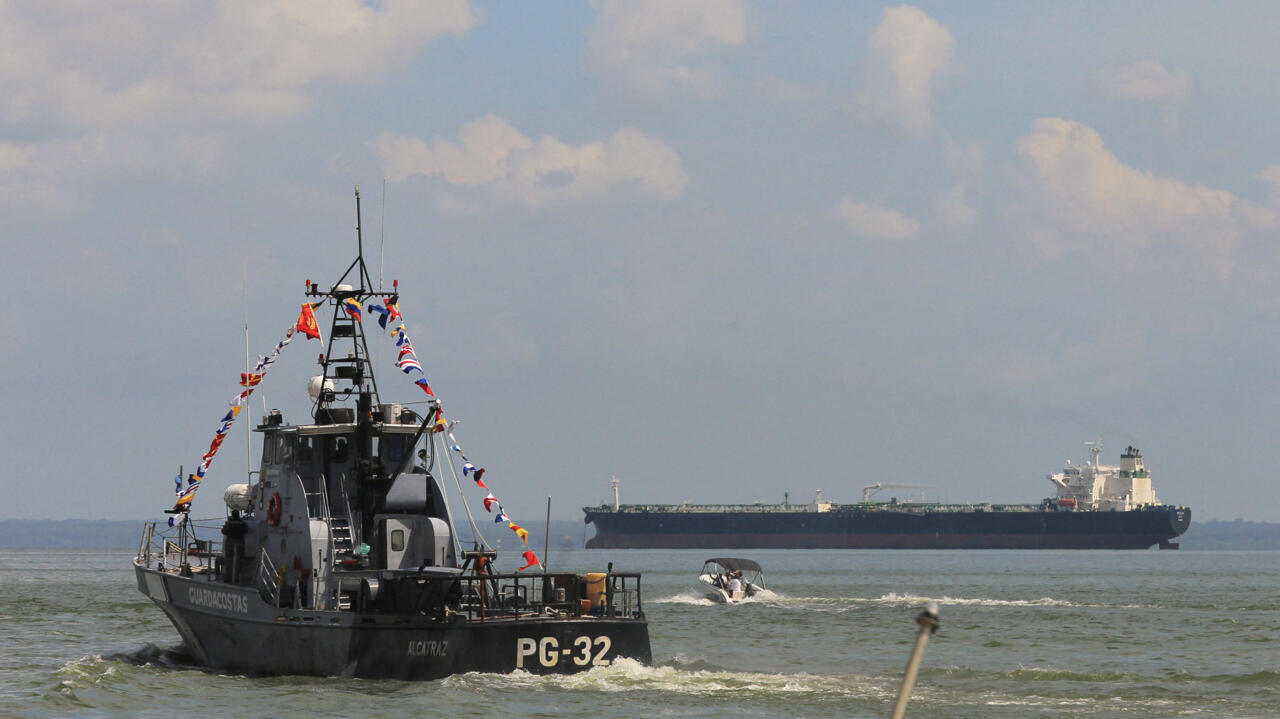
Venezuela struck a defiant note Wednesday, insisting its crude oil exports were not impacted by US President Donald Trump's announcement of a potentially crippling blockade.
Trump's declaration on Tuesday marked a new escalation in his months-long campaign of military and economic pressure on Venezuela's authoritarian leftist President Nicolas Maduro.
Venezuela, which has the world's largest proven oil reserves, shrugged off the threat of more pain, insisting it was proceeding with business as usual.
"Export operations for crude and byproducts continue normally. Oil tankers linked to PDVSA operations continue to sail with full security," state oil company Petroleos de Venezuela (PDVSA) said.
Trump said Tuesday he was imposing "A TOTAL AND COMPLETE BLOCKADE OF ALL SANCTIONED OIL TANKERS going into, and out of, Venezuela."
Referring to the heavy US military presence in the Caribbean – including the world's largest aircraft carrier – he warned "Venezuela is completely surrounded by the largest Armada ever assembled in the History of South America."
On Wednesday, he reiterated that US forces would not "let anybody go in ... that shouldn't be going through," and accused Venezuela once again of taking "all of our oil."
"They took all of our energy rights, they took all of our oil, from not that long ago, and we want it back," he said, apparently referring to the nationalization of Venzuela's oil industry.
Maduro held telephone talks with UN Secretary-General Antonio Guterres to discuss what he called the "escalation of threats" from Washington and their "implications for regional peace".
Guterres urged both sides to "exert restraint and de-escalate tensions to preserve regional stability."
'We are not intimidated'
Venezuela's economy, which has been in freefall over the last decade of increasingly hardline rule by Maduro, relies heavily on petroleum exports.
Trump's campaign appears aimed at undermining domestic support for Maduro, but the Venezuelan military said Wednesday it was "not intimidated" by the threats.
The foreign minister of China, the main market for Venezuelan oil, defended Caracas in a phone call with his Venezuelan counterpart Yvan Gil.
"China opposes all unilateral bullying and supports all countries in defending their sovereignty and national dignity," he said.
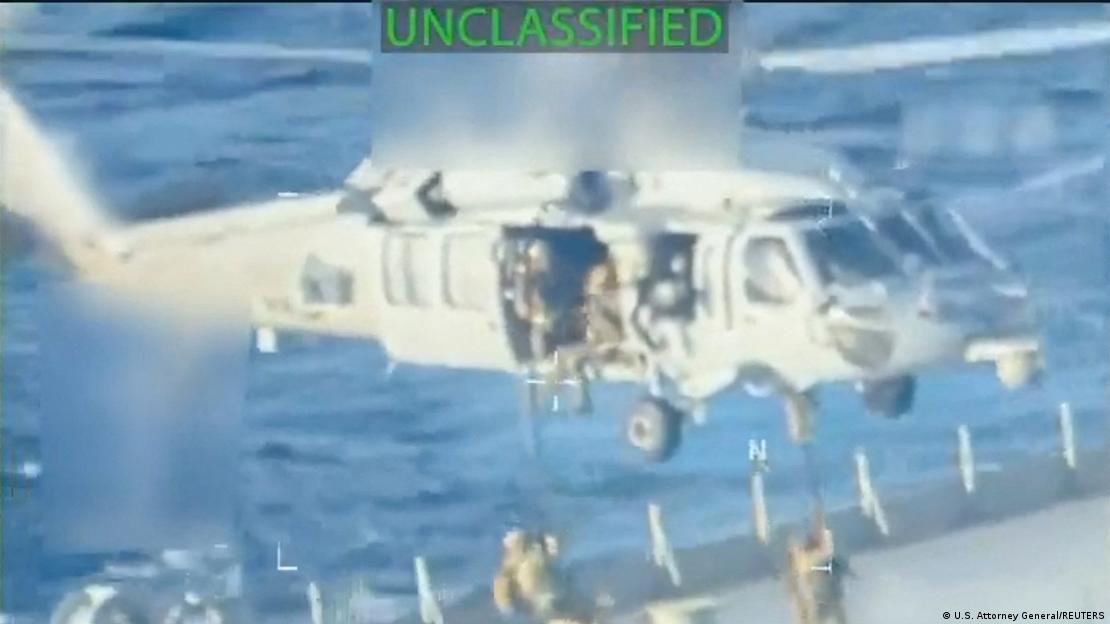
Last week's seizure of the M/T Skipper, in a dramatic raid involving US personnel rappelling from a helicopter, marked a shift in Trump's offensive against Maduro.
In August, the US leader ordered the biggest military deployment in the Caribbean Sea since the 1989 US invasion of Panama – purportedly to combat drug trafficking, but taking particular aim at Venezuela, a minnow in the global drug trade.
US strikes on alleged drug-smuggling boats in the Caribbean and eastern Pacific have left at least 99 people dead, with the latest strike Wednesday claiming four more lives.
Caracas believes that the anti-narcotics operations are a cover for a bid to topple Maduro and steal Venezuelan oil.
The escalating tensions have raised fears of a potential US intervention to dislodge Maduro.
Mexican President Claudia Sheinbaum waded into the dispute Wednesday, declaring that the UN was "nowhere to be seen" and asked that it step up to "prevent any bloodshed".
Oil lifeline
The US blockade threatens major pain for Venezuela's crumbling economy.
Venezuela has been under a US oil embargo since 2019, forcing it to sell its production on the black market at significantly lower prices, primarily to Asian countries.
The country produces one million barrels of oil per day, down from more than three million in the early 2000s.
Capital Economics analysts predicted that the blockade "would cut off a key lifeline for Venezuela's economy" in the short term.
"The medium-term impact will hinge largely on how tensions with the US evolve – and what the US administration's goals are in Venezuela."
(FRANCE 24 with AFP)
Venezuela Dispatches its Navy to Escort Tankers Past U.S. "Blockade"
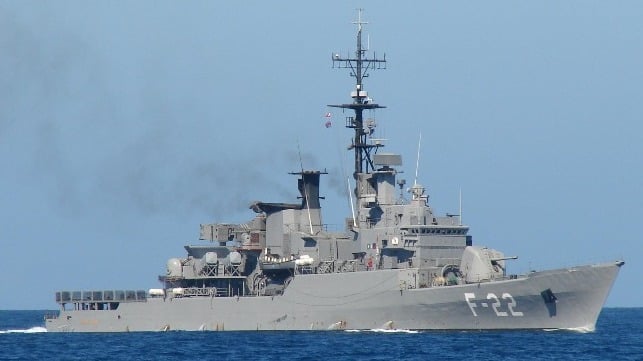
In defiance of the Trump administration's "blockade" of sanctioned tanker traffic to Venezuela's crude export terminals, Venezuelan dictator Nicolas Maduro has ordered his navy to provide departing vessels with a warship escort. According to the New York Times, these escort operations have already occurred on several departures for tankers bound for Asia; they raise the risk of a possible military-to-military encounter with the U.S. Navy, which has built up a massive presence in the Caribbean.
The White House is considering its response to the Venezuelan escorts, one source told the Times. Any attempt at an armed interdiction - as the U.S. Coast Guard carried out aboard the tanker Skipper last week - could now spark an exchange of fire, rather than a peaceful surrender.
A naval blockade is an act of war under international law, but the U.S. has not declared war on Venezuela, nor has it announced an all-encompassing naval cordon. The blockade is only partial: merchant ships and tankers continue to trade to and from Venezuela, including at least one newly-arrived tanker that fits the "blockade" definition, according to TankerTrackers.com. The consultancy has identified dozens of U.S.-sanctioned tankers currently within Venezuelan waters, including 26 vessels that could be used for exports. 15 of them are already laden with oil, and they will be watched closely in days and weeks to come.
The exact details of the White House's blockade are unclear, and the building pressure campaign is viewed with skepticism by Trump's political opponents in Washington.
"Donald Trump does not have the authority to carry out his current plans to use military force in the Caribbean without authorization from Congress," said Sen. Chuck Schumer (D-NY) in a statement Wednesday. "If he acts without congressional authorization, the Senate will move a bipartisan resolution to prevent the unauthorized use of force. Americans do not want more endless wars."
The U.S. military has already been engaged in lethal strikes off the coast of Venezuela, Colombia and Central America for months, aiming to stem the flow of "narco-terrorist" cocaine smuggling for onward shipment to Europe and North America. On Wednesday, Secretary of War Pete Hegseth announced that another drug boat had been attacked and destroyed in the Eastern Pacific, killing four people.
US President Donald Trump has threatened Venezuela with a naval blockade to thwart its oil exports — a move that would hit the Maduro government hard but may leave global oil markets unfazed.
Donald Trump's announcement of a "total and complete blockade" of sanctioned oil tankers travelling to and from Venezuela has raised questions about the economic consequences for the regime of leftist president Nicolas Maduro.
Trump has made oil a central target in his ongoing campaign against Maduro, which was sparked by the US president's claims that Maduro was to blame for the illegal flow of both migrants and drugs to the US from Venezuela.
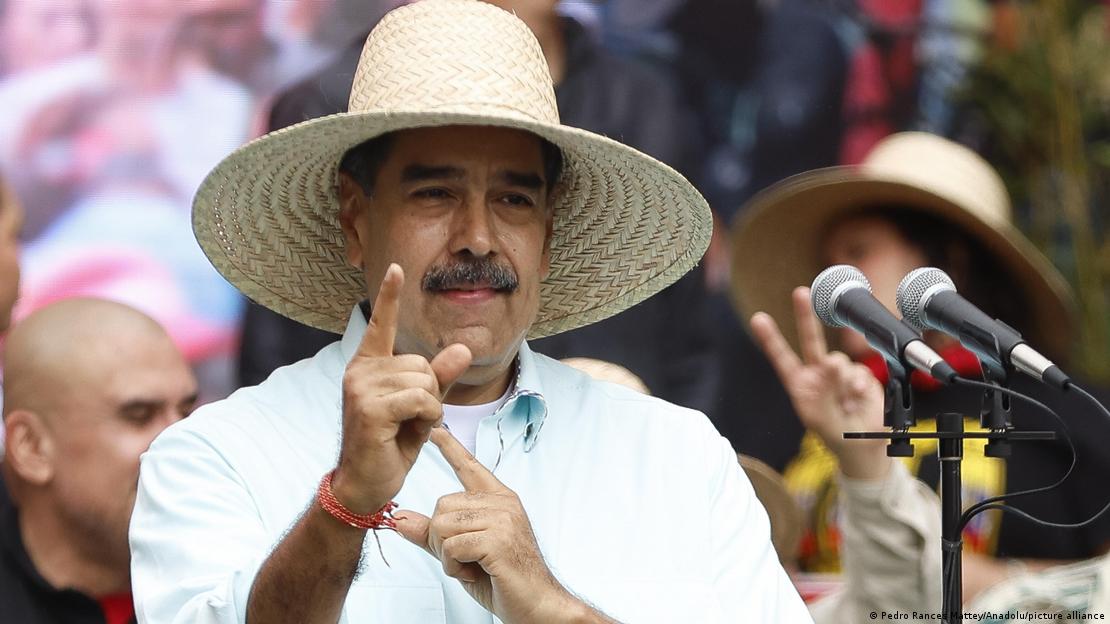
The fragile Venezuelan economy is exceptionally dependent on oil. If Trump's blockade threat turns out to be more than just words, it would have significant implications for Caracas.
What exactly has Trump threatened?
In a Truth Social post on Tuesday (Dec. 16), Trump said Venezuela "is completely surrounded by the largest Armada ever assembled in the History of South America" before saying he was ordering the blockade.
Since late August, the US has been setting up a major naval build-up across the Caribbean Sea — one of the largest US naval deployments in the region since the so-called Cuban missile crisis in 1962.
Up to a dozen US military vessels have been operating in the Caribbean in recent weeks, including aircraft carriers, guided-missile destroyers and amphibious assault ships.
How a blockade will work
A naval blockade is a military operation where warships encircle a specific coastline with a view to prevent maritime traffic from entering or leaving.
Trump's threat specifies "all sanctioned oil tankers going into, and out of, Venezuela."
Last week, US forces seized an oil tanker off the coast of Venezuela. US Attorney General Pam Bondi said the tanker had been transporting sanctioned oil from Venezuela and Iran. Caracas decried the seizure as an act of "international piracy."
If successfully and fully implemented, the naval blockade threatened by Trump would dramatically reduce the amount of oil coming out of Venezuela. However, it is not yet clear exactly which tankers would be affected or precisely how a blockade would be carried out.
As is often the case with Trump's social media pledges, there are also legal doubts. Elena Chachko, an international law scholar from UC Berkeley Law School in the US, told news agency Reuters that a blockade would raise "serious questions on both the domestic law front and international law front."
While Venezuela's state oil company, PDVSA, is heavily sanctioned and many vessels which pick up oil there are specifically sanctioned, others which transport oil from the country are not. US oil giant Chevron, for example, was given special licences by the Biden administration in 2022 to resume Venezuelan oil exports. The idea at the time was that softening Venezuelan sanctions would ease wider oil market pressures in the wake of Russia's invasion of Ukraine.
But in October this year, the Trump administration gave Chevron fresh authorization to produce oil in Venezuela argueing the US company was a vital partner for Caracas.
How US sanction already hit
Venezuela is almost completely dependent on oil for state income. Crude oil and related products such as petrochemicals account for more than 90% of Venezuela's export revenues. They keep Maduro's heavily sanctioned and isolated government functioning and in power.
Experts say that if there were more cargo seizures, or if Trump were to follow through on the blockade, much of Venezuela's oil would remain in the country, while that which makes its way out would likely be sold at a steep discount.
There is already evidence that the recent seizure of a Venezuelan tanker by US forces and the threat of further measures is having an impact.
According to data analytics firm S&P Global Commodities Insights, the number of oil tankers travelling to Venezuela has fallen sharply over the past few weeks. The London, UK-based firm said in a report on Tuesday that as of the week starting December 14, there were 17 tankers sailing to or around Venezuelan waters. That's down from 24 vessels a month earlier.
The S&P report also noted that several sanctioned vessels currently "appear to be turning away" from Venezuelan waters and the broader Caribbean Sea following the US seizure of the tanker and subsequent sanction announcements.
On December 11, the US sanctioned six shipping companies and six tankers which operated regularly in Venezuela's oil sector, with more sanctions likely in the coming weeks.
Could the Venezuelan economy handle the damage?
Given the level of crisis the Venezuelan economy has endured over the past decade, few can predict what fresh depths it could reach without impacting Maduro's grip on power.
The country's oil output has already been in decline in recent years as a result of sanctions, corruption and economic mismanagement. Venezuela has the world's largest deposit of known oil reserves but has increasingly struggled to maximize revenues from it.
During the rule of Maduro's predecessor, late Hugo Chavez, oil prices and revenues soared but they have fallen dramatically for more than a decade. Whereas Caracas once pulled in more than $100 billion (€85.6 billion) a year from oil, the figure is now closer to $20 billion.
According to the International Monetary Fund (IMF), Venezuela's economy endured "the single largest economic collapse for a non-conflict country in almost half a century," in the period since Maduro took office in April 2013.
What about global oil markets?
Although oil prices jumped by more than 1% on Wednesday, most analysts say Trump's blockade threat on Venezuelan output has a limited impact on global markets.
"Overall, export volumes from Venezuela are relatively small in the global supply share. With all eyes on the Russia-Ukraine discussions, the market is still under downside risk," one oil trader told Reuters.
Muyu Xu, senior oil analyst at Brussles-based data analytics firm Kpler, told Reuters that while Venezuelan oil production accounts for around 1% of global production, "most of it is concentrated on a small pool of Chinese buyers, and others in the US and Cuba."
There are already expectations that the global oil market will face oversupply next year.
Saad Rahim, chief economist of commodity-trading giant, Trafigura, told the Financial Times earlier this month that the oil market will face a "super glut" as a burst of new supply collides with weakness in the global economy, and weighing on already falling prices for crude oil in 2026.
Edited by: Uwe Hessler

Arthur Sullivan Reporter and senior editor focused on global economic stories with a geopolitical angle.
Chevron is driving Venezuela's oil rebound while China is pulling back. As the fate of President Nicolas Maduro grows uncertain, Washington's renewed leverage is reshaping the country's economic and geopolitical future.

Speculation over President Nicolas Maduro's political future has intensified after US forces seized a Venezuelan oil tanker off the country's coast. The incident on Wednesday underscored Washington's longstanding interest in a nation that holds the world's largest proven oil reserves — an interest shared, albeit for different reasons, by China.
"Whoever comes to power, I can assure you, the first call will be Trump, but the second will be Xi Jinping," said Parsifal D'Sola Alvarado, a specialist in China–Latin America relations.
D'Sola Alvarado heads the Fundacion Andres Bello (Latin American-Chinese Research Center) based in Bogota, Colombia and the Spanish capital, Madrid. He previously worked with Venezuelan opposition figure Juan Guaido, where he managed contacts with Chinese officials.
Beijing steps back
Speaking with DW, D'Sola Alvarado said he doubts China would stand firmly behind Maduro in the event of a confrontation with Washington.
Beyond diplomatic and political support, he finds it "highly unlikely that China will offer more proactive support to Maduro, selling arms, or new large investments. China doesn't want more problems with the US."
China still purchases the majority of Venezuela's oil. According to the US Energy Information Administration (EIA), nearly two-thirds of Venezuelan crude exports went to China in 2023, while 23% went to the US.
Before Washington imposed sweeping sanctions on Venezuela's state oil company PDVSA in 2019 — having earlier blocked its access to US financial markets in 2017 — the US had been the country's largest customer. Production and exports tumbled soon afterward.
OPEC data show that Venezuela's crude exports fell to just under 500,000 barrels per day (bpd) in 2021, continuing a decline that long predated sanctions. Output had peaked at almost 2 million bpd in 2015 before sliding steadily due to years of mismanagement, corruption and chronic underinvestment.
Chevron revives output
Only in 2023 did production begin to recover, with exports rising to 655,000 bpd in 2024 and reaching 921,000 bpd in November this year.
The rebound owes much to the United States, not China.
In the wake of Russia's invasion of Ukraine in 2022, Washington eased some restrictions on Venezuela, with the Treasury Department's Office of Foreign Assets Control granting US oil major Chevron special licenses to resume exports from its Venezuelan joint ventures. In October 2025, the company received fresh authorization to produce oil there.
"The recovery of oil production in Venezuela has happened because of Chevron," Francisco J. Monaldi, an energy policy specialist at Rice University's Baker Institute in Houston, Texas, told DW. Chevron now accounts for nearly a quarter of Venezuela's total output.
Venezuelans in US want Maduro out but fear military action 03:07
Maduro greeted the renewed US permissions with enthusiasm. Speaking on state broadcaster Telesur in July, he said: "Chevron has been present in Venezuela for 102 years, and I hope the company works here for another 100 years without problems."
China's fading footprint
While Chevron expands, Chinese investment is limited to smaller-scale projects. China Concord Resources Corp has reportedly begun developing two oil fields, with an investment of about $1 billion (€850 million) planned to boost production to 60,000 bpd by the end of 2026.
But Beijing's state-backed development lenders such as the China Development Bank and the Export-Import Bank of China have effectively shut their wallets by not issuing new loans to Caracas since 2016, according to the Global Development Policy Center — a think tank based at Boston University in the US.
Much of Venezuela's roughly $60 billion debt to China has been reduced through restructurings and oil-for-loan deals.
Combined with the lack of new lending, scaled-back diplomacy and quiet outreach to Venezuela's opposition, D'Sola Alvarado sees unmistakable signs that Beijing is "not completely backing Maduro."
He notes China had already grown frustrated by 2011, when $8 billion in Chinese funds "just disappeared" from the Sino-Venezuelan Investment Fund. "Chinese authorities were very disappointed how everything turned out and [how] all this crumbled because of corruption," said D'Sola Alvarado.
A shift with limits
US sanctions, he argues, were not the main reason for China's retreat, rather "just one more nail in the coffin" of bilateral relations.
Even if power changes hands in Caracas, D'Sola Alvarado believes China would face limited economic consequences and no "major losses."
The bigger shift would be geopolitical, however, with Beijing no longer having direct access to the Venezuelan government and its networks. " So it's always worthy to have one foot inside for the Chinese," he added.
This article was originally written in German.

Astrid Prange de Oliveira DW editor with expertise in Brazil, globalization and religion

No comments:
Post a Comment