The Christian nationalist worldview behind America’s new security posture
(RNS) — The National Security Strategy summons familiar fears that secularism and multiculturalism threaten a divinely inspired social order.
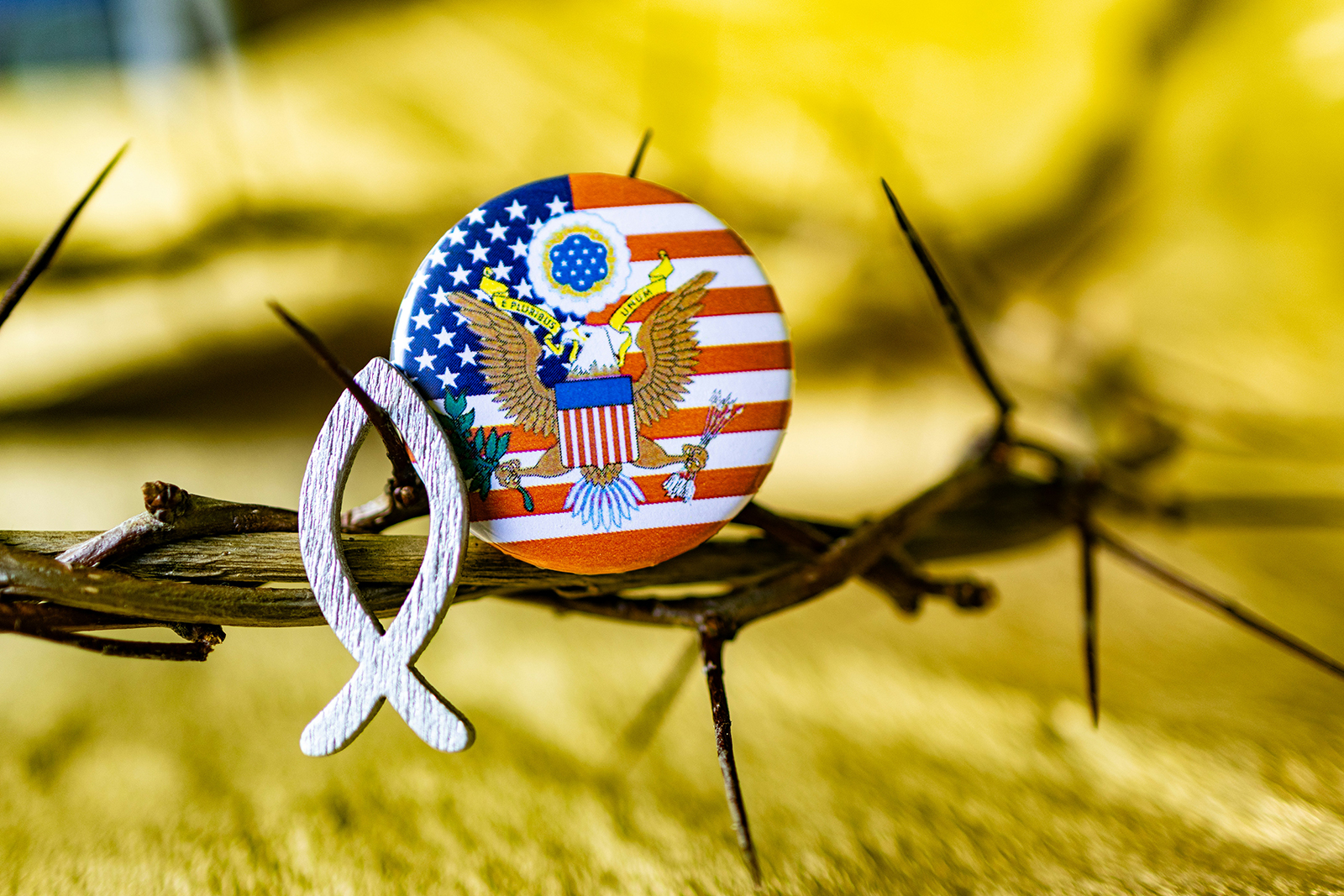
(Photo by Marek Studzinski/Unsplash/Creative Commons)
Jennifer Butler
December 18, 2025
December 18, 2025
RNS
(RNS) — When the Trump administration released its National Security Strategy in early December, the document stirred controversy among politicians, diplomats and analysts, who were concerned that it abandoned, in the words of one Democratic member of Congress, “decades of values-based U.S. leadership.”
For Christian nationalists in the United States, however, the new NSS, which is nonbinding but offers a sense of an administration’s guiding principles, read like confirmation. Its portrayal of Europe, Russia and the global order reflects a worldview that Christian nationalist leaders have cultivated for years — one that energized President Donald Trump’s political base and is now shaping how American power, morality and belonging are defined on the world stage.
RELATED: You can’t deal your way to peace on earth. Trump should know that by now.
The NSS describes Europe, long home to the United States’ closest democratic partners, as a civilization “at risk” of cultural decline. It warns that the continent’s birth rates, migration patterns and “civilizational self-confidence” have placed its future in jeopardy. This is a striking departure from the past 75 years of American foreign policy, which saw Europe as an essential partner in global security.
The focus on concerns of “civilizational erasure” echoes themes found in Christian nationalist rhetoric, which stokes fear that secularism, social liberalism and multiculturalism are dissolving a divinely inspired social order. These fears were once fringe, but today, they back a national security policy that will dramatically shift the world as we’ve known it. Framing pluralistic Europe as spiritually weak and politically compromised, the NSS suggests that it’s time for an America supposedly anchored in Christian heritage to move on to other partners.

(Photo by Nataliya Vaitkevich/Pexels/Creative Commons)
Equally striking is the document’s treatment of Russia. Mute on Russia’s aggression toward Ukraine and its repression of dissent within its borders, the NSS calls for pursuing “strategic stability” with Moscow. (As a corollary, it expresses skepticism about NATO’s long-standing purpose, further distancing the U.S. from western European allies.)
To many observers, this pivot seems puzzling. But Russia’s appeal has grown in Christian nationalist circles over the past two decades as Vladimir Putin has aligned the Kremlin closely with the Russian Orthodox Church, promoting a vision of national identity built on traditional gender roles, hostility toward LGBTQ rights and suspicion of religious minorities.
The far right’s endorsement goes back at least to 2014, after Russia annexed Crimea, when conservative culture warrior Patrick Buchanan suggested that God was now on Russia’s side. But U.S. Christian organizations have been exporting the culture wars since the late 1990s, especially to Russia. The World Congress of Families, born in partnership with Russian sociologists from Lomonosov Moscow State University, Family Watch International, Political Network for Values, CitizenGo, Alliance Defending Freedom and the American Center for Law and Justice, have all reached out to their intellectual counterparts overseas.
Other organizations have worked across Europe, Latin America and Africa to promote what they call the “natural family.” They oppose LGBTQ rights, women’s rights and immigration, while defending their particular vision of Christian civilization.
RELATED: You can’t deal your way to peace on earth. Trump should know that by now.
These networks are not merely seeking religious reform or even mere cultural and legislative reform. They are reshaping political parties, influencing elections, polarizing societies, closing civic space, rigging election systems and ultimately driving democratic backsliding. Russia, Hungary and Brazil’s past Bolsonaro government have all collaborated with these movements.
Their work is having an effect at home. Scholarly studies show that Americans who affirm Christian nationalist beliefs also express warmer attitudes toward Putin and are more likely to view Russia as an ally, even if acknowledging it as a geopolitical threat. Seen through this lens, the NSS’ softer posture toward Moscow is less a mystery and more of a suggested ideological and geopolitical realignment resonant with Christian right values.
Since the end of World War II, U.S. foreign policy affirmed certain shared values: human rights, democratic governance and multilateral cooperation, even when it failed to fully uphold them. These values united us with our closest allies. The new NSS openly questions these values and therefore our current alliances. It argues that the United States has been held back by international institutions and should instead pursue narrowly defined national interests.
This is not simply a strategic argument. It is a moral one. It suggests that the United States should abandon its role in upholding universal human dignity in favor of protecting a culturally defined national identity that upholds conservative Christian beliefs over and against the values of pluralism and equality for all.
(RNS) — When the Trump administration released its National Security Strategy in early December, the document stirred controversy among politicians, diplomats and analysts, who were concerned that it abandoned, in the words of one Democratic member of Congress, “decades of values-based U.S. leadership.”
For Christian nationalists in the United States, however, the new NSS, which is nonbinding but offers a sense of an administration’s guiding principles, read like confirmation. Its portrayal of Europe, Russia and the global order reflects a worldview that Christian nationalist leaders have cultivated for years — one that energized President Donald Trump’s political base and is now shaping how American power, morality and belonging are defined on the world stage.
RELATED: You can’t deal your way to peace on earth. Trump should know that by now.
The NSS describes Europe, long home to the United States’ closest democratic partners, as a civilization “at risk” of cultural decline. It warns that the continent’s birth rates, migration patterns and “civilizational self-confidence” have placed its future in jeopardy. This is a striking departure from the past 75 years of American foreign policy, which saw Europe as an essential partner in global security.
The focus on concerns of “civilizational erasure” echoes themes found in Christian nationalist rhetoric, which stokes fear that secularism, social liberalism and multiculturalism are dissolving a divinely inspired social order. These fears were once fringe, but today, they back a national security policy that will dramatically shift the world as we’ve known it. Framing pluralistic Europe as spiritually weak and politically compromised, the NSS suggests that it’s time for an America supposedly anchored in Christian heritage to move on to other partners.
(Photo by Nataliya Vaitkevich/Pexels/Creative Commons)
Equally striking is the document’s treatment of Russia. Mute on Russia’s aggression toward Ukraine and its repression of dissent within its borders, the NSS calls for pursuing “strategic stability” with Moscow. (As a corollary, it expresses skepticism about NATO’s long-standing purpose, further distancing the U.S. from western European allies.)
To many observers, this pivot seems puzzling. But Russia’s appeal has grown in Christian nationalist circles over the past two decades as Vladimir Putin has aligned the Kremlin closely with the Russian Orthodox Church, promoting a vision of national identity built on traditional gender roles, hostility toward LGBTQ rights and suspicion of religious minorities.
The far right’s endorsement goes back at least to 2014, after Russia annexed Crimea, when conservative culture warrior Patrick Buchanan suggested that God was now on Russia’s side. But U.S. Christian organizations have been exporting the culture wars since the late 1990s, especially to Russia. The World Congress of Families, born in partnership with Russian sociologists from Lomonosov Moscow State University, Family Watch International, Political Network for Values, CitizenGo, Alliance Defending Freedom and the American Center for Law and Justice, have all reached out to their intellectual counterparts overseas.
Other organizations have worked across Europe, Latin America and Africa to promote what they call the “natural family.” They oppose LGBTQ rights, women’s rights and immigration, while defending their particular vision of Christian civilization.
RELATED: You can’t deal your way to peace on earth. Trump should know that by now.
These networks are not merely seeking religious reform or even mere cultural and legislative reform. They are reshaping political parties, influencing elections, polarizing societies, closing civic space, rigging election systems and ultimately driving democratic backsliding. Russia, Hungary and Brazil’s past Bolsonaro government have all collaborated with these movements.
Their work is having an effect at home. Scholarly studies show that Americans who affirm Christian nationalist beliefs also express warmer attitudes toward Putin and are more likely to view Russia as an ally, even if acknowledging it as a geopolitical threat. Seen through this lens, the NSS’ softer posture toward Moscow is less a mystery and more of a suggested ideological and geopolitical realignment resonant with Christian right values.
Since the end of World War II, U.S. foreign policy affirmed certain shared values: human rights, democratic governance and multilateral cooperation, even when it failed to fully uphold them. These values united us with our closest allies. The new NSS openly questions these values and therefore our current alliances. It argues that the United States has been held back by international institutions and should instead pursue narrowly defined national interests.
This is not simply a strategic argument. It is a moral one. It suggests that the United States should abandon its role in upholding universal human dignity in favor of protecting a culturally defined national identity that upholds conservative Christian beliefs over and against the values of pluralism and equality for all.
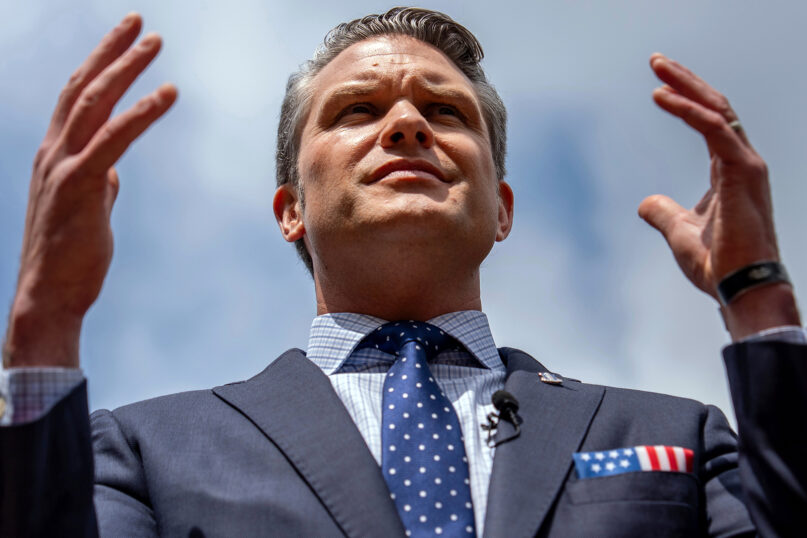
Secretary of Defense Pete Hegseth speaks to reporters at the Pentagon, July 16, 2025, in Washington. (AP Photo/Julia Demaree Nikhinson, File)
Defense Secretary Pete Hegseth, addressing the annual Reagan National Defense Forum in the days after the NSS was made public, said the United States should not be “distracted by democracy building” or “woke moralizing,” but should focus on “concrete” interests. His critique reflects a Christian nationalist suspicion of pluralism and rights-based frameworks — values embedded in the postwar order that the NSS now treats as burdens. Hegseth has identified himself as a Christian nationalist.
Christians across traditions — Catholic, Protestant, Orthodox, evangelical and others — have long supported human rights, welcomed refugees, defended religious freedom and worked for peace. The Civil Rights Movement, interfaith human rights coalitions and the faith-rooted struggle against apartheid all stand in this lineage.
After World War II, Christians labored to build civic support for the United Nations and the Universal Declaration of Human Rights held suspect by Christian nationalists.

The debate over the NSS is not only about foreign policy or military alliances. It’s about the story the United States is telling about itself. When national security is colored by Christian nationalism, pluralism becomes a liability, democratic allies become suspect and authoritarian power claims moral justification.
For people of faith, this moment calls for careful attention and moral clarity. Christian traditions have long taught that strength is measured not by dominance but by justice, hospitality and the protection of the vulnerable. If America’s global posture is reshaped by a vision that confuses faith with exclusion and power with authoritarianism, the consequences will extend far beyond security strategy — shaping how the world understands American power and how Americans understand their moral responsibility to one another and to the world.
(The Rev. Jennifer Butler, the founder of Faith in Democracy, chaired President Barack Obama’s third Advisory Council on Faith-Based and Neighborhood Partnerships. The views expressed in this commentary do not necessarily reflect those of Religion News Service.)
(The Rev. Jennifer Butler, the founder of Faith in Democracy, chaired President Barack Obama’s third Advisory Council on Faith-Based and Neighborhood Partnerships. The views expressed in this commentary do not necessarily reflect those of Religion News Service.)

No comments:
Post a Comment